About Editorial team of BIPNs

Main team of content of bipns.com. Any type of content should be approved by us.
3 09, 2025

Testing Key 148.5 Resistance (video)

By |2025-09-03T11:42:43+03:00September 3, 2025|Forex News, News|0 Comments

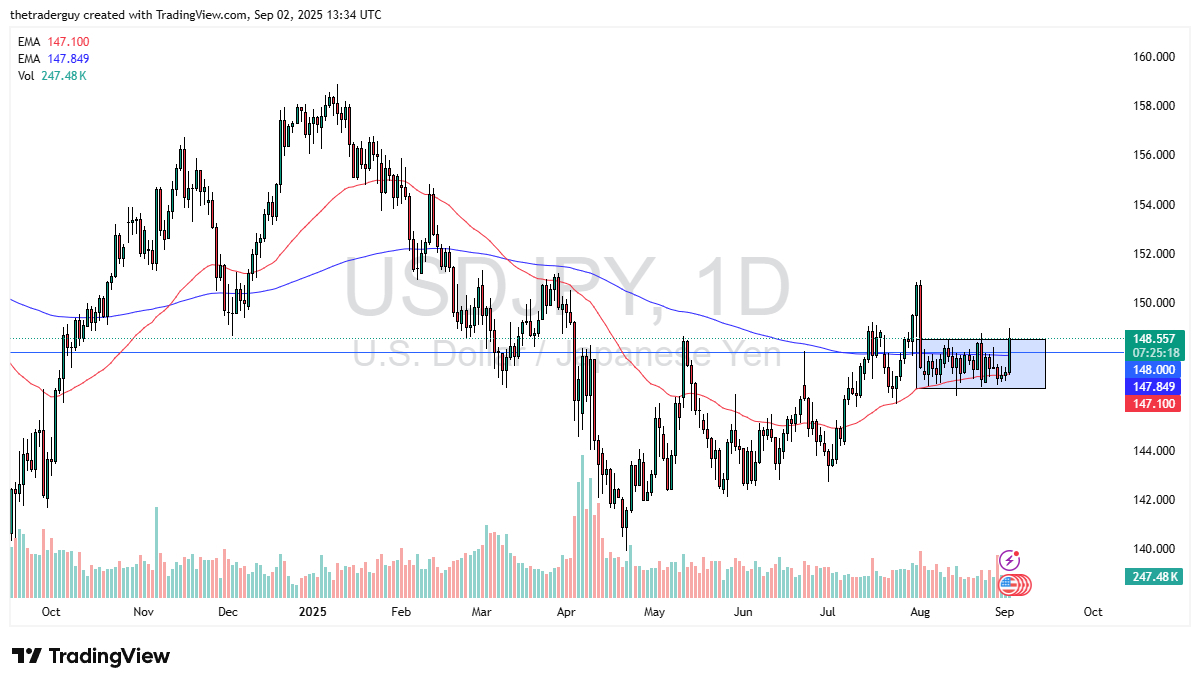
  • The US dollar has rallied quite nicely against the Japanese yen in early trading on Tuesday as we are testing the crucial 148.5 yen level an area that has been a bit of a barrier for some time now.
  • Ultimately, this is a market that if we can break above here, we could go looking to the 151 yen level but I think it’s going to be a bit difficult to do it all in one shot, mainly due to the fact that we do get the employment numbers later in the week on Friday, and that will obviously have a major influence on what happens next with the US dollar and risk appetite in general.
  • It’s worth noting that we have broken above the 200-day EMA as well, so that’s a good sign, but both moving averages, the 50-day EMA and the 200-day EMA, are flat at the moment. So that doesn’t necessarily suggest that we are in any type of trend.

Choppy Week Ahead?

I anticipate that most of this week will probably be choppy and somewhat sideways as we wait for that important jobs figure. The real question at this point in time is will the interest rate differential continue to favor the US dollar over the longer term, which I think it will. And that does give a little bit of credence to the idea of a positive currency pair here.

Whether or not we can really come to grips with that between now and the jobs number is a completely different situation. But I think you’ve got a scenario where traders will have to watch this.

Maybe more of a buy on the dip mentality is the way to go. That’s the way I’ve been playing this pair for a couple of weeks now. After that nasty sell-off, and then we just went sideways. Sometimes it’s all about where a pair won’t go.

And at this point, it doesn’t look like it wants to go lower. So, I remain bullish, but I also keep my expectations a little tempered over the next couple of days.

Want to trade our USD/JPY forex analysis and predictions? Here’s a list of forex brokers in Japan to check out.

Christopher Lewis has been trading Forex and has over 20 years experience in financial markets. Chris has been a regular contributor to Daily Forex since the early days of the site. He writes about Forex for several online publications, including FX Empire, Investing.com, and his own site, aptly named The Trader Guy. Chris favours technical analysis methods to identify his trades and likes to trade equity indices and commodities as well as Forex. He favours a longer-term trading style, and his trades often last for days or weeks.

Source link

3 09, 2025

Global Tea Market Size, Share, Growth And Trends Report

By |2025-09-03T11:41:40+03:00September 3, 2025|Dietary Supplements News, News|0 Comments


Tea Market

Tea Market Size and Outlook 2025 to 2033

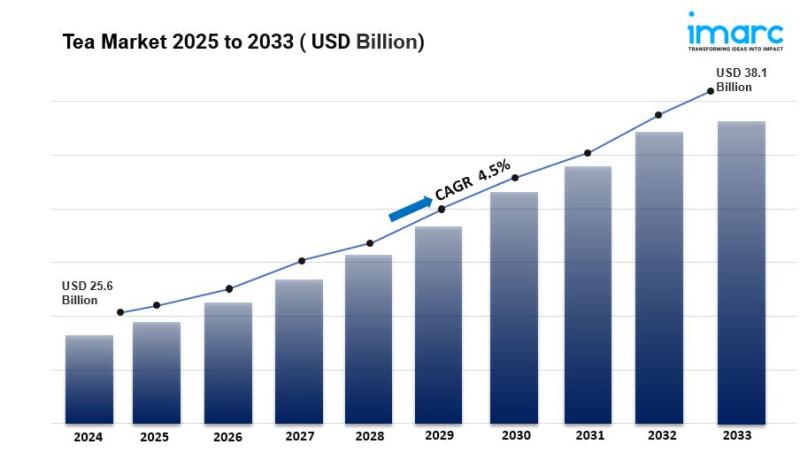
The global tea market size was valued at USD 25.6 Billion in 2024. Looking forward, IMARC Group estimates the market to reach USD 38.1 Billion by 2033, exhibiting a CAGR of 4.5% during 2025-2033. China currently dominates the market, holding a significant market share of over 14.3% in 2024. The market is experiencing steady growth driven by rising health consciousness among consumers, increasing demand for specialty and organic teas, growing popularity of ready-to-drink (RTD) tea products, and expanding global tea culture across diverse demographics.

Key Stats for Tea Market:

• Tea Market Value (2024): USD 25.6 Billion

• Tea Market Value (2033): USD 38.1 Billion

• Tea Market Forecast CAGR: 4.5%

• Leading Segment in Tea Market in 2024: Black Tea (38.5%)

• Key Regions in Tea Market: China, India, Kenya, Sri Lanka, Turkey, Vietnam, Others

• Top companies in Tea Market: Associated British Foods PLC, Barry’s Tea, Bigelow Tea, Caraway Tea, Dabur Ltd, Dilmah Ceylon Tea Company PLC, LIPTON Teas and Infusions B.V., TAETEA Group Co., Ltd, Tata Consumer Products Limited (Tata Group), The Republic of Tea, Unilever.

Request Sample URL: https://www.imarcgroup.com/tea-market/requestsample

Why is the Tea Market Growing?

The tea market is experiencing a remarkable transformation as health consciousness reaches unprecedented levels globally. According to a comprehensive survey by Aditya Birla Health Insurance, 84% of people report increased health awareness following the pandemic. This fundamental shift in consumer mindset is driving people away from sugary beverages toward tea, which offers natural antioxidants, polyphenols, and catechins associated with reduced risk of heart disease, stroke, and certain cancers.

What’s particularly fascinating is the demographic expansion of tea consumption. In the United States alone, over 159 million Americans drink tea daily, according to Census data. This represents a massive cultural shift where tea is no longer just a traditional beverage but a lifestyle choice embraced by health-conscious millennials and Gen Z consumers seeking functional beverages that deliver both taste and wellness benefits.

The ready-to-drink tea revolution is reshaping how people consume tea. Modern consumers with hectic lifestyles are gravitating toward RTD tea products that maintain health advantages while offering convenience. These products come in diverse flavors and are often enhanced with vitamins and minerals, making them particularly appealing to health-aware shoppers who want nutrition on-the-go.

Innovation in tea brewing technology and flavor profiles is attracting entirely new demographics to tea consumption. From cold brews to artisan blends, companies are reimagining how tea is prepared and consumed. Lipton’s recent launch of five new green tea varieties in the US-featuring Signature Blend, Decaf, Lemon, Peach, and Honey Ginger-exemplifies this innovation trend. These products target Gen Z consumers through their “2 Cups to Goodness” initiative, supported by a comprehensive 36-week marketing campaign including digital content and influencer collaborations.

Global production capabilities are expanding remarkably. According to the Food and Agriculture Organization, tea production surged from 4.3 million tons in 2008 to 6.3 million tons in 2020, cultivated across 5 million hectares worldwide. This production increase, combined with climate-resilient cultivars and precision agriculture using IoT and GPS sensors, ensures stable supply chains while meeting growing global demand.

The demographic momentum is undeniable. The United Nations projects world population growth to 9.7 billion by 2050, with urbanization trends favoring convenient, health-conscious products like tea. The expanding middle class in developing nations is particularly significant, as these new consumers embrace tea drinking for its health benefits and social significance.

AI Impact on the Tea Market:

Artificial intelligence is revolutionizing the tea industry by transforming traditional practices that have remained unchanged for centuries. AI integration spans the entire tea value chain, from precision agriculture in cultivation to sophisticated quality control in processing, creating unprecedented opportunities for optimization and innovation.

Smart cultivation technologies are enabling tea growers to monitor vast plantations with remarkable precision. AI-powered systems analyze soil health, moisture levels, pest risks, and weather patterns to optimize growing conditions. Machine learning algorithms process data from IoT sensors and satellite imagery to predict optimal harvesting times, identify disease patterns before they become visible, and determine precise nutrient requirements for different tea varieties.

Quality control and processing have been transformed through AI-powered vision systems that can grade tea leaves with precision exceeding human capabilities. Computer vision technology evaluates color, texture, and leaf integrity to ensure consistent product quality. AI algorithms analyze the complex chemical compositions of tea leaves to optimize processing parameters for maximum antioxidant retention and flavor development.

Supply chain optimization through AI is solving logistics challenges that have plagued the tea industry. Predictive analytics help companies forecast demand patterns across different tea types and geographic markets, reducing waste and ensuring product freshness. AI-powered inventory management systems track tea from garden to cup, maintaining quality standards while optimizing distribution efficiency.

Consumer experience enhancement through AI is creating personalized tea recommendations based on individual taste profiles, health goals, and consumption patterns. Machine learning algorithms analyze customer preferences to suggest new products and optimize flavor profiles for different market segments.

The AI food and beverages market is projected to reach USD 56.47 billion by 2029, with tea industry applications representing a significant growth segment. Advanced sensor technologies integrated with AI are enabling real-time monitoring of crucial quality parameters throughout the production process, ensuring food safety and premium quality standards.

Buy Now: https://www.imarcgroup.com/checkout?id=635&method=1670

Segmental Analysis:

Analysis by Product Type:

• Green Tea

• Black Tea

• Oolong Tea

• Others

Black tea dominates the market with 38.5% share in 2024, driven by its bold flavor profile, higher caffeine content compared to other varieties, and deep cultural significance across many global regions. The segment benefits from versatile consumption options-hot or cold-and availability in multiple formats including loose leaves, tea bags, and instant powder, providing convenience and choice for consumers worldwide.

Analysis by Packaging:

• Plastic Containers

• Loose Tea

• Paper Boards

• Aluminium Tin

• Tea Bags

• Others

Paper boards exhibit clear market dominance due to their economical and environmentally favorable qualities. These recyclable and biodegradable materials align with growing consumer demand for sustainable packaging solutions, while effectively maintaining tea freshness, aroma, and quality. Superior printability enhances brand visibility through attractive designs that capture consumer attention on retail shelves.

Analysis by Distribution Channel:

• Supermarkets/Hypermarkets

• Specialty Stores

• Convenience Stores

• Online

• Others

Supermarkets and hypermarkets lead with 32.8% market share in 2024, offering extensive product variety and convenient one-stop shopping experiences. According to the Government of Canada, tea retail sales in the U.S. reached USD 2.9 billion in 2021, with projections to rise to USD 3.4 billion by 2026, while organic tea sales hit USD 0.4 billion and are expected to grow to USD 0.5 billion by 2026.

Analysis by Application:

• Residential

• Commercial

Residential represents the largest segment with 62.0% market share in 2024, reflecting growing household tea consumption globally. This dominance stems from tea’s deep-rooted cultural significance, increasing preference for specialty teas among consumers seeking diverse flavors and health benefits, and the trend toward health consciousness positioning tea as a staple in daily routines.

Analysis of Tea Market by Regions

• China

• India

• Kenya

• Sri Lanka

• Turkey

• Vietnam

• Others

China leads the market with 14.3% share, significantly influencing global supply and demand through extensive production capabilities and rich cultural heritage. According to Worldmetrics, China produces about 40% of the world’s total tea, making it the undisputed leader in global tea production. The country’s dominance is reinforced by diverse native tea varieties and deeply ingrained tea-drinking culture.

What are the Drivers, Restraints, and Key Trends of the Tea Market?

Market Drivers:

Health awareness transformation is the primary catalyst driving tea market expansion. Consumers increasingly recognize tea’s antioxidant properties, with green tea containing catechins and polyphenols linked to reduced risk of chronic diseases. The shift from sugary beverages to healthier alternatives positions tea as a preferred choice among wellness-focused demographics.

Growing global population creates expanding consumer base for tea products. UN projections show world population reaching 9.7 billion by 2050, with urbanization trends favoring convenient, health-conscious products. The expanding middle class in developing nations particularly drives demand as these consumers embrace tea drinking for health benefits and social significance.

Innovation in product development and flavors attracts new consumer segments. Companies are introducing specialty blends, functional teas, and RTD products that cater to modern lifestyles. Advanced brewing technologies and packaging innovations preserve quality while enhancing convenience, appealing to busy consumers seeking premium experiences.

E-commerce expansion democratizes access to specialty and premium teas globally. Online platforms enable consumers worldwide to access previously region-limited products, expanding market reach for premium and niche tea varieties while supporting direct-to-consumer business models.

Market Restraints:

Climate change impacts threaten traditional tea-growing regions with unpredictable weather patterns affecting crop yields and quality. Temperature fluctuations, irregular rainfall, and extreme weather events create supply chain uncertainties that can impact pricing and availability.

Price volatility stemming from weather conditions, geopolitical factors, and supply chain disruptions affects market stability. Premium tea segments are particularly sensitive to cost fluctuations that can limit accessibility for price-conscious consumers.

Competition from alternative beverages including coffee, energy drinks, and functional beverages creates market pressure. The beverage industry’s competitive landscape requires continuous innovation and marketing investment to maintain market share.

Quality standardization challenges across different regions and producers create consumer confusion and trust issues. Varying processing methods and quality controls can result in inconsistent product experiences that impact brand loyalty.

Market Key Trends:

Precision agriculture and AI-powered farming are revolutionizing tea cultivation. Smart irrigation systems, drone monitoring, and predictive analytics optimize yields while reducing resource consumption. IoT sensors and GPS technology enable precise nutrient delivery and water management, improving both production efficiency and environmental sustainability.

Sustainable and organic tea production gains momentum as consumers prioritize environmental responsibility. Ethical sourcing, eco-friendly packaging, and organic certifications become essential differentiators. European consumers drink up to 2 kg of tea annually, with growing emphasis on sustainably sourced products.

Functional tea innovations address specific health and wellness needs. Companies develop blends targeting immunity enhancement, stress reduction, detoxification, and cognitive function. These specialized products command premium pricing while meeting consumer demand for targeted health benefits.

Ready-to-drink tea market expansion caters to on-the-go lifestyles. RTD products now account for significant market segments, particularly among younger consumers seeking convenience without compromising health benefits. Innovation in flavors, packaging, and nutritional enhancement drives this segment’s growth.

Leading Players of Tea Market:

According to IMARC Group’s latest analysis, prominent companies shaping the global Tea landscape include:

• Associated British Foods PLC

• Barry’s Tea

• Bigelow Tea

• Caraway Tea

• Dabur Ltd

• Dilmah Ceylon Tea Company PLC

• LIPTON Teas and Infusions B.V.

• TAETEA Group Co., Ltd

• Tata Consumer Products Limited (Tata Group)

• The Republic of Tea

• Unilever

These leading providers are expanding their footprint through product diversification, sustainable sourcing practices, innovative packaging solutions, and strategic partnerships with retail and hospitality sectors to meet growing consumer demand for premium, organic, and specialty tea products across global markets.

Ask An Analyst: https://www.imarcgroup.com/request?type=report&id=635&flag=C

Key Developments in Tea Market:

• January 2024: Chai Sutta Bar, a prominent tea chain, introduced its new premium tea brand Maatea through a press release in New Delhi, India. The brand aims to enhance the tea-drinking experience by offering natural, premium teas that avoid additives and artificial colors commonly found in other brands, representing the industry’s movement toward cleaner, more authentic products.

• 2024: Lipton unveiled a comprehensive collection of green teas in the US market, featuring five distinct varieties: Signature Blend, Decaf, Lemon, Peach, and Honey Ginger, all rich in flavonoids. This launch targets Gen Z consumers through the “2 Cups to Goodness” initiative, supported by a 36-week integrated marketing campaign including digital content and influencer collaborations.

• November 2024: AI integration in tea processing reached new sophistication levels, with advanced sensor technologies enabling real-time monitoring of crucial quality parameters throughout production. These systems ensure food safety and premium quality standards while optimizing processing efficiency.

• September 2024: Precision agriculture adoption accelerated significantly across major tea-producing regions, with IoT sensors and GPS technology enabling precise nutrient delivery and water management. These innovations improve production efficiency while reducing environmental impact.

• July 2024: Sustainable packaging innovations gained momentum as tea companies responded to consumer demand for eco-friendly solutions. Paper board packaging dominance reflects growing environmental consciousness, with recyclable and biodegradable materials becoming industry standards.

If you require any specific information that is not covered currently within the scope of the report, we will provide the same as a part of the customization.

About Us:

IMARC Group is a global management consulting firm that helps the world’s most ambitious changemakers to create a lasting impact. The company provides a comprehensive suite of market entry and expansion services.

IMARC offerings include thorough market assessment, feasibility studies, company incorporation assistance, factory setup support, regulatory approvals and licensing navigation, branding, marketing and sales strategies, competitive landscape and benchmarking analyses, pricing and cost research, and procurement research.

Contact US:

IMARC Group

134 N 4th St. Brooklyn, NY 11249, USA

Email: sales@imarcgroup.com

Tel No:(D) +91 120 433 0800

United States: +1-201971-6302

This release was published on openPR.


Source link

3 09, 2025

Dogecoin Price Prediction: DOGE Heads Into September Under $0.15, While Remittix Shatters Records in Crypto Space

By |2025-09-03T11:39:35+03:00September 3, 2025|Crypto News, News|0 Comments

Remittix is emerging as a revolutionary DeFi project designed to solve the $19 trillion global payments problem by enabling instant crypto-to-fiat bank transfers in over 30 countries. This isn’t hype, it’s a crypto built to deliver tangible results.

Why Investors Are Flocking to Remittix

  • Real-Time FX Conversion: Transparent rates make cross-border transactions instant and seamless.

  • Security Assured: CertiK audit guarantees top-tier trust.

  • Low Fee Model: Optimized for cost-efficient transactions.

  • Institutional Listings: BitMart and LBank listings increase market visibility and liquidity.

  • $250,000 Giveaway: Incentivizes early holders with tangible rewards and community engagement.

Having sold over 640 million tokens and raised $23.3 million, Remittix demonstrates strong demand and growing investor confidence. Its ecosystem combines real-world utility, robust infrastructure, and strategic market expansion, setting the stage for potential exponential returns.

Don’t Miss the Next Big Crypto Opportunity

With Dogecoin price prediction showing a shaky September and market uncertainty looming, Remittix offers a rare window to secure early-stage participation in a utility-driven crypto with global relevance. The Q3 wallet launch, institutional listings, and active incentives create urgency; early investors are positioning themselves for outsized gains before broader adoption surges.

Missing this moment could mean waiting on the sidelines while one of 2025’s fastest-growing crypto projects reshapes DeFi and global remittances.

Discover the future of PayFi with Remittix by checking out their project here:

Website: https://remittix.io/

Socials: https://linktr.ee/remittix

$250,000 Giveaway: https://gleam.io/competitions/nz84L-250000-remittix-giveaway

Source link

3 09, 2025

Solana’s Speed and Scale Power NFTs’ New Golden Child: CARDS

By |2025-09-03T09:49:39+03:00September 3, 2025|News, NFT News|0 Comments


CARDS, a notable project within the Solana NFT ecosystem, has surged over 630% in value, reaching $0.16. This dramatic increase coincides with a spike in activity across the Solana blockchain, particularly in the collector’s market segment. The Solana blockchain has demonstrated robust performance, with the collector crypt segment alone recording a trading volume of over $1.45 billion and generating more than $9.65 million in revenue. This growth reflects strong investor interest and a growing market appetite for digital collectibles built on the Solana platform.

The rapid appreciation of CARDS is indicative of the broader momentum in the Solana NFT space. As a relatively new entrant in the NFT market, CARDS has benefited from increased exposure and strategic timing, capitalizing on Solana’s low transaction fees and high throughput capabilities. These features have made Solana an attractive platform for both creators and collectors, particularly in comparison to more established but costlier blockchains such as Ethereum. The performance of CARDS underscores the potential for high returns in niche NFT sectors on high-performance blockchains.

The Solana blockchain has maintained a market capitalization of $117.28 billion as of August 29, 2025, ranking sixth among all cryptocurrencies. Despite the volatile nature of the crypto market, Solana has shown resilience, with a 2.19% increase in the last 24 hours and a 19.19% rise over the past seven days. The current price of Solana (SOL) is $216.68, with a 24-hour trading range between $208.72 and $217.66. These metrics highlight the platform’s growing significance in the broader cryptocurrency landscape.

The success of Solana’s NFT ecosystem is further supported by a steady stream of new projects and collections set to launch in the coming months. Upcoming drops such as Pandu Pandas, Mad Skulz phase 2, and Boundless8design on Solana are expected to contribute to sustained demand. These projects highlight the diversity of the Solana NFT market, which includes AI-powered companions, artistic collections, and interactive gaming experiences. As these projects gain traction, they are likely to attract a wider audience and increase the overall value of the Solana NFT space.

In summary, the meteoric rise of CARDS and the strong performance of the Solana NFT market reflect a broader trend of increased adoption and investment in high-performance blockchain platforms. The combination of low transaction fees, fast processing times, and a growing array of innovative projects is creating a compelling value proposition for both creators and collectors. As the market continues to evolve, Solana’s position as a leading platform for NFTs is expected to strengthen, driven by both organic growth and strategic developments in the digital collectibles space.

Source:

[1] Upcoming Solana NFT Drops and Projects (https://nftcalendar.io/b/solana/)

[2] Solana Price Today | SOL Price Index, Live Chart, Market … (https://www.bybit.com/en/price/solana/)


Source link

3 09, 2025

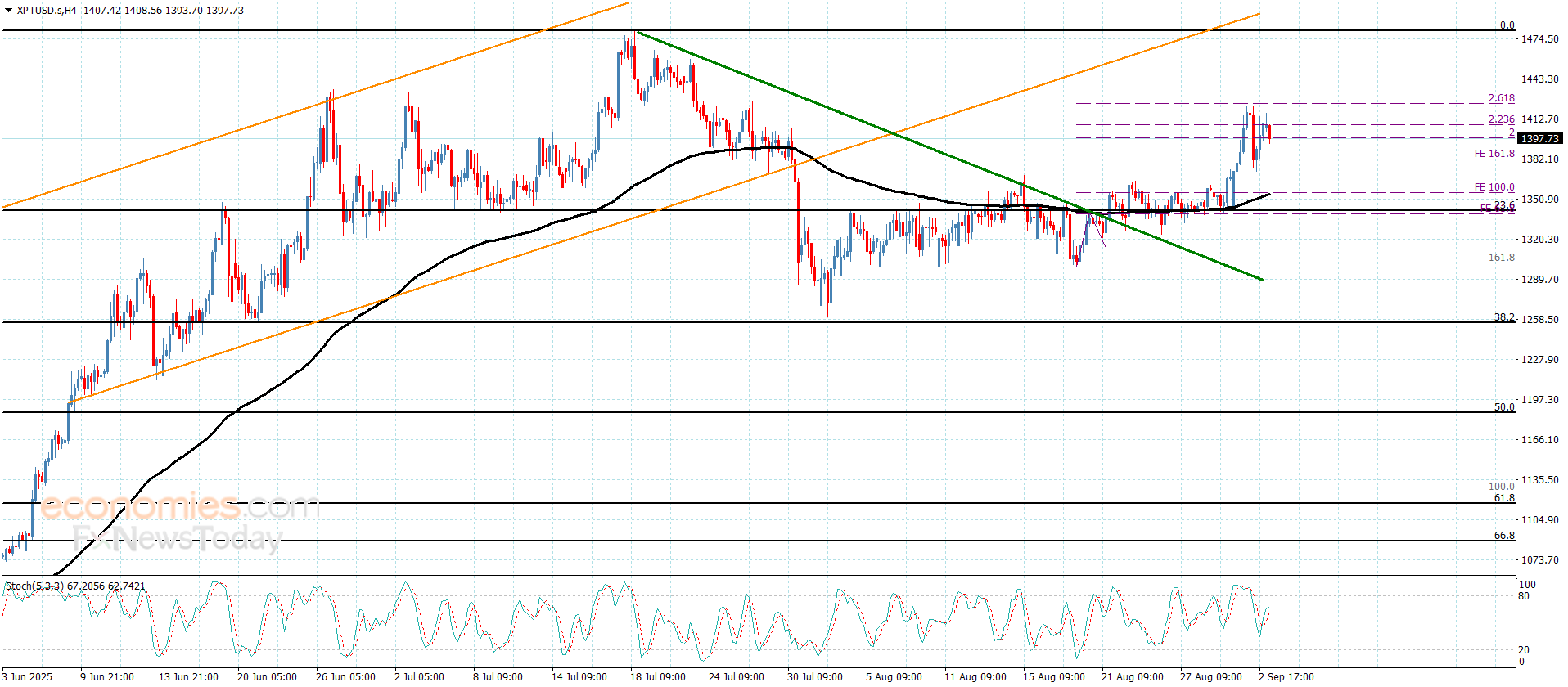
Platinum price gathers some gains– Forecast today – 3-9-2025

By |2025-09-03T09:41:27+03:00September 3, 2025|Forex News, News|0 Comments


The (ETHUSD) price witnessed fluctuated trading in its last intraday levels, due to the stability of the key support at $4,250, gaining the bullish momentum that helped it to settle temporarily, as the price is under negative pressure that comes from its trading below EMA50, amid the dominance of the bearish correctional trend on the short-term basis, and its trading alongside a bias line, besides the emergence of the negative signals on the (RSI), after reaching overbought levels.


VIP Trading Signals Performance by BestTradingSignal.com (August 25–29, 2025)


Get high-accuracy trading signals delivered directly to your Telegram. Subscribe to specialized packages tailored for the world’s top markets:


Full VIP signals performance report for August 25–29, 2025:

  View Full Performance Report


Source link

3 09, 2025

Australia Dietary Supplements Market Size, Share, Growth &

By |2025-09-03T09:39:31+03:00September 3, 2025|Dietary Supplements News, News|0 Comments


Australia Dietary Supplements Market

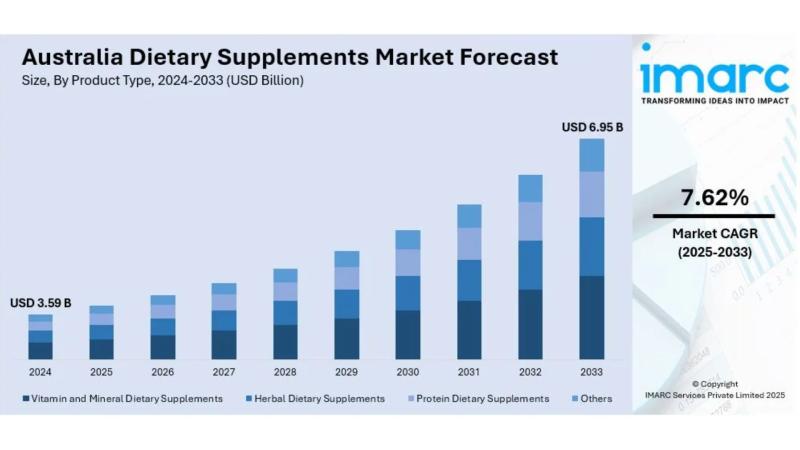
The latest report by IMARC Group, titled ” Australia Dietary Supplements Market Size, Share, Trends and Forecast by Product Type, Form, Distribution Channel, Application, End-Use, and Region, 2025-2033,” offers a comprehensive analysis of the Australia dietary supplements market growth. The report also includes competitor and regional analysis, along with a breakdown of segments within the industry. The Australia dietary supplements market size reached USD 3.59 Billion in 2024. Looking forward, IMARC Group expects the market to reach USD 6.95 Billion by 2033, exhibiting a growth rate (CAGR) of 7.62% during 2025-2033.

Report Attributes:

• Base Year: 2024

• Forecast Years: 2025-2033

• Historical Years: 2019-2024

• Market Size in 2024: USD 3.59 Billion

• Market Forecast in 2033: USD 6.95 Billion

• Market Growth Rate 2025-2033: 7.62%

For an in-depth analysis, you can refer to a sample copy of the report: https://www.imarcgroup.com/australia-dietary-supplements-market/requestsample

How Is AI Transforming the Dietary Supplements Market in Australia?

• Personalized Nutrition: AI-powered platforms are analyzing individual biomarkers, genetic profiles, and lifestyle data to create customized supplement recommendations, with the personalized nutrition market reaching USD 359.5 Million in 2024

• Predictive Analytics: Machine learning algorithms are helping manufacturers forecast demand patterns and optimize inventory management, reducing waste by 20-25% and improving supply chain efficiency

• Smart Formulation: AI is enabling supplement companies to develop targeted formulations based on consumer health data analysis, improving efficacy and reducing trial-and-error approaches

• Digital Health Integration: AI-powered health apps are connecting with wearable devices to recommend supplement adjustments based on real-time health metrics and activity levels

• Quality Control Automation: Artificial intelligence systems are enhancing manufacturing processes by detecting contamination and ensuring consistent product quality, reducing recall incidents by 30%

Australia Dietary Supplements Market Overview

• Aging Population Focus: Australia’s growing senior demographic is driving demand for bone health, cognitive support, and cardiovascular supplements, with older adults representing the fastest-growing consumer segment

• Preventive Healthcare Shift: Post-COVID health consciousness is pushing consumers toward immune-boosting supplements and preventive wellness products rather than reactive healthcare solutions

• E-commerce Expansion: Online sales channels are experiencing rapid growth, with subscription-based models and direct-to-consumer brands gaining significant market share

• Clean Label Movement: Australian consumers are increasingly demanding transparency in ingredients, driving growth in organic, plant-based, and sustainably sourced supplement products

• Regulatory Compliance: TGA (Therapeutic Goods Administration) oversight is ensuring product safety and quality, building stronger consumer confidence in the market

Key Features and Trends of Australia Dietary Supplements Market

• Beauty from Within: Collagen peptides, hyaluronic acid, and antioxidant supplements are gaining popularity as consumers seek supplements that support both health and appearance

• Convenience Formats: Effervescent tablets, and ready-to-drink formulations are experiencing high growth due to busy lifestyles and consumer preference for easy consumption

• Sports Nutrition Growth: Protein powders and performance supplements are expanding beyond traditional athletes to include fitness enthusiasts and active aging populations

• Mental Health Focus: Adaptogens, omega-3 fatty acids, and stress-management supplements are gaining traction as mental wellness becomes a priority

• Sustainable Packaging: Eco-friendly packaging solutions are becoming standard as environmentally conscious consumers demand sustainable product options

Growth Drivers of Australia Dietary Supplements Market

• Health Consciousness: Rising awareness about preventive healthcare and wellness is driving proactive supplement consumption across all age demographics

• Lifestyle Pressures: Busy modern lifestyles are creating nutritional gaps that consumers are addressing through convenient supplement solutions

• Aging Demographics: Australia’s aging population is seeking supplements for healthy aging, joint health, cognitive function, and quality of life maintenance

• Digital Health Integration: Integration with fitness apps and wearable technology is making personalized supplementation more accessible and data-driven

• Professional Endorsements: Healthcare practitioner recommendations and evidence-based formulations are building consumer trust and driving adoption

Browse Full Report with TOC & List of Figures: https://www.imarcgroup.com/australia-dietary-supplements-market

Innovation & Market Demand of Australia Dietary Supplements Market

• Personalized Solutions: Companies are leveraging AI and genetic testing to create customized supplement protocols tailored to individual health profiles and biomarkers

• Scientific Validation: Manufacturers are investing heavily in clinical research to substantiate health claims and differentiate products in the competitive marketplace

• Functional Ingredients: Novel ingredients like probiotics, adaptogens, and plant-based proteins are being incorporated into traditional supplement categories

• Smart Packaging: QR codes and smart labels are providing consumers with detailed product information, dosage tracking, and authenticity verification

• Cross-Category Innovation: Traditional supplement companies are expanding into functional foods, beverages, and beauty products to capture broader market opportunities

Australia Dietary Supplements Market Opportunities

• Digital Health Integration: Growing adoption of health monitoring devices creates opportunities for real-time supplement recommendations and dosage adjustments

• Export Potential: Australia’s reputation for high-quality, clean products presents opportunities to expand into Asian markets with premium positioning

• Indigenous Ingredients: Unique Australian botanicals and superfoods offer differentiation opportunities in both domestic and international markets

• Telehealth Integration: Partnership opportunities with telehealth platforms can expand access to personalized supplement recommendations and monitoring

• Workplace Wellness: Corporate wellness programs present opportunities for B2B supplement solutions targeting employee health and productivity

Australia Dietary Supplements Market Challenges

• Regulatory Complexity: TGA compliance requirements create barriers for new entrants and can slow product innovation and time-to-market for new formulations

• Market Saturation: Intense competition among numerous brands makes differentiation difficult and puts pressure on margins and marketing costs

• Raw Material Costs: Global supply chain disruptions and ingredient shortages are increasing production costs and affecting profitability across the industry

• Consumer Education: Misconceptions about supplement safety and efficacy require ongoing investment in consumer education and scientific communication

• Price Sensitivity: Economic pressures may force consumers to prioritize essential supplements over premium or specialized products, affecting market growth

Australia Dietary Supplements Market Analysis

• Product Segmentation: Vitamin and mineral supplements dominate with 45% market share, followed by herbal supplements at 30% and protein supplements at 20%

• Distribution Evolution: Pharmacies remain the largest channel at 40%, while online sales are rapidly growing to 25% market share, with supermarkets holding 20%

• Consumer Demographics: Adults aged 35-55 represent the largest consumer base, while seniors and fitness enthusiasts show the highest growth rates

• Price Point Analysis: Mid-range products ($20-50) capture the largest market share, while premium products ($50+) are experiencing faster growth rates

• Regional Distribution: New South Wales and Victoria account for 65% of market consumption, driven by higher disposable income and health awareness

Australia Dietary Supplements Market Segmentation:

1. By Product Type:

o Vitamin and Mineral Dietary Supplements

o Herbal Dietary Supplements

o Protein Dietary Supplements

o Others

2. By Form:

o Tablets

o Capsules

o Powders

o Liquids

o Soft Gels

o Gel Caps

3. By Distribution Channel:

o Pharmacies and Drug Stores

o Supermarkets and Hypermarkets

o Online Channels

o Others

4. By Application:

o Additional Supplements

o Medicinal Supplements

o Sports Nutrition

5. By End-Use:

o Infant

o Children

o Adults

o Pregnant Women

o Old-Aged

6. By Region:

o Australia Capital Territory & New South Wales

o Victoria & Tasmania

o Queensland

o Northern Territory & Southern Australia

o Western Australia

Australia Dietary Supplements Market News & Recent Developments:

March 2025: Australian brand Vincent entered the U.S. market with a four-step beauty regimen combining skincare and dietary supplements, featuring activated phenolics extracted from Australian apples using patented solvent-free technology.

2024 Market Update: The personalized nutrition and supplements market in Australia reached USD 359.5 Million, with projections to grow to USD 853.5 Million by 2030, representing 2.6% of global market revenue.

Australia Dietary Supplements Market Key Players:

• Blackmores Group

• Swisse Wellness Pty Ltd

• Abbott Nutrition

• Amway Corp.

• Bayer AG

• BioGaia Australia

• Bulk Nutrients

• Lipa Pharmaceuticals

• Nature’s Sunshine Products of Australia Pty Ltd

• NOW Health Group, Inc.

• Nu Skin Pacific

• Vitaco

• Life-Space Probiotics

• BioMedica

• Nutralife Health Products

Key Highlights of the Report:

1. Market Performance (2019-2024)

2. Market Outlook (2025-2033)

3. COVID-19 Impact on the Market

4. Porter’s Five Forces Analysis

5. Strategic Recommendations

6. Historical, Current and Future Market Trends

7. Market Drivers and Success Factors

8. SWOT Analysis

9. Structure of the Market

10. Value Chain Analysis

11. Comprehensive Mapping of the Competitive Landscape

Note: If you need specific information that is not currently within the scope of the report, we can provide it to you as a part of the customization.

Ask analyst for your customized sample: https://www.imarcgroup.com/request?type=report&id=33044&flag=E

FAQs: Australia Dietary Supplements Market

Q1: What is driving the strong growth in Australia’s dietary supplements market?

A: The market is driven by an aging population, growing health consciousness, busy lifestyles creating nutritional gaps, and increased focus on preventive healthcare following the COVID-19 pandemic.

Q2: Which product categories are experiencing the fastest growth?

A: Beauty-from-within supplements (collagen, hyaluronic acid), sports nutrition products, and personalized supplement solutions are showing the highest growth rates in the Australian market.

Q3: How is AI transforming the dietary supplements industry in Australia?

A: AI is enabling personalized nutrition recommendations, predictive inventory management, smart formulation development, and integration with digital health platforms for real-time supplement adjustments.

Q4: What role does TGA regulation play in the market?

A: TGA oversight ensures product safety and quality, building consumer confidence, but also creates compliance challenges that can slow innovation and increase costs for manufacturers.

Q5: Which distribution channels are growing fastest in Australia?

A: Online channels are experiencing the most rapid growth, with subscription models and direct-to-consumer brands gaining market share, while traditional pharmacies still maintain the largest market share.

Conclusion of Report:

• Robust Market Expansion: The Australian dietary supplements market is experiencing strong growth, driven by demographic shifts, health consciousness, and technological innovation in personalized nutrition

• Digital Transformation: AI-powered personalization and e-commerce integration are reshaping how consumers discover, purchase, and consume dietary supplements across the country

• Quality Focus: TGA regulation and consumer demand for transparency are driving higher quality standards and evidence-based formulations throughout the industry

• Innovation Pipeline: Companies are investing in novel ingredients, delivery formats, and cross-category products to meet evolving consumer needs and preferences

• Sustainable Future: The market is well-positioned for continued growth through 2033, supported by an aging population, preventive healthcare trends, and ongoing technological advancements

Contact Us:

134 N 4th St. Brooklyn, NY 11249, USA

Email: sales@imarcgroup.com

Tel No: (D) +91 120 433 0800

United States: +1-201971-6302

About Us:

IMARC Group is a leading market research company that provides management strategy and market research worldwide. We partner with clients in all sectors and regions to identify their highest-value opportunities, address their most critical challenges, and transform their businesses. Our solutions include comprehensive market intelligence, custom consulting, and actionable insights to help organizations make informed decisions and achieve sustainable growth.

This release was published on openPR.


Source link

3 09, 2025

Cardano Price Prediction Leaves ADA Holders Concerned, Many Have Rotated To This New ETH L2 Token

By |2025-09-03T09:38:16+03:00September 3, 2025|Crypto News, News|0 Comments

Recent Cardano price prediction updates have sparked concern among ADA holders. Analysts have significantly lowered their short-term expectations. The revised forecasts reflect growing competition from innovative Ethereum Layer 2 solutions that offer both technological advantages and superior growth potential. 

Layer Brett has become the primary destination for these rotating funds. Capturing attention with its unique combination of meme culture energy and genuine Ethereum Layer 2 utility. The project’s ability to deliver immediate functionality rather than promised future developments resonates strongly with investors frustrated by Cardano price stagnation. 

Understanding the Cardano price prediction concerns

The weakening Cardano price prediction stems from several fundamental market shifts rather than ADA-specific issues. The project’s methodical development pace struggles to compete with faster-moving Layer 2 solutions that deliver working products today. While Cardano’s research-driven approach ensures quality, it increasingly misses market timing opportunities that impact short-term Cardano price movement.

The Cardano price prediction challenges also reflect mathematical realities of large market capitalizations. ADA requires substantial capital inflow to achieve meaningful percentage gains, making explosive growth increasingly difficult regardless of technological developments.

Why Layer Brett attracts rotating capital

Layer Brett’s value proposition addresses the specific concerns driving Cardano price uncertainty. Its Ethereum Layer 2 foundation provides instant transactions and negligible fees that solve real user problems today. This practical utility creates organic adoption beyond speculative interest, differentiating it from projects that primarily offer future promises.

The project’s micro-cap status enables mathematical growth possibilities that Cardano price movement cannot match. It requires significantly less capital to achieve substantial percentage gains, making ambitious returns realistically achievable rather than theoretically possible. 

Technological comparison highlights key differences

Cardano offers sophisticated technology that remains largely theoretical for most users. Layer Brett delivers working solutions through its established Ethereum Layer 2 infrastructure. Users experience immediate benefit, including seamless transactions and minimal costs, regardless of network conditions.

This technological gap becomes increasingly important as the market matures. Investors increasingly prioritize projects that solve immediate problems rather than those offering future potential. The ability to demonstrate utility today often outweighs promises of tomorrow’s functionality.

Market timing and investment strategy

The Cardano price prediction uncertainty coincides perfectly with Layer Brett’s presale phase, creating ideal rotation conditions. Smart investors recognize that moving during periods of uncertainty often leads to superior returns compared to waiting for clarity. 

The presale structure provides additional advantages through fixed pricing before exchange listings. This early access typically generates better returns than buying established tokens at higher valuations after major price movements.

Community and development momentum shifts

Cardano maintains a dedicated community, but developer attention is increasingly shifting toward Layer 2 solutions. The market’s evolution toward practical utility over theoretical perfection benefits projects that demonstrate working technology. This trend supports Layer Brett’s growing momentum at the expense of slower-moving projects.

The combination of technological utility and community energy creates powerful network effects that can accelerate adoption. These effects often drive growth beyond what either factor could achieve independently, creating sustainable momentum.

Strategic repositioning opportunity

The Cardano price prediction concerns have created a strategic opportunity for portfolio optimization. Layer Brett offers exposure to technological innovation and growth potential that larger projects cannot match.

Visit layerbrett.com to explore this Ethereum Layer 2 opportunity during its current presale phase. 

Presale: Layer Brett | Fast & Rewarding Layer 2 Blockchain

Telegram: View @layerbrett

X: Layer Brett (@LayerBrett) / X


This article contains information about a cryptocurrency presale. Crypto Economy is not associated with the project. As with any initiative within the crypto ecosystem, we encourage users to do their own research before participating, carefully considering both the potential and the risks involved. This content is for informational purposes only and does not constitute investment advice.

Source link

3 09, 2025

ISM beats previous, can NFP drive break above 150?

By |2025-09-03T07:38:59+03:00September 3, 2025|Forex News, News|0 Comments

  • USD/JPY holds near 149 after ISM PMI improved from 48.0 to 48.7. Can NFP push the pair through 150 or trigger a pullback?
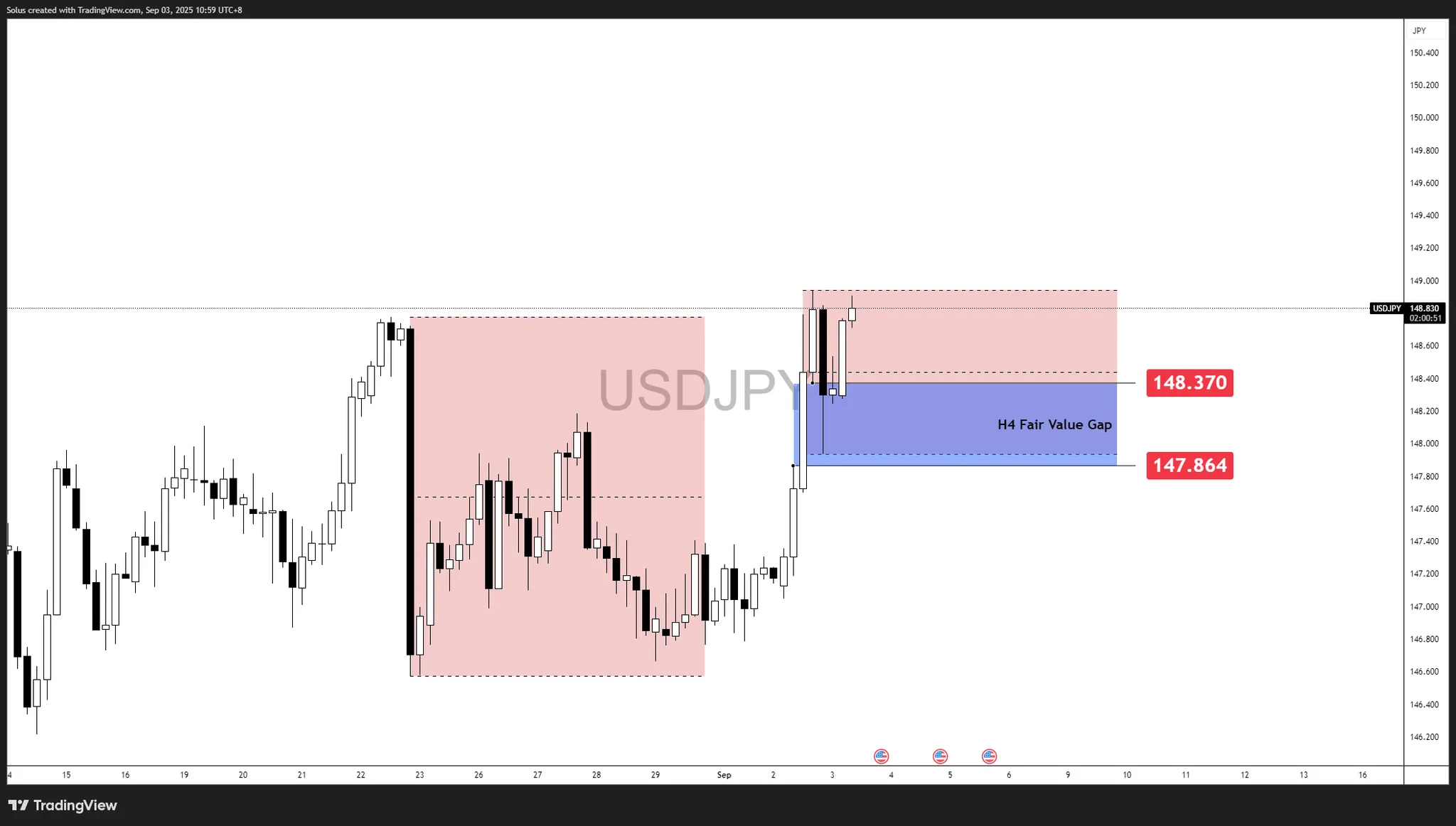
  • USD/JPY extends higher after bouncing off the H4 Fair Value Gap (147.864–148.370) and is retesting the 149.00 resistance with 150.00 back in sight.
  • BoJ’s cautious stance keeps the yield gap wide while U.S. data shows incremental improvement, sustaining dollar demand.
  • A clean break above 149.00 unlocks a run toward 150.00–151.20; a firm rejection at 149.00 risks a dip back into 148.37–147.86 before NFP.

Why USD/JPY stays bid

Dollar-yen is trading heavy-on-the-upside: U.S. yields remain comparatively firm and the BoJ continues to signal patience on policy normalization, reinforcing the positive carry in favor of USD.

BoJ’s cautious stance: Policy divergence widens (concise)

The BoJ remains deliberately cautious, emphasizing the need for sustained wage-led inflation before meaningful tightening. With JGB 10-year yields near ~1% versus much higher U.S. Treasury yields, the carry incentive favors holding dollars over yen. That yield differential is a persistent structural tailwind for USD/JPY, keeping dips shallow and making pullbacks into demand zones (like your H4 FVG) buyable until the BoJ signals a firmer path to normalization.

ISM PMI: Missed forecast, but trend improved (why USD popped)

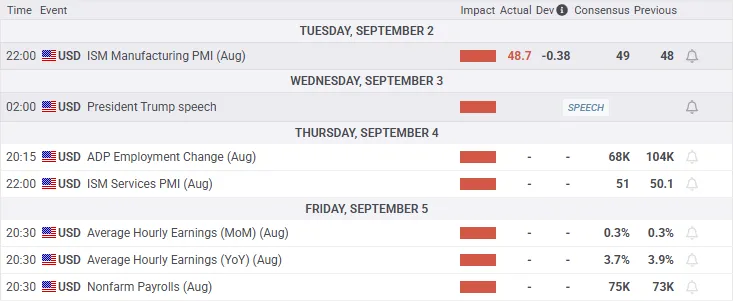
ISM Manufacturing PMI (Aug) printed 48.7, a touch below 49.0 forecast – but above the previous 48.0. Markets read that as stabilization rather than deterioration, and the USD caught a bid despite the “contractionary” label. This is a good reminder that direction of change often beats the absolute level.

Red-folder watch (this week)

  • JOLTs Job Openings (Wed)
  • ISM Services PMI (Thu)
  • Nonfarm Payrolls + Unemployment Rate (Fri)

Technical outlook: H4 FVG bounce → 149 retest

USD/JPY has bounced off the H4 FVG (147.864–148.370) decisively and pressing back into 148.80–149.00, where supply capped prior attempts. That reaction confirms active demand inside the gap and keeps the bullish structure intact into Friday’s data.

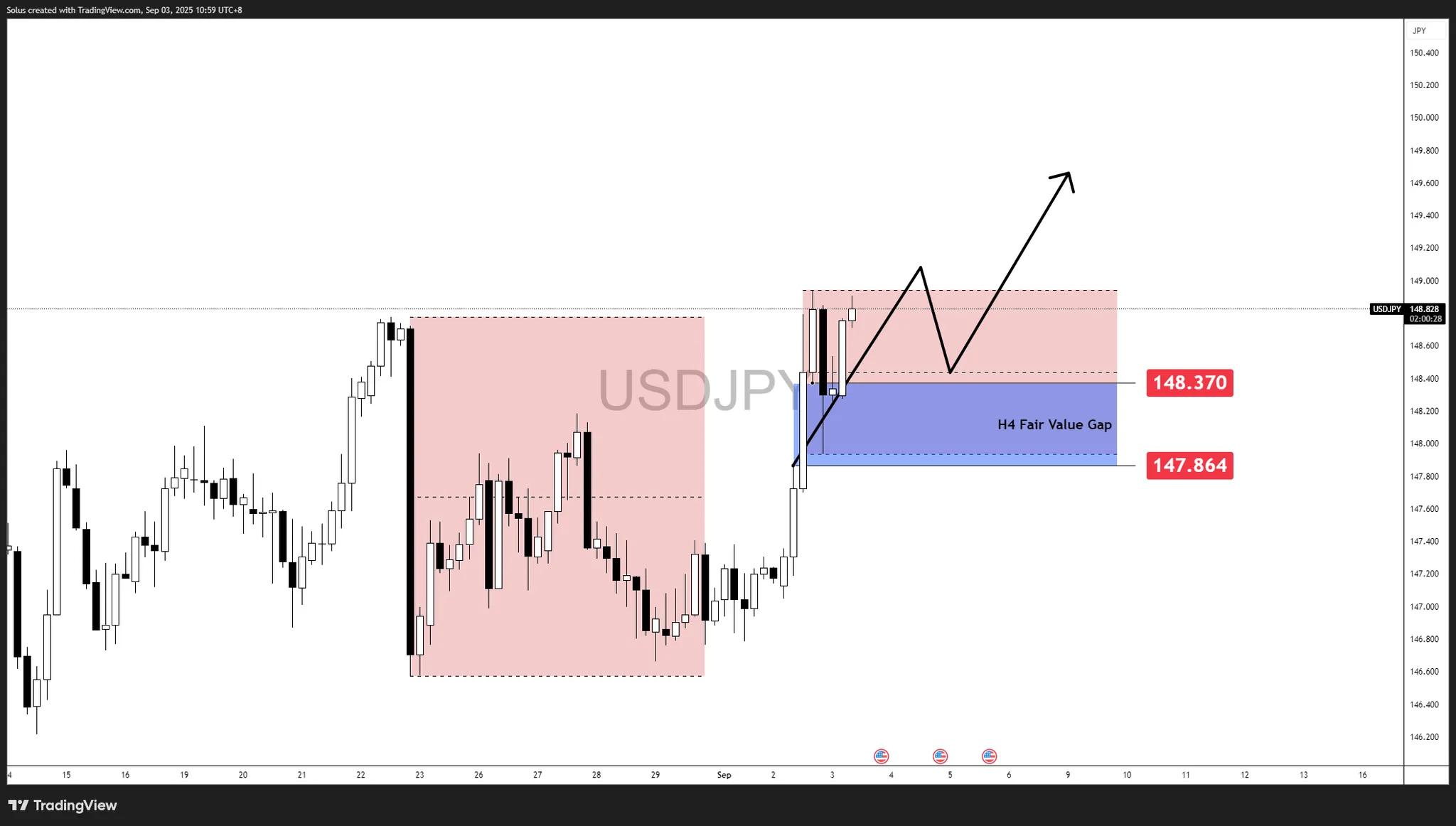
Bullish scenario: FVG demand holds, breakout above 149 in play

On the chart, price reacted cleanly from the H4 Fair Value Gap (147.864–148.370), confirming it as a demand zone. That bounce carried USD/JPY back into the 148.80–149.00 resistance band, where sellers capped momentum previously. If bulls can force a breakout above this zone, the path toward the psychological 150.00 handle opens up.

  • A sustained close above 149.00 signals continuation.
  • Next liquidity rests at 149.50 before the round 150.00.
  • Break of 150 unlocks extension targets at 150.70–151.20.
  • FVG remains the defense line; pullbacks into 148.37–148.20 can act as continuation setups.

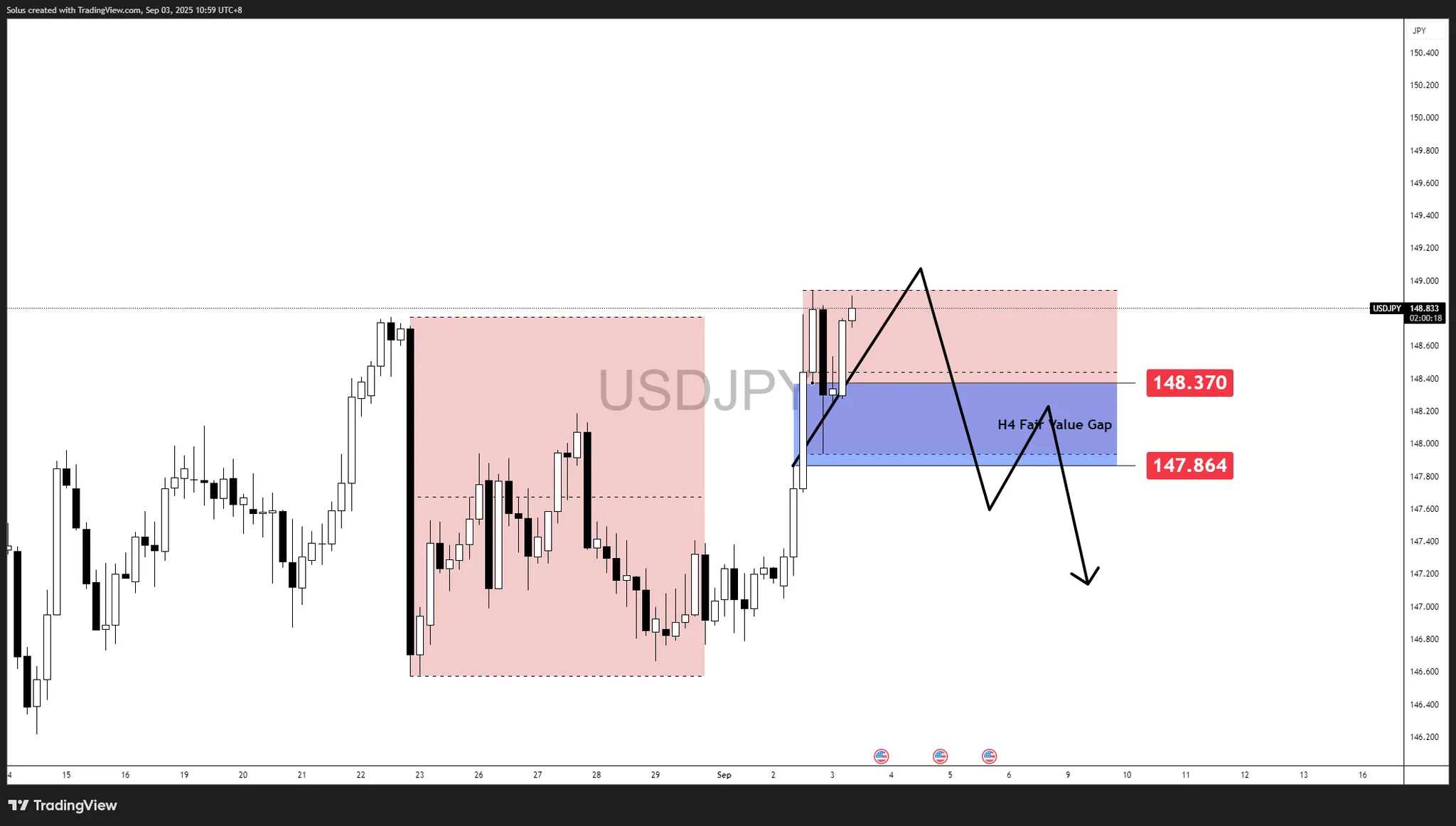
Bearish scenario: Rejection at 149, back into the gap

The same chart also highlights the risk: 149.00 is still acting as firm resistance. If price fails to clear this zone and prints rejection wicks or bearish engulfing patterns, sellers may regain control. That would likely send USD/JPY back into the H4 FVG (147.864–148.370) to test demand again.

  • Failure at 149.00 brings downside back to the FVG mid-point (~148.20).
  • Break below 147.864 signals demand exhaustion.
  • If that occurs, price risks a deeper move to 147.20 → 146.80–146.20.
  • Such a shift would frame the August rebound as distribution at premium pricing.

NFP game plan: Jobs data as the decider

Friday’s Nonfarm Payrolls (NFP) and Unemployment Rate will likely act as the catalyst that decides whether USD/JPY breaks cleanly above 149.00 or falls back into the H4 Fair Value Gap (147.864–148.370).

Bullish NFP outcome (supports breakout above 149)

If headline NFP beats expectations (>75K) and unemployment holds steady or drops:

  • Markets will interpret it as labor resilience.
  • Yields stay firm, reinforcing the dollar’s edge over the yen.
  • USD/JPY would likely break above 149.00 quickly, targeting 149.50 → 150.00 into early next week.
  • Strong upside surprise could even accelerate toward 150.70–151.20 liquidity zones.

Bearish NFP outcome (triggers rejection at 149)

If NFP misses (<75K) and unemployment ticks up (>4.3%):

  • Dollar sentiment weakens, and yields soften.
  • USD/JPY would likely reject 149.00, slipping back into the FVG for retests.
  • Break below 147.864 exposes 147.20 → 146.80–146.20 downside liquidity.
  • Weak data could reframe the recent rally as distribution at premium levels.

Source link

3 09, 2025

Scientists Develop Edible “Fat Sponges” From Green Tea and Seaweed

By |2025-09-03T07:36:58+03:00September 3, 2025|Dietary Supplements News, News|0 Comments


Current weight-loss treatments like surgery or fat-blocking drugs can be risky, but researchers are testing a gentler alternative. They’ve developed edible, plant-based microbeads that bind to fat in the gut, preventing absorption. Credit: Stock

Researchers have developed plant-based microbeads that block fat absorption in the gut.

Current strategies for weight loss, such as gastric bypass surgery or medications that block fat absorption, often come with significant risks or unpleasant side effects. Scientists are now exploring a different option: edible microbeads made from green tea polyphenols, vitamin E, and seaweed. Once swallowed, these beads attach to dietary fats inside the digestive tract. Early studies in rats that were fed high-fat diets suggest this method could provide a safer and more widely available alternative to traditional surgery or drug-based treatments.

Yue Wu, a graduate student at Sichuan University, is scheduled to present the team’s findings at the ACS Fall 2025 Digital Meeting.

“Losing weight can help some people prevent long-term health issues like diabetes and heart disease,” says Wu. “Our microbeads work directly in the gut to block fat absorption in a noninvasive and gentle way.”

The Challenge of Fat Absorption

Weight gain can be influenced by both genetic and lifestyle factors, one of the most important being diet. According to the U.S. Department of Agriculture, a high-fat diet is defined as one in which 35% or more of daily calories come from fat rather than protein or carbohydrates.

Some approved drugs, such as orlistat, reduce fat absorption by interfering with the enzymes that break down dietary fats. While effective, orlistat has been linked to serious side effects in certain patients, including damage to the liver and kidneys.

So, Wu and her colleagues wanted to target the fat absorption process with their weight-loss intervention but do so without negative side effects. “We want to develop something that works with how people normally eat and live,” says Wu.

Scientists Develop Edible “Fat Sponges” From Green Tea and Seaweed
These plant-based microbeads absorb and trap fat. Credit: Yue Wu

To get started, the team created tiny plant-based beads that spontaneously form through a series of chemical bonds between the green tea polyphenols and vitamin E. These structures can form chemical tethers to fat droplets and serve as the fat-binding core of the microbeads. The researchers then coated the spheres in a natural polymer derived from seaweed to protect them from the acidic environment of the stomach. Once ingested, the protective polymer coating expands in response to the acidic pH, and the green tea polyphenols and vitamin E compounds bind to and trap partially digested fats in the intestine.

Integrating Microbeads into Diets

The microbeads are nearly flavorless, and the researchers foresee them being easily integrated into people’s diets. For example, the microbeads could be made into small tapioca- or boba-sized balls and added to desserts and bubble teas.

The researchers assessed the microbeads as a weight-loss treatment in rats. They put the animals into three groups (eight rats per group), those which were fed a high-fat diet (60% fats) either with or without microbeads and those which were fed a normal diet (10% fats) for 30 days. Rats fed the high-fat diet and microbeads:

  • Lost 17% of their total body weight, while rats in the other groups didn’t lose weight.
  • Had reduced adipose tissue and less liver damage compared to rats fed the high-fat and normal diets without microbeads.
  • Excreted more fat in their feces compared to rats not given microbeads. The extra fat in the rats’ feces had no apparent ill effects on the animals’ health.

Additionally, the eight rats on high-fat diets that consumed microbeads showed similar intestinal fat excretion, but without the gastrointestinal side effects the researchers observed with a fourth group of rats they treated with orlistat.

Wu and her team have started working with a biotechnology company to manufacture the plant-based beads. “All the ingredients are food grade and FDA-approved, and their production can be easily scaled up,” says Yunxiang He, Sichuan University associate professor and co-author on Wu’s presentation.

They’ve also initiated a human clinical trial in collaboration with the West China Hospital of Sichuan University. “This represents a major step toward clinical translation of our polyphenol-based microbeads, following our foundational results,” says Wu. “We have officially enrolled 26 participants in our investigator-initiated trial, and we anticipate that preliminary data may become available within the next year.”

Meeting: ACS Fall 2025

The research was funded by National Key R&D Program of China; the National Excellent Young Scientists Fund; the National Natural Science Foundation of China; the Talents Program of Sichuan Province; the Double First-Class University Plan of Sichuan University; the State Key Laboratory of Polymer Materials Engineering; the Tianfu Emei Program of Sichuan Province; the Postdoctoral Special Funding of Sichuan Province; the Postdoctoral Funding of Sichuan University; the Ministry of Education Key Laboratory of Leather Chemistry and Engineering; and the National Engineering Research Center of Clean Technology in Leather Industry.

Never miss a breakthrough: Join the SciTechDaily newsletter.


Source link

3 09, 2025

Regulatory Clarity and ETF Hopes Fuel XRP’s Pivotal Crossroads

By |2025-09-03T07:35:52+03:00September 3, 2025|Crypto News, News|0 Comments

XRP, the native cryptocurrency of the XRP Ledger, is currently navigating a period of uncertainty and potential amid a mix of positive developments and market volatility. As of today, September 3, 2025, XRP is trading at a critical support level around $2.73, a threshold that has drawn attention from market analysts. If the price fails to stabilize above this level, it could signal a continuation of the bearish pattern, potentially leading to a drop to $2.33 [2].

Recent price movements indicate that XRP is forming a bearish descending triangle on its daily chart, a technical pattern that could drive further downward momentum if the 20-day exponential moving average (EMA) at $2.94 fails to hold [2]. Analysts suggest that buyers will need to push and maintain the price above the downtrend line to signal a potential rebound. A successful breakout could see XRP climb to $3.40, a level that has historically acted as a psychological barrier for traders [2].

The XRP market has also seen increased activity, with Ripple continuing to expand its institutional partnerships and infrastructure. Notably, Ripple recently integrated its XRP Ledger with Wormhole to enhance cross-chain capabilities, a move that could bolster the token’s utility in the institutional blockchain space [3]. Additionally, the company has launched an Ethereum Virtual Machine (EVM) sidechain, which is expected to attract more Ethereum-based decentralized applications (dApps) to the XRP ecosystem [3]. These developments are seen as key drivers for long-term growth, especially as Ripple seeks to expand its market share in the cross-border payments sector.

Regulatory clarity has also emerged as a positive catalyst for XRP. The ongoing legal battle with the U.S. Securities and Exchange Commission (SEC) appears to be nearing a resolution. On June 22, 2025, a U.S. judge denied the SEC’s and Ripple’s second bid to amend the penalty in the case, signaling a potential end to the protracted legal conflict [3]. This resolution is expected to remove a major overhang on investor sentiment and could lead to renewed institutional interest in XRP.

Looking ahead, several macroeconomic and market factors are influencing short-term expectations for XRP. One notable event is the anticipated launch of an XRP ETF in October, which could significantly boost demand and liquidity for the token [1]. Institutional adoption is another key factor, with Ripple forming new partnerships with financial institutions such as Linklogis and Santander to expand its global remittance services [1]. These collaborations are expected to drive further adoption and utility for XRP, particularly in the enterprise blockchain space.

Market speculation has also been building around XRP’s potential inclusion in major ETFs and its broader adoption in decentralized finance (DeFi). Ripple’s partnership with Gemini for a limited edition XRP credit card is a step toward integrating the token into everyday financial transactions, offering a 4% cashback on purchases such as fuel, groceries, and EV charging [1]. This move is seen as a strategic effort to increase retail adoption and utility for XRP.

Despite these positive developments, XRP remains subject to broader crypto market trends. The recent bearish sentiment in the crypto space has led to a general pullback in altcoin prices, with XRP being no exception. On the daily chart, the token has seen increased volatility, with open interest in XRP futures hitting a five-month high [3]. This suggests that traders are actively positioning themselves for potential price swings, either bullish or bearish, depending on the outcome of key support and resistance levels.

In terms of price predictions, some analysts are optimistic about XRP’s short-term potential. If the token manages to break out of the $5 to $7 range, it could potentially reach a peak of $9 by the end of 2025 [1]. This would mark a significant milestone for XRP, especially considering its historical highs. However, the path to this target is expected to be volatile, with some analysts forecasting a potential dip to $4.69 in 2026 before a broader bull run takes hold [1].

In summary, XRP is at a pivotal moment as it navigates both technical and fundamental catalysts. While the immediate outlook remains cautious, with key support levels under pressure, the broader narrative of institutional adoption, regulatory resolution, and technological expansion provides a strong foundation for long-term optimism. As the market continues to evolve, investors are advised to closely monitor price action, macroeconomic developments, and Ripple’s strategic initiatives to gauge the token’s future trajectory.

Source:

[1] XRP Price Prediction 2025 – 2030 & Top Alternatives to Buy (https://icobench.com/cryptocurrency/xrp-price-prediction/)

[2] Price predictions: SPX, DXY, BTC, ETH, XRP, BNB, SOL, DOGE, ADA, LINK (https://cointelegraph.com/news/price-predictions-9-1-spx-dxy-btc-eth-xrp-bnb-sol-doge-ada-link)

[3] Crypto Ripple / US Dollar XRP/USD Chart Daily (https://finviz.com/crypto_charts.ashx?p=d&t=XRPUSD)

Source link

Go to Top