About Editorial team of BIPNs

Main team of content of bipns.com. Any type of content should be approved by us.
12 09, 2025

Cardano News Today, HBAR Price Prediction & Which Are Wall Street Traders Backing As The Hottest Crypto Today

By |2025-09-12T19:54:23+03:00September 12, 2025|Crypto News, News|0 Comments

Cardano news today paints a mixed picture, with strong ecosystem upgrades failing to translate into price momentum. Meanwhile, fresh optimism is brewing around HBAR price predictions, as Hedera builds traction in enterprise adoption and blockchain innovation.

But beyond the big names, whispers on Wall Street trading desks are focusing on the hottest crypto presale of 2025—Layer Brett (LBRETT). With its hybrid Ethereum Layer-2 design and explosive growth potential, LBRETT is quickly becoming traders’ favorite for outsized returns.

HBAR price prediction points to a mixed outlook

Hedera Hashgraph (HBAR) continues to capture headlines as its enterprise partnerships multiply. From global brands like Google and IBM to fintech platforms leveraging Hedera’s hashgraph technology, HBAR has carved out a niche in decentralized governance and real-world utility.

According to CoinMarketCap, HBAR is trading in the $0.2 zone, a more than 380% growth in the past year. Current HBAR price predictions from WalletInvestor estimate HBAR could climb toward $0.5 in 2025. On the other hand, Gov.Capital expects the token to hover around $0.2-$0.3 for the rest of the year.

With its high circulating supply of 42 billion tokens, some traders see HBAR as a stable, enterprise-focused bet but not a high-ROI play. 

Cardano News Today, HBAR Price Prediction & Which Are Wall Street Traders Backing As The Hottest Crypto Today

Cardano news today: Robust ecosystem, poor price response

Turning to Cardano (ADA) news today, the ecosystem has made impressive strides. With over 1,400 active projects spanning DeFi, NFTs, and governance, Cardano’s network activity is undeniably strong

The rollout of Hydra, its Layer-2 scaling solution, promises to dramatically improve throughput and efficiency. On top of that, Cardano remains one of the most energy-efficient blockchains, attracting institutional attention for its eco-friendly consensus model.

But here’s the problem—ADA’s price isn’t reflecting any of this progress. Despite multiple upgrades, ADA has been stuck in a multi-year downtrend, down over 70% from its highs as it struggles in the $0.8 region. That frustration is pushing investors to consider emerging opportunities, where growth potential looks far stronger.

Why Wall Street traders are flocking to Layer Brett

Layer Brett (LBRETT) is being hailed as the hottest crypto presale of 2025, and for good reason. Built as an Ethereum Layer-2 solution, Layer Brett addresses the blockchain’s most pressing pain points—scalability and high gas fees. Its hybrid mix of meme coin energy with real utility is what’s driving investor excitement.

The presale has already raised over $3.5 million, a clear sign of market confidence. Investors are also eyeing the 760% staking rewards, which provide a powerful incentive to lock tokens early and grow holdings passively. Add to that a $1 million community giveaway, and you’ve got a project that prioritizes rewarding its backers from day one.

But what really sets LBRETT apart is its scarce 10 billion token supply. Compare that to ADA’s 45 billion or HBAR’s 50 billion tokens, and the growth potential becomes obvious. For Wall Street traders chasing asymmetric returns, LBRETT’s mix of scarcity, utility, and cultural momentum is a winning formula.

Conclusion

The outlook for HBAR and Cardano remains solid in terms of fundamentals, with enterprise adoption and ecosystem growth continuing. But price action tells a different story—both assets are struggling to turn progress into meaningful gains.

That’s why Wall Street attention is shifting to the hottest crypto presale of the year, Layer Brett. With capped supply, powerful staking incentives, and a presale already pulling in millions, LBRETT is shaping up to deliver the kind of ROI that ADA and HBAR simply can’t match.

Website: https://layerbrett.com

Telegram: https://t.me/layerbrett

X: (1) Layer Brett (@LayerBrett) / X

LBR 2

This article is not intended as financial advice. Educational purposes only.

Source link

12 09, 2025

The EURJPY faces stochastic negativity– Forecast today – 12-9-2025

By |2025-09-12T17:56:48+03:00September 12, 2025|Forex News, News|0 Comments

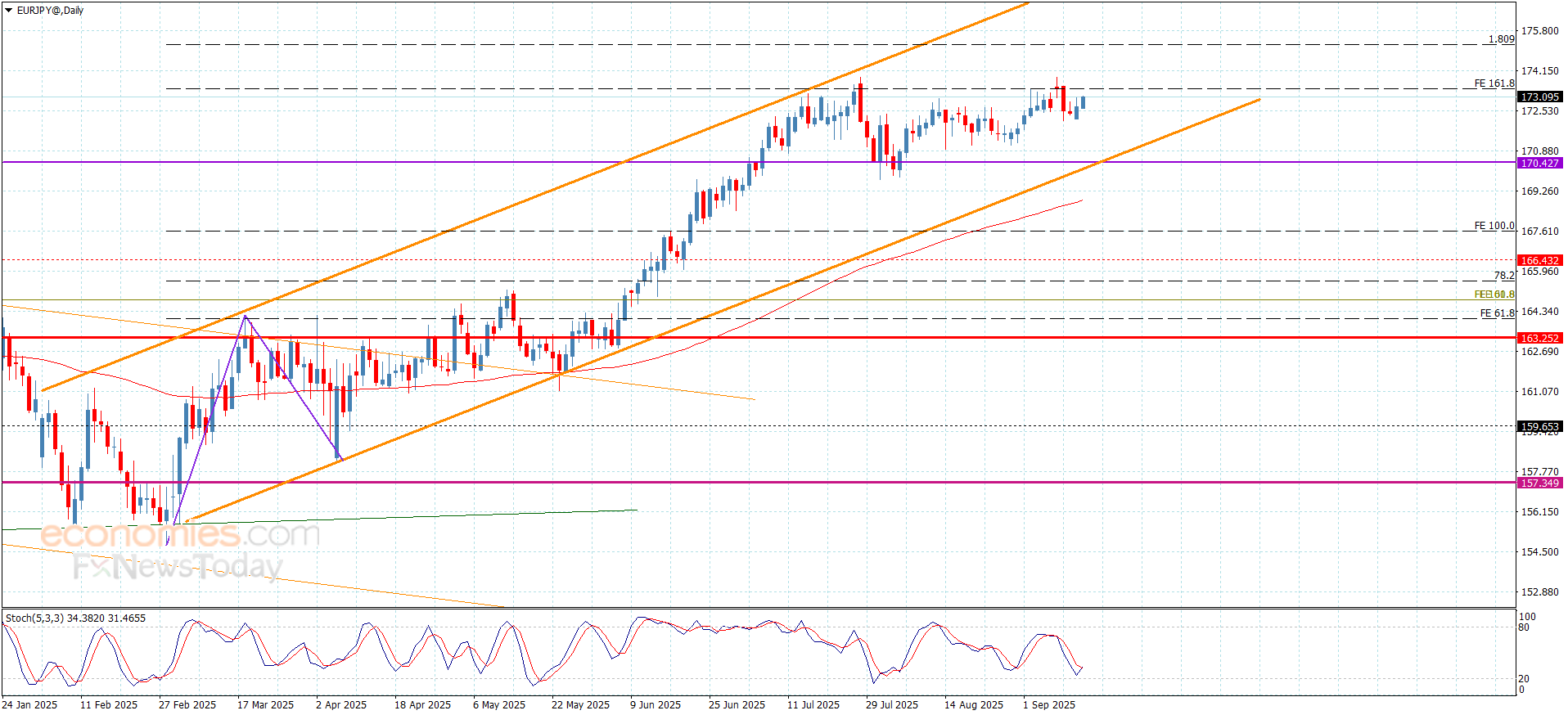
The EURJPY pair succeeded in facing stochastic negativity by its stability above 172.00 level yesterday, to form some of the bullish waves to approach from the barrier at 173.50, forming an obstacle against the attempts of resuming the bullish attack.


To confirm the attempts of resuming the bullish attack, we recommend waiting for breaching the barrier and providing positive close above it, to increase the chances for recording extra gains that might extend to 174.25 reaching 1.809%Fibonacci extension level at 175.20, while the price failure to breach this level will force it to provide more of the sideways trading, and there is a new chance to decline towards 171.60.


The expected trading range for today is between 172.60 and 174.25


Trend forecast: Bullish


Source link

12 09, 2025

Possible FDA changes to GRAS shake supplement industry

By |2025-09-12T17:55:45+03:00September 12, 2025|Dietary Supplements News, News|0 Comments


In the seven months since Robert F Kennedy Jr took his post as secretary of Health and Human Services, the supplement industry has had time to get used to “policy by press-release” and even by tweet, but an early September announcement concerning possible elimination of self-affirmed GRAS came not as a surprise but still something of a shock.

Publishing its Spring 2025 Unified Agenda of Regulatory and Deregulatory Actions, the FDA provided its first proposed rule building on Kennedy’s March announcement directing staff to explore ending rules that allow companies to declare an ingredient “generally recognized as safe” without notifying the FDA. Insiders read the announcement as an indication that self-GRAS will come to an end, possibly forcing companies with self-GRAS ingredients already on the market to notify the FDA and see their supporting evidence face evaluation.

With the industry facing what could be a major obstacle to product development, we asked trade associations and industry insiders for their take on the new developments.

Duffy MacKay, Senior Vice President, Supplements, Consumer Health Product Association

In its Spring 2025 Unified Agenda, the FDA signaled its intent to revisit the Generally Recognized as Safe (GRAS) framework, potentially eliminating the long-standing self-affirmed GRAS pathway. For decades, this pathway has enabled companies to responsibly bring safe, science-based food and dietary supplement ingredients to consumers without unnecessary delays, relying on rigorous expert evaluation. At the direction of HHS Secretary Robert F. Kennedy Jr., FDA has been tasked with what he describes as ‘closing the self-GRAS loophole’ to enhance transparency. Industry, however, does not view this pathway as a ‘loophole,’ but rather, a well-established, science-driven process that has safely served consumers for decades.

Related:Organic at 40: How the industry is thriving despite regulatory uncertainty

While FDA has not yet released a formal proposal, its inclusion in the Unified Agenda signals the agency has been actively developing the rule to align with broader federal efforts under the Make America Healthy Again initiative. Industry stakeholders also value transparency and are committed to working with regulators to strengthen GRAS in ways that enhance public confidence, while also ensuring consumers have continued access to their dietary supplements and avoiding the dismantling of a process that has delivered innovation and safety for decades.

While we cannot comment on specifics until the proposal is made public, any changes to the GRAS framework must be transparent, science-based, and provide industry with a reasonable timeline to adapt, ensuring that safety, innovation, and regulatory clarity move forward together. Experts in the Administration and industry have expressed approaches that should balance modernization, transparency, and feasibility. The leading ideas on the table include requiring notification only for truly new or novel ingredients, setting clear definitions for what ‘new’ actually means, and recognizing exemptions for ingredients already vetted by third-party systems. And importantly, any new rules should be prospective—not retroactive—to avoid unnecessary and unpopular disruptions to America’s food supply.

Related:Kennedy plans to ban artificial dyes, has ‘understanding’ with food industry

Finally, to make any modernizations to the GRAS system truly effective, FDA will need adequate funding for pre- and post-market review and enforcement, and federal preemption will be essential to avoid a patchwork of state laws.

Loren Israelsen, President, United Natural Products Alliance

There are 3 regulatory pathways for dietary supplements: Old Dietary Ingredient status, New Dietary Ingredient status and GRAS affirmation, with or without notice.

Addressing GRAS without also considering the need for an ODI 2.0 and completion if not revision of the NDI Guidance would be a missed opportunity. The goal here is to have efficient, competent pathways to market for dietary supplements that recognize the desire of consumers for ready access to safe and beneficial supplements.  

Related:FDA in 2025: Navigating changes in food and dietary supplement investigations

There will be debates whether FDA has the authority, the capacity and funding to manage a new GRAS system. UNPA will focus it’s efforts on how to make this 3 tiered safety system for DS more efficient and effective.

This is what we believe consumers would want us to do. 

Ashish Talati, Founding Member, Talati Law Firm

On March 10, 2025, HHS Secretary Robert F. Kennedy Jr. instructed the then acting FDA commissioner to explore rulemaking that would eliminate the self-affirmed GRAS pathway. Just a few months later, FDA is preparing to propose exactly that—requiring companies to submit GRAS notices rather than relying on self-determinations. This is significant because FDA has historically acknowledged that it lacks express statutory authority to mandate such notifications. In both the 1997 proposed rule and the 2016 final rule, the agency noted that Congress deliberately excluded GRAS substances from the definition of “food additive,” thereby allowing manufacturers to independently determine GRAS status without FDA involvement.

How FDA will now justify its authority to mandate GRAS notifications remains to be seen. The agency has indicated that the proposed rule would establish a public GRAS inventory and outline how it determines when a substance does not qualify as GRAS.

If finalized, the rule would mark a fundamental change for the food and dietary supplement industries. Dietary supplement companies have long relied on self-GRAS determinations to support eligibility for the NDI food supply exemption under section 413(a)(1) of the FD&C Act, thereby avoiding the need to submit an NDI notification. Closing that pathway would require firms to engage more directly with FDA, likely lengthening ingredient innovation timelines and subjecting new ingredients to greater regulatory scrutiny.

Andrea Wong, Senior Vice President, Science and Regulatory Affairs, Council for Responsible Nutrition

Rather than dismantling a system that allows scientifically reviewed ingredients to reach the market efficiently, FDA should focus on strengthening enforcement mechanisms to ensure the GRAS process is used responsibly. CRN shares the goal of increasing safety and transparency for consumers and stands ready to work with the FDA to achieve it. The solution is not to eliminate self-GRAS, which would stifle innovation, but to provide FDA with the resources and tools it needs to maintain an effective regulatory system that fosters both safety and progress.

Rend Al-Mondhiry, Partner and Co-chair of the Regulatory Group, Amin Wasserman Gurnani

The fact that this proposed rule showed up on the unified agenda wasn’t a total surprise because we know that reform of the GRAS process is a big priority for this administration, but the timing is truly aspirational. It seems like a significant undertaking to have a proposed rule ready by this fall, and Secretary Kennedy’s prior announcement on GRAS reform acknowledges that federal legislation might be needed. There is also court precedent suggesting this. That could add a layer of complication.

Also, the details are sparse, but we know the intent is to eliminate the self-affirmed GRAS pathway and require companies to submit their GRAS conclusions to FDA. Beyond that, we don’t know what’s in store for self-affirmed GRAS ingredients currently on the market, and what if any changes to FDA’s current GRAS review process might be. It’s hard to imagine a scenario where these are taken off the market with little or no notice, and I suspect there will be a window or grace period where these ingredients can be formally submitted to FDA for review. A notification process could also be utilized, and then FDA could decide which ingredients require a deeper review. It’s unclear if that type of option is on the table, but it could be a less drastic option that also addresses some of the transparency concerns. Either way, it seems there will need to be some sort of prioritization of ingredients to avoid a backlog, as a key question in all of this whether FDA has the resources to take on a potential tidal wave of GRAS reviews without significant market disruption. Also, if companies turn to NDI notifications, that could pose a problem as well because, after almost a decade, we still don’t have a final guidance addressing some of the core issues around what is an NDI that requires notification. And again, we run into questions about FDA resources and whether there are enough qualified FDA staff to review numerous NDINs.

So, in the end, there so many unanswered questions around timing and details. We’ll be tracking any developments closely over the coming months.  

Karen Howard, CEO and Executive Director, Organic and Natural Health Association

Per our legal counsel’s perspective, ‘FDA does not have the regulatory authority.’ Ergo, it will be struck down.  They can, of course, try just as we stakeholders can use our toolbox to advocate for statutory changes that are long overdue. It appears 2026 will be an interesting year.

Hands with gloves on examining vitamins and taking notes

Natural Products Association

HHS’s GRAS proposal raises more questions than answers. It is unclear how requiring the submission of GRAS notices for the use of human and animal food substances would impact dietary supplement ingredients. FDA’s premarket review of dietary ingredients is limited to new dietary ingredient notifications—per section 413(a)(2) of the Federal Food, Drug & Cosmetic Act (FD&C Act) and the relevant regulation, 21 CFR 190.6.

The FD&C Act provides an exemption to the premarket notification requirement for NDIs present in the food supply as an article used for food. However, it is a fallacy that self-affirmed GRAS ingredients used in conventional food and beverages—and later marketed in dietary supplements—have not been subject to rigorous safety evaluations. As FDA asserted in its final GRAS rule published in 2016, ‘Fundamental to all conclusions of GRAS status is the criterion that general recognition of safety requires common knowledge throughout the scientific community knowledgeable about the safety of substances directly or indirectly added to food that there is reasonable certainty that the substance is not harmful under the conditions of its intended use.’

NPA has additional questions about the impact of a GRAS rulemaking on FDA’s resources, companies’ intellectual property, the NDI notification process, and dietary ingredients that have already entered U.S. commerce through legitimate, self-affirmed GRAS determinations. NPA cannot comment further on HHS’s proposal until the actual NPRM is published and there is sufficient time to review the details of it.

Meanwhile, NPA is committed to working with the Trump administration to get a better understanding of the impact of the GRAS proposal on dietary ingredients, and the association supports the administration’s focus on ensuring the safety of the nation’s food supply.

Graham Rigby, President and CEO, American Herbal Products Association

AHPA has long recognized that the self-affirmed GRAS process is an important, legal, and rigorous pathway relied upon by companies that operate in both the conventional food and dietary supplement sectors. This process is not a loophole; it requires independent evaluation by qualified experts, often including multiple toxicologists, to evaluate all available safety information to determine whether an ingredient is generally recognized as safe for a particular intended use.
FDA’s announcement of its intention to issue a proposed rule that, if finalized, would require mandatory GRAS notifications marks a fundamental shift in how this pathway has traditionally been utilized. While AHPA supports transparency and appropriate safeguards for public health, it is essential that any changes to the GRAS framework be developed in consultation with industry to avoid unintended disruption to the conventional food and dietary supplement marketplace.
AHPA is committed to engaging with FDA and HHS throughout this rulemaking process to ensure that ingredients that have used this legal pathway remain recognized as GRAS, a process for timely review is fully resourced, and the continued access to safe, health-promoting dietary supplements is not compromised. 

Charles Mooney, Founder, NutraSeal 

I understand the virtuous intent of requiring toxicity studies for new natural ingredients. However, many OTC drugs and food additives had to endure such reviews—which seems like a more logical place to start the revaluation audit of the ingredients Americans consume. The NDI or new dietary ingredient application process seemed to make sense when it started. Many applications were submitted to the FDA over the years, and the process either took too long or was not maintained by the regulators at all.  

This has forced many novel ingredient marketers to go the route of self-affirmed GRAS. If this provision is removed, it will limit creativity for markers and options for consumers. If the FDA once again doesn’t keep up with the applications submitted for review, or if they make it too expensive, innovation will be untenable for smaller players. 

In the end, the consumer gets hurt: They could lose out on new healthy choices because small innovators of ingredients can’t afford the time or dollars to endure the new process. Worst yet, higher go-to-market costs would have to be passed on to consumers. In both cases, the process will be more expensive and take longer, which could cause ingredient markers to never come to market at all. If that happens, nobody wins. 

Here’s a wild idea—which could be said about a lot of government laws and regulations: Why don’t we try to operate the existing NDI system the way it was intended to before we tear it down for something altogether new? 


Source link

12 09, 2025

Analysts Tip DeepSnitch AI For 100x Growth

By |2025-09-12T17:52:53+03:00September 12, 2025|Crypto News, News|0 Comments

Institutional interest in XRP is increasing again after recent events. According to CoinShares, XRP investment products attracted $14.7 million in net inflows during the week ending September 5th. This boosted the total 2025 inflows to $1.4 billion. However, the capital rotation coincides with mounting expectations for a US XRP exchange-traded fund. 

The increasing pressure for an ETF is one of the factors contributing to XRP trading around the $3 mark. Also, it has created the possibility of a move toward $3.60. But while major tokens chase incremental gains, many traders are searching for asymmetric growth. Those 100x cryptos, similar to that of Pepe or Shiba Inu, are what many are looking for now. 

That’s where DeepSnitch AI enters the picture. Built to help provide actionable on-chain intelligence to everyday traders, its ongoing presale could be the next 100x gem. The race is on as many rush to participate in its presale. Nearly $200k has been raised in Stage 1, despite tokens still being priced at $0.01634. 

Institutional money flows back into XRP

Fresh data show a decisive shift in crypto fund flows. CoinShares reports that XRP ETPs added $14.7 million in the latest week, pushing year-to-date inflows to $1.4 billion. For context, Bitcoin products logged $524 million, Solana $16.1 million, and Sui $600,000 over the same period. On the other hand, Ether funds bled $912 million, suggesting a rotation from ETH to alternative large caps like XRP.

Bullish sentiment extends to derivatives markets. CoinGlass notes XRP’s open interest climbed 11% in seven days to $8.3 billion. This includes a 4% uptick in just 24 hours, which indicates a renewed speculative momentum.

These flows arrive as traders wager on an XRP ETF approval in the United States. If the ETF is approved, it could be a potential trigger for the next leg higher. Additionally, if institutional allocations continue at this pace, analysts believe the token could target $3.60 in the near term. Technical indicators also support this, with the 50-day SMA near $3.02 and a bullish 14-day RSI of 53.5.

With institutional money and derivatives traders aligned, XRP’s medium-term setup looks strong. But only a few are satisfied with the recent outlook. The fact is, the majority of traders and investors are looking for the gem that can provide at least triple-digit gains. 

DeepSnitch AI backed by analysts as 100x runner ahead of XRP

DeepSnitch AI hits both sides of the market: traders who want AI tools to outsmart whales, and investors hunting the next 10x to 100x token.

The project is building AI agents that will scan wallets and smart contracts in real time, flagging scams and surfacing actionable trading signals before retail traders get left behind.

Every market cycle sees retail investors rugged, such as the exploits that happen in places like Pump.fun. DeepSnitch AI’s contract-scanning agents are being designed to flag suspicious activity before a trader clicks “Buy.” This is a protective feature that sells itself in an altcoin boom.

Also, whales move before news hits the media. By the time small traders enter the market, they end up serving as exit liquidity. DeepSnitch AI will help compress that information lag, providing early alerts that let retail traders act before the alpha decays.

Apparently, traders need risk alerts whether prices rise or fall. DeepSnitch AI is relevant in any market environment because it provides these alerts to traders. 

The result of the massive interest in DeepSnitch AI is glaring. Almost $200k has been raised only in the first stage of its presale. Still priced at $0.01634 per token, even a modest run to $1 would hand early buyers a 61x return, turning $100 into over $6,000.

XRP price prediction: Can XRP hit $5 any time soon?

Over the past week, XRP increased by more than 5%, outperforming the general crypto market, which saw a 3% rise. Moreover, technicals show a 50-day SMA at $3.02 and a 200-day SMA at $2.52, with a 14-day RSI of 53.51, all supportive of a continued uptrend.

Analysts Tip DeepSnitch AI For 100x Growth

XRP price predictions are optimistic, with the token expected to reach $3.44 by December 10. If the projections happen, this will represent a 15% gain from current levels. Ripple’s reported holdings have climbed to 4.78 billion XRP, adding another layer of supply-side intrigue.

Pump.fun price prediction: Momentum continues, but for how long? 

Meanwhile, Pump.fun (PUMP) continues to rise in the crypto market after recording a 20% increase in the past seven days. The recent surge helped it outperform its peers within the Solana ecosystem and the overall crypto market, which went up by 3%. 

Pump.fun’s market performance comes after executing a $12.2 million buyback and securing a Binance.US listing on Sept. 10. However, it is expected to decline by more than 23% and reach $ 0.0041 in the next month. 

Conclusion

Institutions keep piling into the big caps, but analysts note that upside is capped at this size.

DeepSnitch AI is still at $0.01634 in presale, already drawing nearly $200K. With demand pushing each stage higher, this may be the cheapest entry you’ll ever see.

Analysts say DSNT’s AI edge could make it a 100x runner, and once the presale moves, today’s price will be out of reach.

 Visit the DeepSnitch AI website to learn more.

deepsnitch

FAQs

What is the latest XRP price prediction?

Analysts expect XRP to approach $3.44 by December, with ETF speculation possibly pushing it toward $3.60.

What makes DeepSnitch AI the best crypto to buy now?

Its AI-powered risk detection, early trading signals, and low-cap presale give it 100x potential.

How does DeepSnitch AI help traders avoid scams?

It will help scan smart contracts and wallets in real time to flag risky tokens and wallets before traders commit funds.

This article is not intended as financial advice. Educational purposes only.

Source link

12 09, 2025

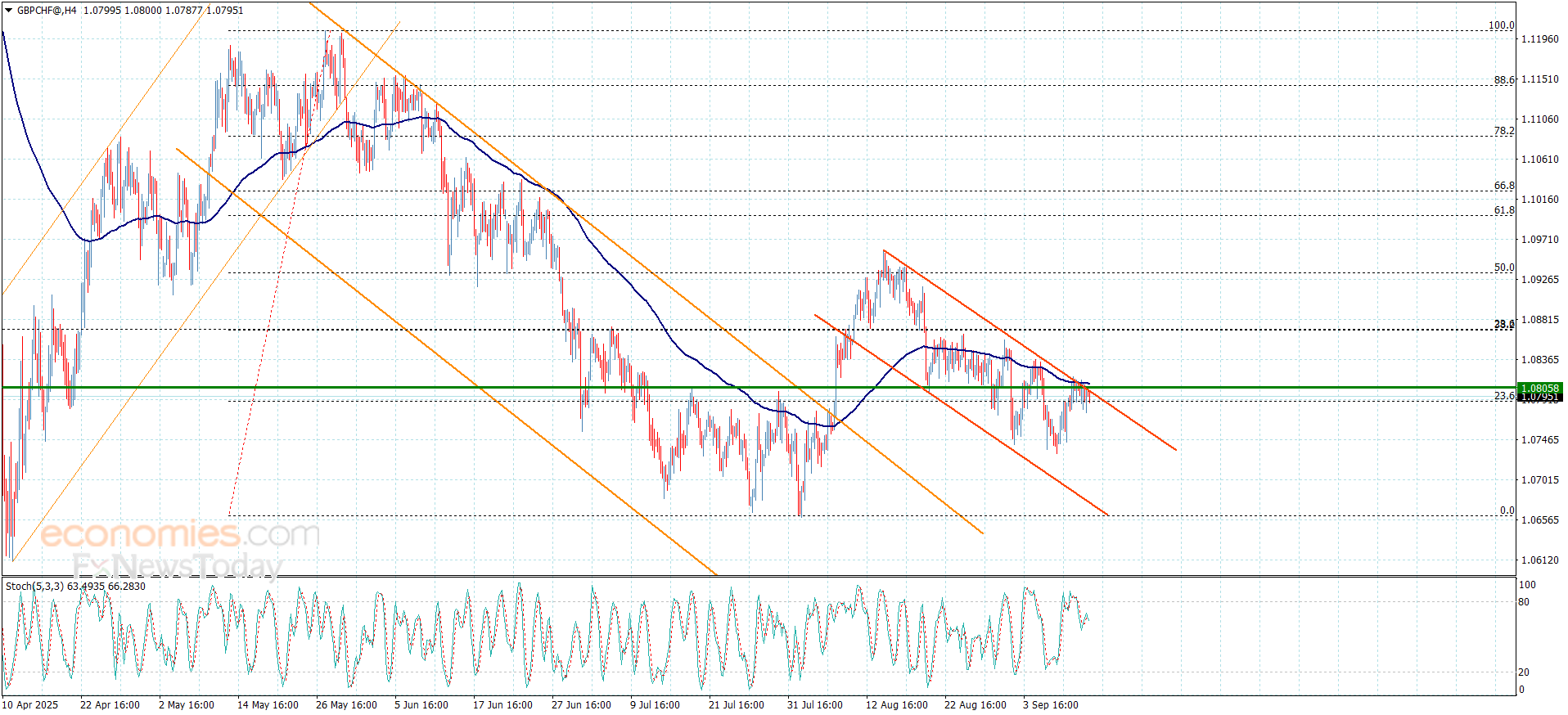
The GBPCHF builds minor bearish channel– Forecast today – 12-9-2025

By |2025-09-12T15:58:42+03:00September 12, 2025|Forex News, News|0 Comments


The EURJPY pair succeeded in facing stochastic negativity by its stability above 172.00 level yesterday, to form some of the bullish waves to approach from the barrier at 173.50, forming an obstacle against the attempts of resuming the bullish attack.


To confirm the attempts of resuming the bullish attack, we recommend waiting for breaching the barrier and providing positive close above it, to increase the chances for recording extra gains that might extend to 174.25 reaching 1.809%Fibonacci extension level at 175.20, while the price failure to breach this level will force it to provide more of the sideways trading, and there is a new chance to decline towards 171.60.


The expected trading range for today is between 172.60 and 174.25


Trend forecast: Bullish


Source link

12 09, 2025

Pound Sterling stabilizes ahead of US data

By |2025-09-12T15:56:07+03:00September 12, 2025|Forex News, News|0 Comments

  • GBP/USD moves sideways near 1.3550 in the European session on Friday.
  • The US UoM Consumer Sentiment Index will be the last data release of the week.
  • The cautious market stance could limit the pair’s upside heading into the weekend.

GBP/USD stays under modest bearish pressure and trades at around 1.3550 after gaining about 0.3% on Thursday. Although the technical outlook is yet to point to a buildup in bearish momentum, the pair could find it difficult to hold its ground in case safe-haven flows dominate the action in financial markets heading into the weekend.

Pound Sterling Price This week

The table below shows the percentage change of British Pound (GBP) against listed major currencies this week. British Pound was the strongest against the Canadian Dollar.

USD EUR GBP JPY CAD AUD NZD CHF
USD -0.19% -0.41% -0.33% 0.03% -1.47% -1.03% -0.27%
EUR 0.19% -0.23% -0.07% 0.20% -1.28% -0.79% -0.07%
GBP 0.41% 0.23% 0.06% 0.44% -1.05% -0.57% 0.15%
JPY 0.33% 0.07% -0.06% 0.29% -1.17% -0.85% 0.08%
CAD -0.03% -0.20% -0.44% -0.29% -1.41% -1.00% -0.29%
AUD 1.47% 1.28% 1.05% 1.17% 1.41% 0.48% 1.22%
NZD 1.03% 0.79% 0.57% 0.85% 1.00% -0.48% 0.73%
CHF 0.27% 0.07% -0.15% -0.08% 0.29% -1.22% -0.73%

The heat map shows percentage changes of major currencies against each other. The base currency is picked from the left column, while the quote currency is picked from the top row. For example, if you pick the British Pound from the left column and move along the horizontal line to the US Dollar, the percentage change displayed in the box will represent GBP (base)/USD (quote).

The US Dollar (USD) weakened against its rivals and allowed GBP/USD to stretch higher following the mixed macroeconomic data releases on Thursday.

The US Bureau of Labor Statistics (BLS) announced that the Consumer Price Index (CPI) rose 2.9% on a yearly basis in August. Additionally, the core CPI, which excludes volatile food and energy prices, increased 0.3% on a monthly basis. Both of these figures came in line with analysts’ estimates.

Other data from the US showed that the number of first-time applications for unemployment benefits climbed to 263,000 in the week ending September 6 from 236,000 in the previous week. This data revived fears over worsening conditions in the US labor market and weighed on the USD.

Later in the American session, the University of Michigan (UoM) will publish the preliminary Consumer Sentiment Index data for September. Rather than the headline number, markets could react to the 1-year Consumer Inflation Expectations component of the survey. A noticeable increase in this data could be supportive for the USD and cause GBP/USD to edge lower with the immediate reaction.

Meanwhile, US stock index futures trade mixed in the European session. A bearish opening in Wall Street could help the USD outperform its rivals and hurt GBP/USD. Conversely, an improving market mood is likely to open the door for a recovery in the pair.

GBP/USD Technical Analysis

The Relative Strength Index (RSI) indicator holds above 50 and GBP/USD trades above the 20-period Simple Moving Average (SMA), reflecting sellers’ hesitancy.

On the downside, the first support level could be spotted at 1.3500 (static level, round level) ahead of 1.3470-1.3460 (20-day SMA, 50-day SMA, Fibonacci 50% retracement of the latest downtrend) and 1.3450 (200-period SMA). Looking north, resistance levels could be spotted at 1.3590-1.3600 (static level, round level) and 1.3640 (Fibonacci 78.6% retracement).

Pound Sterling FAQs

The Pound Sterling (GBP) is the oldest currency in the world (886 AD) and the official currency of the United Kingdom. It is the fourth most traded unit for foreign exchange (FX) in the world, accounting for 12% of all transactions, averaging $630 billion a day, according to 2022 data.
Its key trading pairs are GBP/USD, also known as ‘Cable’, which accounts for 11% of FX, GBP/JPY, or the ‘Dragon’ as it is known by traders (3%), and EUR/GBP (2%). The Pound Sterling is issued by the Bank of England (BoE).

The single most important factor influencing the value of the Pound Sterling is monetary policy decided by the Bank of England. The BoE bases its decisions on whether it has achieved its primary goal of “price stability” – a steady inflation rate of around 2%. Its primary tool for achieving this is the adjustment of interest rates.
When inflation is too high, the BoE will try to rein it in by raising interest rates, making it more expensive for people and businesses to access credit. This is generally positive for GBP, as higher interest rates make the UK a more attractive place for global investors to park their money.
When inflation falls too low it is a sign economic growth is slowing. In this scenario, the BoE will consider lowering interest rates to cheapen credit so businesses will borrow more to invest in growth-generating projects.

Data releases gauge the health of the economy and can impact the value of the Pound Sterling. Indicators such as GDP, Manufacturing and Services PMIs, and employment can all influence the direction of the GBP.
A strong economy is good for Sterling. Not only does it attract more foreign investment but it may encourage the BoE to put up interest rates, which will directly strengthen GBP. Otherwise, if economic data is weak, the Pound Sterling is likely to fall.

Another significant data release for the Pound Sterling is the Trade Balance. This indicator measures the difference between what a country earns from its exports and what it spends on imports over a given period.
If a country produces highly sought-after exports, its currency will benefit purely from the extra demand created from foreign buyers seeking to purchase these goods. Therefore, a positive net Trade Balance strengthens a currency and vice versa for a negative balance.

Source link

12 09, 2025

How to make viral banana bread iced matcha that’s ‘so good’ and perfect for autumn

By |2025-09-12T15:55:03+03:00September 12, 2025|Dietary Supplements News, News|0 Comments


Matcha is the drink of 2025, and one of the most popular ways to enjoy it is with a syrup – and this banana bread version is perfect for this time of year.

You don’t need to stop drinking iced matcha now that autumn is here(Image: Arx0nt via Getty Images)

Matcha is undoubtedly the drink of 2025, with its unique Japanese green tea flavour winning over more and more Brits. However, its distinctive taste might take some getting used to, which is why adding a syrup can make it even more delicious.

Just because we’re on the cusp of autumn doesn’t mean you have to say goodbye to your favourite iced drinks. Autumnal flavours like carrot cake and apple butter are causing a stir among matcha enthusiasts, with Blank Street launching these tasty matcha drinks just this week.

They’ve also brought back the viral banana bread matcha, but if you don’t fancy splashing out on one of these daily, it’s so easy to whip up your own at home.

TikTok user Olivia Adriance shared her banana bread matcha recipe last autumn, but now that it’s trending again, it’s the perfect time to give it a go.

Thanks to the simple homemade banana syrup, it’s sweet and spiced, blending perfectly with the fresh matcha flavour. It also works out cheaper than buying a takeaway matcha, which can sometimes set you back nearly £5, reports the Express.

Taking a sip, Olivia raved that it tasted ‘so good’, with the subtle hint of banana bread working ‘really well’ in the drink. Here’s how you can recreate it at home.

How to make viral banana bread iced matcha that’s ‘so good’ and perfect for autumn
Making matcha at home is so easy(Image: Getty)

Banana bread matcha

Ingredients

  • One large ripe banana, mashed
  • One and a half cups water
  • 1/3 cup maple syrup
  • Two cinnamon sticks
  • 1/2 teaspoon ground nutmeg
  • One teaspoon vanilla
  • 3 oz water
  • One teaspoon matcha powder
  • Half cup milk of choice
Content cannot be displayed without consent

Method

To make the banana bread syrup, combine the mashed banana, water, maple syrup, cinnamon sticks and nutmeg in a small pan over a low heat. Bring to a boil then reduce and simmer for 15 minutes, stirring occasionally.

Next, remove from the heat and mix in the vanilla. Sieve the mixture through a fine mesh strainer and pour the banana bread syrup into an airtight glass jar – it can be stored in the fridge for up to a week.

To whip up the latte, pour the water into a small glass or bowl. Spoon the matcha powder through a fine mesh sieve to eliminate any lumps.

Then, whisk the matcha into the water using a front to back motion until it becomes slightly frothy on top.

Pop some ice into your chosen glass. If you’d prefer your matcha hot, simply use hot water instead.

Pour in your prepared matcha and top up with your preferred milk, add a couple of tablespoons of the banana bread syrup, and enjoy.


Source link

12 09, 2025

Solana Price Today: Investors Rush To Snap Up Record Breaking Layer Brett After Trending On Socials Globally

By |2025-09-12T15:51:54+03:00September 12, 2025|Crypto News, News|0 Comments

Layer Brett outlook

The future for Layer Brett appears incredibly bright, especially given its early presale stage and utility-driven approach. The and a market cap that is just over $3 million means that Layer Brett has immense room to grow.

Supporting the potential growth is the meme mania with a utility focus. As an L2, $LBRETT is far superior to what even the SOL network offers. A $1 million giveaway further sweetens the deal for early participants.

No wonder every crypto trader who understands this is talking about Layer Brett on social media, further driving the fervor that is its presale.

Layer Brett presale is trending

Layer Brett truly offers a unique blend of meme power and real utility. Its presale provides an unparalleled opportunity to engage with a Layer 2 crypto that offers both immediate staking rewards and significant long-term growth potential.

The presale is your chance to ride the wave to 100x, beating even the best of Solana’s price outlook. The rush for the presale means that if you hesitate, you can be left behind.

Discover More About Layer Brett ($LBRETT):

Disclaimer : Cryptocurrency investments are risky and highly volatile. This is not financial advice; always do your research. Our editors are not involved, and we do not take responsibility for any losses.

Source link

12 09, 2025

Platinum price fluctuates below the barrier– Forecast today – 12-9-2025

By |2025-09-12T13:56:46+03:00September 12, 2025|Forex News, News|0 Comments


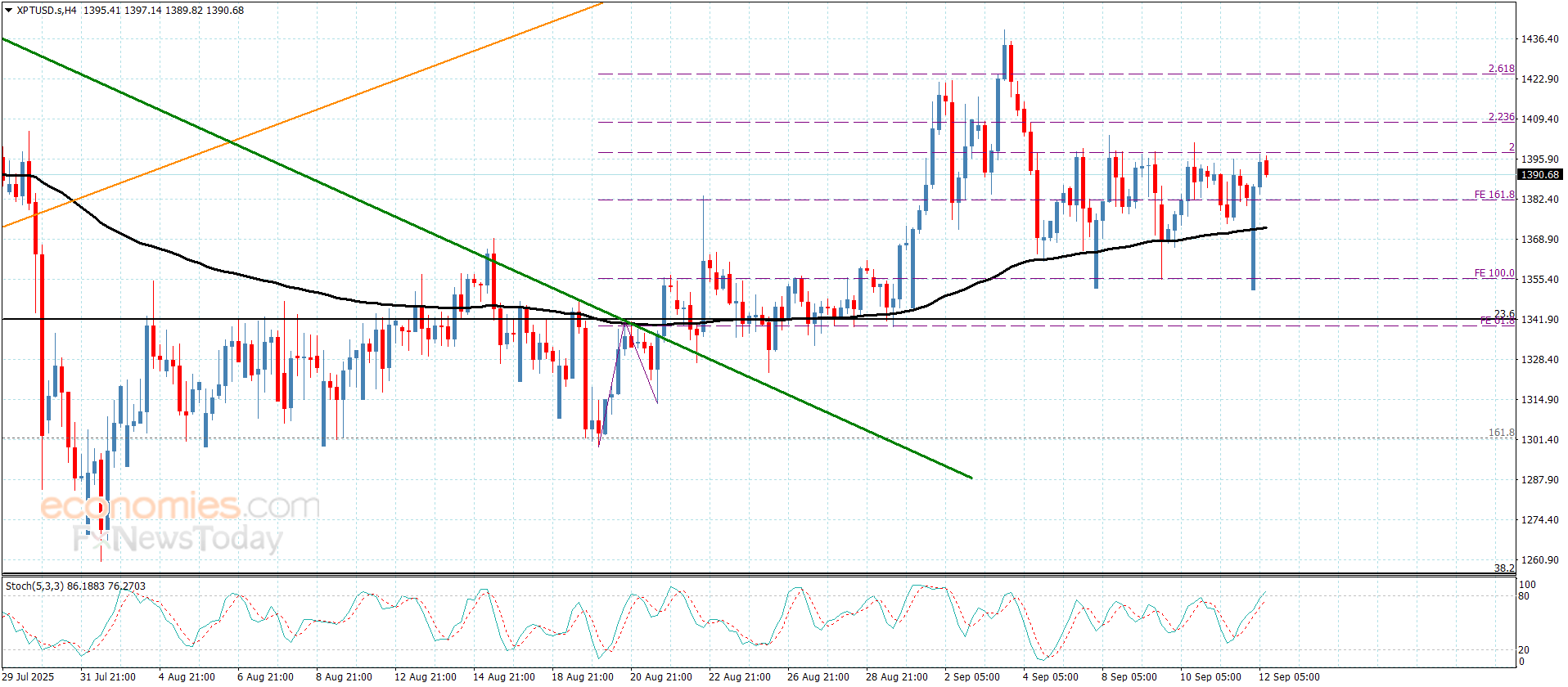
The (ETHUSD) price rose in its last intraday trading, attacking the critical resistance at $4,500, which represents our suggested target in our previous analysis, supported by its continuous trading above EMA50, with its trading alongside minor bullish trend on the short-term basis that supports the bullish movement, despite the negative signals that come from the (RSI), after reaching overbought levels, to offload some of this conditions despite the price rise, indicating the strength of the trend and its dominance.


VIP Trading Signals Performance by BestTradingSignal.com (September 1–5, 2025)


Get high-accuracy trading signals delivered directly to your Telegram. Subscribe to specialized packages tailored for the world’s top markets:


Full VIP signals performance report for September 1–5, 2025:

  View Full Performance Report


Source link

12 09, 2025

Euro loses bullish momentum on mixed ECB commentary

By |2025-09-12T13:55:08+03:00September 12, 2025|Forex News, News|0 Comments

  • EUR/USD declines toward 1.1700 after closing in positive territory on Thursday.
  • Comments from ECB policymakers highlight a difference of opinion on inflation outlook.
  • The technical outlook points to a loss of bullish momentum in the short term.

EUR/USD struggles to hold its ground and declines toward 1.1700 on Friday after posting modest gains on Thursday. The pair’s near-term technical outlook points to a loss of bullish momentum as markets assess comments from European Central Bank (ECB) policymakers.

Euro Price This week

The table below shows the percentage change of Euro (EUR) against listed major currencies this week. Euro was the weakest against the Australian Dollar.

USD EUR GBP JPY CAD AUD NZD CHF
USD -0.05% -0.24% -0.25% 0.08% -1.44% -0.98% -0.16%
EUR 0.05% -0.19% -0.14% 0.12% -1.37% -0.88% -0.11%
GBP 0.24% 0.19% -0.04% 0.31% -1.19% -0.69% 0.08%
JPY 0.25% 0.14% 0.04% 0.26% -1.22% -0.87% 0.11%
CAD -0.08% -0.12% -0.31% -0.26% -1.43% -1.00% -0.24%
AUD 1.44% 1.37% 1.19% 1.22% 1.43% 0.50% 1.29%
NZD 0.98% 0.88% 0.69% 0.87% 1.00% -0.50% 0.78%
CHF 0.16% 0.11% -0.08% -0.11% 0.24% -1.29% -0.78%

The heat map shows percentage changes of major currencies against each other. The base currency is picked from the left column, while the quote currency is picked from the top row. For example, if you pick the Euro from the left column and move along the horizontal line to the US Dollar, the percentage change displayed in the box will represent EUR (base)/USD (quote).

The ECB left key rates unchanged after the September policy meeting, as widely anticipated. In the post-meeting press conference, ECB President Lagarde noted that the disinflationary process is over and noted that a stronger Euro could bring inflation down more than expected.

Meanwhile, the US Dollar (USD) came under bearish pressure on Thursday and helped EUR/USD push higher after the data from the US showed that the annual Consumer Price Index (CPI) inflation rose to 2.9% in August as expected, while the weekly Initial Jobless Claims climbed to 263,000 in the week ending September 6 from 236,000 in the previous week.

Early Friday, ECB officials’ mixed tone make it difficult for the Euro to preserve its strength.

ECB Governing Council member Gediminas Šimkus noted that inflation has stabilized at the targeted level but added that risks remain high. Similarly, Governing Council member Christodoulos Patsalides argued that there is currently no need for the ECB to lower interest rates further to deliver stable inflation.

On the other hand, policymaker Olli Rehn said that they must be mindful of downside risks to inflation stemming from cheaper energy prices and a stronger Euro, while Governing Council member Jose Luis Escriva noted that the Gross Domestic Product (GDP) growth is slow in the eurozone, with competitiveness causing a problem.

In the second half of the day, the US economic calendar will feature the University of Michigan’s (UoM) Consumer Sentiment Index data for August. In case the 1-year Consumer Inflation Expectations component of the survey rises further, the USD could hold its ground and cause EUR/USD to stretch lower heading into the weekend.

EUR/USD Technical Analysis

The Relative Strength Index (RSI) indicator on the 4-hour chart declines toward 50 and EUR/USD trades near the 20-period Simple Moving Average, reflecting a loss of bullish momentum.

On the downside, the 1.1680-1.1665 area, where the 20-day and the 50-day Simple Moving Averages (SMAs) are located, aligns as a key support level before 1.1650-1.1640 (200-period SMA, lower limit of the ascending regression channel) and 1.1600 (static level, round level).

Looking north, resistance levels could be seen at 1.1740 (static level), 1.1770 (static level) and 1.1790-1.1800 (upper limit of the ascending channel, static level).

ECB FAQs

The European Central Bank (ECB) in Frankfurt, Germany, is the reserve bank for the Eurozone. The ECB sets interest rates and manages monetary policy for the region.
The ECB primary mandate is to maintain price stability, which means keeping inflation at around 2%. Its primary tool for achieving this is by raising or lowering interest rates. Relatively high interest rates will usually result in a stronger Euro and vice versa.
The ECB Governing Council makes monetary policy decisions at meetings held eight times a year. Decisions are made by heads of the Eurozone national banks and six permanent members, including the President of the ECB, Christine Lagarde.

In extreme situations, the European Central Bank can enact a policy tool called Quantitative Easing. QE is the process by which the ECB prints Euros and uses them to buy assets – usually government or corporate bonds – from banks and other financial institutions. QE usually results in a weaker Euro.
QE is a last resort when simply lowering interest rates is unlikely to achieve the objective of price stability. The ECB used it during the Great Financial Crisis in 2009-11, in 2015 when inflation remained stubbornly low, as well as during the covid pandemic.

Quantitative tightening (QT) is the reverse of QE. It is undertaken after QE when an economic recovery is underway and inflation starts rising. Whilst in QE the European Central Bank (ECB) purchases government and corporate bonds from financial institutions to provide them with liquidity, in QT the ECB stops buying more bonds, and stops reinvesting the principal maturing on the bonds it already holds. It is usually positive (or bullish) for the Euro.

Source link

Go to Top