
About Editorial team of BIPNs

Main team of content of bipns.com. Any type of content should be approved by us.
10 09, 2025

XAG/USD consolidates below $41.50 with bearish RSI divergence

By |2025-09-10T01:21:05+03:00September 10, 2025|Forex News, News|0 Comments


  • Silver retreats as a modest rebound in the US Dollar and Treasury yields caps upside momentum.
  • Fed rate-cut expectations keep the broader bullish tone intact despite profit-taking.
  • Technicals show RSI bearish divergence; key support at $40.50, resistance at $41.70-42.00.

Silver (XAG/USD) trades under pressure on Tuesday, retreating from recent highs as a modest rebound in the US Dollar (USD) and Treasury yields weighs on the metal. At the time of writing, spot prices are trading near $40.85, down over 1% on the day.

The white metal has been trapped in a tight band between $41.50 and $40.50 since last week, after hitting a fresh 14-year peak around $41.67 on Monday. While the pullback reflects profit-taking and short-term USD strength, the downside remains limited as markets are almost fully convinced that the Federal Reserve (Fed) will lower interest rates at its September 17 monetary policy meeting. Lower borrowing costs reduce the opportunity cost of holding non-yielding assets such as Silver, keeping the broader bullish tone intact.

The uptick in the Greenback comes despite the recent downward revision to US Nonfarm Payrolls (NFP), which confirmed that the labor market is losing momentum. Economists highlighted that the slowdown reflects businesses turning cautious, with some warning that the economy is edging closer to recessionary conditions. The US Dollar Index (DXY), which tracks the currency against a basket of six peers, is trading around 97.70 after staging a technical rebound from seven-week lows touched earlier in the day.

Attention now turns to this week’s key inflation releases. The US Producer Price Index (PPI) will be published on Wednesday, followed by the Consumer Price Index (CPI) on Thursday, both of which are expected to shape expectations for the Fed’s policy outlook.

Technically, XAG/USD is struggling to extend its rally, with momentum indicators flashing caution. On the daily chart, the Relative Strength Index (RSI) is easing from overbought territory and showing bearish divergence, as price carved out higher highs while the oscillator printed lower highs. This divergence often precedes corrective pullbacks, highlighting fading upside momentum. The Average True Range (ATR) remains muted near 0.81, suggesting limited volatility in the short term, though a break outside the $41.50-$40.50 band could trigger a sharper move.

The first line of defense sits at $40.50, followed by the 21-day Simple Moving Average (SMA) at $39.24. Deeper losses could target the 50-day SMA near $38.40. On the upside, a sustained move above $41.70 would reduce the significance of the divergence and open the door toward the $42.00 psychological barrier.

Silver FAQs

Silver is a precious metal highly traded among investors. It has been historically used as a store of value and a medium of exchange. Although less popular than Gold, traders may turn to Silver to diversify their investment portfolio, for its intrinsic value or as a potential hedge during high-inflation periods. Investors can buy physical Silver, in coins or in bars, or trade it through vehicles such as Exchange Traded Funds, which track its price on international markets.

Silver prices can move due to a wide range of factors. Geopolitical instability or fears of a deep recession can make Silver price escalate due to its safe-haven status, although to a lesser extent than Gold’s. As a yieldless asset, Silver tends to rise with lower interest rates. Its moves also depend on how the US Dollar (USD) behaves as the asset is priced in dollars (XAG/USD). A strong Dollar tends to keep the price of Silver at bay, whereas a weaker Dollar is likely to propel prices up. Other factors such as investment demand, mining supply – Silver is much more abundant than Gold – and recycling rates can also affect prices.

Silver is widely used in industry, particularly in sectors such as electronics or solar energy, as it has one of the highest electric conductivity of all metals – more than Copper and Gold. A surge in demand can increase prices, while a decline tends to lower them. Dynamics in the US, Chinese and Indian economies can also contribute to price swings: for the US and particularly China, their big industrial sectors use Silver in various processes; in India, consumers’ demand for the precious metal for jewellery also plays a key role in setting prices.

Silver prices tend to follow Gold’s moves. When Gold prices rise, Silver typically follows suit, as their status as safe-haven assets is similar. The Gold/Silver ratio, which shows the number of ounces of Silver needed to equal the value of one ounce of Gold, may help to determine the relative valuation between both metals. Some investors may consider a high ratio as an indicator that Silver is undervalued, or Gold is overvalued. On the contrary, a low ratio might suggest that Gold is undervalued relative to Silver.



Source link

10 09, 2025

What’s next after Dollar rebound?

By |2025-09-10T01:19:56+03:00September 10, 2025|Forex News, News|0 Comments

  • EUR/USD fades its earlier move to multi-week tops near 1.1780.
  • The US Dollar regained upside impulse in response to prevailing risk-off trade.
  • The BLS revised down its payroll numbers by 911K to March 2025.

The Euro (EUR) gave back two days of gains on Tuesday, with EUR/USD sliding toward the 1.1720–1.1710 band. The pullback came as the US Dollar (USD) found fresh support on geopolitical jitters, even as markets continued to price in a 50 bps rate cut from the Federal Reserve (Fed) at next week’s meeting.

The US Dollar Index (DXY) rebounded from seven-week lows, reclaiming the 97.70 zone, helped by a bounce in US Treasury yields across the curve.

Trade tensions ease but tariffs still bite

Washington and Beijing agreed to extend their trade truce for another 90 days, giving markets some breathing room. President Trump delayed planned tariff hikes until November 10, and China pledged to hold off as well. Still, most levies remain in place: US imports from China face 30% tariffs, while Chinese goods entering the US carry a 10% charge.

Washington also reached a new trade deal with Brussels. The EU agreed to lower tariffs on US industrial goods and give wider access to American farm and fisheries products. In return, Washington slapped a 15% tax on most European imports. Car tariffs could be next in line to come down, depending on upcoming EU legislation.

French politics fuel uncertainty

In Europe, politics grabbed the spotlight. French Prime Minister François Bayrou lost a confidence vote on Monday and formally resigned to President Emmanuel Macron on Tuesday, reviving political uncertainty in the eurozone’s second-largest economy.

Fed keeps September cut in play

The Fed left rates unchanged at its last meeting, with Chair Jerome Powell noting risks in the labour market but pointing out that inflation is still running above target. That keeps a September cut firmly on the table.

The day’s standout data came from the Bureau of Labor Statistics (BLS), which said the economy added 911K fewer jobs in the 12 months through March than first estimated — a sign hiring was slowing even before Trump’s tariff push. Markets still expect a 25 bps cut at the September 16–17 meeting, though odds of a larger move are creeping higher.

ECB signals steady hand

The European Central Bank (ECB) struck a steady tone at its latest meeting. President Christine Lagarde described eurozone growth as “solid, if a little better,” hinting at little urgency to ease further. Markets expect the ECB to hold fire at its September 11 meeting and likely stay on pause through 2025, with the first cut not priced until spring 2026.

Traders trim Euro longs

CFTC data showed non-commercial net longs in the Euro easing to two-week lows near 119.6K contracts in the week to September 2. Institutional net shorts edged down to 171.3K, while open interest rose for a fourth straight week to around 846K contracts.

EUR/USD technical outlook

EUR/USD is still boxed into a broad 1.1400–1.1800 range. Resistance stands at the September high of 1.1779 (September 9), ahead of the weekly top at 1.1788 (July 24) and the 2025 ceiling at 1.1830 (July 1). A break higher could open the way to the September 2021 high at 1.1909, with the 1.2000 psychological level looming above.

On the downside, support is first seen at the short-term 100-day Simple Moving Average (SMA) at 1.1532, before the August base at 1.1391 (August 1) and the weekly low at 1.1210 (May 29).

Momentum signals are giving mixed messages: the Relative Strength Index (RSI) has eased back to 54, suggesting buyers are still in the game, while the Average Directional Index (ADX), just above 11, points to a trend that lacks real conviction.

EUR/USD daily chart

What’s next for EUR/USD?

For now, EUR/USD looks set to stay in consolidation mode. A breakout will likely need a fresh catalyst, whether from US data, a decisive Fed move, or another twist in Washington’s trade policy.

Employment FAQs

Labor market conditions are a key element to assess the health of an economy and thus a key driver for currency valuation. High employment, or low unemployment, has positive implications for consumer spending and thus economic growth, boosting the value of the local currency. Moreover, a very tight labor market – a situation in which there is a shortage of workers to fill open positions – can also have implications on inflation levels and thus monetary policy as low labor supply and high demand leads to higher wages.

The pace at which salaries are growing in an economy is key for policymakers. High wage growth means that households have more money to spend, usually leading to price increases in consumer goods. In contrast to more volatile sources of inflation such as energy prices, wage growth is seen as a key component of underlying and persisting inflation as salary increases are unlikely to be undone. Central banks around the world pay close attention to wage growth data when deciding on monetary policy.

The weight that each central bank assigns to labor market conditions depends on its objectives. Some central banks explicitly have mandates related to the labor market beyond controlling inflation levels. The US Federal Reserve (Fed), for example, has the dual mandate of promoting maximum employment and stable prices. Meanwhile, the European Central Bank’s (ECB) sole mandate is to keep inflation under control. Still, and despite whatever mandates they have, labor market conditions are an important factor for policymakers given its significance as a gauge of the health of the economy and their direct relationship to inflation.

Source link

10 09, 2025

FDA moves ahead with proposals to amend GRAS regulations

By |2025-09-10T01:16:09+03:00September 10, 2025|Dietary Supplements News, News|0 Comments


Health and Human Services Secretary Robert F. Kennedy, Jr. discussed the GRAS pathways during his confirmation hearings and directed the FDA commissioner in March to take steps to explore potential rulemaking to revise its Substances GRAS Final Rule and related guidance to eliminate self-affirmed GRAS.

“At this point, the details of FDA’s proposed rule are still limited, but the language strongly suggests the agency intends to end the self-GRAS pathway,” Ashish Talati from Talati Law told NutraIngredients. “That would mean companies with existing self-GRAS determinations could be required to submit notices to FDA, unless the substance is already listed in regulation or has a prior “no questions” letter on file. If finalized as written, this would represent a major shift from the current system.”

Speaking at the Regulatory, Scientific & Quality Conference hosted by the Consumer Healthcare Products Association this week in North Bethesda, Kyle Diamantas, FDA’s deputy commissioner for human foods, said that the Agency thinks it has a “common sense plan that will help address the desires to bring greater transparency, understanding our limited appropriations.”.

The proposed rule was posted this week. If finalized, the rule would amend the GRAS regulations in 21 CFR parts 170 and 570.

The GRAS story

Generally Recognized as Safe (GRAS) is a determination that a substance added intentionally to food is deemed to be safe under its intended conditions of use. Congress created the GRAS designation for common food ingredients in 1958 as part of the Food Additives Amendment and then established the GRAS Affirmation Process in the 1970s.

It is a notification process and not an approval process. Under the statute, there are two options available to companies: One is to submit their safety data to the FDA. If the agency does not object to the determination, it will issue a letter of no objection, colloquially referred to as a “Good Day Letter”. Notifications to FDA are publicly available via the FDA’s GRAS inventory.

The FDA has completed and published more than 1,000 GRAS notices and reportedly evaluates approximately 75 notices per year.

The other option, which was introduced in the late 1990s to ease an extensive backlog of notifications, is for companies to convene an independent panel of experts and have them assess the safety data. This is what is known as self-affirmed GRAS. A company is not required to notify FDA of its self-affirmed status, and there is no public database or listing of self-affirmed ingredients. The GRAS Final Rule was formalized in 2016 and maintained the self-affirmation option.

In 2013, the Pew Research Center estimated that approximately 1,000 ingredients/food additives were self-affirmed GRAS in the United States. Twelve years later, that number will be larger.

Graham Rigby, president and CEO of the American Herbal Products Association (AHPA), said his organization has long recognized that the self-affirmed GRAS process is an “important, legal and rigorous pathway relied upon by companies that operate in both the conventional food and dietary supplement sectors.”

“This process is not a loophole,” he said. “It requires independent evaluation by qualified experts, often including multiple toxicologists, to evaluate all available safety information to determine whether an ingredient is generally recognized as safe for a particular intended use.

“While AHPA supports transparency and appropriate safeguards for public health, it is essential that any changes to the GRAS framework be developed in consultation with industry to avoid unintended disruption to the conventional food and dietary supplement marketplace.”

For his part, FDA’s Diamantas said the agency is very interested in feedback from industry and stakeholders.

“We are going through the notice of proposed rulemaking (NPRM) process so that we do get that critical feedback, and we ask that all interested persons and companies provide us with feedback,” he told attendees at CHPA’s Regulatory, Scientific & Quality Conference.

Make Our Children Health Again

In its sweeping “Make Our Children Health Again” strategy report announced today, Health and Human Services noted closing the GRAS loopholes as one of its key focus areas and historic executive actions.

Does FDA have the resources?

Rend Al Mondhiry, partner at Amin Wasserman Gurnani, said that she expected numerous comments from stakeholders raising concerns about FDA resources, potential backlogs and related issues.

“Timing especially will be a significant concern, as it can already take 2+ years to get a no questions letter from FDA, and that timeline is likely to be even longer if a rule like this is finalized,” she added.

Loren Israelsen, founder and president of the United Natural Products Alliance (UNPA) and one of the key architects of the Dietary Supplement Health and Education Act (DSHEA), said that rule making typically takes several years “at best”.

“That would not please anyone I think,” he said.

Al Mondhiry said that an open question is how FDA will handle self-affirmed GRAS ingredients currently on the market.

“We’ve already seen federal legislation that would provide a three-year window for these ingredients to be evaluated by FDA within a certain timeframe, but it’s unclear how a proposed rule will handle these ingredients,” she added. “That said, I would be surprised if currently self-affirmed GRAS ingredients aren’t addressed at all given the administration’s attention to this issue—but hopefully, there will be mechanisms or a process for prioritizing ingredients to avoid a backlog and supply chain disruptions.”

Israelsen questioned if there will be a scramble to search for old dietary ingredient (ODI) status (defined as an ingredient on the market pre-1994) or a rush to file an new dietary ingredient notification (NDIN) under DSHEA.

Generally Recognized as Safe (GRAS) is a determination that a substance added intentionally to food is deemed to be safe under its intended conditions of use. It is a notification process and not an approval process. © Aryut / Getty Images (Aryut/Getty Images/iStockphoto)

A role for A.I?

“It seems to me the way to go is to require a summary of science and expert panel conclusions, all done with a template so information comes to FDA in standard format,” Israelsen said. “There should be a way (using AI) to score each affirmation and require a failing score to submit the full dossier, and to put a hold on the ingredient pending further review. Passing scores may proceed unless new evidence leads to a different decision.”

This would represent a large amount of work for the FDA, he said, but it would be more efficient and “create an incentive for poor affirmations to hustle to upgrade their evidence to get back to market.”

Adding a note of caution, he said thought must be given to how the plaintiffs bar will try to take advantage of this situation, “which they would.”

Legal challenges?

Another big question will be around the legality of the proposed changes. Ashish Talati said that FDA has previously acknowledged it lacks express statutory authority to mandate GRAS notifications, and how the agency now intends to justify that authority remains to be seen.

“One thing to consider is that there may be an open question as to whether the act, as currently written, would support this type of regulation relative to changing the GRAS process so drastically,” added Bob Durkin, partner at Amin Wasserman Gurnani.

“When Secretary Kennedy first directed FDA to explore rulemaking to potentially change the self-GRAS process, the announcement also noted that HHS would work with Congress to address any new legislation that would be needed to do so. If FDA moves forward with promulgating the type of regulation proposed, vague as the proposal currently is, we think there will certainly be comments about this and possibly even legal challenges.”

A lot of questions and uncertainty remain. Talati urged companies to “monitor developments closely and prepare a plan, especially if they are relying on self-GRAS determinations”.

NPA: “GRAS proposal raises more questions than answers”

The Natural Products Association (NPA) issued the following statement: “HHS’s GRAS proposal raises more questions than answers. It is unclear how requiring the submission of GRAS notices for the use of human and animal food substances would impact dietary supplement ingredients. FDA’s premarket review of dietary ingredients is limited to new dietary ingredient notifications — per section 413(a)(2) of the Federal Food, Drug & Cosmetic Act (FD&C Act) and the relevant regulation, 21 CFR 190.6.

“The FD&C Act provides an exemption to the premarket notification requirement for NDIs present in the food supply as an article used for food. However, it is a fallacy that self-affirmed GRAS ingredients used in conventional food and beverages — and later marketed in dietary supplements — have not been subject to rigorous safety evaluations. As FDA asserted in its final GRAS rule published in 2016, “Fundamental to all conclusions of GRAS status is the criterion that general recognition of safety requires common knowledge throughout the scientific community knowledgeable about the safety of substances directly or indirectly added to food that there is reasonable certainty that the substance is not harmful under the conditions of its intended use.”

“NPA has additional questions about the impact of a GRAS rulemaking on FDA’s resources, companies’ intellectual property, the NDI notification process, and dietary ingredients that have already entered U.S. commerce through legitimate, self-affirmed GRAS determinations. NPA cannot comment further on HHS’s proposal until the actual NPRM is published and there is sufficient time to review the details of it.”


Source link

10 09, 2025

Solana Price Prediction; Cardano Latest News & Which Top Trending Crypto List Today Revealed

By |2025-09-10T01:10:48+03:00September 10, 2025|Crypto News, News|0 Comments

Disclaimer: This is a Press Release provided by a third party who is responsible for the content. Please conduct your own research before taking any action based on the content.


Solana’s breakout above key resistance has strengthened the bullish Solana price prediction, while Cardano continues to make headlines with steady upgrades and ecosystem growth. Yet, traders are increasingly scanning the market for faster-moving opportunities.

One name topping today’s trending crypto lists is Layer Brett (LBRETT), a meme-powered Ethereum layer 2 project combining low-cost transactions, high staking rewards, and viral appeal. With its presale price at just $0.0055, Layer Brett is quickly emerging as a must-watch contender.

Solana price prediction strengthens as bullish breakout confirmed

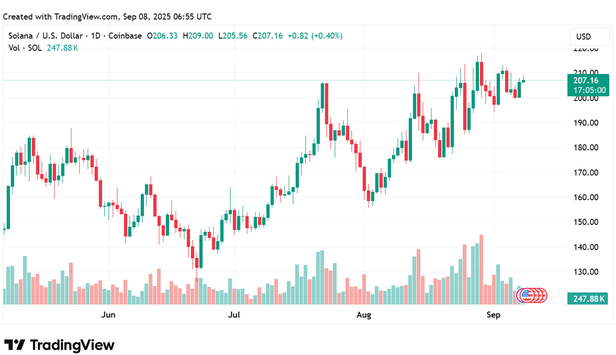
Solana has flashed a bullish signal with an Adam and Eve pattern completing above its neckline at $217.93. The breakout confirms strong buying interest and clears major resistance, pointing to further upside. Fibonacci levels outline the next targets, with $262.92 as the first hurdle and $320 as the medium-term goal. The 50-day SMA underpins the structure, reinforcing the bullish outlook.

Source

Adding momentum, Nasdaq has approved SOL Strategies, which begins trading under the ticker STKE on September 9, 2025. This move opens Solana’s ecosystem to broader institutional access, giving extra weight to the current Solana price prediction.

Cardano news: Cardano price prediction vs. Layer Brett’s fresh potential

Cardano (ADA) has long been praised for its careful, research-driven roadmap. Upgrades like Hydra have given it layer 2 scaling of its own, improving transaction speeds. Yet, despite these strong fundamentals, many investors feel underwhelmed as ADA’s growth has slowed. In other Cardano news, an ambitious Cardano price prediction sees a possible climb back to $3.10 all-time high, but with a $30 billion market cap, the chance for outsized gains looks limited.


Source

Layer Brett (LBRETT), by contrast, is starting from a tiny valuation. Built as an Ethereum layer 2, it targets 10,000 transactions per second while keeping gas fees to pennies. This combination of scale and low cost addresses the bottlenecks still weighing on Cardano, leading some traders to view LBRETT as the more exciting play for 2025.

Layer Brett shakes up the meme coin scene with real utility

Legacy giants like Solana and Cardano carry scale and recognition, but their sheer size limits explosive upside. Smaller projects can move faster, and Layer Brett (LBRETT) is showing how. By blending meme culture with Ethereum layer 2 tech, it delivers near-instant transactions and penny-level fees while building in staking. Unlike most meme tokens, it is designed with real utility that supports long-term growth.

Layer Brett processes transactions off-chain, bypassing Ethereum congestion and enabling speeds of up to 10,000 TPS. Gas fees can drop as low as $0.0001, making the network both fast and cost-efficient. The project pairs this performance with high community incentives, showing it’s more than hype.

At just $0.0055, the LBRETT price gives investors a low entry point with massive upside potential. For those exploring the best crypto presale 2025, Layer Brett is being tipped as one of the top gainer crypto picks of the cycle. Connecting a MetaMask or Trust Wallet is all it takes to buy, and early stakers enjoy rewards far beyond what Solana or Cardano currently offer.

Layer Brett stands out as meme energy meets real tech

The Solana price has room to rise, and Cardano may deliver steady growth, yet both look more like slow burners. Layer Brett (LBRETT) is a different story. At just $0.0055, the LBRETT price gives investors a rare low entry. With presale stages moving fast, many see it as one of the best crypto presales of the year, and a chance to capture upside that Solana and Cardano can no longer match.

Website: https://layerbrett.com 

Telegram: https://t.me/layerbrett 

X: Layer Brett (@LayerBrett)

Disclaimer: This media platform provides the content of this article on an “as-is” basis, without any warranties or representations of any kind, express or implied. We assume no responsibility for any inaccuracies, errors, or omissions. We do not assume any responsibility or liability for the accuracy, content, images, videos, licenses, completeness, legality, or reliability of the information presented herein. Any concerns, complaints, or copyright issues related to this article should be directed to the content provider mentioned above.

/div>

Source link

9 09, 2025

Slime Miner Partners with Immutable Play Launching A New Era of Web3 Gaming

By |2025-09-09T23:21:22+03:00September 9, 2025|News, NFT News|0 Comments


Singapore, Sept. 09, 2025 (GLOBE NEWSWIRE) — Slime Miner, the first immersive Web3 game built on the Kaia Chain, has officially launched on Google Play and the Apple App Store, marking a milestone in its international rollout. Kaia — the Layer 1 powering LINE’s Web3 Mini Dapps — connects over 200M LINE users to Web3 through LINE NEXT’s trusted infrastructure. At the same time, the game is joining Immutable Play, a leading platform with millions of Web3 gamers, expanding its reach to a broader blockchain gaming audience.


Since debuting as a LINE DApp on January 22, 2025, Slime Miner has attracted over 18 million registered users and continues to engage more than 150,000 daily active players (DAU). Supporting 14+ languages, this launch delivers a seamless Web2-style onboarding experience while unlocking enhanced Web3 features for players who choose to explore deeper.

“This is a milestone moment for Slime Miner. By combining app store accessibility with Immutable Play’s ecosystem, we’re making Web3 gaming approachable at scale,” said S.M.Y, CEO of Slime Miner“Our focus has always been on delivering fun first, while enabling players to enjoy true digital ownership within a sustainable game world.”

A Web3 Game with Web2 Accessibility

Slime Miner is designed for broad accessibility, offering both casual entry and advanced features:

  • Instant Start – New players can begin without a wallet or blockchain knowledge.
  • Digital Ownership – Collectible NFTs and in-game rewards enhance long-term engagement.
  • Full Gameplay Ecosystem – Guild Wars, PvP Slime Racing, and community competitions create ongoing opportunities for collaboration and competition.

Slime Miner Partners with Immutable Play Launching A New Era of Web3 Gaming

Immutable Play Partnership

By integrating with Immutable Play, Slime Miner becomes part of a network of leading Web3 titles. This collaboration gives players access to shared infrastructure, exclusive quests, and cross-game campaigns, while also connecting the game to millions of Web3-ready gamers worldwideThe platform has 5.3 million wallet registrations, along with 62 million game quests completed and a weekly retention rate of ~85% as of July 2025. 

A Sustainable In-Game Economy

Slime Miner’s in-game economy is designed to support long-term player engagement and fairness:

  • Activity-Based Rewards – Recognition for gameplay contributions.
  • Balanced Unlocks – Gradual reward distribution aligned with ongoing participation.
  • Community-First Approach – Incentives for guild collaboration and player-driven content.

To celebrate the app launch, Slime Miner is hosting a series of special events across its global community. The official Discord server is now open, giving players a space to share strategies, join discussions, and receive the latest updates. In parallel, players can simply join quests on Immutable Play to participate and enjoy special rewards. Full details of ongoing and upcoming events can be found on Slime Miner’s DiscordImmutable Play, and official community channels –  X and Telegram . New players can also check out the Slime Miner’s Wiki to fully engage with the game’s mechanics.

About Slime Miner

Slime Miner merges Web2 accessibility with Web3 innovation, redefining idle and community-driven gaming. As one of the top-performing mini apps on the KAIA/LINE ecosystem, which already reaches over 200M users across Southeast Asia and Japan, the game combines strategic exploration, collectible NFTs, and large-scale guild competitions. Developed by a team of 20+ experienced professionals from gaming and technology, Slime Miner continues to expand as a scalable entertainment ecosystem where players can play, connect, and own their experiences.

Game App Link: https://slimeminer.onelink.me/vT1e/hfko6n3v 
X: https://x.com/Slime_Miner 
TG: https://t.me/slimeminerunion/ 
Immutable Play: https://play.immutable.com/games/slime-miner/ 
Slime Miner Wiki: https://slime-digventure.gitbook.io/slimeminer 
Home: https://slimeminer.io 

Disclaimer: The information provided in this press release is not a solicitation for investment, nor is it intended as investment advice, financial advice, or trading advice. It is strongly recommended you practice due diligence, including consultation with a professional financial advisor, before investing in or trading cryptocurrency and securities.

Primary Logo


Source link

9 09, 2025

Gold Price Forecast – Fed Cut Bets Lift XAU/USD To Record $3,659

By |2025-09-09T23:20:02+03:00September 9, 2025|Forex News, News|0 Comments


Gold (XAU/USD) Extends Record Run Above $3,650 as Fed Cut Bets Surge

Spot and Futures Push to Historic Highs

Gold (XAU/USD) has broken into uncharted territory, climbing above $3,650 per ounce for the first time in history. Spot gold touched an intraday peak of $3,659.10, while futures on COMEX advanced to $3,687.30, marking a fresh all-time high. Earlier in the week, prices also spiked to $3,636.71, and U.S. gold futures settled near $3,676. The metal has now gained close to 38% year-to-date in 2025, building on an already hefty 27% rally in 2024.

Labor Market Weakness Fuels Fed Pivot Bets

The rally intensified after the Bureau of Labor Statistics revised U.S. payrolls down by 911,000 jobs for the 12 months through March. With unemployment hitting its highest level since 2021 and August payrolls delivering only 22,000 new jobs, traders are nearly unanimous in expecting rate cuts. The CME FedWatch tool is pricing in an 88% probability of a 25 bps cut and a 10% chance of a 50 bps cut at the September 16–17 FOMC meeting. A weaker jobs backdrop has historically reinforced demand for non-yielding assets like gold, as lower rates compress real yields.

Central Bank Demand Adds Momentum

Alongside monetary policy, persistent central bank buying continues to underpin prices. Institutions in China, Turkey, India, and Poland have been accumulating gold aggressively. UBS analysts project a climb toward $3,700 by mid-2026, while some strategists at Goldman Sachs suggest levels as high as $5,000 per ounce could be possible if confidence in U.S. Treasuries deteriorates further and even a modest share of capital rotates into bullion. The European Central Bank already confirmed that gold has overtaken the euro as the world’s second-largest reserve asset behind the dollar, highlighting its structural importance in reserve management.

Tariffs, Politics, and Fed Independence Risks

Geopolitical factors are also at play. President Trump recently exempted gold from global tariff lists, shielding bullion from trade disputes that have hit other metals like tungsten and uranium. However, Trump’s aggressive push to reshape the Federal Reserve board — including attempts to remove Governor Lisa Cook — has raised alarms about central bank independence. Analysts argue that a weakened Fed could accelerate capital flight from Treasuries into gold. Political uncertainty in Europe, including the collapse of France’s government, has further boosted the safe-haven appeal of bullion.

Global Market and Retail Dynamics

The surge in gold isn’t confined to U.S. markets. In the Philippines, prices rose to ₱6,670.28 per gram and ₱207,469.70 per ounce, while in Australia, spot values above US$3,599 have driven a rush of prospecting activity. Veteran prospector Brent Shannon noted that nuggets worth $350,000 in 2020 would fetch $650,000–$700,000 today. The Perth Mint reported surging inflows from institutional clients, even as retail buyers of minted bars slowed purchases amid higher costs. In Victoria, gold tourism has exploded, attracting prospectors from Europe as bullion fever spreads globally.

Technical Structure and Price Targets

Charts show gold breaking cleanly above a long-held ascending triangle, with $3,500 now acting as a structural floor. Analysts highlight $3,800 as the next measured target, with strong support forming between $3,570–$3,600. Momentum indicators confirm overbought conditions, but each pullback has been shallow, reflecting “buy the dip” appetite. As long as the Fed leans dovish, dips toward $3,550–$3,580 are likely to attract buyers.


Mining Sector and Equity Links

The surge in bullion has filtered into mining stocks. Companies like Kinross Gold (NYSE:KGC), which recently reduced its stake in Asante Gold to 5.2% but still holds 36.9 million shares, remain leveraged to spot gains. Centerra Gold (TSX:CG) boosted exposure in Idaho by acquiring 9.9% of Liberty Gold (TSX:LGD), underscoring industry positioning for sustained high prices. At the same time, Dundee Sustainable Technologies reported upgrades in concentrate grade by 31% while cutting arsenic content 99%, aligning with rising ESG scrutiny in gold mining.

Verdict on XAU/USD

Gold’s breakout above $3,650 confirms a structurally bullish regime. With monetary easing nearly guaranteed, central banks stockpiling reserves, and geopolitical stress intensifying, the metal’s trajectory favors further gains toward $3,800–$4,000. Risks lie in potential Fed hesitation if inflation runs hotter, but the balance of probabilities remains skewed to the upside. Based on price action, macro drivers, and institutional positioning, XAU/USD remains a strong Buy.

That’s TradingNEWS


Source link

9 09, 2025

British Pound to Euro Forecast: Sterling Flat, Euro Outlook Dominated by French Politics

By |2025-09-09T23:18:52+03:00September 9, 2025|Forex News, News|0 Comments


– Written by

Pound Sterling is struggling against the Euro at he star of the new week, trading around 1.1520 as political and fiscal headwinds dominate. The Pound to Euro (GBP/EUR) exchange rate remains close to 1.1500 support, with ING forecasting a tight 1.1500–1.1560 range this week and warning UK bonds are a weak link.

Foreign currency experts at Rabobank expect French political turmoil to limit fiscal tightening, while Danske Bank sees ongoing uncertainty in Paris capping Euro gains. COT data also shows speculative bets against Sterling at their highest since late 2022, underscoring negative sentiment.

GBP/EUR Forecasts: Held Near 1.1500?

The Pound to Euro (GBP/EUR) exchange rate has not been able to take advantage of political turmoil in France while the UK government reshuffle has not had any positive impact. GBP/EUR is trading around 1.1520, close to the 1.1500 support area.

ING considers the UK bond market is a potential weak link for the Pound, but expects limited developments this week. There are no major UK data releases until the GDP data on Friday with the 30-year bond yield holding close to 5.50%.

It expects a relatively narrow range this week; “We suspect EUR/GBP can trade in a 0.8650-0.8700 range this week, given that next week’s BoE meeting and news on quantitative tightening plans will be far more interesting.” (1.1500-1.1560 for GBP/EUR).

The French National Assembly will hold a confidence vote later in the day with widespread expectations that the government under Prime Minister Bayrou will be defeated.

Save on Your GBP/EUR Transfer

Get better rates and lower fees on your next international money transfer.
Compare TorFX with top UK banks in seconds and see how much you could save.


Compare the Best GBP/EUR Rates »

Danske Bank commented; “We expect political uncertainty in France to persist and view significant near-term improvements in public finances as unlikely.”

Assuming the government loses, President Macron could call fresh elections or appoint a new Prime Minister.

There has been some talk that Macron will look to form a coalition of centrists with the socialists.

Rabobank commented; “We believe that the most likely course is that Macron will appoint a new Prime Minister and plans for fiscal retrenchment will be necessarily curtailed by the unfriendly operating environment.”

Rabobank also noted relentless pressures; “This year, the budget deficit will improve a bit, to around 5.5%. But without fiscal tightening, the deficit is set to worsen in 2026. If the government does not act, several fiscal measures will roll over to next year. Add to that the rising interest expenditure and a weak economic outlook that may also limit the government’s revenues.”

The bank sees limited scope for further market stresses; “The recent widening of French spreads over Germany already accounts for a lot of the bad news. We believe the current trading range reflects many of the fiscal concerns already.”

As far as Euro-Zone data is concerned, the Sentix investor confidence index dipped to -9.2 for September from -3.7 in August and below expectations of -2.2.

Sentix commented; “The new September data from the sentix economic index dashes hopes of an economic recovery. Both the current situation and future expectations are deteriorating noticeably. This means that economic concerns are returning in full force.”

The latest COT data, released by the CFTC, recorded a net increase in short, non-commercial Pound positions to over 33,000 in the latest week from 31,500 the previous week and close to the highest level since late 2022 which indicates negative underlying Pound sentiment.

There may, however, be limited scope for further Pound selling unless there is a fresh jump in UK bond yields.

Like this piece? Please share with your friends and colleagues:


International Money Transfer? Ask our resident FX expert a money transfer question or try John’s new, free, no-obligation personal service! ,where he helps every step of the way,
ensuring you get the best exchange rates on your currency requirements.

TAGS: Pound Euro Forecasts

Source link

9 09, 2025

Whey Protein Powder Manufacturing Plant Report 2025:

By |2025-09-09T23:14:41+03:00September 9, 2025|Dietary Supplements News, News|0 Comments


Whey protein powder is a high-quality protein supplement derived from the liquid by-product of cheese production. It is rich in essential amino acids, particularly branched-chain amino acids (BCAAs), which support muscle growth, recovery, and overall health. Whey protein is easily digestible, making it a preferred choice for athletes, fitness enthusiasts, and individuals seeking balanced nutrition. Available in various forms such as concentrate, isolate, and hydrolysate, it is widely used in shakes, bars, and fortified foods. Its nutritional benefits have made it one of the most popular protein supplements globally.

Establishing a whey protein powder plant requires access to raw whey, advanced filtration and drying equipment, skilled labor, and compliance with food safety regulations. Investments in packaging, storage, and efficient distribution are essential. Ensuring high-quality standards, energy efficiency, and innovative product development can significantly improve competitiveness and profitability.

Request for a Sample Report: https://www.imarcgroup.com/whey-protein-powder-manufacturing-plant-project-report/requestsample

IMARC Group’s report, titled “Whey Protein Powder Manufacturing Plant Project Report 2025: Industry Trends, Plant Setup, Machinery, Raw Materials, Investment Opportunities, Cost and Revenue,” provides a complete roadmap for setting up a whey protein powder manufacturing plant. It covers a comprehensive market overview to micro-level information such as unit operations involved, raw material requirements, utility requirements, infrastructure requirements, machinery and technology requirements, manpower requirements, packaging requirements, transportation requirements, etc.

This comprehensive business plan outlines every critical step involved in setting up a whey protein powder manufacturing plant successful unit – from understanding the industry landscape to planning for real-world challenges. It provides valuable insights into essential components such as whey protein powder manufacturing plant setup, cost breakdown, machinery cost, operating cost, raw material requirements, utility needs, infrastructure setup, and packaging logistics.

Whey Protein Powder Industry Outlook 2025:

The whey protein powder industry in 2025 is projected to grow steadily, driven by rising health awareness, fitness trends, and demand for protein-enriched diets. Expanding applications in sports nutrition, functional foods, and dietary supplements will further support market growth worldwide.

Key Insights for Whey Protein Powder Manufacturing Plant Setup:

Detailed Process Flow:

• Product Overview

• Unit Operations Involved

• Mass Balance and Raw Material Requirements

• Quality Assurance Criteria

• Technical Tests

Project Details, Requirements and Costs Involved:

• Land, Location and Site Development

• Plant Layout

• Machinery Requirements and Costs

• Raw Material Requirements and Costs

• Packaging Requirements and Costs

• Transportation Requirements and Costs

• Utility Requirements and Costs

• Human Resource Requirements and Costs

Capital Expenditure (CapEx) and Operational Expenditure (OpEx) Analysis:

Project Economics:

• Capital Investments

• Operating Costs

• Expenditure Projections

• Revenue Projections

• Taxation and Depreciation

• Profit Projections

• Financial Analysis

Profitability Analysis:

• Total Income

• Total Expenditure

• Gross Profit

• Gross Margin

• Net Profit

• Net Margin

Speak to Analyst for Customized Report:

https://www.imarcgroup.com/request?type=report&id=10228&flag=C

Key Cost Components of Setting Up a Whey Protein Powder Plant:

• Raw Material Procurement – Cost of sourcing liquid whey from dairy or cheese processing units.

• Land and Infrastructure – Expenses for land acquisition, plant construction, and utility installations.

• Machinery and Equipment – Investment in filtration systems, spray dryers, evaporators, separators, and packaging units.

• Labor and Workforce – Salaries, training, and recruitment of skilled technicians and support staff.

• Energy and Utilities – High consumption of electricity, steam, and water for processing and drying.

• Quality Control and Testing – Laboratory setup for microbiological and nutritional testing to meet food safety standards.

• Packaging Materials – Costs for pouches, jars, and labeling suitable for retail and bulk markets.

• Transportation and Logistics – Distribution of finished powder and collection of raw whey from dairies.

• Regulatory Compliance – Certifications, licensing, and adherence to food safety and export regulations.

• Maintenance and Overheads – Ongoing expenses for machinery servicing, insurance, and administrative operations.

Economic Trends Influencing Whey Protein Powder Plant Setup Costs 2025:

• Rising Health & Fitness Awareness – Growing demand for protein-rich diets and supplements increases market potential.

• Expanding Sports Nutrition Market – Higher consumption among athletes and gym-goers drives processing and production investments.

• Technological Advancements – Adoption of advanced filtration, drying, and packaging systems raises upfront costs but improves efficiency.

• Raw Material Price Fluctuations – Volatility in milk and cheese production impacts whey availability and procurement costs.

• Global Trade & Export Growth – Expanding demand in Asia-Pacific and Middle Eastern markets boosts investment in large-scale plants.

• Sustainability Requirements – Pressure to adopt eco-friendly and energy-efficient processes increases compliance-related expenses.

• Labor & Skill Development – Rising wages and demand for skilled technicians add to operational costs.

• E-commerce & Retail Expansion – Growth of online sales channels requires attractive packaging and branding investments.

• Energy Price Volatility – Dependence on electricity and steam makes costs sensitive to energy market fluctuations.

• Government Regulations – Strict food safety and labeling laws may increase compliance and certification costs.

Challenges and Considerations for Investors in Whey Protein Powder Plant Projects:

• High Capital Requirement – Significant investment needed for land, advanced machinery, and infrastructure.

• Raw Material Dependence – Reliance on consistent whey supply from dairy and cheese industries.

• Stringent Food Safety Standards – Compliance with global regulations (FSSAI, FDA, EFSA, etc.) requires continuous monitoring.

• Technology-Intensive Processing – Need for advanced filtration and drying systems to ensure purity and quality.

• Energy-Intensive Operations – High electricity, steam, and water usage increase operational costs.

• Market Competition – Presence of established global brands puts pressure on new entrants.

• Consumer Preferences – Shifting trends toward plant-based protein may impact long-term demand.

• Supply Chain & Logistics – Efficient collection of raw whey and timely distribution of finished products is critical.

• Product Shelf Life – Proper storage and packaging are necessary to maintain freshness and prevent contamination.

• Skilled Workforce Requirement – Need for trained personnel in food technology, quality testing, and process management.

Buy Now:

https://www.imarcgroup.com/checkout?id=10228&method=1911

Conclusion:

Investing in a whey protein powder plant offers promising opportunities as global demand for healthy, gluten-free, and sustainable foods continues to rise. With strong government support, growing export potential, and consumer preference for nutrient-rich diets, the whey protein powder industry is poised for long-term growth. However, investors must carefully address challenges such as raw material availability, technological requirements, quality control, and competition with other staple grains. By adopting modern processing technologies, ensuring compliance with food safety standards, and building strong supply chains, whey protein powder plant projects can achieve profitability while contributing to healthier diets and sustainable agriculture.

About Us:

IMARC Group is a global management consulting firm that helps the world’s most ambitious changemakers to create a lasting impact. The company excel in understanding its client’s business priorities and delivering tailored solutions that drive meaningful outcomes. We provide a comprehensive suite of market entry and expansion services. Our offerings include thorough market assessment, feasibility studies, company incorporation assistance, factory setup support, regulatory approvals and licensing navigation, branding, marketing and sales strategies, competitive landscape, and benchmarking analyses, pricing and cost research, and procurement research.

Contact Us:

IMARC Group

134 N 4th St. Brooklyn, NY 11249, USA

Email: sales@imarcgroup.com

Tel No:(D) +91 120 433 0800

United States: (+1-201971-6302)

This release was published on openPR.


Source link

9 09, 2025

Could DOGE Really Smash Past $1.73? Here’s What You Need to Know

By |2025-09-09T23:09:54+03:00September 9, 2025|Crypto News, News|0 Comments

  • Dogecoin broke $0.24 after a 14% weekly rally, reigniting bullish sentiment.
  • Telegaon predicts DOGE could reach $1.73 by 2026—a 620% surge.
  • While ambitious, the path to that target remains unclear and highly speculative.

Dogecoin just broke past the $0.24 mark after climbing nearly 14% in a single week. For months, the meme coin was stuck hovering around $0.20–$0.21, but September gave it a fresh breakout. Now, leading on-chain analysts are painting an ambitious picture: DOGE could be gearing up for its next big rally. Some even say holding now might turn out to be a golden play if forecasts prove true.

Bold Forecasts: DOGE to $1.73 by 2026?

Price prediction platform Telegaon dropped a wild call this week—Dogecoin could touch $1.73 in 2026. That’s a staggering 620% jump from today’s levels. And while the number sounds crazy, it wouldn’t be the first time DOGE shocked the market.

Remember 2020 to early 2021? Dogecoin soared from $0.002 to an all-time high of $0.73, delivering a jaw-dropping 29,000% return in less than 17 months. That run was fueled mostly by Elon Musk’s open support and his infamous Dogefather moment on Saturday Night Live, which threw the coin into the global spotlight.

If history rhymes, DOGE still has the potential to “surprise its investors” all over again.

The Missing Piece: What Fuels the Next Rally?

Telegaon’s prediction may sound thrilling, but here’s the catch—they haven’t really explained what could propel Dogecoin that high. A 620% rally doesn’t just happen in a vacuum. It’ll need major catalysts, whether that’s corporate adoption, another Musk-driven hype cycle, or a wave of memecoin mania in the next bull run.

Meme coins have always been unpredictable, and while upside potential is explosive, the risks are just as sharp. DOGE can move like a rocket, but it can also crash just as fast.

The Bottom Line for Investors

Dogecoin at $1.73 in 2026 isn’t impossible—but it’s definitely ambitious. For investors, the lesson is simple: meme coins are double-edged swords. The rewards can be massive, but so can the risks. Doing your own research and keeping realistic expectations is key before jumping in.

For now, DOGE’s latest breakout is a reminder that the meme coin still has fire in it. Whether it can actually reach $1.73 depends on more than just bold predictions—it’ll depend on hype, adoption, and timing.

The post Dogecoin Price Prediction 2026: Could DOGE Really Smash Past $1.73? Here’s What You Need to Know first appeared on BlockNews.

Source link

9 09, 2025

GBP/USD Forecast: Dollar Resilient Despite Jobs Shock

By |2025-09-09T21:17:38+03:00September 9, 2025|Forex News, News|0 Comments


– Written by

Live Rates: GBP/USD 1.3541 (-0.09%) | EUR/USD 1.1726 (-0.36%) | USD/JPY 147.24 (-0.09%)

The Pound US Dollar (GBP/USD) exchange rate ticked lower on Tuesday following the publication of the latest non-farm payrolls annual revision from the US.

At the time of writing, GBP/USD was trading at approximately $1.3526, down roughly 0.2% from the start of Tuesday’s session.

The US Dollar (USD) advanced on Tuesday, firming against most major peers following the publication of the latest annual revision to non-farm payrolls.

The updated figures showed that the economy generated 911,000 fewer jobs in the twelve months to March than previously thought, a result that highlighted ongoing weakness in the US labour market.

Despite the downbeat implications, the ‘Greenback’ proved resilient. The revision did little to alter expectations around the Federal Reserve’s monetary policy outlook, with interest rate cut bets largely unchanged. As a result, USD maintained its footing and even built momentum against several counterparts during the session.

The Pound (GBP) was able to hold its ground against most major rivals on Tuesday, even in the absence of fresh UK economic data.

Save on Your GBP/USD Transfer

Get better rates and lower fees on your next international money transfer.
Compare TorFX with top UK banks in seconds and see how much you could save.


Compare the Best GBP/USD Rates »

With no significant domestic releases to provide direction, Sterling’s movement was largely muted through the session.

Instead, investors shifted their focus towards upcoming commentary from Bank of England (BoE) Deputy Governor Sarah Breeden. Should Breeden strike a dovish tone in her remarks, expectations for earlier policy easing are likely to intensify, a development that could place Sterling under renewed pressure.

Looking ahead to Wednesday’s European session, the spotlight is expected to fall on the latest US Producer Price Index (PPI) data for August, which could set the tone for movement in the GBP/USD exchange rate.

Forecasts point to a notable slowdown, with the index predicted to ease from 0.9% to 0.3%.

Should the figures confirm a loss of momentum in producer prices, the US Dollar may come under pressure as markets scale back expectations for further tightening from the Federal Reserve, creating potential headwinds for the currency in mid-week trade.

In contrast, the UK’s economic calendar is once again devoid of high-impact releases. This lack of domestic drivers will likely leave Sterling at the mercy of broader market trends. As a result, GBP movement is expected to remain closely tied to shifts in risk appetite and external factors.

Like this piece? Please share with your friends and colleagues:


International Money Transfer? Ask our resident FX expert a money transfer question or try John’s new, free, no-obligation personal service! ,where he helps every step of the way,
ensuring you get the best exchange rates on your currency requirements.

TAGS: Pound Dollar Forecasts

Source link

Go to Top