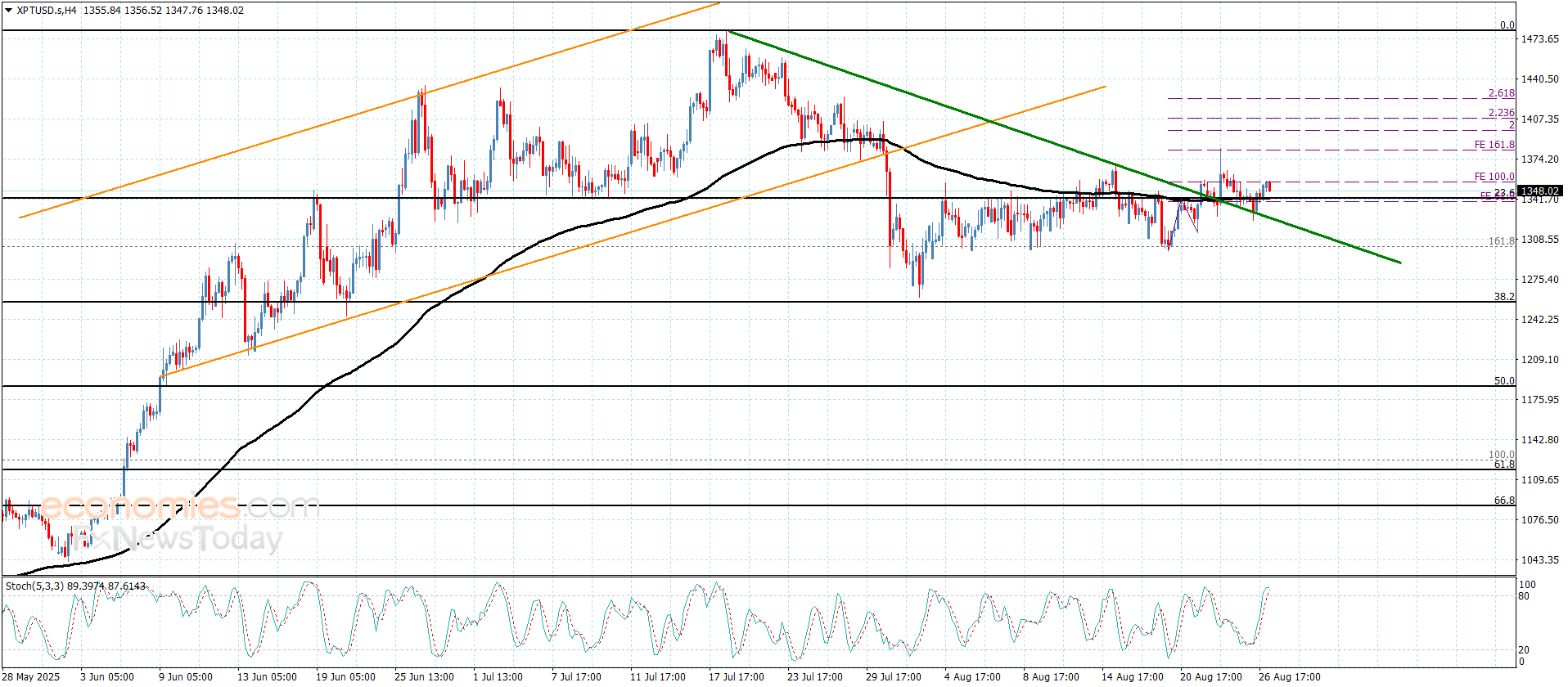
Platinum price surprised by a new obstacle at $1355.00, decelerating the chances of resuming the bullish attempts, which force it to form sideways fluctuation near $1345.00 level, by the above image we notice forming an important extra support at $1326.00 to reinforce the dominance of the bullish bias, increasing the chances for gathering the positive momentum in the current period.
Therefore, we will keep our bullish scenario depending on the stability of the extra support, to wait for breaching the extra barrier to open the way for achieving more of the gains by its rally towards $1383.00 reaching $1408.00.
The expected trading range for today is between $1335.00 and $1383.00
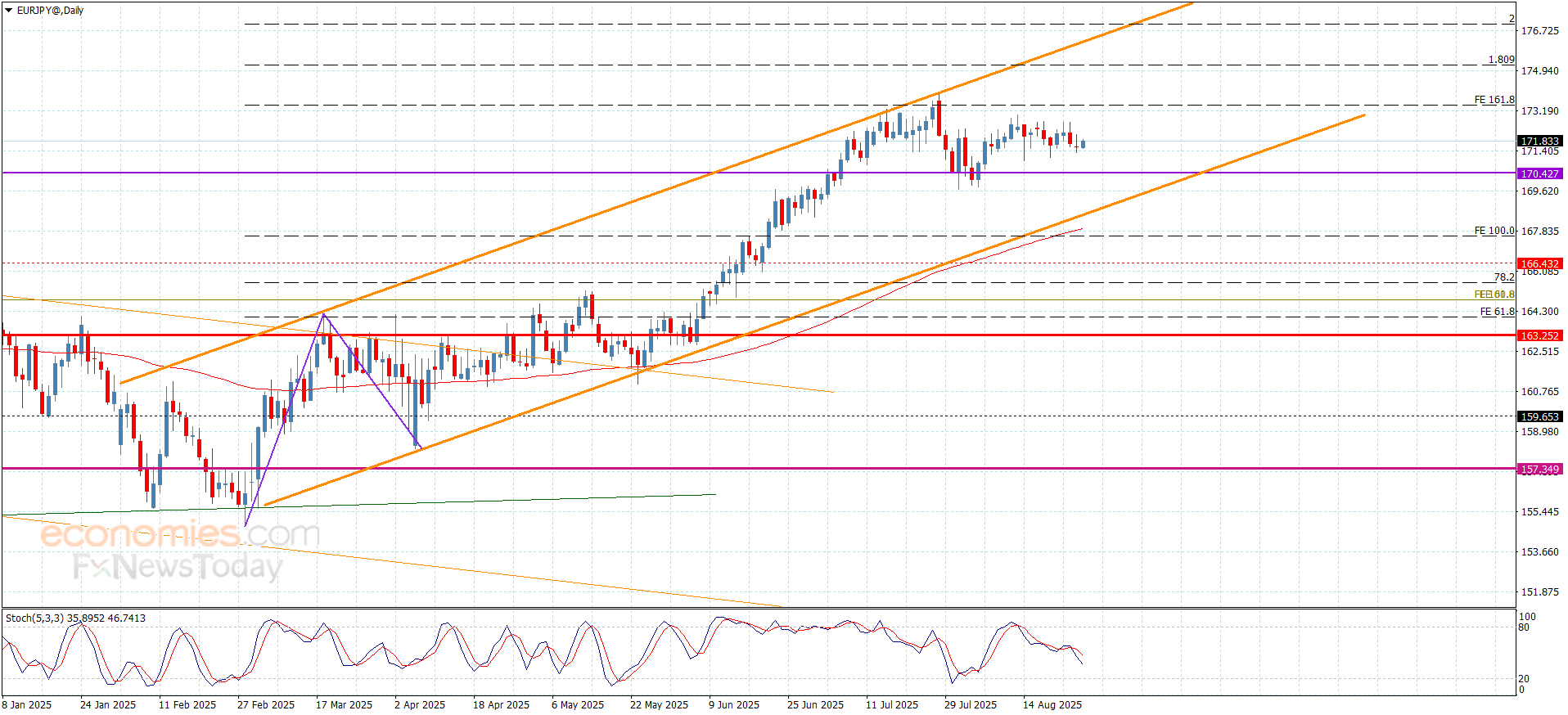
The EURJPY pair remains affected by the dominance of the sideways bias until this momentum, due to the continuation of the contradiction between stochastic negativity by its reach below 50 level and the stability within the main bullish levels, besides the stability of the moving average 55 near the support of the channel at 168.85.
Reminding you that the continuation of forming extra support at 170.45 level supports our bullish expectation by confirming its stability within the bullish track, therefore, we will keep waiting for gathering the positive momentum, to ease the mission of pressing on the barrier at 173.40, then begin targeting the main stations near 174.10 and 175.20.
The expected trading range for today is between 171.25 and 173.40
ISOPURE has just expanded its product line-up with the addition of Colostrum+ Gut Health & Immune Support, a versatile and unflavored powdered formula designed to elevate daily nutrition effortlessly.
Each serving delivers 1 g of high‑quality bovine colostrum, 1.37 g of the targeted prebiotic Bimuno GOS and 75 µg of biotin with an array of more than 20 essential vitamins and minerals.
This thoughtfully crafted blend aims to support gut health, boost immune function and support healthy hair, skin and nails — all while remaining devoid of artificial flavours, making it simple to blend into cool beverages, smoothies, or even yoghurt bowls without altering taste.
Bimuno GOS was honoured as Sports Nutrition Ingredient of the Year at the 2025 NutraIngredients‑USA Awards, reflecting its strong body of clinical research that demonstrates benefits such as improved gastrointestinal comfort, reduction in respiratory symptom duration among athletes and gut‑barrier support under physical stress.
By blending colostrum with this award‑winning prebiotic, ISOPURE Colostrum+ offers a multidimensional wellness tool that aligns with both immune and athletic wellness trends, appealing to those seeking evidence-based, multifunctional supplementation.
Cardano has been quietly building momentum, and recent price action suggests something big might be brewing. After testing a critical support level, ADA is showing all the signs of a currency ready to make its next major move. Here’s what traders need to know about the setup that’s got everyone talking.
ADA (Cardano) Price Shows Strong Bullish Recovery
According to recent analysis on X, Cardano has bounced impressively from the $0.7760 support level. Currently trading at $0.7910 with a 0.46% daily gain, ADA’s V-shaped recovery pattern suggests institutional buying stepped in at key levels.
The quick bounce combined with a higher-low structure indicates growing buyer confidence. This isn’t random price action – when cryptocurrencies recover this decisively from support, it often signals the next leg higher is approaching.
With ADA holding above the $0.7880 pivot point, momentum is building toward the crucial $0.8000-$0.8050 resistance zone.
Cardano (ADA) Breakout Setup Targets $0.8050
The technical picture looks clean for bulls. The suggested trade setup offers an entry range between $0.7880-$0.7920, targeting $0.8000 and $0.8050, with a stop-loss at $0.7820.
This creates an attractive risk-to-reward ratio – risking 1-2% for potential 2-4% gains. But the real opportunity lies beyond $0.8050. A breakout above this resistance level with strong volume could trigger much larger gains, as this zone has acted like a ceiling for weeks.
Market sentiment is turning bullish, though traders should wait for volume confirmation before entering positions. Without proper volume backing the move, even promising setups can fail.
Aave’s treasury has reached a historic milestone, with its net worth hitting an all-time high of $132.7 million, according to data from crypto analytics firm TokenLogic. This figure represents a 130% increase year-on-year, excluding the value of Aave’s native token AAVE. Including AAVE, the total treasury balance stands at approximately $329 million, reflecting significant growth in the protocol’s financial position. This surge is attributed to the increasing adoption and utility of Aave’s platform, which has evolved from a peer-to-peer lending protocol into a broader decentralized finance (DeFi) infrastructure provider.
The treasury’s asset composition reveals a diversified portfolio, with 44.6% allocated to Ethereum (ETH) and related tokens, 39.5% in stablecoins, 10.8% in DeFi tokens, and 4.9% in Bitcoin (BTC)-related tokens. This distribution highlights Aave’s strategic focus on maintaining liquidity across both volatile and stable assets to support its lending and borrowing functionalities. The growing proportion of stablecoins underscores the protocol’s role in facilitating risk-managed financial operations within the DeFi ecosystem.
Aave’s financial expansion aligns with broader industry trends of modularization and reintegration, as outlined in recent analyses by fintech and DeFi observers. Initially launched as a peer-to-peer lending platform, Aave transitioned to a pooled liquidity model and later embraced modular architecture by integrating external services such as Chainlink’s oracles and multi-chain deployments. However, in recent years, Aave has signaled a shift back toward vertical integration by launching its native stablecoin, GHO, in 2023. This move demonstrates Aave’s intent to control more layers of its financial infrastructure, including stablecoin issuance and governance.
The introduction of GHO marks a strategic milestone for Aave, positioning the protocol as both a lender and a stablecoin issuer. Unlike traditional DeFi lending platforms that primarily facilitated the borrowing of existing stablecoins like DAI, Aave now generates its own USD-pegged stablecoin. This development allows Aave to retain a greater share of the interest income generated from lending activities while reducing reliance on external protocols for critical financial components. Additionally, GHO’s integration with Aave’s lending pools creates a closed-loop system where interest payments can be reinvested into the protocol’s ecosystem, benefiting AAVE token stakers.
Aave’s trajectory also reflects the broader evolution of DeFi protocols, which have moved from tightly integrated applications to modular systems, and are now reintegrating key components to enhance user experience and control over value capture. This pattern mirrors the SaaS and fintech sectors, where companies first unbundled broad platforms into niche services and later rebundled them into comprehensive super-applications. Aave’s ongoing development of in-house tools, such as its Smart Value Routing mechanism for capturing MEV (Maximal Extractable Value), further supports its strategy to reassert control over previously outsourced functionalities. These moves suggest a long-term vision for Aave to evolve into a fully integrated financial platform, akin to traditional financial institutions but built on decentralized infrastructure.
The growing complexity and scale of Aave’s operations are supported by a robust user base and expanding liquidity pools. As the protocol continues to refine its product offerings, it faces both opportunities and challenges. The rise of competing DeFi platforms and regulatory scrutiny in certain jurisdictions could influence Aave’s trajectory. However, the protocol’s ability to adapt through innovation—such as its multi-chain deployments and integration of new financial primitives—positions it well for sustained growth in the evolving DeFi landscape.
Source: [1] ChainCatcher news (https://www.chaincatcher.com/en/article/2201047) [2] Aave (AAVE) to ETH conversion data (https://www.coingecko.com/en/coins/aave/eth) [3] DeFi Is Following The SaaS And Fintech Playbooks (https://www.ark-invest.com/articles/analyst-research/defi-is-following-the-saas-and-fintech-playbooks)
GBP/USD Forecast: Pound Sterling loses bullish momentum but finds support
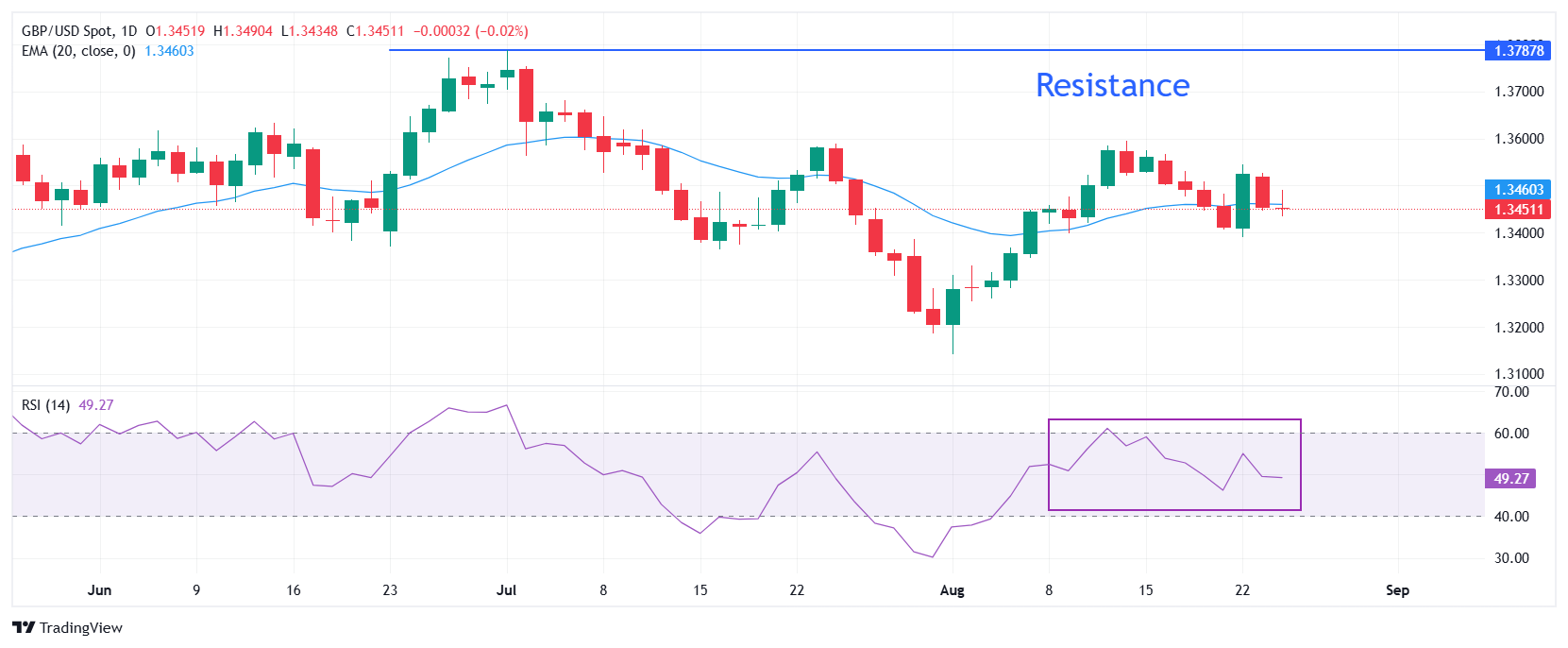
GBP/USD lose more than 0.5% on Monday and erased a large portion of the gains it recorded on Friday. After finding support near 1.3430, the pair staged a rebound and was last seen trading above 1.3450.
Safe-haven flows dominated the action in financial markets late Monday and early Tuesday after United States (US) President Donald Trump renewed his threats of imposing tariffs on countries that discriminate against US technology firms. Additionally, Trump said that they will have to charge China “200% tariff or something” if they don’t give them more magnets, referencing to rare earth metals. Read more…
Pound Sterling gains slightly against US Dollar as Trump fires Fed’s Cook
The Pound Sterling (GBP) ticks up to near 1.3470 against the US Dollar (USD) during the European trading session on Tuesday. The GBP/USD pair edges higher as the US Dollar falls slightly after the ousting of Federal Reserve (Fed) Governor Lisa Cook by United States (US) President Donald Trump, which has increased concerns over the central bank’s independence.
On early Tuesday, US President Trump shared a letter on Truth.Social in which he announced the removal of Fed Governor Cook, citing that she made false statements on one or more mortgage agreements. Read more…
Many people experience insomnia at some point in their lives, often due to anxiety. When these sleep issues persist for several months or longer, it is usually a good idea to visit a doctor to see if you have an underlying condition, like depression, restless legs or sleep apnoea, that requires medical treatment.
But for occasional periods of insomnia that leave you feeling bleary-eyed, experts say there may be some dietary supplements and even foods that can help.
It is important to recognise that no dietary supplement is going to radically improve your sleep. Supplements should not be viewed as a long-term solution. And almost all carry the risk of side effects.
Sign up to The Nightly’s newsletters.
Get the first look at the digital newspaper, curated daily stories and breaking headlines delivered to your inbox.
But some may produce modest benefits, such as helping you fall asleep slightly faster at night, and carry minimal side effects when taken in smaller doses.
Here’s what the science says about five popular supplements.
Melatonin
Melatonin is one of the most popular sleep supplements around but unlike in the US where it is sold over the counter, you’ll need a prescription in Australia — unless you’re over 55.
A hormone that is secreted in the pineal gland of your brain, melatonin regulates your sleep-wake cycle by synchronising your body’s internal clock with the outside world. It is produced primarily in the evening. But melatonin is not going to quickly send you off to sleep like a fast-acting sleeping pill. Instead, it promotes sleepiness by signalling to your body that it is night-time.
For that reason, melatonin supplements are most helpful for people with sleep-timing problems, said Phyllis C. Zee, the medical director of the Centre for Circadian and Sleep Medicine at the Northwestern University Feinberg School of Medicine. That includes people with jet lag, shift workers, and people who routinely struggle to fall asleep until extremely late at night.
For those people, taking melatonin in the evening can set their biological clocks earlier, helping them fall asleep and wake up earlier, Dr Zee said.
Melatonin levels decline with age, as well as post-menopause, said Fariha Abbasi-Feinberg, a specialist at American Academy of Sleep Medicine. “I think some people are more sensitive to it and can get some improvements in their sleep from it,” she added.
Studies have examined whether melatonin can alleviate insomnia, and results are mixed, Dr Abbasi-Feinberg said. Some studies have found that it can help people fall asleep faster and sleep more soundly.
But the AASM says there is not enough evidence on effectiveness or safety to recommend use.
It should be taken about two hours before bed for it to be most effective, said Dr Zee who recommends a low dose.
In Australia, the Therapeutic Goods Administration recommends 2mg for over-55s and warns melatonin purchased overseas may contain inaccurate dosages and inferior quality. Studies have shown that several US melatonin products are inaccurately labelled.
Some supplements may produce modest benefits, such as helping you fall asleep slightly faster at night, and carry minimal side effects when taken in smaller doses. Credit: FTWP
Magnesium
Magnesium plays an important role in sleep. It promotes relaxation, calms the nervous system and helps naturally produce melatonin.
Studies have linked inadequate consumption to shorter and poorer-quality sleep. Scientists found in animal studies that magnesium deficiencies lead to reductions in melatonin.
Some studies have found that they can be helpful for people experiencing insomnia. But the studies showing benefits have been mostly small and not very conclusive.
A systematic review and meta-analysis published in 2021, scientists looked at three trials involving 151 older adults with insomnia that compared the supplements to a placebo. People taking magnesium fell asleep about 18 minutes faster.
The researchers cautioned that more rigorous studies were needed. But they could find no evidence discouraging its use for insomnia in older adults.
Dr Abbasi-Feinberg said she occasionally recommends a low dose to people who routinely struggle to fall asleep.
“I will tell them to start with 100 or 200mg of magnesium and see if that makes a difference,” she said.
She stressed that people should stick to a low dose because magnesium can have side effects, including nausea, vomiting and diarrhoea. These side effects typically occur with doses above 350mg.
“It is important to note that more is not better,” said Dr Zee. “Check with your doctor . . . to avoid possible interactions with other medications or medical conditions.”
Probiotics
Studies have found that higher levels of gut-microbiome diversity — generally considered a sign of a healthy gut — are associated with longer, better sleep and fewer night-time awakenings.
Many hormones and metabolites that are produced by our gut microbes act directly on the brain to influence sleep regulation, including neurotransmitters like serotonin, said Chris Damman, a gastroenterologist.
Dr Abbasi-Feinberg encourages her patients to consume probiotics, which are live bacteria and other microorganisms that confer health benefits. But probiotic supplements — which are available in capsules, gummies, powders and pills — can have some downsides. For one, they tend to contain concentrated doses of just a few strains of bacteria. Studies have shown that taking them may actually reduce the microbial diversity in your gut.
Instead, Dr Abbasi-Feinberg recommends that you get probiotics from fermented foods, like plain yoghurt, kefir, kimchi, sauerkraut and tempeh. They typically contain not only probiotics (the live microbes) but also prebiotics (the fibre the microbes eat) and postbiotics (the vitamins and nutrients they produce).
One clinical trial found that older adults who drank a little more than half a cup of fermented milk every day for three weeks fell asleep more quickly at night and had fewer night-time awakenings compared to when they drank a placebo. Studies have shown that fermented foods also have other health benefits, including reducing inflammation.
Dr Abbasi-Feinberg says fermented foods have the potential to improve their sleep and have very little downside. “If there is no risk involved and the benefit is there,” she said.
Vitamin D
Vitamin D helps the body convert tryptophan into serotonin, a neurotransmitter that plays an important role in how well and how long you sleep. As one recent study noted, vitamin D receptors have been found in regions of the brain that regulate sleep, suggesting that it plays a direct role in our nightly shut-eye.
“Deficiencies can cause issues with low energy and low mood,” said Dr Abbasi-Feinberg, “and sleep can be affected”.
There is some evidence that taking vitamin D can improve sleep. But the data are mixed, and not every study has shown benefits. Also, some of the studies involved taking a single large dose as a shot at weekly or fortnightly intervals, rather than a daily pill.
Dr Abbasi-Feinberg said she sometimes encounters patients with sleep problems who work from home and rarely get any exposure to morning sunshine.
“They roll out of bed and turn their computer on and, boom, they are at work and they do not get outside,” she said. That can be a problem because exposure to sunshine helps your body produce vitamin D.
It also halts production of melatonin and resets your circadian rhythm, which can help you sleep better at night. For that reason, Dr Abbasi-Feinberg often prescribes sunshine to her patients — rather than supplementation.
Ashwagandha
Made from the herb Withania somnifera. Ashwagandha is used as a traditional medicine in India for a variety of reasons, but has surged in popularity thanks to social media.
There is some evidence that it can help with insomnia. But there are risks involved and the data is not conclusive.
In 2021, scientists analysed five randomised trials involving 400 people that looked at the effects of ashwagandha on sleep compared to placebo. They found a small but significant effect of ashwagandha on overall sleep. People assigned to take a supplement daily slept on average about 25 minutes longer each night and had improvements in sleep quality.
But scientists cautioned that there were limited data on ashwagandha’s potentially serious side effects, and they said that more research was needed to determine whether it was safe for long-term use.
As it has been linked to a handful of cases of liver toxicity, the TGA has warned on its use in Australia where it is available as therapeutic drug and also known as Withania.
Dr Abbasi-Feinberg said she does not necessarily discourage people from trying ashwagandha or other Ayurvedic remedies to help them sleep if they are not known to be harmful. But she feels there is not enough strong evidence to recommend them. “I am not enthusiastic about them because I feel like the data just are not there yet,” she added.
It should be avoided altogether if you are pregnant or nursing, have an autoimmune, liver, or thyroid disorder or are taking sedative medication.
Shaurya is the Co-Leader of the CoinDesk tokens and data team in Asia with a focus on crypto derivatives, DeFi, market microstructure, and protocol analysis.
The blockchain landscape is undergoing a quiet revolution. While Ethereum remains the dominant smart contract platform, its limitations in scalability and cost efficiency are driving a migration of developers and projects to alternatives like PulseChain. This shift is not merely a technical adjustment but a strategic repositioning of resources toward platforms that prioritize affordability, speed, and developer accessibility. For investors, the rise of PulseChain represents a compelling opportunity to capitalize on the next phase of decentralized application (DApp) development.
The Cost-Efficiency Imperative
Ethereum’s gas fees have long been a barrier to mass adoption. In Q2 2025, average transaction costs on Ethereum ranged from $10 to $50, spiking to over $100 during peak demand. By contrast, PulseChain’s gas fees remain consistently below $0.10 per transaction, even during high-traffic periods. This disparity is not accidental but structural: PulseChain’s Proof of Staked Authority (PoSA) consensus mechanism and 3-second block time reduce both energy consumption and network congestion. For developers, this translates to a platform where frequent transactions, micro-payments, and real-time interactions are economically viable.
The cost advantage is further amplified by PulseChain’s EVM compatibility. Developers can migrate projects from Ethereum without rewriting code, preserving their existing user bases while slashing operational expenses. For instance, a DeFi protocol that might incur $112,745 in gas fees on Ethereum for a complex transaction could execute the same operation on PulseChain for a fraction of the cost. This economic efficiency is a magnet for projects seeking to scale without compromising user experience.
Developer Migration: A Barometer of Long-Term Potential
The migration of developers from Ethereum to PulseChain is a critical indicator of long-term investment potential. While Ethereum’s developer base remains robust—hosting 71% of EVM contracts initially deployed on its network—its monthly active developers declined by 25% in 2025, largely due to the exodus of newer and part-time contributors. PulseChain, meanwhile, is attracting a growing cohort of developers who prioritize scalability and cost efficiency.
The platform’s ecosystem is expanding rapidly. PulseX, PulseChain’s decentralized exchange, has seen surging trading volumes, and cross-chain bridges like LibertySwap are enabling seamless asset transfers from Ethereum and other blockchains. These tools lower the friction for migration, allowing developers to retain their Ethereum-based assets while leveraging PulseChain’s infrastructure. The result is a dual ecosystem where projects can operate on both chains, optimizing for cost and performance.
Ecosystem Growth and Institutional Signals
PulseChain’s growth is not just technical but also institutional. The platform’s ability to replicate Ethereum’s ERC-20 tokens and NFTs as PRC-20 assets has attracted projects seeking to tokenize real-world assets (RWAs) without Ethereum’s high fees. This aligns with broader trends in DeFi and tokenization, where cost efficiency is a non-negotiable requirement.
Meanwhile, Ethereum’s recent upgrades—such as the Dencun and Pectra hard forks—have improved its scalability, but these improvements come at the cost of complexity. Layer 2 solutions now handle 60% of Ethereum’s volume, yet they remain a patchwork solution rather than a fundamental fix. PulseChain, by contrast, offers a streamlined, Layer 1 alternative that addresses scalability at the protocol level.
Investment Thesis: Balancing Risk and Reward
For investors, the key question is whether PulseChain can sustain its momentum against Ethereum’s entrenched dominance. While Ethereum’s TVL in DeFi reached $223 billion in 2025, PulseChain’s focus on niche use cases—such as high-frequency trading, gaming, and microtransactions—positions it to capture a segment of the market where cost efficiency is paramount.
The risks are clear: Ethereum’s ecosystem is vast, and its institutional adoption (e.g., Ethereum ETF inflows of $9.4 billion by July 2025) ensures its relevance. However, the migration of developers and projects to PulseChain is a vote of confidence in its ability to solve real-world problems. For investors with a medium-term horizon, PulseChain’s combination of technical innovation, low fees, and growing developer activity makes it a strategic bet on the future of scalable DApp development.
Conclusion
The blockchain industry is at a crossroads. Ethereum’s legacy is secure, but its limitations are pushing innovation to platforms like PulseChain. By prioritizing cost efficiency and scalability, PulseChain is not just an alternative—it is a catalyst for a new wave of decentralized applications. For investors, the migration of developers and the platform’s ecosystem growth are not just metrics; they are signals of a shifting paradigm. In a world where transaction costs and throughput determine success, PulseChain is building the infrastructure of tomorrow.
In August, the RBA cut the cash rate by 25 basis points, to 3.6%. RBA Governor Michele Bullock hinted at further policy easing during the press conference. She stating that the RBA’s 2025 forecasts are assuming a couple more cuts. Notably, the RBA didn’t dismiss the possibility of back-to-back cuts, indicating that board members will assess the data at each meeting.
When do economists expect the RBA to cut rates again?
AMP Head of Investment Strategy and Chief Economist Shane Oliver remarked on the RBA’s Meeting Minutes, stating:
“RBA minutes reiterated dovish guidance, noting the cash rate is ‘still somewhat restrictive’ & ‘some further reduction in the cash rate over the coming year’ is likely required, with reference to the pace being gradual and data determined. We expect cuts in Nov, Feb & May to 2.85%.”
Today’s inflation numbers would have to be significantly lower than in June to pressure the RBA into a September cut.
AUD/USD: Key Scenarios to Watch
Bearish AUD/USD Scenario: Softer inflation or dovish RBA cues. These factors could drag AUD/USD below the 50-day EMA and bring the 200-day EMA and $0.6450 support level into play.
Bullish AUD/USD Scenario: Hotter-than-expected inflation or hawkish RBA chatter. These factors could send AUD/USD toward the $0.6550 resistance level, paving the way toward the $0.66 level.
Explore our full AUD/USD analysis, including key trends and trade data, here.
AUD/USD Daily Outlook: Will Fed Speakers Narrow Rate Differentials?
While economists expect a November RBA rate cut, Fed Chair Powell’s hint of a near-term Fed rate cut sent AUD/USD to $0.65.
FOMC members’ support for a September rate cut and further policy easing in Q4 would narrow the US-Aussie rate differential in favor of the Aussie dollar. A narrowing rate differential may drive AUD/USD toward the $0.6550 level. A break above $0.6550 brings $0.66 into sight.
However, rising concerns about inflation over a cooling labor market could signal a less dovish Fed policy stance. Fewer rate cuts may widen the rate differential in favor of the US dollar. A wider differential could push AUD/USD below the 50-day EMA, exposing the 200-day EMA. If breached, $0.6400 would be the next support level.