About Editorial team of BIPNs

Main team of content of bipns.com. Any type of content should be approved by us.
13 08, 2025

XAU/USD unable to recover its shine in a risk-on environment

By |2025-08-13T22:58:32+03:00August 13, 2025|Forex News, News|0 Comments


XAU/USD Current price: $3,358.48

  • Political woes in the United States gather all the attention in the absence of macro news.
  • Market participants keep beting on a Federal Reserve’s interest rate cut in September.
  • XAU/USD is technically neutral and with the bullish potential limited.

Broad US Dollar (USD) weakness helped Gold price advance on Wednesday, with the XAU/USD pair peaking at $3,370.80 early in the American session. In the absence of fresh news, financial markets keep revolving around the latest United States (US) headlines and mounting speculation that the Federal Reserve (Fed) will cut the benchmark interest rate when it meets in September. Speculative interest maintains the upbeat mood, as seen in Wall Street’s behaviour, with the three major indexes extending their weekly advances.

Gold shed some ground amid its safe-haven status, but the slide was limited by the lack of interest in the USD. As the American session unfolds, the XAU/USD pair hovers around $3,360, little changed for a second consecutive day.

Meanwhile, investors keep an eye on US political developments. On the one hand, Russian President Vladimir Putin will meet his American counterpart, Donald Trump, in Alaska next Friday to discuss the end of the Russia-Ukraine war. Putin has claimed the Donbas region as a condition for further progress, something Ukrainian President Volodymyr Zelenskyy said won’t happen.

On the other hand, President Trump is busy planning the Fed Chair’s replacement. According to people familiar with the matter, the White House is considering eleven candidates, including Jefferies Chief Market Strategist David Zervos, former Fed Governor Larry Lindsey and Rick Rieder, chief investment officer for global fixed income at BlackRock. The list also includes actual Fed members, such as Michelle Bowman, Chris Waller and Philip Jefferson.

The macroeconomic calendar had little to offer on Wednesday, but it will become a bit more interesting in the next 24 hours. Australia will release its monthly employment report, while the United Kingdom (UK) will publish Gross Domestic Product (GDP) updates. Later in the day, the Eurozone will publish a Q2 GDP estimate, while the US will release the July Producer Price Index (PPI).

XAU/USD short-term technical outlook

The daily chart for the XAU/USD pair shows that the pair remains stuck around a flat 20 Simple Moving Average (SMA), unable to run past the level. At the same time, the 100 and 200 SMAs maintain their upward slopes within positive levels, limiting the downside potential of Gold. Finally, technical indicators aim modestly higher at around their midlines, not enough to confirm another leg north.

In the near term, and according to the 4-hour chart, XAU/USD was unable to maintain gains beyond a bearish 20 SMA, suggesting buyers remain sidelined. At the same time, the pair is stuck around a flat 100 SMA, while the 200 SMA is also directionless, well below the shorter ones. As it happens in the wider time frame, technical indicators fall short of giving directional clues, as they hold around their midlines without clear directional strength.

Support levels: 3,349.00 3,331.10 3,312.25

Resistance levels: 3,372.30 3,389.85 3,402.70


Source link

13 08, 2025

How Long Does Matcha Last After Opening It? Here’s What To Know

By |2025-08-13T22:49:19+03:00August 13, 2025|Dietary Supplements News, News|0 Comments


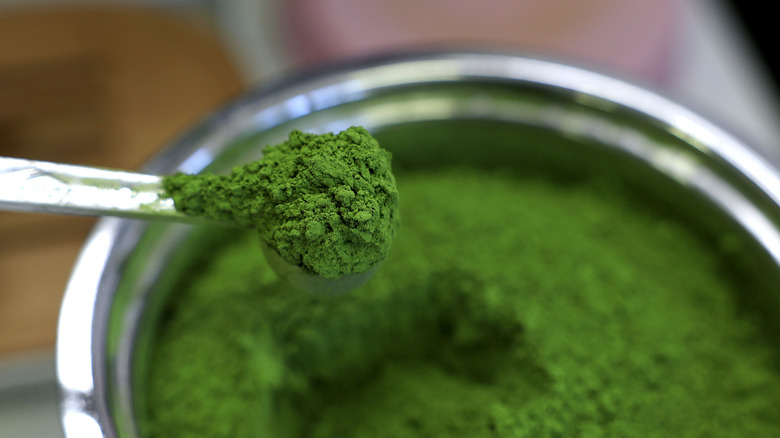
A great cup of matcha is sweet and grassy, a complex mixture of flavors that are gentle but not muted. It’s a flavor unique enough to match its vibrant green color, two qualities that have made matcha very trendy. Today, you’ll find it on most coffee and tea shop menus, but you’ll also find plenty of inspiration online for making it at home. Sure, you’ll have to work with a whisk to make a traditional cup of matcha yourself, but it’s easy and you can customize it to taste just as good as the matcha from the coffee shops. How long can you keep that container of matcha on your counter before you should throw it out?

We asked a tea expert for some advice on the shelf life of matcha, and it turns out that it doesn’t really go rancid. It doesn’t spoil when it expires, it just loses its mojo. Elle Liu, founder of Theoró, explained that matcha won’t make you sick as it ages, but it does lose color and flavor. And while old matcha isn’t necessarily a health hazard, the quality of this tea actually hinges on freshness.

“Because it’s a fine powder, it’s super sensitive to air, light, and moisture. You’ll want to drink it as fresh as possible, definitely within a few months of opening,” Liu said. “There’s no upside to aging green tea, so unlike pu-erh or certain oolongs, matcha (like all green teas) is all about freshness.”

How to keep your matcha fresh for as long as possible

The best way to preserve the quality of matcha is to start out with a top-notch product. And Elle Liu pointed out a list of things to look for when you’re choosing your new favorite brand, starting with a quick glance at the “best by” date. “The best matcha is usually packaged in a small foil bag tucked inside a tin, often with an oxygen absorber. Honestly, try to avoid buying matcha that comes in any other type of packaging,” she said. “Good matcha should be vibrant in color, have a sweet, umami aroma, and whisk into a smooth, frothy cup.”

If you notice your matcha has been sitting out on the counter too long, or that it’s gone a little dull, don’t throw it out. It has uses beyond the cup. Use old matcha in baking for breads and muffins, and in savory dishes like pasta and hummus. “Just like last year’s green tea leaves can be used in dumpling fillings or cooking, matcha that’s past its peak drinking quality can still be great for culinary uses,” Liu said. “Its flavor may be slightly muted, but I personally think it’s totally okay to make matcha ice cream, or matcha pastries, like cookies or cakes.”


Source link

13 08, 2025

Dogecoin Price Analysis as Ethereum Rallies to $4,600 and Whales Frenzy Over Doge Meme Coins Like Maxi Doge

By |2025-08-13T22:46:48+03:00August 13, 2025|Crypto News, News|0 Comments

Trusted Editorial content, reviewed by leading industry experts and seasoned editors. Ad Disclosure

Stay Ahead with Our Immediate Analysis of Today’s Dogecoin Updates

Check out our Live Dogecoin Updates for August 13, 2025!

In 2025, Dogecoin stands shoulder-to-shoulder next to Bitcoin. One is the first cryptocurrency, while our doggo friend is widely recognized as the first meme coin.

Launched in 2013, $DOGE is up by over 44000% today, looking at a price of over $0.24 and a trading volume in the billions of dollars. If anything, Dogecoin proves that ‘anything is possible’ in crypto, and even underdogs can become industry giants.

With endorsements from industry moguls like Elon Musk and official investment vehicles like the Grayscale Dogecoin Trust, $DOGE seems to be going nowhere but up.

Click to learn more about Maxi Doge

Maxi Doge ($MAXI) is Dogecoin’s bodybuilder cousin chugging Red Bull and scalping cryptos at 3AM in the morning.

Embodying full-send chaos and pump potential 2.0, $MAXI is for degen traders who don’t hesitate and keep diamond hands on some of the riskiest plays.

While meme coins are a dime a dozen, Maxi Doge is max-commitment, max cojones, and aiming for legend status in the memecoin land.

Simply put, if rat poison squared took form, it would probably look like Maxi Doge. And this meme coin is still in presale.

If you’re looking for the newest insights on Dogecoin and doge-related projects and meme coins, you’re in the right place.

We update this page frequently throughout the day, as we get the latest and greatest insider insights for Doge lovers and memecoin enthusiasts, so keep refreshing!

Disclaimer: Crypto is a high-risk investment, and you may lose your capital. Our content is informational only, and it does not constitute financial advice. We may earn affiliate commissions at no extra cost to you.

Today’s Dogecoin Technical Analysis 📊

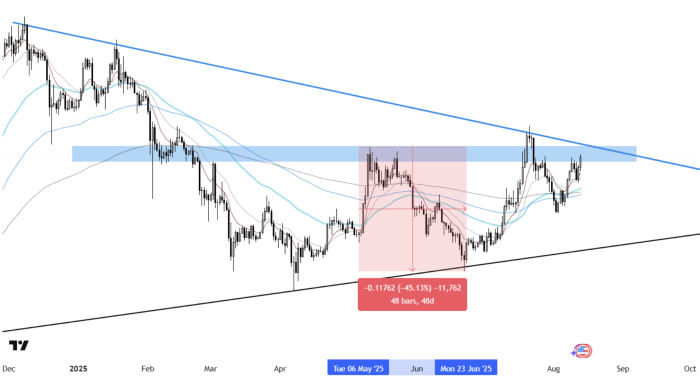
$DOGE played out exactly as expected after bouncing off the 50% Fibonacci retracement level yesterday. The token has surged nearly 12% in just two days and is now charging toward its July highs.

However, the road ahead isn’t without hurdles. $DOGE has entered a key resistance zone (highlighted by the blue box on the chart), which is the same range from which it tumbled 45% in May.

Dogecoin Price Analysis as Ethereum Rallies to ,600 and Whales Frenzy Over Doge Meme Coins Like Maxi Doge

Even if the current momentum clears this area, the next challenge will be breaking the upper boundary of a descending triangle pattern on the daily chart.

On the bright side, short-term momentum indicators like the EMAs and RSI are both trending upward, reinforcing the short-term bullish case.

All in all, the overall verdict here is that while investors can enjoy the upside for now, they must tread with caution, keeping significant long-term resistances in mind.


The Next Big Web3 Event Announced Its First Speakers, Fueling Meme Coins Like Maxi Doge

August 13, 2025 • 15:00 UTC

The Blockchain Futurist Conference just announced its first speakers, with names like Mike Belshe, CEO of BitGo, Justin Sun, TRON founder, and Luca Netz, CEO of Pudgy Penguins, ranking among them.

The event will take place on November 5-6, 2025, in Greater Miami, Florida, inside the Hard Rock Guitar Hotel and DAER, and will feature a lineup of over 300 speakers.

The news has the community hyped up, given the event’s high-quality past talks, with projects like Maxi Doge likely to rally as a result.

The Maxi Doge ($MAXI) presale has just started on July 29, 2025, and has already accumulated over $800K so far.

Learn more about Maxi Doge ($MAXI) on the official presale page.


Dogecoin Bounced Off of an Imbalance Zone and Might Target $0.3 for 25% Pump – Is Maxi Doge Going to Follow?

August 13, 2025 • 14:00 UTC

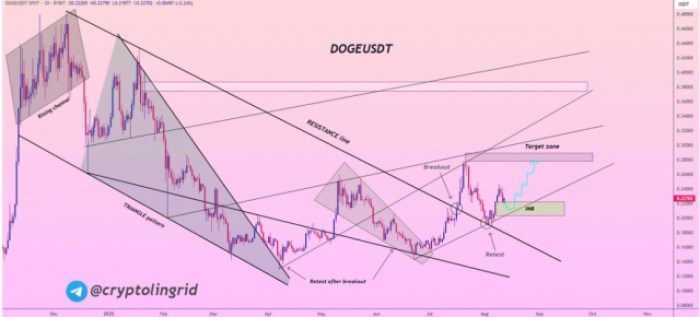
According to a trader on CoinMarketCap, Dogecoin just rebounded from an imbalance zone and is holding well above mid-channel support.

Doge and Usdt performance chart showing a rebound from an imbalance zone
Source: CoinMarketCap

This move is similar to behavior shown by $DOGE in April, when it recovered from previous losses and went into a rally to test resistance levels.

We’re now looking at a potential retesting of $0.28 and even $0.30+ if the bullish channel holds.

And once Dogecoin soars, Doge-based coins like Maxi Doge should clearly receive headwinds. Although still a presale, Maxi Doge ($DOGE) has raised over $811K in only a few days as investors crowd to get in.

The steroid-using, Red Bull-chugging mascot is scalping shitcoins with one hand and injecting Tren into his veins with the other.

Rat poisoned squared to the power of crypto? You bet. A coin that only costs $0.000252 and is most likely going to blow once it’s out of presale? That, as well.

Have a look at $MAXI’s balls-to-the-wall presale page and see for yourself.]


Ethereum Surpasses $4,700 First Time Since 2021, Potentially Kickstarting the Alt Season and Fueling Meme Coins Like Maxi Doge

August 13, 2025 • 13:00 UTC

$ETH surged above $4,700 today, placing the coin at the forefront of the coming alt season. This is the highest $ETH has pushed in charts since December 2021.

Bloomberg analyst, Nate Geraci, explains Ethereum’s pump as the result of the ecosystem’s natural development and people’s hearing “backbone of future financial markets” & it’s resonating.’

Ethereum’s chart performance is also linked to the increased institutional adoption rates, with companies like Abraxas Capital buying $ETH in bulk.

If the trend continues, $ETH could push to new heights, fueling hot meme coins like Maxi Doge, the Dogecoin’s buffed alter-ego.

Learn more about Maxi Doge ($MAXI) on the presale page.


DeepSeek’s Bold $3 Cardano Price Prediction Puts the Spotlight on Maxi Doge – A 1000x Meme Coin in Presale

August 13, 2025 • 11:54 UTC

Cardano ($ADA)’s staggering 12% jump in just the last 24 hours has ignited speculation about a potentially fleshed-out rally, one that could see the token break past the $3 mark and into new all-time high territory.

According to DeepSeek, $ADA’s bullish setup is backed by several key catalysts:

Now, if you want to ride Cardano’s momentum – and the broader crypto market’s upswing – DeepSeek says a low-cap, high-upside presale meme coin like Maxi Doge ($MAXI) could be the real jackpot.

Why $MAXI? Because it’s a degen-fueled meme coin fronted by a Shiba Inu – Dogecoin’s resentful cousin – hell-bent on overthrowing the OG meme coin’s throne.

Armed with big muscles, 1000x leverage, and a growing army of holders, $MAXI blends absurd humor with addictive weekly trading competitions and leaderboard rewards that keep the community hooked.

Learn all about Maxi Doge by visiting its official website.


BitMine Doubles Down on $ETH with $24.5B Fundraiser—Could Investors Target Meme Coins Like Maxi Doge Next?

August 13, 2025 • 11:00 UTC

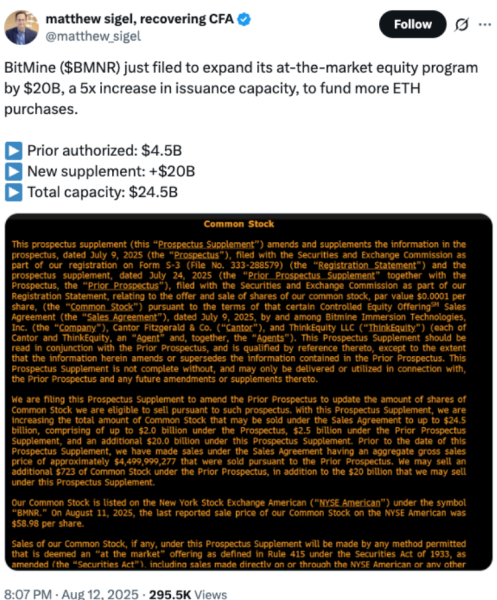
BitMine Immersion is expanding its equity program to a whopping $24.5B, according to an amended prospectus shared on X by VanEck’s Head of Digital Research Matthew Sigel.Alt: Matthew Sigel’s post on X.

Matthew Sigel’s post on X.

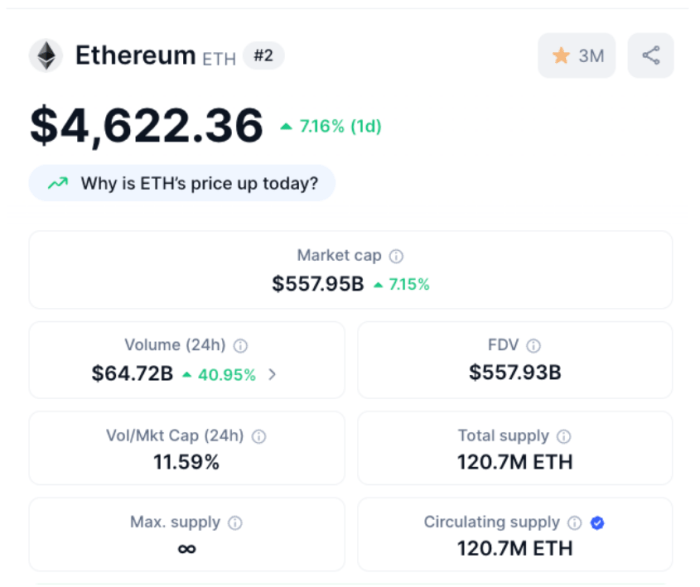
The company’s bullish sentiment on $ETH, along with increased inflows from other institutional investors, has helped boost the crypto’s price to $4,600 for the first time since 2021.

This current bull run could push more cash-rich investors searching for more lucrative projects towards alternative bets such as Maxi Doge ($MAXI).

Compared to its distant cousin Doge, Maxi Doge is more bullish and willing to take on bigger risks even without an exit plan.

As such, this doge token is perfect for degens who want the maximum fun and gains from their meme coins via staking and community rewards.

$MAXI is on presale now, giving potential investors a way to get a cheap token with high growth potential.

Check out the Maxi Doge presale here.


$ETH’s 4.6K Rally Sends Doge Higher as Maxi Doge Presale Gains Traction

August 13, 2025 • 10:00 UTC

Ethereum’s surge past $4.6K for the first time in four years is driving a fresh wave of risk-on sentiment across crypto markets.

Ethereum price

Futures open interest has climbed to a record $64.15B, while spot Ether ETFs saw a historic $1.01B in single-day inflows, easily outpacing Bitcoin’s $178M. This mix of strong spot demand and record institutional buying is pulling traders back into the best altcoins and meme coins.

$DOGE has jumped 8% today, extending its recent recovery and reminding the market that dog-themed tokens tend to thrive when retail sentiment flips bullish. Historically, $DOGE rallies have coincided with liquidity rotating into newer meme projects.

One of the most talked about newcomers is Maxi Doge ($MAXI) – a presale coin positioning itself as Dogecoin’s ultra-jacked cousin. Built on Ethereum, $MAXI blends over-the-top gym culture with crypto’s speculative energy, already raising $796K+ and offering 354% staking APY.

With meme coin activity heating up, $MAXI is aiming to capture the next wave of trader attention.

Read our full guide on how to buy Maxi Doge.


Whale Frenzy Pushes Bitcoin to Another ATH, with Meme Coins Like Maxi Doge Coming Close Behind

August 13, 2025 • 10:00 UTC

The number of whale wallets holding over 100 $BTC grew to 18,996, smashing the previous record of 18,544 dating back to February 2017, according to Bitcoin Magazine Pro.

This comes in the pro-crypto context created by Trump’s GENIUS Act, which brings increased security and regulatory clarity to the crypto-space.

The recent whale activity reflected in Bitcoin’s performance, currently hovering around the $120K mark and hinting at a new 2025 ATH.

With Bitcoin on the front foot, meme coins like Maxi Doge could experience a sustained push as well.

Maxi Doge pushes the doggo meme to new heights, promising massive gains.

Learn more about Maxi Doge ($MAXI) on the official presale page.


Editorial Process for bitcoinist is centered on delivering thoroughly researched, accurate, and unbiased content. We uphold strict sourcing standards, and each page undergoes diligent review by our team of top technology experts and seasoned editors. This process ensures the integrity, relevance, and value of our content for our readers.

Source link

13 08, 2025

DeFi at Inflection Point as Blumberg Compares to ETF Rise

By |2025-08-13T20:59:49+03:00August 13, 2025|News, NFT News|0 Comments


Jürgen Blumberg, the newly appointed chief operating officer of DeFi platform Centrifuge, has drawn a compelling analogy between the evolution of exchange-traded funds (ETFs) and the current trajectory of decentralized finance. With over 20 years of experience in traditional finance—spanning roles at institutions like Goldman Sachs, Invesco, and BlackRock—Blumberg sees DeFi at a similar inflection point to the early days of ETFs, which eventually overtook mutual funds in market share [1]. He describes this as “DeFi’s ETF moment,” a period where the sector is transitioning from niche experimentation to mainstream adoption.

Blumberg’s move to Centrifuge marks a significant shift from traditional financial systems to decentralized models. Centrifuge operates by tokenizing real-world assets (RWAs) and enabling them to be used as collateral in decentralized lending protocols. This approach blends the trust and tangibility of traditional assets with the efficiency and accessibility of blockchain. According to Blumberg, DeFi is not just about volatility or speculation—it is a structural innovation with the potential to address long-standing inefficiencies in traditional finance, such as high costs, limited access, and slow transaction times [1].

The COO emphasizes that DeFi’s infrastructure is rapidly evolving to offer 24/7 market access and transparency. He highlights the similarities between DeFi and traditional finance: total value locked (TVL) is equivalent to assets under management (AUM), liquidity pools function like exchanges, and derivatives exist on both sides of the market. The key difference, he notes, is how these systems are structured and governed [1].

Blumberg also draws a distinction between token types, warning against viewing all tokens as equal. He references an old ETF industry adage—“not every ETF is created equal”—and applies it to the tokenization space. Some tokens represent derivative structures not fully backed by the underlying asset, while others, such as Centrifuge’s fund tokens, are fully collateralized. This nuance, he argues, is essential for investors seeking to understand the risk profiles of different DeFi instruments [1].

Regulation, according to Blumberg, is a global race rather than a regional effort. While the U.S. is currently leading in regulatory progress, Europe—particularly Luxembourg and Switzerland—and Asia—specifically Hong Kong and Singapore—are also making strides. The EU’s Markets in Crypto-Assets (MiCA) framework and the growing number of ETP issuers in Switzerland highlight the competitive landscape shaping the global DeFi environment [1].

Centrifuge itself is on the verge of a major milestone, with total value locked approaching $1 billion. The platform has secured partnerships with major players like S&P and is poised for continued growth. Blumberg’s confidence in Centrifuge’s future stems from its ability to combine traditional finance principles with the agility and innovation of DeFi [1].

For Blumberg, the decision to leave large financial institutions came down to where he believed the next wave of innovation would emerge. While incumbents have the resources and infrastructure, he is convinced that agile startups will drive the next decade of financial transformation [1].

Source: [1] Centrifuge COO Jürgen Blumberg: “DeFi Is Having Its ETF Moment” (https://cryptonews.com/exclusives/centrifuge-coo-jurgen-blumberg-defi-is-having-its-etf-moment/)


Source link

13 08, 2025

Goldman Sachs raises Brent oil forecast for second half of 2025 to $66

By |2025-08-13T20:57:57+03:00August 13, 2025|Forex News, News|0 Comments


(Reuters) -Goldman Sachs raised its oil price forecasts for the second half of 2025 on Monday, citing the risk of supply disruption, lower oil inventories in Organisation for Economic Co-operation and Development countries and Russia’s production constraints.

The bank expects Brent crude to average $66 a barrel in the second half of 2025, up $5 from its previous forecast, and WTI at $63, up $6. Its 2026 forecasts remain unchanged at $56 for Brent and $52 for WTI.

“Our unchanged 2026 price forecast reflects an offset between a boost from higher long-dated prices and a hit from a wider 1.7 million barrels per day 2026 surplus,” the bank said. Previously, it expected a surplus of 1.5 mbpd.

Goldman Sachs now expects OPEC+, the Organization of the Petroleum Exporting Countries and allies, to unwind 2.2 mbpd of cuts by September, including a final 0.55 mbpd increase.

Goldman flagged a range of possible outcomes. A drop in Iranian supply could push Brent up to $90, while increased stockpiling by countries such as China could keep prices closer to $60 in 2026. A full unwinding of the 1.65 mbpd of OPEC+ cuts from April 2023, which would be additive to the ongoing 2.2 mbpd OPEC+ cut unwind, could drag prices below the bank’s baseline, potentially falling to $40 in a recession scenario by 2026.

“Reduced spare capacity increases our confidence that prices will rebound after 2026,” Goldman said.

It based its bullish long-term view on factors including falling investment, a lack of new non-OPEC projects beyond 2026, and growing demand over the next decade.

Goldman reiterated its cautious stance for 2026 and continues to recommend hedging against downside risk.

“We still recommend buying oil puts (or put spreads) and selling calls,” it said, suggesting investors sell a June 2026 $75 Brent call to fund buying a $55/45 put spread.

(Reporting by Noel John and Sherin Elizabeth Varghese in Bengaluru; Editing by Mark Porter and Barbara Lewis)


Source link

13 08, 2025

Red Vine Leaf Extract Market | Global Market Analysis Report

By |2025-08-13T20:47:52+03:00August 13, 2025|Dietary Supplements News, News|0 Comments


Red Vine Leaf Extract Market Size and Share Forecast Outlook 2025 to 2035

The Red Vine Leaf Extract Market is estimated to be valued at USD 7.4 billion in 2025 and is projected to reach USD 10.9 billion by 2035, registering a compound annual growth rate (CAGR) of 3.9% over the forecast period. This growth translates into an absolute dollar opportunity of USD 3.5 billion between 2025 and 2035. This consistent rise reflects increasing global interest in natural and plant-based health supplements. Red vine leaf extract, known for its benefits in improving blood circulation, reducing varicose vein symptoms, and offering anti-inflammatory properties, is gaining popularity in both dietary supplements and pharmaceutical applications. The expanding elderly population and growing incidence of chronic venous disorders further contribute to rising demand.

From 2025 to 2030, the market is expected to grow from USD 7.4 billion to approximately USD 8.7 billion, generating an opportunity of USD 1.3 billion in just five years. The period from 2030 to 2035 adds another USD 2.2 billion, reaching USD 10.9 billion. This steady increase highlights favorable conditions for both established players and new entrants in functional and herbal ingredient segments. The market’s absolute dollar opportunity underscores the potential for investment in product innovation, clean-label formulations, and expansion into emerging markets where awareness of botanical health products is rapidly growing.

Quick Stats for Red Vine Leaf Extract Market

  • Red Vine Leaf Extract Market Value (2025): USD 7.4 billion
  • Red Vine Leaf Extract Market Forecast Value (2035): USD 10.9 billion
  • Red Vine Leaf Extract Market Forecast CAGR: 3.9%
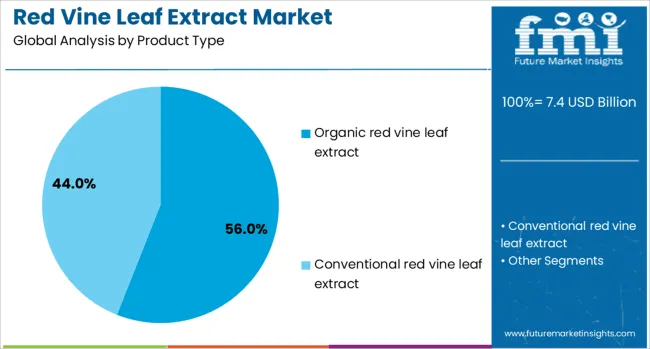
  • Leading Segment in Red Vine Leaf Extract Market in 2025: Organic red vine leaf extract (56.0%)
  • Key Growth Regions in Red Vine Leaf Extract Market: North America, Asia-Pacific, Europe
  • Top Key Players in Red Vine Leaf Extract Market: INDENA S.p.A, Euromed S.A, Naturex (Givaudan), Martin Bauer GmbH & Co. KG, Bio-Botanica, Inc.

Red Vine Leaf Extract Market Key Takeaways


Metric Value
Red Vine Leaf Extract Market Estimated Value in (2025 E) USD 7.4 billion
Red Vine Leaf Extract Market Forecast Value in (2035 F) USD 10.9 billion
Forecast CAGR (2025 to 2035) 3.9%

The Red Vine Leaf Extract market operates within the broader herbal and botanical extracts market, a key segment of the global nutraceuticals and natural health ingredients industry. As of 2025, the global herbal extracts market is valued at over USD 50 billion, with applications in dietary supplements, pharmaceuticals, cosmetics, and functional foods. Red vine leaf extract, known for its venotonic, antioxidant, and anti-inflammatory properties, is primarily used in vascular health supplements and natural therapeutics. Within the herbal extracts market, leaf-based extracts account for approximately 30% of total market share, and red vine leaf extract holds a niche but growing position. It represents about 1.5–2% of the total herbal extracts market, equating to a market size of roughly USD 7.4 billion in 2025, and is expected to reach USD 10.9 billion by 2035. Growth is driven by rising consumer demand for plant-based remedies, especially in Europe and North America, where natural treatments for chronic venous insufficiency (CVI) and leg pain are widely accepted. Leading players in the parent market include Naturex (Givaudan), Indena, Martin Bauer Group, and Sabinsa, all of which offer specialized plant-derived ingredients, including grapevine-derived extracts for therapeutic applications.

Why is the Red Vine Leaf Extract Market Growing?

The red vine leaf extract market is experiencing consistent growth as consumer preference shifts toward plant-based and functional ingredients in health and wellness products. Demand is being driven by increased awareness of natural solutions for venous insufficiency, circulatory support, and inflammation reduction. The market is further being shaped by growing interest in botanical therapeutics within nutraceuticals, pharmaceuticals, and cosmeceuticals.

Innovations in plant extraction technologies, clean-label product development, and stringent quality control practices have contributed to expanding product adoption across regions. Organic certifications, transparency in sourcing, and traceability standards have become influential in purchase decisions, particularly in European and North American markets.

With expanding applications in dietary supplements and functional foods, the Red Vine Leaf Extract market is expected to maintain its upward trajectory. The ability of manufacturers to align product offerings with consumer demand for sustainable, ethically sourced, and efficacious botanicals will continue to determine competitive positioning and future growth potential.

Segmental Analysis

The red vine leaf extract market is segmented by product type, form, application, distribution channel, and geographic regions. The red vine leaf extract market is divided by product type into Organic red vine leaf extract and Conventional red vine leaf extract. The red vine leaf extract market is classified by form into Powder, Liquid, Capsules, and Tablets. Based on the application of the red vine leaf extract, the market is segmented into Dietary Supplements, Pharmaceuticals, Cosmetics & Personal Care, Food & Beverages, and Others. The distribution channel of the red vine leaf extract market is segmented into Online Retail, Direct Sales, Pharmacies & Drugstores, Health & Wellness Stores, Supermarkets/Hypermarkets, and Others. Regionally, the red vine leaf extract industry is classified into North America, Latin America, Western Europe, Eastern Europe, Balkan & Baltic Countries, Russia & Belarus, Central Asia, East Asia, South Asia & Pacific, and the Middle East & Africa.

Insights into the Organic Red Vine Leaf Extract Product Type Segment

Red Vine Leaf Extract Market Analysis By Product Type

The organic red vine leaf extract subsegment is projected to account for 56% of the Red Vine Leaf Extract market revenue share in 2025, positioning it as the dominant product type. This leadership has been supported by rising consumer demand for clean-label, pesticide-free botanicals with verifiable origins. As awareness around the long-term health benefits of natural ingredients continues to rise, preference has shifted toward certified organic formulations that align with wellness trends.

The segment has also benefited from regulatory support for organic labeling and increased penetration in premium nutraceutical brands. With organic sourcing often perceived as a mark of quality and safety, purchasing decisions have been strongly influenced by sustainability credentials and farming practices.

Retailers and formulators have shown greater interest in organic extracts due to their compatibility with ethical marketing and consumer trust. As transparency and environmental responsibility become purchasing priorities, the organic product type is expected to retain its competitive advantage in the global market..

Insights into the Powder Form Segment

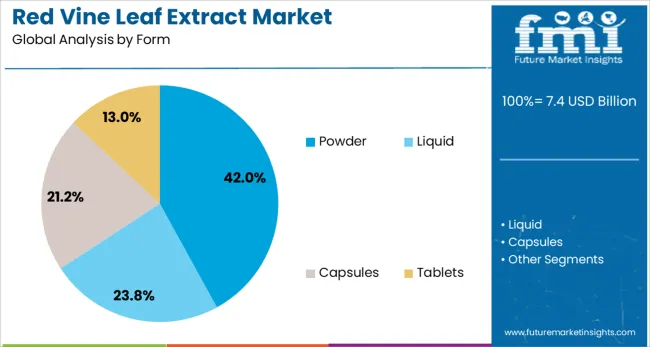
Red Vine Leaf Extract Market Analysis By Form

The powder form subsegment is expected to represent 42% of the Red Vine Leaf Extract market revenue share in 2025, making it the leading formulation. Growth in this segment has been supported by the versatility, shelf stability, and ease of formulation that powders offer across dietary supplements, capsules, and functional food products. Powdered extracts have been favored for their ability to maintain potency during processing and storage, while also offering precise dosing in manufacturing applications.

Their compatibility with both solid and liquid dosage forms has expanded their use across a broad range of product categories. The demand for dry botanical extracts has also been reinforced by the rising popularity of personalized nutrition and DIY supplement formats.

Additionally, powders provide logistical advantages such as reduced transportation costs and longer shelf life, enhancing their appeal to manufacturers. The segment is expected to maintain its lead as product developers seek flexible, stable, and scalable formats that align with modern health and wellness trends.

Insights into the Dietary Supplements Application Segment

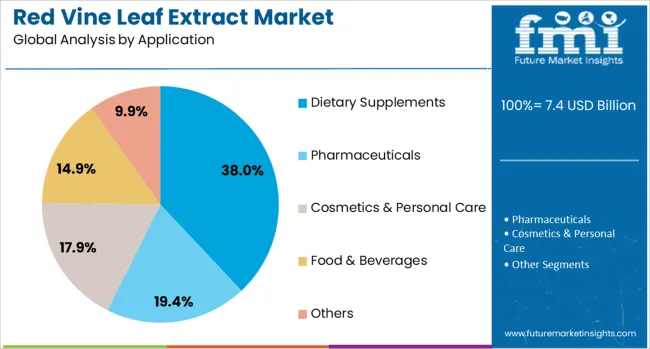
Red Vine Leaf Extract Market Analysis By Application

The dietary supplements subsegment is anticipated to hold 38% of the Red Vine Leaf Extract market revenue share in 2025, establishing it as the leading application area. This prominence has been driven by growing consumer reliance on natural supplements to support circulatory health, reduce leg swelling, and manage venous disorders. Red vine leaf extract has gained recognition for its clinical efficacy in improving vascular function, which has encouraged its incorporation into premium nutraceutical formulations.

The segment’s growth has also been supported by the expansion of e-commerce distribution channels and direct-to-consumer models that offer increased access to herbal supplements. Regulatory validation of health claims and consumer familiarity with botanical actives have further reinforced market demand.

As aging populations seek natural alternatives to manage chronic vascular conditions, the application of dietary supplements is expected to see sustained uptake. The alignment of this segment with preventive health trends and evidence-based formulations continues to fuel its market leadership.

What are the Drivers, Restraints, and Key Trends of the Red Vine Leaf Extract Market?

The red vine leaf extract market is expanding due to rising demand for natural health ingredients targeting cardiovascular wellness, microcirculation, and anti-inflammatory support. Its adoption in dietary supplements, cosmetics, and pharmaceuticals is accelerating, especially in Europe and North America, with Asia-Pacific emerging. Key drivers include technological innovation, aging populations, and clean-label trends. However, growth is moderated by standardization challenges, regulatory inconsistencies, and raw material constraints. Market leaders focus on product traceability, improved bioavailability, and science-backed efficacy to differentiate in competitive, quality-conscious sectors.

Standardization and Quality Control Challenges

Consistent quality remains a core challenge in the red vine leaf extract market. Variations in leaf variety, harvesting time, and extraction processes lead to fluctuating levels of key actives like flavonoids and polyphenols. Without industry-wide standards, product efficacy and safety may differ across batches, limiting credibility among formulators and health professionals. Cosmetic and pharmaceutical segments demand validated assays, traceable sourcing, and alignment with pharmacopeial benchmarks. This adds operational complexity and cost. Suppliers that invest in standardized production protocols and certifications (e.g., EMA, USP, or traditional herbal compendia) gain trust but face regulatory overhead. Inconsistencies can hinder regulatory approval or lead to consumer skepticism. Brands failing to ensure compositional reliability risk exclusion from premium market segments. Until harmonized extraction and testing frameworks are adopted globally, market fragmentation and quality variability will continue to challenge widespread adoption and scale-up, particularly for applications demanding high consistency and clinical-grade performance.

Technological Innovation Enhances Extract Effectiveness

Advances in extraction and delivery technologies are transforming the red vine leaf extract market. Sophisticated techniques such as optimized solvent extraction, supercritical CO₂ processing, and nanofiber encapsulation enhance the concentration and bioavailability of active compounds like resveratrol and quercetin. Nanotechnology-based delivery—such as electrospun nanofibers—improves solubility and gastrointestinal absorption, enabling smaller doses with equivalent or superior therapeutic outcomes. High-performance liquid chromatography (HPLC) ensures precision in standardizing anthocyanin and polyphenolic profiles across batches. These innovations allow formulators to create high-efficacy products for niche health areas, including vascular protection and anti-aging. Collaborations between extract manufacturers and academic or clinical research bodies support evidence-based claims, boosting credibility in competitive markets. As end-users and professionals demand efficacy-backed products, technological differentiation has become essential. Companies utilizing science-driven platforms not only command price premiums but also open access to regulated pharmaceutical, cosmeceutical, and medical nutrition markets, where performance, consistency, and delivery innovation are critical for regulatory and consumer acceptance.

Regulatory Landscape and Usage Constraint

Red vine leaf extract adoption is significantly shaped by complex, region-specific regulatory environments. In the European Union, the extract is approved under the Traditional Herbal Medicinal Product Directive (THMPD) for applications such as chronic venous insufficiency, enabling moderate health claims. However, in North America and most of Asia-Pacific, it is typically classified as a dietary supplement, subject to stricter restrictions on therapeutic messaging unless backed by clinical data. This divergence requires manufacturers to adapt product formulations, marketing language, and compliance documentation to each target region. Inconsistent definitions and approval requirements increase time-to-market and legal risks, especially in pharmaceutical and cosmeceutical channels. Some emerging markets offer significant demand potential but lack formal regulatory pathways, slowing product introduction. Suppliers that align with recognized regulatory frameworks, such as pharmacopeia listings or local health authority certifications, improve market access and consumer trust. Until global harmonization occurs, regulatory complexity will remain a barrier to seamless expansion and innovation.

Competitive Rivalry and Supply Chain Constraints

The red vine leaf extract market is becoming more competitive as established global producers and regional entrants vie for market share. Leading suppliers differentiate through branded, standardized ingredients, clinical validation, and strong R&D partnerships, while newer players may compete on price but often lack consistency or compliance credentials. Supply chain reliability is a growing concern due to dependence on grapevine agriculture, seasonal harvesting cycles, and climate variability. Disruptions in raw material availability, along with logistical delays, can limit production and affect pricing. Companies that invest in vertically integrated sourcing models, including contract farming and geographic diversification, gain resilience and control over quality. In parallel, growing interest in sustainability and clean-label sourcing is driving demand for eco-friendly extraction techniques and organic certifications. The ability to ensure year-round supply, uphold high traceability standards, and deliver performance-tested products will determine competitive advantage as the market shifts toward premium wellness and therapeutic applications.

Analysis of Red Vine Leaf Extract Market By Key Countries

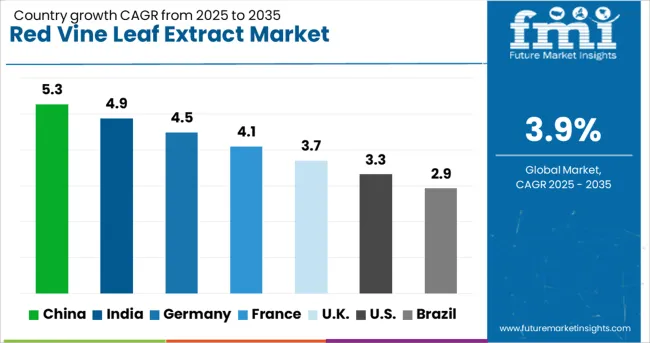
Red Vine Leaf Extract Market Cagr Analysis By Country


Country CAGR
China 5.3%
India 4.9%
Germany 4.5%
France 4.1%
UK 3.7%
USA 3.3%
Brazil 2.9%

The Red Vine Leaf Extract Market is projected to expand at a CAGR of 3.9% through 2035, driven by growing demand for natural remedies in vascular health and skincare. China leads with a growth rate of 5.3%, supported by a booming herbal supplement industry and increasing consumer awareness of traditional botanical extracts. India follows at 4.9%, where rising interest in plant-based therapeutics and holistic wellness fuels demand. Germany’s market, growing at 4.5%, is supported by strong regulatory standards and integration into over-the-counter pharmaceuticals for venous support. The UK, at 3.7%, is experiencing growing popularity of herbal formulations in functional health and beauty applications. Meanwhile, the USA, with a growth rate of 3.3%, sees increased adoption in dietary supplements and cosmetic products. This report includes insights on 40+ countries; the top five markets are shown here for reference.

Red Vine Leaf Extract Market Growth in China

China has recorded a CAGR of 5.3% in the red vine leaf extract market, driven by increased interest in botanical supplements and plant-based personal care products. The extract is gaining traction in both pharmaceutical and cosmetic sectors due to its reported benefits in supporting circulation and skin care. Domestic nutraceutical brands are expanding their offerings with red vine leaf capsules and functional beverages. Local cosmetic manufacturers have begun incorporating the extract into anti-aging and soothing formulations. Consumer preference for traditional and natural health solutions aligns with this trend, and distribution is growing via both e-commerce and retail pharmacies. Imports from European producers support product quality, while domestic farms in temperate zones are also experimenting with local cultivation. Educational campaigns highlighting vein and capillary health have supported adoption.

  • Cosmetic brands added extract in skincare ranges
  • Nutraceutical firms launched capsules and teas
  • Online channels widened product accessibility

Red Vine Leaf Extract Market Expansion in India

India has achieved a CAGR of 4.9% in the red vine leaf extract market, fueled by growing demand for natural remedies and plant-based therapies. Health-conscious consumers are increasingly turning to botanical supplements for managing circulation and leg fatigue, especially among older adults and desk-bound workers. Ayurvedic and herbal wellness brands are incorporating the extract into blends targeting vascular support. While red vine leaf is not native to India, imports and collaborations with European suppliers have ensured ingredient availability and compliance with global standards. Online health platforms and pharmacy chains are expanding product access across urban and semi-urban areas. Marketing is focused on the extract’s role in blood flow enhancement and anti-inflammatory properties. Domestic capsule production is increasing due to rising interest in convenient supplement formats.

  • Herbal brands adopted extract for vascular formulas
  • Urban users showed rising demand for circulation support
  • Retail pharmacies promoted imported and blended products

Red Vine Leaf Extract Market Trends in Germany

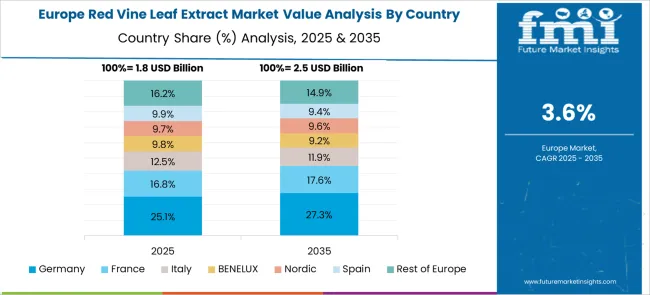
Red Vine Leaf Extract Market Europe Country Market Share Analysis, 2025 & 2035

Germany has posted a CAGR of 4.5 percent in the red vine leaf extract market, supported by strong traditions in herbal medicine and standardized botanical formulations. The extract is widely used in over-the-counter vascular health products and approved by health authorities for managing chronic venous insufficiency. German manufacturers lead in clinical-grade production of red vine leaf capsules, creams, and oral solutions. Retail pharmacies and health stores offer a range of SKUs focused on vein health and leg fatigue. Consumer trust in herbal therapy continues to support sales, especially among aging populations. Regulatory clarity and scientific backing allow clear communication of benefits. Exports of German-made products are also growing, particularly to Asia and the Americas, where trust in European pharmacopeia is strong.

  • OTC products promoted extract for vein support
  • Clinical formulations met stringent health standards
  • Export demand rose for pharmacopeia-grade items

Red Vine Leaf Extract Market Development in the United Kingdom

The United Kingdom has reported a CAGR of 3.7% in the red vine leaf extract market, with demand coming from both the wellness and personal care industries. Consumers seeking alternatives to synthetic treatments are showing preference for botanical ingredients. Health supplement companies are offering red vine leaf capsules marketed for circulation support and reduced leg discomfort. Online wellness platforms have enabled broad availability, and interest has grown among fitness communities and older adults. The cosmetic sector is also beginning to test red vine leaf extract in formulations aimed at soothing redness and boosting skin hydration. EU-compliant labeling and formulation rules continue to shape product messaging. Retail health chains stock imported and private-label products with targeted claims.

  • Capsules marketed for leg fatigue and circulation
  • Fitness users adopted extract for recovery support
  • Topicals included ingredient in soothing skincare lines

Red Vine Leaf Extract Market Insights in the United States

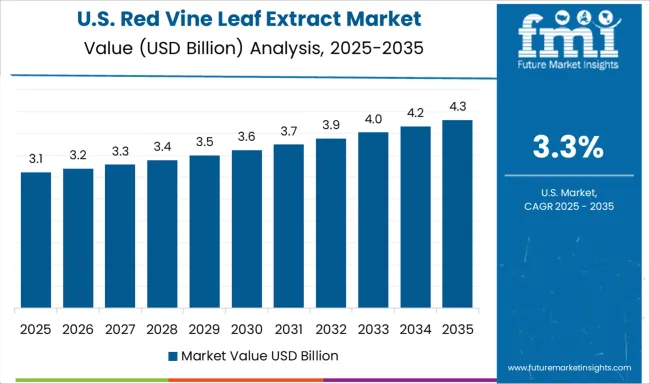
Red Vine Leaf Extract Market Country Value Analysis

The United States has achieved a CAGR of 3.3% in the red vine leaf extract market, primarily influenced by the rise in plant-based supplements and interest in European herbal solutions. The extract is often positioned as a natural aid for circulation and leg health, particularly among aging populations and office workers. Supplement companies are introducing capsules and drink mixes that include red vine leaf alongside other botanical ingredients. Distribution through specialty retailers, online marketplaces, and holistic health practitioners has expanded. While consumer awareness is still developing, endorsements by wellness influencers and inclusion in premium supplement stacks have driven visibility. USA-based manufacturers are increasingly sourcing the extract from trusted European farms to meet quality standards.

  • Awareness grew through influencer-led wellness brands
  • Retailers introduced blended capsules for vascular support
  • Ingredient sourced from Europe to ensure consistency

Competitive Landscape of Red Vine Leaf Extract Market

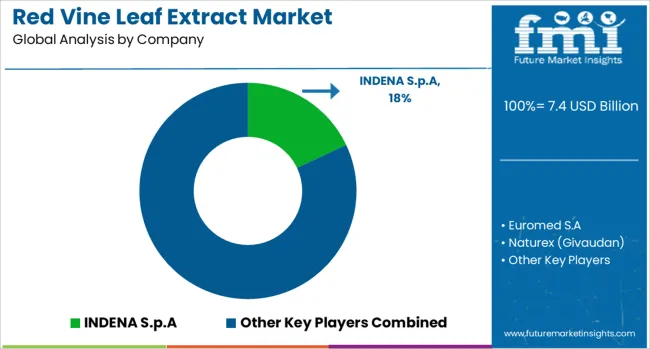
Red Vine Leaf Extract Market Analysis By Company

The red vine leaf extract market is driven by the rising demand for natural vascular health solutions, herbal anti-inflammatories, and clean-label nutraceuticals. Derived from the leaves of Vitis vinifera, red vine leaf extract is rich in flavonoids and polyphenols that support blood circulation, reduce leg swelling, and combat oxidative stress. Its applications are expanding across dietary supplements, cosmeceuticals, and pharmaceutical formulations targeting chronic venous insufficiency and skin health.

INDENA S.p.A, a global leader in botanical extracts for pharmaceutical use, offers high-purity, clinically validated red vine leaf extract optimized for vascular health. The company’s emphasis on science-backed efficacy, traceability, and pharmaceutical-grade manufacturing makes it a preferred partner for health brands worldwide. Euromed S.A similarly provides standardized extracts under strict GMP compliance, with a focus on European Pharmacopeia standards and eco-friendly processing methods. Naturex, now part of Givaudan, leverages its global sourcing and extraction capabilities to supply red vine leaf ingredients tailored for dietary supplements and functional beverages. Martin Bauer GmbH & Co. KG, with its deep herbal expertise, delivers customizable extract grades for both therapeutic and wellness-oriented applications.

Bio-Botanica, Inc., a USA-based manufacturer, supports clean-label and organic formulations with its holistic line of herbal extracts, including red vine leaf. As consumer preferences shift toward plant-based, clinically supported health solutions, suppliers with transparent sourcing, consistent potency, and regulatory-ready extracts are best positioned to lead this niche botanical market.

Key Developments in Red Vine Leaf Extract Market

Active Inside offers a red vine leaf extract standardized to ~10% polyphenols and ~4% bioflavonoids. Indena’s extract meets French Pharmacopoeia standards (≥3.0% flavonoids, ≥0.3% anthocyanins). Naturex (Givaudan) and Döhler are confirmed global industry leaders in the red vine leaf extract market.

Scope of the Report


Item Value
Quantitative Units USD 7.4 Billion
Product Type Organic red vine leaf extract and Conventional red vine leaf extract
Form Powder, Liquid, Capsules, and Tablets
Application Dietary Supplements, Pharmaceuticals, Cosmetics & Personal Care, Food & Beverages, and Others
Distribution Channel Online Retail, Direct Sales, Pharmacies & Drugstores, Health & Wellness Stores, Supermarkets/Hypermarkets, and Others
Regions Covered North America, Europe, Asia-Pacific, Latin America, Middle East & Africa
Country Covered United States, Canada, Germany, France, United Kingdom, China, Japan, India, Brazil, South Africa
Key Companies Profiled INDENA S.p.A, Euromed S.A, Naturex (Givaudan), Martin Bauer GmbH & Co. KG, and Bio-Botanica, Inc.
Additional Attributes Dollar sales by red vine leaf extract type include liquid extracts, powder extracts, and standardized extracts, applied in the pharmaceuticals, dietary supplements (nutraceuticals), cosmetics & personal care, and food & beverages sectors across North America, Europe, Asia‑Pacific, Latin America, and Middle East & Africa


Source link

13 08, 2025

Will ADA Hit $1 Soon?

By |2025-08-13T20:45:49+03:00August 13, 2025|Crypto News, News|0 Comments

Cryptocurrencies are considered a high-risk asset class. Investing in them may result in the loss of part or all of your capital. The content on this website is intended solely for informational and educational use and should not be interpreted as financial or investment advice.

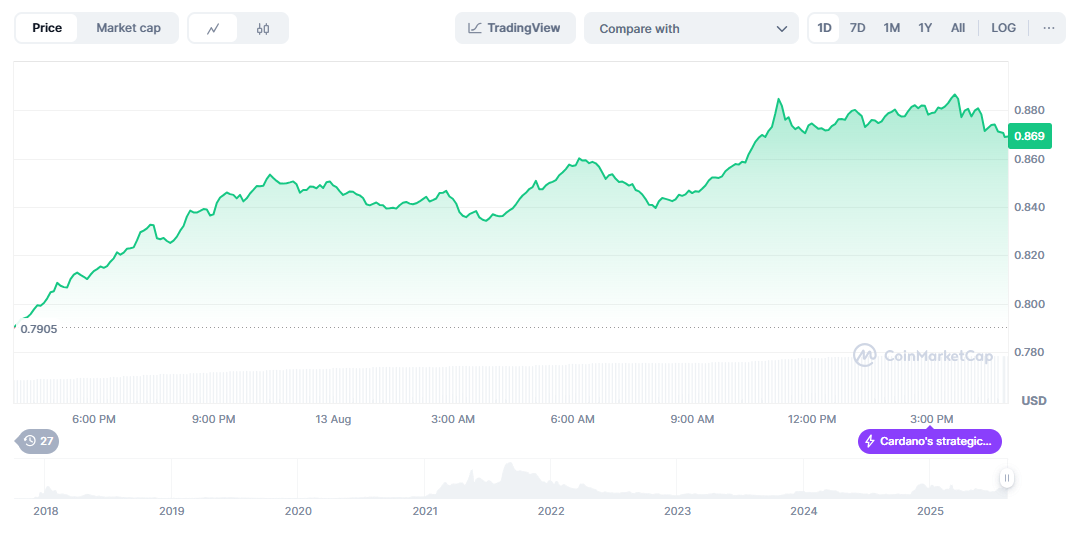
The latest Cardano price prediction shows ADA holding firm at the $0.70 support zone, a level that has triggered several rebounds since mid-2023. This critical price aligns with the 0.236 Fibonacci retracement at $0.704, reinforcing its significance among traders. 

Historical price action indicates that when ADA maintains this kind of support for an extended period, it often leads to renewed bullish momentum. With multiple technical indicators flashing green and market sentiment staying balanced, ADA could be positioning itself for a strong push toward the $1 mark as August unfolds.

Technical Analysis: Accumulation Signals and Volatility Ahead

Open interest in ADA derivatives has reached $1.44 billion, its highest level in months, signaling growing market participation. Higher lows on the weekly chart suggest ongoing accumulation, and price action has remained constructive. 

The Relative Strength Index (RSI) currently sits at 54.58, leaving room for upside before ADA enters overbought territory.

Will ADA Hit  Soon?

MACD readings add to the bullish setup, with the signal line above zero and positive histogram bars. These indicators point to upward momentum in the short term. 

Meanwhile, Bollinger Bands are compressing near the upper limit, a move often associated with impending volatility. This could go either way, but overall trend alignment favors the bulls.

Volume analysis adds further support. The Chaikin Oscillator stands at 10.45M, indicating stronger buying pressure relative to recent weeks. 

Volume patterns across exchanges suggest that traders are positioning for an upward move, but cautious accumulation hints at patience and strategic entry points.

Long-Term Holders Remain Confident

On-chain data shows that long-term holders have continued to accumulate ADA without significant distribution since 2021. This reflects strong conviction in the project’s future potential and contrasts with previous cycles, where sell-offs often followed price rallies. 

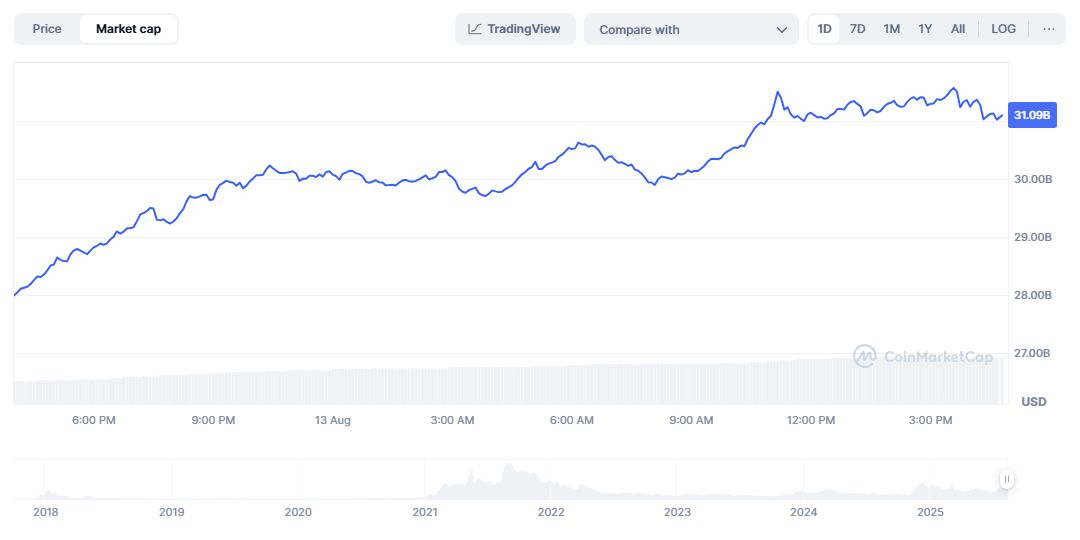
Cardano ADA Market CapCardano ADA Market Cap

Short-term players have also shifted behavior – rather than selling into strength, they’ve been making small accumulations, especially around $0.70.

Importantly, valuation metrics such as the MVRV Z-Score and other market temperature indicators signal neutral conditions. This is key because it shows ADA is not yet in an overheated phase, offering room for healthy price growth.

Price Targets and Risks to Watch

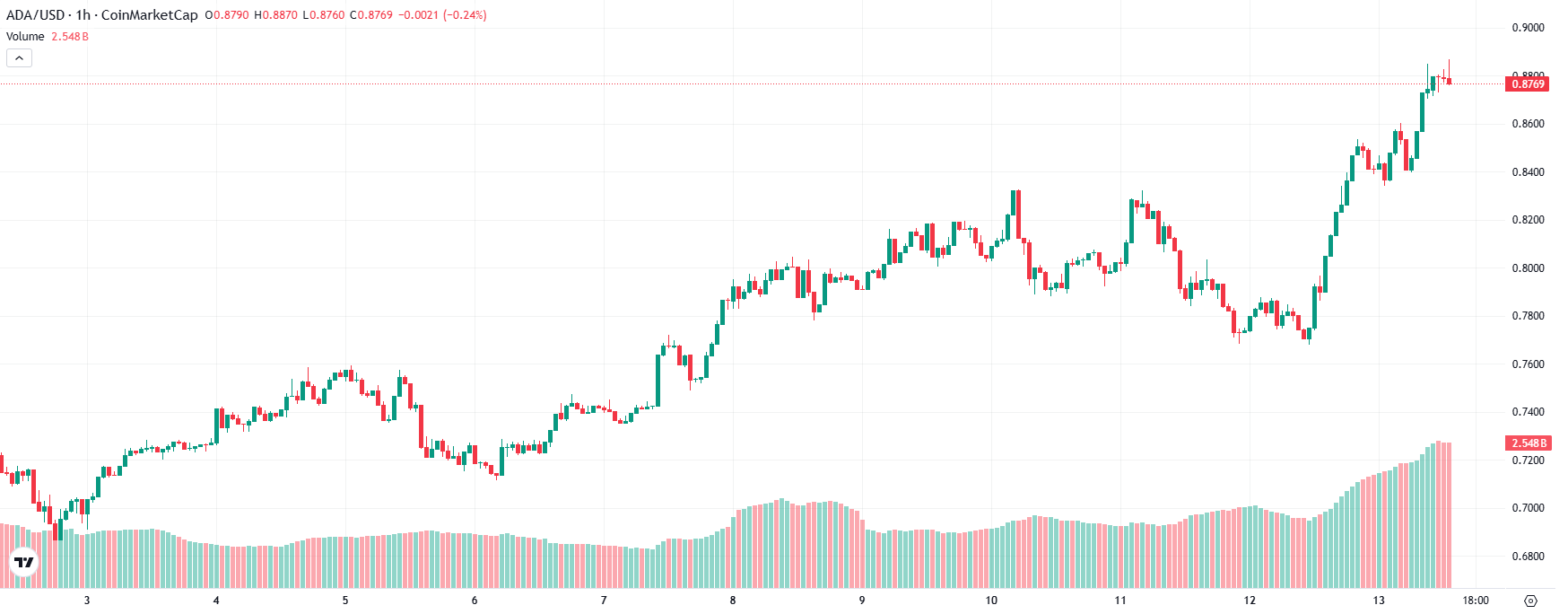
Analysts are eyeing upside targets of $0.95 to $1.015 by the end of August, provided ADA holds above $0.70 and breaks through $0.81 with volume. 

Clearing $0.884 would further confirm bullish momentum. On the downside, a failure to hold $0.70 could lead to a test of $0.51 and break the current bullish structure.

Cardano Price Prediction TodayCardano Price Prediction Today

The elevated Sharpe Ratio for ADA also supports the bullish thesis, showing that risk-adjusted returns remain favorable. However, the spike in open interest to $1.44 billion brings the potential for increased volatility. 

Growing trader participation often signals strong interest – but it can also lead to sharper swings in both directions.

Source link

13 08, 2025

SAFE Integrates ERC-4337 to Boost DeFi Signature Efficiency

By |2025-08-13T18:58:48+03:00August 13, 2025|News, NFT News|0 Comments


– SAFE integrates Ethereum’s ERC-4337 standard to enhance decentralized signature collection via its Frictionless Queues initiative, advancing smart account infrastructure in mid-2025.

– The implementation improves transaction efficiency and user experience, driving smart wallet adoption and DeFi competitiveness while processing over 132 million UserOps to date.

– ERC-4337 enables batch signature aggregation and gas cost savings, but regulatory clarity remains limited as institutions like the SEC have yet to address its implications.

– Account abstraction through this standard reduces DeFi barriers, enabling features like social recovery and sponsorship while Layer 2 solutions prepare for expanded decentralized application scaling.


Source link

13 08, 2025

US energy agency revises up Brent price forecast for 2025

By |2025-08-13T18:56:35+03:00August 13, 2025|Forex News, News|0 Comments


The US Energy Information Administration (EIA) has revised its 2025 Brent crude oil price forecast upward, citing increased geopolitical risk as a key driver.

Average Brent crude oil price for this year is projected at $68.89 per barrel, up by over $2.90 from the previous month’s estimate of $65.97, according to the EIA’s Short- Term Energy Outlook (STEO) released late Tuesday.

The EIA attributes the revision to a notable rise in geopolitical risk premiums following Israel’s June 13 attacks on multiple nuclear and military sites, as well as civilian areas, in several Iranian cities. The attacks occurred amid ongoing nuclear negotiations between Iran and the US.

Despite the elevated risk premium, the report notes that a significant build in global petroleum inventories is expected to cap further price increases. After averaging $75.83 per barrel in the first quarter of 2025, Brent prices are forecast to decline to $64.02 by the fourth quarter and average $58.48 in 2026.

The EIA also noted that its latest projections were finalized before OPEC+ announced its August production targets on July 5. It is also highlighted that the newly announced targets exceed the levels previously assumed in the preparation of the outlook.

In addition, falling oil prices have led US producers to slow drilling and well completion activity throughout the year.

As a result, US crude oil output is projected to decline slightly—from 13.28 million barrels per day (bpd) in the second quarter of 2025 to 13.26 million bpd by the end of 2026.

Thus, Brent crude is expected to average $68.89 per barrel this year, while the average price of West Texas Intermediate (WTI) crude is projected at $65.22 per barrel, compared to $62.33 in last month’s estimate.

The EIA reported that last year, Brent crude averaged $80.56 per barrel, while West Texas Intermediate (WTI) crude traded at an average of $76.60 per barrel.

– US crude production forecast revised up

The EIA projects that average daily crude oil production in the US will reach approximately 13.37 million bpd in 2025, higher than the previous year’s forecast of 13.21 million barrels.

On an annual basis, production is expected to average 13.4 million bpd in 2026.

On the other hand, global oil supply is expected to average 104.61 million bpd this year, while global oil consumption is expected to reach 103.54 million bpd.

In 2026, global supply is expected to average 105.72 million bpd, while consumption is expected to reach 104.59 million bpd.

By Humeyra Ayaz

Anadolu Agency

energy@aa.com.tr


Source link

13 08, 2025

Rallies on Tuesday After CPI (Video)

By |2025-08-13T18:49:52+03:00August 13, 2025|Forex News, News|0 Comments

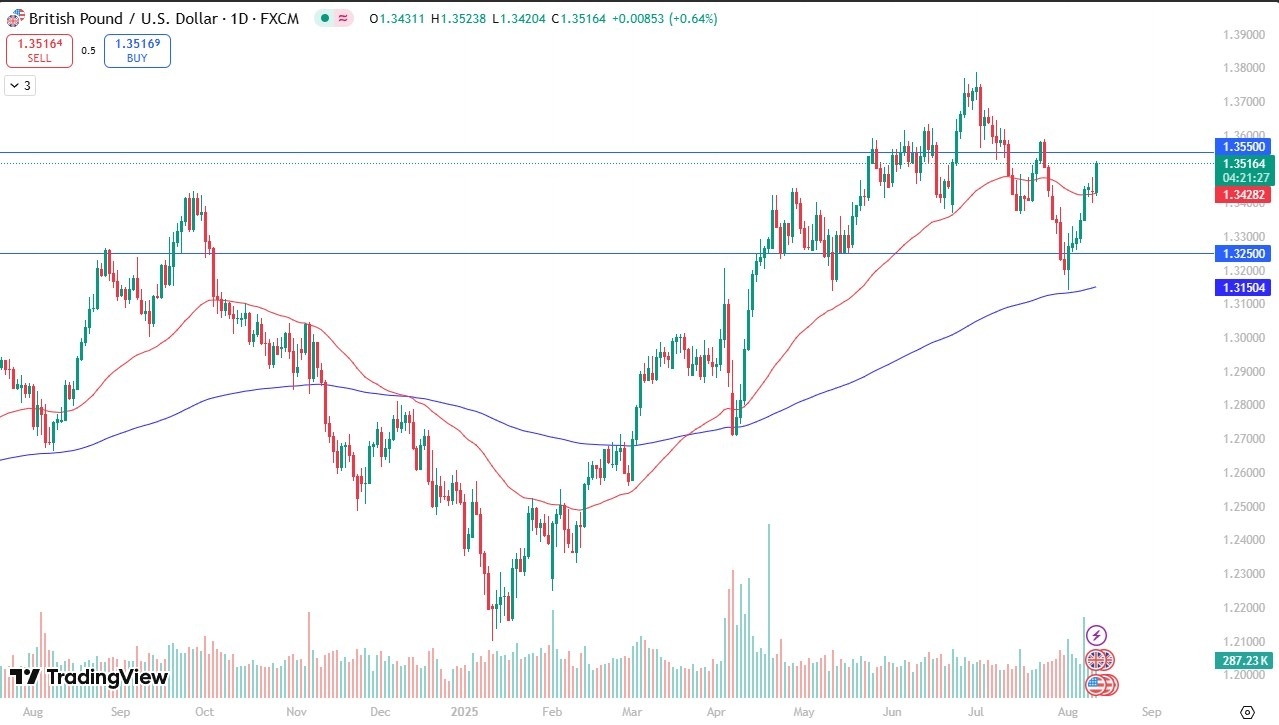
  • The British Pound has shot higher against the US dollar, and that’s not a huge surprise to me after the reaction to the CPI numbers were decidedly negative for the US dollar.
  • And when you keep in mind that the British Pound has been one of the better currencies against the dollar.
  • So, all of this makes a lot of sense. And I think we are going to revisit the 1.3550 level, possibly even break above 1.36 if the momentum against the US dollar continues.

We’ll just have to wait and see. Either way, I think this is a scenario where you certainly don’t want to short this pair, but I watched this pair quite closely. And the main reason is that if the British Pound struggles against the US dollar, then it’s a sign that the US dollar is strengthening and the US dollar will absolutely pummel most other currencies that aren’t as vigorous as Sterling has been.

Others Might Be Traded on a Drop

Think of the Canadian dollar or perhaps the Japanese yen. So even if you’re not trading in this market, it is a good indicator of US dollar strength as of late. When we sold off back at the end of last year and everybody was buying US dollars, the British pound, even though it did fall, it fell a lot less rapidly than many of its counterparts.

And as we’ve seen the US dollar sell off, the British pound was much quicker to rally than many of its counterparts. So, all things being equal, this is a market that’s worth paying attention to even if you don’t trade it. I continue to watch the Pound against many other currencies as well, as its strength is fairly widely distributed.

Ready to trade our GBP/USD daily forecast? We’ve shortlisted the best regulated forex brokers UK in the industry for you.

Christopher Lewis has been trading Forex and has over 20 years experience in financial markets. Chris has been a regular contributor to Daily Forex since the early days of the site. He writes about Forex for several online publications, including FX Empire, Investing.com, and his own site, aptly named The Trader Guy. Chris favours technical analysis methods to identify his trades and likes to trade equity indices and commodities as well as Forex. He favours a longer-term trading style, and his trades often last for days or weeks.

Source link

Go to Top