About Editorial team of BIPNs

Main team of content of bipns.com. Any type of content should be approved by us.
6 01, 2026

Looks set for fresh rally above 212.20

By |2026-01-06T07:59:57+02:00January 6, 2026|Forex News, News|0 Comments

The GBP/JPY pair posts a fresh multi-year high at 212.15 during the Asian trading session on Tuesday. The pair trades firmly as the Japanese Yen (JPY) underperforms across the board, even as Bank of Japan (BoJ) Governor Kazuo Ueda has signaled that there will be more interest rate hikes in the near term.

Japanese Yen Price Today

The table below shows the percentage change of Japanese Yen (JPY) against listed major currencies today. Japanese Yen was the weakest against the New Zealand Dollar.

USD EUR GBP JPY CAD AUD NZD CHF
USD -0.06% -0.05% 0.05% 0.02% -0.17% -0.18% -0.03%
EUR 0.06% 0.02% 0.09% 0.08% -0.10% -0.12% 0.03%
GBP 0.05% -0.02% 0.08% 0.07% -0.12% -0.13% 0.01%
JPY -0.05% -0.09% -0.08% -0.03% -0.21% -0.23% -0.08%
CAD -0.02% -0.08% -0.07% 0.03% -0.18% -0.20% -0.05%
AUD 0.17% 0.10% 0.12% 0.21% 0.18% -0.01% 0.13%
NZD 0.18% 0.12% 0.13% 0.23% 0.20% 0.01% 0.14%
CHF 0.03% -0.03% -0.01% 0.08% 0.05% -0.13% -0.14%

The heat map shows percentage changes of major currencies against each other. The base currency is picked from the left column, while the quote currency is picked from the top row. For example, if you pick the Japanese Yen from the left column and move along the horizontal line to the US Dollar, the percentage change displayed in the box will represent JPY (base)/USD (quote).

“BoJ expected to continue raising interest rates if economy and prices move in line with our forecast,” Governor Ueda said on Monday, and added that adjusting the degree of monetary support will help achieve “sustained growth and stable inflation”.

This week, investors will focus on the Overall Household Spending data for November, which will be published on Friday. The data is expected to have declined at a moderate pace of 1% against a 3% contraction in October.

Meanwhile, the Pound Sterling (GBP) trades higher against its peers, except antipodeans, as the market sentiment turns positive after the risks of a United States (US)-Venezuela clash subsiding. The British currency is expected to be majorly driven by market expectations for the Bank of England’s (BoE)monetary policy outlook amid a light United Kingdom (UK) economic calendar week.

GBP/JPY technical analysis

In the daily chart, GBP/JPY trades at 211.92 as of writing. The 20-day Exponential Moving Average (EMA) rises and provides support at 210.04. Price holds above this rising gauge, preserving the bullish bias.

The 14-day Relative Strength Index (RSI) at 70.84 is positive but carries risks of stretched momentum.

As long as the pair remains above the ascending 20-day EMA, the trend is positive and could extend towards 215.00. While a close below 210.04 could invite a corrective pullback towards the December 19 low of 208.00.

(The technical analysis of this story was written with the help of an AI tool.)

Bank of Japan FAQs

The Bank of Japan (BoJ) is the Japanese central bank, which sets monetary policy in the country. Its mandate is to issue banknotes and carry out currency and monetary control to ensure price stability, which means an inflation target of around 2%.

The Bank of Japan embarked in an ultra-loose monetary policy in 2013 in order to stimulate the economy and fuel inflation amid a low-inflationary environment. The bank’s policy is based on Quantitative and Qualitative Easing (QQE), or printing notes to buy assets such as government or corporate bonds to provide liquidity. In 2016, the bank doubled down on its strategy and further loosened policy by first introducing negative interest rates and then directly controlling the yield of its 10-year government bonds. In March 2024, the BoJ lifted interest rates, effectively retreating from the ultra-loose monetary policy stance.

The Bank’s massive stimulus caused the Yen to depreciate against its main currency peers. This process exacerbated in 2022 and 2023 due to an increasing policy divergence between the Bank of Japan and other main central banks, which opted to increase interest rates sharply to fight decades-high levels of inflation. The BoJ’s policy led to a widening differential with other currencies, dragging down the value of the Yen. This trend partly reversed in 2024, when the BoJ decided to abandon its ultra-loose policy stance.

A weaker Yen and the spike in global energy prices led to an increase in Japanese inflation, which exceeded the BoJ’s 2% target. The prospect of rising salaries in the country – a key element fuelling inflation – also contributed to the move.

Source link

6 01, 2026

Europe Brain Health Supplements Market Size and Share, 2033

By |2026-01-06T07:56:17+02:00January 6, 2026|Dietary Supplements News, News|0 Comments


Europe Brain Health Supplements Market Size

The Europe brain health supplements market size was valued at USD 2.54 billion in 2024 and is projected to reach USD 7.05 billion by 2033 from USD 2.84 billion in 2025, growing at a CAGR of 12.03%.

Brain health supplements refer to orally consumed dietary formulations containing bioactive compounds, such as omega 3 fatty acids phosphatidylserine bacopa monnieri and B vitamins designed to support cognitive function memory focus and neurological resilience, across the lifespan. These products are food supplements under Regulation EC No 1924 2006 and must comply with the European Food Safety Authority’s stringent assessments on health claims and ingredient safety. As per the Organisation for Economic Co-operation and Development, Europe is home to 110 million people aged 55 and over, a demographic projected to grow by 25% by 2035 by intensifying demand for scientifically backed cognitive support. Brain health supplements occupy a critical niche at the intersection of preventive nutrition regulatory science and consumer empowerment within Europe’s evolving health and wellness ecosystem.

MARKET DRIVERS

Aging Population and Rising Prevalence of Cognitive Decline Drive Preventive Demand

The rapid aging demographic structure for sustained demand in brain health supplements, as individuals seek non pharmaceutical strategies to preserve cognitive function, which is driving the growth of Europe brain health supplements market. According to Eurostat, over 21% of the EU population was aged 65 or older in 2023 with projections indicating this will rise to 29% by 2050. Concurrently, the World Health Organization estimates that over 15.5 million Europeans live with mild cognitive impairment, a precursor to dementia with prevalence doubling 5 years after age 65. In response, consumers are proactively adopting nutritional interventions, where a 2023 survey by the European Consumer Organisation found that 58% of adults over 55 use omega 3 or B vitamin supplements specifically for memory support. National health agencies reinforce this trend, France’s National Agency for Food Safety recommends daily DHA intake of 250 milligrams for cognitive maintenance in older adults. This preventive mindset transforms brain health supplements from optional wellness products into essential components of healthy aging strategies across Europe’s graying population.

Growing Mental Performance Expectations Among Younger Demographics

The younger generations are increasingly using brain health supplements to enhance focus academic performance and mental resilience in high pressure educational and professional environments. The growing mental performance expectations among younger people is additionally propelling the growth of Europe brain health supplements market. In the UK, the Office for National Statistics found that 31% of adults aged 18 to 35 purchased nootropic or adaptogenic supplements in 2023, including bacopa rhodiola and L theanine to manage cognitive fatigue and improve productivity. The rise of remote and hybrid work has further intensified this demand as professionals seek natural alternatives to stimulants for sustained mental clarity. Social media and digital wellness platforms amplify awareness with neuroscience backed content normalizing cognitive self-care.

MARKET RESTRAINTS

Stringent EFSA Regulations Restrict Health Claim Substantiation

The European Food Safety Authority’s rigorous scientific evaluation process severely limits the ability of brain health supplement manufacturers to communicate cognitive benefits to consumers. The stringent EFSA regulations restrict health claim substantiation is limiting the growth of Europe brain health supplements market. Under Regulation EC No 1924 2006, all health claims must undergo EFSA scrutiny and receive formal authorization before use in marketing. As per EFSA’s, public database over 95% of submitted cognitive health claims, including those for ginkgo biloba omega 3 and bacopa have been rejected due to insufficient human evidence or ambiguous wording. For instance, despite extensive research EFSA has not approved any claim linking DHA to memory improvement in healthy adults stating evidence is “not sufficiently substantiated.” This regulatory environment forces companies to use vague phrasing like “contributes to normal cognitive function” without specifying memory focus or mental clarity, significantly weakening consumer appeal. According to the European Federation of Associations of Health Product Manufacturers, 78% of supplement brands report that claim restrictions are the top barrier to product differentiation.

Limited Consumer Awareness and Scientific Literacy on Nootropic Ingredients

Many European consumers lack clear understanding of key brain health ingredients their mechanisms and realistic benefits leading to confusion and inconsistent usage is additionally impeding the growth of Europe brain health supplements market. The knowledge gap is exacerbated by inconsistent labelling products often list complex botanical names without explaining function or dosage relevance. In Italy, the National Institute of Health found that many supplement users discontinued brain health products within three months due to perceived lack of effect often because they used sub therapeutic doses or expected immediate results. Furthermore, the proliferation of unregulated “smart drugs” and exaggerated online claims has eroded trust in legitimate supplements. The European Commission’s 2023 Consumer Market Study confirmed that 47% of shoppers view brain health supplements as “marketing hype” due to unclear science communication. Until public health campaigns or digital tools bridge this literacy divide consumer adoption will remain fragmented and vulnerable to misinformation hindering the category’s mainstream credibility and growth potential.

MARKET OPPORTUNITIES

Integration of Personalized Nutrition Through Digital Health Platforms

The emergence of genetic testing wearable data and AI driven health apps for personalized brain health supplementation tailored to individual cognitive needs and biomarkers is creating new opportunities for the growth of Europe brain health supplements market. According to the European Institute of Innovation and Technology, many digital health startups in Europe launched cognitive wellness platforms in 2023 that combine cognitive assessments blood biomarker tracking and lifestyle data to recommend customized supplement regimens. In Sweden, the national digital health initiative “Vardval” piloted a program where users receive omega 3 or B vitamin formulations based on at home blood tests measuring homocysteine and DHA levels biomarkers linked to cognitive risk. Companies like MyFitnessPal and Lifesum now integrate brain health modules that adjust supplement suggestions based on sleep stress and cognitive performance tracked via wearables. The European Commission’s Digital Europe Programme has allocated 230 million euros to support such personalized nutrition services under its 2021 2027 health strategy. As consumers demand individualized solutions, over one size fits all products brain health supplements are evolving from static formulations to dynamic components of data driven cognitive wellness ecosystems creating high value engagement models.

Expansion of Brain Health Positioning in Menopause and Women’s Wellness

Emerging scientific insights into hormonal impacts on cognition to position brain health supplements among women, particularly around menopause is also to expand the growth of the Europe brain health supplements market in coming years. According to the European Menopause and Andropause Society, over 52 million European women are in perimenopause or post menopause with 70% reporting “brain fog” memory lapses and reduced mental clarity linked to declining estrogen levels. Recent studies published in the European Journal of Clinical Nutrition confirm that omega 3 DHA and phosphatidylserine supplementation can mitigate these symptoms by supporting neuronal membrane fluidity and neurotransmitter function. In response, brands like Femal and MenoBalance have launched menopause specific cognitive formulas in Germany, France, and the UK, featuring clinically studied doses of these actives combined with adaptogens like ashwagandha. The UK’s National Health Service now includes nutritional guidance for cognitive symptoms in its menopause care pathways legitimizing the category.

MARKET CHALLENGES

Inconsistent Quality and Adulteration in Herbal Nootropic Supply Chains

The variable quality and authenticity of botanical ingredients in herbal nootropics like bacopa ginkgo and ashwagandha due to fragmented global supply chains and inadequate testing protocols kis significantly impeding the growth of Europe brain health supplements market. According to the European Directorate for the Quality of Medicines, many of herbal supplement samples tested in 2023 contained undeclared fillers substitutes or contaminants, including heavy metals and undeclared pharmaceuticals. In Germany, the Federal Office of Consumer Protection recalled 12 brain health products in 2023 after DNA barcoding revealed substitution of genuine bacopa with cheaper unrelated plants lacking active bacosides. The problem is exacerbated by the fact that many European supplement brands source raw materials from multiple countries without standardized cultivation or extraction practices. As per the European Botanical Forum, few of herbal suppliers provide full traceability from farm to finished product. This inconsistency undermines clinical efficacy studies show bacoside concentration in commercial bacopa extracts can vary by over 300% by leading to unreliable consumer experiences.

Lack of Harmonized Dosage Guidelines and Clinical Endpoints

The absence of standardized dosing recommendations and validated cognitive endpoints for brain health supplements creates significant ambiguity in product development consumer expectations and regulatory evaluation across Europe. Unlike pharmaceuticals dietary supplements are not required to demonstrate dose response relationships or use clinically accepted cognitive assessment tools in their evidence dossiers. According to the European Food Safety Authority, submissions for cognitive claims often rely on heterogeneous study designs using different cognitive batteries durations and populations making cross product comparisons impossible. For example, omega 3 trials for memory support have used doses ranging from 200 to 2000 milligrams of DHA with outcomes measured by everything from simple word recall to complex executive function tests. The European Commission’s 2023 Scientific Committee on Health noted that this methodological inconsistency is a primary reason for claim rejections. Consequently, consumers cannot reliably compare products or anticipate results, leading to trial and error purchasing and high discontinuation rates. Until Europe adopts harmonized biomarkers clinical endpoints and minimum effective doses for key brain health ingredients the category will struggle to establish scientific credibility and consistent consumer trust across the single market.

REPORT COVERAGE

REPORT METRIC

DETAILS

Market Size Available

2024 to 2033

Base Year

2024

Forecast Period

2025 to 2033

CAGR

12.03%

Segments Covered

By Product Type, Dosage Form, Distribution Channel, and Region

Various Analyses Covered

Global, Regional, & Country Level Analysis; Segment-Level Analysis; DROC, PESTLE Analysis; Porter’s Five Forces Analysis; Competitive Landscape; Analyst Overview of Investment Opportunities

Regions Covered

UK, France, Spain, Germany, Italy, Russia, Sweden, Denmark, Switzerland, Netherlands, Turkey, and the Czech Republic

Market Leaders Profiled

Teva Pharmaceutical Industries Ltd, Natural Factors Nutritional Products Ltd, HVMN, Onnit (Unilever), AlternaScript, Intelligent Labs, Mind Lab Pro, Reckitt Benckiser Group Plc, ReMind Brain Health Supplements, and Prepare Your Mood

SEGMENTAL ANALYSIS

By Product Type Insights

The nootropic supplements segment was accounted in holding 63.2% of the Europe brain health supplements market share in 2024 with the growing consumer preference for targeted cognitive enhancement over general multivitamin approaches. The rising demand for evidence backed botanical and bioactive ingredients that address specific cognitive concerns, such as memory focus and mental fatigue is also accelerating the growth of Europe brain health supplements market. Herbal extracts like bacopa monnieri and ginkgo biloba are also gaining traction, Germany’s Federal Institute for Risk Assessment reported a 34% increase in sales of standardized bacopa extracts between 2021 and 2023 due to emerging clinical data on memory support. Unlike generic vitamins nootropics offer perceived precision appealing to both aging populations seeking cognitive preservation and younger adults optimizing performance. The European Food Safety Authority’s acceptance of the claim that DHA “contributes to the maintenance of normal brain function” provides a rare sanctioned message that retailers leverage in labeling and education. This regulatory foothold combined with strong consumer interest in natural cognitive support ensures nootropic supplements remain the core of the European brain health market.

The herbal extracts segment is anticipated to witness a fastest CAGR of 10.6% from 2025 to 2033 with the renewed scientific validation of traditional botanicals and strong cultural acceptance across Southern and Central Europe. The accumulation of high quality clinical evidence supporting cognitive benefits of standardized herbal extracts is also to elevate the growth of Europe brain health supplements market. A 2023 meta-analysis published in the European Journal of Clinical Nutrition confirmed that bacopa monnieri extract with 55% bacosides significantly improved memory acquisition and retention in adults over 12 weeks. Similarly, ginkgo biloba EGb 761 has demonstrated neuroprotective effects in age related cognitive decline through multiple randomized controlled trials endorsed by the European Academy of Neurology. Unlike synthetic nootropics herbal extracts benefit from long standing traditional use in European phytotherapy in Germany, where Commission E monographs have recognized ginkgo for cognitive symptoms since 1987.

By Dosage Form Insights

The capsules segment was the largest by accounting for 58.3% of the Europe brain health supplements market share in 2024. The perception of capsules as cleaner more precise and easier to swallow compared to tablets among older adults, who constitute a significant portion of the brain health user base is majorly escalating the growth of segment. According to a 2023 Eurobarometer survey, many European supplement users aged 55 and over prefer capsules due to their smooth texture lack of aftertaste and absence of binders or disintegrants. Germany’s Federal Institute for Drugs and Medical Devices confirms that bioavailability of DHA from softgel capsules is 25 to 30% higher than from compressed tablets due to better lipid dissolution. Leading brands like Solgar and Pharma Nord exclusively use capsules for their premium brain formulas to ensure efficacy and consumer compliance. In retail, capsules also convey a premium aesthetic glass bottles of clear capsules signal purity and quality more effectively than opaque tablets, further driving selection in competitive shelf environments.

The capsules segment was the largest by accounting for 58.3% of the Europe brain health supplements market share in 2024.

The softgels dosage form segment is likely to grow at a fastest CAGR of 12.1% from 2025 to 2033 with the rising use of lipid based nootropics and demand for enhanced bioavailability in premium cognitive formulations. The dominance of omega 3 fatty acids, like DHA in brain health regimens, which require oil based delivery for optimal absorption is also fuelling the growth of segment. Softgels encapsulate fish or algal oil in a sealed gelatin or plant-based shell that prevents oxidation rancidity and gastric reflux common issues with liquid or tablet alternatives. Clinical studies published in the European Journal of Clinical Nutrition confirm that DHA from softgels achieves 30% higher plasma concentrations than from emulsified tablets. Brands like Wiley’s Finest and Testa Omega 3 have leveraged this advantage by using nitrogen flushed softgels with enteric coatings to further enhance delivery by appealing to scientifically literate consumers. In Germany, and the Netherlands, where omega 3 usage is highest softgel penetration exceeds 80% among regular users as confirmed by national health surveys.

By Distribution Channel Insights

The drug stores and retail pharmacies segment was accounted in holding 47.3% of the Europe brain health supplements market share in 2024 from high consumer trust in pharmacist guidance strong in store education and regulatory legitimacy in a category, where efficacy claims are restricted. The consultative role of pharmacists in recommending evidence based cognitive support products for older adults managing age related memory concerns. According to the European Pharmaceutical Association, many of Europeans aged 55 and over consult a pharmacist before purchasing brain health supplements due to confusion about ingredient efficacy and safety. Retail pharmacy chains like DM Drogerie in Germany and Boots in the UK train staff to explain the limited EFSA approved claims and differentiate clinically studied brands from generic alternatives. The physical presence of supplements alongside regulated health products also confers implicit credibility, unlike online or general retail channels where consumers face information overload and authenticity risks. This trust-based model ensures consistent high value sales particularly for premium nootropic and omega 3 brands that rely on professional endorsement rather than mass marketing.

The online distribution channel segment in the Europe brain health supplements market is projected to expand at a CAGR of 14.3% from 2025 to 2033 owing to the rise of direct to consumer brands that leverage digital storytelling clinical transparency and subscription models to build loyalty among younger health-conscious consumers. Companies like Heights in the UK and Nootrobox in Germany use online platforms to provide detailed ingredient sourcing third party test results and cognitive tracking tools by addressing the transparency gap that plagues traditional supplement marketing. Social media and influencer partnerships amplify awareness such as TikTok hashtags like #brainhealth and #nootropics generated over 1.2 billion views in Europe in 2023, as per platform analytics are driving traffic to e-commerce sites. The ability to offer sample kits personalized bundles and auto replenishment further enhances retention in a category requiring consistent use.

REGIONAL ANALYSIS

Germany Brain Health Supplements Market Analysis

Germany was the top performer of the Europe brain health supplements market with 21.3% of share in 2024 with its strong phytotherapy tradition aging population and highly trusted pharmacy retail model. Germany is home to Europe’s oldest and most scientifically rigorous herbal medicine framework Commission E monographs, which includes ginkgo biloba for cognitive support, since 1987. The Federal Statistical Office reports that many adults over 60 use omega 3 or ginkgo supplements regularly with sales growing at 9% annually. Furthermore, Germany hosts leading supplement manufacturers like Dr Willmar Schwabe and Abtei that invest heavily in clinical research and GMP certified production.

United Kingdom Brain Health Supplements Market Analysis

The United Kingdom brain health supplements market was positioned second by holding 17.3% of share in 2024 with its high health literacy digital innovation and proactive aging population. According to the UK Office for National Statistics, 42% of adults aged 50 and over use brain health supplements with omega 3 and B vitamins as top choices. The National Health Service increasingly acknowledges nutrition’s role in cognitive aging with its “Midlife Health Check” program includes dietary advice for brain resilience. The UK is also Europe’s epicenter of direct-to-consumer nootropic brands like Heights and Nootropics Depot, which use subscription models and cognitive tracking apps to engage younger demographics.

France Brain Health Supplements Market Analysis

France brain health supplements market growth is likely to grow with its centralized healthcare system pharmacist gatekeeping model and strong public awareness of cognitive aging. According to France’s National Agency for Medicines and Health Products Safety, pharmacists are legally required to counsel customers on supplement use making pharmacies the dominant sales channel for brain health products. The country’s “Alzheimer Plan 2021 2024” actively promotes preventive nutrition, including DHA and B vitamins, as part of national cognitive health strategy. The National Institute of Health and Medical Research confirms that some of French adults over 55 use supplements for memory support with ginkgo and omega 3 leading demand. Furthermore, France’s strict advertising laws prevent exaggerated claims fostering consumer trust in scientifically backed brands like Arkopharma and PiLeJe.

Italy Brain Health Supplements Market Analysis

Italy brain health supplements market growth is fuelled by its herbal medicine heritage high elderly population and integration of brain health into Mediterranean diet messaging. According to Italy’s National Institute of Statistics, some of citizens are over 60, driving consistent demand for cognitive support supplements. The Ministry of Health actively promotes omega 3 from fish and olive polyphenols as brain protective elements of the Mediterranean diet legitimizing supplement use within a cultural dietary framework. Companies like Aboca and ESI, leverage Italy’s rich botanical tradition by cultivating ginkgo bacopa and rosemary in certified organic farms for standardized extracts. In 2023, the Italian Society of Neurology launched public campaigns linking nutrition to cognitive resilience further boosting supplement awareness.

Switzerland Brain Health Supplements Market Analysis

Switzerland brain health supplements market growth is likely to grow with its high disposable income premium health culture and leadership in clinical validation of supplements. According to the Swiss Federal Statistical Office, over 55% of adults use dietary supplements regularly with brain health among the fastest growing categories. The country’s strict Swissmedic regulations require all supplements to meet pharmaceutical grade quality standards building exceptional consumer trust in efficacy and safety. Swiss brands like Nestle Health Science and Lonza develop brain health formulas backed by university led clinical trials often in collaboration with ETH Zurich and the University of Geneva. Switzerland’s neutrality also makes it a hub for international supplement companies seeking EU compliant production Lonza’s facility in Basel produces omega 3 softgels for over 30 European brands.

COMPETITIVE LANDSCAPE

Competition in the Europe brain health supplements market is defined by a dual structure of established pharmaceutical and nutrition companies alongside agile direct to consumer brands. Large players like BASF, Nestle, Health Science, and Dr Willmar Schwabe compete on clinical validation regulatory compliance and pharmacist channel dominance leveraging decades of research and trusted professional relationships. In contrast, digital native brands such as Heights and Nootropics Depot focus on personalization transparent ingredient storytelling and subscription models to capture younger demographics through online channels. Fragmentation exists between Northern Europe’s science driven approach and Southern Europe’s traditional herbal preferences yet both segments demand authenticity and efficacy.

KEY MARKET PLAYERS

Some of the notable key players in the Europe brain health supplements market are

  • Teva Pharmaceutical Industries Ltd
  • Natural Factors Nutritional Products Ltd
  • HVMN
  • Onn it (Unilever)
  • Alternascript
  • Intelligent Labs
  • Mind Lab Pro
  • Reckitt Benckiser Group Plc
  • ReMind Brain Health Supplements
  • Prepare Your Mood

Top Players in the Market

  • BASF is a global leader in nutritional ingredients with a strong footprint in the Europe brain health supplements market through its high purity omega 3 fatty acids and cognitive support compounds. The company supplies DHA and EPA concentrates under the brand names life’s DHA and Omegavie to major European supplement manufacturers requiring pharmaceutical grade raw materials. In 2023, BASF expanded its algal DHA production capacity in Germany to meet rising demand for vegetarian brain health formulations aligned with EU sustainability goals. The company also launched its Cognitive Health Portfolio featuring clinically studied ingredient combinations with transparent traceability from fermentation to finished oil.
  • Nestle Health Science plays a pivotal role in the Europe brain health supplements market by developing clinically validated medical nutrition products and consumer cognitive formulas under brands like Mindwell and Vitality. Headquartered in Switzerland the company leverages Nestlé’s extensive research infrastructure to conduct human trials on nutrients like phosphatidylserine citicoline and B vitamins for cognitive resilience. Nestle Health Science introduced its personalized brain health platform in France and Germany featuring at home cognitive assessments and tailored supplement regimens based on lifestyle and biomarker data. The company also collaborates with European universities on longitudinal studies linking nutrition to cognitive aging. Through its dual focus on medical credibility and consumer accessibility Nestle Health Science bridges pharmaceutical rigor and dietary supplementation advancing brain health as a preventive pillar in Europe’s integrated healthcare model.
  • Dr Willmar Schwabe is a German phytopharmaceutical pioneer with deep expertise in evidence based herbal brain health supplements particularly ginkgo biloba extracts standardized to EGb 761. The company’s Ginkgo biloba preparations are widely recommended by European healthcare professionals for age related cognitive support and are included in national treatment guidelines in Germany France and Italy. Dr Willmar Schwabe enhanced its sustainability program by sourcing ginkgo leaves from certified organic European farms and achieving full traceability from cultivation to capsule. The company also expanded its clinical research program with the University of Mainz to explore synergistic effects of ginkgo with omega 3 for memory preservation.

Top Strategies Used by the Key Market Participants

Key players in the Europe brain health supplements market prioritize scientific substantiation by funding human clinical trials and publishing results in peer reviewed journals to build credibility in a claim restricted environment. They invest in sustainable and traceable sourcing of key ingredients like omega 3 and herbal extracts to meet EU consumer expectations for transparency and environmental responsibility. Companies develop personalized cognitive wellness platforms integrating digital assessments biomarker testing and tailored formulations to enhance engagement and efficacy. Strategic partnerships with pharmacies universities and healthcare systems enable professional endorsement and integration into preventive care pathways. Additionally, they focus on clean label premium delivery formats such as plant based softgels to differentiate on quality and align with European clean eating and circular economy values.

MARKET SEGMENTATION

This research report on the European brain health supplements market has been segmented and sub-segmented based on categories.

By Product Type

  • Nootropic Supplements
    • Dietary Supplements
    • Herbal Extracts
    • Others (Synthetic compounds, prescription drugs)
  • Vitamins & Minerals

By Dosage Form

By Application

  • Cognitive Function
  • Stress & Anxiety
  • Others

By Distribution Channel

  • Hospital Pharmacies
  • Drug Store & Retail Pharmacies
  • Online Channel
  • Others

By Country

  • UK
  • France
  • Spain
  • Germany
  • Italy
  • Russia
  • Sweden
  • Denmark
  • Switzerland
  • Netherlands
  • Turkey
  • Czech Republic
  • Rest of Europe


Source link

6 01, 2026

XAU/USD appears in a win-win situation ahead of key US jobs data

By |2026-01-06T06:34:33+02:00January 6, 2026|Forex News, News|0 Comments


Gold is looking to build on the previous over 2.5% rally early Tuesday, retaking the $4,450 level as prospects of further US Federal Reserve (Fed) interest rate cuts this year continue to act as a headwind to the US Dollar (USD) recovery.  

Gold cheers softer US Dollar, geopolitical woes

Gold has found fresh buyers, sitting at weekly highs above $4,450, after having dipped to near the $4,430 region earlier on. The latest leg up in Gold could be attributed to the renewed selling interest around the USD amid improving risk sentiment.

Markets shrug off the US-Venezuela geopolitical tensions, now viewing the US intervention as limited, shifting their focus back toward the expectations surrounding future rate cuts by the Fed heading in the US labor data releases due later this week.

The dovish Fed bets returned to the fore on Monday and smashed the USD alongside the US Treasury bond yields after the US ISM Manufacturing PMI declined to 47.9 in December, against the forecast of 48.3.

Slowing US economic momentum and labor market conditions continue to remain a drag on the Greenback, as markets now eagerly await the US ADP monthly Employment Change and JOLTS Job Openings data due on Wednesday before Friday’s Nonfarm Payrolls showdown.

However, if the geopolitical tensions over the US and Venezuela gather steam again, a fresh bout of USD buying could re-emerge on safe haven flows, which will likely cap the Gold price upside. All eyes are on China’s and Russia’s response to the US military aggression.

Meanwhile, the overthrown Venezuelan President Nicolas Maduro pleaded not guilty before a New York Federal court on Monday to multiple charges.

US President Donald Trump’s capture of him on Saturday rattled world leaders and left officials in Caracas scrambling to regroup, per Reuters.

Gold price technical analysis: Daily chart

In the daily chart, the 21-day Simple Moving Average (SMA) climbs above the 50-, 100-, and 200-day SMAs, signaling firm bullish alignment. All SMAs advance and the price holds above them, reinforcing buyers’ control. The 21-day SMA at $4,349.26 supports the near-term bias, while the 50-day SMA at $4,201.11 underpins the broader trend.

The 14-day Relative Strength Index (RSI) stands at 64.41, positive and shy of overbought, suggesting momentum favors the upside. Should pullbacks emerge, the rising 21-day SMA could cap losses, while a deeper retracement would look toward the 100-day SMA at $3,985.64. The bullish tone would persist while XAU/USD trades above these moving averages.

(The technical analysis of this story was written with the help of an AI tool)

Economic Indicator

ADP Employment Change

The ADP Employment Change is a gauge of employment in the private sector released by the largest payroll processor in the US, Automatic Data Processing Inc. It measures the change in the number of people privately employed in the US. Generally speaking, a rise in the indicator has positive implications for consumer spending and is stimulative of economic growth. So a high reading is traditionally seen as bullish for the US Dollar (USD), while a low reading is seen as bearish.


Read more.

Next release:
Wed Jan 07, 2026 13:15

Frequency:
Monthly

Consensus:
45K

Previous:
-32K

Source:

ADP Research Institute


Source link

6 01, 2026

Looks to build on strength above 1.1735 hurdle

By |2026-01-06T05:57:33+02:00January 6, 2026|Forex News, News|0 Comments

The EUR/USD pair attracts fresh buyers near the 1.1710 area during the Asian session on Tuesday and builds on the previous day’s solid bounce from the 1.1660 area, or a nearly four-week low. Spot prices currently trade around the 1.1735 region, up 0.10% for the day, and seem poised to climb further amid a supportive fundamental backdrop.

The US Dollar (USD) drifts lower for the second straight day and moves further away from its highest level since December 10, touched on Monday, amid dovish US Federal Reserve (Fed) expectations. Furthermore, bets that the European Central Bank (ECB) is done cutting rates seem to support the shared currency and act as a tailwind for the EUR/USD pair.

An intraday strength beyond the 1.1735 confluence – comprising the 100-hour Simple Moving Average (SMA) and the 50% Fibonacci retracement level of the 1.1808-1.1660 fall – validates the positive outlook. Moreover, the Moving Average Convergence Divergence (MACD) has turned positive and edges higher, hinting at improving upside momentum.

Adding to this, the Relative Strength Index (RSI) at 59 supports further gains, with the 61.8% Fibo. retracement level, around mid-1.1700s, forming the next resistance. A push through these barriers would strengthen the corrective tone, whereas failure to clear them would leave EUR/USD vulnerable to renewed consolidation within the recent range.

(The technical analysis of this story was written with the help of an AI tool)

EUR/USD 1-hour chart

Euro FAQs

The Euro is the currency for the 20 European Union countries that belong to the Eurozone. It is the second most heavily traded currency in the world behind the US Dollar. In 2022, it accounted for 31% of all foreign exchange transactions, with an average daily turnover of over $2.2 trillion a day.
EUR/USD is the most heavily traded currency pair in the world, accounting for an estimated 30% off all transactions, followed by EUR/JPY (4%), EUR/GBP (3%) and EUR/AUD (2%).

The European Central Bank (ECB) in Frankfurt, Germany, is the reserve bank for the Eurozone. The ECB sets interest rates and manages monetary policy.
The ECB’s primary mandate is to maintain price stability, which means either controlling inflation or stimulating growth. Its primary tool is the raising or lowering of interest rates. Relatively high interest rates – or the expectation of higher rates – will usually benefit the Euro and vice versa.
The ECB Governing Council makes monetary policy decisions at meetings held eight times a year. Decisions are made by heads of the Eurozone national banks and six permanent members, including the President of the ECB, Christine Lagarde.

Eurozone inflation data, measured by the Harmonized Index of Consumer Prices (HICP), is an important econometric for the Euro. If inflation rises more than expected, especially if above the ECB’s 2% target, it obliges the ECB to raise interest rates to bring it back under control.
Relatively high interest rates compared to its counterparts will usually benefit the Euro, as it makes the region more attractive as a place for global investors to park their money.

Data releases gauge the health of the economy and can impact on the Euro. Indicators such as GDP, Manufacturing and Services PMIs, employment, and consumer sentiment surveys can all influence the direction of the single currency.
A strong economy is good for the Euro. Not only does it attract more foreign investment but it may encourage the ECB to put up interest rates, which will directly strengthen the Euro. Otherwise, if economic data is weak, the Euro is likely to fall.
Economic data for the four largest economies in the euro area (Germany, France, Italy and Spain) are especially significant, as they account for 75% of the Eurozone’s economy.

Another significant data release for the Euro is the Trade Balance. This indicator measures the difference between what a country earns from its exports and what it spends on imports over a given period.
If a country produces highly sought after exports then its currency will gain in value purely from the extra demand created from foreign buyers seeking to purchase these goods. Therefore, a positive net Trade Balance strengthens a currency and vice versa for a negative balance.

Source link

6 01, 2026

3 Supplements You Should Take at the Right Time for Better Results

By |2026-01-06T05:54:30+02:00January 6, 2026|Dietary Supplements News, News|0 Comments


The timing of when you take some supplements matters. Get the most out of your supplement by taking it at the times that maximize absorption and effectiveness.

1. Iron

You can better maximize your iron supplement’s benefits when you take it at certain times, such as:

  • On an empty stomach: Studies suggest iron is best absorbed when taken without food. Try taking it at least 30 minutes before a meal or two hours after a meal.
  • With vitamin C: Pairing iron with vitamin C may enhance the absorption of iron.
  • Separated from supplements or drugs containing calcium or phosphorus: Supplements that contain calcium or phosphorus and calcium-containing antacids can interfere with iron’s absorption. Take your iron at least two hours apart from these.

2. Vitamin B12

Understanding when and how to take vitamin B12 can help you optimize absorption and benefits:

  • Take it in the morning for energy: Taking B12 in the morning or early afternoon can help boost your energy. This is because B12 helps your body convert food into energy.
  • Take it on an empty stomach: Taking it on an empty stomach helps improve absorption.
  • Avoid taking it with certain foods or beverages: High amounts of vitamin C (found in citrus fruits) can reduce B12’s absorption if consumed at the same time.
  • Space it apart from medications: Separate B12 and medications such as metformin and proton pump inhibitors by at least four hours to ensure optimal absorption.

3. Vitamin D

Taking vitamin D in the morning is recommended to achieve the best results. This is because evening intake may reduce melatonin production. Melatonin and vitamin D work in opposition, so taking your vitamin D too late may impact your sleep quality.

Your body produces vitamin D when you are exposed to sunlight. Since it’s challenging to get sufficient vitamin D from food alone, consider supplementing during the winter months when sunlight is limited, especially if you have limited sun exposure.


Source link

6 01, 2026

XAG/USD rises to near $72.50 due to bullish bias

By |2026-01-06T04:32:39+02:00January 6, 2026|Forex News, News|0 Comments


Silver price (XAG/USD) gains nearly 4%, trading around $75.50 during the European hours on Monday. The technical analysis of the daily chart timeframe suggests the price of the precious metal remains within an ascending channel pattern, suggesting a persistent bullish bias.

The 14-day Relative Strength Index (RSI) at 66.57 remains bullish without entering overbought territory. RSI has turned higher again, reinforcing improving bullish pressure.

The nine-day Exponential Moving Average (EMA) rises well above the 50-day EMA, and the XAG/USD pair holds over both, preserving an upward bias. Both averages maintain positive slopes after a sustained advance. Momentum stays supportive while the metal consolidates above the rising nine-day EMA, keeping the path of least resistance to the upside.

The short-term average remains bullish and keeps the topside in focus, and opens a path toward resistance at the upper boundary of the ascending channel around $83.10. A break above the channel would help the Silver price to approach the record high of $85.87, which was recorded on December 29, 2025.

On the downside, the immediate support aligns at the nine-day EMA of $72.38, followed by the lower ascending channel boundary around $72.10. A daily close below the channel would open a correction toward the 50-day EMA at $60.85.

XAG/USD: Daily Chart

Silver FAQs

Silver is a precious metal highly traded among investors. It has been historically used as a store of value and a medium of exchange. Although less popular than Gold, traders may turn to Silver to diversify their investment portfolio, for its intrinsic value or as a potential hedge during high-inflation periods. Investors can buy physical Silver, in coins or in bars, or trade it through vehicles such as Exchange Traded Funds, which track its price on international markets.

Silver prices can move due to a wide range of factors. Geopolitical instability or fears of a deep recession can make Silver price escalate due to its safe-haven status, although to a lesser extent than Gold’s. As a yieldless asset, Silver tends to rise with lower interest rates. Its moves also depend on how the US Dollar (USD) behaves as the asset is priced in dollars (XAG/USD). A strong Dollar tends to keep the price of Silver at bay, whereas a weaker Dollar is likely to propel prices up. Other factors such as investment demand, mining supply – Silver is much more abundant than Gold – and recycling rates can also affect prices.

Silver is widely used in industry, particularly in sectors such as electronics or solar energy, as it has one of the highest electric conductivity of all metals – more than Copper and Gold. A surge in demand can increase prices, while a decline tends to lower them. Dynamics in the US, Chinese and Indian economies can also contribute to price swings: for the US and particularly China, their big industrial sectors use Silver in various processes; in India, consumers’ demand for the precious metal for jewellery also plays a key role in setting prices.

Silver prices tend to follow Gold’s moves. When Gold prices rise, Silver typically follows suit, as their status as safe-haven assets is similar. The Gold/Silver ratio, which shows the number of ounces of Silver needed to equal the value of one ounce of Gold, may help to determine the relative valuation between both metals. Some investors may consider a high ratio as an indicator that Silver is undervalued, or Gold is overvalued. On the contrary, a low ratio might suggest that Gold is undervalued relative to Silver.

(The technical analysis of this story was written with the help of an AI tool.)


Source link

6 01, 2026

What 2026 Consumer Data Shows About Nitric Oxide Prostate Supplements

By |2026-01-06T03:53:41+02:00January 6, 2026|Dietary Supplements News, News|0 Comments


According to the manufacturer, ProstaVive contains ingredients selected based on published research examining their potential relationships to prostate health, circulation, and male wellness. The powder format is positioned by the company as an alternative delivery format to capsule formulations.

ProstaVive and the Circulation Research Narrative

The company references a 2023 research discussion associated with Fukushima Medical University that examined how circulation patterns in the prostate region relate to cellular activity in research settings. The research did not evaluate ProstaVive or any dietary supplement and does not establish clinical outcomes.

The referenced research examined stromal cell proliferation, which refers to cell accumulation around the outer edges of the prostate. The research discussion suggested that cellular metabolism in this region may have relationships to circulation patterns. Published research has examined how adequate circulation delivers nutrients, removes metabolic waste, and relates to cellular function in various tissue types.

This research builds on earlier published studies. A 2007 study published in specialized literature examined prostatic stromal cells derived from certain tissue specimens, finding that these cells possessed particular properties. A 2018 study investigated relationships between environmental exposures and tissue characteristics. A 2024 study published in the New England Journal of Medicine examined materials in cardiovascular tissue, raising questions about how various factors may relate to circulation and tissue characteristics.

The circulation-related hypothesis discussed in published research suggests that nitric oxide plays roles in vascular function by interacting with smooth muscle in blood vessel walls. Research has documented that nitric oxide production changes with age, which has been discussed in relation to various age-related considerations.

Consumers evaluating ProstaVive should understand that the Fukushima research investigated physiological mechanisms and cellular processes rather than evaluating specific supplement formulations. ProstaVive as a complete product has not been subjected to clinical trials. The manufacturer references this research as the conceptual foundation for the formula’s design.

ProstaVive Ingredient Profile: Research Context and Formulation Design

According to the company’s published formulation details, ProstaVive contains ingredients selected based on published research examining their potential relationships to various biological processes. Consumers researching ProstaVive often encounter detailed ingredient information in the manufacturer’s materials.

Boron

Boron is a trace mineral historically found in crystallized mineral deposits in remote locations. Published research has examined boron for its relationships to various biological processes. A 2001 study by Zhang et al., published in the FASEB Journal, examined associations between boron intake and certain health factors. A 2004 study published in specialized literature examined boron in relation to tissue characteristics in research models. These studies do not evaluate ProstaVive or predict outcomes from the finished supplement.

Tongkat Ali (Eurycoma longifolia)

Tongkat Ali has been referenced in traditional Southeast Asian practices for centuries. A 2013 study published in the Journal of the International Society of Sports Nutrition examined Tongkat Ali in relation to certain hormone profiles in study participants. Other published research has examined the extract’s antioxidant characteristics and relationships to various biological processes. These studies do not evaluate ProstaVive or predict outcomes from the finished supplement.

Ashwagandha (Withania somnifera)

Ashwagandha is an adaptogenic herb with documented use dating back thousands of years. A 2015 study examined Ashwagandha’s relationships to certain performance metrics in study participants. Other published research has explored relationships to stress response, sleep characteristics, and various physiological parameters. These studies do not evaluate ProstaVive or predict outcomes from the finished supplement.

Fenugreek (Trigonella foenum-graecum)

Fenugreek is an herb containing compounds called furostanol saponins. Published research has examined fenugreek for its relationships to various metabolic processes. A 2020 study published in Food Chemistry explored fenugreek’s antioxidant characteristics. These studies do not evaluate ProstaVive or predict outcomes from the finished supplement.

Panax Ginseng

Panax Ginseng has extensive documentation in traditional practices. A 2013 review published in specialized literature examined research discussions on ginseng’s relationships to various physiological processes. Published research has examined ginseng’s relationships to energy, cognitive function, and various biological systems. These studies do not evaluate ProstaVive or predict outcomes from the finished supplement.

Maca Root (Lepidium meyenii)

Maca root is a plant traditionally referenced in various cultural practices. Research published in 2024 provided a review of maca’s chemical characteristics and relationships examined in published studies. Research has examined maca’s relationships to various physiological parameters. These studies do not evaluate ProstaVive or predict outcomes from the finished supplement.

Artichoke Extract (Cynara scolymus)

Artichoke extract contains natural antioxidants. A 2000 study published in research literature examined artichoke extract’s relationships to certain metabolic processes in study participants. Research has examined compounds in artichoke that have been discussed in relation to various biological processes. These studies do not evaluate ProstaVive or predict outcomes from the finished supplement.

Nettle Root (Urtica dioica)

Nettle root has been referenced in traditional practices across multiple cultures. A 2013 randomized study examined stinging nettle in relation to certain symptom scores in study participants. Published research has investigated nettle root’s relationships to various biological processes. These studies do not evaluate ProstaVive or predict outcomes from the finished supplement.

Mineral Components: Zinc, Magnesium, Vitamin D

According to the company, ProstaVive includes three essential nutrients. Zinc has been examined in published research for its relationships to various physiological processes. A 2018 review examined discussions of zinc’s roles in various biological systems. Magnesium has been studied for its involvement in enzymatic reactions. A 2015 review examined research discussions on magnesium across multiple domains. Vitamin D has well-established documentation in published research examining its relationships to various health domains. A 2016 study investigated certain correlations in study participants. A 2020 review examined discussions of vitamin D’s relationships to various physiological processes. These studies do not evaluate ProstaVive or predict outcomes from the finished supplement.

Manufacturing, Safety, and Regulatory Context for ProstaVive

According to the company, ProstaVive is manufactured in the United States in an FDA-registered facility that follows Good Manufacturing Practices guidelines. The manufacturer states that ingredients are sourced according to quality specifications and that the product formulation follows established supplement manufacturing protocols.

Consumers researching dietary supplements should understand that the FDA does not approve dietary supplements before they reach the market. The regulatory framework for supplements differs from medications, with the Dietary Supplement Health and Education Act placing responsibility on manufacturers for safety and accurate labeling. GMP certification indicates that manufacturing facilities follow standardized procedures for production and quality control.

According to the company, ProstaVive is formulated without common allergens including gluten, dairy, soy, wheat, barley, and animal products. The manufacturer states that the product contains no stimulants.

Usage Context and Consumer Considerations

According to the official product information, consumers using ProstaVive are instructed to mix one scoop of powder with water or beverages daily. The company suggests taking it with a meal and recommends morning consumption. Consumers may adjust timing based on individual preference and tolerance.

The company emphasizes that dietary supplements are typically consumed consistently over extended periods. According to the manufacturer, consumers often use ProstaVive for three to six months. This timeframe reflects how consumers typically observe tolerance and subjective experience with dietary supplements, rather than guaranteed outcomes.

According to the company’s materials, individual experiences vary widely based on numerous factors including age, baseline characteristics, lifestyle variables, and other individual considerations. The manufacturer does not publish guaranteed timelines or outcome predictions.

Safety Information and Interaction Considerations

According to the company, dietary supplements containing botanical extracts and minerals may have various considerations for different individuals. Some ingredients have been studied for potential interactions with medications, which is why consultation with a healthcare professional is recommended.

Published research has examined certain ingredients for their relationships to various physiological processes. Consumers taking medications or managing health conditions should consult healthcare providers before using dietary supplements. This represents standard guidance for dietary supplement categories containing multiple botanical ingredients.

According to the company’s safety information, individuals with certain health characteristics, those scheduled for medical procedures, those taking multiple medications, or anyone under age 18 should consult healthcare providers before using dietary supplements. The product is not formulated for use by women.

Consumers experiencing any concerns should discontinue use and consult healthcare providers. This safety overview does not replace consultation with healthcare professionals. Consumers should review complete safety information before using ProstaVive or any dietary supplement.

Distribution Information and Guarantee Structure

According to the company, ProstaVive is offered through its official website, where current availability, shipping information, and refund terms are published and subject to change. Readers can View the current ProstaVive offer (official ProstaVive page) to review manufacturer-published details directly.

According to the manufacturer’s materials, shipping processes and delivery timeframes vary by destination. The company states that domestic orders typically process within specific timeframes, while international orders may have extended processing periods.

According to the official website, the company publishes a satisfaction guarantee with specific timeframes and procedures. The company’s materials outline refund processes that require following designated protocols. Current terms and conditions are published on the official website and are subject to modification.

Market Context: Prostate Health Supplement Category

Consumers researching prostate health approaches encounter numerous options including single-ingredient supplements, multi-ingredient formulations, and prescription medications. Traditional supplement approaches have emphasized particular botanicals as primary ingredients. These have varying levels of research documentation, with study results showing mixed outcomes across different research designs.

Prescription medications represent a different category with distinct regulatory pathways. These medications undergo clinical trial processes and regulatory review procedures that differ from dietary supplement pathways. Prescription medications may have various considerations including potential side effects documented in prescribing information.

According to the company, ProstaVive’s positioning emphasizes nitric oxide research references and circulation-related research discussions within the broader prostate supplement category. The powder format represents one delivery method option within the broader supplement category. The guarantee timeframe reflects typical usage patterns for dietary supplements in this category.

What Research and Public Information Do and Do Not Show About ProstaVive

Consumers evaluating ProstaVive should understand several important distinctions about research and evidence:

ProstaVive as a complete formulation has not been subjected to clinical trials. The manufacturer references published research on individual ingredients and physiological mechanisms, but these studies examined isolated compounds or biological processes rather than evaluating the finished ProstaVive product.

Published research on ingredients represents investigation of individual substances under controlled conditions. The presence of researched ingredients in a formulation does not predict outcomes from the complete product. Ingredient research and finished product outcomes represent different categories of evidence.

Individual responses to dietary supplements vary significantly based on numerous factors including baseline characteristics, lifestyle variables, genetic factors, concurrent medications, health status, and other individual considerations. Research documenting group-level statistical associations in controlled studies does not predict individual experiences.

The company references research as the conceptual foundation for formulation design. This represents the manufacturer’s interpretation of published science rather than direct evidence of product efficacy. Consumers should distinguish between research informing formulation strategy and research documenting finished product outcomes.

Dietary supplements are not intended to diagnose, treat, cure, or prevent any disease. Prostate health concerns should be evaluated by qualified healthcare professionals. Any health management decisions should occur with physician guidance. Medications should not be changed or discontinued without medical supervision.

Consumer Decision Framework and Evaluation Considerations

Consumers considering nutritional approaches to prostate health encounter questions about appropriateness, expectations, and alignment with individual circumstances. ProstaVive represents one option within a broader landscape of supplement and medical approaches.

Consumers researching ProstaVive often have various characteristics and motivations. Some seek nutritional support approaches while managing symptoms. Others take proactive approaches to health maintenance. Some prefer powder formats over capsules. Some are drawn to formulations emphasizing circulation research. Individual priorities and circumstances vary significantly.

Consumers for whom ProstaVive may not be appropriate include those requiring medical intervention for acute conditions, those with diagnosed medical conditions requiring physician oversight, individuals seeking evidence from product-specific clinical trials, those with budget constraints for ongoing supplement expenses, individuals with sensitivities to botanical extracts, those who prefer single-ingredient approaches for simplicity, or those taking multiple medications or managing complex health situations.

Before choosing any dietary supplement, healthcare provider consultation is recommended to ensure appropriate oversight and informed decision-making. Understanding individual priorities helps determine whether a product’s characteristics align with personal circumstances. Willingness to use products consistently over extended periods affects evaluation processes. Lifestyle approaches including weight management, dietary patterns, physical activity, and other factors significantly relate to various health domains. Realistic expectations influence satisfaction with experiences.

Contact Information and Additional Resources

For questions about ProstaVive, according to the company’s published information, customer service is available through:

Product Support Email: support@prostavive.org

Phone: (863) 591-4284

Order Support: ClickBank customer service at 1-800-390-6035

According to the company, customer service typically processes inquiries within specified timeframes. Consumers can View the current ProstaVive offer (official ProstaVive page) to review manufacturer-published information including current availability, ingredient details, usage instructions, safety information, shipping policies, and refund procedures.

Consumer feedback analysis published in April 2025 examined themes in user experiences, providing context for expectation-setting and evaluation considerations.

Regulatory Environment and Industry Context

The dietary supplement industry operates under regulatory frameworks that differ from pharmaceutical regulation. The FDA’s authority over dietary supplements differs significantly from medication oversight. Supplements do not require pre-market approval processes, though manufacturers bear responsibility for safety and label accuracy. Post-market surveillance systems monitor safety through adverse event reporting mechanisms.

Recent years have included regulatory attention to health claim categories for various supplement types. The Federal Trade Commission monitors advertising representations, requiring that marketing claims have substantiation. Companies making unsubstantiated health claims face potential enforcement actions.

Consumers should review current information about any supplement’s regulatory status and manufacturing practices before making purchase decisions. Prostate health concerns should be evaluated by qualified healthcare professionals. Health management approaches should be discussed with physicians. Medications should not be modified without medical guidance.

Approaches to maintaining various health domains include regular medical monitoring, weight management, physical activity, dietary patterns emphasizing vegetables and minimizing processed foods, and prompt evaluation of concerning symptoms with qualified healthcare providers.

Disclaimers

FDA Health Disclaimer: These statements have not been evaluated by the Food and Drug Administration. This product is not intended to diagnose, treat, cure, or prevent any disease. Always consult your physician before starting any new supplement, especially if you have existing health conditions, take medications, or are pregnant or nursing.

Professional Medical Disclaimer: This article is educational and does not constitute medical advice. ProstaVive is a dietary supplement, not a medication. If you are currently taking medications, have existing health conditions, are pregnant or nursing, or are considering any major changes to your health regimen, consult your physician before starting ProstaVive or any new supplement. Do not change, adjust, or discontinue any medications or prescribed treatments without your physician’s guidance and approval.

Results May Vary: Individual results will vary based on factors including age, baseline health condition, lifestyle factors, consistency of use, genetic factors, current medications, and other individual variables. Individual experiences vary, and no specific outcome is guaranteed. Ingredient-level research does not predict outcomes from any specific finished product.

FTC Affiliate Disclosure: This article contains affiliate links. If you purchase through these links, a commission may be earned at no additional cost to you. This compensation does not influence the accuracy, neutrality, or integrity of the information presented. All opinions and descriptions are based on published research and publicly available information.

Pricing Disclaimer: All prices, discounts, and promotional offers mentioned were accurate at the time of publication (January 2026) but are subject to change without notice. Always verify current pricing and terms on the official ProstaVive website before making your purchase.

Publisher Responsibility Disclaimer: The publisher of this article has made every effort to ensure accuracy at the time of publication. We do not accept responsibility for errors, omissions, or outcomes resulting from the use of the information provided. Readers are encouraged to verify all details directly with ProstaVive and their healthcare provider before making decisions.

Ingredient Interaction Warning: Some ingredients in ProstaVive may interact with certain medications or health conditions. Boron, Tongkat Ali, Ashwagandha, Fenugreek, Panax Ginseng, Maca Root, Artichoke Extract, and Nettle Root may affect hormone levels, blood pressure, blood sugar, or blood clotting. Always consult your healthcare provider before starting any supplement, especially if you take blood thinners, blood pressure medications, diabetes medications, or have any chronic health conditions.

CONTACT: Product Support Email: support@prostavive.org Phone: (863) 591-4284


Source link

6 01, 2026

DOGE eyes $0.166 resistance after 30% surge

By |2026-01-06T03:45:41+02:00January 6, 2026|Crypto News, News|0 Comments

Dogecoin (DOGE) has been one of the top performers in the crypto market since the beginning of the new year. The number one memecoin gained nearly 30% over the past four days, outperforming major cryptos amid a rise in the broader market sentiment.

The move is reflected in the 21Shares 2x Dogecoin ETF (TXXD), which is one of the best-performing ETFs to start 2026, according to Bloomberg ETF analyst Eric Balchunas.

The speculative interest in Dogecoin also improved slightly in the traditional crypto market, with its open interest (OI) rising to 13.47 billion DOGE on January 2 — its highest level since the October 10 leverage flush, per Coinglass data. However, that figure has slightly retreated to 12.68 billion DOGE despite a steady price rise, indicating some scepticism among traders.

Meanwhile, the rise isn’t limited to Dogecoin as the broader memecoin category has seen its market capitalization rise over 30% to $47.8 billion in the past four days.

The move follows months of underperformance, with the memecoin to altcoin dominance ratio plunging to historic lows of 0.032 in December. This means that memecoins accounted for only 3% of the general altcoins market cap. However, a massive memecoin season kicked off following the last time the metric reached such levels.

Memecoin Dominance in Altcoin Markets. Source: CryptoQuant

With recent gains across several memecoins, the sector could be hinting at a comeback, according to CryptoQuant contributor Darkfost.

Dogecoin Price Forecast: DOGE could tackle the $0.166 resistance

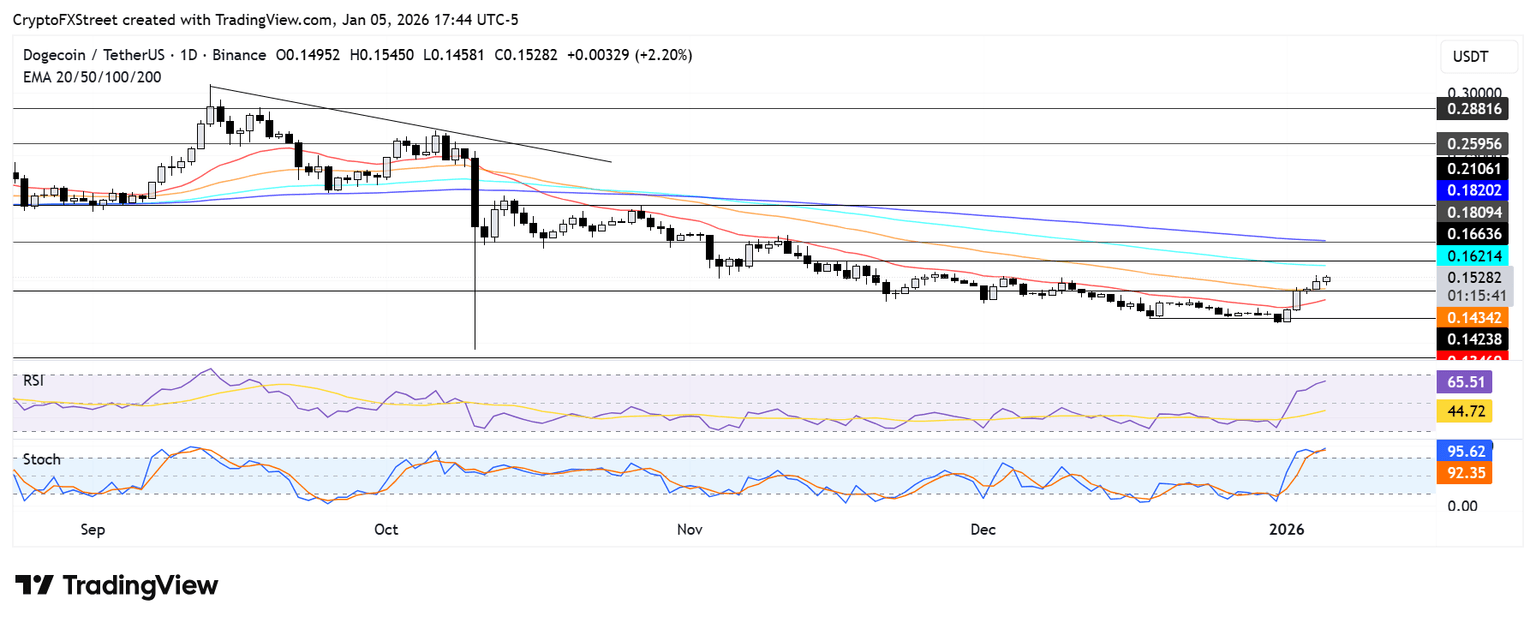
DOGE has risen above the 50-day Exponential Moving Average (EMA) and is looking to tackle the $0.166 resistance near the 100-day EMA. A rise above could push the top memecoin to tackle the $0.181 hurdle near the 200-day EMA.

DOGE/USDT daily chart

On the downside, Dogecoin could find support at $0.142. A decline below $0.142 and eventually the 20-day EMA could push its price toward $0.121.

The Relative Strength Index (RSI) is above its neutral level, while the Stochastic Oscillator (Stoch) is in its overbought region, indicating a rising bullish momentum. Sustained overbought conditions in the Stoch could spark a pullback.

Source link

6 01, 2026

XAU/USD recovers its bullish stance on geopolitical turmoil, tepid US data

By |2026-01-06T02:31:31+02:00January 6, 2026|Forex News, News|0 Comments


XAU/USD Current price: $4,445

  • United States intervention in Venezuela spurred demand for safe-haven Gold.
  • The US ISM Manufacturing PMI contracted to 47.9 in December, worse than expected.
  • The XAU/USD pair is technically bullish after bouncing from its 20-day SMA.

Spot Gold trades around the $4,450 level on Monday, sharply up on a daily basis amid broad US Dollar (USD) weakness. The bright metal found support throughout the first half of the day on geopolitical turmoil, extending its advance afterwards on the back of poor United States (US) data.

The world found out on Saturday that US President Donald Trump ordered a strike on Venezuela, capturing President Nicolás Maduro and his wife and bringing them to the US to be judged on narco-terrorism, among other charges. The news triggered global noise and boosted demand for the safe-haven metal, as caution rules.

Early in the American session, the USD suffered a setback following the release of the December Institute for Supply Management (ISM) Manufacturing Purchasing Managers’ Index (PMI). The index came in at 47.9, below the expected 48.3, and worse than the 48.2 posted in November. The report also showed that the Employment Index improved slightly to 44.9 from 44 in November, while the Prices Paid Index, the inflation component, remained unchanged at 58.5.

The US labor market will take centre stage this week, as the country will release multiple employment-related figures. The ADP employment Change report for December and November JOLTS Job Openings will be out on Wednesday, while weekly unemployment data will be released on Thursday, and the all-mighty Nonfarm Payrolls (NFP) report will be out on Friday.

XAU/USD short-term technical outlook

From a technical point of view, the 4-hour chart shows XAU/USD trades at $4,445.56, roughly $45.50 up for the day. The same chart shows the 20-period Simple Moving Average (SMA) has turned higher but still trails the rising 100-period SMA, both around the $4,370 level. The 200-period SMA, in the meantime, advances at $4,267 underpinning the broader structure. Also, the Momentum indicator stands above 0 and expands, signaling strengthening buying interest. Finally, the Relative Strength Index (RSI) indicator is heading north around 60, in line with the dominant bullish trend.

In the daily chart, XAU/USD bounced after testing a bullish 20-day SMA at $4,343, which also rose above the bullish 100- and 200-day SMAs, all of which reinforce the bullish bias. The Momentum indicator advances above its midline, while the RSI indicator has partially lost its upward strength at around 63, underpinning the broader uptrend.

(The technical analysis of this story was written with the help of an AI tool)


Source link

6 01, 2026

AUD/JPY Forecast Today 05/01:Aussie Dollar Continues

By |2026-01-06T01:55:48+02:00January 6, 2026|Forex News, News|0 Comments

  • Short-term pullbacks are buying opportunities as we wait for value to appear in this pair.

AUDJPY

The Australian dollar spent the first part of the session on Friday rallying against the Japanese yen and even piercing the 105 yen level yet again. That being said, this is a market that continues to see a lot of noise above there, and it should be no surprise that we have, in fact, turned right back around after that move.

All things being equal, this is a market that I still believe in the upside, and it is worth noting that you get paid to hold onto it at the end of every session. We’ve been in an uptrend for a while, and despite the fact that we have flipped the calendar into 2026, I don’t think anything has truly changed.

Market Outlook and Key Support Levels

Short-term pullbacks are buying opportunities as we wait for some type of value. Keep in mind that the Japanese yen is considered to be a safety currency, and the Australian dollar, of course, is considered to be more of a risk-on commodity type of currency.

The 104 yen level should continue to be support and with that being said, I think we have a buy on the dip scenario. The 50-day EMA is all the way down at the 102.26 yen level and rising, so I think that is also dynamic support.

To the upside, if we can finally clear the 105 yen level, it’s likely that we go much higher, perhaps looking to the 107 yen level based on a measured move of the recent consolidation. Keep in mind that the Bank of Japan did recently raise rates, but they can only tighten monetary policy so much as the debt level in Japan is dire, to say the least. With that being the case, I look at this as a market that should continue to pay you over time if you hold it to the long side. I’ve got no interest in getting short, unless of course we get some type of external factor.

Ready to trade our Forex daily analysis and predictions? Check out the largest forex brokers in Australia worth using

Christopher Lewis has been trading Forex and has over 20 years experience in financial markets. Chris has been a regular contributor to Daily Forex since the early days of the site. He writes about Forex for several online publications, including FX Empire, Investing.com, and his own site, aptly named The Trader Guy. Chris favours technical analysis methods to identify his trades and likes to trade equity indices and commodities as well as Forex. He favours a longer-term trading style, and his trades often last for days or weeks.

Source link

Go to Top