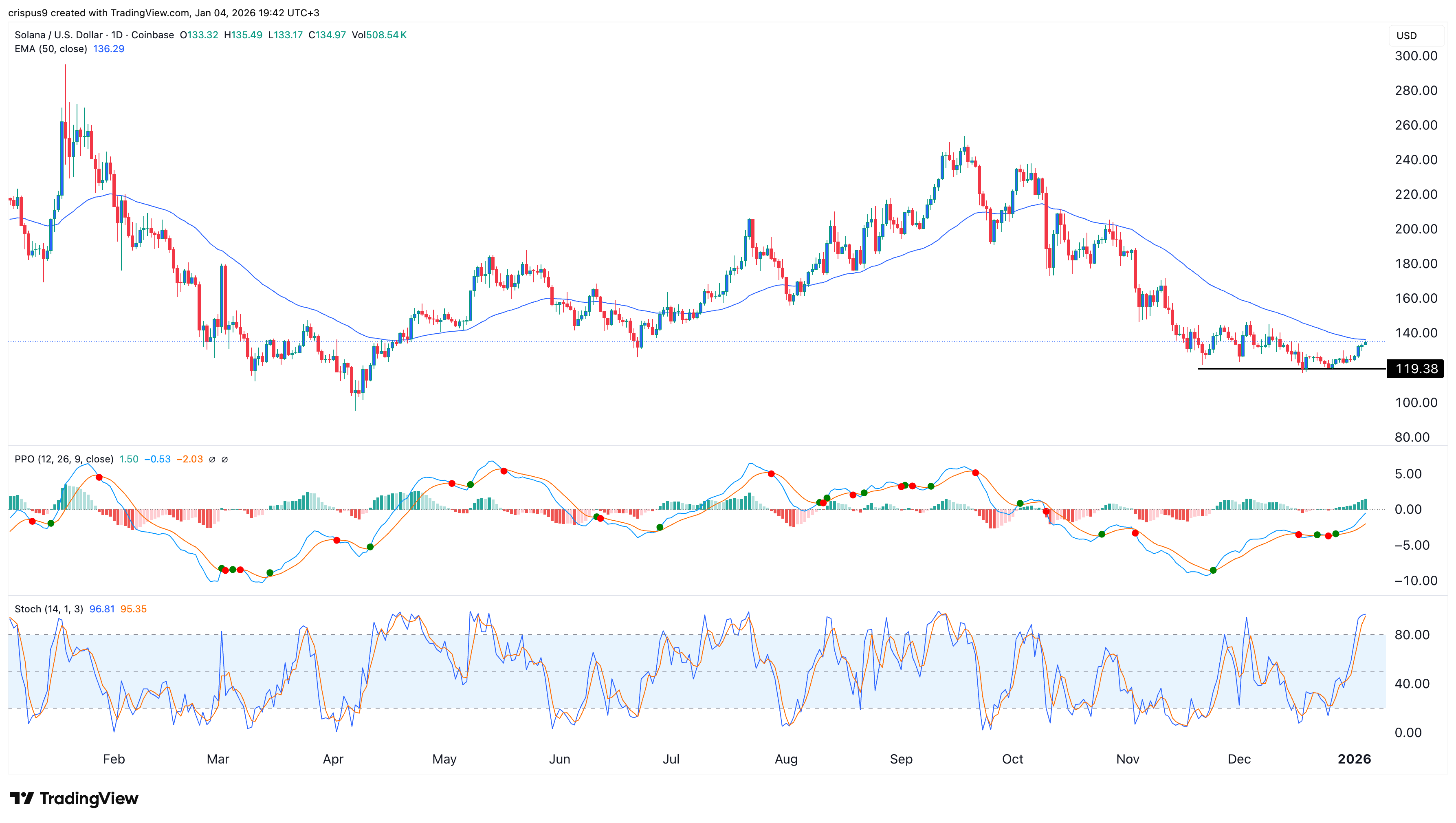
Solana price continued rising on Monday, reaching its highest point since December 12. SOL token rose to a high of $135 on Monday, up by over 15% from its lowest point this year. So, will the token rebound like Solana meme coins?
Solana Price Rises as SOL Meme Coins Surge
The main reason why the Solana price is soaring is that sentiment in the crypto industry has improved in the past few days. Indeed, the popular Crypto Fear and Greed Index has jumped from the extreme fear zone of 8 in 2025 to the current 41.
The surge has also coincided with the ongoing rebound of Solana meme coins. Data show that the market capitalization of these meme coins rose 15.7% over the last 24 hours to over $6.69 billion, while their 24-hour volume rose to over $3 billion.
Official Trump and Bonk tokens jumped, reaching a market capitalization of over $1 billion. Other top Solana meme coins like Pudgy Penguins, Pippin, Dogwifhat, and Fartcoin have jumped by double digits in the past few days.
Data compiled by DeFi Llama shows that Solana has continued to benefit from this surge. For example, the volume handled by Solana DEX networks jumped to over $102 billion in the last 30 days. Its volume was much higher than Ethereum and BSC combined. The two had over $44 billion and $55 billion in combined assets.
Solana has other bullish catalysts. For example, Solana’s futures open interest has started rising, reaching a high of $8 billion, its highest level since November 5. It has been in a strong uptrend after bottoming at $7.2 billion in December.
Meanwhile, spot Solana ETF inflows have continued rising. These funds added over $775 million in the past few months, bringing the total assets to $1.02 billion. Bitwise, Grayscale, Fidelity, and VanEck funds are leading this gain.
Solana is also preparing for the Alpenglow upgrade, which aims to boost its speeds over time. It aims to make it much better than other chains, such as Ethereum and BNB Smart Chain.
SOL Price Technical Analysis
Solana price chart | Source: TradingView
The daily chart shows that the Solana price has rebounded in the past few days. It bottomed at $119.38 and has moved above the 25-day Exponential Moving Average (EMA).
The two lines of the Percentage Price Oscillator (PPO) have crossed above the zero line and are nearing it. Also, the Stochastic Oscillator has continued to rise and moved above the overbought level.
Therefore, the token will likely continue to rise as bulls target the psychological $150 level. A move above that level will signal more gains, potentially to the $200 resistance level. However, a drop below the key $120 support will invalidate the bullish forecast.
Tiffany Reid was just 18 months old when she passed a kidney stone for the first time.
Many more would come during the next four decades of her life — along with multiple infections and bladder issues — despite Reid’s efforts to follow her healthcare providers’ advice to drink more water or change her diet. It wasn’t until she was an adult and in kidney failure that she got referred to a kidney specialist (a nephrologist) and finally got a diagnosis.
After his suggestion to get genetic testing, Reid discovered she had primary hyperoxaluria (PH), a rare genetic disorder that produces too much oxalate, which leads to kidney stones, kidney damage and, potentially, kidney failure.
PH causes too much oxalate to build up in the kidneys and other parts of the body. The excess oxalate eventually contributes to the development of kidney stones, which are extremely painful, and can progress to organ disease and failure.
People living with PH either cannot make the enzyme needed to prevent oxalate from building up or they don’t make enough of it. And PH is categorized into three types: PH1, PH2 and PH3.
“The three types of PH are based on abnormalities of three different genes, all of which result in increased production and urinary [output] of oxalate,” said Bradley A. Warady, M.D., a pediatric nephrologist in Kansas City, Missouri.
PH1 is the most common and most severe type. About half of PH1 patients will go on to develop kidney failure if they are not diagnosed and treated early. But effective treatment may slow down the disease.
Many people living with PH2 can maintain normal kidney function, but for up to 1 in 3 people, it can progress to kidney failure. Early detection and treatment can make a difference. PH3 is the least common and mildest form of PH and rarely causes kidney failure.
Diagnosing primary hyperoxaluria
Diagnoses of PH often take place when a healthcare provider notices certain symptoms — like recurrent kidney stones — and investigates further. HCPs can order an ultrasound to detect calcification (calcium buildup that hardens into deposits) of the kidneys. But a definitive diagnosis takes place through genetic testing or by finding oxalate in urine or plasma.
Symptoms of primary hyperoxaluria
The most common symptom is kidney stones, but PH can have several other symptoms, including:
Swelling, especially in the legs, ankles, feet, face and hands
PH can indirectly affect other areas of a person’s overall health. For example, PH doesn’t directly affect a person’s ability to conceive or give birth, but patients with PH can have trouble conceiving if they develop kidney disease or other organ failures.
The stress of dealing with PH symptoms and kidney disease and failure can also lead to or worsen depression and anxiety. The pain, infections and other symptoms people experience can affect overall quality of life since the fatigue and pain can force people living with PH to miss time from school, work, socializing and other activities they enjoy.
This was Reid’s experience. Because she was often in pain, she had trouble keeping a regular job, and she couldn’t always attend activities and events with her children. The mental toll of not knowing what was wrong and feeling she must be doing something wrong —– perhaps not eating correctly or drinking enough water —– nearly led to a mental breakdown, she said.
Treatments for primary hyperoxaluria symptoms
The main recommendation for controlling symptoms and pain for people with PH is to focus on significant fluid intake to lower oxalate levels in the body and prevent crystallization in the kidneys and other organs. Water is needed to dilute the oxalate that ends up in urine, helping decrease the risk of painful kidney stones forming.
Although “hyperhydration” can help reduce the likelihood of kidney stones, the treatment carries its own physical and emotional toll. Patients can experience disrupted sleep and interruptions at school and work due to frequent bathroom trips. Support groups for people with PH suggest patients work with schools and employers to get accommodations for their bathroom breaks and liquid intake.
Other therapies include potassium citrate, which can help prevent kidney stones from forming. And up to 3 out of 10 people with PH1 see a reduction of their oxalate levels by taking pyridoxine (vitamin B6) because the genetic mutation responds well to the vitamin.
Newer treatments such as RNAi therapeutic agents have also been shown to decrease oxalate production in people with PH1.
Dietary changes can help some patients, and some healthcare providers might suggest avoiding foods with a high oxalate content, like chocolate, nuts and spinach, and limiting animal protein, which can increase oxalate. Reducing salt intake can also help.
For patients with advanced kidney disease, dialysis or a transplant might be necessary.
Because living with PH symptoms can take a toll on patients’ mental health, Warady said patients should work with their care team to find mental and behavioral health providers who can provide support. Patients can also benefit from support groups, such as ones found through the Oxalosis and Hyperoxaluria Foundation.
Early diagnosis of primary hyperoxaluria
Because of advances in genetic testing, the average age at diagnosis for PH has come down significantly, but the disease can still take a long time to diagnose.
Early diagnosis and treatment are extremely important because it can help hold off or prevent the progression of PH. Those diagnosed later in life can face worse outcomes because of the long-term effects of kidney stones, infections and other stresses on the body like bone disease and anemia that result from oxalate buildup.
Reid didn’t have the benefit of early diagnosis and treatment, but three years into knowing how to manage her PH1 as best as possible, she has a better outlook on her future.
Today, Reid is an advocate for patients with PH through the Oxalosis and Hyperoxaluria Foundation, the organization that supported her through her diagnosis and treatment plan. Receiving kidney and liver transplants and learning how to effectively manage her PH1 for the first time in her life has improved both her physical and mental health.
While PH has no cure, getting diagnosed as early as possible, understanding your PH type and working with a healthcare team to determine the best plan of care can make life with the condition easier.
This educational resource was created with support from Alnylam.
The WTI crude oil price is showing signs of bottoming after hitting a key support level at $55.40. It has plunged by over 25% from its highest level in 2025 and is hovering near its lowest level in years.
WTI Crude Oil to React Mildly to Venezuela Crisis
Crude oil prices will be in the spotlight on Monday as the market comes to terms with the recent developments in Venezuela, where Donald Trump staged a major attack and arrested the country’s president.
In his press conference, Trump insisted that the United States will now be in charge of the country, with its large energy companies investing billions of dollars.
In theory, the fall of the Maduro regime should be bearish for oil prices. For one, with the US in control, it means that sanctions will be lifted and that production will be boosted.
However, in reality, Venezuela is still a small player in the oil market, producing less than 1 million barrels of oil a day. Also, American investments will take years to materialize. And worse, regime changes often lead to destabilization of countries and supply.
The other main catalyst for the WTI crude oil price will be the OPEC+ meeting in which officials are expected to stick with their plans to pause supply increases in the first quarter. The cartel increased supply rapidly last year, leading to concerns about oversupply in the market.
Meanwhile, the US will publish the first inventory report on Wednesday. The report by the EIA is expected to show that inventories dropped by over 1 million in the last week of the month.
Crude Oil Technical Analysis
The weekly chart shows that the WTI crude oil price has been in a strong downward trend in the past few months. It bottomed at $54.40, its lowest level in April and December last year.
Oil has formed a double-bottom pattern, which is made up of two lower swings and a a neckline, which is at $77.32.
However, technical indicators suggest that oil may continue falling in the near term. For one, the price remains below the 50-week and 100-week Exponential Moving Averages (EMA). The MACD and the Relative Strength Index (RSI) have continued falling in the past few weeks.
Therefore, the most likely oil forecast is neutral with a bullish bias. The bullish outlook will remain as long as it is above the double-bottom pattern point at $55.39. A drop below that level will point to more downside, potentially to $50.
Important DisclaimersFXEmpire is owned and operated by Empire Media Network LTD., Company Registration Number 514641786, registered at 7 Jabotinsky Road, Ramat Gan 5252007, Israel. The content provided on this website includes general news and publications, our personal analysis and opinions, and materials provided by third parties. This content is intended for educational and research purposes only. It does not constitute, and should not be interpreted as, a recommendation or advice to take any action, including making any investment or purchasing any product. Before making any financial decision, you should conduct your own due diligence, exercise your own discretion, and consult with competent advisors. The content on this website is not personally directed to you, and we do not take into account your individual financial situation or needs. The information contained on this website is not necessarily provided in real time, nor is it guaranteed to be accurate. Prices displayed may be provided by market makers and not by exchanges. Any trading or other financial decision you make is entirely your own responsibility, and you must not rely solely on any information provided through the website. FXEmpire does not provide any warranty regarding the accuracy, completeness, or reliability of any information contained on the website and shall bear no responsibility for any trading losses you may incur as a result of using such information. The website may include advertisements and other promotional content. FXEmpire may receive compensation from third parties in connection with such content. FXEmpire does not endorse, recommend, or assume responsibility for the use of any third-party services or websites. Empire Media Network LTD., its employees, officers, subsidiaries, and affiliates shall not be liable for any loss or damage resulting from your use of the website or reliance on the information provided herein.Risk DisclaimersThis website contains information about cryptocurrencies, contracts for difference (CFDs), and other financial instruments, as well as about brokers, exchanges, and other entities trading in such instruments. Both cryptocurrencies and CFDs are complex instruments and involve a high risk of losing money. You should carefully consider whether you understand how these instruments work and whether you can afford to take the high risk of losing your money. FX Empire encourages you to conduct your own research before making any investment decision and to avoid investing in any financial instrument unless you fully understand how it works and the risks involved.
Matcha, or powdered green tea, has been a staple in Japan for around 800 years, but over the past decade, the West has become pretty obsessed with it, too. In the U.S., classic matcha lattes are permanent menu items at coffee shop chains like Starbucks, Dunkin’, and Peet’s, and they’re also pretty easy to find in independent cafes. Over in Europe, matcha lattes are just as common, with most coffee chains (including European Starbucks) offering classic and limited-edition matcha drinks.
One popular and inexpensive coffee purveyor, however, is woefully lacking in matcha, and that’s McDonald’s. Even in Japan, its matcha drinks are limited-edition only, and you won’t find a creamy matcha latte on the permanent menu. In fact, there’s currently only one lucky country in the entire world that has year-round access to McDonald’s matcha drinks, and that’s Australia.
McDonald’s — known Down Under as Macca’s — brought three matcha drinks to its Australian menu in October 2025 following a limited trial earlier in the year. These drinks are the Matcha Latte (hot), the Matcha Iced Latte, and the Strawberry Matcha Iced Latte. They’re available with different milk types, like oat, and they’re a big hit among Macca’s fans (not unlike the chain’s Big Brekkie Burger, which is only available in Australia).
What are non-Australian matcha fans to do?
Since McDonald’s introduced matcha items to its Australian menu “after huge fan demand,” according to a press release, there could still be hope for the rest of us. Social media is likely the best way to let the chain know that your country would like to try its matcha offerings.
For now, though, the best way to get your hands on an inexpensive matcha drink is to make it yourself — and it’s not as difficult as you might think. You may have seen videos of baristas making fancy matcha lattes with special bamboo whisks and temperature-regulated water and thought the process looked a little out of your league. Luckily, a traditional matcha preparation isn’t really necessary for a quick drink. You don’t need to buy the most expensive brand, either, or check whether or not the matcha’s packaging says “ceremonial grade.”
For an easy and inexpensive latte, all you need is some matcha powder from your local Asian supermarket. You can buy pre-sweetened versions like Starbucks uses or buy pure matcha and add the sugar (or other sweetener) yourself.
Making a matcha latte the easy way
kazoka/Shutterstock
Much like coffee, there are both easy and highly complicated ways to make matcha. Fortunately, you don’t have to follow all the fancy rules to get a drink you enjoy. To start with, each drink only needs a small amount of matcha powder, though you’ll need to give it a whisk to break up any lumps. Next, mix it thoroughly with a small amount of hot (but not boiling) water. Whisking until the matcha foams up is totally optional, so the whole process can be done in just a few seconds.
Once you have a lump-free matcha mixture, add it to whatever milk you’re using — hot foamed oat milk, cold milk, frappe-style crushed ice and milk — anything goes. I usually pour it right into my milk frother while it’s heating my oat milk.
Few people drink unsweetened matcha lattes because the taste can get pretty intense, so make sure to add your sweetener of choice, either to your milk, your matcha mixture, or to the finished drink. If you want to make a copycat of Macca’s Strawberry Matcha Latte, there are also quite a few easy ways to add a hint of strawberry flavor to your matcha.
MATIC price prediction suggests potential 18% upside to $0.45 within 4-6 weeks if bulls break $0.58 resistance, though bearish momentum persists below this critical level.
MATIC Price Prediction: Technical Setup Points to $0.45 Recovery Target
Polygon’s MATIC token sits at a critical juncture as we enter 2026, with technical indicators painting a mixed picture for the cryptocurrency’s near-term trajectory. Currently trading at $0.38, MATIC faces a decisive test at the $0.58 resistance level that will determine whether bulls can mount a sustainable recovery or bears maintain their grip on the market.
MATIC Price Prediction Summary
• MATIC short-term target (1 week): $0.42 (+11%) – testing SMA 20 resistance
• Polygon medium-term forecast (1 month): $0.45-$0.52 range if $0.58 breaks
• Key level to break for bullish continuation: $0.58 (critical resistance)
• Critical support if bearish: $0.35, then $0.33 (strong support zone)
Recent Polygon Price Predictions from Analysts
The latest MATIC price prediction consensus among analysts reveals cautious optimism tempered by technical realities. Blockchain.News has consistently maintained a $0.45-$0.52 price target for the medium term, representing potential upside of 18-37% from current levels. This Polygon forecast hinges critically on MATIC’s ability to decisively break above the $0.58 resistance level.
More aggressive predictions emerge from CoinLore, projecting a $3.50 long-term target based on historical crypto cycle analysis, though this carries low confidence given the speculative nature of such extended forecasts. Meanwhile, CoinMarketCap focuses on fundamental catalysts, particularly the AggLayer v0.3 upgrade scheduled for January 2026, which could drive increased demand for POL tokens.
The analyst consensus reveals a clear pattern: short-term recovery depends entirely on technical breakouts, while longer-term bullishness relies on successful protocol upgrades and adoption metrics.
MATIC Technical Analysis: Setting Up for Potential Reversal
The current Polygon technical analysis reveals MATIC trading in a compression zone, with several indicators suggesting an impending directional move. At $0.38, the token sits precisely at its pivot point, creating a neutral setup that could break either way.
Key technical factors supporting a potential reversal include MATIC’s position within the Bollinger Bands at 0.29, indicating the token trades in the lower portion of its recent range but hasn’t reached oversold extremes. The RSI reading of 38.00 remains in neutral territory, providing room for upward movement without hitting overbought conditions.
However, bearish momentum persists with the MACD histogram at -0.0045, suggesting selling pressure continues to outweigh buying interest. The distance between current price and key moving averages tells the story: MATIC trades 11% below its SMA 20 ($0.43) and significantly below longer-term averages, indicating the broader trend remains challenged.
Volume analysis from Binance spot markets shows $1.07 million in 24-hour turnover, which remains relatively subdued and suggests limited conviction from either bulls or bears at current levels.
Polygon Price Targets: Bull and Bear Scenarios
Bullish Case for MATIC
The primary MATIC price target of $0.45-$0.52 becomes achievable if bulls can accomplish two critical technical objectives. First, a decisive break above $0.58 resistance would invalidate the current bearish structure and open the path toward the SMA 50 at $0.45. This level represents the minimum target in any meaningful recovery scenario.
For the bullish case to strengthen, MATIC needs to reclaim its SMA 20 at $0.43, which would signal the beginning of a trend reversal. From there, sustained buying pressure could propel the token toward the upper Bollinger Band at $0.56, setting up the crucial test of $0.58 resistance.
The fundamental backdrop supports this scenario through the upcoming AggLayer v0.3 upgrade, which aims to unify liquidity across Polygon chains. Successful implementation could drive increased utility and demand for the native token.
Bearish Risk for Polygon
The bearish scenario becomes probable if MATIC fails to hold current support levels around $0.35. A break below this immediate support would likely trigger stops and accelerate selling toward the strong support zone at $0.33, representing the 52-week low territory.
Technical indicators suggest this downside risk remains elevated, with the MACD histogram showing continued bearish momentum and price trading well below all major moving averages. The distance from the 52-week high of $1.27 reflects the challenging environment MATIC faces in attempting any meaningful recovery.
Risk factors to monitor include broader cryptocurrency market sentiment, Bitcoin’s price action, and any delays or complications with the planned protocol upgrades that underpin the fundamental bullish case.
Should You Buy MATIC Now? Entry Strategy
The current technical setup suggests a measured approach to MATIC positioning rather than aggressive accumulation. For those considering entry, the most logical strategy involves waiting for confirmation of directional movement rather than attempting to catch a falling knife.
Conservative entry points should focus on reclaiming the SMA 20 at $0.43, which would provide the first technical confirmation of trend change. More aggressive traders might consider scaling into positions around current levels ($0.38) with tight stops below $0.35 to limit downside risk.
Risk management becomes crucial given the mixed technical picture. Stop-loss levels should be placed below $0.33 for any long positions, representing approximately 13% risk from current levels. Position sizing should reflect this technical uncertainty, with reduced allocation until clearer directional signals emerge.
MATIC Price Prediction Conclusion
Based on current technical analysis, our MATIC price prediction anticipates a test of $0.45 within the next 4-6 weeks, contingent on breaking the critical $0.58 resistance level. This represents a medium confidence forecast given the mixed technical signals and dependency on specific breakout levels.
The key indicators to watch for confirmation include RSI movement above 50, MACD histogram turning positive, and most importantly, sustained trading above $0.43. Invalidation signals would include breaks below $0.35 support or continued rejection at current resistance levels.
This Polygon forecast carries a February 2026 timeline for the $0.45 target, assuming successful navigation of immediate technical hurdles and positive momentum from the upcoming protocol upgrades. Traders should remain flexible and ready to adjust positions based on how MATIC responds at these critical technical junctures.
As a seasoned forex trader with over 18 years of experience, everything at GMT is real-time and accounted for. This session focuses on technical analysis, price action, and swing trading, from key support and resistance levels, to help you refine your trading strategy for the coming week.
The British pound rallied a bit on Friday but cannot seem to hang onto gains against the USD.
GBP/USD
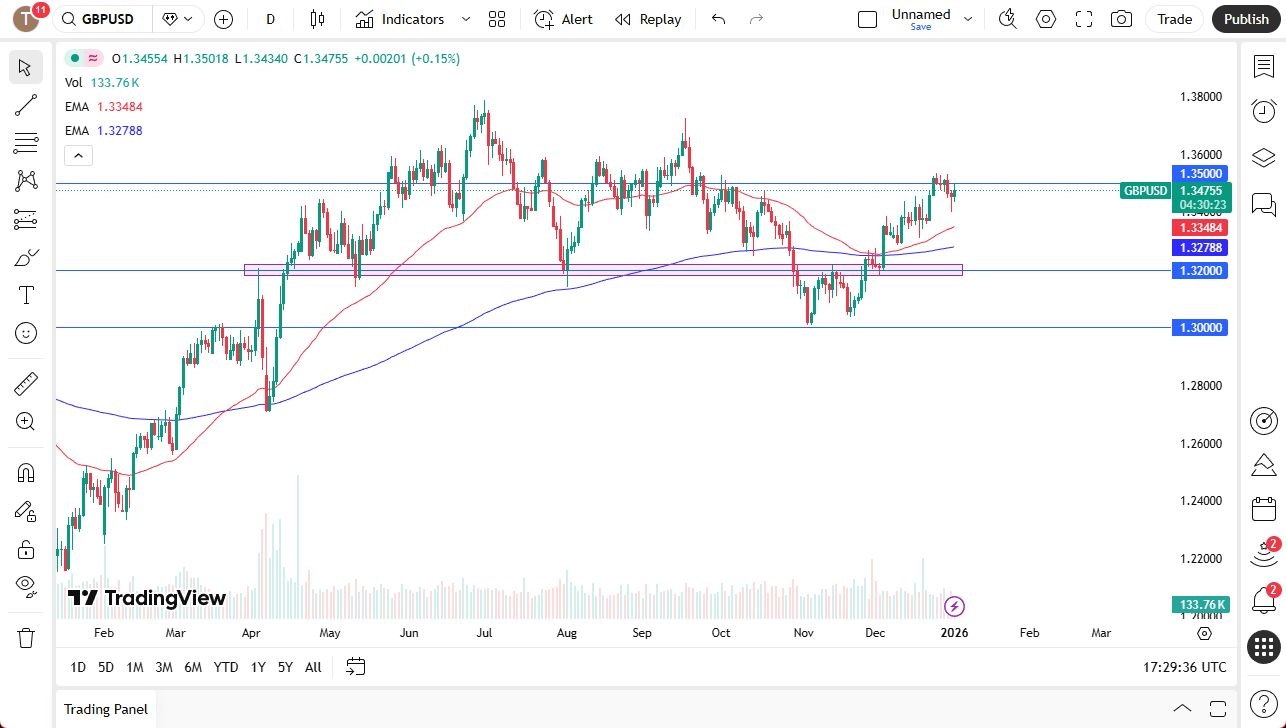
The British pound rallied a bit during the early hours on Friday to test the 1.35 level yet again. This is an area that has been important multiple times, and I think it is worth watching very closely.
The market is likely to continue to see a lot of noise in this general vicinity with the possibility of breaking out to the upside. Breaking out to the upside opens up a move to the 1.37 level.
A breakdown from here, breaking below the hammer from the Wednesday session, could open up a test of the 50-day EMA, possibly even the 200-day EMA underneath there. All things being equal, I think this is a market that is trying to find the momentum to break out, but it just can’t seem to get over this 1.35 level.
Market Outlook and Volatility
We will probably make a more profound statement sometime later next week, but in the meantime, I think you have got a lot of choppy short-term back-and-forth trading ahead. I don’t like the idea of getting too heavily involved in the market at the moment, mainly due to the fact that liquidity and volume are still issues, and of course, we don’t really have momentum to deal with.
By the end of next week, though, I do anticipate that we probably have a real shot at some type of movement. I do think that the end of next week, with the jobs numbers coming out of the United States, could give you a little bit of momentum in this pair.
Between now and then, we are probably going to be very jittery and choppy, and with that, I look to short-term charts more as a range-bound trader as it continues to offer short-term opportunities, perhaps on something like the 15.
If you’ve heard about the benefits of resveratrol, you know it’s a powerhouse antioxidant you want more of; but we may not be getting enough naturally. The best resveratrol supplement, it turns out, can be a more precise way to get the amount necessary to make a clinical difference. “Many consumers believe that an effective dose of resveratrol can be achieved through diet or by drinking red wine,” says board certified cardiologist and founder of Heart-Tech Health Suzanne Steinbaum, DO, MD. “But to reach a typical supplemental dose of resveratrol—about 250 mg—would require consuming over 1,000 glasses of red wine.”
The good news is that the best resveratrol supplements can help fill in any nutritional gaps so you can reap the benefits. Resveratrol isn’t just a powerhouse antioxidant in skincare; it’s also the key to supercharging your defenses against free radicals responsible for cellular aging throughout the body. It’s often associated with giving red wine its heart-healthy benefits—commonly referred to as the French paradox—resveratrol has gained a lot of attention for its promising effects that support health through multiple biological pathways. “Research indicates that it activates sirtuins and AMP-activated protein kinase (AMPK)—often referred to as the body’s metabolic master switch,” explains Dr. Steinbaum. “This activation enhances fatty acid oxidation, improves mitochondrial function, and increases NAD+ levels which collectively support heart, brain, immune, and metabolic health, as well as a balanced inflammatory response.” Plus, while more extensive trials are needed, a small, promising new study from the Advanced Centre for Treatment, Research and Education in Cancer, in Kharghar, Navi Mumbai unveiled that the combination of resveratrol and copper supplements reduced the aggressiveness of glioblastoma brain tumors in patients. The study shows that resveratrol can act as a DNA-damaging agent by creating an oxidative environment that generates reactive oxygen species (ROS) when paired with copper ions—a breakthrough find that could revolutionize cancer treatment in the future.
While we do love a glass of red wine, we spoke to a top cardiologist and registered dietitian to whittle down everything you need to know about resveratrol, including the five best resveratrol supplements to consider.
In This Story:
Best Resveratrol Supplement Overall: Pure Encapsulations Resveratrol EXTRA
Why We Love It: Many professional nutritionists, dietitians, and doctors recommend Pure because of their rigorous quality standards, clean formulations, and commitment to third-party testing. Trans-resveratrol from Japanese knotweed is the star ingredient in this powerful capsule—but it also has added support from red wine grape concentrate and grape seed extract. “High-quality resveratrol supplements often combine a concentrated extract from Japanese knotweed with organic grape and muscadine grape sources,” says Dr. Steinbaum. “This provides a broader and more complete spectrum of beneficial polyphenols.” Most of all, it focuses on the bioactive form of resveratrol. “The most important factor in choosing a resveratrol supplement is ensuring that resveratrol is delivered in its active form,” says Dr. Steinbaum. “The product label should clearly state that it contains 100% trans-resveratrol, which is the biologically active isomer.”
Key Ingredients: Trans-resveratrol from Japanese knotweed, red wine grape extract, grape (seed) extract
Form: Capsule
Dose: 1 capsule
Best Resveratrol Supplement With NR: Thorne ResveraCel
Why We Love It: A top pick of registered dietitian and founder of Real Nutrition Amy Shapiro,MS, RD, CND, you’ll find ingredients like nicotinamide riboside, quercetin phytosomes, and trans-resveratrol in this high-quality formula. If you’ve heard all about the buzz about NAD+, you may remember that NR is the precursor to NAD+, which can help stimulate NAD+ production. “I like this option because it pairs resveratrol with nicotinamide riboside (NR), supporting cellular energy and aging pathways,” says Shapiro. “And Thorne offers well researched, clinical-grade formulas.” Thorne is also rigorously tested and has worked with independent researchers from places like Mayo Clinic and the National Institutes of Health, to ensure its products are high-performance, safe, and efficacious.
Best Resveratrol Supplement For Cardiovascular Health: Naomi JItalian Citrus Bergamot + Resveratrol
Naomi
Italian Citrus Bergamot 500mg + Resveratrol
Why We Love It: While resveratrol touts incredible benefits, like healthy aging and longevity, heart health, inflammation balance, and metabolic health, Shapiro notes that it should be considered as a small piece of an overall healthy lifestyle instead of a singular solution. So anytime we can compound the benefits with other ingredients to support our health, the better. This capsule from Naomi not only contains a proprietary, superpowered trans-resveratrol blend composed of the three power ingredients Dr. Steinbaum recommends (Japanese knotweed, organic French whole red grapes, and muscadine grape skin and seeds), but also olive leaf extract and a patented citrus bergamot extract, called BergAmore, sourced from Calabria, Italy, that’s rich in polyphenols. Together, they offer more robust and comprehensive cardiovascular support. “I like that these are among the few products on the market that feature organic resveratrol in the active trans-resveratrol form,” adds Dr. Steinbaum, who also serves as a medical advisor to the brand. “They are also Clean-Label Certified and free of additives such as magnesium stearate or other synthetic flow agents.”
Key Ingredients: BergAmore, resveratrol complex blend, and olive leaf extract
Form: Capsule
Dose: 1 capsule
Best Resveratrol Supplement For Absorption: Designs For Health Resveratrol Supreme
Why We Love It: Another favorite of Shapiro, this capsule ensures you’re effectively digesting and absorbing the resveratrol to reap the health benefits. “I love this formula because it is paired with quercetin, a flavonoid found in capers, red onions, broccoli, kale and more,” says Shapiro. “The addition of quercetin or healthy fats in the ingredient list can help increase absorption when it comes to resveratrol.” It’s also third-party tested and only requires one capsule per serving making consistency a bit more manageable—a big win for anyone who can’t bear to add another intensive supplement to their regimen.
Key Ingredients: Trans resveratrol, quercetin
Form: Capsule
Dose: 1 capsule
Best Budget Resveratrol Supplement: Gaia Herbs Resveratrol
Why We Love It: Vegan, USDA Organic, and Non-GMO Project verified, these capsules from Gaia are proof that you don’t have to spend a fortune to get the antioxidants you need for healthy aging support. While it may be a less expensive option, it’s no less powerful with 150mg of trans-resveratrol per capsule (so 300mg total daily dose). “I always look for quality over quantity when it comes to supplements,” says Shapiro. “For resveratrol, capsules tend to be more stable than powders, which can degrade when exposed to oxygen, sunlight, and more and something in the 100–300 mg range for dosage.”
Key Ingredients: Trans-resveratrol, Japanese knotweed
Form: Capsule
Dose: 2 capsules
Resveratrol is a phytonutrient called a polyphenol. “Polyphenols are natural antioxidant compounds found in plant foods that provide a variety of health benefits,” says Dr. Steinbaum. “Plants produce resveratrol as a defense against stress, pathogens, and UV damage.” Resveratrol occurs naturally in a few plants so you can get a small dose from your diet. “Since it is an antioxidant, think purple-blue hues like red and purple grapes, blueberries, and cranberries, as well as peanuts, pistachios, dark chocolate, and Japanese knotweed,” says Shapiro.
Resveratrol can be a topical as well as oral format. “I like to think of topical resveratrol as local protection, it works where you place it,” says Shapiro. “And oral resveratrol as a more systemic support.” In skincare, resveratrol functions as a powerful antioxidant, helping to prevent damage and neutralize free radicals. “This can support brighter looking skin, help to prevent wrinkles, protect collagen and reduce signs of aging,” says Shapiro. “As a supplement, resveratrol works systemically to decrease inflammation, boost cardiovascular health, and decrease cellular aging.”
The Health Benefits of Resveratrol
Resveratrol is a powerful antioxidant that helps fight free radicals—which essentially helps slow down cellular aging. When taken as a supplement or from natural food sources, these antioxidants can help decrease oxidative stress, lower blood pressure, and more. Shapiro says that resveratrol is best known for its potential role in healthy aging. “It works at the cellular level over time, so it is not a quick fix but more of an ingredient for long haul benefits,” she says. According to research, the health benefits of resveratrol are many, a few of which Shapiro outlines below:
Supports cellular health and longevity pathways (including the activation of sirtuins, often referred to as “longevity proteins”).
Support cardiovascular health by improving endothelial function (keeps your blood vessels like arteries and veins healthy and responsive)
Potentially enhances mitochondrial function, which assists energy production and metabolism.
What are the benefits of taking resveratrol?
There are lots of benefits associated with taking resveratrol. “The most compelling research suggests that resveratrol can mimic the effects of calorie restriction through sirtuin activation,” says Dr. Steinbaum. “This mechanism delivers cardiometabolic benefits, supports healthy blood sugar and insulin sensitivity, and promotes a balanced inflammatory response.” By taking resveratrol as a supplement, Dr. Steinbaum says it works systemically by influencing cellular signaling pathways such as sirtuins (associated with healthy aging) and AMPK (associated with metabolic health).
What are the negative side effects of resveratrol?
According to Dr. Steinbaum, resveratrol is generally well-tolerated. However, if you typically have a sensitive stomach, you might want to steer clear of higher dosages. “At high doses, like above 500 mg, some individuals may experience mild gastrointestinal discomfort, such as bloating or nausea,” says Dr. Steinbaum. As always, check with your doctor before starting any sort of supplementation.
When we test and review a product, we take a holistic approach to deliver well-rounded product recommendations. First, we lean on Vogue’s vast network of experts—from board-certified dermatologists to registered dietitians—to gain professional acumen on the industry’s standout products, ones these specialists would actually recommend to their clients. We pair their expertise with our editorial best practices to curate the thoughtful edits you read on our site.
As it relates to resveratrol, we selected the best based on the following characteristics: ingredients composition (i.e. the vitamins and minerals featured), form, dosage, clinical studies, certifications, and the body and wellbeing concerns they address. To do this, we paired our own tests of the supplements with expert guidance and reviewer insights to determine which we would recommend to you.
Amy Shapiro MS, RD, CND is a registered dietitian, nutritionist and founder of Real Nutrition.
Dr. Suzanne Steinbaum is a board certified cardiologist in New York City and CEO/founder of Heart-Tech Health, an integrated wellness platform aimed at cardiovascular disease prevention. She has previously served on the national medical advisory board of multiple companies and currently is a medical advisor for supplement brand Naomi.
Dogecoin price rose for five consecutive days, reaching its highest point since November last year. The DOGE token has jumped by 30% from its lowest level this year, bringing its market capitalization to over $25 billion. So, is this the start of a new Dogecoin rally or a dead-cat bounce?
Dogecoin Price Rises as Meme Coins Rebound
The DOGE token rose as meme coins rebounded sharply in the past few days. Most of these coins, including popular names like Pepe Coin, Shiba Inu, Bonk, and Official Trump, have rebounded in the past few days, with their market capitalization rising to over $52 billion.
Dogecoin price rose as futures open interest continued to rise, moving from a low of $1.27 billion on December 9 to $1.8 billion today, its highest level since October 28. The daily trading volume of DOGE jumped to over $3.24 billion, up sharply from a low of $1.17 billion in December.
The token also rose as DOGE ETF inflows rose by $2.3 million on Friday, bringing cumulative net inflows to $4.64 million. Its funds now hold $8.34 million, a tiny amount for a coin with a market capitalization of over $20 billion.
One main reason for the Dogecoin price rally is that the Bitcoin price has moved above the key $91,000 resistance level. It is common for meme coins to rally when Bitcoin and the broader futures open interest are soaring.
Also, the token is rising as investors buy the dip after it plunged by double digits in 2025. It dropped by over 62% from its peak in September to its trough in December. As such, it is common for investors to buy an asset after it has plunged hard over a specific period.
The coin has also risen as the January Effect continued. The January Effect is a phenomenon in which financial assets jump sharply in January as investors begin buying. We experienced this surge happening in January last year, towards Donald Trump’s inauguration.
DOGE Price Technical Analysis
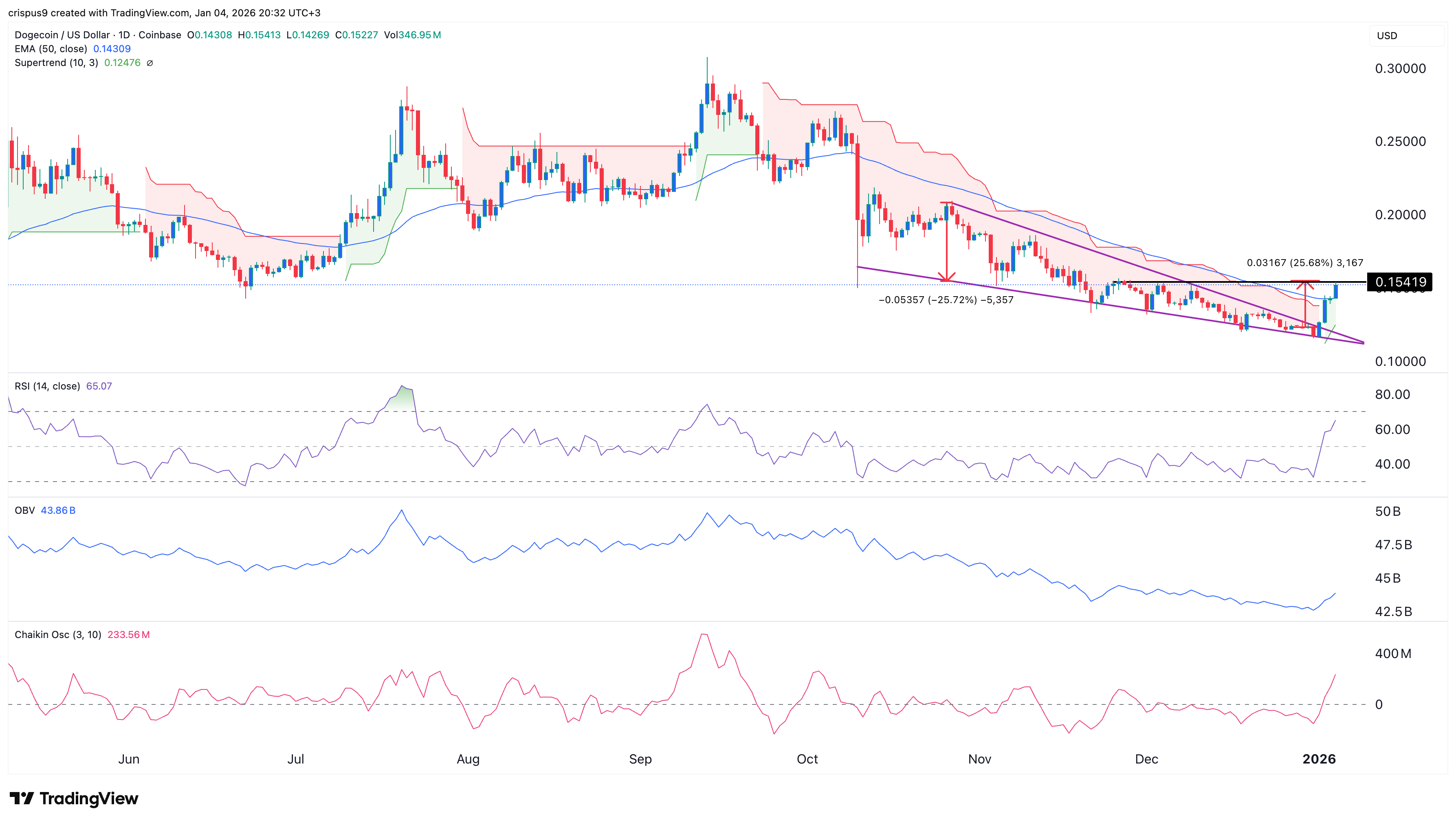
Dogecoin price chart | Source: TradingView
The daily timeframe chart also explains why the DOGE price is rising. As the chart above shows, it happened after the token formed a giant falling wedge pattern, a common bullish reversal sign.
Dogecoin price has now moved above the upper side of the wedge, while the Supertrend indicator has turned green. It also moved above the 50-day Exponential Moving Average (EMA).
The token has also hit the target of the falling wedge pattern at $0.1540. This target is estimated by measuring the widest part of the wedge and the same distance from the breakout point.
Top oscillators such as the Chaikin, Relative Strength Index, and On-Balance Volume (OBV) have all pointed upward. Therefore, the most likely scenario is where the coin continues rising as FOMO continues.
However, the persistent risk is that the ongoing rally is a dead-cat bounce, which could lead to a retreat in the coming weeks.







![EUR/USD, GBP/USD, XAU/USD, XAG/USD and more [Video]](https://editorial.fxsstatic.com/images/i/currencies-001_Medium.jpg "EUR/USD, GBP/USD, XAU/USD, XAG/USD and more [Video]")
%20copy.jpg "5 Best Resveratrol Supplements, According to Experts")