The EURJPY pair reached the main target at 184.90, forming a strong barrier to begin forming bearish corrective waves, to settle near 183.75, announcing the beginning of gathering some gains in the current period trading.
Stochastic is approaching 20 level, to increase the negative pressure, which makes us prefer more corrective trading that might target 183.30 level, reaching key support at 182.80, while stepping above 184.10 again and providing positive close will reinforce the chances of forming new bullish waves, to repeat the pressure on the mentioned barrier.
The expected trading range for today is between 183.30 and 184.10
Bitcoin price hovered around $89,000 on Monday and showed no strong push higher or lower.
According to the chart shared by ManOfBitcoin, price is trading comfortably above the lower boundary of the Gaussian channel.
This zone acts as a trend-defining support during sustained bull markets.
Bitcoin price hovered around $89,000 on Monday and showed no strong push higher or lower. The market took a clear pause as traders positioned carefully ahead of the weekly close.
For the 8th consecutive day, the price of BTC USD remained stuck within a tight range with an extended period of sideway movements.
Bitcoin Price Holds Bullish Structure Above Gaussian Channel Support
Bitcoin price continues to show resilience on the higher time frame. According to the chart shared by ManOfBitcoin, BTC USD price is trading comfortably above the lower boundary of the Gaussian channel, a zone that often acts as a trend-defining support during sustained bull markets.
More importantly, this area now acts as a clear line in the sand for Bitcoin. For as long as the weekly candle closes above the lower band of the Gaussian channel, the overal bullish structure will remain intact.
As such, it’s easy to see that the buyers still have some magnitude for bullishness. Still, caution cannot be ignored for BTC USD.
From the analysis, a clear weekly close below the lower Gaussian boundary would signal a weakening of the bullish case and open the door to deeper downside within the channel.
Bitcoin Price Prediction | Source: Man of Bitcoin
BTC USD Price Signals Point to a Potential Relief Rally
The price of BTC USD could be setting up for a short-term relief rally, according to analysis shared by crypto analyst and entrepreneur Ted Pillows.
He noted that current Bitcoin price movements resemble earlier phases of the previous bull cycle, when momentum briefly reset before resuming higher.
In his assessment, Pillows compared the current weekly RSI structure with patterns seen in 2021, the final year of Bitcoin’s last major bull run.
The similarities suggest weakening momentum in the short term, but not necessarily a breakdown of the broader trend. However, he emphasized that buyer activity remains critical at this stage.
In particular, Pillows pointed to the 100-week exponential moving average, explaining that bulls need to defend this level to prevent it from slipping below the corresponding simple moving average. History shows this crossover has been costly in the past.
He recalled that the last two times this signal appeared, Bitcoin price suffered drawdowns of roughly 40% to 50% within four to six weeks. That context adds urgency to the current setup and explains why the next few weekly closes matter.
A Closer Look into Bitcoin Price Analysis
As per data shared by a popular crypto expert, UTXO Times, Bitcoin recorded its fifth Golden Cross, a key technical signal that has often preceded strong price rallies. The event while being bullish does not guarantee immediate gains, but it suggests that the broader trend could remain bullish once short-term selling pressure eases.
In addition, Trader Captain Faibik joined the growing list of analysts signaling a shift in Bitcoin price momentum. He suggested that the recent pullback has run its course and that the market is now preparing for a bullish breakout.
According to his view, the next move of Bitcoin price could unfold within days rather than weeks. He noted that once price breaks higher, sidelined traders are likely to chase the move out of fear of missing out. However, he cautioned that late entries driven by emotion often come at poor levels.
In essence, Faibik framed the current phase as a calm before the storm. The correction appears complete, while the next leg higher may reward patience rather than haste.
Dr. Arianne Missimer, DPT, RD, IFMCP is a doctor of physical therapy, registered dietitian, mindfulness and somatic practitioner, and one of fewer than 2,500 Institute for Functional Medicine Certified Practitioners worldwide. She is the founder and CEO of The Movement Paradigm, where she integrates functional medicine, holistic physical therapy, and nervous system regulation to help people thrive.
Dr. Missimer a TEDx speaker and is also a STRONG Fitness Magazine columnist and cover athlete. She has been featured on ABC, CBS, FOX, and NBC, named a Main Line Today Power Woman and Health Care Hero, and recognized nationally for her contributions to nutrition and sports medicine rehabilitation. A cancer survivor and advocate for whole-body wellness, her mission is to inspire people to uncover root causes, reclaim resilience, and rise to their fullest potential through mindset, nutrition, and movement.
Women Fitness President Ms. Namita Nayyar catches up with Dr. Arianne Missimer an exceptionally talented and accomplished, a doctor of physical therapy, registered dietitian, mindfulness, a cancer survivor, and somatic practitioner. Here she talks about her ‘The Movement Paradigm’, fitness regime, diet, hair & skincare and her success story.
Namita Nayyar:
Your expertise spans functional medicine, physical therapy, and nervous system regulation. How do these disciplines influence your own health and fitness routine, and what unique practices do you combine?
Arianne Missimer:
I approach my own health the same way I guide my patients—through an integrative, functional medicine lens that always asks why and addresses root causes. That means consistently evaluating my nutrition, labs, sleep, movement patterns, and stress physiology to create alignment.
My fitness routine reflects this philosophy. I strength train and powerlift four days a week to build resilience and capacity. I complement that with aerial arts like Lyra, bodyweight strength, Animal Flow, and fascial tensioning to cultivate adaptability, flow, nervous system engagement, and most importantly, play. For cardiovascular health and regulation, I integrate running, paddle boarding, and walking in nature.
Just as importantly, I weave in mindful movement, meditative practices, restorative sleep, and intentional nutrition. The result is a practice that doesn’t just focus on performance—it supports long-term vitality, adaptability, and whole-body health.
Namita Nayyar:
As a cancer survivor, how did your approach to fitness and wellness evolve during and after treatment? Are there specific practices you prioritize now to build resilience?
Arianne Missimer:
During treatment, I adopted the philosophy that guides my practice today: mindset, nutriton, and movement. Even while undergoing chemotherapy and proton therapy, I trained for American Ninja Warrior and later competed on the show four months after my treatment ended, proving to myself the power of resilience. Post-treatment, my shift was toward understanding trauma, nervous system regulation, and emotional health — areas often overlooked in conventional medicine.
Functional medicine science helped me heal my gut, reduce inflammation, and restore energy. Movement has always helped my through life’s biggest challenges. Now, I not only prioritize movement but also nervous system practices, integrative nutrition, airway health and sleep, knowing resilience must be built across physical, biochemical, and emotional domains.
Namita Nayyar:
How do you integrate nervous system regulation into strength training, movement therapy, and functional medicine — both for yourself and for your patients at The Movement Paradigm?
Arianne Missimer:
Every movement I do—whether it’s a heavy deadlift or a bodyweight flow—is grounded in mindfulness and intention. For my patients, the first step is awareness: understanding their autonomic state. Are they in fight, flight, freeze, or safety?
Functional medicine gives us the lens to connect physiology—gut health, hormones, inflammation—with nervous system regulation. Healing is only possible when the body feels safe. That’s why I integrate breath work, vagus nerve stimulation, and somatic awareness into strength, mobility, and movement training.
The science is clear: adaptability is the hallmark of health. My role is to help patients learn how to regulate and adapt—so stress becomes a catalyst for growth, not a pathway to breakdown.
This interview is exclusive and taken by Namita Nayyar, President of womenfitness.net, and should not be reproduced, copied, or hosted in part or in full anywhere without express permission.
Disclaimer The Content is not intended to be a substitute for professional medical advice, diagnosis, or treatment. Always seek the advice of your physician or other qualified health provider with any questions you may have regarding a medical condition.
Copper price provided sideways trading, keeping its stability within the bullish track by its fluctuation near$5.5000 level, due to stochastic attempt to exit the overbought level, which makes us prefer more sideways trading until it gathers the required extra positive momentum for breaching the current barrier, to reach extra stations at $5.6300 and $5.7400.
While the failure of the breach might push the price to form some corrective waves, which forces it to suffer temporary losses by targeting the initial support at $5.1300.
The expected trading range for today is between $5.3100 and $5.6300
Trend forecast: Sideways until achieving the breach
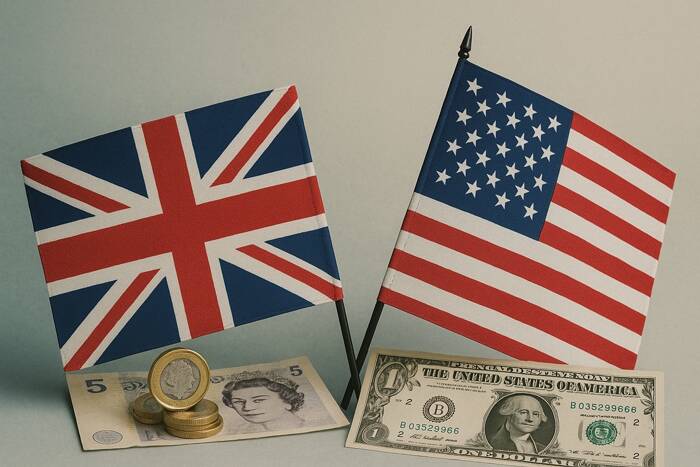
The GBP/USD pair builds on the previous day’s strong move higher and gains positive traction for the second consecutive day on Tuesday. The momentum lifts spot prices to the highest level since early October, closer to the 1.3500 psychological mark, and is sponsored by a broadly weaker US Dollar (USD). Moreover, the technical setup backs the case for a further appreciating move for the currency pair.
The recent breakout through the 100-day Simple Moving Average (SMA) and a subsequent strength beyond the 61.8% Fibonacci retracement level of the September-November downfall, around the 1.3500 round figure, will be seen as a fresh trigger for bulls. Moreover, positive oscillators on the daily chart validate the near-term constructive outlook and suggest that the path of least resistance for the GBP/USD pair is to the upside amid the Bank of England’s (BoE) hawkish tilt.
The 100-day SMA has flattened in recent sessions and is starting to edge higher, with price holding above it and preserving a firm tone. The Moving Average Convergence Divergence (MACD) line stays in positive territory but has eased from prior highs, hinting at moderating upside momentum. A sustained break and acceptance above the 1.3500 mark could pave the way for a move beyond the 1.3600 mark, towards the 78.6% Fibo. retracement level, around the 1.3615 area.
If the pair retreats, the 100-day SMA, currently pegged around the 1.3370 region, would offer initial dynamic support to the GBP/USD pair. The Relative Strength Index (RSI) at 68 sits near overbought, signaling robust yet stretched momentum that could cap gains without fresh catalysts. A clear move above the 61.8% retracement would keep buyers in control, whereas failure to hold the break could see consolidation back toward the moving average.
(The technical analysis of this story was written with the help of an AI tool)
GBP/USD daily chart
Pound Sterling FAQs
The Pound Sterling (GBP) is the oldest currency in the world (886 AD) and the official currency of the United Kingdom. It is the fourth most traded unit for foreign exchange (FX) in the world, accounting for 12% of all transactions, averaging $630 billion a day, according to 2022 data.
Its key trading pairs are GBP/USD, also known as ‘Cable’, which accounts for 11% of FX, GBP/JPY, or the ‘Dragon’ as it is known by traders (3%), and EUR/GBP (2%). The Pound Sterling is issued by the Bank of England (BoE).
The single most important factor influencing the value of the Pound Sterling is monetary policy decided by the Bank of England. The BoE bases its decisions on whether it has achieved its primary goal of “price stability” – a steady inflation rate of around 2%. Its primary tool for achieving this is the adjustment of interest rates.
When inflation is too high, the BoE will try to rein it in by raising interest rates, making it more expensive for people and businesses to access credit. This is generally positive for GBP, as higher interest rates make the UK a more attractive place for global investors to park their money.
When inflation falls too low it is a sign economic growth is slowing. In this scenario, the BoE will consider lowering interest rates to cheapen credit so businesses will borrow more to invest in growth-generating projects.
Data releases gauge the health of the economy and can impact the value of the Pound Sterling. Indicators such as GDP, Manufacturing and Services PMIs, and employment can all influence the direction of the GBP.
A strong economy is good for Sterling. Not only does it attract more foreign investment but it may encourage the BoE to put up interest rates, which will directly strengthen GBP. Otherwise, if economic data is weak, the Pound Sterling is likely to fall.
Another significant data release for the Pound Sterling is the Trade Balance. This indicator measures the difference between what a country earns from its exports and what it spends on imports over a given period.
If a country produces highly sought-after exports, its currency will benefit purely from the extra demand created from foreign buyers seeking to purchase these goods. Therefore, a positive net Trade Balance strengthens a currency and vice versa for a negative balance.
Hollys Coffee goes to Japan as Korean franchises turn gaze abroad
A Hollys Coffee outlet in Seoul
Hollys Coffee, a unit of South Korea’s KG Group, is opening its first overseas outlet in Osaka, Japan, riding on the popularity of Korean culture, known as Hallyu or the K-wave, in the neighboring country.Hollys said on Monday it will open a coffee house at
Long-term DOGE cycles suggest the current pre-surge phase may be nearing completion
Inverse head and shoulders pattern signals short-term trend reversal potential
TD Sequential buy setup points to downside exhaustion and rebound risk
Break above key resistance could open upside toward $0.15–$0.20
Dogecoin (DOGE) price is drawing renewed attention as multiple technical indicators suggest a potential shift in trend. Long-term cycle analysis, combined with short-term reversal patterns, indicates DOGE may be transitioning from consolidation into an expansion phase. Based on current setups, analysts are watching for upside toward $0.14 in the near term, with higher targets near $0.20 if momentum sustains.
Dogecoin Price Near End of Long-Term Pre-Surge Phase
According to analyst Trader Tardigrade, the two-week Dogecoin chart highlights a repeating multi-cycle structure that has defined DOGE since 2014. Historical price action shows extended downtrends capped by descending trendlines, followed by prolonged consolidation phases. These periods, marked as “pre-surge phases,” have historically preceded strong upside breakouts.
More so, the current cycle places Dogecoin price near the $0.09–$0.10 region, close to the descending multi-year resistance. Volume has steadily declined throughout the downtrend, a pattern commonly associated with seller exhaustion. This compression suggests that market participation has thinned, often a prerequisite for trend reversals in meme-driven assets.
Trader Tardigrade noted that a decisive break above the long-term trendline could trigger a fresh expansion phase. Based on previous cycles, initial upside targets are projected in the $0.20–$0.30 range. However, failure to hold above $0.08 could extend consolidation and delay the breakout scenario.
Inverse Pattern Signals Reversal Potential
Meanwhile, the two-hour Dogecoin chart presents a clearer short-term bullish structure. Trader Tardigrade identified a completed inverse Head and Shoulders pattern, a classic reversal setup following a decline. The formation shows a left shoulder near $0.1360, a head around $0.1280, and a right shoulder near $0.1320.
SOURCE: X
The neckline, positioned between $0.1330 and $0.1340, has already been breached, signaling a shift in control toward buyers. Volume increased during the right shoulder and breakout phase, reinforcing the pattern’s validity. Such confirmation often strengthens confidence in follow-through moves.
Based on the measured move of the pattern, short-term targets lie between $0.1400 and $0.1450. A sustained move could extend toward $0.1500 if market conditions remain supportive. Pullbacks toward the neckline may act as support, while a breakdown below the right shoulder would invalidate the setup.
TD Sequential Buy Signal Reinforces Upside Bias
In addition, analyst Ali highlighted a momentum-based signal on the three-day Dogecoin chart using the TD Sequential indicator. The indicator recently printed a “9” sell signal, followed by a “1” buy setup near the $0.132 level. This sequence often marks trend exhaustion and the start of a new directional move.
SOURCE: X
Following the signal, the price retraced toward the $0.121 support zone, aligning with oversold conditions. The indicator’s historical reliability on Dogecoin suggests such setups often precede notable rebounds. The defined range between $0.121 and $0.142 now acts as a critical decision zone.
Ali pointed to an initial reclaim of $0.138–$0.142 as confirmation of bullish continuation. A successful move above this range could open the path toward $0.150, aligning with targets from the inverse pattern. At the time of writing, Dogecoin price trades near $0.13, keeping reversal scenarios firmly in focus.
Today, the world’s first blockchain games launched on the two major social platforms LINE and Telegram, BOMBIE and CATTEA, officially landed on LINE MINI DAPP, bringing a brand new gaming experience to Asian players. These two games have attracted tens of millions of users on Telegram, and with their innovative gameplay and token reward mechanism, they have quickly set off a craze around the world.
BOMBIE is the world’s first fair-launched zombie shooting game. Players will enter the doomsday world, engage in fierce battles with zombies, and earn $BOMBIE tokens; while CATTEA is the world’s first “Drink to Earn” game, combining interesting match-3 gameplay with real-world milk tea shops to create a unique “drink and earn” experience.
As the world’s first blockchain game launched on two major social platforms, BOMBIE and CATTEA have launched a special luxury server lottery event! Players not only have the opportunity to win a Tesla Model Y, 20 iPhone 16 Pro Max, but also share a 1,000,000 CATI prize pool.
Silver price (XAG/USD) hit a fresh record high of $70.00 during the Asian hours on Tuesday, trading around $69.70 per troy ounce at the time of writing. Precious metals, including Silver receive support from safe-haven demand amid rising United States (US)–Venezuela tensions.
US President Donald Trump said on Monday that the US would keep and maybe sell the Oil it had seized off the coast of Venezuela in recent weeks. Trump added that the US would also keep the seized ships. Moreover, Ukraine continues strikes on Russian energy infrastructure, with the latest attack damaging two vessels and two piers and igniting a fire in a Black Sea coastal village.
The non-interest-bearing Silver attracts investors amid growing expectations that the Federal Reserve will continue easing policy, reinforced by President Donald Trump’s calls for lower borrowing costs.
Federal Reserve (Fed) Member of the Board of Governors Stephen Miran said in an interview on Bloomberg TV on Monday that the last few months have seen data consistent with his view of the world and that he doesn’t see a recession in the near term. Miran said that failing to ease policy would raise recession risks, adding that the need to dissent for a 50 basis points diminishes over time as rates are reduced.
Traders await the US Gross Domestic Product (GDP) Annualized for the third quarter due on Tuesday. The US economy is estimated to have expanded at an annual rate of 3.2% in Q3. It would be a slowdown from the 3.8% growth in Q2.
Silver FAQs
Silver is a precious metal highly traded among investors. It has been historically used as a store of value and a medium of exchange. Although less popular than Gold, traders may turn to Silver to diversify their investment portfolio, for its intrinsic value or as a potential hedge during high-inflation periods. Investors can buy physical Silver, in coins or in bars, or trade it through vehicles such as Exchange Traded Funds, which track its price on international markets.
Silver prices can move due to a wide range of factors. Geopolitical instability or fears of a deep recession can make Silver price escalate due to its safe-haven status, although to a lesser extent than Gold’s. As a yieldless asset, Silver tends to rise with lower interest rates. Its moves also depend on how the US Dollar (USD) behaves as the asset is priced in dollars (XAG/USD). A strong Dollar tends to keep the price of Silver at bay, whereas a weaker Dollar is likely to propel prices up. Other factors such as investment demand, mining supply – Silver is much more abundant than Gold – and recycling rates can also affect prices.
Silver is widely used in industry, particularly in sectors such as electronics or solar energy, as it has one of the highest electric conductivity of all metals – more than Copper and Gold. A surge in demand can increase prices, while a decline tends to lower them. Dynamics in the US, Chinese and Indian economies can also contribute to price swings: for the US and particularly China, their big industrial sectors use Silver in various processes; in India, consumers’ demand for the precious metal for jewellery also plays a key role in setting prices.
Silver prices tend to follow Gold’s moves. When Gold prices rise, Silver typically follows suit, as their status as safe-haven assets is similar. The Gold/Silver ratio, which shows the number of ounces of Silver needed to equal the value of one ounce of Gold, may help to determine the relative valuation between both metals. Some investors may consider a high ratio as an indicator that Silver is undervalued, or Gold is overvalued. On the contrary, a low ratio might suggest that Gold is undervalued relative to Silver.
The Japanese yen rebounded for the second consecutive day as investors reacted to the ongoing divergence between the Federal Reserve and the Bank of Japan (BoJ). The USDJPY exchange rate retreated to a low of 156.30, down sharply from the year-to-date high of 157.83. It has also formed a risky chart pattern pointing to more downside in the near term.
The daily timeframe chart shows that the USDJPY exchange rate has pulled back in the past two consecutive days. This retreat happened after the pair formed a double-top pattern at 157.83 with a neckline at 154.37.
A double-top pattern is one of the most common bearish reversal chart patterns in technical analysis.
A closer look shows that the pair has formed a bearish divergence pattern as the MACDA and the Relative Strength Index (RSI) continued to move downwards. A bearish divergence happens when these oscillators drop when a currency pair is in an uptrend.
Therefore, a combination of a double-top pattern and a bearish divergence means that the USDJPY pair will continue falling, with the next key target being at 154.45, the neckline of this pattern. A move below that price will point to more downside, potentially to the psychological level at 150.
BoJ and Fes divergence
The Japanese yen rose for the second consecutive day after Japan’s Finance Minister, Satsuki Katayama, said that the government was prepared to take bold actions if it moves out of line with its fundamentals.
His statement came a few days after the Bank of Japan (BoJ) delivered its interest rate decision, which was in line with expectations.
The bank hiked interest rates by 0.25% and delivered a muted forward guidance, with analysts expecting the bank to deliver one or two hikes next year. It is doing that since inflation has remained at an elevated level in the past few months. A report released on Friday showed that inflation rose to 3.0%.
The BoJ has taken other hawkish policies that have pushed bond yields to the highest level in years. For example, it is considering selling ETFs worth over $500 billion and had already ended its quantitative tightening policy.
The Federal Reserve has taken the opposite approach as it embraced a dovish tone. It slashed interest rates for the third consecutive meeting this month and some Fed officials are hinting of more cuts in the coming meetings.
In a statement on Monday, Governor Stephen Miran warned that the Federal Reserve risked a recession without cutting interest rates. He said:
“The unemployment rate has poked up potentially above where people thought it was going to go. And so we’ve had data that should push people into a dovish direction.”
The most recent data showed that the unemployment rate rose to 4.6% in November, reflecting the number of government employees who took Donald Trump’s early retirement offers. Another report showed that US inflation cooledin November.
However, James Williams, the head of the New York Federal Reserve, warned that there was no urgency to cut interest rates again, recommending a continued pause.
Looking ahead, the US will publish some important data later on Tuesday. The key numbers to watch that may move the USDJPY exchange rate will be the upcoming US consumer confidence report, GDP, industrial, and manufacturing numbers.