About Editorial team of BIPNs

Main team of content of bipns.com. Any type of content should be approved by us.
2 07, 2025

Pound to Dollar Forecast: GBP Major Resistance at 1.38 “Out of Reach”

By |2025-07-02T11:54:20+03:00July 2, 2025|Forex News, News|0 Comments

July 2, 2025 – Written by Tim Boyer

The Pound to Dollar exchange rate (GBP/USD) strengthened 6% during the second quarter of the year, the strongest performance since 2022.

GBP/USD surged again early on Tuesday and hit 44-month highs just below 1.3790 before a retreat to 1.3725 as stronger than expected US data triggered a dollar recovery.

According to UoB, the GBP/USD outlook remains bullish, but added; “Barring a surge in momentum, the major resistance at 1.3800 is probably out of reach. Support levels are at 1.3710 and 1.3680.”

ING commented; “the dollar has come quite far already and this bear trend probably needs feeding with some macro news.”

In this context, the latest jobs data did not provide that catalyst.

The JOLTS data recorded a notable increase in job openings to 7.77mn for May from a revised 7.40mn the previous month and well above market expectations of 7.35mn.

The data curbed immediate fears over a notable labour-market deterioration and eased pressure for an immediate rate cut, although the key releases will be later in the week with the monthly employment report due on Thursday.


The US ISM manufacturing index edged higher to 49.0 for June from 48.5 the previous month and just above consensus forecasts of 48.8.

Although there was a marginal increase in output, new orders contracted at a faster pace and employment also posted a faster rate of decline for the month while cost pressures remained strong.

ING commented on the overall outlook; “The dollar continues to grind lower in a move probably now best categorised as an orderly dollar bear trend.”

According to Danske Bank the dollar outlook remains negative; “With geopolitical risk premiums receding, the USD’s structural decline is back on track. According to the BIS, the USD slide since April is driven by international investors, particularly in Asia, increasingly hedging their USD exposure.”

It added; “We see many reasons to be short USD right now, including the possibility of a new Fed Chair being appointed earlier than expected, the Big Beautiful Bill on 4 July, and the tariff deadline on 9 July. We remain bearish on the USD, both tactically and strategically.”

Morgan Stanley maintains a bearish stance: “Persistent US dollar weakness over the next 12 months was and remains a central theme in our outlook for markets.”

Nathan Hamilton, investment analyst for fixed income at Aberdeen Investments added; “In 2025, the U.S. exceptionalism narrative has been called into question. Treasury auction demand has been under pressure in recent months, and foreign investor appetite has reduced.”


UK data did not have a significant impact with markets also looking at trade deals.

Susannah Streeter, senior investment and markets analyst at Hargreaves Lansdown commented; “The UK was first out of the block in terms of getting a deal signed with the United States, although there is still going to be pockets of uncertainty to some sectors.”

She added; “Even so, it has again brought more stability in terms of the relationship that the UK has with the U.S. compared to the European Union, where there (are) still no agreements.”

Markets will also be watching the House of Commons debate on welfare reforms with a vote due this evening and there are likely to be a notable number of Labour MPs failing to back the Bill.

A government defeat is unlikely, but if it does lose there will be fresh unease surrounding the fiscal position which could hurt the Pound.

Like this piece? Please share with your friends and colleagues:


International Money Transfer? Ask our resident FX expert a money transfer question or try John’s new, free, no-obligation personal service! ,where he helps every step of the way,
ensuring you get the best exchange rates on your currency requirements.

TAGS: Pound Dollar Forecasts

Source link

2 07, 2025

Japan’s matcha green tea industry adapts to soaring global demand

By |2025-07-02T11:51:20+03:00July 2, 2025|Dietary Supplements News, News|0 Comments


Matcha can do it all: Fixture of the Japanese tea ceremony, beverage of choice for social media’s hip young things, and a mainstay in cafes the world over. But the boom is not without its challenges. Japan’s farmers are struggling to meet demand while maintaining the standards and traditions that give the green powder it’s unquestionable allure.

Tokyo’s annual Matcha Green Tea Marche has something for everyone: traditional whisked tea, ice cream and confectionery, plus some unusual offerings such as beer and curry.

Matcha beer, left, and Matcha mont blanc chestnut ice cream

The many foreign visitors at the event in March reflect matcha’s rising popularity. One family visiting from the United States came straight from the airport.

A family from the United States enjoy the offerings at the Matcha Green Tea Marche in Tokyo.

Influencers

California-based Eric Gower, who imports and trades matcha, attributes the boom to influencers on social media.

Breakaway Matcha founder Eric Gower

He says the posts make the product irresistible, along the lines of: “It’s going to make you calm and serene…have this perfect body, and you look cool while you drink it. It’s beautiful and it’s a fairly compelling story.”

Colorful matcha drinks on Instagram

Producers grapple with soaring demand

Last year, Japan exported over 250 million dollars in green tea, more than double the figure a decade ago. Globally, the matcha market is now worth an estimated 4.2 billion dollars.

Mt. Fuji and green tea fields in Shizuoka Prefecture

Suppliers in Japan are scrambling to keep up. They include CHATO in Shizuoka Prefecture, which had to build another factory to handle new orders.

The firm’s main export markets are the United States and Germany, but chairperson Kato Shigeki says enquiries are now flooding in from other countries. Often, he has no choice but to turn them away.

CHATO Chairperson Kato Shigeki

Making tea is labor intensive, and some Japanese producers are starting to rely more on automation in light of the nation’s chronic shortage of workers.

Gower says he was warned at the start of the year that he might not be able to meet orders: “You’ve got these people with credit cards out wanting to buy really nice matcha, and you can’t fulfill it.”

Japan’s matcha industry faces a labor shortage, and many farmers are advancing in age.

New competition could lower prices

Supply crunches and a lack of workers aren’t the only challenges for Japan. Countries such as China, South Korea and Vietnam are also producing matcha, and that makes the industry increasingly competitive.

Matcha leaves being ground into powder

University of Shizuoka Professor Nakamura Yoriyuki, an agricultural science expert who has been monitoring the matcha market for decades, says Japan’s domestic producers need to tread carefully. With so many new market players, prices could drop sharply.

Japan’s tea ceremony a big draw

Still, Japan’s domestic industry has several ace cards, including authenticity and quality. What’s more, the traditional tea ceremony, called sado, is a popular activity for tourists.

One tea master in Tokyo, Takeda Rie, says participation in her ceremonies is up fourfold compared with last year. The hour-long session caters to refined tastes, and participants are offered much more than a drink.

Chazen founder Takeda Rie

“The bitterness of this matcha enhances the floral and fruity flavors of the tea instead of overpowering or hiding them,” says one American participant.

“The matcha we use is aged for six months, placed in a jar, and further matured,” says Takeda. “It brings out the true depth. We offer this experience so people can taste that difference.”

Participants enjoy matcha.

Takeda’s ceremonies take place in a traditional tatami-mat tearoom, offering a tranquil escape from the bustling city. The entrance is so low that guests have to crouch down to get inside ― a feature designed to foster humility and respect.

NHK World’s John LaDue, right, takes part in one of Takeda Rie’s tea ceremonies.

Japan’s government providing support

The heightened global demand for matcha has put Japan’s producers at a crossroads. But help is at hand from the central government. The agriculture ministry is providing subsidies to farmers who expand their green tea orchards or start growing matcha-quality leaves.

Success will likely hinge on boosting exports, without compromising on the quality that makes Japan’s matcha oh-so moreish.


Source link

2 07, 2025

Dogecoin Rebounds After Forming ‘Double Bottom’

By |2025-07-02T11:46:27+03:00July 2, 2025|Crypto News, News|0 Comments

Dogecoin

, the world’s largest meme cryptocurrency by market value, has regained some poise, having formed a bullish double bottom pattern during the overnight trade.

DOGE has gained over 2% to over 16 cents since early Asian hours, reversing part of Monday’s slide from 16.63 cents to 15.67 cents, according to data source CoinDesk.

Per CoinDesk’s AI research, the cryptocurrency formed a “double bottom pattern” around the 15.7-15.8 cents zone with above-average volume. The bounce is consistent with the recovery in market leader bitcoin

, which has bounced to $107,000 from the overnight low of around $105,200.

The double bottom forms after a notable sell-off and is characterized by two bottoms at approximately the same level, separated by a brief recovery. An eventual move above the high logged during the interim recovery, as seen in DOGE’s case, is said to confirm a bearish-to-bullish trend change.

While the intraday momentum has shifted bearish, the broader bearish lower highs pattern, representing a consistent downtrend since the second half of May, remains intact.

The daily price chart indicates that a convincing move above the lower high of 17 cents, established over the weekend, is required to invalidate the broader bearish setup.

DOGE's daily price chart. (TradingView/CoinDesk)

DOGE’s daily price chart. (TradingView/CoinDesk)

Key AI insights

  • DOGE formed a clear double bottom pattern around the $0.157-$0.158 zone, with above-average volume, particularly during the 13:00-14:00 hours on July 1.
  • The cryptocurrency experienced a steady climb culminating in a bullish close at $0.161, with increasing volume confirming buyer interest.
  • In the last 60 minutes from July 2, 05:37 to 06:36, DOGE demonstrated a clear bullish trend, rising from $0.1605 to $0.1611, representing a 0.36% gain.
  • Price action formed an ascending channel, with notable volume spikes at 06:06 and 06:07 (over 4.4M and 6.0M respectively), confirming strong buyer interest.
  • After reaching a local high of $0.1611 at 06:14, DOGE experienced a brief pullback to $0.1606 at 06:27 before recovering to close the hour at $0.1611.


Source link

2 07, 2025

Food Amino Acids Market Set to Reach USD 22,491.2 million by 2035, Driven by Functional Nutrition and Clean-Label Trends – FMIBlog

By |2025-07-02T09:50:40+03:00July 2, 2025|Dietary Supplements News, News|0 Comments


The Food Amino Acids Market is poised for substantial growth, projected to expand from USD 9,676.6 million in 2025 to USD 22,491.2 million by 2035, registering a robust CAGR of 8.8%. Driven by increasing health awareness, a shift toward plant-based and high-protein diets, and growing demand for fortified and functional foods, amino acids are becoming essential components in modern food formulations. The market is also benefitting from advancements in fermentation technologies and broader applications across dietary supplements and flavor-enhanced products.

Uncover Essential Data – Get A Sample Copy: https://www.futuremarketinsights.com/reports/sample/rep-gb-11235

Market Trends Highlighted:

Growing Demand for Functional and Fortified Foods:

Consumers are increasingly seeking out foods that offer added health benefits. This trend is fueling the use of amino acids like lysine, leucine, and glutamic acid for improving nutritional value, aiding recovery, and enhancing flavor.

Rise in Plant-Based and Vegan Diets:

As more consumers adopt plant-based lifestyles, demand for plant-derived amino acids sourced from soy, peas, and wheat is accelerating. This shift supports sustainability goals and aligns with clean-label product formulations.

Expansion in Sports Nutrition and Dietary Supplements:

Amino acids, particularly BCAAs, are witnessing rising popularity among fitness enthusiasts and athletes. Their role in muscle repair, endurance, and recovery is driving their inclusion in sports drinks, protein bars, and performance supplements.

Technological Advances in Fermentation-Based Production:

Innovative fermentation and enzymatic hydrolysis methods are enabling more efficient, cost-effective, and sustainable amino acid production. These advances are helping manufacturers scale operations and improve product quality.

Flavor Enhancement and Culinary Applications:

Amino acids such as glutamic acid are widely used in flavor enhancement, particularly in umami-rich cuisines. Their application in seasoning blends, snacks, and convenience foods is expanding across global markets.

Get Report Link: https://www.futuremarketinsights.com/reports/food-amino-acids-market

Key Takeaways of the Report:

The global food amino acids market is forecasted to grow at a CAGR of 8.8% from 2025 to 2035, reflecting strong demand across multiple food and beverage segments.

Plant-based amino acids are gaining traction, supported by the growing popularity of vegan diets and increasing regulatory support for sustainable, clean-label ingredients.

Glutamic acid, lysine, and BCAAs are among the top amino acids utilized for their role in nutrition enhancement, flavor optimization, and athletic performance.

Sports nutrition, functional beverages, and dietary supplements are the fastest-growing application segments.

The market is witnessing strong innovation in biotechnology and biofermentation, leading to cost reductions and increased accessibility of amino acids in mainstream food products.

Regional Market Outlook:

United States:

The U.S. is leading the market with a CAGR of 8.9%, driven by rising consumer awareness around nutrition, the booming sports nutrition segment, and a surge in demand for protein-enriched foods. Additionally, fermentation-based amino acid production is gaining traction due to its efficiency and sustainability.

United Kingdom:

The UK market is witnessing an 8.7% CAGR, as consumers turn toward vegan and fortified food products. Demand is particularly strong for essential amino acids in high-protein functional foods, driven by clean-label and non-GMO preferences.

European Union (EU):

The EU market is expanding at a CAGR of 8.8%, supported by the growing consumption of functional diets and protein supplements. BCAAs and glutamic acid are widely used in sports nutrition and processed food formulations, while innovation in protein hydrolysates is opening new avenues.

Japan:

With a CAGR of 8.7%, Japan’s market is propelled by the country’s rich tradition in functional foods and increasing use of amino acids in fermented products and dietary supplements. Research into amino acid metabolism and bioactive peptides further supports growth.

South Korea:

South Korea is experiencing one of the highest growth rates at 8.9% CAGR, driven by the rising demand for high-protein and fortified foods, the popularity of K-health products, and government support for nutrition-focused innovations in food production.

Company Profile

    • Ajinomoto Co. Inc.
    • Kyowa Hakko Kirin Co. Ltd.
    • Sigma-Aldrich, Co. LLC.
    • Prinova Group LLC.
    • Daesang Corporation
    • Evonik Industries AG
    • Brenntag AG
    • Koninklijke DSM NV
    • Kemin Industries
    • AMINO GmbH

Explore Functional Food Ingredients Industry Analysis https://www.futuremarketinsights.com/industry-analysis/functional-food-ingredients

Key Segmentation

By Type:

Lysine

Glutamic Acid

Methionine

Tryptophan

Others

 By Application:

Nutraceuticals & Dietary Supplements

Infant Formula

Food Fortification

Convenience Food

Others

By Source:

Plant-based

Animal-based

Synthetic

By Distribution Channel:

Direct

Indirect

By Region:

North America

Latin America

Western Europe

Eastern Europe

East Asia

South Asia Pacific

Middle East and Africa


Source link

2 07, 2025

Heart Health Ingredients Market Size & Share

By |2025-07-02T07:49:52+03:00July 2, 2025|Dietary Supplements News, News|0 Comments


Heart Health Ingredients Market Insights

Global Heart Health Ingredients Market size was valued at USD 7 Billion in 2023 poised to grow from USD 7.24 Billion in 2024 to USD 9.47 Billion by 2032, growing at a CAGR of 3.42% in the forecast period (2025-2032).

Global heart health ingredients market is experiencing a rapid growth due to the rising heart and cardiovascular diseases among the population. The increasing demand for efficient heart health solutions from various pharmaceutical and healthcare industries is projected to witness robust growth as the consumers get more health conscious. Heart health ingredients are used to address the risk factors of cardiovascular diseases, high blood pressure and high colterol levels. The major function of these ingredients is to help in decreasing triglycerides, and lowering the blood pressure. There is a high and continuously growing demand for heart health ingredients due to the rapidly increasing awareness about the importance of a healthy lifestyle among consumers.

COVID-19 increased the global heart health ingredients market growth as amid covid the chances of chronic disease were more and thus the demand is increased. Consumers are inclined towards food and beverages which have proven health benefits. vitamins, omega-3, omega-6, and probiotics are some of the ingredients which are under the priority list of the customers pushing the demand for healthy ingredients. The consumers are becoming more interested in organic products and healthy eating. The demand for food ingredients free of artificial additives and preservatives is rising and is the key market driver further enhancing market growth.

How Does AI Help in Efficiency and Personalization of the Heart Heath Ingredients?

Artificial Intelligence (AI) is being widely used by various companies in the global heart health ingredients market research and development, supply chain management and customer personalization. AI is being used for formulating health ingredients much faster and more enhanced manner by analysing vast datasets related to consumer preferences and clinical studies. Various companies are using machine learning algorithms to understand customer behaviour and interaction to stay ahead of their competitors.

Brightsee, a biotechnology company has used AI to design a platform called Forager which used machine learning to understand the molecular structure of plants and identify the compounds which can benefit human health. This is revolutionised product formation and innovation in functional foods and supplements further leveraging global health ingredients market penetration.

Market snapshot – (2025-2032)

Global Heart Health Ingredients Market ($ Bn)

Country Share by North America (%)

To get more reports on the above market click here to
Buy The Report

Heart Health Ingredients Market Segments Analysis

The global heart health ingredients market is segmented based on type, application, distribution channel, and region. In terms of type, the market is segmented into omega 3 fatty acids, beta glucan, phytosterol, soy protein, and others. Based on application, the market is grouped into pharmaceuticals, supplements, beverages, oils and fats, bakery and confectionery, dairy and frozen desserts, sweet and savory snacks and others. Based on distribution channel, the market is trifurcated into convenience stores, specialist retailers, and others. Based on region, the market is segmented into North America, Europe, Asia-Pacific, Central & South America and the Middle East & Africa.

What is Making Consumers Inclined towards Omega-3 Fatty Acids?

Omega-3 Fatty Acids dominate the global heart health ingredients market with maximum market share. This is because customers prefer Omega-3 fatty acids as Omega 3s are known to improve cardiovascular health, cognitive function, eye health. The further growth in market is because health organizations like WHO and AHA insist on the intake of omega-3 for health benefits. The use of Omega-3 in dietary supplements prescribed for the aging population and its use in infant formulas, bakery and beverages, has increased the volume of consumption highly.

Beta-glucan is projected to be the fastest-growing segment as per market forecast in the heart health ingredients market. This rapid growth is due to the rising awareness among consumers regarding the immune health benefits of beta-glucan. Accordingly, yeast beta-glucan is considered by various medical centers and companies to be beneficial to control blood sugar level. It also provides the body with healthy cholesterol. Many companies in the heart health industry are using beta-glucan generated from yeast as a healthier alternative to make bakery goods, beverages and dry mix goods. Grain and animal feed producing industries also benefit greatly from beta-glucan further promoting an increase in heart health ingredients market revenue.

How does Food and Beverages Sector Contribute to the Global Heart Health Ingredients Market?

The food and beverages sector dominates the market with largest share. This supremacy is fuelled by the widespread consumption, health awareness among the consumers, and implementation in daily diets. As more consumers are switching to omega-3 rich, fiber-enriched alternatives, heart health ingredients are gaining further dominance. The therapeutic properties and health beneficiary factors make it easier for heart health ingredients to be added into supplements and functional food. These probiotics can be added to beverages, snacks, and cereals thus forming strong retail presence and branding for the companies in this market.

Global heart health ingredients market forecast shows that dietary supplements sector is the fastest growing sector in the market. This is due to the nutritional trends which are personalized and increase in preventive healthcare awareness. The development and rapid growth of this sector is further driven by way these products are marketed using e-commerce in the form of capsules, gummies, and powders for convenient delivery. For daily cardiovascular support consumers are rapidly increasing the intake of beta-glucans in supplement form for convenience.

Global Heart Health Ingredients Market By Type (%)

To get detailed analysis on other segments,
Request For Free Sample Report

Heart Health Ingredients Market Regional Insights

How Do Millennials Impact Industry Growth in North America?

As per the global heart health ingredients market analysis, North America holds a significant share in the industry, driven by the constant demand for healthier options in food and beverages. The consumers prefer nutritional food which includes beta-glucan and probiotics in it to reduce respiratory illness and other allergies. The U.S. leads the region as a large segment of the consumers are millennials who prefer clean label food options over others available in the market.

US Heart Health Ingredients Market

The United States is the dominant contributor to North America’s heart health ingredients market. This is because the maximum number of consumers in this region are of the age group 19-55 and are actively inclined towards natural ingredients and food containing beta and algae glucon. The US Government has also taken initiatives to improve the health conditions of infants and women with special supplements programs for women, infants, and children (WIC) which is also driving the demand for infant formula fortified by beta-glucan.

Canada Heart Health Ingredients Market

Canada contributes significantly to North America’s Heart Health Ingredients market statistics. This is due to the rising health among the consumers. Canada’s rising awareness about cardiovascular diseases and the aging population also plays a major role in driving the people towards healthier food alternatives. The government’s initiative in spreading health awareness fuelling demand for supplements enriched with omega-3s, plant sterols, and fibers. Further, the e-commerce is also seeing advances with heart health products being readily available for the access of the consumers.

Which Countries in Asia Pacific are Key Contributors to the Market Growth?

Asia Pacific is the fastest-growing region in the global heart health ingredients market, driven by the dynamic market and significant initiatives by the government to spread health awareness among the people. Local companies are also actively entering the market with healthier products and new technologies while international players are focusing on the new opportunities in the region. The expansion of supplements made of traditional herbs is the key drivers. The rising needs across countries like Japan and South Korea has created tremendous opportunities for the heart health ingredients market in this region.

Japan Heart Health Ingredients Market

Japan dominates the heart health ingredients market where the industry is expected to grow upto USD 5.20 Billion by 2032. This growth is driven by the contribution of the government’s FOSHU regulatory framework which drives the companies to make healthy and affordable functional food. The market in Japan also benefits from high disposable income and widespread wellness awareness. The use of advanced technologies for fermentation has led to increased shelf life of the products increasing its demands among the consumers.

South Korea Heart Health Ingredients Market

The South Korean heart health ingredients market is experiencing fast-growth, this is due to the aging population and rise in preference for natural supplements. The government’s support towards clean label and plant-based ingredients further accelerates market expansion. South Korea also uniquely integrates heart health ingredients in cosmetics sector with Betaglucan being used in skin care as hydrating, anti-inflammatory, and barrier repairing product.

What Role Does Heart Health Ingredients Industry Play in European Market?

Europe maintains a strong position in the global heart health ingredients market, with diverse initiatives across multiple countries including the United Kingdom, Germany, Spain. The European Food Safety Authority (EFSA) provides strict guidelines to the companies in this industry for health claims ensuring only quality products are marketed. Only clinically proven omega-3 fatty acids and plant sterols are used by the companies to make products with cardiovascular benefits. This fosters consumer trust and pushes the industry toward higher quality standards

Germany Heart Health Ingredients Market

Germany dominates the market in Europe emerging as the largest market for heart health ingredients. Their large aging population which are concerned about cardiovascular health, pushes the growth of the market in this region. Germany has a well-developed network of pharmaceuticals and health departments which design, and market health supplements supported by scientific evidence. The nation also strictly abides to the EFSA’s guidelines for health claims, which increases trust in products.

UK Heart Health Ingredients Market

According to the global heart health ingredients market regional outlook, UK is the fastest growing in European industry. The market analysis of UK market shows that this is due to a combination of evolving consumer behaviour, technological adoption, and supportive retail trends. This shift in the market took place post pandemic when customers became more health conscious. UK Government also takes initiatives and organises campaigns to promote reduced sodium and trans-fat intake making the heart health ingredients industry prosper in this region. Various companies have also shifted to e-commerce and digital health platforms for tech savvy customers.

France Heart Health Ingredients Market

France having the second largest population of Europe also has a strong hold in the global heart health ingredients market. With a large customer base investing on health and wellness, the global heart health ingredients market France excels. France is emerging as a strong contributor due to its technological innovations and research-based product developments. French companies also use AI-driven formulation tools and green extraction methods that align with sustainability goals, and making the products eco-friendly.

Global Heart Health Ingredients Market By Geography

To know more about the market opportunities by region and country, click here to

Buy The Complete Report

Heart Health Ingredients Market Dynamics

Heart Health Ingredients Market Drivers

Rising Health Awareness and Preventive Healthcare

  • The rise in health conscious and proactive nature of customers to avoid cardiovascular diseases is greatest driving factor. The global rise in aging populations and health conditions like obesity, diabetes is leading to increased demand for functional foods. To meet the global heart health ingredients market trends, various companies are developing new ingredients and plant-based heart health compounds. Life stye related conditions are also fuelling demand for health ingredients that mitigate health conditions through diet.

Personalized Nutrition Trends Among the Consumers

  • The customers in today’s time are inclined towards clean-label, organic, non-GMO, and plant-based ingredients which leads the companies to make food and beverages that offer nutritional benefits along with basic nutrition. Various companies in the market are making advancements using technology like wearable health tech which provides personalized dietary recommendations and tailor-made supplements and health products.

Heart Health Ingredients Market Restraints

Regulatory Challenges and Delays in Approvals

  • As per the global heart health ingredients industry analysis, the market faces significant set-backs due to different regulatory standards across various countries. Multiple authorities like European Food Safety Authority (EFSA) and Food and Drug Administration (FDA) implement strict rules on the dosage levels, labelling and usage levels of ingredients. Also, obtaining approvals from these organizations can be costly and time consuming causing hinderance in the production and supply of the products. This further leads to slowed market expansion and reduces customer awareness of a specific product.

Reduced Shelf Life and Issues while Storage and Transport

  • Many ingredients in the heart health industry, like omega-3 fatty acids and certain vitamins, are extremely sensitive to environmental conditions like exposure to light and temperature at which they are stored. These often lead to a reduced efficiency of the products over time. To ensure the stability of the storage environment, advanced refrigerators and specialized packing is used increasing the cost of production by a very high margin. The short shelf life of these products also demotivates the customers from purchasing the products hence reducing sales.

Request Free Customization
of this report to help us to meet your business objectives.

Heart Health Ingredients Market Competitive Landscape

The global heart health ingredients market is highly competitive, with key players like Medtronic, Abbott Laboratories, Boston Scientific, and Edwards Lifesciences leading the market growth. These companies are leveraging from big data and data analytics to gain real world feedback of the products. The key companies and the start-ups are also getting involved in mergers and investing in R&D to stay ahead of competition. For example, Medtronic, which emphasizes on minimal invasive techniques and advanced therapies. Many companies are also using personalised medical approaches to meet the rising demands of the consumers

As per the global heart health ingredients industry analysis, the startup ecosystem in the market is rapidly evolving by focusing on the use of cutting edge technology and providing patient centric solutions. Many startups like Cleerly, Heartbeat Health and Hello Heart are using AI to detect cardiovascular ailments in the early stages. Startups are also developing wearable medical devices with sensors to provide accurate and faster diagnostics. The development of Virtual Care Platforms to provide virtual trainings and remote consultations is giving the startup companies an extra edge in the market.

  • Founded in 2018, Ingredient X, specializes in creation of fermentation-derived postbiotics and omega-3 fatty acids. They focus on the way microbiome (gut bacteria) affect the heart. With the use of advance technology this company focuses on pure ingredients designed specifically to help the heart. They also work on providing clean labelled personalised nutrients to stay ahead of competition.
  • FlyteHealth founded in 2018, is a company which is offers their services online. Their recent program called “Comprehensive Obesity Care program” focuses on providing solutions for health conditions like obesity and hypertension. They strive to provide a completely medically supervised guide for weigh loss to the customers on a virtual platform. They also spread awareness among the customers on how conditions like diabetes and hyperlipidaemia are connected with heart health.

Top Player’s Company Profiles

  • Abbott Laboratories (USA)
  • Archer Daniels Midland (USA)
  • Cargill Incorporated (USA)
  • Nestlé Health Science (Europe)
  • Conagra Brands Inc. (USA)
  • Kraft Foods Group Inc. (USA)
  • The Coca-Cola Company (USA)
  • BioHarvest Sciences Inc. (USA)

Recent Developments in Heart Health Ingredients Market

  • In May 2025, Cragill Incorporated successfully removed industrially produced trans-fatty acid (iTFAs) from its entire edible oil. This made the company the first edible oil supplier to abide by WHO’s recommendations completely. Cragill Incorporated made efforts in the food and beverage sector to ensure that their base oil is free from harmful fat pusing the company ahead among all its competitors hence increasing its global heart health ingredients market share.
  • In December 2024, BASF SE, a global chemical company came into an agreement with Louis Dreyfus Company (LDC) to sell its Food and Health Performance Ingredients business. Together the companies are working on designing product lines which include omega-3 oils, plant sterol esters, and conjugated linoleic acid (CLA) for human nutrition. As of the 2025 market analysis, the company is also a leading supplier of vitamins like Vitamin E and carotenoids. The diverse line in which the company works is a strategic move to contribute to the market and focus on sustainability and innovation.
  • In December 2024, BioHarvest Sciences Inc. launched a line of products called VINIA. After its functional coffee which came into the market in 2023, the company has now launched a new range of tea called “VINIA Functional Teas” which includes heart healthy red grape cells. The company also launched a range of products called “VINIA Inside” which is Nespresso-compatible coffee pods and K-Cup compatible tea pods containing VINIA

Heart Health Ingredients Key Market Trends

Heart Health Ingredients Market SkyQuest Analysis

SkyQuest’s ABIRAW (Advanced Business Intelligence, Research & Analysis Wing) is our Business Information Services team that Collects, Collates, Correlates, and Analyses the Data collected by means of Primary Exploratory Research backed by robust Secondary Desk research.

As per SkyQuest analysis, the global heart health ingredients market is experiencing dynamic growth due to the rising health consciousness among the customers and the increasing awareness about the cardiovascular diseases. AI and R&D play a vital role in ingredients, supply chain and providing customized solutions to the customers. The integration of AI and IoT technologies have acted as a further push for the growth of the global heart health ingredients industry. Omega-3 fatty acids dominate the market followed by beta-glucan as the fastest growing section. Regions such as North America lead the market while Asia-Pacific is the fastest-growing region followed by Europe.

The market exceedingly thrives in the food and beverage industry with key drivers being the rising health awareness and personalized nutrition trends. Some challenges faced in this market is the short shelf life of the products and regulations imposed by the government. The key players like Medtronic, Abbott Laboratories, Boston Scientific are adapting to infrastructure development, regulatory pressures, and technological innovation while the startups like Melody Wellness are aiming for market penetration in the global heart health ingredients industry with AI-driven platforms to keep at power with the leading companies.

Report Metric Details
Market size value in 2023 USD 7 Billion
Market size value in 2032 USD 9.47 Billion
Growth Rate 3.42%
Base year 2024
Forecast period (2025-2032)
Forecast Unit (Value) USD Billion
Segments covered
  • Type
    • Omega 3 Fatty Acids, Beta Glucan, Phytosterol, Soy Protein, and Others
  • Application
    • Food and Beverages, Pharmaceuticals, Dietary Supplements, Oils and Fats, and Others
  • Distribution Channel
    • Convenience Stores, Specialist Retailers, and Others
Regions covered North America (US, Canada), Europe (Germany, France, United Kingdom, Italy, Spain, Rest of Europe), Asia Pacific (China, India, Japan, Rest of Asia-Pacific), Latin America (Brazil, Rest of Latin America), Middle East & Africa (South Africa, GCC Countries, Rest of MEA)
Companies covered
  • BASF SE (Germany)
  • Abbott Laboratories (USA)
  • Archer Daniels Midland (USA)
  • Cargill Incorporated (USA)
  • Kerry Group plc (Europe)
  • Nestlé Health Science (Europe)
  • Conagra Brands Inc. (USA)
  • General Mills Inc. (USA)
  • Kraft Foods Group Inc. (USA)
  • The Coca-Cola Company (USA)
  • PepsiCo Inc. (USA)
  • Melody Wellness (USA)
  • BioHarvest Sciences Inc. (USA)
  • Ingredient X (USA)
Customization scope

Free report customization with purchase. Customization includes:-

  • Segments by type, application, etc
  • Company profile
  • Market dynamics & outlook
  • Region

To get a free trial access to our platform which is a one stop solution for all your data requirements
for quicker decision making. This platform allows you to compare markets, competitors who are prominent
in the market, and mega trends that are influencing the dynamics in the market. Also, get access to
detailed SkyQuest exclusive matrix.

Buy The Complete Report
to read the analyzed strategies adopted by the top vendors either to retain or gain market share



Source link

2 07, 2025

Cardano Price Prediction as Whales Shift to Emerging $0.04 Coin

By |2025-07-02T07:43:43+03:00July 2, 2025|Crypto News, News|0 Comments

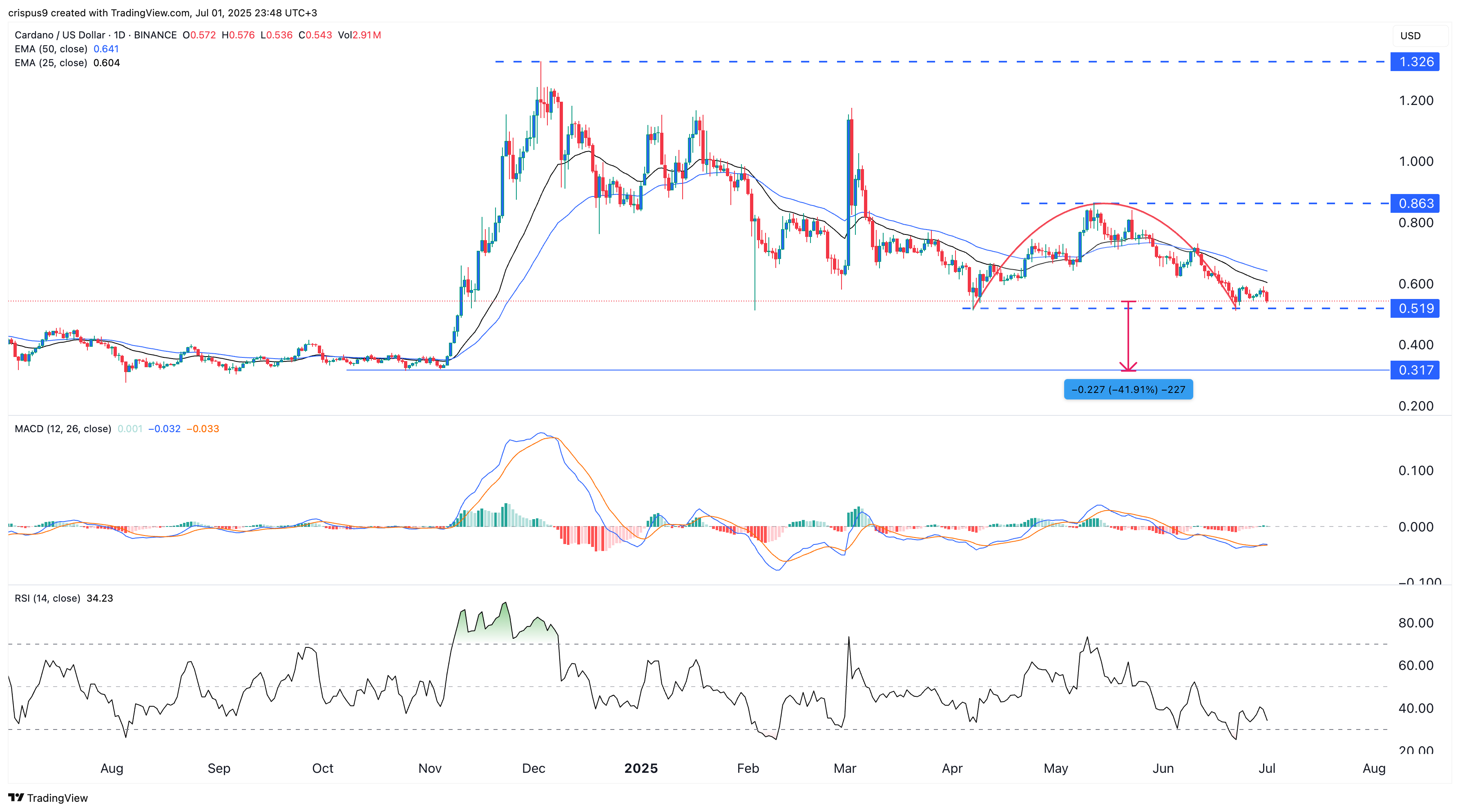
Cardano price crashed to a crucial support level today, July 1, as concerns about its ecosystem and whale dumping continued. ADA token dropped to a low of $0.54, a make-or-break support level. It has dropped by 36% from its highest point in May.

Cardano Price Crashes Amid Whale Dumping

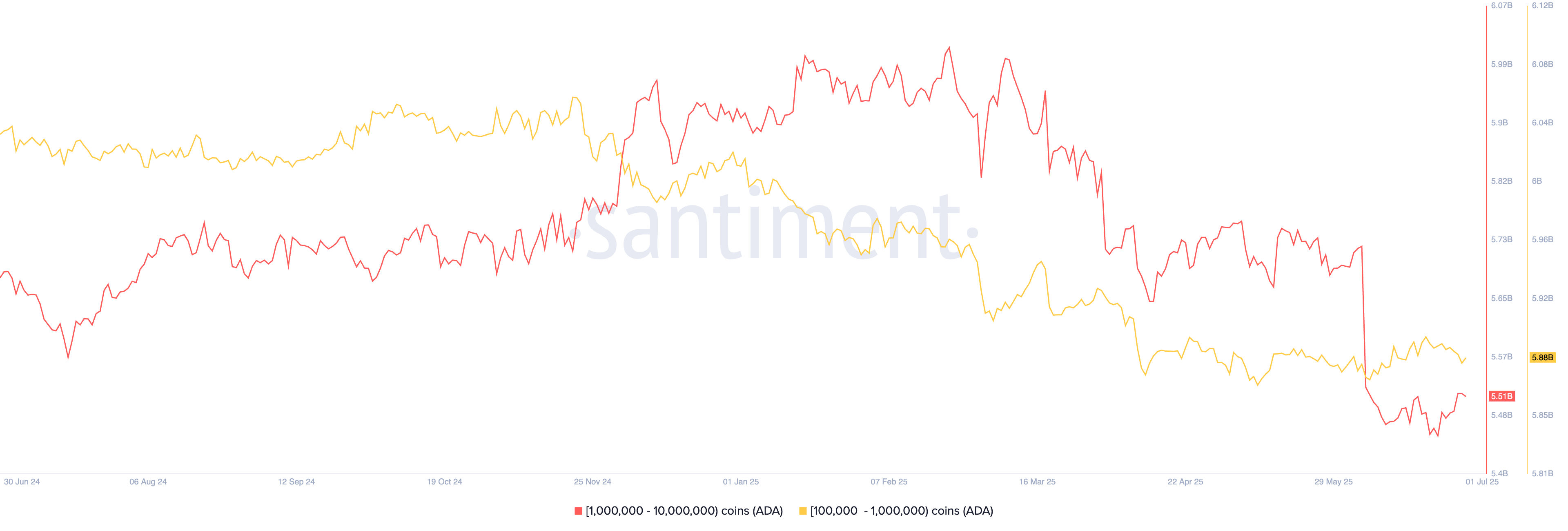
The ADA price has been in a strong downtrend this month, as third-party data indicates that whales have continued selling it. Cardano addresses with between 1 million and 10 million coins have reduced their holdings to 5.51 billion, down from 6.01 billion in January.

Similarly, ADA holders with between 100k and 1 million coins have reduced their holdings to 5.88 billion, down from 6.06 billion in October last year. Whale dumping is one of the riskiest things in fundamental analysis since it signals that the top holders are capitulating.

Cardano whales have likely dumped it because of its lagging growth. For example, data show that the number of daily active addresses has plunged to 16,000, down from 60,000 in May. These active addresses are significantly small for a cryptocurrency valued at over $20 billion.

Cardano Price Prediction as Whales Shift to Emerging alt=

The same is true with the fact that Solana has a DeFi TVL of just $300 million and $31 million in stablecoins. 

Cardano whales have also dumped it due to the numerous failed promises made by Charles Hoskinson. For example, he has long talked about a potential partnership with Chainlink that has yet to materialize. He also hyped a VIP meeting earlier this year that yielded nothing. 

Further, Cardano’s promise to integrate with Bitcoin is yet to bear fruit. Moreover, protocols that enable Bitcoin staking, such as Babylon and Solv, already exist

READ MORE: SRM Entertainment Announces $100M TRON Treasury Strategy

ADA Price Technical Analysis

The daily chart shows that the ADA price has been in a downtrend in the past few days. It has moved below the 50-day and 25-day Exponential Moving Averages (EMA), a sign that bears remain in control. 

Cardano has also formed an inverse cup-and-handle pattern, a popular continuation sign. Therefore, a break below the cup’s lower side at $0.519 will validate it and indicate further downside, potentially to last November’s low of $0.317, a 41% decline from the current level.

Cardano priceCardano price
Cardano price chart

Bitcoin Pepe Gains Steam

Meanwhile, Bitcoin Pepe, a token priced at $0.04, is gaining traction as demand from investors jumps. Data on its website shows that it has raised over $16.2 million, making it one of the top presale tokens of the year.

Bitcoin Pepe’s momentum has increased lately after the developers began unveiling their exchange partnerships. They have already said that BitMart and MEXC will list it on day one.

Bitcoin Pepe has also hinted that more exchanges were coming. Some of the potential names are OKX, Bybit, and BingX. There are also chances that the likes of Coinbase and Binance will list it soon.

Bitcoin Pepe’s demand has surged as it aims to disrupt the crypto industry by developing a layer-2 network for meme coins on Bitcoin’s network.

This launch is notable because layer-2 projects have become highly popular among investors, while meme coins have a market capitalization of over $60 billion. Buy Bitcoin Pepe here before the next price increase. 

READ MORE: PENGU Price Surges on Game Launch & ETF Hype: Is $0.025 Next?

Source link

2 07, 2025

Step-by-Step Guide to Building a Solana DApp Without Backend Code

By |2025-07-02T05:54:26+03:00July 2, 2025|News, NFT News|0 Comments


Key takeaways:

  • Solana now offers a mobile-first developer toolkit with wallet adapters, transaction helpers and templates.

  • Developers can use React Native to build iOS and Android apps simultaneously.

  • Deep-link wallet connections (e.g., Phantom, Backpack) eliminate the need for custom back-end integrations.

  • Apps can fetch balances, NFTs and even trigger swaps or mints using Solana RPC directly.

  • Open-source tools like Solana Mobile App Kit allow zero-infrastructure deployments.

Building decentralized applications (DApps) used to be complex, especially for mobile. Developers had to juggle back-end services, manage wallet integrations and deal with cross-platform quirks, but in 2025, that’s changed.

With the introduction of the Solana Mobile App Kit, React Native tooling and the SEND Kit ecosystem, it’s now possible to build a Solana-based mobile DApp for iOS and Android in under 15 minutes, without writing a single line of back-end code.

This guide breaks down how to build a mobile DApp that connects to Solana wallets, displays assets, enables basic DeFi actions like token swaps and runs entirely onchain. Let’s explore how it works and why this approach is fast becoming the new standard for Web3 mobile app development.

Why build Solana mobile apps in 2025?

Solana has seen massive developer growth, especially in consumer and DeFi apps. With mobile-first usage on the rise, builders now demand toolkits that streamline wallet connectivity, UI rendering and onchain interactions, without back-end dependencies.

Solana’s mobile tooling is designed to work out of the box with native mobile platforms and doesn’t require bootstrapping custom infrastructure. Developers can focus on features, UX and shipping fast. The Solana Mobile App Kit and React Native integration together provide:

  • Prebuilt wallet adapters and deep link support.

  • Mobile-ready components for NFTs, balances and tokens.

  • Seamless support for iOS and Android with a single codebase.

Whether you are building an NFT marketplace, a DeFi portfolio tracker or even a meme token launcher, Solana’s mobile stack offers speed and flexibility.

Tools needed to build a Solana mobile DApp

Here’s the current stack developers can use to ship fast:

  • React Native: For cross-platform app development.

  • Solana Mobile App Kit: Mobile SDK featuring Solana-native components.

  • Wallet Adapter (React Native): Enables plug-and-play wallet connectivity.

  • SEND Kit: Provides app templates for NFTs, tokens and DeFi use cases.

  • @solana/web3.js: Interfaces with Solana RPC endpoints and handles transactions.

  • Phantom/Backpack Wallets: Mobile wallets supporting deep link integration.

With this stack, developers don’t need to worry about infrastructure, back-end databases or user authentication flows; the wallet takes care of it.

Did you know: Solana App Kit, developed by the Send ecosystem, offers one-command mobile app scaffolding with deep wallet integration, swaps, NFT minting, AI components and over 18 protocol integrations, right out of the box. 

Step-by-step guide to building a Solana mobile DApp 

Here’s how to do it, step by step:

Step 1: Set up your mobile app project

Start by initializing a new React Native app. You can use Solana AppKit’s CLI tool to scaffold a fully working mobile DApp in one command:

npx start-solana-app

This sets up a cross-platform iOS and Android app with preconfigured Solana wallet support, RPC tools and basic UI components.

Step 2: Integrate wallet login using deep links

Instead of building a login system, integrate with wallets like Phantom and Backpack via deep links using the Wallet Adapter for React Native. This allows users to connect and sign transactions securely via deep links without any back end.

Besides deep linking, Solana also offers a native Mobile Wallet Adapter (MWA) protocol with React Native libraries (@solana-mobile/mobile-wallet-adapter-protocol-web3js) for direct wallet communication.

Step 3: Fetch balances, NFTs and tokens

After wallet connection, use @solana/web3.js to query the user’s account info, including SOL balance, SPL tokens and NFTs. All of this happens on the client side by connecting directly to a Solana RPC endpoint.

Step 4: Trigger onchain actions like swaps or mints

Solana AppKit comes with support for DeFi and NFT protocols like Jupiter, Metaplex and Pump.fun. You can easily let users swap tokens, mint NFTs or launch memecoins via built-in modules that submit transactions through the wallet adapter.

Step 5: Deploy your app to iOS and Android

Use React Native’s toolchain (npx react-native run-ios or run-android) to build and test your app. The Solana Ecosystem Native Development (SEND) Kit offers modular app templates, all designed for rapid customization and deployment, such as:

These templates let developers focus on design and UX while handling blockchain logic under the hood.

Benefits of no-back-end mobile DApps

Building decentralized apps without a back end isn’t just a time-saver; it represents a significant shift in how Web3 apps are architected. The traditional approach relied on centralized services for critical functions like authentication, token metadata and session management. Thanks to wallet adapters and Solana RPC, much of that is no longer necessary.

Let’s break down how this modern architecture compares to the old way of building Web3 apps:

This shift in architecture has several advantages:

  • Faster shipping cycles: With no back end to build, deploy or maintain, teams can launch prototypes or production apps in days, not months.

  • Lower maintenance overhead: No servers means no infrastructure to patch, monitor or scale.

  • Better UX by design: Since wallet login replaces clunky sign-up flows, users can be onboarded with just a tap.

  • Improved security: Backend breaches are off the table. Wallets like Phantom and Backpack ensure private keys and session data never touch centralized servers.

  • True decentralization: Every interaction, whether it’s minting an NFT, swapping tokens, or reading wallet balances, happens fully onchain, without intermediaries.

This mobile-native, no-back-end approach is especially powerful for DApps where fast finality and low fees are a prime requirement.

Did you know: By building for mobile app users, developers can potentially reach over 6 billion mobile users worldwide; that’s the combined audience of iOS and Android, all without needing separate codebases or back-end infrastructure.

How to scale your Solana mobile app

Once your MVP is ready, you can scale your app by:

  • Integrating Solana Pay for in-person or QR-based payments.

  • Adding push notifications for transaction events.

  • Supporting Face ID or biometric security.

  • Using open analytics tools for onchain engagement tracking.

  • Expanding support for additional wallets using Wallet Adapter’s modular setup.

  • Adding dark mode, offline viewing or multilingual support using React Native libraries.

From memecoins to NFT mints and DeFi tools, mobile-first blockchain experiences are becoming the norm. If you’re a developer or startup founder eyeing Web3, now’s the time to go mobile.

This article does not contain investment advice or recommendations. Every investment and trading move involves risk, and readers should conduct their own research when making a decision.


Source link

2 07, 2025

XAG/USD edges lower to near $36.00 on modest US Dollar strength

By |2025-07-02T05:52:38+03:00July 2, 2025|Forex News, News|0 Comments


  • Silver price loses ground to near $36.10 in Wednesday’s Asian session. 
  • US job openings show an unexpected increase in May, rising to 7.76 million.
  • Elevated global uncertainty and geopolitical risks might cap the Silver’s downside. 

The Silver price (XAG/USD) edges lower to around $36.10 during the Asian trading hours on Wednesday, pressured by a modest rebound in the US Dollar (USD). Traders will take more cues from the release of the US ADP Employment Change report for June, which is due later on Wednesday. 

The Greenback receives support from a better-than-expected increase in labor market demand. This, in turn, exerts some selling pressure on the USD-denominated commodity price, as a firmer USD makes Silver more expensive for foreign buyers. 

Data released on Tuesday showed that US JOLTS Job Openings rose to 7.76 million in May, compared to 7.395 million openings reported in April. This figure came in above the market expectation of 7.3 million.

On the other hand, escalating geopolitical tensions and elevated economic uncertainty could boost the safe-haven flows, benefiting the Silver price. US officials said that Iran was prepped to mine the Strait of Hormuz last month after Israeli strikes, but the mines were never deployed. US President Donald Trump stated that the US will “be there” unless Iran gives up its nuclear program.  

Additionally, rising demand for industrial uses might contribute to silver’s upside. According to the Silver Institute, global silver demand is estimated to reach a new record in 2025, led by industrial use in photovoltaics and electronics, as well as a recovery in jewelry and silverware. 

Silver FAQs

Silver is a precious metal highly traded among investors. It has been historically used as a store of value and a medium of exchange. Although less popular than Gold, traders may turn to Silver to diversify their investment portfolio, for its intrinsic value or as a potential hedge during high-inflation periods. Investors can buy physical Silver, in coins or in bars, or trade it through vehicles such as Exchange Traded Funds, which track its price on international markets.

Silver prices can move due to a wide range of factors. Geopolitical instability or fears of a deep recession can make Silver price escalate due to its safe-haven status, although to a lesser extent than Gold’s. As a yieldless asset, Silver tends to rise with lower interest rates. Its moves also depend on how the US Dollar (USD) behaves as the asset is priced in dollars (XAG/USD). A strong Dollar tends to keep the price of Silver at bay, whereas a weaker Dollar is likely to propel prices up. Other factors such as investment demand, mining supply – Silver is much more abundant than Gold – and recycling rates can also affect prices.

Silver is widely used in industry, particularly in sectors such as electronics or solar energy, as it has one of the highest electric conductivity of all metals – more than Copper and Gold. A surge in demand can increase prices, while a decline tends to lower them. Dynamics in the US, Chinese and Indian economies can also contribute to price swings: for the US and particularly China, their big industrial sectors use Silver in various processes; in India, consumers’ demand for the precious metal for jewellery also plays a key role in setting prices.

Silver prices tend to follow Gold’s moves. When Gold prices rise, Silver typically follows suit, as their status as safe-haven assets is similar. The Gold/Silver ratio, which shows the number of ounces of Silver needed to equal the value of one ounce of Gold, may help to determine the relative valuation between both metals. Some investors may consider a high ratio as an indicator that Silver is undervalued, or Gold is overvalued. On the contrary, a low ratio might suggest that Gold is undervalued relative to Silver.


Source link

2 07, 2025

Euro to Dollar Forecast: Another 5pc Fall for USD Around the Corner?

By |2025-07-02T05:51:22+03:00July 2, 2025|Forex News, News|0 Comments

July 1, 2025 – Written by David Woodsmith

The US Dollar (USD) has remained under pressure in currency markets while the Euro (EUR) has posted further gains on the crosses.

The Euro to Dollar has hit fresh 45-month highs at 1.1830 before consolidating just above the 1.1800 level.

The dollar is being hurt by growth, trade and budget fears.

According to Capital Economics; “We suspect that this could be a pivotal period for the greenback – either it turns around here or there is another 5pc fall around the corner.”

US yields have moved lower with the 10-year yield around 4.20% and close to 2-month lows which has sapped dollar support.

According to ING; “Technically, there’s not much resistance now until 1.1900. But the trend is a little stretched, and we would warn against buying top-side breakouts. Instead, expect good buying to come in should EUR/USD correct back to the 1.1690/1720 area.”

UoB commented; “Based on the current overbought momentum, EUR is unlikely to threaten the next resistance at 1.1850.”


It added; “Support is at 1.1750; a breach of 1.1730 would suggest the upward momentum is fading.”

Against a basket of major currencies, the US currency declined 10.7% in the first half of 2025. This is the weakest first half of a year since the end of the gold standard system in 1973.

The Euro has certainly taken advantage of dollar vulnerability. Looking at a basket against the Dollar, Euro and yen, the Euro has strengthened to the strongest level for 25 years.

On a shorter-term perspective, EUR/USD has strengthened for eight consecutive days and another gain to on Tuesday would equal the record breaking run for the single currency.

This will leave the currency vulnerable to at least a near-term setback.

A key problem for the dollar is that it appears to be vulnerable on multiple fronts.

Luca Paolini, chief strategist at Pictet Asset Management noted valuation problems as the dollar had become “the most expensive asset on almost any measure” at the end of last year.


According to Paolini; “US economic performance had been much better than Europe and China which supported the US currency. “

He added; “We effectively expect Europe and the US to grow at the same rate this year. Retail spending in the US has been flat for five months. You have the Fed cutting rates and you also have dollar outflows because there is all the discussion about taxation and tariffs. The US is a much less interesting and attractive place to invest these days.”

The dollar was unsettled by trade concerns with evidence of a fresh row between the US and Japan, although there is also evidence that the US and EU are close to securing some form of trade deal.

As far as fiscal policy is concerned, the budget bill is still being debated in the Senate after a marathon all-night session.

Commerzbank commented; “If the Republicans can secure a majority in the Senate, the House of Representatives will have to vote on this version again. However, the direction in which we are moving is clear and does not bode well for the US dollar.”

The bank also pointed to the economic data; “If the labour market data is weak, the situation should be relatively straightforward. A significant negative surprise would raise expectations of an interest rate cut in July and further weaken the US dollar.”

Like this piece? Please share with your friends and colleagues:


International Money Transfer? Ask our resident FX expert a money transfer question or try John’s new, free, no-obligation personal service! ,where he helps every step of the way,
ensuring you get the best exchange rates on your currency requirements.

TAGS: Euro Dollar Forecasts

Source link

2 07, 2025

Matcha, Macha? Bengalureans on the latest obsession with Matcha drinks

By |2025-07-02T05:48:28+03:00July 2, 2025|Dietary Supplements News, News|0 Comments


While matcha is often compared to green tea, Hemani explains that there is a key difference. “With matcha, you’re consuming the whole leaf, not just steeping it. That means more antioxidants, more sustained energy, and a fuller flavour.” Interestingly, long before matcha became a social media trend, it held a spiritual significance in East Asia. Its journey started centuries ago, weaving through Chinese Zen Buddhism, Japanese tea ceremonies, and now, modern health culture. Some people are getting into matcha for similar reasons. For Maheshwari Hireholi, a popular food blogger, the process of making matcha herself is the highlight. “I feel the whole process from whisking to adding water is very therapeutic and calming,” she says.

Partly due to this calming effect and associated health benefits, some are replacing their daily cup of coffee with matcha. Anokhi Bhardwaj, a Bengaluru-based matcha enthusiast popularly known for her Instagram page ‘Your Matcha Mommy’, discovered matcha in 2020 when looking for a caffeine alternative to reduce anxiety. “Coffee gave me jitters and anxiety, but matcha has lower caffeine and calming compositions, which completely changed that,” she shares. Bhardwaj drinks matcha twice a day, both as a traditional ‘Usucha’ [meaning thin tea in Japanese] without milk and in fun latte variations. “It’s earthy, slightly bitter with a sweet finish. The better the quality, the richer the umami,” she adds.


Source link

Go to Top