The main category of Dietary Supplements News Articles.
You can use the search box below to find what you need.
[wd_asp id=1]
The main category of Dietary Supplements News Articles.
You can use the search box below to find what you need.
[wd_asp id=1]
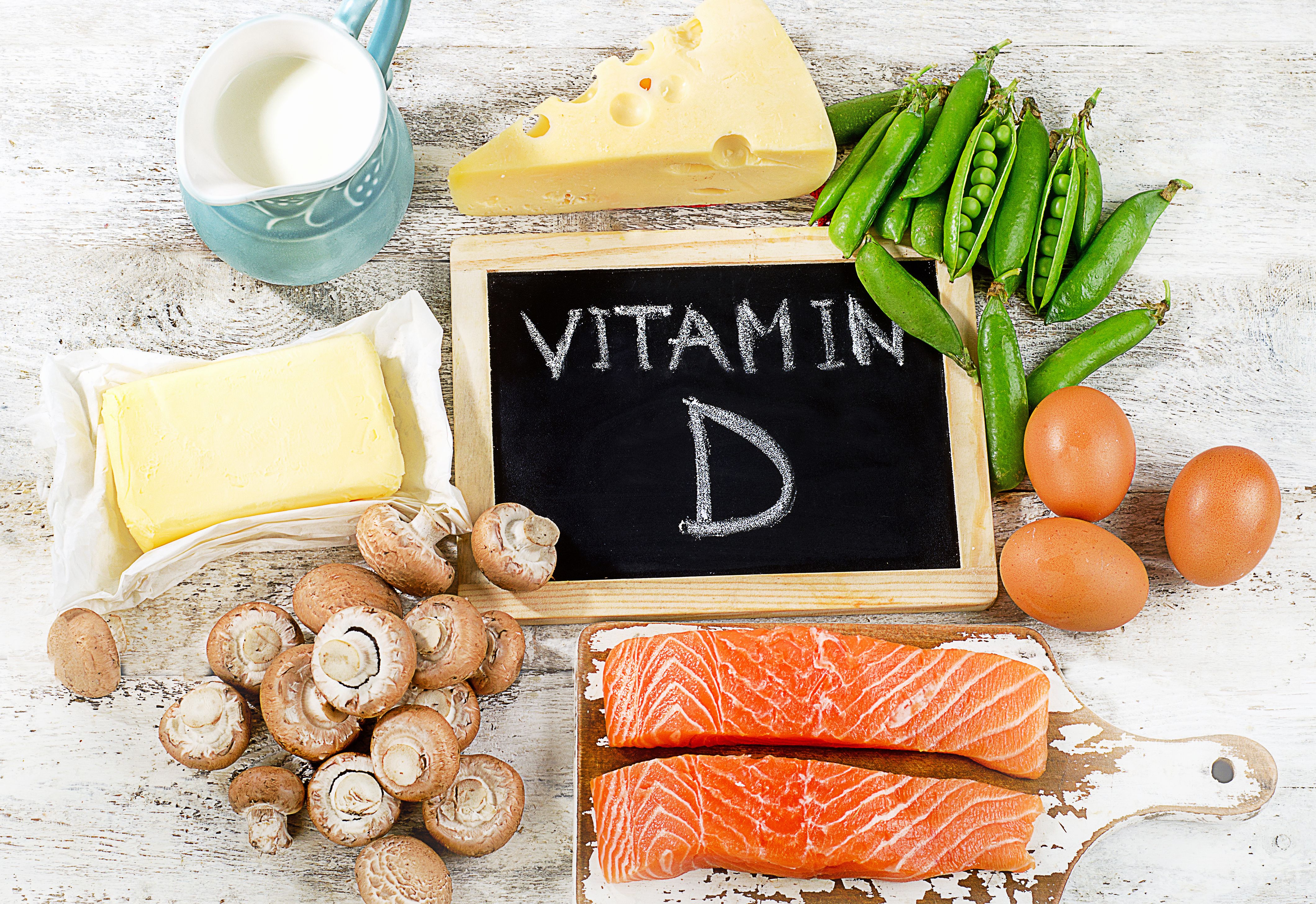
According to the National Institutes of Health Office of Dietary Supplements (NIHODS), vitamin D, also known as calciferol, is a fat-soluble nutrient naturally found in a limited number of foods, such as egg yolks, beef liver, and fatty fish. Vitamin D is also added to other foods, such as milk and breakfast cereals, and is widely available in dietary supplements.1,2
Vitamin D exists in 2 forms1,2:
The 2 forms only differ chemically in their side-chain structures, and both are well absorbed in the small intestine. The NIHODS notes that absorption occurs by simple passive diffusion and by a mechanism that involves intestinal membrane carrier proteins.1,2
Research has established that vitamin D plays a critical role in calcium absorption and bone health.1,2 It facilitates intestinal uptake of calcium and phosphate, helping maintain serum concentrations necessary for bone mineralization and preventing hypocalcemic tetany, which is an involuntary contraction of muscles, causing cramps and spasms.1,2 Vitamin D is essential for bone growth and remodeling through its regulation of osteoblast and osteoclast activity, and research indicates that deficiency can manifest in skeletal disorders such as rickets in children and osteomalacia in adults, whereas adequate levels, especially when combined with calcium, can diminish the risk of osteoporosis in older adults.1,2
Beyond its skeletal functions, research has shown that vitamin D contributes to immune support, maintenance of neuromuscular function, inflammation control, cell growth modulation, and blood pressure regulation. It may also decrease the risk of multiple sclerosis and depression and improve glucose metabolism in individuals with diabetes, thus highlighting its multifaceted roles in overall health and well-being. However, results have been variable and additional research is warranted.1,2
Certain patient populations are more likely than others to have inadequate vitamin D levels. These include older adults, individuals with gastrointestinal disorders that impair absorption (eg, chronic pancreatitis), those with insufficient sun exposure, people with dark skin pigmentation, individuals with hereditary disorders affecting vitamin D metabolism, those with conditions that limit fat absorption, individuals with obesity or a history of gastric bypass, and patients receiving long-term antiseizure therapy (eg, phenytoin or carbamazepine).1,2
According to data from the National Health and Nutrition Examination Survey, most people in the United States consume less than the recommended amounts of vitamin D.1 The CDC indicates that in 2023, approximately 18.5% of US adults reported taking vitamin D supplements. Despite this, nearly two-thirds of Americans have suboptimal vitamin D levels, with an estimated 2.6% having severe deficiency and 22% with moderate deficiency. These figures highlight a significant gap between supplement use and vitamin D sufficiency across the population.3
Several vitamin D supplements are available as single-entity products. Some products contain a combination of vitamin D and calcium, and vitamin D is typically found in multivitamin supplement products available in various strengths and dosage forms, including capsules, soft gels, tablets, liquids, gummies, and sublingual tablets, to meet the specific needs of various patient populations. Most OTC vitamin D supplements contain D3.
In 2025 study findings published in Medical Sciences, researchers aimed to examine the correlation between serum vitamin D levels and the presence of long COVID symptoms. Results revealed that individuals with lower vitamin D levels were more likely to experience persistent post–COVID-19 signs and symptoms, suggesting a potential role for vitamin D in mitigating the risk and severity of long COVID symptoms.4
In study findings published in Nutrition Reviews, researchers assessed the impact of vitamin D2 supplementation on serum 25(OH)D3 concentrations by analyzing data from randomized controlled trials. Researchers discovered that vitamin D2 supplementation was associated with a significant reduction in 25(OH)D3 levels, often lower than those observed in control groups not receiving vitamin D2.5 The findings suggest that vitamin D3 supplementation may be more beneficial for patients, although personal preferences and considerations should be taken into account.5
Study findings published in The American Journal of Clinical Nutrition presented findings from the randomized, double-blind, placebo-controlled VITAL trial (NCT01169259). Results revealed that vitamin D supplementation helps maintain telomeres, protective caps at the ends of chromosomes that shorten during aging and are correlated with the development of certain diseases. The researchers indicated that compared with placebo, vitamin D3 supplementation significantly reduced telomere shortening over 4 years, preventing the equivalent of nearly 3 years of aging. However, ω-3 fatty acid supplementation had no significant effect on telomere length throughout follow-up.6
Findings of a meta-analysis published in Diabetology & Metabolic Syndrome found that vitamin D supplementation significantly improves cardiometabolic markers, including blood pressure, cholesterol, insulin sensitivity, and blood glucose levels. The researchers indicated that the most significant benefits were observed in older adults, individuals with low baseline vitamin D, and non-Western populations, and these findings support the potential role of vitamin D in promoting cardiovascular and metabolic health.7
Pharmacists play a critical role in identifying patients at risk for vitamin D deficiency, contraindications, and potential drug-nutrient interactions. Because vitamin D supplements can interact with medications such as corticosteroids, anticonvulsants, and some diuretics, potentially affecting drug metabolism, calcium levels, or vitamin D absorption, patients should consult their health care provider before use.2
Before recommending supplementation, patients with suspected nutritional deficiencies should be referred to their primary physician for appropriate evaluation, additional treatment, and medical monitoring. During counseling, pharmacists should emphasize adherence to recommended dosages unless otherwise directed by a provider. Patients should be advised to check supplement labels to avoid excessive intake. Although rare, vitamin D toxicity can cause symptoms such as fatigue, nausea, dry mouth, and muscle pain and may lead to serious complications such as hypercalcemia, kidney stones, or renal failure.2
The current upper limit for vitamin D for adults and children 9 years or older is 4000 IU (100 μg), and patients should be encouraged to discuss their individual vitamin D needs with their health care provider before taking these supplements, because needs may vary based on age, health status, and lifestyle factors.2,8 Patients with underlying health conditions or those taking medications that may interact with vitamin D should consult their provider before initiating supplementation.
The bubble tea industry is gaining remarkable traction worldwide, driven by evolving consumer preferences and innovative product offerings. This vibrant market is poised for substantial growth as new trends and strategic moves by key players continue to reshape the landscape. Here’s a detailed look at the market’s projected value, leading companies, prominent trends, and segment breakdowns.
Projected Market Value and Growth Trajectory of the Bubble Tea Market
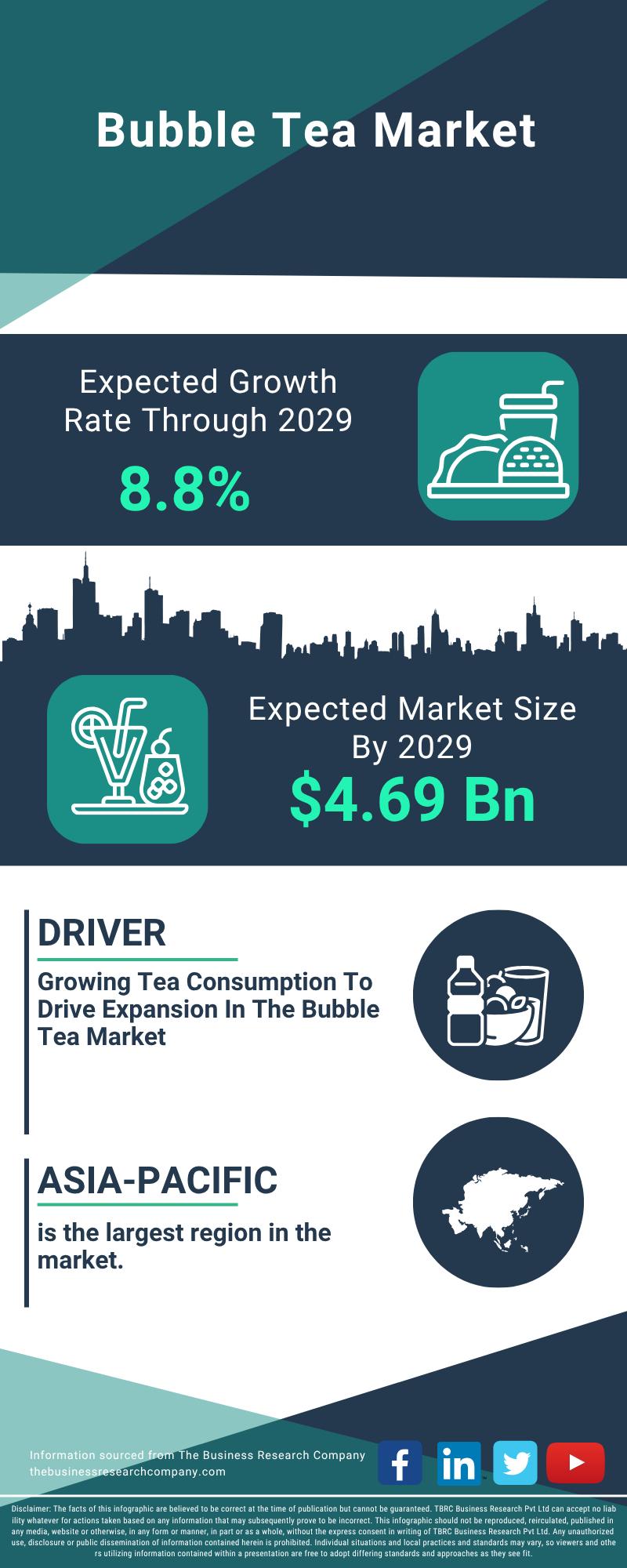
The bubble tea market is forecasted to experience significant expansion in the coming years, projected to reach a value of $4.69 billion by 2029. This growth corresponds to a compound annual growth rate (CAGR) of 8.8%. Several factors are propelling this upward trend, including a broader variety of menu options, endorsements from celebrities and influencers, enhanced mobile ordering and delivery services, sustainability efforts, and the rise of specialty and premium bubble tea products. Key trends shaping the market over the forecast period include limited edition and specialty offerings, a growing focus on health and wellness, customized and personalized drinks, eco-friendly initiatives, and creative fusion beverages.
Download a free sample of the bubble tea market report:
https://www.thebusinessresearchcompany.com/sample.aspx?id=10468&type=smp
Key Players Driving the Bubble Tea Market Forward
The bubble tea sector features numerous prominent companies actively shaping the market, such as Lollicup Inc., CuppoTee Company, Bubble Tea House Company, Ten Ren’s Tea Co. Ltd., Boba Box Limited, Sumos Sdn Bhd, Troika JC., Fokus Inc., Tea Time, Kuaikeli Enterprise Co. Ltd., COCO International Co. Ltd., Kung Fu Tea, Gong Cha, Kevito Ltd., Qbubble Troika J C Inc., Biju Bubble Tea, Bubbleology, Chatime, Comebuy, Ding Tea, Fanale Drinks, Happy Lemon, Heytea, Koi Thé, Nayuki, OneZo, Presotea, Quickly, Royaltea, Sharetea, The Alley, The Tea Terrace, and The Whale Tea.
In a recent development, October 2024 saw Unsworth Family Holdings Inc., a Canadian investment and holding firm, acquire Aimia Foods Inc. Although the financial details were not disclosed, this acquisition expands Unsworth’s portfolio by incorporating Aimia Foods’ extensive product lineup and production capabilities. It also solidifies Unsworth’s foothold in the food and beverage industry by leveraging Aimia’s well-established customer base and distribution channels. Aimia Foods, based in Canada, specializes in supplying essential bubble tea ingredients such as boba (tapioca pearls) and flavored syrups.
Innovative Trends Transforming the Bubble Tea Market
Innovation remains at the forefront of the bubble tea market’s evolution, with companies focusing on unique products that enhance the consumer experience. For example, proprietary Coco jelly boba pearls are gaining attention for their distinctive chewy texture and improved shelf life. Made from fermented coconut water, these pearls offer a lighter and more resilient alternative to traditional boba, catering to health-conscious consumers and differentiating brands in a competitive environment.
A notable example of product innovation occurred in March 2024, when SPI West Port Inc., a US-based beverage company, introduced JENJI, a ready-to-drink (RTD) boba tea line. This new range includes four flavors: Original Milk Tea, Matcha Latte, Strawberry Latte, and Brown Sugar, all packaged in 16.5 oz (490 mL) aluminum cans. These drinks stand out by containing no artificial colors or flavors, appealing to customers seeking natural ingredients and convenience.
View the full bubble tea market report:
https://www.thebusinessresearchcompany.com/report/bubble-tea-global-market-report
Comprehensive Segment Analysis of the Bubble Tea Market
This report breaks down the bubble tea market into key segments for a clearer understanding of its scope:
1) By Type: Black Tea, Green Tea, Oolong Tea, White Tea, Other Types
2) By Flavor: Original, Fruit, Coffee, Chocolate, Other Flavors
3) By Component: Flavor, Creamer, Sweetener, Liquid, Tapioca Pearls, Other Components
Further subcategories include:
– Black Tea: Traditional Black Tea, Milk Black Tea, Fruit Black Tea Variants
– Green Tea: Traditional Green Tea, Milk Green Tea, Fruit Green Tea Variants
– Oolong Tea: Traditional Oolong Tea, Milk Oolong Tea, Flavored Oolong Tea Variants
– White Tea: Traditional White Tea, Flavored White Tea, White Tea With Additives
– Other Types: Herbal Tea, Fruit Tea, Floral Tea, Specialty Blends
This segmentation highlights the diversity within the bubble tea market, showcasing the variety of tea bases, flavors, and ingredient components that appeal to a broad range of consumer tastes and preferences.
Reach out to us:
The Business Research Company: https://www.thebusinessresearchcompany.com/,
Americas +1 310-496-7795,
Europe +44 7882 955267,
Asia & Others +44 7882 955267 & +91 8897263534,
Email us at info@tbrc.info.
Follow Us On:
LinkedIn: https://in.linkedin.com/company/the-business-research-company,
Twitter: https://twitter.com/tbrc_info,
YouTube: https://www.youtube.com/channel/UC24_fI0rV8cR5DxlCpgmyFQ
Learn More About The Business Research Company
With over 17500+ reports from 27 industries covering 60+ geographies, The Business Research Company has built a reputation for offering comprehensive, data-rich research and insights. Armed with 1,500,000 datasets, the optimistic contribution of in-depth secondary research, and unique insights from industry leaders, you can get the information you need to stay ahead.Our flagship product, the Global Market Model (GMM), is a premier market intelligence platform delivering comprehensive and updated forecasts to support informed decision-making.
This release was published on openPR.
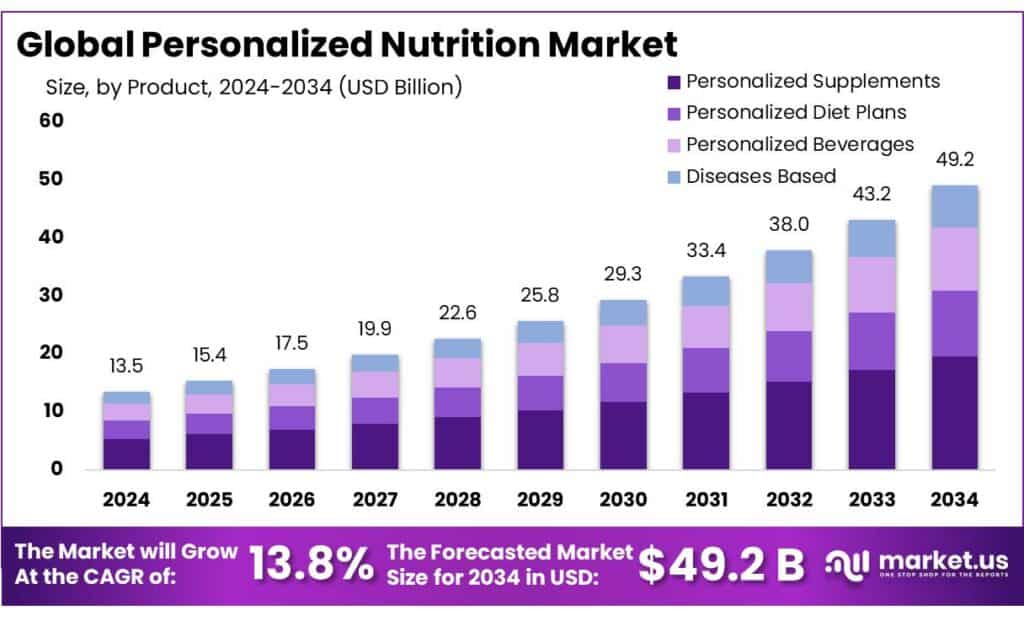
The Global Personalized Nutrition Market size is expected to be worth around USD 49.2 Billion by 2034, from USD 13.5 Billion in 2024, growing at a CAGR of 13.8% during the forecast period from 2025 to 2034. In 2024 North America held a dominant market position, capturing more than a 39.2% share, holding USD 5.2 Billion in revenue.
Personalized nutrition is moving from a niche “DNA test + supplement pack” concept into an industry-wide capability that blends food science, digital health, and preventive care. In practice, it means tailoring dietary advice, functional foods, and supplementation to an individual’s goals and data—such as lifestyle, biomarkers, microbiome signals, or medical history—while still meeting mainstream expectations on taste, convenience, and trust. For example, the IFIC Food & Health Survey reports that nearly 6 in 10 Americans say they followed a specific diet in the past year, and leading diet goals include “Energy/less fatigue” (40%) and “Weight loss/weight maintenance” (40%).
A major driver is the expanding availability of large, diverse health datasets that help translate biology into practical recommendations. The U.S. NIH “All of Us” Research Program reports roughly 862,000 enrolled participants by April 2025, and notes that 15,000+ researchers across all 50 states and 1,000+ organizations worldwide are registered to use its research platform—momentum that supports better evidence-building for precision approaches over time. In Europe, the 1+ Million Genomes (1+MG) initiative was signed by 25 EU countries plus the United Kingdom and Norway, building infrastructure to enable secure cross-border access to genomics and related clinical data—an enabling backbone for future “genomics-aware” nutrition pathways.
Industrially, the ecosystem now resembles a multi-layer value chain. Upstream, testing and data capture include blood biomarkers, continuous glucose monitoring, microbiome kits, and increasingly large research cohorts feeding algorithm development. In the U.S., the NIH’s “Nutrition for Precision Health” program is backed by $170 million over 5 years and targets 10,000 participants to build predictive nutrition algorithms. This sits alongside scale-building infrastructure like All of Us, which reports roughly 862,000 enrolled participants.
Several demand-side drivers are converging. First, consumers are already in “active management” mode: in 2025, 57% of Americans said they followed a specific eating pattern or diet in the past year, with “high protein” reported by 23%. Second, supplement behavior supports personalization economics: 75% of Americans take dietary supplements, providing an established channel for tailored packs and condition-focused regimens. Third, the clinical imperative is intensifying—IDF reports 589 million adults living with diabetes worldwide and at least USD 1 trillion in health expenditure tied to diabetes.
Government and trusted institutional initiatives are also accelerating the ecosystem. In the U.S., the NIH “All of Us” Research Program reports more than 849,000–850,000 participants enrolled (public updates), supporting large-scale research that can improve how nutrition advice is tailored to diverse populations. In Europe, the Commission has funded digital-personalisation research directly; for instance, the EU-funded PROTEIN project (CORDIS) listed a total cost of €8,138,951.25 with an EU contribution of €6,999,472.50 to develop ICT-based personalised nutrition systems.
Personalized Supplements lead with 39.6% as consumers seek tailored daily nutrition
In 2024, Personalized Supplements held a dominant market position, capturing more than a 39.6% share, driven by rising consumer preference for nutrition products designed around individual health goals, lifestyle, and genetic profiles. This segment benefited from strong demand for customized vitamins, minerals, probiotics, and functional blends that address specific needs such as immunity, gut health, energy, and aging. The growth of digital health tools, including online assessments and at-home testing kits, made personalized supplement plans easier to access and understand, supporting wider adoption.
Moving into 2025, the segment continued to expand as awareness of preventive healthcare increased and consumers shifted away from one-size-fits-all supplements toward more precise nutrition solutions. Improvements in formulation accuracy, ingredient traceability, and data-driven recommendations further strengthened trust in personalized supplements. As a result, this product type remained central to the personalized nutrition market, supported by consistent consumer engagement and long-term wellness-focused buying patterns.
Active Measurement leads with 61.2% as real-time health tracking gains trust
In 2024, Active Measurement held a dominant market position, capturing more than a 61.2% share, supported by strong consumer demand for real-time and data-driven nutrition insights. This method relies on direct inputs such as blood tests, DNA analysis, microbiome assessments, and wearable-based biomarker tracking, which allow nutrition plans to be adjusted based on actual physiological data rather than assumptions. The growing use of at-home testing kits and connected devices made these measurements more accessible and easier to repeat over time.
Moving into 2025, adoption continued to rise as accuracy improved and turnaround times shortened, helping users refine their nutrition programs more frequently. Active measurement also supported subscription-based personalized nutrition models, encouraging long-term engagement rather than one-time purchases. As a result, this measurement method remained the backbone of personalized nutrition services, driven by its ability to offer precise, actionable, and continuously updated dietary recommendations.
Direct Consumers lead with 44.8% as personalized nutrition becomes part of daily wellness
In 2024, Direct Consumers held a dominant market position, capturing more than a 44.8% share, driven by the growing shift toward self-managed health and nutrition solutions. Individuals increasingly preferred direct access to personalized nutrition services through digital platforms, mobile apps, and subscription-based programs without intermediaries.
By 2025, repeat usage increased as consumers became more engaged with data-backed nutrition insights and progress tracking. The direct consumer model also benefited from faster feedback loops, enabling quick adjustments to nutrition plans based on personal results. As awareness of preventive healthcare rose, direct consumer participation remained strong, reinforcing this segment’s leadership through convenience, personalization, and continuous engagement.

Online sales lead with 39.7% as digital access reshapes nutrition buying habits
In 2024, Online held a dominant market position, capturing more than a 39.7% share, supported by the rapid shift of consumers toward digital health and wellness platforms. Online channels made it easier for users to access personalized nutrition services, complete assessments, and receive tailored recommendations from home. The ability to compare options, review nutrition data, and track progress digitally increased user confidence and repeat purchases.
By 2025, online sales continued to strengthen as brands invested in AI-driven personalization, faster delivery, and improved customer engagement tools. Secure payment systems and flexible pricing plans further encouraged adoption. Overall, the online channel remained a key driver of market growth due to convenience, wider reach, and seamless integration with personalized nutrition technologies.
Wearables and CGMs Are Powering “Real-Time” Personalized Nutrition
A clear latest trend in personalized nutrition is the move from one-time quizzes to real-time personalization using wearables—especially continuous glucose monitoring (CGM)—so advice can change based on what a person’s body is doing today. The reason this is taking off is practical: people want feedback they can feel and measure, not generic rules. At the same time, chronic metabolic conditions are common enough that many consumers already have a reason to track. In the U.S., 38.4 million people—about 11.6% of the population—had diabetes. When a health issue touches that many households, tools that translate daily data into daily food choices become much easier to sell—and easier for clinicians to recommend.
Consumer behavior is lining up with this “track and adjust” style of eating. IFIC’s food and nutrition findings show that in 2025, 57% of Americans said they followed a specific eating pattern or diet in the past year, up from 36% in 2018. The same IFIC summary notes the top reported diets in 2025 were high protein (23%) and mindful eating (19%)—both patterns that pair naturally with wearable feedback because people want to connect actions (what I ate) with outcomes (how I feel, how I perform, what my readings show).
On the science and credibility side, government-backed research is pushing this trend toward stronger evidence. The NIH announced $170 million over five years for “Nutrition for Precision Health,” powered by the All of Us Research Program. NIH stated the study aims to recruit 10,000 participants to help develop algorithms that predict individual responses to foods and dietary patterns. That kind of national-scale work matters because it helps shift wearable-led nutrition from “interesting insights” to repeatable models that can be validated across diverse groups.
Consumers Want Health Solutions That Feel Personal
One major driver behind personalized nutrition is a simple change in buyer behavior: people no longer shop for “healthy” in general—they shop for what feels right for them. When consumers actively follow eating patterns, track goals, and adjust habits, they become far more open to tailored foods, supplements, and services. The International Food Information Council (IFIC) found that 54% of Americans followed a specific eating pattern or diet in 2024.
This is not a short-term fad; it has built over time. IFIC’s 2018 Food and Health Survey showed 36% followed a specific eating pattern in the past year. Moving from 36% (2018) to 54% (2024) indicates a broader cultural shift: more people are experimenting, measuring outcomes, and switching approaches when something doesn’t work. That trial-and-learn mindset is the fuel personalized nutrition companies need, because it reduces the “education burden.” Consumers already accept that two people can eat differently and still be “doing it right.”
Supplements make this driver even stronger because they provide a practical entry point to personalization without forcing a full lifestyle reset. The Council for Responsible Nutrition (CRN) reported that 75% of Americans use dietary supplements. In market terms, this creates a large installed base for personalization: once people are already buying supplements, it’s easier to introduce customized packs, timed routines, or biomarker-linked recommendations. This is why many personalized nutrition models start with “daily packs” and coaching, then expand into functional foods and medical nutrition partnerships.
Government-backed data infrastructure is also reinforcing this demand-led driver by improving credibility and future clinical alignment. The NIH “All of Us” Research Program’s public snapshots show 862,000 participants enrolled by April 2025. While All of Us is not a nutrition program, it strengthens the ecosystem that personalized nutrition relies on: large-scale, diverse health data that can support better evidence on how different people respond to interventions. Over time, that reduces uncertainty for brands and healthcare partners, and it helps move personalization from “wellness advice” toward more medically credible pathways.
Data Privacy and Trust Gaps Slow Adoption
A major restraint for personalized nutrition is that it often needs personal data—food habits, health goals, wearable metrics, lab results, even genetics—and many people simply don’t feel comfortable handing that over. When trust is weak, consumers hesitate to share enough information for “personalization” to feel truly personal, and companies are forced to offer lighter, less precise recommendations. A large Pew Research Center survey of 5,101 U.S. adults (May 15–21, 2023) found that 73% of Americans feel they have little to no control over what companies do with data collected about them, and 67% say they understand little to nothing about what companies are doing with their personal data.
This matters because personalized nutrition is not like buying a standard vitamin bottle. People are being asked to connect apps, answer sensitive questionnaires, and sometimes submit samples. Yet the same Pew findings show that 56% of Americans frequently click “agree” on privacy policies without reading them, and 61% think privacy policies are ineffective at explaining how companies use personal data. In plain terms: many consumers feel rushed and confused in digital consent, so they either opt out—or participate with skepticism. That skepticism shows up as lower conversion, shorter subscription duration, and higher churn for personalized programs.
Even trusted public initiatives that could strengthen personalized health solutions depend on confidence and governance. For example, the NIH All of Us Research Program shows 862,000 participants enrolled by April 2025, and notes 100+ funded partner organizations supporting the program. Europe’s “1+ Million Genomes” initiative similarly focuses on building secure, federated access frameworks; it was signed by 25 EU countries plus the UK and Norway. These initiatives underline a key point: personalization can scale responsibly, but only when data handling is transparent, secure, and socially accepted.
Clinical Partnerships Can Turn Personalization into Standard Care
One of the biggest growth opportunities in personalized nutrition is moving from “wellness advice” into healthcare-linked programs that people can trust and stick with. Today, many personalized plans live inside apps or supplement subscriptions, which can feel optional. The opportunity is to anchor personalization in clinics, insurers, employers, and dietitian networks, where health goals are already being tracked and where outcomes matter. This shift is timely because the science infrastructure is getting stronger and more organized, especially through government-backed research.
A clear signal comes from the U.S. National Institutes of Health (NIH). NIH announced it is awarding $170 million over five years to support “Nutrition for Precision Health” (NPH), a national effort designed to develop algorithms that predict how individuals respond to diets. Importantly, NPH is not a small pilot; the All of Us program announcement describes NPH working with 14 sites across the U.S. to engage 10,000 participants from diverse backgrounds. That scale matters because healthcare partners and large food/supplement brands are more likely to adopt models that are built on robust datasets rather than small, single-center studies.
NPH also benefits from the wider All of Us infrastructure, which already has deep participant coverage and research readiness. A public NIH program update reports more than 832,000 All of Us participants as of August 24, 2024, alongside more than 452,000 electronic health records and more than 586,000 biosamples. For personalized nutrition companies, this creates a growth runway: better evidence can translate into more credible product claims, clearer segmentation (who benefits most), and stronger clinician confidence—especially when recommendations can be explained using real-world data rather than generic lifestyle tips.
Finally, Europe is funding the upstream science that can feed future product pipelines. EU CORDIS lists the PROTEIN personalized nutrition project with a total cost of €8,138,951.25, and NUTRISHIELD with a total cost of €8,732,209.59—evidence that public investment is supporting validated personalization approaches, not just marketing-led ideas.
North America leads with 39.2% share and US$5.2 Bn in 2024, supported by high health awareness and digital adoption
In 2024, North America emerged as the dominant region in the personalized nutrition market, capturing 39.20% of global share and generating approximately US$5.2 billion in market value. This leadership was largely driven by well-established health and wellness trends, widespread consumer awareness of preventive healthcare, and early adoption of digital health technologies. In key markets such as the United States and Canada, high per-capita spending on dietary supplements, tailored health programs, and tech-enabled nutrition services underpinned strong regional demand.
The growth of online health platforms, telehealth consultations, and at-home testing kits further expanded access to personalized nutrition, with many consumers using smartphone apps or web portals to track progress and adjust nutrition plans in real time. In 2024, the integration of AI and data analytics into personalized nutrition solutions enabled more precise formulation of nutrient mixes, enhancing user confidence and driving repeat usage. Retail partnerships and fitness-tech collaborations also helped bridge e-commerce and in-store experiences, broadening product reach.

In 2024, Telomere Diagnostics, Inc. advanced personalized nutrition through its TeloYears® test, which evaluates biological aging to inform lifestyle and nutrition interventions. The company reported over 100,000 tests administered, helping users tailor nutrition and wellness plans based on cellular health indicators and supporting data-driven health decisions.
In 2024, Nutrigenomix Inc. remained a key provider of genetic testing for personalized nutrition guidance, enabling diet plans tailored to individual genotypes. The company completed over 250,000 genetic tests worldwide, delivering actionable dietary insights to healthcare providers, nutritionists, and consumers seeking precision nutrition recommendations.
In 2024, BASF SE supported personalized nutrition through specialty ingredients and formulation systems that enhance nutrient delivery and product performance. The company posted group revenues of €75.9 billion, with its Nutrition & Care segment delivering around €6.7 billion. BASF’s excipient and bioavailability technologies helped brands create tailored supplements and functional nutrition solutions.
In 2024, Nestlé S.A. further strengthened its presence in the personalized nutrition sector through the activities of Nestlé Health Science, the company’s science-driven health and wellness division focused on tailored nutritional solutions. Nestlé Health Science delivered total sales of approximately CHF 6.74 billion in 2024, growing organically as supply challenges eased and consumer demand for targeted health products increased.
In 2024, General Mills, Inc. continued to adapt its broad food portfolio toward evolving nutrition preferences, including products that support personalized and health‑forward eating habits. While the company is best known for brands such as Cheerios, Nature Valley and Betty Crocker, it has increasingly responded to consumer interest in tailored nutrition by expanding high‑protein and functional products like Cheerios Protein and Nature Valley Protein Bars, which generated over USD 100 million in retail sales during the year.
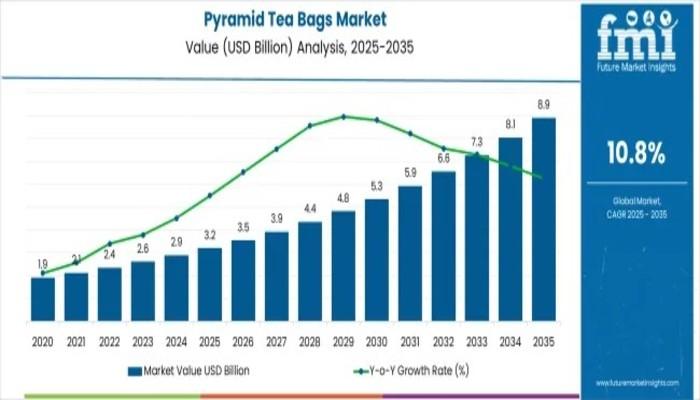
The global pyramid tea bags market is entering a decade of transformative expansion, projected to rise from USD 3.2 billion in 2025 to USD 8.9 billion by 2035. This represents an impressive 178.1% total growth, driven by consumers’ increasing preference for premium tea formats, transparent brewing experiences, and whole-leaf infusion solutions. With a robust CAGR of 10.8%, the industry is gearing up for significant innovation, investment, and technology adoption from both established and emerging tea manufacturers.
Rising Popularity of Premium Tea Bags Fuels Market Expansion
Between 2025 and 2030, the market is set to grow by USD 2.1 billion, accounting for nearly 36.8% of the decade’s total rise. This momentum is strengthened by the growing shift toward visible leaf infusions, specialty tea categories, and the rapid expansion of retail and hospitality offerings. The period from 2030 to 2035 will further accelerate growth, adding USD 3.6 billion as brands increasingly adopt biodegradable mesh materials, introduce innovative flavor blends, and elevate luxury tea experiences.
Subscribe for Year-Round Insights → Stay ahead with quarterly and annual data updates – https://www.futuremarketinsights.com/reports/sample/rep-gb-4814
Quick Market Snapshot
• Market Value 2025: USD 3.2 billion
• Market Forecast 2035: USD 8.9 billion
• CAGR (2025-2035): 10.8%
• Leading Product Category: Premium Pyramid Bags (58%)
• Key Regions: North America, Europe, Asia Pacific
• Top Established Players: Dilmah Tea, Twinings, Harney & Sons, Mighty Leaf Tea, The Republic of Tea
Why the Market Is Growing: Key Drivers
Premiumization remains the most powerful force shaping the industry. Consumers across major global regions now prioritize:
• Superior brewing quality with full leaf visibility
• Lifestyle-driven wellness habits and premium beverage choices
• Convenient brewing formats without compromising taste
• Organic and specialty teas offering authentic flavors
Pyramid tea bags meet all these expectations, making them a preferred option among tea enthusiasts, retailers, luxury hospitality chains, and e-commerce platforms.
Segmental Highlights
By Product Type: Premium Pyramid Bags Lead with 58% Market Share
Premium pyramid bags dominate due to their superior infusion performance, compatibility with diverse tea varieties, and growing use in high-end cafés, hotels, and specialty tea shops.
By Tea Type: Specialty Teas Anchor Future Growth
Specialty teas are projected to account for 44% of total market growth through 2035. Consumers’ growing curiosity about artisan blends, exotic flavors, and authentic sourcing is reshaping brand strategies and accelerating investments in superior ingredients and advanced blending technologies.
Emerging Trends Shaping the Market
• Advancements in biodegradable materials such as PLA and plant-based meshes
• Innovation in flavor technology for artisan and wellness-oriented blends
• Growing e-commerce penetration showcasing luxury tea assortments
• Rise of global tea culture, inspiring consumers to explore new infusion formats
• Hospitality sector upgrades, offering premium tea experiences to match gourmet dining trends
Manufacturers are rapidly integrating mesh engineering, infusion optimization technologies, and improved quality protocols to stay competitive in the evolving landscape.
Global Market Outlook: Country-wise Growth
• UK: 11.3% CAGR – Leading due to robust tea heritage and premium product acceptance
• Japan: 10.9% CAGR – Strong rise in Western tea preferences
• USA: 10.5% CAGR – Premium beverage segment expansion
• Germany: 10.2% CAGR – Strong wellness and quality-driven market
• China: 9.8% CAGR – Blend of traditional tea culture and modern innovations
Europe alone is forecasted to grow from USD 1.1 billion (2025) to USD 2.9 billion (2035), led by the UK and Germany.
Competitive Landscape: Established & Emerging Players Elevate Innovation
Leading companies such as Dilmah Tea, Twinings, Harney & Sons, Mighty Leaf Tea, and The Republic of Tea continue to invest in premium blending technology, sustainable packaging, and high-quality leaf sourcing.
Several new and emerging manufacturers are entering the market with:
• Biodegradable and compostable pyramid bags
• Unique infusion technologies
• Exotic flavor innovations
• Artisanal, small-batch tea production
Brands like Newby Teas, Tea Forté, Kusmi Tea, Numi Organic Tea, and Adagio Teas are gaining traction by offering differentiated premium experiences that resonate with modern consumers.
Get the Complete Story-Read More About Our Latest Report!
https://www.futuremarketinsights.com/reports/pyramid-tea-bags-market
Industry Stakeholders: A Shared Path to Growth
Governments Can Support By:
• Offering manufacturing incentives
• Simplifying export regulations
• Funding R&D in tea processing technologies
Industry Bodies Should Focus On:
• Building global tea innovation networks
• Supporting training in blending and quality control
Suppliers & Retailers Can Strengthen the Ecosystem Through:
• Technology investments for efficient blending
• Premium product positioning
• Collaboration with specialty distributors
Why FMI: https://www.futuremarketinsights.com/why-fmi
Have a Look at Related Research Reports on the Packaging Domain
Demand for Filter Paper in USA https://www.futuremarketinsights.com/reports/united-states-filter-paper-market
Demand for Corrugated Mailers in USA https://www.futuremarketinsights.com/reports/united-states-corrugated-mailers-market
Demand for Child Resistant Bottles in USA https://www.futuremarketinsights.com/reports/united-states-child-resistant-bottles-market
Contact Us:
Future Market Insights Inc.
Christiana Corporate, 200 Continental Drive,
Suite 401, Newark, Delaware – 19713, USA
T: +1-347-918-3531
For Sales Enquiries: sales@futuremarketinsights.com
About Future Market Insights (FMI)
Future Market Insights, Inc. (FMI) is an ESOMAR-certified, ISO 9001:2015 market research and consulting organization, trusted by Fortune 500 clients and global enterprises. With operations in the U.S., UK, India, and Dubai, FMI provides data-backed insights and strategic intelligence across 30+ industries and 1200 markets worldwide.
This release was published on openPR.
To build fully integrated longevity ecosystem
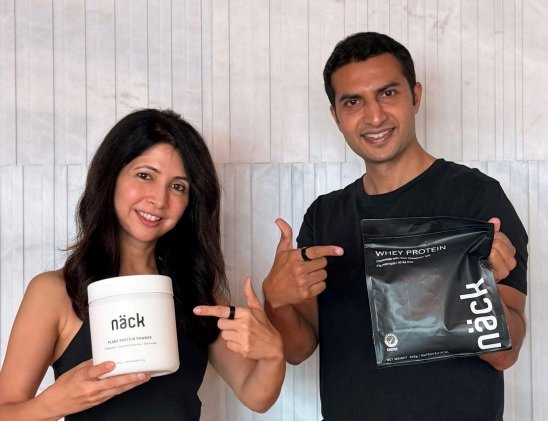
GABIT, a full-stack longevity company, announced its acquisition of Sweden-based Näck, a clean, science-led nutrition brand. This move brings together GABIT’s cutting-edge health tracking smart ring technology and AI-based health coaching with Näck’s thoughtfully formulated supplements.
GABIT combines continuous data with personalised actions, nudges, and personalised fitness and nutrition plans to help users actually improve their health, not just track it. Näck’s supplements are formulated to meet recommended dietary allowances (RDA) where applicable, carry Informed Choice certification, with every batch rigorously tested against 250+ banned substances.
“Näck stands for nutrition that is simple, transparent, and rooted in science,” said Gaurav Gupta, Founder, GABIT. “At GABIT, we’ve always believed that health is interconnected. This acquisition is a natural next step, because the impact of what you put into your body should be just as measurable as how you move, sleep, recover, and live. When supplements, diagnostics, and continuous tracking come together, health stops being vague and starts becoming measurable.”
Arpana Shahi, Founder, GABIT mentioned, “Imagine taking a supplement for better sleep and actually being able to
measure its effect on your deep sleep. Or adjusting your nutrition through supplements and seeing tangible changes in recovery, energy, or metabolic health. That’s the future of health we’re building.”
JAKARTA – Matcha, the traditional Japanese green tea powder, has seen a new resurgence in 2025 with matcha bars popping up in Jakarta and other big cities in Indonesia offering matcha lattes as well as bakeries and pastry shops offering matcha-infused confectioneries.
The drink, with its iconic deep green color and frothy foam, has taken the internet by storm by popping up on social media such as Instagram reels or TikTok videos.
Researchers were surprised after a lengthy study of an essential fatty acid, News-Medical reported, with findings particularly relevant to several popular dietary lifestyles.
The study, published in Frontiers in Nutrition, focused on long-chain polyunsaturated fatty acids, which the authors stipulated were of concern for those on vegetarian and vegan diets.
Omega-3 fatty acids play a vital role in several critical health metrics, supporting cardiovascular and immune function, cognition, and fighting inflammation. The study noted that these essential nutrients were often found in meat, fish, and dairy, posing a challenge to plant-based diners.
Flaxseed oil is a known plant-based source of alpha-linolenic acid, an essential omega-3 fatty acid, and News-Medical mentioned a standing “widespread assumption that the human body only poorly converts plant-derived ALA” versus omega-3s found in meat and fish.
Researchers identified 168 individuals aged 18 to 70, all of whom had followed an omnivorous, flexitarian, vegetarian, or vegan diet for one year prior to the start of the study.
As the authors indicated, vegetarian and vegan lifestyles are becoming increasingly popular worldwide for myriad reasons, particularly among Generation Z.
💡Exclusive offers from trusted brands
They cited a range of ethical, health, and environmental benefits as a factor in the growing popularity of plant-based diets. Rising food costs are likely fueling some dietary changes, since meatless alternatives tend to be more affordable and less perishable.
High-profile campaigns like Veganuary are another factor, as is a broader tendency toward hybrid dietary approaches and growing food at home. Opting for plant-forward meals rather than a 100% vegan lifestyle, sometimes called “flexitarianism,” is also becoming more common.
Participants followed “nutrient-optimized menu plans” for one year, supplementing their diets with flaxseed oil for nine months after the first three months of the study. The authors collected blood samples at three-month intervals, examining the study subjects at 12 and 24 months.
At the end of the study, researchers determined that “systematic long-term dietary intake of ALA … leads to a significant increase in EPA, DPA and DHA concentrations” irrespective of participants’ dietary patterns.
Strikingly, researchers also found that while vegans and vegetarians demonstrated lower blood “concentrations than omnivores” at the study’s conclusion, they “on average surpass omnivorous levels at the beginning of the intervention.”
As such, the authors advised vegans and vegetarians to “regularly consume” plant-based foods or supplements rich in essential fatty acids.
Get TCD’s free newsletters for easy tips to save more, waste less, and make smarter choices — and earn up to $5,000 toward clean upgrades in TCD’s exclusive Rewards Club.
“High-protein” is the biggest buzzword in nutrition, having dethroned predecessors “low-fat” and “low-sugar” as the food industry’s compound adjective of the moment. Historically the domain of lean meats, poultry, fish, eggs, beans, lentils, nuts, seeds, tofu and dairy products, you can now find products ranging from bottled water to breakfast cereals to Pop-Tarts fortified with it and generally trumpeting protein’s presence on the packaging.
As so many shaker bottles attest, protein supplements are also in vogue — in particular, the protein powders that those shaker bottles help dissolve into liquid. Which begs some questions: How much protein do we actually need? Are protein supplements a good way to up protein intake? Will too much protein cause weight gain? Are protein supplements safe?
UCHealth Today gathered expert insights from dietitians and a toxicologist to answer these questions and more.
We tend to talk about protein in the singular “protein,” but it’s really about “proteins.” There are thousands of different proteins in and about our cells. Each is a long chain of some combination of the 22 amino acids that comprise all proteins in the body. Those chains then fold back on and around themselves in countless ways. Every cell in your body is partially made of protein, and all cells make use of it in various ways.
Protein is best known for building muscle, and that’s the key driver of the protein-supplements business. But muscle and tissue development, maintenance and repair are among the many important roles proteins play in the body. Enzymes, which enable or speed up biochemical reactions, are proteins. Many hormones — chemical messengers between organs — are proteins, as are energy and nutrient transporters such as hemoglobin, which carries oxygen from lungs to cells throughout the body.
The keratin in your hair and fingernails, the collagen in your bones, tendons and skin, and the elastin that lets your arteries and lungs expand and contract are proteins. The antibodies your immune system depends on are proteins, and proteins also are critical in maintaining proper blood pH (acid-base balance) as well as fluid balance. Finally, protein can serve as an energy source, though the body much prefers to metabolize sugars and fats.
“There’s so many things that protein steps up to do that other macronutrients cannot do,” said Cathy Deimeke, a UCHealth registered dietitian and diabetes educator.
That depends on how big you are, how active you are, what activities you’re doing and how old you are.

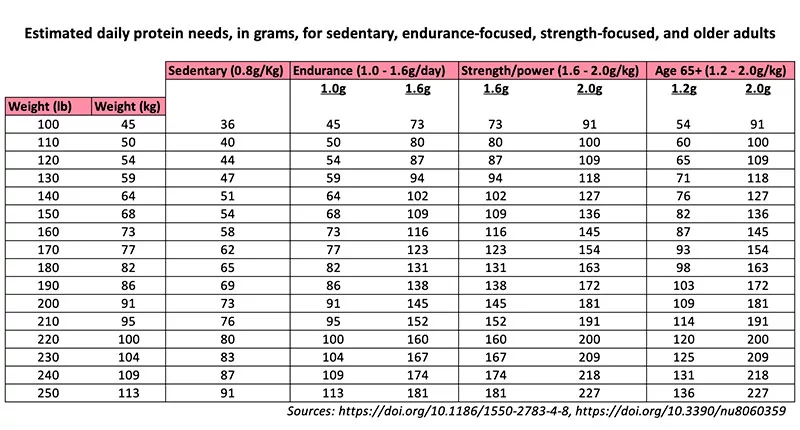
The rule of thumb for sedentary adults is 0.8 grams of daily protein intake per kilogram of body weight (0.45 grams of protein per pound). For a 150-pound adult, that’s about 54 grams of protein a day. For a 120-pound adult, it’s 44 grams.
“That’s the starting point, but for most people, I go a little higher,” Deimeke said.
But as the chart below shows, estimated protein needs really do depend on the person. Athletes require more protein to recover and build muscle: 1-1.6 grams per kilogram of body weight per day for endurance athletes and 1.6-2 grams per kilogram of body weight per day for those doing strength- and power-focused training, according to the International Society of Sports Nutrition.
Those over 65, who increasingly deal with the inevitable age-related muscle loss (sarcopenia), also need more protein — roughly as much as a younger person doing routine strength- or power-focused training. Based on that, an older 150-pounder’s ideal protein consumption would be 82 to 136 grams per day.
Assuming a balanced diet, the vast majority of us, including the very active, get enough protein through what they eat, Deimeke said. Her general rule of thumb is that 20% of calories should arrive through protein. Because people who burn more calories and tax their muscles through physical activity will naturally be hungrier, they will generally consume more protein as a matter of course, she said. In essence, increased appetite leads to higher protein intake.
Also, high-protein foods can cover even elevated protein needs without undue focus on the macronutrient. Four ounces of chicken breast, a serving about the size of the palm of your hand, has 30 grams of protein, and the same amount of beef has only slightly less. A cup of cottage cheese has 25 grams, a can of tuna or a cup of Greek yogurt 20 grams each. Nuts, lentils, tofu and other foods add to the tally.
But again, there’s no one answer to how much protein people need or how to deliver it, Deimeke said.
“We’re going to take a look at underlying health conditions. We’re going to look at the level of activity. So, it’s just not one-size-fits-all,” she said.
Most of us don’t, Deimeke said. But protein supplements can help in a couple of ways. The 20 to 30 grams of protein in a protein supplement can help quell post-workout hunger, and in a quantity that the body can readily metabolize (roughly 0.4 grams per kilogram of body weight every couple of hours, or 27 grams for our 150-pounder). Also, for people who are generally food averse or the aged whose declining appetites can’t keep up with increasing protein needs, protein bars and shakes can be a quick, efficient way to catch up.
“That’s where protein drinks and supplements are very nice, because they’re an efficient way for people to take in calories and protein, especially when they don’t feel like eating,” Deimeke said.
Like carbohydrates, protein contains about four calories per gram (fat holds nine calories per gram). Unlike carbohydrates and fat, the body doesn’t store protein for future use. If we don’t get enough dietary protein, our body breaks down structural proteins. It also can convert amino acids to glucose for immediate energy. It’s important to note, Deimeke said, that taking in adequate carbohydrates and fat protects amino acids from being used for energy, thus allowing protein to accomplish its many roles. Taking in too much protein when carbohydrate intake is adequate will result in amino acids being converted to fat, she said.
Taking in more protein than the body needs is, thanks to that conversion, generally safe for healthy people. Because processing that extra protein makes the kidneys work a little harder, those with kidney problems who are thinking about boosting their protein intake should consider reaching out to a dietitian to establish a baseline, Deimeke said.
Dr. Kennon Heard, section chief of Medical Toxicology at the University of Colorado School of Medicine and a UCHealth Emergency Medicine physician, said there’s no “safe” level for lead consumption. But, he said, the levels of lead that Consumer Reports testing found would result in much less exposure than people routinely experienced in the 1950s and 1960s, when leaded gasoline and lead-soldered food cans were prevalent.

“The bottom line is, yes, there’s no good effect from having lead in your body. That said, the primary problem that we see is usually in children, and it has more to do with development,” Heard said. “In adults, there’s less evidence that lead causes problems until you get pretty high concentrations, and then there’s some strong evidence that it can cause problems with blood pressure and kidney problems.”
Robin Bingham, director of nutrition therapy for UCHealth University of Colorado Hospital and UCHealth Longs Peak Hospital, notes that the Consumer Reports “levels of concern” were based on California’s Proposition 65 maximum allowable dose level of 0.5 micrograms per day per deciliter of blood. That’s much lower than the U.S. Food and Drug Administration’s interim reference level of 8.8 micrograms per day for women of childbearing age (designed to limit exposure during pregnancy) or even the 2.2 micrograms per day for children.
In an email, Bingham also said that there are studies that “have not found an increased risk of non-carcinogenic health effects due to heavy metal exposure from protein powder.” Environmental exposures appear to far outweigh any contribution from lead in protein supplements. Meaning: Be aware of lead content in protein powders, but don’t necessarily be wary of it.
Collagen supplements can help support your skin, bone, and joint health. Your body produces less collagen as you age, so these products provide animal-derived collagen to make up for the difference. However, as plant-based and vegan diets have become more popular, there has been a greater demand for vegan collagen alternatives.
A common misconception about vegan collagen is that it’s the plant version of animal collagen—a protein that provides structure to the tissues in skin, tendons, bones, and more. However, plants don’t make collagen. This protein is only found in humans and animals.
Instead, many vegan collagen supplements are collagen builders, meaning they are made up of plant ingredients that help your body make collagen naturally. These include:
While many vegan collagen supplements on the market contain collagen-boosting ingredients rather than actual collagen, some products are biomimetic supplements. Biomimetic means a substance has been engineered to mimic a biological process or structure.
Supplements that are biomimetic contain plant-based compounds and fermented amino acids that, together, replicate the structure and role of human collagen. Essentially, this tricks your body into thinking it’s receiving real collagen.
A small 2024 study using a vegan biomimetic collagen product found that participants who took the supplement saw significant improvements in skin collagen density, elasticity, wrinkles, and hydration compared to the placebo group. However, more research is needed to confirm the safety and effectiveness of these products.
Although vegan collagen supplements work differently from animal-derived collagen products, they have similar effects. Both products aim to increase the body’s collagen production and stored levels.
Animal collagen has more research to back up its effectiveness. But recent studies show vegan collagen-builders and biomimetic supplements can significantly improve skin, joint, and muscle health.
Still, animal collagen may show quicker results than vegan collagen-builders. This is because the animal product provides a directly accessible form of collagen, while collagen-builders only supply ingredients for the body to build collagen.
Being a plant-based product does not necessarily make vegan collagen more nutritious or generally healthier than animal collagen. Many studies support the safety and effectiveness of animal collagen supplements.
Vegan collagen supplements are a good choice for people following a vegan or vegetarian diet or who need to avoid animal collagen due to health conditions. Plant-based collagen alternatives can also be a more sustainable choice, as animal farming can have a significant environmental impact.
When choosing a vegan collagen, here are a few things to keep in mind:
With the winter season comes scratchy throats, lingering coughs, and that run-down feeling that seems never-ending. So it makes sense that people turn to warm, soothing drinks, like tea, the moment temperatures drop. And while some drinks merely taste and smell comforting, green tea actually helps your immune system. We asked a tea expert to share more about this immunity-supporting tea and how to make the most of its benefits. Here’s why you should sip on it all winter long, along with a couple of honorable mentions.
Among all the immunity-boosting teas people reach for in cold weather, green tea has a unique concentration of protective compounds that makes it especially helpful for your overall wellness. “The best teas for immune support this winter are green teas, especially matcha,” says Anney Norton, a tea blend expert and founder of Dream Tea NYC. “I recommend pairing a daily cup of high-quality green tea with ginger-oriented teas that provide anti-inflammatory support.”
As for how to optimize its effectiveness, Norton stresses that habits matter more than quick fixes. “For optimal immune support, consistency matters more than intensity,” she says. “A daily cup of quality green tea or matcha throughout winter will serve you better than only reaching for immune-support teas when you feel a cold coming on.”
Your immune system functions best when it’s given sustained, gentle support rather than a sporadic intervention, Norton says.
Green tea is the top pick for winter immunity, but it helps to understand why it works so well. Here are a couple of science-backed ways it supports your body’s defenses.
Green tea can help your immune cells respond more efficiently. “Green teas are particularly powerful because they’re loaded with EGCG (epigallocatechin gallate), a catechin that directly enhances immune function through multiple pathways,” Norton says. “EGCG increases the production and activity of regulatory T cells—specialized immune cells that help your body distinguish between genuine threats and false alarms, preventing both under- and over-reaction.” This balance is critical during cold and flu season when the immune system tends to be more active.
Green tea also contains L-theanine, an amino acid that can enhance the production of interferon-gamma, a protein that supports your body’s response to an infection. Norton points to a study published in Proceedings of the National Academy of Sciences that had subjects drink either five cups of tea with L-theanine or coffee daily for four weeks, then exposed their blood cells to bacteria. “The tea drinkers showed significantly higher interferon-gamma production, indicating significantly enhanced immune response,” she says.
If you want even more of an immune-boost, swap out your green tea for matcha. “Matcha takes these benefits further because you’re consuming the entire ground tea leaf rather than just steeping water-soluble compounds,” Norton says. “This means you’re getting the full spectrum of nutrients, including fat-soluble antioxidants that never make it into steeped tea.”
The difference is significant: One study found that the EGCG concentration in matcha could be up to 137 times greater than that of standard green tea. “This translates to more potent T-cell enhancement and stronger antiviral activity from every cup,” Norton says, adding that high-grade ceremonial matcha also contains higher concentrations of L-theanine “due to the shade-growing process used for premium leaves.”
But if you’re looking for immune-specific benefits only, be mindful of the higher caffeine content in matcha—about 70 milligrams per serving versus 30 to 50 milligrams in steeped green tea—which Norton says can impact sleep if consumed late in the day. She recommends pairing a morning matcha ritual with a chamomile-based sleep blend in the evening. “You get energized, immune-boosted days and the deep, restorative sleep that allows your immune system to do its repair work at night,” Norton says.
While green tea takes priority, it isn’t the only tea that can support you through cold-weather sickness. Ginger and chamomile tea have benefits that can complement your immune function in very different ways.
“While green tea and matcha enhance immune cell function directly, ginger tea works through complementary anti-inflammatory pathways,” Norton says. “Ginger’s active compounds—gingerols and shogaols—inhibit inflammatory enzymes (COX-2) and suppress pro-inflammatory cytokines.”
So why is this important? Norton notes that chronic low-grade inflammation actually suppresses immune function. “Ginger keeps your immune system balanced and responsive rather than overreactive or exhausted,” she says. “It also helps some of the classic early cold symptoms, like sore throat, and can even help with some of the joint pain and tenderness that can happen with the flu.”
You can get the benefits of green tea and ginger in one cup: Look for a tea company that lets you create custom blends with differing strengths. Norton recommends pairing green tea with ginger, lemon, and osmanthus, or try a green tea with peach and ginger.
Chamomile teas also deserve some recognition. “While chamomile doesn’t directly boost immune function, it significantly improves sleep quality, and poor sleep is one of the most potent immune suppressors,” Norton says. “Think of chamomile as protecting your immune system by addressing one of its biggest vulnerabilities.”


:max_bytes(150000):strip_icc()/Health-GettyImages-2203764702-ec0169c341554dd689ed8d4076cec405.jpg "4 Misconceptions About Vegan Collagen—and What You Should Really Know")
:max_bytes(150000):strip_icc()/teaforimmunity-11509db4d5e849088b9b4936d4e641bf.jpg "The #1 Tea Nutrition Experts Recommend for Immunity This Winter")