The main category of Dietary Supplements News Articles.
You can use the search box below to find what you need.
[wd_asp id=1]
The main category of Dietary Supplements News Articles.
You can use the search box below to find what you need.
[wd_asp id=1]
Leading Edge Health’s GenuinePurity brand addresses authentication challenges and bioavailability concerns with certificate of authenticity protocols, third-party laboratory verification, and liposomal encapsulation technology following FDA decision confirming NMN lawful status
LAS VEGAS, Nov. 26, 2025 (GLOBE NEWSWIRE) — FOR IMMEDIATE RELEASE
Following the FDA’s September 2025 decision confirming that nicotinamide mononucleotide (NMN) is lawful for use in dietary supplements, GenuinePurity announces comprehensive quality verification protocols designed to address persistent consumer confusion in NMN supplement selection. The company’s GenuinePurity Liposomal NMN incorporates certificate of authenticity documentation, third-party laboratory testing showing 96% β-Nicotinamide Mononucleotide purity, and liposomal delivery technology in response to industry-wide challenges including product authentication concerns, absorption barriers, and dosing inconsistencies that affect NAD+ supplement effectiveness.
Leading Edge Health emphasizes that the FDA decision provides important regulatory clarity that NMN is lawful for use in dietary supplements, confirming legal status for the ingredient-not approval of individual products or specific health claims. The company developed its certificate of authenticity program and third-party purity testing to address authentication concerns affecting consumers seeking reliable NMN supplement options for cellular health support.
The FDA’s decision addresses NMN’s classification under dietary supplement regulations but does not constitute endorsement of specific manufacturers, formulations, or marketing claims. Individual product quality depends on manufacturer standards and independent verification.
Official Website:www.genuinepurity.com
Important Disclosure: These statements about NMN supplement benefits have not been evaluated by the Food and Drug Administration. GenuinePurity Liposomal NMN is a dietary supplement designed to support healthy NAD+ levels-it is not intended to diagnose, treat, cure, or prevent any disease. Consult your healthcare provider before beginning any supplement regimen, especially if you have existing medical conditions or take medications. This article contains affiliate links. If you purchase through these links, a commission may be earned at no additional cost to you.
TLDR: What You Need to Know About NMN Supplement Quality Standards and FDA Clarification
The FDA’s September 2025 decision confirming NMN is lawful for use in dietary supplements resolves an important regulatory question while highlighting the need for quality verification standards in a market affected by authentication challenges and bioavailability concerns. If you’re seeking NMN supplements for NAD+ support, consider prioritizing certificate of authenticity documentation, third-party purity testing showing 96% minimum nicotinamide mononucleotide content (the standard GenuinePurity uses), and liposomal encapsulation technology for absorption enhancement. Other NMN supplements may use different purity levels or dosing approaches. GenuinePurity Liposomal NMN by Leading Edge Health combines these quality markers with clinical dose formulation (250mg per serving) and cGMP manufacturing standards developed over 20 years in the natural anti-aging supplement sector. This isn’t about us claiming we’re the best-it’s about giving you the information to make that decision for yourself.
In This Release, You’ll Discover:
The FDA Decision That Brings New Focus to NMN Supplement Quality Standards
In September 2025, the FDA issued a decision confirming that NMN is lawful for use in dietary supplements, resolving a regulatory question that had created uncertainty in the NAD+ precursor market. This decision addresses NMN’s legal classification under dietary supplement regulations-it does not constitute approval of individual products, specific formulations, or health claims associated with nicotinamide mononucleotide supplementation.
The clarification comes as the longevity supplement market experiences significant growth, with consumers increasingly seeking NMN supplement options for cellular health support and NAD+ optimization.
Here’s what this means for you: regulatory clarity doesn’t automatically resolve the quality verification challenges affecting your supplement selection. Authentication concerns, purity discrepancies, and bioavailability barriers continue to create confusion when you’re trying to identify authentic nicotinamide mononucleotide supplements you can trust.
Leading Edge Health, a natural anti-aging supplement company with over 20 years of formulation expertise, developed GenuinePurity Liposomal NMN specifically to address these quality gaps through certificate of authenticity protocols, third-party laboratory verification, and liposomal delivery technology.
The company observes that while the FDA’s decision provides regulatory certainty for NMN’s category status, consumers still face significant challenges identifying authentic products with verified purity and effective delivery systems. Quality standards matter more than ever as market growth attracts both legitimate manufacturers committed to excellence and opportunistic sellers offering substandard formulations.
The distinction between high-quality NMN supplement options and lower-quality alternatives increasingly depends on verification systems you can independently confirm before making your purchase decision.
Three Persistent Quality Challenges Affecting Your NMN Supplement Selection
Consumer reports and industry analysis identify three ongoing problems affecting NMN supplement quality and effectiveness. Let’s break down each challenge and what you can do about it:
Quality Challenge #1: Product Authentication and Mislabeling Concerns
The rapid growth of the NAD+ supplement market has created space for sellers offering products with unverified nicotinamide mononucleotide content. Some formulations contain little to no actual NMN despite label claims. Others use lower-purity compounds that don’t meet the 96% nicotinamide mononucleotide standards that research protocols typically specify.
Industry observers note that authentication concerns in NMN supplement products represent an ongoing issue in the longevity supplement category, with consumers often unable to distinguish authentic formulations from questionable alternatives without independent testing. Previous coverage examining NMN brand quality emphasized the importance of third-party verification in addressing these authentication challenges.
Your Solution: Certificate of Authenticity Documentation
Before purchasing any NMN supplement, you should request certificate of authenticity verification. This documentation confirms actual nicotinamide mononucleotide content through independent laboratory analysis-giving you objective proof of what’s actually in the bottle.
GenuinePurity Liposomal NMN provides certificate of authenticity access to verify 96% β-Nicotinamide Mononucleotide purity through third-party laboratory testing. This isn’t just our claim-it’s independently verified data you can review yourself.
Quality Challenge #2: Absorption Barriers and Bioavailability Issues
Research indicates that conventional NMN supplement formulations face degradation from stomach acid exposure, limiting how much actually reaches your cells. Many people report minimal effects from standard powder or capsule formats due to bioavailability challenges that reduce the amount of intact nicotinamide mononucleotide reaching systemic circulation.
Studies on oral supplement absorption demonstrate that gastric acid pH levels can degrade certain compounds before they reach intestinal absorption sites where your body can use them. This bioavailability barrier affects multiple supplement categories, including NMN products that lack protective delivery systems. Analysis of NMN delivery methods has highlighted how advanced encapsulation technology addresses these absorption limitations.
Your Solution: Liposomal Encapsulation Technology
Liposomal delivery systems use phospholipid barriers to protect nicotinamide mononucleotide from gastric acid degradation in your stomach. This technology aims to enhance bioavailability by facilitating direct cellular uptake. Studies on liposomal nutrient delivery show significantly improved absorption compared to non-encapsulated formats.
Quality liposomal NMN supplements incorporate this technology to help maximize nicotinamide mononucleotide delivery to your cells where NAD+ synthesis actually occurs. GenuinePurity Liposomal NMN uses pharmaceutical-grade phospholipids to encapsulate 96% pure β-Nicotinamide Mononucleotide for enhanced bioavailability-designed to help more of what you take actually reach your cells.
Quality Challenge #3: Dosing Confusion and Inconsistent Formulations
The market offers NMN supplement products ranging from 50mg to 1000mg per serving with inconsistent guidance on optimal dosing for you. Many formulations lack connection to clinical research protocols, leaving you uncertain about appropriate nicotinamide mononucleotide intake for NAD+ support.
Published human studies have examined various NMN dosing protocols, though optimal amounts for different individuals continue to be researched. The inconsistency in marketplace formulations makes it difficult for you to compare products or align your supplementation with emerging research findings.
Your Solution: Research-Informed Dose Formulation
Research on human NMN supplementation has examined doses including 250mg daily protocols. GenuinePurity Liposomal NMN incorporates this clinically studied dose combined with liposomal enhancement for improved bioavailability, providing you a research-informed starting point for NMN supplement use.
Important note about individual NMN supplement needs: Your optimal dose may vary based on age, health status, baseline NAD+ levels, and other factors. These statements have not been evaluated by the Food and Drug Administration. This product is not intended to diagnose, treat, cure, or prevent any disease. Consult your healthcare provider before beginning any NMN supplementation regimen to determine what’s appropriate for your individual situation.
Why Certificate of Authenticity and Third-Party Testing Define Quality NMN Supplement Standards
The FDA decision confirming NMN is lawful for use in dietary supplements creates opportunity for quality standardization in the NAD+ supplement market. However, regulatory approval for the ingredient category doesn’t guarantee individual product quality or purity verification for what you’re actually buying.
If you’re seeking high-quality NMN supplements, here are the quality indicators many practitioners and informed consumers prioritize. Independent reviews examining clean-label formulations have emphasized these same verification standards as critical consumer protection measures.
Certificate of Authenticity Verification
This documentation confirms actual nicotinamide mononucleotide content through independent laboratory analysis. Authentic certificates you should look for include:
Certificate of authenticity documentation allows you to verify that your NMN supplement choice contains actual nicotinamide mononucleotide at stated purity levels rather than relying solely on manufacturer claims you can’t independently confirm.
Third-Party Laboratory Testing
Independent testing removes potential bias from manufacturer self-reporting. Third-party analysis verifies:
Third-party testing provides objective data you can review when evaluating NMN supplement options, removing your dependence on manufacturer representations alone.
cGMP Manufacturing Certification
Current Good Manufacturing Practice (cGMP) standards ensure consistent production quality through:
GenuinePurity Liposomal NMN incorporates all three quality verification systems to address your concerns about authentic nicotinamide mononucleotide products. The formulation includes 250mg of 96% pure β-Nicotinamide Mononucleotide per serving-this 96% purity standard represents GenuinePurity’s internal quality commitment informed by research protocols, not a regulatory minimum for NMN supplements. You can access certificate of authenticity documentation and third-party laboratory verification conducted by independent testing facilities.
Understanding Liposomal Delivery: Why Technology Matters for NMN Absorption
The delivery system significantly affects how much nicotinamide mononucleotide actually reaches your cells. Research on nutrient absorption demonstrates that stomach acid exposure degrades many compounds before they reach intestinal absorption sites where your body can use them.
The Absorption Challenge with Conventional NMN Supplements
Standard NMN supplement powder or capsule formats face several bioavailability barriers in your digestive system:
These factors explain why some people report minimal effects from conventional NMN supplement products despite using verified pure nicotinamide mononucleotide. If the compound degrades before reaching your cells, even high-purity formulations may provide limited NAD+ support for you.
How Liposomal Encapsulation Aims to Enhance Bioavailability in Your System
Liposomal technology uses phospholipid spheres (liposomes) to encapsulate nicotinamide mononucleotide molecules. These lipid barriers are designed to provide several absorption advantages for you:
Research on liposomal nutrient delivery, including published studies on vitamin C and glutathione liposomal formulations, demonstrates significantly improved absorption compared to non-encapsulated formats. A recent four-week human trial in healthy adults comparing 350mg liposomal NMN to standard NMN and placebo showed higher NAD+ responses in participants receiving the liposomal format, supporting the general concept of improved delivery, though this represents early-stage evidence from a small study requiring additional confirmation in larger populations.
Quality liposomal NMN supplements combine this delivery technology with verified purity and clinical dosing for comprehensive quality that addresses both authentication and absorption concerns you face. Detailed analysis of clinically-dosed liposomal encapsulation examines how this technology differentiates premium formulations from standard alternatives.
Important note about NMN supplement absorption: Individual absorption may vary based on your digestive health, concurrent food intake, medication use, and other personal factors. Bioavailability enhancement technology aims to improve delivery but doesn’t guarantee specific health outcomes for you. Liposomal technology represents an advanced delivery method, not a medical treatment.
NAD+ Decline and Cellular Health: What Research Shows About Aging and Nicotinamide Mononucleotide
Understanding why people seek NMN supplements requires context on nicotinamide adenine dinucleotide (NAD+) and its role in your cellular function.
NAD+ and Your Cellular Energy Production
NAD+ functions as a coenzyme in hundreds of metabolic reactions in your body, particularly those involving mitochondrial energy production and cellular maintenance processes. Research published in peer-reviewed journals, including studies in Cell Metabolism, Nature Reviews Molecular Cell Biology, and the Journal of Advanced Research, indicates that NAD+ levels decline with age-decreasing approximately 50% between youth and middle age according to some measurements.
This decline correlates with various age-related changes in cellular function, though establishing direct causation between NAD+ reduction and specific aging processes remains an active area of research with ongoing studies examining the relationship.
NMN as an NAD+ Precursor in Your Body
Nicotinamide mononucleotide serves as a direct precursor in the NAD+ biosynthesis pathway in your cells. When your cells absorb NMN supplement compounds, enzymatic processes convert the molecule to NAD+ through established biochemical pathways involving the enzyme NMNAT (nicotinamide mononucleotide adenylyltransferase).
Research in model organisms, including studies published in Cell, Science, and Nature Communications, demonstrates that NMN supplementation can increase NAD+ levels in various tissues. Human clinical trials examining NMN supplement use have shown measurable increases in blood NAD+ concentrations following oral administration at various doses, though optimal dosing protocols for different individuals and long-term effects continue to be studied in ongoing research.
Current Research Landscape on NMN Supplementation
Published studies examining NMN supplement use have explored various potential applications, though most research remains preliminary with important limitations you should understand:
Critical information about NMN supplement research you need to know: Most NMN supplement research uses animal models or small human trials with short duration. Long-term safety and efficacy in diverse human populations like yours requires additional study. Individual responses vary significantly based on your unique biology. NAD+ optimization represents an emerging field with significant unknowns. These statements about NMN supplement benefits and NAD+ support have not been evaluated by the Food and Drug Administration. NMN supplements are dietary supplements designed to support healthy NAD+ levels-they’re not intended to diagnose, treat, cure, or prevent any disease.
If you’re interested in NAD+ support through NMN supplementation, review current research critically, maintain realistic expectations about what NMN supplementation can and cannot do for you, and consult your healthcare provider regarding whether it’s appropriate for your individual health status and goals.
How to Identify Authentic NMN Supplement Products: Your Verification Checklist
The FDA decision confirming NMN is lawful for use in dietary supplements doesn’t automatically ensure product quality across all manufacturers. You can use this verification checklist when evaluating NMN supplement options for yourself. Industry rankings examining NMN brand quality standards have identified these same factors as critical differentiation points among premium and standard formulations.
Factors Many Informed Consumers Consider Before Purchase:
Red Flags You Should Avoid:
GenuinePurity Liposomal NMN by Leading Edge Health addresses these evaluation factors through certificate of authenticity provision you can access, third-party laboratory testing you can review, cGMP manufacturing certification, and 20+ years of company history in natural anti-aging formulations with established quality systems. These represent GenuinePurity’s quality standards informed by research and industry best practices, not regulatory minimums that all NMN supplements must meet.
Current NAD+ Supplement Market: Growth, Challenges, and Quality Evolution
The longevity supplement market has experienced significant expansion as consumer interest in healthy aging accelerates. Market analysis indicates substantial growth in NAD+ precursor products, including NMN supplement and nicotinamide riboside (NR) formulations, with projections suggesting continued expansion through 2026 and beyond as people like you seek cellular health support options.
Market Growth Factors Affecting Your Options:
Persistent Market Challenges You Face:
The recent FDA decision provides regulatory foundation for market maturation, but quality standardization requires manufacturer commitment and consumer education on verification methods you can employ to protect yourself.
Industry observers note that companies with established quality systems, like Leading Edge Health’s 20+ year track record in natural anti-aging supplements, may be better positioned to meet emerging quality standards as the NMN supplement market evolves toward greater consumer protection and authentication requirements that benefit you.
GenuinePurity Liposomal NMN: Quality Response to Market Verification Needs
Leading Edge Health developed GenuinePurity Liposomal NMN specifically to address the quality gaps affecting NMN supplement selection in response to persistent consumer confusion and authentication concerns reported in the marketplace.
Quality Verification Systems You Can Access:
Manufacturing Standards for Your Safety:
The formulation is produced in the United States using cGMP-certified facilities with FDA registration. Manufacturing protocols include:
Formulation Specifications:
Each serving of GenuinePurity Liposomal NMN contains:
Important note about NMN supplement results: Individual results may vary significantly based on your age, health status, baseline NAD+ levels, lifestyle factors, and other personal variables. Product specifications current as of January 2026 and subject to formulation updates. These statements about NMN supplement benefits and NAD+ support have not been evaluated by the Food and Drug Administration. This product is not intended to diagnose, treat, cure, or prevent any disease. GenuinePurity Liposomal NMN is a dietary supplement designed to support healthy NAD+ levels in your body.
Company Background: Leading Edge Health’s 20+ Years in Natural Anti-Aging Formulations
Leading Edge Health has specialized in natural anti-aging supplement development for over two decades, establishing quality protocols that inform current GenuinePurity product lines including NMN supplement offerings available to consumers seeking verified quality.
Company History: Founded in the early 2000s, Leading Edge Health focused on science-based formulations addressing age-related health concerns through natural compounds and advanced delivery technologies.
The company pioneered several approaches now common in the longevity supplement industry, including:
Manufacturing Philosophy:
The company’s approach emphasizes:
Current Product Lines: The GenuinePurity brand represents Leading Edge Health’s premium quality tier, incorporating the highest manufacturing and verification standards developed over the company’s operational history. GenuinePurity Liposomal NMN extends these quality commitments to the NAD+ precursor category in response to market needs for authenticated NMN supplement options you can trust.
Accessing Verified NMN Supplement Products: Your Consumer Resources and Information
If you’re seeking authentic GenuinePurity Liposomal NMN with certificate of authenticity and third-party testing verification you can review, you’ll find product information through the official GenuinePurity website, which provides educational resources on NAD+ optimization, quality verification systems, and current product specifications.
The website includes resources for you:
Leading Edge Health maintains customer service operations to address your product questions, quality verification requests, and supplement education needs. Representatives are available through contact information provided on the official website during business hours to answer your questions.
Important note about NMN supplement product information: Product availability, specifications, and pricing are subject to change without notice. You should verify current information through official sources before purchase. International customers should check local regulations regarding NMN supplement legality and import requirements before ordering. Always confirm current pricing on the official website as pricing is subject to change at any time.
Important Information You Should Know: Consumer Guidance and Professional Consultation
What You Need to Know About FDA Evaluation of NMN Supplement Claims:
These statements about NMN supplement benefits and NAD+ support have not been evaluated by the Food and Drug Administration. GenuinePurity Liposomal NMN is a dietary supplement designed to support healthy NAD+ levels in your body-it’s not intended to diagnose, treat, cure, or prevent any disease. The FDA’s September 2025 decision confirms NMN’s lawful status in the dietary supplement category, which addresses an important legal classification question. However, this decision does not constitute FDA approval of individual NMN supplement products, specific manufacturers, or health claims associated with nicotinamide mononucleotide supplementation. Your product quality depends on manufacturer standards and independent verification, not FDA endorsement.
When You Should Consult Your Healthcare Provider About NMN Supplementation:
You should consult qualified healthcare providers before beginning any new supplement regimen, especially if you:
Your healthcare provider can help you determine if NMN supplementation is appropriate for your individual situation and can monitor your response to supplementation over time.
Understanding Current Research Limitations on NMN Supplements:
While emerging research on NMN supplement use shows promise for supporting healthy NAD+ levels, you should understand that long-term safety and efficacy data in diverse human populations remains limited. Most published studies use animal models or small-scale human trials with short duration. You should maintain realistic expectations and view NAD+ support as one component of comprehensive health strategies that include quality nutrition, regular exercise, stress management, adequate sleep, and regular medical care tailored to your needs.
NMN supplements often produce different results in different individuals based on your unique biology, lifestyle, and health status. Research continues to explore optimal dosing, timing, and individual factors that may influence NMN supplementation outcomes for people like you.
Information About NMN Supplement Pricing and Availability:
Product pricing, package options, and availability are subject to change without notice based on manufacturing costs, ingredient availability, and market conditions. You should verify current pricing, shipping costs, promotional offers, and product specifications through official sources before making your purchase decision. Information in this release reflects conditions as of January 2026. Prices mentioned in any context should always be confirmed on the official website as pricing is subject to change at any time based on factors outside manufacturer control.
What to Expect: Individual Results Variation with NMN Supplementation:
Supplement effects vary significantly based on your individual factors including age, baseline NAD+ levels, health status, genetics, diet quality, lifestyle factors, concurrent medications, stress levels, sleep quality, and numerous other variables unique to you. No supplement-including high-quality NMN products-guarantees specific outcomes for all users. Your experience with NMN supplementation may differ from others based on your unique biochemistry and circumstances.
Some people report noticing effects within weeks of starting NMN supplementation, while others may require longer periods or may not experience subjectively noticeable changes despite measurable increases in NAD+ levels. Your response is individual to you.
About Leading Edge Health
Leading Edge Health is a natural anti-aging supplement company with over 20 years of formulation expertise in science-based longevity products. The company operates through Canadian and international offices, maintaining cGMP-certified manufacturing partnerships in FDA-registered facilities located in the United States. The GenuinePurity product line represents the company’s premium quality tier, incorporating certificate of authenticity protocols, third-party laboratory testing, and advanced delivery technologies including liposomal encapsulation systems. GenuinePurity Liposomal NMN addresses quality verification needs in the NMN supplement market through 96% purity verification (the company’s internal quality standard), clinical dose formulation, and enhanced bioavailability technology designed to support your NAD+ optimization goals.
Contact Information: Leading Edge Health Inc. 300-1095 McKenzie Avenue Victoria, BC V8P 2L5 Canada
Customer Service: 1-866-968-6643 (North America, toll-free) International: +1-778-770-2961 Email: [email protected]
Website:www.genuinepurity.com
For media inquiries, product information, certificate of authenticity verification requests, or third-party testing documentation, contact the customer service team during business hours (6am-6pm Pacific Time, Monday-Friday, excluding holidays).
This article contains affiliate links. If you purchase through these links, a commission may be earned at no additional cost to you.
END OF RELEASE
CONTACT: Customer Service: 1-866-968-6643 (North America, toll-free) International: +1-778-770-2961 Email: [email protected]

By Kokila Dhakal,Ilam, Nov. 27: The annual fees required for organic certification—already an expensive and compulsory process—have increasingly become a major burden for Nepali orthodox tea producers.
The organic certification process, mandatory for Nepali tea to be exported to third countries, is already complicated and cumbersome. Since Nepal does not have its own organic certification system, tea farmers and industries have been forced to pay large sums of money every year to foreign agencies, tea producers say.
Until now, Nepali tea has been certified organic by international organisations such as NASA, SRES and IOM.
“Our tea is exported mainly to third countries, and certification is absolutely mandatory for that. If we fail to present renewed certificates, foreign buyers raise questions,” said Tanka Dahal, proprietor of Greenhill Tea Industries in Sakhèjung, Ilam. Organic certification costs Rs. 700,000 to 800,000 annually. Organic certificates must also be renewed every year.
According to Dahal, for the renewal process, farmers must reapply, after which inspectors from the respective agencies visit tea farms to monitor what is being used on the tea plants. The certificates are renewed only after the inspectors submit reports based on their on-site assessments.
Sharad Subba, a Jasbire-based tea producer in Ilam who has been producing organic tea for many years, said that organic certification and renewal have become a significant financial burden for both farmers and tea entrepreneurs.
Subba, recognised as ‘one of Nepal’s best tea makers’, says that even though many plantations were certified in the past, the requirement for continuous renewal has created difficulties, especially for small farmers.
As foreign consumers increasingly prefer organic tea, small farmers, cooperatives and industries have been attempting to produce fully organic tea on their own. However, farmers say that sustaining this practice for the minimum required period of three to four years becomes financially challenging. After submitting an application for certification, farmers must themselves bear the cost of continuous monitoring by the certifying agency for three years.
Nevertheless, for better prices and export opportunities, there is no alternative to organic certification, said Rabin Rai, General Secretary of the Central Tea Cooperative Federation.
Uttam Kumar Shrestha, former president of the Suryodaya Orthodox Tea Producers Association – the umbrella orgaisation of orthodox tea industries across Nepal, also said that although organic production holds the future of Nepali tea, the absence of an organic certification system within Nepal has created problems.
“The government spends billions in various sectors, including agriculture, but has done nothing for tea,” Shrestha said. “Even if there is no specific programme for small tea farmers, it would have been immensely helpful if the government had established at least one organic certification laboratory within the country.”
According to him, small farmers have been compelled to spend hundreds of thousands of rupees abroad solely for certification. So far, several tea factories and estates—including Shangri-La Tea Factory in Sakhèjung, Gorkha Tea Estate in Sundarpani, Kanchenjungha Tea Estate in Panchthar, Sandakpur Tea Factory in Maipokhari, Jasbire Tea Factory, and the Brothers Tea Industry in Deumai—have obtained organic certification from NASA, IOM and SRES.
Likewise, the High-Hill Tea Producers Cooperative in Sakhèjung, Sundarpani Tea Producers Cooperative under Gorkha Tea Estate, Eco Cooperative in Kolbung, and Himshikhar Tea Producers Cooperative under Panchakanya have received organic certification from NASA.
According to the Central Tea Cooperative Federation, Greenhill in Sakhèjung, Tinjure Cooperative in Chamaita, Ilameli Tea Cooperative in Fikkal, and Ajambare, Deurali and Nawami Tea Producers Cooperatives in Jitpur have been certified organic by the European organic agencies SRES and IOM. Industries and cooperatives also said that farmers producing organic tea receive higher prices for green leaves throughout the year.
The price of organic green leaves is up to Rs. 1,600 per kg, depending on quality. From these leaves, various types of teas—such as green tea, golden tea, white tea, oolong tea, golden pearl and golden ring—are produced, which international consumers highly appreciate, said master tea maker Sharad Subba.
New Formulation Combines Akkermansia Muciniphila and Bifidobacterium Breve With Berberine and Botanical Compounds in Response to Growing Consumer Interest in Gut-Health-Focused Metabolic Support
TAMPA, Nov. 26, 2025 (GLOBE NEWSWIRE) —
Dietary supplement manufacturer Aristos Trim has announced the launch of its flagship microbiome-focused metabolic support supplement, addressing what emerging research suggests may be an important contributing factor to metabolic challenges after age 30: changes in gut bacterial populations that influence metabolism, appetite regulation, and energy expenditure. The product enters a market where consumers increasingly express interest in approaches they describe as “working with the body’s natural processes” for weight management.
The Aristos Trim formulation centers on two clinically studied probiotic strains-Akkermansia muciniphila and Bifidobacterium breve-combined with prebiotic konjac glucomannan fiber and metabolic support compounds including berberine HCl, resveratrol, and cinnamon bark extract. This “feed-and-seed” approach reflects recent scientific literature connecting gut microbiome composition to metabolic function and overall health outcomes.
The launch responds to documented shifts in consumer research behavior, with search interest in terms like “gut microbiome weight management,” “Akkermansia supplements,” and “natural metabolic support” showing substantial increases over the past year. This trend has accelerated following widespread media coverage of prescription weight management medications and consumer questions about cost, side effects, and long-term sustainability of pharmaceutical approaches.
Regulatory Disclaimer: These statements have not been evaluated by the Food and Drug Administration. Aristos Trim is a dietary supplement not intended to diagnose, treat, cure, or prevent any disease, including obesity, metabolic syndrome, type 2 diabetes, insulin resistance, cardiovascular disease, or related metabolic conditions. While individual ingredients in this formulation have been studied in various research contexts, the complete Aristos Trim product has not been tested in independent clinical trials for weight loss or metabolic outcomes. The product formulation is based on published research regarding its constituent ingredients. Individual results vary significantly based on baseline gut microbiome composition, dietary patterns, physical activity levels, sleep quality, stress management, genetic factors, and concurrent medication use. Consumers should consult qualified healthcare providers before beginning any weight management supplement regimen, particularly individuals with existing medical conditions, those taking prescription medications for diabetes or blood pressure, pregnant or nursing women, and anyone under 18 years of age. This article contains affiliate links. If you purchase through these links, a commission may be earned at no additional cost to you.
Akkermansia Muciniphila: From Laboratory Discovery to Consumer Application
Akkermansia muciniphila was first isolated and characterized in 2004 by researchers at Wageningen University in the Netherlands, but the bacterium’s metabolic implications remained largely unexplored until the past decade. The organism typically represents a few percent of total gut bacteria in many healthy adults, residing in the intestinal mucus layer where it performs the unique function of degrading mucin-a glycoprotein that forms the protective barrier between gut contents and intestinal tissue.
What distinguished Akkermansia from thousands of other bacterial species inhabiting the human gut was a pattern observed across multiple independent research groups: individuals maintaining healthy body composition often demonstrated higher Akkermansia abundance compared to those experiencing obesity or metabolic dysfunction. This correlation appeared across diverse populations, age groups, and geographic regions, suggesting a meaningful relationship worthy of further investigation.
The mechanistic research that followed revealed Akkermansia’s influence on host metabolism through multiple pathways. Studies published in journals including Nature Medicine, Cell Metabolism, and Gut Microbes have documented that Akkermansia produces specific outer membrane proteins and metabolites that interact with intestinal cells to enhance barrier function, influence inflammatory markers, support insulin sensitivity, and may stimulate production of glucagon-like peptide-1 (GLP-1)-a naturally occurring satiety hormone.
A well-documented 2019 study published in Nature Medicine by Depommier and colleagues demonstrated that pasteurized Akkermansia muciniphila supplementation in overweight and obese volunteers produced measurable improvements in insulin sensitivity, reduced cholesterol levels, and modest decreases in body weight and waist circumference over 12 weeks. Importantly, the pasteurized form-heat-treated bacteria that are no longer living but retain their beneficial protein structures-showed effects in this research, suggesting that Akkermansia’s benefits may derive partly from its cellular components rather than solely from active colonization.
More recent research has added crucial nuance to these findings. Studies examining Akkermansia supplementation have found that effects can vary dramatically based on participants’ baseline microbiome composition. Research suggests that individuals with low initial Akkermansia levels sometimes show stronger metabolic responses to supplementation than those with already-high Akkermansia populations. This finding underscores a key principle in microbiome science: individual baseline composition significantly influences intervention outcomes, helping explain why some individuals experience pronounced benefits while others see modest or negligible effects from identical protocols.
Understanding Metabolic Changes With Aging
The Aristos Trim formulation specifically targets adults experiencing metabolic changes commonly associated with aging. While traditional discussions of age-related metabolism often cited consistent decline rates, more recent large-scale research examining energy expenditure across the lifespan reveals a more nuanced picture. Energy expenditure patterns appear relatively stable through much of adulthood, with changes becoming more pronounced in later decades. However, aging does bring numerous metabolic shifts including changes in body composition, hormonal fluctuations, muscle mass decline, reduced physical activity, sleep quality deterioration, medication use, and stress accumulation.
Emerging evidence suggests gut microbiome alterations may play an underappreciated role in age-related metabolic changes. Longitudinal studies tracking microbiome composition across the lifespan reveal predictable shifts in bacterial populations with aging. Beneficial bacteria including certain Bifidobacterium species and Akkermansia muciniphila tend to decline in some individuals, while organisms associated with inflammation and impaired metabolic function may increase in relative abundance. These shifts correlate with changes in dietary fiber intake, medication exposure (particularly antibiotics and proton pump inhibitors), stress levels, sleep quality, and physical activity patterns-all factors that often change with age.
Research examining metabolic parameters and microbiome composition in large adult populations has found that individuals maintaining stable body weight through their forties and fifties often possess different microbiome profiles compared to age-matched peers experiencing progressive weight gain, even when both groups report similar dietary intake and exercise patterns. The stable-weight groups in various studies have demonstrated higher abundance of specific bacterial strains associated with efficient metabolism, suggesting that microbiome composition may influence individual metabolic responses to lifestyle factors.
These findings support a hypothesis that has gained considerable attention in metabolic research: the traditional “calories in, calories out” model, while fundamentally valid from a physics perspective, may oversimplify the complex biological processes governing energy balance in different individuals. Gut bacteria influence how efficiently nutrients are extracted from food, how those nutrients are partitioned between storage and expenditure, what signals are sent to the brain regarding hunger and satiety, and how inflammatory processes affect insulin sensitivity and fat mobilization. Two individuals consuming similar diets may experience different metabolic outcomes based partly on the composition and function of their gut microbiomes.
Medical Context Disclaimer: Age-related metabolic changes represent complex phenomena influenced by hormonal shifts, muscle mass decline, reduced physical activity, sleep disturbances, stress accumulation, medication effects, and genetic factors in addition to potential microbiome alterations. No single intervention addresses all contributors to metabolic changes with aging. Individuals experiencing significant unexplained weight gain, persistent fatigue, or other metabolic symptoms should undergo comprehensive medical evaluation to rule out thyroid disorders, hormonal imbalances, sleep apnea, depression, medication side effects, and other treatable conditions before attributing symptoms solely to microbiome factors. Microbiome-targeted supplements should complement rather than replace evidence-based medical care for diagnosed metabolic conditions.
The Science Behind the Feed-and-Seed Protocol
The Aristos Trim formulation operationalizes what researchers term a “feed-and-seed” strategy-simultaneously providing beneficial bacterial strains (seeding) and the nutritional substrate those organisms require to establish and thrive (feeding). This dual approach addresses a common consideration in probiotic supplementation: introducing organisms without ensuring they have adequate resources for colonization may produce variable results.
The feeding component centers on konjac glucomannan, a highly viscous soluble fiber that serves multiple functions. When consumed with adequate water, glucomannan forms a gel-like substance in the digestive tract that slows gastric emptying and may promote satiety. Research examining glucomannan supplementation has produced mixed results, with some studies reporting modest effects on weight management when combined with dietary modifications, while other trials found minimal differences compared to placebo groups. Individual responses appear to vary significantly.
Beyond its potential satiety effects, glucomannan acts as a prebiotic-a non-digestible food component that can selectively support the growth and activity of beneficial gut bacteria. Akkermansia muciniphila and various Bifidobacterium species can metabolize certain fiber structures, using them as energy sources while producing beneficial metabolites including short-chain fatty acids (SCFAs). These SCFAs-particularly acetate, propionate, and butyrate-have been studied for their wide-ranging effects on host metabolism including influences on insulin sensitivity, inflammatory markers, gut barrier function, and potentially appetite regulation through gut-brain signaling pathways.
The seeding component provides specific bacterial strains that research has linked to metabolic health outcomes. The formulation includes 1 billion colony-forming units (CFU) each of Akkermansia muciniphila and Bifidobacterium breve, delivered in acid-resistant capsules designed to protect organisms from stomach acid degradation.
Research on Bifidobacterium breve has explored strain-specific effects on body composition and metabolic markers. Studies using specific B. breve strains have found associations with reduced body fat accumulation in animal models through mechanisms potentially involving mitochondrial function-the cellular organelles responsible for converting nutrients into usable energy. Research continues to examine whether these effects translate consistently to human populations, with some preliminary data suggesting modest metabolic influences in supplemented individuals compared to controls, though results vary considerably between studies and individuals.
The dosing strategy reflects current understanding of probiotic colonization dynamics. While some consumer products provide extremely high CFU counts, emerging research suggests that moderate doses in the 1-10 billion CFU range may achieve meaningful colonization when combined with appropriate prebiotic support, proper delivery mechanisms, and consistent daily use over extended periods. Extremely high doses do not necessarily produce proportionally greater effects and may in some cases trigger temporary gastrointestinal adjustment symptoms.
Botanical Compounds: Supporting the Metabolic Environment
The Aristos Trim formulation includes several botanical extracts and compounds selected based on published research examining their effects on metabolic parameters and gut environment:
Berberine HCl (15mg): Berberine has become one of the most extensively researched natural compounds for metabolic support. A landmark study published in Metabolism in 2010 demonstrated that berberine at therapeutic doses (500mg three times daily) produced glucose-lowering effects in individuals with type 2 diabetes that were comparable to metformin-a first-line pharmaceutical treatment. Subsequent research from Johns Hopkins and other institutions has explored berberine’s multiple mechanisms of action, including activation of AMP-activated protein kinase (AMPK), an enzyme that functions as a cellular energy sensor.
Berberine’s effects on gut microbiota composition represent a particularly relevant aspect for microbiome-focused formulations. Studies have shown that berberine administration can influence the relative abundance of various bacterial populations, including increases in beneficial organisms. This microbiome-modulating effect may contribute to berberine’s metabolic influences, creating potential synergistic relationships when combined with probiotic supplementation.
The relatively modest 15mg dose in Aristos Trim reflects a formulation philosophy focused on microbiome support rather than direct therapeutic glucose management. Clinical studies examining berberine for metabolic conditions typically employ doses of 900-1,500mg daily for direct pharmacological effects, while lower doses may provide microbiome-modulating influences with reduced likelihood of gastrointestinal adjustment effects that sometimes occur with high-dose berberine supplementation.
Cinnamon Bark Extract (100mg at 10:1 concentration): Cinnamon has been studied for its potential effects on glucose metabolism, with research producing variable results based on cinnamon type, dosing, duration, and study population characteristics. Some trials have found that cinnamon supplementation improved certain glycemic and lipid markers in individuals with type 2 diabetes, while other studies reported minimal effects. Meta-analyses generally support modest favorable influences on some metabolic parameters, particularly in populations with existing dysregulation, though results remain inconsistent across studies.
The proposed mechanisms involve cinnamon’s polyphenolic compounds, which may influence insulin receptor signaling, affect gastric emptying rates, and interact with glucose metabolism pathways. The 10:1 concentration in Aristos Trim means that 100mg of extract represents a concentration equivalent to 1,000mg of raw cinnamon bark.
Antioxidant and Anti-Inflammatory Complex: The formulation includes prickly pear extract (100mg), mangosteen powder (100mg), turmeric extract (15mg standardized to 95% curcumin), and alpha-lipoic acid (25mg). These compounds share common properties: antioxidant activity and potential anti-inflammatory influences.
Chronic low-grade inflammation-sometimes termed “meta-inflammation”-has been implicated in metabolic dysfunction. This differs from acute inflammatory responses to injury or infection; rather, it represents persistent, subtle elevation of inflammatory markers that may interfere with insulin signaling and contribute to metabolic challenges.
Research has examined how polyphenolic compounds from various plant sources may help modulate inflammatory states. Curcumin from turmeric has been studied for its effects on inflammatory signaling pathways, with some research suggesting potential benefits for metabolic markers. Alpha-lipoic acid has been investigated for its antioxidant properties and potential influences on glucose metabolism and mitochondrial function.
The inclusion of these compounds serves multiple purposes: potentially supporting a favorable gut environment for beneficial bacterial colonization and addressing inflammatory processes that can influence metabolic function. However, the doses provided in a comprehensive multi-ingredient formulation like Aristos Trim are typically lower than those used in single-ingredient clinical trials, suggesting these components function as part of a broader synergistic approach.
Resveratrol Extract (12mg): Resveratrol, a polyphenolic compound found in grape skins, berries, and other plant sources, has been studied for various potential health effects including influences on cellular energy metabolism. Research has examined resveratrol’s effects on mitochondrial function, insulin sensitivity, and metabolic markers, though results vary considerably between studies and questions about bioavailability remain active areas of investigation.
Some research suggests resveratrol may influence mitochondrial efficiency and potentially affect metabolic rate, while other studies have found minimal effects. Research also continues to explore resveratrol’s potential influences on gut microbiota composition, with some findings indicating it may affect bacterial population balances.
Ingredient Interaction Advisory: Individuals taking medications for blood glucose management should consult healthcare providers before using supplements containing berberine or cinnamon, as these compounds may influence glucose levels and could potentially enhance glucose-lowering effects of diabetes medications, requiring dosage adjustments to prevent hypoglycemia. Berberine and resveratrol have mild blood-thinning properties and should be used cautiously by individuals taking anticoagulant medications including warfarin, aspirin, or novel oral anticoagulants. Turmeric/curcumin may also affect blood clotting parameters and should be discontinued at least two weeks prior to scheduled surgical procedures. Adequate fluid intake is essential when consuming glucomannan-containing supplements to prevent esophageal obstruction-always consume with at least 8 ounces of water. Consumers should separate supplement intake from medication administration by at least two hours to avoid potential absorption interference with oral medications. All individuals should inform healthcare providers about supplement use, particularly before medical procedures or when starting new medications.
Delivery Technology: Ensuring Viable Bacterial Delivery
A critical but often underappreciated aspect of probiotic supplementation involves delivery mechanisms. The human stomach maintains a highly acidic environment-typically pH 1.5-3.5-that serves as crucial defense against ingested pathogens. This same hostile environment poses significant challenges for probiotic bacteria attempting to reach the intestines where they exert their beneficial effects.
Research examining probiotic survivability has found that many organisms suffer substantial die-off during gastric transit. Studies using laboratory simulations of digestive conditions have demonstrated that a significant percentage of standard bacterial strains may not survive stomach passage in viable form, potentially limiting their colonization potential in the lower gastrointestinal tract where they naturally reside.
The Aristos Trim formulation employs acid-resistant capsule technology designed to protect bacterial organisms and pH-sensitive botanical compounds from stomach acid degradation. These specialized capsules resist dissolution in acidic environments but break down in the more neutral pH of the small intestine and colon, releasing their contents where beneficial bacteria naturally colonize.
Research comparing standard capsules to acid-resistant delivery systems has found that protective encapsulation can substantially improve bacterial survival rates through gastric transit, translating to improved delivery of viable organisms to target locations. This technological consideration becomes particularly important for organisms like Akkermansia muciniphila, which naturally inhabit the mucus layer of the colon rather than the stomach or upper small intestine.
The manufacturing process reportedly occurs in cGMP (current Good Manufacturing Practice) certified facilities, indicating adherence to FDA standards for dietary supplement production. These standards encompass ingredient identity verification, potency testing throughout shelf life, contamination screening for heavy metals and microbial contaminants, proper storage and handling protocols, and comprehensive batch documentation enabling traceability from raw materials through finished product.
Third-party testing provides an additional verification layer, with independent laboratories confirming that products contain the bacterial strains, quantities, and supporting ingredients listed on labels. While third-party testing does not guarantee individual efficacy-biological responses vary tremendously between people-it does provide quality assurance regarding product consistency, important considerations in an industry that has historically faced challenges with label accuracy and ingredient verification.
Market Context: Consumer Interest in Gut-Health-Focused Approaches
The Aristos Trim launch occurs during a period of substantial consumer interest in gut microbiome health and its connections to various aspects of wellness. This interest has been fueled by extensive scientific research, popular media coverage, and growing awareness of the complex relationships between gut bacteria and multiple physiological systems.
The weight management supplement market has experienced notable shifts in consumer preferences over the past several years. While pharmaceutical interventions including GLP-1 receptor agonist medications such as semaglutide (Ozempic, Wegovy) and tirzepatide (Mounjaro, Zepbound) have demonstrated substantial efficacy in clinical trials-with average weight loss of 15-20% of body weight over treatment periods-these medications come with important considerations including monthly costs that can approach or exceed $1,000, side effect profiles that lead some users to discontinue treatment, and research documenting weight regain patterns following treatment cessation.
Market research firms and consumer trend analysts have documented increasing consumer interest in approaches described as “natural,” “holistic,” or “working with the body’s processes” for weight management. Search trend analysis tools show substantial increases in queries related to gut health, microbiome supplements, probiotic weight management, and metabolic support over recent time periods. Consumer survey data from multiple sources indicates strong interest in alternatives to pharmaceutical interventions, particularly among adults in midlife experiencing metabolic changes.
The supplement industry has responded to this consumer interest with numerous product launches featuring various probiotic strains, prebiotic fibers, and botanical ingredients positioned for metabolic support. Formulations vary dramatically in terms of strain selection, dosing strategies, quality verification protocols, and supporting ingredient profiles. Companies including established supplement manufacturers and newer microbiome-focused brands have entered this market segment.
The scientific community maintains varied perspectives on microbiome-targeted weight management supplements. Some researchers view them as promising tools worthy of continued investigation and potential integration into comprehensive metabolic health programs, particularly for individuals seeking options beyond pharmaceutical interventions or those who have experienced variable results with traditional approaches. Other scientists express caution regarding current evidence strength, noting that many studies involve animal models or small human trials, and that effect sizes in human research are typically modest compared to pharmaceutical options.
This scientific discussion reflects broader considerations in translating emerging research into consumer products. Microbiome science has advanced rapidly, generating valuable insights into connections between gut bacteria and metabolic health, but optimal strategies for therapeutically modulating the microbiome in humans remain active areas of investigation. Products like Aristos Trim represent attempts to apply current scientific understanding while acknowledging substantial questions regarding individual response variability, optimal formulation approaches, necessary intervention duration, and long-term sustainability of microbiome modifications.
Realistic Expectations Disclaimer: Dietary supplements for weight management typically produce modest effects compared to pharmaceutical interventions when examined in controlled research settings. Published research on probiotic and prebiotic supplementation suggests variable individual responses, with some studies reporting small average weight changes over several months when combined with appropriate dietary patterns and physical activity, while other studies find minimal differences between supplemented and control groups. Effects are considerably less dramatic than prescription medications but may offer different sustainability profiles for appropriate candidates. No supplement produces identical results for all individuals, as responses vary significantly based on baseline microbiome composition, dietary habits, physical activity patterns, sleep quality, stress management, genetic factors, age, sex, medication use, and numerous other variables. Sustainable weight management requires comprehensive lifestyle approaches addressing nutrition quality and quantity, physical activity, sleep, stress management, and behavioral factors. Supplements should be viewed as potential supportive tools within this broader context rather than standalone solutions capable of producing results independent of lifestyle factors. Consumers experiencing significant obesity (BMI >35), serious metabolic complications, or obesity-related health conditions should work with qualified healthcare providers to determine appropriate interventions, which may include pharmaceutical options, behavioral therapy, nutritional counseling, structured exercise programs, or in some cases bariatric surgery. Microbiome supplements are not appropriate substitutes for medically indicated treatments for diagnosed metabolic diseases including type 2 diabetes, metabolic syndrome, cardiovascular disease, non-alcoholic fatty liver disease, or related conditions requiring medical management.
Individual Response Variability: A Critical Consideration
One of the most important but frequently underemphasized aspects of microbiome supplementation involves the tremendous variability in individual responses. While population-level research can identify average effects and general trends, individual outcomes span a wide spectrum from highly responsive individuals experiencing noticeable benefits to non-responders who observe minimal changes despite consistent supplementation.
This variability reflects fundamental biological reality: every person harbors a unique gut microbiome-a personalized ecosystem shaped by genetics, early-life exposures, dietary history, medication use, stress experiences, geographic location, and countless other factors. Two individuals taking identical supplements may have substantially different outcomes based on their baseline microbiome composition, with emerging research suggesting that probiotic supplementation may work most effectively when it addresses a deficit-introducing organisms that are depleted or absent-rather than supplementing already-abundant populations.
Research examining Akkermansia supplementation has illustrated this principle, finding that participants with low baseline Akkermansia levels sometimes showed more pronounced responses to supplementation than those with already-high Akkermansia populations. This finding supports growing recognition that personalized approaches-matching interventions to individual microbiome profiles-may ultimately prove more effective than standardized protocols, though practical implementation of truly personalized microbiome interventions remains an area of ongoing research and development.
Several companies now offer direct-to-consumer microbiome testing services that analyze stool samples to characterize bacterial populations. While these services provide interesting insights into individual microbiome composition, the clinical utility of this information for predicting supplement responses remains an area of active scientific debate. Questions persist regarding which bacterial signatures most reliably predict treatment responses, how microbiome data should be integrated with other health information, and what actionable recommendations can be made based on current scientific understanding.
For consumers considering microbiome supplements, this variability underscores the importance of appropriate trial periods and realistic expectations. Short-term use of 2-4 weeks may not provide adequate time to assess individual response, as microbiome shifts and resulting metabolic influences typically unfold over 8-12 weeks of consistent supplementation. Conversely, individuals not experiencing noticeable benefits after 12-16 weeks of proper use may represent non-responders for whom alternative approaches might prove more productive.
The concept of responders versus non-responders applies broadly across nutritional and supplement interventions, not just microbiome products. Individual genetic variations, baseline nutritional status, concurrent medications, stress levels, sleep patterns, dietary quality, and numerous other factors all influence how different people respond to identical interventions. This biological reality emphasizes the importance of individualized approaches and medical guidance rather than assuming any single product will produce uniform results across diverse populations.
Lifestyle Factors That Influence Microbiome Composition
Research consistently demonstrates that supplementation with products like Aristos Trim may produce more favorable results when combined with dietary and lifestyle patterns that support beneficial gut bacteria. The most well-established factor supporting beneficial microbiome composition is adequate dietary fiber intake, with recommended levels of 25-35 grams daily substantially exceeding what most Americans actually consume (typical average: 10-15 grams daily).
Diverse plant foods provide various types of fiber and polyphenolic compounds that serve as nutrition for different bacterial populations, supporting microbiome diversity-a characteristic generally associated with favorable health outcomes in population studies. Fermented foods including yogurt, kefir, sauerkraut, kimchi, miso, and kombucha provide natural sources of beneficial bacteria and may work synergistically with probiotic supplements, though research examining combined effects remains limited.
Studies have documented that diets high in ultra-processed foods-products containing industrial ingredients not typically used in home cooking-may influence microbiome composition. Certain artificial sweeteners, emulsifiers, and other food additives have been shown in some research to alter bacterial populations, potentially affecting the microbiome environment. Gradually increasing whole food intake while moderating ultra-processed food consumption may support overall microbiome health, though individual dietary needs vary considerably.
Beyond diet, several lifestyle factors influence microbiome composition and function. Chronic stress has been associated with altered microbiome profiles in various studies, suggesting that stress management practices may support microbiome-based interventions. Sleep quality affects microbiome composition through complex bidirectional pathways, with poor sleep potentially altering bacterial populations while microbiome dysfunction may contribute to sleep disturbances. Regular physical activity has been linked to increased microbiome diversity and potentially greater abundance of certain beneficial strains in some research, with these effects appearing independent of exercise’s direct effects on energy balance.
Medication use, particularly antibiotics and proton pump inhibitors for acid reflux, can significantly affect microbiome composition. While sometimes medically necessary, awareness of these effects may prompt discussions with healthcare providers about strategies for supporting microbiome health during and after required treatments. Other medications including metformin, non-steroidal anti-inflammatory drugs, and various others have also been associated with microbiome changes in research studies.
Environmental factors including geographic location, season, exposure to pets and nature, and living arrangements (urban versus rural) have all been associated with microbiome differences in population studies, suggesting that numerous aspects of modern life influence gut bacterial ecosystems in ways researchers are still working to fully understand.
Safety Profile and Potential Considerations
The ingredients in Aristos Trim have generally favorable safety profiles based on available research, though several important considerations merit attention. The probiotic strains used in the formulation-Akkermansia muciniphila and Bifidobacterium breve-have been studied in human trials without significant adverse events reported beyond temporary digestive adjustments in some participants. The European Food Safety Authority (EFSA) approved pasteurized Akkermansia muciniphila as a safe novel food in 2021, providing regulatory recognition of its safety profile for adult consumption.
Introduction of new probiotic strains and prebiotic fibers may cause temporary digestive changes as gut microbiome composition shifts and adjusts to new bacterial populations. Common adjustment symptoms can include mild bloating, changes in bowel movement patterns, or temporary gas production, typically resolving within 1-2 weeks as the microbiome adapts to new conditions. Starting with partial doses and gradually increasing to full recommended amounts over several days may help minimize adjustment symptoms for individuals with sensitive digestive systems.
The berberine content warrants particular attention for individuals taking certain medications. Berberine can enhance glucose-lowering effects of diabetes medications, potentially affecting blood sugar levels if medication doses are not appropriately managed. Healthcare providers should be consulted before combining berberine-containing supplements with metformin, sulfonylureas, insulin, or other glucose-lowering agents. Berberine may also interact with certain antibiotics, immunosuppressants, and cardiovascular medications, necessitating medical guidance for individuals with complex medication regimens.
The formulation is not appropriate for certain populations. Pregnant and nursing women should avoid the supplement due to insufficient safety data for these populations-EFSA guidance specifically excludes pregnancy and lactation from its safety assessment of Akkermansia. Individuals with inflammatory bowel disease in active flare should consult gastroenterologists before using probiotic supplements, as some research suggests that certain disease states may require specialized approaches. Those with esophageal disorders, swallowing difficulties, or history of gastrointestinal obstruction should exercise particular caution with glucomannan-containing products and must ensure adequate fluid intake of at least 8 ounces of water with each dose. The supplement is designed for adult metabolism and is not appropriate for individuals under 18 years of age.
Comprehensive Medical Advisory: The information provided does not constitute medical advice, diagnosis, or treatment recommendations. All individuals should consult qualified healthcare providers before beginning any new supplement regimen, particularly those with existing medical conditions including diabetes, cardiovascular disease, gastrointestinal disorders, autoimmune conditions, kidney disease, liver disease, hormonal disorders, or cancer; those taking prescription medications of any kind; pregnant or nursing women; individuals planning surgical procedures within the next month; anyone with a history of eating disorders; and anyone under 18 years of age. Consumers should inform all healthcare providers about supplement use, including during emergency medical situations, as certain ingredients may affect diagnostic tests, interact with acute treatments, or influence surgical outcomes and anesthesia. Dietary supplements are not appropriate substitutes for prescribed medical treatments for diagnosed conditions requiring medical management. Individuals experiencing concerning symptoms including unexplained significant weight changes, persistent fatigue, gastrointestinal distress, mood changes, or other health issues should seek professional medical evaluation rather than attempting self-treatment with dietary supplements. Weight management should be approached comprehensively under appropriate medical supervision when significant health concerns exist, obesity-related complications are present, or BMI exceeds 35. This product is not intended for individuals seeking rapid weight loss or those with active eating disorders.
Manufacturing Quality and Industry Standards
The dietary supplement industry operates under regulatory frameworks that differ substantially from pharmaceutical drug oversight. The FDA regulates supplements under the Dietary Supplement Health and Education Act (DSHEA) of 1994, which places primary responsibility on manufacturers for ensuring product safety and label accuracy before marketing. Unlike pharmaceutical drugs, supplements do not require pre-market approval demonstrating safety and efficacy through clinical trials; rather, the FDA can take enforcement action against products shown to be unsafe or misbranded after they reach the market.
Within this regulatory structure, cGMP certification represents an important quality indicator. Current Good Manufacturing Practice standards for dietary supplements, established in regulations finalized in 2007, require manufacturers to implement systems ensuring that supplements are consistently produced and controlled according to quality standards. These requirements encompass numerous production aspects including identity testing of incoming ingredients to verify they are what suppliers claim, proper storage and handling procedures to prevent contamination or degradation, manufacturing procedures designed to prevent mix-ups or errors, testing of finished products to verify they contain ingredients in quantities matching label claims, and comprehensive documentation systems enabling full traceability from raw material sourcing through finished product distribution.
Third-party testing provides additional verification beyond manufacturer testing protocols. Independent laboratories analyze products to confirm ingredient identity using sophisticated analytical methods, verify potency matches label claims, and screen for potential contaminants including heavy metals (lead, mercury, arsenic, cadmium), residual solvents, microbial contaminants, and pesticide residues. Organizations including NSF International, USP (United States Pharmacopeia), and ConsumerLab conduct such testing programs, with their certification seals indicating products have met their respective quality standards.
For probiotic supplements specifically, quality considerations include verification of bacterial strain identity using genetic analysis techniques (different Bifidobacterium or Akkermansia strains may have different properties despite similar names), confirmation of viable organism counts throughout product shelf life under various storage conditions, and assessment of survivability through simulated digestive conditions. These specialized microbiological tests require expertise and sophisticated equipment beyond basic supplement analysis, contributing to quality variation across the probiotic supplement market.
Consumers evaluating supplement quality might consider several factors: cGMP certification of manufacturing facilities (verifiable through FDA databases), third-party testing by reputable organizations with transparent standards, company transparency regarding ingredient sourcing and testing procedures, appropriate product storage and shipping conditions particularly relevant for probiotic products which may be sensitive to temperature extremes, and realistic product claims that align with available scientific evidence rather than promising unrealistic outcomes unsupported by research.
The Evolving Research Landscape
Microbiome science represents one of the most dynamic areas of biomedical research, with the field evolving rapidly as new technologies enable deeper understanding of gut bacterial ecosystems and their influences on human health. The Human Microbiome Project, launched in 2007, provided initial comprehensive mapping of microbial communities inhabiting the human body, revealing far greater diversity and complexity than previously appreciated and establishing foundational databases for subsequent research.
Research has progressed from simply cataloging bacterial populations to understanding functional relationships-what specific bacteria do, how they interact with each other and with host tissues through various signaling molecules and metabolites, and how these interactions influence health and disease states. Advanced techniques including metagenomics (analyzing all genetic material in microbiome samples), metabolomics (identifying small-molecule metabolites produced by bacterial metabolism), and sophisticated animal models have accelerated discovery of mechanistic pathways linking gut bacteria to various aspects of health.
Several emerging areas may influence future microbiome interventions. Researchers are exploring “postbiotics”-beneficial compounds produced by bacterial metabolism rather than live organisms themselves-as potential alternatives or complements to traditional probiotics. This approach might offer some benefits associated with probiotic bacteria while avoiding challenges related to bacterial viability during manufacturing and storage, successful colonization in diverse individual gut environments, and individual variability in response to live organisms.
Personalized microbiome interventions represent another research frontier, with interest in developing tools and frameworks that match specific dietary patterns or supplementation strategies to individual microbiome profiles. While current scientific understanding remains insufficient for truly personalized clinical protocols, ongoing research aims to identify microbiome signatures that predict responses to different interventions, potentially enabling more targeted and effective approaches in the future.
The relationship between microbiome and other aspects of health continues expanding beyond metabolic function. Researchers are investigating connections between gut bacteria and cardiovascular disease, neurodegenerative conditions, mental health and mood disorders, cancer development and treatment response, autoimmune disorders, skin health, and aging processes. While these connections remain areas of active investigation rather than established clinical applications, they suggest that optimizing microbiome composition and function may yield benefits extending across multiple physiological systems.
About Aristos Trim
Aristos Trim is a dietary supplement manufacturer specializing in microbiome-focused formulations for metabolic health support. The company’s flagship product features clinically studied probiotic strains Akkermansia muciniphila and Bifidobacterium breve combined with prebiotic fibers and botanical compounds designed to support gut health and metabolic function in adults experiencing age-related metabolic changes.
Products are manufactured in cGMP-certified facilities in the United States and undergo third-party testing for quality verification. The formulation is available exclusively through the company’s official website, with all purchases backed by a 180-day satisfaction policy designed to reduce purchase risk for consumers trying microbiome supplementation for the first time.
Note: Consumers should verify current guarantee terms, pricing, and availability directly on the official website, as promotional offers and policies are subject to change. This article contains affiliate links. If you purchase through these links, a commission may be earned at no additional cost to you.
For additional information about Aristos Trim, ingredient research, manufacturing standards, safety information, or current availability, visit the official Aristos Trim website.
Contact: Aristos Trim 1032 E Brandon Blvd #4532 Brandon, FL 33511 Email: [email protected] Phone: 1-888-308-8896
Scientific References:
The information in this release draws from peer-reviewed research published in scientific journals including Cell Metabolism, Nature Medicine, Gut Microbes, Journal of Clinical Endocrinology & Metabolism, Frontiers in Microbiology, Scientific Reports, Metabolism, and Diabetes Care, among others. Research findings discussed represent work by independent scientists at academic and research institutions. Complete citation information for specific studies referenced is available upon request for media and scientific inquiry.
END OF RELEASE
CONTACT: Email: [email protected]
Phone: 1-888-308-8896

usatoday.com wants to ensure the best experience for all of our readers, so we built our site to take advantage of the latest technology, making it faster and easier to use.
Unfortunately, your browser is not supported. Please download one of these browsers for the best experience on usatoday.com
NEW YORK, USA, Nov. 26, 2025 (GLOBE NEWSWIRE) — Zion Market Research has published a new research report titled “Loose Leaf Tea Market By Type (Black Tea, Green Tea, Oolong Tea, White Tea, Herbal & Specialty Tea), By Category (Conventional Loose Leaf Tea, Organic Loose Leaf Tea), By Distribution Channel (Supermarkets & Hypermarkets, Specialty Stores, Online Retail/E-Commerce, Convenience Stores, and Others), and By Region – Global and Regional Industry Overview, Market Intelligence, Comprehensive Analysis, Historical Data, and Forecasts 2025 – 2034” in its research database.
“According to the latest research study, the global loose leaf tea market size was valued at around USD 3.09 billion in 2024. The market is expected to grow at a CAGR of 5.50% and is anticipated to reach a value of USD 4.75 billion by 2034.”
Download Sample Pages of the Report Now for more Insights – https://www.zionmarketresearch.com/sample/loose-leaf-tea-market
(Before you plan to buy, sample reports are a great option to examine our in-depth studies or reports)
Loose Leaf Tea Industry Overview:
Loose-leaf tea is partially broken or whole tea leaves that are not confined to customary tea bags, offering a more aromatic, fresher, and higher-quality brew. Unlike bagged tea, it enables the leaves to fully expand during steeping, releasing essential oils, more decadent flavors, and antioxidants. The global loose leaf tea market is poised for significant growth, driven by increasing health and wellness awareness, premiumization, a shift in taste preferences, and the rise of cafés and specialty tea shops. Consumers are actively inclining towards beverages rich in antioxidants, catechins, and polyphenols. Loose-leaf tea is considered a healthier alternative to coffee and soft drinks, thereby fueling its demand. The growing demand for artisanal and premium beverages is surging interest in loose-leaf tea.
Report Scope:
| Report Attribute | Report Details |
| Market Size in 2024 | USD 3.09 Billion |
| Market Forecast in 2034 | USD 4.75 Billion |
| Growth Rate | CAGR of 5.50% |
| Base Year | 2024 |
| Forecast Years | 2025- 2034 |
| Key Companies Covered | Twinings, Harney & Sons, T2 Tea, DAVIDsTEA, The Republic of Tea, Teavana, Kusmi Tea, Dilmah Tea, Ahmad Tea, Numi Organic Tea, Bigelow Tea Company, Mighty Leaf Tea, Yogi Tea, Choice Organic Teas, Adagio Teas, and others. |
| Segments Covered | By Type, By Category, By Distribution Channel, and By Region |
| Regions Covered | North America, Europe, Asia Pacific, Latin America, and the Middle East & Africa |
| Customization Scope | Avail customized purchase options to meet your exact research needs. |
For Detailed Pricing and Tailored Market Report Options, Click Here: https://www.zionmarketresearch.com/buynow/su/loose-leaf-tea-market
Key Insights
Loose Leaf Tea Market: Growth Factors
Premiumization & specialty tea demand fuel the market growth
Premiumization is yet another key propeller as consumers are actively moving towards single-origin, specialty, and artisanal teas. Loose-leaf tea offers a richer taste, authenticity, and aroma than mass-produced CTC teas, motivating buyers to pay high prices for unique flavors. Provenance storytelling, small-batch harvest teas, and estate-grown branding are gaining prominence, especially in Europe and North America. This premium trend enables tea companies to maintain higher margins and differentiate themselves in a strong and competitive market.
How do sustainability & ethical sourcing trends propel the loose leaf tea industry growth?
Sustainability has become a central driver for the loose leaf tea market, as modern users increasingly prefer environmentally responsible and ethically sourced products. Loose-leaf tea brands are adopting fair-trade certifications, carbon-neutral practices, and organic labels to appeal to eco-conscious consumers. Ethical sourcing not just enhances brand reputation, but also promises better livelihoods for tea growers. Several companies are utilizing QR code traceability and blockchain to improve the transparency in their supply chains. As environmental concerns grow worldwide, the sustainability movement continues to enhance consumer loyalty and justify premium price points for high-quality teas.
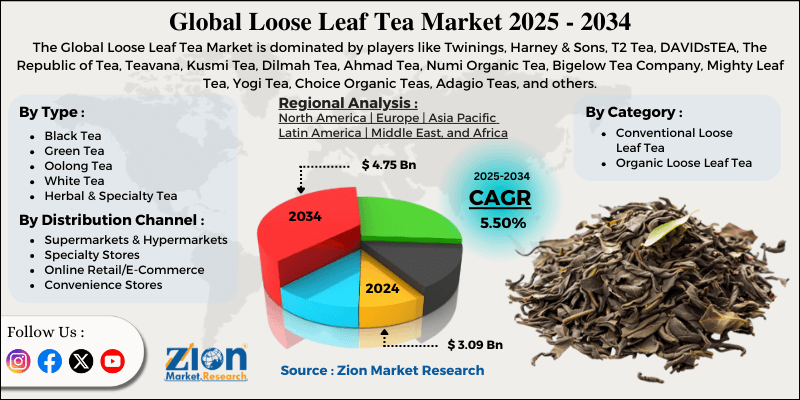
Browse the full “Loose Leaf Tea Market By Type (Black Tea, Green Tea, Oolong Tea, White Tea, Herbal & Specialty Tea), By Category (Conventional Loose Leaf Tea, Organic Loose Leaf Tea), By Distribution Channel (Supermarkets & Hypermarkets, Specialty Stores, Online Retail/E-Commerce, Convenience Stores, and Others), and By Region – Global and Regional Industry Overview, Market Intelligence, Comprehensive Analysis, Historical Data, and Forecasts 2025 – 2034 – Global and Regional Industry Report 2025 – 2034” Report at https://www.zionmarketresearch.com/report/loose-leaf-tea-market
Loose Leaf Tea Market: Segmentation
The global loose-leaf tea market is segmented based on type, category, distribution channel, and region.
Based on type, the global loose leaf tea industry is divided into black tea, green tea, oolong tea, white tea, and herbal & specialty tea. The black tea segment holds a leadership position in the market, accounting for the highest global tea consumption.
Based on category, the global loose leaf tea market is segmented into conventional loose leaf tea and organic loose leaf tea. The conventional loose leaf segment held a dominant share due to its wide availability, well-established consumer base, and affordability. It dominates in price-sensitive regions, such as Africa and the Asia Pacific, where tea is a staple drink consumed daily.
Based on distribution channel, the global market is segmented as supermarkets & hypermarkets, specialty stores, online retail/e-commerce, convenience stores, and others. The supermarkets & hypermarkets segment captured a substantial share of the market. These outlets offer consumers a broad variety, trusted quality, and competitive pricing, increasing their preference.
Regional Scope:
What gives Asia Pacific a competitive edge in the global Loose Leaf Tea Market?
The Asia Pacific is projected to maintain its dominant position in the global loose leaf tea market, owing to its strong tea production base, deep-rooted cultural consumption, and growing disposable income. The Asia Pacific region holds a leading position in tea production, with economies such as Sri Lanka, China, and India accounting for over 75% of the global tea output. These economies supply international and domestic markets with premium loose-leaf tea varieties. The numerous plantations promise worldwide leadership in supply and cost efficiency. Tea drinking is an integral part of daily life in the APAC region, making it the leading consumer base. India and China together consume more than 60% of the worldwide tea, with loose leaf variety being the traditional preference. This legacy promises resilient and consistent demand in demographics.
Request For Customization – https://www.zionmarketresearch.com/custom/9883
Loose Leaf Tea Market: Competitive Landscape
The report contains qualitative and quantitative research on the global loose leaf tea market, as well as detailed insights and development strategies employed by the leading competitors.
Some of the leading players in the global loose leaf tea market include;
The global loose leaf tea market is segmented as follows:
By Type
By Category
By Distribution Channel
By Region
Request Free Brochure of the Global Loose Leaf Tea Market @ https://www.zionmarketresearch.com/requestbrochure/loose-leaf-tea-market
Key Questions Answered in This Report:
Key Offerings:
Browse Other Related Research Reports
About Zion Market Research:
Zion Market Research is a leading market research organization offering industry expertise and scrupulous consulting services to clients for their business development. The reports and services offered by Zion Market Research are used by prestigious academic institutions, start-ups, and companies globally to measure and understand the changing international and regional business backgrounds.
Our clients’/customers’ conviction in our solutions and services has pushed us to always deliver the best. Our advanced research solutions have helped them in making appropriate decision-making and providing guidance for strategies to expand their business.
Contact Us:
Zion Market Research
USA/Canada Toll Free: 1 (855) 465-4651 | Newark: 1 (302) 444-0166
UK: +44 2034 894158
India: +91 7768 006 007 | +91 7768 006 008
Email: sales@zionmarketresearch.com | Web: https://www.zionmarketresearch.com/
Follow Us on – LinkedIn | X | Facebook | Pinterest | YouTube
Visit Our Blog at – https://www.techicy.com/

✔️ Consider collagen source: Some packaging disclaims the type of collagen within, for example, type I or type II. “There are a few different types of collagen, but the primary ones are known as types I, II, and III,” explains Jones. “Some research suggests the benefits of type I and type III collagen supplements are mainly related to muscle growth and support, weight management, beauty, and skin, while type II is best for supporting healthy joints.”
✔️ Look for the words “collagen peptides” or “hydrolyzed collagen”: “Not all collagen is created equal,” says Jones. “This means the collagen is put through a special production process that hydrolyzes the collagen protein into smaller components, called peptides. Peptides are microscopic bundles of amino acids that are easier for the body to absorb–which means you get the most benefits!”
✔️ Know that collagen powders are not plant-based: Collagen powders are derived from animals, and there are currently no vegan or vegetarian-friendly supplements on the market. However, there are plant-based supplements that may help boost the body’s natural collagen production.
Rev Dr L Kari Longchar officially released and dedicated ‘Jemdangang’ natural green tea in the presence of producers and attendees during a programme held at Mercy Home, Sangtemla Ward, Mokokchung, on November 26. (Morung Photo)
Morung Express News
Mokokchung | November 26
Jemdangang, a natural green tea cultivated in the Wameken Valley under Mokokchung’s Tuli Subdivision, was formally dedicated and launched on Wednesday during a programme held at Mercy Home, Sangtemla Ward, Mokokchung.
Speaking at the event, Lima Longchar shared the journey behind the product’s development. The plantation, located at Tuli’s 10th Mile—about a kilometre from the Tuli railway station—is jointly cultivated by three families: 2 hectares under his care, a little over 1 hectare by Lanu Atsongchanger, and 1 hectare by Rev Dr Mar Pongener, General Secretary of the NBCC.
He recounted that the group had initially considered other plantations before deciding on tea. “From the first day we started organic and registered with the Tea Board of India, Jorhat, who also advised us to remain fully organic,” he said. Although the plantation has existed for eight years, plucking began only last year. The absence of an organic tea factory in the region forced them to send their leaves to non-organic processing units, causing considerable financial losses.
The cultivators had briefly considered shifting to non-organic methods, but the risks were too high, while continuing organic cultivation meant expensive transportation. Setting up their own factory was also beyond their financial capacity. After undertaking exposure visits to Assam and to local plantations, the team developed a handmade machine and began small-scale trial production. The name Jemdangang, he added, was coined five years ago by Sentila, wife of Rev Dr Pongener.
Releasing the product and offering the dedicatory prayer, Rev Dr L Kari Longchar commended the effort as a promising example of local enterprise in a state that has long relied heavily on outside support. He stressed the need for individuals, families, villages, and the state to work towards self-sufficiency.
Although Nagaland has abundant resources, he observed, many remain underutilised, creating dependence on established systems and “readymade” assistance. While growing numbers of people express the desire to return to their villages and reconnect with their land, he emphasised that genuine productivity requires skill, scientific knowledge, and practical guidance.
Using Jemdangang as an example, Rev Dr Longchar highlighted the importance of efficient production and strong marketing across all sectors. He expressed hope that the tea would not only serve nearby towns but eventually expand to wider, even international, markets. He reminded youth that reaching beyond local markets is ultimately their responsibility.
Reflecting on the decades since Nagaland attained statehood, he cautioned against what he described as a developing “beggar mentality,” where people expect benefits without contributing through hard work. With determination and God-given strength, he said, every individual is capable of earning a dignified livelihood. He urged all to prioritise productive work to reduce dependency and strengthen a more self-reliant society.
Jemdangang is currently available at Urban Oasis and Unique Bakery, with proposals underway for placement at Vishal Megamart. A stall will also operate during the Hornbill Festival, and supplies to Kohima stores are expected to begin next week. The tea is priced at Rs 3,500 per kg and also comes in 70-gram packs for Rs 250. Though grown organically, the tea cannot yet be officially labelled “organic” as certification requires a three-year process now in progress. The producers stated that plans are underway to introduce Jemdangang to international markets soon.
The global Vitamin & Mineral Premixes Market is experiencing a significant expansion, fueled by rapid changes in consumer behavior, growing health awareness, and the rising demand for fortified foods and dietary supplements. According to recent market estimates, the global industry-valued at US$ 1.2 Bn in 2022-is projected to reach US$ 2.4 Bn by 2031, growing at a robust CAGR of 7.7% from 2023 to 2031. This momentum reflects increasing awareness regarding nutritional deficiencies and the critical role of micronutrients in overall health and wellness.
As consumers seek convenient, enriched, on-the-go food products and supplements, vitamin and mineral premixes have emerged as essential components in food processing, pharmaceuticals, animal nutrition, and ready-to-eat product formulations.
Discover essential conclusions and data from our Report in this sample – https://www.transparencymarketresearch.com/sample/sample.php?flag=S&rep_id=41042
Market Overview
Vitamin & mineral premixes are customized blends containing essential vitamins, minerals, amino acids, nucleotides, and other functional ingredients. These premixes optimize the nutritional profile of food and beverage products, supplement formulations, and animal feed.
The surge in micronutrient deficiencies across global populations, coupled with changing dietary patterns and the growing trend of preventive healthcare, is significantly shaping the market landscape. Moreover, the fast-paced lifestyle of consumers has driven demand for fortified packaged foods, convenience foods, and ready-to-drink functional beverages, further propelling the growth of the vitamin & mineral premixes industry.
North America currently dominates market share, attributed to the presence of leading premix manufacturers, increased consumption of dietary supplements, and rising incidences of chronic diseases that require targeted nutrition.
Key Drivers of Market Growth
1. Rising Consumption of Dietary Supplements
Heightened awareness of preventive health and wellness is pushing consumers toward dietary supplements. According to surveys in the U.S., 77% of consumers use dietary supplements, with Vitamin D, Vitamin C, and multivitamins being the most commonly consumed.
The National Institute of Health reports high supplement consumption among student athletes and military personnel, reflecting broad adoption. These trends significantly boost demand for vitamin & mineral premixes used in supplement manufacturing.
2. Growing Demand for Ready-to-Eat and Fortified Foods
Modern lifestyles and urbanization have escalated consumer dependency on ready-to-eat (RTE) and convenience foods. Food producers increasingly incorporate vitamin and mineral premixes into products such as cereals, beverages, snacks, and dairy items to enhance nutritional value and meet regulatory requirements.
Innovative product launches-such as Prinova’s functional hydration beverages enriched with BCAAs, electrolytes, and antioxidants-highlight the growing integration of micronutrient premixes in modern health-oriented products.
3. Expansion of the Functional and Herbal Nutrition Market
Consumers are shifting toward natural, herbal, and organic nutritional products. Premixes formulated with Ayurvedic ingredients, herbal extracts, and botanical blends are gaining popularity, reflecting a broader clean-label movement.
4. Growing Aging Population
The aging demographic in North America, Europe, and parts of Asia requires targeted nutrition solutions that promote bone health, immunity, and cognitive function-directly increasing demand for customized vitamin and mineral blends.
Latest Market Trends
• Bio-based and eco-friendly premixes are gaining traction as manufacturers respond to environmentally conscious consumers.
• Increased focus on mental health nutrition, with companies offering micronutrient blends that aid cognitive performance.
• Innovations in personalized nutrition, enabling brands to tailor premixes to individual dietary needs.
• Clean-label formulations free from synthetic additives are becoming mainstream.
• Rapid growth of functional beverages, energy drinks, fortified dairy alternatives, plant-based snacks, and immunity-boosting supplements.
Key Players and Industry Leaders
The vitamin & mineral premixes market is moderately consolidated, with global players investing heavily in innovation, formulation expertise, and regional expansion. Key profiled companies include:
• DSM
• Glanbia Plc
• RITS Lifesciences Private Limited
• Bioven Ingredients
• Barentz
• Vetline
• NAGASE & CO., LTD.
• AMINO GmbH
• Jubilant Life Sciences
• Steggall Nutrition
• HELLAY Australia
• SternVitamin GmbH & Co. KG
These companies focus on customized premix solutions, advanced R&D capabilities, clean-label ingredients, and strategic partnerships to meet rising global demand.
Recent Developments
• June 2022: DSM launched a bio-based Vitamin A, contributing to sustainable ingredient innovation in personal care and cosmetic applications.
• March 2022: SternVitamin introduced micronutrient blends designed to enhance mental and cognitive functions, supporting the growing cognitive wellness product market.
• Rapid adoption of herbal and plant-based ingredients across food, beverage, and supplement industries.
• New product formulations targeting hydration, immunity, anti-stress, and sports performance.
Market Opportunities and Challenges
Opportunities
1. High Growth in Functional Foods and Beverages
The booming demand for plant-based beverages, fortified dairy alternatives, and energy drinks creates new opportunities for premix suppliers.
2. Emerging Markets in Asia-Pacific and Latin America
Rising disposable incomes and health awareness in India, China, Brazil, and ASEAN countries are contributing to high adoption rates.
3. Expansion in Personalized Nutrition
As consumers seek personalized health solutions, customized premix development presents a lucrative market space.
4. Technological Advancements in Ingredient Processing
Microencapsulation, nano-delivery systems, and improved stability technologies enable more effective fortification.
Challenges
• High cost of fortified and premium nutrition products may restrict adoption in low-income markets.
• Lack of awareness in certain regions regarding premix benefits.
• Regulatory complexities related to food fortification and supplement formulation.
• Potential supply chain disruptions affecting vitamin and mineral ingredient sourcing.
Future Outlook
The market’s future trajectory remains strongly positive, driven by shifting consumer lifestyles, increasing chronic disease burden, and growing preference for preventive healthcare. From 2023 to 2031, the vitamin & mineral premixes market is expected to witness steady global expansion, with:
• Increased demand for cognitive health and mental wellness premixes
• Growing use of premixes in sports nutrition and performance-enhancing products
• Higher adoption of sustainability-driven, bio-based nutritional ingredients
• Integration of premixes in plant-based and alternative protein products
The industry will also benefit from continued innovations in nutraceuticals, advanced food processing technologies, and rising government support for micronutrient fortification.
Buy this Premium Research Report for a comprehensive view of market dynamics – https://www.transparencymarketresearch.com/checkout.php?rep_id=41042<ype=S
Market Segmentation
By Form
• Powder
• Liquid
By Application
• Food & Beverages
o Bakery & Confectionaries
o Beverages
o Dairy Products
o Cereals & Snacks
• Animal Feed
• Dietary Supplements
• Pharmaceuticals
• Others
By Type
• Vitamin Premixes
• Mineral Premixes
• Amino Acid Premixes
• Nucleotide Premixes
• Others
Regions Covered
• North America
• Latin America
• Western & Eastern Europe
• South Asia & Pacific
• East Asia
• Middle East & Africa
Key countries include the U.S., Canada, Germany, U.K., France, India, China, Japan, South Korea, Brazil, Turkiye, Australia, and more.
Why Buy This Report?
• Provides comprehensive market insights, including quantitative data, historical analysis, and 2023-2031 forecasts.
• Offers in-depth segmentation, covering applications, forms, types, and regional performance.
• Evaluates key drivers, restraints, opportunities, and trends, supported by expert analysis.
• Includes Porter’s Five Forces, value chain assessment, and competitive landscape mapping.
• Features company profiles, product portfolios, financial performance, and strategic developments.
• Addresses the rising demand for functional and fortified foods, dietary supplements, and customized nutrient solutions.
• Ideal for manufacturers, investors, policymakers, and stakeholders seeking actionable market intelligence.
Explore Latest Research Reports by Transparency Market Research:
Vegan Chocolate Market: https://www.transparencymarketresearch.com/vegan-chocolate-market.html
Avocado Market: https://www.transparencymarketresearch.com/avocado-market.html
Red Yeast Rice Market: https://www.transparencymarketresearch.com/red-yeast-rice-market.html
Banana Flour Market: https://www.transparencymarketresearch.com/banana-flour-market.html
About Transparency Market Research
Transparency Market Research, a global market research company registered at Wilmington, Delaware, United States, provides custom research and consulting services. Our exclusive blend of quantitative forecasting and trends analysis provides forward-looking insights for thousands of decision makers. Our experienced team of Analysts, Researchers, and Consultants use proprietary data sources and various tools & techniques to gather and analyses information.
Our data repository is continuously updated and revised by a team of research experts, so that it always reflects the latest trends and information. With a broad research and analysis capability, Transparency Market Research employs rigorous primary and secondary research techniques in developing distinctive data sets and research material for business reports.
Contact Us:
Transparency Market Research Inc.
CORPORATE HEADQUARTER DOWNTOWN,
1000 N. West Street,
Suite 1200, Wilmington, Delaware 19801 USA
Tel: +1-518-618-1030
USA – Canada Toll Free: 866-552-3453
This release was published on openPR.
Leander, Texas and Tokyo, Japan – Nov.26.2025
As per DataM intelligence research report” Global Iced Tea Market reached US$ 55.2 billion in 2022 and is expected to reach US$ 88.6 billion by 2030 growing with a CAGR of 6.1% during the forecast period 2024-2031.” Healthier beverage preferences and ready-to-drink convenience are boosting the iced tea market globally.
Download your exclusive sample report today: (corporate email gets priority access):
https://www.datamintelligence.com/download-sample/iced-tea-market?Prasad
United States: Recent Industry Developments
✅ In November 2025, PepsiCo (Lipton) launched a line of brewed cold-chain iced teas sweetened with monk fruit and allulose for lower-calorie positioning. The SKUs target health-conscious consumers and QSR partnerships. This strengthens Lipton’s relevance in the functional RTD tea segment.
✅ In October 2025, Arizona Beverages invested US$15 million to add small-batch cold-brewing lines and nitrogen-flush packaging for extended shelf stability and fresher flavor. The investment scales premium offerings to national retailers. This reinforces Arizona’s innovation in value RTD teas.
✅ In September 2025, Honest Tea (Coca-Cola) reformulated its organic iced teas with enhanced polyphenol protection technology to preserve antioxidants during bottling. The move supports wellness marketing and clean-label claims. This elevates Honest Tea’s presence among health-forward buyers.
✅ In August 2025, Boston Beer Company (Twisted Tea) expanded flavored iced tea mixers aimed at adult beverage pairings and ready-to-serve formats, broadening on-premise placement. The innovation drives premiumization in flavored tea beverages. This strengthens Twisted Tea’s diversified beverage portfolio.
Japan: Recent Industry Developments
✅ In November 2025, Ito En launched craft cold-brewed iced teas with stabilized catechins and enhanced aroma retention targeting wellness-minded consumers. The products emphasize Japanese tea quality and functional benefits. This reinforces Ito En’s leadership in premium bottled teas.
✅ In October 2025, Suntory invested ¥4.0 billion to expand RTD tea brewing and aseptic fill lines for aromatic iced tea launches with reduced sugar formulations. The investment supports nationwide rollouts and product variety. This strengthens Suntory’s position in Japan’s beverage market.
✅ In September 2025, Kirin Beverage introduced ready-to-drink hojicha and oolong iced teas with micro-filtration processes to preserve roasted notes and extend shelf life. The innovation appeals to both traditional and younger consumers. This elevates Kirin’s product differentiation in tea beverages.
✅ In August 2025, Asahi Soft Drinks piloted premium iced tea cartons for convenience channels emphasizing zero-sugar, high-antioxidant claims and recyclable packaging. The format targets eco-conscious shoppers. This boosts Asahi’s appeal in modern retail channels.
Iced Tea Market: Drivers
The iced tea market is expanding rapidly as consumers seek refreshing, low-calorie, and functional beverage options that fit modern lifestyles. Iced tea offers a convenient alternative to carbonated soft drinks, supported by rising interest in antioxidants, herbal blends, and natural flavors. Growing demand for ready-to-drink beverages, clean-label formulations, and sugar-reduced products is driving adoption across supermarkets, cafes, and quick-service restaurants. Technological advancements in cold-brewing, flavor extraction, and packaging are enhancing product quality, stability, and shelf life. Additionally, increasing consumer preference for botanical infusions and healthier hydration choices is further supporting market growth.
Collaboration among beverage manufacturers, flavor houses, and ingredient suppliers is fueling innovation in premium, organic, and fortified iced teas. The expansion of e-commerce and on-the-go consumption is broadening market reach and accessibility. Marketing strategies emphasizing natural ingredients, antioxidant benefits, and lifestyle alignment are boosting brand visibility and consumer loyalty. Growth in specialty tea culture and café-style beverages continues to introduce new flavor profiles and formats. With rising health awareness, product innovation, and evolving consumer preferences, the iced tea market is positioned for strong and sustained global expansion.
Get Customization in the report as per your requirements: https://www.datamintelligence.com/customize/iced-tea-market?Prasad
Iced Tea Market: Major Players
PepsiCo, Unilever, The Coca-Cola Company, 4C Foods Corp., Harris Freeman & Co, Mother Parkers Tea & Coffee Inc., Arizona Beverages USA, BOS Brands, Templar Food Products, and Nestle SA.
Segment Covered in the Iced Tea Market:
By Product Type
Black iced tea leads with 38% share, driven by strong global preference, affordability, and wide availability in RTD formats. Green iced tea holds 27%, supported by rising demand for antioxidant-rich beverages. Herbal iced tea captures 22%, fueled by interest in functional and caffeine-free drinks. Other variants account for 13%, including fruit-infused and specialty blends.
By Form
Liquid iced tea dominates with 63% share, driven by high RTD consumption and strong retail distribution. Powdered iced tea holds 37%, favored for its longer shelf life, affordability, and bulk usage in households and food service.
By Distribution Channel
Supermarkets/Hypermarkets lead with 41% share, offering extensive RTD product ranges and promotional visibility. Convenience stores hold 29%, supported by impulse purchases and portability. Online sales account for 20%, driven by digital retail growth and specialty brand availability. Other channels represent 10%, including cafés and vending machines.
Regional Analysis
North America – 28% Share
North America leads with 28%, driven by strong RTD consumption, health-focused tea innovations, and premium flavored iced teas gaining traction in the U.S.
Europe – 24% Share
Europe holds 24%, supported by rising adoption of low-sugar iced tea, growing café culture, and increasing demand for herbal and organic blends.
Asia Pacific – 32% Share
Asia Pacific dominates with 32%, fueled by massive tea-drinking populations and strong RTD product penetration in China, Japan, Indonesia, and India.
South America – 9% Share
South America accounts for 9%, driven by Brazil and Argentina’s growing preference for refreshing, flavored iced tea over carbonated beverages.
Middle East & Africa – 7% Share
The region carries 7%, with rising demand in GCC countries and South Africa due to hot climates, increasing premium tea imports, and expanding retail availability.
Purchase this report before year-end and unlock an exclusive 30% discount:
https://www.datamintelligence.com/buy-now-page?report=iced-tea-market
(Purchase 2 or more Repots and get 50% Discount)
Request for 2 Days FREE Trial Access:
https://www.datamintelligence.com/reports-subscription?Prasad
✅ Competitive Landscape
✅ Technology Roadmap Analysis
✅ Sustainability Impact Analysis
✅ KOL / Stakeholder Insights
✅ Consumer Behavior & Demand Analysis
✅ Import-Export Data Monitoring
✅ Live Market & Pricing Trends
Have a look at our Subscription Dashboard:
https://www.youtube.com/watch?v=x5oEiqEqTWg
Contact Us –
Company Name: DataM Intelligence
Contact Person: Sai Kiran
Email: Sai.k@datamintelligence.com
Phone: +1 877 441 4866
Website: https://www.datamintelligence.com
About Us –
DataM Intelligence is a Market Research and Consulting firm that provides end-to-end business solutions to organizations from Research to Consulting. We, at DataM Intelligence, leverage our top trademark trends, insights and developments to emancipate swift and astute solutions to clients like you. We encompass a multitude of syndicate reports and customized reports with a robust methodology.
Our research database features countless statistics and in-depth analyses across a wide range of 6300+ reports in 40+ domains creating business solutions for more than 200+ companies across 50+ countries; catering to the key business research needs that influence the growth trajectory of our vast clientele.
This release was published on openPR.
On Tuesday, Australia’s Therapeutic Goods Administration (TGA) announced a raft of changes to how products containing vitamin B6 are packaged and sold.
The TGA decision is based on an extensive review, prompted by widespread concerns earlier this year that high doses were causing toxicity and leading to lasting nerve damage.
The TGA says the tighter controls – which include restrictions on over-the-counter sales for higher doses – will strike a balance between the vitamin’s benefits and its potential harms.
This may leave some people confused about whether vitamin B6 is safe to take. How much is too much? And can I still buy my supplement over-the-counter?
B6 (also known as pyridoxine, pyridoxamine and pyridoxal) is an essential vitamin for good health, involved in more than 140 processes in the body.
But we can’t produce it ourselves, so we need to get it elsewhere – mainly from our diet.
B6 can be found in a wide range of foods, including animal products such as meat, poultry, fish, eggs and dairy.
Plant-based sources include:
The recommended dietary daily intake of B6 varies based on age. So wherever you get it – diet or supplements – this is the recommended amount per day.
The upper recommended limit for healthy adults is 50mg/day.
But the recommended intake is lower for infants and people who are pregnant or breastfeeding. For detailed information, visit the government’s Eat for Health website.
Vitamin B6 deficiency has been linked to diseases including some kinds of cancer, mental health disorders, and cardiovascular disease (such as heart attacks or strokes). However, this kind of deficiency is not common in Australia.
Still, some people choose to take vitamin B6 as a supplement. Or they may take other products and be unaware they contain it.
This can increase the risk of having too much – which can be toxic.
Taking high doses of vitamin B6 over a long time can lead to poisoning and cause peripheral neuropathy. This condition damages the nervous system and causes pain, weakness, numbness and tingling, mainly in the limbs.
Toxicity from food sources is extremely rare, including among individuals with enzyme deficiencies that slow B6 metabolism.
Almost all documented vitamin B6 toxicity results from excessive supplement intake, as levels found in natural foods remain well below harmful thresholds.
The TGA’s decision to tighten rules about vitamin B6 products responds to a worrying number of peripheral neuropathy cases in Australia, linked to various vitamin supplements.
The tighter measures will come into effect on June 1 2027. The changes include:
This means the products now requiring prescriptions or pharmacist supervision have around 19–117 times the recommended intake. Products with 50mg per recommended daily dose or less will still be available over-the-counter.
The amount of B6 which might cause toxicity is not fully known, as it seems to vary across the population. Some studies have identified nerve damage in people taking less than 500mg/day, but not below 200mg/day. So this is likely why the TGA chose these limits.
The new regulations are likely to affect specific standalone B6 products, which tend to have the highest doses.
But B6 is commonly also added to multivitamins, “ageing support” supplements, skin and hair support products, and effervescent products such as Berocca. Most of these contain less than 50mg in the daily recommended dose, and so will continue to be available over the counter.
Many people are unaware how much vitamin B6 they are consuming, often across multiple supplements.
It is likely the combination of these products that leads to people unknowingly consuming significant enough doses to cause harm.
The TGA’s report also acknowledged the need for clearer labelling, including mandatory front-of-pack statements that indicate when a product contains vitamin B6 – especially in combination products.
Most of the 125 medicines containing more than 50mg and less than 200mg per recommended daily dose of vitamin B6 are currently listed as complementary medicines. They will need to be registered on the Australian Register of Therapeutic Goods and relabelled.
But the report says the TGA may decide to introduce further packaging changes, including strengthening warning statements and change how vitamin B6 is labelled.
If you take vitamin supplements of any kind, check the label to ensure you are not exceeding the recommendations (50mg/day is more than adequate) across all your supplements.
If you have any questions, ask your pharmacist for advice. If you’re worried you’ve taken too much vitamin B6, see a doctor.