The main category of Dietary Supplements News Articles.
You can use the search box below to find what you need.
[wd_asp id=1]
The main category of Dietary Supplements News Articles.
You can use the search box below to find what you need.
[wd_asp id=1]
Motorists are being advised to put used tea bags in their vehicles this month as temperatures drop. The coming frosty conditions mean drivers will likely find a layer of condensation on their car windows, as cold weather typically exacerbates the issue.
Condensation occurs when warm, moist air inside the car comes into contact with the cold glass surface, causing water vapor to condense and form droplets, and this tends to be more noticeable in winter or during extremely cold weather spells.
The colder the external temperature, the more significant the temperature drop when warm air hits the glass, resulting in fogging. Clearing condensation and fog can take time, which can be quite annoying before a morning commute, but there’s a simple solution to combat the problem – and all you need are some used tea bags. It comes after we revealed drivers are using an easy ‘four button combo’ to defrost their car windshields faster.
Used tea bags – especially those from black and green tea – are highly effective at reducing condensation and dampness inside cars because the tea leaves contain naturally absorbent substances.
To address this issue of condensation in your car, specialists suggest positioning used tea bags, or small containers of loose tea, throughout your vehicle’s interior, such as on the dashboard or within door compartments.
This method can decrease the likelihood of condensation developing on windshields, which helps motorists steer clear of potential fines.
Ben Pitcher, motoring specialist at DPF Experts, describes tea bags as an excellent remedy for this challenge since they naturally absorb moisture, cost little and are typically already available in your kitchen cabinet.
He states: “Tea bags, especially black or green tea, are natural moisture absorbers. Placing them in your car can help reduce condensation, especially in colder months. Though they aren’t as powerful as professional dehumidifiers, they’re a cheap, eco-friendly solution for tackling minor dampness.”
Both green and black tea have the ability to soak up moisture that accumulates when there’s a temperature difference between the inside and outside of your vehicle. As a bonus benefit, they can also freshen up your car’s interior smell.
The tea bags work to absorb and eliminate unwanted odors, making your vehicle smell cleaner with minimal effort required.
According to Pitcher, those small silica gel packets—the ones you typically find tucked into shoe boxes, electronic devices and food packaging—can work similarly well and are particularly effective at clearing windscreen condensation during morning hours when it’s most prevalent.
He explains: “Silica gel packets, commonly found in packaging, are excellent at absorbing moisture. Collecting a few and placing them around your car can help control condensation. While they won’t clear foggy windows instantly, they can help reduce moisture and keep your windscreen clearer for longer.”
It comes after we revealed drivers can rapidly defrost their car’s windshield using these 2 household items.
Pre-workout supplements are formulated to improve physical performance, but they are not regulated by the U.S. Food and Drug Administration (FDA) and may cause a variety of side effects. Each pre-workout brand can be formulated differently, so the potential side effects will vary from product to product.
Caffeine is the most popular stimulant in the world. It might enhance endurance workouts like running when consumed before a workout. This supplement can cause significant side effects. They include:
At high doses, caffeine can cause extremely serious side effects, even death.
Beta-alanine is a supplement used to decrease muscle fatigue and improve physical performance. Research has found conflicting evidence on its effectiveness. It was found to be safe in doses of 1.6 to 6.4 grams (g) per day for eight weeks.
Potential side effects found with its consumption included:
BCAAs are a group of amino acids that can provide energy to skeletal muscle during exercise. Research has not shown them to be effective in endurance exercise, but they may improve muscle mass and strength during exercise.
BCAAs currently do not have any reported side effects.
Citrulline is a supplement that widens blood vessels to allow more blood to bring nutrients and oxygen to muscles. When used as a supplement, research has found that it may improve exercise performance in young adults.
The primary reported side effect is gastrointestinal (GI) discomfort.
Creatine is an amino acid produced by the body. When taken as a supplement, it can improve energy and is beneficial for short-term, anaerobic exercise (exercise that uses energy stores in the body without using oxygen). This supplement is generally considered safe but can cause certain side effects.
These side effects are:
Pre-workout supplements may have health benefits. However, each brand has different ingredients, so it’s impossible to say whether all pre-workout supplements are effective.
Overall, the potential benefits of using a pre-workout may include:
Pre-workout supplements may be effective, but results will vary depending on the supplement’s ingredients, how it is taken, and the user’s goals.
Pre-workout supplements are not for everyone. Children should not use them, and they can cause serious interactions with certain medications.
According to the American Academy of Pediatrics (AAP), performance-enhancing supplements do not create results in high schoolers that cannot be seen through proper nutrition and hydration.
Pre-workout supplements can interact with certain medications. People who are taking the following medications need to check with their healthcare provider before taking any supplement:
There is no one right way to use and safely take a pre-workout supplement.
If the goal of the pre-workout is to increase energy, look for a supplement that contains caffeine. Caffeine starts to work within an hour and typically lasts four to six hours. Aim to complete your workout within that time frame for the best effect.
Follow the manufacturer’s label guidelines on timing of use. Many brands recommend taking the supplement 15 to 30 minutes before exercise.
Proper nutrition and hydration are the healthiest alternatives to a pre-workout supplement. Both weekend warriors and professional athletes will perform better and recover faster when they eat a well-rounded diet and are properly hydrated.
A healthy diet includes:
With so many different supplements on the market, it is difficult to know which ones are safe and contain the ingredients listed on the label. To help with this problem, some dietary supplement companies are certified by a third-party company to confirm the ingredients and amounts. These third-party companies are:
:max_bytes(150000):strip_icc()/PattyWeaslerbiopicverywell-8c11095ed0114702838c9bbd00aa1485.jpg)
The global tea bags market is set to grow from USD 7.69 billion in 2025 to USD 14.59 billion by 2035, adding USD 6.90 billion in new revenue and advancing at a CAGR of 6.6%. Growth is driven by rising health consciousness, increasing preference for convenient beverage solutions, and expanding retail infrastructure across emerging economies seeking accessible hot beverage consumption alternatives. Tea bags are increasingly recognized as efficient brewing methods in modern lifestyles, offering superior convenience, portion control accuracy, and time savings compared to traditional loose leaf preparation.
Black tea holds a 47.0% share in 2025, favored in daily consumption environments for its robust flavor profile, established brand presence, and broad demographic appeal addressing diverse consumer taste preferences and cultural tea-drinking traditions. Hypermarkets and supermarkets represent 47.0% of distribution channels and remain essential in mainstream retail environments where product visibility, promotional activities, and brand assortment match consumer shopping convenience requirements and bulk purchasing preferences.
Distribution dynamics reveal hypermarkets and supermarkets maintaining 47.0% channel dominance through established retail footprints, promotional capabilities, and comprehensive product assortment that enable consumer discovery and repeat purchasing across diverse demographic segments. Online channels expand rapidly as e-commerce platforms improve accessibility, subscription models gain acceptance, and digital-native brands capture younger consumer segments seeking specialty tea varieties and premium product positioning.
Asia Pacific leads regional growth with 7.3% CAGR, supported by traditional tea consumption cultures, expanding middle-class populations, and modern retail infrastructure development in China and India that create substantial demand for convenient tea formats. North America demonstrates steady development at 6.5% CAGR through established wellness trends, specialty tea adoption, and premiumization strategies, while Europe advances at 6.2% CAGR driven by organic tea consumption growth, sustainable packaging innovation, and afternoon tea cultural heritage.
From 2025-2030, the market will witness an incline from USD 7.69 billion to approximately USD 10.66 billion, adding USD 2.97 billion in value, which constitutes 43% of the total forecast growth period. This phase will be characterized by the continued dominance of black tea varieties in established markets, combined with accelerating adoption of specialty tea bags including herbal, green, and wellness-focused blends where functional benefits address consumer health priorities and preventive wellness approaches.
Manufacturers will concentrate on packaging sustainability optimization, material biodegradability enhancement, and retail distribution expansion in underserved regional territories where tea bag adoption remains aspirational for convenience-seeking consumers.
Compostable filter materials, plastic-free packaging, and transparent sourcing documentation will become standard industry requirements rather than premium differentiators as mainstream brands respond to environmental consciousness and circular economy expectations.
From 2030-2035, the market will witness sustained expansion from USD 10.66 billion to USD 14.59 billion, representing an addition of USD 3.93 billion or 57% of the decade’s growth. This period will be defined by the broadening acceptance of premium specialty tea bags beyond traditional black tea segments, integration of innovative brewing technologies across mainstream product lines, and strengthened direct-to-consumer channels in previously retail-dominated markets.
| Period | Primary Revenue Buckets | Share | Notes |
|---|---|---|---|
| Today | Black tea | 47% | Traditional consumption |
| Hypermarkets & supermarkets | 47% | Mainstream retail | |
| Household consumption | 65% | Domestic brewing | |
| Green tea | 22% | Health positioning | |
| Specialty blends | 18% | Premium segments | |
| Asia Pacific markets | 30% | Cultural heritage | |
| North America markets | 32% | Wellness trends | |
| Future (3-5 yrs) | Black tea varieties | 44-48% | Sustained preference |
| Specialty tea platforms | 24-28% | Functional benefits | |
| Online channels | 28-32% | Subscription models | |
| Household premium | 70-74% | Quality upgrading | |
| Sustainable packaging | 55-60% | Environmental focus | |
| Asia Pacific growth | 32-36% | Middle-class expansion | |
| Organic variants | 20-25% | Clean label demand |
| Metric | Value |
|---|---|
| Market Value (2025) → | USD 7.69 billion |
| Market Forecast (2035) ↑ | USD 14.59 billion |
| Growth Rate ★ | 6.6% CAGR |
| Leading Type → | Black Tea |
| Primary Distribution → | Hypermarkets & Supermarkets |
The market demonstrates solid fundamentals with black tea capturing a commanding 47% share through established consumption patterns and diverse flavor profiles that deliver taste satisfaction and cultural familiarity capabilities. Hypermarkets and supermarkets drive primary distribution at 47% share, supported by established retail infrastructure and promotional visibility that maintain consumer accessibility across mainstream shopping segments. Geographic concentration reveals Asia Pacific’s robust growth trajectory with 7.3% CAGR and expanding modern retail ecosystems, while North America maintains significant market presence driven by wellness positioning and specialty tea adoption in health-conscious consumer segments.
The market segments by tea type into black tea, green tea, herbal tea, and specialty blends, representing the evolution from traditional consumption patterns toward health-focused varieties and functional beverage applications requiring specific flavor profiles and wellness positioning. The distribution channel segmentation divides the market into hypermarkets and supermarkets (47%), online channels, specialty stores, and convenience retail, reflecting distinct consumer priorities for shopping convenience and promotional accessibility versus specialty curation and subscription convenience.
The end-use segmentation reveals household consumption’s commanding 65% dominance, followed by foodservice and hospitality applications, demonstrating varied consumption occasions and brewing convenience requirements. The regional segmentation reveals Asia Pacific’s exceptional 7.3% CAGR growth momentum, followed by North America at 6.5% and Europe at 6.2%, demonstrating varied tea consumption cultures, retail infrastructure maturity levels, and health awareness progression stages.
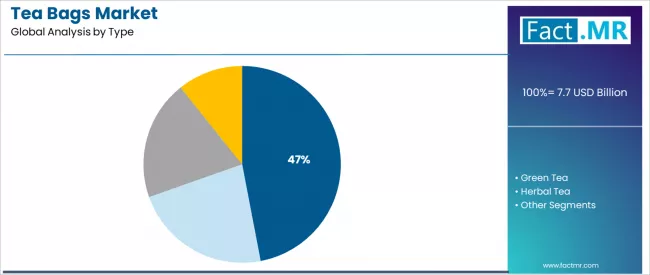
Black tea bags command the leading position in the tea bags market with a 47% market share through established consumption traditions, including robust flavor characteristics, caffeine content appeal, and versatile preparation methods that enable consumers to achieve satisfying beverage experiences across varied demographic groups and cultural tea-drinking applications.
The segment benefits from consumer familiarity with traditional tea flavors that provide consistent taste profiles, morning energy requirements, and cultural heritage connections without requiring specialized brewing knowledge or equipment investments. Advanced processing technologies enable flavor optimization, aroma preservation, and quality consistency for diverse tea bag formats, where taste reliability and brand loyalty represent critical consumer requirements.
Premium black tea variants including Earl Grey, English Breakfast, and Assam blends command substantial share within the segment, appealing to consumers seeking elevated taste experiences and brand heritage associations. Black tea varieties differentiate through proven flavor profiles, extensive brand portfolios, and integration with established consumption rituals that enhance consumer satisfaction while maintaining optimal quality standards for diverse preparation methods and consumption occasions.
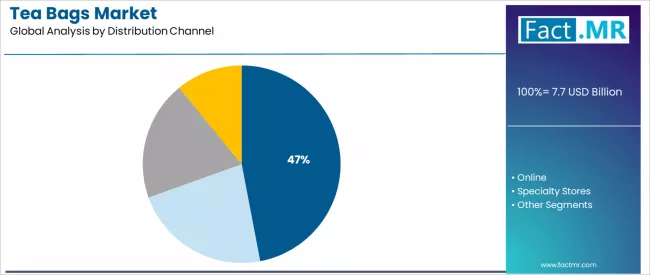
Hypermarkets and supermarkets maintain a substantial position, with a 47% share due to their comprehensive product assortment and mainstream retail accessibility characteristics. These channels appeal to convenience-seeking consumers and regular purchasers requiring visible product placement with promotional pricing opportunities, offering extensive brand selection and bulk purchasing options through organized retail environments.
Market dominance is driven by established shopping patterns, emphasizing accessible retail locations and integrated grocery purchasing where tea bags represent routine household items alongside other beverage and food products.

Household consumption demonstrates end-use leadership in the tea bags market with a 65% share due to widespread home brewing patterns and sustained focus on convenience preparation, daily consumption rituals, and cost-effective beverage solutions that maximize household value while maintaining acceptable taste quality standards.
Consumers prioritize preparation simplicity, portion control accuracy, and integration with morning routines and relaxation moments that enable consistent beverage enjoyment across diverse household settings. The segment benefits from work-from-home trends and in-home entertainment patterns that emphasize household tea consumption for daily refreshment and wellness beverage applications. Multi-pack formats capture significant share within the household segment, demonstrating consumer preference for value purchasing and inventory management.
Wellness awareness programs incorporate tea consumption as standard health practices for antioxidant intake, while convenience priorities increase demand for ready-to-brew formats that minimize preparation complexity and deliver consistent quality experiences.
Green tea captures 22% market share through comprehensive wellness positioning in antioxidant delivery, metabolism support benefits, and traditional medicine heritage. These varieties demand careful processing methods capable of maintaining polyphenol content while providing delicate flavor characteristics and health functionality claims, appealing to health-conscious consumers and preventive wellness practitioners seeking evidence-based beverage benefits.
Asia Pacific establishes market leadership in the tea bags sector with exceptional 7.3% CAGR due to comprehensive tea consumption culture and sustained focus on convenience adoption, urbanization acceleration, and modern retail expansion that maximizes product accessibility while maintaining traditional beverage heritage standards.
Consumers and manufacturers prioritize convenience integration with cultural tea traditions, modern lifestyle compatibility, and alignment with established hot beverage consumption patterns that enable coordinated market development across multiple national jurisdictions.
The region benefits from substantial tea production infrastructure and retail modernization investments that emphasize the development of convenient tea formats for urban commuter applications and household consumption requirements.
Retail infrastructure programs incorporate modern grocery formats as standard urban development considerations for consumer convenience, while rising middle-class populations increase demand for packaged beverage products that meet quality expectations and minimize preparation time requirements.
| Category | Factor | Impact | Why It Matters |
|---|---|---|---|
| Driver | Health consciousness & wellness trends (antioxidant benefits, functional beverages) | ★★★★★ | Consumer preference shifting toward natural wellness beverages drives tea bag adoption; manufacturers providing functional tea blends gain competitive advantage in health-focused market segments. |
| Driver | Convenience demand & lifestyle changes (single-serve formats, quick preparation) | ★★★★★ | Modern urban lifestyles require efficient beverage solutions; tea bag convenience positioning enables market expansion across time-constrained consumer demographics and workplace environments. |
| Driver | Retail infrastructure expansion & organized retail growth (hypermarket penetration, brand visibility) | ★★★★☆ | Emerging market retail modernization drives packaged tea adoption; organized retail channels providing promotional support expand addressable markets beyond traditional loose leaf consumption. |
| Restraint | Loose leaf tea preference & quality perception (authentic experience, premium positioning) | ★★★☆☆ | Traditional tea enthusiasts resist tea bag adoption; quality perception challenges affect premium segment penetration and limit market expansion in connoisseur demographics. |
| Restraint | Packaging sustainability concerns & plastic microplastics (environmental impact, material criticism) | ★★★★☆ | Environmental activists criticize conventional tea bag materials; sustainability requirements increase development costs and affect brand reputation in environmentally-conscious segments. |
| Trend | Sustainable packaging innovation & compostable materials (biodegradable filters, plastic-free solutions) | ★★★★★ | Growing consumer expectation for environmental responsibility beyond conventional packaging; sustainability positioning becomes core differentiation strategy for premium brand access. |
| Trend | Specialty tea growth & premium blends (herbal varieties, functional ingredients, organic certification) | ★★★★☆ | Tea consumption evolving beyond commodity beverage toward lifestyle wellness product; specialty positioning drives higher margins and brand loyalty in affluent demographics. |
The tea bags market demonstrates robust regional growth dynamics with emerging leaders including China (7.5% CAGR) and India (7.0% CAGR) driving expansion through urbanization acceleration and modern retail penetration. Strong Performers encompass USA (6.4% CAGR), Brazil (6.3% CAGR), and Japan (6.2% CAGR), benefiting from established beverage consumption patterns and wellness trend adoption. Developed Markets feature UK (6.1% CAGR) and Germany (6.0% CAGR), where tea culture heritage and sustainable packaging innovation support consistent growth patterns.
Regional synthesis reveals Asian markets leading adoption through comprehensive urban lifestyle transformation and convenience preference acceleration, while Western countries demonstrate measured growth potential supported by specialty tea expansion and organic product positioning. European markets show solid development driven by sustainability standards and traditional tea culture preservation.

| Region/Country | 2025 to 2035 Growth | How to win | What to watch out |
|---|---|---|---|
| China | 7.5% | Focus on convenience positioning for urban consumers | Traditional loose leaf preference; cultural resistance |
| India | 7.0% | Lead with affordable quality tea solutions | Unorganized retail dominance; price sensitivity |
| USA | 6.4% | Provide specialty wellness blend innovation | Coffee culture competition; market maturity |
| Brazil | 6.3% | Offer localized flavor adaptations | Economic volatility; regional taste preferences |
| Germany | 6.0% | Push organic certification excellence | Sustainability cost pressure; regulatory complexity |
| UK | 6.1% | Deliver heritage brand premium positioning | Market saturation; discount competition |
| Japan | 6.2% | Maintain quality consistency standards | Green tea loose leaf tradition; demographic aging |
China establishes fastest market growth through progressive urbanization programs and comprehensive convenience adoption, positioning tea bags as practical brewing solutions in modern office environments and household consumption applications. The country’s 7.5% growth rate reflects lifestyle transformation supporting packaged tea formats and expanding modern retail infrastructure that encourages the deployment of convenient products in diverse urban settings.
Growth concentrates in major metropolitan areas, including Shanghai, Beijing, and Guangzhou, where urban professionals showcase increasing preference for convenient beverage solutions that appeal to time-constrained consumers demanding quality maintenance and preparation simplicity.
Chinese tea bag manufacturers are developing products that balance traditional tea quality expectations with modern convenience requirements, including retail distribution expansion and e-commerce platform integration strategies. Supply chain development through organized retail networks and online marketplace partnerships expand market access, while product innovation initiatives support development across diverse tea varieties and flavor preference segments.
In Mumbai, Delhi, and Bangalore regions, urban consumers and working professionals are adopting tea bags as convenient brewing alternatives for workplace and household applications, driven by increasing organized retail penetration and modern lifestyle preferences that emphasize the importance of time-efficient beverage preparation.
The market holds a 7.0% growth rate, supported by retail infrastructure modernization programs and brand marketing investments that promote packaged tea formats for urban applications. Indian consumers are favoring products that provide consistent quality and convenient preparation, particularly appealing in metropolitan markets where time scarcity and workplace consumption represent critical purchasing priorities.
Market expansion benefits from massive retail modernization infrastructure and brand distribution capabilities that enable domestic development of quality-competitive tea bag platforms for urban applications. Consumer adoption follows patterns established in packaged food trends, where convenience positioning and brand trust drive purchasing decisions and category acceptance patterns.

The USA establishes wellness market leadership through comprehensive health trend adoption and established specialty tea positioning, integrating tea bags across household consumption occasions, workplace beverage programs, and wellness routine applications. The country’s 6.4% growth rate reflects sophisticated consumer health awareness and functional beverage preferences that support widespread deployment of specialty tea platforms in premium applications.
Growth concentrates in established markets, including California, New York, and Texas, where health-conscious consumers showcase advanced wellness knowledge that appeals to preventive health practitioners seeking functional beverage benefits and natural ingredient transparency.
American tea brands leverage established retail distribution networks and comprehensive digital marketing capabilities, including influencer partnerships and wellness community engagement that create brand awareness and trial conversion patterns. The market benefits from mature e-commerce infrastructure and subscription model acceptance that encourage specialty tea discovery while supporting organic certification and functional ingredient positioning.
Brazil establishes robust beverage diversification momentum through progressive consumer preference evolution and emerging tea culture development, integrating tea bags across urban household networks and modern retail environments. The country’s 6.3% growth rate reflects growing beverage variety appreciation and increasing adoption of international beverage formats that supports expanding tea bag deployment in Brazilian markets.
Growth concentrates in major metropolitan regions, including São Paulo, Rio de Janeiro, and Brasília, where cosmopolitan consumers showcase demand for diverse beverage options that appeal to health-conscious demographics seeking natural alternatives with functional benefits accessibility.
Brazilian retailers focus on product education and consumption occasion positioning, creating demand for convenient tea formats that combine international quality standards with Brazilian taste preferences. The market benefits from expanding organized retail infrastructure and growing health awareness that support tea adoption while maintaining price positioning important to Brazilian economic conditions.
Germany’s advanced organic market demonstrates sophisticated tea consumption with documented quality excellence in organic certification and sustainable packaging through premium retail distribution channels and specialized organic store networks. The country leverages environmental consciousness and food quality standards to maintain a 6.0% growth rate.
Consumer centers, including Bavaria, North Rhine-Westphalia, and Baden-Württemberg, showcase sustainability-oriented consumption where tea bags integrate with established organic food preferences and environmental expectations to optimize packaging sustainability and ensure ingredient traceability maintenance.
German consumers prioritize organic certification and sustainable sourcing in tea purchasing, creating demand for environmentally validated platforms with comprehensive documentation characteristics, including origin verification, fair trade compliance, and compostable packaging materials. The market benefits from established organic consumer segments and environmental awareness patterns that provide premium positioning opportunities and compliance with strict European sustainability regulations.
UK’s tea market demonstrates sophisticated cultural integration with documented effectiveness in afternoon tea traditions and premium blend development through established retail channels and heritage brand networks. The country maintains a 6.1% growth rate, leveraging traditional tea culture and contemporary specialty variety adoption in beverage consumption. Consumer centers, including London, Manchester, and Edinburgh, showcase premium tea positioning where tea bags integrate with cultural heritage patterns and modern wellness trends to optimize flavor quality and maintain brand tradition standards under evolving consumer preferences.
Consumers prioritize brand heritage and flavor authenticity in tea purchasing decisions, creating demand for quality-established platforms with proven taste characteristics, including traditional blend formulations combined with contemporary specialty varieties and organic options. The market benefits from established tea culture infrastructure and brand loyalty patterns that provide premium positioning opportunities and compliance with UK food quality frameworks.
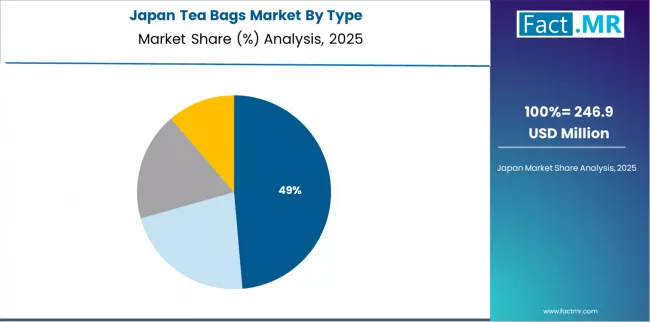
Japan’s advanced beverage market demonstrates established tea consumption culture with documented precision in quality standards and flavor consistency through comprehensive retail networks and quality-focused brand positioning. The country maintains a 6.2% growth rate, leveraging traditional tea expertise and gradual tea bag format acceptance in modern consumption patterns.
Urban centers, including Tokyo, Osaka, and Nagoya, showcase quality-oriented beverage consumption where tea bags integrate with established green tea traditions and convenience requirements to optimize preparation efficiency and maintain flavor quality under consistent consumer expectations.
Japanese manufacturers prioritize quality consistency and flavor precision in tea bag development, creating demand for quality-validated platforms with exceptional production standards, including precise blending techniques and comprehensive quality control protocols. The market benefits from established quality reputation infrastructure and consumer excellence expectations that provide premium positioning opportunities and comply with strict Japanese food quality regulations.

The tea bags market in Europe is projected to grow from USD 2.46 billion in 2025 to USD 4.51 billion by 2035, representing 32.0% of the global market in 2025 and 30.9% by 2035. Germany is expected to maintain its leadership position with USD 0.72 billion in 2025, accounting for 29.3% of the European market, supported by its strong organic tea consumption trends and established afternoon tea culture.
The UK follows with USD 0.80 billion, representing 32.5% of the European market in 2025, driven by comprehensive tea heritage traditions and premium blend adoption. France holds USD 0.38 billion with 15.4% market share through established wellness tea consumption and specialty variety preferences.
Italy commands USD 0.28 billion representing 11.4% share, while Spain accounts for USD 0.18 billion or 7.3% in 2025. The rest of Europe region maintains USD 0.10 billion, representing 4.1% of the European market, attributed to increasing tea consumption in Nordic countries and emerging Eastern European markets implementing modern retail infrastructure programs.

The tea bags market exhibits a moderately fragmented competitive structure with approximately 40-60 active players operating across global packaging supply networks and regional tea brand portfolios. Koehler Paper maintains market leadership at an 8.5% share, reflecting strong positioning in sustainable packaging solutions with sophisticated material innovation strategies.
This competitive landscape demonstrates the specialization of tea bag packaging and tea brand manufacturing, where established players leverage sustainable material expertise, retail distribution relationships, and brand recognition to maintain competitive positions, while innovative packaging startups and regional tea brands create niche opportunities through compostable material development and specialty tea curation.
Market leadership is maintained through several critical competitive advantages extending beyond production capabilities and material specifications. Global distribution networks enable leading players to navigate diverse sustainability requirements and access varied retail segments including hypermarkets, specialty stores, and online platforms.
Sustainable packaging innovation and compostable material development represent crucial differentiators in tea bag categories, where environmental credentials, biodegradability certification, and plastic-free solutions create purchasing preference among environmentally conscious brands and retailers.
Manufacturing efficiency in filter paper production, tea blending operations, and quality control management separate major suppliers from smaller competitors, while comprehensive sustainability documentation addressing material sourcing, carbon footprint, and circular economy principles strengthen market position and support brand environmental commitments.
The market demonstrates emerging differentiation opportunities in fully compostable packaging and specialty tea varieties, where conventional synthetic materials face disruption from innovative bio-based suppliers offering enhanced sustainability credentials and consumer acceptance. However, significant competitive advantages persist in established packaging supplier categories through integrated manufacturing networks and technical expertise.
Premium specialty tea lines with organic certification and functional wellness positioning command margin premiums through superior quality credentials and health differentiation. Heritage tea brands emphasizing traditional blends, cultural authenticity, and emotional connections generate brand loyalty and customer retention beyond transactional product competition.
| Stakeholder | What they actually control | Typical strengths | Typical blind spots |
|---|---|---|---|
| Sustainable packaging innovators | Material technology; compostable solutions; certification infrastructure | Environmental credentials; innovation speed; regulatory compliance | Scale production; cost competitiveness; mainstream adoption |
| Global tea brands | Brand equity; retail relationships; product portfolios | Market access; consumer trust; distribution scale | Packaging innovation; sustainability transition; specialty segments |
| Regional packaging suppliers | Local market knowledge; customer proximity; technical service | Relationship depth; customization capability; responsive support | Global reach; innovation resources; certification costs |
| Specialty tea brands | Blend curation; quality positioning; direct consumer relationships | Premium margins; brand loyalty; differentiation clarity | Volume scale; retail penetration; mainstream pricing |
| Heritage tea companies | Cultural authenticity; brand history; consumer loyalty | Tradition credibility; established distribution; brand recognition | Innovation agility; sustainability leadership; younger demographics |
| Items | Values |
|---|---|
| Quantitative Units (2025) | USD 7.69 billion |
| Tea Type | Black Tea, Green Tea, Herbal Tea, Specialty Blends |
| Distribution Channel | Hypermarkets & Supermarkets, Online, Specialty Stores, Convenience Retail |
| End Use | Household, Foodservice, Hospitality |
| Regions Covered | North America, Europe, Asia Pacific, Central & South America, Middle East & Africa |
| Countries Covered | USA, China, India, Germany, UK, Japan, Brazil, and 15+ additional countries |
| Key Companies Profiled | Koehler Paper, Parkside, Elevate Packaging, Dongguan Yupu Packaging, Sikri Packaging, TONCHANT, Greenshield Nutricare |
| Additional Attributes | Dollar sales by tea type and distribution categories, regional adoption trends across Asia Pacific, North America, and Europe, competitive landscape with established packaging suppliers and specialty tea brands, consumer preferences for convenience preparation and wellness functionality, integration with retail systems and online subscription platforms, innovations in sustainable packaging technology and compostable material development, and advancement of premium tea platforms with optimized quality profiles and comprehensive sustainability credentials. |
Austin, Nov. 19, 2025 (GLOBE NEWSWIRE) — Consumer Healthcare Market Size and Growth Outlook
According to SNS Insider, the global Consumer Healthcare Market reached USD 302.87 billion in 2023 and is projected to surpass USD 588.68 billion by 2032. The market is set to expand at a CAGR of 7.68% from 2024 to 2032.
This rapid acceleration is fueled by the rise of preventive wellness, increasing consumption of OTC medications and supplements, broader access to digital health tools, and a growing global focus on self-directed healthcare decisions.
Request a Free Sample Report of the Consumer Healthcare Market: https://www.snsinsider.com/sample-request/2880
Market Overview
The consumer healthcare industry is experiencing a major shift as individuals take greater control of their personal health. Rising interest in immunity support, pain management, digestive care, and daily nutrition continues to push market demand upward. The widespread adoption of e commerce and subscription-based wellness programs has further strengthened access to OTC products and dietary supplements.
Younger demographics are making wellness a lifestyle priority, while aging populations continue to drive sustained demand for chronic condition support, bone health, cognitive health, and nutritional supplementation. These demographic patterns are shaping long term market direction and stimulating ongoing product innovation.
Key Consumer Healthcare Companies Featured in the Report
Consumer Healthcare Market Report Scope
| Report Attributes | Details |
| Market Size in 2023 | USD 302.87 Billion |
| Market Size by 2032 | USD 588.68 Billion |
| CAGR | CAGR of 7.68% From 2024 to 2032 |
| Base Year | 2023 |
| Forecast Period | 2024-2032 |
| Historical Data | 2020-2022 |
| Key Segments | • By Product [OTC Pharmaceuticals, Personal Care Products, Dietary Supplements]
• By Distribution Channel [Online, Offline] |
| Regional Analysis/Coverage | North America (US, Canada), Europe (Germany, UK, France, Italy, Spain, Russia, Poland, Rest of Europe), Asia Pacific (China, India, Japan, South Korea, Australia, ASEAN Countries, Rest of Asia Pacific), Middle East & Africa (UAE, Saudi Arabia, Qatar, South Africa, Rest of Middle East & Africa), Latin America (Brazil, Argentina, Mexico, Colombia, Rest of Latin America). |
Segmentation Analysis:
By Product
OTC (Over-the-Counter) pharmaceuticals dominated the consumer healthcare market in 2023, accounting for 45% of the market share. Increasing consumer preference towards self-medication and the prevalent popularity of OTC drugs for common ailments such as colds, allergies, digestive issues, and pain relief were thus the factors creating this dominance. The dietary supplement market became the fastest-growing segment due to increased consumer awareness of preventive healthcare, nutrition, and wellness.
By Distribution Channel
The offline distribution channel, including pharmacies, supermarkets, and specialty stores, accounted for over 60% of the market share in 2023. The dominance was attributed to the trust of the consumers in brick-and-mortar retail stores. The fastest-growing segment pertains to the online distribution channel, driven by increasing digital adoption, convenience, and access to a larger portion of healthcare products.
Need Any Customization Research on Consumer Healthcare Market, Enquire Now: https://www.snsinsider.com/enquiry/2880
Regional Analysis
North America was the leading region in the consumer healthcare market, accounting for 42.5% of the market share, due to high consumer awareness, strong healthcare infrastructure, and wide availability of OTC pharmaceuticals and dietary supplements.
Asia Pacific is growing the fastest with rising disposable incomes, urbanization, and greater awareness about self-medication.
Recent Developments:
Buy the Full Consumer Healthcare Market Report Now: https://www.snsinsider.com/checkout/2880
Exclusive Sections of the Report (The USPs):
Access Complete Report Details of the Consumer Healthcare Market: https://www.snsinsider.com/reports/consumer-healthcare-market-2880
For more information or to request custom research, contact info@snsinsider.com
About Us:
SNS Insider is one of the leading market research and consulting agencies that dominates the market research industry globally. Our company’s aim is to give clients the knowledge they require in order to function in changing circumstances. In order to give you current, accurate market data, consumer insights, and opinions so that you can make decisions with confidence, we employ a variety of techniques, including surveys, video talks, and focus groups around the world.

HTF MI just released the Global Appetite Suppressants Market Study, a comprehensive analysis of the market that spans more than 143+ pages and describes the product and industry scope as well as the market prognosis and status for 2025-2032. The marketization process is being accelerated by the market study’s segmentation by important regions. The market is currently expanding its reach.
Major Giants in Appetite Suppressants Market are:
GSK (GlaxoSmithKline) (UK), Novo Nordisk (Denmark), Roche (Switzerland), Eli Lilly and Company (USA), Amgen Inc. (USA), Pfizer Inc. (USA), Hoffmann-La Roche AG (Switzerland), Bristol-Myers Squibb (USA), AbbVie Inc. (USA), Herbalife Nutrition Ltd. (USA), Nutrisystem, Inc. (USA)
Request PDF Sample Copy of Report: (Including Full TOC, List of Tables & Figures, Chart)👉 https://www.htfmarketintelligence.com/sample-report/global-appetite-suppressants-market?utm_source=Alefiya_OpenPR&utm_id=Alefiya
HTF Market Intelligence projects that the global Appetite Suppressants market will expand at a CAGR of 8.5% from 2025 to 2032, from USD 4.5 Billion in 2025 to USD 8 Billion by 2032.
Our Report Covers the Following Important Topics:
By Type:
Pharmaceutical Appetite Suppressants, Dietary Supplements, Natural Appetite Suppressants
By Application:
Weight Loss Management, Fitness and Bodybuilding, Health and Wellness
The Appetite Suppressants Market refers to the global industry focused on products, supplements, and pharmaceutical drugs designed to reduce hunger, control cravings, and support weight management. These suppressants work by influencing appetite-regulating hormones, altering neurotransmitter activity, or creating a feeling of fullness. They are available in prescription medications, over-the-counter (OTC) products, herbal supplements, and functional foods/beverages.
Market Trends:
• Increasing use of digital health tools and apps integrated with weight-loss products.
• Growing demand for personalized nutrition and supplements tailored to individual metabolism.
Market Drivers:
• Increasing global prevalence of obesity, diabetes, and lifestyle-related disorders.
• Rising health and fitness awareness among consumers.
• Strong demand from weight management programs, gyms, and wellness centers.
Market Opportunities:
• Development of AI-powered personalized appetite suppressant solutions.
• High growth potential in emerging markets with rising obesity rates.
• Expansion of nutraceutical and herbal product portfolios for weight control.
Have a query? Ask Our Expert 👉 👉 https://www.htfmarketintelligence.com/enquiry-before-buy/global-appetite-suppressants-market?utm_source=Alefiya_OpenPR&utm_id=Alefiya
The titled segments and sub-section of the market are illuminated below:
In-depth analysis of Appetite Suppressants market segments by Types: Pharmaceutical Appetite Suppressants, Dietary Supplements, Natural Appetite Suppressants
Detailed analysis of Appetite Suppressants market segments by Applications: Weight Loss Management, Fitness and Bodybuilding, Health and Wellness
Global Appetite Suppressants Market -Regional Analysis
• North America: United States of America (US), Canada, and Mexico.
• South & Central America: Argentina, Chile, Colombia, and Brazil.
• Middle East & Africa: Kingdom of Saudi Arabia, United Arab Emirates, Turkey, Israel, Egypt, and South Africa.
• Europe: the UK, France, Italy, Germany, Spain, Nordics, BALTIC Countries, Russia, Austria, and the Rest of Europe.
• Asia: India, China, Japan, South Korea, Taiwan, Southeast Asia (Singapore, Thailand, Malaysia, Indonesia, Philippines & Vietnam, etc.) & Rest
• Oceania: Australia & New Zealand
Buy Now Latest Edition of Appetite Suppressants Market Report 👉 https://www.htfmarketintelligence.com/book-now?format=1&report=17115?utm_source=Alefiya_OpenPR&utm_id=Alefiya
Appetite Suppressants Market Research Objectives:
– Focuses on the key manufacturers, to define, pronounce and examine the value, sales volume, market share, market competition landscape, SWOT analysis, and development plans in the next few years.
– To share comprehensive information about the key factors influencing the growth of the market (opportunities, drivers, growth potential, industry-specific challenges and risks).
– To analyze the with respect to individual future prospects, growth trends and their involvement to the total market.
– To analyze reasonable developments such as agreements, expansions new product launches, and acquisitions in the market.
– To deliberately profile the key players and systematically examine their growth strategies.
FIVE FORCES & PESTLE ANALYSIS:
Five forces analysis-the threat of new entrants, the threat of substitutes, the threat of competition, and the bargaining power of suppliers and buyers-are carried out to better understand market circumstances.
• Political (Political policy and stability as well as trade, fiscal, and taxation policies)
• Economical (Interest rates, employment or unemployment rates, raw material costs, and foreign exchange rates)
• Social (Changing family demographics, education levels, cultural trends, attitude changes, and changes in lifestyles)
• Technological (Changes in digital or mobile technology, automation, research, and development)
• Legal (Employment legislation, consumer law, health, and safety, international as well as trade regulation and restrictions)
• Environmental (Climate, recycling procedures, carbon footprint, waste disposal, and sustainability)
Get 10-25% Discount on Immediate purchase 👉 https://www.htfmarketintelligence.com/request-discount/global-appetite-suppressants-market?utm_source=Alefiya_OpenPR&utm_id=Alefiya
Points Covered in Table of Content of Global Appetite Suppressants Market:
Chapter 01 – Appetite Suppressants Market Executive Summary
Chapter 02 – Market Overview
Chapter 03 – Key Success Factors
Chapter 04 – Global Appetite Suppressants Market – Pricing Analysis
Chapter 05 – Global Appetite Suppressants Market Background or History
Chapter 06 – Global Appetite Suppressants Market Segmentation (e.g. Type, Application)
Chapter 07 – Key and Emerging Countries Analysis Worldwide Appetite Suppressants Market
Chapter 08 – Global Appetite Suppressants Market Structure & worth Analysis
Chapter 09 – Global Appetite Suppressants Market Competitive Analysis & Challenges
Chapter 10 – Assumptions and Acronyms
Chapter 11 – Appetite Suppressants Market Research Method Appetite Suppressants
Thank you for reading this post. You may also obtain report versions by area, such as North America, LATAM, Europe, Japan, Australia, or Southeast Asia, or by chapter.
Contact Us:
Nidhi Bhavsar (PR & Marketing Manager)
HTF Market Intelligence Consulting Private Limited
Phone: +15075562445
sales@htfmarketintelligence.com
About Author:
HTF Market Intelligence Consulting is uniquely positioned to empower and inspire with research and consulting services to empower businesses with growth strategies, by offering services with extraordinary depth and breadth of thought leadership, research, tools, events, and experience that assist in decision-making.
This release was published on openPR.
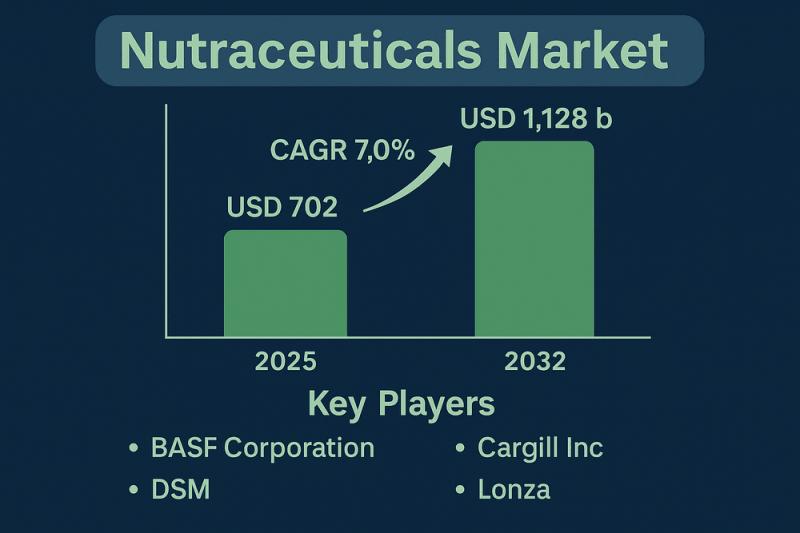
The global Nutraceuticals Market is entering a defining growth phase as consumers worldwide continue shifting toward preventive healthcare, clean-label nutrition, and functional wellness solutions. With increased emphasis on immunity, digestive health, metabolic support, and lifestyle-driven nutrition, nutraceuticals have evolved into a mainstream component of daily dietary habits. According to the latest industry assessment, the market is projected to rise from USD 702 billion in 2025 to USD 1,128 billion by 2032, expanding at a CAGR of 7.0%. The expansion is shaped by advances in functional food formulation, rapid innovation in dietary supplements, growing retail penetration, and rising consumer willingness to invest in premium wellness products.
Get a Sample PDF Brochure of the Report (Use Corporate Email ID for a Quick Response):
https://www.fairfieldmarketresearch.com/report/nutraceuticals-market/request-sample
Market Insights
Global demand for nutraceuticals continues to accelerate as health awareness intensifies across all demographics. Functional foods remain widely preferred for their convenience and nutritional value, while dietary supplements continue gaining traction thanks to expanding clinical validation and broader product availability. The rise of personalized nutrition and microbiome-focused wellness is reshaping product development trends, encouraging manufacturers to integrate science-backed ingredients such as botanicals, omega fatty acids, amino acids, fibers, and specialty carbohydrates. Additionally, the expanding presence of online distribution channels is enabling faster reach, competitive pricing, and easy accessibility to a diverse product portfolio. As consumers prioritize long-term wellbeing, nutraceutical brands are adopting transparent labeling, sustainable sourcing, and enhanced traceability to build trust and differentiate in an increasingly competitive landscape.
Explore the Full Report:
https://www.fairfieldmarketresearch.com/report/nutraceuticals-market
Drivers
Growing interest in preventive healthcare is the primary driver fueling nutraceutical adoption, with consumers proactively seeking products that address chronic lifestyle conditions, boost immunity, and support overall vitality. The global rise in lifestyle-related disorders, including obesity, cardiovascular conditions, and diabetes, is further accelerating product demand. Evolving dietary habits, urbanization, increasing disposable incomes, and heightened fitness awareness collectively contribute to consistent market expansion. Regulatory encouragement through structured guidelines for safety, quality, and fortification also supports industry growth. The addition of clean-label, plant-based, and organic formulations is attracting health-conscious consumers, while technological advancements in extraction, encapsulation, and fermentation techniques enhance ingredient stability and efficacy.
Business Opportunity
Significant business opportunities exist across product innovation, digital retail expansion, and specialty nutrition categories. Companies focusing on targeted nutritional solutions-such as probiotic-infused foods, protein-rich supplements, botanical blends, and metabolic health enhancers-are poised for strong growth. Partnerships between research organizations and nutraceutical manufacturers are enabling faster commercialization of science-backed ingredients with clinically validated benefits. Brands leveraging e-commerce, subscription-based nutrition boxes, AI-driven diet personalization, and direct-to-consumer wellness platforms are expanding market penetration. Furthermore, emerging markets across Asia, Latin America, and the Middle East offer high-growth potential due to rising health consciousness and expanding middle-class populations. Sustainable packaging, transparency initiatives, and ethical sourcing present added opportunities for differentiation.
Region Analysis
North America continues to hold a strong position driven by established healthcare awareness, high purchasing power, and widespread adoption of functional foods and supplements. The region benefits from advanced product innovation and strong regulatory frameworks supporting product quality. Europe exhibits sustained demand for natural ingredients, botanical extracts, and clean-label offerings, supported by strict nutritional guidelines and well-informed consumers. Asia Pacific is the fastest-expanding regional landscape, driven by rapid urbanization, rising disposable incomes, and growing acceptance of functional wellness products. Countries such as China, India, Japan, and South Korea are witnessing significant growth in supplement consumption, fortified foods, and herbal nutrition. Latin America is gaining momentum as consumers increasingly prioritize immune health and metabolic wellness. Meanwhile, the Middle East & Africa presents growing opportunities with rising retail penetration, expanding healthcare infrastructure, and increasing awareness of lifestyle nutrition.
Key Players
Major companies shaping the global nutraceuticals landscape include:
• BASF Corporation
• Cargill Inc
• DSM
• Lonza
• Corbion
• Ingredion Incorporated
• Archer-Daniels-Midland Company
• Friesland Campina
• Kerry PLC
• Olam International Ltd.
Contact US:
Fairfield Market Research
G04 Golden Mile House, Clayponds Lane, Brentford, London TW8 0GU
Office:+44 (0) 203 892 0037
Mobile:+44 (0) 7538 426 479
Email: sales@fairfieldmarketresearch.com
Web:www.fairfieldmarketresearch.com
About Us
Fairfield Market Research is a UK-based market research provider. Fairfield offers a wide spectrum of services, ranging from customized reports to consulting solutions. With a strong European footprint, Fairfield operates globally and helps businesses navigate through business cycles, with quick responses and multi-pronged approaches. The company values an eye for insightful take on global matters, ably backed by a team of exceptionally experienced researchers. With a strong repository of syndicated market research reports that are continuously published & updated to ensure the ever-changing needs of customers are met with absolute promptness.
This release was published on openPR.
Use code ONLINE20 to get 20% off on global market reports and stay ahead of tariff changes, macro trends, and global economic shifts.
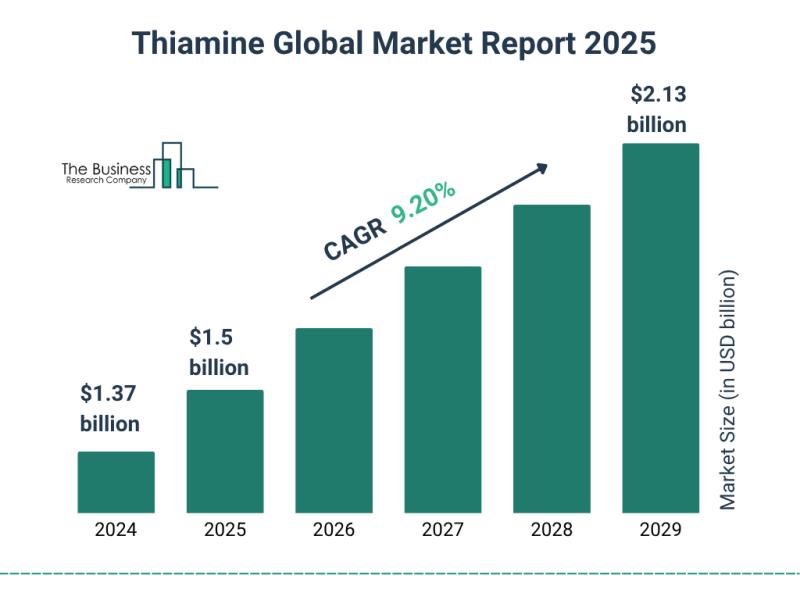
How Large Will the Thiamine Market Size By 2025?
The thiamine market has experienced robust expansion recently, projected to escalate from its 2024 valuation of $1.37 billion to $1.5 billion in 2025, reflecting a compound annual growth rate of 9.4%. This upward trajectory during the past period is attributable to several factors, including the proliferation of food fortification initiatives, the wider availability of functional food products, an escalating preference for naturally derived and organic options, heightened consumer appetite for functional foods, and more extensive fortification endeavors.
How Big Is the Thiamine Market Size Expected to Grow by 2029?
Anticipating robust expansion, the thiamine market is projected to reach a valuation of $2.13 billion by 2029, propelled by a consistent compound annual growth rate of 9.2%; this upward trajectory is underpinned by several key factors, such as heightened global consciousness regarding wellness, demographic shifts toward an older populace, an escalating prevalence of long-term health conditions, a growing consumer desire for ingredients sourced naturally and organically, and the expanding frequency of ailments associated with modern living. Furthermore, significant directional shifts influencing this market over the coming years encompass progressive technological innovations, intensified efforts in research endeavors, the incorporation of thiamine solutions within telemedicine frameworks and digital healthcare systems, deeper exploration into its uses for medical treatments, and the adoption of nutrition strategies tailored to individual needs.
View the full report here:
https://www.thebusinessresearchcompany.com/report/thiamine-global-market-report
Which Key Market Drivers Powering Thiamine Market Expansion and Growth?
Anticipated expansion in the need for dietary supplements is projected to fuel the upward trajectory of the thiamine market in the future.Manufactured items designed to augment an individual’s nutritional intake via oral consumption of forms such as pills, capsules, tablets, powders, or liquids are classified as dietary supplements.This surge in the consumption of dietary supplements is attributable to greater public consciousness regarding wellness, a growing inclination toward proactive health maintenance, and elevated focus on bolstering immune defenses.Thiamine is incorporated into these supplements to ensure consumers receive adequate quantities of this vital nutrient, which plays a critical role in essential physiological processes like generating energy, maintaining the nervous system’s integrity, supporting cardiac performance, aiding digestion, facilitating stress regulation, and sustaining overall metabolic balance.Illustratively, data from Nutrition Integrated, a UK-based business-to-business service, indicated that between January 2022 and January 2024, European availability of transparent protein powder products climbed by 159 percent, whilst in the UK specifically, consumer acquisitions of clear protein powders experienced a substantial 216 percent increase throughout 2023 when contrasted with the figures from 2022.Consequently, this escalating requirement for nutritional supplements acts as a key catalyst propelling the expansion of the thiamine market.
Get your free sample here:
https://www.thebusinessresearchcompany.com/sample.aspx?id=16552&type=smp
Which Fast-Growing Trends Are Poised to Disrupt the Thiamine Market?
Key players within the thiamine market are concentrating efforts on forging ahead with novel offerings, exemplified by vitamin B1 deficiency infusions, as a strategy to solidify their standing. This therapeutic intravenous delivery involves introducing thiamine, or Vitamin B1, straight into the vascular system for medicinal purposes. Notably, in June of 2023, Lupin Limited, hailing from India, brought to market its thiamine hydrochloride injection (USP) available in multi-dose presentations holding 200 mg per 2 mL (equating to 100 mg per mL). Such an injectable preparation presents an effective, immediate route for patients grappling with difficulties in absorbing oral supplements, perhaps due to underlying digestive issues or critical deficiencies requiring prompt intervention, thereby furnishing medical professionals with a dependable method for rectifying and stabilizing vitamin B1 metrics, possibly lessening complications associated with extended deficits.
What Are the Emerging Segments in the Thiamine Market?
The thiaminemarket covered in this report is segmented –
1) By Product Type: Thiamine Mononitrate; Thiamine Hydrochloride; Thiamine Pyrophosphate
2) By Form: Tablets And Capsules; Liquid; Powder
3) By Application: Food And Beverages; Pharmaceuticals; Animal Feed; Dietary Supplements; Other Applications
Subsegments:
1) By Thiamine Mononitrate: Powder; Granules; Tablets
2) By Thiamine Hydrochloride: Powder; Injectable Form; Tablets
3) By Thiamine Pyrophosphate: Powder; Injectable Form
Tailor your insights and customize the full report here:
https://www.thebusinessresearchcompany.com/customise?id=16552&type=smp
Who Are the Global Leaders in the Thiamine Market?
Major companies operating in the thiamine market are BASF SE, Koninklijke DSM N.V., The Nature’s Bounty Co. Ltd., Zhejiang Medicine Co. Ltd., Swanson Health Products Inc., Brother Enterprises Holding Co. Ltd., NOW Health Group Inc., Molekula Group, Nutricost LLC, Solgar Inc., Tokyo Chemical Industry Co. Ltd., HPC Standards GmbH, Puritan’s Pride Inc., Loba Chemie Pvt. Ltd., Aland Nutraceuticals Group, Anhui Tiger Biotech Co. Ltd., Caisson Laboratories Inc., Chemizo Enterprise, General Nutrition Centers Inc., Huazhong Pharmaceutical Co. Ltd.
Which are the Top Profitable Regional Markets for the Thiamine Industry?
Asia-Pacific was the largest region in the thiamine market in 2024. The regions covered in the thiamine market report are Asia-Pacific, Western Europe, Eastern Europe, North America, South America, Middle East, Africa.
Purchase the full report today:
https://www.thebusinessresearchcompany.com/purchaseoptions.aspx?id=16552
This Report Supports:
1.Business Leaders & Investors – To identify growth opportunities, assess risks, and guide strategic decisions.
2.Manufacturers & Suppliers – To understand market trends, customer demand, and competitive positioning.
3.Policy Makers & Regulators – To track industry developments and align regulatory frameworks.
4.Consultants & Analysts – To support market entry, expansion strategies, and client advisory work.
Reach out to us:
The Business Research Company: https://www.thebusinessresearchcompany.com/,
Americas +1 310-496-7795,
Europe +44 7882 955267,
Asia & Others +44 7882 955267 & +91 8897263534,
Email us at info@tbrc.info.
Follow Us On:
LinkedIn: https://in.linkedin.com/company/the-business-research-company,
Twitter: https://twitter.com/tbrc_info,
YouTube: https://www.youtube.com/channel/UC24_fI0rV8cR5DxlCpgmyFQ
Learn More About The Business Research Company
With over 17500+ reports from 27 industries covering 60+ geographies, The Business Research Company has built a reputation for offering comprehensive, data-rich research and insights. Armed with 1,500,000 datasets, the optimistic contribution of in-depth secondary research, and unique insights from industry leaders, you can get the information you need to stay ahead.Our flagship product, the Global Market Model (GMM), is a premier market intelligence platform delivering comprehensive and updated forecasts to support informed decision-making.
This release was published on openPR.
The global phytochemicals market is witnessing robust growth, fueled by accelerating demand for natural compounds, rising interest in plant-based nutrition, and expanding applications across food, cosmetics, pharmaceuticals, and nutraceuticals. Phytochemicals-bioactive compounds derived from plants-are gaining rapid traction due to their antioxidant, anti-inflammatory, and disease-preventive properties. As consumers increasingly prioritize clean-label, health-focused products, the market is experiencing a significant boost.
Get a Sample PDF Brochure of the Report (Use Corporate Email ID for Quick Response):
https://www.persistencemarketresearch.com/samples/29875
Phytochemicals are playing a critical role in the transformation of global wellness trends. Their use in functional foods, dietary supplements, and natural medicines continues to grow, driven by rising awareness about chronic disease prevention and the benefits of plant-derived ingredients. Food and beverage companies are also incorporating phytochemicals to enhance nutritional value, shelf-life stability, and product appeal, further strengthening market demand.
According to Persistence Market Research, the global phytochemicals market size is estimated to grow from US$ 8,214.8 million in 2025 to US$ 13,467.2 million by 2032, recording a CAGR of 7.3% during the forecast period from 2025 to 2032.
The market’s expansion is shaped by increasing consumer preference for natural health solutions, advancements in plant extraction technologies, and growing integration of phytochemicals into pharmaceutical formulations. As the focus on preventive healthcare rises globally, phytochemical-based products are expected to witness accelerating adoption.
For More Information: https://www.persistencemarketresearch.com/market-research/phytochemicals-market.asp
Key Market Drivers
Rising Consumer Demand for Natural and Clean-Label Products
Consumers are actively shifting away from synthetic additives and are embracing plant-based ingredients with proven health benefits. Phytochemicals-such as carotenoids, flavonoids, and polyphenols-are widely recognized for their natural origin and functional properties, making them attractive for clean-label product formulations.
Growing Use in Nutraceuticals and Functional Foods
The increasing consumption of dietary supplements and fortified foods is significantly driving phytochemical adoption. Their proven benefits in boosting immunity, supporting heart health, and reducing oxidative stress make them essential components in the nutraceutical and functional food industries.
Expanding Applications in Pharmaceuticals
Pharmaceutical manufacturers are incorporating phytochemicals for drug development due to their therapeutic attributes, including anti-cancer, anti-inflammatory, and antimicrobial effects. As herbal and plant-based medicines gain acceptance, demand for standardized phytochemical extracts continues to rise.
Technological Advancements in Plant Extraction
Modern extraction technologies-such as supercritical CO2 extraction, membrane filtration, and ultrasonic-assisted extraction-are improving yield, purity, and cost-efficiency. These innovations are enabling manufacturers to produce high-quality phytochemical ingredients tailored to diverse applications.
Increasing Focus on Preventive Healthcare
The growing prevalence of lifestyle-related diseases has strengthened consumer awareness regarding natural preventive health solutions. Phytochemicals, known for their protective health benefits, are witnessing increased use in supplements targeting heart health, digestive wellness, immunity, and cognitive function.
Market Challenges
Despite strong market momentum, several factors may restrain growth:
High Extraction and Processing Costs
Advanced extraction technologies require significant investment, increasing production costs.
Inconsistent Raw Material Supply
Seasonal variations and agricultural dependency affect the availability and quality of plant sources.
Regulatory Complexities
Stringent regulations around botanical ingredients and health claims create compliance challenges for manufacturers.
Lack of Standardization
Variability in concentration and quality of plant compounds hampers large-scale product consistency.
Industry players are increasingly investing in research, supply chain optimization, and advanced extraction methods to overcome these challenges.
Market Segmentation Analysis
By Product Type
Carotenoids
Widely used in supplements, food coloring, and cosmetics.
Flavonoids
High antioxidant properties driving their use in nutraceuticals.
Polyphenols
Popular due to anti-inflammatory and anti-aging benefits.
Phytosterols
Increasingly used for cholesterol management.
Others (Glucosinolates, Saponins, etc.)
By Application
Food & Beverages
Growing integration into functional foods and health drinks.
Nutraceuticals & Dietary Supplements
The largest and fastest-growing segment.
Pharmaceuticals
Strong demand for therapeutic plant compounds.
Cosmetics & Personal Care
Rising use due to anti-aging and skin-protective properties.
By Source
Fruits
Rich in polyphenols and flavonoids.
Vegetables
Preferred for carotenoids and glucosinolates.
Herbs & Spices
Growing use in herbal medicine formulations.
Others (Seeds, Leaves, Roots)
Regional Insights
North America
A mature and health-conscious market, driven by strong demand for dietary supplements and functional foods. High purchasing power and widespread awareness of plant-based nutrition support growth.
Europe
The region emphasizes natural, sustainable, and certified products. Strong presence of herbal medicine manufacturers further increases phytochemical adoption.
Asia Pacific
Expected to record the fastest growth. Traditional medicine systems in India and China, rising disposable incomes, and expanding nutraceutical markets drive demand.
Latin America and Middle East & Africa
Growing interest in herbal products and rising investment in dietary supplements are creating new opportunities in these emerging markets.
Request a Customization: https://www.persistencemarketresearch.com/request-customization/29875
Competitive Landscape
The phytochemicals market is moderately fragmented, with companies focusing on product innovation, sustainable extraction, and strategic partnerships. Key players are investing heavily in R&D to develop high-purity, application-specific ingredients.
Prominent companies include:
• Naturex
• Sabinsa Corporation
• Indena S.p.A
• DSM
• Givaudan
• Chr. Hansen
• BASF SE
• Döhler Group
• Kemin Industries
• International Flavors & Fragrances (IFF)
These companies are enhancing production capabilities, expanding product portfolios, and adopting clean, environment-friendly manufacturing processes.
Key Trends Shaping the Market
Growing Popularity of Plant-Based Diets
Rising vegan and plant-forward diets are fueling demand for natural ingredients.
Clean-Label Beauty and Skincare
Phytochemicals are being incorporated into anti-aging, brightening, and antioxidant skincare products.
Sustainability and Green Extraction
Manufacturers are adopting eco-friendly extraction methods to reduce environmental impact.
Integration with Personalized Nutrition
Customized supplements using phytochemicals are gaining popularity.
Future Outlook
The future of the phytochemicals market looks promising as consumers increasingly prioritize natural, preventive, and plant-derived health solutions. Advancements in extraction technologies, growing clinical research supporting the efficacy of phytochemicals, and rising incorporation into foods, supplements, and cosmetics will accelerate market expansion.
With strong global momentum and expanding applications across industries, the phytochemicals market is set to continue its steady growth trajectory through 2032.
Explore the Latest Trending Research Reports:
Poultry Feed Additives Market Forecast: https://www.persistencemarketresearch.com/market-research/poultry-feed-additives-market.asp
Sage Herb Market Forecast: https://www.persistencemarketresearch.com/market-research/sage-herb-market.asp
Tagatose Market Forecast: https://www.persistencemarketresearch.com/market-research/tagatose-market.asp
Grass Based Dairy Products Market Forecast: https://www.persistencemarketresearch.com/market-research/grass-based-dairy-products-market.asp
About Persistence Market Research:
At Persistence Market Research, we specialize in creating research studies that serve as strategic tools for driving business growth. Established as a proprietary firm in 2012, we have evolved into a registered company in England and Wales in 2023 under the name Persistence Research & Consultancy Services Ltd. With a solid foundation, we have completed over 3600 custom and syndicate market research projects, and delivered more than 2700 projects for other leading market research companies’ clients.
Our approach combines traditional market research methods with modern tools to offer comprehensive research solutions. With a decade of experience, we pride ourselves on deriving actionable insights from data to help businesses stay ahead of the competition. Our client base spans multinational corporations, leading consulting firms, investment funds, and government departments. A significant portion of our sales comes from repeat clients, a testament to the value and trust we’ve built over the years.
Contact Us:
Persistence Market Research
Second Floor, 150 Fleet Street,
London, EC4A 2DQ, United Kingdom
USA Phone: +1 646-878-6329
UK Phone: +44 203-837-5656
Email: sales@persistencemarketresearch.com
Web: https://www.persistencemarketresearch.com
This release was published on openPR.
(Photo courtesy of haps Magazine Korea)
For lovers of tea and crafts, the 2025 Busan International Tea & Craft Fair allows guests to experience various teas and tea utensils such as green tea, and black tea.
In addition, you can meet craft works such as pottery, woodcraft, metal craft, and textile crafts.
The event takes place from Thursday through Sunday from 10 a.m. to 6 p.m. daily. at BEXCO.
Your hair needs vitamins, minerals, and antioxidants to stay strong and keep growing. Fruits cannot fix all hair problems. But eating a variety of fruits can help prevent nutrient deficiencies that may cause hair thinning or slow growth.
A 2018 study found strong evidence that the Annurca apple from Southern Italy can support hair growth. It contains procyanidin B2, an antioxidant that:
Berries help hair growth because they give you:
Vitamin C helps your body make collagen, a protein that keeps hair strands strong. It also helps your body absorb iron, improving blood and oxygen to your hair roots.
Combined, the nutrients in berries:
Avocados contain many beneficial compounds that support hair health, such as:
Eat avocados fresh or use them as a scalp mask for direct hair and scalp nourishment.
Guava is a tropical fruit with green or yellow skin and pink or white flesh filled with tiny edible seeds.
Guava contains nearly five times the vitamin C of an orange. Vitamin C helps your body make collagen and absorb iron, lowering the risk of breakage and iron-deficiency hair shedding (telogen effluvium).
Guava also has antioxidants like:
You can eat the skin, flesh, and seeds, or slice it like an apple. Some people also use guava leaves in scalp rinses or masks.
Kiwi provides several compounds that can benefit hair health, including:
Papaya stands out for hair health because it is rich in:
Papaya is one of the richest fruit sources of folate. Folate helps your body make new hair cells, promoting hair growth and reducing shedding.
Vitamin A helps your scalp produce natural oils, keeping it moisturized. Your body can also convert beta carotene from papaya into vitamin A when it needs to.
Papain is an enzyme unique to papaya, but it works best for hair health when applied to your scalp. It breaks down dead skin and excess oil, keeping your scalp clean and your follicles clear. This makes it easier for your hair to grow and stay thick.
Citrus fruits like oranges, lemons, and grapefruits stand out for their folate and vitamin C content. These nutrients help with hair growth because:
Pomegranates are red fruits with arils (seeds) that you can eat by themselves or add to salads and yogurt bowls. They are rich in antioxidants like:
Together, the antioxidants in pomegranates help hair growth by:
Bananas provide a small amount of biotin, a vitamin your body uses to make keratin. Low biotin levels can cause thinning or shedding, so even small dietary sources help. Foods like eggs and beef liver offer more biotin, but bananas can contribute to your intake and are an easy addition.
Mangosteen has a deep purple shell with white segments inside. These white parts are rich in xanthone antioxidants, which have anti-inflammatory properties that can soothe the scalp and protect against damage.
Since mangosteen is native to Southeast Asia, it may be easier to find it frozen or in powder form to add to your smoothies.
Fruits do not cure hair loss, but eating two to three servings of a variety of fruits each day gives you nutrients that help your hair stay in the growth cycle longer.
Experts recommend a food-first approach rather than supplements unless your provider confirms you have a nutrient deficiency. Taking too many supplements, especially vitamin A, may cause hair loss.
Try to choose fresh or frozen fruits whenever possible. Dried and juiced fruits often have more sugar, and fruits that are overly cooked can lose important nutrients.
Hair grows slowly, about half an inch each month. It may take three to six months to notice changes. See a healthcare provider if it persists despite dietary changes or if you have fatigue, scalp irritation, or period changes. They can help you identify any underlying genetic or medical causes.




:max_bytes(150000):strip_icc()/Health-GettyImages-1156732347-be44c3a87559463db529982c070237a3.jpg "10 Fruits To Eat for Stronger, Healthier Hair")