The main category of Dietary Supplements News Articles.
You can use the search box below to find what you need.
[wd_asp id=1]
The main category of Dietary Supplements News Articles.
You can use the search box below to find what you need.
[wd_asp id=1]
Who are the safest tea brands without PFAS “forever chemicals?” This is the question that Mamavation has been attempting to answer for you by sending the most popular tea brands to our EPA-certified laboratory to test. After all that testing, which tea brands and tea products do we recommend? You’ve trusted Mamavation to bring you topics like (1) safest cooking oils tested for phthalates, (2) safest coffees tested for pesticides, PFAS “forever chemicals,” and mycotoxins, and (3) safest protein powders tested for pesticides, PFAS “forever chemicals”, phthalates, and heavy metals, now join us for the safest teas without PFAS “forever chemicals.”
Disclosure: This consumer study is released in partnership with Environmental Health News. Donations were provided by Environmental Health News and Mamavation community members. Note that Mamavation has only “spot-checked” the industry and thus we cannot make predictions about brands and products that we have not tested. Products and manufacturing aides can change without notice so buyer beware. This post contains affiliate links, with some to Amazon, which means Mamavation will receive a portion of those sales and we will use that to pay ourselves back for the testing. You can also give a tax-deductible donation to our consumer studies here through Environmental Health Sciences. Thank you!

Mamavation has been testing several categories of teas for specific PFAS “forever chemicals,” and we thought it would be useful to bring you a synopsis of what was found thus far all together in one place. Note that some teas tested higher for PFAS compounds than others. The PFAS levels that were high enough to quantify are referred to as “quantifiable PFAS” and you’ll find all those results at the bottom of this post.
Here’s a quick synopsis of how much PFAS was found in each category:

PFAS “forever chemicals” are problematic for human health and the environment. They are considered ubiquitous, persistent, and toxic. Therefore, reducing the amount of PFAS you are exposed to from food, water, and other beverages like tea is imperative. Mamavation is dedicated to helping you do that when shopping for tea.
Here are some of the adverse health effects of different PFAS “forever chemicals:”
It’s also very clear, based on biomonitoring evidence from the Centers for Disease Control & Prevention (CDC), that PFAS are in all Americans. Therefore, these exposures can harm most Americans.
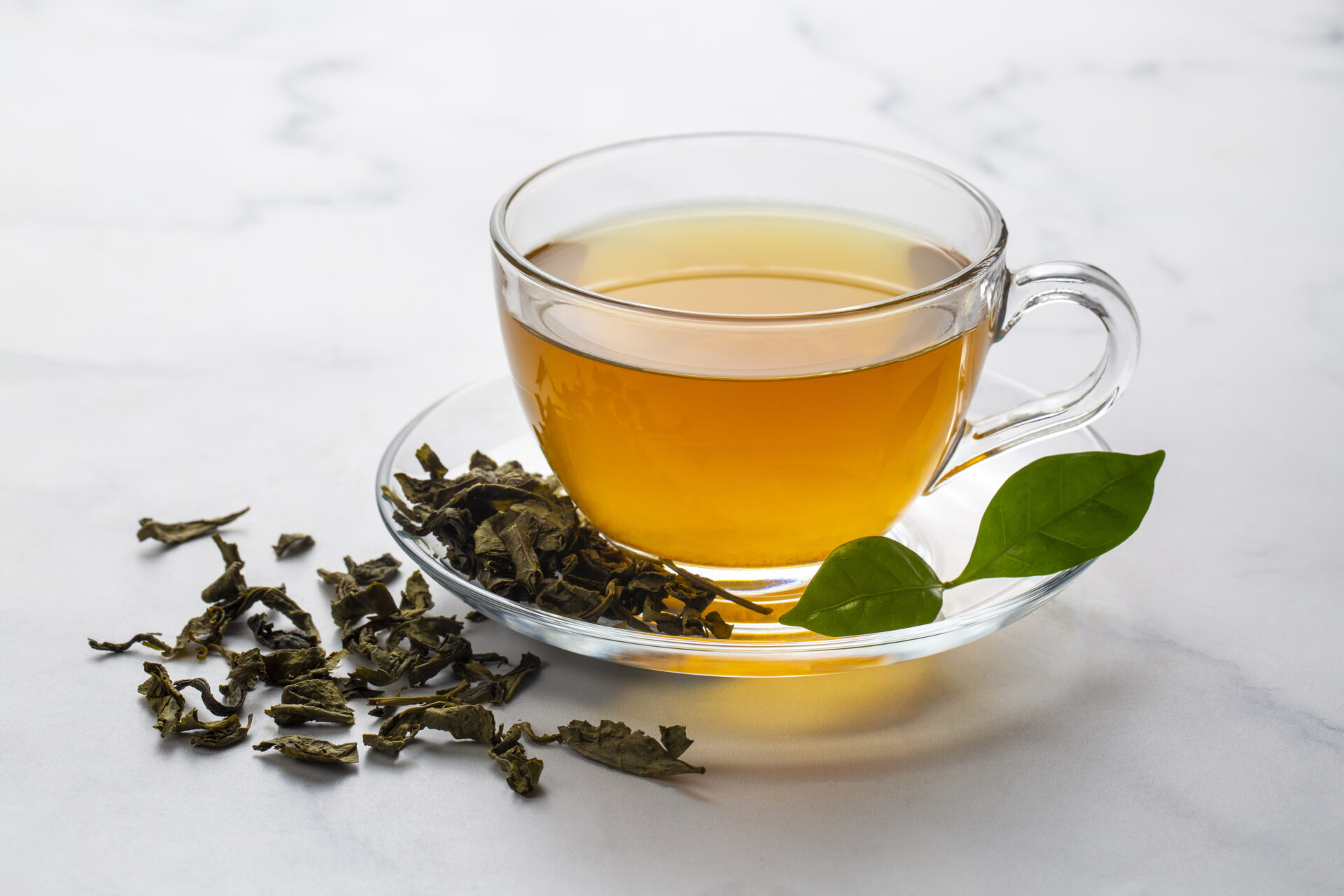
The past five years have seen a flurry of studies looking at specific PFAS compounds and certain foods and beverages like tea. One study claimed that people who drank more tea were more likely to have higher levels of PFAS in their blood. Here are some recent examples of studies done on teas:
Terrence Collins, Teresa Heinz Professor of Green Chemistry & Director of the Institute for Green Sciences at Carnegie Mellon University had this to say about the study: “This study looks at an important question for green tea drinkers. Are ‘forever chemicals’, PFAS compounds that the human body cannot break down and tends to hold on to, in the product contaminant profile? The results speak for themselves. No one wants to be ingesting PFAS when they drink green tea! It’s somewhat comforting that PFAS contamination is not universal, at least in Mamavation’s spot-testing. Green tea drinkers are now armed with the knowledge to send messages of approval or disapproval through their buying habits across the green tea business world.”

Earl Grey Teas, Chamomile Teas, and Green Teas were purchased in 2024 and 2025. Each product was recorded in our database and sent directly to the lab within its original packaging.
Testing Loose Leaf Tea: Mamavation’s EPA-certified laboratory used method EPA 1633 to test for 40 PFAS compounds, including the following:

Our lab found quantifiable amounts of specific PFAS within these tea leaves. Of the 40 PFAS analytes tested for at least one was found. We also put brands here where we found over 200 ppm of total fluorine in the tea sachets.
These products were sent off to an EPA-certified laboratory. The tea leaves were tested for 40 PFAS analytes and each product had positive results. The tea bags were tested for fluorine, a marker of PFAS “forever chemicals.”
These products were sent off to an EPA-certified laboratory. The tea leaves were tested for 40 PFAS analytes, and each product had positive results.

Our lab could not find quantifiable amounts of specific PFAS compounds; however, they did find the presence of at least one specific PFAS compound within the tea leaves. This means the lab could detect PFAS, but it wasn’t in high enough amounts to determine how much was in there. If tea bags were available, our lab also tested those bags separately for total fluorine, which is an indicator of PFAS and fluoride combined.
These products were sent off to an EPA-certified laboratory. The tea leaves were tested for 40 PFAS analytes and each product had positive results, however, the results were so small they were not quantifiable. The tea bags were tested for fluorine, a marker of PFAS “forever chemicals.” We also included one brand that did not have detectable PFAS, but had detectable fluorine in their tea bags.
These products were sent off to an EPA-certified laboratory. The tea leaves were tested for 40 PFAS analytes and each product had positive results, however, the results were so small they were not quantifiable.
Our lab determined no PFAS compounds were found in the Earl Grey tea leaves. However, the tea bags had detectable fluorine.
These products were sent off to an EPA-certified laboratory. The tea leaves were tested for 40 PFAS analytes and each product had non-detect results. The tea bags were tested for fluorine, a marker of PFAS “forever chemicals,” and also had non-detect results.
These products were sent off to an EPA-certified laboratory. The tea leaves were tested for 40 PFAS analytes and each product had non-detect results.
While matcha green tea is often hailed as a trendy superfood with numerous health benefits, it can actually be significantly harmful for some people, as one woman discovered when she found herself in hospital. Laura Mae shared her experience on TikTok from her hospital bed, where she was being treated for iron deficiency.
In a video that has since gone viral, amassing more than 10 million views, she attributed her ill health to her daily consumption of matcha. “When you realise the matcha you have been drinking every morning is likely the reason your hair is falling out,” she captioned the video.
Laura Mae went on to explain: “Matcha can block your body’s natural iron absorption, which can increase hair loss, brittle nails, and fatigue.”
In a subsequent video, she revealed that she used to attribute all her health issues to her Crohn’s Disease. However, once she considered her regular intake of matcha, everything started to make sense, reports the Mirror.
“Once I realised my daily matcha was making iron absorption even harder, it all clicked,” said Laura Mae. “Swapping my morning drink was the best change I’ve made.”
She added: “Gut health really is everything. Once I changed my morning routine, the symptoms finally started to make sense.”
Following her discharge from hospital, Laura Mae shared with her followers: “Not every ‘healthy habit’ is healthy for everybody. For me, matcha was secretly making things worse, especially with absorption already being a struggle.
“Once I swapped it out, I noticed the difference in my energy and mood almost immediately. I didn’t realise how much my daily matcha was holding me back until I swapped it for something my body actually thanked me for.”
Supporting Laura’s worries, Verywell Health cautions that matcha contains tannins and other compounds which can hinder iron absorption.
“Matcha is a type of powdered green tea well known for its high antioxidant content,” the organisation states online.
“It also contains a unique combination of caffeine and L-theanine, a natural amino acid that has been shown to help with energy, stress, and focus, often making it a gentler alternative to coffee.
“[Tannins are] a type of polyphenol that can bind iron in the digestive tract, making it harder for the body to absorb. Because matcha is much more concentrated than regular green tea, it contains more of these polyphenols that will block your body from absorbing iron.”
Meanwhile, Matcha.com also cautions: “According to research, matcha tea does contain compounds that may limit the absorption of iron in the bloodstream. If you are concerned about your iron levels and at risk of iron anemia, try to avoid drinking your matcha or green tea after or within an hour of an iron-rich meal or iron supplements.
“This is because the main healthful compounds found in matcha tea will bind to iron and cause both to lose their ability to be as readily absorbed.”
Neha Bhasin was a part of India’s first all-girls pop group Viva. After a Channel V executive made disrespectful comments about her body in a room full of people, the singer attempted suicide by consuming more than half a bottle of fat burners.
Popular female playback singer Neha Bhasin is known for her several hit Bollywood songs including Jag Ghoomeya in Sultan, Kuch Khaas Hai in Fashion, Dhunki in Mere Brother Ki Dulhan, and Chashni in Bharat. Her singing journey began at the age of 18 when she won the singing reality show Channel V’s Coke [V] Popstars in 2002, along with four other young singers – Seema Ramchandani, Pratichee Mohapatra, Mahua Kamat and Anushka Manchanda. They formed India’s first all-girls music group Viva.
In a podcast with comedians Bharti Singh and Haarsh Limbachiyaa earlier this year, Neha recalled that she was put on fat burners a year after becoming a part of Viva. She shared that she was unaware of their effects at such a young age. She also recalled a shocking incident when one of the executives from Channel V made disrespectful comments about her body in a room full of people.
“He paused a music video, circled my stomach on screen, and said ‘See, you are so fat. Because of this, we can’t release the video.’ I was 50 kg at that time. I remember going home and, in anger, consuming more than half a bottle of fat burners. That was my way of trying to commit suicide. For two days, I was throwing up. The band did not know what had happened”, Neha stated.
While everyone knows about her singing career, not many know that Neha Bhasin also tried her hand at acting. She starred in the 2012 black comedy film Life Ki Toh Lag Gayi, that also featured Kay Kay Menon and Ranvir Shorey. The movie received horrible reviews from the audiences and critics, and bombed at the box office. The singer was also a part of the controversial reality shows Bigg Boss OTT Season 1, hosted by Karan Johar, and Bigg Boss 15, hosted by Salman Khan, in 2021.
The plant-based vitamin D3 supplements market is valued at USD 596.4 million in 2025 and is forecasted to reach USD 935.0 million by 2035, growing at a CAGR of 4.6%. Market growth is supported by increasing consumer preference for vegan and vegetarian nutrition, rising awareness of vitamin D deficiency, and wider adoption of plant-derived cholecalciferol sourced from algae and lichens. These supplements provide an alternative to lanolin-derived D3 while offering equivalent bioavailability, supporting their use across general wellness, bone health, and immune support applications.
Tablets represent the leading product segment due to their stability, long shelf life, and ease of dosage control. They are widely used across retail and online distribution channels and are preferred by manufacturers for cost-effective production and formulation flexibility. Advances in plant-derived extraction methods, allergen-free formulations, and clean-label ingredient profiles are influencing product development strategies in this category.
Asia Pacific leads global market expansion, driven by growing nutrition awareness and increased adoption of plant-based supplements in China, India, and Australia. Europe and North America maintain strong demand through established nutraceutical markets and sustained interest in vegan dietary products. Key companies include Vegetology, Cytoplan, Sweet Cures, Lamberts Healthcare, Healthspan, Solgar, and DR.VEGAN, focusing on formulation quality, plant-based sourcing, and evidence-supported nutrient delivery.
The acceleration and deceleration pattern shows an initial period of firm growth followed by a gradual shift toward steadier demand. Between 2025 and 2029, the market will move through an acceleration phase driven by increased consumer preference for vegan and allergen-free supplements. Expansion of plant-derived D3 sourced from lichen, along with wider distribution through e-commerce and specialty nutrition channels, will support early momentum. Regulatory clarity for plant-based fortification in major regions will further reinforce short-term growth.
From 2030 to 2035, the market will enter a mild deceleration phase as adoption becomes more uniform across established dietary-supplement categories. Growth will rely on replacement purchases, incremental formulation improvements, and broader inclusion of plant-based D3 in multivitamins, functional foods, and fortified beverages. While discretionary spending patterns may create minor fluctuations, consistent demand for vegan alternatives and clean-label ingredients will support stable expansion. The overall pattern reflects a market transitioning from early lifestyle-driven acceleration to a mature stage shaped by product standardization, recurring use, and continued interest in plant-sourced micronutrient supplementation.
| Metric | Value |
|---|---|
| Market Value (2025) | USD 596.4 million |
| Market Forecast Value (2035) | USD 935.0 million |
| Forecast CAGR (2025 to 2035) | 4.6% |
The plant based vitamin D3 supplements market is growing as consumers shift toward vegan and vegetarian diets and seek nutrient sources that do not rely on animal ingredients. Plant derived D3, typically obtained from lichen or algae, appeals to users who prioritise ethical, ecofriendly and clean label supplements. Rising awareness of vitamin D deficiency across all age groups also supports higher supplement intake for bone health, immunity and general wellness.
Improvements in extraction methods and formulation allow manufacturers to offer high potency capsules, oils, gummies and fortified foods that meet varied consumer preferences. Online retail and subscription services increase availability and encourage routine use. Growth is further supported by wider adoption of plant based nutrition in fitness, sports and lifestyle markets. Constraints include higher production costs for plant sourced D3, limited global suppliers for raw material and varying regulatory requirements across regions that influence product claims and distribution.
The plant-based vitamin d3 supplements market is segmented by product type and application. By product type, the market includes liquid preparations, tablet forms, and others. Based on application, it is categorized into online sales and offline sales channels. Regionally, the market is divided into Asia Pacific, Europe, North America, and other key regions.
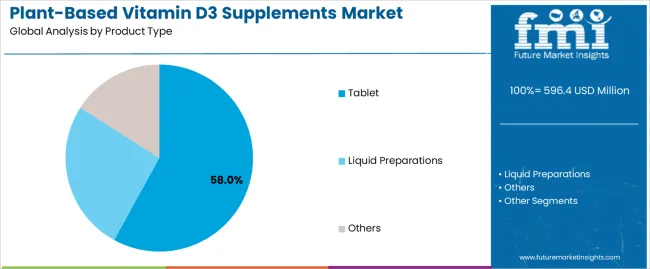
The tablet segment represents the leading category in the plant-based vitamin D3 supplements market, accounting for an estimated 58.0% of total market share in 2025. Tablets are widely adopted due to their longer shelf life, dosing consistency, and compatibility with established supplement distribution channels. They remain the dominant format for daily nutritional supplementation and are favored by consumers seeking standardized intake and cost-efficient options.
The liquid preparations segment follows with an estimated 32.0% share. Liquid formulations support flexible dosing, faster absorption, and suitability for children and elderly users who prefer non-tablet forms. The others category, including gummies, sprays, and powder sachets, accounts for about 10.0%, driven by niche demand for convenience-oriented formats.
Key factors supporting the tablet segment include:
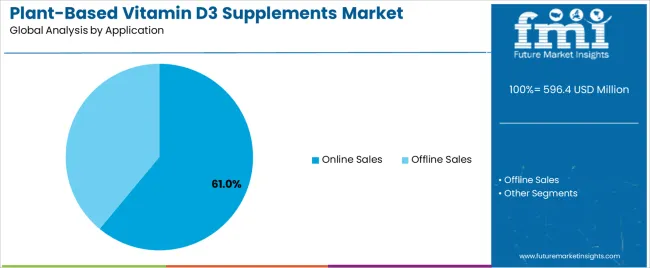
The online sales segment accounts for approximately 61.0% of the plant-based vitamin D3 supplements market in 2025. E-commerce growth, combined with increasing consumer preference for home delivery of nutritional products, has accelerated online supplement purchases. Digital platforms offer product variety, transparent ingredient information, and subscription-based replenishment services.
The offline sales segment, representing about 39.0%, includes pharmacies, health stores, supermarkets, and specialty nutrition retailers. Offline distribution remains important for consumers who prefer in-person consultation or immediate product availability.
Primary dynamics driving demand from the online sales segment include:
Growing interest in vegan nutrition, rising awareness of Vitamin D deficiency, and increased preference for sustainably sourced ingredients are driving market growth.
The Plant-Based Vitamin D3 Supplements Market is expanding as consumers shift toward vegetarian and vegan lifestyles and seek alternatives to traditional lanolin-derived Vitamin D3. Rising global awareness of Vitamin D deficiency, especially in regions with limited sunlight exposure, strengthens demand for daily supplementation. Plant-based D3 derived from lichens and algae appeals to consumers who prioritise clean-label, allergen-free, and ethically sourced ingredients. The expansion of e-commerce and direct-to-consumer health brands allows plant-based supplements to reach wider demographics, including individuals seeking immune-support formulations, bone-health blends, and holistic wellness products. Manufacturers are improving product stability, potency, and bioavailability, making plant-derived D3 formulations competitive with established animal-based variants.
Higher production cost, limited raw material supply, and variability in product potency are restraining adoption.
Plant-based Vitamin D3 generally costs more to produce than conventional D3 due to constrained raw material availability and specialised extraction processes. These cost differentials can limit adoption in price-sensitive markets or among large-scale supplement formulators. Supply chain limitations for lichen and algae sources can create inconsistency in availability, which affects production planning and pricing stability. Potency variations across plant-based inputs require stringent testing and standardisation, increasing regulatory and quality-control burdens. Some consumers also remain unaware of the functional differences between plant-based and traditional D3, limiting immediate transition across mainstream retail channels.
Expansion of fortified plant-based foods, integration of D3 into multi-nutrient complexes, and rising adoption in emerging wellness markets are shaping industry trends.
Manufacturers are incorporating plant-derived D3 into fortified beverages, dairy alternatives, cereals, and functional snacks to meet consumer demand for convenient nutrient intake. Multi-nutrient complexes combining plant-based D3 with calcium, magnesium, K2, and omega-rich oils are gaining traction across wellness and bone-health categories. Growth in Asia Pacific, Latin America, and the Middle East reflects increasing awareness of nutritional deficiencies and improved access to premium supplements through digital retail platforms. Advances in algae cultivation, extraction research, and ingredient stabilisation are expected to broaden supply availability and support long-term market expansion.
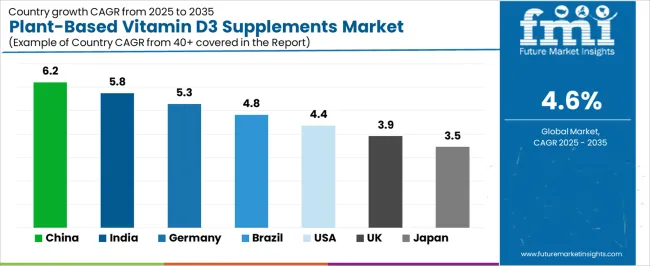
The global plant-based Vitamin D3 supplements market is expanding through 2035, supported by increased adoption of vegan nutrition, rising interest in non-animal vitamin sources, and broader demand for clean-label products. China leads with a 6.2% CAGR, followed by India at 5.8%, reflecting strong consumption of plant-derived nutrition and expanding supplement retail channels. Germany grows at 5.3%, supported by regulated product standards and rising preference for algae-derived ingredients. Brazil records 4.8%, driven by increasing awareness of plant-based micronutrients. The United States grows at 4.4%, while the United Kingdom (3.9%) and Japan (3.5%) sustain stable demand through established nutraceutical markets and consistent clean-label trends.
| Country | CAGR (%) |
|---|---|
| China | 6.2 |
| India | 5.8 |
| Germany | 5.3 |
| Brazil | 4.8 |
| USA | 4.4 |
| UK | 3.9 |
| Japan | 3.5 |
China’s market grows at 6.2% CAGR, supported by rising interest in plant-based nutrition, increasing vitamin-deficiency awareness, and expanding availability of algae-derived Vitamin D3 formulations. Manufacturers offer capsules, gummies, and liquid drops tailored to adult and senior consumers seeking non-animal products. Domestic supplement brands integrate plant-based D3 into multivitamin blends and immunity-support formulations. Growth in e-commerce and pharmacy channels strengthens distribution across major cities and secondary regions. Broader adoption of plant-based diets and increased preventive-health spending reinforce long-term demand for non-synthetic, non-animal vitamin sources.
Key Market Factors:
India’s market grows at 5.8% CAGR, driven by rising health-supplement use, increased vitamin-deficiency prevalence, and stronger demand for vegan formulations. Plant-based Vitamin D3 products made from lichen or algae gain traction among adults adopting clean-label options. Domestic nutraceutical companies launch capsules, sachets, and chewable formats suited for daily supplementation. Growth in online platforms and organized pharmacy chains expands accessibility across metro and Tier-2 cities. Preventive-health awareness and lifestyle-related deficiency concerns support ongoing adoption of plant-derived Vitamin D3 within general wellness routines.
Market Development Factors:
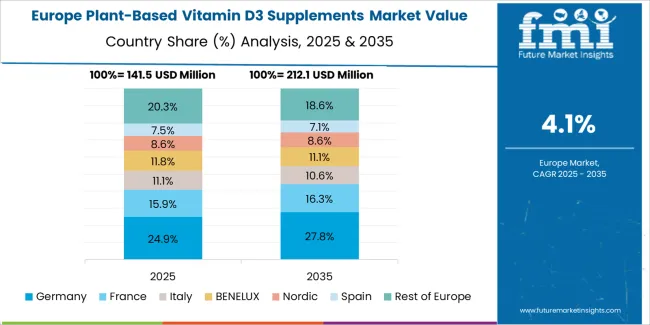
Germany’s market grows at 5.3% CAGR, supported by established dietary-supplement regulations, rising preference for plant-sourced micronutrients, and broad adoption of algae-derived Vitamin D3 within vegan product portfolios. Consumers favor formulations featuring verified purity, documented sourcing, and compliance with European ingredient guidelines. Retailers and health stores supply capsules, sprays, and fortified foods containing plant-derived D3. Increased focus on clean-label composition and allergen-free ingredients strengthens demand. Use across adult wellness, senior health, and fortified nutrition categories supports stable market expansion.
Key Market Characteristics:
Brazil’s market grows at 4.8% CAGR, driven by increasing interest in plant-based diets, rising nutritional-supplement usage, and growing awareness of Vitamin D deficiency. Consumers adopt plant-based D3 supplements as part of broader wellness routines, including immune support and daily nutritional balance. Retailers distribute algae-derived and lichen-derived D3 products across pharmacies and online marketplaces. Growth in urban health-conscious households strengthens demand for clean-label formulations. Domestic nutraceutical firms expand offerings aligned with vegan and natural-ingredient preferences.
Market Development Factors:
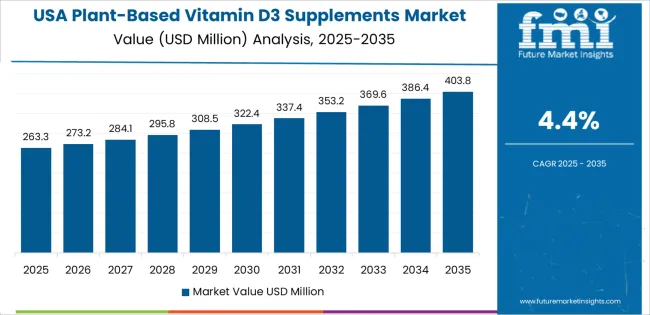
The United States grows at 4.4% CAGR, supported by established nutraceutical consumption, rising adoption of plant-based diets, and increased availability of algae-derived D3 within clean-label supplement portfolios. Health-focused consumers seek plant-based alternatives to traditional lanolin-derived D3. Manufacturers offer gummies, capsules, and liquid formulations positioned for general wellness, bone health, and immune support. Retailers and online marketplaces distribute vegan-certified products across premium and mainstream categories. Integration of plant-based D3 in functional foods and multivitamin blends supports ongoing adoption.
Key Market Factors:
The United Kingdom’s market grows at 3.9% CAGR, supported by steady demand for clean-label supplements, expansion of vegan nutritional products, and increased use of algae-derived D3 in wellness routines. Retailers offer capsules, chewables, and sprays tailored to adult consumers seeking plant-based alternatives. Health stores and online platforms supply certified vegan D3 formulations aligned with national supplement-use guidelines. Broader awareness of vitamin-deficiency risks during winter months supports consistent seasonal demand.
Market Development Factors:
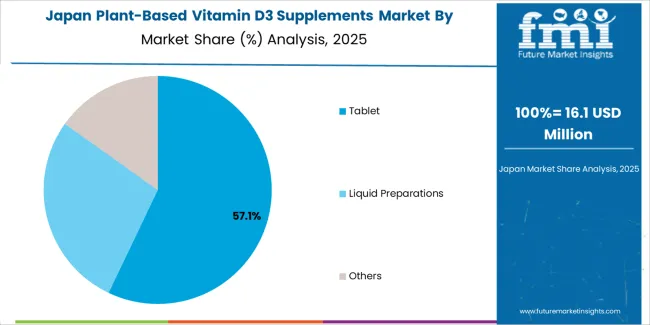
Japan’s market grows at 3.5% CAGR, supported by consistent nutraceutical consumption, interest in plant-based wellness products, and adoption of clean-label supplements among adult consumers. Algae-derived D3 formulations are used in capsules, chewable formats, and fortified health foods. Domestic brands emphasize purity, dosage stability, and compact packaging suited for daily use. Growth in e-commerce and specialty health stores strengthens access to vegan nutritional products. Increased preventive-health focus among older adults supports continued uptake of plant-derived D3 supplements.
Key Market Characteristics:
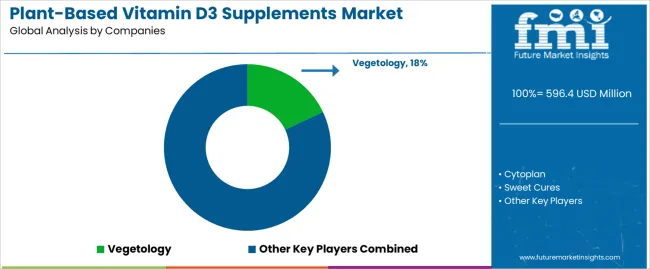
The plant-based vitamin D3 supplements market is moderately fragmented, with about a dozen manufacturers supplying algae-derived D3 for nutritional, vegan, and fortified health products. Vegetology leads the market with an estimated 18.0% global share, supported by its early adoption of algae-sourced D3 and consistent product quality verified through established supplement channels. Its leadership is reinforced by controlled raw material sourcing and reliable formulation standards for capsules, sprays, and blended nutritional products.
Cytoplan, Sweet Cures, and Lamberts Healthcare follow as strong competitors, offering plant-based D3 in formulations suited to daily supplementation and dietary programmes. Their positions rely on documented ingredient quality, batch consistency, and established presence in the UK and European health markets. Healthspan, Solgar, and DR.VEGAN maintain balanced portfolios that integrate plant-sourced D3 within broader vitamin and mineral product lines.
International suppliers including Biogen, Life Extension, Inlife Pharma, and Land Art contribute to market growth through regionally adapted formulations and diverse delivery formats such as liquids, tablets, and soft gels. Nordic supports niche demand for plant-derived D3 in clean-label products aligned with Scandinavian nutrition preferences.
Competition in this market centers on ingredient purity, certification transparency, and formulation stability. Growth is driven by rising demand for vegan-compatible supplements and wider consumer interest in algae-derived nutrients that support consistent serum D3 levels without reliance on animal sources.
| Items | Values |
|---|---|
| Quantitative Units | USD million |
| Product Type | Liquid Preparations, Tablet, Others |
| Application | Online Sales, Offline Sales |
| Regions Covered | Asia Pacific, Europe, North America, Latin America, Middle East & Africa |
| Countries Covered | India, China, USA, Germany, South Korea, Japan, Italy, and 40+ countries |
| Key Companies Profiled | Vegetology, Cytoplan, Sweet Cures, Lamberts Healthcare, Healthspan, Solgar, DR.VEGAN, Biogen, Life Extension, Inlife Pharma, Land Art, Nordic |
| Additional Attributes | Dollar sales by product type and application categories; regional adoption trends across Asia Pacific, Europe, and North America; competitive landscape of plant-based nutraceutical and vitamin supplement brands; advancements in vegan-certified D3 formulations sourced from lichen; integration with e-commerce health retail, nutrition programs, and ecofriendly supplement manufacturing. |
The global plant-based vitamin d3 supplements market is estimated to be valued at USD 596.4 million in 2025.
The market size for the plant-based vitamin d3 supplements market is projected to reach USD 935.0 million by 2035.
The plant-based vitamin d3 supplements market is expected to grow at a 4.6% CAGR between 2025 and 2035.
The key product types in plant-based vitamin d3 supplements market are tablet, liquid preparations and others.
In terms of application, online sales segment to command 61.0% share in the plant-based vitamin d3 supplements market in 2025.
fayobserver.com wants to ensure the best experience for all of our readers, so we built our site to take advantage of the latest technology, making it faster and easier to use.
Unfortunately, your browser is not supported. Please download one of these browsers for the best experience on fayobserver.com
The $250 billion consumer food giant said in July it was launching a strategic review of low-growth, low-margin brands in the vitamins, minerals and supplements category, a prelude to a possible sale reconfirmed by Nestle after new CEO Philipp Navratil took the helm in September.
However, consumers in the $193 billion global supplement market
Furthermore, the supplement market is fragmented, and its regulatory landscape is in flux, adding risk to any acquisition. Industry players are signaling disinterest, Reuters’ reporting found – but private equity funds are more likely to be in play.
Nestle acquired these vitamin brands in 2021 for — the third-largest acquisition in the vitamin, mineral and supplement space in at least the last 12 years, according to data from PitchBook.
Matching those valuations will be a tall order amid a “huge wave” of interest by consumers in brands whose product claims have been rigorously tested in clinical settings
Industry rivals like Danone and Unilever are signaling a preference for higher-end brands with clear growth potential.A senior source at Unilever, while stopping short of fully dismissing a deal for Nestle’s brands, said any acquisitions the company makes must be of science and tech-led brands in fast-growing sectors.Return on investment is also uncertain in a highly fragmented industry, said Mintel analyst David Hamlette. None of the brands Nestle may sell owns more than 2.1% of the U.S. vitamin market, according to share data from Euromonitor International.
The future of the US regulatory landscape is another wild card: in March, U.S. Health Secretary Robert F. Kennedy, Jr., announced he wants to tighten a federal approval process for new food additives known as the “Generally Regarded as Safe” pathway, or GRAS- a move that, if finalized, could increase scrutiny of new ingredientshas not officially proposed the rule change, though industry observers expect one soon. A public comment period would follow.
The proposal would make it harder for companies to market new food additives without U.S. Food and Drug Administration review, fetching opposition from the Council for Responsible Nutrition, a supplement industry trade group. A better solution is “to provide FDA with the resources” to enforce current rules, said Andrea Wong, CRN’s senior vice president of scientific and regulatory affairs.
In a statement, an HHS spokesperson said tightening GRAS would “ultimately benefit the dietary supplement marketplace, along with conventional foods, by making both safer.”
The disinclination toward Nestle’s mass-market vitamins went beyond direct competitors in the packaged goods space.
GNC, a supplement retailer that also sells its own brands, said it was focused on innovating within its own portfolio, and on brands “that align with our science-backed standards,” CEO Michael Costello told Reuters on October 31.
Yet the potential upside remains significant: the global dietary supplement market, pegged at $192.7 billion in 2024, is forecast to explode to $414.5 billion by 2033, according to market research firm Grand View. Such growth prospects may entice buyout funds, said Alex Evans, a partner at L.E.K. Consulting who leads the firm’s health & wellness practice. These players would, however, drive a hard bargain, as they would not be able to generate the same cost savings of an industry player. “Private equity seems to be the most likely option, and yes — valuations might suffer,” said Kai Lehmann, portfolio manager at Nestle stockholder Flossbach von Storch.

The Council, which represents supplement makers and marketers, says there are already safeguards in place to ensure that what you are buying in stores is safe, and putting an age restriction would harm the reputation of dietary supplements themselves.
DETROIT (FOX 2) – A new proposed law designed to restrict a minor’s access to certain dietary supplements. Meanwhile, FOX 2 was contacted by the Council for Responsible Nutrition, who say this law is unnecessary.
Big picture view:
The Council, which represents supplement makers and marketers, says there are already safeguards in place to ensure that what you are buying in stores is safe, and putting an age restriction would harm the reputation of dietary supplements themselves.
The Council for Responsible Nutrition is based in Washington D.C., and they have seen similar laws pass in New York and elsewhere.
What’s happening in Michigan is that State Rep. Erin Byrnes from Dearborn drafted what is called the Weight Loss Product and Minor Act. Her bill would not allow people under 18 to buy certain diet pills or muscle-building supplements, claiming there is no or little regulation before they hit the store shelves.
What they’re saying:
However, the Council for Responsible Nutrition says diet pills and other supplements are highly regulated by the FDA. How they are made and labeled is all subject to federal regulation. If there are any adverse effects, those must be reported to the FDA. FOX 2 asked CEO Steve Mister what the harm is of having an age restriction on certain dietary supplements.
“It creates a negative impression of the entire category if you put these products behind a locked cabinet or hanging out behind the counter, and in fact, they are very different than drugs. I mean, if they had the same kind of safety profile as drugs, they would have to be regulated as drugs. The very nature of being able to be sold as a dietary supplement means you have to demonstrate that you are generally safe for the consumer,” said Mister.
What’s next:
As for the bill itself, it still must come up for a hearing before getting a vote on the House floor. FOX 2 was told the proposal does have bipartisan support.
When you’re one of the 70 million Americans whose digestion is off, it’s understandable to want to do what you can to turn things around quickly. Social media is packed with posts from people who swear that taking digestive enzymes helps to keep them regular, reduce bloating, and even encourage weight loss. Those are some big claims for something as simple as taking a supplement.
But most people aren’t familiar with digestive enzymes, making it even harder to know if this is worth considering. Here’s the deal: While digestive enzymes are a thing, they’re typically only recommended for people with serious issues digesting food. Meaning, this isn’t usually something a healthcare provider would suggest if, say, you’re concerned about a little bloat after a big meal.
Meet the experts: Rudolph Bedford, M.D., gastroenterologist at Providence Saint John’s Health Center in Santa Monica, CA; Ashkan Farhadi, M.D., a gastroenterologist at MemorialCare Orange Coast Medical Center in Fountain Valley, CA
If your doctor directly suggests trying these supplements, it’s fair to wonder when is the best time to take digestive enzymes. Here’s what gastroenterologists want you to know.
Digestive enzymes are proteins that break down carbohydrates, proteins, sugars, and fats in your GI tract to make them easier to absorb from your small intestine, explains Rudolph Bedford, M.D., gastroenterologist at Providence Saint John’s Health Center in Santa Monica, CA. “They are naturally produced by the body,” he says.
Some of these are made by the lining of the stomach, but the majority are made in the pancreas, says Ashkan Farhadi, M.D., a gastroenterologist at MemorialCare Orange Coast Medical Center in Fountain Valley, CA. There is a range of digestive enzymes, and each works to break down specific macronutrients, he adds.
That’s what your body does naturally. But some people’s bodies have trouble secreting certain digestive enzymes properly—and that can lead to a food intolerance or be a sign of a disease, Dr. Bedford says. That’s when prescription digestive enzymes or supplements may come into play.
Your body produces five main digestive enzymes. Again, each targets something slightly different. Here’s a breakdown, according to experts:
At baseline, digestive enzymes help to break down the food and macronutrients that you ingest. For most people the pancreas naturally secretes digestive enzymes, allowing for the breakdown of the foods you eat so that you can absorb nutrients properly, Dr. Bedford explains. But if it’s not naturally secreting certain enzymes like it should, you can wind up with bloating, stomach cramps, gas, and diarrhea, Dr. Bedford says.
That’s when some people will take digestive enzymes supplements. These help to mimic the work of natural enzymes your body would produce to break down those macronutrients we just mentioned. In the process, they can help lower the risk of having uncomfortable digestive issues.
While some people are just putting themselves on digestive enzymes, it’s best to do this under a healthcare provider’s guidance. “They’re not for everybody,” Dr. Bedford says. “They really are for particular disease states.”
According to Dr. Bedford, those may include people with these conditions:
“Many people take these because they believe they will improve their digestive system, but your body does a good job break down these enzymes unless you have a disease,” Dr. Bedford says.
The best time to take digestive enzymes is usually within the first few bites of a meal, Dr. Bedford says. “You want the enzymes to be mixed in with the food as digestion begins,” he says. (In the case of something like lactase, Dr. Bedford says you can take it right before you have a trigger, like a latte or ice cream.)
There is no reason to take digestive enzymes outside of eating, though—they are specifically designed to help support your digestion.
There are certain foods that naturally contain digestive enzymes. However, these are a little different from supplements, which are designed to have a slow release, Dr. Bedford explains . The digestive enzymes in food will often be broken down before they can help support your digestion.
A few foods that contain digestive enzymes include papaya, kiwi, mango, avocado, figs, and pineapple.
Again, you shouldn’t blindly put yourself on digestive enzymes. If you go this route, Dr. Bedford says you can end up with constipation, along with nausea and diarrhea.
If you’re dealing with digestive issues that don’t go away after a few weeks, it’s important to see a healthcare provider. They can give you a full evaluation to see what could be behind your symptoms.
But Dr. Farhadi says there’s no need to just put yourself on digestive enzymes. “We see a lot of people with simple indigestion who are consuming digestive enzymes,” he says.
Dietary supplements are products intended to supplement the diet. They are not medicines and are not intended to treat, diagnose, mitigate, prevent, or cure diseases. Be cautious about taking dietary supplements if you are pregnant or nursing. Also, be careful about giving supplements to a child, unless recommended by their healthcare provider.
Most wellness articles about trying a new wake-up beverage start with some version of “I’ve always been a coffee girl…” but I have not always been a coffee girl. Or, let me rephrase that: I love the taste, smell, and culture of coffee, I love the silky smooth foam on a cappuccino, I love a snooty barista with a twirly mustache. Sadly, the beverage doesn’t agree with me.
For years, I drank coffee and endured the intense jitters, anxiety spikes, and mood crashes that followed. I’d walk around with a ballooning cortisol knot-in-your-stomach feeling until finally it dissipated and I’d either fall asleep or cry. I thought this was normal and simply the price we paid for an hour or two of energy. Turns out, I was wrong, because there are—and always have been—several other natural energy-boosting drinks I could try instead.
One of those drinks is matcha, which I switched to about a year ago and never looked back.
Nowadays, my bright green morning beverage gives me a milder but longer-lasting energy boost without the crash or impending anxiety attack.
Matcha is a traditional Japanese tea popularized by the Zen Buddhist Monk Eisai, who brought the beverage—made from the ground-up leaves of shade-grown tea plants—to Japan from China around 1100 AD. Eisai used pulverized green tea leaves in his tea ceremonies, and the practice quickly caught on.
To this day, matcha tea is made by whisking hot water with the finely ground leaves of the Camellia Sinensis plant. This is the same plant as regular tea, but using the entire leaf increases its nutritional value. Most high-quality matcha tea powder is still grown in Japan.
Five to ten years ago, if you were seen walking around with a cup of iced matcha, you’d probably get at least one person asking what on earth that bright green beverage was. Nowadays, matcha is a ubiquitous cafe menu item. It all started in 2015 when Goop founder and celebrity Gwyneth Paltrow posted about drinking matcha lattes on Instagram, and it’s had an upward trajectory ever since.
I will say, the earthy, vegetal flavor of powdered green tea can take some getting used to. But just like espresso, it pairs deliciously with a little milk and sweetness. I personally like to drink it with steamed oat milk and honey. But if you enjoyed the base complexity of espresso, you’ll probably like matcha too.
The grassy green hue of a matcha latte would make anyone feel like they’re being healthy, but is there nutritional validity to the aesthetic?
Yes! Matcha green tea powder contains high levels of antioxidants and anti-inflammatory substances in the form of catechins and polyphenols. These molecules reduce free-radical damage in the body and promote cell rejuvenation, potentially protecting against cancer and other diseases.
Matcha also contains L-theanine, an amino acid that has a calming effect on the body and helps balance out the feeling of overstimulation from caffeine. It also helps the body absorb caffeine more gradually. Plus, studies show that the combination of L-theanine and caffeine improves mood and cognitive performance.
Marisa Moore, MBA, RDN, LD, Culinary Dietitian, explains: “Matcha provides a calm alertness thanks to a combination of caffeine and L-theanine, an amino acid that promotes relaxation. Though both contain caffeine and beneficial antioxidants, L-theanine is a key compound in matcha that sets it apart from coffee and helps prevent the jitters.”
The tea leaves used for matcha are always young and shade-grown. This increases chlorophyll content, thus giving them more antioxidant and anti-inflammatory phytochemicals than other varieties of green tea.
In terms of caffeine content, matcha falls somewhere between coffee and tea at about 70 mg per cup. To put that in perspective, a cup of regular green tea contains about 30mg of caffeine, and a cup of coffee contains about 100mg. Therefore, matcha will certainly give you a boost!
Barbie Cervoni, MS, RD, says: “Matcha is often used as an alternative to coffee due to its unique flavor and reduced caffeine content. Exact caffeine amounts will depend on brewing methods and how much is used, but on average if you were to use 1 teaspoon of matcha in 8 ounces of water, you would receive about 19-44 mg of caffeine as compared to an 8-ounce cup of coffee that provides 80-100 mg of caffeine.”
Both are rich in antioxidants, but for people who are sensitive to caffeine or have a history of anxiety, switching to matcha may ease symptoms related to anxiety and insomnia.
—
BARBIE CERVONI, MS, RD
I’ll admit, when I first switched from coffee to matcha, there was a bit of a transition period. Despite the negative side effects I was experiencing from coffee, my body still craved the familiarity of espresso and that jolt you get from those first sips. Still, I persevered through the initial caffeine withdrawals and bought the supplies to make quality matcha lattes at home. This included buying a milk frother to get the full experience.
One of the biggest draws of switching to matcha was that a matcha latte feels like an espresso drink. It still has the same soft texture and consistency as a traditional coffee drink and usually even a latte art design on top.
And just as with a traditional coffee drink, there are many ways to tailor your matcha beverage to your flavor preferences. I like honey and steamed oat milk in mine. Regular black tea just doesn’t have the same appeal.
After drinking matcha for a little over a week, I noticed two key changes in how I felt:
I recognize that both of these outcomes were most likely a direct result of the L-Theanine present in matcha, something I was extremely thankful for!
“If you’ve noticed a difference in how your body responds to coffee versus matcha, it’s not all in your head. Coffee perks you up almost instantly while matcha slowly and gently boosts your energy,” says Moore.
Now, with fewer energy crashes and a more managed cortisol response, I’m better able to self-regulate and handle stressors throughout my day. Minor dramas and inconveniences feel less consequential. I feel more OK, content, willing to face the world with less intimidation—whatever will be will be. Deep inhale, longer exhale, et cetera.
I’m actually being serious about all of the above, but obviously, I’m not some kind of perfectly chill monk now simply because I started drinking matcha. I still have bad days, and I still drink coffee sometimes (particularly when I’m visiting my parents, who take pride in their cappuccino-making skills), but matcha helps. In general, I love that I’m no longer expending my energy to cope with the physical and emotional side effects coffee gave me.
And speaking of not being a monk, I’m a huge proponent of everything in moderation. If you decide to incorporate matcha into your routine, you don’t have to go “full green” forever to reap the benefits. Maybe just try swapping a couple of your weekly coffees for matcha and see what happens.






:max_bytes(150000):strip_icc()/VWM-GettyImages-1870377895-63ae0a8e48b045ddae0fe4e5f5afafb7.jpg "What Happened to My Energy and Anxiety When I Switched From Coffee to Matcha")