The main category of Dietary Supplements News Articles.
You can use the search box below to find what you need.
[wd_asp id=1]
The main category of Dietary Supplements News Articles.
You can use the search box below to find what you need.
[wd_asp id=1]
Could the “green juice of Generation Z,” often promoted as a healthy alternative to coffee, actually harm your hair? Experts reassure that matcha itself is not toxic, but certain properties can affect hair, especially for those already at risk.
Matcha is powdered green tea whisked with hot water into a bright green drink. Its sudden surge in global popularity has even caused product shortages.
Dietitian Stephanie Schiff explains that the issue isn’t the matcha itself but the tannins, which are plant compounds with antioxidant properties. They can bind iron and make it harder to absorb, and iron deficiency is one of the most common causes of hair loss.
Another factor is caffeine. Matcha contains much more caffeine than regular green tea. A 1-2 gram serving can contain up to 80 mg of caffeine. High doses of this stimulant can increase stress hormone levels, which in some people may trigger temporary hair loss.
According to dietitian Amy Shapiro, consuming 1-2 servings per day is safe for most people. However, the risk is higher for those who already have low iron levels, anemia, heavy menstrual periods, digestive issues, or who follow a strict vegan diet. The greatest danger comes from excessive matcha consumption or concentrated green tea supplements.
Experts recommend checking your iron levels first if you notice hair loss rather than guessing the cause.
For some people, the drink may cause nausea or stomach discomfort, again due to tannins. Excess caffeine can trigger insomnia, anxiety, palpitations, or high blood pressure.
Rarely, liver issues may occur if concentrated green tea extracts are consumed regularly on an empty stomach.
Absolutely, say experts. Matcha is one of the most nutritious ways to consume green tea, as the body ingests the entire leaf rather than just an infusion. It contains L-theanine, which helps relax without drowsiness and improves concentration.
The antioxidant EGCG in matcha helps combat inflammation, reduces the risk of chronic disease, and improves insulin sensitivity. Some studies also suggest matcha may help with weight management by reducing appetite and boosting metabolism.
This material is for informational purposes only and should not be used for medical diagnosis or self-treatment. Our goal is to provide readers with accurate information about symptoms, causes, and methods of detecting diseases. RBС-Ukraine is not responsible for any diagnoses that readers may make based on materials from the resource. We do not recommend self-treatment and advise consulting a doctor in case of any health concerns.
The global veterinary dietary supplements market is projected to grow from USD 3.96 billion in 2025 to approximately USD 9.50 billion by 2035, recording an absolute increase of USD 5.54 billion over the forecast period. This represents total growth of nearly 140%, with the market expected to expand at a compound annual growth rate (CAGR) of 9.1% between 2025 and 2035.
Growth will be driven by rising pet ownership, increasing focus on preventive animal healthcare, and expanding adoption of nutritionally fortified supplements across companion animals and livestock operations. The integration of advanced formulations, including probiotics, omega fatty acids, and joint health nutrients, continues to strengthen the global shift toward holistic and preventive veterinary care.
Between 2025 and 2030, the veterinary dietary supplements market is projected to expand from USD 3.96 billion to USD 6.12 billion, adding USD 2.16 billion in value, equivalent to 39% of total decade-long growth. This phase will be characterized by the widespread adoption of multivitamin, mineral, and digestive health supplements, particularly across the companion animal segment.
Rising awareness among pet owners about nutritional deficiencies and age-related health conditions is expected to drive demand for specialized supplements targeting immunity, mobility, and coat health. Veterinary professionals are increasingly recommending preventive supplementation to reduce the incidence of chronic ailments and improve long-term animal wellbeing. In livestock management, dietary supplementation aimed at enhancing productivity, reproductive efficiency, and disease resistance continues to gain traction, supported by stricter biosecurity and food safety standards.
From 2030 to 2035, the market is forecast to grow from USD 6.12 billion to USD 9.50 billion, adding USD 3.38 billion and accounting for approximately 61% of the decade’s total expansion. This period will see the introduction of innovative formulations combining nutraceuticals, herbal extracts, and functional ingredients such as CBD, which are gaining recognition for their therapeutic potential in stress management, inflammation control, and behavioral wellness.
Integration with comprehensive veterinary wellness programs, including diagnostic monitoring and personalized nutrition planning, will further enhance market maturity. Product development will increasingly focus on bioavailability optimization, flavor enhancement, and targeted delivery systems to improve compliance and absorption in both pets and livestock.
Between 2020 and 2025, the market witnessed steady expansion as consumer attitudes toward pet care shifted from reactive treatment to preventive nutrition. Growth was reinforced by the rise of premium pet food and supplement brands, the expansion of veterinary e-commerce channels, and the increased availability of over-the-counter dietary products. Manufacturers emphasized research-based formulations and evidence-backed ingredient validation to build consumer trust and professional acceptance.
Regional dynamics show North America and Europe maintaining leadership due to high pet ownership rates, advanced veterinary infrastructure, and strong regulatory oversight of supplement quality. Asia Pacific is emerging as a high-growth region, driven by rising disposable incomes, expanding livestock production, and growing awareness of animal nutrition benefits. Latin America and the Middle East are also demonstrating gradual adoption, supported by modernization of livestock management practices and rising focus on companion animal care.
| Period | Primary Revenue Buckets | Share | Notes |
|---|---|---|---|
| Today | Multivitamins & minerals | 34.0% | Foundational supplements, broad appeal |
| CBD formulations | 16.0% | Fastest growth, anxiety management | |
| Probiotic & prebiotic | 14.0% | Digestive health focus | |
| Protein & peptides | 12.0% | Performance nutrition | |
| Companion animals | 62.0% | Pet humanization trend | |
| Livestock animals | 38.0% | Production optimization | |
| Gummies & chewables | 38.0% | Palatability advantage | |
| Veterinary hospitals | 38.0% | Professional recommendations | |
| Future (3-5 yrs) | Enhanced multivitamin blends | 35-37% | Specialized formulations |
| CBD wellness products | 18-21% | Therapeutic applications | |
| Functional probiotics | 15-17% | Microbiome optimization | |
| Companion animal premium | 64-67% | Increased pet spending | |
| Flavored delivery systems | 40-44% | Compliance improvement | |
| E-commerce channels | 25-28% | Direct-to-consumer growth | |
| Joint health solutions | 29-32% | Aging pet population |
| Metric | Value |
|---|---|
| Market Value (2025) → | USD 3.96 billion |
| Market Forecast (2035) ↑ | USD 9.50 billion |
| Growth Rate ★ | 9.1% CAGR |
| Leading Product → | Multivitamins & Minerals |
| Primary Animal Type → | Companion Animals Segment |
The market demonstrates strong fundamentals with multivitamins and minerals capturing a dominant 34.0% share through proven nutritional efficacy and comprehensive health optimization. Companion animals drive primary demand with 62.0% market share, supported by increasing pet humanization trends and preventive healthcare development. Geographic expansion remains concentrated in Asia Pacific with rapid pet adoption, while developed markets show accelerating growth rates driven by premium product positioning and advanced veterinary care standards.
The market segments by animal type into companion animals (62.0%) and livestock animals (38.0%), representing the evolution from traditional livestock nutrition to comprehensive pet wellness solutions for preventive healthcare and performance optimization.
The product type segmentation divides the market into multivitamins and minerals (34.0%), CBD formulations (16.0%), probiotics and prebiotics (14.0%), proteins and peptides (12.0%), omega-3 fatty acids (10.0%), and others (14.0%), reflecting distinct nutritional requirements for health maintenance, therapeutic intervention, and performance enhancement.
Dosage form segmentation covers gummies and chewables (38.0%), tablets and capsules (22.0%), powders (20.0%), liquids (14.0%), and others (6.0%), demonstrating varied administration preferences and palatability considerations.
The segmentation structure reveals technology progression from basic nutritional supplementation toward comprehensive wellness solutions with enhanced bioavailability and targeted therapeutic capabilities, while application diversity spans from companion pet care to livestock production optimization requiring precise nutritional interventions.
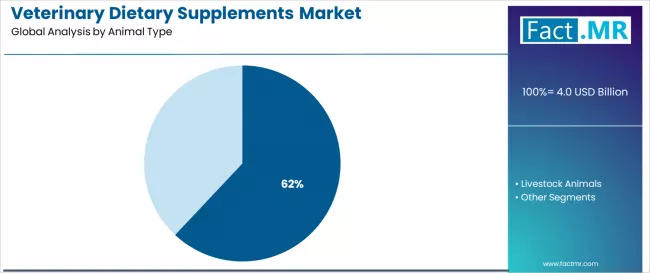
Companion animals command the leading position in the veterinary dietary supplements market with dominant 62.0% market share through pet humanization trends, including superior health consciousness characteristics, preventive care adoption, and owner investment patterns that enable pets to achieve optimal wellness across diverse life stages and health conditions.
The segment benefits from pet owner preferences for preventive healthcare solutions that provide consistent wellness outcomes, enhanced quality of life, and longevity optimization without requiring expensive veterinary interventions. Advanced formulation features enable specialized joint support, calming solutions, and integration with existing pet care routines, where palatability and efficacy represent critical purchase requirements.
Companion animal supplements differentiate through proven health benefits, owner compliance facilitation, and integration with veterinary care protocols that enhance wellness effectiveness while maintaining optimal safety standards for diverse pet species and applications.
Dogs within companion animals maintain the leading subsegment position with 46.0% share due to their widespread adoption as household pets and comprehensive health management requirements.
Livestock animals maintain significant 38.0% market share in the veterinary dietary supplements market due to their production optimization properties and feed efficiency characteristics. These applications appeal to agricultural operations requiring enhanced growth performance with cost-effective positioning for commercial farming applications.
Market growth is driven by livestock productivity demands, emphasizing nutritional supplementation solutions and performance enhancement through optimized mineral delivery systems. Cattle represents the leading livestock subsegment with 23.0% share, benefiting from large-scale dairy and beef operations requiring consistent nutritional support for production maximization and herd health maintenance.
Multivitamins and minerals demonstrate market leadership in the veterinary dietary supplements market with 34.0% share due to widespread adoption of comprehensive nutritional support and increasing focus on preventive health optimization, foundational wellness, and deficiency prevention applications that maximize animal vitality while maintaining safety standards.
Pet owners and livestock operators prioritize broad-spectrum nutrition, convenience benefits, and integration with existing feeding programs that enable coordinated health management across multiple nutritional requirements. The segment benefits from substantial veterinary endorsement and evidence-based efficacy that emphasize the provision of essential nutrients for wellness optimization and disease prevention applications.
Veterinary care protocols incorporate multivitamin supplementation as standard recommendations for animal health, while preventive wellness programs increase demand for foundational nutritional capabilities that support immune function and minimize deficiency risks.
10-in-1 multivitamin and joint health blends capture 57.0% of the multivitamins subsegment through comprehensive formulation advantages that address multiple health needs in single-dose convenience.
CBD formulations capture 16.0% market share through therapeutic applications in anxiety management, pain relief, and inflammatory conditions. These products demonstrate fastest growth trajectory due to increasing acceptance of cannabinoid therapies and documented efficacy in companion pet applications requiring behavioral management and comfort enhancement.
Cannabidiol formulations for companion pets represent 65.0% of the CBD segment, driven by stress reduction needs and calming support applications in household pets facing separation anxiety and environmental stressors.
Probiotics and prebiotics maintain 14.0% market share through microbiome optimization and digestive health support. These formulations appeal to animals with gastrointestinal sensitivities, providing preventive gut health maintenance and therapeutic intervention for digestive disorders. Market positioning emphasizes natural wellness approaches and immune system modulation through beneficial bacterial strains.
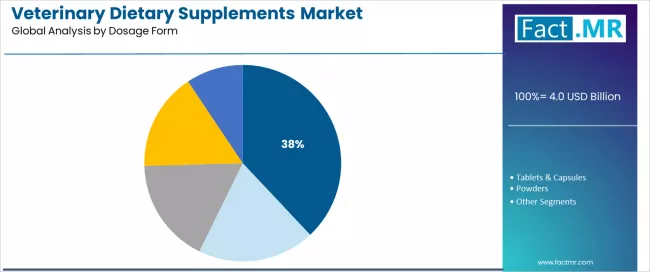
Gummies and chewables demonstrate market leadership in the veterinary dietary supplements market with 38.0% share due to superior palatability characteristics and increasing focus on compliance optimization, treat-like administration, and positive reinforcement applications that maximize supplementation consistency while maintaining nutritional standards.
Pet owners prioritize ease of administration, voluntary consumption, and integration with daily feeding routines that enable stress-free supplementation across multiple pet types. The segment benefits from flavor technology advancement and texture optimization that emphasize the delivery of nutrition through enjoyable consumption experiences rather than forced medication procedures.
Palatability engineering incorporates natural flavoring systems as standard development practices for supplement formulations, while compliance improvement programs increase demand for administration-friendly formats that ensure consistent nutritional intake and health outcome achievement.
Tablets and capsules capture 22.0% market share through precise dosing capabilities, extended shelf stability, and professional veterinary dispensing. These formats appeal to therapeutic applications requiring standardized nutrient delivery and pharmaceutical-grade quality standards, maintaining strong presence in clinical veterinary environments.
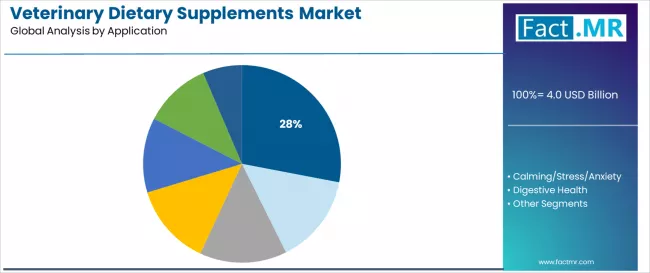
Joint health support demonstrates market leadership in the veterinary dietary supplements market with 28.0% share due to widespread prevalence of mobility concerns and increasing focus on preventive orthopedic care, cartilage preservation, and inflammation management applications that maximize animal comfort while maintaining activity standards.
Pet owners prioritize mobility maintenance, pain reduction, and integration with aging pet care that enable extended quality of life across senior animal populations. The segment benefits from documented clinical efficacy and veterinary recommendations that emphasize the preservation of joint function for longevity optimization and disability prevention applications.
Preventive orthopedic programs incorporate joint supplementation as standard protocols for large breed dogs and senior pets, while arthritis management initiatives increase demand for chondroprotective capabilities that support cartilage health and minimize mobility decline.
Calming and stress management applications capture 18.0% market share through behavioral health support in companion animals facing anxiety disorders, environmental stressors, and separation issues. These formulations demonstrate strong growth through CBD integration and natural calming ingredients that address pet emotional wellness without pharmaceutical intervention.
| Category | Factor | Impact | Why It Matters |
|---|---|---|---|
| Driver | Pet humanization & premium care spending (emotional bonding, wellness investment) | ★★★★★ | Pet owners increasingly treat animals as family members, driving demand for premium health products and preventive wellness solutions with comprehensive nutritional support. |
| Driver | Preventive healthcare adoption & wellness focus (disease prevention, longevity) | ★★★★★ | Veterinary shift toward preventive care models drives supplement demand; early intervention reduces long-term healthcare costs and improves quality of life outcomes. |
| Driver | Aging pet population & chronic condition management (senior care, mobility) | ★★★★☆ | Growing senior pet demographics require ongoing health maintenance; supplements address age-related conditions creating sustained demand for therapeutic nutrition. |
| Restraint | Regulatory complexity & quality control concerns (safety standards, certification) | ★★★★☆ | Variable regulatory frameworks across regions create compliance challenges; quality inconsistencies affect consumer trust and market credibility. |
| Restraint | Price sensitivity & economic constraints (discretionary spending, affordability) | ★★★☆☆ | Supplements remain discretionary purchases; economic downturns impact consumer willingness to invest in preventive care products for animals. |
| Trend | CBD integration & cannabinoid therapeutics (anxiety relief, pain management) | ★★★★★ | Expanding acceptance of CBD applications drives innovation in calming and pain relief formulations; regulatory clarity enabling mainstream adoption. |
| Trend | E-commerce expansion & subscription models (direct-to-consumer, convenience) | ★★★★☆ | Online channels provide convenience and recurring revenue through auto-delivery programs; digital marketing enables direct consumer education and engagement. |
The veterinary dietary supplements market demonstrates varied regional dynamics with growth leaders including India (10.2% growth rate) and China (9.8% growth rate) driving expansion through pet adoption initiatives and livestock modernization development. Strong Performers encompass Brazil (9.1% growth rate), Japan (9.1% growth rate), and USA (8.9% growth rate), benefiting from established pet care markets and advanced veterinary adoption. Mature Markets feature Germany (8.5% growth rate) and UK (8.7% growth rate), where premium product positioning and preventive care requirements support consistent growth patterns.
Regional synthesis reveals Asian markets leading adoption through companion animal growth and livestock intensification, while Western countries maintain strong expansion supported by preventive care emphasis and premium product demand. Emerging markets show robust growth driven by pet ownership trends and agricultural modernization patterns.
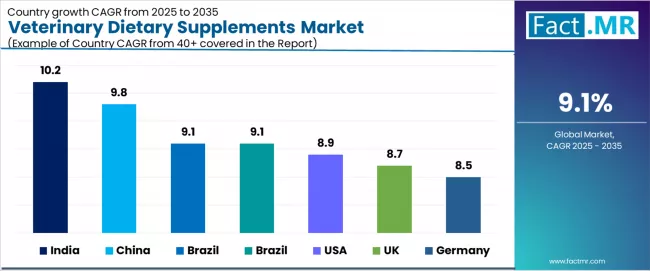
| Region/Country | 2025 to 2035 Growth | How to win | What to watch out |
|---|---|---|---|
| India | 10.2% | Focus on affordable livestock solutions | Quality regulation; distribution gaps |
| China | 9.8% | Lead with premium pet formulations | Market fragmentation; local competition |
| Brazil | 9.1% | Offer livestock productivity supplements | Economic volatility; import regulations |
| USA | 8.9% | Provide premium companion products | Market saturation; private label growth |
| Japan | 9.1% | Push senior pet care formulations | Aging demographics; space constraints |
| Germany | 8.5% | Focus on organic certifications | Regulatory stringency; clinical evidence |
| UK | 8.7% | Premium pet wellness positioning | Brexit impacts; veterinary consolidation |
India establishes fastest market growth through expanding pet ownership and comprehensive livestock modernization, integrating veterinary dietary supplements as standard components in companion animal care and dairy operations. The country’s 10.2% growth rate reflects growing middle-class affluence and increasing awareness of preventive animal healthcare that encourages the use of nutritional supplements across pet and livestock segments. Growth concentrates in major urban centers, including Mumbai, Delhi, and Bangalore, where pet adoption showcases Western-influenced care practices that appeal to owners seeking advanced wellness capabilities and veterinary guidance.
Indian manufacturers are developing cost-effective supplement formulations that combine domestic production advantages with traditional Ayurvedic ingredients, including herbal extracts and natural wellness components. Distribution channels through veterinary clinics and agricultural cooperatives expand market access, while government support for dairy productivity supports adoption across diverse livestock operations.
In Beijing, Shanghai, and Guangzhou metropolitan areas, companion animal owners are implementing veterinary dietary supplements as standard wellness protocols for pet health and preventive care enhancement, driven by urbanization and pet humanization trends that emphasize the importance of nutritional support. The market holds a 9.8% growth rate, supported by rising disposable income and changing attitudes toward pet care that promote premium supplement adoption for companion animals. Chinese pet owners are adopting products that provide comprehensive wellness benefits and imported quality standards, particularly appealing in urban regions where pet spending and health consciousness represent growing lifestyle priorities.
Market expansion benefits from e-commerce infrastructure and digital marketing capabilities that enable direct consumer education about supplement benefits for pet applications. Technology adoption follows patterns established in human nutrition, where quality assurance and ingredient transparency drive purchase decisions and brand loyalty development.
Brazil establishes livestock-focused growth through agricultural modernization and companion animal adoption, integrating veterinary dietary supplements across cattle operations and urban pet care. The country’s 9.1% growth rate reflects expanding livestock productivity emphasis and increasing middle-class pet ownership that supports growing supplement deployment in Brazilian animal sectors. Growth concentrates in agricultural regions, including São Paulo, Minas Gerais, and Goiás, where cattle operations showcase nutritional optimization that appeals to producers seeking performance enhancement with cost-effective solutions.
Brazilian livestock operators focus on balancing affordability with productivity gains, creating demand for supplements that combine mineral fortification with growth promotion advantages. The market benefits from large-scale cattle industry infrastructure and expanding pet ownership patterns that support supplement adoption while maintaining cost standards important to Brazilian agricultural applications.
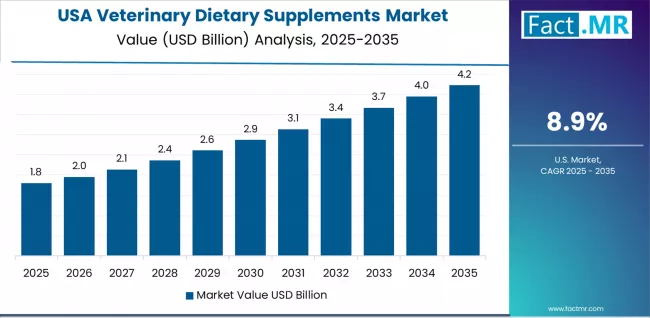
USA establishes premium market leadership through advanced veterinary care integration and established pet wellness culture, incorporating dietary supplements across companion animal households and specialized breeding operations. The country’s 8.9% growth rate reflects mature pet ownership relationships and established preventive care adoption that supports widespread use of supplements in wellness programs and therapeutic applications. Growth concentrates in major pet ownership markets, including California, Texas, and Florida, where veterinary technology showcases mature supplement deployment that appeals to owners seeking evidence-based wellness capabilities and quality assurance.
American manufacturers leverage veterinary endorsement networks and clinical research capabilities, including efficacy validation programs and safety certification that create consumer confidence and competitive advantages. The market benefits from established veterinary distribution channels and willingness to invest in premium pet care that encourages supplement adoption while supporting innovation advancement and therapeutic specialization.
Germany’s advanced veterinary market demonstrates sophisticated supplement integration with documented clinical effectiveness in companion animal applications and livestock operations through compliance with EU regulations and quality standards. The country leverages pharmaceutical-grade manufacturing expertise in supplement production and organic certification systems to maintain an 8.5% growth rate. Veterinary centers, including North Rhine-Westphalia, Bavaria, and Baden-Württemberg, showcase premium formulations where supplements integrate with comprehensive wellness platforms and preventive care protocols to optimize animal health and maintain quality standards.
German manufacturers prioritize organic certification and clinical validation in supplement development, creating demand for premium products with transparent ingredient sourcing, including natural extracts and sustainable production systems. The market benefits from established veterinary infrastructure and commitment to evidence-based medicine that provides long-term health benefits and compliance with international quality standards.
UK’s established pet care market demonstrates sophisticated supplement adoption with documented effectiveness in companion animal wellness and preventive veterinary applications through integration with professional care protocols and health monitoring systems. The country maintains an 8.7% growth rate, leveraging traditional pet ownership culture and veterinary care integration in supplement operations. Pet care centers, including London, Manchester, and Birmingham, showcase integrated formulations where supplements coordinate with veterinary platforms and wellness management systems to optimize health outcomes and maintain care profiles.
British pet owners prioritize veterinary recommendations and quality certification in supplement selection, creating demand for products with clinical backing, including research validation and professional endorsement. The market benefits from established veterinary pharmacy infrastructure and commitment to animal welfare standards that provide long-term wellness benefits and compliance with care regulations.
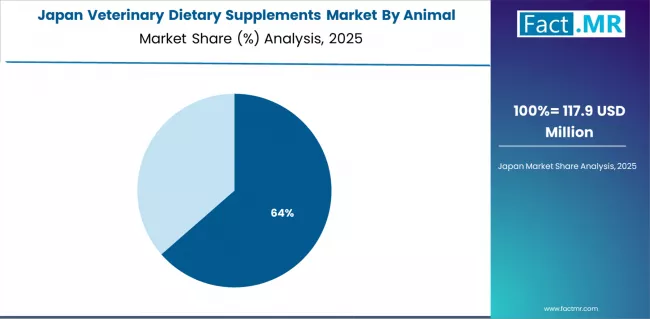
Japan’s mature pet ownership market demonstrates sophisticated supplement integration with documented effectiveness in aging companion animal applications and specialized care needs through integration with veterinary systems and wellness infrastructure. The country maintains a 9.1% growth rate, leveraging traditional pet care dedication and aging pet demographics in supplement technology. Pet care centers, including Tokyo, Osaka, and Nagoya, showcase premium formulations where supplements integrate with senior care platforms and mobility management systems to optimize quality of life and maintain health profiles.
Japanese manufacturers prioritize senior pet formulations and joint health solutions in supplement development, creating demand for specialized products with advanced features, including mobility support and cognitive enhancement. The market benefits from established pet insurance infrastructure and commitment to extended pet longevity that provides long-term care benefits and compliance with veterinary wellness standards.
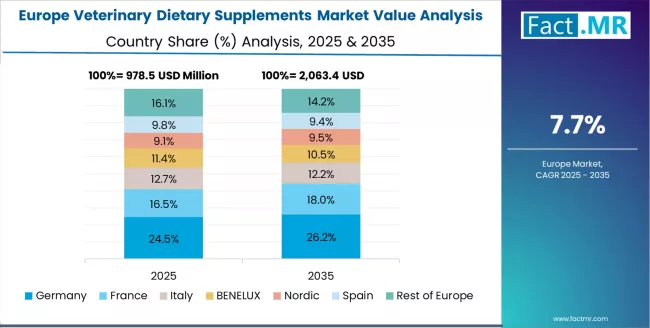
The veterinary dietary supplements market in Europe is projected to grow from USD 0.99 billion in 2025 to USD 2.28 billion by 2035, registering a CAGR of 8.7% over the forecast period. Germany is expected to maintain its leadership position with a 24.2% market share in 2025, declining slightly to 23.8% by 2035, supported by its advanced veterinary infrastructure and organic certification standards.
France follows with a 19.2% share in 2025, projected to reach 19.5% by 2035, driven by comprehensive pet wellness programs and premium product adoption. The UK holds a 17.8% share in 2025, expected to reach 18.1% by 2035 through veterinary integration and preventive care emphasis. Italy commands a 13.4% share, while Spain accounts for 10.6% in 2025. The Rest of Europe region is anticipated to maintain momentum at 14.8% share in 2025, reaching 14.3% by 2035, attributed to increasing supplement adoption in Nordic countries and emerging Eastern European markets implementing pet care modernization programs.
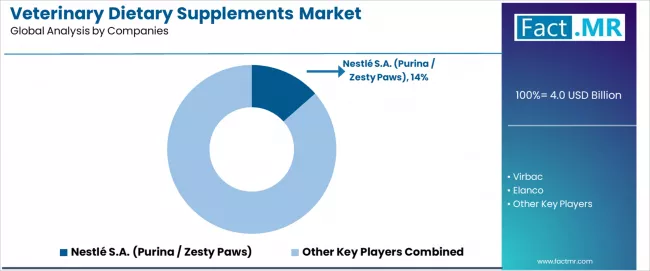
The veterinary dietary supplements market exhibits a moderately fragmented competitive structure with approximately 35-50 active players operating across global and regional markets. The top 3-4 manufacturers collectively command roughly 35-40% of total market revenue, with Nestlé S.A. (through Purina and Zesty Paws brands) maintaining market leadership at a 13.5% share.
This competitive landscape reflects the diverse nature of animal health requirements across companion and livestock segments, where product specialization, veterinary relationships, and distribution capabilities create opportunities for both multinational corporations and specialized nutritional brands to capture meaningful market positions.
Market leadership is maintained through several critical competitive advantages that extend beyond formulation capabilities. Veterinary endorsement networks enable leading players to gain professional recommendations and clinical credibility that drive consumer adoption through trusted veterinary channels.
Brand recognition provides consumer confidence and repeat purchase patterns, particularly important in pet care where owner loyalty influences long-term supplementation commitment. Manufacturing scale delivers cost advantages and quality consistency that allow market leaders to offer competitive pricing while maintaining rigorous safety standards. The combination of clinical research investment, palatability optimization, and comprehensive product portfolios creates differentiation that reinforces market position over time.
The market demonstrates clear commoditization trends in basic multivitamin formulations and generic mineral supplements, where product differentiation has diminished and price competition intensifies among private label offerings. These entry-level products face margin pressure as contract manufacturing capabilities spread globally and ingredient sourcing becomes standardized. However, significant margin opportunities persist in specialized therapeutic categories and innovative delivery systems.
CBD-based formulations command premium pricing through their therapeutic applications in anxiety management and pain relief, appealing to pet owners seeking natural alternatives to pharmaceutical interventions. Targeted joint health solutions with clinically validated chondroprotective ingredients generate higher margins through demonstrated efficacy in mobility improvement. Subscription-based delivery models create recurring revenue streams and strengthen customer relationships through convenience and compliance optimization beyond one-time product sales.
| Stakeholder | What they actually control | Typical strengths | Typical blind spots |
|---|---|---|---|
| Global pet care platforms | Brand portfolios, veterinary networks, retail distribution | Consumer trust; multi-channel reach; research capabilities | Innovation speed; specialized formulations |
| Veterinary pharma companies | Clinical validation; professional relationships; therapeutic focus | Scientific credibility; regulatory expertise; prescription channels | Consumer marketing; palatability optimization |
| Specialized supplement brands | Product innovation, formulation expertise, niche positioning | Targeted solutions; ingredient quality; consumer education | Distribution scale; veterinary penetration |
| Private label manufacturers | Cost efficiency, retail partnerships, volume production | Competitive pricing; flexible formulation; retailer loyalty | Brand equity; clinical validation |
| E-commerce innovators | Direct consumer access, subscription models, digital marketing | Customer data; recurring revenue; personalized offerings | Veterinary endorsement; retail presence |
| Items | Values |
|---|---|
| Quantitative Units (2025) | USD 3.96 billion |
| Product Type | Multivitamins & Minerals, CBD, Probiotic & Prebiotic, Protein & Peptides, Omega-3 Fatty Acids, Others |
| Animal Type | Companion Animals (Dogs, Cats), Livestock Animals (Cattle, Poultry, Swine) |
| Dosage Form | Gummies & Chewables, Tablets & Capsules, Powders, Liquids, Others |
| Application | Joint Health Support, Calming/Stress/Anxiety, Digestive Health, Nutritional Support, Immunity Support, Skin & Coat Health, Others |
| Distribution Channel | Veterinary Hospitals & Clinic Pharmacies, Pet Specialty Stores & Retail, E-Commerce, Others |
| Regions Covered | Asia Pacific, North America, Europe, Latin America, Middle East & Africa |
| Countries Covered | India, China, Japan, USA, Brazil, Germany, UK, France, Italy, and 25+ additional countries |
| Key Companies Profiled | Nestlé S.A., Virbac, Elanco, Nutramax Laboratories Veterinary Sciences Inc., Boehringer Ingelheim, Vetoquinol |
| Additional Attributes | Dollar sales by product type and animal categories, regional adoption trends across Asia Pacific, North America, and Europe, competitive landscape with nutritional manufacturers and veterinary partners, pet owner preferences for preventive care and palatability, integration with veterinary care protocols and wellness programs, innovations in delivery systems and bioavailability enhancement, and development of specialized formulations with therapeutic targeting and efficacy optimization capabilities. |
Small tea growers of Northeast have urged the Centre to introduce a mechanism like minimum support price (MSP) or fair and remunerative price (FRP) for green tea leaves produced by them to ensure fair and remunerative prices and protection against market price volatility.
“With due respect, we hereby request you to introduce a mechanism for a fair and remunerative price of green tea leaves to protect the small tea growers from market price volatility. As far as we know, Minimum Support Price (MSP) is applicable to 22 agricultural crops and is a price guarantee set by the government to protect farmers from price drops in the open market, thereby ensuring fair price to farmers for their produce,” North East Confederation of Small Tea Growers Association, All Assam Small Tea Growers Council and All Nagaland Small Tea Growers Association said in a letter to Prime Minister Narendra Modi.
“Another successful and time tested mechanism to ensure fair price to sugarcane farmers is Fair and Remunerative Price (FRP),” the small tea growers associations said in the letter.
The associations said tea is half agriculture and half industry, and small tea growers engage in the cultivation and harvesting of tea leaves, which is a form of agriculture or farming. “We therefore earnestly request you to introduce Minimum Support Price (MSP) or Fair and Remunerative Price (FRP) for green tea leaves produced by Small Tea Growers (STGs),” they said.
In the letter, dated November 13, the associations said the present Price Sharing Formula (PSF) or declaration of Average Green Leaf Price (AGLP) district-wise and month-wise by the Tea Board is not helping the tea growers, rather it is creating a rift between tea growers and tea manufacturers.
“We would also like to request you to extend all schemes under the Agriculture Ministry to the small tea growers. Small tea growers need more support from the government in providing plucking machine, pruning machine, fencing and irrigation. It will be of great help if fertiliser and approved pesticides can be provided to STGs at a special rate,” the letter added.
Notably, various tea manufacturers and growers bodies, including the Indian Tea Association, Tea Association of India and Confederation of Indian Small Tea Growers’ Associations, have also appealed to the Prime Minister to ensure a minimum sustainable prices for tea.
They argued that the need of the hour for the country’s tea industry is the notification of a Minimum Sustainable Price, based on a transparent cost of production. The minimum green leaf price has to be ₹35-40 per kg for small growers. The Minimum Sustainable Price is zero cost to the government of India.
Published on November 14, 2025
If you love starting your morning with a hot cup of chai and a biscuit, you’re not alone – tea is a daily ritual in most Indian households. And while it comes with impressive health benefits, a few common tea-drinking mistakes may quietly be undoing all its goodness. From timing your cuppa wrong to unknowingly overloading it with sugar, these habits can take a toll on your gut and liver without you even realising it.
California-based gastroenterologist Dr Saurabh Sethi, who trained at AIIMS, Harvard, and Stanford, has highlighted the seven worst tea-drinking mistakes that may be negatively affecting your gut and liver health without you realising it. In an Instagram post shared on November 14, the gastroenterologist stresses that the healing powers of tea are remarkable, but only when you consume it correctly.
Dr Sethi explains that drinking tea first thing on an empty stomach may irritate the stomach lining, which can lead to acid reflux, nausea, and abdominal discomfort.
The gastroenterologist highlights that sugary iced and milk teas are loaded with at least 30 to 40 grams of sugar. This increases the risk of fatty liver disease as well as diabetes.
Dr Sethi cautions against so-called detox or slimming teas, noting that they largely contain laxatives. These products can lead to dehydration, electrolyte imbalances, and even damage the gut.
Green tea is rich in antioxidants and great for your overall wellbeing. However, Dr Sethi advises opting for real, freshly brewed tea instead of supplements because the latter is linked to liver toxicity in rare cases.
Dr Sethi points out that research shows drinking tea at temperatures exceeding 65°C on a regular basis may heighten the risk of oesophageal cancer.
Since caffeine takes several hours to completely leave your system, the gastroenterologist warns against drinking chai or even green tea late at night. Lingering caffeine “disrupts sleep, which your liver needs to repair.”
Fancy bubble teas are nothing but a load of sugar and starch. According to the gastroenterologist, the excess sugar and starchy pearls contain hidden calories which can lead to insulin resistance and fatty liver.
Note to readers: This article is for informational purposes only and not a substitute for professional medical advice. It is based on user-generated content from social media. HT.com has not independently verified the claims and does not endorse them.
Catch your daily dose of Fashion, Taylor Swift, Health, Festivals, Travel, Relationship, Recipe and all the other Latest Lifestyle News on Hindustan Times Website and APPs.
Catch your daily dose of Fashion, Taylor Swift, Health, Festivals, Travel, Relationship, Recipe and all the other Latest Lifestyle News on Hindustan Times Website and APPs.
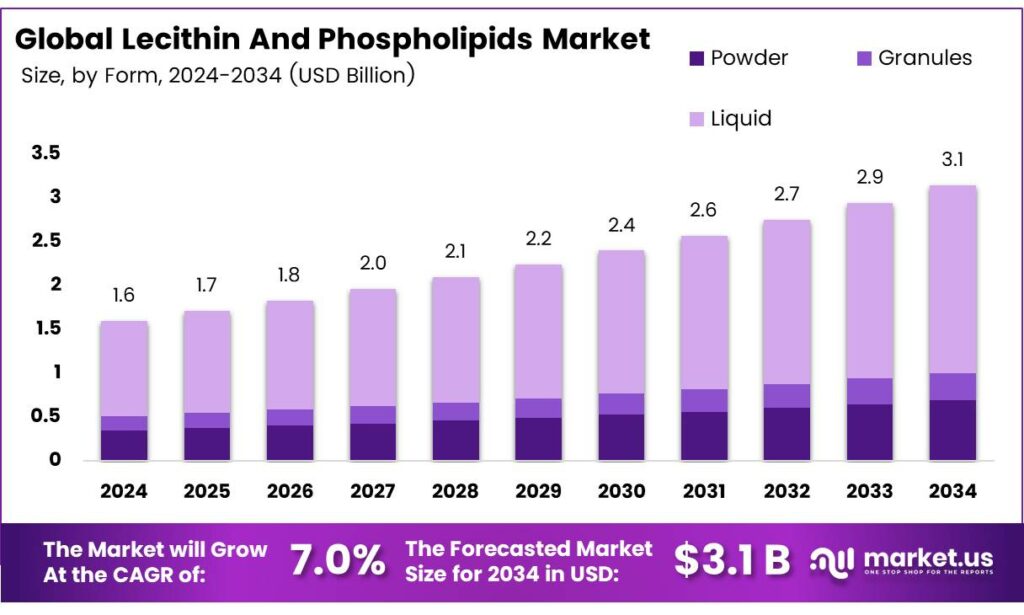
The Global Lecithin and Phospholipids Market size is expected to be worth around USD 3.1 Billion by 2034, from USD 1.6 Billion in 2024, growing at a CAGR of 7.0% during the forecast period from 2025 to 2034.
Phospholipids and lecithin are closely related yet distinct substances that play essential roles in biology, nutrition, and industry. Phospholipids are a class of lipids featuring a glycerol backbone, two fatty acid tails, and a phosphate group, making them amphipathic molecules with both hydrophilic (water-loving) and hydrophobic (water-repelling) regions. In contrast, lecithin is a natural mixture rich in phospholipids but also containing neutral lipids such as triglycerides and glycolipids.
Typically extracted from soybeans, sunflower seeds, or egg yolks, lecithin is less pure than isolated phospholipids, with its phospholipid content varying from 60% to 90% depending on the grade. It is available in commercial forms including liquid lecithin, deoiled powder, and granules, and is widely used as a food emulsifier, dietary supplement, and pharmaceutical excipient. The term phospholipids refers to phosphorus-containing lipids first isolated from egg yolk and named lecithin from the Greek.
Egg yolk lecithin mainly contains 73% phosphatidylcholine (PC), along with phosphatidylethanolamine (PE) and lysophosphatidylcholine. It has three times more lecithin than soybeans, comprising about 10% of chicken and duck egg yolks. Phospholipids are vital cell membrane components. Lecithins act as emulsifiers due to surface-active properties, blending oil and water in products like margarine and paint. They reduce fat surface tension for better flow and mixability, used at 0.2–0.6% of total weight. Their amphipathic nature drives these functional benefits.
Refined Lecithin dominates with 48.7% due to its superior purity and versatility across industries.
In 2024, Refined Lecithin held a dominant market position in the By Product Type Analysis segment of the Lecithin and Phospholipids Market, with a 48.7% share. This segment leads because refined lecithin offers high purity and consistent quality. It suits diverse applications in food and pharmaceuticals. Additionally, advanced processing removes impurities effectively.
Unrefined Lecithin follows as a cost-effective alternative. It retains natural components and appeals to organic markets. However, its raw form limits precision uses. Still, it grows in niche health products. Consequently, producers target budget-conscious buyers. Rapeseed Lecithin gains traction from sustainable sourcing.
Europe drives its adoption. Yet, availability constraints hinder wider reach. Overall, it supports eco-friendly trends. Chemically Modified Lecithin enhances functionality through alterations. It improves stability in extreme conditions. Besides, specialty formulations benefit greatly.
Liquid dominates with 63.9% due to its ease of mixing and broad industrial compatibility.
In 2024, Liquid held a dominant market position in the By Form Analysis segment of the Lecithin and Phospholipids Market, with a 63.9% share. Liquid form excels in seamless integration. It blends quickly in manufacturing processes.
Additionally, the food and cosmetic sectors prefer it. Therefore, production efficiency boosts its leadership. Powder offers convenient storage and a longer shelf life. It suits dry mixes and tablets. Moreover, transportation costs decrease.
However, reconstitution challenges exist. Nonetheless, pharmaceutical applications expand steadily. Granules provide balanced handling and flowability. They reduce dust in processing. Animal feed incorporates them easily. Yet, market penetration remains limited. Overall, specialized needs drive growth.
Non-GMO dominates with 67.1% due to rising consumer preference for natural and transparent sourcing.
In 2024, Non-GMO held a dominant market position in the By Nature Analysis segment of the Lecithin and Phospholipids Market, with a 67.1% share. Non-GMO variants align with clean-label demands. They assure safety and ethics. Besides, premium pricing supports profitability.
Hence, health-conscious buyers propel dominance. GMO remains viable for cost efficiency. It ensures abundant supply chains. Additionally, industrial scales favor it. Still, labeling concerns persist. Consequently, it serves traditional segments.
Emulsifier dominates with 49.2% due to its critical role in stabilizing mixtures across food and cosmetics.
In 2024, Emulsifier held a dominant market position in the By Function Analysis segment of the Lecithin and Phospholipids Market, with a 49.2% share. Emulsifiers prevent separation in products. They enhance texture and shelf life.
The bakery and dairy rely heavily. Dispersing Agent aids uniform particle distribution. It improves product consistency. Paints and inks utilize it. However, competition from alternatives grows. Nevertheless, reliability sustains demand.
Surfactants lower surface tension effectively. They enable foaming and cleaning. Besides, personal care boosts usage. Yet, specificity narrows the scope. In essence, targeted applications thrive. Others cover niche roles like viscosity modifiers. They support emerging innovations. Additionally, research expands possibilities. Still, fragmented adoption limits the share.
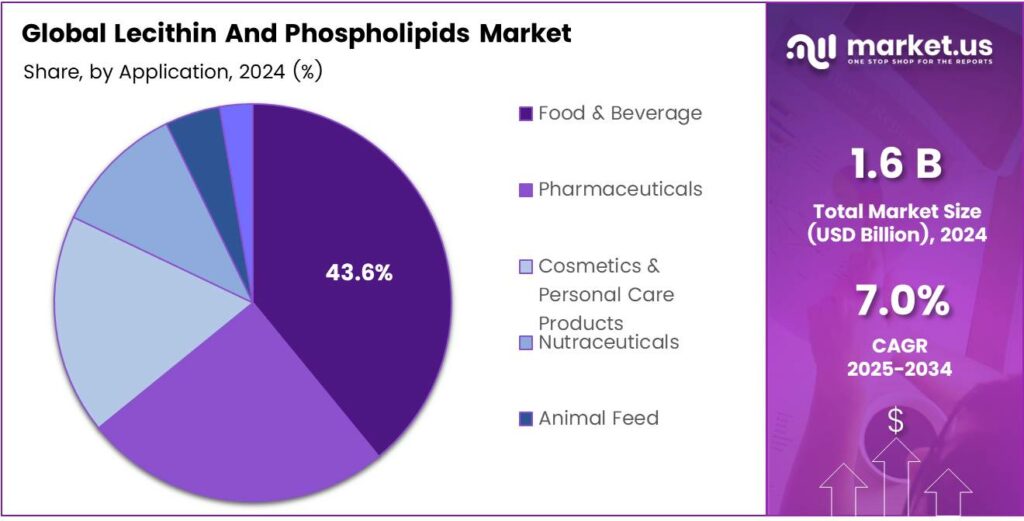
Food and Beverage dominate with 43.6% due to their extensive use in processing and product stabilization.
In 2024, Food and Beverage held a dominant market position in the By Application Analysis segment of the Lecithin and Phospholipids Market, with a 43.6% share. This sector consumes lecithin for emulsification. It ensures smooth chocolates and margarines. Additionally, convenience foods surge in demand. Therefore, daily essentials reinforce dominance.
Pharmaceuticals leverage lecithin in drug delivery. It enhances bioavailability. Moreover, capsules and creams incorporate it. However, stringent regulations apply. Nonetheless, health benefits accelerate growth. Cosmetics and Personal Care Products use it for moisturizing. It softens skin and hair. Furthermore, natural trends favor inclusion.
Nutraceuticals benefit from nutritional profiling. Lecithin supports brain health supplements. Besides, wellness booms drive uptake. Still, evidence-based claims matter. In summary, functional foods integrate well. Animal Feed improves nutrient absorption in livestock. It boosts feed efficiency. Additionally, poultry and aquaculture demand rise. Nevertheless, cost sensitivities influence.
The clean-label movement has become one of the strongest forces reshaping how food companies think about ingredients like lecithin and phospholipids. People now want foods made with names they can recognize, ingredients they trust, and processes that feel closer to nature. Food manufacturers are moving away from synthetic emulsifiers and replacing them with plant-derived lecithin.
A major part of this trend is the growing awareness of how ingredients affect health, texture, and overall product quality. Clean-label lecithin fits perfectly into this shift because it delivers natural emulsification, moisture stability, and mouthfeel without chemical additives. In many baker’s, confectionery, beverage, and plant-based products, manufacturers now highlight sunflower lecithin directly on the label as a selling point.
One major driver pushing the lecithin and phospholipids market forward is the rapid expansion of global food processing. As more countries improve their food manufacturing capacity, the need for reliable natural emulsifiers grows. Lecithin is essential in many everyday products—chocolates, instant mixes, baked goods, beverages, and even nutritional formulas—because it enhances texture and improves stability without synthetic additives.
Bakery and confectionery sectors in many regions are modernizing. As manufacturers automate processes and scale up production, they rely even more on lecithin to ensure dough handling improves, chocolate remains smooth, and ready-to-eat foods maintain the right texture. The rise of plant-based dairy, plant-based meat, and fortified beverages also contributes, since lecithin prevents separation and helps blend fats and water uniformly.
One major restraint affecting the lecithin and phospholipids industry is the ongoing concern around genetically modified (GM) soybean crops. Since a large portion of commercial lecithin comes from soybeans, any hesitation surrounding GM soy directly influences buyer decisions, particularly in regions where consumers prefer organic or non-GMO labeling.
This concern puts pressure on suppliers to offer certified non-GMO lecithin or shift toward sunflower lecithin, which naturally avoids GMO controversies. However, sunflower production is still smaller in scale compared to soy, making pricing less stable. Manufacturers face higher costs or must develop alternative sourcing strategies if they want to maintain non-GMO claims on packaging.
A major growth opportunity for lecithin and phospholipids lies in infant nutrition, therapeutic foods, and specialized dietary products. Lecithin plays an important role in emulsification, fat absorption, and nutrient delivery—making it ideal for infant formula, medical nutrition powders, and therapeutic milk formulations used in malnutrition recovery programs.
Therapeutic milk programs used in malnutrition treatment also rely on phospholipid-rich ingredients to support energy density and absorption. Government-supported food security programs, emergency nutrition efforts, and international aid initiatives continue to strengthen demand for such formulations. As these programs scale, the requirement for safe, stable, and natural emulsifiers grows.
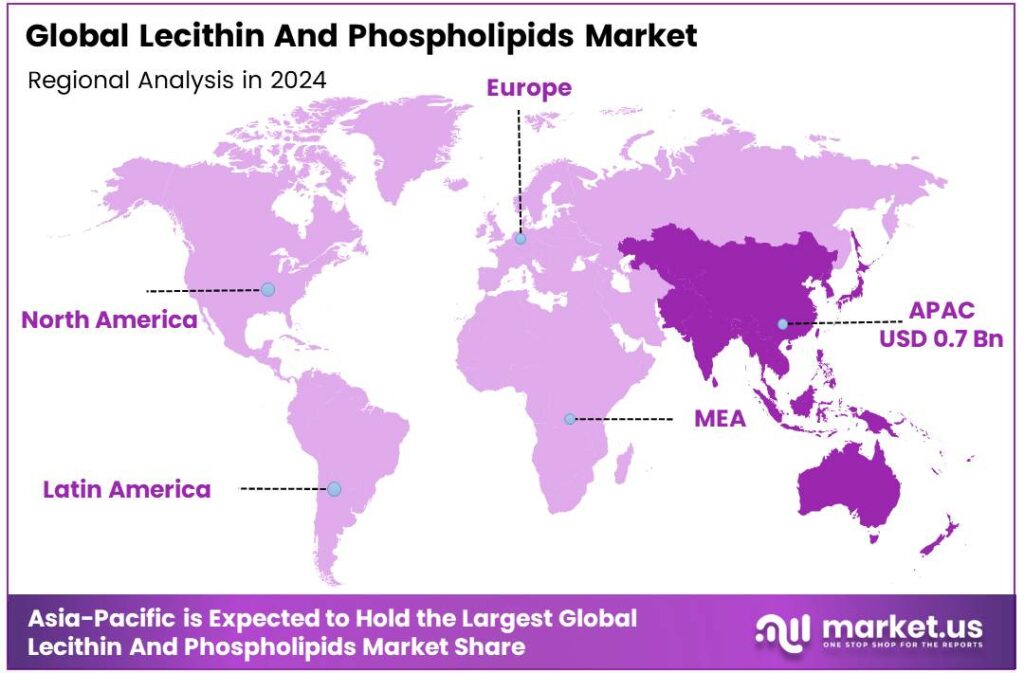
Asia Pacific remains the most influential region in the global Lecithin and Phospholipids market, holding a dominant 45.9% share valued at USD 0.7 billion. This strong position comes from the region’s expanding food processing industry, rising demand for clean-label emulsifiers, and the rapid modernization of its nutraceutical and functional food sectors.
Countries such as China, India, Japan, and South Korea are witnessing steady growth in bakery, confectionery, dairy, and infant nutrition categories—sectors that heavily rely on lecithin for emulsification, stabilization, and texturization. Additionally, the region’s growing interest in plant-based formulations, especially soy, sunflower, and rapeseed lecithin, is creating new momentum for domestic producers and global suppliers.
Regulatory clarity across the Asia Pacific has further strengthened market confidence. India’s FSSAI standards for emulsifiers, China’s GB regulations for food additives, and Japan’s focus on high-purity phospholipids for pharmaceuticals have accelerated both product adoption and quality improvements. The pharmaceutical sector in the region, particularly in Japan and South Korea, has contributed to higher consumption.
Asia Pacific’s expanding soybean processing infrastructure and increasing investment in oilseed crushing facilities have created a reliable raw material base for lecithin extraction. Local manufacturers are also adopting advanced purification technologies to meet the rising demand for non-GMO and allergen-controlled lecithin. The region’s dynamic e-commerce distribution networks and expanding urban middle-class consumer base continue to support sustained market growth.
Lecio GmbH is a German specialist renowned for its high-purity, customized phospholipid products. Focusing heavily on the pharmaceutical and nutraceutical sectors, the company provides critical lipid excipients for drug delivery systems and advanced parenteral nutrition. Its strategic emphasis on research-driven, application-specific solutions positions it as a key innovator and a preferred partner for high-value.
ADM is a dominant force in the lecithin market. Leveraging its massive, integrated supply chain for oilseeds like soy, it produces vast quantities of standardized, commodity lecithin. This scale ensures a consistent supply for the food and beverage industry, where lecithin is a primary emulsifier. ADM’s strength lies in its production capacity, global distribution network, and ability to serve the broad, volume-driven demands of the market.
VAV Life Science is a prominent Indian player specializing in high-purity phospholipids for sophisticated applications. With a strong focus on the pharmaceutical industry, it provides essential components for liposomal drug formulations and injectable emulsions. The company capitalizes on the growing demand for advanced drug delivery systems and nutraceuticals, positioning itself as a critical regional and global supplier of innovative.
Matcha, often dubbed the “Gen Z green juice,” traces its origins to Japan. While it has long been a staple there, the drink has turned into a global fad, so much so that people are now brewing business ideas around it.
This green tea powder, celebrated for its nutritional and wellness benefits, has found its way into smoothies, coffees, cakes, cookies, and even cocktails. But now, the internet has a new claim: it may cause hair fall, especially among women.
Such claims first surfaced around midyear but soon faded away. However, the internet is buzzing about them again. So, we decided to set the record straight – not just about the hair fall concerns, but also other potential side effects and how to get your matcha right.
PS: Don’t put that cup of matcha down just yet. Read on to find out what experts say about whether it’s truly everyone’s cup of tea.
At its core, matcha is just powdered, shade-grown green tea leaves. It began as part of Japan’s traditional tea ceremony but is now a global sensation. It is loaded with antioxidants called catechins, which help reduce inflammation. It also contains L-theanine, an amino acid that slows caffeine absorption, making it a comparatively better beverage option than regular coffee.
Broadly, based on quality, matcha is classified into three categories: ceremonial grade, premium grade, and culinary grade.
The highest is ceremonial grade, made from the youngest, most tender leaves, and ideal for traditional tea ceremonies. Premium and daily grades are slightly more robust and popular for making lattes or for everyday drinking. Meanwhile, culinary grade matcha, often divided into further subcategories, is more intense and slightly bitter, making it suitable for cooking, baking, or smoothies without the premium price tag.
But just like a coin, it turns out even the matcha story has two sides. Despite being known as a healthy beverage, its potential side effects are what everyone is talking about now.
Viral claim: Matcha causes hair fall.
Is this viral claim true, though? Not quite. At least, that’s not how experts say.
“Matcha itself doesn’t directly cause hair fall. In fact, its antioxidants (especially EGCG) may protect hair follicles and support scalp circulation. However, excessive caffeine intake from multiple cups daily can raise cortisol levels in sensitive individuals, potentially contributing to hormonal hair shedding,” Vidhi Chawla, dietician and founder of FISICO Diet and Aesthetic Clinic, tells India Today.
Now, this is where the confusion brews about iron deficiency and its connection with hair fall.
So, can matcha cause iron deficiency? Possibly, but terms and conditions apply.
This is possible if matcha is consumed in excess. Matcha is rich in tannins and catechins, which can inhibit iron absorption from plant foods. In such cases, the body’s ferritin (the protein that stores iron) levels can drop, leading to shedding and thinning of hair.
“Low ferritin (iron stores) is a major cause of hair thinning in Indian women. When combined with stress or poor sleep, this can worsen hair shedding,” says Twincy Ann Sunil, clinical nutrition and dietetics, Apollo Spectra Hospital, Bengaluru.
Digestive issues
Tea is known to have certain gastric effects when consumed in excess. Similarly, the caffeine and L-theanine content in this green tea can stimulate gastric acid production too, according to experts.
On an empty stomach, it may lead to bloating, acidity, or nausea. To avoid discomfort, it’s best to drink matcha after a light meal or snack, not first thing in the morning.
Menstrual cycle
This, once again, is an effect that can occur only when matcha is consumed in excess. Experts agree that excessive caffeine can amplify PMS symptoms, cause cycle irregularities, or worsen anxiety and cramps in caffeine-sensitive women. However, when consumed in moderate amounts (about one cup daily), matcha is unlikely to affect menstrual cycles significantly.
Quality
Matcha lovers, take note! The beverage can become problematic if you compromise on quality. Cheap, low-grade versions may not only taste bitter but can also cause health issues.
Viral trends keep surfacing, some fade away like a whisper in the wind, while others actually leave an impact and stay. Matcha belongs to the latter. But here’s the thing: wellness and food-related fads don’t always translate the same way everywhere. What works for one culture may need a little tweaking in another.
For instance, the matcha tea culture has been a part of Japanese tradition for centuries. And there’s no denying how several concepts from Japan — like Ikigai, Hara Hachi Bu, and Wabi-Sabi – have become global markers of healthy, mindful living.
But when the same green ritual travels to India, the story changes slightly. Our tropical climate already increases body heat and dehydration risk. And matcha, being a warming and stimulating drink, can add to that. That’s why it suits mornings or cooler seasons better than hot afternoons.
Both experts point out that Indian diets are typically carbohydrate-heavy and low in antioxidants, so matcha can still offer a valuable polyphenol and chlorophyll boost. However, those prone to acidity or heat-related issues – like migraines, acne, or PCOS flares – should go easy and limit their intake to just a few times a week.
Clearly, the world is not giving up on the green drink and even health experts sort of approve of it. Just a little moderation, some body awareness, and you’re good to go.
Here are a few quick notes on how to match up with your matcha:
Don’t toss away your matcha just yet – sip, enjoy, and let it work for you, not against you. Because, as far as experts say, side effects are mostly a ‘you problem’ (if you over consume) and not actually a matcha problem.
– Ends
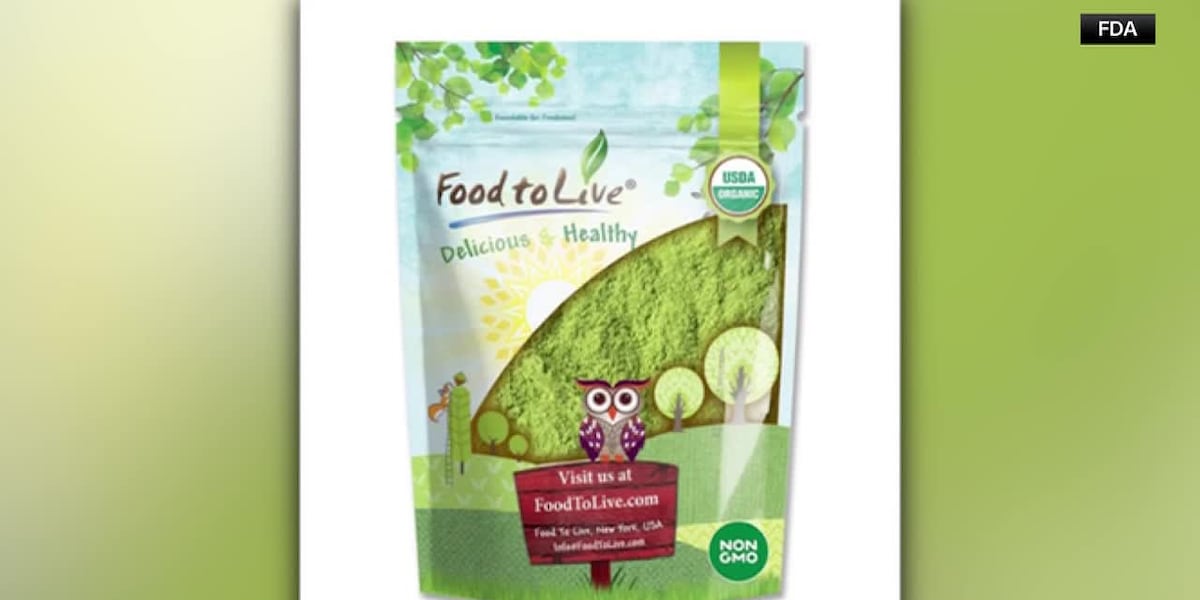
(Gray News) – Officials say there is an ongoing investigation into a reported salmonella outbreak linked to several dietary supplements.
According to the Food and Drug Administration, the products included in the recall were sold at Sam’s Club stores nationwide as well as online through such locations as Amazon, Walmart, Target and eBay.
The products connected to the outbreak are listed below:
As part of the investigation, the FDA said that the Virginia Department of Health collected an open sample of Africa Imports Moringa Leaf Powder from an ill person’s home, with the sample testing positive for salmonella.
Currently, the agency is reporting a total of 11 illnesses, with three people being hospitalized. The cases so far have been reported in Florida, Kansas, Michigan, New York, North Carolina, South Carolina and Virginia.
Consumers are urged to throw the affected products away or return them to the store for a full refund.
According to the FDA, it is working to determine the point of contamination and if any additional products are also impacted.
Copyright 2025 Gray Local Media, Inc. All rights reserved.
One of the most underrated items I look forward to every time Trader Joe’s ushers in their holiday items is their teas. The grocer releases several stunning flavors once the colder months hit that are just too good to not buy every time I go. Don’t get it twisted, though – I’m a year-round tea lover and have tried plenty of non-seasonal Trader Joe’s teas. As someone who shops there at least once a week, I’m bringing you my personal ranking of the six Trader Joe’s teas I’ve tried so you know which ones are worth stocking up on and which ones are okay being left behind.
Trader Joe’s
This tea shocked me when I first tried it (in the best way possible). It’s unlike any of the other teas you can find at Trader Joe’s because of its unique espresso inclusion. It boasts a rich blend of black tea, ground espresso beans, and maple, making each sip bold enough to bring full flavor, but mellow and sweet enough to sip on its own. I’ve found it’s perfect for times I want something stronger than a typical black tea, but less intense than an actual cup of coffee. It really brings the best of both worlds. I must note it also tastes immaculate with a small splash of Trader Joe’s seasonal Gingerbread Non-Dairy Oat Creamer.

Trader Joe’s
I will go through an entire box of this green tea within a week if I’m not careful. It’s so festive, especially for this time of year, thanks to the notes of candy cane. It also features flavors like vanilla and cinnamon for a totally holiday-ready sip. Plus, how cute is that little polar bear on the box?! I’ll go out on a whim and say that this Trader Joe’s tea is worth stocking up on a ton so you can enjoy it all year long. Though it’s green tea, the blend is decaffeinated so you can easily sip it before bed without any disturbances (I do it all the time). The only downside to this pick is it’s seasonally available around fall and winter.

Trader Joe’s
Trader Joe’s Harvest Blend basically puts all the best autumn flavors in liquid form: apple, cinnamon, hibiscus, orange peel, and ginger. It’s so warming and cozy, plus it comes with a subtle sweetness that doesn’t require any extra honey or cream – the ease! I can truly drink it all day without getting tired of it. The sly, tea-drinking fox on the box makes prepping it all the more enjoyable, too. Like the Candy Cane Green Tea, this selection is sadly only seasonally available, hence its somewhat-mid ranking.
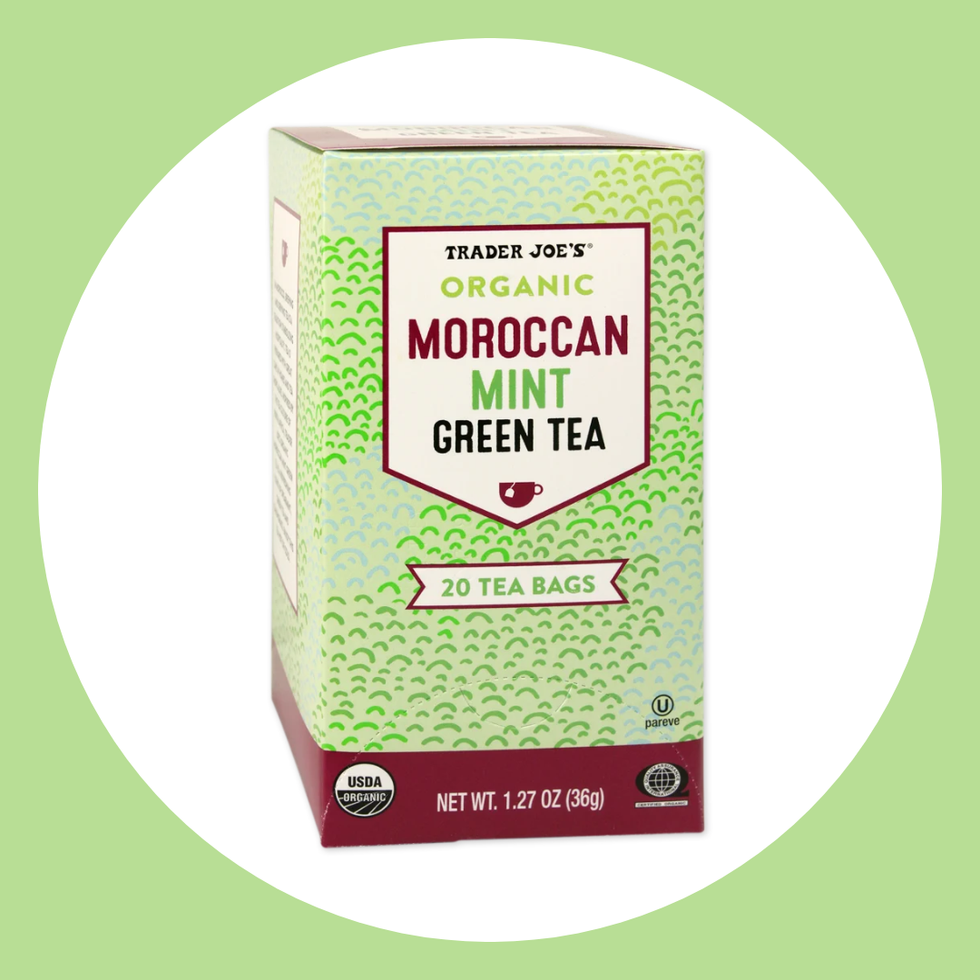
Trader Joe’s
This Trader Joe’s tea is pretty much a classic. Though it’s always clean, refreshing, and simple, I find it fairly basic compared to the seasonal teas I ranked above. Because it’s a staple, it doesn’t have as much of an “it” factor for me, so I’m not necessarily compelled to prep a mug frequently. If you like to have a go-to for everyday drinking, you’ll probably love this tea, but it’s just not my jam.

Trader Joe’s
Trader Joe’s take on traditional Earl Grey is quite strong and fragrant, with plenty of bergamot flavor right out of the gate. It’s not the most delicate blend, but if you enjoy a brisk black tea with citrusy undertones, this one simply hits the spot. the only issue I take up with this blend is that the steeping time can be pretty tricky. It gets bitter easily, but I do realize user error has a lot to do with the end result.
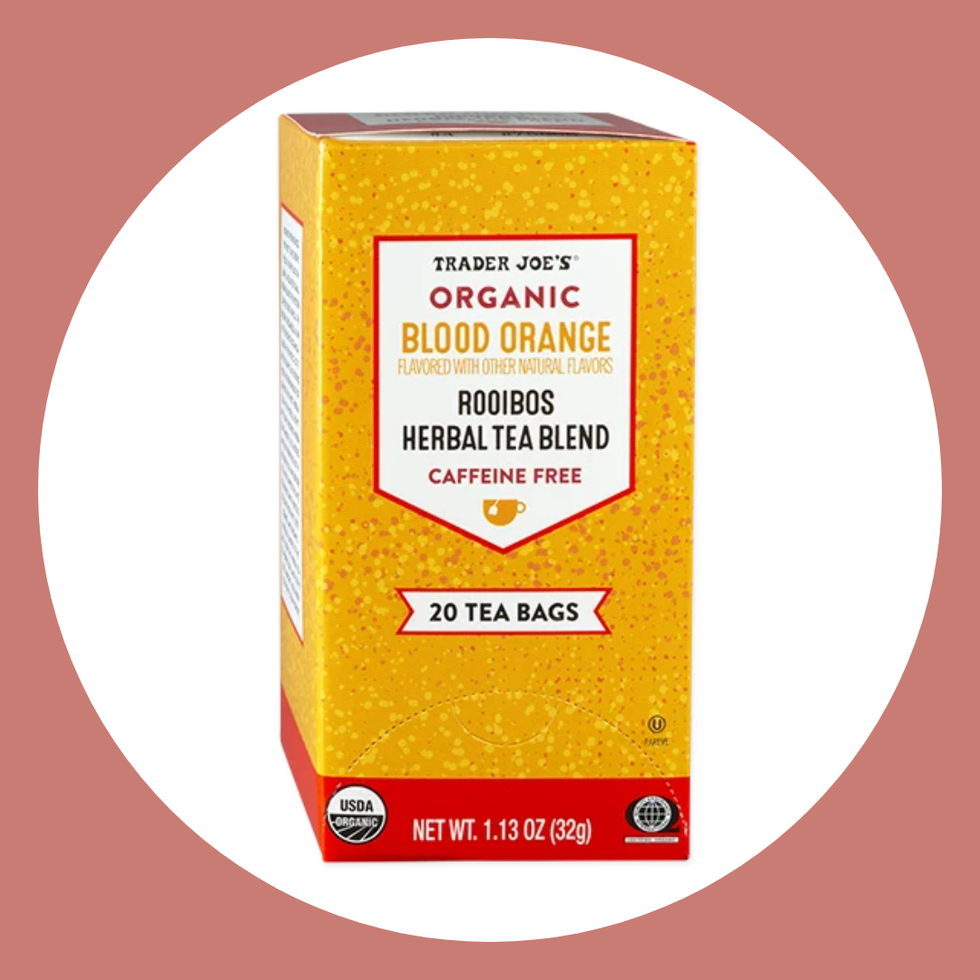
Trader Joe’s
While Trader Joe’s Blood Orange Rooibos isn’t bad by any means, I find the citrus notes reminiscent of flavored cough syrup, which just isn’t pleasing to the palate at all. Admittedly, I’ve been traumatized my artificial orange-flavored things. Taste aside, it’s caffeine-free, which makes it a good bedtime option, but it doesn’t quite deliver the same cozy satisfaction as other Trader Joe’s herbal blends.
Subscribe to our newsletter for more food rankings + new Trader Joe’s finds!
usatoday.com wants to ensure the best experience for all of our readers, so we built our site to take advantage of the latest technology, making it faster and easier to use.
Unfortunately, your browser is not supported. Please download one of these browsers for the best experience on usatoday.com
Northeast Confederation Small tea grower’s Association said,” With due respect, we hereby request you to introduce a mechanism for a-fair and remunerative price of green tea leaves to protect the small tea growers from market price-volatility. As far as we know, Minimum Support Price (MSP) is applicable to 22 agricultural crops and is a price guarantee set by the Government to protect farmers from price drops in the open market, thereby ensuring fair price to farmers for their produce. “
The body added, “Another successful and time tested mechanism to ensure fair price to sugarcane farmers is Fair and Remunerative Price (FRP). Tea is half agriculture and half industry. Small tea growers engage in the cultivation and harvesting of tea leaves, which is a form of agriculture / farming. We therefore, earnestly request you to introduce Minimum Support Price (MSP) or Fair and Remunerative Price (FRP) for green tea leaves produced by Small Tea Growers (STGs). The present Price Sharing Formula (PSF) or declaration of Average Green Leaf Price (AGLP) district wise & month wise by the Tea Board is not helping the tea growers; rather it is creating rift between tea growers and tea manufacturers. We would also like to request you to extend all schemes under the Agriculture Ministry to the small tea growers. Small tea growers need more support from Government in providing plucking machine, i pruning machine, fencing and irrigation. It will be of great help if fertilizer and approved pesticides can be provided to STGs at a special rate.”