The main category of Dietary Supplements News Articles.
You can use the search box below to find what you need.
[wd_asp id=1]
The main category of Dietary Supplements News Articles.
You can use the search box below to find what you need.
[wd_asp id=1]
Two major research reviews just answered a question I get asked constantly: What is the best diet for people with MS?
Diet and nutrition can have a huge impact on symptom worsening, disability progression, and overall quality of life. And we now have solid evidence showing which dietary approaches work best.
In this blog, I’ll walk you through two important meta-analyses on diet and multiple sclerosis. The first one examined how adding a Mediterranean diet to a common MS medication affects relapse rates and disability. The second compared eight different diets head-to-head to see which ones actually reduced fatigue and improved quality of life.
Before we dive into the findings, let me explain what makes these studies so powerful.
A meta-analysis is a research technique that pools results from multiple studies to get a clearer picture of whether an intervention actually works. Instead of relying on just one small study, researchers use a systematic strategy to find all the studies that meet their pre-defined criteria. Then, two independent researchers review each study to confirm the results and check for bias. They use statistics to analyze the combined data and create what’s called a 95% confidence interval.
If the 95% confidence interval falls entirely on the side favoring the intervention, you can confidently say that the intervention in question is genuinely helpful for that specific outcome.
Now let’s look at what two recent meta-analyses revealed about diet and MS.
This meta-analysis looked specifically at randomized controlled studies that combined a Mediterranean diet with one particular disease-modifying treatment (DMT) — dimethyl fumarate, also known by the brand name Tecfidera.
Because different MS medications can affect relapse rates and new brain lesions in different ways, having everyone in these studies on the same medication reduces a major source of variation. It makes it much easier to see what the diet itself is contributing.
The researchers included seven randomized controlled studies with a total of 1,118 participants with relapsing-remitting MS. Most of the studies were conducted in Iran (five studies), with one in Sweden and one in Turkey. They looked at three specific outcomes: annual relapse rate, disability progression (measured by something called the Expanded Disability Status Scale, or EDSS), and quality of life scores.
Three studies involving 468 people examined relapse rates. The results showed that people who adopted a Mediterranean diet while taking dimethyl fumarate had a 31% lower risk of relapse compared to those on the medication alone. The statistical analysis was extremely strong — you can confidently say that combining the Mediterranean diet with this medication further reduces relapse risk beyond what the medication does on its own.
Four studies with 650 participants measured disability using the EDSS scale. Those who followed a Mediterranean diet showed significantly less disability progression compared to the control group. Again, the confidence interval clearly favored the diet intervention.
This is where things get interesting. Three studies involving 503 people measured quality of life using a standard MS assessment tool that looks at both physical health and mental health. The Mediterranean diet did not show statistically significant improvements in either physical or mental quality of life scores.
So the Mediterranean diet helped with relapse rates and disability progression, but not with how people actually felt day-to-day. Keep that finding in mind as we look at the next study.
This earlier meta-analysis used a different approach called a network meta-analysis, which allows researchers to compare three or more interventions simultaneously. This is powerful because you can not only see which diets work, but also rank them against each other to see which ones work best.
Dr. Snetselaar and her team found 12 randomized diet studies involving 608 participants. They compared eight different dietary approaches: Paleolithic, Low-fat, Mediterranean, Fasting, Calorie Restriction, Ketogenic, Anti-inflammatory, and a Control diet. The outcomes they measured were fatigue and quality of life (both physical and mental).
Because the 12 studies used different assessment tools to measure fatigue and quality of life, the researchers had to standardize the results using something called a standardized mean difference (SMD) with a 95% confidence interval. The key thing to look for: if the confidence interval falls entirely on the side of the diet intervention, that diet likely helps with the outcome being measured.
Three diets showed clear benefits for reducing fatigue compared to control:
The Ketogenic diet also reduced fatigue, but the confidence interval wasn’t strong enough to draw solid conclusions. Fasting and Anti-inflammatory diets had minimal impact on fatigue.
Here’s an important finding: The Calorie Restriction diet actually made fatigue significantly worse.
For improving physical quality of life, two diets stood out:
Paleolithic diet (SMD 1.01)
Mediterranean diet (SMD 0.47)
Paleolithic diet (SMD 0.81)
Mediterranean diet (SMD 0.36)
The Ketogenic and Low-fat diets showed some improvements in both physical and mental quality of life, but the confidence intervals weren’t strong enough to draw firm conclusions. Calorie Restriction, Fasting, and Anti-inflammatory diets didn’t improve quality of life.
I’m excited to see more dietary intervention studies being conducted in MS research. Our own study at the University of Iowa, “Efficacy of Diet on Quality of Life,” will complete its last study visit in July 2026, and we’ll likely be presenting findings at MS conferences in 2027.
But here’s what we can learn from these two meta-analyses right now:
The first study showed that adding a Mediterranean diet to dimethyl fumarate (Tecfidera) further reduced relapse risk and disability progression beyond what the medication achieved alone. That’s significant.
Let me explain how this medication works, because it connects to how diet helps. Dimethyl fumarate activates something called the nuclear factor erythroid 2 related factor (Nrf2) pathway, which then inhibits another pathway called nuclear factor kappa B (NF-kappa B).(3) This blocks inflammation-producing molecules like TNF-alpha, IL-1, and IL-6, which calms excessive inflammation and reduces the risk of relapses and new brain lesions.
Dimethyl fumarate is as potent as many of the infusion medications. But here’s the exciting part: adding better nutrition amplified its benefits even more.
The second study — the network meta-analysis — revealed something crucial: not all diets are equally effective for MS symptoms.
The Paleolithic and Mediterranean diets came out on top for reducing fatigue and improving quality of life. The Paleolithic diet was roughly 30% more effective than Mediterranean for reducing fatigue, and about twice as effective for improving both physical and mental quality of life.
This helps explain the puzzle from the first study. The Mediterranean diet reduced relapses and disability progression but didn’t significantly improve quality of life scores. The network meta-analysis suggests that while Mediterranean helps, Paleolithic may be more effective for how you actually feel day-to-day.
You can stimulate that same Nrf2 pathway that dimethyl fumarate activates by eating significantly more non-starchy vegetables and berries. This is exactly what both Mediterranean and Paleolithic diets emphasize — lots of colorful plant foods.
I believe part of the mechanism behind why these diets work is through activating the Nrf2 pathway naturally through food. When you eat foods rich in certain plant compounds, you’re essentially getting some of the same anti-inflammatory benefits as the medication, but from your plate.
Have a family meeting and discuss how you could add more green leafy vegetables and berries to your weekly meals. This is important enough to make it a household priority, not just something you tackle alone.
If you’re working with a healthcare provider who prescribes dimethyl fumarate, consider adopting a Mediterranean or Paleolithic diet alongside it. The evidence suggests this combination can be particularly powerful.
You don’t have to rely solely on prescription medications to boost the Nrf2 pathway. Several natural compounds can stimulate Nrf2 and inhibit NF-kappa B, including pterostilbene, curcumin, glucoraphanin (from broccoli sprouts), and epigallocatechin-3-gallate (from green tea).(4-6) These compounds are included in Cytokine Modulator.
I also encourage people with MS to ensure their vitamin D levels are in the top half of the reference range. Get outside. Get some sun exposure without getting sunburned. And take both vitamin D3 and vitamin K2 together. Vitamin K2 is important because it helps facilitate myelin repair and supports getting calcium into your teeth and bones where it belongs.
There’s a lot you can do to support your healing journey, and this research confirms that dietary choices can make a meaningful difference in both disease progression and how you feel.
Matcha, a Japanese green tea leaf that’s stone-ground into a very fine powder and often used as a meditative practice, has gained international popularity. Variations of the trendy drink have made their way into cafes, restaurants and even personal kitchens, especially in the US.
Traditionally, matcha is mixed with warm water, making it fairly simple to prepare. The practice dates back hundreds of years in Chinese and Japanese culture, and there are a few tricks of the trade that will help you make the perfect drink.
We spoke with Japanese tea master Yoshitsugu Nagano to learn everything you need to know. We also got his views on Americanizing the drink by adding milk, sweeteners and additional mix-ins.
The primary requirement is a high-quality matcha powder (see our testing in the link above). There are also a handful of items you’ll need to enjoy matcha in your morning routine.
A bamboo whisk and bowl: To make matcha the traditional way, you’ll want to start with a bamboo whisk, also known as a chasen, and a small bowl that fits comfortably in your hands (I use this one).
“Reserve [the bowl] for matcha only,” said Nagano, who hosts traditional tea rituals in New York City. “As you drink daily from the same bowl, you’ll feel your body, the bowl and the tea becoming one.”
You will also want to make sure you don’t use a bowl made from a material that emits too much heat, such as metal or porcelain.
A sifter and an electric kettle: You’ll also need a sifter and an electric kettle. You can use a stovetop kettle instead if you already have one on hand, but we recommend an electric kettle so that you can control the water temperature, which is crucial when making matcha (more on this below).
There are also full matcha kits available for those who prefer to purchase everything together.
A milk frother: If you want to make lattes, a milk frother will be your friend. You can also use a handheld milk frother to whisk your matcha if you don’t plan on purchasing a bamboo whisk.
A sweetener and milk: You can also add any sweeteners or milks you’d like to use. Some popular options are simple syrup, honey and agave.
Nagano said that although “there isn’t a single right or wrong way to whisk matcha,” there are certain steps you can take to enhance “its meditative effect.”
As you may have already assumed, the best time to make matcha is typically in the mornings.
“Historically, matcha rituals developed as samurai meditation, and records show many samurai hosted early-morning tea gatherings,” Nagano said. “Since matcha contains caffeine, it’s well-suited to starting the day.”
Before beginning the tea ritual, you’ll want to find an area in your home where you feel calm or “any place that lets you step a little outside daily life,” Nagano said. Align your posture and take deep breaths to help you relax. Then you can begin.
Pour a small amount of warm water from your kettle into the bowl and soak your whisk for about 30 seconds. Soaking your whisk will help soften it and prevent it from breaking. When you’re done, discard that water and dry your bowl.

You don’t need a fancy sifter to get the job done.
Sift half a teaspoon of matcha powder into your bowl and add about four tablespoons of water to the bowl
“Add water along the side of the bowl rather than pouring directly onto the powder to avoid splashing and clumping,” Nagano said.
For matcha, your water should be right around 80 degrees Celsius (176 degrees Fahrenheit). Any temperature above 70 degrees Celsius (158 degrees Fahrenheit) could cause your matcha to become bitter or diminish the foam.
“Foam matters because it greatly affects flavor perception,” Nagano said. “Drinks with foam — champagne, beer, lattes and matcha — release aromatic compounds when bubbles burst in the mouth.”

A bamboo whisk is a must-have if you’re planning on making matcha traditionally.
The correct way to hold your whisk is with your thumb, index and middle fingers in an upright position.
“Move in straight lines and be sure your path passes through the center of the bowl,” Nagano said. “This creates complex currents whose collisions generate fine foam. Avoid tracing the bowl’s inner wall in circles; that method won’t produce satisfying foam.”
Aim to go back and forth with your wrist about 50 times.
After the powder is fully dissolved and you have a thick, deep green liquid, it’s ready.
“Before drinking, settle your posture and your breathing and clear your mind,” Nagano said. “Lift the bowl gently with both hands and bow in gratitude and respect to the matcha and to nature. Then sip slowly.”
As you slowly drink your matcha, pay attention to the warmth of the drink as it goes through your body, and your attention will turn “inward to body and mind,” he said.
If you want to make matcha lattes instead of drinking it in the traditional sense, you can add extra ingredients. Nagano supports drinking it however you please. Although he practices the traditional matcha ritual detailed above, he believes the “classics and modern styles elevate each other’s existence and value.”

Frothers will help add extra flavor and foam to your lattes.
Nagano explained that matcha originated in China during the Northern Song Dynasty about 1,000 years ago. It then arrived in Japan roughly 800 years ago, where it quickly gained popularity.
“The United States today is in a similar moment to Japan’s first encounter 800 years ago,” he said. “It’s conceivable that over the next few centuries, a uniquely American style of matcha ritual will take shape.”
After all, matcha isn’t the first item to spread internationally and develop in different ways. Nagano compared the continual reinvention of the historic drink to the California roll, which was invented post World War II, after sushi was introduced to the US. Later, traditional sushi styles also gained popularity. Nagano calls this “a superb example of creativity and tradition connecting without contradiction.”
Today, you’ll see matcha lattes served over ice, with flavors like strawberry and mango added in. Matcha desserts, such as my newfound favorite cookies, are also gaining popularity, and matcha cocktails are emerging on the scene.
Baking with matcha may be my new favorite hobby.
Nagano sees the ongoing diversification of the tea-based drink as positive. “It’s wonderful when different cultures meet and something new emerges,” he said.
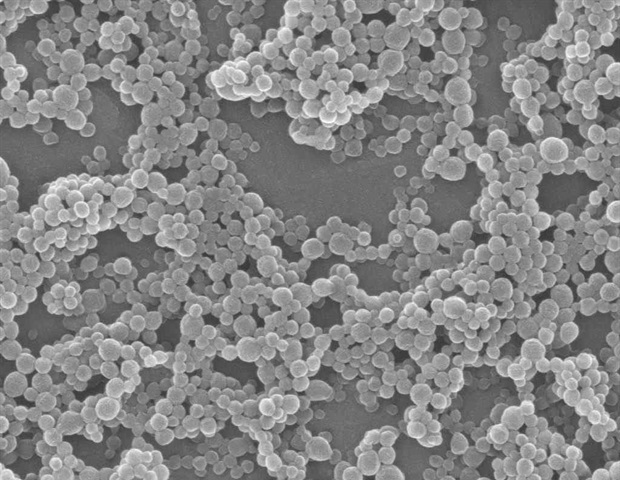
Iron deficiency is globally widespread. Women are particularly affected, with one in five in Europe suffering from iron deficiency. The consequences are anemia, constant fatigue, chronic headaches and a weakened immune system. Researchers led by ETH professor Raffaele Mezzenga have now developed a new dietary supplement that could efficiently treat iron deficiency and anemia. This development is being co-led by Michael B. Zimmermann, professor emeritus at ETH Zurich. The preparation consists of edible oat protein nanofibrils coated with iron nanoparticles. The corresponding study has just been published in the journal Nature Food.
The new iron compound is not only easy to produce but also extremely effective: the iron it contains is absorbed by the body almost twice as well as iron administered from iron sulphate – the currently most widely used standard for iron supplementation. This is shown by a rigorous clinical study conducted by Mezzenga’s project partners in Thailand. They administered the compound to 52 women aged 18 to 45 who were suffering from anemia due to iron deficiency.
The novel preparation has several advantages. Being based on plant proteins means that it is suitable for vegetarians and vegans. “This is important because they are more likely to suffer from iron deficiency than meat-eaters: the body absorbs iron from animal foods better than iron from plant-based foods,” says ETH professor Mezzenga.
The new compound has further advantages: it is tasteless and colourless, meaning it does not substantially alter a food’s taste or appearance. Iron sulphate, in contrast, gives food a metallic aftertaste.
“Sensory properties play a major role in consumer acceptance of food additives,” says Jiangtao Zhou, the first author of the study and Mezzenga’s former postdoctoral researcher and currently an assistant professor at the National University of Singapore. The oat protein iron supplement is also very easy to take: it can either be dissolved in water or juice, or added to food in powder form – muesli, for instance.
“However, the clinical study shows that the supplement is best absorbed when it is dissolved in water,” says Mezzenga.
Iron occurs naturally in red meat, lentils and whole grains. Premenopausal women have a particularly high iron requirement of 18 milligrams per day. The daily requirement for men is lower, at 11 milligrams. Nevertheless, around 15 percent of men also suffer from iron deficiency. To combat this, people resort to iron supplements that the body is often unable to absorb sufficiently and require iron infusions in the case of severe iron deficiency.
The researchers originally used animal proteins to develop their iron supplement process a few years ago; however, the same patent covers all food protein sources, including those that are plant based. It has by now been granted in Europe and the USA.
Mezzenga and his colleagues now hope that the iron-enriched oat protein fibres will soon be able to be used in a variety of ways. “The hurdles for launching a dietary supplement are lower than those for a pharmacological product,” explains the ETH professor, who aims to further develop the technology to combat other deficiencies, such as zinc and selenium.
Source:
Journal reference:
Zhou, J., et al. (2025). Oat protein nanofibril–iron hybrids offer a stable, high-absorption iron delivery platform for iron fortification. Nature Food. doi: 10.1038/s43016-025-01260-6. https://www.nature.com/articles/s43016-025-01260-6
By David Fickling / Bloomberg Opinion
If you think it is hard work selling coal to Newcastle or ice to an Inuit, how about selling matcha to Japan?
That is what China is hoping to achieve, as the biggest tea producer spots an opportunity in the worldwide craze for putting Japan’s richly flavored green tea powder into everything from lattes and cookies to cheesecake and KitKats.
Japanese public broadcaster NHK last month visited a factory in China’s Guizhou Province that is producing 2,000 tonnes of matcha a year, almost half of Japan’s annual output. China is already by some measures the bigger grower: About 3,966 tonnes were processed in 2020, accounting for more than half of the tea sold in a market valued at US$4.53 billion.
Illustration: Yusha
With China dominating electric vehicles, smartphones, furniture and solar panels, it might feel inevitable that matcha would go the same way. Still, Japan could do more to defend itself against the onslaught. Adopting the more aggressive techniques used in Europe would be a good place to start.
In terms of mass-market production, the game has surely already been lost. China has 30 times as much farmland as Japan and produces about 50 times more green tea.
Matcha production can be labor-intensive: It has to be grown in the shade, and in Japan is often harvested with handheld machine cutters and processed in small-scale facilities that are struggling to keep up with the explosion in demand.
Judging by current trends, the vast majority of matcha is going to end up in soft-serve ice-cream, chiffon cakes, mochi and macarons. It would be a waste if Japan tried to chase that low-end business, when the opportunities at the top of the market are so much more alluring.
To take advantage, Japan’s tea industry needs to be far more assertive about what makes it special. Geographical indications (GI), the trademark-style laws that prevent Californian wine producers from calling their sparkling cuvees “champagne,” are still a relative novelty there. Europe has been protecting its unique agricultural products for more than a century, with early regulations even turning up in the 1919 Treaty of Versailles that ended World War I. Japan did not pass its first GI law until 2015, and still seems to be of two minds about it.
Kobe beef, the super-expensive, marbled meat farmed exclusively from the Tajima strain of cattle in Hyogo Prefecture northwest of Osaka, was one of the first products to be registered under the rules. Every kilogram exported is tracked by a local marketing association, but it is still common to find locally raised “Kobe beef” and “Kobe-style beef” on the shelves of US supermarkets, because the trademark is not recognized there.
You cannot sign a major trade agreement with the EU without recognizing its GI system, but Japan has progressively lowered its tariffs on US beef imports in the past few years, without winning any concessions on this point. The estate of basketballer Kobe Bryant enjoys better intellectual property protection in the US than the meat he was named after.
Matcha, to be sure, has a fundamental problem here. The term — “ground tea,” as opposed to the infused sencha — just describes a routine processing method, like the “cheddaring” of dairy curds which gives cheddar cheese its un-trademark-able name.
That is not insurmountable: There are numerous local varieties, such as Uji matcha and Fukuoka matcha, that could trade on their reputations, the way Bordeaux wine estates do.
It is not clear that Japan has an appetite for the fight. The EU has nearly 2,000 protected wines and spirits, according to its eAmbrosia register. Japan has designated just two types of tea, both of them sencha.
In Nishio, one of the most renowned matcha growing regions, the local growers’ cooperative got itself removed from the register in 2020, after finding that domestic drinkers were not prepared to pay prices to compensate for the laborious methods required by the geographical indication.
That is a defeatist approach. Matcha is a global craze and need not be limited by local appetites. Champagne is a case in point: It owes its origins as much to English glassblowers, chemists and consumers as to French farmers.
Japan has as much cultural capital now as it has had for decades. The stellar reputation of its food products is not being matched by commensurate efforts to protect and market them to international buyers.
Taking advantage of this is not an easy process, especially as a warming climate alters the unique local conditions that GI designations depend on (a record heat wave is one reason that matcha supplies are struggling to keep up with demand this year). However, in a world that would soon be buried under a drift of Chinese tea powder, it would be necessary. Some of the world’s great fortunes were built on the decades of efforts that turned champagne from a local oddity into a worldwide luxury good. In the matcha game, Japan has to be in it to win it.
David Fickling is a Bloomberg Opinion columnist covering climate change and energy. Previously, he worked for Bloomberg News, the Wall Street Journal and the Financial Times. This column reflects the personal views of the author and does not necessarily reflect the opinion of the editorial board or Bloomberg LP and its owners.
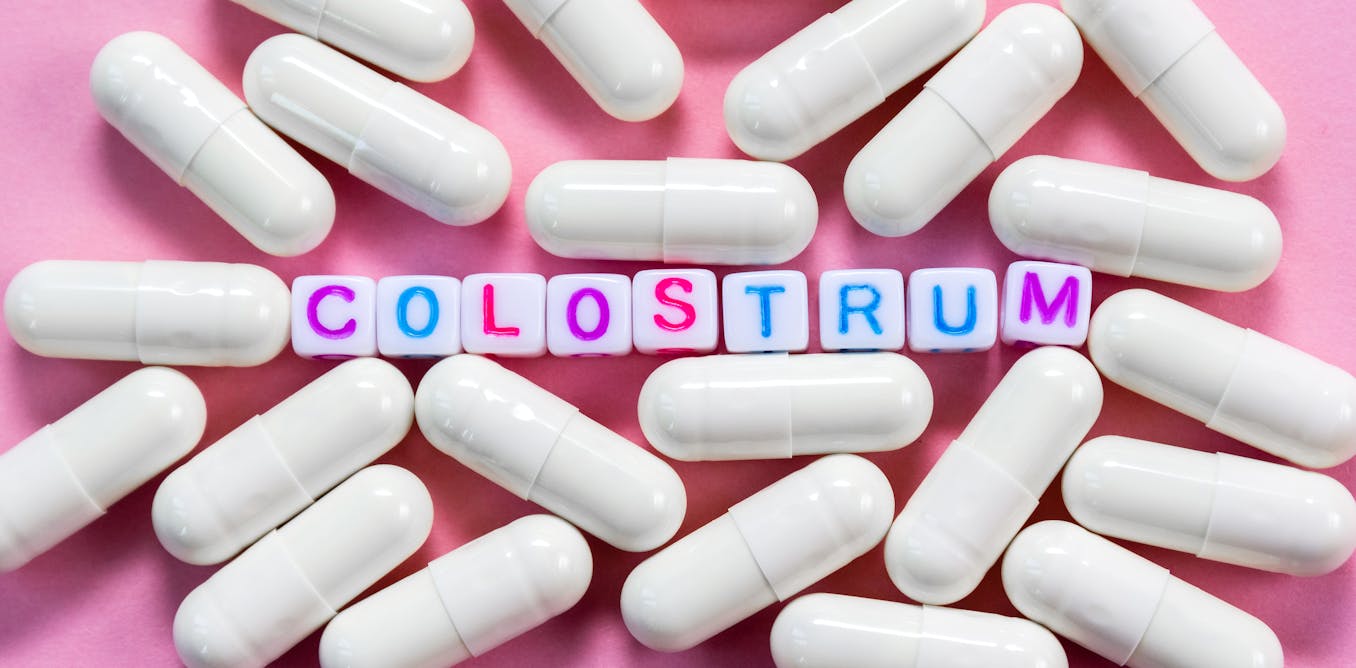
Colostrum is often called “liquid gold” by lactation specialists, midwives and infant-health researchers. It’s the early milk produced in the first days after childbirth: thick, yellow and rich in antibodies, proteins and nutrients.
Newborn babies benefit greatly from it because their immune systems are not yet fully developed and their stomachs can only hold very small amounts. For babies, there’s no debate: colostrum is incredibly beneficial.
But some wellness brands are marketing colostrum to adults. Kourtney Kardashian Barker’s Lemme range sells it as sweet gummies and as a sugar-free liquid supplement and creamer.
The appeal is easy to understand. Colostrum has a powerful reputation in infant health. If it protects newborns, many assume it must offer something extraordinary for adults too – but does it?
Babies and adults have very different nutritional needs. A newborn’s stomach holds only a few millilitres, and their immune system is immature. Colostrum provides highly concentrated immune and nutritional factors that the baby needs in its first days of life.
Adults, by contrast, have fully developed digestive and immune systems and can obtain nutrients from a varied diet. An adult stomach holds around one to one-and-a-half litres and expands further after eating. What is essential for a baby is not automatically useful or necessary for an adult body.
While colostrum has undeniable benefits in early life, the versions sold to adults are processed, flavoured and taken in much smaller amounts. That’s why it’s important to look closely at what these products contain and what their marketing suggests they can do.
Colostrum-based supplements are often promoted using persuasive wellness language and health-related suggestions, but scientific evidence for their effectiveness in adults remains limited, early and often based on small studies involving specific groups rather than healthy people. Here’s a closer look at the ideas behind some of these marketing messages and what research actually tells us.
Some small studies suggest that bovine colostrum might reduce temporary increases in intestinal permeability, sometimes called “leaky gut”, where the lining of the intestine becomes less effective at keeping out bacteria and toxins. These changes can occur after intense exercise or when taking non-steroidal anti-inflammatory medicines, drugs that can irritate the stomach and gut lining.
However, these studies involved only a small number of participants in specific contexts, not healthy adults in everyday life. The findings are considered preliminary and would require larger, well-designed clinical trials before any conclusions could be drawn about general digestive benefits.
The prebiotic fibres inulin and xylooligosaccharides, sometimes added to supplements, are much better studied. Inulin has been shown to increase levels of beneficial gut bacteria such as bifidobacteria, while xylooligosaccharides have been linked to greater bacterial diversity and small improvements in markers related to bowel health, obesity and type 2 diabetes in early research.
But these fibres are not unique to colostrum-based products. They also occur naturally in foods such as onions, garlic, leeks, bananas and chicory root and are widely available as standalone fibre supplements.
Colostrum helps newborns develop immunity by providing antibodies at a time when their immune systems are still forming. This does not mean that taking colostrum will strengthen a healthy adult’s immune system.
The idea of “boosting” immunity – a phrase used in promotional material for Kardashian Barker’s Lemme colostrum supplements – is common in wellness marketing, but it can be misleading. A healthy immune system doesn’t usually need boosting, and an overactive one can cause harm by attacking the body’s own tissues, as happens in autoimmune conditions such as type 1 diabetes or rheumatoid arthritis.
Some research has explored the potential of bovine colostrum in specific conditions, such as ulcerative colitis and travellers’ diarrhoea. But these studies are small, focus on people who are already unwell and cannot be generalised to the wider population. Anyone with health concerns should seek medical advice before taking any supplement.
In Lemme’s products, references to immune support appear to rely primarily on vitamin D. Vitamin D does help regulate the immune system and supports bone health, and low levels are common in winter or in people with limited sunlight exposure. However, vitamin D is inexpensive and widely available as a standalone supplement.
Read more:
Vitamin D deficiency is widespread – but overusing supplements can also be dangerous
This is a broad phrase without a specific scientific definition. On the Lemme website, the company states that vitamin D supports healthy bones and teeth, which is accurate, but that benefit is not unique to its colostrum products.
This phrase has appeared in some advertising coverage but not on the official product page. “Glowing skin” has no clinical definition and no standard method of measurement. There’s currently no evidence that colostrum, or any of the ingredients in these supplements, produces this effect.
Lemme’s website includes the standard disclaimer found on most dietary supplements, stating that the products are not intended to diagnose, treat, cure or prevent disease.
The brand also describes its ingredients as “clinically studied.” This is not the same as “clinically proven.” The phrase typically means that an ingredient has been tested in some form of study, but it does not indicate whether the results were positive, significant or relevant to human health.
Research shows that consumers often confuse these terms. It sounds scientific but does not demonstrate proven efficacy.
Colostrum is extraordinary for newborns. Nature designed it to protect babies during their most vulnerable days. For adults, however, there is no strong evidence from large, well-designed trials that colostrum supplements improve skin, digestion or immunity in healthy individuals. Some ingredients in these products may show potential in specific medical conditions, but that is not the same as demonstrating general wellness effects.
Colostrum supplements primarily market the idea of something pure, powerful and natural. At present, the science does not fully support these suggestions.
Experience the sublime tranquility that each cup brings, inviting moments of reflection and delight.
SAN FRANCISCO, CA, November 10, 2025 /24-7PressRelease/ — The Tea Palace is a new culinary destination offering a unique twist on traditional tea culture, is excited to announce its grand opening on November 10th just in time to get people ready for the holidays from Thanksgiving to New Year’s 2026 at this site https://theteapalace.net/. The new shop, located on our site, aims to become a favorite catalog for Tea afficionados all over America with a curated selection of high-quality teas and a welcoming ambiance.
The grand opening event, starting at 12 AM PST online.
The Tea Palace will offer a diverse menu showcasing:
Tega’s Macha Organic Teas ,with our finely ground, ceremonial-grade green tea powder. Sourced from organic tea gardens in Japan, this vibrant green powder delivers a rich, earthy flavor with natural sweetness.
https://theteapalace.net/products/tega-japanese-matcha-40g-organic?variant=52369775657327
Strawberry Champagne Tea 3 oz Tin, Delicate floral & fruity champagne notes with a creamy vanilla finish Features: Ingredients: Organic Green Tea, Organic Strawberry, Organic Hibiscus Flowers, Organic Rose Petals, Organic Rose Hips, Organic Vanilla Extract, Organic Elderberry, Natural Strawberry Flavor, Organic Tangerine Essential Oil Origin: USA, Thailand Brew 1 teaspoon of tea in 8 ounces water for 2-3 minutes at 175 degrees Ready to ship! Weights & Measurements: 3 ounces loose leaf tea Brews 20-25 8 ounce cups of tea Tin: 2.5″ diameter x 6″ height
https://theteapalace.net/products/strawberry-champagne-tea-3-oz-tin?variant=52369719427439
Jazzy Mint Delight in the soothing aroma of jasmine while enjoying the cool, refreshing taste of mint. Perfect for a relaxing moment or as a pick-me-up throughout your day. Experience the perfect balance of floral and herbal notes in our Jazzy Mint Green Tea. One of our favorites – this blend jazzes up a traditional jasmine green tea with the fresh coolness of peppermint for a smooth twist.
Ingredients: Green tea, peppermint, jasmine flowers, blue cornflowers.
https://theteapalace.net/products/jazzy-mint?variant=52369775100271
“We are thrilled to open our doors to the United States and share our passion for exceptional teas,” said The Founder of The Tea Palace. “Our goal is to create more than just a tea shop; we want to provide a relaxing environment where people can connect, unwind, and discover new flavors. We invite everyone to join us for our grand opening and experience all that we have to offer.”
The Tea Palace is committed to , sustainability, setting a relaxing environment providing an inclusive space online for our customers.
About The Tea Palace
The Tea Palace was created by RV Gavieres. His love of tea began with getting up and getting ready for the day up and ready for work.
His enthusiasm grew into a desire to share their experience with others.
Through the creation of The Tea Palace, they have merged two key components in their lives; tea, and motivated to set goals in life.
This combination brought to life a dream of developing and serving the best quality Black, Jasmine, Green, herbal and Matcha teas while building a brand revolving around its customers.
Every order is given individual attention to ensure that every customer receives the best experience possible.
https://theteapalace.net/blogs/news/about-us
—
Press release service and press release distribution provided by https://www.24-7pressrelease.com
The demand for Europe powder dietary supplements is forecasted to grow from USD 7.3 billion in 2025 to approximately USD 19.2 billion by 2035, recording an absolute increase of USD 11.9 billion over the forecast period. This translates into total growth of 163.0%, with demand forecast to expand at a CAGR of 10.2% between 2025 and 2035. The sales are expected to grow by nearly 2.63 times during the same period, supported by rising fitness consciousness, increasing sports nutrition adoption, and growing focus on convenient protein delivery across sports nutrition, general health, and weight management applications.
Europe, with its established fitness infrastructure and advanced nutritional supplement capabilities, continues to demonstrate exceptional growth potential driven by wellness initiatives and technological advancement in powder supplement formulations.
Between 2025 and 2030, sales of Europe powder dietary supplements are projected to expand from USD 7.3 billion to USD 11.8 billion, resulting in a value increase of USD 4.5 billion, which represents 37.8% of the total forecast growth for the decade. This phase of growth will be shaped by rising demand for protein-based nutrition solutions regionally, particularly across Europe where fitness consciousness and athletic performance optimization are accelerating powder supplement adoption as essential nutritional support. Increasing availability of advanced protein and vitamin formulations and growing penetration through online and specialty store channels continue to drive demand. Supplement manufacturers are expanding their product portfolios to address the growing complexity of fitness requirements and performance standards, with European sports operations leading investments in protein powder technology and bioavailability capabilities.
From 2030 to 2035, demand is forecast to grow from USD 11.8 billion to USD 19.2 billion, adding another USD 7.4 billion, which constitutes 62.2% of the overall ten-year expansion. This period is expected to be characterized by expansion of personalized nutrition systems, integration of custom formulation capabilities and enhanced amino acid profiles, and development of specialized supplement solutions catering to diverse fitness needs. The growing adoption of personalized fitness technologies and digitalization in sports nutrition, particularly accelerating across European fitness facilities, will drive demand for advanced powder supplement systems with targeted nutrition and performance optimization capabilities.
Between 2020 and 2025, Europe powder dietary supplements demand experienced exceptional expansion, driven by fitness boom and sports nutrition focus enhancement, and growing recognition of operational benefits from powder supplement convenience and protein effectiveness. The sector developed as supplement manufacturers, especially across Europe, recognized demand for effective, convenient protein solutions combining high bioavailability with performance-focused delivery. Fitness professionals and athletic consumers began focusing proper supplement selection and nutritional optimization to capitalize on growing powder nutrition opportunities.
| Metric | Value |
|---|---|
| Europe Powder Dietary Supplements Sales Value (2025) | USD 7.3 billion |
| Europe Powder Dietary Supplements Forecast Value (2035) | USD 19.2 billion |
| Europe Powder Dietary Supplements Forecast CAGR (2025-2035) | 10.2% |
Demand expansion is being supported by the rapid increase in fitness consciousness and sports nutrition adoption regionally, with Europe maintaining its position as a fitness leadership region, and the corresponding need for effective protein solutions combining performance enhancement, muscle development, and nutritional optimization across sports nutrition, general health, and weight management applications. Modern fitness operations rely on advanced powder supplement systems to ensure optimal protein delivery, consistent performance support, and maximum muscle development efficiency. Powder dietary supplement utilization requires comprehensive nutrition solutions including diverse ingredient capabilities, multiple application options, and various delivery specifications to accommodate varying fitness requirements and consumer preferences.
The growing focus on athletic performance and muscle development, particularly heightened fitness consciousness across European nations, are driving demand for powder dietary supplement products from established manufacturers with appropriate quality standards and protein reliability. Consumers are increasingly seeking supplement systems that deliver consistent performance benefits, recognizable muscle development metrics, and nutritional advantages while providing maximum consumption convenience. Product requirements and fitness expectations are establishing performance standards that emphasize protein capability, bioavailability reliability, and convenient preparation formats, with European powder supplement manufacturers often setting benchmark standards for sports nutrition supplement quality and innovation.
The Europe powder dietary supplements sector stands at a pivotal juncture of exceptional transformation and expansion. With demand projected to grow from USD 7.3 billion in 2025 to USD 19.2 billion by 2035, an extraordinary 163.0% increase, the sector is being reshaped by fitness imperatives, protein requirements, and the pursuit of performance efficiency with minimal preparation complexity. As consumers seek effective nutrition solutions without compromising athletic quality, powder dietary supplements emerge as mission-critical fitness products rather than optional nutritional accessories.
Europe, led by Poland (11.2% CAGR) and supported by France’s fitness innovation, Netherlands’ sports excellence, Germany’s manufacturing capabilities, and Italy’s nutritional expertise, represents not just a geography of demand but a laboratory of innovation where protein reliability, performance optimization, and convenience advancement are moving from traditional tablet supplements to advanced powder formulations. The confluence of fitness awareness, protein requirements, and performance optimization creates fertile ground for powder supplement solutions that deliver effective muscle development with maximum consumption convenience.
Strategic pathways encompassing ingredient optimization, application advancement, end-user targeting, and distribution channel specialization offer substantial performance enhancement opportunities, particularly for manufacturers and consumers positioned at the sports nutrition technology frontier.
Pathway A – Protein Ingredient Innovation and Muscle Development Excellence. Protein formulations representing 42.8% of ingredient demand provide essential muscle building, performance optimization, and recovery enhancement appealing to consumers prioritizing athletic development and protein synthesis. Manufacturers offering advanced protein powder supplements with optimized amino acid profiles can command 15-25% performance premiums while capturing fitness-focused consumers across European facilities. Expected revenue pool: USD 3,125-4,845 million.
Pathway B – Sports Nutrition Application Focus and Athletic Performance Excellence. Sports nutrition products representing 38.6% of application demand provide specialized athletic support, performance enhancement, and training optimization appealing to consumers focused on competitive fitness and athletic achievement. Suppliers offering sports-optimized powder supplements with enhanced performance benefits can maintain substantial athletic advantages while supporting 20-30% fitness benefits across sports operations. Application opportunity: USD 2,815-4,360 million.
Pathway C – Adult Consumer Focus and Mainstream Fitness Excellence. Adult applications representing 62.4% of end-user demand create opportunities for specialized positioning through working adult requirements, lifestyle fitness optimization, and convenient protein delivery. Supplement manufacturers offering adult-specific powder formulations with appropriate convenience features can capture 25-35% demographic premiums in mainstream fitness segments. Adult potential: USD 4,550-7,050 million.
Pathway D – Online Distribution Specialization and Direct Consumer Access. Online channels representing 35.7% of distribution demand provide direct consumer access, convenience purchasing, and product education appealing to consumers seeking fitness information and supplement convenience. Manufacturers offering online-optimized powder supplements with educational support can command digital advantages while capturing tech-savvy fitness consumers. Online segment: USD 2,605-4,035 million.
Pathway E – Vitamin Ingredient Performance and Comprehensive Nutrition Support. Vitamin formulations representing 26.4% of ingredient demand enable comprehensive nutritional support and wellness enhancement serving holistic fitness requirements. Supplement manufacturers offering vitamin-enhanced powder systems with broad health benefits can capture wellness fitness occasions and comprehensive nutrition situations while generating 20-30% health premiums over protein-only alternatives. Vitamin opportunity: USD 1,930-2,985 million.
Sales are segmented by ingredient, application, end-user, and distribution channel per capita spending. By ingredient, sales are divided into proteins, vitamins, minerals, and botanicals. Based on application, demand is categorized into sports nutrition, general health, weight management, and meal replacement. In terms of end-user, sales are segmented into adults, athletes, and elderly. By distribution channel per capita spending, demand spans online, specialty stores, pharmacies, and supermarkets. Regionally, demand is analyzed across key European countries including Germany, France, United Kingdom, Italy, Spain, Netherlands, and Poland.
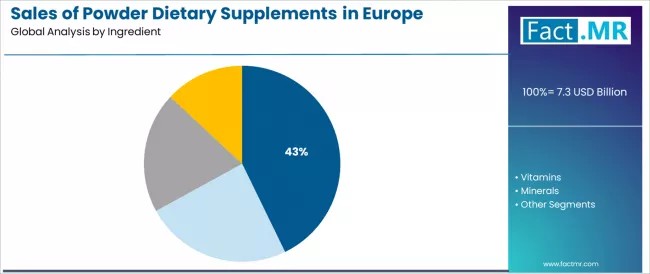
Protein formulations are projected to account for 42.8% of Europe powder dietary supplements sales in 2025, making them the dominant ingredient across the sector. This leadership reflects strong consumer preference for muscle-building, performance-oriented nutrition products providing essential amino acids, muscle development support, and athletic performance benefits compared to general supplement alternatives. Across Europe, fitness consumers favor protein products for their muscle effectiveness, performance enhancement, and recovery support while maintaining nutritional reliability. Protein configurations enable manufacturers to incorporate diverse protein sources, optimized amino acid profiles, and enhanced absorption systems creating sophisticated fitness nutrition solutions. Continuous innovations are improving protein performance including enhanced bioavailability, improved taste profiles, and integrated performance targeting systems addressing athletic optimization requirements. Protein products support specialized fitness applications compared to other ingredient types while delivering consistent muscle development and consumer satisfaction. The segment’s strong position is reinforced by growing fitness participation driving supplement selection and athletic performance demands necessitating effective protein solutions.
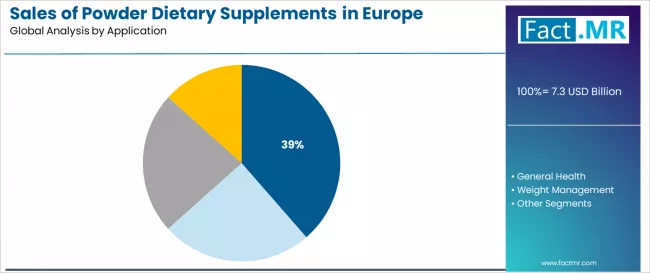
Sports nutrition applications are expected to represent 38.6% of Europe powder dietary supplements sales in 2025, highlighting their critical role as the predominant application focus. Sports nutrition systems provide specialized athletic support, performance enhancement, competitive advantage, and training optimization appealing to consumers prioritizing athletic achievement and fitness performance. Sports nutrition applications allow supplements to achieve targeted performance benefits with specialized formulations, enhanced recovery support, and optimized athletic delivery without compromising fitness effectiveness. The segment is sustained by sports nutrition’s proven performance advantages, widespread athletic acceptance, competitive positioning, and consumer confidence spanning various fitness applications. Across Europe, consumers maintain sports nutrition focus for athletic performance, competitive advantage, and training optimization while increasingly demanding improvements including enhanced performance benefits, improved recovery support, and simplified preparation procedures. Such application preferences ensure sustained sports nutrition dominance through proven performance benefits, athletic advantages, and continuous performance enhancement addressing evolving fitness requirements.

Adult applications are projected to contribute 62.4% of sales in 2025, representing substantial mainstream fitness applications. Adult supplementation involves working-age fitness, lifestyle performance optimization, and wellness maintenance creating primary nutritional demands requiring convenient supplement capabilities. Across Europe, adult consumers utilize powder supplements for fitness goals, health maintenance, and performance requirements demanding convenience preparation and effectiveness delivery. Adult applications benefit from established purchasing power, fitness awareness patterns, and lifestyle requirements supporting performance supplement investments. The segment sustains significant consumption through continuous adult fitness focus, established health infrastructure, and consumer experience with powder supplementation throughout European fitness operations. European fitness facilities maintain adult supplementation focus targeting lifestyle optimization, performance maintenance, and convenience delivery providing steady consumption volumes and mainstream fitness focus within established wellness networks.
Europe powder dietary supplements sales advance exceptionally due to increasing fitness consciousness and growing sports nutrition focus across wellness segments. The sector faces challenges including taste preferences, varying protein requirements demanding specialized formulation configurations, and preparation considerations among convenience-focused fitness consumers. Fitness technology advancement and personalized nutrition trends continue to influence product development and capability enhancement initiatives.
The growing implementation of fitness consciousness and athletic performance focus, gaining particular focus across European wellness frameworks, is driving sales for effective nutrition products enabling muscle development, performance enhancement, and fitness compliance without extensive preparation complexity. Powder supplement systems equipped with appropriate protein capabilities and reliable delivery serve fitness consumers, athletic professionals, and performance practitioners requiring effective muscle support without compromising preparation convenience or nutritional effectiveness. These fitness trends are particularly valuable for supplement manufacturers offering nutrition solutions and performance capabilities optimizing athletic achievement while delivering complete protein support appropriate for fitness enhancement occasions without compromising supplement effectiveness or preparation reliability.
Modern powder supplement manufacturers are incorporating intelligent nutrition systems including personalized formulation capabilities, custom amino acid profiles, enhanced mixability optimization, and performance monitoring that improve nutritional effectiveness while maintaining supplement reliability and consumer acceptance. Integration of fitness data analysis, automated nutrition customization, and performance intelligence communicates technology advantages and athletic benefits appealing to performance-focused consumers. Advanced systems also support next-generation product development including targeted muscle development, adaptive supplement formulations, and automated performance enhancement addressing fitness requirements and athletic objectives, with European powder supplement manufacturers increasingly incorporating personalized technology solutions balancing traditional nutritional effectiveness with contemporary customization and performance priorities influencing product purchasing decisions.
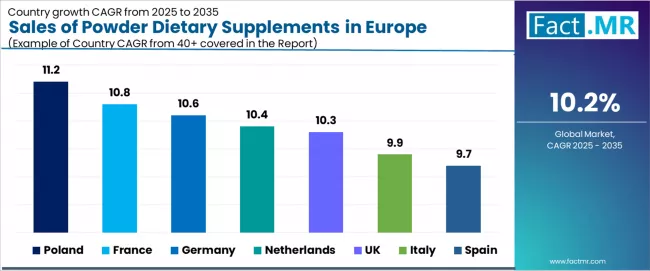
| Country | CAGR (2025-2035) |
|---|---|
| Poland | 11.2% |
| France | 10.8% |
| Netherlands | 10.4% |
| Germany | 10.6% |
| United Kingdom | 10.3% |
| Italy | 9.9% |
| Spain | 9.7% |
The Europe powder dietary supplements sector is witnessing exceptional growth, supported by rising fitness consciousness, increasing sports nutrition adoption, and the integration of advanced nutrition technology across wellness applications. Poland leads the region with a 11.2% CAGR, reflecting strong fitness industry development, expanding athletic awareness, and consumer focus on protein-based nutrition delivery. France follows with a 10.8% CAGR, driven by fitness excellence and advanced sports nutrition technology adoption. Netherlands grows at 10.4%, while Germany achieves 10.6%, as fitness capabilities increasingly drive efficient supplement adoption. United Kingdom maintains 10.3% growth through fitness innovation and performance optimization, while Italy grows at 9.9%, supported by nutritional expertise and fitness expansion. Spain demonstrates 9.7% growth driven by athletic compliance and fitness efficiency requirements.
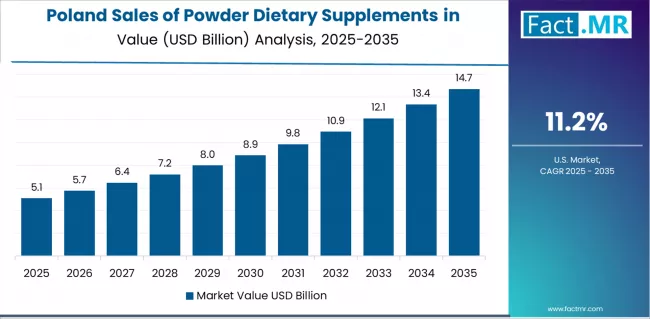
Poland is projected to exhibit exceptional growth with a CAGR of 11.2% through 2035, driven by rapid fitness industry development, expanding athletic awareness, and strong consumer focus on protein-based nutrition delivery and performance enhancement. As the leading European country with significant fitness growth and increasing athletic consciousness, Poland’s focus on effective protein nutrition without compromising affordability is creating substantial sales for powder supplement systems with reliable performance benefits and competitive pricing. Major supplement manufacturers and fitness operators are establishing comprehensive nutrition capabilities and performance strategies across Polish facilities.
France is expanding at a CAGR of 10.8%, supported by fitness excellence, established sports infrastructure, and continuous technology development driving supplement adoption. The French fitness sector is increasingly incorporating advanced supplement systems while maintaining performance efficiency and fitness excellence expectations. Supplement manufacturers and fitness operators are implementing comprehensive nutrition development programs throughout French operations.
Netherlands is growing at a CAGR of 10.4%, driven by sports excellence, established fitness infrastructure, and continuous technology development supporting supplement adoption. The Dutch fitness sector continues expanding supplement capabilities focusing performance efficiency and technology integration. Supplement manufacturers and facility operators are investing in advanced nutrition development throughout Netherlands operations.
Germany is growing at a CAGR of 10.6%, driven by manufacturing excellence, established fitness infrastructure, and continuous innovation in nutrition technologies supporting supplement adoption. The German fitness sector continues developing sophisticated supplement capabilities focusing performance efficiency and nutrition excellence. Supplement manufacturers and fitness operators are implementing advanced nutrition solutions throughout German operations.
The United Kingdom is growing at a CAGR of 10.3%, supported by fitness innovation, performance optimization focus, and established sports infrastructure driving supplement adoption. The UK fitness sector continues maintaining supplement capabilities while adapting to performance changes and fitness requirements. Supplement suppliers and facility operators are establishing performance-focused nutrition solutions throughout UK operations.
Italy is growing at a CAGR of 9.9%, driven by nutritional expertise, established wellness base, and gradual fitness infrastructure expansion among consumers seeking nutrition efficiency without sacrificing performance reliability. The Italian fitness sector continues developing supplement capabilities meeting athletic requirements. Supplement manufacturers and facility operators are establishing performance-focused nutrition solutions throughout Italian operations.
Spain is expanding at a CAGR of 9.7%, supported by athletic development, growing fitness awareness, and increasing focus on efficient protein delivery supporting supplement adoption. The Spanish fitness sector maintains performance development while embracing efficient supplement solutions. Supplement companies and facility operators are developing nutrition capabilities throughout Spanish operations.
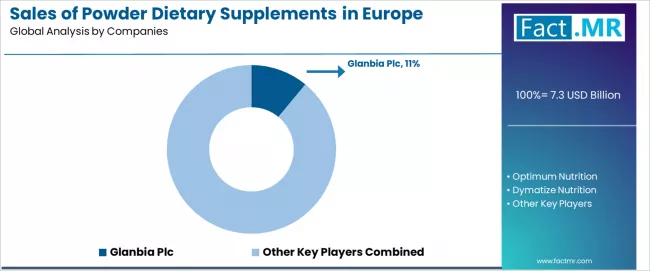
Europe powder dietary supplements sales is defined by competition among international sports nutrition companies with European operations, specialized supplement manufacturers, and diversified fitness companies offering comprehensive nutrition portfolios. Companies are investing in technology advancement, formulation optimization, product development, and performance support to deliver reliable, effective, high-performance powder supplement systems across European fitness and sports operations. Product development, nutrition expertise, and effective performance support are central to strengthening competitive positions and consumer loyalty across sports nutrition categories.
Glanbia Plc, Irish-based nutrition leader with extensive European presence, offers comprehensive powder supplement portfolios including eco-friendly plant-based protein lines with focus on performance reliability and fitness coverage across European facilities. Optimum Nutrition, established sports nutrition company, provides advanced supplement systems focusing protein innovation and athletic excellence.
Dymatize Nutrition, specialized sports nutrition producer, delivers proven protein solutions and reliable product performance serving European fitness requirements. BSN offers specialized performance supplements with focus on athletic optimization and fitness efficiency. MuscleTech provides diversified nutrition solutions focusing performance reliability and supplement effectiveness serving diverse fitness segments.
Recent key developments include Glanbia Plc launching new eco-friendly plant-based protein powder line in 2024 with enhanced amino acid profiles. Optimum Nutrition introduced personalized powder supplements in 2025 with custom formulations based on individual needs. Dymatize Nutrition developed new fast-dissolving protein powders in 2024 with improved taste and mixability.
| Item | Value |
|---|---|
| Quantitative Units | USD 19.2 billion |
| Ingredient | Proteins, vitamins, minerals, botanicals |
| Application | Sports nutrition, general health, weight management, meal replacement |
| End-User | Adults, athletes, elderly |
| Distribution Channel Per Capita Spending | Online, specialty stores, pharmacies, supermarkets |
| Regions Covered | Europe |
| Countries Covered | Germany, France, United Kingdom, Italy, Spain, Netherlands, Poland |
| Key Companies Profiled | Glanbia Plc, Optimum Nutrition, Dymatize Nutrition, BSN, MuscleTech, Cellucor, Quest Nutrition, Nutrex Research, Universal Nutrition, MHP |
| Additional Attributes | Dollar sales by ingredient composition, application focus, end-user demographics, and distribution channel, per capita spending trends across Germany, France, United Kingdom, Italy, Spain, Netherlands, and Poland, competitive landscape with international sports nutrition companies and specialized supplement manufacturers, consumer preferences for fitness capabilities and performance formats, integration with personalized formulation technologies and custom amino acid initiatives, innovations in protein systems and bioavailability optimization positioning, and adoption of efficient supplement solutions, specialized formulations, and monitoring capabilities for enhanced performance access and fitness satisfaction across European fitness, sports, and wellness operations |
Welcome to the Grand Opening of the Tea Palace where you can Experience Great Teas on Sale Just in time for the Holidays
Experience the sublime tranquility that each cup brings, inviting moments of reflection and delight.
“We are thrilled to open our doors to the United States and share our passion for exceptional teas,”
SAN FRANCISCO, CA, November 10, 2025 /24-7PressRelease/ — The Tea Palace is a new culinary destination offering a unique twist on traditional tea culture, is excited to announce its grand opening on November 10th just in time to get people ready for the holidays from Thanksgiving to New Year’s 2026 at this site https://theteapalace.net/. The new shop, located on our site, aims to become a favorite catalog for Tea afficionados all over America with a curated selection of high-quality teas and a welcoming ambiance.
The grand opening event, starting at 12 AM PST online.
The Tea Palace will offer a diverse menu showcasing:
Tega’s Macha Organic Teas ,with our finely ground, ceremonial-grade green tea powder. Sourced from organic tea gardens in Japan, this vibrant green powder delivers a rich, earthy flavor with natural sweetness.
https://theteapalace.net/products/tega-japanese-matcha-40g-organic?variant=52369775657327
Strawberry Champagne Tea 3 oz Tin, Delicate floral & fruity champagne notes with a creamy vanilla finish Features: Ingredients: Organic Green Tea, Organic Strawberry, Organic Hibiscus Flowers, Organic Rose Petals, Organic Rose Hips, Organic Vanilla Extract, Organic Elderberry, Natural Strawberry Flavor, Organic Tangerine Essential Oil Origin: USA, Thailand Brew 1 teaspoon of tea in 8 ounces water for 2-3 minutes at 175 degrees Ready to ship! Weights & Measurements: 3 ounces loose leaf tea Brews 20-25 8 ounce cups of tea Tin: 2.5″ diameter x 6″ height
https://theteapalace.net/products/strawberry-champagne-tea-3-oz-tin?variant=52369719427439
Jazzy Mint Delight in the soothing aroma of jasmine while enjoying the cool, refreshing taste of mint. Perfect for a relaxing moment or as a pick-me-up throughout your day. Experience the perfect balance of floral and herbal notes in our Jazzy Mint Green Tea. One of our favorites – this blend jazzes up a traditional jasmine green tea with the fresh coolness of peppermint for a smooth twist.
Ingredients: Green tea, peppermint, jasmine flowers, blue cornflowers.
https://theteapalace.net/products/jazzy-mint?variant=52369775100271
“We are thrilled to open our doors to the United States and share our passion for exceptional teas,” said The Founder of The Tea Palace. “Our goal is to create more than just a tea shop; we want to provide a relaxing environment where people can connect, unwind, and discover new flavors. We invite everyone to join us for our grand opening and experience all that we have to offer.”
The Tea Palace is committed to , sustainability, setting a relaxing environment providing an inclusive space online for our customers.
About The Tea Palace
The Tea Palace was created by RV Gavieres. His love of tea began with getting up and getting ready for the day up and ready for work.
His enthusiasm grew into a desire to share their experience with others.
Through the creation of The Tea Palace, they have merged two key components in their lives; tea, and motivated to set goals in life.
This combination brought to life a dream of developing and serving the best quality Black, Jasmine, Green, herbal and Matcha teas while building a brand revolving around its customers.
Every order is given individual attention to ensure that every customer receives the best experience possible.
https://theteapalace.net/blogs/news/about-us
# # #
Research Highlights:
Embargoed until 9:15 a.m. CT/10:15 a.m. ET, Sunday, Nov. 9, 2025
This news release contains updated information from the research authors that was not in the abstract.
NEW ORLEANS, Nov. 9, 2025 — Adults with heart disease who had a previous heart attack and took vitamin D doses tailored to reach optimal blood levels reduced their risk of another heart attack by more than half compared to those who did not have their vitamin D blood levels optimized, according to a preliminary study to be presented at the American Heart Association’s Scientific Sessions 2025. The meeting, Nov. 7-10, in New Orleans, is a premier global exchange of the latest scientific advancements, research and evidence-based clinical practice updates in cardiovascular science.
Previous studies found low vitamin D levels are linked to worse heart health. The TARGET-D randomized clinical trial included adults with heart disease who also had a previous heart attack to determine whether achieving optimal vitamin D blood levels could prevent future heart attacks, strokes, heart failure hospitalizations or deaths. More than 85% of participants began the study with vitamin D levels in their blood below 40 ng/mL, a level many experts believe is insufficient for optimal health. Unlike earlier vitamin D randomized trials that used standard doses, the TARGET-D trial personalized the doses based on the results of each participant’s blood test.
“Previous clinical trial research on vitamin D tested the potential impact of the same vitamin D dose for all participants without checking their blood levels first,” said Heidi T. May, Ph.D., M.S.P.H., FAHA, principal investigator of TARGET-D and an epidemiologist and professor of research at Intermountain Health in Salt Lake City, Utah. “We took a different approach. We checked each participant’s vitamin D levels at enrollment and throughout the study, and we adjusted their dose as needed to bring and maintain them in a range of 40-80 ng/mL.”
Participants in the TARGET-D study were randomized to two groups: The standard of care group did not receive management of their vitamin D levels, and the treatment group received tailored vitamin D supplementation, with doses adjusted every three months until their vitamin D blood levels were above 40 ng/mL. Once the vitamin D level was above 40 ng/mL, levels were checked annually and doses adjusted if levels dropped below that target.
Researchers monitored both vitamin D and calcium levels for the participants in the treatment group throughout the study to prevent vitamin D toxicity. Doses were reduced or stopped if vitamin D levels rose above 80 ng/mL. Excessive vitamin D can lead to hypercalcemia (higher-than-normal levels of calcium in the blood), kidney failure and abnormal heart rhythm.
The study’s key findings include:
The study primarily focused on whether or not optimal levels of vitamin D could help reduce the risk of serious events like heart attack, heart failure, stroke or death among adults with heart disease. Researchers found that tailored vitamin D doses did not significantly reduce the primary outcome of death, heart failure hospitalization or stroke; however, supplementation appeared to be beneficial for preventing heart attack specifically.
May says that these results could improve patient care by focusing on blood tests for vitamin D levels and tailoring doses. “We encourage people with heart disease to discuss vitamin D blood testing and targeted dosing with their health care professionals to meet their individual needs,” she added.
May and her study colleagues emphasized that more clinical trials are needed to determine whether targeted treatment with vitamin D could help prevent heart disease, before a first cardiac event.
Before adding or changing a vitamin regimen, the American Heart Association encourages people with heart disease to consult their cardiologist.
The study had several limitations. Only adults with a diagnosis of heart disease were included, so the results may not apply to people without heart disease. In addition, the smaller number of participants means a more complete analysis of other conditions and outcomes was not possible. In addition, most participants were from the same racial group, with approximately 90% self-identifying as white, so additional research is needed to determine whether the results apply to people of all backgrounds.
Study details, background and design:
Co-authors, disclosures and funding sources are listed in the abstract.
Statements and conclusions of studies that are presented at the American Heart Association’s scientific meetings are solely those of the study authors and do not necessarily reflect the Association’s policy or position. The Association makes no representation or guarantee as to their accuracy or reliability. Abstracts presented at the Association’s scientific meetings are not peer-reviewed, rather, they are curated by independent review panels and are considered based on the potential to add to the diversity of scientific issues and views discussed at the meeting. The findings are considered preliminary until published as a full manuscript in a peer-reviewed scientific journal.
The Association receives more than 85% of its revenue from sources other than corporations. These sources include contributions from individuals, foundations and estates, as well as investment earnings and revenue from the sale of our educational materials. Corporations (including pharmaceutical, device manufacturers and other companies) also make donations to the Association. The Association has strict policies to prevent any donations from influencing its science content and policy positions. Overall financial information is available here.
Additional Resources:
###
About the American Heart Association
The American Heart Association is a relentless force for a world of longer, healthier lives. Dedicated to ensuring equitable health in all communities, the organization has been a leading source of health information for more than one hundred years. Supported by more than 35 million volunteers globally, we fund groundbreaking research, advocate for the public’s health, and provide critical resources to save and improve lives affected by cardiovascular disease and stroke. By driving breakthroughs and implementing proven solutions in science, policy, and care, we work tirelessly to advance health and transform lives every day. Connect with us on heart.org, Facebook, X or by calling 1-800-AHA-USA1.
For Media Inquiries and American Heart Association Expert Perspective:
American Heart Association Communications & Media Relations in Dallas: ahacommunications@heart.org
Amanda Ebert: Amanda.Ebert@heart.org
For Public Inquiries: 1-800-AHA-USA1 (242-8721)
heart.org and stroke.org
If you purchase an independently reviewed product or service through a link on our website, SheKnows may receive an affiliate commission.
Forget serums, socks, and sweets — this year, shoppers are buzzing (or rather, not buzzing) over an Advent calendar that trades caffeine jitters for cozy calm. The Pukka 2025 Advent Calendar Organic Tea Sampler has quietly become an under-$20 favorite for anyone who wants to sip their way through November and December instead of sprinting through it.
One reviewer summed it up perfectly: “I love this advent calendar — I’ve purchased three years in a row.” As of writing, the cozy tea advent calendar is $19 on sale (normally $26), and it’s an easy little luxury that actually lasts the whole month. Each of the 24 doors hides a different organic tea blend, from Chamomile, Vanilla & Manuka Honey to Supreme Matcha Green and Turmeric, Ginger & Orange. Even better, shoppers say it’s “mostly herbal,” with just enough energizing options — like the matcha and vanilla chai — to keep mornings interesting.
Reviewers can’t stop calling the herbal tea advent calendar “adorable” thanks to its colorful, recyclable packaging and daily affirmations printed behind each sachet. “I love the little suggestions behind the tea packs for the day,” one shopper shared. “The tea set is a good mix of different herbal teas. I’ll buy this again next year for sure!”

Pukka 2025 Advent Calendar Organic Tea Sampler
Others call out the mix of familiar favorites and new discoveries. One fan wrote, “It seems Advent calendars are all the rage this year, so I was excited to find one that has a variety of Pukka teas. I love that there are many new ones I’ve never tried before.” The bags themselves are plastic-free, compostable, and wrapped in paper to keep the flavor fresh — a small but thoughtful detail for anyone who cares about packaging as much as what’s inside.
Another reviewer simply titled their post “Great Gift!” and added, “There are some repeats but on the good ones, it’s very nice to taste them again.” It’s a sentiment that sums up why this calendar works: it’s low-stress, low-waste, and genuinely joyful — proof that calm can, in fact, be counted down.
So if your holiday season is already running on caffeine and chaos, this under-$20 tea Advent calendar might just be the reset you can actually stick to. If you’re looking for a unique advent calendar gift for a friend (or hey, even yourself, no judgement!) why not give Pukka’s 2025 Organic Tea Sampler Advent Calendar a try for yourself?
Satisfy your sweet tooth with more awesome Costco bakery items seen in the gallery below.