The main category of Dietary Supplements News Articles.
You can use the search box below to find what you need.
[wd_asp id=1]
The main category of Dietary Supplements News Articles.
You can use the search box below to find what you need.
[wd_asp id=1]
tcpalm.com wants to ensure the best experience for all of our readers, so we built our site to take advantage of the latest technology, making it faster and easier to use.
Unfortunately, your browser is not supported. Please download one of these browsers for the best experience on tcpalm.com
Why Japan should up its game to protect its cultural capital. Its tea certainly counts as such
IF YOU think it’s hard work selling coal to Newcastle or ice to an Inuit, how about selling matcha to Japan?
That’s what China is hoping to do, as the biggest tea producer spots an opportunity in the worldwide craze for putting Japan’s richly-flavoured green tea powder into everything from lattes and cookies to cheesecake and KitKat bars.
Japanese public broadcaster NHK last month visited a factory in China’s Guizhou province that’s producing 2,000 tonnes of matcha a year, almost half of Japan’s annual output. China is already, by some measures, the bigger grower: Some 3,966 tonnes were processed in 2020, accounting for more than half the tea sold in a market valued at US$4.5 billion.
The demand for Europe liquid dietary supplement is anticipated to grow from USD 14.2 billion in 2025 to approximately USD 29.8 billion by 2035, recording an absolute increase of USD 15.6 billion over the forecast period. This translates into total growth of 109.9%, with demand forecast to expand at a CAGR of 7.7% between 2025 and 2035. The sales are expected to grow by nearly 2.10 times during the same period, supported by rising health consciousness, increasing preventive healthcare adoption, and growing focus on convenient supplement delivery across general wellness, sports nutrition, and medical nutrition applications.
Europe, with its established healthcare infrastructure and advanced nutritional supplement capabilities, continues to demonstrate exceptional growth potential driven by wellness initiatives and technological advancement in liquid supplement formulations.
Between 2025 and 2030, sales of Europe liquid dietary supplement are projected to expand from USD 14.2 billion to USD 20.7 billion, resulting in a value increase of USD 6.5 billion, which represents 41.7% of the total forecast growth for the decade. This phase of growth will be shaped by rising demand for convenient nutrition solutions regionally, particularly across Europe where health awareness and wellness optimization are accelerating liquid supplement adoption as essential nutritional support. Increasing availability of advanced vitamin and mineral formulations and growing penetration through pharmacy and online channels continue to drive demand. Supplement manufacturers are expanding their product portfolios to address the growing complexity of nutritional requirements and delivery standards, with European wellness operations leading investments in liquid formulation technology and bioavailability capabilities.
From 2030 to 2035, demand is forecast to grow from USD 20.7 billion to USD 29.8 billion, adding another USD 9.1 billion, which constitutes 58.3% of the overall ten-year expansion. This period is expected to be characterized by expansion of personalized nutrition systems, integration of AI-driven formulation recommendations and enhanced bioavailability, and development of specialized supplement solutions catering to diverse health needs. The growing adoption of personalized healthcare technologies and digitalization in wellness management, particularly accelerating across European healthcare facilities, will drive demand for advanced liquid supplement systems with targeted nutrition and optimization capabilities.
Between 2020 and 2025, Europe liquid dietary supplement demand experienced exceptional expansion, driven by pandemic-related health awareness and wellness focus enhancement, and growing recognition of operational benefits from liquid supplement convenience and absorption. The sector developed as supplement manufacturers, especially across Europe, recognized demand for effective, convenient nutrition solutions combining high bioavailability with user-friendly delivery. Healthcare providers and wellness consumers began focusing proper supplement selection and nutritional optimization to capitalize on growing liquid nutrition opportunities.
| Metric | Value |
|---|---|
| Europe Liquid Dietary Supplement Sales Value (2025) | USD 14.2 billion |
| Europe Liquid Dietary Supplement Forecast Value (2035) | USD 29.8 billion |
| Europe Liquid Dietary Supplement Forecast CAGR (2025-2035) | 7.7% |
Demand expansion is being supported by the rapid increase in health consciousness and preventive healthcare adoption regionally, with Europe maintaining its position as a wellness leadership region, and the corresponding need for convenient nutrition solutions combining bioavailability enhancement, user convenience, and health optimization across general wellness, sports nutrition, and medical nutrition applications. Modern wellness operations rely on advanced liquid supplement systems to ensure optimal nutrient delivery, consistent health support, and maximum absorption efficiency. Liquid dietary supplement utilization requires comprehensive nutrition solutions including diverse ingredient capabilities, multiple health target options, and various delivery specifications to accommodate varying nutritional requirements and consumer preferences.
The growing focus on preventive healthcare and nutritional optimization, particularly heightened wellness consciousness across European nations, are driving demand for liquid dietary supplement products from established manufacturers with appropriate quality standards and bioavailability reliability. Consumers are increasingly seeking supplement systems that deliver consistent health performance, recognizable wellness metrics, and nutritional benefits while providing maximum consumption convenience. Product requirements and health expectations are establishing performance standards that emphasize nutritional capability, bioavailability reliability, and convenient consumption formats, with European liquid supplement manufacturers often setting benchmark standards for nutritional supplement quality and innovation.
The Europe liquid dietary supplement sector stands at a pivotal juncture of exceptional transformation and expansion. With demand projected to grow from USD 14.2 billion in 2025 to USD 29.8 billion by 2035, an exceptional 109.9% increase, the sector is being reshaped by wellness imperatives, convenience preferences, and the pursuit of nutritional efficiency with minimal consumption complexity. As consumers seek effective nutrition solutions without compromising health quality, liquid dietary supplements emerge as mission-critical wellness products rather than optional nutritional accessories.
Europe, led by Poland (9.1% CAGR) and supported by Netherlands’ wellness innovation, Germany’s manufacturing excellence, France’s healthcare capabilities, and Italy’s nutritional expertise, represents not just a geography of demand but a laboratory of innovation where nutritional reliability, health optimization, and convenience advancement are moving from traditional tablet supplements to advanced liquid formulations. The confluence of health awareness, convenience requirements, and nutritional optimization creates fertile ground for liquid supplement solutions that deliver effective health support with maximum consumption convenience.
Strategic pathways encompassing product type optimization, ingredient advancement, age group targeting, and distribution channel specialization offer substantial performance enhancement opportunities, particularly for manufacturers and consumers positioned at the nutritional wellness technology frontier.
Pathway A – General Wellness Innovation and Broad Health Support Excellence. General wellness products representing 36.8% of product type demand provide comprehensive health support, daily nutrition optimization, and wellness maintenance appealing to consumers prioritizing overall health enhancement and preventive care. Manufacturers offering advanced general wellness liquid supplements with optimized nutrient profiles can command 15-25% wellness premiums while capturing health-focused consumers across European facilities. Expected revenue pool: USD 5,225-8,095 million.
Pathway B – Vitamin Ingredient Performance and Essential Nutrition Delivery. Vitamin formulations representing 32.6% of ingredient demand provide essential nutrition, health foundation support, and bioavailability advantages appealing to consumers focused on fundamental nutritional needs and vitamin deficiency prevention. Suppliers offering vitamin-optimized liquid supplements with enhanced absorption can maintain substantial nutritional advantages while supporting 20-30% health benefits across wellness operations. Ingredient opportunity: USD 4,625-7,150 million.
Pathway C – Adult Consumer Focus and Mainstream Health Excellence. Adult applications representing 58.7% of age group demand create opportunities for specialized positioning through working adult requirements, lifestyle health optimization, and convenient nutrition delivery. Supplement manufacturers offering adult-specific liquid formulations with appropriate convenience features can capture 25-35% demographic premiums in mainstream wellness segments. Age potential: USD 8,325-12,880 million.
Pathway D – Pharmacy Distribution Specialization and Professional Healthcare Integration. Pharmacy channels representing 42.9% of distribution demand provide healthcare professional guidance, quality assurance, and medical integration appealing to consumers seeking professional nutritional advice and trusted supplement sources. Manufacturers offering pharmacy-optimized liquid supplements with professional endorsement can command healthcare advantages while capturing medically-focused wellness facilities. Pharmacy segment: USD 6,085-9,415 million.
Pathway E – Sports Nutrition Performance and Athletic Enhancement Focus. Sports nutrition products representing 28.4% of product type demand enable athletic performance optimization and specialized nutritional requirements serving active consumer demographics. Supplement manufacturers offering sports-focused liquid formulations with enhanced performance benefits can capture athletic wellness occasions and specialized nutrition situations while generating 20-30% performance premiums over general wellness alternatives. Sports opportunity: USD 4,030-6,235 million.
Sales are segmented by product type, ingredient, age group, and distribution channel per capita spending. By product type, sales are divided into general wellness, sports nutrition, weight management, and medical nutrition. Based on ingredient, demand is categorized into vitamins, minerals, proteins & amino acids, and botanicals. In terms of age group, sales are segmented into adults, elderly, and children. By distribution channel per capita spending, demand spans pharmacies, online, supermarkets, and specialty stores. Regionally, demand is analyzed across key European countries including Germany, France, United Kingdom, Italy, Spain, Netherlands, and Poland.
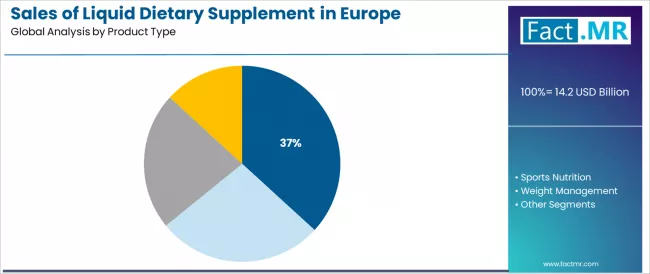
General wellness products are projected to account for 36.8% of Europe liquid dietary supplement sales in 2025, making them the dominant product type across the sector. This leadership reflects strong consumer preference for comprehensive, versatile nutrition products providing broad health support, daily wellness maintenance, and preventive healthcare benefits compared to specialized supplement alternatives. Across Europe, consumers favor general wellness products for their nutritional versatility, health comprehensiveness, and convenience delivery while maintaining wellness effectiveness. General wellness configurations enable manufacturers to incorporate diverse nutrient combinations, optimized absorption systems, and convenient consumption formats creating comprehensive nutrition solutions. Continuous innovations are improving general wellness performance including enhanced nutrient synergy, improved bioavailability, and integrated health targeting systems addressing wellness optimization requirements. General wellness products support versatile health applications compared to other product types while delivering consistent nutritional support and consumer convenience. The segment’s strong position is reinforced by growing preventive healthcare driving supplement selection and wellness performance demands necessitating comprehensive nutrition solutions.
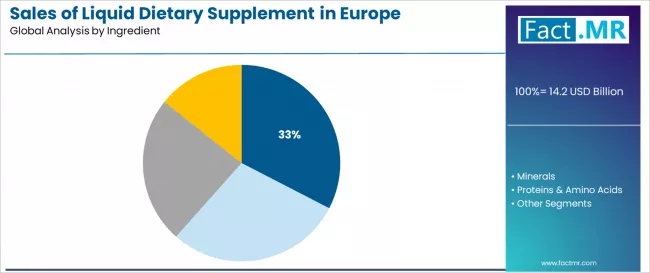
Vitamin formulations are expected to represent 32.6% of Europe liquid dietary supplement sales in 2025, highlighting their critical role as the predominant nutritional ingredient. Vitamin systems provide essential nutrition, fundamental health support, superior bioavailability, and wellness foundation appealing to consumers prioritizing basic nutritional needs and vitamin deficiency prevention. Vitamin ingredients allow supplements to achieve comprehensive nutritional support with essential nutrient delivery, optimal absorption rates, and convenient liquid delivery without compromising nutritional effectiveness. The segment is sustained by vitamin ingredients’ proven health necessity, widespread nutritional acceptance, established health positioning, and consumer confidence spanning various wellness applications. Across Europe, consumers maintain vitamin focus for nutritional foundation, health maintenance, and deficiency prevention while increasingly demanding improvements including enhanced absorption rates, improved taste profiles, and simplified consumption procedures. Such ingredient preferences ensure sustained vitamin dominance through proven health necessity, nutritional advantages, and continuous performance enhancement addressing evolving wellness requirements.
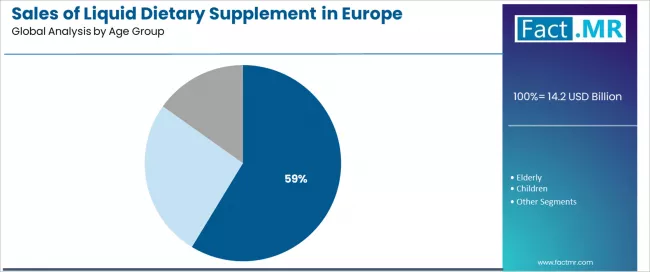
Adult applications are projected to contribute 58.7% of sales in 2025, representing substantial mainstream wellness applications. Adult supplementation involves working-age nutrition, lifestyle health optimization, and wellness maintenance creating primary nutritional demands requiring convenient supplement capabilities. Across Europe, adult consumers utilize liquid supplements for daily wellness, health maintenance, and nutritional requirements demanding convenience delivery and absorption effectiveness. Adult applications benefit from established purchasing power, health awareness patterns, and lifestyle requirements supporting convenient supplement investments. The segment sustains significant consumption through continuous adult wellness focus, established health infrastructure, and consumer experience with liquid supplementation throughout European wellness operations. European wellness facilities maintain adult supplementation focus targeting lifestyle optimization, health maintenance, and convenience delivery providing steady consumption volumes and mainstream wellness focus within established health networks.
Europe liquid dietary supplement sales advance exceptionally due to increasing health consciousness and growing preventive healthcare focus across wellness segments. The sector faces challenges including regulatory complexity, varying taste preferences demanding specialized formulation configurations, and cost considerations among price-sensitive wellness consumers. Health technology advancement and personalized nutrition trends continue to influence product development and capability enhancement initiatives.
The growing implementation of health consciousness and preventive healthcare adoption, gaining particular focus across European wellness frameworks, is driving sales for convenient nutrition products enabling health optimization, wellness maintenance, and nutritional compliance without extensive consumption complexity. Liquid supplement systems equipped with appropriate nutritional capabilities and reliable delivery serve wellness consumers, healthcare providers, and nutritional practitioners requiring effective health support without compromising consumption convenience or nutritional effectiveness. These wellness trends are particularly valuable for supplement manufacturers offering nutrition solutions and health capabilities optimizing wellness performance while delivering complete nutritional support appropriate for health enhancement occasions without compromising supplement effectiveness or consumption reliability.
Modern liquid supplement manufacturers are incorporating intelligent nutrition systems including AI-driven formulation recommendations, personalized nutrition platforms, bioavailability optimization, and health monitoring that improve nutritional effectiveness while maintaining supplement reliability and consumer acceptance. Integration of health data analysis, automated nutrition optimization, and wellness intelligence communicates technology advantages and health benefits appealing to health-focused consumers. Advanced systems also support next-generation product development including targeted nutrition delivery, adaptive supplement formulations, and automated health enhancement addressing wellness requirements and health objectives, with European liquid supplement manufacturers increasingly incorporating personalized technology solutions balancing traditional nutritional effectiveness with contemporary customization and intelligence priorities influencing product purchasing decisions.
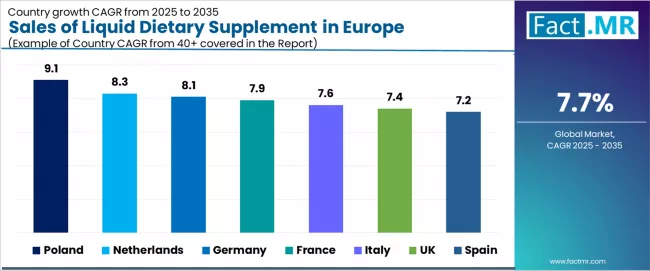
| Country | CAGR (2025-2035) |
|---|---|
| Poland | 9.1% |
| Netherlands | 8.3% |
| Germany | 8.1% |
| France | 7.9% |
| Italy | 7.6% |
| United Kingdom | 7.4% |
| Spain | 7.2% |
The Europe liquid dietary supplement sector is witnessing exceptional growth, supported by rising health consciousness, increasing preventive healthcare adoption, and the integration of advanced nutrition technology across wellness applications. Poland leads the region with a 9.1% CAGR, reflecting strong wellness industry development, expanding health awareness, and consumer focus on convenient nutrition delivery. Netherlands follows with a 8.3% CAGR, driven by wellness excellence and advanced nutrition technology adoption. Germany grows at 8.1%, as healthcare capabilities increasingly drive efficient supplement adoption. France maintains 7.9% growth through healthcare innovation and wellness optimization, while Italy grows at 7.6%, supported by nutritional expertise and wellness expansion. United Kingdom demonstrates 7.4% growth, and Spain achieves 7.2%, both driven by health compliance and wellness efficiency requirements.
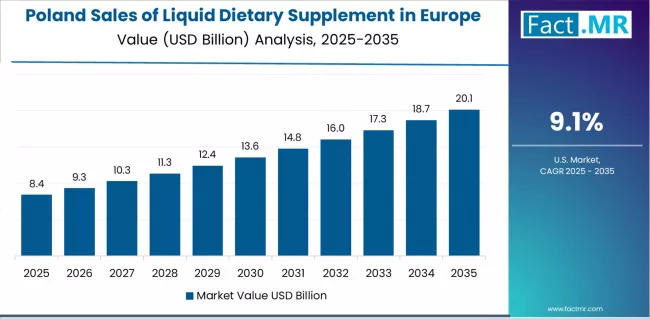
Sales of Europe liquid dietary supplement in Poland is projected to exhibit exceptional growth with a CAGR of 9.1% through 2035, driven by rapid wellness industry development, expanding health awareness, and strong consumer focus on convenient nutrition delivery and preventive healthcare. As the leading European country with significant wellness growth and increasing health consciousness, Poland’s focus on effective nutrition without compromising affordability is creating substantial sales for liquid supplement systems with reliable health benefits and competitive pricing. Major supplement manufacturers and wellness operators are establishing comprehensive nutrition capabilities and health strategies across Polish facilities.
Netherlands is expanding at a CAGR of 8.3%, supported by wellness excellence, established healthcare infrastructure, and continuous technology development driving supplement adoption. The Dutch wellness sector is increasingly incorporating advanced supplement systems while maintaining health efficiency and wellness excellence expectations. Supplement manufacturers and wellness operators are implementing comprehensive nutrition development programs throughout Netherlands operations.
Sales of Europe liquid dietary supplement in Germany is growing at a CAGR of 8.1%, driven by healthcare excellence, established wellness infrastructure, and continuous technology development supporting supplement adoption. The German wellness sector continues expanding supplement capabilities focusing health efficiency and technology integration. Supplement manufacturers and facility operators are investing in advanced nutrition development throughout German operations.
France is growing at a CAGR of 7.9%, driven by healthcare innovation, established wellness infrastructure, and continuous optimization in nutrition technologies supporting supplement adoption. The French wellness sector continues developing sophisticated supplement capabilities focusing health efficiency and nutrition performance. Supplement manufacturers and wellness operators are implementing advanced nutrition solutions throughout French operations.
Sales of Europe liquid dietary supplement in Italy is growing at a CAGR of 7.6%, driven by nutritional expertise, established wellness base, and gradual supplement infrastructure expansion among consumers seeking nutrition efficiency without sacrificing health reliability. The Italian wellness sector continues developing supplement capabilities meeting health requirements. Supplement manufacturers and facility operators are establishing health-focused nutrition solutions throughout Italian operations.
The United Kingdom is growing at a CAGR of 7.4%, supported by health compliance requirements, wellness efficiency focus, and established healthcare infrastructure driving supplement adoption. The UK wellness sector continues maintaining supplement capabilities while adapting to health changes and wellness requirements. Supplement suppliers and facility operators are establishing compliance-focused nutrition solutions throughout UK operations.
Sales of Europe liquid dietary supplement in Spain is expanding at a CAGR of 7.2%, supported by wellness development, growing health awareness, and increasing focus on efficient nutrition delivery supporting supplement adoption. The Spanish wellness sector maintains health development while embracing efficient supplement solutions. Supplement companies and facility operators are developing nutrition capabilities throughout Spanish operations.
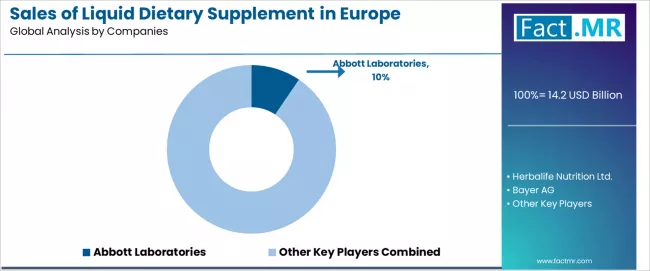
Europe liquid dietary supplement sales is defined by competition among international nutrition companies with European operations, specialized supplement manufacturers, and diversified healthcare companies offering comprehensive wellness portfolios. Companies are investing in technology advancement, formulation optimization, product development, and health support to deliver reliable, effective, high-performance liquid supplement systems across European wellness and healthcare operations. Product development, nutrition expertise, and effective health support are central to strengthening competitive positions and consumer loyalty across dietary supplement categories.
Abbott Laboratories, American-based healthcare leader with extensive European presence, offers comprehensive liquid supplement portfolios including personalized nutrition platforms with focus on health reliability and wellness coverage across European facilities. Herbalife Nutrition Ltd., established wellness company, provides advanced supplement systems focusing nutrition innovation and health excellence.
Bayer AG, German-based healthcare and pharmaceutical producer, delivers proven nutrition solutions and reliable product performance serving European wellness requirements. GlaxoSmithKline Plc. offers specialized healthcare supplements with focus on health optimization and wellness efficiency. Glanbia Plc. provides diversified nutrition solutions focusing health reliability and supplement effectiveness serving diverse wellness segments.
Recent key developments include Abbott Laboratories launching new personalized liquid nutrition platform in 2024 with AI-driven formulation recommendations. Herbalife Nutrition Ltd. introduced new plant-based liquid supplement line in 2025 with enhanced bioavailability. Bayer AG developed new targeted liquid supplements in 2024 for specific health conditions with clinical validation.
| Item | Value |
|---|---|
| Quantitative Units | USD 29.8 billion |
| Product Type | General wellness, sports nutrition, weight management, medical nutrition |
| Ingredient | Vitamins, minerals, proteins & amino acids, botanicals |
| Age Group | Adults, elderly, children |
| Distribution Channel Per Capita Spending | Pharmacies, online, supermarkets, specialty stores |
| Regions Covered | Europe |
| Countries Covered | Germany, France, United Kingdom, Italy, Spain, Netherlands, Poland |
| Key Companies Profiled | Abbott Laboratories, Herbalife Nutrition Ltd., Bayer AG, GlaxoSmithKline Plc., Glanbia Plc., Amway Corporation, BASF SE, Koninklijke DSM N.V., Arkopharma, Sanofi, Aboca |
| Additional Attributes | Dollar sales by product type, ingredient composition, age group demographics, and distribution channel, per capita spending trends across Germany, France, United Kingdom, Italy, Spain, Netherlands, and Poland, competitive landscape with international nutrition companies and specialized supplement manufacturers, consumer preferences for wellness capabilities and health formats, integration with personalized nutrition technologies and AI-driven formulation initiatives, innovations in vitamin systems and bioavailability optimization positioning, and adoption of efficient supplement solutions, specialized formulations, and monitoring capabilities for enhanced health access and wellness satisfaction across European wellness, healthcare, and nutrition operations |
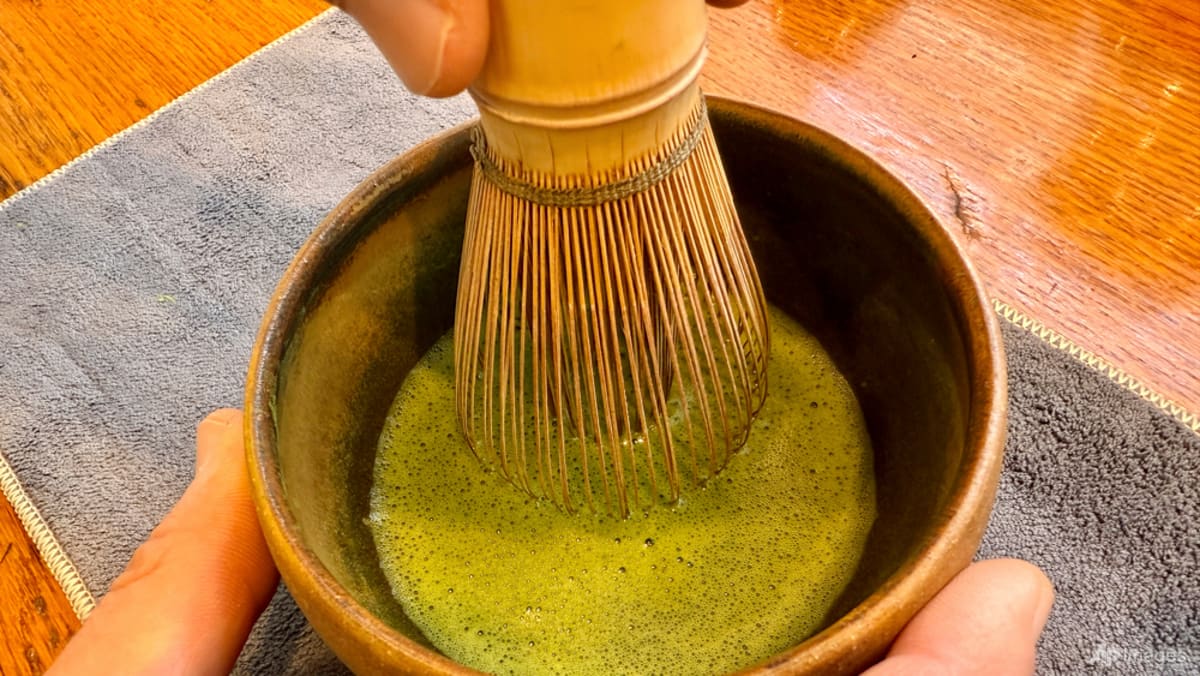
For a lot of people, matcha is more than just a drink. It’s a pause button. The slow ritual — scooping, whisking, watching the froth bubble up — feels almost meditative. And unlike coffee, matcha wakes you up without sending your heart racing or leaving you jittery. You get this steady, clear energy that helps you actually get things done. No wonder younger folks, especially Gen-Z and millennials, can’t get enough of it.
LOS ANGELES — Los Angeles County officials are set to pull kratom and its synthetic extract, sometimes called 7-OH, from shelves immediately.
Inspectors will be sent to retailers next week to begin red-tagging illegal products containing the compounds, the L.A. County Department of Public Health said in a release Friday morning. Shops that don’t comply could be hit with fines or other penalties.
Kratom is an herbal extract from the leaves of “Mitragyna speciosa,” a tree native to Southeast Asia. It is sold in shops and online in a variety of forms, including powders, pills and liquid extracts. Brands selling kratom often make claims that it can address pain, anxiety and mood disorders.
Matthew Lowe, executive director of the Global Kratom Coalition, said natural kratom has been used in the U.S. for over 50 years to alleviate anxiety and treat chronic pain.
In the last few years, a more potent, synthetic version of kratom refined into its psychoactive compound 7-Hydroxymitragynine, or 7-OH, hit shelves across the U.S.
7-OH products are often marketed as “plant alkaloids,” drawing criticism from some, including Lowe, who argue the labeling is misleading, confusing consumers into thinking it’s the same as natural kratom.
When mixed with alcohol, medications or illicit drugs, the county health department warns, 7-OH products can “cause severe respiratory depression and death. Importantly, these products are unregulated and may contain unknown concentrations of 7-OH, increasing the risk of unintentional overdose.”
There have been six reported kratom-related deaths in Los Angeles County in just the past few months.
“Given that this is a new and emerging substance, this is also since the medical examiner started tracking 7-OH data,” the Los Angeles County Department of Public Health told the Los Angeles Times via email. Since the county only just began tracking 7-OH in deaths in April of this year, it is unclear how many other overdoses could have occurred previously.
Alcohol was also found in all six individuals, so kratom and 7-OH’s exact role in their deaths remains unclear. The Times first requested the coroner’s report for the kratom-related deaths Oct. 24, but the country has yet to release them.
“Kratom and 7-OH products are sold as natural remedies, but they are illegal and unsafe,” Dr. Muntu Davis, the county health officer said in the release. “They are sold in gas stations, smoke shops, online, and other retailers. People should avoid using these products, and store owners/operators must remove them immediately to prevent harm.”
Right now, consumers have no clarity on kratom, 7-OH, or any other metabolites, said Yael Ossowski, deputy director of Consumer Choice Center, a nonprofit consumer advocacy group. “At any gas station or smoke shop, there’s the powder, the liquid extracts, and pills all offered at different doses, with different brands,” Ossowski said. “This obviously leads to consumer confusion and uninformed choices, incorrect dosing and likely bad experiences that smart regulation would avoid.”
The kratom and 7-OH market has grown largely because people want targeted pain relief and remedies for their ailments, “but don’t necessarily want to have the full effects of more powerful opioids that have a fuller effect on the body,” he said.
“Kratom has been successfully used for generations in other countries as an opioid alternative,” Ossowski said. But highly concentrated 7-OH products are a different beast altogether.
According to the U.S. Food and Drug Administration, kratom and 7-OH are not lawfully marketed in the U.S. as a drug product, a dietary supplement or an approved food additive.
California adopts federal law concerning food and dietary supplements, the California Department of Public Health told the Times via email.
“Until kratom and its pharmacologically active key ingredients mitragynine and 7-OH are approved for use, they will remain classified as adulterants in drugs, dietary supplements and foods,” a department spokesperson said.
The spokesperson added that the department has been conducting investigative work associated with kratom for the last two years and “continues to take appropriate action to protect the public against adulterated products containing kratom or 7-OH.”
“CDPH embargoes or destroys foods and dietary supplements within the state that are adulterated with kratom or 7-OH once they are identified during investigations; however, we do not comment on the specifics of ongoing investigations,” the spokesperson said.
7-OH producers have publicly defended their products in the face of lawsuits and FDA crackdowns, arguing it is a safer alternative to illicit opioids like fentanyl and has saved lives, not taken them.
Vince Sanders, founder and CEO of CBD American Shaman who helped develop an early 7-OH product, has said the attack on 7-OH is being led by companies selling natural kratom, who have had their market share overtaken by what he says is “a vastly superior product.”
The Kansas City businessman said a ban anywhere in the country would hurt people who have used 7-OH to treat substance abuse disorders or chronic pain and now rely on the product as an alternative to costly prescription medication.
“People that have changed their life using it are extremely concerned,” Sanders said. “They’re scared to death. I mean, there are people that … plan to pull money out of their 401K, or load up their credit cards, or whatever they’ve got to do to buy years and years of supply.”
He acknowledged that both kratom and 7-OH are frequently taken in higher doses than he recommends, but argued manufacturers and retailers should not be held accountable for those decisions. He compared it to alcohol: “You buy a 750-milliliter bottle, and if you go home and drink that entire bottle, and you do that every single night, is that your fault, or is that Jim Beam’s fault?”
Communities across the state have taken it upon themselves to act in the absence of state and federal regulation. Orange County and the cities of Newport Beach, San Diego and Oceanside have all prohibited the sale, distribution or possession of kratom. Riverside County is looking to deter the sale and marketing of kratom and 7-OH products to people under the age of 21.
Los Angeles County does not have its own regulatory ordinance for the products.
“I think that the local action is signaling intent. It’s saying to the state and (federal authorities), you need to do something about this,” Lowe said.
But outright prohibition bans could bring another host of issues including whether local enforcement of the ban will even happen, and the possibility that a black market for the products may arise, he said.
“You leave people without any options, so they either find alternative options or they just drive across city lines or county lines and and go get it themselves,” Lowe said. Indeed, kratom and 7-OH are widely available on online marketplaces.
©2025 Los Angeles Times. Visit at latimes.com. Distributed by Tribune Content Agency, LLC.
Matcha, to be sure, has a fundamental problem here. The term – literally, “ground tea” as opposed to the infused sencha – just describes a routine processing method, like the “cheddaring” of dairy curds which gives cheddar cheese its un-trademark-able name.
That’s not insurmountable, though: There are numerous local varieties, such as Uji matcha and Fukuoka matcha, that could trade on their reputations, the way Bordeaux wine estates do.
It’s not clear that Japan has an appetite for the fight. The EU has nearly 2,000 protected wines and spirits, according to its eAmbrosia register.
Japan has designated just two types of tea, both of them sencha. In Nishio, one of the most renowned matcha growing regions, the local growers’ cooperative got itself removed from the register in 2020, after finding that domestic drinkers weren’t prepared to pay prices to compensate for the laborious methods required by the geographical indication.
That’s a defeatist approach. Matcha is a global craze and needn’t be limited by local appetites. Champagne is a case in point: It owes its origins as much to English glass-blowers, chemists and consumers as to French farmers.
Japan has as much cultural capital now as it has had for decades. The stellar reputation of its food products isn’t being matched by commensurate efforts to protect and market them to international buyers.
Taking advantage of this isn’t an easy process, especially as a warming climate alters the unique local conditions that GI designations depend on (a record heatwave is one reason that matcha supplies are struggling to keep up with demand this year). In a world that will soon be buried under a drift of Chinese tea powder, though, it will be necessary.
Some of the world’s great fortunes were built on the decades of efforts that turned champagne from a local oddity into a worldwide luxury good. In the matcha game, Japan has to be in it to win it.
I’m seeing creatine supplements everywhere. Should I give in and take one?

– – –
Creatine is getting a lot of attention for its supposed ability to improve strength and cognitive function. There’s some validity to the creatine stampede: Multiple randomized controlled trials have found that creatine supplementation can create small but real boosts in upper and lower body strength – but only when combined with resistance training.

Without resistance training, creatine supplementation is useless – and really, it’s the resistance training we need to do more of in the first place. This is especially true for groups like postmenopausal women, adults taking GLP-1 medications, and older adults in nursing homes, who are all at higher risk of losing muscle mass.
So my advice is: Before you consider creatine, ask yourself if you’re doing enough weekly resistance training. Federal guidelines advise doing exercises specifically designed to strengthen muscles – like sit-ups, push-ups or lifting weights – at least two times a week.
If you’re not doing that, then my guidance on creatine is a real solid “nope.”
If you’re already training, and are in those higher-risk categories or just want a small edge, then it’s reasonable to discuss creatine with your physician. Some people start at 3-5 grams a day, although for women, higher doses may be helpful. But remember: Creatine isn’t a magic bullet. The magic is lifting consistently. Master that first.
– – –
What is creatine?
Creatine is considered a nonessential nutrient because it’s produced naturally by your body. It can help form a compound called adenosine triphosphate, also known as ATP, an important source of energy for your muscles and organs.
Creatine supplements are sold as a powder, gummies or pills, but you can also get creatine in your diet from animal-derived foods, like beef or seafood. Plant-based sources don’t contain significant amounts of creatine.
– – –
What the research says about creatine
Strength
Meta-analyses of dozens of clinical trials suggest that the clearest strength and power gains show up in men and among adults below age 50. For instance, younger adults taking creatine powder while resistance training improved their bench and chest press strength by roughly 4 pounds compared with training alone. Some might feel that 4 pounds isn’t life-changing, but especially for higher risk groups, a small edge may be worth it. (One caveat: As with most research on supplements, several scientists in these studies have industry ties.)
Bone mineral density
As a physician, I’d love to see a benefit for my patients in bone mineral density, especially for postmenopausal women, and ultimately a reduction in fractures. Unfortunately, there have been no real-world studies clearly showing this is the case.
A large randomized controlled trial of postmenopausal women doing regular resistance training found that creatine did not improve bone mineral density compared to placebo over two years. The same group had previously studied creatine supplementation for one year and saw some initial improvements in bone mineral density at the femoral neck (the most common site for hip fractures), so it was disappointing that this did not appear to hold in the long term. It’s harder to remain compliant with creatine supplementation long-term, which could account for this difference.
Phil Chilibeck, a professor of kinesiology at the University of Saskatchewan and the first author of both studies, noted that even if a clear improvement in bone mineral density didn’t pan out, the two-year study still demonstrated other small but statistically meaningful benefits from creatine.
Creatine helped increase walking speed and the geometric arrangement of bone – which, although not quite the same as bone mineral density, also “theoretically leads to higher bone strength,” Chilibeck said in an email.
“Is it worth it? I would say it is relatively inexpensive and better than most of the other supplements out there for increasing muscle mass and functional performance,” he said. But, Chilibeck cautioned, “most people can expect only relatively small improvements.”
Performance
Other studies have shown increased performance during short periods among female athletes taking creatine powder, which scientists believe is because creatine can add a burst of energy that helps people work a bit harder.
And creatine powder combined with resistance training may help older adults with functional ability, such as standing up from a chair as many times as possible in 30 seconds without using your arms.
Cognitive function
The data on cognitive function is still in its infancy, and it’s mixed. For instance, a 2013 randomized double-blind placebo controlled trial of older women did not find that creatine supplementation improved cognition or depression, while a small handful of observational studies have reported a positive association with memory testing and creatine intake among older adults (including from dietary sources – and not necessarily supplementation). More research on how creatine supplementation impacts the brain is still needed.
– – –
How much creatine should you take?
Start by discussing creatine with your physician, especially if you have kidney disease, as some case studies have found an increased risk of damage among those with baseline disease.
In terms of dosage, even 3 grams of creatine powder a day has been shown to be as effective in the long-term, at least for healthy men. For women – particularly, postmenopausal women – higher doses may be helpful, and studies suggest that 5-10 grams per day is optimal.
One common approach for boosting muscle creatine stores quickly, which is used in several studies, is to take a “loading” dose of about 20 grams daily (broken up into smaller doses of 4-5 grams throughout the day) for about a week and then transition to a “maintenance” dose in the range of 3-5 grams. But in people who take 3-5 grams daily, studies have found muscle creatine stores reach similar levels after about a month.
– – –
Should I take creatine and protein powder?
Protein powders – like whey, pea or soy – are often taken to support muscle recovery after exercise, and it’s common for people to take both protein and creatine supplements. It’s worth keeping a few things in mind though:
–Protein powders are composed of essential amino acids, meaning they are not made naturally by the body, and so we need to get them from our diets. Most people get enough protein from what they eat. But older adults, women and highly active people should pay closer attention.
–The U.S. Food and Drug Administration does not approve or regulate dietary supplements in the same way as prescription medication, and a report from Consumer Reports released in October found that more than two-thirds of the 23 protein powders tested contained more lead in a single serving that they considered safe to ingest in a day, which they cite as no more than 0.5 micrograms. Formally, the FDA says there is no safe level of lead exposure – and of note, none of the powders tested were creatine powder specifically. But it’s worth considering whether bringing supplements into your body is truly necessary – and worth the potential risks – especially for people who are pregnant or are in other high-risk groups.
– – –
What I want my patients to know
Resistance training should be as important a part of your health routine as eating fruits and vegetables. Believe me, that’s not a message I heard growing up. I heard plenty about the importance of regular aerobic exercise (and yes, I still do my American Heart Association-approved 150 minutes of moderate intensity activity per week). Unfortunately, less than half of men of all ages and only about 27 percent of adult women met the recommended amount of resistance training in 2020.
The France Food Supplement Market was valued at US$ 7,054.96 million in 2024 and is projected to reach US$ 9,162.84 million by 2028, growing at a CAGR of 6.98% during the forecast period 2025-2028.
➠ Download Your Sample Report Instantly – Corporate Email ID Required for Priority Access: https://www.datamintelligence.com/download-sample/france-food-supplement-market?praneetha
☛ France: Recent Industry Developments
✅ November 2025: PiLeJe Industrie announced the expansion of its manufacturing facility in Saint-Laurent-des-Autels to increase production of probiotic and plant-based food supplements. The upgrade focuses on sustainable packaging and clean-label formulations to meet rising consumer demand for natural health products. This investment strengthens France’s position as a leader in nutraceutical innovation.
✅ October 2025: Arkopharma Laboratories launched a new range of vegan-certified supplements enriched with botanical extracts and vitamins targeting immunity and energy. The launch aligns with the growing French consumer preference for eco-conscious and ethically sourced nutraceuticals. It also supports the company’s strategy to expand its footprint in the European wellness market.
✅ September 2025: Laboratoire Nutergia introduced a research partnership with the University of Toulouse to study the synergistic effects of micronutrients and probiotics on gut health. The collaboration aims to develop next-generation food supplements backed by clinical validation. This initiative reinforces France’s commitment to science-driven nutrition and functional health innovation.
☛ Core Catalysts Behind Market Growth:
Rising health consciousness and preventive healthcare trends among consumers in France are driving the demand for food supplements to support overall wellness and immunity.
Increasing adoption of vitamins, minerals, and herbal supplements due to busy lifestyles and dietary gaps is fueling market expansion.
Growing popularity of plant-based and natural ingredients is encouraging manufacturers to develop clean-label and organic supplement formulations.
Supportive government regulations and strong distribution through pharmacies, supermarkets, and online platforms are further boosting market growth in France.
➠ Get Customization in the Report as per Your Requirements:
https://www.datamintelligence.com/customize/france-food-supplement-market?praneetha
☛ Market Segmentation:
By Ingredient:
The market is categorized into Vitamins, Botanicals, Minerals, Protein & Amino Acids, Omega Fatty Acids, Probiotics, and Others. Vitamins dominate the market owing to their broad use in boosting immunity and addressing nutritional deficiencies, while probiotics and botanicals are witnessing strong growth with increasing consumer interest in gut health and natural supplements.
By Dosage:
Segments include Tablet, Capsules, Liquid, Powder, Chewables & chewable supplements, Soft Gels, and Others. Tablets and capsules lead the market due to their convenience and extended shelf life, whereas chewables and chewable supplements are rapidly gaining popularity, particularly among children and adults seeking taste-friendly and easy-to-consume formats.
By Application:
The market covers a wide range of applications including Gastrointestinal Health (Gut Microbiota/Microbiome Balance, Digestion, Constipation, Bloating, Diarrhea, Leaky Gut, Inflammation, Immune System, Gluten Sensitivity, Abdominal Pain, GERD/Helicobacter pylori, Antibiotic-Associated Diarrhea/Post-Antibiotic Treatment, Gut Flora Restoration, Others), Vaginal Health, Urinary Tract Health (Kidney Stones, UTIs, Others), Oral Health, Anti/Healthy Ageing, Allergies/Asthma, Bone & Joint Health (Osteoarthritis, Osteoporosis/Low Mineral Bone Density, Inflammation), Brain/Mental Health (Sleep, Cognition, Mood, Depression, Focus), Cardiovascular Health (Circulation, Energy/Fatigue Reduction, Metabolic Syndrome/Blood Glucose), Liver Health, Energy, Immunity/Respiratory Infections, Nutrient Absorption, Skin-Hair-Nails (Atopic Dermatitis & Eczema, Acne, Rosacea, Hair Growth/Hair Loss, Skin Microbiome, Others), Sports, Women’s Health (Fertility, Menopause, Pregnancy, PCOS, Vaginal Health & Microbiome, Vaginal Infections (BV/VVC), Pregnancy Outcomes, Others), Men’s Health & Fertility, Weight Management, Pediatric Health (Colic, Constipation, Regurgitation, Atopic Dermatitis, Others), and Others. Gastrointestinal health supplements dominate due to heightened consumer focus on digestion and microbiome balance, while immunity, skin-hair-nails, and women’s health segments are growing rapidly with expanding awareness of targeted nutrition.
By Age:
The market is divided into Infant, Children, Adults, and Seniors. Adults hold the largest share driven by preventive health trends, busy lifestyles, and increasing supplement intake for energy and immunity. Seniors represent a growing demographic focusing on joint, bone, and heart health, while pediatric supplements are expanding with rising awareness of early nutrition.
By Distribution Channel:
Segments include Online Retailers, Pharmacies and Drug Stores, Supermarkets/Hypermarkets, Convenience Stores, and Other Distribution Channels. Pharmacies and drug stores dominate due to strong consumer trust and professional guidance, while online retail is growing at the fastest pace driven by convenience, promotional offers, and digital health awareness.
☛ Competitive Landscape:
Arkopharma – A leading French company specializing in natural food supplements and phytotherapy products, offering a broad range of vitamins, minerals, and plant-based formulations.
Nutergia Laboratoire – Focuses on nutritional balance through scientifically backed supplements that support metabolism, immunity, and overall well-being.
Nestlé S.A. (Nestlé France) – Provides an extensive portfolio of functional foods and dietary supplements aimed at enhancing nutrition, energy, and health across all age groups.
BioGaia – Renowned for its probiotic-based supplements that promote digestive health and strengthen the immune system through clinically proven formulations.
SAS DYNVEO – Specializes in high-purity, additive-free food supplements developed with advanced encapsulation technologies for maximum bioavailability and efficacy.
➠ Purchase this report before year-end and unlock an exclusive 30% discount:
Buy Now & Unlock 360° Market Intelligence:
https://www.datamintelligence.com/buy-now-page?report=france-food-supplement-market?praneetha
(Purchase 2 or more Reports and get 50% Discount)
☛ Regional Analysis:
France: The food supplement market in France is growing steadily driven by increasing consumer focus on health, wellness, and preventive nutrition. Rising demand for natural and plant-based supplements, along with the growing popularity of vitamins, minerals, and probiotics, is fueling market expansion. Additionally, strong regulatory frameworks by ANSES and growing online retail channels are supporting product accessibility and transparency. The trend toward personalized nutrition and clean-label formulations continues to shape the French food supplement landscape.
➠ Request for 2 Days FREE Trial Access:
https://www.datamintelligence.com/reports-subscription
Power your decisions with real-time competitor tracking, strategic forecasts, and global investment insights all in one place.
✅ Competitive Landscape
✅ Sustainability Impact Analysis
✅ KOL / Stakeholder Insights
✅ Unmet Needs & Market Access Snapshots
✅ Emerging Risks & Market Volatility Analysis
✅ Quarterly Updated Reports
✅ Live Market & Pricing Trends
✅ Import-Export Data Monitoring
Company Name: DataM Intelligence 4Market Research LLP
Contact Person: Sai Kiran
Email: Sai.k@datamintelligence.com
Phone: +1 877 441 4866
Website: https://www.datamintelligence.com/
DataM Intelligence is a global Market Research and Consulting firm providing comprehensive business insights and end-to-end solutions from research to consulting. We deliver actionable intelligence across 6,300+ reports spanning 40+ domains, empowering over 200 companies in 50+ countries. Our focus is on enabling clients to make data-driven decisions through robust methodologies, strategic foresight, and real-time market intelligence.
This release was published on openPR.
Antioxidants are one of the most talked-about nutrients these days, as they can positively impact several aspects of overall health. This is primarily thanks to their ability to target unwanted compounds in the body—namely free radicals.
“Free radicals can damage cells and cause oxidative stress, while antioxidants neutralize them,” explains Jamie Baham, MS, RDN, LD, registered dietitian and owner of Ladybug Nutrition. Free radicals and oxidative stress are often at the root of many of the most common acute and chronic illnesses.
When looking to boost antioxidant consumption, green tea is a popular option as an accessible, tasty, and rich source of these nutrients. “Outside of it being delicious, green tea is full of antioxidant powerhouses called catechins (especially epigallocatechin gallate, or EGCG)—a type of flavonoid. These mighty inflammation fighters may protect your cells from damage and reduce the risk of chronic illnesses like heart disease and cancer,” Baham adds. You’ll also find other flavonoids like quercetin, kaempferol, myricetin, and rutin in green tea.
“These compounds are shown to support cognitive function in older adults as well as promote heart health by lowering LDL cholesterol,” shares Amy Woodman, RD, dietitian and owner of Farmington Valley Nutrition and Wellness in Simsbury, CT. Better blood sugar management, skin health, and even longevity are also tied to the antioxidants in green tea.
Depending on how it’s grown, picked, processed, and brewed, green tea can contain anywhere from 50 and 100 milligrams (mg) of antioxidants per cup. However, it’s not the only tea that offers these beneficial nutrients. Read on to discover five teas that contain as much—or more—antioxidants per cup compared to green tea.
Though most of these teas come from the same plant (Camellia sinensis), the way their leaves are processed primarily dictates their flavor, color, and health properties—including antioxidant content.
Anna Bogush/Getty Images
Antioxidant Content: 62-100 mg per cup
As one of the most popular teas stateside, black tea is not only delicious, versatile, and nostalgic, but also full of antioxidants. In turn, this tea is associated with plenty of health benefits. “Regular consumption of black tea may offer cardioprotective benefits and help lower blood pressure,” shares Woodman. Its high antioxidant content also helps keep our immune health in tip-top shape and may support a healthy gut microbiome, which bodes well for digestive health. Some of the most popular and flavorful black tea blends to look for include Earl Grey, English breakfast, and orange pekoe.
Antioxidant Content: 52-77 mg per cup
If you’re not familiar, “white tea is made from immature tea leaves and has a delicate flavor, containing slightly less caffeine than green or black teas,” explains Woodman, “it provides many of the same antioxidants found in green and black teas, such as catechins.” Baham shines a light on a couple of the unique health benefits of this tea, sharing, “white tea may promote skin health and reduce DNA damage.” This highly drinkable tea can also be a smart choice for those with sensitive stomachs as “white tea is gentle on the gut,” adds Jessica Villalvir MS, RDN, registered dietitian.
Yagi Studio / Getty Images
Antioxidant Content: 86-150 mg per cup
Oolong tea may not be as well-known as the other teas on this list—but it deserves just as much attention for its wonderfully light, nutty flavor. “Oolong tea is a less common variety compared to green and black teas, and has been associated with improved cardiovascular health, lower blood pressure, enhanced cognitive function, and reduced inflammation,” offers Woodman. But that’s not all, “oolong may help balance blood sugar and protect bones, too,” Villalvir adds.
Nataly Hanin / Getty Images
Antioxidant Content: Up to 945 mg per cup
Few caffeinated beverages have become as trendy as matcha. In fact, you’re likely to find it at most coffee shops nowadays. Not only is it incredibly tasty, but this powdered green tea also surpasses regularly brewed green tea in antioxidant content. “Matcha contains a higher concentration of antioxidants because, unlike traditional teas that are steeped and then discarded, matcha is made by whisking the powdered tea leaf directly into water, allowing for the entire leaf to be consumed,” explains Woodman. This results in some very notable health benefits. “Matcha is a powerhouse of antioxidants and can help lower inflammation, support healthy cholesterol, and even give you a little focus boost,” shares Villavir. Aside from making for social media-worthy lattes and lemonades, matcha can also be added to smoothies and baked goods for an antioxidant boost.
Liudmila Chernetska / Getty Images
Antioxidant Content: Up to 68 mg per cup
Unlike the other teas on this list, rooibos is actually not made from the Camellia sinensis plant, but rather from the Aspalathus linearis plant, and is therefore completely caffeine-free! This makes it the perfect beverage to boost your antioxidant intake before bed. “Though slightly below the highest green tea antioxidant concentrations, it’s still substantial per cup. Rooibos is anti-inflammatory and supports cardiovascular health,” shares Baham. This variety makes for a super delicious chai latte that won’t have you buzzing after you drink it.
A new study links regular melatonin use with a higher risk of heart failure, sparking questions about how safe the popular sleep aid really is.
Millions of Americans reach for melatonin every night to fight sleeplessness, but new research suggests the popular supplement might come with unexpected consequences.
A preliminary study set to be presented at the American Heart Association’s Scientific Sessions this November found that consistent melatonin use was linked to a significantly higher risk of heart failure, hospitalization, and even death in adults diagnosed with chronic insomnia.
Researchers tracked more than 100,000 adults with insomnia and discovered that those who regularly took melatonin were 90 percent more likely to develop heart failure within five years than those who didn’t. They were also three and a half times more likely to be hospitalized for the condition.
Although the study did not prove melatonin directly causes heart problems, its findings have raised serious concerns about a supplement long considered harmless. Experts caution that more research is needed before drawing firm conclusions, but the results point to a growing need for awareness about what’s really in those little sleep gummies and pills.
Melatonin is a hormone produced naturally by the pineal gland, a small structure in the brain that helps regulate sleep and wake cycles. As daylight fades, melatonin levels rise, signaling to the body that it’s time to slow down. This process lowers body temperature, eases alertness, and prepares the body for rest.
For people struggling with insomnia, melatonin supplements are often seen as an easy fix. The hormone stays active in the body for about four to five hours and may provide short-term relief from sleeplessness. But medical experts have long debated whether it truly helps chronic insomnia—and whether it’s as safe as most people believe.
In the United States, melatonin is classified as a dietary supplement, not a prescription or over-the-counter medication. That means it’s not regulated by the Food and Drug Administration (FDA) in the same way as drugs, leaving product quality and dosage largely up to manufacturers. In other countries, melatonin is available only with a doctor’s prescription, reflecting a more cautious approach to its use.
The use of melatonin among U.S. adults has climbed dramatically in recent decades. According to data from the National Institutes of Health, the percentage of adults using melatonin rose from 0.4 percent in 1999–2000 to 2.1 percent in 2017–2018—a fivefold increase.
With that growth has come concern. While melatonin is marketed as a natural, gentle sleep aid, scientists are beginning to explore its potential impact on cardiovascular health. Previous studies have shown that poor sleep can raise the risk of high blood pressure, heart disease, and stroke, and researchers now wonder whether long-term melatonin use could be part of the problem rather than the solution.
Melatonin’s classification as a supplement makes it difficult to monitor for purity, strength, and safety. Studies have found that actual melatonin levels in supplements can vary significantly from what labels claim, and some products even contain trace amounts of other substances that could affect sleep or interact with medications.
That lack of regulation means consumers are often left guessing about what they’re really taking—and how much. Health professionals are calling for stronger oversight to ensure consistent quality and better inform the public about potential risks.
For those struggling with insomnia, experts still recommend cognitive behavioral therapy (CBT) as a first-line treatment. The therapy helps retrain the brain’s sleep patterns and addresses behaviors that interfere with rest.
Lifestyle changes can also make a difference. Turning off bright screens before bed, reading, meditating, and maintaining a consistent sleep schedule are proven methods to help the body produce melatonin naturally. Avoiding caffeine and heavy meals late at night can also support a more restful routine.
While melatonin may offer temporary relief for occasional sleeplessness, the new findings suggest that long-term use could carry unexpected risks. As research continues, many doctors urge patients to think twice before relying on supplements—and to seek safer, evidence-based ways to get a good night’s sleep.





:max_bytes(150000):strip_icc()/TeasWithMoreAntioxidantsThanGreenTea-d993cde55ff54880a77cd0ef6ef85545.jpg "Move Over Green Tea—These 5 Teas Have Even More Antioxidants")
