The main category of Dietary Supplements News Articles.
You can use the search box below to find what you need.
[wd_asp id=1]
The main category of Dietary Supplements News Articles.
You can use the search box below to find what you need.
[wd_asp id=1]

In January–September 2025, green tea leaf production in Azerbaijan recorded a notable increase, reaffirming the country’s growing focus on revitalizing its traditional tea industry, Azernews reports. According to the official report, a total of…
Find the plan that suits you best.
Full digital access to all news for 1 month
Full digital access to all news for 3 months
-33%
Full digital access to all news for 6 months
-36%
Full digital access to all news for 1 year
-41%
Here we are to serve you with news right now. It does not cost much, but worth your attention.
Choose to support open, independent, quality journalism and subscribe on a monthly basis.
By subscribing to our online newspaper, you can have full digital access to all news, analysis, and much more.
Subscribe
You can also follow AzerNEWS on Twitter @AzerNewsAz or Facebook @AzerNewsNewspaper
Thank you!
usatoday.com wants to ensure the best experience for all of our readers, so we built our site to take advantage of the latest technology, making it faster and easier to use.
Unfortunately, your browser is not supported. Please download one of these browsers for the best experience on usatoday.com
The Japan Postbiotic Food Supplement market recorded a value of US$ 302.25 thousand in 2023 and is expected to reach a value of US$ 484.04 thousand in 2027, growing at a CAGR of 12.6% during the forecast period (2024-2027). As per the DataM Intelligence report.
Get a Free Sample PDF Of This Report (Get Higher Priority for Corporate Email ID):-https://www.datamintelligence.com/download-sample/japan-postbiotic-food-supplement-market?pratik
Japan Market Product Launches:-
✅ (Aug 2023) Kirin launched a lower-calorie immune care postbiotic drink in Tokyo, cutting calories by 50% to attract health-conscious consumers without compromising taste.
✅ (Mid 2025) Multiple Japanese supplement manufacturers introduced innovative postbiotic capsule formulations targeting senior health and digestive benefits amid rising aging population demand.
✅ (Early 2025) New postbiotic functional foods incorporating bioactive compounds from fermentation debuted in key markets including Kanto and Osaka, enhancing gut health and immunity awareness.
Recent Mergers & Acquisitions in 2025:-
(2025) Notable acquisitions involve mid-sized biotech firms specializing in fermentation-derived bioactive ingredients by major Japanese nutraceutical companies to expand postbiotic portfolios.
(Q2 2025) Strategic partnerships emerged between supplement producers and research labs focusing on postbiotic innovation, consolidating R&D capabilities in Japan’s functional foods sector.
(Late 2024 to early 2025) Investment rounds and buyouts by larger corporations aimed to accelerate product pipeline expansion in postbiotic supplements market in Japan.
Recent Government Approvals of the market :
(2025) The Ministry of Health, Labour and Welfare (MHLW) approved several new postbiotic bioactive compounds for use in food supplements following successful safety evaluations.
(Q1 2025) New guidelines on functional food claims related to postbiotic efficacy were issued, enabling clearer marketing in the Japanese supplement market.
(Mid 2025) Fast-tracking regulatory procedures for elder-care supplements including postbiotics reflects government focus on aging population health support.
DataM Intelligence has published a new research report on ” Japan Postbiotic Food Supplement market ” reached Size 2025″.The Japan postbiotic food supplement report would provide approximately 18 tables, 27 figures and 180 pages.
“Secure your 30% year-end discount – get this report before the offer expires.”
:https://www.datamintelligence.com/buy-now-page?report=japan-postbiotic-food-supplement-market?pratik ((Purchase 2 or more Repots and get 50% Discount)
Recent Market Development:
(2025) Growing integration of postbiotics in daily diets such as via traditional fermented foods innovation supports consumer acceptance and market growth.
(Early 2025) Research advancements demonstrate immune-boosting and anti-inflammatory effects of postbiotics, gaining traction in scientific and consumer communities.
(Mid 2025) Expansion of distribution channels including e-commerce and health specialty stores accelerates postbiotic product reach across urban and regional Japan.
🌍Recent Investments in 2025-
(2025) Significant capital inflows into postbiotic R&D by Japanese supplement companies aim to develop novel bioactive ingredients and delivery systems.
(H1 2025) Venture funding rounds focused on startups innovating in fermentation-derived supplements reflect growing investor confidence in postbiotic market potential.
(Q3 2025) Government-backed grants support small-medium companies enhancing aging population health via cost-effective postbiotic products.
Latest News-
(Sept 2025) Media coverage highlights Japan’s rising demand for gut health products, with postbiotics spotlighted as the new frontier beyond probiotics in consumer wellness trends.
(Jul 2025) Reports emphasize Japan’s leading market position in Asia for postbiotic innovation powered by strong consumer awareness and cultural dietary roots.
(Oct 2025) Industry conferences in Tokyo featured breakthroughs in stable, non-refrigerated postbiotic formulations aimed at expanding shelf life and accessibility.
The top 3 key players:-
1. Kirin Holdings Co., Ltd.
Kirin leads with its proprietary LC-Plasma postbiotic, strong R&D, and wide product reach through partnerships and established health brands in Japan.
2. Morinaga Milk Industry Co., Ltd.
Morinaga dominates with its LAC-ShieldTM postbiotic, backed by strong clinical studies and used in over 1,000 functional food and supplement products.
3. CUMEC Co., Ltd.
CUMEC stands out for its specialized focus on postbiotic R&D, innovative ingredients like HYATM, and strong presence in Japan’s functional wellness segment.
Get Customization in the report as per your requirements:https://www.datamintelligence.com/customize/japan-postbiotic-food-supplement-market?pratik
Recent FDA Approvals in Japan (2025):
(2025) While Japan does not have an FDA, the Pharmaceutical and Medical Devices Agency (PMDA) approved several postbiotic ingredients for use in food supplements with recognized health benefits under new regulatory frameworks.
(Q2 2025) PMDA acknowledged postbiotic components as safe and effective for intake in elderly nutrition supplements, aligning with Japan’s aging health policies.
(2025) Updates in PMDA guidelines facilitated smoother approval pathways for novel postbiotic formulations, encouraging innovation and market entry
Key Segments covored :
By Product
-Powder Postbiotics: Easy to mix with food and beverages for daily use.
-Capsule/Tablets Postbiotics: Convenient and portable supplement format.
-Others: Includes, liquids, and other innovative delivery forms.
By Application
-Digestive Health: Supports gut balance and improves digestion.
-Immune Support: Enhances body defense and overall immunity.
-Skin Health: Promotes healthy, radiant skin from within.
-Weight Management: Aids metabolism and fat regulation.
-Others: Covers niche health and wellness benefits.
By Distribution Channel
-Supermarkets/Hypermarkets: Widely accessible retail purchase option.
-Pharmacies/Drug Stores: Trusted outlets for health-focused products.
-Convenience Stores: Quick and easy purchase for daily consumers.
-Online Retailers: Fast-growing e-commerce and direct sales platform.
-Others: Specialty stores and brand-owned outlets.
By Type
-Short-Chain Fatty Acids: Core postbiotic metabolites offering gut health benefits.
-Tributyrin: Functional molecule supporting intestinal barrier and immunity.
-Others: Includes emerging or customized postbiotic formulations.
Request for 2 Days FREE Trial Access:
https://www.datamintelligence.com/reports-subscription?pratik
✅ Competitive Landscape
✅ Technology Roadmap Analysis
✅ Sustainability Impact Analysis
✅ KOL / Stakeholder Insights
✅ Consumer Behavior & Demand Analysis
✅ Import-Export Data Monitoring
✅ Live Market & Pricing Trends
Have a look at our Subscription Dashboard:
https://www.youtube.com/watch?v=x5oEiqEqTWg
Contact Us –
Company Name: DataM Intelligence
Contact Person: Sai Kiran
Email: Sai.k@datamintelligence.com
Phone: +1 877 441 4866
Website: https://www.datamintelligence.com
About Us –
DataM Intelligence is a Market Research and Consulting firm that provides end-to-end business solutions to organizations from Research to Consulting. We, at DataM Intelligence, leverage our top trademark trends, insights and developments to emancipate swift and astute solutions to clients like you. We encompass a multitude of syndicate reports and customized reports with a robust methodology.
Our research database features countless statistics and in-depth analyses across a wide range of 6300+ reports in 40+ domains creating business solutions for more than 200+ companies across 50+ countries; catering to the key business research needs that influence the growth trajectory of our vast clientele.
This release was published on openPR.
Ottawa, Nov. 07, 2025 (GLOBE NEWSWIRE) — The global nutraceutical ingredients market size is expected to be worth over USD 191.04 billion by 2034, increasing from USD 103.36 billion in 2026, growing at a strong CAGR of 7.98% between 2025 and 2034. The growing awareness about the benefits of functional foods and the trend of plant-based diets drive the market growth.
The Complete Study is Now Available for Immediate Access | Download the Sample Pages of this Report@ https://www.precedenceresearch.com/sample/1162
Nutraceutical Ingredients Market Highlights:
Nutraceutical Ingredients Market Report Coverage
| Report Highlights | Details |
| Market Size in 2025 | USD 95.73 Billion |
| Market Size in 2026 | USD 103.36 Billion |
| Market Size by 2034 | USD 191.04 Billion |
| Growth Rate (2025–2034) | CAGR of 7.98% |
| Leading Region | Asia Pacific (41% share in 2024) |
| Fastest Growing Region | North America |
| Base Year | 2024 |
| Forecast Period | 2025 to 2034 |
| Segments Covered | Type, Application, Health Benefits, Form, Region |
| Regions Covered | North America, Europe, Asia-Pacific, Latin America, Middle East & Africa |
| Dominant Type Segment | Proteins & amino acids segment held the largest share in 2024 |
| Fastest-Growing Type Segment | Probiotics segment expected to grow rapidly over the forecast period |
| Dominant Application Segment | Food segment accounted for the largest share in 2024 |
| Fastest-Growing Application | Dietary supplements segment projected to expand significantly |
| Dominant Form Segment | Dry form dominated the market in 2024 |
| Key Market Drivers | Rising demand for personalized nutrition, preventive healthcare, and increasing R&D and government initiatives |
| Key Market Restraint | Availability of counterfeit and adulterated ingredients affecting quality and safety |
➤ Get the Full Report @ https://www.precedenceresearch.com/nutraceutical-ingredients-market
What are Nutraceutical Ingredients?
The nutraceutical market growth is driven by the growth in functional foods, the aging population, the increasing preference for a plant-based diet, and growing awareness about health. A nutraceutical ingredient is a naturally derived compound, such as minerals, prebiotics, fiber, herbal extracts, vitamins, probiotics, amino acids, and fatty acids. The examples of nutraceutical ingredients are omega-3 fatty acids, coenzyme Q10, glucosamine, echinacea, curcumin, green tea extract, and ginseng.
What are Popular Nutraceutical Ingredients?
| Ingredients | Food Sources | Health Benefits |
| Omega-3 Fatty Acids |
|
|
| Probiotics |
|
|
| Vitamin C |
|
|
| Curcumin |
|
|
| Resveratrol |
|
|
➡️ Become a valued research partner with us ☎ https://www.precedenceresearch.com/schedule-meeting
Key Private Industry Investments for Nutraceutical Ingredients
Major Trends of the Nutraceutical Ingredients Market
For inquiries regarding discounts, bulk purchases, or customization requests, please contact us at sales@precedenceresearch.com
Nutraceutical Ingredients Market Opportunity
Rise in Health & Wellness Trends Unlocks Market Opportunity
The strong focus on preventive healthcare and the increasing prevalence of chronic diseases like cardiovascular disorders, obesity, & diabetes increase demand for nutraceutical ingredients. The focus on treating illness and the rise in consumption of plant-based diets increase demand for nutraceutical ingredients. The growth in personalised nutrition and increasing interest in an active lifestyle increases demand for nutraceutical ingredients.
The increasing awareness about health problems and the link between diet & gut health increases demand for nutraceutical ingredients. The strong focus on holistic wellness of emotional, physical, & mental, and increasing consciousness about health, increases demand for nutraceutical ingredients. The rise in health & wellness trends creates an opportunity for the growth of the market.
Limitations and Challenges
High Cost of Ingredients Limits Market Expansion
Despite several benefits of nutraceuticals in various health applications, the high cost of ingredients restricts the market growth. Factors like advanced processing technology, stricter regulatory compliance, specialized manufacturing, supply chain disruptions, sourcing of raw materials, and complex extraction increase the cost of ingredients.
The need for specialized equipment and sourcing of raw materials like herbs & plants increases the cost. The advanced processing technology, such as maintaining the bioactivity, purifying, & extracting bioactive compounds, increases the cost. The stricter quality standards and disruptions of supply chains increase the ingredient cost. The high cost of ingredients hampers the growth of the market.
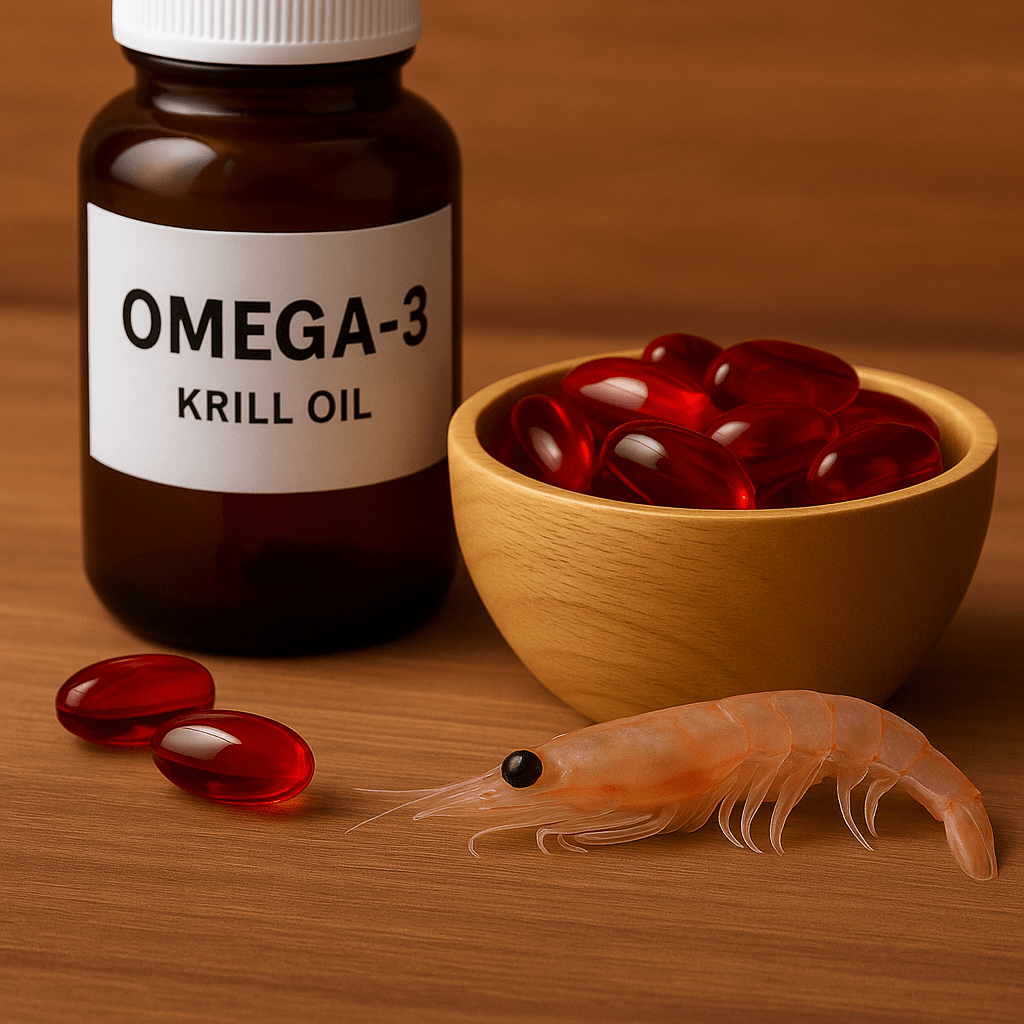
Case Study: Aker BioMarine’s Strategic Expansion in Asia Pacific — Building Global Leadership in Sustainable Omega-3 Nutraceutical Ingredients
Company Overview:
Aker BioMarine, headquartered in Norway, is a biotechnology company specializing in krill-derived omega-3 ingredients used in dietary supplements and functional foods.
Sustainability-Driven Competitive Edge:
The company has established a global benchmark for sustainable sourcing, leveraging vertically integrated operations that include harvesting, processing, and ingredient formulation under strict environmental guidelines.
Patented Eco-Harvesting Technology:
Through its Eco-Harvesting technology, Aker BioMarine minimizes bycatch and environmental disruption while maintaining marine biodiversity, aligning with global trends favoring eco-conscious nutraceuticals.
Full Value Chain Control:
Aker BioMarine maintains end-to-end traceability — from Antarctic krill harvesting to final product delivery — ensuring transparency, safety, and quality assurance for B2B nutraceutical clients.
Digital Traceability and Transparency:
The company employs blockchain-enabled tracking systems to authenticate ingredient origin, boosting consumer trust and regulatory compliance.
Strategic Expansion in Asia Pacific:
Product Portfolio and Market Positioning:
Financial Impact:
Strategic Outcome:
Aker BioMarine successfully turned environmental stewardship into a core business growth driver, capturing a leading share in the omega-3 segment while reinforcing its reputation for innovation and sustainability.
Key Takeaway:
The company’s integrated model — combining sustainability, transparency, innovation, and localization — demonstrates how nutraceutical firms can achieve scalable, ethical, and profitable expansion in emerging markets.
Immediate Delivery Available | Buy This Premium Research Report@ https://www.precedenceresearch.com/checkout/1162
Nutraceutical Ingredients Market Regional Outlook
What is the Asia Pacific Nutraceutical Ingredients Market Size?
The Asia Pacific nutraceutical ingredients market size is valued at USD 39.25 billion in 2025 and is predicted to rise from USD 42.38 billion in 2026 to USD 79.28 billion by 2034, growing at a solid CAGR of 8.11% from 2025 to 2034.
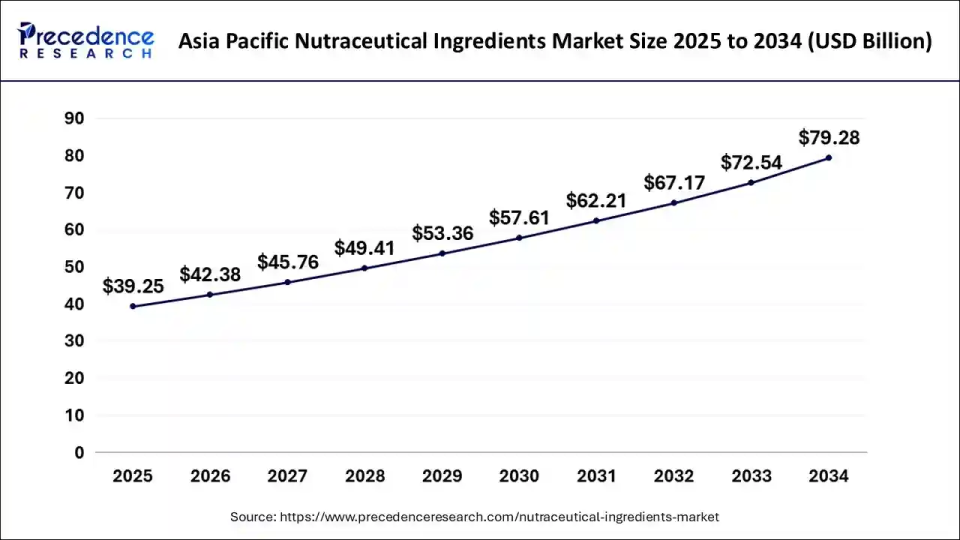
Why is Asia Pacific Dominating the Nutraceutical Ingredients Market?
Asia Pacific dominated the global market with a 41% share in 2024. The growing awareness about the health benefits of functional foods and the increasing consumption of dietary supplements increase demand for nutraceutical ingredients. The focus on preventive healthcare and growth in e-commerce increases demand for nutraceutical ingredients. The changing lifestyle and growing utilization of herbal medicine increase the adoption of nutraceutical ingredients, supporting the overall growth of the market.
China dominates the regional market due to its large and growing consumer base, driven by rising health awareness and a booming middle class. Government support for traditional medicine and health supplements further fuels market expansion, while China’s strong, cost-effective manufacturing infrastructure enables it to be a leading producer and exporter of nutraceutical ingredients. Additionally, rapid urbanization and changing lifestyles increase demand for convenient, health-enhancing products, solidifying China’s position as the regional market leader.
Note: This report is readily available for immediate delivery. We can review it with you in a meeting to ensure data reliability and quality for decision-making.
Try Before You Buy – Get the Sample Report@ https://www.precedenceresearch.com/sample/1162
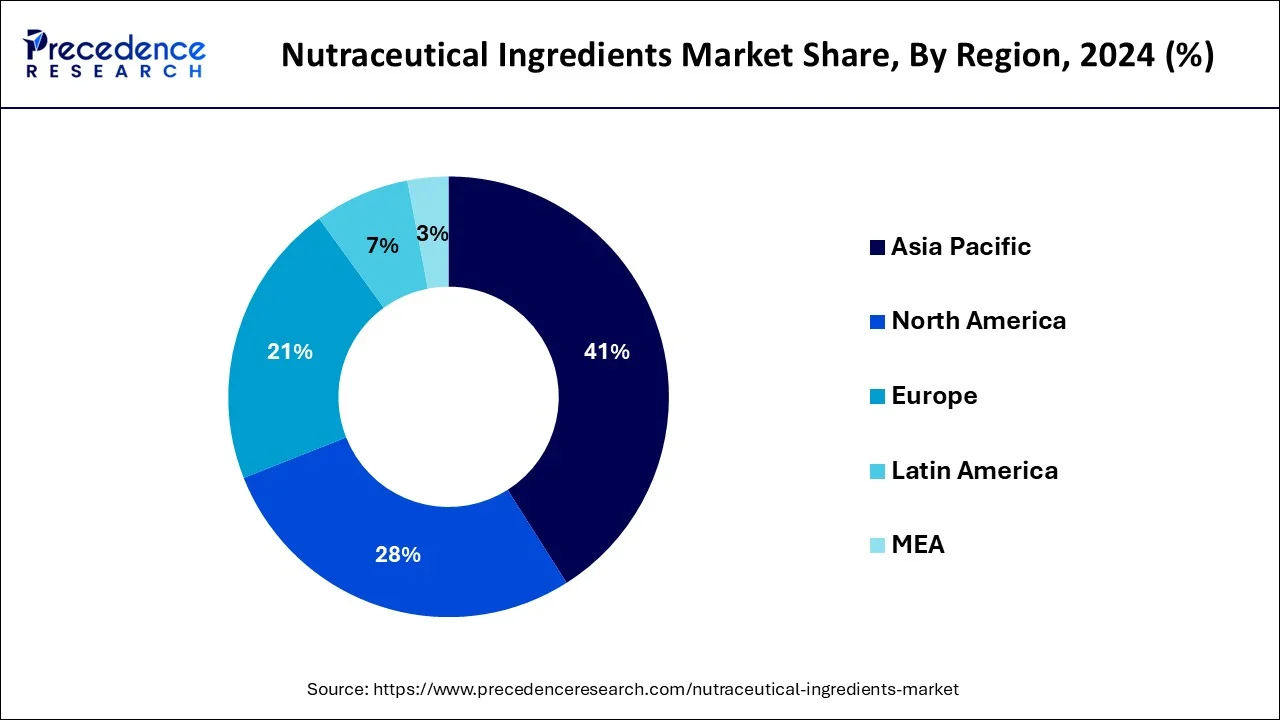
How North America is Experiencing the Fastest Growth in the Nutraceutical Ingredients Market?
North America is experiencing the fastest growth in the market during the forecast period. The increasing consciousness about health and focus on preventing illness increases demand for nutraceutical ingredients. The growing age-related conditions and increasing prevalence of chronic diseases increase the adoption of nutraceutical ingredients.
The high preference for plant-based products and increasing consumption of beverages & functional foods increase demand for nutraceutical ingredients, supporting the overall market growth.
Country-Level Investments and Funding for Nutraceutical Ingredients:
✚ Related Topics You May Find Useful:
➡️ Nutraceutical Excipients Market: Explore how formulation advancements and clean-label demands are shaping the next generation of nutraceutical excipients.
➡️ Herbal Nutraceuticals Market: Learn how ancient herbal remedies are being reimagined through modern nutraceutical innovation and science-backed formulations.
➡️ Vitamin Ingredients Market: Understand how personalized nutrition and fortified foods are driving global vitamin ingredient demand.
➡️ Bioactive Ingredients Market: Discover how functional bioactives are powering preventive health solutions across food, cosmetics, and supplements.
➡️ Europe Nutraceuticals Market: Examine Europe’s evolving regulatory landscape and growing consumer adoption of functional nutrition products.
➡️ Active Pharmaceutical Ingredient Market: See how innovation in synthesis and biologics is transforming global API manufacturing and supply.
➡️ Fermented Ingredients Market: Analyze how fermentation technology is driving clean-label production and gut health applications worldwide.
➡️ Prebiotic Ingredients Market: Explore how prebiotic innovation supports microbiome health and synergizes with probiotic formulations.
➡️ Nutraceutical Contract Manufacturing Services Market: Learn how outsourcing and turnkey manufacturing models are accelerating time-to-market for supplement brands.
➡️ Functional Food Ingredients Market: Track how rising health awareness and food fortification trends are reshaping the global functional ingredients sector.
Nutraceutical Ingredients Market Segmentation Insights:
Type Insights
Why the Proteins & Amino Acids Segment is Dominating the Nutraceutical Ingredients Market?
The proteins & amino acids segment dominated the market in 2024. The increasing consumption of protein-based dietary supplements and the focus on strengthening the immune system increase demand for proteins & amino acids. The rise in consumption of functional foods and the trend of a plant-based diet increase demand for proteins & amino acids. The growing demand for fortified foods, sports nutrition products, and infant formulas increases the adoption of proteins & amino acids, driving the overall market growth.
Application Insights
Which Application Held the Largest Share in the Nutraceutical Ingredients Market?
The food segment held the largest revenue share in the market in 2024. The growing consumer awareness about nutrition and the rise of functional foods increase demand for nutraceutical ingredients. The increasing consumption of beverages and the rise in the consumption of ready-to-eat food increase the adoption of nutraceutical ingredients. The strong focus on preventive healthcare and increasing consumption of plant-based diets drives the overall market growth.
Health Benefits Insights
Why the Nutrition Segment Dominates the Nutraceutical Ingredients Market?
The nutrition segment dominated the market in 2024. The growing awareness about healthy diets and increasing consumption of supplements increases demand for nutrition. The high prevalence of chronic disorders and the increasing popularity of personalised nutrition help the market growth. The growing demand for fortified foods and strong government support for wellness & health drive the overall growth of the market.
Form Insights
How does the Dry Form Segment hold the Largest Share in the Nutraceutical Ingredients Market?
The dry form segment held the largest revenue share in the market in 2024. The growing production of botanical extracts, vitamins, & minerals, and the focus on extending the shelf life of products, increases demand for dry form. The cost-effectiveness and ease of incorporation in diverse formulations increase the adoption of dry forms. The cost-effectiveness and availability of various product formats like powders, capsules, and tablets increase demand for dry forms, supporting the overall market growth.
You can place an order or ask any questions, please feel free to contact at sales@precedenceresearch.com | +1 804 441 9344
Top Companies in the Nutraceutical Ingredients Market
Recent Developments
Segments Covered in the Report
By Type
By Application
By Health Benefits
By Form
By Region
Thank you for reading. You can also get individual chapter-wise sections or region-wise report versions, such as North America, Europe, or Asia Pacific.
Immediate Delivery Available | Buy This Premium Research Report@ https://www.precedenceresearch.com/checkout/1162
Stay Ahead with Precedence Research Subscriptions
Unlock exclusive access to powerful market intelligence, real-time data, and forward-looking insights, tailored to your business. From trend tracking to competitive analysis, our subscription plans keep you informed, agile, and ahead of the curve.
Browse Our Subscription Plans@ https://www.precedenceresearch.com/get-a-subscription
About Us
Precedence Research is a worldwide market research and consulting organization. We give an unmatched nature of offering to our customers present all around the globe across industry verticals. Precedence Research has expertise in giving deep-dive market insight along with market intelligence to our customers spread crosswise over various undertakings. We are obliged to serve our different client base present over the enterprises of medicinal services, healthcare, innovation, next-gen technologies, semi-conductors, chemicals, automotive, and aerospace & defense, among different ventures present globally.
Web: https://www.precedenceresearch.com
Our Trusted Data Partners:
Towards Healthcare | Towards Packaging | Towards Automotive | Towards Chem and Materials | Towards FnB | Towards Consumer Goods | Statifacts | Towards EV Solutions | Towards Dental | Nova One Advisor | Market Stats Insight | Nutraceuticals Func Foods | Onco Quant | Sustainability Quant | Specialty Chemicals Analytics
Get Recent News:
https://www.precedenceresearch.com/news
For the Latest Update Follow Us:
LinkedIn | Medium | Facebook | Twitter

It’s a beautiful green in colour, with a soft foam on top and an earthy flavour that has millions across the world hooked to its hit. Ever since it went viral, Matcha has become the go-to morning drink for people wanting a calm energy without the caffeine jitters.While its sweet and savoury taste might soothe your soul and enhance focus, it seems one might need to whisk up on the effects of the Japanese beverage. Numerous videos going viral on the internet claim that drinking matcha increases hair loss. Is it true? If yes, how?
For years, American minds and bodies were powered by a steaming cup of joe. But then came matcha, its greener alternative in every sense. From a fancy recipe to better health effects, people quickly stocked up on the Japanese powdered green tea.According to Matcha.com, matcha finds its origin in China. It was introduced to Japan in the 1100s by a Zen Buddhist monk who brought the tea seeds along, after returning from studying in the country. A combination of two Japanese words, ‘Matsu’ meaning to rub or daub and ‘Cha’ meaning tea, the drink soon gained fame in the country.Made by whisking the tea powder with hot water, the beverage made the journey across global borders with the help of social media, in the recent years. People were elated to be enlightened about a caffeine-containing beverage that could replace coffee and its side effects.All was good with matcha until it wasn’t. Recently, there have been numerous reels on how it accelerates hair loss, alarming users, often women. Can drinking matcha really have you losing more hair?Mostly, people have found that matcha increases hair loss when they increase its intake. While it might be contributing to it, the tea doesn’t have a direct connection to the hair loss.“If you find that you’re losing hair after increasing your intake of matcha, it might not be the tea itself, but the tannins in the tea,” said Stephanie Schiff, a registered dietitian nutritionist at Northwell Huntington Hospital, to The Post.Tannins are plant-based compounds packed with antioxidants. Copious amounts of them can bind to the iron inside the body, and hamper its absorption. Thus, reducing the amount of an essential nutrient in the body, one that it can’t create itself and must receive from external food and supplements. According to a 2017 study published in Current Developments of Nutrition, tannins were found to impair the bioavailability of iron in the body. As a result, the iron deficiency can then lead to hair loss. But, it’s not just tannins, caffeine can still be the culprit. 1 to 2g of matcha contains up to 80mg of the stimulant. When you drink the tea in regular intervals throughout the day, the caffeine intake is increased. This raises stress hormones and can trigger temporary shedding, said Amy Shapiro, a registered dietitian and nutritionist, to the website.A 2025 Nutrients study found excessive amounts of caffeine to increase the secretion of stress hormone cortisol. According to a 2021 mouse study published in Nature, chronic stress can cause hair follicle stems to stay in an extended resting phase thus stopping hair regeneration and increasing hair loss. Since there is no specific amount of matcha that increases hair fall, Shapiro suggested limiting the servings of the drink to one to two per day.She noted that those most at risk are people who are already tackling iron deficiency, heavy menstrual losses, certain gastrointestinal conditions or vegans with less iron intake.Additionally, it is better to avoid high-dose green tea extracts or supplements as they have a higher risk of side effects than the tea alone.While matcha can still be the drink you reach out to every day, all you need to do is reduce the number of times you do so, if hair loss is a concern.Note: The information provided in this article is for educational purposes only and is not intended as medical advice. Always consult with a qualified healthcare professional before starting any new medication or treatment and before changing your diet or supplement regimen.
A recall has been issued for Member’s Mark Super Greens dietary supplement powder after 11 people in seven states got sick from salmonella. Three were hospitalized, and the product was sold nationwide at Sam’s Club stores and online.
Investigators linked the illnesses to moringa leaf powder used in the product. Officials report that contamination likely traces to a single lot that moved through several distributors.
This investigation is being led by the U.S. Food and Drug Administration (FDA), the federal agency that oversees food safety. Its team focuses on tracing foodborne hazards and coordinating recalls during outbreaks.
FDA’s investigation points to a single lot of organic moringa leaf powder and, as a result, all versions of Member’s Mark Super Greens were recalled, the agency said in its advisory.
Cases span Florida, Kansas, Michigan, New York, North Carolina, South Carolina, and Virginia, with illnesses reported between May and September 2025.
State laboratories in Virginia and Michigan found Salmonella in leftover powders collected from patients’ homes, and the bacteria matched the outbreak strain. Those results support the FDA traceback to a supplier in Jodhpur, India.
Moringa is a botanical, a plant used for food or supplements, that is often sold as a dried leaf powder. In many blends, that powder is consumed without cooking.
The implicated lot was identified as VFD/ORG/MORP/L/24 with a best by date in November 2027. FDA notes the product was distributed in stores and online across the United States.
Salmonella can persist in low-moisture foods, foods with little available water, far longer than many people realize, according to a scientific review.
Survival under dry conditions can also increase heat tolerance, which complicates control during processing.
Powders that are not cooked before use pose a particular risk. If harmful bacteria are present, they can ride along in a smoothie, shake, or drink.
Spice and herb ingredients have a documented recall history with Salmonella, as the FDA’s risk shows. Blends may combine inputs from many sources, which can spread a contaminated lot across wide markets.
This is not the first time a powdered nutrition product has been tied to illness in the United States. A published outbreak investigation linked Salmonella Virchow infections to a raw powdered meal replacement, reinforcing the hazard.
“Do not eat any Member’s Mark Super Greens powdered supplements containing moringa leaf powder,” CDC said in a public alert. Throw them away or return them to the store.
If the powder touched counters, scoops, blenders, or storage containers, wash them with hot, soapy water or run them through a dishwasher. If you have symptoms such as diarrhea, fever, or stomach cramps, contact a clinician for guidance.
Illness usually develops within 12 to 72 hours and often lasts 4 to 7 days. Children, older adults, and immunocompromised, people whose immune system is lowered by illness or treatment, are more likely to need medical care.
CDC notes it may add other products containing moringa leaf powder from this importer as the investigation proceeds. Check agency pages for updates and follow local health department advice.
Outbreak teams use traceback, step by step review of supply chain records, to follow ingredients from retail shelves to importers.
In this event, records from multiple points of sale converged on a single importer, which narrowed the search.
Officials then used whole genome sequencing, a method that reads all DNA in a sample, to compare bacteria from people and leftover powder. The genetic matches supported a common source and strengthened the case for recall.
The FDA reports the last known illness onset was September 4, 2025, which helps bracket exposure. Timing guides interviews and sampling while the recall proceeds.
The agency also noted that Sam’s Club has stopped distribution and contacted customers about the recall. If investigators find other products that used the implicated lot, the FDA and CDC will add them to public notices.
The FDA has also posted a separate warning about imported aluminum and brass cookware that can leach lead into food.
They explain that lead is toxic to humans and can affect people of any age or health status, and there is no known safe level of exposure to lead.
The agency added six additional products to its list on October 15, 2025, and testing continues. People who own listed items should throw them away rather than donate them.
Children and pregnant people face greater risk from lead exposure because their bodies absorb more per pound. If you are concerned about exposure, ask a clinician about a simple blood test.
Food safety is about ingredients and tools, so it pays to watch both the supplements you use and the cookware you cook with. Updates will post to FDA and CDC pages as the investigation moves forward.
—–
Like what you read? Subscribe to our newsletter for engaging articles, exclusive content, and the latest updates.
Check us out on EarthSnap, a free app brought to you by Eric Ralls and Earth.com.
—–
If you think it’s hard work selling coal to Newcastle or ice to an Inuit, how about selling matcha to Japan?
That’s what China is hoping to achieve, as the biggest tea producer spots an opportunity in the worldwide craze for putting Japan’s richly-flavored green tea powder into everything from lattes and cookies to cheesecake and KitKats.
Sofya VolyanovaBBC News Russian
 Maria
MariaMolecule, a pill promising rapid weight loss, went viral on Russian TikTok earlier this year.
Young people’s feeds started filling up with captions like “Take Molecule and forget food exists”, and “Do you want to sit in the back of the class in oversized clothes?”
Clips showed fridges lined with blue boxes featuring holograms and “Molecule Plus” labels.
The orders began piling in, as teenagers shared their “weight-loss journeys” on social media.
But there was a catch.
Maria, 22, had purchased the pill from a popular online retailer. She took two pills per day and, after two weeks, says her mouth dried up and she completely lost her appetite.
“I had absolutely no desire to eat, let alone drink. I was nervous. I was constantly biting my lips and chewing my cheeks.”
Maria developed severe anxiety and began having negative thoughts. “These pills were having a profound effect on my psyche,” she says.
Maria, who lives in St Petersburg, says she wasn’t prepared for such severe side effects.
Other TikTok users mentioned dilated pupils, tremors and insomnia. And at least three schoolchildren are reported to have ended up in hospital.
 TikTok
In April, a schoolgirl in Chita, Siberia, needed hospital care after overdosing on Molecule. According to local reports, she was trying to lose weight quickly, in time for the summer.
The mother of another schoolgirl told local media her daughter was admitted to intensive care after taking several pills at once.
And in May, a 13-year-old boy from St Petersburg needed hospital care after experiencing hallucinations and panic attacks. He had reportedly asked a friend to buy him the pill because he was being teased at school about his weight.
The packaging for Molecule pills often lists “natural ingredients” such as dandelion root and fennel seed extract.
But earlier this year, journalists at the Russian newspaper Izvestiya submitted pills they had purchased online for testing and found they contained a substance called sibutramine.
 TikTok
First used as an antidepressant in the 1980s and later as an appetite suppressant, studies later found sibutramine increased the risk of heart attacks and strokes – while only slightly promoting weight loss.
It was banned in the US in 2010, and is also illegal in the UK, EU, China and other countries.
In Russia, it is still used to treat obesity, but available only to adults and by prescription.
Purchasing and selling sibutramine without a prescription is a criminal offence. But that hasn’t stopped individuals and small businesses from selling it online – often in higher doses than legal medication – and without requiring prescriptions.
The unlicensed pills cost about £6-7 ($8-9) for a 20-day supply – much cheaper than recognised weight-loss injections like Ozempic, which on the Russian market sell for £40-160 ($50-210) per monthly pen.
“Self-administration of this drug is very unsafe,” says endocrinologist Ksenia Solovieva from St Petersburg, warning of potential overdose risks, “because we do not know how much of the active ingredient such ‘dietary supplements’ may contain”.
 TikTok
Russians regularly receive prison sentences for purchasing and reselling Molecule pills. But it’s proving difficult for authorities to get a grip on the drug being sold illegally.
In April, the government-backed Safe Internet League reported the growing trend involving young people to the authorities – prompting several major online marketplaces to remove Molecule from sale. But it soon began appearing online under a new name, Atom, in near-identical packaging.
A law was recently passed allowing authorities to block websites selling “unregistered dietary supplements” without a court order – but sellers have been getting around this by categorising them as “sports nutrition” instead.
On TikTok, you can find retailers selling Molecule under listings that look like they are for muesli, biscuits and even lightbulbs. And some retailers aren’t even trying to hide it any more.
A few weeks ago, the BBC found Molecule listings on a popular Russian online marketplace. When approached for comment, the site said it had promptly removed any products containing sibutramine. But it admitted it was difficult to find and remove listings that didn’t explicitly mention sibutramine.
If you do manage to get your hands on Molecule, it’s hard to know exactly what you’re getting – and it’s unclear where the pills are being manufactured.
The BBC found some sellers with production certificates from factories in Guangzhou and Henan, in China. Others claim to be sourcing the pills from Germany.
Some packets state they were produced in Remagen in Germany – but the BBC has discovered there is no such company listed at the address given.
Certain Kazakh vendors selling Molecule to Russians told the BBC they bought stock from friends or warehouses in the capital Astana but couldn’t name the original supplier.
Meanwhile, online eating-disorder communities have become spaces where Molecule is promoted, with users relying on hashtags and coded terms to slip past moderation.
Ms Solovieva says Molecule is particularly harmful when taken by young people who already have eating disorders. For those in or near relapse, an easily available appetite suppressant can be seriously dangerous, she says.
Anna Enina, a Russian influencer with millions of followers who herself has admitted using unlicensed weight-loss pills in the past, publicly warned her subscribers: “As someone who has struggled with an eating disorder… the consequences will be dire. You’ll regret it tenfold.”

Twenty-two-year old Maria suffered bad side effects, and is one of those who regrets it. After taking too many Molecule pills, she was sent to hospital.
Now she discourages other young women and girls from taking the pills in weight-loss forums. She even reached out to one teenage user’s parents to alert them.
But Molecule remains popular online.
And every video that appears on Maria’s TikTok feed is a reminder of the pills that made her sick.
You’ve probably heard that fish is one of the healthiest foods you can eat, especially for your heart and brain.
This is because fish is packed with vitamins, minerals, and heart-healthy omega-3 fatty acids, which promote heart and brain health by reducing inflammation, supporting muscle and nerve function, and lowering heart disease risk factors like high blood pressure.
But some types of fish deliver higher doses of brain and heart-supportive nutrients, like omega-3s, and are lower in contaminants that can harm health, like mercury.
Salmon is often recommended by healthcare providers, like registered dietitians, and for good reason. “Wild Alaskan Salmon is at the top of my list, including varieties such as Sockeye and Coho,” Jacqueline Gomes, RD, told Health.
Wild Alaskan salmon is rich in the omega-3 fatty acids docosahexaenoic acid (DHA) and eicosapentaenoic acid (EPA), which support heart health by lowering triglycerides, improving cholesterol levels, and reducing inflammation.
“These healthy fats also promote circulation and protect against oxidative stress, enhancing overall cardiovascular wellness,” said Gomes.
In addition to omega-3s, salmon is an excellent source of protein and vitamins and minerals such as potassium, B12, and selenium. It’s also packed with the carotenoid antioxidant astaxanthin, which supports brain health and may help protect against age-related conditions, such as cognitive decline.
Though they’re tiny, sardines pack an impressive amount of heart- and brain-healthy nutrients.
”They’re small, low on the food chain, and exceptionally rich in EPA and DHA, vitamin D, B12, calcium, and selenium,” Amanda Kahn, Board-Certified Internist and Longevity Specialist, told Health. Because they’re so low on the food chain, Khan explained that sardines accumulate very little mercury.
Sardines are so high in EPA and DHA that studies suggest that eating sardines regularly could reduce the need for pricey omega-3 supplements.
In addition to omega-3s, sardines contain other heart-protective nutrients, such as calcium, which is required for the normal functioning of the heart and for blood pressure regulation.
Rainbow trout is a freshwater fish that’s rich in essential nutrients like omega-3s, vitamin D, and protein. “Rainbow trout is a mild-tasting, low-mercury, responsibly raised option,” said Khan.
In addition to being rich in omega-3s, rainbow trout is also a good source of vitamin D, both of which play key roles in supporting brain cell function, memory, and mood regulation, making trout a solid choice for brain health.
In fact, some research shows high vitamin D intake is associated with improved cognitive function and reduced depressive symptoms in older adults, while low vitamin intake is associated with an increased risk for dementia.
Farmed rainbow trout raised in the U.S. are considered a “Best Choice” for sustainability by the MSW, and have low mercury levels, making them a good choice for the environment and your health.
Herring are small, oily fish that are similar to sardines. Herring are packed with nutrients that support the function and health of the heart and brain, such as omega-3s, vitamin D, and B12.
“It’s rich in omega-3 fats that help lower blood pressure, reduce inflammation, and support a steady heartbeat,” Cheryl Mussatto MS, RD, LD, told Health.
A 3-ounce serving of herring has 11.1 micrograms of vitamin B12, which covers over 400% of your daily needs. B12 is essential for nerve function and the production of neurotransmitters, including serotonin and dopamine, which impact mood regulation.
“Herring is low in mercury, so it’s a smart, safe choice to enjoy regularly,” explained Mussatto. MSW recommends buying Pacific herring caught in Canada or lake herring (also known as cisco) caught in Lake Superior, as these are the most sustainable options.
Anchovies can boost your intake of omega-3s and other nutrients that can lower your risk of heart and brain-related conditions.
They contain an impressive amount of calcium, which is important for heart health. A 3-ounce serving of anchovies covers 15% of your calcium needs. They are also high in iron, which is needed for oxygen transport, energy production, and producing neurotransmitters, making them crucial for a healthy brain.
“Anchovies are concentrated with nutrients and flavor with minimal concerns for contamination or mercury, and are excellent for frequent use in salads or sauces,” Elizabeth Rubin Ribak, M.D. clinical advisor at Embers Recovery in Phoenix, AZ, told Health.
For the most sustainable options, MSW recommends buying anchovies caught in Chile, Morocco, or Peru.
Arctic char is a freshwater fish that’s considered highly sustainable by MSW. It contains levels of omega-3s similar to those in salmon and trout, but is a better choice for the environment.
In fact, MSW recommends arctic char as a sustainable alternative to salmon. Most of the arctic char sold in the U.S. comes from farms in Iceland, which have minimal environmental impact.
“Arctic char offers a salmon-like nutrient profile with sustainable aquaculture practices,” explained Kahn.
Arctic char also has a milder flavor than salmon, making it a great option for those who prefer a less “fishy” taste.
While seafood is a healthy option for your brain and heart, it’s important to choose the safest types.
Some fish species are high in mercury, a heavy metal that’s readily absorbed by the body. Mercury is toxic, and regularly eating foods high in mercury, like some kinds of fish, can lead to high mercury levels, which is linked to health issues like high blood pressure and heart attack.
“All fish contain at least trace amounts of mercury, but the highest levels occur in large, predatory species like shark, swordfish, king mackerel, and bigeye tuna,” said Kahn.
According to the FDA, fish highest in mercury are:
Kahn explained that for low-mercury species, the benefits of omega-3s far outweigh the risks of mercury exposure, especially for adults without specific health restrictions.
“To minimize exposure, it’s best to favor small, oily fish, rotate species, and look for sustainably sourced options with certifications from organizations like Marine Stewardship Council (MSC) or Seafood Watch,” she said.
When it comes to supporting heart and brain health, adding seafood to your diet is a smart move.
Fatty fish such as salmon, sardines, trout, and herring are among the healthiest choices thanks to their rich omega-3 content, low mercury levels, and high levels of other essential vitamins and minerals.
Aim to include at least two servings of these nutrient-dense fish each week to help keep your heart and mind healthy.
It’s a follicle fiasco.
Women are flooding social media with warnings about one of today’s trendiest drinks, sharing horror stories of sudden hair loss they say began after they started drinking it regularly.
Could the viral “Gen Z green juice,” praised for its health benefits, really be sabotaging your strands? The Post asked two registered dietitians to get to the root of it.
It’s a vibrant green tea made from specially grown leaves that are finely ground into a powder and whisked with hot water.
The result is a frothy, bright beverage that has long been a staple in Japan and in recent years has exploded in popularity across the Western world, with demand so high it’s sparked a global shortage.
The drink has become especially fashionable among wellness influencers, who tout it as a healthier, Instagram-worthy alternative to coffee.
“If you find that you’re losing hair after increasing your intake of matcha, it might not be the tea itself, but the tannins in the tea,” Stephanie Schiff, a registered dietitian nutritionist at Northwell Huntington Hospital, told The Post.
Tannins are plant-based compounds that boast antioxidant properties.
They can bind to iron, making it harder for your body to absorb the essential nutrient — one it can’t produce on its own and must get from food or supplements.
“This can lead to an iron deficiency, and that can lead to hair loss,” Schiff said.
Caffeine could also be a culprit.
Matcha contains more of the stimulant than most green teas, with a typical serving of 1 to 2 grams packing up to 80 milligrams.
“Very large caffeine intakes can raise stress hormones, which, in some people, can trigger temporary shedding,” Amy Shapiro, a registered dietitian and nutritionist, told The Post.
“There is no specific or proven level that increases risk; however, one to two servings per day is unlikely to cause hair loss for the average person,” said Shapiro, the founder and director of Real Nutrition.
She noted that those most at risk are people who already have low iron or anemia, including those with heavy menstrual losses, certain gastrointestinal conditions or strict vegans with low iron intake.
People who consume very large amounts of matcha daily — or take concentrated green-tea extract supplements — are also more likely to experience hair loss, Shapiro added.
“If someone is concerned about hair loss, check your iron labs rather than guessing,” she advised.
“If you think your iron levels may be low, don’t drink matcha before, shortly after or while eating plant sources that contain high iron levels, such as spinach, white beans or tofu,” Schiff said. “If you’re getting iron from animal sources, you should be fine.”
Shapiro recommends pairing plant-based iron foods with vitamin C–rich options, like citrus, bell peppers, strawberries and brussels sprouts.
“Vitamin C markedly improves non-heme iron absorption and can offset tannin effects,” she said.
Unless prescribed, Shapiro added, people should avoid high-dose green-tea extracts or supplements, which carry a higher risk of side effects than the tea alone.
“If someone experiences hair shedding, I recommend screening for other common causes,” such as thyroid problems, stress or medications, Shapiro said. “Matcha is only one possible contributor.”
“Some people find that matcha upsets their stomach and causes nausea or indigestion. This is likely due to the tannins,” Schiff said.
When consumed in excess, Shapiro said, the caffeine in matcha may also cause insomnia, jitteriness, heart palpitations, anxiety or higher blood pressure in sensitive people.
She also reported that in rare cases, heavy green-tea drinking may lead to liver enzyme elevations and liver injury, which is typically caused by high concentrations of the antioxidant EGCG.
The risk is greatest with concentrated green-tea extract supplements, especially when taken on an empty stomach, Shapiro said. Symptoms include jaundice, nausea and abdominal pain, but the damage is usually reversible.
“Matcha is one of the more nutrient-dense ways to consume green tea because you ingest the whole leaf,” Shapiro said.
The drink contains L-theanine, an amino acid that promotes relaxation without causing drowsiness. When combined with matcha’s caffeine, she said, it can improve mental alertness without the jittery crash that might come from other sources, like coffee.
Schiff noted that EGCG helps neutralize free radicals — or unstable molecules that can damage cells and fuel inflammation. This, she said, can lower the risk of certain chronic conditions, such as heart disease.
“Green tea is high in EGCG,” Schiff said. “Matcha, a more concentrated version of green tea, can give us three or more times the amount that green tea has.”
Drinking matcha has also been linked to higher insulin sensitivity, which can help lower blood sugar levels.
“That’s good news for people with pre-diabetes or diabetes,” Shapiro said.
“Some studies even show that drinking matcha can cause weight loss by decreasing your appetite and increasing your metabolism,” she added.





:max_bytes(150000):strip_icc()/GettyImages-1644727881-73ef3c9679a6447faafc74eb0ff22f1e.jpg "6 Healthiest Fish to Eat for Your Heart and Brain Health")
