The main category of Dietary Supplements News Articles.
You can use the search box below to find what you need.
[wd_asp id=1]
The main category of Dietary Supplements News Articles.
You can use the search box below to find what you need.
[wd_asp id=1]
Published: 6-Nov-2025
Watch how Lonza CHI helps nutraceutical brands turn ideas into impactful products. From concept to commercialization, our Innovation Services, advanced technologies, and market expertise enable the creation of effective, differentiated, and consumer-friendly supplements. Gain insights, see real-world examples, and discover how Lonza CHI accelerates product development and drives success in a competitive market
Juni continues its rapid retail growth, doubling doors year over year to 6,000 stores nationwide
LOS ANGELES, Nov. 6, 2025 /PRNewswire/ — Juni, the fast-growing adaptogenic tea brand co-founded by Jay Shetty, Radhi Devlukia, and Kim Perell, is thrilled to announce its national retail expansion into Whole Foods Market stores. This expansion comes amid a period of rapid growth, with Juni now available in 6,000 retail doors across the US and projecting 300% revenue growth.
Co-founders Jay Shetty and Radhi Devlukia celebrating the launch of their sparkling adaptogenic tea, Juni, at Whole Foods Market in Los Angeles, California.
Juni is powered by its proprietary Super-5™ Blend, featuring adaptogens and superfoods, including ashwagandha, lion’s mane, reishi mushroom, acerola cherry, and green tea extract. This powerful mix pairs functional benefits with bold flavor, all with zero sugar and only 5 calories.
As a brand rooted in modern wellness, mindfulness, and functional ingredients, Juni’s arrival at Whole Foods Market marks a major milestone in its mission to reinvent the tea category.
“It’s incredible how many benefits we’ve been able to pack into each can,” said Juni Co-Founder Jay Shetty. “We infused Juni with ingredients like ashwagandha, lion’s mane, and reishi mushroom, all focused on supporting a healthier and happier mind and body. Whole Foods has long championed products that support well-being, and we’re excited to make Juni available to more people so they can enjoy its delicious flavors and the benefits that come with them.”
Shoppers can now discover five of Juni’s most popular sparkling teas in select Whole Foods Market stores nationwide. The lineup features fan favorites Peach, Raspberry, and Tropical from Juni’s core collection, along with two refreshing decaf options, Strawberry Hibiscus and Cherry Lime, crafted for caffeine-free enjoyment any time of day.
“Whole Foods Market has been instrumental in shaping the health-conscious movement,” said Kim Perell, Juni’s CEO and co-founder. “We’re proud to join forces and continue our mission to redefine what tea can be. Our goal is to disrupt an outdated category and set a bold new standard that blends function, flavor, and wellness into every sip.”
The addition of Juni’s decaf SKUs has also helped the brand resonate with a broader audience, particularly those reducing caffeine or alcohol intake. Designed for all-day enjoyment, these flavors have quickly become fan favorites among sober-curious and wellness-forward consumers.
Think of Juni as the perfect afternoon pick-me-up that gives you clean, healthy energy without the crash,” said Radhi Devlukia, Co-Founder of JUNI. “It’s what I grab every day instead of a soda, because it’s sugar-free and makes me feel good from the inside out.”
As part of the brand’s continued innovation, Juni recently launched its limited-edition Lemonade Iced Tea available online at drinkjuni.com. This lemonade is a sparkling twist on the classic Arnold Palmer, further proof of the team’s commitment to blending nostalgia, flavor, and function in every sip.
Juni’s expansion into Whole Foods Market reinforces its vision to bring everyday wellness into more homes, one can at a time.
About Juni
Juni is a sparkling adaptogenic tea brand founded by wellness entrepreneur and author Jay Shetty, integrative nutritionist and content creator Radhi Devlukia, and serial entrepreneur Kim Perell. Created to bring joy, clarity, and calm to everyday life, Juni’s mission is to reinvent the tea category with bold flavors, clinically studied adaptogens, and clean, functional formulas.
From bright classics like Peach, Lemon Zest, Raspberry, and Tropical to craveable decaf blends like Yuzu Pineapple, Cherry Lime, and Strawberry Hibiscus, and now the sparkling NEW Lemonade Iced Tea, Juni’s evolving lineup proves that wellness and indulgence can absolutely coexist.
Find Juni at Whole Foods Market, Costco, Target, Sprouts, Erewhon, DrinkJuni.com
Press Contact:
Hannah Minardi
[email protected]
SOURCE Juni
Kourtney Kardashian Barker’s vitamin and supplement brand Lemme has unveiled its latest innovations in gut health and beauty, formulated with “advanced colostrum”: Lemme Colostrum Gummies and Lemme Colostrum Liposomal Liquid.
Bovine colostrum, which the brand refers to as “nature’s first superfood,” is the nutrient-dense fluid produced by cows immediately after giving birth. It is rich in nutrients and bioactive compounds that help strengthen the gut barrier, support immune health, and promote overall vitality.
The two-part assortment claims to boost gut health, beauty, and full-body wellness “from the inside out,” touting the enhanced absorption of its featured liposomal liquid.
“Lemme is integrating Maolac’s colostrum, which is carefully designed to replicate key proteins from human milk, setting a new benchmark in nutritional science,” says Dr. Ilan Youngster, head of the Pediatric Infectious Diseases Unit and The Center for Translational Microbiome Research at Shamir Medical Center.
Kardashian Barker comments: “Colostrum has been a part of my routine for years, and I’ve seen how much it helps with gut health, beauty, and overall wellness. Creating both a gummy and a delicious liposomal makes it easy for anyone to experience its benefits in a way that fits their lifestyle.”
Lemme Colostrum Gummies are formulated with a clinically-studied colostrum isolate. It also features Maolac to support gut health, digestion, and debloating, alongside prebiotics for additional gut benefits. It includes vitamin D3 to promote immune function, bone, and muscle health.
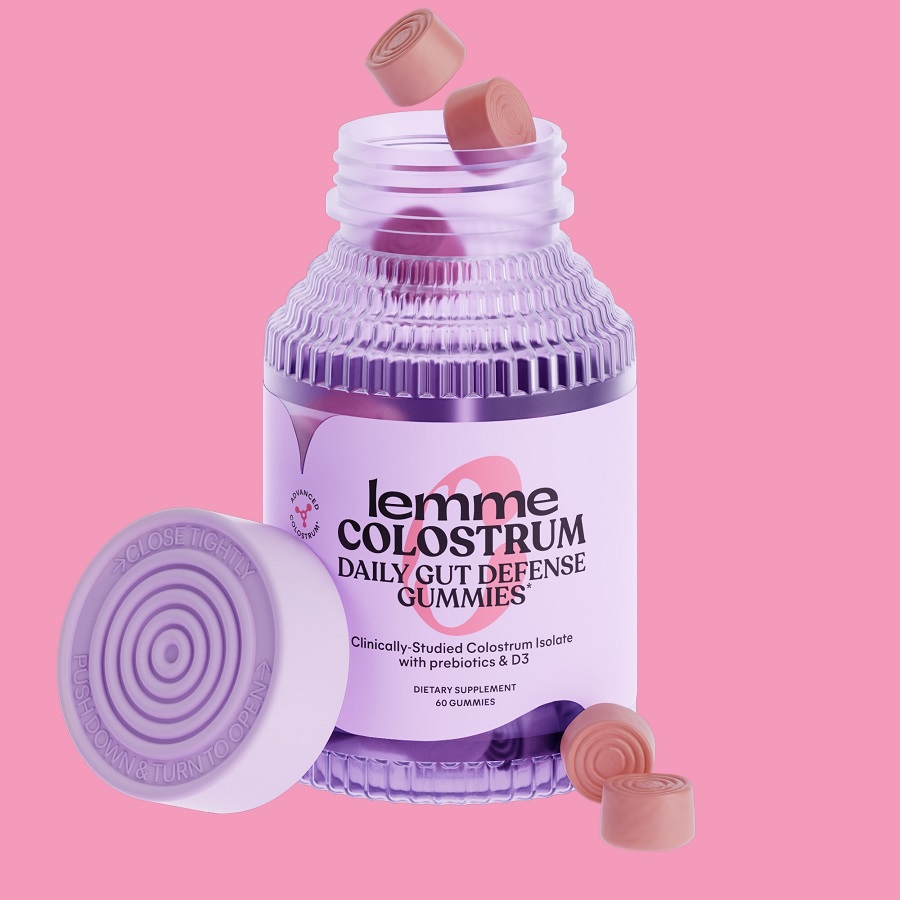 Lemme Colostrum Gummies.Lemme Colostrum Liposomal Liquid is a vanilla-flavored hybrid between a liquid supplement and a creamer, offering a sugar-free formula enhanced with lactoferrin, MCT Oil, vitamin E, and immunoglobulins to “promote daily vitality and immune support.”
“Together, the duo transforms this superfood powerhouse into two delicious, convenient daily rituals without the need for a scoop or blender,” highlights the brand.
“Your gut plays such a central role in how you feel every day, and colostrum helps support that foundation,” says Dr. Kathleen Valenton, board-certified doctor and Lemme Medical Advisory Board Member.
“Lemme Colostrum brings a clinically-studied form of this nature-derived superfood to life in two forms that make daily gut and immune support simple and enjoyable.”
Lemme’s supplement range is centered on gummy innovations featuring blends of superfruits and greens, as well as botanical extracts claiming to support the body’s natural GLP-1 production.
The roasting changes everything because it burns off most of the bitterness, strips down the caffeine, and adds a toasty, almost coffee-like aroma. You don’t drink houjicha to do things. You drink it to stop doing things. It’s the kind of tea that makes you feel like you’ve hustled enough for one lifetime.
And the trivia? Oh, there’s plenty:
It’s Japan’s post-dinner ritual. Most families drink it after meals because it’s gentle on digestion and doesn’t mess with sleep.
It’s kid-friendly. In Japan, this is often the first “adult” tea kids are allowed to sip. Houjicha is basically a caffeine-free coming-of-age story.
It’s a chameleon. These days it is also turning up in soft-serve, tiramisu, cocktails, lattes — even doughnuts.
The flavour? Somewhere between toasted hazelnut, brown sugar, and the memory of something once green.
And the best part? It’s never been a show-off. Houjicha doesn’t beg to be posted. It doesn’t care if you spell it right. It’s what you drink when you’ve stopped trying to optimise your morning routine and started trying to enjoy your night. So next time someone offers you matcha, smile politely and whisper, “I’m more of a houjicha person.”
For more updates, join/follow our, and channels.
If part of your chilly-weather coping routine is to curl up with a warm cup, new research ranks six types of tea that might figuratively reverse your biological age and scientifically lengthen your life. Food research scientists in China also discovered that one of those six types even stood out as having the “most potent anti-aging properties.” It’s one that may be new to many Americans.
According to a December 2025 study in the journal Food Research International, tea comes in six main types: green, white, yellow, oolong, black, and dark tea. Dark tea is distinct from the others, as it’s the only type to have undergone microbial fermentation—the process of adding beneficial microbes like good bacteria, yeast, or mold.
While most research on the effects of tea on aging and longevity has focused on green, black, and oolong teas, the current study compared the effects of all six varieties. They were especially interested in how tea might fight aging at the cellular level, especially as the organs change with age.
As we grow older, iron tends to build up in the liver, brain, and kidneys, the study says. This can speed up aging and increase the risk of diseases. The researchers focused on a process called ferroptosis—a type of cell death caused by too much iron and other harmful molecules.
“Current tea anti-aging studies mainly focus on metabolism, antioxidants, mitochondrial health, and gut microbiota, but the anti-aging role of ferroptosis inhibition is less studied,” the researchers note. Stopping ferroptosis, they believe, could help slow aging.
To test their theory, the scientists turned to Caenorhabditis elegans, or C. elegans—tiny worms often used in aging studies because they share many genetic similarities with humans. The worms were given extracts from each of the six teas, and their lifespans were tracked along with various markers of physiological stress.
The results were impressive: All of the tea types helped the worms live longer, compared with worms that weren’t given tea. In the order of lowest to highest impact, the various teas lengthened lifespan by:
Expanding the worms’ average lifespan by nearly one quarter, dark tea stood out as being most beneficial. The researchers found that dark tea’s “anti-aging effects [were] mediated by multiple mechanisms,” including boosting antioxidants, protecting mitochondria (the “powerhouses” of cells), and reducing ferroptosis.
So, while more research is needed—including, crucially, human trials—these findings suggest that dark tea may help protect cells from damage and delay aging.
Dark tea may also go by terms like hei cha or pu-erh, and it may come in a patty or “cake” form…another unique characteristic, compared to what many of us consider typical tea varieties.
For daily wellness updates, subscribe to The Healthy by Reader’s Digest newsletter and follow The Healthy on Facebook and Instagram. Keep reading:
If part of your chilly-weather coping routine is to curl up with a warm cup, new research ranks six types of tea that might figuratively reverse your biological age and scientifically lengthen your life. Food research scientists in China also discovered that one of those six types even stood out as having the “most potent anti-aging properties.” It’s one that may be new to many Americans.
According to a December 2025 study in the journal Food Research International, tea comes in six main types: green, white, yellow, oolong, black, and dark tea. Dark tea is distinct from the others, as it’s the only type to have undergone microbial fermentation—the process of adding beneficial microbes like good bacteria, yeast, or mold.
While most research on the effects of tea on aging and longevity has focused on green, black, and oolong teas, the current study compared the effects of all six varieties. They were especially interested in how tea might fight aging at the cellular level, especially as the organs change with age.
As we grow older, iron tends to build up in the liver, brain, and kidneys, the study says. This can speed up aging and increase the risk of diseases. The researchers focused on a process called ferroptosis—a type of cell death caused by too much iron and other harmful molecules.
“Current tea anti-aging studies mainly focus on metabolism, antioxidants, mitochondrial health, and gut microbiota, but the anti-aging role of ferroptosis inhibition is less studied,” the researchers note. Stopping ferroptosis, they believe, could help slow aging.
To test their theory, the scientists turned to Caenorhabditis elegans, or C. elegans—tiny worms often used in aging studies because they share many genetic similarities with humans. The worms were given extracts from each of the six teas, and their lifespans were tracked along with various markers of physiological stress.
The results were impressive: All of the tea types helped the worms live longer, compared with worms that weren’t given tea. In the order of lowest to highest impact, the various teas lengthened lifespan by:
Expanding the worms’ average lifespan by nearly one quarter, dark tea stood out as being most beneficial. The researchers found that dark tea’s “anti-aging effects [were] mediated by multiple mechanisms,” including boosting antioxidants, protecting mitochondria (the “powerhouses” of cells), and reducing ferroptosis.
So, while more research is needed—including, crucially, human trials—these findings suggest that dark tea may help protect cells from damage and delay aging.
Dark tea may also go by terms like hei cha or pu-erh, and it may come in a patty or “cake” form…another unique characteristic, compared to what many of us consider typical tea varieties.
For daily wellness updates, subscribe to The Healthy by Reader’s Digest newsletter and follow The Healthy on Facebook and Instagram. Keep reading:
Creatine has become one of the most talked-about supplements, and many people are adding it to their daily routines. While most research has focused on men, emerging research suggests females—especially those over 40—could benefit from consuming it regularly, too. “Women tend to have lower creatine stores than men, which means they may experience even greater benefits from supplementing,” says Marie Spano, M.S., RD, CSCS, CSSD. In fact, women naturally store 70% to 80% less creatine in their bodies than men and tend to consume fewer dietary sources of creatine, such as red meat and seafood. As people age, creatine intake tends to decline even further, making supplementation a compelling option.
So what exactly is creatine, and how can it help support women over 40? Let’s dig into the science.
Creatine is a compound found in every cell of the body. It’s naturally produced from amino acids and stored primarily in muscle tissue. Simply put, creatine provides your body energy. It helps your body replenish energy during periods of high demand, such as intense exercise, or when energy is limited, such as during mental fatigue or sleep-deprivation.
You can get creatine from protein-rich foods like meat and seafood, but it’s also available as a dietary supplement. Most supplements come in powdered form that can be mixed with liquids, though you can also find gummies, tablets and capsules. Because it’s difficult to get enough creatine from food alone to boost your body’s stores, supplements can help fill in the gap.
While you might not notice memory changes in your 40s, it never hurts to give your brain a little extra boost—and that’s where creatine can come in. “Studies suggest that creatine doesn’t just fuel muscles: it may also support sharper memory, better focus and faster thinking,” notes Spano.
Leslie Bonci, M.P.H., RD, CSSD, LDN, agrees. “Creatine in the brain is increased with supplementation. That increase can improve cognitive function, especially memory,” she says.
Studies have found taking creatine may improve memory in healthy people, with even greater benefits seen in older adults. These effects occur because creatine supports your brain’s energy systems, increasing levels of phosphocreatine and ATP—the main energy sources your brain cells use. Creatine also supports your mitochondria, your cell’s “powerhouses,” helping them produce more energy more efficiently. This extra energy helps your brain perform at its best. Interestingly, research shows taking more than 5 grams per day doesn’t appear to provide additional benefits, so smaller doses may be enough to support better memory.
Women are at greater risk of developing osteoporosis as they age, and bone density naturally begins to decline after age 40. Creatine may play a role in supporting bone health by stimulating osteoblasts, the cells that are responsible for building bone. When these cells are more active, they release a protein called osteoprotegerin, which slows down osteoclasts, the cells that break down bone. The result? Less bone loss and stronger bones.
One study in postmenopausal women found that those who took 8 grams of creatine per day, combined with strength training, preserved more bone density in the hip than those who didn’t take creatine. These women also showed improvements in bone geometry, suggesting stronger bones.
Women who lift weights may better preserve their strength by taking creatine. “Pairing creatine with resistance training can help women gain more muscle and strength compared to resistance training alone,” shares Spano. “This gives women an important edge for staying strong, independent and active as they age.”
As we age, we naturally lose not only bone density but also lean muscle mass and strength, which can increase the risk of sarcopenia, age-related muscle loss. Combining creatine with resistance training can help counteract this process. “Creatine is most effective for women who do resistance training, but it can also result in greater muscle strength and power in women regardless of training,” adds Bonci.
Research shows that starting with a short, few-day loading phase is most effective for boosting strength. After that, a daily dose of around 5 grams is enough to support both upper and lower body strength. Even taking creatine only on workout days (instead of daily) has been shown to lead to noticeable increases in muscle mass and strength.
Berries and fatty fish often get all the credit for their antioxidant and anti-inflammatory benefits (and for a good reason)—but creatine may deserve a spot on that list too.
Chronic, low-grade inflammation tends to increase with age and can negatively affect muscle, bone and overall health. Higher estrogen levels normally help keep inflammation in balance, but during menopause, estrogen drops. This hormonal shift affects not just bones but also inflammation and the immune system. Studies show menopause is linked to a decrease in the immune cells that fight infections, along with an increase in inflammatory markers. Research has found creatine may help by acting like an antioxidant and reducing oxidative stress, which contributes to inflammation.
Creatine is one of the hottest supplements right now—and for good reason. For women over 40, it can support better memory, protect bone density, boost muscle mass when paired with resistance training, and help reduce inflammation. “Creatine is a metabolite with mighty benefits for head-to-toe benefits and is an important consideration for a woman’s fuel kit,” says Bonci.
Coffee, meet your match.
Every morning, Dr. Nicholas Perricone starts his day with a cup of green tea supercharged with three powerhouse ingredients that he says boost energy, slim the body and promote longevity.
“I’ve always believed that simple, consistent habits add up to profound results,” the 77-year-old celebrity nutritionist and dermatologist told The Post.
“This morning ritual is my way of stacking science-backed ingredients to support both immediate clarity and long-term health,” Perricone said. “It’s not about a quick fix, but about creating daily practices that nurture the body and mind over decades.”
The anti-aging guru — who has won a following among stars like Jennifer Lopez, Christie Brinkley, and Kate Hudson — spilled the tea on his regimen in his new book, “The Beauty Molecule: Introducing Neuroceuticals, the Breakthrough for Ageless Beauty.”
“I’ve tried just about everything in the name of health over the years, but this simple routine is something I look forward to every morning,” Perricone said in an interview. “It’s warming, nourishing and restorative.”
But even before the extras, Perricone said green tea packs plenty of power on its own.
The beverage “provides a steady, calm energy” without the jitters of coffee, thanks to an amino acid called L-theanine, he explained, which sharpens focus and cognitive function while keeping the mind relaxed.
Green tea is also loaded with antioxidants, including polyphenols called catechins, which help protect cells from free radical damage and reduce oxidative stress.
That has been linked to a lower risk of chronic conditions like cancer, heart disease and stroke, along with less inflammation and better insulin sensitivity — a key factor in staving off type 2 diabetes.
Green tea can also rev up metabolism, making it easier to shed extra body fat.

Perricone then take things a step further. Instead of milk or sugar, he adds a splash of C8 medium-chain triglycerides (MCTs).
Found naturally in coconut and palm kernel oil, these fats have smaller molecules than most others, so the body digests them faster and converts them into energy more quickly.
Perricone said C8 MCTs help “fuel his brain,” and research suggests they may also support weight management and gut health.
Next up: a teaspoon of extra-virgin olive oil, which Perricone said activates the body’s sirtuin genes, which play a key role in cellular repair, rejuvenation and longevity.
Studies also link extra-virgin olive oil to stronger heart health, better digestion, stroke prevention, sharper cognitive function and even potential protection against Alzheimer’s disease.
Finally, Perricone sprinkles in ¼ teaspoon of cinnamon, which stabilizes blood sugar and reduces inflammation. It may also boost memory, aid weight loss and support the immune system.
“It’s a small ritual, but it sets the tone for a day of focus and balance,” Perricone said. “Beyond science, it’s become a meditative pause … a reminder that taking care of ourselves can be both effective and enjoyable.”
Berberine, a compound found in herbs like barberry and goldenseal, has gained popularity for its potential to support weight, blood sugar, and heart health naturally. Initial research appears promising, but additional studies are needed to confirm the benefits.
:max_bytes(150000):strip_icc()/IMG_9695-8b4dc875a72440b48ade68c160fc970b-0f69e10a6856432c81f7663e477daebd.jpg)



:max_bytes(150000):strip_icc()/Heres-What-Creatine-Can-Do-for-Women-Over-40-According-to-Experts-aef40556a5d84824854ff37a5d5bfd9e.jpg "What Creatine Can Do for Women over 40, According to Experts")

