
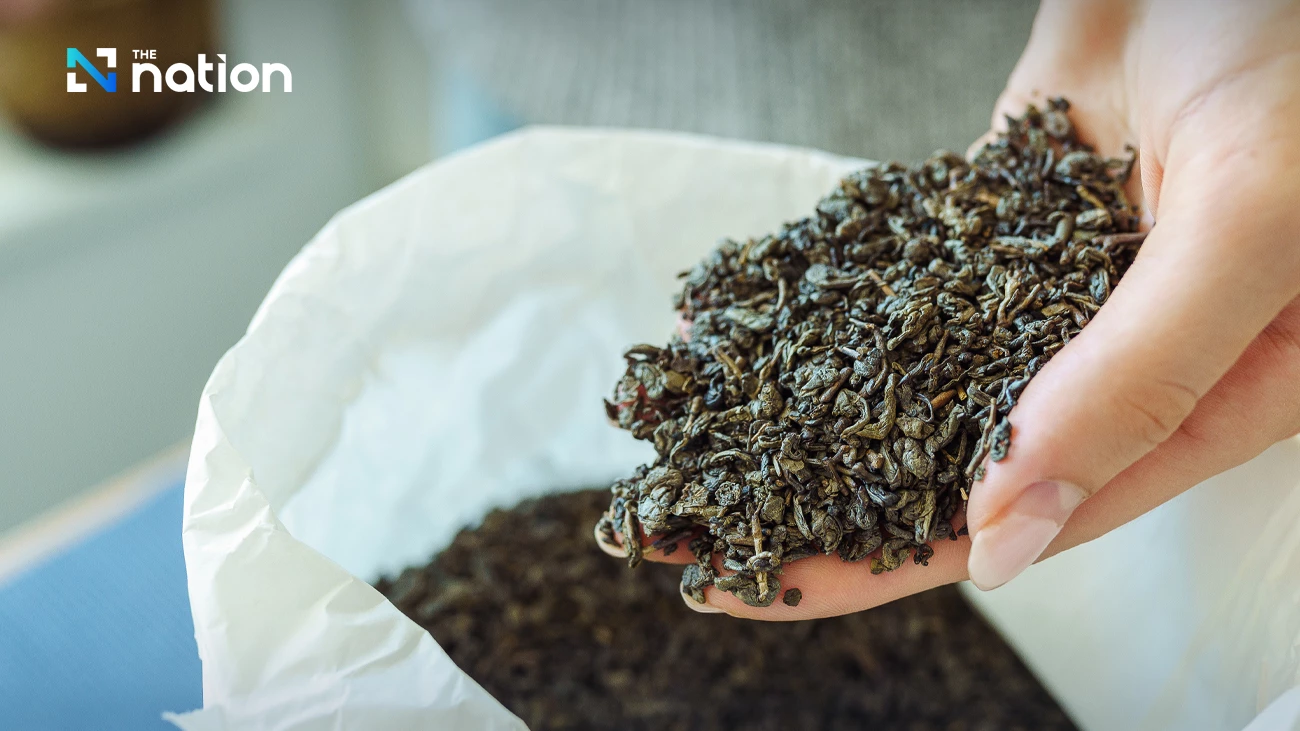
emerging opportunity for Thai tea products
Thai Tea: Growing Domestic Production and Demand
According to data from the Office of Agricultural Economics, Thailand’s tea production reached 106,643 tons in 2024, a 0.3% increase from the previous year. The majority of this production is Assam tea (93.0%), with output forecasted to rise further to 107,393 tons in 2025. The Northern region remains the country’s main tea cultivation area.

Domestically, the Thai tea retail market was valued at 2,262.7 million baht in 2024, growing by 4.2% year-on-year, as reported by Euromonitor.
Green tea holds the highest value at 1,040 million baht, accounting for 46.3% of the Thai tea market, followed by fruit/herbal tea (23.0%) and black tea (13.5%).
The Thai tea market is projected to continue expanding at an average annual rate of 2.2% through 2029.
Meanwhile, the Thai Ready-to-Drink tea market was valued at 16,834.7 million baht, showing a significant 6.8% expansion from the previous year, highlighting the increasing trend for convenient, prepared tea products.
Global Opportunities for Thai Farmers and Entrepreneurs
Thailand’s total export value of tea and tea products reached US$70.2 million (2,459.4 million baht) in 2024, an impressive 13.6% growth from the $61.8 million exported in 2023.
- Black Tea 2,460.7 Tons US$13.2 million Up 38.9%
- Green Tea 1,791.1 Tons US$14.7 million Up 65.2%
- Tea Products 10,382.6 Tons US$42.3 million Down 2.5%
In 2024, Thai imports of tea and tea products totalled US$51.0 million (1,807.7 million baht), up 13.6% from the previous year’s US$45.0 million.
- Black Tea 13,462.5 Tons US$16.3 million Up 10.9%
- Green Tea 6,451.3 Tons US$11.8 million Up 16.8%
- Tea Products 1,381.2 Tons US$22.9 million Up 13.4%
Overall, Thailand has a trade surplus in the tea and tea products sector. This highlights a significant commercial opportunity for Thailand to enhance production capabilities to meet both rising domestic and international demand, while also reducing reliance on imports.
For the first eight months of 2025 (Jan. – Aug.), the export value of Thai tea and tea products continued its strong growth, reaching US$53.3 million (1,762.6 million baht), a 21.4% expansion.
The top five export markets during this period were: Cambodia (15.3%), Laos (14.9%), the United States (12.1%), Indonesia (10.7%), and Vietnam (8.8%).
Elevating Thai Tea for Global Health and Sustainability
The sustainable elevation of Thai tea products on the global stage will benefit entrepreneurs, farmers, and communities involved in tea production across the country.
Developing Thai tea products requires collaboration from all sectors to increase both the yield and quality of the tea, as well as to add value through creativity and innovation that aligns with market demands.
This can be achieved through:
- Functional Teas (Health Focus): These teas can incorporate ingredients like probiotics and phytochemicals (such as acerola or acai) to meet consumer needs for stress reduction, improved digestion, or natural energy boosts.
- Ready-to-Drink Teas: Emphasising convenience.
- Cold Brew Teas: Featuring popular fruit or floral flavours.
- Novel Flavours: Creating unexpected and inviting tastes, such as blending with plant-based milk (almond, soy, or oat), or incorporating vegetables, herbs, spices, or other agricultural products like coconut, lychee, or longan.
- Integrated Products: Utilising Thai tea as an ingredient in desserts, ice cream, and other sweets.
- Sustainable Tea: Focusing on production processes and packaging that are environmentally friendly.
Source link











Share this article: