The main category of Forex News.
You can use the search box below to find what you need.
[wd_asp id=1]
The main category of Forex News.
You can use the search box below to find what you need.
[wd_asp id=1]
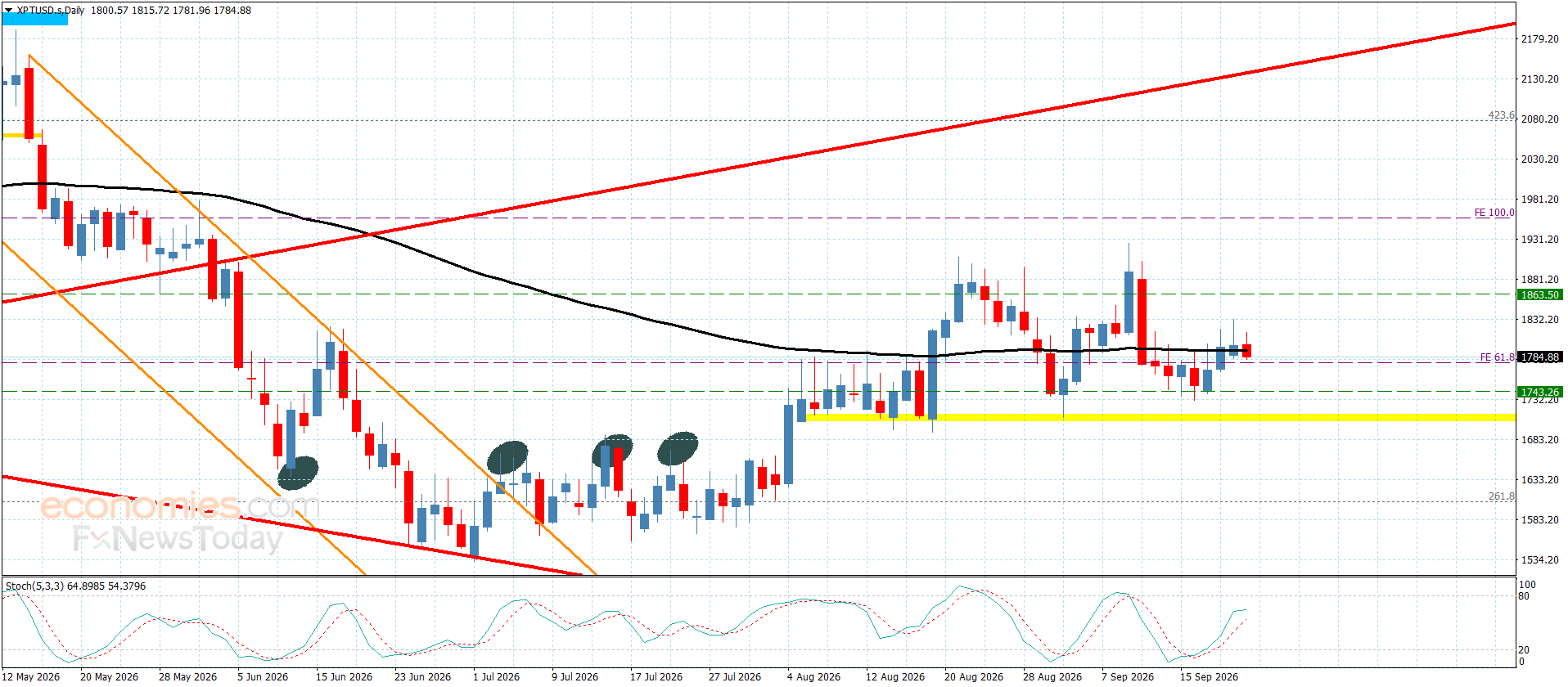
Platinum price continued forming bearish corrective trading, affected by forming additional barrier at $2060.00 level, reaching the initial support at $1950.00, to achieve the previously suggested corrective target.
The continuation of the negative pressure, specifically by stochastic attempt to reach the oversold level, which might force the price to suffer extra losses by reaching 1910.00 followed by the next support at $1865.00, while breaching $2060.00 level, and holding above it will provide a chance for renewing the bullish attempts by its rally towards $2130.00.
The expected trading range for today is between $1910.00 and $2030.00
Trend forecast: Bearish
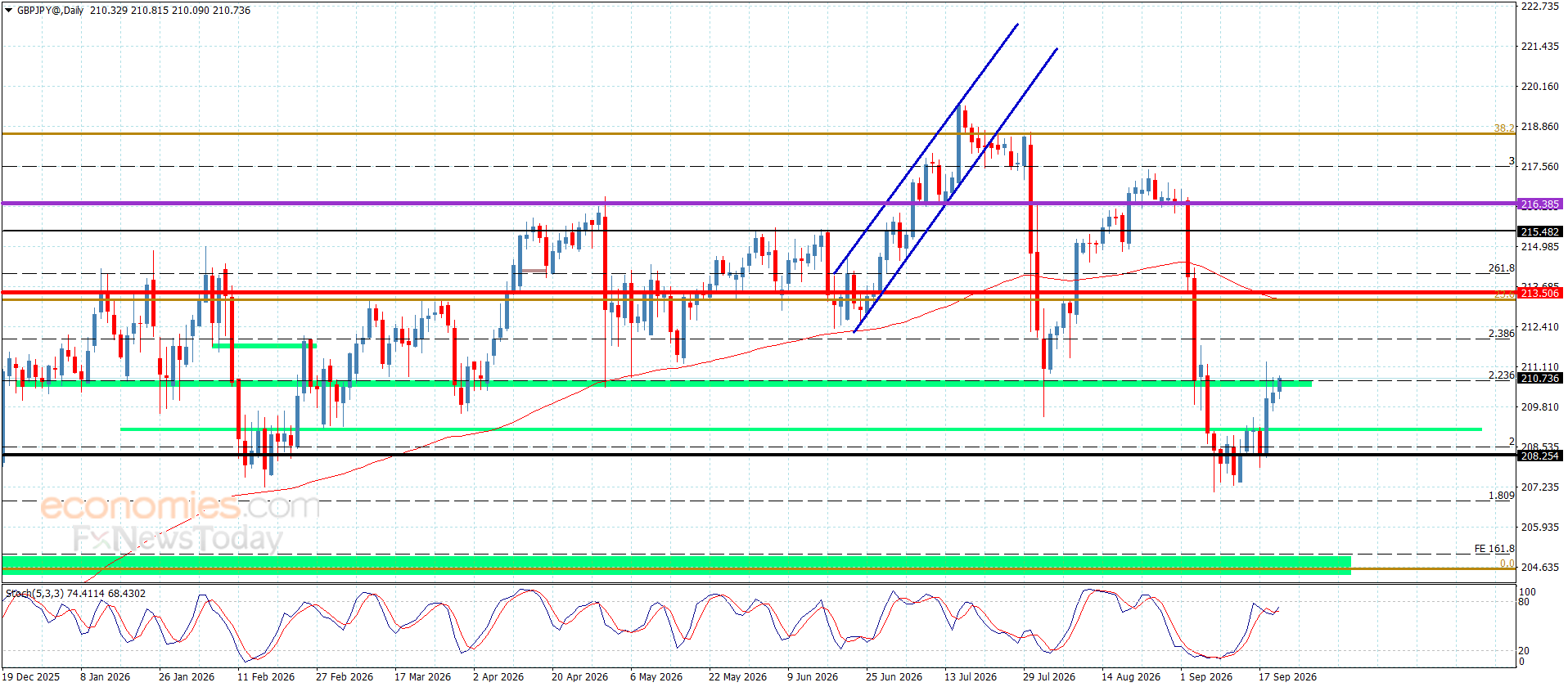
The GBPJPY pair continued forming repeated negative trading, to confirm its surrender to the previously suggested bearish scenario by reaching 211.20, to form sideways fluctuating due to the contradiction of the main indicators to settle near 211.65.
Note that the stability below 213.50 barrier confirms the trading confinement within the bearish track in the upcoming trading, therefore, we will keep waiting for gathering extra negative momentum, to ease the mission of targeting 211.00 level, to attack 210.45 support, forming confirmation key for the upcoming trading.
The expected trading range for today is between 210.45 and 212.30
Trend forecast: Bearish
EUR/GBP Price Forecast: Euro Remains Vulnerable Below 0.8640 – Critical Support Test
The EUR/GBP price forecast indicates that the euro remains vulnerable below the key psychological level of 0.8640. As of [current date], the pair trades near 0.8615, reflecting persistent selling pressure. This analysis provides an in-depth technical and fundamental outlook for traders and investors.
The EUR/GBP price forecast hinges on the critical support zone at 0.8640. A sustained break below this level opens the door for a move toward 0.8580, the next major support. The pair has formed a series of lower highs since mid-January, confirming a bearish trend. The 50-day moving average now acts as resistance near 0.8700.
Key technical indicators support the bearish outlook:
Volume analysis shows increased selling on breakdown attempts. This confirms trader conviction in the downside move. A daily close below 0.8640 would validate the EUR/GBP price forecast for further losses.
Several fundamental factors underpin the euro’s weakness against the pound. The European Central Bank (ECB) maintains a dovish stance, while the Bank of England (BoE) signals caution. Interest rate differentials favor the pound.
Key fundamental catalysts include:
These factors create a persistent headwind for the euro. The EUR/GBP price forecast reflects this fundamental divergence.
The interest rate gap between the eurozone and the UK currently favors the pound. The BoE holds rates at 5.25%, while the ECB’s deposit rate stands at 4.00%. This 125-basis-point differential attracts capital flows into sterling-denominated assets.
Market pricing for future rate cuts amplifies this divergence. Traders expect the ECB to cut by 75 basis points in 2025. In contrast, the BoE may only deliver 50 basis points of cuts. This expectation keeps the euro under pressure.
Identifying key EUR/GBP support and resistance levels is crucial for trading decisions. The following table outlines the most important price zones:
| Level | Type | Significance |
|---|---|---|
| 0.8640 | Support (pivot) | Broken support, now resistance |
| 0.8580 | Support | Next major downside target |
| 0.8520 | Support | 2024 low, strong historical level |
| 0.8700 | Resistance | 50-day moving average |
| 0.8760 | Resistance | 100-day moving average |
A break below 0.8580 would confirm the bearish EUR/GBP price forecast. Conversely, a move above 0.8700 would signal a potential reversal.
Market analysts remain bearish on the euro. A recent survey of 30 currency strategists shows 70% expect EUR/GBP to trade below 0.8600 in the next month. This consensus reinforces the technical outlook.
Key expert observations include:
These expert views align with the technical analysis. The EUR/GBP price forecast remains tilted to the downside.
The next two weeks are critical for the pair. Key events that could influence the EUR/GBP price forecast include:
Two primary scenarios exist:
Scenario 1 (Bearish): A break below 0.8580 targets 0.8520. This requires continued UK economic outperformance and ECB dovishness.
Scenario 2 (Neutral): Consolidation between 0.8580 and 0.8640. This would occur if data releases are mixed.
The bearish scenario has a 60% probability, according to current market pricing.
The EUR/GBP price forecast clearly shows the euro remains vulnerable below 0.8640. Technical indicators, fundamental drivers, and market sentiment all point to further downside. Traders should watch the 0.8580 support level closely. A break below this level would confirm the bearish outlook and target 0.8520. Conversely, a move above 0.8700 would invalidate the bearish thesis. For now, the path of least resistance is lower.
Q1: What is the EUR/GBP price forecast for the next week?
The EUR/GBP price forecast suggests continued vulnerability below 0.8640, with a potential test of 0.8580 support.
Q2: Why is the euro weak against the pound?
The euro is weak due to ECB dovishness, UK economic resilience, and interest rate differentials favoring the pound.
Q3: What are the key support and resistance levels for EUR/GBP?
Key support is at 0.8640 and 0.8580. Resistance is at 0.8700 and 0.8760.
Q4: How does ECB policy affect the EUR/GBP forecast?
ECB policy, including expected rate cuts, weakens the euro and supports the bearish EUR/GBP price forecast.
Q5: What technical indicators confirm the bearish outlook?
The RSI below 40, MACD below signal line, and price hugging the lower Bollinger Band confirm bearish momentum.
This post EUR/GBP Price Forecast: Euro Remains Vulnerable Below 0.8640 – Critical Support Test first appeared on BitcoinWorld.
The China Fair Trade Flavored Coffee market sits at the intersection of two powerful consumer trends: the growing appreciation for specialty coffee and the rising demand for ethically sourced, transparently branded consumer goods. Fair Trade Flavored Coffee is defined as roasted coffee (whole bean, ground, or single-serve pods) that has been flavored using natural or nature-identical flavorings and carries a recognized Fair Trade certification from bodies such as Fairtrade International or Fair Trade USA. Unlike conventional flavored coffee, the product must meet both social sustainability standards (minimum price floors, producer premiums) and flavor quality specifications.
In China, the market is still at an early stage relative to mature markets like the United States or Germany, but growth momentum is strong. The addressable consumer base is concentrated in first- and second-tier cities (Shanghai, Beijing, Guangzhou, Shenzhen, Chengdu), where specialty coffee consumption has grown at 20–30% annually over the past five years. Fair Trade certified flavored coffee occupies a premium tier within this category, with retail prices typically 50–80% above non-certified flavored coffee.
The market is characterized by a fragmented landscape of international brands, domestic specialty roasters, and emerging private-label offerings. Importers and distributors play a pivotal role, as nearly all green beans are sourced from overseas and the flavored coffee itself is primarily roasted or repackaged in China under local brand labels.
Aggregate demand for Fair Trade Flavored Coffee in China is growing from a small base but accelerating. Based on import volumes of Fair Trade certified green coffee, flavored roasting capacity, and retail sell-through estimates, the market is believed to have expanded at a compound annual rate of 12–16% between 2020 and 2025. From 2026 to 2035, a slightly moderated but still robust growth trajectory of 10–14% per year is expected, as the market matures and incremental demand comes from lower-tier cities and workplace channels.
Volume demand in 2026 is estimated to be in the range of 1,200–1,500 metric tons of finished flavored coffee (including whole bean, ground, and pod equivalent), with the retail value of certified sales likely around RMB 350–450 million. By 2035, volume could reach 3,000–4,000 metric tons, reflecting a doubling or near-tripling of the market. The premium nature of the product means that value growth may slightly outpace volume growth, as flavor innovation and branded differentiation allow for mild real price increases of 1–2% per year. Key macroeconomic drivers include the expansion of China’s upper-middle-income class (projected to reach 550–650 million people by 2035), urbanization rates exceeding 70%, and a cultural shift toward Western-style breakfast routines and home brewing.
By product type, the market is segmented into whole bean, ground, and single-serve pods/capsules. In 2026, ground coffee is expected to hold the largest share at 40–45% by volume, driven by convenience and compatibility with drip machines and French presses. Whole bean accounts for 25–30%, favored by coffee enthusiasts who grind at home. Single-serve pods, while smaller at 25–30%, are the fastest-growing segment with an estimated annual growth rate of 15–19%, supported by the proliferation of pod-compatible machines (both Nespresso and Keurig-style) in Chinese households and offices.
By end use, at-home consumption dominates at 55–65% of total demand, reflecting the strong home brewing culture that emerged during the pandemic and has persisted. Office and workplace consumption represents 20–25%, where corporate procurement committees often choose flavored fair-trade options as a premium employee perk. Gifting accounts for 15–20%, a culturally significant channel in China, where flavored coffee gift boxes (often containing a variety of flavors and reusable packaging) are increasingly given during holidays like Mid-Autumn Festival and Chinese New Year. Corporate gifting is particularly high-value: per-unit prices range from RMB 120–300 per box, compared to RMB 80–150 for regular flavored coffee gift sets.
By value chain segment, certified and branded retail products account for an estimated 50–55% of retail value, private label or store brand for 15–20%, and DTC online for 20–25%. The DTC share is expected to grow as e-commerce platforms (Tmall, JD.com, Douyin) host dedicated specialty coffee sections and subscription models gain traction among repeat buyers.
The retail price structure for Fair Trade Flavored Coffee in China reflects multiple layers of cost and margin accumulation. At the green bean level, Fair Trade certified arabica from origin countries carries a minimum price floor of roughly USD 1.60–1.80 per pound plus a social premium of USD 0.20–0.30 per pound, translating to a cost of RMB 25–35 per kilogram for roasters after freight and import duties. Flavoring adds RMB 10–20 per kilogram, depending on complexity (natural vs. synthetic flavor oils, single vs. layered profiles). Roasting, packaging (aroma-preserving valve bags), and distribution add a further RMB 30–50 per kilogram.
Imported finished flavored coffee (branded, packaged) typically enters China with a landed cost of RMB 80–120 per kilogram for mainstream brands and RMB 120–180 for premium or single-origin fair trade blends. Retail prices at the shelf or online then range from RMB 150–250 per 250-gram bag for ground or whole bean, and RMB 200–350 per 10-pack of single-serve pods. The fair trade certification alone accounts for a 15–25% premium over non-certified flavored coffee, while the flavor component adds a separate 10–20% premium. Private-label versions are priced 20–35% lower than branded equivalents, appealing to cost-conscious ethical shoppers. Price elasticity in this segment is moderate: a 10% price increase typically reduces volume by 5–8%, but brand loyalty and subscription inertia partially offset sensitivity.
The competitive landscape for Fair Trade Flavored Coffee in China is a mix of global coffee conglomerates, specialty roasters, and local pure-play ethical brands. International players such as Nestlé (via its Nespresso and Nescafé Dolce Gusto lines), Starbucks (packaged coffee and pods), and JDE Peet’s (Jacobs, L’Or) have established distribution networks and leverage their global fair trade sourcing relationships. These companies account for an estimated 40–45% of total fair trade flavored coffee sales in China, particularly in the single-serve pod segment where proprietary system compatibility is a barrier to entry.
Domestic specialty roasters and local pure-play brands (e.g., Seesaw, Manner, % Arabica through licensed retail, and emerging online brands like Yongpu Coffee) are gaining share, collectively holding 30–35% of the market. They differentiate through flavor innovation, local cultural storytelling, and direct consumer engagement via social commerce. Small artisan roasters and private-label manufacturers fill the remainder, often serving regional grocery chains or corporate gifting buyers. Competition is intensifying as private label and DTC entrants launch Fair Trade Flavored Coffee SKUs at lower price points, pressuring gross margins industry-wide.
Domestic production of green coffee beans in China is limited to the southwestern province of Yunnan, which accounts for nearly all of China’s coffee output, estimated at 110,000–130,000 metric tons annually. However, less than 5% of Yunnan’s coffee is certified organic or Fair Trade, and the province predominantly produces robusta and lower-grade arabica that is ill-suited for the flavored coffee segment. Flavoring and roasting facilities do exist in China—primarily in Shanghai, Jiangsu, and Guangdong—but they overwhelmingly rely on imported green beans for premium flavored lines.
The domestic supply model for Fair Trade Flavored Coffee thus centers on import, warehousing, and local processing. Roasters receive containerized green bean shipments from origin countries, store beans in climate-controlled warehouses (capacity is expanding, estimated at 15,000–20,000 metric tons of specialty green coffee in bonded warehouses near Shanghai and Guangzhou), and perform flavor coating, roasting, grinding, and packaging on site. A supply bottleneck is the two-month lead time for certified bean orders and the limited number of local roasting facilities equipped to handle flavor integrity at scale—only 10–15 large roasters in China currently meet export-grade standards for flavor consistency.
China is a net importer of Fair Trade Flavored Coffee. Green coffee imports (HS 090111, 090112) have grown at 10–15% annually over the past five years, with total green coffee imports reaching 150,000–170,000 metric tons in 2025. Of this, approximately 5–8% is certified Fair Trade, and a small but growing fraction—perhaps 10–15% of that certified volume—is ultimately flavored. The primary origin countries for Fair Trade certified beans are Brazil, Colombia, Ethiopia, and Peru. These beans enter China under regular most-favored-nation tariffs of 8–12% for green coffee, with no special preferential access for Fair Trade certification, though some supply chain audits verify certification upon arrival.
Finished flavored coffee (roasted, ground or pod format, HS 090121 and 090122) is also imported, mainly from the United States, Germany, and South Korea, where established flavoring and roasting industries exist. Imports of roasted flavored coffee (not decaffeinated) have grown at 8–12% annually. Re-exports of fair trade flavored coffee from China are negligible—less than 2% of domestic consumption—as the market is entirely domestic-focused. Trade flows are expected to continue increasing, with import volumes projected to rise by 60–80% by 2035, driven by both volume growth and a shift toward higher-grade, certified beans as Chinese roasters upgrade their sourcing quality.
Distribution of Fair Trade Flavored Coffee in China operates through three primary channels: modern grocery retail (hypermarkets and supermarkets), e-commerce platforms, and specialty stores/cafés. Modern grocery retail (including chains like Walmart, Carrefour, and local players such as Hema Fresh and RT-Mart) accounts for 30–35% of volume, with category management often led by a dedicated specialty coffee buyer who decides on shelf placements and promotions. E-commerce, led by Tmall Global, JD.com, and Pinduoduo, holds 40–45% of volume, offering the broadest assortment and fastest growth. DTC native brands use WeChat mini-programs and Douyin livestreams to reach consumers directly, capturing 15–20% of value.
The key buyer groups are end consumers (grocery shoppers, online DTC shoppers), corporate procurement teams (for gifting and office consumption), and grocery retailer category managers. End consumers are primarily aged 25–45, with a skew toward females for flavored varieties and toward males for whole bean. Corporate procurement agents typically order in bulk (50–200 gift boxes per order) and prioritize lead time, packaging aesthetics, and certification documentation over lowest unit price. Grocery buyers demand consistent supply, attractive packaging, and promotional support. Specialty food store buyers (e.g., in high-end supermarkets or gourmet stores) require rigorous flavor freshness and often demand exclusive flavor blends.
Fair Trade Flavored Coffee sold in China must comply with both international certification rules and domestic food safety regulations. Fairtrade International and Fair Trade USA certification require that the entire supply chain—from grower to exporter to roaster—is audited for compliance with minimum price floors, community premiums, and labor standards. In China, these certifications are recognized primarily as voluntary marketing signals rather than mandatory legal standards, but they are critical for brand positioning and consumer trust.
On the regulatory side, flavored coffee falls under China’s General Food Safety Standard (GB 2760), which governs permissible flavor additives. Most common flavoring compounds (ethyl vanillin, hazelnut oil, etc.) are approved, but any novel ingredients must pass pre-market safety assessment by the National Health Commission. Country-of-origin labeling is required for imported packaged coffee, and Fair Trade claims on packaging must be substantiated with either a certification logo or a traceability statement.
The FDA-equivalent (CFDA) enforces food additive rules, and any online sale must comply with the E-Commerce Law regarding product information transparency. Importers must register with Customs and provide certificates of free sale. There is currently no specific Chinese national standard for flavored coffee, but industry associations (e.g., China Coffee Association) are developing voluntary quality grades that may include flavor intensity and shelf-life benchmarks.
Over the 2026–2035 forecast period, the China Fair Trade Flavored Coffee market is expected to maintain a healthy growth trajectory, though at a decelerating pace as the initial wave of adoption matures. The compound annual growth rate for volume is projected at 10–14%, with value growth slightly higher at 11–15% due to ongoing premiumization. By 2035, the market could reach 3,000–4,000 metric tons of finished product, up from 1,200–1,500 metric tons in 2026. The share of single-serve pods is forecast to rise from 25–30% to 35–40%, overtaking ground coffee as the largest format by the early 2030s.
At-home consumption will remain the dominant end use, but corporate gifting is expected to grow faster, with a CAGR of 12–15%, as more Chinese enterprises adopt ethical gift-giving policies. The DTC online channel is likely to capture 30–35% of retail value by 2035, up from 20–25% today, as consumer trust in direct brand relationships deepens. Import volumes will continue to rise at 10–13% per year, reflecting both volume growth and a shift toward higher-priced certified beans. Private label will gain share, reaching 20–25% of retail value, as grocery chains develop their own Fair Trade flavored coffee lines to attract premium shoppers. Overall, the market will remain import-driven but with a strengthening domestic roasting and flavoring ecosystem.
The most compelling opportunities lie in flavor innovation tailored to Chinese palates. While Western flavors (vanilla, hazelnut, caramel) dominate current offerings, there is growing interest in tea-inspired profiles (jasmine, osmanthus, oolong) and dessert flavors (black sesame, matcha). Early movers experimenting with these local-infused Fair Trade flavored lines have reported 20–30% higher repeat purchase rates. Another opportunity is in the single-serve pod segment: developing China-compatible pod systems that are compatible with popular Nespresso or K-Cup machines while carrying Fair Trade certification could unlock corporate and office supply contracts.
Subscription-based DTC models also present a significant growth avenue: monthly coffee subscriptions for Fair Trade flavored beans currently account for less than 10% of online sales but could reach 20–25% by 2035 if brands improve retention through personalized flavor curation and flexible delivery schedules. Finally, B2B gifting is a largely untapped channel in second- and third-tier cities, where local companies are increasingly using corporate social responsibility (CSR) initiatives to attract talent. A focused sales force targeting procurement managers in these regions could drive new demand at higher margins than retail.
The key enabler across all opportunities is efficient certification tracking and supply chain transparency, which can be turned into a distinct brand asset in a market where trust in ethical claims is still being built.
This report is an independent strategic category study of the market for fair trade flavored coffee in China. It is designed for brand owners, general managers, category leaders, trade-marketing teams, e-commerce teams, retail partners, distributors, investors, and market entrants that need a clear read on where growth sits, which brands control the category, how pricing and promotion shape demand, and which channels matter most for scale and margin.
The framework is built for packaged food & beverage markets within consumer goods, where performance is driven by need states, shopper missions, brand hierarchies, price-pack architecture, retail execution, promotional intensity, and route-to-market control rather than by a narrow technical specification alone. It defines fair trade flavored coffee as Coffee beans that are both ethically sourced under fair trade certification and infused with natural or artificial flavorings to create distinct taste profiles for retail consumers and maps the market through category boundaries, consumer segments, usage occasions, channel structure, brand and private-label positions, supply and availability logic, pricing and promotion mechanics, and country-level commercial roles. Historical analysis typically covers 2012 to 2025, with forward-looking scenarios through 2035.
This report is designed to answer the questions that matter most to brand, category, channel, and strategy teams in consumer-goods markets.
At its core, this report explains how the market for fair trade flavored coffee actually works as a consumer category. It is built to show where demand comes from, which need states and shopper missions matter most, which brands and private-label players shape the category, which channels control visibility and conversion, and where pricing power, repeat purchase, and margin are actually created.
Rather than framing the category through narrow technical attributes, the study breaks it into decision-grade commercial layers: product format, benefit platform, shopper segment, purchase occasion, pack-price architecture, channel environment, promotional intensity, route-to-market control, and company archetype. It is therefore useful both for teams shaping portfolio strategy and for teams executing growth through End Consumer (Grocery Shopper), Online DTC Shopper, Corporate Procurement (Gifting), Grocery Retailer Category Manager, and Specialty Food Store Buyer.
The report also clarifies how value pools differ across Home brewing, Office brewing, and Gift sets and subscriptions, how premiumization and private label reshape category economics, how retail concentration and route-to-market design affect scale, and which countries matter most for brand building, sourcing, packaging, and channel expansion.
The report is based on an independent market-intelligence methodology that combines category reconstruction, public company evidence, retail and channel mapping, pricing review, and multi-layer triangulation. It is built for consumer categories where no single public dataset captures the real structure of demand, brand power, promotion, and channel control.
The evidence stack typically combines company disclosures, investor materials, brand and retailer product pages, e-commerce assortment checks, packaging and claims analysis, public pricing references, trade statistics where relevant, regulatory and labeling guidance, and observable route-to-market evidence from distributors, retailers, merchandisers, and marketplace ecosystems.
The analytical model then reconstructs the category across the layers that matter commercially: category scope, shopper need states, consumer segments, pack-price ladders, brand and private-label hierarchy, channel power, promotional intensity, route-to-market design, and country role differences.
Special attention is given to Consumer desire for variety and indulgence, Growth of at-home coffee culture, Ethical consumption and brand transparency, Gifting and subscription box trends, and Premiumization in grocery. The objective is not only to size the market, but to explain where value pools sit, which segments drive mix and repeat purchase, which channels shape growth, and how leading brands defend or expand their positions across End Consumer (Grocery Shopper), Online DTC Shopper, Corporate Procurement (Gifting), Grocery Retailer Category Manager, and Specialty Food Store Buyer.
The report does not rely on survey-based opinion as its core evidence base. Instead, it uses observable commercial signals and structured public evidence to build a decision-grade view for brand, category, retail, e-commerce, investment, and market-entry teams.
This report defines fair trade flavored coffee as Coffee beans that are both ethically sourced under fair trade certification and infused with natural or artificial flavorings to create distinct taste profiles for retail consumers and treats it as a branded consumer category rather than as a narrow technical product class. The objective is to capture the real commercial market that category, brand, trade-marketing, and channel teams are managing.
Scope is determined by how the category is sold, merchandised, priced, and chosen in market. That means the report follows product formats, claims, price tiers, pack architecture, need states, and retail environments that shape Home brewing, Office brewing, and Gift sets and subscriptions.
The study deliberately separates the category from adjacent baskets when they distort the economics or shopper logic of the market being measured. Typical exclusions therefore include Unflavored/regular coffee, Ready-to-drink (RTD) coffee beverages, Coffee sold primarily for foodservice (restaurants, cafes), Coffee additives (flavored syrups, creamers) sold separately, Non-certified flavored coffee, Tea and other hot beverages, Coffee brewing equipment, Coffee substitutes (chicory, grain-based), and Unroasted green coffee.
The report provides focused coverage of the China market and positions China within the wider global consumer-goods industry structure.
The geographic analysis explains local consumer demand conditions, brand and private-label balance, retail concentration, pricing tiers, import dependence, and the country’s strategic role in the wider category.
This study is designed for strategic and commercial users across brand-led consumer categories, including:
In many brand-driven, channel-sensitive, and consumer-demand-led markets, official trade and production statistics are not sufficient on their own to describe the true market. Product boundaries may cut across multiple tariff codes, several product categories may be bundled into the same official classification, and a meaningful share of activity may take place through customized services, captive supply, platform relationships, or technically specialized channels that are not directly visible in standard statistical datasets.
For this reason, the report is designed as a modeled strategic market study. It uses official and public evidence wherever it is reliable and scope-compatible, but it does not force the market into a purely statistical framework when doing so would reduce analytical quality. Instead, it reconstructs the market through the logic of demand, supply, technology, country roles, and company behavior.
This makes the report particularly well suited to products that are innovation-intensive, technically differentiated, capacity-constrained, platform-dependent, or commercially structured around specialized buyer-supplier relationships rather than standardized commodity trade.
The report typically includes:
This report is an independent strategic category study of the market for unsweetened decaf coffee in Brazil. It is designed for brand owners, general managers, category leaders, trade-marketing teams, e-commerce teams, retail partners, distributors, investors, and market entrants that need a clear read on where growth sits, which brands control the category, how pricing and promotion shape demand, and which channels matter most for scale and margin.
The framework is built for packaged coffee markets within consumer goods, where performance is driven by need states, shopper missions, brand hierarchies, price-pack architecture, retail execution, promotional intensity, and route-to-market control rather than by a narrow technical specification alone. It defines unsweetened decaf coffee as Decaffeinated coffee products with no added sugar, sweeteners, or flavorings, targeting consumers seeking the coffee experience without caffeine or sweetness and maps the market through category boundaries, consumer segments, usage occasions, channel structure, brand and private-label positions, supply and availability logic, pricing and promotion mechanics, and country-level commercial roles. Historical analysis typically covers 2012 to 2025, with forward-looking scenarios through 2035.
This report is designed to answer the questions that matter most to brand, category, channel, and strategy teams in consumer-goods markets.
At its core, this report explains how the market for unsweetened decaf coffee actually works as a consumer category. It is built to show where demand comes from, which need states and shopper missions matter most, which brands and private-label players shape the category, which channels control visibility and conversion, and where pricing power, repeat purchase, and margin are actually created.
Rather than framing the category through narrow technical attributes, the study breaks it into decision-grade commercial layers: product format, benefit platform, shopper segment, purchase occasion, pack-price architecture, channel environment, promotional intensity, route-to-market control, and company archetype. It is therefore useful both for teams shaping portfolio strategy and for teams executing growth through Household Grocery Shopper, Health-Conscious Consumer, Caffeine-Sensitive Individual, Foodservice Buyer, Corporate Procurement, and E-commerce Shopper.
The report also clarifies how value pools differ across Morning/Evening beverage, Social/entertaining, Workplace consumption, and Health/wellness routine, how premiumization and private label reshape category economics, how retail concentration and route-to-market design affect scale, and which countries matter most for brand building, sourcing, packaging, and channel expansion.
The report is based on an independent market-intelligence methodology that combines category reconstruction, public company evidence, retail and channel mapping, pricing review, and multi-layer triangulation. It is built for consumer categories where no single public dataset captures the real structure of demand, brand power, promotion, and channel control.
The evidence stack typically combines company disclosures, investor materials, brand and retailer product pages, e-commerce assortment checks, packaging and claims analysis, public pricing references, trade statistics where relevant, regulatory and labeling guidance, and observable route-to-market evidence from distributors, retailers, merchandisers, and marketplace ecosystems.
The analytical model then reconstructs the category across the layers that matter commercially: category scope, shopper need states, consumer segments, pack-price ladders, brand and private-label hierarchy, channel power, promotional intensity, route-to-market design, and country role differences.
Special attention is given to Health concerns (caffeine sensitivity, anxiety, sleep), Demand for evening/afternoon coffee occasion, Aging population seeking caffeine reduction, Growth of premium at-home coffee culture, and Clean-label and ingredient simplicity trends. The objective is not only to size the market, but to explain where value pools sit, which segments drive mix and repeat purchase, which channels shape growth, and how leading brands defend or expand their positions across Household Grocery Shopper, Health-Conscious Consumer, Caffeine-Sensitive Individual, Foodservice Buyer, Corporate Procurement, and E-commerce Shopper.
The report does not rely on survey-based opinion as its core evidence base. Instead, it uses observable commercial signals and structured public evidence to build a decision-grade view for brand, category, retail, e-commerce, investment, and market-entry teams.
This report defines unsweetened decaf coffee as Decaffeinated coffee products with no added sugar, sweeteners, or flavorings, targeting consumers seeking the coffee experience without caffeine or sweetness and treats it as a branded consumer category rather than as a narrow technical product class. The objective is to capture the real commercial market that category, brand, trade-marketing, and channel teams are managing.
Scope is determined by how the category is sold, merchandised, priced, and chosen in market. That means the report follows product formats, claims, price tiers, pack architecture, need states, and retail environments that shape Morning/Evening beverage, Social/entertaining, Workplace consumption, and Health/wellness routine.
The study deliberately separates the category from adjacent baskets when they distort the economics or shopper logic of the market being measured. Typical exclusions therefore include Naturally low-caffeine coffee varieties (e.g., Laurina), Coffee with added sugar, sweeteners, or flavors, Ready-to-drink (RTD) decaf coffee beverages, Coffee substitutes (e.g., chicory, barley), Caffeinated coffee products, Decaf tea, Herbal coffee alternatives, Sweetened or flavored decaf coffee, Decaf coffee creamers/syrups, and Functional/fortified coffee beverages.
The report provides focused coverage of the Brazil market and positions Brazil within the wider global consumer-goods industry structure.
The geographic analysis explains local consumer demand conditions, brand and private-label balance, retail concentration, pricing tiers, import dependence, and the country’s strategic role in the wider category.
This study is designed for strategic and commercial users across brand-led consumer categories, including:
In many brand-driven, channel-sensitive, and consumer-demand-led markets, official trade and production statistics are not sufficient on their own to describe the true market. Product boundaries may cut across multiple tariff codes, several product categories may be bundled into the same official classification, and a meaningful share of activity may take place through customized services, captive supply, platform relationships, or technically specialized channels that are not directly visible in standard statistical datasets.
For this reason, the report is designed as a modeled strategic market study. It uses official and public evidence wherever it is reliable and scope-compatible, but it does not force the market into a purely statistical framework when doing so would reduce analytical quality. Instead, it reconstructs the market through the logic of demand, supply, technology, country roles, and company behavior.
This makes the report particularly well suited to products that are innovation-intensive, technically differentiated, capacity-constrained, platform-dependent, or commercially structured around specialized buyer-supplier relationships rather than standardized commodity trade.
The report typically includes:
At 8:45 a.m. Eastern Time today, oil was priced at $111.04 per barrel with Brent serving as the benchmark (we’ll explain different benchmarks later in this article). That’s a gain of $3.22 compared with yesterday morning and around $46 higher than the price one year ago.
It’s impossible to forecast oil prices with detailed precision. Many different elements affect the market, but ultimately it boils down to supply and demand. When worries about economic recession, war, and other large-scale disruptions increase, oil’s path can shift fast.
Gas prices at the pump don’t only track crude oil. They also include what it takes to refine and move that fuel, the taxes layered on top, and the extra markup your local station adds to stay in business.
Since crude oil generally makes up a majority of the per-gallon cost, changes in its price have an outsized impact. When oil surges, gas prices typically rise in tandem. But when oil retreats, gas prices often lag on the way down, a trend sometimes described as “rockets and feathers.”
In case of emergency, the U.S. has a store of crude oil known as the Strategic Petroleum Reserve. Its primary purpose is energy security in case of disaster (think sanctions, severe storm damage, even war). But it can also go a long way toward softening crippling price hikes during supply shocks.
It’s not a long-term answer and is more meant to provide temporary relief, assisting consumers and keeping critical parts of the economy running, like key industries, emergency services, public transportation, etc.
Both oil and natural gas are key sources of the energy we use every day. Because of this, a big change in oil prices can affect natural gas. For example, if oil prices increase, some industries may swap natural gas for some segments of their operations where possible, which increases demand for natural gas.
To gauge oil’s performance, we often turn to two benchmarks:
Between these two, Brent better represents global oil performance because it prices much of the world’s traded crude. And, it’s often the best way to track historical oil performance. In fact, even the U.S. Energy Information Administration now uses Brent as its primary reference in its Annual Energy Outlook.
Looking at the Brent benchmark across several decades, oil has been anything but steady. It’s seen spikes due to factors such as wars and supply cuts, and it’s also seen crashes from global recessions and an oversupply (called a “glut”). For example:
All to say, oil’s historical performance has been anything but smooth. Again, it’s hugely affected by wars, recessions, OPEC whims, evolving energy initiatives and policies, and much more.
Looking to stay up-to-date regarding the latest energy developments? Check out our recent coverage:
The current price of oil per barrel depends largely on supply and demand, including news about potential future supply and demand (geopolitics, decisions made by OPEC+, etc.). In the U.S., prices also move based on how friendly an administration is to drilling, as it can affect future supply. For example, 2025 saw the Trump administration move to reopen more than 1.5 million acres in the Coastal Plain of the Arctic National Wildlife Refuge for oil and gas leasing, reversing the Biden administration’s policy of limiting oil drilling in the Arctic.
The price of oil updates constantly when the “futures” markets are open. A futures market is effectively an auction where people agree to buy or sell oil in the future. As long as people and companies are trading contracts, the oil price is changing.
In short, shale is rock that contains oil and natural gas. Think of shale as energy yet to be tapped. The more shale the U.S. accesses, the more energy we’ll have—and the more easily oil prices can keep from spiking as much thanks to a greater supply.
When oil is expensive, it tends to make everyday items cost more. This can be related to energy (your heating, gas utilities, etc.), but it’s also due to the logistics involved with making those items accessible to you. Shipping, for example, can affect the price of things at the grocery store, as it’s more expensive to get those products from warehouses and farms onto the shelf.
This report is an independent strategic category study of the market for unsweetened decaf coffee in China. It is designed for brand owners, general managers, category leaders, trade-marketing teams, e-commerce teams, retail partners, distributors, investors, and market entrants that need a clear read on where growth sits, which brands control the category, how pricing and promotion shape demand, and which channels matter most for scale and margin.
The framework is built for packaged coffee markets within consumer goods, where performance is driven by need states, shopper missions, brand hierarchies, price-pack architecture, retail execution, promotional intensity, and route-to-market control rather than by a narrow technical specification alone. It defines unsweetened decaf coffee as Decaffeinated coffee products with no added sugar, sweeteners, or flavorings, targeting consumers seeking the coffee experience without caffeine or sweetness and maps the market through category boundaries, consumer segments, usage occasions, channel structure, brand and private-label positions, supply and availability logic, pricing and promotion mechanics, and country-level commercial roles. Historical analysis typically covers 2012 to 2025, with forward-looking scenarios through 2035.
This report is designed to answer the questions that matter most to brand, category, channel, and strategy teams in consumer-goods markets.
At its core, this report explains how the market for unsweetened decaf coffee actually works as a consumer category. It is built to show where demand comes from, which need states and shopper missions matter most, which brands and private-label players shape the category, which channels control visibility and conversion, and where pricing power, repeat purchase, and margin are actually created.
Rather than framing the category through narrow technical attributes, the study breaks it into decision-grade commercial layers: product format, benefit platform, shopper segment, purchase occasion, pack-price architecture, channel environment, promotional intensity, route-to-market control, and company archetype. It is therefore useful both for teams shaping portfolio strategy and for teams executing growth through Household Grocery Shopper, Health-Conscious Consumer, Caffeine-Sensitive Individual, Foodservice Buyer, Corporate Procurement, and E-commerce Shopper.
The report also clarifies how value pools differ across Morning/Evening beverage, Social/entertaining, Workplace consumption, and Health/wellness routine, how premiumization and private label reshape category economics, how retail concentration and route-to-market design affect scale, and which countries matter most for brand building, sourcing, packaging, and channel expansion.
The report is based on an independent market-intelligence methodology that combines category reconstruction, public company evidence, retail and channel mapping, pricing review, and multi-layer triangulation. It is built for consumer categories where no single public dataset captures the real structure of demand, brand power, promotion, and channel control.
The evidence stack typically combines company disclosures, investor materials, brand and retailer product pages, e-commerce assortment checks, packaging and claims analysis, public pricing references, trade statistics where relevant, regulatory and labeling guidance, and observable route-to-market evidence from distributors, retailers, merchandisers, and marketplace ecosystems.
The analytical model then reconstructs the category across the layers that matter commercially: category scope, shopper need states, consumer segments, pack-price ladders, brand and private-label hierarchy, channel power, promotional intensity, route-to-market design, and country role differences.
Special attention is given to Health concerns (caffeine sensitivity, anxiety, sleep), Demand for evening/afternoon coffee occasion, Aging population seeking caffeine reduction, Growth of premium at-home coffee culture, and Clean-label and ingredient simplicity trends. The objective is not only to size the market, but to explain where value pools sit, which segments drive mix and repeat purchase, which channels shape growth, and how leading brands defend or expand their positions across Household Grocery Shopper, Health-Conscious Consumer, Caffeine-Sensitive Individual, Foodservice Buyer, Corporate Procurement, and E-commerce Shopper.
The report does not rely on survey-based opinion as its core evidence base. Instead, it uses observable commercial signals and structured public evidence to build a decision-grade view for brand, category, retail, e-commerce, investment, and market-entry teams.
This report defines unsweetened decaf coffee as Decaffeinated coffee products with no added sugar, sweeteners, or flavorings, targeting consumers seeking the coffee experience without caffeine or sweetness and treats it as a branded consumer category rather than as a narrow technical product class. The objective is to capture the real commercial market that category, brand, trade-marketing, and channel teams are managing.
Scope is determined by how the category is sold, merchandised, priced, and chosen in market. That means the report follows product formats, claims, price tiers, pack architecture, need states, and retail environments that shape Morning/Evening beverage, Social/entertaining, Workplace consumption, and Health/wellness routine.
The study deliberately separates the category from adjacent baskets when they distort the economics or shopper logic of the market being measured. Typical exclusions therefore include Naturally low-caffeine coffee varieties (e.g., Laurina), Coffee with added sugar, sweeteners, or flavors, Ready-to-drink (RTD) decaf coffee beverages, Coffee substitutes (e.g., chicory, barley), Caffeinated coffee products, Decaf tea, Herbal coffee alternatives, Sweetened or flavored decaf coffee, Decaf coffee creamers/syrups, and Functional/fortified coffee beverages.
The report provides focused coverage of the China market and positions China within the wider global consumer-goods industry structure.
The geographic analysis explains local consumer demand conditions, brand and private-label balance, retail concentration, pricing tiers, import dependence, and the country’s strategic role in the wider category.
This study is designed for strategic and commercial users across brand-led consumer categories, including:
In many brand-driven, channel-sensitive, and consumer-demand-led markets, official trade and production statistics are not sufficient on their own to describe the true market. Product boundaries may cut across multiple tariff codes, several product categories may be bundled into the same official classification, and a meaningful share of activity may take place through customized services, captive supply, platform relationships, or technically specialized channels that are not directly visible in standard statistical datasets.
For this reason, the report is designed as a modeled strategic market study. It uses official and public evidence wherever it is reliable and scope-compatible, but it does not force the market into a purely statistical framework when doing so would reduce analytical quality. Instead, it reconstructs the market through the logic of demand, supply, technology, country roles, and company behavior.
This makes the report particularly well suited to products that are innovation-intensive, technically differentiated, capacity-constrained, platform-dependent, or commercially structured around specialized buyer-supplier relationships rather than standardized commodity trade.
The report typically includes:
Canada’s Fair Trade Cold Brew Coffee market sits at the intersection of two high‑growth consumer trends: the shift from hot to cold coffee occasions and the demand for ethically sourced, certifiably sustainable products. Cold brew coffee, brewed through cold extraction over 12–24 hours, delivers a smoother, less acidic profile that appeals to a broad demographic—from millennials seeking functional beverages to older consumers looking for lower‑acid alternatives. Fair Trade certification adds a layer of trust and social impact, guaranteeing minimum prices to farmers and community development premiums.
The product is sold in multiple formats: single‑serve cans and bottles (250–355 mL), multi‑serve cartons, concentrate for at‑home mixing, and kegs for foodservice. In Canada, the category is still in the growth stage relative to the United States, where RTD cold brew is a multibillion‑dollar segment. Consumer awareness of Fair Trade certification has risen steadily; survey data suggests that 40–50% of Canadian coffee drinkers recognize the Fair Trade logo, and roughly 20% actively seek certified products when purchasing cold brew.
This has encouraged national and private‑label brands to expand their fair trade lines, particularly in the plain and nitro subsectors.
The Canadian Fair Trade Cold Brew Coffee market is projected to grow at a compound annual rate of 9–12% in value and 10–14% in volume between 2026 and 2035. This compares with an overall Canadian RTD coffee market that is expanding at 5–7% annually. Fair trade’s faster growth reflects its premium positioning and the steady expansion of certified offerings into mainstream retail channels. By 2035, fair trade cold brew is expected to account for 15–20% of total Canadian RTD coffee volume, up from an estimated 10–12% in 2026.
Volume growth is supported by increased distribution: major grocery chains in Ontario, Quebec, and British Columbia now carry at least 3–5 fair trade cold brew SKUs, up from barely one or two five years ago. Convenience stores, particularly in urban centers, are adding cold brew coolers with fair trade options. The at‑home consumption segment is also growing via concentrate subscriptions and multi‑serve bottles.
Seasonal fluctuation is moderate; cold brew sales peak from May to September (summer months account for roughly 35–40% of annual volume), but year‑round availability is expanding as consumers treat cold brew as a daily caffeine source rather than a seasonal refreshment.
Plain black cold brew and nitro cold brew are the dominant segments, together representing 60–70% of fair trade cold brew volume in Canada. Plain black, often perceived as the benchmark for the cold brew category, accounts for 35–40% of volume, while nitro—with its creamy, velvety texture dispensed via nitrogen infusion—holds 25–30%. Dairy‑based cold brew (e.g., latte‑style with milk or cream) represents 15–20%, while plant‑based dairy‑free variants (oat, almond, coconut) have surged to 10–15% and are growing at 20–25% annually.
Flavored cold brew (sweetened, vanilla, caramel) makes up the remainder, though growth is slower due to competition from mainstream RTD coffee drinks. Functional/enhanced cold brew—with added protein, MCT oil, or adaptogens—is a small but fast‑growing niche, under 5% in 2026 but expected to reach 10% by 2035 as wellness trends converge with coffee consumption. By end use, on‑the‑go retail (grocery, convenience, gas stations) accounts for 55–60% of volume. At‑home consumption (concentrate, multi‑serve, DTC subscription) makes up 20–25%.
Foodservice (cafés, restaurants, quick‑service chains) represents 15–20%, driven by nitro cold brew taps and cold brew‑based beverages. Office/workplace consumption is a minor but growing channel, particularly in corporate campuses and tech hubs in Toronto and Vancouver.
Retail prices for fair trade cold brew in Canada range from CAD 3.00 to CAD 5.50 per 355 mL can, with premium nitro variants at the higher end and concentrate priced at CAD 6‑8 per 500 mL. Private label fair trade cold brew typically sells at a 15–20% discount to national brands, anchoring the price at CAD 2.50–3.50 per unit. DTC subscription models average CAD 2.80–3.50 per can in multi‑pack tiers. Cost structures are shaped by three primary drivers: green coffee procurement, manufacturing, and cold chain logistics.
Fair Trade certified green coffee commands a premium of CAD 0.30–0.60 per pound over conventional commodity coffee, reflecting the Fair Trade minimum price and social premium. Cold brew extraction requires longer steeping times, which increases production labor and tank utilization costs by 15–25% compared with hot‑brewed iced coffee. Packaging is generally more expensive due to the need for oxygen‑barrier cans or bottles to preserve freshness without preservatives; aseptic and nitrogen‑flush packaging adds CAD 0.10–0.20 per unit.
Refrigerated logistics from production or import hubs to distribution centers and retail shelves adds 8–12% to landed costs. Currency fluctuations affect import cost: a 10% depreciation of the Canadian dollar against the U.S. dollar can increase imported finished product costs by 5–7%.
The competitive landscape in Canada’s fair trade cold brew market includes global brand owners, national coffee roasters, specialty third‑wave companies, private‑label specialists, and disruptive DTC brands. Global brand owners and category leaders (e.g., Starbucks, Nestlé through its Nescafé and Blue Bottle divisions, and Lavazza) offer fair trade certified cold brew lines, leveraging extensive distribution networks and marketing budgets.
National coffee roasters such as Van Houtte (owned by Keurig Dr Pepper) and local roasters like Second Cup (now known as Just Add Coffee) have introduced certified cold brew into their retail and foodservice portfolios. Specialty/third‑wave coffee companies—producers from Toronto, Vancouver, and Montreal—compete on bean origin storytelling and small‑batch quality, often selling direct to consumer or through specialty grocers. Private‑label specialists serve major retail chains (Loblaw, Sobeys, Metro) with store‑brand fair trade cold brew, typically co‑packed by large beverage manufacturers or dedicated cold brew co‑packers.
Disruptive DTC brands (e.g., Super Coffee, RISE Brewing Co.) focus on subscription models and functional claims. Competition is intense: brands differentiate through flavor variety, nitrogen infusions, clean labels, and sustainability packaging. No single player holds a dominant share; the top three combined are estimated at 35–45% of fair trade cold brew volume, with the balance spread among 20+ regional and niche players.
Canada has a meaningful but fragmented domestic production base for cold brew coffee. Most domestic output is produced by local roasters and dedicated cold brew companies that import Fair Trade certified green beans and perform cold extraction, blending, and packaging at facilities primarily in Ontario and British Columbia. Ontario’s Golden Horseshoe (Toronto‑Hamilton corridor) hosts several co‑packers with cold brew lines, while British Columbia’s Lower Mainland (Vancouver area) supports a cluster of specialty roasters.
Production capacity is limited by the time‑intensive nature of cold extraction—each batch requires 12–24 hours steeping at refrigerated temperatures—and by the availability of refrigerated warehouse space for finished goods. Many small‑to‑medium producers operate single‑site facilities with capacity of 1–2 million liters annually. Larger national co‑packers can scale to 5–10 million liters per year but are often committed to conventional RTD coffee. Domestic supply of fair trade cold brew likely meets 10–15% of total Canadian demand (by volume), with the rest met by imports.
Local production has the advantage of fresher product and the ability to offer private‑label flexibility, but it faces higher per‑unit costs relative to large‑scale imported finished goods from the United States. Investment in new cold brew facilities is growing modestly, with 2–3 co‑packing lines added per year, but capital costs for refrigerated extraction tanks and cold‑chain distribution deter rapid expansion.
The Canadian Fair Trade Cold Brew Coffee market is structurally reliant on imports. Finished RTD cold brew products—canned or bottled—are primarily sourced from the United States, where large‑scale producers (e.g., Califia Farms, High Brew, Chameleon Cold‑Brew) achieve lower unit costs. US‑origin imports enter Canada duty‑free under the Canada–United States–Mexico Agreement (CUSMA) for products meeting rules of origin, which RTD beverages generally satisfy. Additional imports arrive from Europe (notably the Netherlands and the UK, where fair trade cold brew lines from independent roasters are growing).
For the value chain using imported green coffee, Canada buys Fair Trade certified beans from Mexico, Colombia, Peru, Nicaragua, Ethiopia, and Rwanda. These beans are classified under HS 090121 (roasted, not decaffeinated) and enter duty‑free under Canada’s preferential tariff schemes for developing countries. The tariff‑free access for green coffee is a positive supply driver. Imports of finished RTD cold brew under HS 220299 (non‑alcoholic beverages) face no duty under CUSMA and most FTAs, but non‑FTA origins (e.g., certain European countries) are subject to the Most Favoured Nation rate of 5–7%.
Canada’s exports of fair trade cold brew are negligible—less than 5% of domestic production—and are limited by the small scale of Canadian producers and the high competitiveness of US supply in cross‑border trade. Trade patterns are expected to remain import‑heavy, with finished imports growing at 8–12% annually and green bean imports at 6–10%.
Distribution of fair trade cold brew in Canada follows three main routes to market. Retail grocery and mass merchandisers (Loblaw, Sobeys, Metro, Walmart, Costco) account for 50–55% of volume. These buyers—category managers at national and regional chains—demand competitive slotting fees, promotional support, and reliable cold chain logistics. Convenience stores (Couche‑Tard, Mac’s/Shell) represent 20–25% of volume, focusing on single‑serve cans with high impulse appeal. Specialty retail (e.g., Whole Foods, organic markets, gourmet coffee shops) accounts for 10–15% and is important for brand building.
The remaining 15–20% flows through foodservice distributors (Sysco, GFS, independent distributors) to cafés, restaurants, and offices. DTC e‑commerce, though small in share (5–8%), is the fastest‑growing channel, fueled by subscription models from brands like RISE Brewing and local roasters. Key buying groups for fair trade cold brew include grocery category managers seeking premium margins, convenience store buyers looking for incremental sales in the cold vault, specialty retail buyers curating ethical offerings, and foodservice distributors seeking keg‑format nitro programs.
End consumers are increasingly buying via DTC subscription for at‑home convenience, often as a steady‑revenue model for smaller brands. The cold chain requirement—products must be kept at 2–6°C from production to retail shelf—limits distribution to channels with robust refrigerated logistics and encourages use of third‑party cold‑storage providers.
Fair Trade Cold Brew Coffee in Canada is subject to multiple regulatory frameworks. Product certification: to use the Fair Trade label on a product sold in Canada, the brand must be certified by Fairtrade Canada or a recognized international fair trade body. This certification ensures that the green coffee was purchased at the Fair Trade minimum price (currently USD 1.60–1.80 per pound for conventional Arabica, with an additional USD 0.30 premium for organic and USD 0.20 for Fair Trade social premium) and that the product is sold through a certified supply chain.
Organic certification, governed by the Canadian Organic Regime (COR) and the Canada Organic label, is often stacked with fair trade; approximately 40–50% of fair trade cold brew SKUs in Canada also carry organic certification. Food safety and labeling are regulated by the Canadian Food Inspection Agency (CFIA) under the Safe Food for Canadians Regulations (SFCR) and the Food and Drug Regulations. Pre‑packaged water‑based beverages must list ingredients, nutrition facts, and allergens. Claims regarding functional benefits (e.g., “high protein”) must comply with the Food and Drug Regulations for nutrient content claims.
Packaging and recyclability regulations are evolving: many Canadian provinces now require extended producer responsibility (EPR) for beverage containers, and brands must report on recyclability of cans and bottles. The use of “compostable” claims is subject to CFIA and Competition Bureau verification. No specific federal regulation targets cold brew definitions, but some provinces (e.g., Quebec) have labeling requirements for French‑only presentation. Importers must comply with CFIA import notifications and, for organic, maintain COR equivalency documentation for origin countries.
Over the 2026–2035 forecast period, the Canadian Fair Trade Cold Brew Coffee market is expected to sustain strong growth, with volume roughly 2.0–2.5 times the 2026 level by 2035, implying an average annual growth rate of 10–14% in volume and 9–12% in value. The most significant growth will come from retail expansion, especially in convenience and mass channels, where fair trade cold brew will shift from a premium specialty to a mainstream cold vault item. Plant‑based dairy‑free and functional enhanced variants are forecast to gain share, together potentially reaching 25–30% of category volume by 2035.
Private label will likely increase its share from 10–15% to 15–20% as grocers seek higher margins and value‑conscious ethical consumers grow. Foodservice nitro cold brew taps could double in installed count across Canadian cafés and quick‑service chains. DTC subscriptions may account for 10–12% of volume by 2035, driven by convenience and recurring revenue models. Import dependence will persist, but domestic production could expand to 15–20% of volume if investment in co‑packing capacity accelerates.
Regulatory developments—particularly tighter recyclability mandates and potential carbon labeling—may increase compliance costs by 5–8%, but these will likely be passed through in pricing without dampening demand. The consumer‐demand macro drivers (ethical preference, cold coffee occasions, health orientation) remain secular, supporting the forecast. A downside risk would be a sustained economic contraction compressing premium spending, but even in that scenario fair trade cold brew is expected to grow faster than conventional RTD coffee due to lower price elasticity among committed ethical buyers.
Several strategic opportunities stand out for stakeholders in the Canadian Fair Trade Cold Brew Coffee market. First, developing regionally distinct origin stories—e.g., single‑origin cold brews from Latin American cooperatives or Canadian‑roasted Rwandan beans—can command premium pricing (CAD 0.50–1.00 above generic blend) and build brand loyalty. Second, expanding functional lines with added protein, nootropics, or adaptogens aligns with Canada’s growing wellness beverage trend, and fair trade certification lends credibility for health‑conscious consumers.
Third, the foodservice tap program opportunity is underpenetrated—only an estimated 8–12% of Canadian coffee shops have a nitro cold brew tap, compared with over 30% in the US; providing turnkey keg solutions with fair trade certification can unlock a high‑volume, recurring B2B revenue stream. Fourth, private‑label partnerships: as national grocers develop more sophisticated private‑label programs, fair trade cold brew offers a clear point of differentiation for store brands.
Supplier opportunities exist in co‑packing partnerships and in developing sustainable packaging innovations (e.g., fiber‑based cans) that appeal to environmentally conscious retailers and consumers. Finally, DTC subscription models can be optimized for Canada’s vast geography by using regional fulfilment centers to reduce shipping costs—currently a barrier for national DTC reach. Each of these opportunities leverages the core consumer drivers of ethical sourcing, premium experience, and convenience that define the fair trade cold brew category in Canada.
This report is an independent strategic category study of the market for fair trade cold brew coffee in Canada. It is designed for brand owners, general managers, category leaders, trade-marketing teams, e-commerce teams, retail partners, distributors, investors, and market entrants that need a clear read on where growth sits, which brands control the category, how pricing and promotion shape demand, and which channels matter most for scale and margin.
The framework is built for Packaged Beverages markets within consumer goods, where performance is driven by need states, shopper missions, brand hierarchies, price-pack architecture, retail execution, promotional intensity, and route-to-market control rather than by a narrow technical specification alone. It defines fair trade cold brew coffee as Ready-to-drink (RTD) coffee beverages brewed with cold water, marketed with fair trade certification for ethical sourcing, sold primarily through retail and foodservice channels and maps the market through category boundaries, consumer segments, usage occasions, channel structure, brand and private-label positions, supply and availability logic, pricing and promotion mechanics, and country-level commercial roles. Historical analysis typically covers 2012 to 2025, with forward-looking scenarios through 2035.
This report is designed to answer the questions that matter most to brand, category, channel, and strategy teams in consumer-goods markets.
At its core, this report explains how the market for fair trade cold brew coffee actually works as a consumer category. It is built to show where demand comes from, which need states and shopper missions matter most, which brands and private-label players shape the category, which channels control visibility and conversion, and where pricing power, repeat purchase, and margin are actually created.
Rather than framing the category through narrow technical attributes, the study breaks it into decision-grade commercial layers: product format, benefit platform, shopper segment, purchase occasion, pack-price architecture, channel environment, promotional intensity, route-to-market control, and company archetype. It is therefore useful both for teams shaping portfolio strategy and for teams executing growth through Grocery Category Managers, Convenience Store Buyers, Specialty Retail Buyers, Foodservice Distributors, Corporate Purchasing, and End Consumers (via DTC).
The report also clarifies how value pools differ across Refreshment beverage, Caffeine delivery, Functional wellness drink, and Premium indulgence, how premiumization and private label reshape category economics, how retail concentration and route-to-market design affect scale, and which countries matter most for brand building, sourcing, packaging, and channel expansion.
The report is based on an independent market-intelligence methodology that combines category reconstruction, public company evidence, retail and channel mapping, pricing review, and multi-layer triangulation. It is built for consumer categories where no single public dataset captures the real structure of demand, brand power, promotion, and channel control.
The evidence stack typically combines company disclosures, investor materials, brand and retailer product pages, e-commerce assortment checks, packaging and claims analysis, public pricing references, trade statistics where relevant, regulatory and labeling guidance, and observable route-to-market evidence from distributors, retailers, merchandisers, and marketplace ecosystems.
The analytical model then reconstructs the category across the layers that matter commercially: category scope, shopper need states, consumer segments, pack-price ladders, brand and private-label hierarchy, channel power, promotional intensity, route-to-market design, and country role differences.
Special attention is given to Consumer demand for convenience & premiumization, Growth of ethical/sustainable consumption, Shift from hot to cold coffee occasions, Health & wellness perception vs. sugary coffee drinks, and Brand storytelling & provenance. The objective is not only to size the market, but to explain where value pools sit, which segments drive mix and repeat purchase, which channels shape growth, and how leading brands defend or expand their positions across Grocery Category Managers, Convenience Store Buyers, Specialty Retail Buyers, Foodservice Distributors, Corporate Purchasing, and End Consumers (via DTC).
The report does not rely on survey-based opinion as its core evidence base. Instead, it uses observable commercial signals and structured public evidence to build a decision-grade view for brand, category, retail, e-commerce, investment, and market-entry teams.
This report defines fair trade cold brew coffee as Ready-to-drink (RTD) coffee beverages brewed with cold water, marketed with fair trade certification for ethical sourcing, sold primarily through retail and foodservice channels and treats it as a branded consumer category rather than as a narrow technical product class. The objective is to capture the real commercial market that category, brand, trade-marketing, and channel teams are managing.
Scope is determined by how the category is sold, merchandised, priced, and chosen in market. That means the report follows product formats, claims, price tiers, pack architecture, need states, and retail environments that shape Refreshment beverage, Caffeine delivery, Functional wellness drink, and Premium indulgence.
The study deliberately separates the category from adjacent baskets when they distort the economics or shopper logic of the market being measured. Typical exclusions therefore include Hot brew coffee (drip, espresso), Instant coffee products, Whole bean or ground coffee for home brewing, Coffee concentrates intended for further dilution by consumer, Non-certified conventional RTD coffee, Coffee substitutes (e.g., chicory, grain-based drinks), Energy drinks, Kombucha, Other RTD teas, Plant-based milk beverages, Sparkling coffee sodas, and Coffee liqueurs and alcoholic coffee beverages.
The report provides focused coverage of the Canada market and positions Canada within the wider global consumer-goods industry structure.
The geographic analysis explains local consumer demand conditions, brand and private-label balance, retail concentration, pricing tiers, import dependence, and the country’s strategic role in the wider category.
This study is designed for strategic and commercial users across brand-led consumer categories, including:
In many brand-driven, channel-sensitive, and consumer-demand-led markets, official trade and production statistics are not sufficient on their own to describe the true market. Product boundaries may cut across multiple tariff codes, several product categories may be bundled into the same official classification, and a meaningful share of activity may take place through customized services, captive supply, platform relationships, or technically specialized channels that are not directly visible in standard statistical datasets.
For this reason, the report is designed as a modeled strategic market study. It uses official and public evidence wherever it is reliable and scope-compatible, but it does not force the market into a purely statistical framework when doing so would reduce analytical quality. Instead, it reconstructs the market through the logic of demand, supply, technology, country roles, and company behavior.
This makes the report particularly well suited to products that are innovation-intensive, technically differentiated, capacity-constrained, platform-dependent, or commercially structured around specialized buyer-supplier relationships rather than standardized commodity trade.
The report typically includes:
The Russia unsweetened cold brew coffee market represents a dynamic but nascent category within the broader consumer packaged goods landscape. Unlike mature Western markets where cold brew has achieved mainstream household penetration, Russia is still in the early-adoption phase, concentrated among affluent, health-oriented consumers in cities with populations exceeding one million. The product category encompasses ready-to-drink (RTD) bottles and cans, shelf-stable and refrigerated concentrates, and nitro-infused draft formats served primarily in foodservice settings.
The foundation of the market is built upon imported raw materials. Russia is not a coffee-growing country; every bean used in domestic cold brew production is sourced from international origins, predominantly Vietnam, Brazil, Colombia, and Ethiopia. This structural import dependence shapes the entire value chain, exposing domestic production to global commodity price fluctuations, currency exchange risk, and international logistics disruptions. However, the geopolitical shifts following 2022 fundamentally altered the competitive landscape.
The departure or scaling back of several Western multinational brand owners created both a supply vacuum and a strategic opening for domestic roasters, Turkish and Middle Eastern exporters, and Russian retail chains to build their own cold brew propositions. By 2026, the market had stabilized around a new equilibrium: local production satisfied roughly 60% to 70% of domestic volume, while finished imports filled the remaining share, primarily at the premium and ultra-premium tiers.
Measured in retail volume, the Russian unsweetened cold brew coffee segment is small but expanding at a pace that significantly outpaces the broader hot coffee and soft drink categories. Between 2021 and 2024, the market effectively doubled from a very low base, recovering from disruptions in import channels and on-premise foodservice closures. From 2026 onward, volume growth is expected to follow a robust trajectory, with a compound annual rate in the range of 15% to 20% through 2030, before potentially moderating into the low double digits as the base expands toward 2035.
Value growth is likely to run slightly ahead of volume, driven by a favorable mix shift toward premium and specialty tiers. The segment’s contribution to the total Russian RTD coffee market value is still under 10%, but this share is projected to rise steadily. The market is not yet large enough to attract heavy mainstream advertising, which limits velocity, but it benefits disproportionately from social media and influencer-driven discovery among the 25-44 demographic.
Structural macro drivers—including rising urbanization, the expansion of modern retail square footage, and growing consumer awareness of the “smoother, less acidic” positioning of cold brew versus traditional coffee—provide a solid tailwind for the forecast period. A key assumption underpinning the growth forecast is the continued improvement in domestic co-packing capability and logistics, which will determine how quickly the category moves beyond its current urban stronghold.
Demand within Russia’s unsweetened cold brew market is clearly segmented by format and consumption occasion. Ready-to-drink single-serve bottles and cans account for the largest share of volume, approximately 55% to 65%, driven by on-the-go consumption in urban commuting and impulse retail purchases. The second-largest segment is liquid concentrate, which holds roughly 20% to 30% of the market. Concentrate resonates strongly with the at-home consumption trend, as it offers a bridge between the ritual of traditional coffee brewing and the convenience of instant preparation—a familiar concept for Russian consumers.
Nitro-infused cold brew, while the smallest segment by volume (generally under 10%), carries the highest per-unit value and is growing rapidly as an on-premise offering in specialty coffee shops, hotels, and select restaurants in Moscow and St. Petersburg.
End-use analysis reveals a market still skewed toward immediate consumption. On-the-go occasions represent the primary use case, accounting for an estimated 50% to 60% of consumption volume. At-home consumption has grown notably since 2022, representing 25% to 35% of volume, fueled by work-from-home patterns and the availability of multi-serve packs via e-commerce. Office and workplace consumption remains a smaller but stable channel, accounting for 10% to 15%.
Demand from foodservice operators is concentrated in the premium and craft tiers, where margins allow for the investment in nitrogen dispensing equipment and specialized barista training. The health-conscious positioning of unsweetened cold brew—zero sugar, lower acidity, higher caffeine concentration appeal—is the single most important demand driver, resonating with a demographic that actively avoids sugary sodas and seeks functional beverages.
Pricing in the Russia unsweetened cold brew market follows a clear four-tier structure, each with distinct dynamics. The Private Label/Value Tier typically retails between 100 and 180 Russian rubles per 250-milliliter serving, representing the entry point for new consumers and the volume engine for retail chains. The Mainstream Brand Tier, occupied by domestic roasters and a few regional importers, ranges from 200 to 400 rubles for the same format. The Premium/Specialty Tier sits between 450 and 700 rubles, driven by single-origin beans, distinctive packaging, and brand storytelling. The Ultra-Premium/Craft Tier, often imported or produced by micro-roasters in very small batches, can exceed 800 rubles per serving, functioning more as a luxury good or gift item than a daily beverage.
Cost drivers in this market are heavily weighted toward inputs and logistics. Green arabica and robusta bean prices, which trade on global exchanges and are subject to weather and supply chain volatility, form the base cost. For domestic producers, currency fluctuation between the ruble and major export nations’ currencies directly impacts margins. Packaging is the second-largest cost component, particularly for RTD formats; aluminum cans and PET bottles are sourced locally but rely on imported resins and coated materials.
The cold chain adds a significant variable cost premium, ranging from 15% to 25% above ambient distribution for the same product volume. Finally, import duties and customs clearance costs apply to finished RTD cold brew imports, which structurally lifts pricing in the premium tiers and provides a price advantage to domestically produced products.
The competitive landscape in Russia is a fragmented and evolving mix of multinational legacy brands, domestic coffee conglomerates, and a swarm of small-batch craft producers. The withdrawal of several major Western brand owners from the Russian market between 2022 and 2023 created a significant restructuring event. Some brands sold their local operations to domestic management or regional partners, while others completely exited, leaving shelf space open. By 2026, the market is characterized by a small number of large-scale domestic players who control the majority of roasting and distribution infrastructure, competing against a dynamic cohort of specialty pure-plays and private-label copackers.
Global brand owners and large CPG houses remain active in the premium tier, but their share has contracted. Russian-focused specialty craft brands have gained traction by emphasizing freshness, local production, and direct engagement with coffee-enthusiast communities. Value and private-label specialists, often the manufacturing arms of major retail groups, have become powerful competitors in the middle and lower tiers, leveraging their distribution networks and category management influence.
Competition is intensifying around packaging differentiation—resealable bottles, nitrogen-charged cans, and sustainable materials—as well as distribution exclusivity. The cold brew pure-play business model remains challenging because coffee extraction and packaging require specialized capital equipment, but several companies have demonstrated that a direct-to-consumer (DTC) focus combined with strategic retail placements can yield sustainable margins and strong brand loyalty.
Domestic production of unsweetened cold brew coffee in Russia is a processing and packaging operation built entirely on imported raw materials. The country possesses no commercial coffee cultivation, so every producer must source green beans or, in some cases, pre-made liquid extract from international suppliers. The domestic processing chain involves importing green beans, roasting them locally, grinding, cold extraction, filtration, and aseptic or ESL packaging. This production model is concentrated geographically, with the majority of facilities located in the Moscow metropolitan area, St. Petersburg, and a few emerging clusters in the Krasnodar region and the Urals.
Co-packing capacity for cold brew is a binding constraint on the market’s short-term growth potential. Traditional hot-brewed coffee lines cannot be easily retrofitted for cold extraction, which requires temperature-controlled steep tanks, specialized filtration, and often nitrogen-infusion equipment for nitro formats. Total domestic cold brew processing capacity as of 2026 is estimated to support no more than 2 to 3 times current market volume before requiring new line installations.
Investment in capacity is being made by several large roasting houses and beverage conglomerates, but capital costs and equipment import lead times are significant barriers. The supply bottleneck also extends to packaging; aseptic carton lines and aluminum can seaming equipment are not manufactured domestically in sufficient quantity, creating reliance on European and Asian machinery suppliers. Despite these constraints, the strategic imperative to reduce dependence on finished imports ensures that domestic production will remain the primary focus for capacity expansion and policy support over the forecast horizon.
Russia’s unsweetened cold brew coffee market is two-tiered in import structure: raw material imports (green beans and liquid concentrate) for domestic processing, and finished product imports (RTD cans, bottles, and shelf-stable cartons) for direct retail and foodservice sale. Raw material imports dominate by volume, with Vietnam and Brazil together supplying the majority of green beans, followed by Colombia and Ethiopia for premium single-origin lots. The import of finished RTD cold brew has shifted significantly since 2022.
Historically, the largest finished good suppliers were European operators, especially from Germany, Italy, and the Baltic states. By 2026, these flows had been partially replaced by imports from Turkey, the United Arab Emirates, China, and select Southeast Asian countries, where new cold brew production capacity serving the CIS region has been established.
Trade policy and tariff treatment directly shape import economics. Green coffee beans enter Russia under HS code 090111 and are generally subject to low or zero import duties, reflecting their status as an essential raw material. Finished products classified under HS code 210111 (coffee extracts, essences, and concentrates) or 090121 (roasted coffee, not decaffeinated) face variable duty rates that depend on the origin country and prevailing trade agreements. Imports from members of the Eurasian Economic Union (EAEU) are duty-free, while goods from most other nations incur tariffs in the range of 5% to 12% ad valorem.
Russia’s overall trade profile for this product category is characterized by a large and persistent trade deficit, as domestic demand far exceeds the country’s capacity to produce either raw beans or finished RTD products. Export volumes of Russian-produced unsweetened cold brew are minimal, but there is nascent interest from producers in serving the broader EAEU market, particularly Belarus and Kazakhstan, where distribution logistics are simpler.
Modern retail is the dominant distribution channel for unsweetened cold brew coffee in Russia, accounting for an estimated 55% to 65% of total sales value. Federal and regional supermarket chains—including Magnit, X5 Group (Pyaterochka, Perekrestok), VkusVill, and Azbuka Vkusa—are the primary points of purchase, with shelf placement typically in the chilled dairy and ready-to-drink beverage sections. Within these retailers, category managers view unsweetened cold brew as a strategic, high-margin category that helps differentiate the store in the increasingly competitive middle-market grocery segment. Product acceptance and listing fees are significant gatekeepers, and smaller craft brands and importers often face challenges securing shelf space without a local distributor partner.
E-commerce is the fastest-growing distribution channel, particularly for premium, craft, and concentrate formats. Online platforms such as Ozon, Yandex Market, SberMarket, and VkusVill’s own delivery app have become essential for reaching outside major metropolitan areas and for enabling subscription-based replenishment models. E-commerce share is estimated at 20% to 30% of category value and is forecast to rise sharply, as digital-native consumers prefer the convenience of home delivery and the broader assortment available online.
Convenience and impulse channels, including kiosks and gas stations, hold a smaller share but are important for single-serve RTD cold brew in on-the-go occasions. Foodservice operators (hotels, roasteries, coffee chains, and independent cafes) represent a crucial channel for the nitro-infused segment, where the margin structure supports higher equipment and labor costs. Direct-to-consumer (DTC) sales via proprietary websites are growing but remain niche, mostly limited to ultra-premium brands that emphasize sourcing and brewing education.
All unsweetened cold brew coffee sold in Russia must comply with the Technical Regulations of the EAEU, which supersede purely national standards. The core regulatory framework is TR CU 021/2011, governing food safety across the common economic space. This regulation establishes maximum permissible levels for contaminants, microbiological safety criteria, and hygiene requirements for production facilities. For cold brew specifically, the critical compliance area is the cold chain: products labeled as requiring refrigeration must maintain temperature integrity from production through distribution to the point of sale. Failure to demonstrate cold chain compliance can result in product seizure and significant penalties for the supplier or retailer.
Labeling requirements under TR CU 022/2011 are stringent and directly impact product packaging design. All labels must be in Russian and include the product name, ingredient list (including any additives or preservatives), net quantity, nutritional information, storage conditions, and the manufacturer’s or importer’s details. Caffeine content declaration is a mandatory requirement for beverages consumed as coffee alternatives or functional drinks.
Products exceeding a caffeine concentration of 150 milligrams per liter are subject to additional labeling obligations, including explicit warnings about maximum daily consumption and prohibition of sale to children in certain retail environments. Organic and Fair Trade certifications, while not mandatory, are regulated by EAEU standards if claimed on pack. The regulatory environment is evolving, and there is discussion among EAEU member states about introducing stricter caffeine limits for RTD coffees, which could require reformulation or additional compliance costs for unsweetened cold brew products.
Over the forecast horizon from 2026 to 2035, the Russia unsweetened cold brew coffee market is expected to experience sustained expansion, driven by deepening consumer awareness and structural improvements in domestic supply capability. Gross market volume could more than triple by the end of the period, assuming continued investment in co-packing infrastructure and cold chain logistics. The compound annual growth rate is likely to be highest in the first half of the forecast (2026-2030), potentially exceeding 18% annually, before moderating to a still-robust 10% to 14% range in the 2030-2035 period as the market matures and the consumer base broadens beyond early adopters.
Value growth will be amplified by a persistent mix shift toward premium and ultra-premium tiers. By 2035, the premium and specialty segments could collectively represent 45% to 55% of total category value, compared to an estimated 30% to 35% in 2026. Private-label and value-tier products, while growing in absolute volume, will gradually see their market share plateau as retailer strategy shifts toward margin protection rather than pure volume expansion. The concentrate format is forecast to outperform the overall market, driven by at-home convenience and a lower price per serving compared to RTD single-serve.
The Russian market will remain structurally smaller and more inequality-driven than its Western European or North American counterparts, but its growth velocity and margin profile will make it one of the more attractive beverage categories in the EAEU region for both domestic capital and international brand holders re-entering the market via license or joint venture structures.
The most immediate market opportunity lies in the expansion of domestic co-packing capacity. As of 2026, there is a demonstrable gap between demand for unsweetened cold brew and the ability of local facilities to produce it at scale. Investors and companies that bring dedicated cold extraction and aseptic packaging lines online stand to capture significant first-mover advantage, particularly in supplying the private-label requirements of major retail chains. A second major opportunity centers on the development of shelf-stable (ambient) cold brew products.
The ability to distribute cold brew without reliance on the refrigerated supply chain would unlock access to the vast secondary and tertiary cities of Russia, where cold chain infrastructure is weakest but where aspirational consumer demand for premium coffee beverages is rising rapidly.
Direct-to-consumer (DTC) models and subscription-based home delivery of cold brew concentrate present a high-margin avenue for brand building and customer retention. The Russian e-commerce ecosystem is sophisticated and logistically capable of serving urban centers with rapid delivery, making the DTC model viable without the need for a large wholesale sales force. Partnership opportunities with the fitness and wellness sector—including gym chains, nutrition clubs, and corporate workplace wellness programs—represent an underpenetrated demographic channel.
As the regulatory framework for caffeine content and labeling stabilizes, there is also a window for manufacturers to innovate with functional additions (adaptogens, vitamins, electrolytes) that maintain the unsweetened positioning while adding distinct health-benefit claims. Finally, there is a medium-term opportunity for Russian producers to export cold brew products to other EAEU member states, leveraging the common regulatory environment and established trade corridors to become a regional supply hub for the category.
This report is an independent strategic category study of the market for unsweetened cold brew coffee in Russia. It is designed for brand owners, general managers, category leaders, trade-marketing teams, e-commerce teams, retail partners, distributors, investors, and market entrants that need a clear read on where growth sits, which brands control the category, how pricing and promotion shape demand, and which channels matter most for scale and margin.
The framework is built for Ready-to-Drink (RTD) Coffee markets within consumer goods, where performance is driven by need states, shopper missions, brand hierarchies, price-pack architecture, retail execution, promotional intensity, and route-to-market control rather than by a narrow technical specification alone. It defines unsweetened cold brew coffee as Ready-to-drink coffee beverages made by steeping ground coffee in cold water for an extended period, resulting in a concentrated, smooth, and less acidic coffee extract, packaged without added sugar or sweeteners and maps the market through category boundaries, consumer segments, usage occasions, channel structure, brand and private-label positions, supply and availability logic, pricing and promotion mechanics, and country-level commercial roles. Historical analysis typically covers 2012 to 2025, with forward-looking scenarios through 2035.
This report is designed to answer the questions that matter most to brand, category, channel, and strategy teams in consumer-goods markets.
At its core, this report explains how the market for unsweetened cold brew coffee actually works as a consumer category. It is built to show where demand comes from, which need states and shopper missions matter most, which brands and private-label players shape the category, which channels control visibility and conversion, and where pricing power, repeat purchase, and margin are actually created.
Rather than framing the category through narrow technical attributes, the study breaks it into decision-grade commercial layers: product format, benefit platform, shopper segment, purchase occasion, pack-price architecture, channel environment, promotional intensity, route-to-market control, and company archetype. It is therefore useful both for teams shaping portfolio strategy and for teams executing growth through End Consumers (Health-conscious, Coffee Purists), Retail Buyers (Category Managers), Foodservice Operators, and Corporate Purchasers (for offices).
The report also clarifies how value pools differ across Immediate consumption, Caffeine delivery, Refreshment, and Meal accompaniment, how premiumization and private label reshape category economics, how retail concentration and route-to-market design affect scale, and which countries matter most for brand building, sourcing, packaging, and channel expansion.
The report is based on an independent market-intelligence methodology that combines category reconstruction, public company evidence, retail and channel mapping, pricing review, and multi-layer triangulation. It is built for consumer categories where no single public dataset captures the real structure of demand, brand power, promotion, and channel control.
The evidence stack typically combines company disclosures, investor materials, brand and retailer product pages, e-commerce assortment checks, packaging and claims analysis, public pricing references, trade statistics where relevant, regulatory and labeling guidance, and observable route-to-market evidence from distributors, retailers, merchandisers, and marketplace ecosystems.
The analytical model then reconstructs the category across the layers that matter commercially: category scope, shopper need states, consumer segments, pack-price ladders, brand and private-label hierarchy, channel power, promotional intensity, route-to-market design, and country role differences.
Special attention is given to Health & wellness trends (sugar reduction), Convenience of RTD format, Premiumization of coffee, Growth of at-home coffee occasions, and Consumer perception of ‘smoother’ and less acidic coffee. The objective is not only to size the market, but to explain where value pools sit, which segments drive mix and repeat purchase, which channels shape growth, and how leading brands defend or expand their positions across End Consumers (Health-conscious, Coffee Purists), Retail Buyers (Category Managers), Foodservice Operators, and Corporate Purchasers (for offices).
The report does not rely on survey-based opinion as its core evidence base. Instead, it uses observable commercial signals and structured public evidence to build a decision-grade view for brand, category, retail, e-commerce, investment, and market-entry teams.
This report defines unsweetened cold brew coffee as Ready-to-drink coffee beverages made by steeping ground coffee in cold water for an extended period, resulting in a concentrated, smooth, and less acidic coffee extract, packaged without added sugar or sweeteners and treats it as a branded consumer category rather than as a narrow technical product class. The objective is to capture the real commercial market that category, brand, trade-marketing, and channel teams are managing.
Scope is determined by how the category is sold, merchandised, priced, and chosen in market. That means the report follows product formats, claims, price tiers, pack architecture, need states, and retail environments that shape Immediate consumption, Caffeine delivery, Refreshment, and Meal accompaniment.
The study deliberately separates the category from adjacent baskets when they distort the economics or shopper logic of the market being measured. Typical exclusions therefore include Sweetened, flavored, or dairy-added RTD coffee drinks, Hot coffee beverages, Instant coffee products, Coffee beans and ground coffee for home brewing, Foodservice/fountain cold brew sold by the cup, Energy drinks, Kombucha, Sparkling water, RTD tea, and Plant-based milk beverages.
The report provides focused coverage of the Russia market and positions Russia within the wider global consumer-goods industry structure.
The geographic analysis explains local consumer demand conditions, brand and private-label balance, retail concentration, pricing tiers, import dependence, and the country’s strategic role in the wider category.
This study is designed for strategic and commercial users across brand-led consumer categories, including:
In many brand-driven, channel-sensitive, and consumer-demand-led markets, official trade and production statistics are not sufficient on their own to describe the true market. Product boundaries may cut across multiple tariff codes, several product categories may be bundled into the same official classification, and a meaningful share of activity may take place through customized services, captive supply, platform relationships, or technically specialized channels that are not directly visible in standard statistical datasets.
For this reason, the report is designed as a modeled strategic market study. It uses official and public evidence wherever it is reliable and scope-compatible, but it does not force the market into a purely statistical framework when doing so would reduce analytical quality. Instead, it reconstructs the market through the logic of demand, supply, technology, country roles, and company behavior.
This makes the report particularly well suited to products that are innovation-intensive, technically differentiated, capacity-constrained, platform-dependent, or commercially structured around specialized buyer-supplier relationships rather than standardized commodity trade.
The report typically includes: