The main category of Forex News.
You can use the search box below to find what you need.
[wd_asp id=1]
The main category of Forex News.
You can use the search box below to find what you need.
[wd_asp id=1]
The EUR/USD forecast indicates continued weakness in the dollar after a downbeat monthly employment report on Friday. Meanwhile, market participants are slowly shifting their focus to the ECB policy meeting, where policymakers could keep interest rates unchanged.
–Are you interested to learn more about MT5 brokers? Check our detailed guide-
Data on Friday revealed that the US economy added a dismal 22,000 jobs in August. Meanwhile, economists had expected an additional 75,000 jobs. At the same time, the unemployment rate increased from 4.2% to 4.3% as expected. The poor figures solidified bets for a September rate cut and increased the likelihood of a more dovish Fed in the future.
Market focus is now shifting to the US CPI report that will continue shaping the outlook for rate cuts. Soft figures will support the current outlook. On the other hand, hot figures could renew worries about the impact of tariffs on price pressures.
Meanwhile, the European Central Bank will meet on Thursday. Traders expect policymakers to keep rates unchanged. This will contrast sharply with the Fed, which will likely be more dovish this month. The divergence in policy and economic outlooks between the US and the Eurozone could send the euro higher in the coming months.
Market participants do not expect any key economic releases today. Therefore, the pair might extend the previous session’s move.
On the technical side, the EUR/USD price is attempting to break out of its long-term range. Bulls are challenging the range resistance at the 1.1720 level. At the same time, the price trades above the 30-SMA, with the RSI near the overbought region, suggesting bulls are in the lead.
–Are you interested to learn more about Thailand forex brokers? Check our detailed guide-
EUR/USD has remained in consolidation for a long time, with the price moving sideways and chopping through the 30-SMA. However, before, the range, bulls were in the lead. Therefore, there is a high chance they will break out of this range to continue rallying.
A break above the range resistance would allow the price to retest the 1.1801 resistance level. On the other hand, if bulls fail to break above this level, the price will likely remain in consolidation.
Looking to trade forex now? Invest at eToro!
68% of retail investor accounts lose money when trading CFDs with this provider. You should consider whether you can afford to take the high risk of losing your money.
The (Brent) price soars high in its last intraday trading, taking advantage of forming a positive divergence on the (RSI), with the emergence of the positive signals from there, and the price gad previously benefited from the stability of the key support at $65.00, gaining positive momentum that intensified these signals, in attempt to recover some of the previous losses on the short-term basis, with the continuation of the negative pressure that comes from its trading below EMA50, decreasing the chances for the recovery.
Get high-accuracy trading signals delivered directly to your Telegram. Subscribe to specialized packages tailored for the world’s top markets:
Full VIP signals performance report for September 1–5, 2025:
GBP/USD stays in a consolidation phase above 1.3500 after rising more than 0.5% on Friday. The pair remains technically bullish in the short term.
The table below shows the percentage change of British Pound (GBP) against listed major currencies last 7 days. British Pound was the strongest against the Canadian Dollar.
| USD | EUR | GBP | JPY | CAD | AUD | NZD | CHF | |
|---|---|---|---|---|---|---|---|---|
| USD | -0.26% | -0.09% | 0.50% | 0.61% | -0.54% | -0.55% | -0.44% | |
| EUR | 0.26% | 0.17% | 0.69% | 0.88% | -0.28% | -0.29% | -0.18% | |
| GBP | 0.09% | -0.17% | 0.40% | 0.71% | -0.45% | -0.45% | -0.29% | |
| JPY | -0.50% | -0.69% | -0.40% | 0.18% | -1.02% | -1.01% | -0.90% | |
| CAD | -0.61% | -0.88% | -0.71% | -0.18% | -1.13% | -1.15% | -0.99% | |
| AUD | 0.54% | 0.28% | 0.45% | 1.02% | 1.13% | -0.01% | 0.15% | |
| NZD | 0.55% | 0.29% | 0.45% | 1.01% | 1.15% | 0.00% | 0.16% | |
| CHF | 0.44% | 0.18% | 0.29% | 0.90% | 0.99% | -0.15% | -0.16% |
The heat map shows percentage changes of major currencies against each other. The base currency is picked from the left column, while the quote currency is picked from the top row. For example, if you pick the British Pound from the left column and move along the horizontal line to the US Dollar, the percentage change displayed in the box will represent GBP (base)/USD (quote).
Growing expectations for multiple Federal Reserve (Fed) rate cuts following the disappointing August labor market data weighed heavily on the US Dollar (USD) heading into the weekend.
The Bureau of Labor Statistics reported that Nonfarm Payrolls (NFP) rose by only 22,000 in August. This reading missed the market expectation for an increase of 75,000 by a wide margin. In this period, the Unemployment Rate edged higher to 4.3% from 4.2% in July, as anticipated. On another concerning note, the BLS’ press release showed that June’s NFP increase was revised down by -27,000, from 14,000 to -13,000.
According to the CME FedWatch Tool, markets are currently pricing in about a 75% probability that the Fed will lower the policy rate by a total of 75 basis-points (bps) this year, up from about 40% early last week.
The US economic calendar will not feature any high-impact data releases on Monday. Hence, investors could react to changes in risk perception.
In the European session, US stock index futures gain between 0.2% and 0.35%. A bullish opening in Wall Street could put additional weight on the USD’s shoulders and allow GBP/USD to continue to stretch higher in the second half of the day.
The Relative Strength Index (RSI) indicator on the 4-hour chart stays near 60 and GBP/USD continues to trade above the 20-day, 50-day and 100-day Simple Moving Averages (SMAs), suggesting that the bullish bias remains intact.
On the upside, 1.3540 (Fibonacci 61.8% retracement of the latest downtrend) aligns as the next resistance level before 1.3600 (static level, round level) and 1.3640 (Fibonacci 78.6% retracement). Looking south, support levels could be spotted at 1.3470-1.3460 (50-day MA, 100-day SMA), 1.3440 (200-period SMA) and 1.3390-1.3400 (Fibonacci 38.2% retracement, round level).
The Pound Sterling (GBP) is the oldest currency in the world (886 AD) and the official currency of the United Kingdom. It is the fourth most traded unit for foreign exchange (FX) in the world, accounting for 12% of all transactions, averaging $630 billion a day, according to 2022 data.
Its key trading pairs are GBP/USD, also known as ‘Cable’, which accounts for 11% of FX, GBP/JPY, or the ‘Dragon’ as it is known by traders (3%), and EUR/GBP (2%). The Pound Sterling is issued by the Bank of England (BoE).
The single most important factor influencing the value of the Pound Sterling is monetary policy decided by the Bank of England. The BoE bases its decisions on whether it has achieved its primary goal of “price stability” – a steady inflation rate of around 2%. Its primary tool for achieving this is the adjustment of interest rates.
When inflation is too high, the BoE will try to rein it in by raising interest rates, making it more expensive for people and businesses to access credit. This is generally positive for GBP, as higher interest rates make the UK a more attractive place for global investors to park their money.
When inflation falls too low it is a sign economic growth is slowing. In this scenario, the BoE will consider lowering interest rates to cheapen credit so businesses will borrow more to invest in growth-generating projects.
Data releases gauge the health of the economy and can impact the value of the Pound Sterling. Indicators such as GDP, Manufacturing and Services PMIs, and employment can all influence the direction of the GBP.
A strong economy is good for Sterling. Not only does it attract more foreign investment but it may encourage the BoE to put up interest rates, which will directly strengthen GBP. Otherwise, if economic data is weak, the Pound Sterling is likely to fall.
Another significant data release for the Pound Sterling is the Trade Balance. This indicator measures the difference between what a country earns from its exports and what it spends on imports over a given period.
If a country produces highly sought-after exports, its currency will benefit purely from the extra demand created from foreign buyers seeking to purchase these goods. Therefore, a positive net Trade Balance strengthens a currency and vice versa for a negative balance.
The (Brent) price soars high in its last intraday trading, taking advantage of forming a positive divergence on the (RSI), with the emergence of the positive signals from there, and the price gad previously benefited from the stability of the key support at $65.00, gaining positive momentum that intensified these signals, in attempt to recover some of the previous losses on the short-term basis, with the continuation of the negative pressure that comes from its trading below EMA50, decreasing the chances for the recovery.
Get high-accuracy trading signals delivered directly to your Telegram. Subscribe to specialized packages tailored for the world’s top markets:
Full VIP signals performance report for September 1–5, 2025:
EUR/USD closed the previous week marginally higher, thanks to a late rally on Friday. The pair holds its ground and trades comfortably above 1.1700 in the European session on Monday.
The table below shows the percentage change of Euro (EUR) against listed major currencies last 7 days. Euro was the strongest against the Canadian Dollar.
| USD | EUR | GBP | JPY | CAD | AUD | NZD | CHF | |
|---|---|---|---|---|---|---|---|---|
| USD | -0.31% | -0.16% | 0.41% | 0.59% | -0.60% | -0.61% | -0.45% | |
| EUR | 0.31% | 0.15% | 0.64% | 0.91% | -0.29% | -0.31% | -0.13% | |
| GBP | 0.16% | -0.15% | 0.38% | 0.76% | -0.44% | -0.45% | -0.24% | |
| JPY | -0.41% | -0.64% | -0.38% | 0.26% | -0.99% | -0.97% | -0.81% | |
| CAD | -0.59% | -0.91% | -0.76% | -0.26% | -1.18% | -1.20% | -0.99% | |
| AUD | 0.60% | 0.29% | 0.44% | 0.99% | 1.18% | -0.01% | 0.21% | |
| NZD | 0.61% | 0.31% | 0.45% | 0.97% | 1.20% | 0.01% | 0.21% | |
| CHF | 0.45% | 0.13% | 0.24% | 0.81% | 0.99% | -0.21% | -0.21% |
The heat map shows percentage changes of major currencies against each other. The base currency is picked from the left column, while the quote currency is picked from the top row. For example, if you pick the Euro from the left column and move along the horizontal line to the US Dollar, the percentage change displayed in the box will represent EUR (base)/USD (quote).
The US Dollar (USD) came under heavy selling pressure in the American session on Friday after the Bureau of Labor Statistics announced that Nonfarm Payrolls (NFP) rose by only 22,000 in August. This reading missed the market expectation for an increase of 75,000 by a wide margin. Additionally, June’s NFP increase got revised down by -27,000, from 14,000 to -13,000. With this data reminding markets of worsening conditions in the US labor market, the USD weakened against its rivals.
According to the CME FedWatch Tool, the probability of the Federal Reserve (Fed) cutting the policy rate in September and October rose above 70% from below-50% ahead of the release of the employment report.
Later in the day, markets will be paying close attention to the outcome of the confidence vote in French Prime Minister Francois Bayrou, who called the vote himself after failing to pass the budget for 2026 that would require austerity measures, worth about €44 billion.
Bayrou is widely expected to lose the vote and such a result shouldn’t be surprising. However, it’s unclear whether President Emmanuel Macron will call a snap election. “After the fall of a conservative and a centrist as prime minister, most observers expect Macron to next look for a candidate from the ranks of the centre-left Socialists (PS),” Reuters said reporting on the issue.
In case Macron calls for a snap election, the Euro could come under selling pressure with the initial reaction. Even if Macron appoints a new Prime Minister, the Euro could still have a hard time gathering strength unless markets see a clear fiscal path forward.
The Relative Strength Index (RSI) indicator on the 4-hour chart stays slightly above 60 and EUR/USD continues to trade well above the 20-period, 50-period, 100-period and 200-period Simple Moving Averages, reflecting a bullish stance in the short term.
On the upside, 1.1760 (static level) aligns as the first resistance level before 1.1800 (static level, round level) and 1.1830 (July 1 high). Looking south, support levels could be spotted at 1.1700 (static level, round level), 1.1670 (20-day SMA, 50-day SMA, 100-period SMA) and 1.1640 (200-period SMA).
The Euro is the currency for the 19 European Union countries that belong to the Eurozone. It is the second most heavily traded currency in the world behind the US Dollar. In 2022, it accounted for 31% of all foreign exchange transactions, with an average daily turnover of over $2.2 trillion a day.
EUR/USD is the most heavily traded currency pair in the world, accounting for an estimated 30% off all transactions, followed by EUR/JPY (4%), EUR/GBP (3%) and EUR/AUD (2%).
The European Central Bank (ECB) in Frankfurt, Germany, is the reserve bank for the Eurozone. The ECB sets interest rates and manages monetary policy.
The ECB’s primary mandate is to maintain price stability, which means either controlling inflation or stimulating growth. Its primary tool is the raising or lowering of interest rates. Relatively high interest rates – or the expectation of higher rates – will usually benefit the Euro and vice versa.
The ECB Governing Council makes monetary policy decisions at meetings held eight times a year. Decisions are made by heads of the Eurozone national banks and six permanent members, including the President of the ECB, Christine Lagarde.
Eurozone inflation data, measured by the Harmonized Index of Consumer Prices (HICP), is an important econometric for the Euro. If inflation rises more than expected, especially if above the ECB’s 2% target, it obliges the ECB to raise interest rates to bring it back under control.
Relatively high interest rates compared to its counterparts will usually benefit the Euro, as it makes the region more attractive as a place for global investors to park their money.
Data releases gauge the health of the economy and can impact on the Euro. Indicators such as GDP, Manufacturing and Services PMIs, employment, and consumer sentiment surveys can all influence the direction of the single currency.
A strong economy is good for the Euro. Not only does it attract more foreign investment but it may encourage the ECB to put up interest rates, which will directly strengthen the Euro. Otherwise, if economic data is weak, the Euro is likely to fall.
Economic data for the four largest economies in the euro area (Germany, France, Italy and Spain) are especially significant, as they account for 75% of the Eurozone’s economy.
Another significant data release for the Euro is the Trade Balance. This indicator measures the difference between what a country earns from its exports and what it spends on imports over a given period.
If a country produces highly sought after exports then its currency will gain in value purely from the extra demand created from foreign buyers seeking to purchase these goods. Therefore, a positive net Trade Balance strengthens a currency and vice versa for a negative balance.
The (Brent) price soars high in its last intraday trading, taking advantage of forming a positive divergence on the (RSI), with the emergence of the positive signals from there, and the price gad previously benefited from the stability of the key support at $65.00, gaining positive momentum that intensified these signals, in attempt to recover some of the previous losses on the short-term basis, with the continuation of the negative pressure that comes from its trading below EMA50, decreasing the chances for the recovery.
Get high-accuracy trading signals delivered directly to your Telegram. Subscribe to specialized packages tailored for the world’s top markets:
Full VIP signals performance report for September 1–5, 2025:
The Gold price (XAU/USD) extends the rally to near $3,590 during the early Asian session on Monday. The precious metal edges higher near an all-time high as soft US jobs data further cemented expectations for a US Federal Reserve (Fed) rate cut later this month.
The US Nonfarm Payrolls (NFP) report on Friday showed a slowdown in hiring in August, while the Unemployment Rate rose to the highest level since 2021, confirming that labor market conditions in the world’s biggest economy are slumping. These reports boost Fed rate cut expectations, which provides some support to the precious metal price, as lower interest rates could reduce the opportunity cost of holding Gold.
Following the data, traders are now almost certain that the Fed will lower rates at its upcoming meeting on September 17, with an 84% chance of it being a 25 basis points (bps) cut and a 16% possibility of a more aggressive 50 bps reduction.
Additionally, rising demand from major central banks contributes to the upside. Official data showed on Sunday that the People’s Bank of China (PBoC) added gold to its reserves in August, extending purchases of bullion into a 10th straight month. China’s gold reserves stood at 74.02 million fine troy ounces at the end of August, up from 73.96 million at the end of July.
Traders will take more cues from the US Producer Price Index (PPI) for August, which is due later on Wednesday. If the report shows hotter-than-expected outcomes, this could boost the US Dollar (USD) and weigh on the USD-denominated commodity price.
Gold has played a key role in human’s history as it has been widely used as a store of value and medium of exchange. Currently, apart from its shine and usage for jewelry, the precious metal is widely seen as a safe-haven asset, meaning that it is considered a good investment during turbulent times. Gold is also widely seen as a hedge against inflation and against depreciating currencies as it doesn’t rely on any specific issuer or government.
Central banks are the biggest Gold holders. In their aim to support their currencies in turbulent times, central banks tend to diversify their reserves and buy Gold to improve the perceived strength of the economy and the currency. High Gold reserves can be a source of trust for a country’s solvency. Central banks added 1,136 tonnes of Gold worth around $70 billion to their reserves in 2022, according to data from the World Gold Council. This is the highest yearly purchase since records began. Central banks from emerging economies such as China, India and Turkey are quickly increasing their Gold reserves.
Gold has an inverse correlation with the US Dollar and US Treasuries, which are both major reserve and safe-haven assets. When the Dollar depreciates, Gold tends to rise, enabling investors and central banks to diversify their assets in turbulent times. Gold is also inversely correlated with risk assets. A rally in the stock market tends to weaken Gold price, while sell-offs in riskier markets tend to favor the precious metal.
The price can move due to a wide range of factors. Geopolitical instability or fears of a deep recession can quickly make Gold price escalate due to its safe-haven status. As a yield-less asset, Gold tends to rise with lower interest rates, while higher cost of money usually weighs down on the yellow metal. Still, most moves depend on how the US Dollar (USD) behaves as the asset is priced in dollars (XAU/USD). A strong Dollar tends to keep the price of Gold controlled, whereas a weaker Dollar is likely to push Gold prices up.

It’s easy to simplify this pair in the sense that people believe that if assets are going higher, the British pound should go higher. And if they’re falling, the Japanese yen should be falling. That being said, it is one of these situations where you are looking at a market that is just going to do what it’s going to do. It doesn’t do what it’s supposed to do.
I think a lot of traders are going to get into trouble with that. If we can break above the 201 yen level, then I think you get a bit of a short squeeze to the upside, and we could get really moving at that point. If we break down below the 198 yen level, then the 196 yen level could be a bit of a target for the downside. Keep in mind the 200 day EMA is at 195.22 yen and rising.
So that could offer a little bit of support as well. But ultimately, this is a market that I think is looking to perhaps In the short term, to at least go sideways. And then once we get a feel for how the global economy is, maybe make a move. For what it’s worth, though, we have been very resilient in our attempt to break above 200 yen. With this, I’m slightly positive, but I also recognize we need some type of event to get the markets moving like that.
Begin trading our daily forecasts and analysis. Here is a list of Forex brokers in Japan to work with.
Christopher Lewis has been trading Forex and has over 20 years experience in financial markets. Chris has been a regular contributor to Daily Forex since the early days of the site. He writes about Forex for several online publications, including FX Empire, Investing.com, and his own site, aptly named The Trader Guy. Chris favours technical analysis methods to identify his trades and likes to trade equity indices and commodities as well as Forex. He favours a longer-term trading style, and his trades often last for days or weeks.
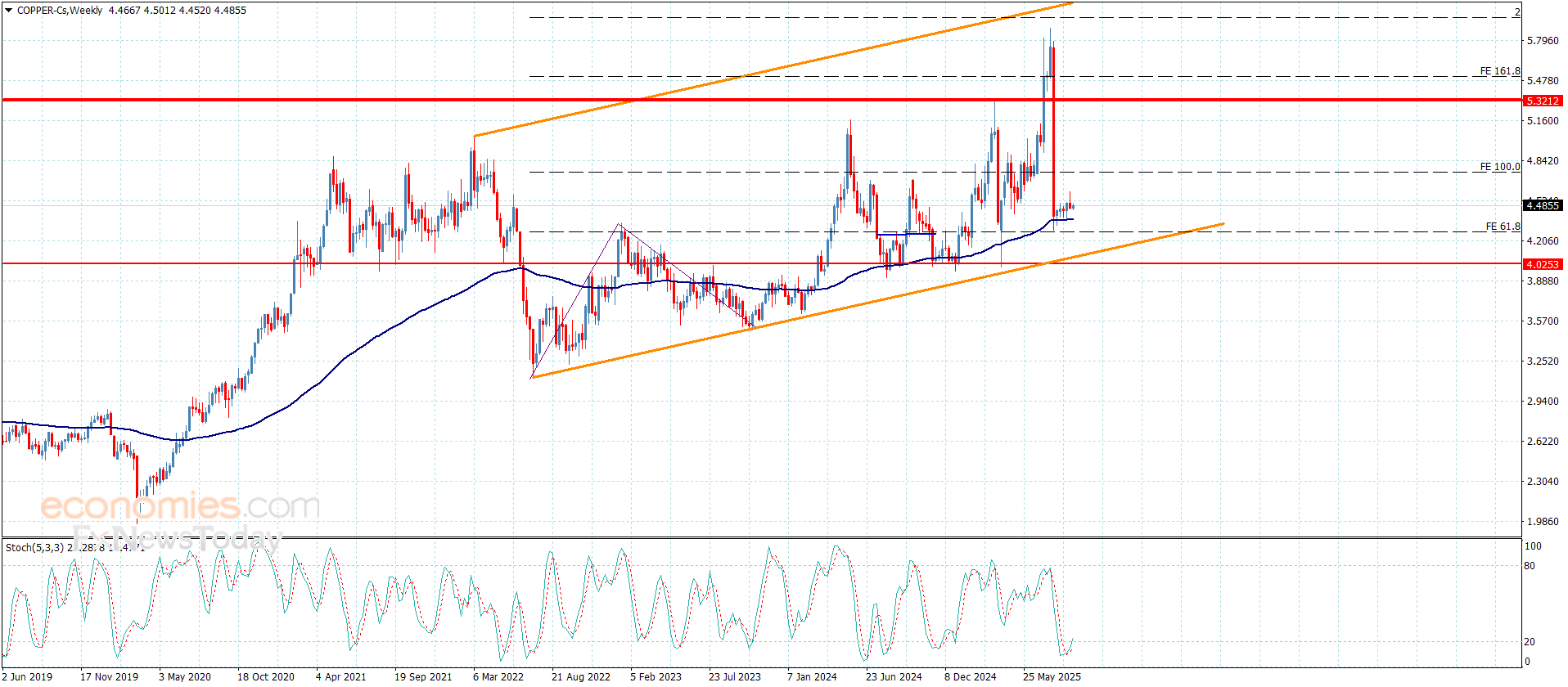
While tariffs and mining challenges dominate international copper headlines, the U.S. faces domestic supply pressures from theft. In California, Assembly Bill 476 was introduced to curb rampant copper wire thefts that have blacked out public infrastructure across Los Angeles. The bill, which passed committee by an 18-0 vote, would enforce stricter licensing for copper sellers, mandate reporting by recyclers, and revise penalties to reflect the full cost of damages. For utilities already squeezed by high copper prices, this legislation could provide a safeguard against mounting operational losses. The theft issue underscores how copper’s surging value, now flirting with all-time highs, has spilled into social and infrastructure vulnerabilities.
The convergence of a 50% U.S. tariff baseline, production disruptions in Chile, institutional repositioning in Brazil, and rising domestic theft in the U.S. has created a rare cocktail of volatility for HG=F copper futures. The divergence between COMEX at $13,000 per ton and LME prices under $10,000 shows just how fractured global copper pricing has become under tariff pressure. Investors must weigh whether these conditions justify further upside, or if the arbitrage window signals a corrective phase ahead. With Ero Copper beating on profits but facing selling from one of its largest institutional holders, and Capstone Copper balancing short-term operational strain against long-term project optimism, the equity side of the copper trade offers selective opportunity but rising risk.
Given the policy backdrop, copper’s outlook leans bullish in pricing but fragile in fundamentals. The tariff regime is poised to elevate costs across supply chains, but also incentivizes domestic investment. For investors in miners like FCX, ERO, and CS, the key question is whether operational execution can match market enthusiasm. At current levels, copper equities demand close scrutiny, with valuations likely to stretch further if tariffs translate into sustained price floors above $11,000 per ton on COMEX.
The crude market has entered September with a decisive downturn. WTI (CL=F) slid to $61.87 per barrel, down 2.54%, while Brent (BZ=F) closed at $65.50, losing 2.22%. These levels mark a 12% decline year-to-date and bring both benchmarks dangerously close to technical thresholds that traders see as pivotal for the next major move. The catalyst this time is OPEC+, with Saudi Arabia and its V8 allies signaling additional production increases of 137,000 barrels per day starting next month, potentially lifting supply by as much as 1.65 million bpd over the coming quarters. The decision was unexpected; only a week ago, analysts projected output stability. Instead, OPEC+ is pursuing market share even at the expense of price stability.
The message from Riyadh and Moscow is clear: short-term revenues are being sacrificed to weaken competitors and capture demand. Russia, facing heavy sanctions and tariffs from the U.S., has little choice but to monetize volumes even at discounted prices, while Saudi Arabia can lean on its low-cost production to endure prices closer to $60. This aggressive positioning has already pushed traders to reprice Brent toward $65 support. Should it break, technical projections point to a slide toward $60, mirroring the anticipated range outlined by the U.S. Energy Information Administration, which now sees Brent averaging $58 in Q4 2025. For WTI, the likely band is $58–$63, and a breach below $58 would trigger stop-driven selling.
The production story collides with fragile demand data. U.S. labor market figures show nonfarm payrolls grew only 22,000 in August, far below the 75,000 expected, while unemployment jumped to 4.3%, the highest in years. At the same time, continuing claims increased, leaving 7.4 million unemployed—already exceeding job openings at 7.2 million. Oil prices have historically tracked labor data closely because energy demand reflects industrial momentum. With consumer spending dampened by high services inflation—the ISM services price index hit 69.2%—oil traders are forced to price in recession risks alongside oversupply.
Charts for both WTI (CL=F) and Brent (BZ=F) reinforce the bearish fundamentals. WTI has broken down from a symmetrical triangle that defined much of 2024 and early 2025, now trending decisively lower through the $61 zone. A break beneath $60 would confirm a longer-term downtrend and could accelerate losses toward $55, where the next support cluster resides. Brent’s structure is equally weak, trading consistently under the 50-day SMA with long upper shadows rejecting every test above $69.50. Momentum indicators, including RSI below 50, point to sustained selling pressure. Without a bullish reversal candle, such as a bullish engulfing or three white soldiers pattern, rallies will be sold into.
President Trump’s trade policy has added another layer of volatility. Tariffs on India for Russian crude purchases put additional pressure on Asian importers to diversify away from Moscow, but it also raises landed costs at a time when consumption is slowing. European buyers remain divided, with Hungary and Slovakia still sourcing Russian oil, limiting the effect of U.S. sanctions. Meanwhile, Ukraine’s drone strikes on Russian refineries show that supply disruptions can flare unpredictably, but so far the net effect has been outweighed by OPEC+ production increases. China and India continue to secure cheap barrels, reducing the urgency to buy at higher global benchmarks, capping Brent’s upside.
The collapse in crude benchmarks is not uniform in its impact. Kolibri Global Energy (NASDAQ:KGEI) is demonstrating resilience even as market prices fall. The company reported Q2 2025 production of 3,220 boepd, up 3% year-over-year despite temporary shutdowns, and is guiding for a 24–32% surge in output during H2 2025 as nine new wells come online. Even with realized prices of just $47.06 per barrel, well below the WTI average of $63.63, Kolibri’s adjusted EBITDA reached $7.68 million for the quarter. Operating costs fell to $7.15/boe, down 16% from the prior year, showing scale efficiencies at work. At current forward production rates, EBITDA could hit $20 million in H2, giving Kolibri a forward EV/EBITDA multiple of 5.44, more attractive than the industry median of 5.99. Insider confidence is notable, with buybacks executed at $6.42 per share, well above the current $5.23 market price, signaling management’s belief in undervaluation.
Falling oil has macro feedback loops as well. Lower energy prices relieve some inflation pressure, giving the Federal Reserve room to cut rates. Futures now assign an 89% probability of a September cut, with some traders betting on 50 basis points. Yet financial cracks are emerging: Fed reserves have dropped below $3.2 trillion, credit conditions are tightening, and the Chicago Fed’s financial conditions index is signaling stress. Oil’s collapse is both a symptom and a trigger of these fragilities. If crude breaks $60 decisively, it may deepen the case for Fed easing, but also highlight global deflationary risks.
The oil market has shifted from balance to oversupply narrative within weeks. WTI (CL=F) at $61.87 and Brent (BZ=F) at $65.50 are vulnerable to another 5–10% decline if OPEC+ barrels materialize and U.S. economic weakness persists. Technicals, fundamentals, and macro all point to bearish continuation. That makes crude a Sell at these levels until there is evidence of production restraint or demand recovery. For equities exposed to crude, integrated majors remain at risk, but niche producers like KGEI offer relative protection with efficient cost structures and insider conviction. The broader energy complex, however, will remain under pressure unless Brent stabilizes above $65 and WTI reclaims the $63–$65 zone.