The main category of Forex News.
You can use the search box below to find what you need.
[wd_asp id=1]
The main category of Forex News.
You can use the search box below to find what you need.
[wd_asp id=1]
The 20-day average has become the centerpiece of recent price action. Prior to last week’s successful defense, three earlier pullbacks briefly undercut the line only to be immediately reclaimed; today’s instant rejection from the converged zone demonstrates progressively stronger demand and a clearly improving structural relationship with this critical benchmark.
With follow-through above today’s low, the $4.59 level will officially register as another higher swing low above last week’s $4.46 low print, extending the textbook series of higher lows that has defined the rally since the October bottom and reinforcing the underlying bullish trends integrity.
Bulls still need strong weekly conviction to deliver a sustained breakout above last week’s $4.81 lower swing high. Clearing that level erases the only bearish blemish on the chart and directly targets the March 2025 trend high near $4.95 alongside the full 88.6% Fibonacci retracement of the entire August-to-March bear move.
A sustained daily decline below the 20-day average and today’s $4.59 low would constitute the clearest bearish warning yet, immediately placing the November $4.46 swing low in jeopardy. Only a decisive break beneath that level would fully invalidate the higher high/higher low sequence and shift the intermediate trend bias.
Monday’s textbook defense of the 20-day/internal trendline confluence strongly favors continuation of the higher-low pattern and keeps buyers firmly in control. Protect the $4.59–$4.54 zone to maintain structural integrity and set up a weekly assault on $4.81 toward $4.95; sustained trade below the 20-day line would redirect attention to the November $4.46 low as the next make-or-break decision point.
For a look at all of today’s economic events, check out our economic calendar.
GBP/USD Year-End 2025 Forecast
Consensus from major banks.
Image © Adobe Images
The pound to dollar exchange rate (GBP/USD) could recover if this week’s budget set-piece does just enough to reassure investors that the UK isn’t facing an imminent debt crisis.
Budget 2026 will see the government lay out tax changes that will aim to generate between £20BN and £30BN, depending on who you ask.
That’s quite the range and opens the door to a host of outcomes that means the day should be an interesting one with the potential to generate notable volatility.
How much are you sending from pounds to dollars?
Your potential USD savings on this GBP transfer:
$318
By using specialist providers vs high street banks
Compare GBP to USD Rates Now →
Free comparison • No commitment required • Takes 2 minutes
One-week risk reversals on the options markets show investors are positioned for intraday volatility of about 1.0%, which is quite significant and tells us that those with pound into dollar payments, and vice versa, should be ready to act quickly on any beneficial moves.
Our partners at Horizon Currency are here to help you set up your pre-budget strategy. Just
The risk for GBP is that Chancellor Rachel Reeves fails the credibility test and that the announced tax hikes are judged by markets to be both inefficient and ineffective.
This could push UK bond yields higher and the pound lower, in a sign of distress akin to the Liz Truss mini-budget.
However, markets have sold sterling for weeks now in anticipation of a bad budget, meaning it’s already absorbed a hefty risk premium.
“The GBP has priced in a fiscal risk premium over the past month, with the broader USD rally also contributing to a lower GBPUSD,” says a note from the UBS Chief Investment Office.

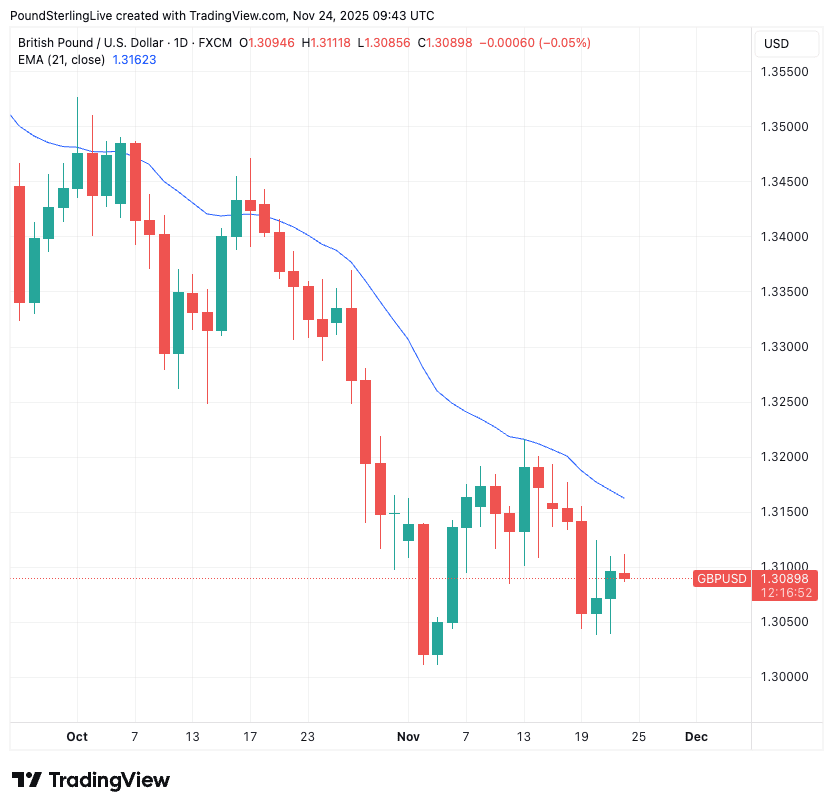
GBP/USD fell steadily through September and October, from 1.3650 to a low of 1.3010 on November 04, from where it has entered a sideways consolidation that tops out at 1.32.
With positioning still leaning one-sided against sterling, there’s a good chance (above 50%) that the market actually breathes a sigh of relief once the event has passed.
Just the lifting of uncertainty might be enough to trigger a rebound.
“The Autumn Budget presents a two-sided risk, but we expect the fiscal risk premium to be priced out after the event, supporting GBPUSD toward 1.34 by year-end,” says UBS CIO.
“With heightened market attention, the government’s main priority is to reassure fiscal soundness by adhering to fiscal rules and increasing headroom. We think they will deliver just that, which should translate into the removal of GBP’s risk premium and a boost to GBPUSD,” adds the note.
The Budget: What to Watch
The government heads into the 26 November Autumn Budget with an estimated £20bn deterioration in fiscal headroom against the deficit rule.
Goldman Sachs expects the Chancellor to deliver a £25bn net fiscal consolidation (0.7% of GDP), raising headroom to around £15bn after new measures.
A larger adjustment to household energy bills is now anticipated, costing £4.3bn initially, replacing the previously expected VAT cut.
A freeze in fuel duty and extension of the temporary 5p cut remains expected, costing £3bn in FY2026.
Spending cuts look set to be modest at around £3bn, with departmental budgets broadly unchanged through FY2028.
Welfare changes include around £1bn in savings but also the full lifting of the two-child benefit cap, costing £3.5bn.
This means around £30bn of tax increases will be needed, likely delivered through a package of smaller measures rather than income tax rate rises.
Extending personal tax threshold freezes to 2030 is expected to raise £10bn, with other measures spanning council tax, pensions, CGT and gambling.
New measures are expected to deliver a 0.2% cumulative drag on demand, while energy-related policies should reduce headline inflation by 0.4pp in 2026.
OBR forecasts are likely to show higher CGNCR in FY2025 (+£8bn) but little change in FY2026, with downward revisions later due to lower borrowing and reduced APF losses.
T-Mobile US (TMUS) declined in its latest intraday trading, under the dominance of a primary short-term downtrend with movement aligned to a descending minor trendline supporting this path. Persistent negative pressure continues as the stock trades below its 50-day simple moving average, and additionally, a clear bearish divergence has formed on the Relative Strength Indicators after they reached extremely overbought levels, exaggerated relative to the price action, with fresh negative signals emerging.
Therefore, we expect the stock to decline in the upcoming trading sessions, as long as resistance at the price level of $218.35 remains intact, targeting the key support level of $199.40.
Today’s price forecast: Bearish
BitcoinWorld
USD/JPY Forecast: Morgan Stanley’s Shocking Prediction of 140 Drop Revealed
Forex markets are buzzing with Morgan Stanley’s latest USD/JPY forecast predicting a dramatic drop to 140. This surprising prediction comes at a time when cryptocurrency traders are closely watching traditional currency movements for cross-market opportunities. The investment bank’s analysis suggests significant shifts in global currency dynamics that could impact digital asset valuations and trading strategies.
Morgan Stanley’s research team has released a comprehensive USD/JPY forecast that challenges current market consensus. Their analysis points to several key factors driving this prediction:
The Morgan Stanley analysis employs sophisticated quantitative models combined with fundamental research. Their team examines multiple scenarios including:
| Scenario | Probability | Target Level |
|---|---|---|
| Base Case | 60% | 140 |
| Bearish Case | 25% | 135 |
| Bullish Case | 15% | 155 |
The projected yen strength stems from multiple fundamental drivers. Bank of Japan policy normalization appears increasingly likely as inflation pressures build. Meanwhile, Japan’s current account surplus provides structural support for the currency. Technical analysis also suggests the yen is oversold after years of weakness, setting the stage for a meaningful reversal.
Morgan Stanley’s forecast reflects concerns about dollar weakness extending beyond just the JPY pair. The US currency faces headwinds from potential Fed rate cuts, growing fiscal concerns, and shifting global reserve allocation patterns. This dollar weakness could have significant implications for cryptocurrency markets, particularly stablecoins and cross-border trading pairs.
For forex trading professionals, this forecast requires careful consideration of position sizing and risk management. Key actionable insights include:
What timeframe does Morgan Stanley project for USD/JPY reaching 140?
The analysis suggests this level could be reached within the next 6-12 months, depending on policy developments.
How does this forecast compare to other major banks?
Morgan Stanley appears more bearish on USD/JPY than most competitors, who generally see more limited downside.
What are the main risks to this forecast?
Unexpected Fed hawkishness or delayed BOJ normalization could delay or prevent the projected move.
How should cryptocurrency traders interpret this forecast?
Currency movements often correlate with crypto markets, particularly affecting JPY trading pairs and stablecoin flows.
Which companies are most affected by USD/JPY movements?
Japanese exporters like Toyota and Sony benefit from yen weakness, while US companies with Japanese operations face currency headwinds.
Morgan Stanley’s bold USD/JPY forecast to 140 represents a significant shift in currency market expectations. The combination of yen strength and dollar weakness creates both challenges and opportunities for traders across all asset classes. As global monetary policies diverge and economic conditions evolve, staying informed about currency dynamics becomes increasingly crucial for successful portfolio management.
To learn more about the latest Forex market trends, explore our article on key developments shaping currency pairs and interest rates institutional adoption.
This post USD/JPY Forecast: Morgan Stanley’s Shocking Prediction of 140 Drop Revealed first appeared on BitcoinWorld.
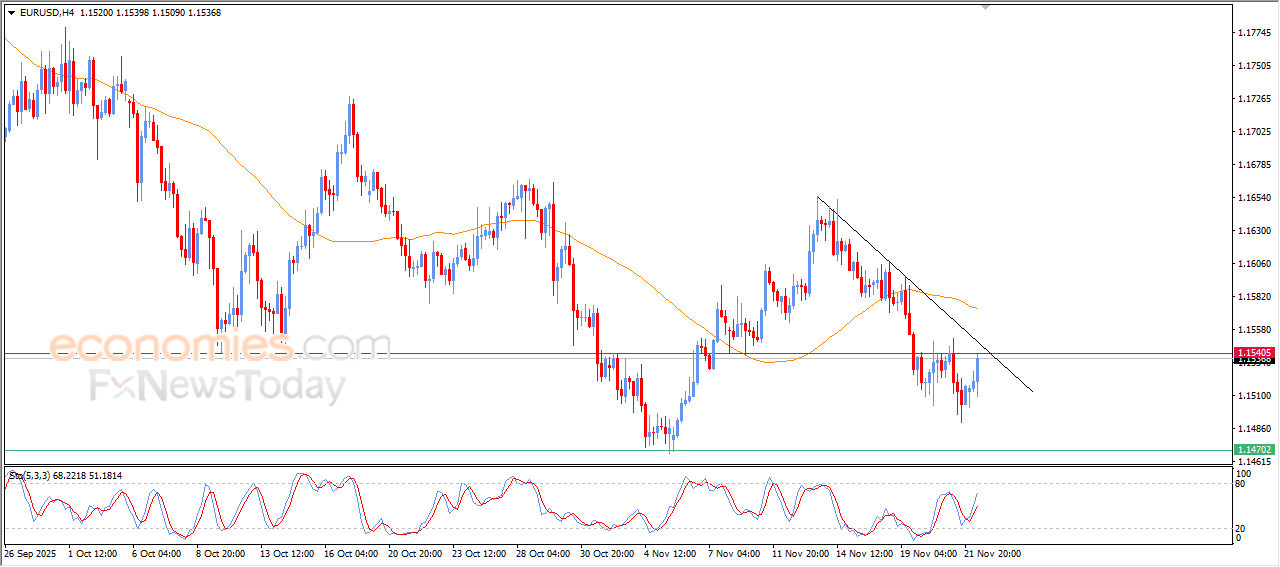
EUR/USD trades around 1.1540 on Monday, up 0.20% on the day, extending Friday’s rebound from 1.1490. The move reflects a moderate recovery in risk sentiment, while the US Dollar loses momentum as easing expectations continue to build.
The table below shows the percentage change of Euro (EUR) against listed major currencies today. Euro was the strongest against the Japanese Yen.
| USD | EUR | GBP | JPY | CAD | AUD | NZD | CHF | |
|---|---|---|---|---|---|---|---|---|
| USD | -0.13% | 0.07% | 0.39% | 0.14% | 0.13% | 0.17% | -0.01% | |
| EUR | 0.13% | 0.20% | 0.53% | 0.27% | 0.27% | 0.30% | 0.13% | |
| GBP | -0.07% | -0.20% | 0.33% | 0.07% | 0.07% | 0.09% | -0.07% | |
| JPY | -0.39% | -0.53% | -0.33% | -0.25% | -0.26% | -0.21% | -0.38% | |
| CAD | -0.14% | -0.27% | -0.07% | 0.25% | -0.00% | 0.02% | -0.14% | |
| AUD | -0.13% | -0.27% | -0.07% | 0.26% | 0.00% | 0.03% | -0.13% | |
| NZD | -0.17% | -0.30% | -0.09% | 0.21% | -0.02% | -0.03% | -0.16% | |
| CHF | 0.00% | -0.13% | 0.07% | 0.38% | 0.14% | 0.13% | 0.16% |
The heat map shows percentage changes of major currencies against each other. The base currency is picked from the left column, while the quote currency is picked from the top row. For example, if you pick the Euro from the left column and move along the horizontal line to the US Dollar, the percentage change displayed in the box will represent EUR (base)/USD (quote).
Markets remain focused on the increasingly accommodative tone coming from the Federal Reserve (Fed). After New York Fed President John Williams suggested last Friday that policy was now “modestly restrictive” and that there was “room for further adjustment in the near term”, investors were encouraged again on Monday by remarks from Governor Christopher Waller, who said he would advocate for a rate cut at the December meeting, noting that recent data show “not much change” in the inflation-employment balance and highlighting persistent weakness in the labor market.
This shift has significantly strengthened easing expectations. According to the CME FedWatch tool, markets now assign nearly a 70% chance to a 25-basis-point rate cut in December, up from roughly 50% at the end of last week.
In the Eurozone, however, the backdrop remains more fragile. Monday’s IFO survey showed that German business sentiment deteriorated further in November, with the headline index falling to 88.1 from 88.4, against expectations for an improvement. The small uptick in the Current Assessment index was overshadowed by a sharp decline in Expectations, down to 90.6, confirming that Germany’s recovery remains slow and uneven. An element that limits upside potential for the Euro (EUR).
This follows Friday’s Purchasing Managers Index (PMI) releases, which revealed renewed contraction in Eurozone Manufacturing activity and a slowdown in Services. The region’s subdued momentum continues to prevent the Euro from attracting more sustained inflows, even though the broader market mood is improving.
In the United States (US), last week’s S&P Global PMIs and the Michigan Consumer Sentiment Index painted a mixed but broadly softening picture of the economy. The data reinforced the narrative of a gradual cooling, giving markets confidence that the Fed can safely shift toward policy easing. The dovish messaging from Fed policymakers largely overshadowed these developments.
While Monday’s economic calendar remains light, traders are already preparing for a high-impact Tuesday, featuring several economic data sets in the Eurozone and especially in the US.
These releases could redefine short-term direction for both the US Dollar and the Euro, and will likely play a decisive role in shaping EUR/USD this week. If US data confirm further cooling, the pair may extend its recovery. Conversely, stronger-than-expected US inflation or consumption figures could quickly restore support for the Greenback and cap the Euro’s current rebound.
In the 4-hour chart, EUR/USD trades at 1.1541, up for the day and 25 pips above the day opening. The 100-period Simple Moving Average (SMA) edges lower at 1.1554, and the pair holds beneath it, keeping rallies contained. A close above this average would ease bearish pressure. The Relative Strength Index (RSI) prints 50 (neutral) after a rebound from oversold, hinting at stabilizing momentum. Immediate resistance stands at 1.1550.
The descending trend line from 1.1819 limits gains, with resistance seen at 1.1624. Support is seen at 1.1500, followed by 1.1470. A break of 1.1550 would open a run toward 1.1624 and 1.1820, while rejection under the moving average would leave the bias heavy and expose 1.1500.
(The technical analysis of this story was written with the help of an AI tool)
Comments from key Fed officials contributed to this shift. New York Fed President John Williams said policymakers could still adjust rates in the “near term,” while Fed Governor Stephen Miran noted recent payroll data supports December easing, adding he would favor a 25-bp cut if he held a vote.
Boston Fed President Susan Collins remains undecided, maintaining some uncertainty.
The University of Michigan’s November Consumer Sentiment Index edged up to 51, above the preliminary 50.3, though below October’s 53.6 reading. Inflation expectations eased slightly: the one-year outlook dipped to 4.5% from 4.7%, and the five-year measure declined to 3.4% from 3.6%.
The data suggests households are marginally more confident, though still cautious about inflation.
Despite last week’s rally, the dollar faces headwinds as traders weigh rising rate-cut expectations against mixed Fed commentary. With PPI data and additional Fed remarks ahead, investors are adopting a more cautious stance.
Near-term performance will likely hinge on incoming inflation and labor data, alongside clearer signals from policymakers. A confirmed shift toward easing would keep the dollar under pressure into year-end.
The EURNZD price is forced to form mixed trading, despite its stability within the bullish channel’s levels, affected by the strength of the barrier of 2.0635, fluctuating near 2.0550 level, taking advantage of the continuation of the support stability at 2.0410, increasing the chances of gathering the required bullish momentum of resuming the bullish attack.
Stochastic fluctuation below 80 level confirms the effect of the temporary sideways bias dominance, to keep waiting for gathering bullish momentum to ease the mission of surpassing the barrier at 2.0635, to begin targeting the extra stations near 2.0700 and 2.0760.
The expected trading range for today is between 2.0475 and 2.0635
Trend forecast: Bullish
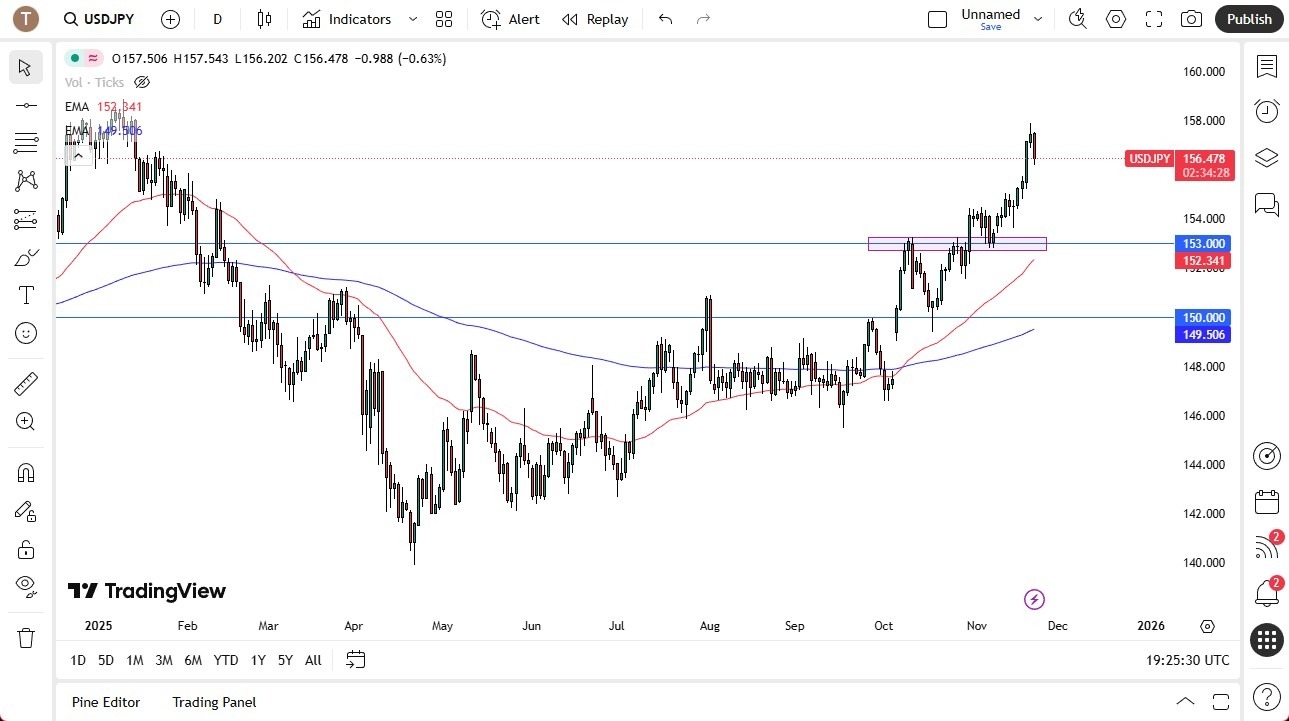
The US dollar dropped against the Japanese yen rather quickly during the trading session on Friday, as we are testing the 156.50 yen level. That being said, we are seeing a little bit of a bounce at this point at the end of the session, and it suggests that we continue to see a little bit of hesitation on the downside. Even if we do fall from here, we will likely continue to see plenty of buyers near the 155 yen level, followed by the 154 yen level, and then ultimately the 153 yen level, where the 50-day EMA is racing toward it.

The 158 yen level has been a bit of a barrier, and that’s not a huge surprise considering that it’s been important in the past. But I look at this through the prism of a market that has a major interest rate differential, and therefore, you have to keep in mind that a lot of professional traders are collecting swap at the end of the session.
Ultimately, it’s not until we are looking at this as a market that cannot be shorted anytime soon, and really, it’s not until we break down below the 150 yen level. All things being equal, this is a very volatile market, but with the Bank of Japan in a situation where they may not be able to tighten monetary policy anytime soon, and after the most recent election, it certainly looks like there won’t be the political will. I do think it’s probably only a matter of time before we go higher, but this pullback makes sense as people may have been taking profit heading into the weekend.
Want to trade our USD/JPY forex analysis and predictions? Here’s a list of forex brokers in Japan to check out.
Christopher Lewis has been trading Forex and has over 20 years experience in financial markets. Chris has been a regular contributor to Daily Forex since the early days of the site. He writes about Forex for several online publications, including FX Empire, Investing.com, and his own site, aptly named The Trader Guy. Chris favours technical analysis methods to identify his trades and likes to trade equity indices and commodities as well as Forex. He favours a longer-term trading style, and his trades often last for days or weeks.
The EUR/USD forecast remains slightly up on Monday, as renewed odds of a December Fed rate cut have pressured the US dollar. The pair stays steady above the 1.1500 level as the Dollar Index pulls back while the ECB’s interest rate outlook remains stable.
-Are you looking for the best AI Trading Brokers? Check our detailed guide-
The New York Fed President William’s comments suggested that labor market risks outweigh concerns about inflation. This pushes rate cut expectations, with markets reacting swiftly. The CME FedWatch tool now shows a 70% probability of a rate cut, up from 30% last week.
Still, the Fed’s outlook remains mixed, with other officials, such as Lorie Logan and Susan Collins, cautioning against premature easing. These comments have limited dollar selling, but the broader narrative tilts toward policy loosening.
On the European side, the ECB is widely expected to keep interest rates unchanged in December, supported by stable inflation at around 2% and resilient labor markets. This has kept the EUR/USD safe from downside shocks.
Markets now focus on Germany’s IFO Business Climate Survey, projected to tick up to 88.5. Before the data release, the pair appears to be supported by a firm ECB, reigniting speculation about Fed rate cuts.
Strategists maintain a positive medium-term outlook for the euro, as Danske Bank expects the pair to move to 1.2200 over the next 12 months, as rate differentials narrow. Meanwhile, Morgan Stanley forecasts 1.23 by mid-2026 but anticipates a subsequent pullback.
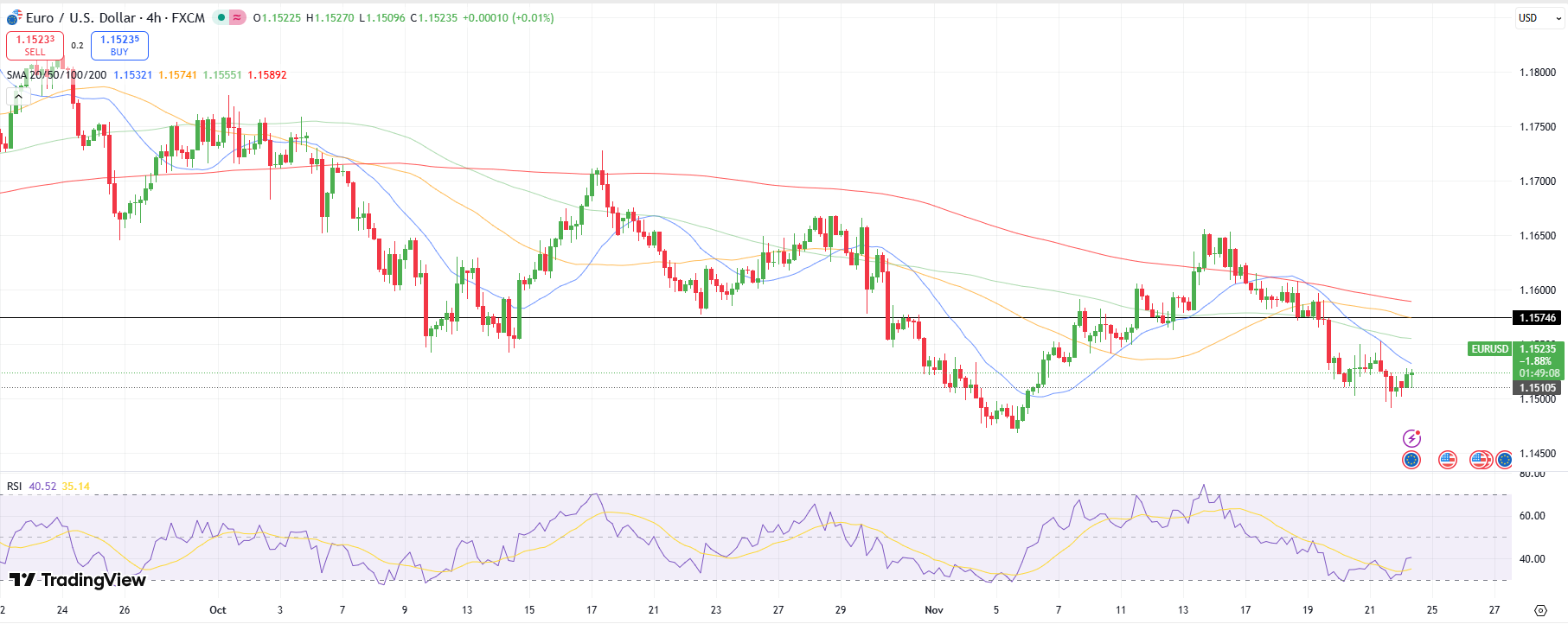
The EUR/USD 4-hour chart shows a mild bearish tilt as the price remains below the 20-period MA but is supported by the 1.1500 level ahead of swing low support near 1.1470. The RSI staying below the 50.0 mark, pointing south, suggests more weakness.
-Are you looking for the best MT5 Brokers? Check our detailed guide-
However, the overall trend remains one of consolidation, looking for a catalyst to trigger a breakout. If a bullish surprise occurs, the price could test the ultimate resistance near the 200-period MA at 1.1590.
Looking to trade forex now? Invest at eToro!
75% of retail investor accounts lose money when trading CFDs with this provider. You should consider whether you can afford to take the high risk of losing your money.
The EURNZD price is forced to form mixed trading, despite its stability within the bullish channel’s levels, affected by the strength of the barrier of 2.0635, fluctuating near 2.0550 level, taking advantage of the continuation of the support stability at 2.0410, increasing the chances of gathering the required bullish momentum of resuming the bullish attack.
Stochastic fluctuation below 80 level confirms the effect of the temporary sideways bias dominance, to keep waiting for gathering bullish momentum to ease the mission of surpassing the barrier at 2.0635, to begin targeting the extra stations near 2.0700 and 2.0760.
The expected trading range for today is between 2.0475 and 2.0635
Trend forecast: Bullish