The main category of Forex News.
You can use the search box below to find what you need.
[wd_asp id=1]
The main category of Forex News.
You can use the search box below to find what you need.
[wd_asp id=1]
Gold markets have been bullish again during the course of the week as we broke above the $3500 level. The $3500 level has been like a ceiling in this market for some time and breaking above there obviously will attract a lot of headlines. However, it is probably worth noting that the Friday session is rolling back over so I don’t know that we have the momentum to truly clear this area quite yet. Regardless, this remains a “buy on the dips” type of market. I have no interest in shorting this market although I fully anticipate that it could pull back just a bit.
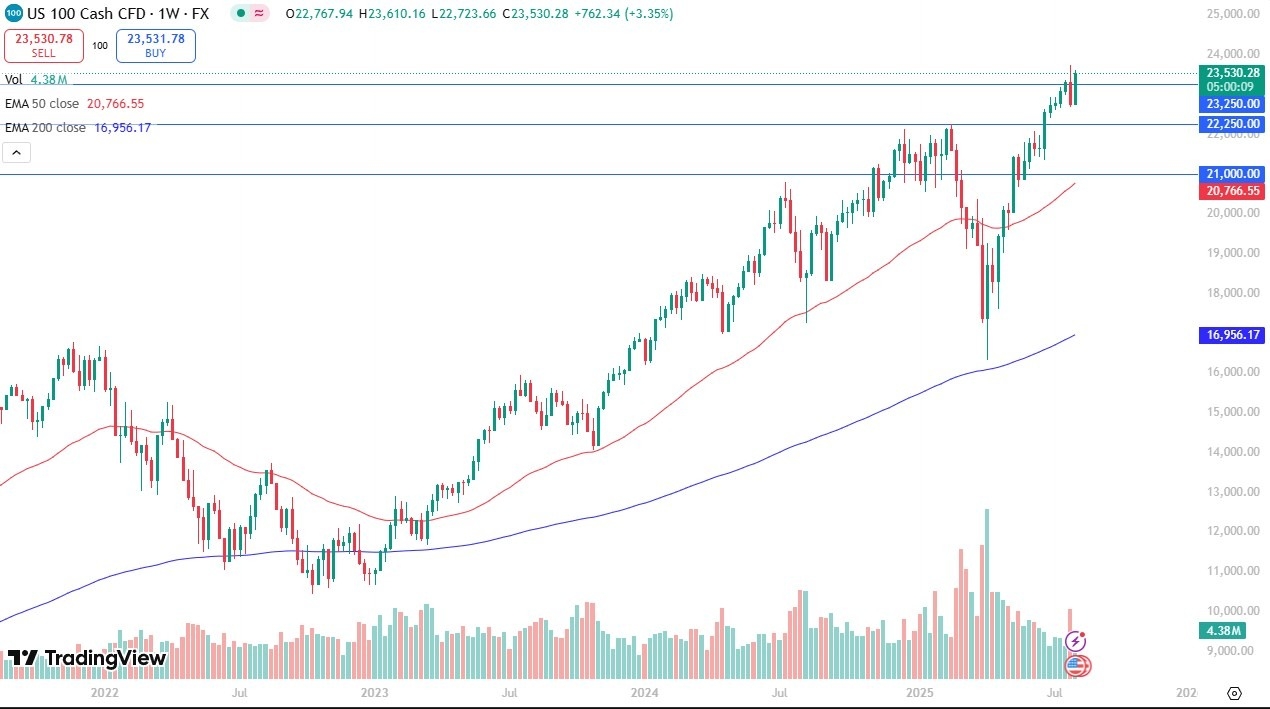
The NASDAQ 100 rallied during the course of the week, breaking above the 23,250 level again. We have essentially wiped out 80% or so of the losses from the previous week, so it does look like we might be either getting ready to consolidate in an area right around here, or perhaps we are trying to turn around and break above the top of the candlestick from the previous week. I think it does make a certain amount of sense that we see consolidation in the short term, mainly due to the fact that it is August, and the volume suddenly disappears as traders are more worried about vacation. Regardless, the one thing I won’t do is try to short this market.
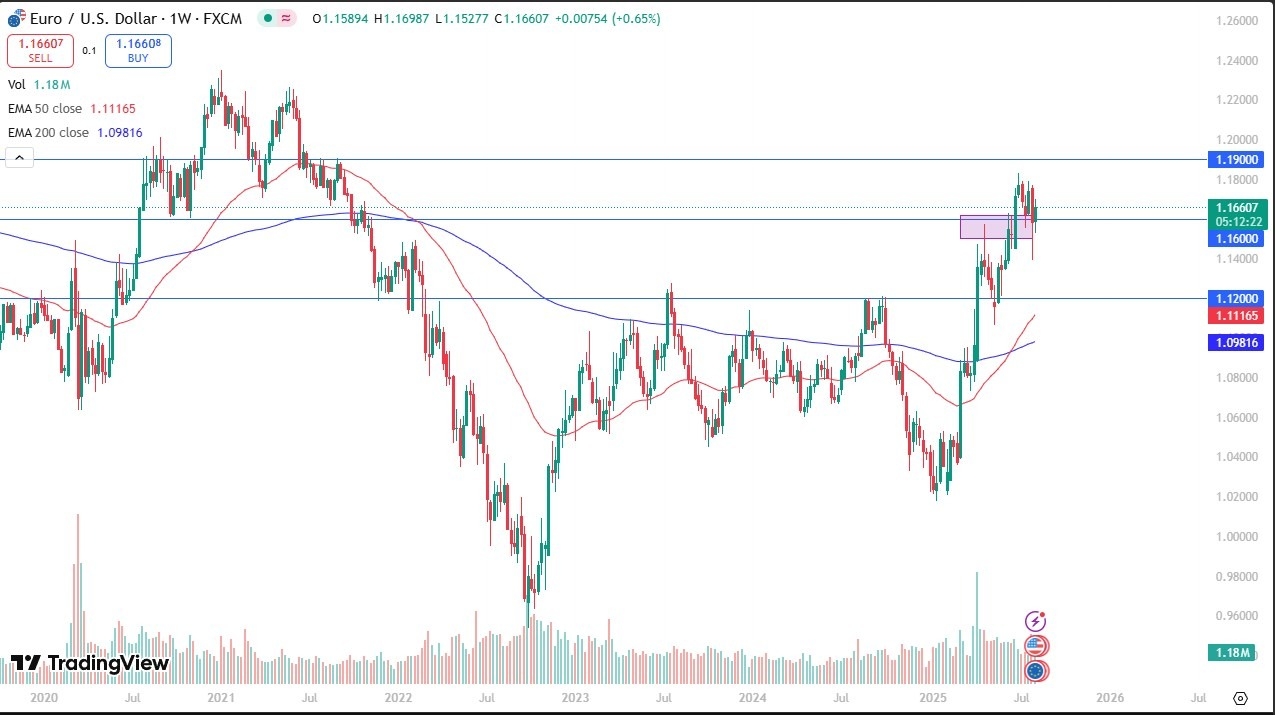
The Euro rallied during the week, but it is worth noting that we are getting a little bit softer over the last couple of weeks, as we continue to just hang out in the 1.16 level. We are still in the midst of consolidation, so I’m not ready to make some big proclamation here, but I would say that if we broke down below the bottom of the candlestick from the previous week, meaning the 1.14 level, that would be very ugly for the euro. On the other hand, if we can break above the 1.18 level, then perhaps we can go much higher.

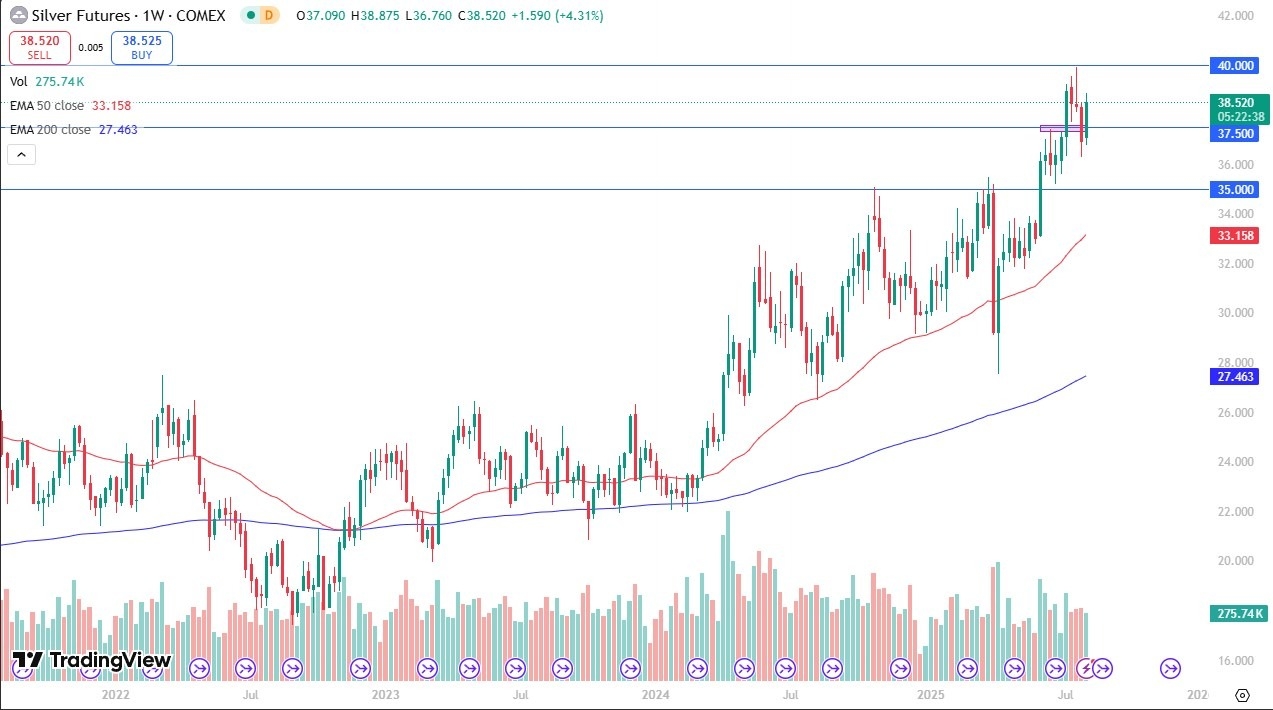
Silver has been very bullish during the course of the week as we have cleared the $37.50 level again. The $37.50 has been important multiple times on the daily chart and has offered both support and resistance. Because of this, I’m watching that very closely as the market will continue to be very noisy, but I think given enough time we will probably revisit the $40 level. If we can break above the $40 level, then it’s likely that silver will continue to go much higher were to turn around and break down below the $36.50 level, then silver may have some correction ahead.
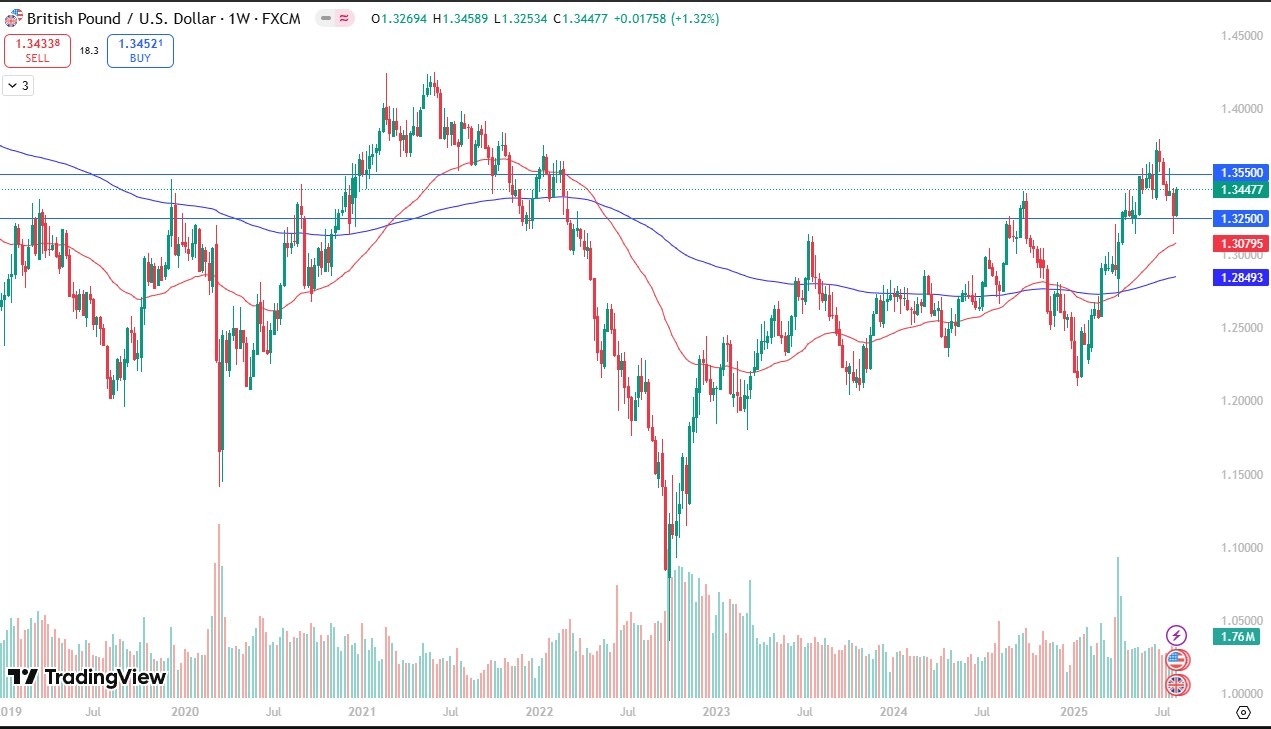 The British pound has rallied pretty significantly during the trading week as the 1.3250 level has offered a bit of a floor. Ultimately, the market looks as if it will try to get to the 1.3550 level, an area that’s been resistant. On the other hand, if we were to break down below the 1.3250 level, then it’s likely that the British pound could drop down to the 50 Week EMA. After that, we could be looking at a move down to the 1.2850 level where the 200 Week EMA currently resides.
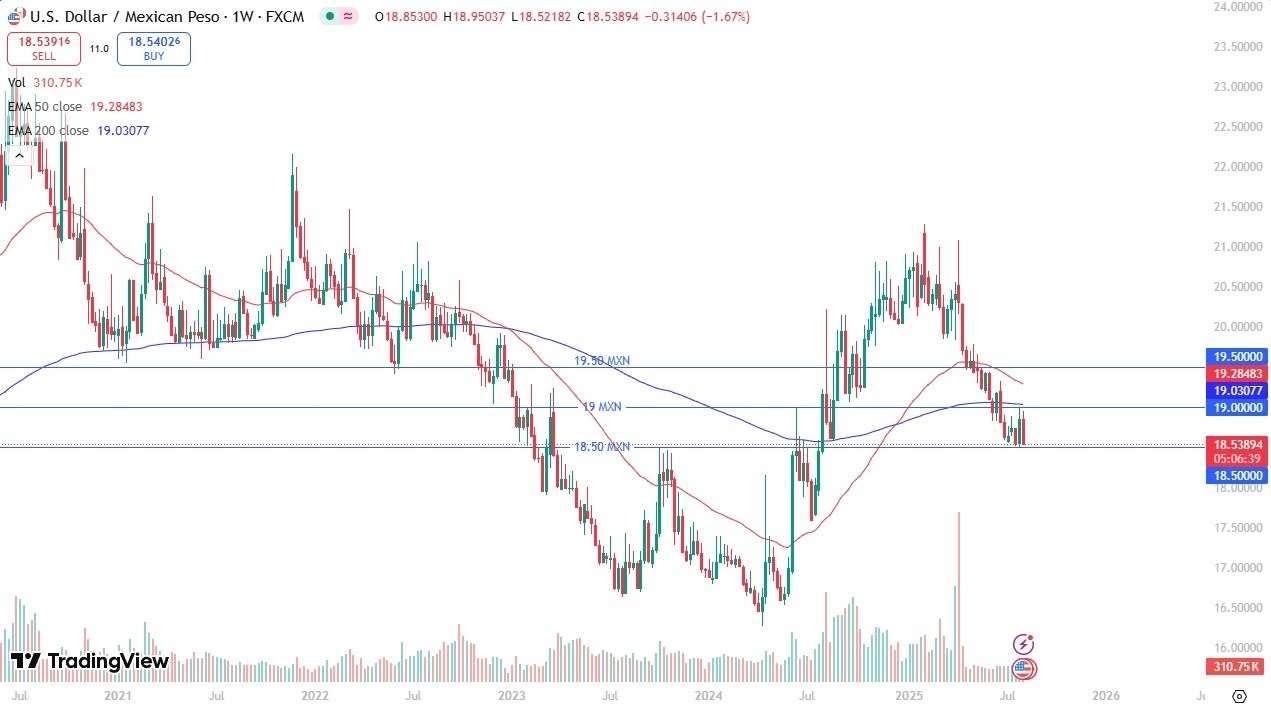
The US dollar initially tried to rally against the Mexican peso during the week, but the 19 MXN level has offered a bit of a ceiling. As we close the week, it looks like we are sitting just above the 18.50 MXN level, which opens up the move down to the 17.50 MXN level. Ultimately, this is a pair that could go as low as 16.50 MXN, but it will take some time to get down there. Keep in mind that the interest rate differential continues to favor the Mexican peso, and I think in the environment where the Mexicans were given 90 more days as an extension to tariffs, it will start to feel a bit better about the Mexican economy overall.
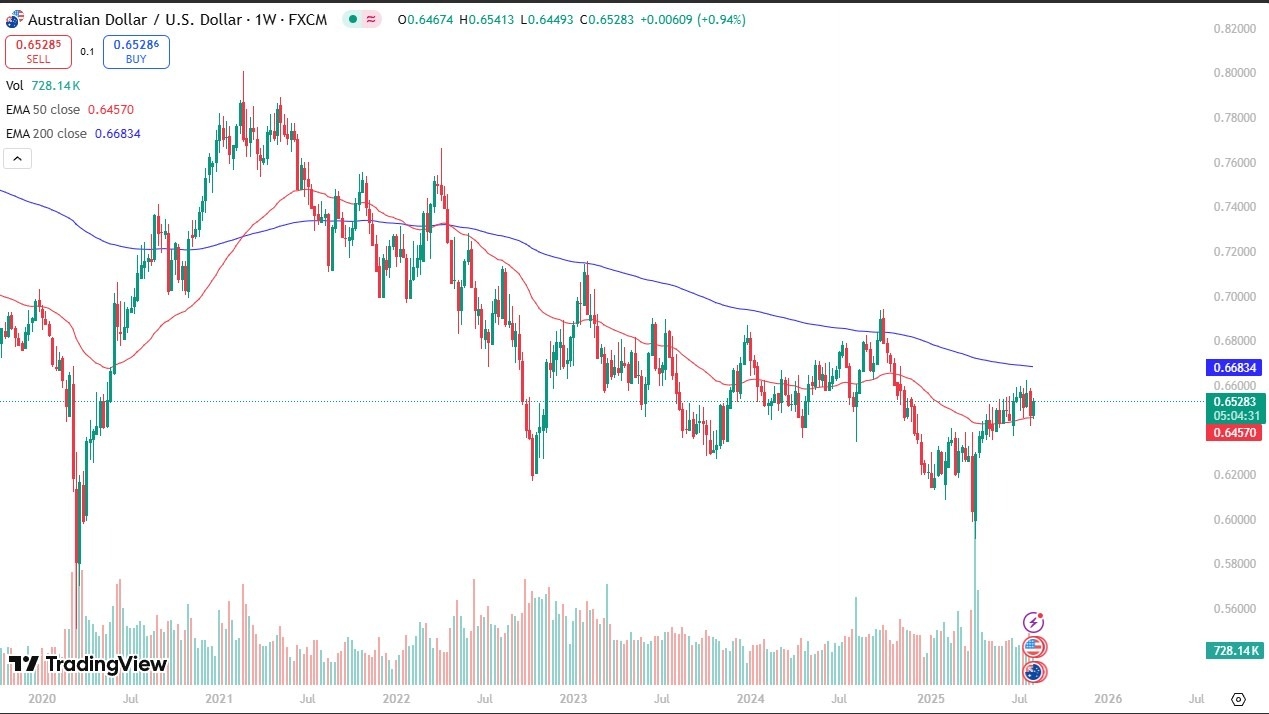
The Australian dollar has been bullish during the course of the week, but still finds itself hanging around the 0.6550 level, a place that’s been like a magnet for price all summer. If we turn around a break down below the bottom of the candlestick from the previous week, then it’s possible that the Australian dollar could drop down to the 0.62 level. On the other hand, if we can somehow break above the 0.66 level, then the Australian dollar may have a real shot at going higher. Ultimately, this is a market that has been very choppy and somewhat sideways.
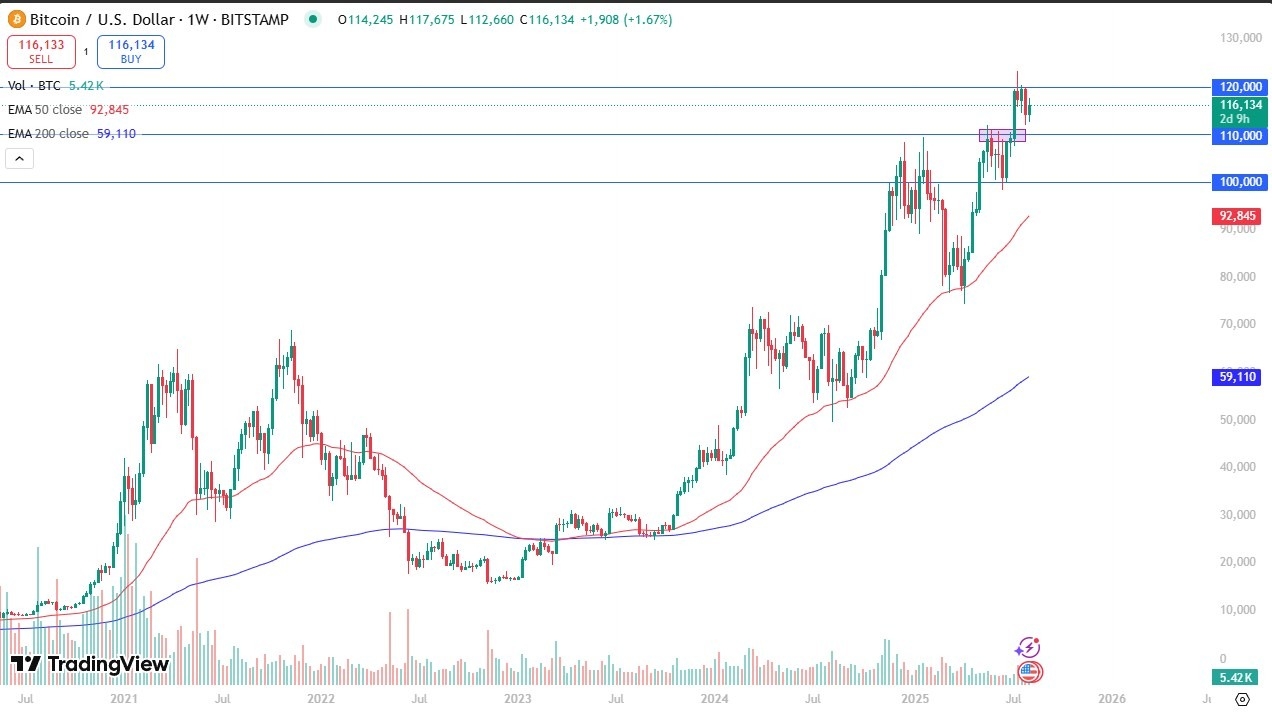
Bitcoin has gone back and forth during the course of the week, after initially pulling back. That being said, we still see the $120,000 level above is a significant barrier, and if we can break above that level, then it’s likely that Bitcoin will continue to go much higher, perhaps reaching the $130,000 level next, as this market does like to move in $10,000 increments. At this point, it looks like the $110,000 level is a bit of a floor.
Ready to trade our Forex weekly forecast? We’ve shortlisted the best forex trading accounts to choose from.
The GBP/USD weekly forecast shows a drop in BoE rate cut expectations after a divided vote at the last meeting.
The GBP/USD pair ended the week bullish as the pound rallied after an unexpected Bank of England policy meeting. At the same time, the dollar eased amid an increase in Fed rate cut expectations, allowing sterling to climb.
–Are you interested to learn more about ECN brokers? Check our detailed guide-
The BoE cut interest rates as expected last week. However, policymakers had to vote twice before deciding. Nearly half the officials were ready to keep interest rates unchanged due to the high inflation in the UK. As a result, future rate cut expectations fell and the pound rallied.
Meanwhile, in the US, data on business activity and unemployment claims further supported rate cut bets, weighing on the dollar.
Next week, the UK will release employment figures, manufacturing production, and GDP data. Meanwhile, the US will release inflation and retail sales figures. The UK economy has fared poorly according to recent economic data, especially in the labor market. Another set of downbeat employment figures could increase expectations for more BoE rate cuts, hurting the pound.
Meanwhile, in the US, rate cut bets have risen sharply due to a slowdown in the labor market. However, bets might drop with another upbeat employment report.

On the technical side, the GBP/USD price has broken above the 22-SMA, indicating a bullish shift in sentiment. At the same time, the RSI has broken above 50, suggesting stronger bullish momentum. Initially, the price had started showing signs of a downtrend. It broke below the SMA, retested it, and made a lower low.
–Are you interested to learn more about day trading brokers? Check our detailed guide-
However, at the 1.3151 support, bulls emerged with renewed strength and pushed the price above the SMA. However, bulls must now break above the 1.3451 key level. Such a move would clear the path for the price to retest the 1.3803 resistance level. Meanwhile, a break above this level would resume the previous uptrend.
However, there is also a chance that the price might fail to break above the 1.3451 resistance. In such a case, the price would drop to retest the 1.3151 support level. A break below would resume the downtrend.
Looking to trade forex now? Invest at eToro!
68% of retail investor accounts lose money when trading CFDs with this provider. You should consider whether you can afford to take the high risk of losing your money.
Silver Price advances for the fourth time in the week, poised to end above $38.00 a troy ounce and close to weekly highs of $38.50 as traders prepare for the weekend. Broad US Dollar weakness across the board and increasing bets that the Federal Reserve might reduce rates at the September meeting, supported the grey metal advance.
XAG/USD trades with daily gains of 0.24%, set to end the week up by more than 3.50%.
XAG/USD sits $1.50 shy of resting the yearly high after retreating below the 20-day Simple Moving Average (SMA) to test the 50-day SMA at 36.20 on July 31.
Since then, Silver has rallied more than 6%, sparked by the formation of a ‘bullish harami,’ confirmed by the crucial breach of the July 31 high of $37.26. The grey metal climbed sharply and cleared the 20-day SMA at $38.06, further cementing its upward bias.
However, buyers need to breach the $39.00 so they can test the YTD high of $39.52, before challenging $40.00. On the flip side, although momentum is bullish, confirmed by price action and the Relative Strength Index (RSI), traders could not price out a reversal.
If Silver dives below the 20-day SMA and $38.00, then sellers could pile on to push prices toward $37.00, aimed to test the 50-day SMA at $36.85.
Silver is a precious metal highly traded among investors. It has been historically used as a store of value and a medium of exchange. Although less popular than Gold, traders may turn to Silver to diversify their investment portfolio, for its intrinsic value or as a potential hedge during high-inflation periods. Investors can buy physical Silver, in coins or in bars, or trade it through vehicles such as Exchange Traded Funds, which track its price on international markets.
Silver prices can move due to a wide range of factors. Geopolitical instability or fears of a deep recession can make Silver price escalate due to its safe-haven status, although to a lesser extent than Gold’s. As a yieldless asset, Silver tends to rise with lower interest rates. Its moves also depend on how the US Dollar (USD) behaves as the asset is priced in dollars (XAG/USD). A strong Dollar tends to keep the price of Silver at bay, whereas a weaker Dollar is likely to propel prices up. Other factors such as investment demand, mining supply – Silver is much more abundant than Gold – and recycling rates can also affect prices.
Silver is widely used in industry, particularly in sectors such as electronics or solar energy, as it has one of the highest electric conductivity of all metals – more than Copper and Gold. A surge in demand can increase prices, while a decline tends to lower them. Dynamics in the US, Chinese and Indian economies can also contribute to price swings: for the US and particularly China, their big industrial sectors use Silver in various processes; in India, consumers’ demand for the precious metal for jewellery also plays a key role in setting prices.
Silver prices tend to follow Gold’s moves. When Gold prices rise, Silver typically follows suit, as their status as safe-haven assets is similar. The Gold/Silver ratio, which shows the number of ounces of Silver needed to equal the value of one ounce of Gold, may help to determine the relative valuation between both metals. Some investors may consider a high ratio as an indicator that Silver is undervalued, or Gold is overvalued. On the contrary, a low ratio might suggest that Gold is undervalued relative to Silver.
Friday’s advance to $3,409 positions gold near the top of its symmetrical triangle, formed after a robust rally from the April swing low. The rise from that low to the April high and record high of $3,500, was a $543 move (18.4%). It showcased accelerated bullish momentum before consolidating.
A weekly close above $3,409 would reinforce this strength, keeping the breakout scenario alive. However, failure to sustain above the triangle’s upper trendline could trigger a pullback to test support, maintaining the pattern’s integrity for now. Given the long-term bull trend, the most likely resolution is an eventual upside breakout.
The $3,439 level is critical resistance for a triangle breakout, potentially opening the door to a test of the record high at $3,500. A sustained move above $3,500 could drive gold to new trend highs, with a measured move from the July swing low of $3,268 projecting a target of $3,811. Alternatively, using the triangle’s height, a breakout could aim for $3,623.
On the downside, a pullback to the triangle’s lower trendline or support near the 20-day and 50-day moving averages ($3,355 and $3,350, respectively) remains possible. These levels, coinciding with the July low, form a key support zone to watch, plus of course the lower boundary line of the triangle.
Traders should focus on the $3,439 resistance level for breakout confirmation. A decisive close above this level signals bullish continuation, targeting $3,500 and potentially $3,623–$3,811, offering swing traders attractive entries. Conversely, a rejection at the triangle’s upper trendline could lead to a pullback toward $3,353–$3,347, where aggressive traders might seek buying opportunities. Short-term traders could fade a failed breakout if prices retreat below $3,409. With gold approaching this critical juncture, the next few sessions will determine whether it breaks out to new highs or consolidates further within the triangle pattern.
For a look at all of today’s economic events, check out our economic calendar.
Silver (XAG/USD) is trading higher on Friday and on track for a 3.5% weekly rally from $31.20 lows, but the precious metal is struggling to find acceptance in the upper range of the $38.00s, which might lead to some bearish correction.
The Fundamental background remains favourable, with recent US data putting pressure on the US Dollar to lower interest rates, but comments from St Louis Fed President Raphael Bostic warning about the inflationary impact of Trump’s tariffs have eased hopes of a September cut, providing some support to the US Dollar.
Beyond that, news reports by Bloomberg suggesting that Fed Governor Christopher Waller might have convinced Trump’s team to be the best candidate to replace Jerome Powell as Fed Chairman have been welcomed by the market, providing some support to the US Dollar.
On the other hand, rumours that Stephen Miran will fill Adriana Kugler’s vacancy in the Fed’s Government Board are seen as a move to increase the doves’ side, aiming to bend the bank’s stance towards a more accommodative monetary policy.
On the macroeconomic front, US Jobless claims rose twice as expected in the last week of July, showing a 226,000 reading from the previous week’s 218,000 claims. These readings exceed investors’ expectations of a moderate increase, to 221,000, and add to the evidence of a weakening labour market.
The US Dollar Index, which measures the Greenback against a basket of the most traded currencies, has depreciated more than 2% from Friday’s highs, but a potential double bottom, at the 98.00 area, and a bullish divergence suggest the possibility of some recovery, which would increase bearish pressure on precious metals.
(This story was corrected on August 8 22, at 08:18 GMT to say that $38.50 is a resistance level, and not support, as previously stated.)
Silver is a precious metal highly traded among investors. It has been historically used as a store of value and a medium of exchange. Although less popular than Gold, traders may turn to Silver to diversify their investment portfolio, for its intrinsic value or as a potential hedge during high-inflation periods. Investors can buy physical Silver, in coins or in bars, or trade it through vehicles such as Exchange Traded Funds, which track its price on international markets.
Silver prices can move due to a wide range of factors. Geopolitical instability or fears of a deep recession can make Silver price escalate due to its safe-haven status, although to a lesser extent than Gold’s. As a yieldless asset, Silver tends to rise with lower interest rates. Its moves also depend on how the US Dollar (USD) behaves as the asset is priced in dollars (XAG/USD). A strong Dollar tends to keep the price of Silver at bay, whereas a weaker Dollar is likely to propel prices up. Other factors such as investment demand, mining supply – Silver is much more abundant than Gold – and recycling rates can also affect prices.
Silver is widely used in industry, particularly in sectors such as electronics or solar energy, as it has one of the highest electric conductivity of all metals – more than Copper and Gold. A surge in demand can increase prices, while a decline tends to lower them. Dynamics in the US, Chinese and Indian economies can also contribute to price swings: for the US and particularly China, their big industrial sectors use Silver in various processes; in India, consumers’ demand for the precious metal for jewellery also plays a key role in setting prices.
Silver prices tend to follow Gold’s moves. When Gold prices rise, Silver typically follows suit, as their status as safe-haven assets is similar. The Gold/Silver ratio, which shows the number of ounces of Silver needed to equal the value of one ounce of Gold, may help to determine the relative valuation between both metals. Some investors may consider a high ratio as an indicator that Silver is undervalued, or Gold is overvalued. On the contrary, a low ratio might suggest that Gold is undervalued relative to Silver.
The US dollar has pulled back a little bit against the Japanese yen, only to shoot straight up in the air again. We find ourselves at the all too familiar 148 yen level, an area that’s been important multiple times, and an area that also sees the 200 day EMA hanging around. In other words, this is an area that I think makes a lot of sense that we end up at. And the question now is, can we break above there finally? If and when we do, then I think we could make a move towards the 151 yen level. On a breakdown, the 50 day EMA being broken to the downside opens up the possibility of a drop to the 145 yen level.
In the Australian dollar, we see the same pattern playing out, we try to rally, but just can’t quite get there. The 0.6550 level continues to be a major magnet for price, but now it’s starting to act as resistance. We had previously been on a somewhat well-defined channel. Now we find ourselves not being able to get back into it. The Asian currencies on the whole, all look a bit suspicious to me. And of course, Australia is right there in the mix as it is one of the most important ones in the region for growth and commodities. So, this to me looks like a market that’s trying to roll back over, but we’ll have to wait and see. 0.6550 is your decision line.
For a look at all of today’s economic events, check out our economic calendar.
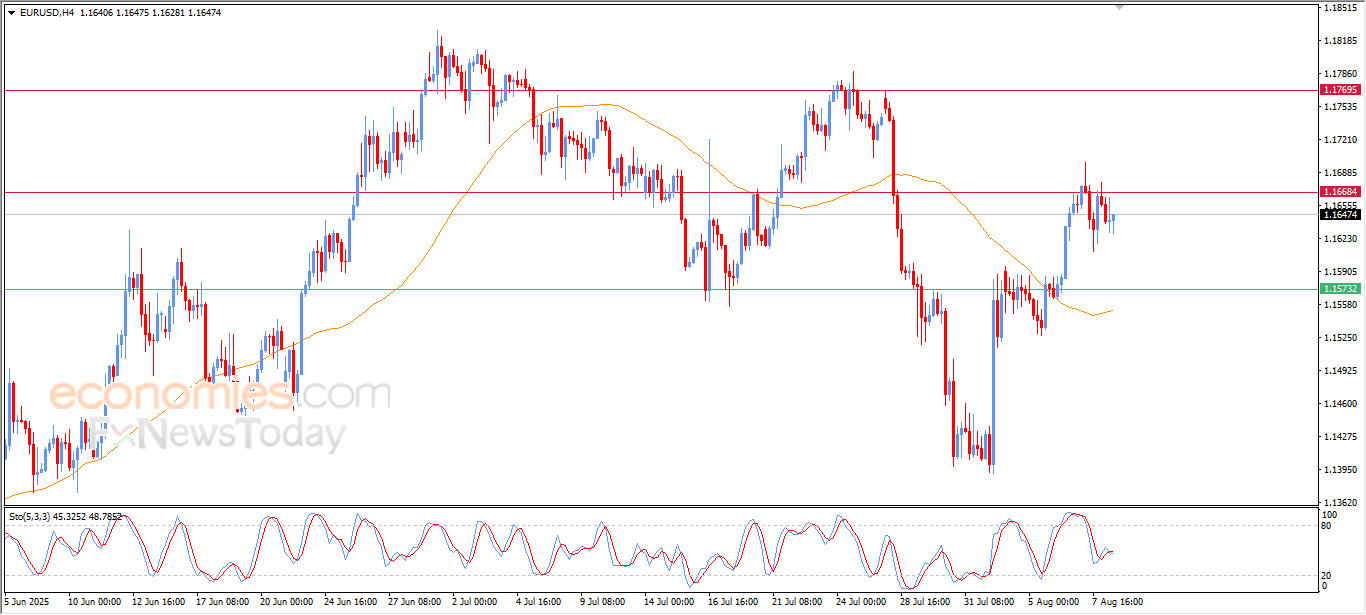
The price of (EURUSD) rose in its last intraday trading, amid its continued attempts to gain positive momentum that might assist its recovery and breaching the stubborn resistance at 1.1670, this resistance prevents the recovery in the intraday levels, amid the dominance of minor bullish wave on the short-term basis, with the beginning of the positive signals on the (RSI), besides the continuation of the dynamic support that comes from its trading above EMA50, representing a dynamic support that expands the positive momentum.
Get high-accuracy trading signals delivered directly to your Telegram. Subscribe to specialized packages tailored for the world’s top markets:
To view the full performance report for this week, visit the following link:
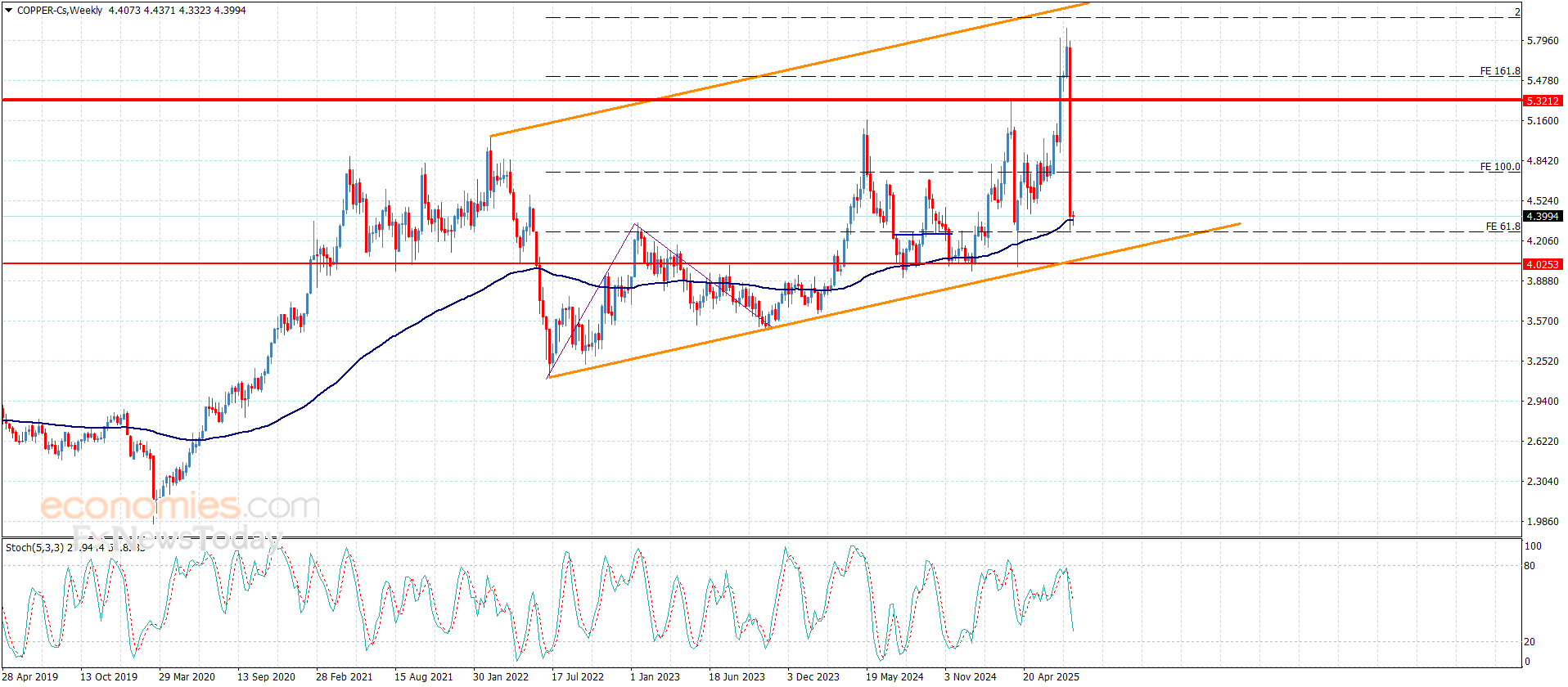
Despite the weakness of copper price’s last trading and its repeated fluctuation near the moving average 55 at $4.4000 level, the overall positive stability within the bullish channel’s levels and by the stability of the extra support near $4.2600, these factors support our bullish suggestion, to keep gathering extra positive momentum, then begin targeting positive stations by $4.6300 and $4.7500.
The risk of changing the main trend by breaking the main support at $4.0500, which forces it to suffer big losses by reaching $3.8700.
The expected trading range for today is between $4.2600 and $4.6300
Trend forecast: Bullish
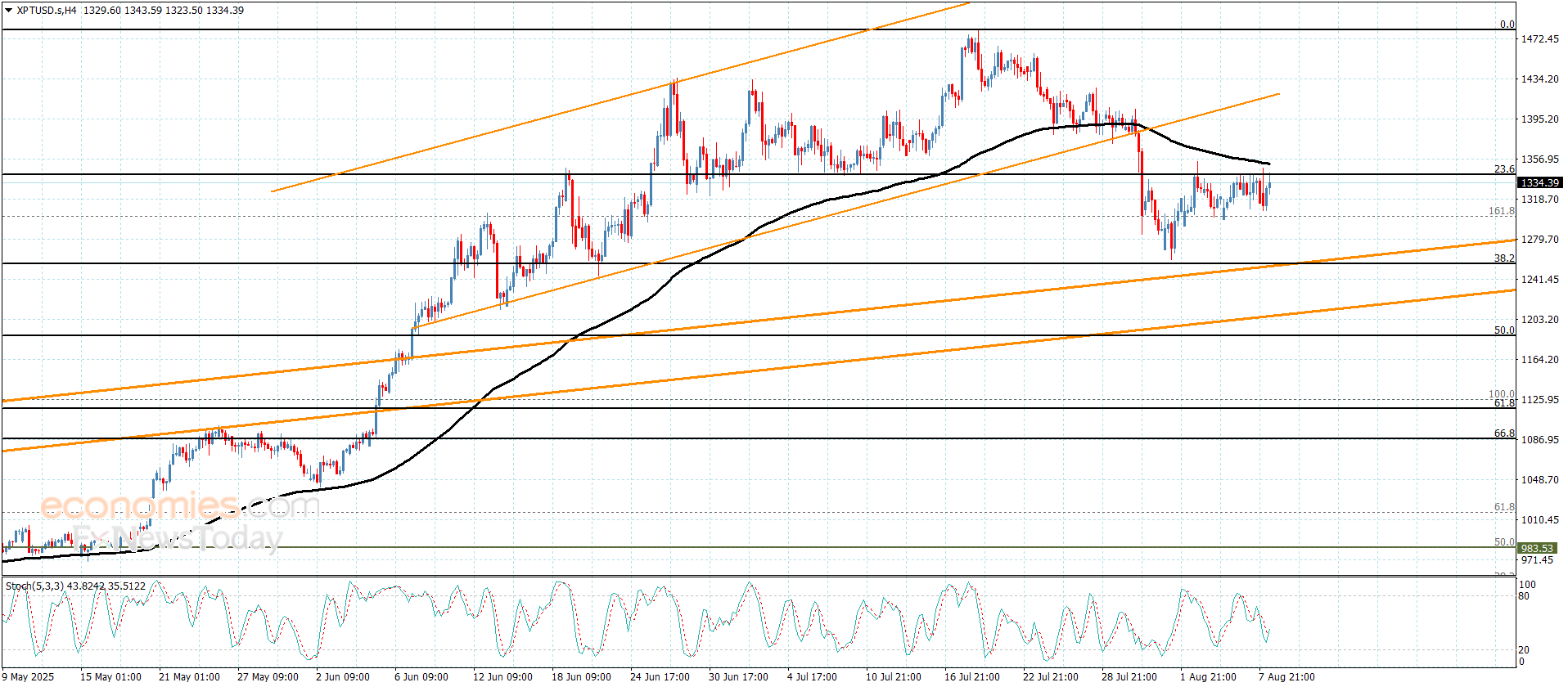
Platinum price began gathering positive momentum by stochastic stability above 20 level, to notice attacking the barrier at $1342.00, which forms a key for regaining the bullish bias of the current trading.
The contradiction between the moving average 55 with the attempt of regaining the bullish bias makes us monitor the price behavior and wait for the next close to confirm the expected trend of the upcoming trading, as breaching the barrier and holding above $1355.00 will reinforce the chances for achieving several gains that might begin at $1375.00 and $1415.00, while the breach will motivate the bearish correctional track, and there are chance for declining towards $1290.00.
The expected trading range for today is between $1325 and $1342.00
Trend forecast: Neutral
GBP/USD stays in a consolidation phase near 1.3450 after rising more than 0.6% on Thursday. The pair’s near-term technical outlook suggests that there could be a downward correction before the next leg higher.
The table below shows the percentage change of British Pound (GBP) against listed major currencies this week. British Pound was the strongest against the Japanese Yen.
| USD | EUR | GBP | JPY | CAD | AUD | NZD | CHF | |
|---|---|---|---|---|---|---|---|---|
| USD | -0.38% | -1.16% | 0.33% | -0.36% | -0.66% | -0.76% | 0.33% | |
| EUR | 0.38% | -0.74% | 0.72% | 0.03% | -0.41% | -0.39% | 0.71% | |
| GBP | 1.16% | 0.74% | 1.49% | 0.77% | 0.32% | 0.35% | 1.45% | |
| JPY | -0.33% | -0.72% | -1.49% | -0.68% | -1.13% | -1.09% | 0.17% | |
| CAD | 0.36% | -0.03% | -0.77% | 0.68% | -0.47% | -0.40% | 0.68% | |
| AUD | 0.66% | 0.41% | -0.32% | 1.13% | 0.47% | 0.03% | 1.13% | |
| NZD | 0.76% | 0.39% | -0.35% | 1.09% | 0.40% | -0.03% | 1.08% | |
| CHF | -0.33% | -0.71% | -1.45% | -0.17% | -0.68% | -1.13% | -1.08% |
The heat map shows percentage changes of major currencies against each other. The base currency is picked from the left column, while the quote currency is picked from the top row. For example, if you pick the British Pound from the left column and move along the horizontal line to the US Dollar, the percentage change displayed in the box will represent GBP (base)/USD (quote).
Pound Sterling gathered strength against its rivals on Thursday after the Bank of England announced that it decided to lower the policy rate by 25 basis points (bps) by a slim 5-4 majority following a second round of voting. Markets were expecting only two members of the Monetary Policy Committee (MPC) to vote for a policy hold.
In the post-meeting press conference, BoE Governor Andrew Bailey said that it is important that they do not cut the policy rate too quickly or too much, further supporting Pound Sterling.
Reflecting the broad-based GBP strength, EUR/GBP fell 0.6%, while GBP/JPY rose 0.5% on Thursday.
The economic calendar will not offer any high-tier data releases on Friday. Profit-taking toward the end of the European session could cause GBP/USD to correct lower. On a weekly basis, the pair is up more than 1%.
Nevertheless, in case risk flows dominate the action in financial markets in the American session, the US Dollar (USD) could struggle to find demand and help GBP/USD keep its footing.
GBP/USD broke above the upper limit of the descending regression channel and cleared the 100-period Simple Moving Average (SMA) on the 4-hour chart. However, the Relative Strength Index (RSI) remains above 70, suggesting that the pair remains technically overbought and could edge lower before the next leg higher.
On the downside, 1.3385-1.3400 (100-period SMA, Fibonacci 38.2% retracement of the downtrend) could be seen as the first support area before 1.3310-1.3290 (50-period SMA, Fibonacci 23.6% retracement).
Looking north, the immediate resistance could be spotted at 1.3460 (Fibonacci 50% retracement) ahead of 1.3500 (200-period SMA, round level) and 1.3530 (Fibonacci 61.8% retracement).
The Pound Sterling (GBP) is the oldest currency in the world (886 AD) and the official currency of the United Kingdom. It is the fourth most traded unit for foreign exchange (FX) in the world, accounting for 12% of all transactions, averaging $630 billion a day, according to 2022 data.
Its key trading pairs are GBP/USD, also known as ‘Cable’, which accounts for 11% of FX, GBP/JPY, or the ‘Dragon’ as it is known by traders (3%), and EUR/GBP (2%). The Pound Sterling is issued by the Bank of England (BoE).
The single most important factor influencing the value of the Pound Sterling is monetary policy decided by the Bank of England. The BoE bases its decisions on whether it has achieved its primary goal of “price stability” – a steady inflation rate of around 2%. Its primary tool for achieving this is the adjustment of interest rates.
When inflation is too high, the BoE will try to rein it in by raising interest rates, making it more expensive for people and businesses to access credit. This is generally positive for GBP, as higher interest rates make the UK a more attractive place for global investors to park their money.
When inflation falls too low it is a sign economic growth is slowing. In this scenario, the BoE will consider lowering interest rates to cheapen credit so businesses will borrow more to invest in growth-generating projects.
Data releases gauge the health of the economy and can impact the value of the Pound Sterling. Indicators such as GDP, Manufacturing and Services PMIs, and employment can all influence the direction of the GBP.
A strong economy is good for Sterling. Not only does it attract more foreign investment but it may encourage the BoE to put up interest rates, which will directly strengthen GBP. Otherwise, if economic data is weak, the Pound Sterling is likely to fall.
Another significant data release for the Pound Sterling is the Trade Balance. This indicator measures the difference between what a country earns from its exports and what it spends on imports over a given period.
If a country produces highly sought-after exports, its currency will benefit purely from the extra demand created from foreign buyers seeking to purchase these goods. Therefore, a positive net Trade Balance strengthens a currency and vice versa for a negative balance.