The main category of Forex News.
You can use the search box below to find what you need.
[wd_asp id=1]
The main category of Forex News.
You can use the search box below to find what you need.
[wd_asp id=1]
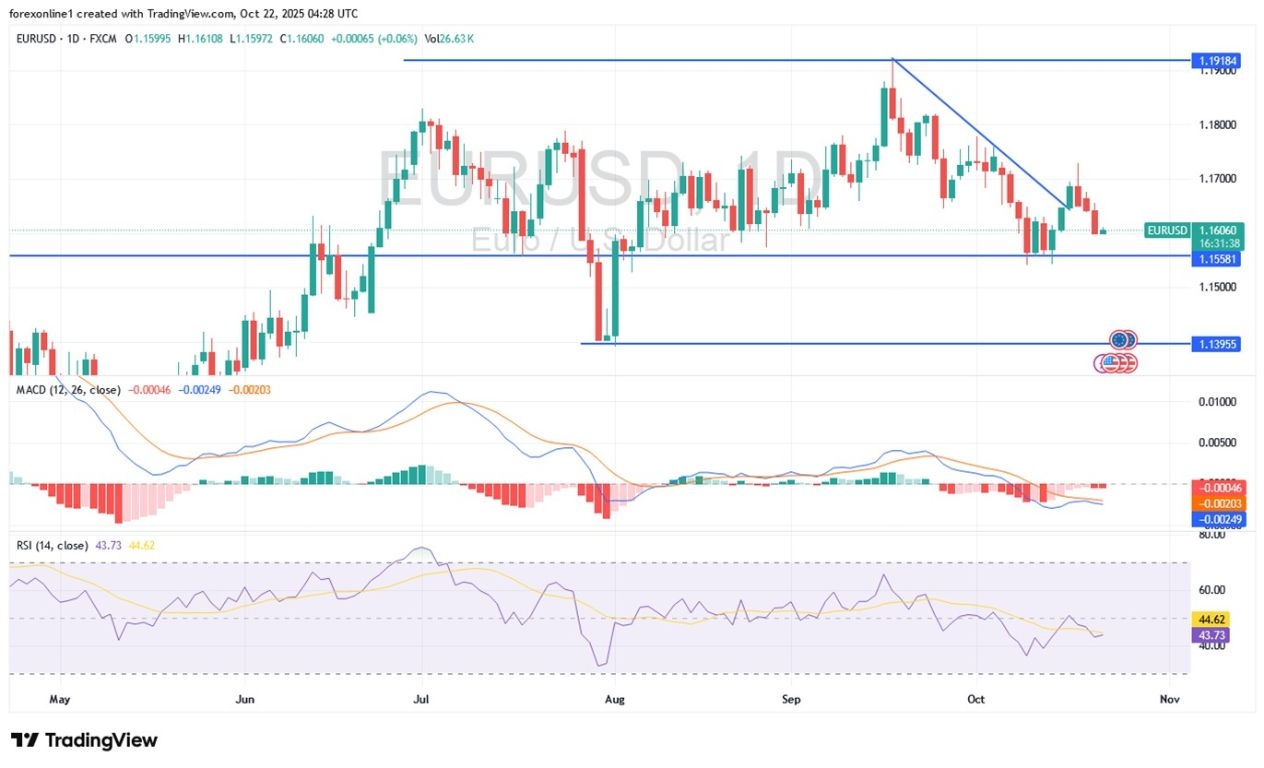
Investor appetite for the US Dollar as a safe haven has recently increased amid rising US-China tensions. This has led to selling pressure on the EUR/USD pair, extending losses to the 1.1600 support level today, Wednesday, October 22, 2025. With a complete absence of important US economic releases today, investors will continue to monitor for signals regarding the future policies of central banks. Today, ECB Governor Lagarde will deliver new statements at 15:30 Cairo time.

Based on the daily chart performance and through reliable brokerage platforms, the EUR/USD price bias is currently steadily bearish. Breaking the 1.1600 support level will increase the technical losses for the currency pair. The 14-day Relative Strength Index (RSI) is currently around a reading of 43, which confirms the bearish shift, and it still has room for further decline before reaching the oversold zone. Similarly, the MACD indicator is firmly in the downward-sloping area. A break below the 1.1600 support will increase the likelihood of targeting the next, more significant support levels at 1.1550 and 1.1470, respectively.
Conversely, over the same timeframe, there is no strong chance of a corrective rebound for the EUR/USD price without a renewed push towards the psychological resistance of 1.1800. Otherwise, the bears will continue to control prices.
Keep in mind that the EUR/USD pair will continue to be heavily influenced by investor risk appetite and the future easing of central bank policies.
Forex trading experts pointed to French concerns, as S&P Global Ratings recently downgraded France’s credit rating from AA- to A+ after the market close on Friday, due to persistent worries about its fiscal trajectory. On another note, important economic data will be released later in the week, with the release of the PMI Business Confidence Index and the US Consumer Price Report. At the same time, the US banking sector, the government shutdown, and political rhetoric are all expected to be influential market events.
Recently, a sense of relief has prevailed in the US banking sector, with equity markets making gains. Danske Bank noted that the earnings results of major UK banks were strong. It added: “These earnings have helped stabilize investor confidence and provided some support for the sector overall, even as concerns about smaller regional banks persist.” However, ING Bank maintained a cautious outlook, stating, “Indicators suggesting that lending issues do not extend beyond Zions Bancorp and Western Alliance may help ease pressure on the Dollar, but that may not be enough to fully calm concerns about the health of the credit market and reverse all of the Dollar’s losses.”
On the monetary policy front, financial markets are pricing in a nearly 100% probability of a rate cut next week, with more than a 95% chance that the US Federal Reserve will cut rates again at the December meeting. The Federal Reserve is currently in a media blackout period ahead of the meeting, with no official comments expected. Consequently, any unofficial media briefings will be closely monitored in case of sharp movements in equity markets.
On another front, trade tensions between the United States and China will remain a key factor. President Trump’s rhetoric was conciliatory over the weekend, raising hopes for a successful push on China.
Ready to trade our daily Forex analysis? We’ve made a list of the best forex trading platforms for beginners worth trading with.
Gold bounced up after reaching the target of a Double Top pattern, at $4,005 on Tuesday, but upside attempts have been halted way below previous support, at $4,185, which leaves the immediate bearish trend intact and the $4,000 support area at a short distance.
The announcement that US President Trump will meet its Chinese counterpart Xi Jinping in South Korea next week and the more conciliatory tone of Trump’s latest comments towards the Asian country have boosted hopes of a trade deal, which has improved market sentiment, sending precious metals tumbling.
What goes up has to eventually come down, and Gold is no exception. The precious metal had rallied nearly 35% in the last two months and is now performing a well-awaited correction. The double top at $4,380 and Tuesday’s bearish engulfing candle in the daily chart confirm that view.
The rejection at the $4,160 on Wednesday’s early European session highlights the bearish momentum. The 4-hour RSI is low but not yet at oversold levels, and the USDollar Index is picking up, which adds pressure on the yellow metal and suggests that a retest of the $4,000 support is on the cards.
Further down, the $3945 area, where the pair found support on October 7, 9, and 10, emerges as the next target ahead of the October 2 low, at $3,845. To the upside, the intraday high at the $4,160 area and the October 17 low at $4,185 are closing the path towards the all-time high at $4,380.
Gold has played a key role in human’s history as it has been widely used as a store of value and medium of exchange. Currently, apart from its shine and usage for jewelry, the precious metal is widely seen as a safe-haven asset, meaning that it is considered a good investment during turbulent times. Gold is also widely seen as a hedge against inflation and against depreciating currencies as it doesn’t rely on any specific issuer or government.
Central banks are the biggest Gold holders. In their aim to support their currencies in turbulent times, central banks tend to diversify their reserves and buy Gold to improve the perceived strength of the economy and the currency. High Gold reserves can be a source of trust for a country’s solvency. Central banks added 1,136 tonnes of Gold worth around $70 billion to their reserves in 2022, according to data from the World Gold Council. This is the highest yearly purchase since records began. Central banks from emerging economies such as China, India and Turkey are quickly increasing their Gold reserves.
Gold has an inverse correlation with the US Dollar and US Treasuries, which are both major reserve and safe-haven assets. When the Dollar depreciates, Gold tends to rise, enabling investors and central banks to diversify their assets in turbulent times. Gold is also inversely correlated with risk assets. A rally in the stock market tends to weaken Gold price, while sell-offs in riskier markets tend to favor the precious metal.
The price can move due to a wide range of factors. Geopolitical instability or fears of a deep recession can quickly make Gold price escalate due to its safe-haven status. As a yield-less asset, Gold tends to rise with lower interest rates, while higher cost of money usually weighs down on the yellow metal. Still, most moves depend on how the US Dollar (USD) behaves as the asset is priced in dollars (XAU/USD). A strong Dollar tends to keep the price of Gold controlled, whereas a weaker Dollar is likely to push Gold prices up.
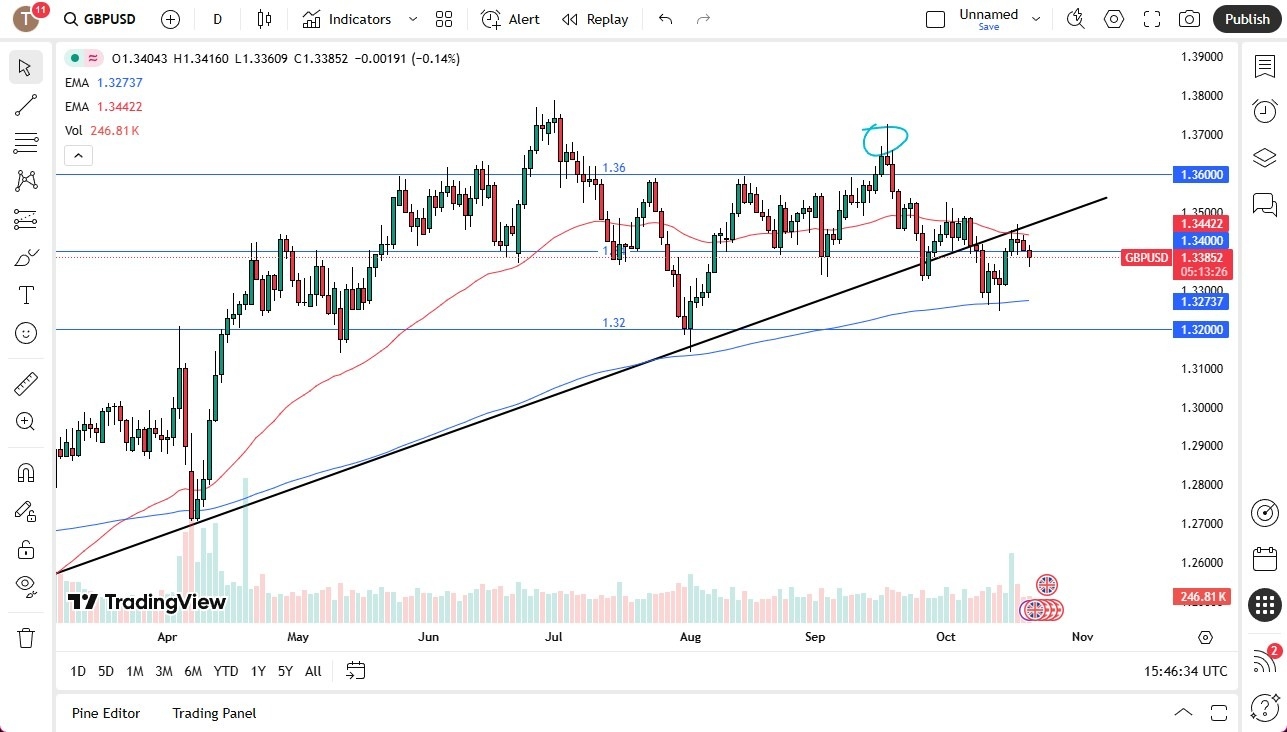
With this, I think you’ve got a situation where the market will probably continue to see a lot of resistance above. And therefore, I do prefer shorting this pair if I have a position.
Truthfully, my favorite use for this market is to see how the US dollar is performing because if it’s strengthening here, it’s really going to put a beating on something like the euro, typically. With this, I look at the fact that the British pound has been so strong over the last couple of years in comparison to the euro, the yen, the Canadian dollar, and other currencies, and I use this as a secondary and even tertiary indicator with other trades.
If I had to put a position on would be short here, but I think the 200-day EMA will continue to be a bit stubborn. If we were to break down below the 1.32 level, then I think the bottom falls out, and in that environment, you are more likely than not to see the US dollar strengthening against multiple currencies.
If this market breaks above the 1.35 level, then maybe we go back to the 1.36 level, but that still doesn’t have us breaking out of the range. All things being equal, I think we’re drifting lower.
Ready to trade our daily GBP/USD Forex forecast? Here’s some of the best forex broker UK reviews to check out.
Christopher Lewis has been trading Forex and has over 20 years experience in financial markets. Chris has been a regular contributor to Daily Forex since the early days of the site. He writes about Forex for several online publications, including FX Empire, Investing.com, and his own site, aptly named The Trader Guy. Chris favours technical analysis methods to identify his trades and likes to trade equity indices and commodities as well as Forex. He favours a longer-term trading style, and his trades often last for days or weeks.
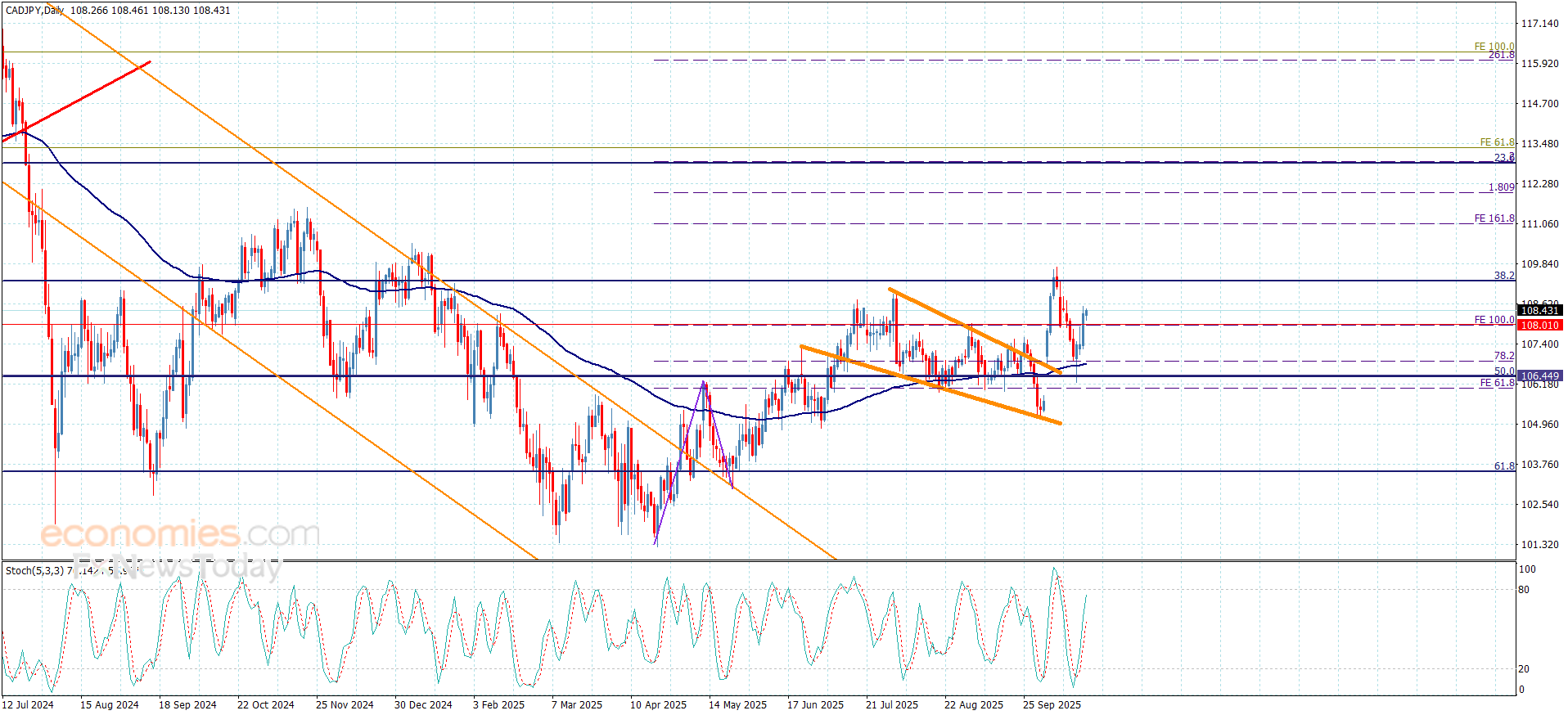
The GBPJPY pair confirmed the stability of the bullish scenario by forming a new bullish rally yesterday, achieving the initial target by hitting 203.50 level, to settle above $161.8 Fibonacci extension level at 202.50.
The continuation of providing positive momentum by the main indicators will increase the strength of the bullish track, to expect attacking the barrier at 203.95, and surpassing it will open the way for reaching new stations that might begin from 204.60 and 205.25, while changing the trend and begin the bearish corrective track requires forming sharp decline to settle below the extra support at 201.70.
The expected trading range for today is between 202.60 and 203.95
Trend forecast: Bullish
EUR/USD struggles to stage a rebound early Wednesday and fluctuates in a tight channel at around 1.1600 after posting losses for three consecutive trading days. The pair’s technical outlook suggests that the bearish stance remains unchanged in the short term.
The table below shows the percentage change of Euro (EUR) against listed major currencies this week. Euro was the weakest against the New Zealand Dollar.
| USD | EUR | GBP | JPY | CAD | AUD | NZD | CHF | |
|---|---|---|---|---|---|---|---|---|
| USD | 0.63% | 0.87% | 0.79% | -0.07% | -0.05% | -0.15% | 0.55% | |
| EUR | -0.63% | 0.24% | 0.26% | -0.69% | -0.57% | -0.84% | -0.06% | |
| GBP | -0.87% | -0.24% | -0.24% | -0.93% | -0.81% | -1.08% | -0.32% | |
| JPY | -0.79% | -0.26% | 0.24% | -0.90% | -0.87% | -1.02% | -0.34% | |
| CAD | 0.07% | 0.69% | 0.93% | 0.90% | 0.06% | -0.15% | 0.62% | |
| AUD | 0.05% | 0.57% | 0.81% | 0.87% | -0.06% | -0.27% | 0.52% | |
| NZD | 0.15% | 0.84% | 1.08% | 1.02% | 0.15% | 0.27% | 0.77% | |
| CHF | -0.55% | 0.06% | 0.32% | 0.34% | -0.62% | -0.52% | -0.77% |
The heat map shows percentage changes of major currencies against each other. The base currency is picked from the left column, while the quote currency is picked from the top row. For example, if you pick the Euro from the left column and move along the horizontal line to the US Dollar, the percentage change displayed in the box will represent EUR (base)/USD (quote).
The broad-based US Dollar (USD) strength caused EUR/USD to stay on the back foot on Tuesday. Easing fears over a deepening US-China trade conflict helped the sentiment surrounding the USD improve.
Meanwhile, investors might also be turning optimistic about the reopening of the US government soon. Following a meeting at the White House with President Donald Trump, some Republican senators said that Trump wants to end the government shutdown and that he is willing to talk to Democrats about it.
Later in the session, European Central Bank (ECB) President Christine Lagarde will deliver a keynote speech at Frankfurt Finance & Future Summit in Frankfurt. This will be Lagarde’s last public appearance before the ECB’s blackout period starts on Thursday. Nevertheless, Lagarde is unlikely to offer any comments that could significantly influence the market pricing of the ECB’s policy outlook.
In the absence of high-tier data releases, the risk perception could drive EUR/USD’s action in the second half of the day. At the time of press, US stock index futures were trading mixed. In case the market mood remains cautious in the American session, the pair could find it difficult to stage a rebound.
The Relative Strength Index (RSI) indicator on the 4-hour chart stays below 40 but it’s yet to drop below 30, suggesting that EUR/USD has more room on the downside before turning technically oversold.
The Fibonacci 61.8% retracement of the latest uptrend aligns as a key support level at 1.1580. If EUR/USD falls below this level, technical sellers could remain interested. In this scenario, 1.1550 (static level) could be seen as an interim support level before 1.1500 (Fibonacci 78.6% retracement).
Looking north, resistance levels could be seen at 1.1650 (100-day Simple Moving Average (SMA)), 1.1700 (50-day SMA) and 1.1765 (Fibonacci 23.6% retracement).
The Euro is the currency for the 19 European Union countries that belong to the Eurozone. It is the second most heavily traded currency in the world behind the US Dollar. In 2022, it accounted for 31% of all foreign exchange transactions, with an average daily turnover of over $2.2 trillion a day.
EUR/USD is the most heavily traded currency pair in the world, accounting for an estimated 30% off all transactions, followed by EUR/JPY (4%), EUR/GBP (3%) and EUR/AUD (2%).
The European Central Bank (ECB) in Frankfurt, Germany, is the reserve bank for the Eurozone. The ECB sets interest rates and manages monetary policy.
The ECB’s primary mandate is to maintain price stability, which means either controlling inflation or stimulating growth. Its primary tool is the raising or lowering of interest rates. Relatively high interest rates – or the expectation of higher rates – will usually benefit the Euro and vice versa.
The ECB Governing Council makes monetary policy decisions at meetings held eight times a year. Decisions are made by heads of the Eurozone national banks and six permanent members, including the President of the ECB, Christine Lagarde.
Eurozone inflation data, measured by the Harmonized Index of Consumer Prices (HICP), is an important econometric for the Euro. If inflation rises more than expected, especially if above the ECB’s 2% target, it obliges the ECB to raise interest rates to bring it back under control.
Relatively high interest rates compared to its counterparts will usually benefit the Euro, as it makes the region more attractive as a place for global investors to park their money.
Data releases gauge the health of the economy and can impact on the Euro. Indicators such as GDP, Manufacturing and Services PMIs, employment, and consumer sentiment surveys can all influence the direction of the single currency.
A strong economy is good for the Euro. Not only does it attract more foreign investment but it may encourage the ECB to put up interest rates, which will directly strengthen the Euro. Otherwise, if economic data is weak, the Euro is likely to fall.
Economic data for the four largest economies in the euro area (Germany, France, Italy and Spain) are especially significant, as they account for 75% of the Eurozone’s economy.
Another significant data release for the Euro is the Trade Balance. This indicator measures the difference between what a country earns from its exports and what it spends on imports over a given period.
If a country produces highly sought after exports then its currency will gain in value purely from the extra demand created from foreign buyers seeking to purchase these goods. Therefore, a positive net Trade Balance strengthens a currency and vice versa for a negative balance.
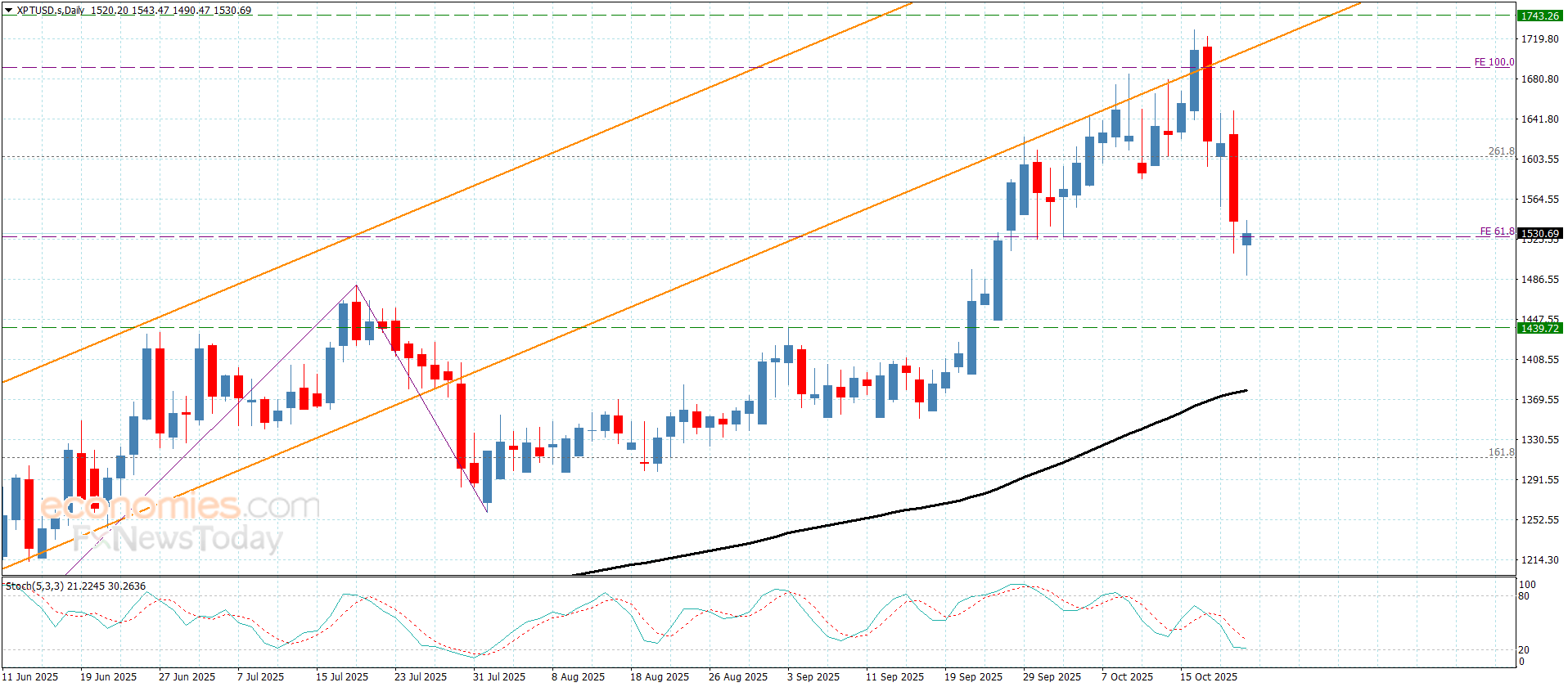
No news for copper price, to keep providing sideways trading, due to the continuation of the contradiction between the main indicators and the stability below $5.0600 barrier, to increase the chances of forming corrective trading in the near-term period.
Stochastic attempt to provide negative momentum by its exit from the overbought level that might force the price to attack the extra support at $4.7500, while achieving this breach will open the way for achieving extra gains that might begin at $5.2000.
The expected trading range for today is between $4.7500 and $5.0600
Trend forecast: Fluctuated within the bullish track
The GBPJPY pair confirmed the stability of the bullish scenario by forming a new bullish rally yesterday, achieving the initial target by hitting 203.50 level, to settle above $161.8 Fibonacci extension level at 202.50.
The continuation of providing positive momentum by the main indicators will increase the strength of the bullish track, to expect attacking the barrier at 203.95, and surpassing it will open the way for reaching new stations that might begin from 204.60 and 205.25, while changing the trend and begin the bearish corrective track requires forming sharp decline to settle below the extra support at 201.70.
The expected trading range for today is between 202.60 and 203.95
Trend forecast: Bullish
Silver price ( XAG/USD) extends the decline to around $48.10 during the early Asian session on Wednesday. The white metal remains under pressure after facing its steepest sell-off in years in the previous session as traders locked in profits.
Silver tumbled more than 8% to mark its largest daily drop since 2021, amid concerns that the recent record high in the white metal left it overvalued. Additionally, easing trade tensions between the United States (US) and China lifts the US Dollar (USD) and undermines the USD-denominated commodity price.
US President Donald Trump last week threatened a new 100% tariff on China and suggested he would skip a meeting with Chinese President Xi Jinping to be held in South Korea later this month. Trump softened his stance over the weekend, saying that high tariffs on China are unsustainable, and expressed willingness for smoother relations with China. Trump late Tuesday noted that an upcoming meeting with his Chinese counterpart would yield a “good deal” on trade.
On the other hand, the ongoing US government shutdown, geopolitical risks and the expectation of the Federal Reserve (Fed) rate cuts could boost the safe-haven assets like Silver. The US federal government shutdown has entered its fourth week with no clear end in sight, marking the third-longest funding lapse in modern history. The GOP-backed bill failed to pass the Senate for the 11th time on Monday.
Traders are currently pricing in nearly a 99% possibility that the US central bank will cut interest rates again next week, followed by another reduction in December, according to the CME FedWatch tool. Lower interest rates could reduce the opportunity cost of holding Silver, supporting the non-yielding precious metal.
Silver is a precious metal highly traded among investors. It has been historically used as a store of value and a medium of exchange. Although less popular than Gold, traders may turn to Silver to diversify their investment portfolio, for its intrinsic value or as a potential hedge during high-inflation periods. Investors can buy physical Silver, in coins or in bars, or trade it through vehicles such as Exchange Traded Funds, which track its price on international markets.
Silver prices can move due to a wide range of factors. Geopolitical instability or fears of a deep recession can make Silver price escalate due to its safe-haven status, although to a lesser extent than Gold’s. As a yieldless asset, Silver tends to rise with lower interest rates. Its moves also depend on how the US Dollar (USD) behaves as the asset is priced in dollars (XAG/USD). A strong Dollar tends to keep the price of Silver at bay, whereas a weaker Dollar is likely to propel prices up. Other factors such as investment demand, mining supply – Silver is much more abundant than Gold – and recycling rates can also affect prices.
Silver is widely used in industry, particularly in sectors such as electronics or solar energy, as it has one of the highest electric conductivity of all metals – more than Copper and Gold. A surge in demand can increase prices, while a decline tends to lower them. Dynamics in the US, Chinese and Indian economies can also contribute to price swings: for the US and particularly China, their big industrial sectors use Silver in various processes; in India, consumers’ demand for the precious metal for jewellery also plays a key role in setting prices.
Silver prices tend to follow Gold’s moves. When Gold prices rise, Silver typically follows suit, as their status as safe-haven assets is similar. The Gold/Silver ratio, which shows the number of ounces of Silver needed to equal the value of one ounce of Gold, may help to determine the relative valuation between both metals. Some investors may consider a high ratio as an indicator that Silver is undervalued, or Gold is overvalued. On the contrary, a low ratio might suggest that Gold is undervalued relative to Silver.
– Written by
David Woodsmith
STORY LINK GBP/USD Forecast: Pound Sterling Falls after Softer Inflation Boosts BoE Cut Bets
The Pound US Dollar (GBP/USD) exchange rate slipped further on Wednesday after softer-than-expected UK inflation data increased bets on a Bank of England (BoE) interest rate cut before year-end.
At the time of writing, GBP/USD was trading around $1.3328, down approximately 0.28% from the start of the session.
The Pound (GBP) came under pressure after the Office for National Statistics (ONS) reported that consumer price inflation held steady at 3.8% in September, missing forecasts of a rise to 4.0%.
Core CPI fell sharply from 4.6% to 3.5%, while services inflation stabilised at 4.75%, below expectations of 4.8% and 0.3 percentage points under the BoE’s latest projection.
The weaker data indicates that underlying price pressures are cooling faster than policymakers anticipated, particularly as food prices — a key concern for the BoE — unexpectedly declined on the month.
According to ING, the figures delivered a clear dovish signal for the central bank and increased downside risks for the Pound.
As the bank noted: “The September UK inflation reading released this morning is sending a dovish signal to the Bank of England and weighing on the pound. Headline inflation remained unchanged at 3.8% (consensus 4.0%), while core slowed down from 4.6% to 3.5% and services CPI stabilised at 4.75% versus expectations of 4.8% and 0.3pp below the BoE’s latest forecast. Our UK economist notes that the main dovish surprise comes from food prices – a big concern for the BoE of late – which actually fell on the month and are now 0.5pp below the BoE’s August forecasts.”
Get better rates and lower fees on your next international money transfer.
Compare TorFX with top UK banks in seconds and see how much you could save.
Markets responded by increasing expectations for a BoE rate cut before the end of 2025, driving gilt yields lower and keeping Sterling under pressure across major currency pairs.
The US Dollar (USD), meanwhile, found modest support during Wednesday’s European session amid cautious market sentiment and lingering global growth concerns.
With the ongoing US government shutdown continuing to delay key data releases, investors turned their attention to upcoming commentary from Federal Reserve officials for policy cues.
Policymakers have broadly maintained a cautious tone, acknowledging softening inflation but insisting that rates must stay restrictive until the 2% target is clearly within reach.
Looking ahead, movement in the Pound to US Dollar exchange rate will likely hinge on upcoming speeches from both Bank of England and Federal Reserve policymakers.
If BoE officials hint that cooling inflation is paving the way for policy easing, GBP could remain under pressure into the weekend.

Conversely, any hawkish signals from Fed speakers may lend the ‘Greenback’ further support, keeping GBP/USD subdued through the second half of the week.
International Money Transfer? Ask our resident FX expert a money transfer question or try John’s new, free, no-obligation personal service! ,where he helps every step of the way,
ensuring you get the best exchange rates on your currency requirements.
TAGS: Pound Dollar Forecasts
Gold is attempting a recovery above the $4,100 mark early Wednesday, after having reversed a further sell-off to near the key $4,000 support. Gold buyers fight back control, awaiting fresh developments on the US-China trade front.
Gold is licking its wounds following the intense volatility witnessed so far this week.
Having lost over 5% on Tuesday, Gold gave away another $125 in the early Asian trading hours, but bargain hunters quickly jumped in at lower levels, driving the bright metal back to near $4,100 threshold.
Tuesday’s $230 correction was mainly due to profit-taking as the record-setting rally was overdone. Traders resorted to cashing in on their long positions amid easing US-China trade tensions as US President Donald Trump touted a fair deal with China when he meets his counterpart Xi Jinping in South Korea next week.
Meanwhile, markets also eagerly awaited the trade discussions between US Treasury Secretary Scott Bessent and Chinese Vice Premier He Lifeng in Malaysia to de-escalate the renewed trade tensions.
The sell-off in Gold was also sparked by an intense buying wave in the US Dollar (USD), courtesy of a sharp rally in the USD/JPY pair. The Japanese Yen (JPY) faced strong headwinds after Sanae Takaichi was elected as Japan’s Prime Minister. An expansionary era in Japan is likely to return, with Takaichi at the top, which weighed on the JPY while boosting USD/JPY.
Looking ahead, all eyes remain on fresh developments surrounding the US-China trade talks, with the US government shutdown still in place and a meeting between Trump and Russian President Vladimir Putin called off.
Gold tested the critical support in the area $4,007-$3,973, where the 21-day Simple Moving Average (SMA) and the 38.2% Fibonacci Retracement level of the parabolic rise from mid-August align.
Buyers need to recapture the 23.6% Fibo support-turned-resistance at $4,129 to sustain the rebound toward all-time highs of $4,382.
Ahead of that level, the $4,300 round figure needs to be taken out.
The 14-day Relative Strength Index (RSI) has paused its pullback from the extreme overbought zone to trade near 59, as of writing.
The leading indicator suggests that the longer-term bullish potential in Gold remains intact.
On the flip side, if the aforesaid confluence support zone at around $4,000 gives way, a steeper correction could unfold toward the 50% Fibo level at $3,847.
The line in the sand for Gold buyers is seen at the 61.8% Fibo, the Golden Ratio, at $3,722. The 50-day SMA coincides at that level, making it a powerful downside cap.