The main category of Forex News.
You can use the search box below to find what you need.
[wd_asp id=1]
The main category of Forex News.
You can use the search box below to find what you need.
[wd_asp id=1]
The EURJPY pair recorded some extra gains by hitting 167.60 level, which forces it to form a temporary correctional rebound, affected by a stochastic attempt to exit the overbought level, providing chances for catching its breath and gathering the gains by reaching 166.70.
The price keeps providing mixed trading, but its repeated stability within the bullish channel’s levels and forming extra support at 166.00 level, so these factors make us keep the main bullish suggestion, which might target 168.00 level in the near period trading reaching the resistance level at 168.90.
The expected trading range for today is between 165.95 and 167.45
Trend forecast: Fluctuated within the bullish track
Silver (XAG/USD) is seen consolidating the previous day’s strong gains to its highest level since February 2012 and oscillating in a narrow range during the Asian session on Wednesday. The white metal currently trades just above the $37.00 round figure and seems poised to prolong the recent well-established uptrend from the April monthly swing low.
From a technical perspective, the overnight breakout through a short-term descending trend channel, which constituted the formation of a bullish flag pattern, and the subsequent move up validate the constructive outlook. However, a slightly overbought Relative Strength Index (RSI) on the daily chart warrants some caution. Hence, it will be prudent to wait for some near-term consolidation or a modest pullback before placing fresh bullish bets around the XAG/USD and positioning for further gains.
That said, any corrective slide is more likely to attract fresh buyers and remain limited near the ascending channel resistance breakpoint, around the $36.90-$36.85 region. A convincing break below, however, might prompt some technical selling and drag the XAG/USD further towards the $36.40-$36.35 horizontal support en route to sub-$36.00 levels, or the weekly low. The latter should act as a key pivotal point, which if broken could pave the way for some meaningful downside in the near term.
Nevertheless, the XAG/USD seems poised to climb further toward testing the February 2012 swing high, around mid-$37.00s. Some follow-through buying should allow the XAG/USD to aim toward reclaiming the $38.00 round figure. The momentum could extend further toward the next relevant hurdle near the $38.50-$38.55 region.
Silver is a precious metal highly traded among investors. It has been historically used as a store of value and a medium of exchange. Although less popular than Gold, traders may turn to Silver to diversify their investment portfolio, for its intrinsic value or as a potential hedge during high-inflation periods. Investors can buy physical Silver, in coins or in bars, or trade it through vehicles such as Exchange Traded Funds, which track its price on international markets.
Silver prices can move due to a wide range of factors. Geopolitical instability or fears of a deep recession can make Silver price escalate due to its safe-haven status, although to a lesser extent than Gold’s. As a yieldless asset, Silver tends to rise with lower interest rates. Its moves also depend on how the US Dollar (USD) behaves as the asset is priced in dollars (XAG/USD). A strong Dollar tends to keep the price of Silver at bay, whereas a weaker Dollar is likely to propel prices up. Other factors such as investment demand, mining supply – Silver is much more abundant than Gold – and recycling rates can also affect prices.
Silver is widely used in industry, particularly in sectors such as electronics or solar energy, as it has one of the highest electric conductivity of all metals – more than Copper and Gold. A surge in demand can increase prices, while a decline tends to lower them. Dynamics in the US, Chinese and Indian economies can also contribute to price swings: for the US and particularly China, their big industrial sectors use Silver in various processes; in India, consumers’ demand for the precious metal for jewellery also plays a key role in setting prices.
Silver prices tend to follow Gold’s moves. When Gold prices rise, Silver typically follows suit, as their status as safe-haven assets is similar. The Gold/Silver ratio, which shows the number of ounces of Silver needed to equal the value of one ounce of Gold, may help to determine the relative valuation between both metals. Some investors may consider a high ratio as an indicator that Silver is undervalued, or Gold is overvalued. On the contrary, a low ratio might suggest that Gold is undervalued relative to Silver.
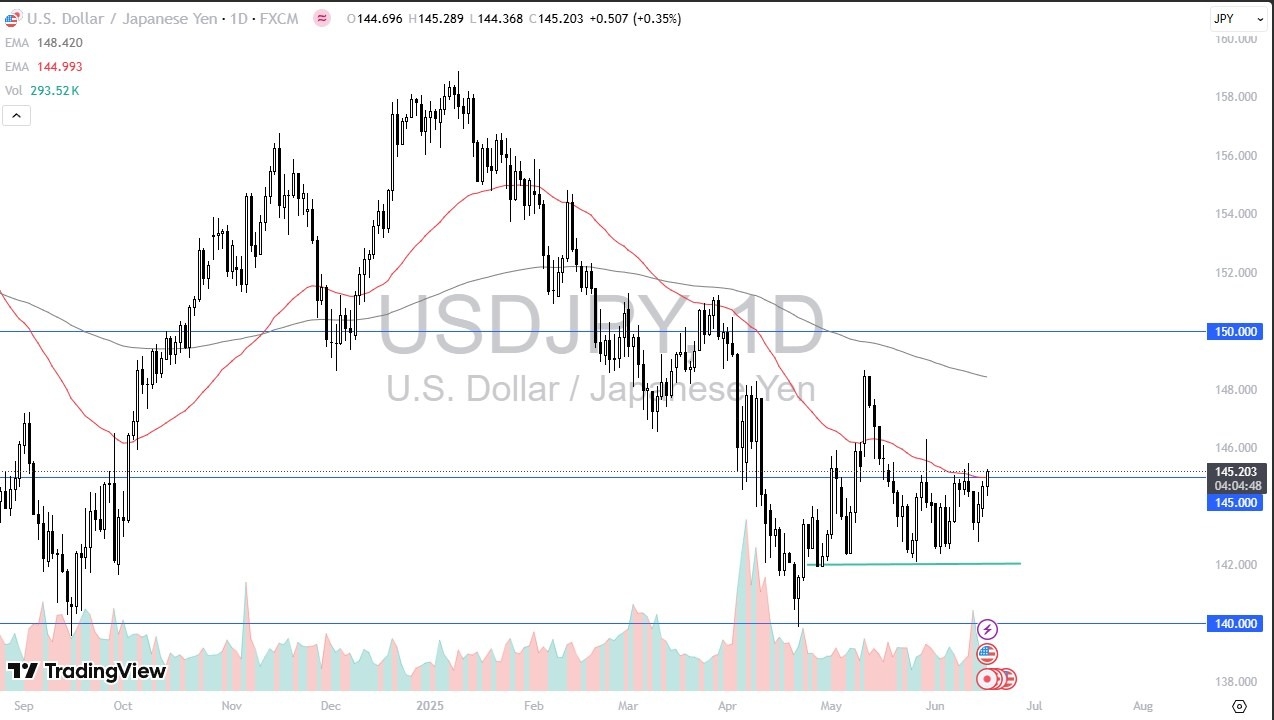
It’s a large round psychologically significant figure, but it’s also where we have the 50 day EMA currently hanging around. Because of this, I think you must look at this as a dangerous area, but if we get follow through here, that could open up the U.S. dollar going much higher. However, it is worth noting that this is a pair that has been very rangebound for a while, and we are getting a lot of things to think about in the next few sessions.

It’s unfortunate that this is happening the day before the FOMC announcement because the interest rate difference, the interest rate statement and press conference of course is something that will move the market.
Now there are hints that the United States may be looking at getting involved in the war against the Iranians. So, everything is a fluid situation at the moment. This is a market that if it does break down from here, and it wouldn’t really surprise me that much, it should at least in theory, open up a buying opportunity, but we’ll just have to see there’s so many variables at the moment.
It is going to be very difficult to do anything in size, I more than anything else will be keeping my position size small in this environment because quite frankly, it would be very easy to lose money.
Want to trade our USD/JPY forex analysis and predictions? Here’s a list of forex brokers in Japan to check out.
Christopher Lewis has been trading Forex and has over 20 years experience in financial markets. Chris has been a regular contributor to Daily Forex since the early days of the site. He writes about Forex for several online publications, including FX Empire, Investing.com, and his own site, aptly named The Trader Guy. Chris favours technical analysis methods to identify his trades and likes to trade equity indices and commodities as well as Forex. He favours a longer-term trading style, and his trades often last for days or weeks.
Goldman Sachs has raised its EUR/USD forecasts to 1.20 by year-end and 1.25 over the next 12 months, drawing parallels to the 2017 rally driven by global capital flows. However, unlike 2017 when the euro was deeply undervalued, the current move reflects a structural reassessment of the US dollar rather than renewed euro optimism.
Key Points:
Forecast Revisions:
2017 Comparison:
In 2017, global growth optimism and capital inflows into the Eurozone fueled EUR strength.
Rate differentials remained stable, but a shift in fund flows provided upward pressure.
Current Drivers: It’s About the USD
Today, euro strength is less about Eurozone fundamentals and more about dollar weakness.
Preliminary fund flow data suggests rising investor interest in reallocating away from USD assets.
Valuation Contrast:
In 2017, the euro started from a deeply undervalued level—today it is broadly overvalued.
This limits the upside potential and makes the current move more about dollar repricing than euro revaluation.
Not Another 2002–2004:
The structural USD shift supports EUR/USD upside but lacks the valuation tailwind seen in past long-cycle rallies.
As a result, Goldman views the rally as more contained and measured compared to earlier episodes of sustained dollar depreciation.
Conclusion:
Goldman Sachs sees further upside for EUR/USD, driven by broad-based USD weakness and shifting global capital flows. While there are echoes of 2017, the current rally is more about a reassessment of US economic leadership and dollar valuations than a euro-area story. As such, 1.25 is possible, but the path higher will be steadier and more limited than in prior cycles.
For bank trade ideas, check out eFX Plus. For a limited time, get a 7 day free trial, basic for $79 per month and premium at $109 per month. Get it here.
June 17, 2025 – Written by Tim Boyer
STORY LINK GBP/USD Forecast: Pound Price Dips vs Dollar despite US Retail Sales
The Pound US Dollar exchange rate was dented on Tuesday even as the US released a worse-than-expected US retail sales index.
At the time of writing, GBP/USD was trading at approximately $1.3451, down roughly 0.2% from the start of Tuesday’s session.
The US Dollar (USD) held its ground against most major peers on Tuesday despite the release of underwhelming US retail sales figures for May.
The data showed a sharper-than-expected contraction, with sales falling by 0.9% versus the forecasted 0.7% decline, raising fresh concerns about the strength of US consumer spending.
While a mildly upbeat market mood saw the ‘Greenback’ dip against risk-sensitive currencies, it remained broadly stable elsewhere, with investors showing caution ahead of the Federal Reserve’s upcoming interest rate decision on Wednesday.
The Pound (GBP) lacked clear direction on Tuesday and dipped against a number of its counterparts as investors adopted a cautious stance ahead of the UK’s upcoming inflation data, scheduled for release on Wednesday.
Sterling primarily weakened against higher-risk currencies, as investor appetite for riskier assets remained strong throughout the session.
In the absence of significant UK economic data, GBP exchange rates struggled to gain ground during Tuesday’s European trading session.
Looking ahead, attention for the GBP/USD exchange rate during Wednesday’s European session will likely centre on the release of the UK’s latest consumer price index (CPI).
Headline inflation is expected to ease slightly from 3.5% to 3.4% in May, while core inflation is forecast to decline from 3.8% to 3.6%.
If these figures meet expectations, signs of easing price pressures could fuel speculation that the Bank of England (BoE) is edging closer to cutting interest rates.
However, with inflation expected to remain well above the BoE’s 2% target, any GBP losses may be modest as markets moderate their expectations for aggressive policy moves.
Meanwhile, US Dollar investors will likely hold back from making bold moves ahead of the Federal Reserve’s interest rate announcement, scheduled for Wednesday evening, adding a layer of caution to USD trading.

International Money Transfer? Ask our resident FX expert a money transfer question or try John’s new, free, no-obligation personal service! ,where he helps every step of the way,
ensuring you get the best exchange rates on your currency requirements.
TAGS: Pound Dollar Forecasts
Silver price (XAG/USD) retraces its recent gains registered in the previous session, trading around $36.30 per troy ounce during the Asian hours on Friday. A bullish bias is prevailing as the technical analysis of the daily chart shows the price of the precious metal remains within an ascending channel pattern.
The Silver price is remaining above the nine-day Exponential Moving Average (EMA), further highlighting that the short-term momentum is stronger. Additionally, the 14-day Relative Strength Index (RSI) hovers slightly below the 70 level after retreating from higher levels, indicating a prevailing bullish bias while also suggesting the potential for a continued downward correction.
The XAG/USD pair may test the immediate barrier at $36.89, the highest since February 2012. A break above this level may strengthen the bullish bias and support the pair to approach the upper boundary of the ascending channel around $38.50.
Silver price is testing the ascending channel’s lower boundary around $36.10, followed by the nine-day EMA at $35.77. A break below this crucial support zone could weaken the short-term price momentum and put downward pressure on the 50-day EMA at $33.74.
A successful breach below the 50-day EMA could dampen the medium-term price momentum and prompt the price of the precious metal to navigate the region around the two-month low at $31.65, which was recorded on May 15.
Silver is a precious metal highly traded among investors. It has been historically used as a store of value and a medium of exchange. Although less popular than Gold, traders may turn to Silver to diversify their investment portfolio, for its intrinsic value or as a potential hedge during high-inflation periods. Investors can buy physical Silver, in coins or in bars, or trade it through vehicles such as Exchange Traded Funds, which track its price on international markets.
Silver prices can move due to a wide range of factors. Geopolitical instability or fears of a deep recession can make Silver price escalate due to its safe-haven status, although to a lesser extent than Gold’s. As a yieldless asset, Silver tends to rise with lower interest rates. Its moves also depend on how the US Dollar (USD) behaves as the asset is priced in dollars (XAG/USD). A strong Dollar tends to keep the price of Silver at bay, whereas a weaker Dollar is likely to propel prices up. Other factors such as investment demand, mining supply – Silver is much more abundant than Gold – and recycling rates can also affect prices.
Silver is widely used in industry, particularly in sectors such as electronics or solar energy, as it has one of the highest electric conductivity of all metals – more than Copper and Gold. A surge in demand can increase prices, while a decline tends to lower them. Dynamics in the US, Chinese and Indian economies can also contribute to price swings: for the US and particularly China, their big industrial sectors use Silver in various processes; in India, consumers’ demand for the precious metal for jewellery also plays a key role in setting prices.
Silver prices tend to follow Gold’s moves. When Gold prices rise, Silver typically follows suit, as their status as safe-haven assets is similar. The Gold/Silver ratio, which shows the number of ounces of Silver needed to equal the value of one ounce of Gold, may help to determine the relative valuation between both metals. Some investors may consider a high ratio as an indicator that Silver is undervalued, or Gold is overvalued. On the contrary, a low ratio might suggest that Gold is undervalued relative to Silver.
Despite Platinum price attempts to provide some positive trading, but its repeated stability below the barrier at $1275.00 level assists to motivate providing new bearish trading, attempting to decline below $1225.00, then targeting $1184.00 level, which represents the initial extra target for the near trading.
By the above image, we notice stochastic reach below 50 level, to increase the chances for gathering the required negative momentum to reach the mentioned negative stations.
The expected trading range for today is between $1185.00 and $1260.00
Trend forecast: Bearish
AirBNB’s stock price (ABNB) rose in latest intraday trading and attacked the current resistance of $139.85, while trading alongside the upward correctional trend line in the short term, with ongoing positive pressure due to trading above the 50-day SMA, countered with negative signals from the Stochastic after reaching overbought levels, hindering upcoming gains.
Therefore we expect more gains for the price, especially if the aforementioned resistance of $139.85 is breached, targeting the next one at $148.65.
Today’s price forecast: Bullish
The GBPJPY pair continued forming bullish trading since yesterday, taking advantage of the main stability within the bullish channel’s levels, besides surpassing the extra barrier at 195.80, approaching from the initial target level at 196.85 level.
We expect gathering the positive momentum by stochastic attempt to reach the overbought level, to reinforce the chances for targeting new bullish stations that might extend to 197.45 reaching 198.80 in the medium period trading.
The expected trading range for today is between 195.85 and 197.45
Trend forecast: Bullish
Spot Gold set a weekly low of $3,366.25 on Tuesday, bouncing from the level yet in the American session. The US Dollar (USD) spent the first half of the day on the back foot, but remained within familiar levels as market players awaited United States (US) macroeconomic figures, while being cautious amid the Middle East crisis.
The US published May Retail Sales, which fell by 0.9% on a monthly basis, worse than the -0.1% posted in April and the -0,7% expected. Additionally, Industrial Production in the same period was down by 0.2% against the 0.1% advance anticipated. Finally, Capacity Utilization stood at 77.4%, down from the 77.7% posted in April and missing the 77.7% expected.
Additionally, trade-war-related headlines kept coming. On the one hand, European Commission President Ursula von der Leyen noted trade talks with the US are “advancing” despite being complex, while adding the EU has a trade surplus with the US, and that could last.”
Finally, it is worth adding comments from the US President about the Middle East conflict, which fueled risk-off, helping XAU/USD trim intraday losses. Trump claimed the US military has full control of the Iranian airspace, adding that US patience “is wearing thin.”
Discouraging US data and renewed Middle-East-related concerns fuel demand for safety.
In the meantime, the US Federal Reserve (Fed) is expected to keep interest rates on hold when it announces its monetary policy decision on Wednesday. US officials will also present a fresh Summary of Economic Projections (SEP), with fresh inflation, growth and employment perspectives.
The XAU/USD pair trades in the $3,380 region, and the daily chart shows it has spent the journey confined to a tight range. The pair has lost its positive momentum, but the overall risk skews to the upside, given that technical indicators have turned flat well above their midlines. Additionally, XAU/USD develops above all its moving averages, with the 20 Simple Moving Average (SMA) partially losing its bullish strength, yet holding far above bullish 100 and 200 SMAs.
In the near term, and according to the 4-hour chart, Gold price has room to ease further. The pair trades below its 20 SMA, which caps advances at around $3,406.90. The 100 and 200 SMAs remain directionless below the current level, while technical indicators grind lower within negative levels. Still, the risk-averse environment will likely prevent the pair from falling further.
Support levels: 3,366.10 3,352.40 3,339.75
Resistance levels: 3,406.90 3,414.60 3,437.85