The main category of Forex News.
You can use the search box below to find what you need.
[wd_asp id=1]
The main category of Forex News.
You can use the search box below to find what you need.
[wd_asp id=1]
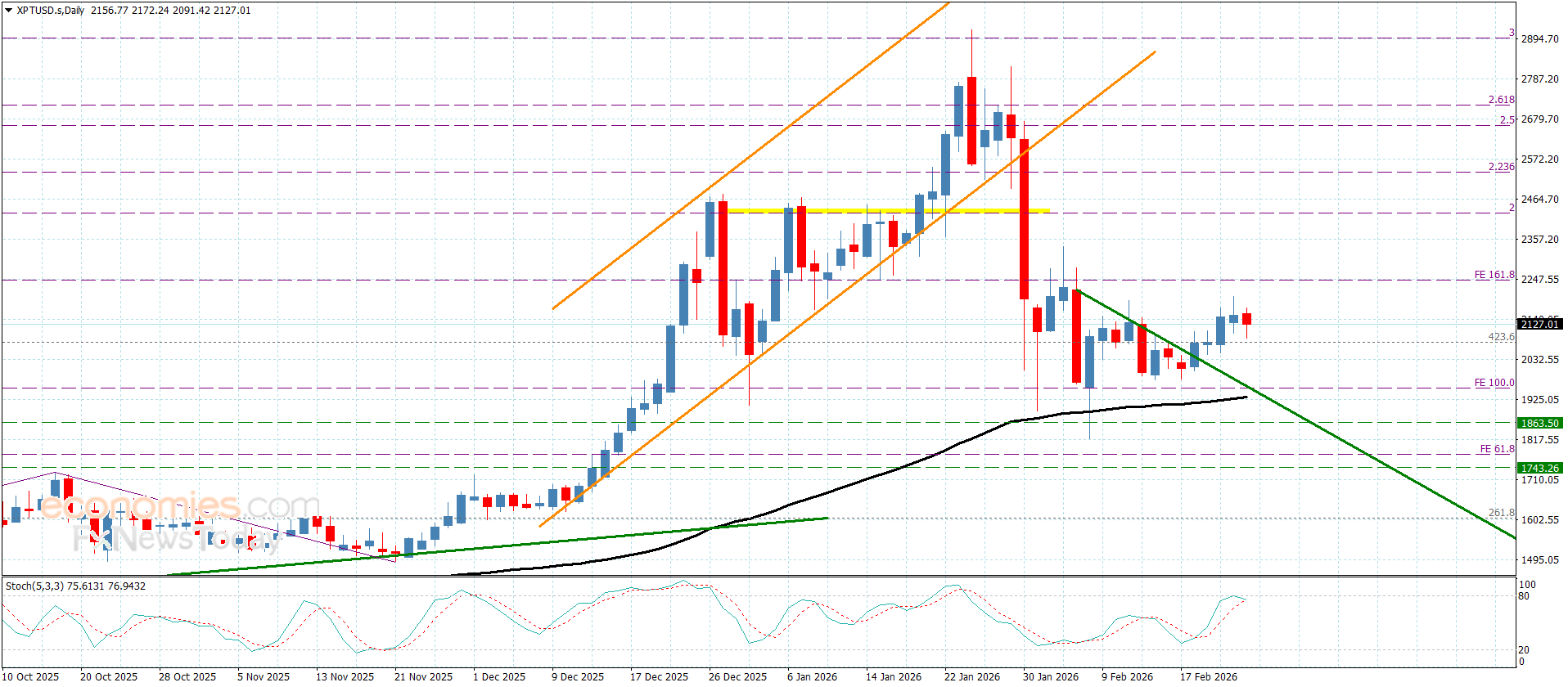
Despite providing bullish momentum by stochastic, however the fluctuation below the initial barrier at $3.520 level, which pushed it to form new bearish waves, repeating the pressure on the main support at $3.000.
The current support forms detecting key for the main trend in the upcoming trading, to expect its stability to begin forming new bullish waves, motivating it to surpass $3.520 barrier, to record new gains by its rally towards $3.750 and $4.000, while breaking the support and holding below it will force it to suffer big losses, to expect reaching $2.850 and $2.660 initially.
The expected trading range for today is between $3.000 and $3.520
Trend forecast: Bullish
Copper price kept providing bullish trading, to move away from $5.5100 support, taking advantage of providing bullish momentum by the main indicators, to settle near $5.8500.
The price needs extra positive momentum, which allows it to settle above $5.9700 level, to confirm its readiness to record extra gains by its rally towards $6.1200 and $6.2400, while the failure to breach $5.9700 might force it to provide mixed trading with a new chance to activate the bearish corrective track in the upcoming period trading.
The expected trading range for today is between $5.7200 and $5.9700
Trend forecast: Bullish
has risen sharply amid a weaker yen. The yen is extending its decline after reports that Japanese Prime Minister Takaichi has taken a harder line on further rate hikes during a meeting with Bank of Japan Governor Ueda.
Following the news, the Japanese currency dropped as much as 1.1% against the , underperforming its G10 peers.
Since winning a stronger mandate in the elections, Takaichi has been expected to shift towards more market-friendly policies; however, these latest reports suggest an increasing risk that she could suppress BoJ rate hikes.
Takaichi has become known for her pro-stimulus stance, favouring economic growth over rising interest rates, although she has slightly eased her stance to soothe market nerves after Japanese bond yields surged to historic levels.
Her comments come after data last week showed that Japanese cooled to 1.5%, the first time it had fallen below 2% since March 2022. The data raised doubts over the BoJ’s ability to hike rates. data is due late on Thursday and is also expected to cool below the 2% target.
Meanwhile, the US dollar is edging higher against its major peers, recovering most of yesterday’s losses. The dollar’s initial weakness was driven by fiscal concerns following Trump’s announcement of 10% global trade tariffs and his threats to raise them to 15%, though that hasn’t happened yet.
There is still uncertainty for many countries about whether the terms of their originally negotiated trade deals remain valid or whether they now need to stick to the new emergency tariffs.
Looking ahead, U.S. data is due later today, along with several Fed speakers, providing further clues on the Fed’s . The last week were more hawkish than expected.
USD/JPY trades within a symmetrical triangle pattern. The price recently recovered from the 152.20, rising trendline support and is testing the 50 SMA and falling trendline resistance at 156.00.
Buyers will look to rise above this level to break out of the triangle and head towards 157.70, the February high. A rise above here creates a higher high and brings 160.0 the 2026 high into focus.
On the downside, support is seen at 154.50, the mid-December low. A break below the rising trendline support at 152.80 breaks out the downside of the triangle pattern, bringing 152.20 into focus.
The is modestly lower on Wednesday as Trump’s new 10% global tariff regime came into effect, raising trade tensions and concerns over global growth.
However, it’s worth noting that the UK government said it doesn’t expect Trump’s new tariffs to impact the US-UK trade deal agreed last year.
Financial and healthcare stocks are weighing on the index with banks under pressure amid concerns that tariffs could curb economic activity.
Losses in those sectors were partly offset by a rising commodity-linked stocks amid higher crude oil and metal prices, which supported oil majors and miners.
The FTSE has been holding up better than some of its major peers, notably outperforming the US amid a lack of technology stocks on the UK index. While the lack of tech stocks had held the FTSE back in previous years, this has reversed more recently, and the absence of tech stocks is proving an advantage as worries over AI disruptions continue to affect specific areas of tech.
The FTSE 100 has extended its run-up from the April low to a record high of 10,730. The price has eased back slightly, pulling the RSI away from overbought territory. The bullish trend remains firmly intact.
Buyers will look to extend gains above 10,730 to 10,800 and 11,000 as the next logical levels.
Support is seen at 10,450, the rising trendline support and 20 SMA. A break below here and 10,100, the February low brings 10,000, the psychological level, into focus. It would take a move below 9910 to negate the longer-term uptrend.
Copper price kept providing bullish trading, to move away from $5.5100 support, taking advantage of providing bullish momentum by the main indicators, to settle near $5.8500.
The price needs extra positive momentum, which allows it to settle above $5.9700 level, to confirm its readiness to record extra gains by its rally towards $6.1200 and $6.2400, while the failure to breach $5.9700 might force it to provide mixed trading with a new chance to activate the bearish corrective track in the upcoming period trading.
The expected trading range for today is between $5.7200 and $5.9700
Trend forecast: Bullish
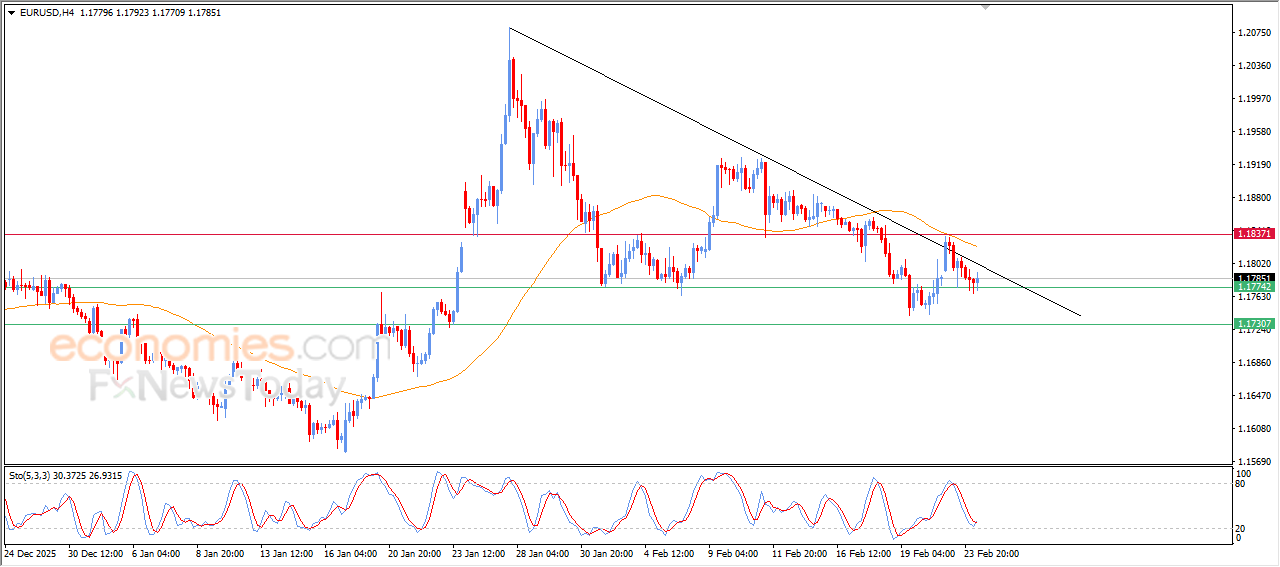
EUR/USD lost its traction in the second half of the day on Monday and closed the day virtually unchanged after starting the week with a bullish gap. Early Tuesday, the pair continues to edge lower and trades below 1.1800.
The table below shows the percentage change of Euro (EUR) against listed major currencies today. Euro was the weakest against the New Zealand Dollar.
| USD | EUR | GBP | JPY | CAD | AUD | NZD | CHF | |
|---|---|---|---|---|---|---|---|---|
| USD | 0.14% | 0.07% | 0.39% | 0.02% | -0.05% | -0.05% | 0.27% | |
| EUR | -0.14% | -0.07% | 0.24% | -0.12% | -0.19% | -0.19% | 0.13% | |
| GBP | -0.07% | 0.07% | 0.31% | -0.05% | -0.12% | -0.12% | 0.21% | |
| JPY | -0.39% | -0.24% | -0.31% | -0.37% | -0.43% | -0.44% | -0.10% | |
| CAD | -0.02% | 0.12% | 0.05% | 0.37% | -0.06% | -0.07% | 0.26% | |
| AUD | 0.05% | 0.19% | 0.12% | 0.43% | 0.06% | -0.00% | 0.33% | |
| NZD | 0.05% | 0.19% | 0.12% | 0.44% | 0.07% | 0.00% | 0.33% | |
| CHF | -0.27% | -0.13% | -0.21% | 0.10% | -0.26% | -0.33% | -0.33% |
The heat map shows percentage changes of major currencies against each other. The base currency is picked from the left column, while the quote currency is picked from the top row. For example, if you pick the Euro from the left column and move along the horizontal line to the US Dollar, the percentage change displayed in the box will represent EUR (base)/USD (quote).
The negative impact of the US traiff uncertainty on the US Dollar (USD) faded away in the American session on Monday. The bearish opening in Wall Street, followed by another bout of heavy selloff, allowed the USD to benefit from safe-haven flows and caused EUR/USD to turn south.
Meanwhile, the European Parliament decided on Monday to postpone a vote, which was originally planned for Tuesday, on the EU-US trade deal after US President Trump announced blanket 15% tariff in response to the US Supreme Court’s ruling against existing tariffs.
The European economic calendar will not feature any high-impact data releases on Tuesday. Later in the day, the Conference Board will publish the US Consumer Confidence Index data for February and the Automatic Data Processing (ADP) will release the Employment Change 4-week Average. More importantly, several Federal Reserve (Fed) policymakers will be delivering speeches.
In case policymakers note that the tariff uncertainty will cloud the inflation outlook and cause them to adopt a more patient approach to policy-easing, the USD could stay resilient against its peers and make it difficult for EUR/USD to shake off the bearish pressure. According to the CME FedWatch Tool, markets virtually see no chance of a rate cut in March and price in about a 80% probability of one more policy hold in April.
The 20-, 50-, and 100-period Simple Moving Averages (SMAs) slope downward, while the 200-period SMA inches higher. Price trades beneath all four averages, keeping sellers in control. The 20 SMA at 1.1783 serves as nearby dynamic resistance. The Relative Strength Index (14) sits at 41, below its 50 midline, signaling subdued momentum.
The descending trend line from 1.2023 caps recoveries, with resistance seen at 1.1832. Measured from the 1.1590 low to the 1.2027 high, the 61.8% retracement at 1.1757 offers support. A break lower would expose the 78.6% retracement at 1.1684. A recovery through the trend-line barrier would ease bearish pressure, while a violation of Fibonacci support would extend the downside.
(The technical analysis of this story was written with the help of an AI tool.)
The Euro is the currency for the 20 European Union countries that belong to the Eurozone. It is the second most heavily traded currency in the world behind the US Dollar. In 2022, it accounted for 31% of all foreign exchange transactions, with an average daily turnover of over $2.2 trillion a day.
EUR/USD is the most heavily traded currency pair in the world, accounting for an estimated 30% off all transactions, followed by EUR/JPY (4%), EUR/GBP (3%) and EUR/AUD (2%).
The European Central Bank (ECB) in Frankfurt, Germany, is the reserve bank for the Eurozone. The ECB sets interest rates and manages monetary policy.
The ECB’s primary mandate is to maintain price stability, which means either controlling inflation or stimulating growth. Its primary tool is the raising or lowering of interest rates. Relatively high interest rates – or the expectation of higher rates – will usually benefit the Euro and vice versa.
The ECB Governing Council makes monetary policy decisions at meetings held eight times a year. Decisions are made by heads of the Eurozone national banks and six permanent members, including the President of the ECB, Christine Lagarde.
Eurozone inflation data, measured by the Harmonized Index of Consumer Prices (HICP), is an important econometric for the Euro. If inflation rises more than expected, especially if above the ECB’s 2% target, it obliges the ECB to raise interest rates to bring it back under control.
Relatively high interest rates compared to its counterparts will usually benefit the Euro, as it makes the region more attractive as a place for global investors to park their money.
Data releases gauge the health of the economy and can impact on the Euro. Indicators such as GDP, Manufacturing and Services PMIs, employment, and consumer sentiment surveys can all influence the direction of the single currency.
A strong economy is good for the Euro. Not only does it attract more foreign investment but it may encourage the ECB to put up interest rates, which will directly strengthen the Euro. Otherwise, if economic data is weak, the Euro is likely to fall.
Economic data for the four largest economies in the euro area (Germany, France, Italy and Spain) are especially significant, as they account for 75% of the Eurozone’s economy.
Another significant data release for the Euro is the Trade Balance. This indicator measures the difference between what a country earns from its exports and what it spends on imports over a given period.
If a country produces highly sought after exports then its currency will gain in value purely from the extra demand created from foreign buyers seeking to purchase these goods. Therefore, a positive net Trade Balance strengthens a currency and vice versa for a negative balance.
BitcoinWorld
Silver Price Forecast: XAG/USD Holds Steady at $87.50 as Safe-Haven Demand Surges Amid Global Uncertainty
Global financial markets witnessed a significant development on Tuesday, March 18, 2025, as the spot silver price (XAG/USD) consolidated firmly around the $87.50 per ounce level. This stabilization follows a period of notable volatility and underscores a powerful resurgence in safe-haven asset demand. Consequently, investors are closely analyzing the silver price forecast for clues about broader market sentiment and economic direction.
The recent trading session saw XAG/USD establish a strong support base near $87.50. Market data from major exchanges shows consistent buying interest emerged each time the price approached this threshold. This price action reflects a complex interplay of macroeconomic forces currently shaping the precious metals landscape. Analysts point to several key factors supporting this level.
Firstly, renewed concerns about global economic growth have prompted a strategic portfolio reallocation. Secondly, ongoing geopolitical tensions in multiple regions continue to drive capital toward traditional stores of value. Thirdly, currency market fluctuations, particularly in the US Dollar Index (DXY), have created favorable conditions for dollar-denominated commodities like silver. The metal’s dual role as both a monetary and industrial asset provides a unique demand profile that differs from gold.
| Factor | Impact on Silver (XAG/USD) | Evidence/Context |
|---|---|---|
| Geopolitical Risk | Positive (Safe-Haven Flow) | Increased central bank diversification, retail bullion demand |
| US Dollar Strength | Negative (Typically Inverse) | DXY movements create buying opportunities in local currencies |
| Industrial Demand | Positive (Long-Term Support) | Solar panel, electronics, and automotive sector consumption |
| Real Interest Rates | Negative (Opportunity Cost) | Inflation data versus central bank policy remains key |
Safe-haven demand is not a monolithic force but a reaction to specific, verifiable pressures in the global system. In the current climate, this demand stems from three primary sources. Persistent inflation concerns, though moderated from previous highs, continue to erode the real value of fiat currencies. Investors therefore seek assets with intrinsic value and historical inflation-hedging properties.
Furthermore, equity market corrections in key technology and growth sectors have triggered a classic flight-to-safety move. Bond market volatility has also diminished the appeal of traditional fixed-income havens for some institutional players. According to recent commitment of traders reports, managed money positions in silver futures have shifted noticeably, indicating a change in professional sentiment. This institutional interest provides a substantial foundation for the current price level.
While financial demand captures headlines, the physical market provides crucial underlying support. Analysts from the Silver Institute emphasize the structural deficit in the physical silver market. Mine supply growth remains constrained, while industrial consumption continues its long-term upward trajectory. Key sectors driving this include:
This consumption creates a price floor that is increasingly resilient. Even during periods of weak investment demand, industrial offtake prevents severe price collapses. The current convergence of strong investment and industrial demand creates a uniquely bullish setup for the silver price forecast.
Chart analysis reveals that the $87.50 zone represents a significant technical confluence. It aligns with the 50-day moving average and a previous resistance level from late 2024, which has now turned into support. This technical strength bolsters the fundamental narrative. On-chain data for silver-backed ETFs also shows consistent inflows over the past month, confirming the physical backing for the price move.
Monetary policy expectations remain a critical watchpoint. Commentary from the Federal Reserve and other major central banks is parsed for hints about the pace of balance sheet normalization and interest rate paths. Historically, silver outperforms in the latter stages of a tightening cycle as the focus shifts to economic growth concerns. The current environment suggests we may be entering such a phase.
The silver price forecast remains cautiously optimistic as XAG/USD demonstrates resilience around $87.50. This stability is directly attributable to robust safe-haven demand fueled by geopolitical uncertainty and economic crosscurrents. The metal benefits from a powerful combination of monetary appeal and irreplaceable industrial utility. While volatility is inherent to commodity markets, the fundamental and technical foundations for silver appear solid. Investors and analysts will monitor upcoming economic data, central bank signals, and physical market indicators to gauge the next directional move for the silver price.
Q1: What does XAG/USD mean?
XAG is the ISO 4217 currency code for silver, representing one troy ounce. XAG/USD is the exchange rate showing how many US dollars are needed to purchase one ounce of silver.
Q2: Why is silver considered a safe-haven asset?
Silver is a tangible asset with intrinsic value, limited supply, and a millennia-long history as a store of wealth. During times of market stress, inflation, or geopolitical tension, investors often allocate funds to precious metals to preserve capital.
Q3: How does industrial demand affect the silver price forecast?
Industrial consumption, which accounts for over half of annual silver demand, provides a consistent baseline of physical offtake. This creates a structural support level, making the market less reliant on purely financial investment flows and adding long-term price stability.
Q4: What are the main risks to a higher silver price forecast?
Key risks include a significant strengthening of the US dollar, a sharp rise in real interest rates that increases the opportunity cost of holding non-yielding assets, a deep global recession that crushes industrial demand, or a sudden resolution of geopolitical conflicts that reduces safe-haven buying.
Q5: How can investors gain exposure to silver prices?
Investors can use physical bullion (bars, coins), silver-backed Exchange-Traded Funds (ETFs), futures and options contracts on commodities exchanges, or shares in silver mining companies. Each method carries different risk, liquidity, and storage considerations.
This post Silver Price Forecast: XAG/USD Holds Steady at $87.50 as Safe-Haven Demand Surges Amid Global Uncertainty first appeared on BitcoinWorld.
Copper price kept providing bullish trading, to move away from $5.5100 support, taking advantage of providing bullish momentum by the main indicators, to settle near $5.8500.
The price needs extra positive momentum, which allows it to settle above $5.9700 level, to confirm its readiness to record extra gains by its rally towards $6.1200 and $6.2400, while the failure to breach $5.9700 might force it to provide mixed trading with a new chance to activate the bearish corrective track in the upcoming period trading.
The expected trading range for today is between $5.7200 and $5.9700
Trend forecast: Bullish
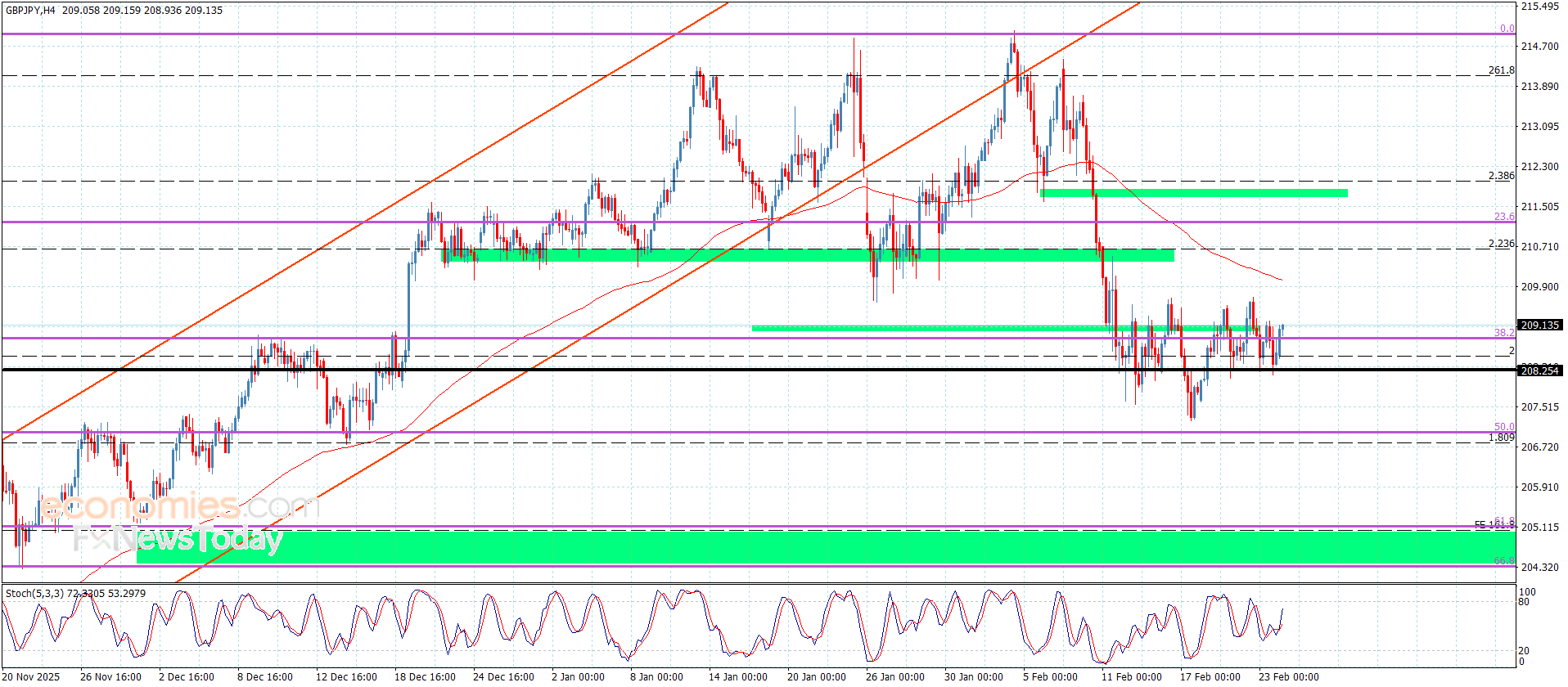
The GBPJPY pair approached the previously waited main target by reaching 207.30 level which forces it to form some bullish corrective waves, affected by stochastic rally above 50 level, which allows it to recover some losses to settle near 208.15.
Note that the negative stability below 209.15 level represents main factor to confirm the previously suggested negativity, therefore, we will keep waiting for gathering extra negative momentum to reinforce the chances of reaching 207.05, while surpassing the barrier and holding above it will ease the mission of achieving several gains by its rally towards 209.85 reaching 207.05.
The expected trading range for today is between 207.05 and 208.75
Trend forecast: Bearish
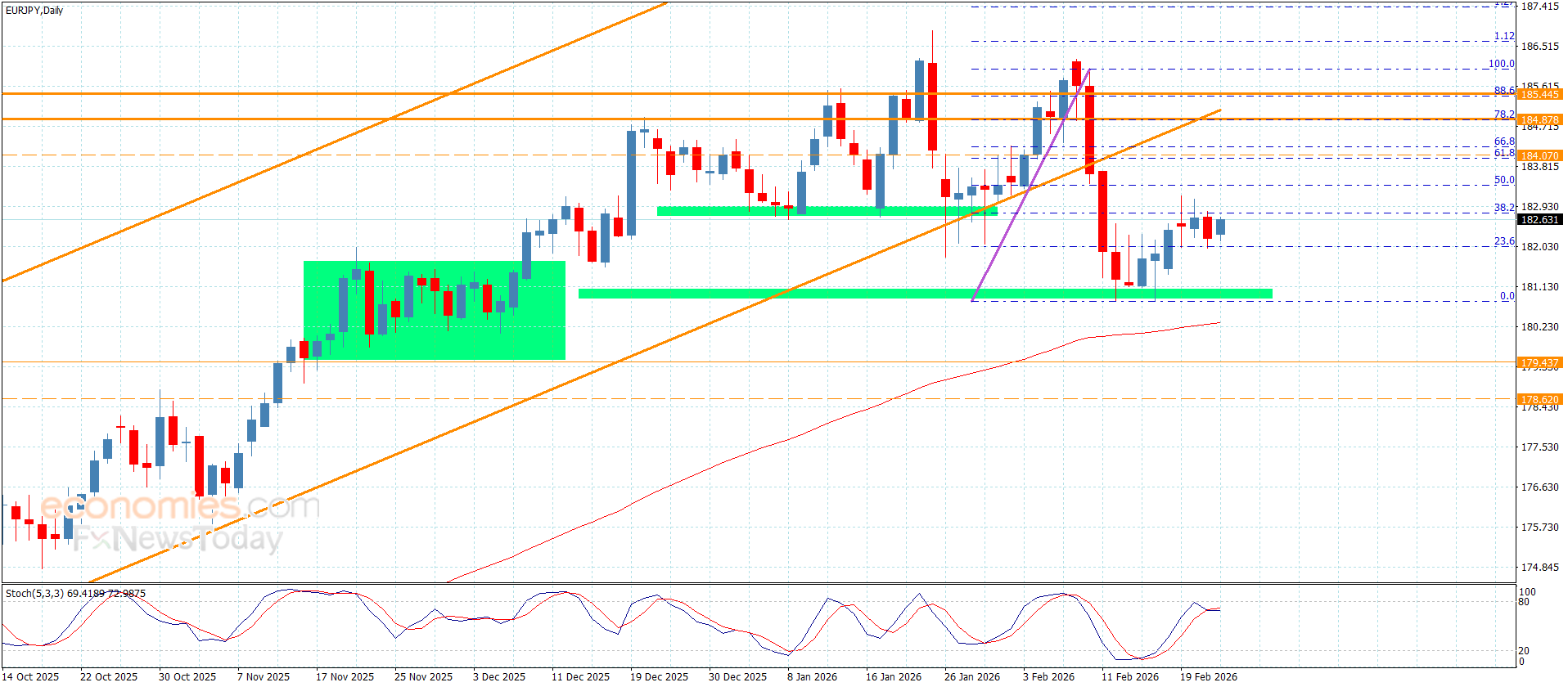
EUR/JPY pares its recent losses from the previous session, trading around 182.60 during the Asian hours on Tuesday. The technical analysis of the daily chart points to a potential bullish reversal, with the currency cross holding slightly above the upper boundary of the descending channel pattern. However, the 14-day Relative Strength Index (RSI) at 46.84 (neutral) signals modest improvement in momentum without a clear trend resumption.
The EUR/JPY cross holds just above the nine-day Exponential Moving Average (EMA) at 182.57, while the 50-day EMA at 182.78 caps near-term recoveries. The short-term average has stabilized, and the medium-term slope is flattening, pointing to consolidation. Failure to reclaim the medium-term average would leave the pair vulnerable to range extension, while a sustained hold above the short-term average could keep dips contained.
A daily close above the 50-day EMA would cause the emergence of the bullish bias and support the EUR/JPY cross to explore the region around the all-time high of 186.88, which was recorded on January 23.
A break below the nine-day EMA could drag the EUR/JPY cross back into the descending channel and target the lower boundary of the channel around 177.30. Further declines below the channel would reinforce the bearish bias and put downward pressure on the currency cross to navigate the region around the four-month low of 175.70.
(The technical analysis of this story was written with the help of an AI tool.)
The table below shows the percentage change of Euro (EUR) against listed major currencies today. Euro was the strongest against the Japanese Yen.
| USD | EUR | GBP | JPY | CAD | AUD | NZD | CHF | |
|---|---|---|---|---|---|---|---|---|
| USD | 0.06% | -0.03% | 0.17% | 0.00% | -0.14% | -0.17% | 0.12% | |
| EUR | -0.06% | -0.09% | 0.13% | -0.05% | -0.20% | -0.23% | 0.06% | |
| GBP | 0.03% | 0.09% | 0.21% | 0.03% | -0.11% | -0.14% | 0.15% | |
| JPY | -0.17% | -0.13% | -0.21% | -0.16% | -0.30% | -0.34% | -0.04% | |
| CAD | -0.00% | 0.05% | -0.03% | 0.16% | -0.14% | -0.17% | 0.12% | |
| AUD | 0.14% | 0.20% | 0.11% | 0.30% | 0.14% | -0.03% | 0.26% | |
| NZD | 0.17% | 0.23% | 0.14% | 0.34% | 0.17% | 0.03% | 0.29% | |
| CHF | -0.12% | -0.06% | -0.15% | 0.04% | -0.12% | -0.26% | -0.29% |
The heat map shows percentage changes of major currencies against each other. The base currency is picked from the left column, while the quote currency is picked from the top row. For example, if you pick the Euro from the left column and move along the horizontal line to the US Dollar, the percentage change displayed in the box will represent EUR (base)/USD (quote).