The main category of Forex News.
You can use the search box below to find what you need.
[wd_asp id=1]
The main category of Forex News.
You can use the search box below to find what you need.
[wd_asp id=1]
The Gold price (XAU/USD) faces some selling pressure to around $2,985 during the early Asian session on Monday, pressured by some profit-taking. The precious metal extends the decline as a fall in the US stock market has prompted traders to liquidate gold positions to create the necessary liquidity to cover losses in the stock market.
The recent sharp sell-off in the US stock market on Friday was about raising cash to cover margin calls after US President Donald Trump announced new reciprocal tariffs on goods from many countries. However, the downside for the yellow metal might be limited due to the supportive fundamentals. “Bargain hunters will rush in next week to buy cheap gold and silver, helping the precious metals to rally again,” said Rich Checkan, chairman and CEO of Asset Strategies International.
Additionally, the global economic uncertainties and escalating geopolitical tensions could boost the safe-haven flows, supporting the Gold price. Russians shelled more than 30 localities in the Kherson region, including residential areas of Kherson. Seven people were wounded, the Kherson regional military administration’s Oleksandr Prokudin reported. Despite the volatility,” gold is still a safe-haven place for many investors,” said Matt Simpson, a senior analyst at City Index.
Gold has played a key role in human’s history as it has been widely used as a store of value and medium of exchange. Currently, apart from its shine and usage for jewelry, the precious metal is widely seen as a safe-haven asset, meaning that it is considered a good investment during turbulent times. Gold is also widely seen as a hedge against inflation and against depreciating currencies as it doesn’t rely on any specific issuer or government.
Central banks are the biggest Gold holders. In their aim to support their currencies in turbulent times, central banks tend to diversify their reserves and buy Gold to improve the perceived strength of the economy and the currency. High Gold reserves can be a source of trust for a country’s solvency. Central banks added 1,136 tonnes of Gold worth around $70 billion to their reserves in 2022, according to data from the World Gold Council. This is the highest yearly purchase since records began. Central banks from emerging economies such as China, India and Turkey are quickly increasing their Gold reserves.
Gold has an inverse correlation with the US Dollar and US Treasuries, which are both major reserve and safe-haven assets. When the Dollar depreciates, Gold tends to rise, enabling investors and central banks to diversify their assets in turbulent times. Gold is also inversely correlated with risk assets. A rally in the stock market tends to weaken Gold price, while sell-offs in riskier markets tend to favor the precious metal.
The price can move due to a wide range of factors. Geopolitical instability or fears of a deep recession can quickly make Gold price escalate due to its safe-haven status. As a yield-less asset, Gold tends to rise with lower interest rates, while higher cost of money usually weighs down on the yellow metal. Still, most moves depend on how the US Dollar (USD) behaves as the asset is priced in dollars (XAU/USD). A strong Dollar tends to keep the price of Gold controlled, whereas a weaker Dollar is likely to push Gold prices up.
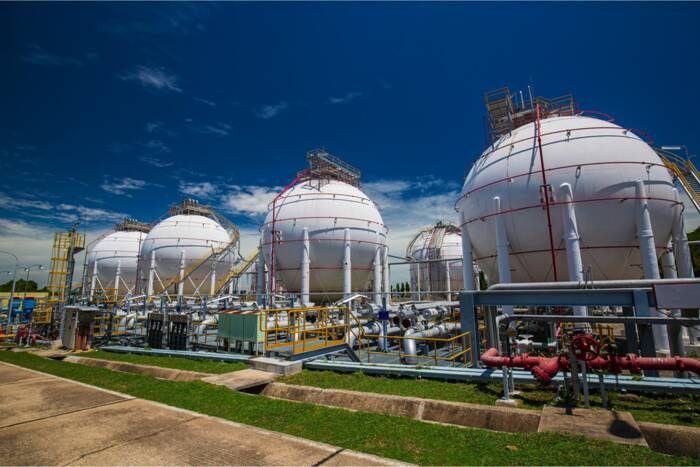
Despite a drop in the U.S. natural gas rig count—down seven last week to just 96—output remains strong. Lower-48 dry gas production averaged 106.4 Bcf/d on Friday, up over 4% from a year ago. This persistent output is meeting softening demand head-on. Industrial and residential usage remains subdued, and power burn, while stable, has yet to show the typical seasonal ramp-up. The result is a market with more supply than it currently needs, particularly in the absence of weather-related demand spikes.
Yes. The EIA reported a 29 Bcf injection into storage for the week ending March 28, well above the five-year average draw for that period. While inventories are still 21.5% lower than last year and 4.3% below the five-year norm, the size of the early injection signaled that mild weather and excess supply are beginning to rebuild stockpiles earlier than expected. This has added to the near-term bearish tone, especially as traders focus on the potential for larger-than-usual builds in the coming weeks.
LNG exports remain a bright spot, with flows to U.S. export terminals holding near 15.5 Bcf/d. While down slightly from the prior week, they continue to support baseline demand. Longer term, President Trump’s move to lift restrictions on LNG export project approvals has reactivated a backlog of infrastructure proposals. If even a portion of these projects moves forward, it would meaningfully increase export capacity and help balance domestic oversupply. For now, however, the export story is more supportive for long-term pricing than for the current supply-demand mismatch.
The short-term outlook for natural gas remains bearish. Weaker weather-driven demand, strong production, and early-season storage builds are tilting the market toward oversupply. Unless colder weather unexpectedly returns or LNG demand accelerates, prices may continue to face downward pressure in the week ahead.
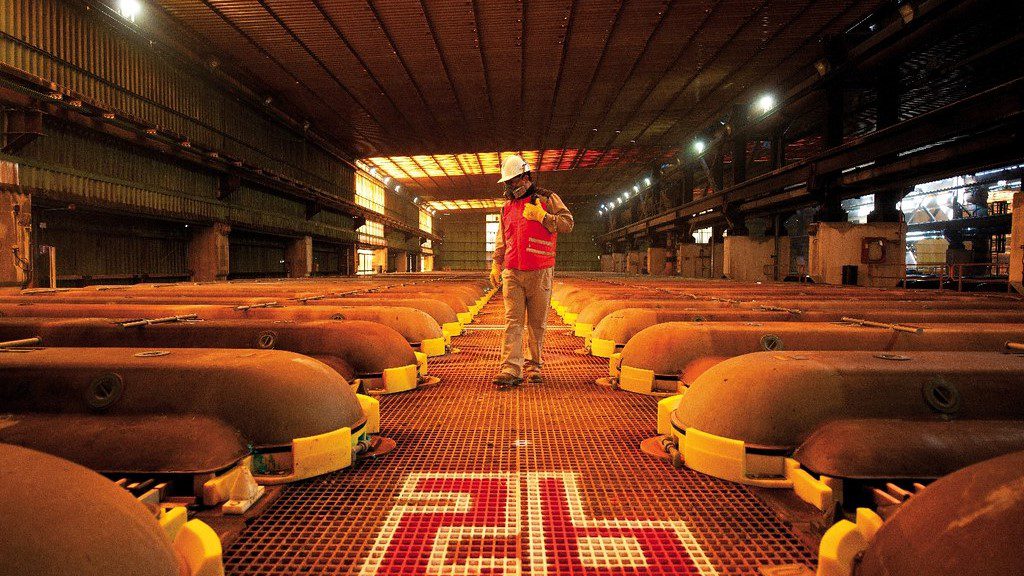
Spence copper mine in the North of Chile. (Credit: Consejo Minero)
Chile, the world’s largest producer of copper, is preparing to slash its official price estimate for 2025, the Wall Street Journal reported on Saturday.
The Chilean government will cut the estimated average price to $3.90 to $4 a pound from a current projection for the year of $4.25 a pound, the WSJ said, citing a person familiar with the preliminary calculations.
Chile will publish the revised price estimate at the end of April, the newspaper said.
In February, Chile’s state copper commission, Cochilco, held its 2025 price forecast steady at $4.25 after raising it from $3.85 in May 2024.
The commission also extended the $4.25 forecast for 2026 and said it expected copper prices to remain over $4.00 a pound for the next decade.
Commodities prices including oil and other goods fell this week after new US tariffs fueled fears of a global recession.
(By Rishabh Jaiswal; Editing by Cynthia Osterman)
However, this type of pressure is viewed as mechanical rather than sentiment-driven. Gold remains up over 15% this year, supported by record central bank buying, strong institutional interest, and ETF inflows. The pullback may prove temporary unless supported by fresh macro shifts.
The underlying drivers of the rally are unchanged. Allianz’s Mohamed El-Erian now puts U.S. recession odds at 50%, while Goldman Sachs raised its estimate to 35%. Fed Chair Jerome Powell warned that Trump’s tariffs are “larger than expected,” with fallout likely to include both slower growth and elevated inflation. With global supply chains under renewed stress, gold’s role as a hedge remains central.
Traders will be glued to Wednesday’s FOMC minutes and Thursday’s CPI report. If the Fed minutes show internal debate or reluctance to ease aggressively, that could temper some of the rate-cut enthusiasm priced into markets. Conversely, if CPI surprises to the upside, it would reinforce inflation risks and justify gold’s safe-haven appeal—even if policy remains cautious. On Friday, consumer sentiment data could further illuminate how recent market stress is filtering through to inflation expectations.
President Trump’s announcement of sweeping reciprocal tariffs and targeted measures against China triggered a reassessment of global trade flows and manufacturing prospects. Semiconductor tariffs are particularly bearish for silver, given its widespread industrial applications. China’s response—slapping a 34% levy on all American goods—adds to fears of a drawn-out trade war. The result has been a sharp drop in global demand expectations, particularly in Asia and Europe, two major industrial buyers of silver.
A violent decline in equities—highlighted by a 2,000+ point drop in Dow futures—unleashed margin call selling across the board. Silver was hit especially hard as investors were forced to exit positions to cover losses elsewhere. While gold also saw liquidation, its safe-haven bid helped cushion losses. For silver, with weaker monetary demand and no central bank support, the impact was deeper and more sustained.
Silver’s weakness was compounded by a rising U.S. dollar and an uptick in real yields. Treasury markets stabilized after strong jobs data, pushing the 10-year yield back near 3.88%. The dollar gained as expectations for aggressive Fed cuts were scaled back. Traders now turn their attention to this week’s Fed minutes and Thursday’s CPI report, both of which could reshape policy expectations. If the minutes signal hesitation to ease, or if CPI comes in hot, silver could face further headwinds from tighter financial conditions and a stronger dollar.
Goldman Sachs lowered its forecast for Brent crude oil‘s average price this year by 5.5 per cent to $69 per barrel and for US West Texas Intermediate (WTI) prices by 4.3 per cent to $66 per barrel, citing the risks of higher supply by the Organisation of Petroleum Exporting Countries and its allies (OPEC+) and the global tariff-led trade war, likely triggering a recession.
The Wall Street brokerage cut its 2026 average price forecast for Brent by nine per cent to $62 and WTI by 6.3 per cent to $59. It warned that the new estimates could be lowered. “The risks to our reduced oil price forecast are to the downside, especially for 2026, given growing risks of recession and to a lesser extent of higher OPEC+ supply,” said Goldman analysts.
Brent crude was priced at $69.59 a barrel on Friday, while WTI was at $66.39. Crude prices posted their biggest percentage drops since 2022 on Thursday after US President Donald Trump slapped reciprocal tariffs on many countries and eight OPEC+ members unexpectedly advanced their plan to phase out production cuts by boosting output in May.
The latter, said Goldman, showed OPEC’s flexibility to rapidly implement large output hikes, diminishing the likelihood of a short-term price boost from lower supply. The brokerage said it now expects oil demand to grow by only 600,000 barrels per day (bpd) this year, down from its previous forecast of 900,000 bpd, and to increase by 700,000 bpd in 2026.
Crude oil prices crashed seven per cent on Friday to settle at their lowest in over three years as China ramped up tariffs on US goods, escalating a trade war that has led investors to price in a higher probability of recession.
China, the world’s top oil importer, announced it will impose additional tariffs of 34 per cent on all US goods from April 10. Nations have readied retaliation after Trump raised tariff to their highest in more than a century.
Commodities, including natural gas, soybeans and gold, also dived while global stock markets tumbled. Investment bank JPMorgan said it now sees a 60 per cent chance of a global economic recession by year-end, up from 40 per cent.
Global benchmark Brent futures settled $4.56, or 6.5 per cent, lower at $65.58 a barrel, while US WTI crude futures lost $4.96, or 7.4 per cent, to end at $61.99. At the session low, Brent fell to $64.03, and WTI hit $60.45, its lowest in four years. For the week, Brent crude was down 10.9 per cent, its biggest weekly loss in percentage terms in a year and a half, while WTI posted its biggest decline in two years with a drop of 10.6 per cent.
“Donald Trump has also threatened to impose secondary tariffs on Russian oil, and he toughened sanctions on Iran as part of his administration’s “maximum pressure” campaign to cut its exports,” said Prathamesh Mallya, DVP- Research, Non-Agri Commodities and Currencies, Angel One Ltd
Adding to the complex global supply picture, Russia, the world’s second-largest oil exporter, imposed restrictions on another major oil export route, suspending a mooring at the Black Sea port of Novorossiisk a day after restricting loadings from a key Caspian pipeline.
“Russia produces about nine million barrels of oil a day, or just under a tenth of global production. Its ports also ship oil from neighbouring Kazakhstan. Crude prices will likely trade lower after Trump announced reciprocal tariffs on trading partners, stoking concerns that a global trade war may dampen demand for crude,” added Mallya.
Further pressuring oil prices, the OPEC+ advanced plans for output increases. The group aims to return 411,000 barrels per day (bpd) to the market in May, up from the planned 135,000 bpd. HSBC also trimmed its 2025 global oil demand forecast from one million bpd to 0.9 million bpd, citing tariffs and OPEC+ supply.
A Russian court’s ruling that the Caspian Pipeline Consortium’s (CPC) Black Sea export terminal facilities should not be suspended also pressured prices lower. That decision could avert a fall in Kazakhstan’s oil production and supplies.
Imports of oil, gas and refined products were exempted from Trump’s sweeping new tariffs. Still, the policies could stoke inflation, slow economic growth, and intensify trade disputes, weighing on crude oil prices.
“A sharp tariff hike on China spooked energy markets, leading to oil’s biggest single-day fall in three years. Rising OPEC+ output and weaker demand due to trade tariffs may keep prices under pressure. We expect prices to remain volatile. Oil has support at $65.50-64.80, and resistance is at $66.90-67.60. In INR, it has support at ₹5,655-5,590 while resistance at ₹5,790-5,850,” said Rahul Kalantri, VP of Commodities, Mehta Equities Ltd.
Disclaimer: The views and recommendations provided in this analysis are those of individual analysts or broking companies, not Mint. We strongly advise investors to consult with certified experts, consider individual risk tolerance, and conduct thorough research before making investment decisions, as market conditions can change rapidly, and individual circumstances may vary.
Chile, the world’s largest producer of copper, is preparing to slash its official price estimate for 2025, the Wall Street Journal reported on Saturday.
The Chilean government will cut the estimated average price to $3.90 to $4 a pound from a current projection for the year of $4.25 a pound, the WSJ said, citing a person familiar with the preliminary calculations.
Chile will publish the revised price estimate at the end of April, the newspaper said.
In February, Chile’s state copper commission, Cochilco, held its 2025 price forecast steady at $4.25 after raising it from $3.85 in May 2024.
The commission also extended the $4.25 forecast for 2026 and said it expected copper prices to remain over $4.00 a pound for the next decade.
Commodities prices including oil and other goods fell this week after new U.S. tariffs fueled fears of a global recession.
Silver price plummeted on Friday as financial market turmoil continued for the third straight day, following US President Donald Trump’s decision to impose reciprocal tariffs. Consequently, China retaliated, sparking fears of a global economic slowdown. The XAG/USD trades at $29.55, sinking more than 7%.
On its way lower, Silver fell below the 100- and 200-day Simple Moving Averages (SMAs) on Friday, indicating a strong sell-off, once the grey metal cleared $31.39 and $30.86, respectively. Although the Relative Strength Index (RSI) turned bearish and oversold, due to the aggressiveness of the move, XAG/USD could continue to edge lower.
If XAG/USD falls below $29.00, this could expose the December 19 swing low of $28.74. Once surpassed, the next support would be the September 3 low of $27.71. Conversely, if XAG/USD climbs past $30.00, buyers could be poised to challenge the 200-day SMA at $30.86, followed by the $31 mark.
Silver is a precious metal highly traded among investors. It has been historically used as a store of value and a medium of exchange. Although less popular than Gold, traders may turn to Silver to diversify their investment portfolio, for its intrinsic value or as a potential hedge during high-inflation periods. Investors can buy physical Silver, in coins or in bars, or trade it through vehicles such as Exchange Traded Funds, which track its price on international markets.
Silver prices can move due to a wide range of factors. Geopolitical instability or fears of a deep recession can make Silver price escalate due to its safe-haven status, although to a lesser extent than Gold’s. As a yieldless asset, Silver tends to rise with lower interest rates. Its moves also depend on how the US Dollar (USD) behaves as the asset is priced in dollars (XAG/USD). A strong Dollar tends to keep the price of Silver at bay, whereas a weaker Dollar is likely to propel prices up. Other factors such as investment demand, mining supply – Silver is much more abundant than Gold – and recycling rates can also affect prices.
Silver is widely used in industry, particularly in sectors such as electronics or solar energy, as it has one of the highest electric conductivity of all metals – more than Copper and Gold. A surge in demand can increase prices, while a decline tends to lower them. Dynamics in the US, Chinese and Indian economies can also contribute to price swings: for the US and particularly China, their big industrial sectors use Silver in various processes; in India, consumers’ demand for the precious metal for jewellery also plays a key role in setting prices.
Silver prices tend to follow Gold’s moves. When Gold prices rise, Silver typically follows suit, as their status as safe-haven assets is similar. The Gold/Silver ratio, which shows the number of ounces of Silver needed to equal the value of one ounce of Gold, may help to determine the relative valuation between both metals. Some investors may consider a high ratio as an indicator that Silver is undervalued, or Gold is overvalued. On the contrary, a low ratio might suggest that Gold is undervalued relative to Silver.
April 5, 2025 – Written by Frank Davies
STORY LINK US Jobs Data Stems Panic Selling, GBP/EUR and GBP/USD Recover
Markets have attempted to stabilise after the US jobs data, but the underlying mood remains extremely fragile.
Earlier, confidence took a further dive following China’s announcement that it would impose retaliatory 34% tariffs on imports from the US.
The move triggered further concerns over retaliation by other countries and increased fears that the global economy would slide into recession.
The FTSE 100 index plunged 4% to 2025 lows before a recovery.
The Pound to Dollar (GBP/USD) exchange rate dipped sharply to lows at 1.2965 before trading just above the 1.3000 level after the US data.
According to Scotiabank; “GBPUSD has retreated back to the psychologically important 1.30 level and momentum is fading from overbought levels. The near-term range is now expected to be bound between support in the upper-1.28s and resistance above 1.31.”
The Pound to Euro (GBP/EUR) exchange rate slumped to 7-month lows near 1.1750 before a recovery to 1.1800.
SocGen sees crucial near-term GBP/EUR support around 1.1750.
The US employment report recorded an increase in non-farm payrolls of 228,000 for March compared with consensus forecasts of around 135,000, but the February increase was revised lower to 117,000 from the flash reading of 151,000.
The unemployment rate ticked higher to 4.2% from 4.1% while average earnings increased 3.8% over the year from 4.0% previously.
The data will provide immediate relief surrounding the US economy, but markets are also focussed more on the impact of US tariffs and potential trade wars.
Goldman Sachs’s Lindsay Rosner commented; “Today’s better than expected jobs report will help ease fears of an immediate softening in the US labor market. However, this number has become a side dish with the market just focusing on the entrée: tariffs.”
There are also still reservations surrounding the labour market after Challenger recorded a huge job in Federal layoffs.
ING commented; “The rise in job cut announcements during March, tracked by Challenger and released this week, was frankly astonishing. It eclipsed anything we saw in the height of the financial crisis or dot-com bubble.”
According to Scotiabank; “The USD is likely to retain a defensive undertone for the foreseeable future as investors re-allocate capital to more appealing locales.”
The UK construction PMI index recovered slightly to 46.4 for March from 44.6 the previous month.
Tim Moore, Economics Director at S&P Global Market Intelligence, commented; “March data highlighted a challenging month for UK construction companies as sharply reduced order volumes continued to weigh on overall workloads.”
Global developments are likely to dominate in the short term with developments in risk appetite and equities likely to be the crucial element.
Scotiabank commented; “Broader developments are likely to continue driving movement in GBP, and the near-term outlook for reconciliation on trade appears to be slim as media reports suggest that the US’s 10% tariff rate on UK goods may be a permanent baseline.”
International Money Transfer? Ask our resident FX expert a money transfer question or try John’s new, free, no-obligation personal service! ,where he helps every step of the way,
ensuring you get the best exchange rates on your currency requirements.
Important DisclaimersThe content provided on the website includes general news and publications, our personal analysis and opinions, and contents provided by third parties, which are intended for educational and research purposes only. It does not constitute, and should not be read as, any recommendation or advice to take any action whatsoever, including to make any investment or buy any product. When making any financial decision, you should perform your own due diligence checks, apply your own discretion and consult your competent advisors. The content of the website is not personally directed to you, and we does not take into account your financial situation or needs.The information contained in this website is not necessarily provided in real-time nor is it necessarily accurate. Prices provided herein may be provided by market makers and not by exchanges.Any trading or other financial decision you make shall be at your full responsibility, and you must not rely on any information provided through the website. FX Empire does not provide any warranty regarding any of the information contained in the website, and shall bear no responsibility for any trading losses you might incur as a result of using any information contained in the website.The website may include advertisements and other promotional contents, and FX Empire may receive compensation from third parties in connection with the content. FX Empire does not endorse any third party or recommends using any third party’s services, and does not assume responsibility for your use of any such third party’s website or services.FX Empire and its employees, officers, subsidiaries and associates, are not liable nor shall they be held liable for any loss or damage resulting from your use of the website or reliance on the information provided on this website.Risk DisclaimersThis website includes information about cryptocurrencies, contracts for difference (CFDs) and other financial instruments, and about brokers, exchanges and other entities trading in such instruments. Both cryptocurrencies and CFDs are complex instruments and come with a high risk of losing money. You should carefully consider whether you understand how these instruments work and whether you can afford to take the high risk of losing your money.FX Empire encourages you to perform your own research before making any investment decision, and to avoid investing in any financial instrument which you do not fully understand how it works and what are the risks involved.