The main category of Forex News.
You can use the search box below to find what you need.
[wd_asp id=1]
The main category of Forex News.
You can use the search box below to find what you need.
[wd_asp id=1]
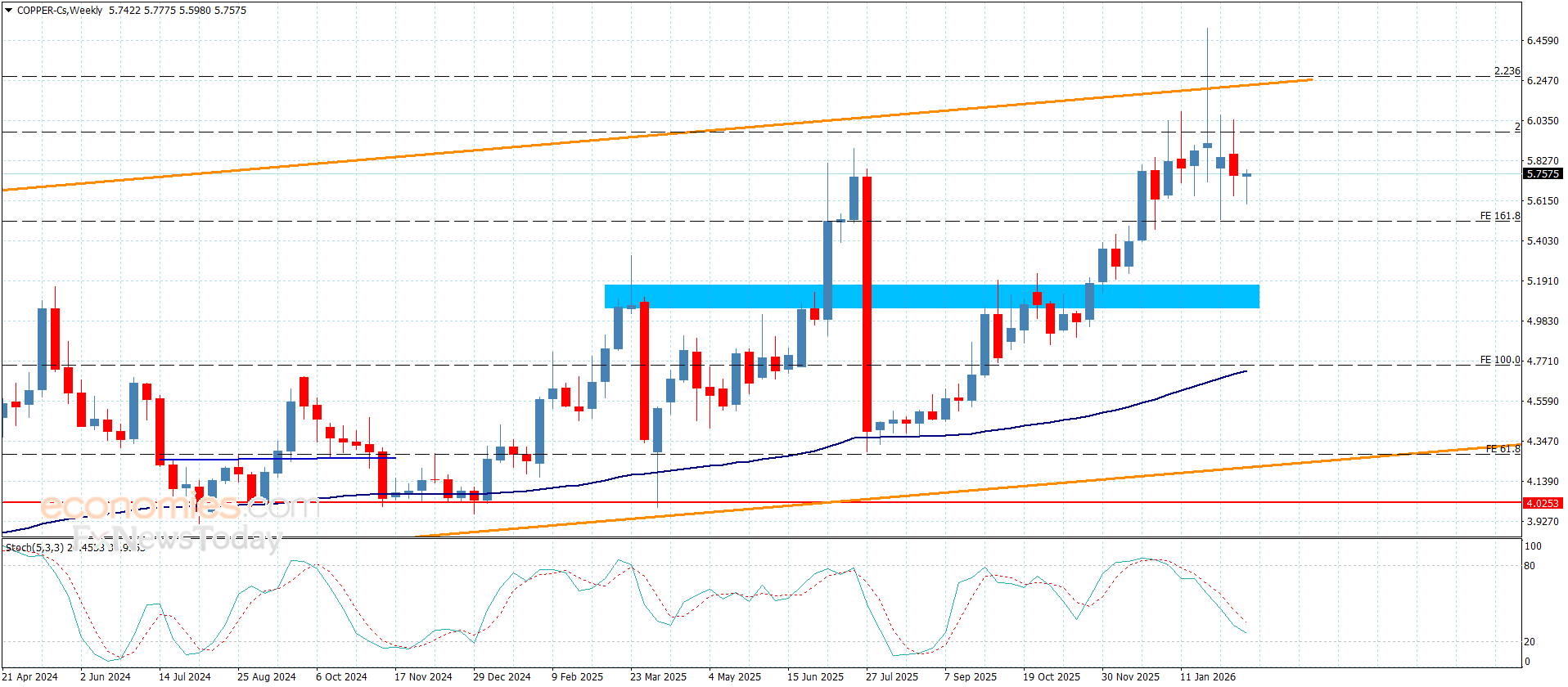
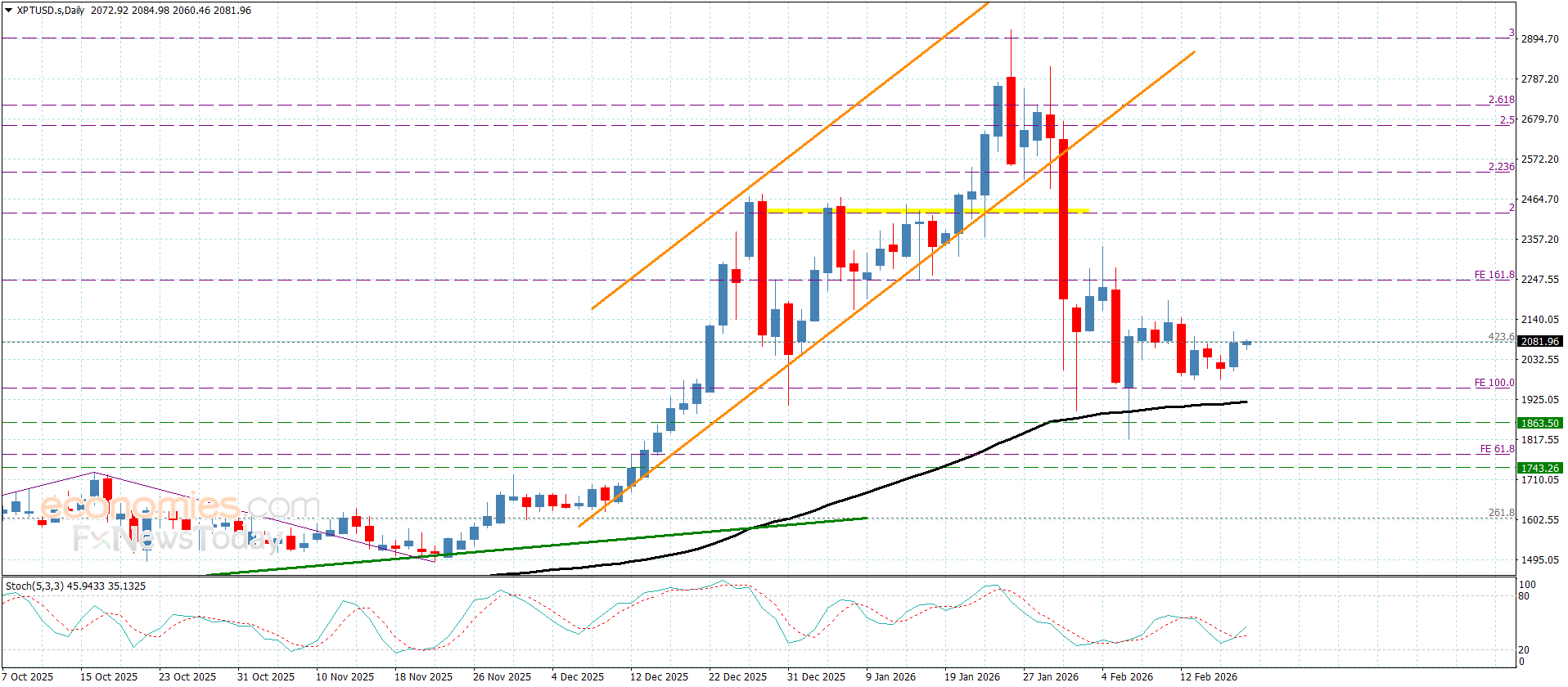
Despite forming bullish wave by copper price and its stability near $5/7500, but it couldn’t confirm its readiness to activate the bullish attack, due to the continuation of the main indicators’ contradiction, besides the stability of the price below $5.9700 barrier.
Providing mixed trading when gathering extra negative momentum will make reach $5.5100 support, forming confirmation key for the main trend in upcoming trading, breaking this support will force it to resume the corrective decline, to expect reaching $5.3600 followed by $5.1000.
The expected trading range for today is between $5.5500 and $5.8500
Trend forecast: Bearish
The Euro fell during trading on Wednesday, as we continue to ask questions about the overall strength or weakness of the US dollar.
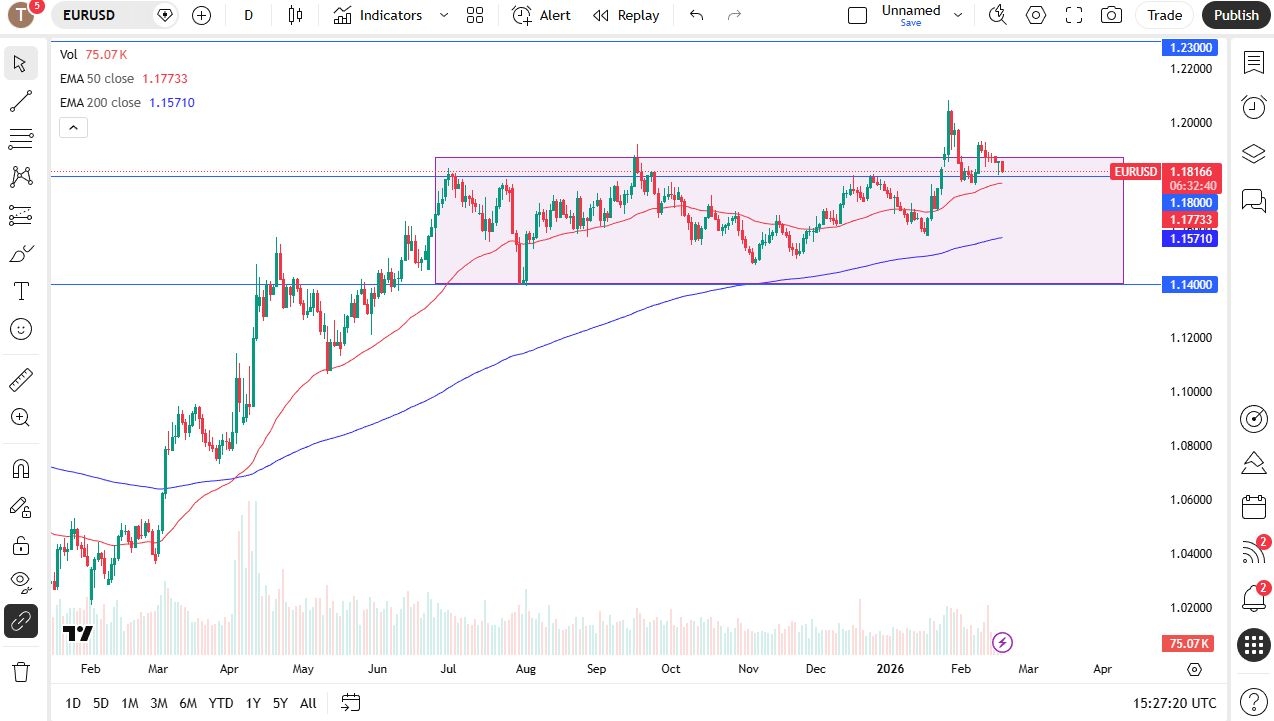
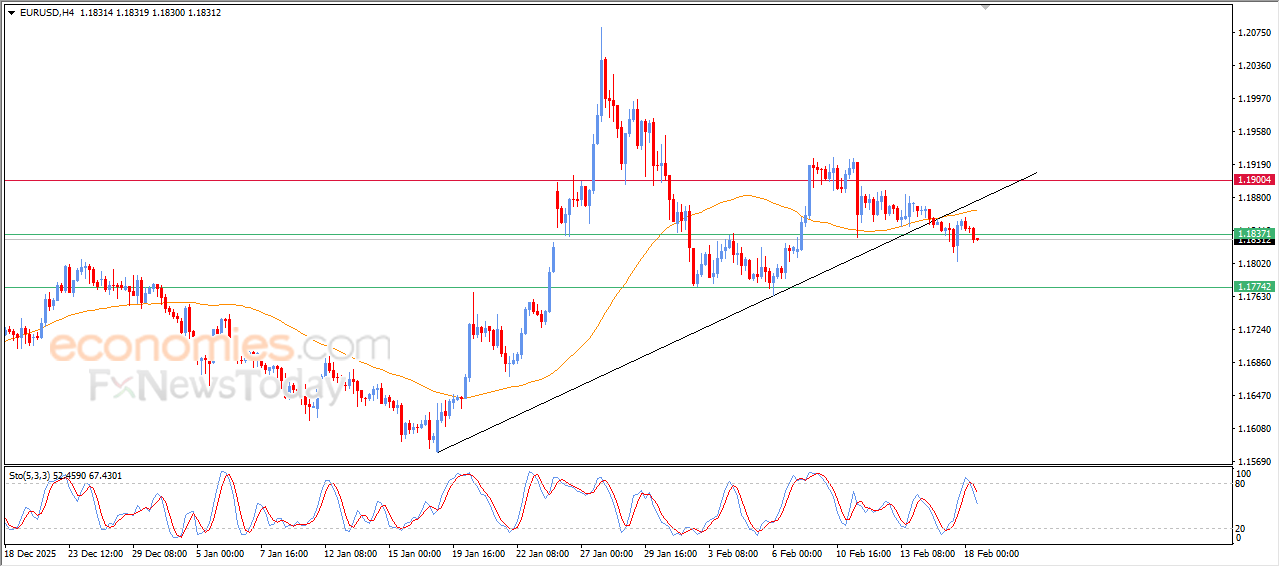
The Euro fell during trading on Wednesday as it looks like we are threatening the 1.18 level. The 1.18 level of course is a large round psychologically significant figure that a lot of people will be watching. I recognize this as a market that potentially will be testing the 50-day EMA and it’s worth watching what the US dollar is doing in general as it has a major influence here.
After all, this is one of the most heavily traded forex pairs that you have available to you and therefore this has a lot of weight on the US Dollar Index and in general the overall risk appetite around the world. What I am seeing during the session is a flood of money coming into the United States again and that of course drives down the Euro because Europeans are buying US stocks.
If we break down below the 50-day EMA, that could send the market down to the 1.16 level and possibly even the 200-day EMA. On a break to the upside, if we can break above the 1.19 level it opens up the 1.21 level and perhaps, if we get a little bit of momentum building there, then the potential measured move of the previous consolidation which could send this pair to the 1.23 level.
The 1.23 level has been important multiple times in the past and I think it will be very difficult to break above. Nonetheless, the dollar short positioning is at a 14-year high and generally speaking, when you get that extreme, the dollar fights back. That might be what we’re starting to see here and if we break down below the 50-day EMA, you can even make an argument that we just made a lower high, which of course is a bearish sign.

Ready to trade our daily Forex analysis? We’ve made this forex brokers list for you to check out.
Christopher Lewis has been trading Forex and has over 20 years experience in financial markets. Chris has been a regular contributor to Daily Forex since the early days of the site. He writes about Forex for several online publications, including FX Empire, Investing.com, and his own site, aptly named The Trader Guy. Chris favours technical analysis methods to identify his trades and likes to trade equity indices and commodities as well as Forex. He favours a longer-term trading style, and his trades often last for days or weeks.
Gold struggles below $5,000 in Thursday’s Asian trades as buyers take a breather after the 2% rally on Wednesday.
Gold stood tall on Wednesday, despite the solid recovery in the US Dollar (USD) and US Treasury bond yields, fuelled by somewhat hawkish Minutes of the US Federal Reserve’s (Fed) January monetary policy meeting.
The Minutes suggested that the Fed remains in no rush to cut interest rates, with several policymakers open to rate hikes if inflation remains elevated, others inclined to support further cuts if inflation recedes.
However, the markets’ pricing for three 25 basis points (bps) Fed rate cuts this year remained intact, which seems to have supported the non-yielding Gold.
The main catalyst behind Gold’s upswing was the return of haven demand due to renewed geopolitical tensions. Two days of peace talks in Geneva between Ukraine and Russia ended without a breakthrough. Ukraine’s President Volodymyr Zelenskiy said he was dissatisfied with the outcome.
Meanwhile, CBS News reported, citing sources familiar with internal discussions, a potential US military strike on Iran could come as early as Saturday.
This comes after Iran’s Foreign Minister Abbas Araqchi said on Tuesday that Tehran has agreed with the US ‘on guiding principles’ for the deal, following their Geneva talks.
Against this backdrop, Gold seems to continue its recent upside but the US Dollar could have an upper hand heading toward Friday’s US PCE inflation and Gross Domestic Product (GDP) data.
The Greenback also draws support from the latest data released by the US Treasury Department, which showed a net inflow of $44.9 billion in Treasury International Capital (TIC) for December 2025. The data increased foreign appetite for US assets.
Next of note for Gold traders remains the US Jobless Claims, Pending Home Sales data and Fedspeak scheduled later in the North American session on Thursday.
The 21-day Simple Moving Average (SMA) rises above the 50-, 100- and 200-day SMAs, preserving a bullish alignment. Price holds below the 21-day SMA at $5,001.04 but remains above the 50-day SMA at $4,688.83 and the longer baselines, keeping the broader bias upward. The Relative Strength Index (14) sits at 53 (neutral), reflecting steady momentum. Measured from the $5,597.89 high to the $4,401.99 low, the 50% retracement at $4,999.94 acts as immediate resistance.
A daily close above $4,999.94 would expose the 61.8% retracement at $5,141.05, where recovery attempts could stall. Failure to reclaim the 21-day SMA would leave the rebound vulnerable, bringing the 38.2% retracement at $4,858.82 into view, while the rising 100-day SMA at $4,393.61 underpins the medium-term trend.
(The technical analysis of this story was written with the help of an AI tool.)
Gold has played a key role in human’s history as it has been widely used as a store of value and medium of exchange. Currently, apart from its shine and usage for jewelry, the precious metal is widely seen as a safe-haven asset, meaning that it is considered a good investment during turbulent times. Gold is also widely seen as a hedge against inflation and against depreciating currencies as it doesn’t rely on any specific issuer or government.
Central banks are the biggest Gold holders. In their aim to support their currencies in turbulent times, central banks tend to diversify their reserves and buy Gold to improve the perceived strength of the economy and the currency. High Gold reserves can be a source of trust for a country’s solvency. Central banks added 1,136 tonnes of Gold worth around $70 billion to their reserves in 2022, according to data from the World Gold Council. This is the highest yearly purchase since records began. Central banks from emerging economies such as China, India and Turkey are quickly increasing their Gold reserves.
Gold has an inverse correlation with the US Dollar and US Treasuries, which are both major reserve and safe-haven assets. When the Dollar depreciates, Gold tends to rise, enabling investors and central banks to diversify their assets in turbulent times. Gold is also inversely correlated with risk assets. A rally in the stock market tends to weaken Gold price, while sell-offs in riskier markets tend to favor the precious metal.
The price can move due to a wide range of factors. Geopolitical instability or fears of a deep recession can quickly make Gold price escalate due to its safe-haven status. As a yield-less asset, Gold tends to rise with lower interest rates, while higher cost of money usually weighs down on the yellow metal. Still, most moves depend on how the US Dollar (USD) behaves as the asset is priced in dollars (XAU/USD). A strong Dollar tends to keep the price of Gold controlled, whereas a weaker Dollar is likely to push Gold prices up.
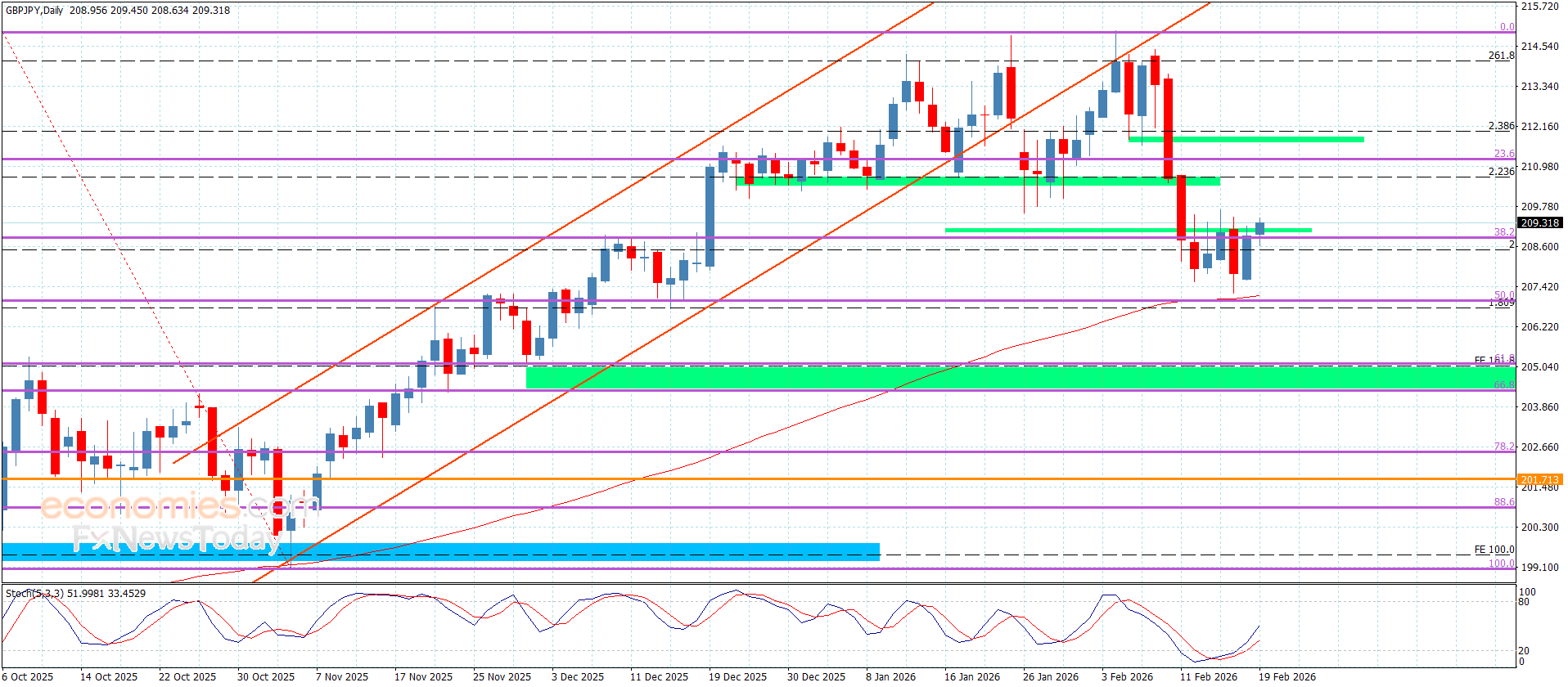
The GBPJPY pair ended the negative movement by reaching 207.60 level, to begin activating with stochastic positivity to rally towards 209.30 directly, to press on the barrier to find an exit to end the negative scenario in the current trading.
Note that providing positive close for the upcoming four hours above 209.15 level is important to confirm its readiness to begin bullish attack, to expect targeting 210.65 level initially, to extend the trading towards 211.70, while the failure to breach it will force the price to form new bearish waves to reach 208.25
The expected trading range for today is between 209.00 and 210.65
Trend forecast: Bullish
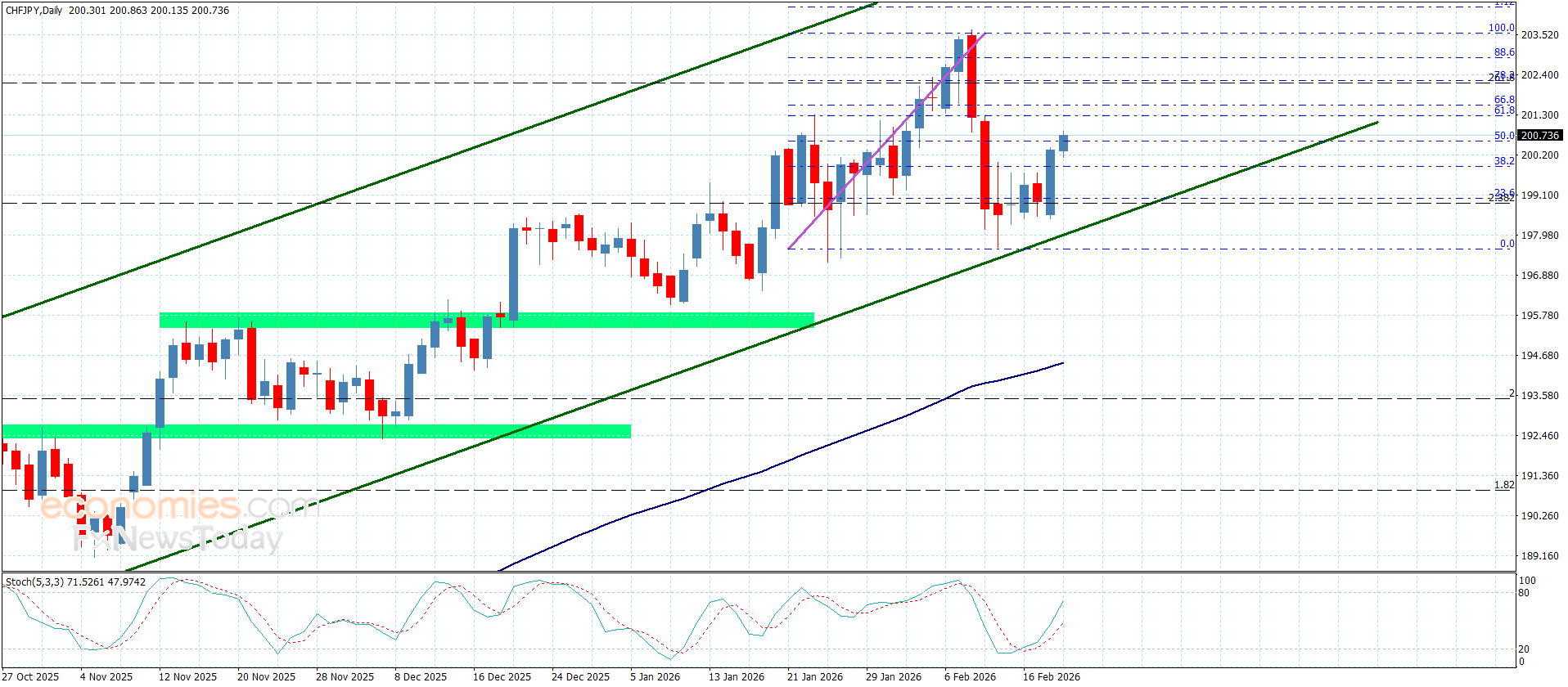
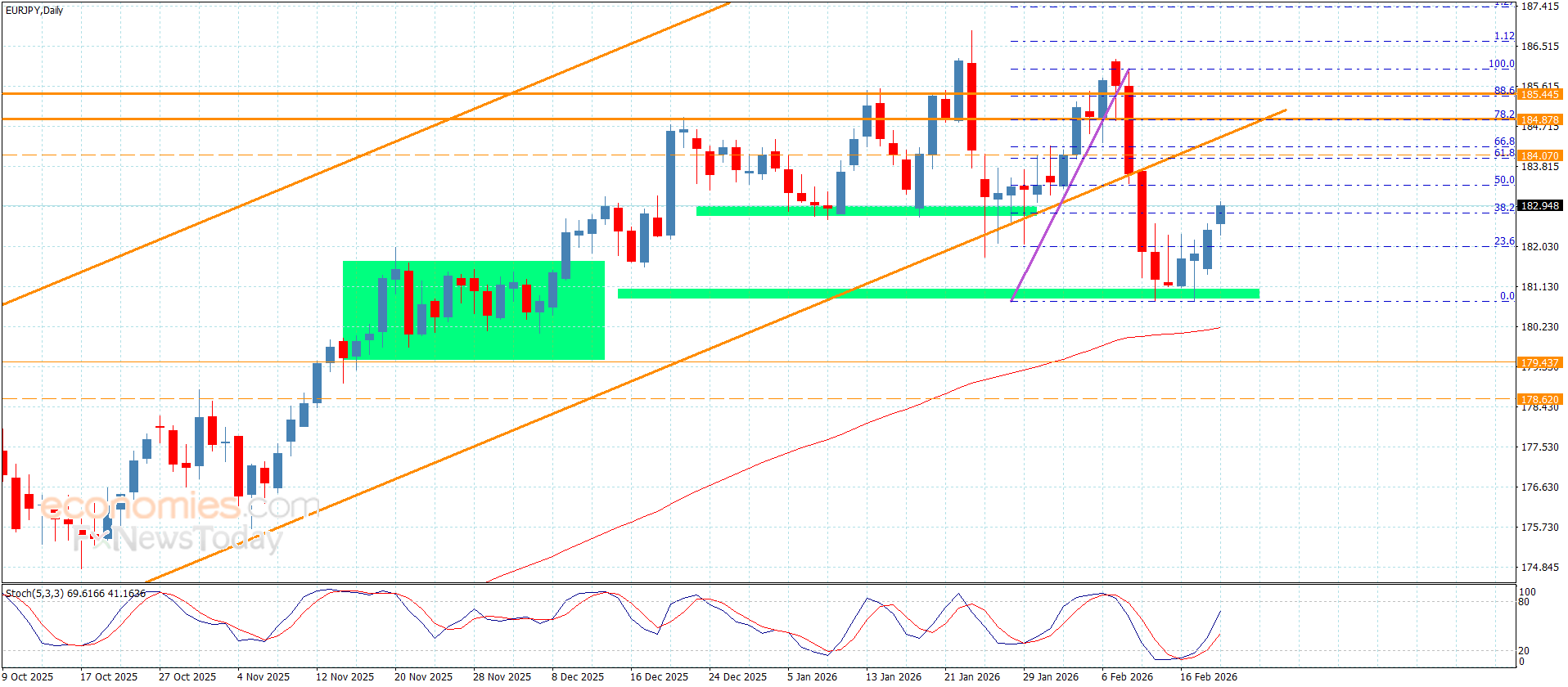
The CHFJPY benefited by the repeated stability above the bullish channel’s support at 198.05 level, activating the bullish attack, to record several gains by reaching 200.85 attempting to settle above %50 Fibonacci correction level.
Providing bullish momentum by the main indicators will support our bullish expectation, to keep waiting for the price to reach $61.8Fibonacci correction level at 201.30, which might form an important obstacle against the bullish attempts, to push the price to provide mixed trading before breaching this barrier.
The expected trading range for today is between 199.85 and 201.30
Trend forecast: Bullish
The GBPJPY pair ended the negative movement by reaching 207.60 level, to begin activating with stochastic positivity to rally towards 209.30 directly, to press on the barrier to find an exit to end the negative scenario in the current trading.
Note that providing positive close for the upcoming four hours above 209.15 level is important to confirm its readiness to begin bullish attack, to expect targeting 210.65 level initially, to extend the trading towards 211.70, while the failure to breach it will force the price to form new bearish waves to reach 208.25
The expected trading range for today is between 209.00 and 210.65
Trend forecast: Bullish
Despite forming bullish wave by copper price and its stability near $5/7500, but it couldn’t confirm its readiness to activate the bullish attack, due to the continuation of the main indicators’ contradiction, besides the stability of the price below $5.9700 barrier.
Providing mixed trading when gathering extra negative momentum will make reach $5.5100 support, forming confirmation key for the main trend in upcoming trading, breaking this support will force it to resume the corrective decline, to expect reaching $5.3600 followed by $5.1000.
The expected trading range for today is between $5.5500 and $5.8500
Trend forecast: Bearish
– Written by
James Fuller
STORY LINK GBP/USD Forecast: Pound Sterling Steady despite Softer UK Inflation
The Pound US Dollar (GBP/USD) exchange rate traded within a tight corridor on Wednesday as investors digested the UK’s latest inflation update.
At the time of writing, GBP/USD was hovering near $1.3547, showing little deviation from the day’s opening levels.
The Pound struggled for direction following the release of January’s consumer price index figures.
Data from the Office for National Statistics showed headline inflation easing to 3%, its lowest level since March last year.
The slowdown was largely attributed to falling energy costs and cheaper airfares, which helped offset price increases in areas such as hospitality and accommodation.
The latest figures reinforced expectations that the Bank of England will opt for a 25-basis-point interest rate cut at its March meeting, particularly in the wake of weaker employment data earlier in the week.
However, as markets had already largely priced in a near-term move from the Bank of England, Sterling avoided a sharp selloff and instead traded in subdued fashion.
Get better rates and lower fees on your next international money transfer.
Compare TorFX with top UK banks in seconds and see how much you could save.
The US Dollar also remained confined to narrow ranges after the publication of the latest durable goods orders data.
Figures from the US Census Bureau revealed order growth tumbled from 5.4% to -1.4% in December, a slightly smaller decline than the 2% fall markets had anticipated.
Despite the contraction, USD losses were limited during the European session as investors refrained from taking strong positions ahead of the release of minutes from the Federal Reserve’s January policy meeting, which may offer clues on the central bank’s outlook.
As the week progresses, attention will shift to the latest US GDP figures, which could inject fresh volatility into GBP/USD.
Current forecasts indicate US economic growth slowed from an annualised 4.4% to 3% in the fourth quarter, partly reflecting the impact of the extended government shutdown. A sharper-than-expected slowdown may weigh on the US Dollar.
For Sterling, focus will turn to upcoming UK retail sales data and the latest services PMI reading. Evidence of resilient consumer spending and sustained strength in the services sector could help the Pound regain ground heading into the weekend.

International Money Transfer? Ask our resident FX expert a money transfer question or try John’s new, free, no-obligation personal service! ,where he helps every step of the way,
ensuring you get the best exchange rates on your currency requirements.
TAGS: Pound Dollar Forecasts
Silver (XAG/USD) struggles to capitalize on the previous day’s positive move and oscillates in a narrow trading band during the Asian session on Thursday. The white metal, however, holds above the 100-hour Simple Moving Average (SMA) and currently trades just above mid-$76.00s, down 1.0% for the day.
The XAG/USD holds above this average, signaling a tentative recovery attempt. Moreover, the overnight breakout through a short-term descending channel resistance, which coincides with the said SMA, favors bulls. Meanwhile, the Relative Strength Index (RSI) sits at 55, neutral, after easing from earlier overbought readings.
However, the Moving Average Convergence Divergence (MACD) histogram has slipped into slight negative territory after contracting, suggesting the MACD line has fallen below the Signal line near the zero level. The descending channel resistance breakpoint and the 100-hour SMA should offer initial support to the XAG/USD.
Holding above the SMA would keep recovery attempts in play, while a close back beneath it would open the door to a deeper pullback. As long as the XAG/USD holds above the breakout point, the path would favor further recovery. That said, a close back inside the formation would revive the prior downtrend toward the lower band.
(The technical analysis of this story was written with the help of an AI tool.)
Silver is a precious metal highly traded among investors. It has been historically used as a store of value and a medium of exchange. Although less popular than Gold, traders may turn to Silver to diversify their investment portfolio, for its intrinsic value or as a potential hedge during high-inflation periods. Investors can buy physical Silver, in coins or in bars, or trade it through vehicles such as Exchange Traded Funds, which track its price on international markets.
Silver prices can move due to a wide range of factors. Geopolitical instability or fears of a deep recession can make Silver price escalate due to its safe-haven status, although to a lesser extent than Gold’s. As a yieldless asset, Silver tends to rise with lower interest rates. Its moves also depend on how the US Dollar (USD) behaves as the asset is priced in dollars (XAG/USD). A strong Dollar tends to keep the price of Silver at bay, whereas a weaker Dollar is likely to propel prices up. Other factors such as investment demand, mining supply – Silver is much more abundant than Gold – and recycling rates can also affect prices.
Silver is widely used in industry, particularly in sectors such as electronics or solar energy, as it has one of the highest electric conductivity of all metals – more than Copper and Gold. A surge in demand can increase prices, while a decline tends to lower them. Dynamics in the US, Chinese and Indian economies can also contribute to price swings: for the US and particularly China, their big industrial sectors use Silver in various processes; in India, consumers’ demand for the precious metal for jewellery also plays a key role in setting prices.
Silver prices tend to follow Gold’s moves. When Gold prices rise, Silver typically follows suit, as their status as safe-haven assets is similar. The Gold/Silver ratio, which shows the number of ounces of Silver needed to equal the value of one ounce of Gold, may help to determine the relative valuation between both metals. Some investors may consider a high ratio as an indicator that Silver is undervalued, or Gold is overvalued. On the contrary, a low ratio might suggest that Gold is undervalued relative to Silver.
The GBPJPY pair approached the previously waited main target by reaching 207.30 level which forces it to form some bullish corrective waves, affected by stochastic rally above 50 level, which allows it to recover some losses to settle near 208.15.
Note that the negative stability below 209.15 level represents main factor to confirm the previously suggested negativity, therefore, we will keep waiting for gathering extra negative momentum to reinforce the chances of reaching 207.05, while surpassing the barrier and holding above it will ease the mission of achieving several gains by its rally towards 209.85 reaching 207.05.
The expected trading range for today is between 207.05 and 208.75
Trend forecast: Bearish