The main category of Forex News.
You can use the search box below to find what you need.
[wd_asp id=1]
The main category of Forex News.
You can use the search box below to find what you need.
[wd_asp id=1]
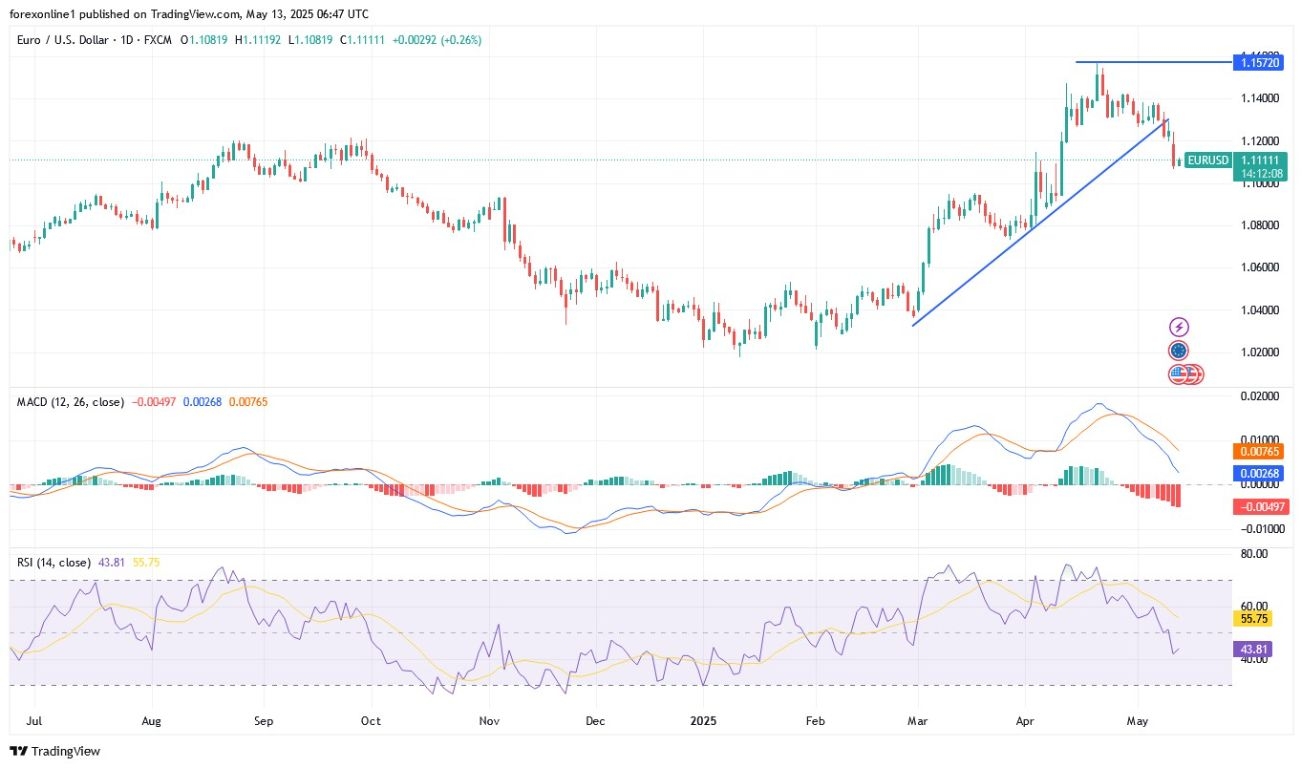
Ahead of the important US inflation figures announcement today, the EUR/USD currency pair is facing selling pressures that pushed it towards the 1.1065 support level, the lowest for the pair in a month, before stabilizing around the 1.1086 level at the start of trading today, Tuesday. Across licensed trading company platforms, selling pressure on EUR/USD increased amidst easing trade tensions between Washington and Beijing. Recently, the United States and China agreed to reduce tariffs for 90 days following talks in Geneva, representing a significant de-escalation in the trade war that erupted last month.
Under the US/China agreement, US tariffs on Chinese goods will decrease from 145% to 30%, while Chinese tariffs on US imports will decrease from 125% to 10%. In other geopolitical developments, Ukrainian President Zelensky announced his readiness to meet Russian President Putin in Turkey next Thursday, while the fragile ceasefire between India and Pakistan continued.

Overall, according to Forex market trading, this news revived risk appetite, but this time it favoured the US dollar over the Euro, as traders prepared to reassess Federal Reserve policy expectations. Analysts anticipate that Federal Reserve officials will adjust their interest rate forecasts in light of receding inflation risks following the easing of trade tensions.
Be cautious. Increasing market optimism about resolving the global trade dispute will increase the US dollar’s gains and put the Euro under stronger downward pressure.
Regarding the monetary policy of global central banks, money markets now price the European Central Bank’s deposit facility rate at 1.75% by the end of the year – returning to levels last seen in mid-April, before the ECB hinted at a possible interest rate cut to counter the potential economic repercussions of US tariffs. As of April 25, 2025, financial markets were expecting an interest rate below 1.55%, rising to 1.67% by late Friday.
The most prominent bearish scenario for EUR/USD in Forex market trading is that bear control over the Euro/Dollar direction will strengthen by moving towards and below the psychological support level of 1.1000. Adding to the strength of the downward shift is the 14-day Relative Strength Index (RSI) moving strongly below the midline, with room and time to move towards stronger bearish levels before reaching the oversold zone. Following a similar path, but lagging, the MACD indicator lines are closer to the midline, increasing the chances of the current bearish shift for the EUR/USD pair.
According to the performance on the daily chart, the move of EUR/USD towards the 1.10 support will support a move towards the next stronger support levels of 1.0945 and 1.0880, respectively.
The expected bullish scenario for EUR/USD will not have an opportunity without the bulls returning the currency pair towards the resistance levels of 1.1285 and 1.1370 again; otherwise, the bearish shift for EUR/USD will remain stronger. The recent selling of EUR/USD will be influenced today by the announcement of the German ZEW Sentiment Index reading at 12:00 PM Egypt time, amidst expectations of a strong improvement in the index readings. Later the same day, the US Consumer Price Index (CPI) reading will be announced at 3:30 PM Egypt time, keeping in mind that the CPI results will affect market expectations for the future policies of the US Federal Reserve.
Ready to trade our Forex daily forecast? We’ve shortlisted the best forex broker list for you to check out.
Spot Gold consolidates losses on Tuesday, holding above the $3,200 mark yet unable to recover the ground lost on Monday. Financial markets retain the positive mood triggered by news of de-escalating trade tensions between the United States (US) and China, as both countries agreed to reduced tariffs on each other for 90 days.
Other than that, the US released the April Consumer Price Index (CPI), which rose by 2.3% compared to a year earlier, easing from the previous 2.4%. The core annual reading, in the meantime, remained unchanged at 2.8%. Finally, the monthly CPI was up 0.2%, above the previous -0.1% but below the 0.3% anticipated by market players.
The upbeat mood weighed on the Greenback, leading to a modest XAU/USD advance. Meanwhile, Wall Street trades mixed. The Dow Jones Industrial Average is down roughly 0.40%, still positive for the week after adding over 1,000 points on Monday. The Nasdaq Composite and the S&P 500 post intraday gains, with the latter turning positive for the year.
XAU/USD hovers around $3,250, and the daily chart shows a limited upward potential. The pair keeps developing below a flat 20 Simple Moving Average (SMA), providing dynamic resistance at around $3,316.70. The 100 and 200 SMAs maintain their upward slopes far below the current level, suggesting bulls have not yet given up. Finally, technical indicators stand in neutral territory, with the Relative Strength Index (RSI) indicator consolidating at around 50, failing to provide clear directional clues.
In the near term, and according to the 4-hour chart, a mildly bullish 200 SMA at around $3.225.40 provides support for a second consecutive day, yet at the same time, the 20 SMA accelerated south above the current level and after crossing below a flat 100 SMA, in line with increased selling interest. Technical indicators, in the meantime, consolidate within negative levels, also supporting a bearish extension, particularly if the pair finally breaks below the mentioned 200 SMA.
Support levels: 3,241.90 3,225.40 3,212.85
Resistance levels: 3,265.40 3,281.60 3,305.65
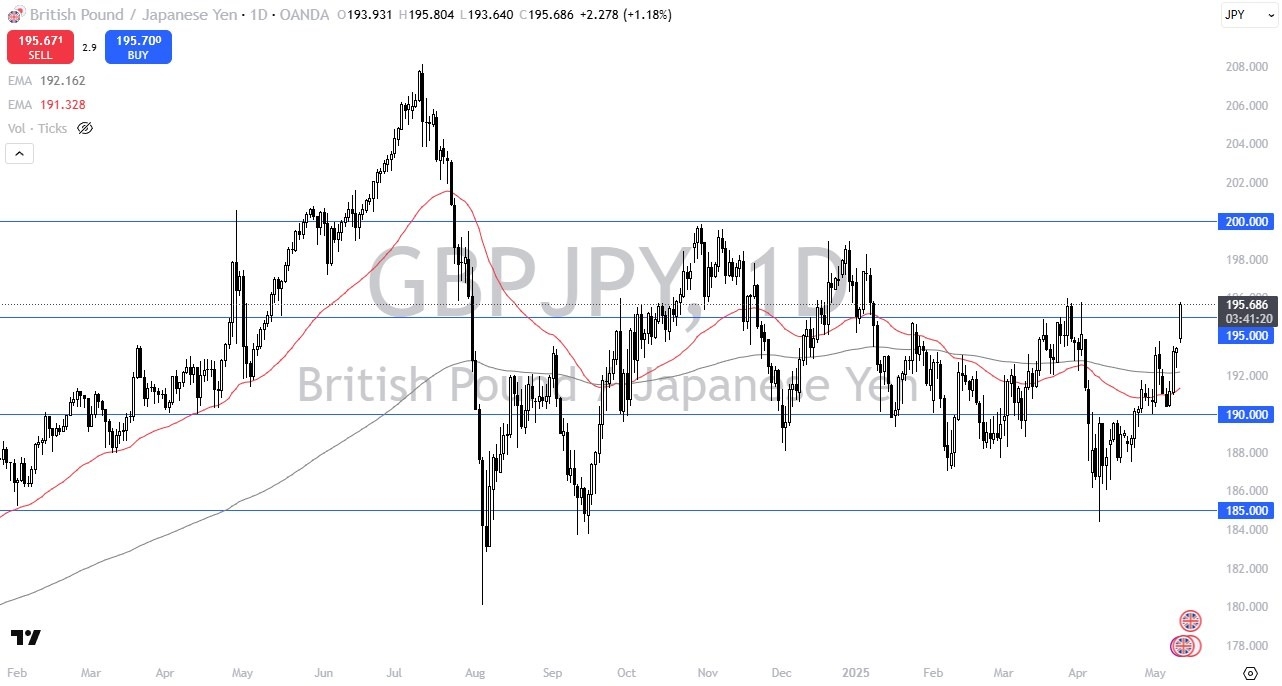
The technical analysis is worth paying close attention to, because the ¥195 level is an area that began significant resistance. If we can break above the ¥196 then it opens up the possibility of the move to the ¥200 level that could very well happen. I also recognize that the gap below is going to be paid close attention to, as it typically will offer support after a move like that. The ¥193.40 level is an area that you will have to pay close attention to because of this. The 200 Day EMA sits just above the ¥192 level, which in and of itself will be crucial as well.
Risk appetite is a huge influence on how this market moves, and therefore if we see stock markets and other risk assets rally, then we could see the British pound take off against the Japanese yen which of course is a major “safety currency” for a lot of forex traders.
With this being the case, I think you’ve got a situation where we are a little extended, but if we truly take off to the upside when it comes to risk appetite due to the US/China talks, that could very well be a major boost for this pair as well, not to mention the fact that you get paid at the end of every session to hold onto it.
Begin trading our daily forecasts and analysis. Here is a list of Forex brokers in Japan to work with.
Christopher Lewis has been trading Forex and has over 20 years experience in financial markets. Chris has been a regular contributor to Daily Forex since the early days of the site. He writes about Forex for several online publications, including FX Empire, Investing.com, and his own site, aptly named The Trader Guy. Chris favours technical analysis methods to identify his trades and likes to trade equity indices and commodities as well as Forex. He favours a longer-term trading style, and his trades often last for days or weeks.
Goldman Sachs sees upside risk to its Brent and WTI oil price forecast in 2025 and 2026 from recent trade de-escalation, it said in a note on Tuesday.
The bank estimates around $3-4 per barrel of upside risk to its Brent and WTI oil price forecast of $60/bbl and $56/bbl respectively for the rest of 2025, and $56/bbl and $52/bbl respectively in 2026.
The United States and China said on Monday that they would pause their tariffs for 90 days. Following the talks in Geneva over the weekend, the United States said it will cut tariffs on Chinese imports to 30% from 145% while China said it would cut duties on U.S. imports to 10% from 125%.
Goldman said that reduced recession risk has also reduced the probability of very low oil prices, although solid supply growth outside U.S. shale may still push prices significantly lower.
The Organization of the Petroleum Exporting Countries and its allies, called OPEC+, are planning to boost oil exports in May and June, which is seen as possibly limiting oil’s upside.
Oil prices fell to a four-year low last month on investor worries that the U.S.-China trade war could depress economic growth and oil demand.
The bank said that while it sees some upside risk to its oil price forecasts, it still expects a significant hit from tariffs to U.S. real income, global GDP, and global oil demand.
Brent crude BRN1! futures were trading at $66.77/bbl by 1443 GMT, while U.S. West Texas Intermediate (WTI) crude  CL1! was at $63.85/bbl.
May 13, 2025 – Written by David Woodsmith
STORY LINK Pound Sterling to Euro Forecast: GBP to Weaken to 1.15 vs EUR in 2025
GBP/EUR advanced to a five-week best exchange rate near 1.19. While ING sees potential further Pound Sterling gains ahead of the UK-EU summit, Nordea forecasts a gradual decline against the Euro to 1.15 by late 2025 amid weakening UK employment and cautious BoE signals.
Strong UK retail sales data and buoyant risk appetite continued to underpin the Pound on Tuesday and offset further evidence of a weaker labour market.
The Euro remained on the ropes amid a retreat in defensive support. In this environment, the Pound to Euro (GBP/EUR) exchange rate hit a fresh 5-week high at 1.1900 before a retreat to 1.1890 and will look to break this resistance area in the short term.
ING does see scope for further Pound gains ahead of the May 19th UK-EU summit; “Expect sterling to stay bid ahead of that – potentially even seeing EUR/GBP break below 0.84.” (GBP/EUR Above 1.19.)
Nordea, however, expects that GBP/EUR will fade gradually and weaken to 1.15 by the end of 2025.
There was a stronger than expected reading for retail sales with the BRC data reporting an annual 6.8% increase in like-for-like retail sales for April from 0.9% previously with sales boosted by favourable weather and a late Easter.
UK unemployment increased to 4.5% in the 3-months to March from 4.4% previously and the highest reading since the third quarter of 2021.
April Payrolls declined a provisional 33,000 for April following a 47,000 decline for March and vacancies have been declining for close to three years.
Headline wages growth slowed to 5.5% in the year to March from a revised 5.7% previously, but above expectations of 5.2%.
Markets are not expecting another rate cut at the June meeting.
According to MUFG; “Wage growth remains too high and is not consistent with the BoE’s 2.0% inflation target.”
PwC economist Paige Tao focussed on clear evidence of a slowdown; “If last month’s labour market data hinted at an early response to upcoming employer tax rises, this month’s figures confirm a clearer weakening.”
She added; “As the Bank of England continues to balance inflation risks with growing weakness in the UK growth outlook, today’s figures may indicate a green light for another rate cut at next month’s MPC meeting.”
Wages and inflation implications will remain a key element for the Bank of England.

In comments on Monday MPC member Lombardelli stated that her vote for a cut at the May meeting was finely balance and was justified as an insurance against economic slowdown due to global trade wars.
In contrast, MPC member Taylor stated that the neutral level of interest rates is 2.75-3.00% with rates, therefore still a long way above this level.
According to Taylor, erosion of business confidence has continued and that there is a sense of caution and concern. The remarks were clearly on the dovish side.
MUFG summarised; “Overall the labour market data looks consistent to us with the BoE easing policy but in a careful and gradual manner.”
The German ZEW investor confidence index surged to 25.2 for May from -14.0 previously and above consensus forecasts of -3.5.
The current conditions index, however, edged lower to -82.0 from -81.2 previously which indicated further short-term stagnation.
Danske Bank commented; “Expectations will likely rebound partly due to the less negative signals on trade barriers from the Trump administration like we saw in the Sentix indicator. Focus will thus centre on whether the current situation has deteriorated due to the tariff uncertainty.”
International Money Transfer? Ask our resident FX expert a money transfer question or try John’s new, free, no-obligation personal service! ,where he helps every step of the way,
ensuring you get the best exchange rates on your currency requirements.
The rebound was fueled by a successful retest of a retracement zone between $3228.38 and $3164.23. Buyers also defended the May 1 swing bottom at $3201.95, temporarily halting the bearish momentum. However, the upside appears limited without a move through resistance between $3318.50 and $3351.08, where sellers are likely to re-emerge.
A break below $3201.95 would shift the main trend to down on the daily swing chart and target the next major level at $3145.00—the 50-day moving average. This moving average could act as both a technical magnet and a key sentiment indicator for the rest of the year.
Gold’s sharp decline on Monday followed the announcement of a temporary U.S.-China tariff truce. The U.S. agreed to reduce import duties from 145% to 30%, while China cut tariffs from 125% to 10%. The agreement eased trade tensions and fueled a rally in global equities, while the U.S. dollar surged to a one-month high—both factors that undercut gold’s appeal.
Traders are now focused on the April U.S. Consumer Price Index report, which could shape expectations for Fed policy. Barclays projects headline CPI to rise 0.3% month-over-month (2.3% year-over-year), with core CPI up 0.2% (2.8% year-over-year). Although tariffs were implemented in early April, economists expect little immediate impact on prices due to exemptions and advanced shipments that likely front-loaded inflationary pressure into Q1.
A softer-than-expected CPI print could take pressure off the Fed and weaken the dollar, offering short-term support for gold. However, any upside surprise would likely reinforce expectations for tighter policy, boosting yields and dragging on gold.
May 13, 2025 – Written by Tim Boyer
STORY LINK GBP/USD Forecast: Pound Climbs vs Dollar on Soft US Inflation Data
The Pound US Dollar exchange rate gained ground on Tuesday as the US released its latest inflation reading.
At the time of writing, GBP/USD was trading at approximately $1.3245, up roughly 0.5% from the start of Tuesday’s session.
The US Dollar (USD) came under pressure on Tuesday following the publication of a softer-than-expected US inflation print.
April’s consumer price index (CPI) showed headline inflation easing to 2.3%, down from 2.4%, marking the lowest rate in more than four years and falling short of forecasts for a steady reading.
The unexpected decline prompted traders to reassess the Federal Reserve’s policy trajectory, dragging the ‘Greenback’ lower.
Adding to the downside, a generally upbeat market mood saw investors shy away from the safe-haven currency, intensifying the USD’s losses.
The Pound (GBP) faced early pressure on Tuesday after disappointing UK labour market figures dented investor confidence.
According to the latest ONS (Office for National Statistics) report, unemployment climbed to 4.5% in March, reaching its highest level since summer 2021, while wage growth (excluding bonuses) cooled more than anticipated, slipping from 5.9% to 5.6%.
The figures fell short of forecasts and raised fresh concerns about the strength of the UK jobs market.
Despite the initial downturn, Sterling found firmer footing later in the session, particularly against safe-haven currencies like the US Dollar.
A risk-on mood helped offset earlier losses, with the Pound’s sensitivity to risk sentiment offering it modest support into the afternoon.
In the absence of fresh economic data from either side of the Atlantic, the spotlight is now on central bank commentary to drive movement in the GBP/USD exchange rate.
Following the Bank of England’s (BoE) hawkish commentary at its most recent policy meeting, further optimistic signals could offer the Pound additional support during Wednesday’s European session.
For the US Dollar, if the Federal Reserve responds to Tuesday’s cooler-than-forecast inflation figures with dovish signals, the US Dollar may come under renewed pressure as the week unfolds.
International Money Transfer? Ask our resident FX expert a money transfer question or try John’s new, free, no-obligation personal service! ,where he helps every step of the way,
ensuring you get the best exchange rates on your currency requirements.
TAGS: Pound Dollar Forecasts
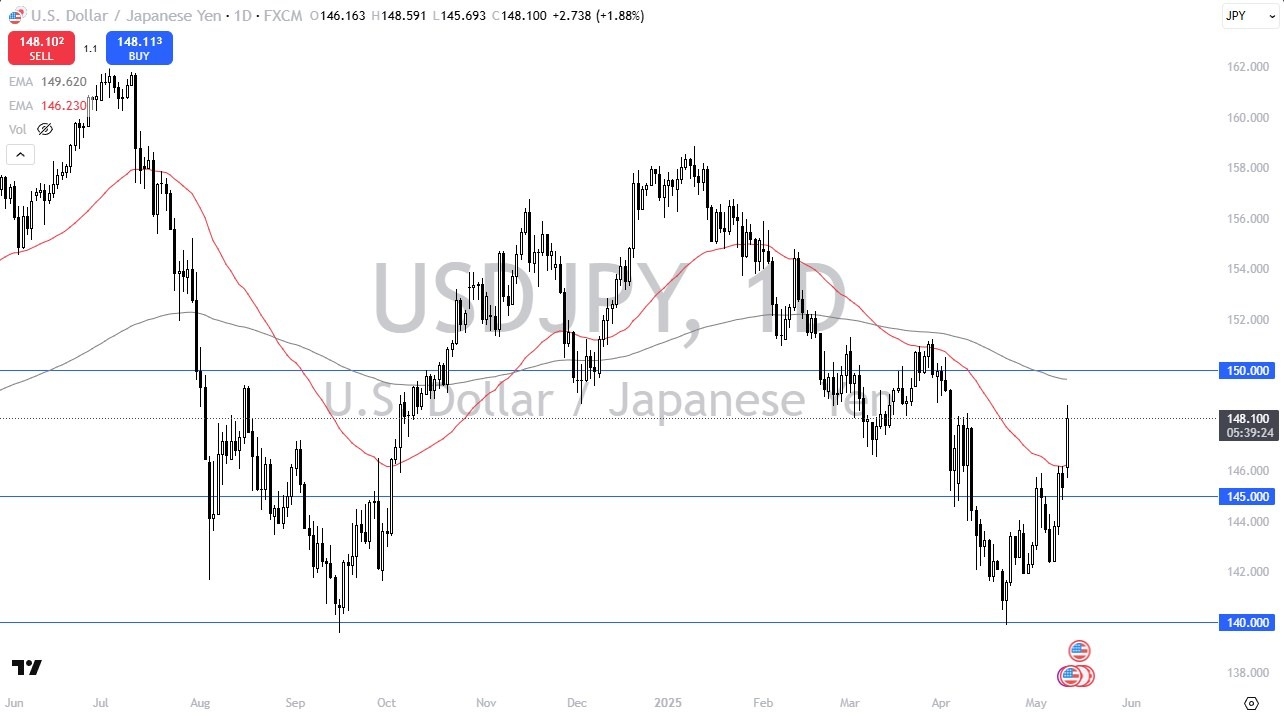
The (USDJPY) price declined in its recent intraday trading, affected by the stability of the current resistance level at 148.13, gathering the gains of its last rises, attempting to gain positive momentum that might assist it to keep the solid bullish correctional wave, besides its attempt to offload some of its clear overbought conditions on the (RSI), especially with the emergence of negative overlapping signal from it.
The domination of the bullish correctional trend supports the price, accompanied by its upcoming intraday trading, especially when breaching the resistance at 148.13, to target the next resistance at 150.00.
Do you need help in trading decisions? Do you want to learn how to start trading?
Join Economies.com VIP Club and benefit from over 15 years of market analysis expertise and get:
Special Offer: Subscribe to the Economies.com VIP channel and get also a free subscription to a trusted trading signals channel provided by Best Trading Signal.
Furthermore, it’s worth noting that the United States is definitely seeing inflows during the trading session on Monday, not only in the currency markets, but also the stock market.
So, with that being said, I think we’ve got a situation where short-term pullbacks offer buying opportunities like I’ve been saying for some time. I think the 140 yen level is going to end up being a massive floor in the market but do keep in the mind that if we get a lot of concern in the market again, we could see the Japanese yen strengthen.
Short-term pullbacks offer those buying opportunities I’ve been talking about, especially near the 50 day EMA. The 200 day EMA sits just below the 150 yen level, which has a lot of psychology attached to it.
So, if we can break above there, that’s a very bullish sign. But right now, I think we’ve got a situation where we’ve definitely started to see some short covering. We definitely are starting to see a certain amount of momentum. All things being equal, this is a market that I think will continue to find value hundreds, especially considering, like I said, you get paid at the end of every day.
Want to trade our USD/JPY forex analysis and predictions? Here’s a list of forex brokers in Japan to check out.
Christopher Lewis has been trading Forex and has over 20 years experience in financial markets. Chris has been a regular contributor to Daily Forex since the early days of the site. He writes about Forex for several online publications, including FX Empire, Investing.com, and his own site, aptly named The Trader Guy. Chris favours technical analysis methods to identify his trades and likes to trade equity indices and commodities as well as Forex. He favours a longer-term trading style, and his trades often last for days or weeks.
Crude oil futures tumbled over the past week, falling more than 6% as concerns over weakening global demand and a resurgent supply outlook weighed on sentiment. West Texas Intermediate (WTI) briefly hit a low of $56.39 before recovering to $59.24 by Thursday’s close. While dip-buying provided short-term support, the underlying market tone remains distinctly bearish as fundamental pressures intensify.
China Demand Slowdown Fuels Bearish Sentiment
Fresh economic data from China delivered a major blow to oil bulls. The country’s official manufacturing PMI slumped to 49.0 in April, signaling contraction and raising alarm over the health of the world’s largest crude importer. Of particular concern was the new export orders index, which plunged to its weakest level since 2012 outside of pandemic anomalies. Analysts responded by slashing full-year growth forecasts to just 3.5%, casting doubt on sustainable Chinese demand.
Though China’s March crude imports surged, analysts argue this was driven more by pre-sanctions stockpiling than any uptick in consumption. With Beijing’s fiscal stimulus measures struggling to gain traction, traders are increasingly skeptical of China’s ability to sustain meaningful crude demand growth in the near term.
Trade War Escalation Undermines Global Oil Demand Expectations
U.S.-China trade tensions are exacerbating the fragile demand picture. A fresh round of tariffs and retaliatory measures has heightened fears of a global…