The main category of Forex News.
You can use the search box below to find what you need.
[wd_asp id=1]
The main category of Forex News.
You can use the search box below to find what you need.
[wd_asp id=1]
The EURJPY pair provided several weak sideways trading, delaying the bullish trend due to its stability below 185.45 barrier, to form some mixed trading by reaching 184.35 level.
Note that stochastic exit from the overbought level might increase the negative pressures on the trading, forcing it to provide negative corrective trading, to target 183.85 level reaching the bullish channel’s support at 183.20, while breaching the barrier and holding above it will reinforce the chances of recording extra gains that might begin at 186.20.
The expected trading range for today is between 183.85 and 185.40
Trend forecast: Fluctuating within the bullish trend
Gold (XAU/USD) is trimming some losses on Friday, trading near $4,880 at the time of writing, after bounding from lows at $4.655 during the Asian session. A risk-averse market mood is providing some support to precious metals, although the US Dollar’s strength is keeping upside attempts limited for now.
Gold drew some support from weak US employment data released earlier this week, which has reactivated pressure on the Federal Reserve to ease borrowing costs further. Beyond that, investors have turned averse to risk, following a three-day sell-off on Wall Street that has spilled over into Forex markets, increasing demand for safe havens like Gold.
The 4-hour chart shows XAU/USD trading at $4,876, capped below the 100-period Simple Moving Average (SMA), but with technical indicators suggesting an improving momentum. The Moving Average Convergence Divergence’s (MACD) negative histogram is contracting, and the MACD line seems about to close above the signal line. The Relative Strength Index has reached a neutral area coming from bearish levels.
The immediate trend remains negative, but Thursday’s higher low gives some hope for bulls. The upward turning indicators suggest that the pair would be in a CD leg of a Gartley pattern, aiming towards the 78.6% Fibinacci resistance of last week’s sell off, at $5,340.
Before that, however, the precious metal is likely to find resistance at the mentioned 100-period SMA, now around $4,920, and at the weekly high, in the area of $5,100. Support levels are at session lows of $4,655, and Monday’s low, at the $4,400 area.
(The technical analysis of this story was written with the help of an AI tool.)
Gold has played a key role in human’s history as it has been widely used as a store of value and medium of exchange. Currently, apart from its shine and usage for jewelry, the precious metal is widely seen as a safe-haven asset, meaning that it is considered a good investment during turbulent times. Gold is also widely seen as a hedge against inflation and against depreciating currencies as it doesn’t rely on any specific issuer or government.
Central banks are the biggest Gold holders. In their aim to support their currencies in turbulent times, central banks tend to diversify their reserves and buy Gold to improve the perceived strength of the economy and the currency. High Gold reserves can be a source of trust for a country’s solvency. Central banks added 1,136 tonnes of Gold worth around $70 billion to their reserves in 2022, according to data from the World Gold Council. This is the highest yearly purchase since records began. Central banks from emerging economies such as China, India and Turkey are quickly increasing their Gold reserves.
Gold has an inverse correlation with the US Dollar and US Treasuries, which are both major reserve and safe-haven assets. When the Dollar depreciates, Gold tends to rise, enabling investors and central banks to diversify their assets in turbulent times. Gold is also inversely correlated with risk assets. A rally in the stock market tends to weaken Gold price, while sell-offs in riskier markets tend to favor the precious metal.
The price can move due to a wide range of factors. Geopolitical instability or fears of a deep recession can quickly make Gold price escalate due to its safe-haven status. As a yield-less asset, Gold tends to rise with lower interest rates, while higher cost of money usually weighs down on the yellow metal. Still, most moves depend on how the US Dollar (USD) behaves as the asset is priced in dollars (XAU/USD). A strong Dollar tends to keep the price of Gold controlled, whereas a weaker Dollar is likely to push Gold prices up.
The Pound Sterling (GBP) changed course against the US Dollar (USD), with GBP/USD giving up nearly 200 pips in a dramatic correction.
GBP/USD faced a double whammy during the week, with resurgent haven demand for the US Dollar (USD) on one hand. While the dovish Bank of England (BoE) interest rate on hold decision smashed the pair on the other hand.
In doing so, the pair reversed a majority of gains seen from the beginning of this year, extending the correction from over four-year highs of 1.3869 reached on January 27.
The Greenback attracted haven demand as markets embarked on a solid rotation spree, with capital flowing out of overvalued and growth assets, such as tech stocks, Gold, Silver etc., into value assets and undermined ones like the USD.
Markets resorted to ‘sell-everything’ mode as the AI rout deepened, boosting the USD recovery against its six major currency rivals. The end of the partial government shutdown on Tuesday also helped the buck maintain its ground, despite a slew of weak US labor data and concerns over the US Federal Reserve’s (Fed) monetary policy outlook under the leadership of Kevin Warsh.
The Automatic Data Processing (ADP) Research Institute said on Wednesday, private sector employment in the US rose 22,000 in January, against a forecast of 48,000. Meanwhile, Initial claims for state unemployment benefits jumped 22,000 to a seasonally adjusted 231,000 for the week ended January 31, the Labor Department said on Thursday.
“The US December JOLTS report shows a steep drop-off in job openings to 6.54 million from a downwardly revised 6.93 million level in November,” according to ING Bank.
In the second half of the week, the dovish BoE storm pounded the Pound Sterling further. The UK central bank kept interest rates on hold at 3.75% in February.
The BoE nine-member Monetary Policy Committee (MPC) voted by a slim 5:4 majority to keep rates steady. Four members voted to lower rates.
Expectations of a sharp drop in inflation in the coming months also added to the dovish BoE outlook, fueling bets for a rate cut as early as next month.
In light of the dovish tilt, the focus is now on a series of speeches from BoE policymakers, with Governor Andrew Bailey’s appearance late Sunday eagerly awaited.
A slew of Fed and BoE officials are also set to speak on Tuesday, with Monday being a data-light day.
Tuesday will also feature the US Retail Sales report and the quarterly Employment Cost Index.
On Wednesday, the delayed US January jobs data will be published, with key focus on the headline Nonfarm Payrolls print.
The quarterly and monthly Gross Domestic Product (GDP) data will be released from the United Kingdom (UK) on Thursday, followed by the US Jobless Claims data.
On Friday, BoE Chief Economist Huw Pill will participate in a fireside chat at an event hosted by Santander Bank in London ahead of the critical US Consumer Price Index (CPI) inflation report.
Besides these economic events, geopolitics will continue to grab attention amid US President Donald Trump’s erratic international policies.
GBP/USD Technical Analysis
The 21-, 50-, 100- and 200-day Simple Moving Averages (SMA) all rise, with the shorter ones positioned above the longer, reinforcing buyers’ control. Price holds above these markers, with the 21-day SMA at 1.3564 offering nearby dynamic support. The Relative Strength Index (RSI) stands at 51 (neutral) and has edged higher, hinting stabilizing momentum. Measured from the 1.3346 low to the 1.3868 high, the 61.8% retracement at 1.3545 offers a floor, while the 50.0% retracement at 1.3607 is the level bulls would seek to reclaim to extend the advance.
Shorter SMAs continue to advance over the medium-term ones, and the broader set trends higher, underpinning an upward bias. The pair trades above the 50-day SMA at 1.3475 and the 200-day SMA at 1.3430, keeping dip-buying interest intact. RSI near 51 remains neutral; a firm move above 60 would strengthen the upside impulse. On setbacks, the 100-day SMA at 1.3379 would serve as the next layer of support.
(The technical analysis of this story was written with the help of an AI tool.)
A country’s Gross Domestic Product (GDP) measures the rate of growth of its economy over a given period of time, usually a quarter. The most reliable figures are those that compare GDP to the previous quarter e.g Q2 of 2023 vs Q1 of 2023, or to the same period in the previous year, e.g Q2 of 2023 vs Q2 of 2022.
Annualized quarterly GDP figures extrapolate the growth rate of the quarter as if it were constant for the rest of the year. These can be misleading, however, if temporary shocks impact growth in one quarter but are unlikely to last all year – such as happened in the first quarter of 2020 at the outbreak of the covid pandemic, when growth plummeted.
A higher GDP result is generally positive for a nation’s currency as it reflects a growing economy, which is more likely to produce goods and services that can be exported, as well as attracting higher foreign investment. By the same token, when GDP falls it is usually negative for the currency.
When an economy grows people tend to spend more, which leads to inflation. The country’s central bank then has to put up interest rates to combat the inflation with the side effect of attracting more capital inflows from global investors, thus helping the local currency appreciate.
When an economy grows and GDP is rising, people tend to spend more which leads to inflation. The country’s central bank then has to put up interest rates to combat the inflation. Higher interest rates are negative for Gold because they increase the opportunity-cost of holding Gold versus placing the money in a cash deposit account. Therefore, a higher GDP growth rate is usually a bearish factor for Gold price.
New York, February 6, 2026, 06:19 EST — Premarket
U.S. natural gas futures ticked slightly higher Friday morning, hovering close to $3.50 per million British thermal units (mmBtu). Investors weighed a record storage withdrawal while anticipating the latest weather forecasts. 1
The market wrestles with two narratives at once. First, the scale of last week’s inventory drop. Second, whether forecasts continue to signal a milder period ahead, which could dampen heating demand and ease withdrawals.
Storage now acts as the key buffer against late-winter cold. Once that cushion shrinks, even minor shifts in temperature forecasts can send prices sharply higher — and they have.
Working natural gas stocks in the Lower 48 dropped by 360 billion cubic feet (Bcf) for the week ending Jan. 30. That marks the largest weekly net withdrawal ever recorded in the government’s storage data, the U.S. Energy Information Administration reported. The agency linked the steep draw to Winter Storm Fern and related supply interruptions. 2
The EIA reported working gas in storage at 2,463 Bcf for Jan. 30, marking a 360 Bcf drop from the previous week and sitting 27 Bcf under the five-year average. Despite that, inventories remain 41 Bcf higher than this time last year. The following weekly storage update is scheduled for Feb. 12. 3
The storage number was also below the median market forecast. The much-followed calendar of estimates had predicted a 379 Bcf draw, but the actual withdrawal came in at 360 Bcf, following a 242 Bcf pull from the previous week. 4
A Reuters poll before the data came out estimated a withdrawal near 374 Bcf, noting unusually elevated “heating degree days”—which track how much temperatures fall below 65°F and roughly indicate heating needs—according to LSEG figures. 5
LNG continues to play a crucial role. Cristian Signoretto, Eni’s head of global gas and LNG, said at an industry conference this week that the 2026 LNG market appears “finely balanced.” He cautioned that unexpected cold snaps or heatwaves could swiftly throw supply and demand out of alignment. 6
That said, a few analysts caution the market won’t dwell on the storage news if forecasts stay mild. “Unless we get another major blast … winter might be over soon,” Phil Flynn, senior market analyst at Price Futures Group, noted in a recent briefing. 7
There’s a clear risk for bulls here: should temperatures ease and supply keep bouncing back from weather disruptions, daily demand could fall fast. That would shrink storage withdrawals and leave futures vulnerable to another steep drop.
Traders are eyeing updated medium-range U.S. temperature forecasts through mid-February, looking for clues on LNG feedgas demand shifts. Thursday’s Feb. 12 storage report will be key to confirming whether last week’s draw was just a one-off shock or signals a tighter end-of-winter stretch.
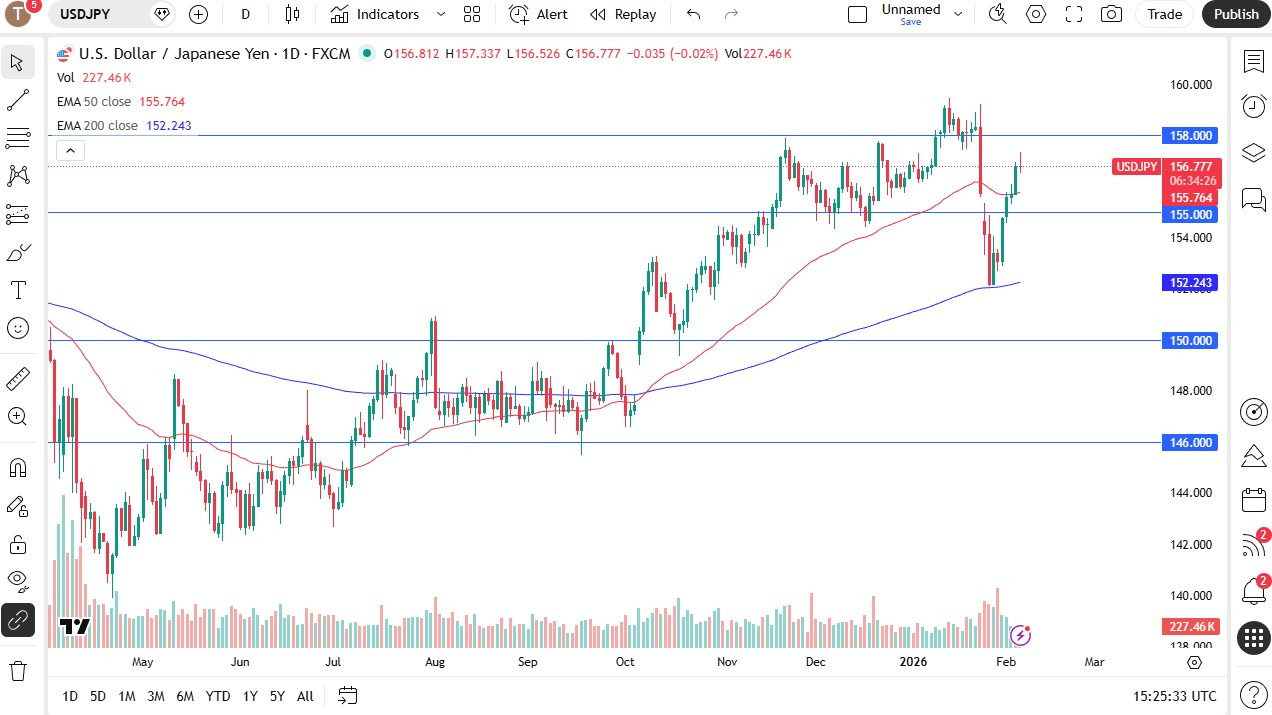
The US dollar tried to rally against the Japanese yen early on Thursday but has turned around to show signs of exhaustion. That’s not a huge surprise though because quite frankly we have been straight up in the air for a while and it does make a certain amount of sense that sooner or later sellers come in and push the market back down and of course buyers run out of momentum and new buyers to join them.
That being said this is a market that still favors the upside as far as an interest rate differential argument is concerned and with that being said short term pullbacks, I think are going to end up being buying opportunities. The 50-day EMA is going to offer support underneath and then after that we could talk about the 155-yen level.

The 158 yen level above is a significant target over the longer term and it’s an area that I think probably will have a lot of market memory attached to it because we had some type of intervention there but all things being equal any pullback from here probably offers a little bit of buying opportunity with the 200-day EMA perhaps being the absolute floor.
I don’t have any issue whatsoever in buying this pair on a pullback that bounces because not only do I get paid at the end of every day, but the overall uptrend still is strong. If we can break out above the recent swing high, then the 160-yen level becomes a very important level.
Keep in mind this is an area that’s significant on the monthly chart going back decades that we had just pulled back from so a couple of attempts before we can finally break out would not be a huge surprise to me at all. Regardless I don’t have any interest in buying the yen so I’m looking for buying opportunities here.
Want to trade our USD/JPY forex analysis and predictions? Here’s a list of forex brokers in Japan to check out.
Christopher Lewis has been trading Forex and has over 20 years experience in financial markets. Chris has been a regular contributor to Daily Forex since the early days of the site. He writes about Forex for several online publications, including FX Empire, Investing.com, and his own site, aptly named The Trader Guy. Chris favours technical analysis methods to identify his trades and likes to trade equity indices and commodities as well as Forex. He favours a longer-term trading style, and his trades often last for days or weeks.
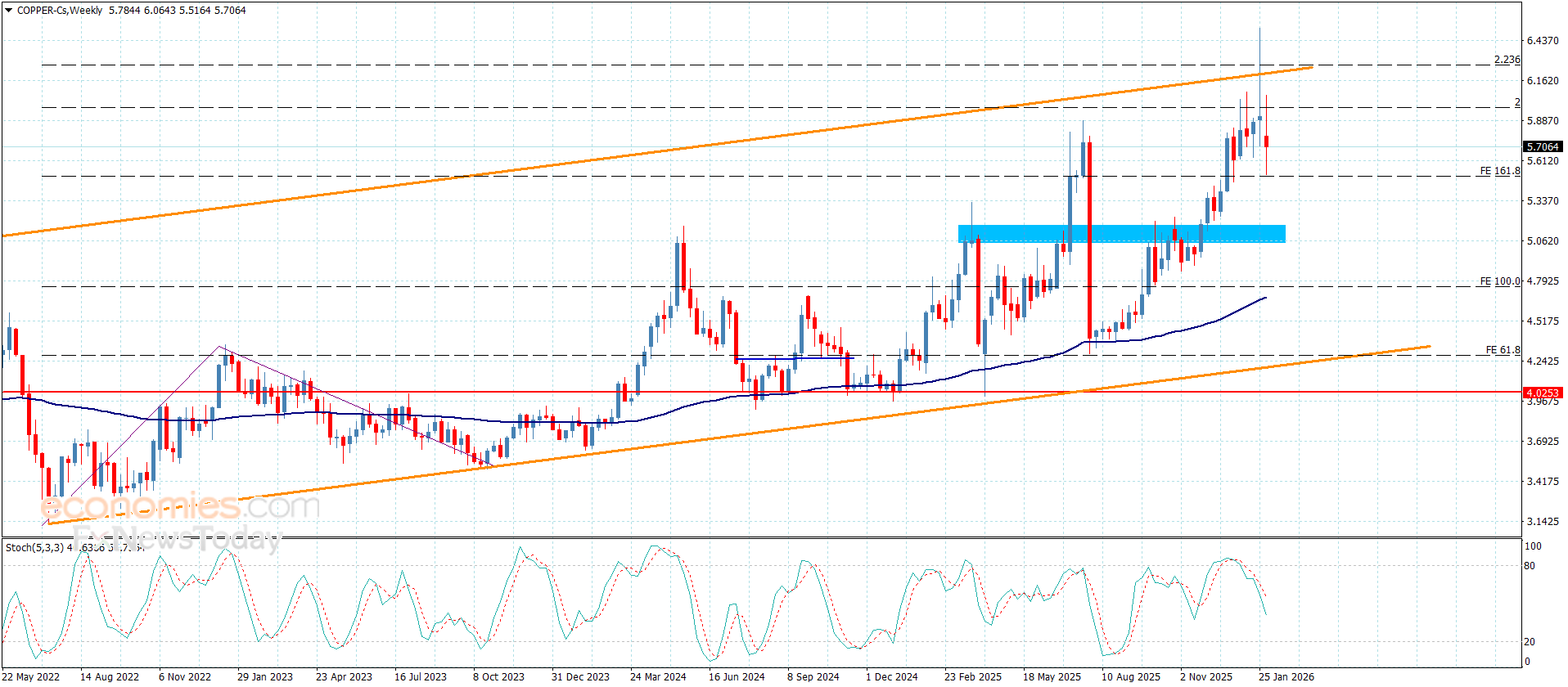
Copper price remains affected by stochastic negativity, forcing it to fluctuate below $5.7500 barrier, and begin forming bearish corrective waves by targeting $5.5500 level, approaching the waited target in our previous analysis.
Noting that the continuation of facing negative pressure might push the price to break $5.5100 support, and holding below it will confirm targeting new corrective stations that might begin at $5.4100 and $5.2800.
The expected trading range for today is between $5.5100 and $5.7800
Trend forecast: Bearish
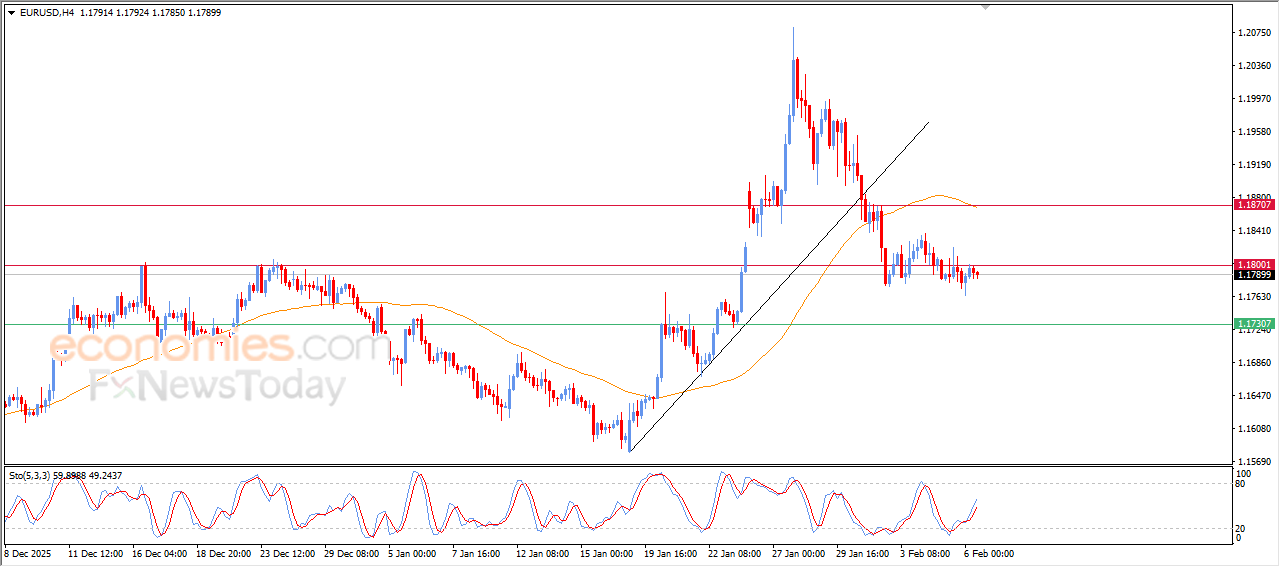
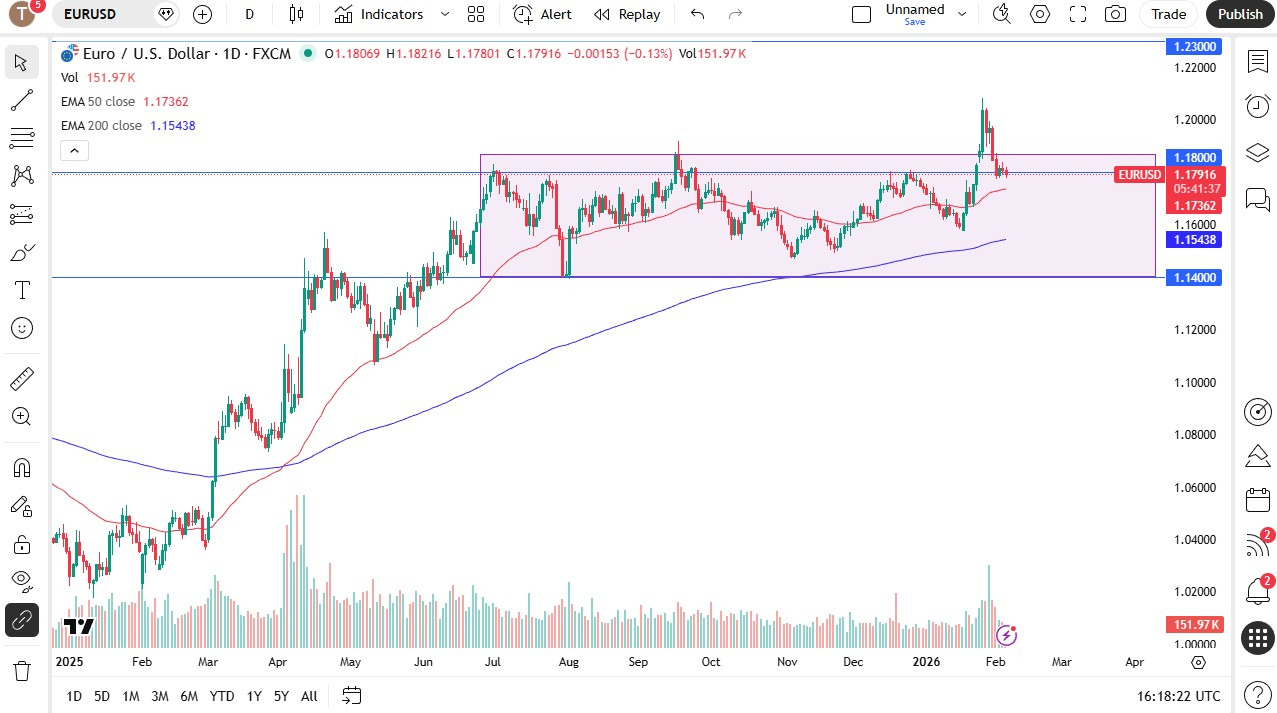
The Euro has been slightly negative during fairly quiet trading on Thursday despite the fact that we had an ECB decision. Ultimately, not much changed. That is not a huge surprise because quite frankly, that is what we had anticipated. So, we are just hanging around the 1.18 level, and we will have to look through this market through the prism of what the US dollar is doing.
During the trading session, it has been a touch stronger against Europe and a touch weaker against Asia—at least some Asia. So, with that being said, I think we have a potential for a move to the upside on any type of momentum breaking above the 1.1850 level.
If we break above there, then the 1.20 level would be the target. If we break down from here, then we will test the 50-day EMA. If we were to break down below the 50-day EMA, then it opens up the Euro to go to the 1.16 level, which is just sitting right around the 200-day EMA.
We are essentially in the middle of a binary choice like this, so that being said, if we see some type of momentum, I think we have a couple of targets ahead of us based on those. We will have to wait and see how Friday plays out, but as things stand right now, we still have a situation where we broke out of consolidation, we pulled back to retest that previous resistance. Now the question is, will we find buyers to push this thing to the upside?
Ready to trade our daily Forex analysis? We’ve made this forex brokers list for you to check out.
Christopher Lewis has been trading Forex and has over 20 years experience in financial markets. Chris has been a regular contributor to Daily Forex since the early days of the site. He writes about Forex for several online publications, including FX Empire, Investing.com, and his own site, aptly named The Trader Guy. Chris favours technical analysis methods to identify his trades and likes to trade equity indices and commodities as well as Forex. He favours a longer-term trading style, and his trades often last for days or weeks.
Copper price remains affected by stochastic negativity, forcing it to fluctuate below $5.7500 barrier, and begin forming bearish corrective waves by targeting $5.5500 level, approaching the waited target in our previous analysis.
Noting that the continuation of facing negative pressure might push the price to break $5.5100 support, and holding below it will confirm targeting new corrective stations that might begin at $5.4100 and $5.2800.
The expected trading range for today is between $5.5100 and $5.7800
Trend forecast: Bearish
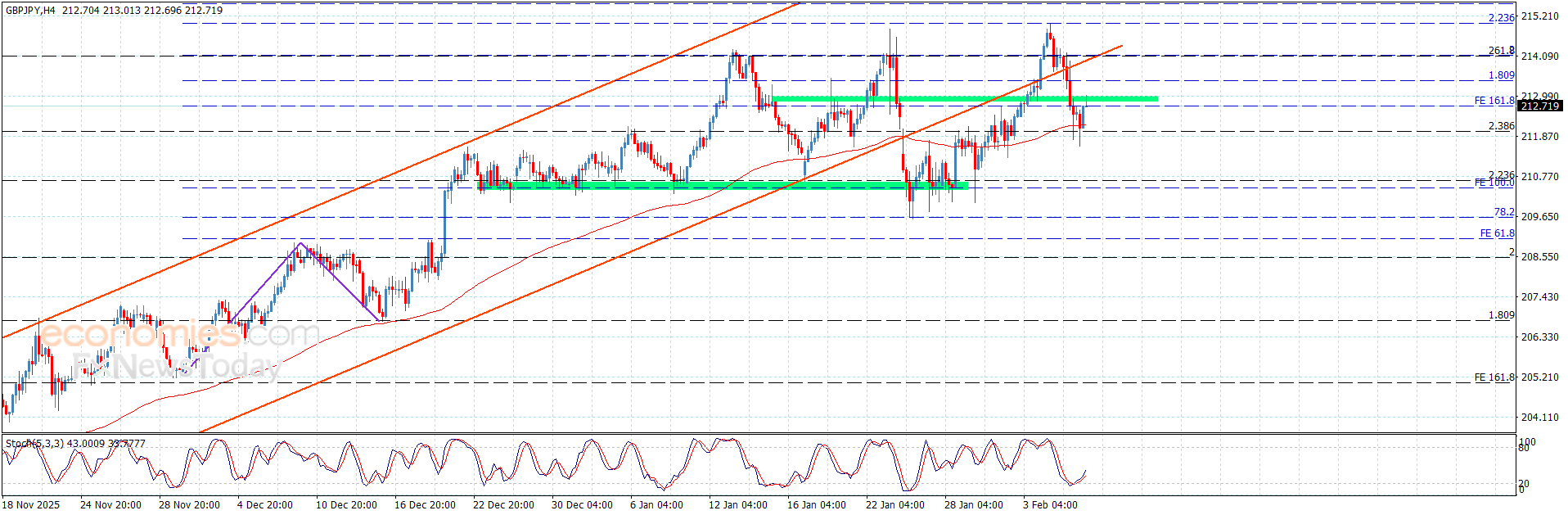
The GBPJPY pair succeeded in breaking the bullish channel’s support that is represented by 213.45 level, activating the previously suggested bearish corrective track, recording all the waited targets by reaching 211.60 level, attempting to recover some of the losses by its rally towards 212.85, attempting to retest the extra barrier that appears in the above image.
Confirming the bearish scenario requires providing new bearish close below 212.85, to ease the mission of targeting 212.00 level and surpassing it might extend the losses towards 211.25 and 210.45, while regaining the bullish trend requires forming strong bullish moves to settle above 214.15 level.
The expected trading range for today is between 211.25 and 213.00
Trend forecast: Bearish
Silver price (XAG/USD) pares its daily losses, yet remains in the negative territory, trading around $80.50 per troy ounce during the early European hours on Thursday. Silver price plunged as much as over 16% as precious metals faced renewed selling pressure amid hawkish signals from the Federal Reserve (Fed) and easing geopolitical tensions.
Fed Governor Lisa Cook said she would not back another cut without clearer evidence that inflation is easing, stressing greater concern over stalled disinflation than labor market weakness. Investors also weighed the implications of Kevin Warsh’s nomination as Fed chair, citing his preference for a smaller balance sheet and a less aggressive approach to rate reductions.
Safe-haven demand for precious metals, including Silver, fades after Iran confirmed it would hold talks with the United States (US) in Oman on Friday. However, Silver prices gained ground on media reports suggesting the talks might collapse, but officials from both sides later said discussions would proceed as scheduled, even though the agenda remains unsettled.
Iranian Foreign Minister Abbas Araghchi said talks will be held in Oman on Friday, while a White House official confirmed continued engagement on a potential nuclear deal. Uncertainty persists over the scope, with Tehran aiming to limit discussions to its nuclear program and Washington seeking to include missiles, regional militancy, and human rights.
The dollar-denominated grey metal also fell as a stronger US Dollar (USD), driven by hawkish Fed signals and slower rate-cut expectations, weighed on the Silver price. A firmer Greenback raises Silver’s cost for non-US buyers, dampening demand, while higher US yields increase the opportunity cost of holding non-yielding metal.
Silver is a precious metal highly traded among investors. It has been historically used as a store of value and a medium of exchange. Although less popular than Gold, traders may turn to Silver to diversify their investment portfolio, for its intrinsic value or as a potential hedge during high-inflation periods. Investors can buy physical Silver, in coins or in bars, or trade it through vehicles such as Exchange Traded Funds, which track its price on international markets.
Silver prices can move due to a wide range of factors. Geopolitical instability or fears of a deep recession can make Silver price escalate due to its safe-haven status, although to a lesser extent than Gold’s. As a yieldless asset, Silver tends to rise with lower interest rates. Its moves also depend on how the US Dollar (USD) behaves as the asset is priced in dollars (XAG/USD). A strong Dollar tends to keep the price of Silver at bay, whereas a weaker Dollar is likely to propel prices up. Other factors such as investment demand, mining supply – Silver is much more abundant than Gold – and recycling rates can also affect prices.
Silver is widely used in industry, particularly in sectors such as electronics or solar energy, as it has one of the highest electric conductivity of all metals – more than Copper and Gold. A surge in demand can increase prices, while a decline tends to lower them. Dynamics in the US, Chinese and Indian economies can also contribute to price swings: for the US and particularly China, their big industrial sectors use Silver in various processes; in India, consumers’ demand for the precious metal for jewellery also plays a key role in setting prices.
Silver prices tend to follow Gold’s moves. When Gold prices rise, Silver typically follows suit, as their status as safe-haven assets is similar. The Gold/Silver ratio, which shows the number of ounces of Silver needed to equal the value of one ounce of Gold, may help to determine the relative valuation between both metals. Some investors may consider a high ratio as an indicator that Silver is undervalued, or Gold is overvalued. On the contrary, a low ratio might suggest that Gold is undervalued relative to Silver.