The main category of Forex News.
You can use the search box below to find what you need.
[wd_asp id=1]
The main category of Forex News.
You can use the search box below to find what you need.
[wd_asp id=1]
The WTI Crude Oil $66 level is an area that seems to be offering quite a bit of resistance and now we find ourselves pulling back from there. I think there are a lot of questions out there as to whether or not we are going to see strikes against the Iranians over the weekend. That being said, supply and demand continue to be a major headwind for pricing, so I would not look for massive moves, and I do think fading rallies continue to be the case.
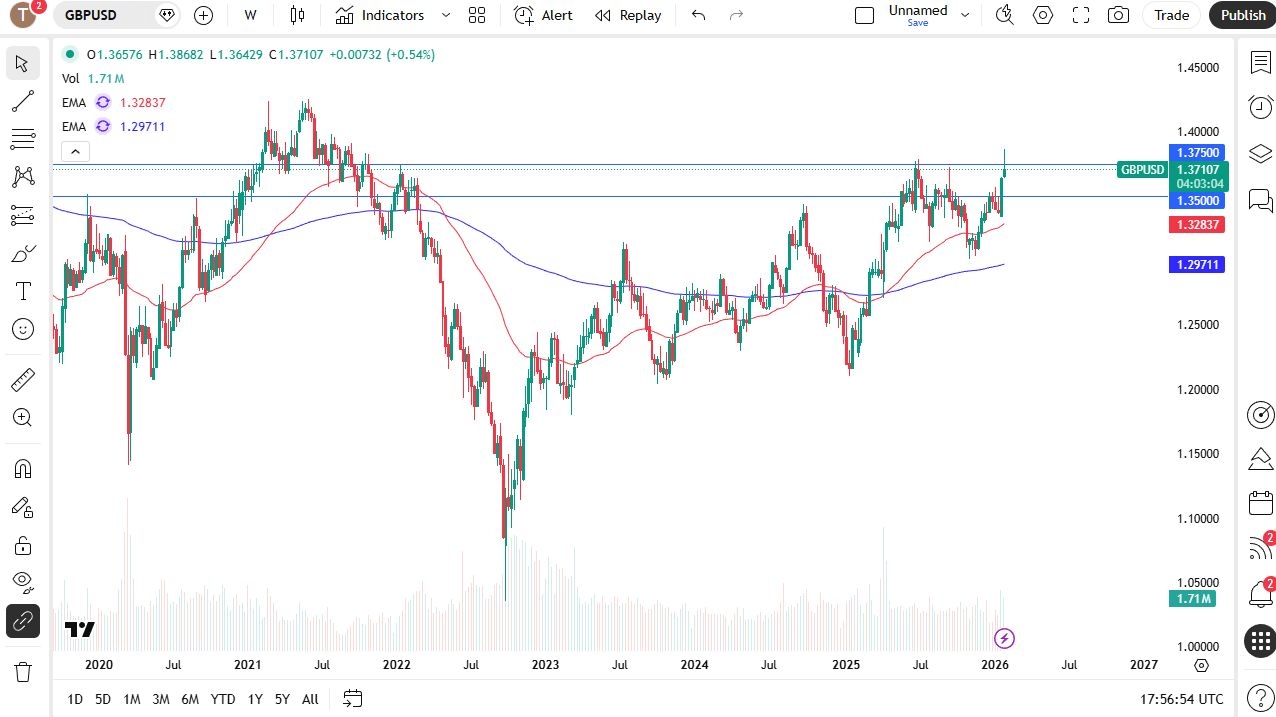
The British pound broke out above the 1.3750 level and have seen a lot of selling pressures to show signs of exhaustion. In fact, the weekly candlestick is a bit of a shooting star. It suggests that we might struggle to continue to the upside. A fall from here could find the British pound dropping to the 1.35 level, which of course is a large round psychologically significant figure. I think part of this is Kevin Warsh being named as the nominee for the new Federal Reserve Chairman, and he is quite a bit more hawkish than many others.
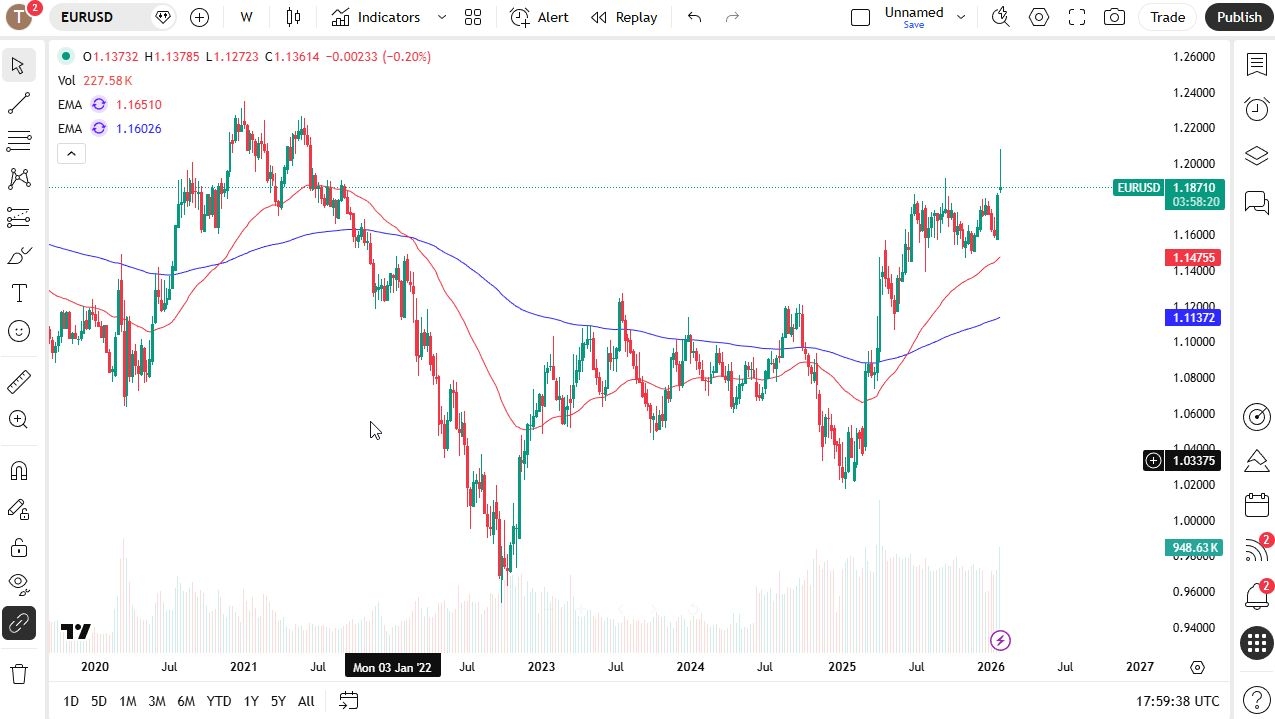
The Euro rallied rather significantly during the week but has been absolutely crushed after initially taking off to the upside. I do think that we are very likely to see the potential for more consolidation. In other words, that breakout might have been false. We will just have to wait and see how the market reacts to the new Federal Reserve Chairman nomination, but as things stand right now, this looks like a market that I think is struggling. The 1.16 level is an area that we could find ourselves reaching towards, but if we turn around and see buyers right away for the next week, then we could see this market really take off, perhaps even heading back towards the 1.20 level followed by the 1.23 level.

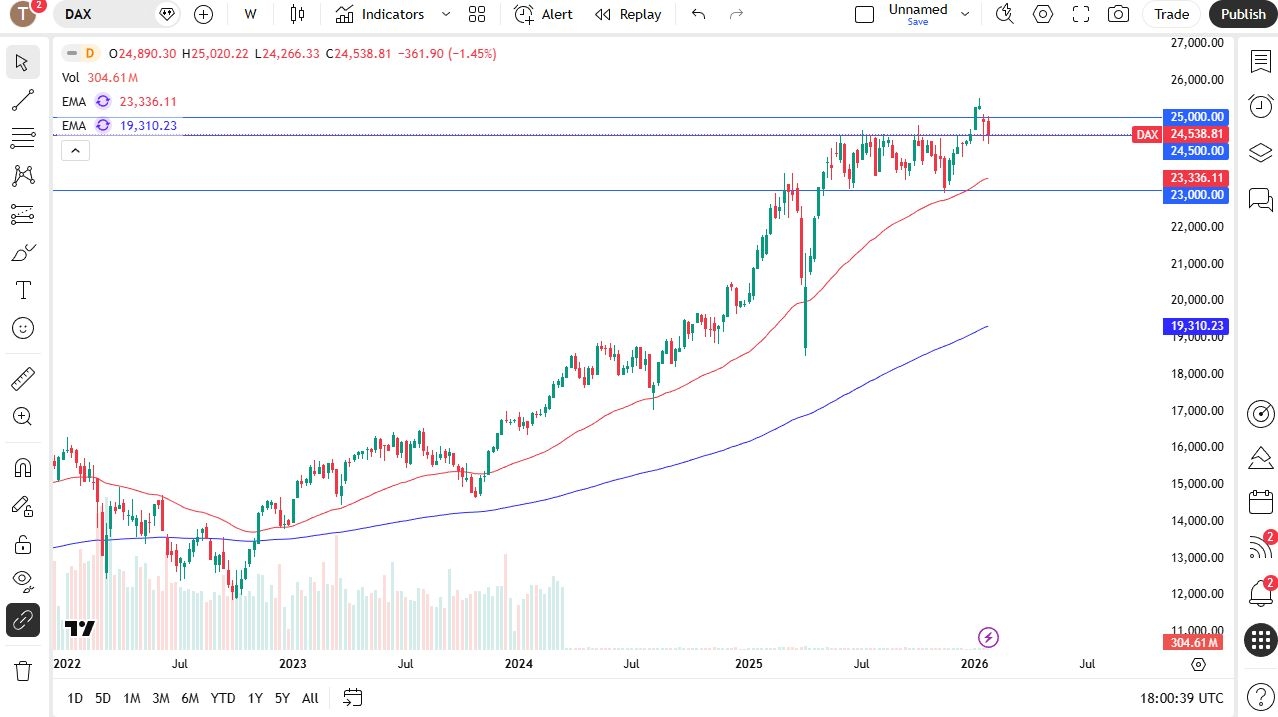
The German DAX has been negative most of the week but it is hanging onto the 24,500 level. This is an area that I have been talking about as being important for support as it was previous resistance. All things being equal, this is a market that I think continues to see plenty of interest as we had broken out above there and now it looks like we are perhaps trying to turn things around and rally to the upside. I think the DAX will be one of the better performers this year as the Germans will continue to throw a lot of money into the economy and that should help the DAX, so I am bullish still.
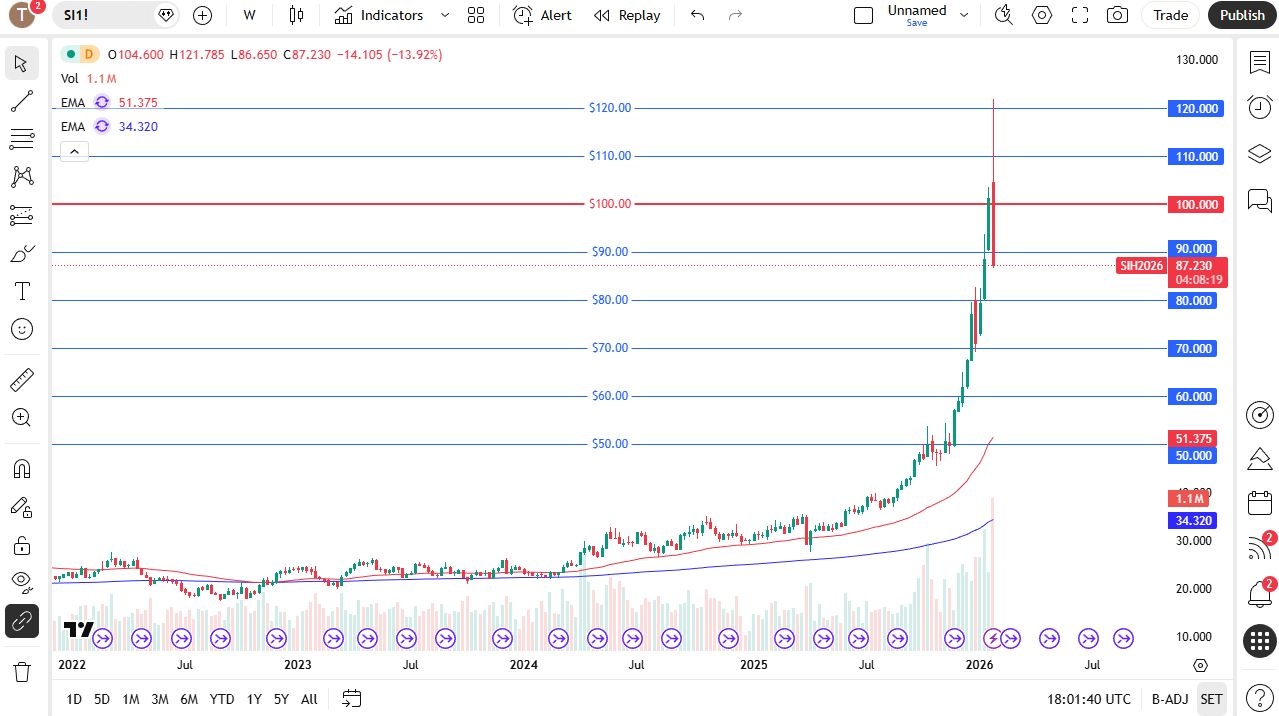
The silver market will be what everybody is talking about as in one week we see it reaches $122 or so and as we are closing out the day on Friday, there is an absolute bloodbath. Silver broke below the $90 level in one fell swoop on Friday and it looks like it is going to race towards the $80 level. Eventually gravity had to return, and I think that is what we are seeing here. The Federal Reserve Chairman being nominated was a little bit more hawkish than most people expected and silver of course is going to be extraordinarily volatile under the best of circumstances, and at this point, it is not the best of circumstances. Silver has become pretty much untouchable.
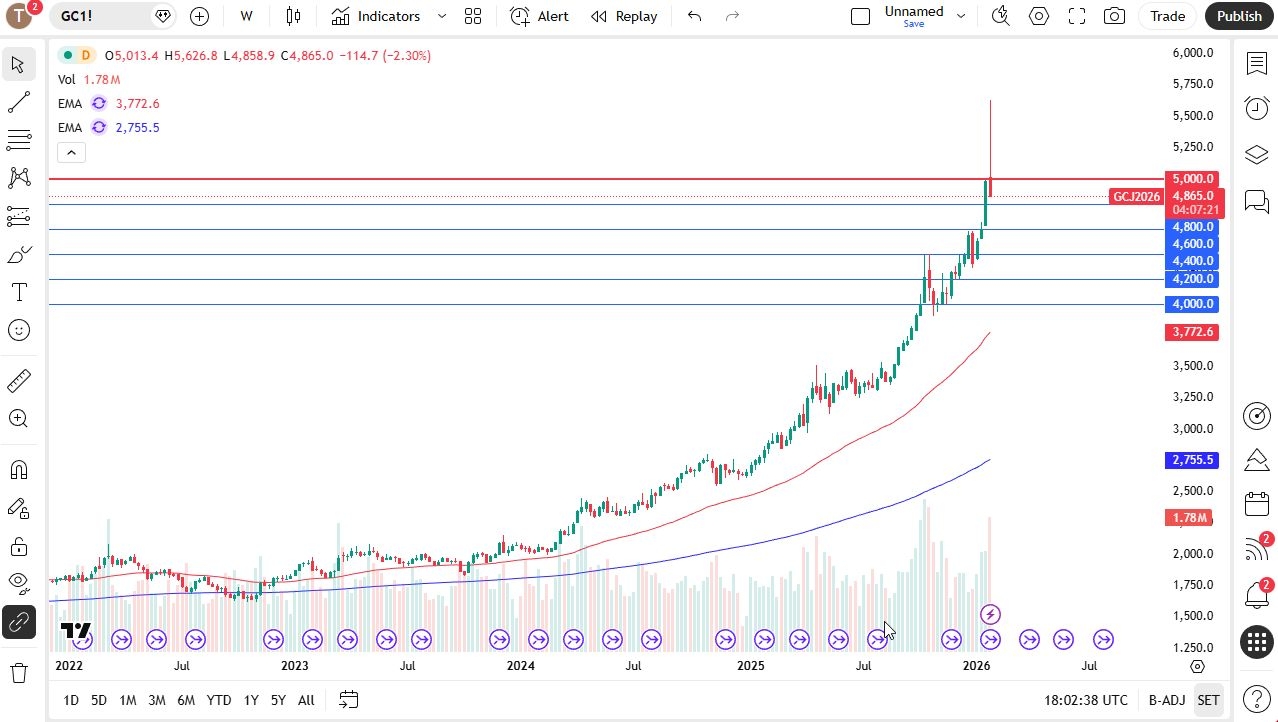
Gold markets find themselves equally as brutalized, but gold has the backing of central banks so I think that gold will more likely than not recover much quicker than silver will because quite frankly silver had gotten so far out of its own element that it had become something akin to one of these altcoins you see in the crypto markets. Gold on the other hand does have a lot of interest from central banks, but we may have just seen the highs. I think it is a little early to call that, but the way the markets are behaving on Friday, it is almost impossible to believe that there won’t be some type of follow-through. Quite frankly, considering that just two years ago gold was closer to the $1,700 level, it is not a huge surprise that there had to be a reckoning. Sooner or later, markets that are out of control see this type of behavior.
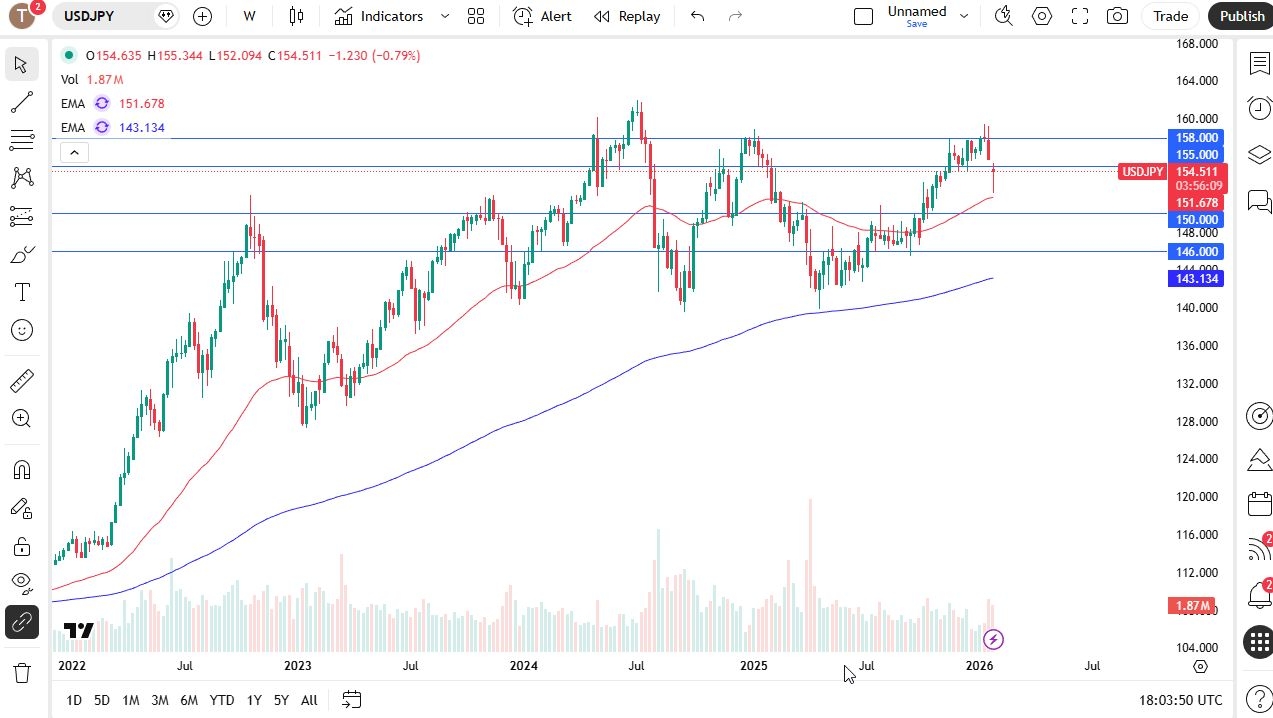
The US dollar plunged against the Japanese yen during the trading week but has seen a massive turnaround and it now looks as if the markets are starting to realize a potential mistake in shorting the dollar the way they have. That being said, this is a market also featuring a massive interest rate differential between the two currencies, so this is essentially how I would have expected the market to behave all along. We bounced from the 50-week EMA, and it looks like if we can break back above the 155 yen level then we could go looking to the 158 yen level.
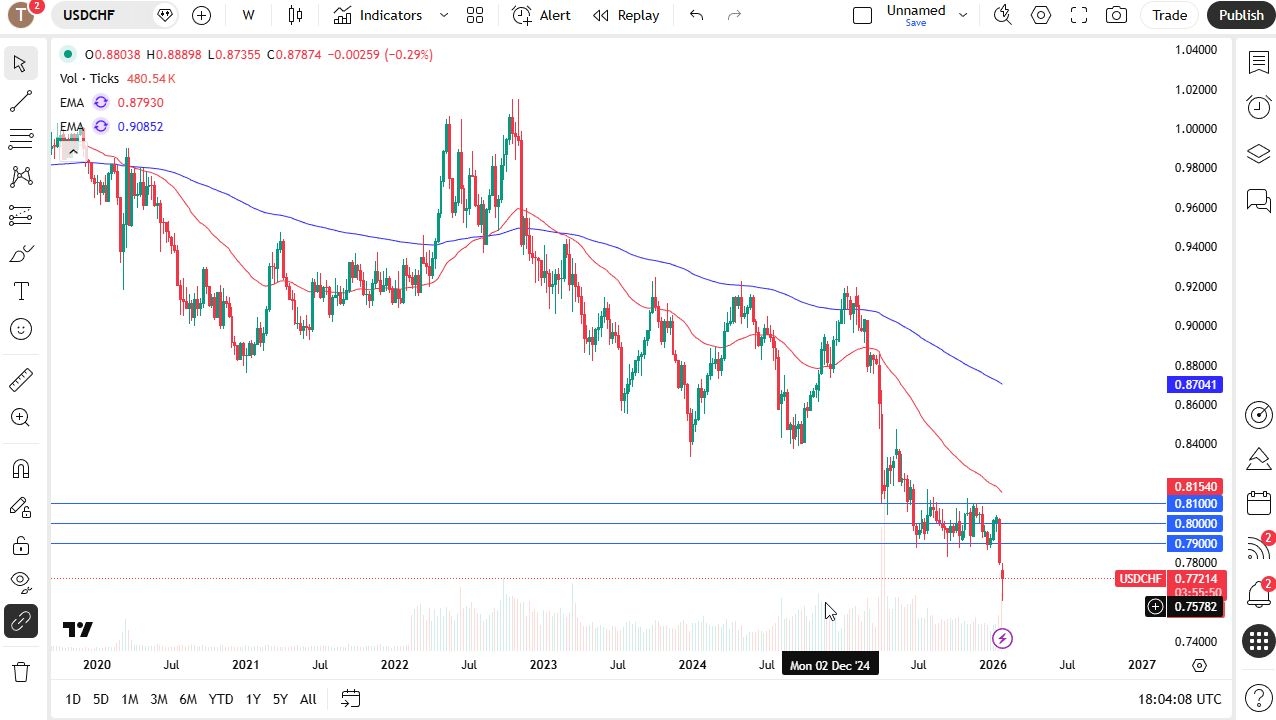
The US dollar has fallen rather significantly against the Swiss franc and tested the 0.76 level. The 0.76 level is an area that I don’t know is particularly important by itself, but we also have to worry about the idea of the Swiss National Bank coming in and intervening if the Swiss franc gets a little too strong. I still think that is a threat, but the fact that we are forming a hammer after a breakdown like this and, more importantly, we are seeing the US dollar turn things around globally, I think this one might be ripe for a bounce as well.
Ready to trade our Forex weekly forecast? We’ve shortlisted the best forex trading accounts to choose from.
On January 20, 2026, Crude Oil Price Risk is in focus as WTI and Brent prices react to today’s supply and demand headlines, keeping energy traders on edge.
The combination of fragile risk sentiment, a crowded speculative positioning landscape, and the constant drip of macro and geopolitical headlines means that any surprise in inventories, OPEC+ commentary, or demand data can rapidly transform a quiet session into a sharp move. That is precisely why Crude Oil Price Risk is so dangerous: periods of calm often tempt traders into over-leveraging just before volatility returns.
For risk-takers: Trade Oil volatility now
Today, the focus in the oil market is less about a single explosive price move and more about the looming catalysts that could jolt prices in either direction. Recent market commentary highlights that traders are watching for the next round of weekly U.S. inventory statistics and for any unexpected OPEC+ statements that could hint at a change in production discipline. Even if today’s live Brent Price Live and WTI quotes show only modest percentage changes, the market is essentially coiling for the next data shock.
From a fundamental perspective, several themes are shaping the Oil Price Forecast narrative right now:
For short-term traders looking to Buy WTI Oil or speculate on Brent via CFDs, this environment is treacherous. Even on days when the headline price action appears muted, the order book can be thin and fragmented, especially around key data releases. Spreads can widen abruptly, and slippage can turn a seemingly controlled trade into a larger-than-expected loss. Energy Trading under these conditions requires not only a clear strategy but also strict discipline on position sizing and stop placement.
Crude oil is uniquely exposed to sudden geopolitical shocks. Tensions in major producing regions, unexpected disruptions to shipping routes, or incidents affecting critical energy infrastructure can all trigger gaps between the close and the next open. These gaps are particularly dangerous for leveraged positions that are left unhedged overnight. A trader who decides to Buy WTI Oil or go long Brent based on a short-term technical signal may find the position dramatically underwater the next morning if an adverse headline breaks while markets are closed.
Moreover, the increasing use of algorithmic strategies and high-frequency trading in the crude market amplifies intraday volatility. When key levels in the live order book are breached, a cascade of stop-loss orders and momentum-driven flows can accelerate moves in either direction. This feedback loop can quickly transform a small, seemingly manageable loss into a substantial drawdown or even a margin call. Crude Oil Price Risk is therefore not just about the direction of the next move, but about the speed and magnitude of that move once it starts.
For those following Brent Price Live and WTI quotes tick-by-tick, it is crucial to maintain a clear plan for both best-case and worst-case scenarios. The seductive nature of leverage in Energy Trading means that a series of small wins can encourage traders to gradually increase position size, often just before a sharp reversal wipes out accumulated profits. Recognizing that total loss of invested capital is a real possibility is not pessimism; it is essential risk management.
In summary, while today’s live market may not yet show an extreme move, the underlying setup in crude remains fragile. Unresolved questions around OPEC+ production, the path of global demand, and upcoming inventory data keep the Oil Price Forecast highly uncertain. Anyone engaging in leveraged Energy Trading around WTI or Brent must treat Crude Oil Price Risk with utmost seriousness, assume that unexpected gaps can occur at any time, and only risk capital they can genuinely afford to lose.
Risk Warning: Financial instruments, especially commodity CFDs, are complex and come with a high risk of losing money rapidly due to leverage. You should consider whether you understand how these instruments work and whether you can afford to take the high risk of losing your money. This content is for informational purposes only and does not constitute investment advice.
The GBP/USD price closed its second consecutive week in gains as markets anticipated a cautious Bank of England following resilient UK economic data. Meanwhile, the US dollar slipped to four-year lows amid concerns about geopolitics and the Fed’s independence before finding a mild footing.
–Are you interested in learning more about Bitcoin price prediction? Check our detailed guide-
The pair marked fresh highs since October 2021 near 1.3860 before correcting down below mid-1.3700. The downtick triggered on Thursday and Friday was attributed to the deal struck between President Trump and the US Senate to avoid a US government shutdown. Moreover, Trump nominated Kevin Warsh as the next Chair of the Federal Reserve, which further weakened the dollar.
On the data front, the UK economic calendar was light with no major releases, while the US FOMC meeting was the highlight of the week. As broadly expected, the central bank held rates unchanged, while Fed Chair Powell’s press conference brought no clarity to the markets, reiterating a data-dependent approach.
The US PPI data on Friday beat the forecast with monthly Core PPI and PPI coming at 0.7% and 0.5%, respectively. This shows a sticky inflation, further cementing the odds of late cuts.
Meanwhile, geopolitical developments surrounding Iran and the Russia-Ukraine conflict continue to deteriorate the risk sentiment, making the upside path for GBP/USD bumpy.
Moving ahead, the following major events could significantly impact the pair’s volatility:
With several high-impact events on the list, market participants will be keen to watch the BoE’s policy rate, which is widely expected to remain on hold. However, the MPC vote split could be decisive in gauging sentiment regarding the next rate cut.
On the other hand, the US labor market data remains a vital factor for the Fed to shape up its monetary policy. The NFP numbers are expected to jump from 50k to 75k, while the unemployment rate could remain at 4.4%. Any significant deviation from these forecasts could trigger a sharp move.
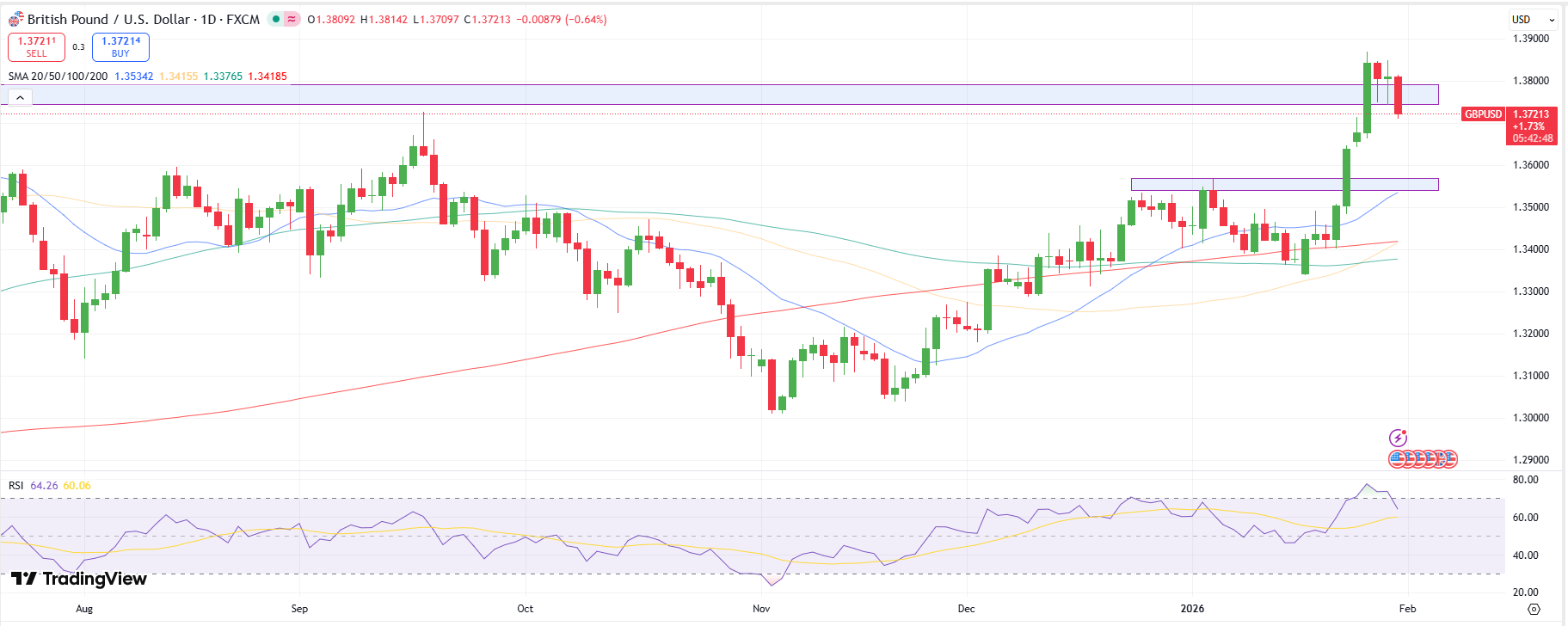
The GBP/USD daily chart shows a corrective downside after briefly breaking the supply zone above 1.3850. The pair lost more than 100 pips, with the RSI retreating below 50.0, suggesting further losses on the card. However, the 1.3700 level could pause the downside ahead of the next support at 1.3600 (round number) and then supply-tuned demand zone near 1.3500.
–Are you interested in learning more about scalping forex brokers? Check our detailed guide-
On the upside, the key resistance lies at 1.3800, ahead of the monthly top at 1.3860, and then at 1.3925. The odds of testing 1.4000 are thin for now, as profit-taking has put pressure on the pair. However, the pair could gather buying traction around the major support zones to rally to fresh highs as the broad upside trend remains intact while staying well above the key MAs.
Looking to trade forex now? Invest at eToro!
68% of retail investor accounts lose money when trading CFDs with this provider. You should consider whether you can afford to take the high risk of losing your money

Spot gold recently touched an all-time high above $5,360 per ounce before consolidating. That move capped a rally of more than 100% over the past year. Demand has come from both institutions and retail buyers, with physical gold seeing renewed interest as investors seek protection from inflation, debt expansion, and financial system risk.
What makes the current outlook notable is the scale of the projections. One long-term AI pricing model points to gold reaching approximately $10,500 per ounce by April, followed by further acceleration later in the year. December targets in that model approach $19,700 per ounce, a level that would redefine global asset allocation frameworks.
While those numbers sit well above mainstream forecasts, the underlying drivers are not speculative. Central banks are buying at record levels. Real yields are declining. Confidence in fiat currencies is weakening. And gold’s role in portfolios is changing, from a hedge to a structural reserve asset.
Major financial institutions remain bullish, even if more conservative. UBS expects gold to end the year near $5,400. Yardeni Research projects $6,000. Jefferies sees upside toward $6,600. The gap between AI forecasts and traditional models highlights how rapidly assumptions around gold are evolving.
While gold captures the headlines, the broader precious metals complex is experiencing an even more volatile re-rating. Silver is currently trading at $102.14, having recently touched a high of $121.78. The gold-to-silver ratio, a key metric for commodity traders, is beginning to compress, suggesting that silver may eventually outperform gold on a percentage basis.
The industrial demand for silver—driven by the 2026 surge in green energy infrastructure and AI hardware—is creating a physical deficit that hasn’t been seen in decades. Similarly, Platinum (PL00) is holding at $2,345.70. Although it saw a $272.60 decline in the latest session, its role in high-tech manufacturing and as a “cheaper” alternative to gold for retail investors provides a solid floor. The 10.41% drop in Platinum and 10.74% drop in Silver are indicative of a high-beta market where traders are using leverage, leading to sharp but temporary “washouts” that clear the way for the next leg up.
Copper (HG00), often called “Dr. Copper” for its ability to diagnose economic health, is trading at $6.08, down slightly by 1.97%. This stability in industrial metals suggests that the global economy isn’t in a traditional recession, but rather a “currency reset.
Gold’s rise has been steady but relentless. After spending years capped below $2,100, prices began accelerating as inflation risks proved more persistent than expected and global debt levels surged. By early 2026, spot gold crossed the $5,300 mark, with futures briefly testing even higher levels during bouts of market stress. The rally has coincided with falling real yields, a weaker U.S. dollar trend, and heightened geopolitical uncertainty.
Real yields are a crucial driver. Gold does not pay interest, so when inflation-adjusted bond yields fall, the opportunity cost of holding gold drops. In recent months, real yields across major economies have declined as inflation expectations remain elevated while growth data softens. This environment historically favors gold, and the current cycle is following that pattern, only on a larger scale.
Currency dynamics have also played a major role. Persistent fiscal deficits and rising debt servicing costs have raised concerns about long-term currency stability. As a result, gold’s role as a hedge against fiat currency risk has strengthened. This narrative has resonated not just with investors but also with policymakers, reinforcing demand at multiple levels of the market.
One of the most powerful forces behind gold’s rally is central bank demand. Over the past few years, official sector purchases have remained near record highs. Emerging market central banks, in particular, have been increasing gold reserves as a way to diversify away from traditional reserve currencies. This trend has continued into 2026, providing a steady source of structural demand that is largely insensitive to short-term price swings.
Central banks are not chasing momentum in the way hedge funds might. Their buying reflects long-term strategic decisions about reserve safety, geopolitical risk, and currency exposure. That makes their demand especially important for price stability. When official institutions absorb supply during periods of volatility, downside pressure is often limited.
At the same time, the broader shift toward de-dollarization, while uneven, has added psychological support to gold. Even modest changes in reserve allocation can have outsized effects on a market with limited new supply growth. Global mine production has increased only marginally, meaning incremental demand must be met largely through higher prices.
The idea of $10,000 gold has gained traction largely through AI-based models that extrapolate current trends under extreme scenarios. These forecasts typically assume a combination of aggressive monetary easing, sustained currency debasement, and elevated geopolitical risk. Under such conditions, gold’s historical relationship with real yields and money supply growth could, in theory, justify much higher prices.
However, mainstream Wall Street forecasts remain far more conservative. Many major banks see gold trading in a broad $5,000 to $6,500 range over the next year, with some bullish scenarios extending toward $7,500 or even $8,500 if financial stress intensifies. These projections already represent historically high levels and assume continued support from central banks and investors.
The gap between AI predictions and institutional targets highlights the uncertainty embedded in the current market. A move to $10,000 would likely require a significant catalyst, such as a sharp loss of confidence in major currencies, a severe recession combined with rapid rate cuts, or a systemic financial event. Without such a trigger, the path to five-figure gold prices remains speculative rather than probable.
Despite record prices, investor exposure to gold remains relatively low compared with past peaks. Exchange-traded fund holdings have not surged to the levels seen during previous crises. This suggests that much of the rally has been driven by structural buyers rather than speculative excess. For bulls, this is a key argument that the cycle still has room to run.
Volatility, however, is likely to remain high. Recent trading sessions have shown sharp intraday swings, with gold falling hundreds of dollars before rebounding as buyers step in. Such moves reflect a market that is both crowded with long-term conviction and sensitive to short-term macro headlines. Corrections are possible, especially if real yields rise temporarily or risk appetite improves.
Looking ahead, gold’s trajectory will depend on how inflation, monetary policy, and currency markets evolve through 2026. If real yields continue to fall and central bank demand stays firm, prices could grind higher even without a crisis. If confidence in fiat currencies erodes further, the upside scenarios grow more plausible. But if growth stabilizes and policy tightens, gold could consolidate at elevated levels rather than explode higher.
Q: What is driving AI forecasts that predict gold prices could exceed $10,000 per ounce in 2026? A: AI models factor in record central bank gold purchases, declining real interest rates, and rising global debt levels. They also account for currency risk, geopolitical instability, and constrained mine supply. These conditions historically align with sharp upward repricing cycles.
Q: How do Wall Street gold forecasts compare with AI-driven projections for 2026?
A: Major banks remain bullish but cautious, projecting year-end gold prices between $5,400 and $6,600. AI models forecast much higher levels, reflecting structural monetary risks rather than short-term trading factors. The divergence highlights uncertainty around inflation, currency stability, and long-term demand.
The CADCHF’s price begins forming sideways waves, taking advantage of forming a new support base at 0.5595 level, to reduce the effect of the negative scenario on the trading this period, activating with stochastic positivity by its rally towards 0.5680.
The stability above the extra support will reinforce the chances of gathering bullish momentum, to expect forming bullish corrective waves, to target 0.5710 level, then pressing on the next barrier at 0.5780, while its decline below the current support and providing negative close will force it to suffer new losses by reaching 0.5510 initially.
The expected trading range for today is between 0.5630 and 0.5710
Trend forecast: Bullish
At 18:22 GMT, XAGUSD is trading $76.27, down $39.30 or -34%.
Given the tremendous downside momentum, all we can do is treat this trend line as a target. We have to wait patiently while it’s being tested because momentum selling can and will take it out. However, there is always the chance of recovery. What we could see if you watch closely is how professionals trade versus non-professionals.
The non-professional will place orders to buy on the trend line, but the professional will let the market test or go through the trendline then start taking out offers if and when it turns higher. This is the point where the non-professional complains that they were going after his stop. However, this is not the case. The difference is the non-professional placed an order thinking it would stop the decline, but the professional is thinking, let it go until it stops then catch the intraday reversal when the selling is over. In my world, if I want to be long, I take offers, I don’t bid because I’m not big enough to stop the market.
With the selling obvious and the market down more than half of its January rally, we may finally get to see what the market perceives as real value. We know that 50% of the rally from $45.55 to $121.67 is $83.61 so that’s a great place to start. We see that the low of the day at 18:09 GMT is $83.06. Since you may have missed the bottom at $45.55 and you may not have wanted it at $121.67, the 50% price at $83.61 may look attractive if you are looking for the bull market to continue over the long-run.
The Fibonacci 61.8% retracement level is $74.63. This may even be a better price to resume the rally since it forms a cluster with the 50-day moving average at $74.55.
So going into the close and the weekend, we’ll have to decide if the 50% level at $83.61 is our value or if we should wait for another clean break into $74.63 to $74.55.
Gold’s (XAU/USD) rally came to an abrupt halt on Thursday. The precious metal dropped nearly 10% in less than 24 hours and is trading around $5,080 at the time of writing, with the $5,000 psychological level at a short distance.
US President Trump seems set to name former Fed Governor Kevin Warsh as the next central bank Chairman, which has provided some relief to investors, wary about the Fed’s independence. It is debatable, however, whether that alone can justify the sharp reversal in precious metals, especially given that Trump has launched a new tariff threat against countries supplying oil to Cuba and that tensions in the Middle East remain high.
Gold was rejected a few pips shy of the $5,600 area on Thursday and is forming an impulsive bearish candle in the daily chart on Friday, which, if confirmed, will complete an “Evening Star” candle pattern, a signal that often announces a trend shift.
The 4-hour chart shows prices moving at a short distance from the $5,000 level, with technical indicators trending lower. The Moving Average Convergence Divergence (MACD) line shows a sharp cross below the Signal line and a widening negative histogram, and the Relative Strength Index (RSI) prints at 43.76 (neutral below the midline), reinforcing the bearish momentum.
A confirmation below $5,000 and the January 26 low, at $4,980, would bring the 100-period SMA, now at $4,822, and the January 21 low, near $4,755, to the focus. On the upside, the intra-day high, at $5,450, is likely to close the path towards the all-time highs, at $5,595, hit on Thursday.
(The technical analysis of this story was written with the help of an AI tool.)
Gold has played a key role in human’s history as it has been widely used as a store of value and medium of exchange. Currently, apart from its shine and usage for jewelry, the precious metal is widely seen as a safe-haven asset, meaning that it is considered a good investment during turbulent times. Gold is also widely seen as a hedge against inflation and against depreciating currencies as it doesn’t rely on any specific issuer or government.
Central banks are the biggest Gold holders. In their aim to support their currencies in turbulent times, central banks tend to diversify their reserves and buy Gold to improve the perceived strength of the economy and the currency. High Gold reserves can be a source of trust for a country’s solvency. Central banks added 1,136 tonnes of Gold worth around $70 billion to their reserves in 2022, according to data from the World Gold Council. This is the highest yearly purchase since records began. Central banks from emerging economies such as China, India and Turkey are quickly increasing their Gold reserves.
Gold has an inverse correlation with the US Dollar and US Treasuries, which are both major reserve and safe-haven assets. When the Dollar depreciates, Gold tends to rise, enabling investors and central banks to diversify their assets in turbulent times. Gold is also inversely correlated with risk assets. A rally in the stock market tends to weaken Gold price, while sell-offs in riskier markets tend to favor the precious metal.
The price can move due to a wide range of factors. Geopolitical instability or fears of a deep recession can quickly make Gold price escalate due to its safe-haven status. As a yield-less asset, Gold tends to rise with lower interest rates, while higher cost of money usually weighs down on the yellow metal. Still, most moves depend on how the US Dollar (USD) behaves as the asset is priced in dollars (XAU/USD). A strong Dollar tends to keep the price of Gold controlled, whereas a weaker Dollar is likely to push Gold prices up.
– Written by
Frank Davies
STORY LINK Pound Sterling to Dollar Forecast: Potential Near-term GBP Consolidation
The Pound to Dollar exchange rate (GBP/USD) has pulled back to around 1.3730 after failing to sustain four-year highs above 1.3850, as a sharp reversal in gold, silver and global equities triggered a bout of defensive dollar demand.
While the move has cooled Sterling’s momentum, banks remain cautious about calling a durable dollar recovery amid lingering concerns over Federal Reserve independence and fading safe-haven credibility.
The dollar attempted to stabilise on Wednesday but failed to secure a convincing recovery, with underlying sentiment still fragile despite a more cautious tone from the Federal Reserve.
The Pound to Dollar exchange rate (GBP/USD) has retreated to around 1.3730 after briefly surging to four-year highs above 1.3850 earlier in the week, with the move lower coming amid a sharp correction in gold, silver and global equity markets.
The sell-off in precious metals and stocks prompted some defensive dollar demand, curbing Sterling’s momentum even as broader confidence in the US currency remains strained.
According to UoB, consolidation is likely;
Get better rates and lower fees on your next international money transfer.
Compare TorFX with top UK banks in seconds and see how much you could save.
“We view the current price movements as part of a range-trading phase, likely between 1.3750 and 1.3850.”
The crucial medium-term psychological level for the pair remains 1.40. BNP Paribas is not backing a break and has an end-2026 GBP/USD forecast of 1.30.
The Federal Reserve held interest rates at 3.75%, in line with strong market expectations. The decision was taken by a 10-2 vote, with Miran and Waller backing a further 25bp rate cut.
The accompanying statement was slightly more optimistic on the economic outlook, with reduced concern over labour-market conditions.
Chair Powell declined to offer meaningful guidance on the timing of future rate cuts and avoided engaging directly on questions surrounding political pressure and Fed independence.
Markets are now pricing in only around a 15% chance of a March rate cut, with expectations centred on two cuts by the end of 2026.
According to Danske Bank;

“The next rate cut is fully priced in by July. We see risks tilted towards faster easing and expect cuts in March and June.”
MUFG expects the dollar’s yield support to fade over time;
“While rate expectations have not been a catalyst for dollar selling in January, positioning in rates should help limit the risk of a rebound in the dollar if or when rate expectations become a bigger influence on FX.”
ING focused on broader headwinds for the US currency;
“The modest USD reaction to the Fed confirms there is very little influence of short-term rates on USD crosses at the moment.”
It added;
“There are no signs that markets are ready to unwind dollar pessimism just yet. We may well be in the middle of a significant increase in USD hedging as the dollar’s safe-haven value deteriorates, and it remains risky to try to pick a bottom when moves are detached from macro fundamentals and rates.”
The issue of Federal Reserve independence remains a key overhang for the dollar, with the Supreme Court still yet to rule on whether the Administration can dismiss Fed Governor Cook.
NAB head of FX strategy Ray Attrill warned;
“Loss of independence is far and away the biggest risk to ongoing dollar hegemony.”
International Money Transfer? Ask our resident FX expert a money transfer question or try John’s new, free, no-obligation personal service! ,where he helps every step of the way,
ensuring you get the best exchange rates on your currency requirements.
TAGS: Pound Dollar Forecasts
The Natural Gas Price Index has experienced notable fluctuations in recent months due to supply-demand shifts, geopolitical factors, and seasonal energy consumption. Understanding the price of Natural Gas is vital for traders, industrial users, and investors seeking insights into market trends. This report provides a detailed overview of Natural Gas Prices, including historical data, price trends, forecasts for 2026, and regional variations. Whether you are analyzing the Natural Gas price chart or tracking Natural Gas future price, this report offers reliable insights.
Natural Gas Recent Price Movements:
In early 2026, Natural Gas prices have shown moderate increases across major markets:
• USA: USD 4.14/MMBtu
• China: USD 2.52/MMBtu
• Saudi Arabia: USD 2.65/MMBtu
• Germany: USD 11.24/MMBtu
• India: USD 4.51/MMBtu
Key factors driving these movements:
• Rising winter energy demand
• Supply constraints from LNG exporters
• Geopolitical tensions affecting trade flows
• Fluctuations in production and storage levels
These movements help stakeholders forecast short-term trends and adjust procurement strategies effectively.
Get the Real-Time Prices Analysis: https://www.imarcgroup.com/natural-gas-pricing-report/requestsample
Note: The analysis can be tailored to align with the customer’s specific needs.
Natural Gas Price Snapshot (2026):
As of January 2026, Natural Gas prices reflect moderate growth
• Price in the USA is approximately USD 1,100/MMBtu
• Europe is trading around USD 2,950/MMBtu
• Asia is observing USD 2,150/MMBtu
This snapshot highlights global regional disparities influenced by local supply-demand balances, LNG imports, and storage levels.
Natural Gas Price Trend Analysis:
The Natural Gas price index demonstrates steady upward momentum since late 2025, influenced by seasonal demand and production constraints. Historical trends indicate that prices spike during high consumption months and stabilize during lower-demand periods. Tracking the Natural Gas price chart allows investors and businesses to anticipate fluctuations.
Natural Gas Price Forecast 2026:
Analysts project a stable-to-moderate increase in Natural Gas future price during 2026. Forecasts suggest prices could range between USD 1,100-1,250/MMBtu in the USA and USD 2,950-3,200/MMBtu in Europe, depending on production, LNG supply, and geopolitical developments.
Natural Gas Price Chart & Index – What It Suggests:
The Natural Gas price chart shows consistent seasonal trends and market volatility. Peaks often correlate with winter demand surges or supply disruptions. The Natural Gas price index provides a benchmark for monitoring trends, guiding procurement, trading, and investment decisions.
Natural Gas Price Historical Analysis Data:
Historical Natural Gas price history shows fluctuations driven by
• Seasonal demand variations
• Geopolitical events affecting LNG supply
• Shifts in storage and production capacity
Past trends reveal patterns that help market participants predict short-term and long-term price movements.
Factors Driving Recent Natural Gas Price Trend Increases:
• Increased demand in residential and industrial sectors
• LNG supply constraints from major exporters
• Rising production and transportation costs
• Geopolitical tensions impacting trade flows
These factors collectively contribute to the current trend in Natural Gas price today and inform forecast projections.
Natural Gas Price Forecast Next 12 Months:
The Natural Gas Price Trend Analysis indicates moderate growth over the next year. Prices are expected to increase gradually, influenced by ongoing global demand, supply adjustments, and market dynamics. Continuous monitoring of the Natural Gas price index is essential for strategic planning.
Regional Price Differences for Natural Gas:
• USA: USD 1,085-1,150/MMBtu
• Europe: USD 2,900-3,050/MMBtu
• Asia: USD 2,130-2,250/MMBtu
Regional variations reflect supply constraints, local consumption patterns, and logistics costs.
Current & Near-Term Prices (Late 2025 – Early 2026):
• Prices in late 2025 were relatively stable.
• Early 2026 shows a slight upward trend of 2-3% globally.
• Tracking the Natural Gas price chart and price index helps forecast near-term trends for traders and industrial buyers.
Summary – Key Points:
• Natural Gas Price Trend Analysis shows moderate upward momentum globally.
• Supply-demand shifts and geopolitical factors drive price changes.
• Forecasts for 2026 indicate steady growth in Natural Gas future price.
• Regional variations impact global trading strategies.
• Historical trends and price charts provide actionable market insights.
Speak to An Analyst: https://www.imarcgroup.com/request?type=report&id=22409&flag=C
Key Coverage:
• Market Analysis
• Market Breakup by Region
• Demand Supply Analysis by Type
• Demand Supply Analysis by Application
• Demand Supply Analysis of Raw Materials
• Price Analysis
o Spot Prices by Major Ports
o Price Breakup
o Price Trends by Region
o Factors influencing the Price Trends
• Market Drivers, Restraints, and Opportunities
• Competitive Landscape
• Recent Developments
• Global Event Analysis
How IMARC Pricing Database Can Help
The latest IMARC Group study, Natural Gas Prices, Trend, Chart, Demand, Market Analysis, News, Historical and Forecast Data 2025 Edition, presents a detailed analysis of Natural Gas price trend, offering key insights into global Natural Gas market dynamics. This report includes comprehensive price charts, which trace historical data and highlights major shifts in the market.
The analysis delves into the factors driving these trends, including raw material costs, production fluctuations, and geopolitical influences. Moreover, the report examines Natural Gas demand, illustrating how consumer behaviour and industrial needs affect overall market dynamics. By exploring the intricate relationship between supply and demand, the prices report uncovers critical factors influencing current and future prices.
About Us:
IMARC Group is a global management consulting firm that provides a comprehensive suite of services to support market entry and expansion efforts. The company offers detailed market assessments, feasibility studies, regulatory approvals and licensing support, and pricing analysis, including spot pricing and regional price trends. Its expertise spans demand-supply analysis alongside regional insights covering Asia-Pacific, Europe, North America, Latin America, and the Middle East and Africa. IMARC also specializes in competitive landscape evaluations, profiling key market players, and conducting research into market drivers, restraints, and opportunities. IMARC’s data-driven approach helps businesses navigate complex markets with precision and confidence.
Contact Us:
IMARC Group
134 N 4th St. Brooklyn, NY 11249, USA
Email: sales[@]imarcgroup.com
Tel No:(D) +91 120 433 0800
United States: +1-201971-6302
This release was published on openPR.
BitcoinWorld
EUR/USD Forecast: Morgan Stanley’s Bold 1.23 Prediction Signals Major Q2 2025 Shift
Global currency markets face a pivotal moment as Morgan Stanley projects the EUR/USD pair will surge to 1.23 in the second quarter of 2025. This significant forecast, issued from the firm’s London headquarters on March 15, 2025, hinges on a complex interplay of transatlantic monetary policy and shifting economic fundamentals. Consequently, traders and institutional investors are now recalibrating their positions ahead of what analysts describe as a potentially volatile quarter for the world’s most liquid currency pair.
Morgan Stanley’s foreign exchange strategy team, led by Chief Currency Strategist James Lord, bases its 1.23 projection on a multi-factor quantitative model. This model primarily analyzes interest rate differentials, purchasing power parity, and capital flow trends. Specifically, the team highlights the growing divergence between the Federal Reserve’s and the European Central Bank’s policy trajectories as the core driver. Furthermore, they incorporate real-time data on trade balances and geopolitical risk premiums into their weekly-adjusted forecasts.
The bank’s historical accuracy in FX predictions lends considerable weight to this outlook. For instance, Morgan Stanley correctly anticipated the euro’s rally against the dollar in the third quarter of 2024. Their research department employs over fifteen econometric indicators, which they synthesize into a coherent narrative for clients. Importantly, the 1.23 target represents the upper bound of their confidence interval for Q2, with a base case of 1.21.
Several macroeconomic forces underpin this optimistic forecast for the euro. First, the European Central Bank has maintained a more hawkish stance than many anticipated, signaling a slower pace of rate cuts despite easing inflation. ECB President Christine Lagarde recently emphasized data dependency, thereby creating policy uncertainty that markets often reward with currency strength. Meanwhile, the Federal Reserve has entered a clear cutting cycle, reducing the dollar’s interest rate advantage.
Secondly, the Eurozone’s current account surplus continues to provide structural support for the currency. The bloc exported €310 billion more in goods and services than it imported in 2024, according to Eurostat. This surplus generates constant euro demand in global markets. Additionally, recovering manufacturing data from Germany and France suggests the region may avoid a prolonged recession, boosting investor confidence.
Central bank actions will likely determine whether the 1.23 target becomes reality. The Federal Reserve’s dual mandate focuses on maximum employment and price stability. With U.S. inflation cooling to 2.4% annually, the Fed has room for accommodative policy. Conversely, the ECB prioritizes price stability alone, and Eurozone inflation remains stubbornly above target at 2.6%. This fundamental difference creates the policy divergence that currency markets exploit.
Morgan Stanley analysts project the Fed will cut rates by 75 basis points before July, while the ECB will deliver only 25 basis points of easing. This 50-basis-point differential directly supports their euro bullish thesis. Historical correlation analysis shows that similar differentials have produced an average 4.2% EUR/USD appreciation over subsequent quarters since 2010.
Technical indicators largely corroborate the fundamental outlook. The EUR/USD pair recently broke above its 200-day moving average, a key bullish signal watched by algorithmic traders. Moreover, the currency pair has formed a clear “double bottom” pattern on weekly charts, suggesting the downtrend from 2022 has reversed. Resistance levels now cluster around 1.15 and 1.18, with 1.23 representing a multi-year high not seen since early 2022.
Market positioning data from the Commodity Futures Trading Commission reveals that speculative accounts remain net short euros, creating potential for a significant short-covering rally. When overly pessimistic positioning meets positive fundamental catalysts, sharp upward moves often occur. The following table summarizes key technical levels:
| Level | Type | Significance |
|---|---|---|
| 1.2300 | Target | Morgan Stanley Q2 Forecast |
| 1.1800 | Resistance | 2024 High |
| 1.1500 | Support | 200-Day Moving Average |
| 1.1000 | Critical Support | Psychological Level |
A stronger euro carries substantial implications for multinational corporations and international investors. European exporters, particularly German automakers and French luxury goods manufacturers, would face competitive headwinds in dollar-denominated markets. Conversely, U.S. companies with significant European earnings would benefit from favorable translation effects. For global asset allocators, euro appreciation could trigger portfolio rebalancing toward European equities, which often trade at valuation discounts to U.S. counterparts.
The currency move would also affect commodity markets, as a weaker dollar typically supports oil and gold prices. Additionally, emerging market economies with dollar-denominated debt would experience relief through improved debt servicing capacity. However, the European tourism industry might see reduced spending from American visitors, creating sector-specific challenges.
Morgan Stanley acknowledges several risk scenarios that could prevent EUR/USD from reaching 1.23. Firstly, an unexpected resurgence in U.S. inflation could halt the Fed’s cutting cycle, thereby restoring dollar strength. Secondly, geopolitical tensions in Eastern Europe or the Middle East might trigger safe-haven dollar flows. Thirdly, a deeper-than-expected Eurozone recession could force the ECB into aggressive easing. Finally, political uncertainty surrounding upcoming EU parliamentary elections in June may temporarily suppress euro demand.
The bank’s risk assessment framework assigns a 35% probability to these downside scenarios. Their analysts recommend hedging strategies for corporations with significant currency exposure, particularly through option structures that limit downside while allowing participation in the projected rally.
Morgan Stanley’s outlook stands at the bullish extreme among major banks. Goldman Sachs maintains a year-end target of 1.15, citing resilient U.S. growth. Meanwhile, JPMorgan projects 1.18 by mid-2025, and Citigroup remains neutral around 1.12. This dispersion reflects genuine uncertainty about the pace of policy normalization. However, the consensus has gradually shifted toward euro strength over the past quarter, with the median forecast rising from 1.10 to 1.14.
Independent research firms offer additional perspectives. The Institute of International Finance emphasizes capital flow dynamics, while BCA Research focuses on relative productivity trends. These varied methodologies highlight the complexity of currency forecasting, where multiple valid approaches can yield different conclusions.
Morgan Stanley’s EUR/USD forecast of 1.23 for Q2 2025 presents a compelling narrative built on policy divergence, economic rebalancing, and technical momentum. While not guaranteed, this projection reflects thorough analysis of verifiable economic data and historical patterns. Currency markets will closely monitor upcoming Fed and ECB meetings for confirmation of the projected policy paths. Ultimately, the EUR/USD trajectory will influence global trade patterns, corporate earnings, and investment returns across asset classes throughout 2025.
Q1: What specific timeframe does Morgan Stanley’s Q2 2025 EUR/USD forecast cover?
The forecast specifically targets the EUR/USD exchange rate reaching 1.23 during the second quarter of 2025, which encompasses April, May, and June.
Q2: How does interest rate policy affect the EUR/USD exchange rate?
Higher interest rates in a region typically attract foreign capital, increasing demand for that currency. Morgan Stanley projects the interest rate differential between the Eurozone and U.S. will narrow, supporting euro strength.
Q3: What are the main risks to this EUR/USD forecast?
Key risks include stronger-than-expected U.S. economic data delaying Fed rate cuts, renewed Eurozone recession fears, escalating geopolitical tensions favoring the dollar as a safe haven, and unexpected shifts in ECB communication.
Q4: How accurate have Morgan Stanley’s previous currency forecasts been?
The bank has demonstrated above-average accuracy in recent years, particularly in identifying major turning points. However, like all forecasts, they carry inherent uncertainty and should inform rather than dictate investment decisions.
Q5: What does a stronger euro mean for European consumers and businesses?
European consumers benefit from lower prices on imported goods, particularly energy. However, exporters face reduced competitiveness, potentially impacting corporate earnings for multinational firms that generate significant revenue outside the Eurozone.
This post EUR/USD Forecast: Morgan Stanley’s Bold 1.23 Prediction Signals Major Q2 2025 Shift first appeared on BitcoinWorld.