The main category of Forex News.
You can use the search box below to find what you need.
[wd_asp id=1]
The main category of Forex News.
You can use the search box below to find what you need.
[wd_asp id=1]
Domestic coffee prices today
Coffee prices today in the domestic market remain stable compared to the previous session. According to the updated table on July 27, the purchase price in the Central Highlands ranges from 95,300-96,000 VND/kg.
In Dak Lak, coffee prices are recorded at 95,800 VND/kg. Gia Lai also has a purchase price of 95,800 VND/kg.
In Lam Dong, coffee prices are at 95,300 VND/kg, the lowest among the surveyed areas.
The old Dak Nong area, now belonging to Lam Dong province, continues to have the highest price, reaching 96,000 VND/kg.
Domestic coffee prices are currently flat after the previous recovery session. Compared to the end of last week, the price level is still about 1,900 VND/kg lower, showing that the market has not escaped the short-term correction.
World coffee prices
In the world market, data recorded on July 27th showed no new fluctuations in the main terms.
On the London exchange, the September 2026 Robusta futures contract remained at $3,757/ton. The November 2026 term remained at $3,738/ton.
On the New York floor, the Arabica contract for September 2026 is at 313.80 US cents/lb. The December 2026 term is kept at 298.05 US cents/lb.
Compared to the most recent session, some price tables recorded Robusta July futures decreasing, while longer-term futures recovered; Arabica slightly increased in the main terms.
Coffee price assessment
Domestic coffee prices went sideways around the 96,000 VND/kg range after the recovery session, but were still significantly lower than the approaching 99,000 VND/kg range previously recorded.
From a global market perspective, the International Coffee Organization (ICO) said that the average ICO aggregate price index in June 2026 reached 248.90 US cents/lb, down 2.8% compared to May 2026. This shows that world coffee prices are still under adjustment pressure after a period of strong increase.
With Robusta, the Coffee Annual report of the Foreign Agricultural Services Agency of the US Department of Agriculture (USDA/FAS) forecasts that Vietnam’s coffee production in the 2026-2027 crop year will reach 32.5 million bags converted to green beans. The prospect of increased supply continues to be a factor that can curb the upward momentum in the medium term.
Regarding the weather, the Central Highlands is in the rainy season. The National Center for Hydro-Meteorological Forecasting forecasts that the Central Highlands region will have showers and thunderstorms in some places; especially in the afternoon and night, there will be rain, moderate rain and scattered thunderstorms, locally heavy rain, concentrated in the South.
In the coming sessions, developments on the London exchange, New York exchange, USD/VND exchange rate, inventory and demand for export purchases will continue to dominate the market.
TradingKey – As of the Asian session on July 27, gold prices ( XAUUSD) opened with a strong gap up today and maintained its upward momentum intraday, briefly breaking through $4,100 during the session to hit a high of $4,116. From a market perspective, gold prices rebounded after being weighed down last week by surging oil prices and expectations of Federal Reserve interest rate hikes. The primary driver was signs of a pause in clashes between the U.S. and Iran, which caused international oil prices to fall sharply, easing market concerns that energy prices would push up U.S. inflation.
From a fundamental perspective, the core factor influencing gold price trends recently has been the US-Iran situation. Previously, the escalating conflict between the US and Iran over the Strait of Hormuz and Gulf shipping security pushed Brent crude prices above $100 at one point. The market worried that rising energy prices would drive US inflation back up and force the Federal Reserve to maintain high interest rates for longer, or even keep the possibility of further rate hikes on the table, putting downward pressure on gold.
However, the US-Iran situation showed clear signs of cooling over the weekend. According to reports, Iran stated that as long as the US stops its attacks, Iran will also suspend its own attacks; meanwhile, the US has also suspended its bombing campaign against Iran. The latest reactions from both sides have temporarily pushed the US-Iran conflict into a de-escalation phase, easing market concerns over supply disruption risks in the Strait of Hormuz. Consequently, oil prices fell sharply, with Brent crude ( UKOIL) falling over 13% at one point today, and WTI crude ( USOIL) falling over 7%. The drop in oil prices is indirectly positive for gold, as falling energy prices help ease inflation expectations and weaken market bets on aggressive Fed rate hikes.
Brent crude price trend, Source: TradingView
It is worth noting that the risks of the US-Iran situation have not been truly resolved. Although both sides have suspended fire, this is currently a temporary de-escalation rather than a lasting peace agreement. The core conflicts between the US and Iran over transit rights in the Strait of Hormuz, Iran’s military capabilities, and its regional influence remain unresolved. Meanwhile, Yemen’s Houthi rebels continue to attack energy facilities along Saudi Arabia’s Red Sea coast, indicating that Middle East energy transit risks have not fully subsided. Should vessels in the Gulf or Red Sea routes be attacked again, or if port blockades or military retaliation occur in the future, oil prices could rebound, and gold could once again fall under pressure.
In addition, the Federal Reserve’s July interest rate meeting is coming up this week. The Fed will hold its interest rate policy meeting from July 28 to 29, and the market widely expects a high probability of rates being held steady, though uncertainty remains over whether it will hike rates in September. If Federal Reserve Chairman Kevin Warsh emphasizes falling oil prices and easing inflationary pressures in his post-meeting speech, gold may continue to benefit; however, if he continues to emphasize that inflation remains above target and the Fed should not rush to cut rates for the time being, the upside for gold prices will remain capped.
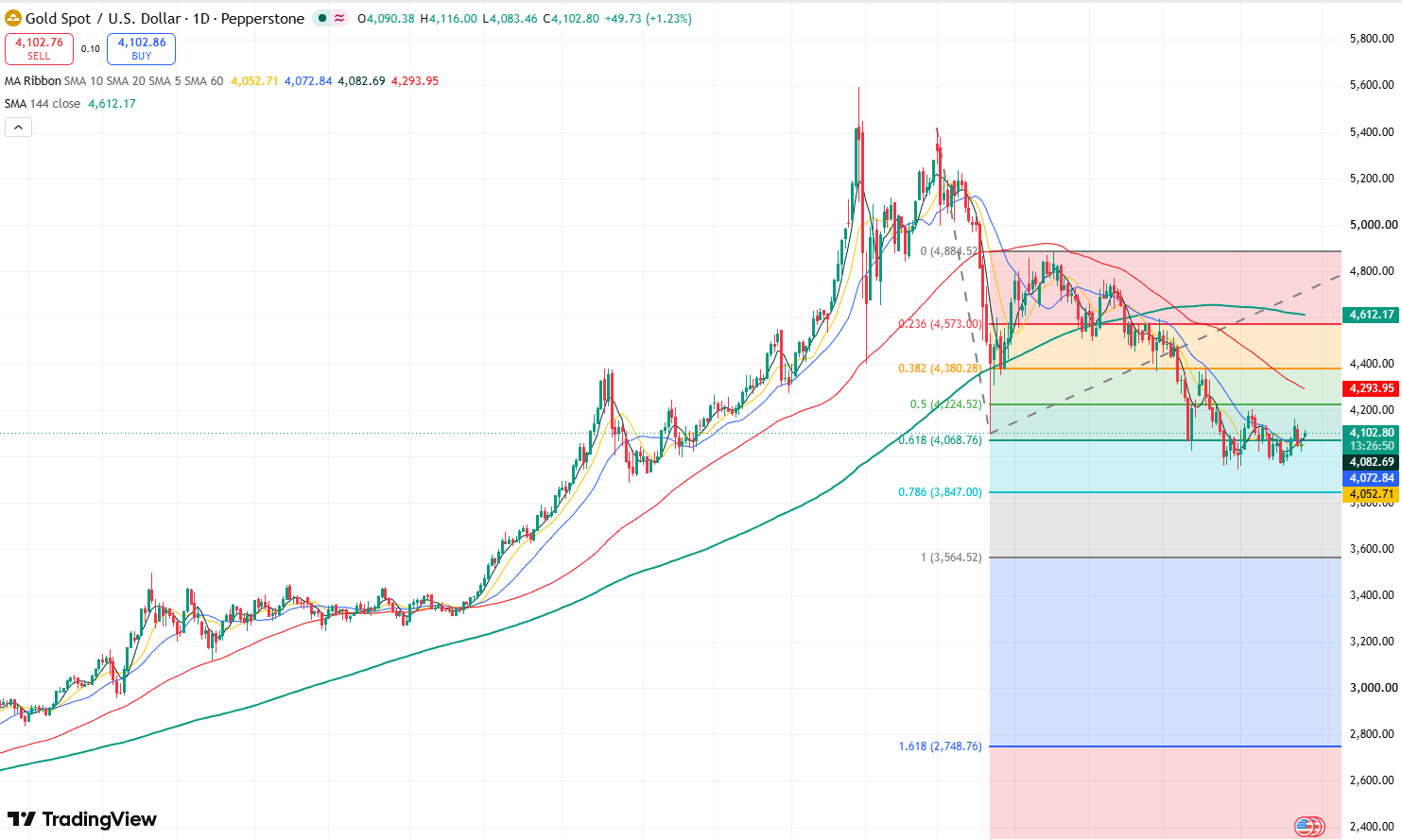
Gold price daily chart, Source: TradingView
Looking at gold’s daily chart, today’s gold price opened nearly $40 higher, supported by positive news of easing US-Iran tensions, indicating that market bullish sentiment has been boosted by the news, which may support a continued short-term rise in gold prices. Meanwhile, the moving average system shows that the gold price trend was previously suppressed by the 20-day moving average, but the recent trend has successfully broken through the resistance of the 20-day moving average, demonstrating that the market’s bullish momentum has been further strengthened.
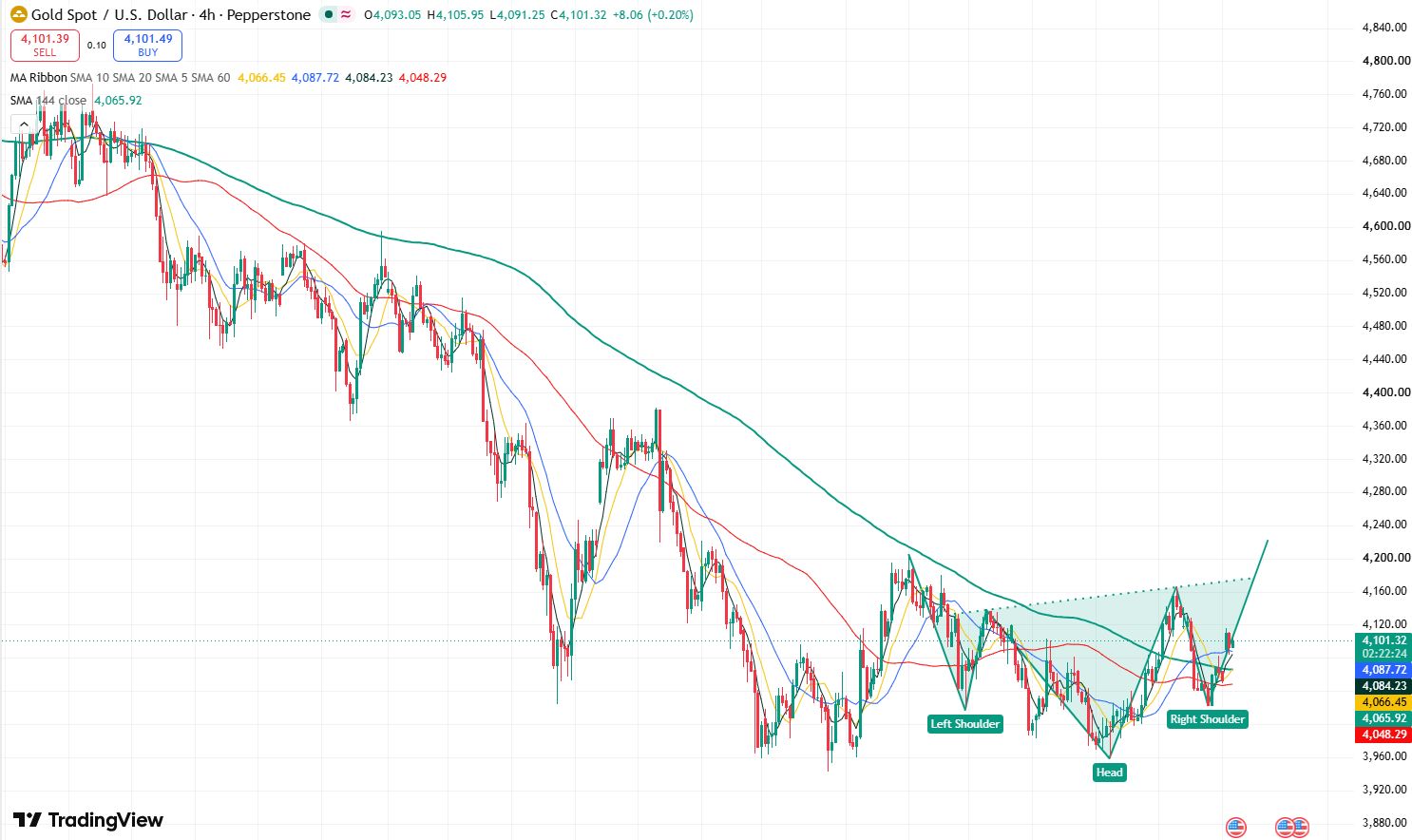
Gold price 4-hour chart, Source: TradingView
Looking at gold’s 4-hour chart, gold’s candlestick structure has formed an inverse head and shoulders pattern, which means that gold’s bullish momentum has been significantly enhanced, and the gold price will continue to rise in the short term. The primary upside target will be to break above the $4,200 resistance level, with the next hurdle at the $4,300 mark. If the gold price can break through $4,300, it will further test the key resistance level at $4,380.
On the downside, the primary support level for gold to watch is around $4,084. If this level is breached, the gold price may move downward to fill today’s gap, potentially falling back to around $4,050. If it continues to fall, it may further test the support level near $4,020.
This content was translated using AI and reviewed for clarity. It is for informational purposes only.
The US dollar has gapped lower to kick off the trading session on Monday against the Japanese yen, but turned around to show signs of strength again as despite the fact that rates are falling in America; the interest rate differential between these two currencies is still very wide, so that boosts the carry trade. We’ve broken above massive swing highs going back to the 1980s, so it’s difficult to imagine this market’s going to turn around on a dime. And ultimately, we’re in a nice 45-degree bullish trend, so by all accounts, the chart looks just as bullish now as it did a few days ago.
If you’d like to know more about how to trade forex, please visit our educational area.
Natural gas price remains surrounded by strong factors that are represented by stability below the resistance of $3.350 besides forming extra barrier at $3.200 level, to confirm its surrender to the previously suggested bearish scenario.
The fluctuation near $2.880 level is caused by the attempt of gathering the required negative momentum to confirm breaking the barrier at $2.820, to ease the mission of resuming the bearish trend by reaching $2.620, where breaking it will confirm its move to a new negative station, to expect forming extra target at $2.620 support.
The expected trading range for today is between $2.620 and $3.100
Trend forecast: Bearish
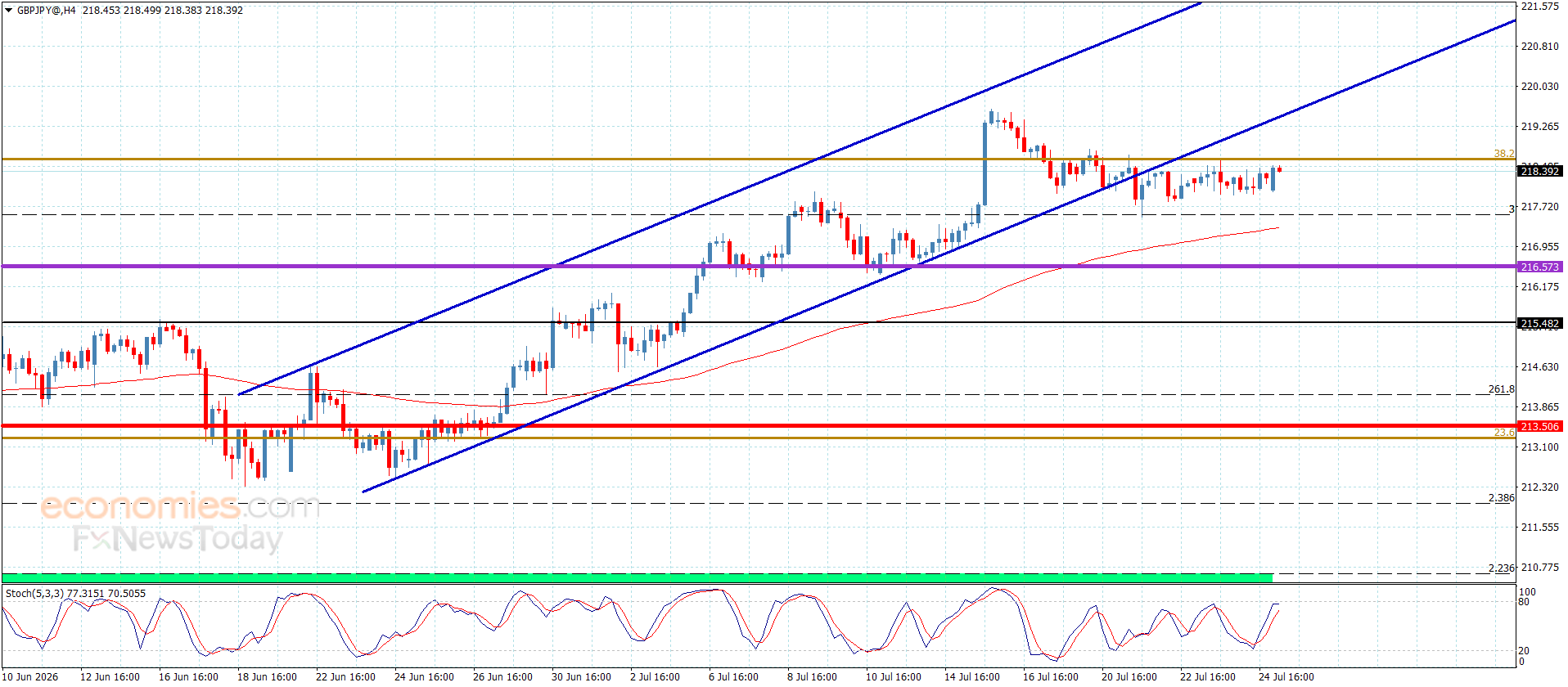
The GBPJPY pair continued forming sideways trading, to notice its continued fluctuations near 218.40 level without recording any new positive target due to the contradiction between its stability below 218.65 barriers against the attempt of providing positive momentum by the main indicators, specifically by stochastic reach to 80 level.
In general, the main scenario remains bullish, depending on the stability of the initial main support at 216.55, which makes us wait for breaching the current barrier, to begin targeting the positive stations and expect reaching 219.40 initially, putting a pressure on the psychological barrier at 220.00.
The expected trading range for today is between 217.85 and 219.40
Trend forecast: Bullish
Copper price is affected by some negative factors, starting by the stability below $6.5100 barrier, besides the continuation of providing negative momentum by stochastic, forcing it to delay the bullish attempts and providing negative fluctuation by holding near $62700.
The continuation of the negative pressure might push the price to retest the initial support at $6.1000, where breaking it will confirm the dominance of the bearish corrective bias in the upcoming trading, to expect forming initial corrective target at $5.9200 level, while breaching the barrier and holding above it will reinforce the chances of recording new gains by its rally towards $6.5900 initially.
The expected trading range for today is between $6.1000 and $6.4100
Trend forecast: Bearish
The GBPJPY pair continued forming sideways trading, to notice its continued fluctuations near 218.40 level without recording any new positive target due to the contradiction between its stability below 218.65 barriers against the attempt of providing positive momentum by the main indicators, specifically by stochastic reach to 80 level.
In general, the main scenario remains bullish, depending on the stability of the initial main support at 216.55, which makes us wait for breaching the current barrier, to begin targeting the positive stations and expect reaching 219.40 initially, putting a pressure on the psychological barrier at 220.00.
The expected trading range for today is between 217.85 and 219.40
Trend forecast: Bullish
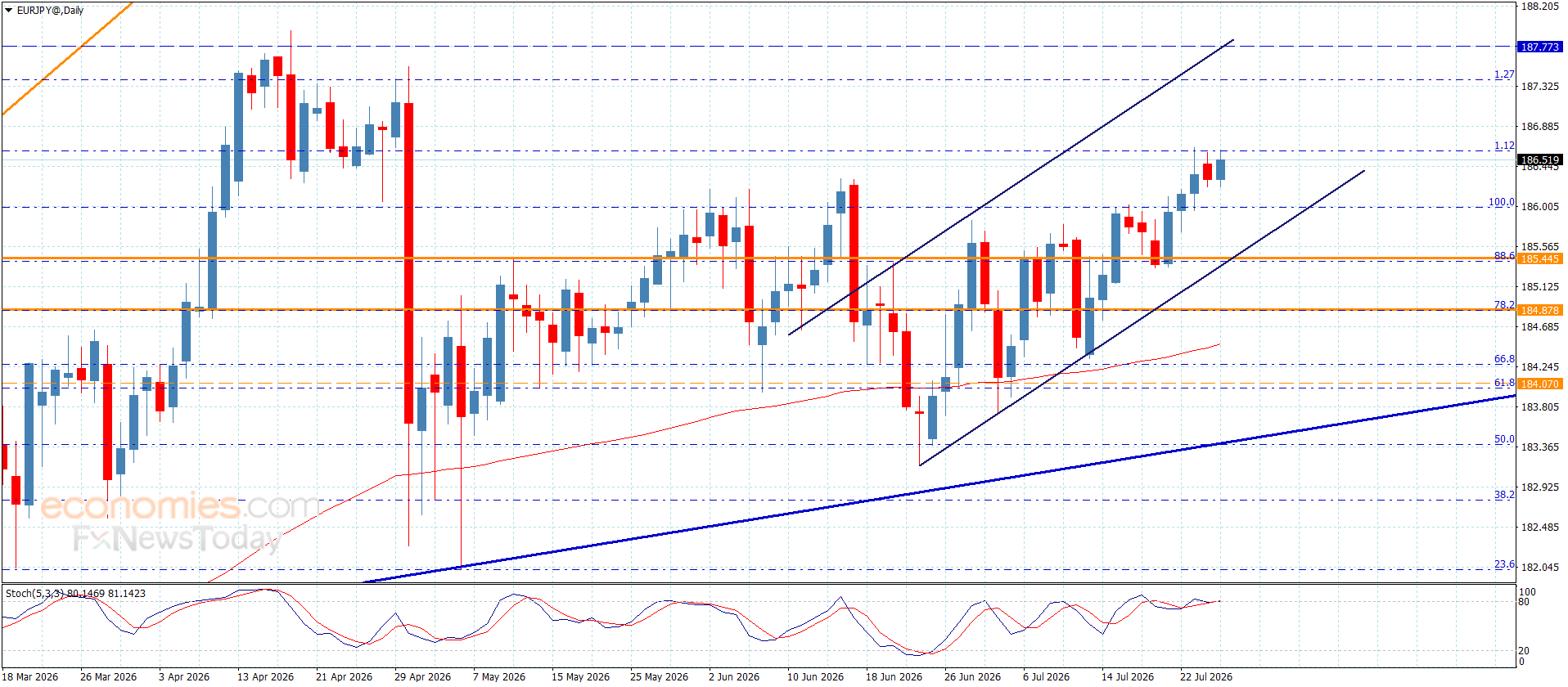
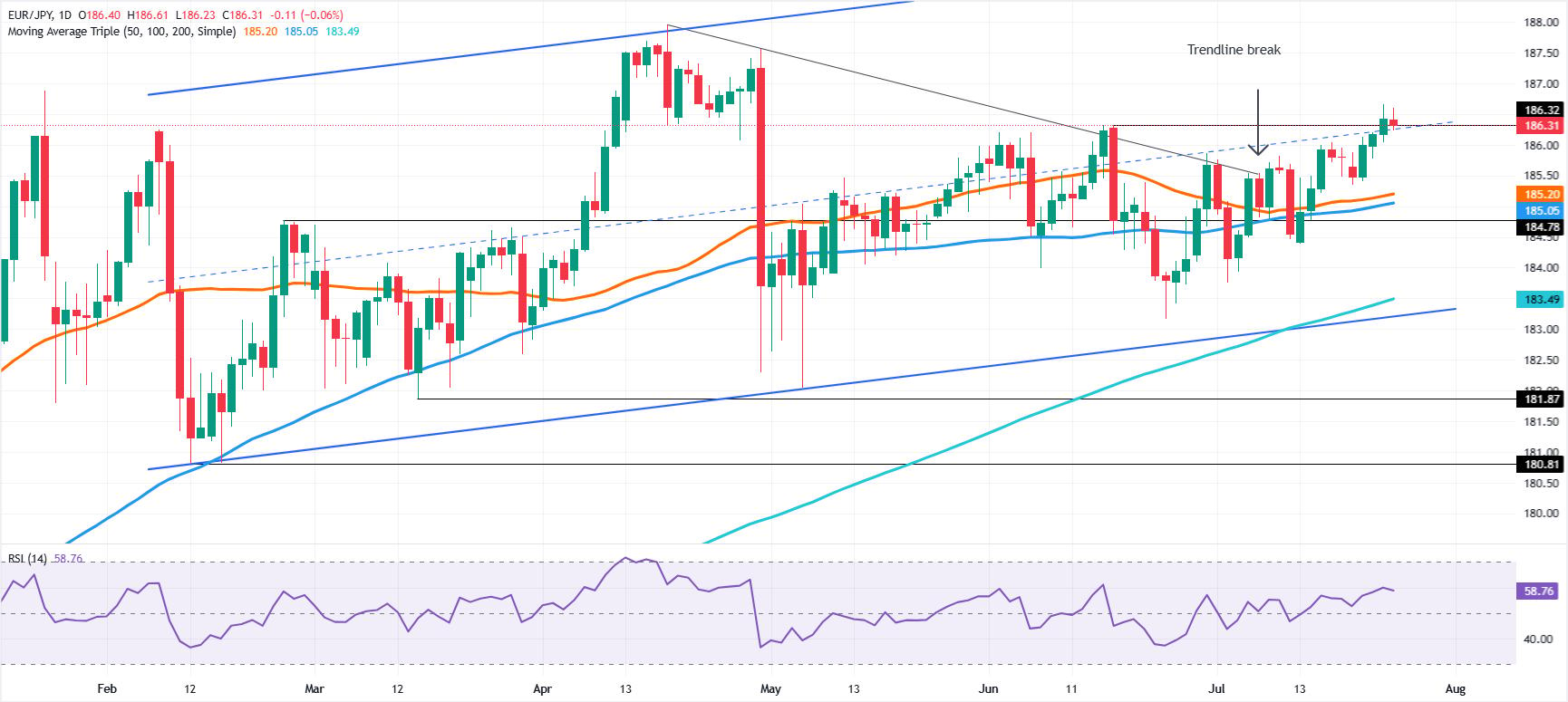
The EUR/JPY consolidates around 186.00, edges down by 0.06% amid a souring of risk appetite amid the escalation of the US-Iran war, and strengthens safe-haven assets like the Japanese Yen.
The EUR/JPY trades sideways, after reaching the year-to-date (YTD) high of 187.95. The cross-pair dipped towards the 183.00 area following the BoJ’s last intervention, and since then, buyers have reclaimed key resistance levels to reach the 186.00 mark.
TMGM Analysis: Financial Market News, Economic Calendar & Market Insights
At the time of writing, the EUR/JPY remains capped within the 186.00-187.00 range, amid fears that Japanese authorities could intervene in the foreign exchange markets. But bulls seem to be gaining momentum, as indicated by the Relative Strength Index (RSI), which is in bullish territory.
Buyers need to clear 187.00 to challenge the YTD high at 187.95. Once those levels are taken out, the next resistance would be the 189.00 mark ahead of the 190.00 psychological level.
On the other hand, if sellers push the EUR/JPY below the July 20 low of 185.35, it exacerbates a move towards the 50-day Simple Moving Average (SMA) at 185.20, followed by the 100-day SMA at 185.05. Downwards lies the 200-day SMA at 183.29.
The table below shows the percentage change of Japanese Yen (JPY) against listed major currencies today. Japanese Yen was the strongest against the Swiss Franc.
| USD | EUR | GBP | JPY | CAD | AUD | NZD | CHF | |
|---|---|---|---|---|---|---|---|---|
| USD | 0.02% | -0.04% | 0.00% | 0.07% | -0.17% | -0.25% | 0.19% | |
| EUR | -0.02% | -0.08% | -0.06% | 0.00% | -0.25% | -0.34% | 0.12% | |
| GBP | 0.04% | 0.08% | 0.04% | 0.11% | -0.16% | -0.22% | 0.22% | |
| JPY | 0.00% | 0.06% | -0.04% | 0.08% | -0.19% | -0.27% | 0.17% | |
| CAD | -0.07% | -0.01% | -0.11% | -0.08% | -0.27% | -0.35% | 0.10% | |
| AUD | 0.17% | 0.25% | 0.16% | 0.19% | 0.27% | -0.07% | 0.35% | |
| NZD | 0.25% | 0.34% | 0.22% | 0.27% | 0.35% | 0.07% | 0.43% | |
| CHF | -0.19% | -0.12% | -0.22% | -0.17% | -0.10% | -0.35% | -0.43% |
The heat map shows percentage changes of major currencies against each other. The base currency is picked from the left column, while the quote currency is picked from the top row. For example, if you pick the Japanese Yen from the left column and move along the horizontal line to the US Dollar, the percentage change displayed in the box will represent JPY (base)/USD (quote).
The bank forecasts the Pound-to-Dollar exchange rate at 1.32 by September and 1.31 by the end of 2026, while EUR/GBP is expected to rise to 0.86.
That EUR/GBP forecast equates to a Pound-to-Euro rate of approximately 1.1630, compared with current levels around 1.1702.
GBP/USD was trading near 1.3334 at the latest update, having recovered modestly from July’s low at 1.3221 but remaining more than two cents below the monthly high at 1.3558.
The Pound-to-Euro rate has also retreated from July’s 1.1827 peak, although it remains approximately 0.8% higher for the month and 2.1% stronger since the beginning of the year.
Crédit Agricole says investors have concentrated too heavily on Sterling’s attractive yield and have paid insufficient attention to the fiscal risks embedded in elevated UK government bond yields.
Pound to Dollar (GBP/USD): 1.333972 (+0.11%)
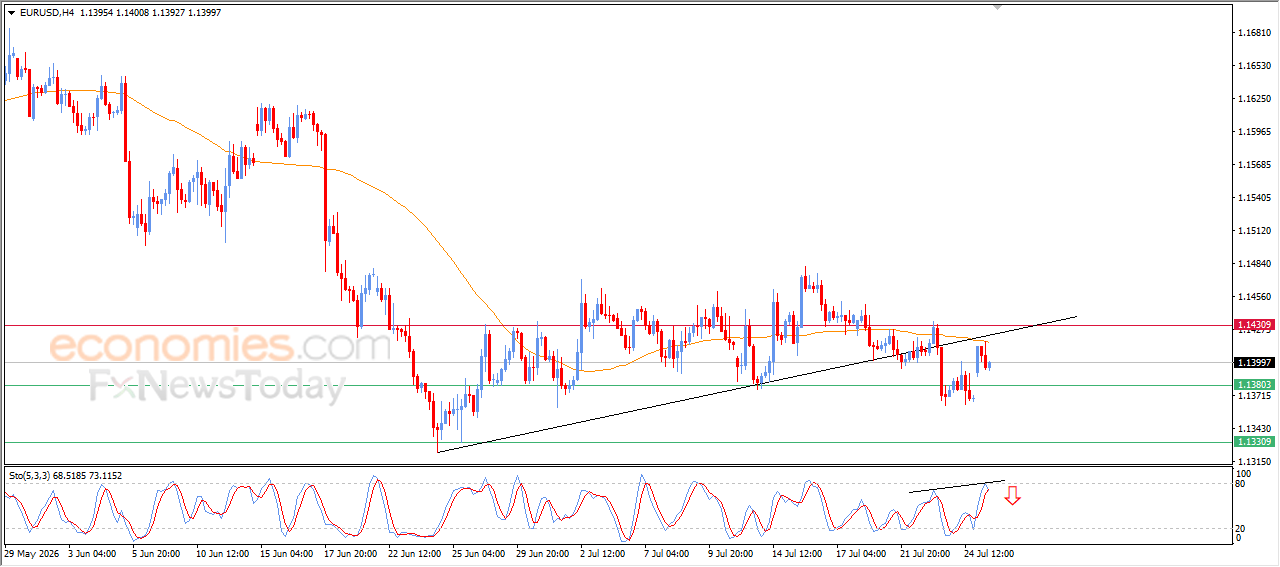
Euro to Dollar (EUR/USD): 1.139589 (+0.22%)

“For some time now, FX investors have focused almost exclusively on one feature of the GBP – its superior carry appeal which, in turn, reflected the fact that gilt yields remain the highest in G10,” says Valentin Marinov, Head of G10 FX Research and Strategy at Crédit Agricole.
“This has been a very imbalanced view.”
The bank argues that high gilt yields do not simply reflect expectations for Bank of England policy.
They also contain compensation for UK sovereign credit risk, which Crédit Agricole expects to become increasingly important during the opening months of Prime Minister Andy Burnham’s government.
The concern is that proposed cost-of-living measures and other policy commitments could consume the government’s already limited fiscal headroom.
Crédit Agricole identifies removing VAT from energy bills, raising the personal income-tax allowance and increasing military expenditure as examples of policies that could add to the pressure.
The potential use of new revenue-raising measures, including a higher top rate of income tax or a land tax, could create further uncertainty if they weaken business confidence and damage the economic outlook.
“Attempts by the Burnham government to use ‘fiscal flexibility’ to push for off-balance investment projects with limited to no positive growth impact in the near term could rankle gilt vigilantes,” the bank says.
“To the extent that UK sovereign credit risks rise as a result, the GBP should relinquish its recent gains.”
The Bank of England meeting will provide the next major test for the Pound.
Crédit Agricole and the market both expect policymakers to leave Bank Rate unchanged at 3.75%, but the bank sees a significant risk that the accompanying guidance disappoints investors expecting further tightening.
UK rate markets were pricing around 65 basis points of BoE increases when the report was produced.
Crédit Agricole describes that outlook as “very hawkish”, particularly given the challenging UK growth backdrop.
“We further think that the MPC could remain non-committal with respect to future hikes, notwithstanding the latest increase in global energy prices,” says Marinov.
“This could deal a blow to the current market rate expectations and thus to the GBP’s relative rate appeal.”
The bank’s own interest-rate forecasts show Bank Rate remaining at 3.75% through the middle of 2027, before falling to 3.50% in September and 3.25% by the end of next year.
That is materially less hawkish than current market pricing and helps explain the bank’s cautious near-term Sterling view.
A reduction in expected BoE tightening would be particularly important because the Pound’s recent resilience has depended heavily on the UK’s yield advantage.
Should markets conclude that the central bank is unwilling to deliver the increases currently priced, Sterling would lose an important pillar of support at the same time that investors are scrutinising the government’s fiscal plans.

Crédit Agricole forecasts GBP/USD at 1.32 in September before a further decline to 1.31 in December.
The pair is expected to recover gradually thereafter, reaching 1.32 in March 2027, 1.34 in June, 1.37 in September and 1.39 by the end of next year.
The forecast therefore separates a bearish near-term phase from a more constructive longer-term outlook.
From the latest rate near 1.3334, the September forecast implies a decline of roughly 1%, while the December target would represent a fall of approximately 1.8%.
The immediate downside reference is July’s low at 1.3221.
A move through that level would bring Crédit Agricole’s 1.32 September target into view and strengthen the case for a deeper decline towards 1.31.
On the upside, the recent closes show resistance emerging around 1.3380-1.3430, while the mid-July highs around 1.3540-1.3560 represent the more substantial barrier.
GBP/USD would need to recover through that upper zone to show that the correction from July’s peak has run its course.
The Dollar view is not entirely straightforward.
Crédit Agricole believes current expectations for two additional Federal Reserve rate increases are too hawkish and says softer guidance or data could offer the Dollar limited support in the near term.
The bank also argues that changes in the way foreign investors finance the US current-account deficit may be weakening the Dollar’s traditional safe-haven response during periods of market stress.
Even so, it retains an above-consensus view on the Dollar and describes its GBP/USD outlook as cautious.
The US economy is expected to outperform many European and Asian economies, while persistent inflation and the continued strength of the artificial-intelligence investment cycle should maintain demand for US assets.

Crédit Agricole forecasts EUR/GBP at 0.86 in September, December and March 2027.
Converted into GBP/EUR terms, that implies a rate near 1.1630.
The bank then expects EUR/GBP to ease to 0.85 by June 2027 and 0.84 by the end of next year, equivalent to GBP/EUR recovering towards approximately 1.1765 and 1.1905 respectively.
Although the near-term forecast favours the Euro, Crédit Agricole believes some of the negative UK outlook is already reflected in Sterling’s valuation against the single currency.
“We believe, however, that some negatives are already priced into the GBP especially versus the EUR, given that the Eurozone would have to deal with the consequences from the negative oil supply shock in the wake of the Iran war as well.”
The bank also notes that Sterling already looks oversold and that global investors appear underinvested in UK assets.
Those factors may limit the extent of losses against the Euro even as political and fiscal risks remain elevated.
The current Pound-to-Euro rate near 1.1702 is already much closer to Crédit Agricole’s implied 1.1630 target than July’s high at 1.1827.
A break below 1.1690 would expose the 1.1600-1.1630 area, while a recovery above 1.1760 would be needed to improve the near-term picture.
Crédit Agricole’s positioning data provide one counterweight to its bearish forecast.
The Pound attracted buying interest during the latest reporting week, led primarily by futures-market flows.
Banks, hedge funds and real-money investors were buyers, while corporate accounts sold Sterling.
Despite those inflows, the bank’s broader positioning measure still shows the Pound among the more lightly held G10 currencies and below its medium-term average.
This is consistent with the view that Sterling is already oversold and global investors remain underexposed to UK assets.
Light positioning could limit the speed of further declines or produce a sharper rebound should the BoE sound unexpectedly hawkish or the government provide credible fiscal reassurance.
It does not, however, remove the underlying risk identified by Crédit Agricole: that high gilt yields are increasingly a warning about sovereign risk rather than an uncomplicated source of support for the currency.
Crédit Agricole maintains a bearish view on Sterling against both the Dollar and the Euro from current levels.
Its GBP/USD forecasts point to 1.32 in September and 1.31 in December, while EUR/GBP at 0.86 implies GBP/EUR near 1.1630.
The bank expects the BoE to leave rates unchanged and remain non-committal about further increases, potentially challenging the approximately 65 basis points of tightening priced by investors.
At the same time, Prime Minister Burnham’s fiscal programme could force markets to reassess whether the UK’s high bond yields represent attractive carry or growing sovereign risk.
Some bad news is already reflected in the Pound, particularly against the Euro, and light investor positioning should provide a degree of protection.
Nevertheless, the near-term balance of risk remains negative while GBP/USD trades below 1.3430 and GBP/EUR remains unable to regain the 1.1760 area.
At Friday’s market close, the Euro to Dollar (EUR/USD) exchange rate was quoted at $1.1371, down 0.05% on the day and from $1.1438 the previous Friday.
EUR/USD fell in four of the five sessions and finished just above July’s low at 1.1362, leaving the Euro on the defensive heading into the new week.
Lloyds Bank says the latest rise in energy and wider commodity prices has revived inflation concerns, but the policy consequences are likely to be more challenging for the United States than the Eurozone.
“The Fed faces a more challenging mix than slow Europe, the USD ought to benefit from that,” says Nicholas Kennedy, FX strategist at Lloyds Bank.
The US economy has absorbed the latest energy shock with relatively little damage to domestic demand.
Lloyds points to resilient household consumption, a steadier labour market, rising equity-market wealth and the continuing AI investment boom. Tariffs, tight inventories and wider supply constraints are adding to the underlying price pressure.
Europe faces a less supportive combination.
The European Central Bank may still raise interest rates further, but higher input costs and tighter monetary policy are also likely to weigh more heavily on the Eurozone’s already-fragile demand and confidence.
“One soft month for inflation data does not alter those underlying influences,” Kennedy says.
At the time of Lloyds’ 23 July report, markets had almost two Federal Reserve rate increases priced by the end of 2026.
“While the market now has almost two Fed hikes priced in by year-end, there is not much after that,” the bank says, noting that only another 13 basis points of tightening was priced through to the middle of 2027.
Lloyds believes that may prove too cautious if strong demand continues to collide with limited supply, accommodative financial conditions and rising business costs.
“If ECB assumptions are too hawkish, we’d still see the Fed curve as too low,” Kennedy adds.
The implication for EUR/USD is that US-Eurozone rate differentials could move back in the Dollar’s favour even if the ECB retains a hawkish policy stance.
With Eurozone growth fragile and investors reluctant to revive the broader anti-Dollar trade, Lloyds says the Dollar’s carry advantage is beginning to reassert itself.
“A further drift down towards EUR/USD 1.1214, if not a bit below… remains our expectation over the summer,” the bank concludes.

The short-term chart also points to a continued downside bias.
EUR/USD ended Friday below the session VWAP at approximately 1.1381 and the 200-period moving average near 1.1392.
The 14-period RSI stood at 44.3, below the neutral 50 level but not yet signalling oversold conditions.
Initial support is located at July’s 1.1362 low.
A sustained break below that area would strengthen the case for another move lower and keep Lloyds’ 1.1214 target in view. That level is approximately 1.4% below Friday’s close.
Lloyds identifies 1.1065 as the next technical support should EUR/USD fall below the 1.12 region.
On the upside, the pair would need to recover the 1.1381–1.1392 area to ease immediate selling pressure.
Until then, the approaching Federal Reserve meeting and any further evidence of persistent US inflation will remain important tests of the bank’s bearish summer forecast.