The main category of Forex News.
You can use the search box below to find what you need.
[wd_asp id=1]
The main category of Forex News.
You can use the search box below to find what you need.
[wd_asp id=1]
GBP/USD traded modestly up as fresh UK labor data showed easing strain in the jobs market. The ILO unemployment rate rose to 5.1% in the three months to October, up from 5.0% previously. The reading met expectations but confirmed a gradual loss of momentum in employment conditions.
–Are you interested in learning more about copy trading platforms? Check our detailed guide-
Meanwhile, claimant counts increased by 20,100 in November, reversing October’s revised decline. Employment change remained negative, with payrolls down by 17,000 in October. While the pace of job losses slowed, the trend still points to weaker labor demand.
Wage growth stayed elevated but showed early signs of cooling. Average earnings excluding bonuses rose 4.6% YoY, slightly below the prior reading. Earnings including bonuses increased 4.7%, beating forecasts but still lower than earlier levels. Pay growth remains well above inflation, yet the direction no longer supports further policy tightening.
Hence, these figures reinforce expectations that the Bank of England will cut rates at its upcoming meeting. Markets now view a policy move as likely, limiting upside pressure on sterling. Traders remain cautious ahead of the decision, especially with recent data failing to justify a hawkish stance.
Attention is now shifting to incoming UK PMI data, which may offer clues on business activity and hiring trends. Still, central bank guidance remains the dominant driver for the pound in the near term.
On the US side, the dollar continues to trade under pressure due to uncertainty around Fed policy. Markets expect deeper rate cuts in 2026 than the Fed has signaled. This gap leaves the dollar vulnerable to sudden repricing.
The upcoming US Non-Farm Payrolls report will play a key role. It will include two months of data and comes after disruptions from a government shutdown. Forecasts point to modest job growth in November, though risks lean to the downside following weak private payroll figures.
Investors will focus less on the unemployment rate and more on payroll gains and wage growth. Average hourly earnings remain the clearest signal for inflation risk and future Fed decisions.

The GBP/USD chart shows a modest rebound from the 1.3350 demand zone, coinciding with the 50-period MA, surging above the 20-period MA near 1.3380. Now the pair is eying the resistance at recent swing high near 1.3440 as the RSI climbs well above the 50.0 level.
–Are you interested in learning more about scalping forex brokers? Check our detailed guide-
On the flip side, any dip below the 1.3350 confluence could alter the pound’s bullish outlook. The pair could dip further down to 1.3300 round number ahead of 100-period MA support at 1.3280.
Looking to trade forex now? Invest at eToro!
68% of retail investor accounts lose money when trading CFDs with this provider. You should consider whether you can afford to take the high risk of losing your money.
Platinum price continued forming strong bullish waves, taking advantage of its stability within the main bullish channel’s levels, besides forming extra support at $1740.00 level, recording new historical gains by hitting 1828.00 level, to record the previously suggested targets.
Note that the continuation of providing positive momentum by the main indicators will motivate the price to resume the rise and record new gains by its rally towards $1847.00 and $1865.00, while reaching below $1740.00 will increase the chances of activating the profit- taking path, to expect reaching $1720.00 and $1675.00.
The expected trading range for today is between $1750.00 and $ 1847.00
Trend forecast: Bullish
EUR/USD struggled to gather directional momentum on Monday and closed the day with marginal gains. The pair stays quiet early Tuesday and continues to move sideways at around 1.1750.
The table below shows the percentage change of Euro (EUR) against listed major currencies this month. Euro was the strongest against the US Dollar.
| USD | EUR | GBP | JPY | CAD | AUD | NZD | CHF | |
|---|---|---|---|---|---|---|---|---|
| USD | -1.28% | -0.89% | -0.81% | -1.47% | -1.24% | -0.76% | -0.85% | |
| EUR | 1.28% | 0.40% | 0.49% | -0.19% | 0.05% | 0.53% | 0.44% | |
| GBP | 0.89% | -0.40% | 0.35% | -0.58% | -0.35% | 0.13% | 0.04% | |
| JPY | 0.81% | -0.49% | -0.35% | -0.68% | -0.47% | 0.02% | -0.07% | |
| CAD | 1.47% | 0.19% | 0.58% | 0.68% | 0.18% | 0.72% | 0.63% | |
| AUD | 1.24% | -0.05% | 0.35% | 0.47% | -0.18% | 0.48% | 0.39% | |
| NZD | 0.76% | -0.53% | -0.13% | -0.02% | -0.72% | -0.48% | -0.09% | |
| CHF | 0.85% | -0.44% | -0.04% | 0.07% | -0.63% | -0.39% | 0.09% |
The heat map shows percentage changes of major currencies against each other. The base currency is picked from the left column, while the quote currency is picked from the top row. For example, if you pick the Euro from the left column and move along the horizontal line to the US Dollar, the percentage change displayed in the box will represent EUR (base)/USD (quote).
Although the US Dollar (USD) had a hard time gathering strength at the beginning of the week, the negative shift seen in risk mood helped it stay resilient against its peers. Early Tuesday, US stock index futures trade deep in negative territory, suggesting that markets remain risk-averse.
In the second half of the day, the US Bureau of Labor Statistics (BLS) will publish Nonfarm Payrolls (NFP) data for October and November. Markets expect the NFP to rise by 40,000 in November and see the Unemployment Rate staying unchanged at 4.4%.
In case the November NFP print offers a significant upside surprise, with a reading at or above 100,000, investors could see that as a factor that could delay Federal Reserve (Fed) rate cuts next year. In this scenario, the USD is likely to stage a decisive rebound with the immediate reaction and cause EUR/USD to turn south. Conversely, a disappointing reading could feed into a January Fed rate cut expectations and open the door for another leg higher in EUR/USD.
According to the CME FedWatch Tool, markets are currently pricing in about a 25% probability of a 25 basis points reduction in the policy rate in January.
The 20-period Simple Moving Average (SMA) climbs above the 50- and 200-period SMAs, with all three rising. Price holds above these measures, keeping the near-term bias upward. The 20 SMA at 1.1737 offers nearby dynamic support. The mid-point of the ascending regression channel also reinforces this support. The Relative Strength Index (RSI) stands at 62.5, bullish but not overbought, with momentum easing slightly from earlier highs.
On the upside, the upper limit of the ascending channel aligns as the first resistance level at 1.1790, followed by 1.1840 (static level). Looking south, the lower limit of the ascending channel and the 50-period SMA form a key support area at 1.1690-1.1680.
The rising trend line from 1.1500 underpins the bullish bias, offering the next support level at 1.1670. Sustained bids above 1.1740 would keep the topside in play toward 1.1840. A drop beneath 1.1690-1.1670 region could open the door for an extended decline toward 1.1620 (static level).
(The technical analysis of this story was written with the help of an AI tool)
Nonfarm Payrolls (NFP) are part of the US Bureau of Labor Statistics monthly jobs report. The Nonfarm Payrolls component specifically measures the change in the number of people employed in the US during the previous month, excluding the farming industry.
The Nonfarm Payrolls figure can influence the decisions of the Federal Reserve by providing a measure of how successfully the Fed is meeting its mandate of fostering full employment and 2% inflation.
A relatively high NFP figure means more people are in employment, earning more money and therefore probably spending more. A relatively low Nonfarm Payrolls’ result, on the either hand, could mean people are struggling to find work.
The Fed will typically raise interest rates to combat high inflation triggered by low unemployment, and lower them to stimulate a stagnant labor market.
Nonfarm Payrolls generally have a positive correlation with the US Dollar. This means when payrolls’ figures come out higher-than-expected the USD tends to rally and vice versa when they are lower.
NFPs influence the US Dollar by virtue of their impact on inflation, monetary policy expectations and interest rates. A higher NFP usually means the Federal Reserve will be more tight in its monetary policy, supporting the USD.
Nonfarm Payrolls are generally negatively-correlated with the price of Gold. This means a higher-than-expected payrolls’ figure will have a depressing effect on the Gold price and vice versa.
Higher NFP generally has a positive effect on the value of the USD, and like most major commodities Gold is priced in US Dollars. If the USD gains in value, therefore, it requires less Dollars to buy an ounce of Gold.
Also, higher interest rates (typically helped higher NFPs) also lessen the attractiveness of Gold as an investment compared to staying in cash, where the money will at least earn interest.
Nonfarm Payrolls is only one component within a bigger jobs report and it can be overshadowed by the other components.
At times, when NFP come out higher-than-forecast, but the Average Weekly Earnings is lower than expected, the market has ignored the potentially inflationary effect of the headline result and interpreted the fall in earnings as deflationary.
The Participation Rate and the Average Weekly Hours components can also influence the market reaction, but only in seldom events like the “Great Resignation” or the Global Financial Crisis.
Gold (XAU/USD) attracts some sellers during the Asian session on Tuesday and extends the overnight pullback from the $4,350 region, or the vicinity of the highest level since October 21, touched last week. The intraday downtick comes amid optimism over the Russia-Ukraine peace deal, which is seen undermining demand for the traditional safe-haven commodity. U.S. President Donald Trump said on Monday that an agreement to end the four-year-long war is closer than ever. Apart from this, some repositioning trade ahead of the delayed release of the US Nonfarm Payrolls (NFP) report for October later today, turns out to be another factor exerting pressure on the bullion.
Given that signs of a weakening US labor market are becoming increasingly evident, the crucial jobs data, along with the US consumer inflation figures on Thursday, will influence the Federal Reserve’s (Fed) policy path in 2026. This, in turn, will play a key role in driving the US Dollar (USD) demand in the near term and determining the next leg of a directional move for the non-yielding Gold. In the meantime, dovish Fed expectations keep the USD depressed near its lowest level since October 6, touched on Monday. According to CME Group’s FedWatch tool, traders are pricing in a nearly 77% probability of a 25-basis-point rate cut by the Fed in January and two rate reductions in 2026.
Furthermore, investors seem convinced that the new Trump-aligned Fed chair will be an uber-dovish and slash interest rates regardless of the economic fundamentals. This has been as a key factor behind the recent USD slump and might continue to act as a tailwind for the Gold. Meanwhile, the defensive mood keeps Asian equity markets under pressure amid valuation concerns and fears of the AI bubble burst. This might contribute to limiting the downside for the XAU/USD, suggesting that any further slide could be seen as a buying opportunity. Hence, it will be prudent to wait for strong follow-through selling before confirming that the bullion’s multi-week-old uptrend has run out of steam.
The overnight failure near the $4,350 area constitutes the formation of a bearish double-top pattern on hourly charts. Moreover, a break and acceptance below the $4,300 mark backs the case for further losses. However, mixed oscillators on the 4-hour chart warrant some caution for aggressive bearish traders. This, in turn, suggests that the Gold price is more likely to find decent support near the $4,260-$4,255 horizontal resistance breakpoint.
The said area could act as a strong base for the XAU/USD pair, which, if broken decisively, might shift the near-term bias in favor of bearish traders. The subsequent decline might then drag the Gold price to the $4,230-4,228 intermediate support en route to the $4,200 round figure and the $4,178-4,177 support.
On the flip side, momentum back above the $4,300-$4,310 region might continue to face a strong hurdle near the $4,350-4,355 zone. Some follow-through buying, however, could allow the Gold price to aim towards challenging the all-time peak, around the $4,380 region, touched in October. This is followed by the $4,400 round figure, which, if cleared, would set the stage for an extension of the recent well-established uptrend.
Copper prices are back in focus heading into the final stretch of 2025, with the “red metal” hovering near record territory after a sharp run-up and an equally sharp bout of volatility late last week.
As of the latest mid‑afternoon pricing available, benchmark COMEX copper futures (most‑active contract) traded around $5.4185 per pound, up about 1.1% on the day, with the day’s range roughly $5.3433–$5.5192, according to Investing.com’s derived real-time feed. [1]
In London, copper is still being priced like a market wrestling with two competing stories: (1) tightness and inventory distortions linked to U.S. stockpiling and (2) macro and China-demand anxiety that can knock prices around quickly. On Monday, Reuters reported LME three‑month copper up about 1.4% to $11,678 per metric ton by late afternoon in Europe. [2]
Below is what’s moving copper today, the biggest headlines from Dec. 15, 2025, and where major forecasts are landing for 2026.
Copper is being quoted differently depending on the benchmark and venue, but the message is consistent: prices are elevated, and the market is moving in big, fast increments.
The market is also still digesting Friday’s record-setting spike. Reuters noted copper hit a record high of $11,952/mt on Friday before volatility returned. [6]
Copper is priced in dollars globally, so a softer greenback can mechanically make dollar‑denominated metals more attractive for non‑U.S. buyers. Reuters specifically pointed to a weaker dollar supporting copper on Monday even as China concerns lingered. [7]
One of the more “market microstructure” drivers today is positioning. Reuters described short (bearish) positions being cut or rolled ahead of midweek settlement. [8]
That matters because when positioning becomes crowded, price can jump quickly on relatively ordinary headlines.
Copper can rally hard on supply tightness, but it’s still tethered to end-demand expectations—especially from China.
Reuters highlighted that China’s factory output growth slowed to a 15‑month low in November, while new home prices extended a decline, underscoring persistent property‑sector pressure. [9]
That combination—slower industrial momentum and fragile real estate—keeps the market wary of extrapolating high prices into a straight line.
If there’s a single structural theme running through today’s copper market, it’s the inventory and flow story—particularly the idea that metal is being “pulled” into U.S. warehouses.
Reuters reported that about 39% of 165,875 tons of copper in LME‑registered warehouses was marked for delivery out(i.e., earmarked to leave), a statistic traders watch because it can signal tightening availability. [10]
At the same time, Reuters said daily inflows into COMEX copper stocks continued, with inventories already at record highs, driven by higher U.S. prices and arbitrage incentives. [11]
This is why copper can feel “tight” even when macro data (especially from China) looks soft: where the metal sits—and where it’s moving—can dominate the price action.
A major headline for Dec. 15 is Goldman Sachs raising its 2026 copper price forecast to $11,400/mt from $10,650/mt, according to a Reuters item carried by TradingView. [12]
The reasoning is explicitly linked to trade policy probabilities and affordability politics: Goldman cited reduced odds of a refined copper tariff being implemented in the first half of 2026—not “no tariff risk,” but a shifting timeline. [13]
Goldman also put numbers around tariff scenarios, saying there is a 55% chance of a 15% tariff on copper importsbeing announced in the first half of 2026, with implementation slated for 2027 and the possibility of higher rates later. [14]
Just as importantly, that same Reuters/TradingView update frames the tariff narrative as a global pricing engine: the prospect of future tariffs could keep U.S. copper trading at a premium, encourage stockpiling, and tighten supply outside the U.S. [15]
Another widely circulated Dec. 15 read-through is Citi’s more aggressive upside case. AASTOCKS reported Citi’s view that copper could rise to $13,000/mt early next year and potentially reach $15,000/mt in Q2 2026, supported by limited mine supply and U.S. stockpiling dynamics. [16]
AASTOCKS also emphasizes the thematic demand story—electrification, grid expansion, and data-center buildouts—as ongoing support for higher copper pricing into 2026. [17]
Even the near-term tone from market strategists is cautious on the path, if not the direction. Reuters quoted Marex senior metals strategist Alastair Munro warning that prices are likely to remain “choppy and volatile” into year-end and into the first quarter. [18]
That’s an important cue for anyone following copper “price today” headlines: the market is not only high—it is fast.
Not every Dec. 15 copper headline is about price prints. One is about how the world’s main base-metals marketplace plans to police positions in the future.
Reuters reported the London Metal Exchange outlined plans for new position‑limit rules from July 2026, as responsibility shifts from the UK Financial Conduct Authority to trading venues. The LME said the changes are intended to make limits more responsive to market dynamics and give the exchange a more holistic view of exposure. [19]
This matters for copper because, in extreme squeezes or dislocations, position rules can influence how quickly an imbalance can build—and how it is managed.
Beyond trading and inventories, governments and companies are trying to “re‑plumb” critical-minerals supply chains—and copper is a core part of that effort.
Reuters reported on Dec. 15 that Korea Zinc plans a $7.4 billion smelter investment in the United States, intended to produce non‑ferrous metals including copper (with commercial operations rolling out gradually from 2027 to 2029). [20]
This isn’t a 2025 supply fix, but it’s part of the longer arc the copper market is pricing: new capacity is expensive, slow, and increasingly strategic.
For traders watching whether the move is “real” or just thin year-end flows, market activity is also getting attention.
The Associated Press reported that as of 10:00 AM (Dec. 15), estimated COMEX copper futures volume was 30,578 contracts, with open interest at 258,743, down modestly from prior levels. [21]
That snapshot supports the broader narrative of a market actively repositioning after Friday’s whipsaw.
Right now, copper is being driven by a three-way tension:
That’s why today’s copper price action can look “inconsistent” at first glance: copper can rise on dollar weakness and positioning even while traders cite soft China numbers—because inventory dynamics and policy probabilities can dominate the daily tape.
Copper’s latest mid‑afternoon read shows the market still priced near the high end of the past year, with COMEX near $5.42/lb and LME copper near $11,700/mt in widely followed benchmarks. [25]
But Dec. 15’s news flow makes one point clear: the next leg—up or down—may be decided less by a single macro print and more by how inventories move, how wide U.S.–ex‑U.S. pricing gaps stay, and what the market concludes about tariff timelines. [26]
1. www.investing.com, 2. www.reuters.com, 3. www.investing.com, 4. www.reuters.com, 5. www.metal.com, 6. www.reuters.com, 7. www.reuters.com, 8. www.reuters.com, 9. www.reuters.com, 10. www.reuters.com, 11. www.reuters.com, 12. www.tradingview.com, 13. www.tradingview.com, 14. www.tradingview.com, 15. www.tradingview.com, 16. www.aastocks.com, 17. www.aastocks.com, 18. www.reuters.com, 19. www.reuters.com, 20. www.reuters.com, 21. apnews.com, 22. www.reuters.com, 23. www.tradingview.com, 24. www.reuters.com, 25. www.investing.com, 26. www.tradingview.com
NEW YORK — Monday, December 15, 2025 (3:30 p.m. EST) — Crude oil is trading lower in late-afternoon dealings as the market weighs fresh geopolitical supply risks—especially escalating U.S.-Venezuela tensions and operational disruption fears—against an increasingly dominant narrative for 2026: a potential global oil surplus large enough to keep prices capped even when headlines turn more bullish.
As of the mid‑afternoon window around 3:09–3:24 p.m. ET, WTI crude futures were changing hands near $56.5 a barrel and Brent crude futures near $60.5 a barrel, both down a little over 1% on the session. [1]
Here are the key benchmark levels traders are watching into the U.S. close:
A separate price board tracking futures with an 11‑minute delay showed similarly soft levels—WTI near $56.69 and Brent near $60.43—reinforcing the day’s risk‑off tone. [4]
The simplest way to understand today’s crude action: headline risk is tugging prices up, but “surplus math” is pushing prices down. And right now, surplus expectations are winning.
By midday, Reuters reported Brent and WTI down more than 1% as investors balanced the Venezuelan disruption story with oversupply concerns, plus the possibility that a Russia‑Ukraine deal could eventually loosen constraints on Russian barrels. [5]
Below are the main forces shaping the oil price now.
Venezuela has become a focal point for crude traders because its exports are being squeezed at the same moment the market is debating whether the world is headed into a major surplus.
Reuters reporting describes an intensified U.S. campaign aimed at Venezuela’s oil trade, including a tanker seizure and threats of additional maritime interdictions—measures intended to disrupt the “shadow” logistics network that has supported exports. [6]
In one of the most closely watched data points for the oil market, Reuters analysis said Venezuela’s crude exports have already fallen sharply—down from above 1 million bpd in September to a projected ~702,000 bpd in December. [7]
Adding to the risk premium, Venezuela’s state oil company PDVSA reported a cyberattack. While the company publicly said operations were unaffected, sources told Reuters that internal systems were down and cargo deliveries were disrupted. [8]
Why it matters for oil price now: even modest delays can tighten regional prompt supply and widen local differentials—especially for heavy sour grades—yet the global price impact depends on whether replacement barrels are readily available.
The same Reuters analysis argues that even with Venezuela under pressure, the world market is unlikely to face a genuine supply crunch because overall supply is ample and other producers can offset losses—while Chevron continues producing under a U.S. license. [9]
One reason today’s market reaction has been contained is that China—Venezuela’s biggest buyer—appears buffered in the near term.
Reuters reported that China is drawing support from ample inventories, softer demand, and prior shipments, with Merey crude arrivals projected above 600,000 bpd in December and a significant rise in “oil on water” (floating storage) volumes in Asia. [10]
That matters because when the world’s top importer has inventory breathing room, it takes more than a disruption headline to ignite a sustained rally in Brent and WTI.
Geopolitics is also cutting the other way: markets are watching whether diplomacy could eventually mean more barrels, not fewer.
Reuters reported that developments in U.S.-linked peace talks, including Ukraine signaling flexibility on NATO aspirations, fed the view that a deal could eventually increase Russian supply if sanctions were eased—adding to the bearish supply outlook. [11]
At the same time, Europe is tightening pressure on sanction‑evasion networks.
On Monday, the EU announced sanctions targeting companies and individuals accused of helping move Russian oil through a shadow fleet, part of a broader effort to disrupt sanction circumvention. [12]
Why this matters for crude prices (even in an oversupplied world):
Reuters separately reported that tanker markets are expected to remain tight into early 2026, with VLCC rates recently climbing to around $130,000 per day, and analysts pointing to sanctions and an aging fleet as key constraints. [13]
Another headline adding texture to today’s oil complex: Russia is considering extending restrictions on diesel and gasoline exports until February, according to state media cited by Reuters. [14]
While this is primarily a refined‑product story, it can matter for crude balances indirectly by influencing refinery runs, product inventories, and regional crack spreads—especially heading deeper into winter.
Even with Venezuela and Russia in the headlines, the market’s center of gravity is shifting toward 2026 balances—and forecasters disagree on the size of the surplus.
The International Energy Agency said it upgraded demand growth expectations, but still sees supply rising faster than demand next year—pointing to a sizable surplus and ongoing “parallel markets” dynamics (ample crude vs tighter products). [15]
Key IEA figures in the latest outlook:
The IEA also described a notable build in observed inventories and highlighted that benchmark prices have been pinned near multi‑year lows despite sanctions tightening—an important context for why rallies keep fading. [18]
OPEC’s monthly reporting presents a more constructive view, with Reuters noting OPEC data indicating a closer supply‑demand balance in 2026 and that OPEC kept its demand growth forecasts unchanged, contrasting with IEA surplus implications. [19]
The U.S. EIA’s Short‑Term Energy Outlook commentary is notably bearish on near‑term price pressure, forecasting that:
This EIA framing—strong production growth outpacing seasonal demand, with storage economics becoming a bigger constraint—is a major reason the market remains quick to sell rallies.
Oil’s pattern today fits a broader theme described by multiple analysts: geopolitical risks may slow the fall, but they haven’t been strong enough to reverse it because forward balances still look heavy.
Reuters quoted market participants pointing to weaker risk sentiment and weaker China data as additional pressure, while noting the market’s focus on the potential for a surplus widening into 2026 and beyond. [23]
A separate technical read from FXEmpire published Monday argues that—unless key resistance levels are reclaimed—WTI is vulnerable toward the $55 area, while Brent is pulling toward the $60 psychological zone, with sellers likely to fade short‑term rallies in a broader downtrend. [24]
Not all commentary today is purely bearish. An Investing.com analysis by Phil Flynn argues that the oil market has shown unusual price stability relative to other commodities, suggesting U.S. output dynamics and OPEC policy have helped produce a tighter trading range than many expected—and that crude looks “cheap” relative to metals on certain ratios. [25]
For readers following oil price now, the takeaway isn’t that oil must rally—but that some analysts see the market as structurally anchored unless a true supply shock materializes.
With Brent around $60 and WTI in the mid‑$50s, the market’s next move likely depends on whether supply disruptions become measurable (not just rhetorical) and whether the 2026 surplus narrative intensifies.
Key things traders will track from here:
At 3:30 p.m. EST on December 15, 2025, oil prices are lower on the day, with WTI near $56.5 and Brent around $60.5. [30] The market is absorbing serious geopolitical headlines—Venezuela, Russia, sanctions, cyber risk—but the broader pricing mechanism is still being driven by expectations that global supply growth will outpace demand in 2026, keeping rallies contained unless disruptions expand materially. [31]
1. www.investing.com, 2. www.investing.com, 3. www.investing.com, 4. oilprice.com, 5. www.reuters.com, 6. www.reuters.com, 7. www.reuters.com, 8. www.reuters.com, 9. www.reuters.com, 10. www.reuters.com, 11. www.reuters.com, 12. www.reuters.com, 13. www.reuters.com, 14. www.reuters.com, 15. www.reuters.com, 16. www.reuters.com, 17. www.reuters.com, 18. www.iea.org, 19. www.reuters.com, 20. www.eia.gov, 21. www.eia.gov, 22. www.eia.gov, 23. www.reuters.com, 24. www.fxempire.com, 25. www.investing.com, 26. www.reuters.com, 27. www.reuters.com, 28. www.eia.gov, 29. www.reuters.com, 30. www.investing.com, 31. www.reuters.com
– Written by
Frank Davies
STORY LINK Pound Sterling to Dollar Forecast: GBP/USD Supported by Dovish Fed Expectations
The Pound to US Dollar exchange rate (GBP/USD) edged higher at the start of the week, buoyed by an improvement in overall market sentiment which lent support to the pairing.
At the time of writing, GBP/USD was trading around $1.3381, up roughly 0.2% from its opening levels during the European session.
The US Dollar (USD) opened the week on the back foot as a brighter market mood reduced demand for the safe-haven ‘Greenback’.
Improved risk appetite followed growing optimism that global borrowing costs could fall further in 2026, with several major central banks expected to deliver additional interest rate cuts.
The Federal Reserve remains a focal point after trimming rates last week and striking a notably dovish tone. Expectations that US policymakers are now firmly on an easing path helped lift broader sentiment while simultaneously weighing on the Dollar.
USD demand was also muted ahead of key US labour market data later in the week, with investors wary that further signs of cooling employment could reinforce bets on additional Fed rate cuts.
The Pound (GBP) found modest support on Monday despite a lack of clear domestic catalysts.
Get better rates and lower fees on your next international money transfer.
Compare TorFX with top UK banks in seconds and see how much you could save.
Against the US Dollar, the increasingly risk-sensitive Pound benefited from improved global sentiment, which reduced demand for traditional safe-haven currencies.
Sterling also advanced against several higher-risk peers, even as UK economic data remained sparse and offered little in the way of direction.
Looking ahead, GBP/USD volatility may increase as fresh labour market data from both the UK and the US comes into focus.
The UK’s latest employment report could act as a headwind for Sterling. Forecasts suggest unemployment rose to 5.1% in the three months to October — the highest level since early 2021 — while wage growth is expected to have softened. Evidence of a cooling labour market would likely strengthen expectations that the Bank of England (BoE) will deliver multiple rate cuts in 2026.
Preliminary UK PMI figures for December are also due, though with activity expected to remain subdued, they may offer limited support for the Pound.
For the US Dollar, attention will centre on incoming labour data, including delayed non-farm payrolls reports for October and November. Any signs of weakening employment conditions could pressure USD further by reinforcing expectations of continued Federal Reserve easing.
International Money Transfer? Ask our resident FX expert a money transfer question or try John’s new, free, no-obligation personal service! ,where he helps every step of the way,
ensuring you get the best exchange rates on your currency requirements.
TAGS: Pound Dollar Forecasts
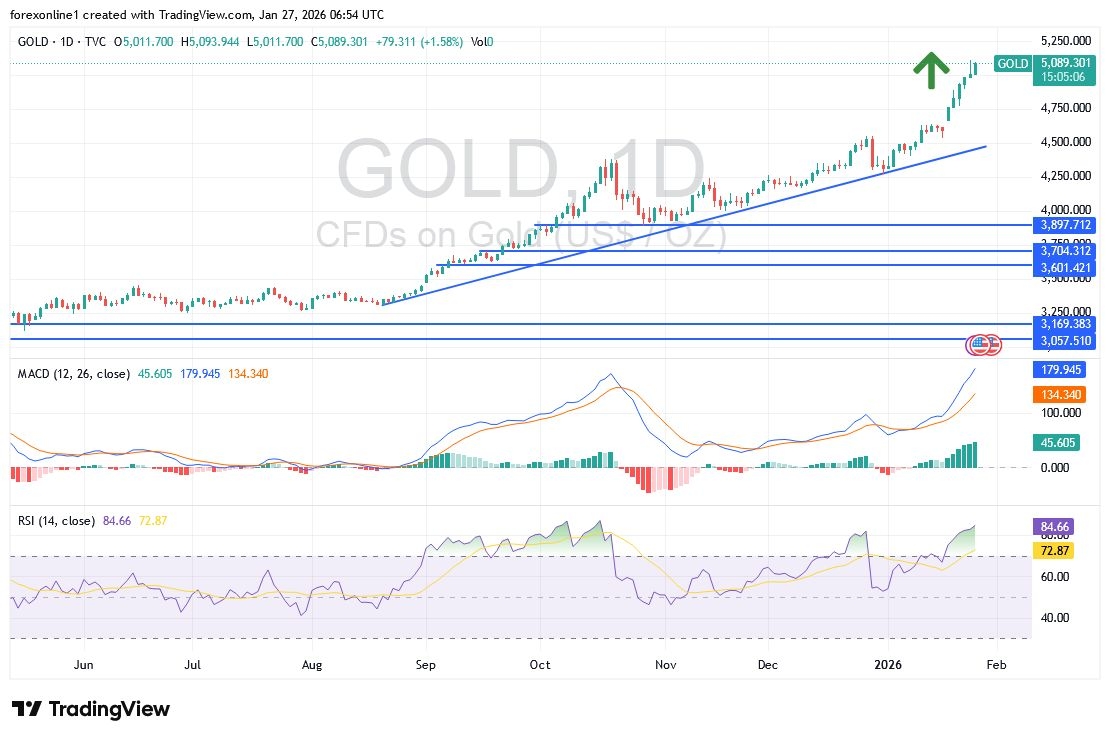
Spot Gold trades around $4,300 at the start of the new week, pretty much unchanged on a daily basis. The bright metal found some near-term demand throughout the first half of the day amid persistent US Dollar (USD) weakness. The Greenback, however, found some near-term demand in the American session, as Wall Street turned sharply lower following modest pre-opening gains.
The dismal mood seems to have been triggered by headlines indicating Kevin Hassett, United States (US) President Donald Trump’s favorite candidate to replace Jerome Powell as Federal Reserve (Fed) Chair, has received some pushback from top Trump advisers, according to people familiar with the matter. According to the same sources, the push-back resulted from Hassett being “too close” to the president. Another candidate, former Fed Governor Kevin Warsh, is now starting to sound louder.
Other than that, cautiousness reappeared ahead of first-tier US releases. The country will publish the November Nonfarm Payrolls (NFP) report on Tuesday, which will include some of the October missing figures, and a Consumer Price Index (CPI) update on Thursday. The data could shape market bets on the Fed’s monetary policy path for 2026.
Beyond US data, several major central banks will announce their decisions on monetary policy, including the European Central Bank (ECB), the Bank of England (BoE), and the Bank of Japan (BoJ).
Technically, the daily chart for XAU/USD shows it currently trades at $4,296.14, with the risk skewed to the upside. The 20-day Simple Moving Average (SMA) rises above the 100- and 200-day SMAs, and all three slope higher, underscoring the bullish bias. The 20-day SMA at $4,183.50 offers nearby dynamic support. In the meantime, technical indicators remain well above their midlines, but have turned flat, reflecting the ongoing pause in demand for the bright metal.
In the near term, and according to the 4-hour chart, XAU/USD is at risk of extending its current downward correction. Still, the pair develops above all its moving averages, with the 20-period SMA rising above the 100- and 200-period SMAs, and providing immediate support at $4,280. At the same time, the Momentum indicator turned sharply lower but holds above its midline, while the Relative Strength Index (RSI) stands at 55, also heading lower. The intraday peak at $4,350 provides resistance ahead of the all-time high in the $4,380 price zone.
$4,300 at the start(The technical analysis of this story was written with the help of an AI tool)
U.S. natural gas is trading with a familiar winter tug-of-war: colder-season risk vs. suddenly warmer model runs—and, today, the warm side is winning.
As of about 3:30 p.m. ET on Monday, December 15, 2025, NYMEX Henry Hub natural gas futures (January 2026) were near $4.02 per MMBtu, down roughly 2% on the day after an early selloff extended into the afternoon. [1]
That price level matters because it sits right at the psychological “$4 handle” that often becomes a battleground during winter—especially after the market just went through an early-December spike above $5 before reversing sharply.
The latest session has been defined by a steady fade:
In plain terms, the forward curve is projecting that winter tightness may be front-loaded—and that pricing pressure could ease as the market moves toward late winter and early spring, assuming production stays strong and weather normalizes. [5]
Multiple same-day market updates converged on the same theme: the near-term demand outlook cooled faster than the weather.
Reuters reported Monday that U.S. natural gas futures were holding near a six-week low on milder weather forecasts for the next two weeks, near-record Lower 48 output, ample storage, and weaker global gas prices. In the morning, Reuters pegged the front-month contract around $4.095/MMBtu, already pointing to the market’s soft tone. [6]
Key fundamental drivers highlighted in that report:
A related data table in the same Reuters package also indicated below-normal heating degree days versus historical norms in the two-week window—another statistical way of saying the market sees less heating-driven demand than typical for mid-December. [10]
Storage is acting like a shock absorber right now—helping prevent a panic move higher when cold shows up, and cushioning the downside when forecasts flip warmer.
Reuters data tables show U.S. working gas in storage around 3,593 Bcf, roughly 1.3% above the five-year average. [11]
The next pivotal datapoint is the next EIA storage report (for the week ended Dec. 12). Market expectations referenced in the Reuters tables point to a withdrawal around 153 Bcf—still a sizable draw, but the futures market is weighing that against strong supply and a milder late-December outlook. [12]
One reason natural gas didn’t simply collapse earlier this winter was the relentless pull from LNG exports. That remains a major support pillar—but it’s not a one-way ticket higher, especially when overseas benchmarks are soft.
Reuters reported that feedgas deliveries to the eight large U.S. LNG export plants averaged about 18.6 Bcf/d so far in December, above November’s record pace. [13]
However, the same Reuters reporting also noted that international benchmark prices have been hovering near multi-month lows—around $9/MMBtu at Europe’s TTF and roughly $11/MMBtu in Asia (JKM)—a backdrop that can cap the upside enthusiasm for U.S. gas, even when export volumes are high. [14]
There’s also a geopolitical overlay: Reuters pointed to market hopes that Ukraine-related peace talks could ultimately affect sanctions and future Russian supply, which, even as a “maybe,” tends to cool longer-dated risk premiums in global gas pricing. [15]
European prices were not signaling a major crisis on Dec. 15—more like a cautious winter grind higher that’s being actively resisted by supply.
Reuters reported that the Dutch TTF front-month traded around €27.46/MWh (about $9.45/MMBtu) in a narrow range Monday morning after two sessions of gains. Cooler temperatures boosted heating demand, and lower wind speedsincreased gas-fired power needs, but steady LNG and Norwegian supply limited the rally. [16]
A key datapoint for sentiment: EU storage was reported around 69.61% full, below last year’s level at the same time, but still not low enough to force a broad panic bid in prices. [17]
A major December 15 policy headline for gas markets came out of Brussels.
Reuters reported that the U.S. has asked the EU to exempt U.S. oil and gas from obligations under the bloc’s methane emissions regulation until 2035, framing the regulation as a trade barrier and seeking a long delay in emissions-data reporting requirements. The EU’s rule requires importers to monitor and report methane associated with imported fuels. [18]
For market participants, this is less about today’s tick-by-tick move and more about longer-term cost, compliance, and documentation requirements that can influence contracting, certification, and the competitiveness of LNG cargoes into Europe over time.
Another December 15 development underscores how “global” natural gas has become.
Reuters reported that Intercontinental Exchange (ICE) posted record 2025 volumes for benchmark European gas contracts—103 million contracts across TTF futures/options—and said it plans to extend trading hours (from a 10-hour European window toward longer cycles that resemble U.S. and Asian markets). [19]
For traders, longer hours can mean faster price discovery when weather, outages, or LNG headlines hit outside the traditional European trading day—something that increasingly matters in an LNG-linked world.
Today’s action is part of a broader theme: extreme sensitivity to weather model runs—and the market’s growing reliance on incremental demand from LNG and power.
In a December 15 “Today in Energy” note, the U.S. EIA said it has raised residential winter heating expenditure forecasts versus mid-October expectations because it now expects a colder winter and higher retail price forecasts, especially for natural gas and propane. The agency also cited NOAA expectations that December will be about 8% colder than the average of the previous 10 Decembers. [20]
EIA also noted that the Henry Hub spot price was near $3/MMBtu in October and rose to more than $4/MMBtu by late November, which helps explain why consumer-facing forecasts shifted upward even before winter fully arrived. [21]
A December 15 technical note carried by Interactive Brokers/Investopedia described the prompt-month January contract as having turned bearish after last week’s sharp drop, highlighting potential downside levels around the high-$3s and resistance in the mid-$4s. [22]
Whether you follow technicals or not, the takeaway is consistent with the fundamentals: weather and storage surprises are the catalysts most likely to force a break away from the $4 area.
If you’re tracking natural gas price action into mid-December, these are the catalysts most likely to move the market quickly:
Natural gas prices today are being pinned near $4.02/MMBtu by a warm-forecast narrative and relentless U.S. supply—despite very strong LNG export pull. The market’s next decisive move likely depends on whether late-December weather turns materially colder again, and whether storage withdrawals begin to outpace expectations. [28]
1. www.investing.com, 2. www.investing.com, 3. www.investing.com, 4. www.investing.com, 5. www.investing.com, 6. www.tradingview.com, 7. www.tradingview.com, 8. www.tradingview.com, 9. www.tradingview.com, 10. www.tradingview.com, 11. www.tradingview.com, 12. www.tradingview.com, 13. www.tradingview.com, 14. www.tradingview.com, 15. www.tradingview.com, 16. www.tradingview.com, 17. www.tradingview.com, 18. www.reuters.com, 19. www.reuters.com, 20. www.eia.gov, 21. www.eia.gov, 22. www.interactivebrokers.com, 23. www.tradingview.com, 24. www.tradingview.com, 25. www.tradingview.com, 26. www.tradingview.com, 27. www.reuters.com, 28. www.tradingview.com
Goldman Sachs on Monday raised its 2026 copper price forecast to $11,400 per metric ton from $10,650, citing reduced odds of a refined copper tariff being implemented in the first half of 2026 as affordability concerns take priority.
Benchmark three-month copper HG1! on the London Metal Exchange was up 1.4% to $11,670 per metric ton by 1838 GMT.
Copper hit a record high of $11,952 on Friday on worries about tight supply, but then experienced a selloff amid renewed fears that the artificial intelligence sector was in a bubble that was ready to burst.
Daily inflows to the Comex copper stocks (HG-STX-COMEX), already at a record high, continued due to higher prices on Comex. The U.S. excluded refined copper from the 50% import tariffs that came into force in August but kept the matter under review.
Goldman Sachs said there is a 55% chance that the Trump administration will announce a 15% tariff on copper imports in the first half of 2026, with implementation slated for 2027 and a possible increase to 30% in 2028.
The investment bank said the prospect of future tariffs is likely to keep U.S. copper prices trading at a premium to the London Metal Exchange benchmark and drive stockpiling, which would tighten supply in markets outside the U.S., which is now a key driver of global copper prices.
“We have kept our 2027 price forecast of $10,750 unchanged, as we expect the LME price to retreat once a tariff is in place and the ex-U.S. market rebalances,” Goldman Sachs added.
It also lifted its forecast for the 2026 global market surplus to 300,000 tons from 160,000 tons.