
Category: Forex News, News
GBP/USD Analysis: Pound holds firm after BoE decision
The pound sterling has started to show relevant strength against the U.S. dollar. At the moment, GBP/USD has gained slightly more than 1.3% in the short term, reflecting an important buying bias.
Buying pressure began to gain relevance after the Federal Reserve decision during yesterday’s session and strengthened even further after the Bank of England decision today. For now, the central bank dynamic could continue to be key for demand in the pound sterling and maintain possible buying pressure on GBP/USD over the next few trading sessions.

Fed and BoE signals shape the outlook
During today’s session, the Bank of England published its interest rate decision and kept the reference rate at 3.75%, in line with expectations. However, the vote delivered an important signal: 6 members voted to keep rates unchanged, while 3 members voted for a 0.25% hike.
Although the rate did not change, this division was interpreted as a slightly more aggressive signal, as it shows that an important part of the committee is starting to consider the need for further increases over the coming months.
In the statement after the decision, the central bank highlighted that energy prices remain volatile and that this factor could continue to pressure inflation. For this reason, although additional hikes were not confirmed, the BoE does not appear ready to ease its stance either. If annual inflation fails to move closer to the 2.00% target, the central bank could continue to consider a more restrictive monetary policy.
The dynamic in the United States was slightly different. Although the Federal Reserve also kept rates unchanged in the 3.50% – 3.75% range, Kevin Warsh’s comments after the decision did not offer a clear signal of a possible hike in September.
This difference is important because the market expected a more aggressive stance from the Fed, but the event did not confirm that expectation. According to the CME Group probability table, for the September 16 decision, there is still a probability near 61% of a rate hike in the United States. However, a probability of almost 40% that rates remain unchanged has also started to emerge, something that had not been observed with the same strength in previous weeks.
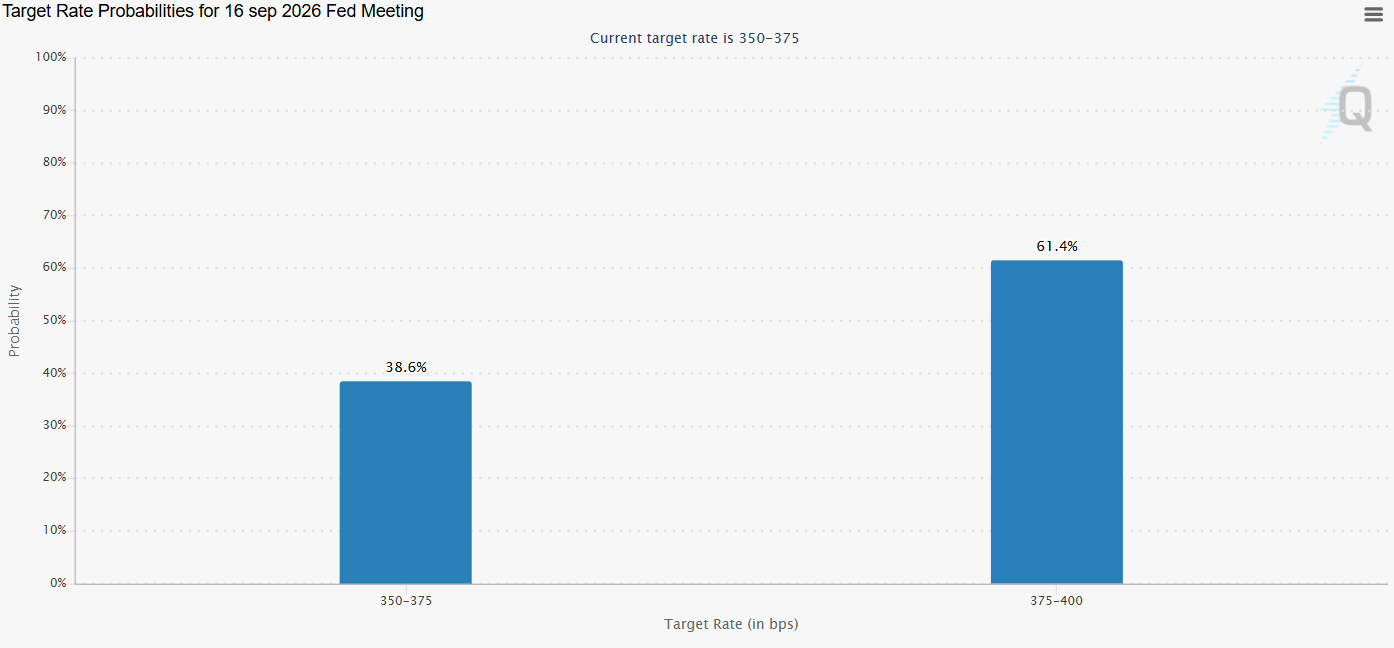
Source: CMEGROUP
As a result, the market is facing an interesting dynamic. In the United States, expectations of a more aggressive Fed have lost strength, while in the United Kingdom, the BoE showed internal division that keeps open the possibility of a more restrictive stance if inflation remains a problem.
This contrast has started to be reflected in the U.S. dollar. The DXY index, which measures the dollar’s strength against its main peers, has shown a relevant decline since the Federal Reserve announcement and is now below the 100-point area. This suggests that demand for the dollar has started to weaken significantly after the U.S. central bank decision.
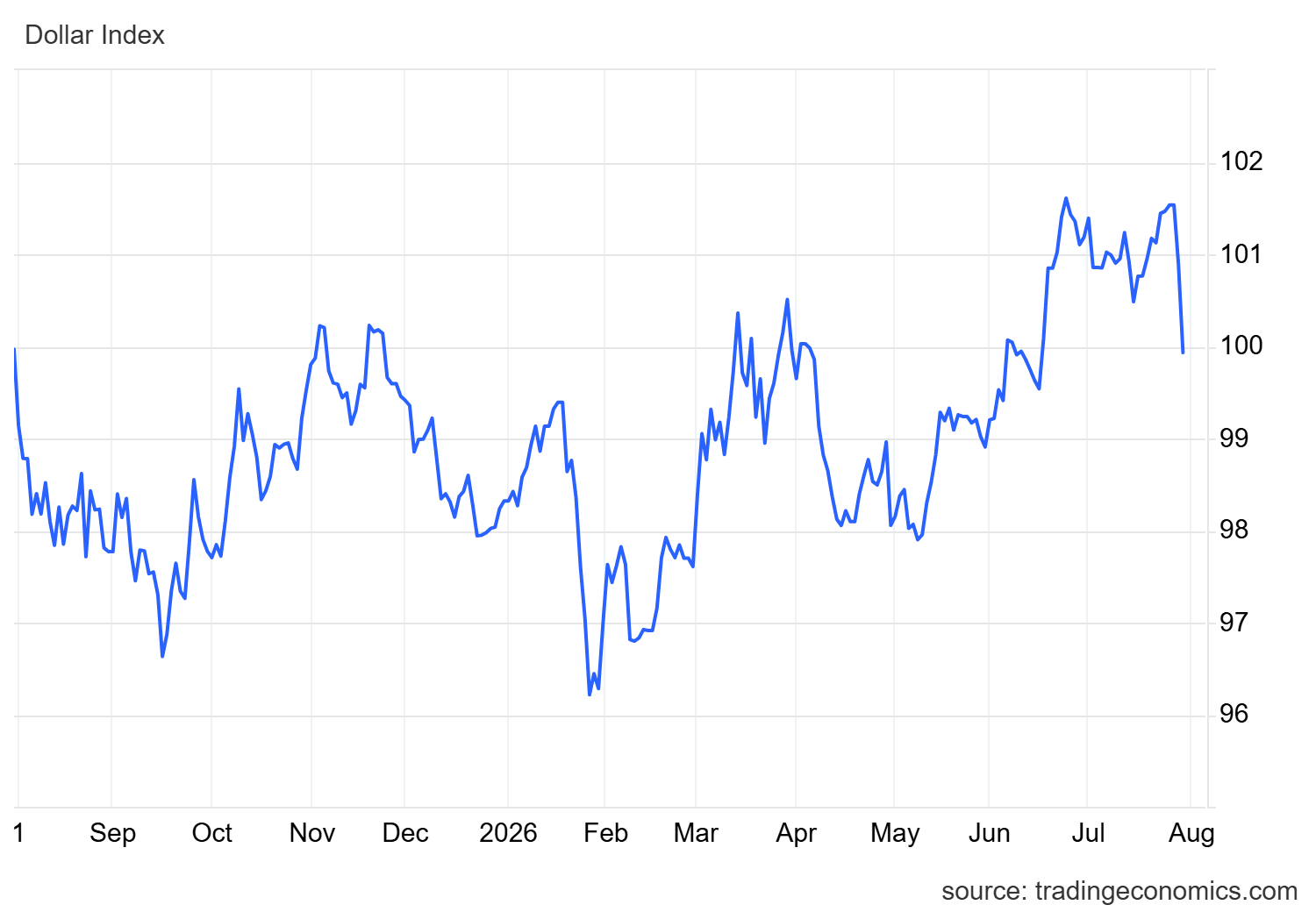
Source: TradingEconomics
With this in mind, and considering that both the United States and the United Kingdom maintain rates near 3.75%, the main difference lies in each central bank’s message. While the market is starting to price in a Bank of England that appears more willing to act if necessary, the Federal Reserve has reduced signals of early rate increases.
This dynamic could continue to weigh on the dollar and open room for the pound sterling to recover more consistently. If this scenario remains in place, GBP/USD could continue to show buying pressure over the next few trading sessions.
Technical forecast for GBP/USD
Source: StoneX, Tradingview
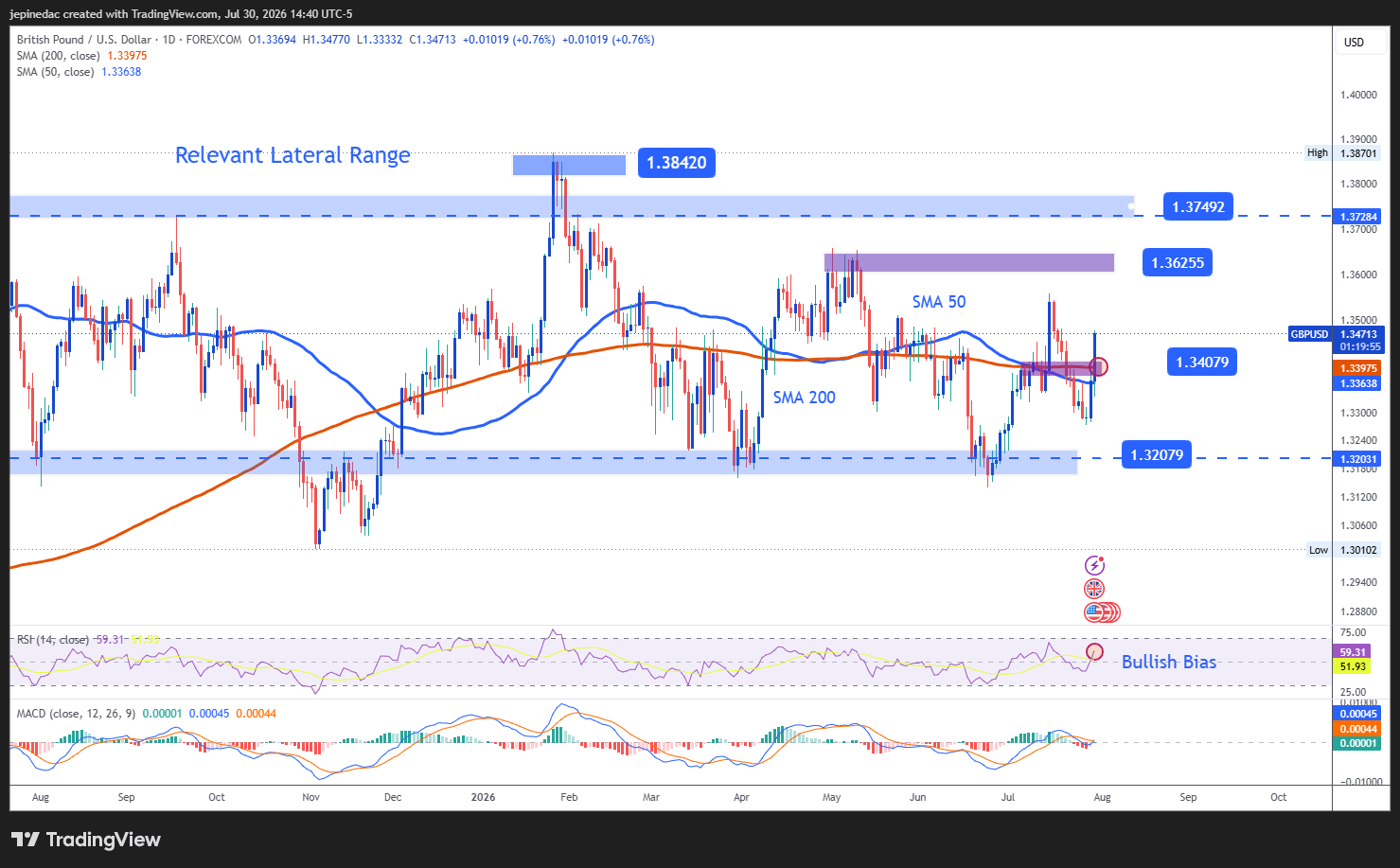
- The broad sideways range continues to dominate: Despite GBP/USD’s recovery attempts, the chart continues to show a broad sideways channel that has acted as the main technical structure for several months. This range remains between an upper area near 1.37492 and support around 1.32079. If price fails to break consistently out of these levels, the sideways structure will remain the most relevant pattern and could continue to reflect indecision over the coming trading weeks.
- RSI: Now, the RSI remains above the neutral 50 level, suggesting that bullish impulses have started to gain relevance in the short term. If this dynamic continues, the indicator could keep supporting the formation of a more important buying bias over the next few sessions.
- MACD: The MACD shows a histogram near the neutral 0 area, suggesting balance in the strength of short-term moving averages. This reading indicates that, although the pound has gained strength, the indecision bias has not completely disappeared from the GBP/USD chart.
Key levels:
- 1.36255 – Relevant resistance: This relevant high is positioned as the main bullish barrier in the short term. Price movements toward this area could reinforce the current buying pressure and open room for a more consistent bullish bias over the next few sessions. In addition, a clear break above this level could start to put at risk the broad sideways range that has remained in place for several months.
- 1.34079 – Near-term barrier: This recent neutral area coincides with the 50- and 200-period simple moving averages. If price moves back toward this level consistently, it could once again highlight a phase of indecision and keep the sideways range as the dominant technical structure.
- 1.32079 – Crucial support: This low coincides with the lower barrier of the broad sideways range. Sustained moves below this point could reflect a dominant selling bias and open room for the formation of a short-term bearish trend line over the coming trading weeks.
Written by Julian Pineda, CFA, CMT – Market Analyst
Follow him on: @julianpineda25


Written by : Editorial team of BIPNs
Main team of content of bipns.com. Any type of content should be approved by us.








Share this article: