The main category of All News Articles.

You can use the search box below to find what you need.

[wd_asp id=1]

9 06, 2026

Platinum price might continue the decline– Forecast today – 9-6-2026

By |2026-06-09T12:35:43+03:00June 9, 2026|Forex News, News|0 Comments


Ethereum (ETHUSD) declined in recent intraday trading, under continued bearish pressure as it remains below the EMA50, which reinforces the dominance of the short-term downtrend. Price action is also moving along a descending trendline, supporting the ongoing negative structure.


In addition, relative strength indicators are showing renewed negative signals, keeping the bearish outlook intact for the near term unless key resistance levels are broken. This setup maintains downward pressure on the price.


Source link

9 06, 2026

GBP/JPY Price Forecast: Trapped between key SMAs, bulls eye 214.00

By |2026-06-09T08:46:08+03:00June 9, 2026|Forex News, News|0 Comments

The GBP/JPY trims some of its earlier losses, turns nearly flat during the day at around 213.60, and is modestly down 0.09% amid a mixed market mood, an indication of cautious trading amid the ongoing environment.

GBP/JPY Price Forecast: Technical Outlook

Price action shows the GBP/JPY is consolidating following last week’s losses of over 0.21%, capped on the downside by the 100-day Simple Moving Average (SMA) at 212.62, and on the top by the 50-day SMA at 213.87.

The Relative Strength Index (RSI) indicates that, in the near term, sellers are in charge. But the market structure of successive higher highs and higher lows suggests further upside for GBP/JPY.

If GBP/JPY reclaims 214.00, the next resistance would be the June 15 high at 215.62. Above this area, the next stop would be the year-to-date (YTD) high of 216.61.

Downwards, the first support for GBP/JPY would be 213.00. Below the figure, the next stop would be the 100-day SMA at 212.62, followed by the 212.00 mark.

GBP/JPY Price Chart – Daily

GBP/JPY daily chart

Japanese Yen Price Today

The table below shows the percentage change of Japanese Yen (JPY) against listed major currencies today. Japanese Yen was the strongest against the Swiss Franc.

USD EUR GBP JPY CAD AUD NZD CHF
USD -0.11% -0.04% -0.10% 0.06% 0.05% -0.30% 0.22%
EUR 0.11% 0.06% -0.02% 0.15% 0.14% -0.18% 0.31%
GBP 0.04% -0.06% -0.06% 0.09% 0.02% -0.23% 0.23%
JPY 0.10% 0.02% 0.06% 0.14% 0.12% -0.16% 0.28%
CAD -0.06% -0.15% -0.09% -0.14% -0.00% -0.32% 0.15%
AUD -0.05% -0.14% -0.02% -0.12% 0.00% -0.28% 0.18%
NZD 0.30% 0.18% 0.23% 0.16% 0.32% 0.28% 0.44%
CHF -0.22% -0.31% -0.23% -0.28% -0.15% -0.18% -0.44%

The heat map shows percentage changes of major currencies against each other. The base currency is picked from the left column, while the quote currency is picked from the top row. For example, if you pick the Japanese Yen from the left column and move along the horizontal line to the US Dollar, the percentage change displayed in the box will represent JPY (base)/USD (quote).

Source link

9 06, 2026

Silver Price Forecast: XAG/USD hovers near 200-day SMA, downside risks persist

By |2026-06-09T08:34:42+03:00June 9, 2026|Forex News, News|0 Comments


Silver (XAG/USD) trades modestly higher on Monday after falling nearly 8% on Friday in the wake of a stronger-than-expected US Nonfarm Payrolls (NFP) report, which reinforced expectations that the Federal Reserve (Fed) will keep interest rates higher for longer.

At the time of writing, XAG/USD is trading around $68.50 after touching $66.18 earlier in the day, its lowest level since March 25.

The mild rebound comes as the US Dollar (USD) softens after Iran’s Fars News Agency reported that Iran had ended its military operations against Israel following renewed hostilities over the weekend. US President Donald Trump also said that peace talks with Tehran remain ongoing, keeping traders cautiously optimistic about a possible end to the war in the Middle East.

However, the upside in Silver appears limited amid rising expectations of a hawkish Fed, while the broader technical outlook suggests bears still hold the upper hand.

Traders now look ahead to US inflation data due later this week, which could provide fresh clues on the Fed’s monetary policy path and drive the next move in both the USD and XAG/USD.

Technical Analysis:

On the daily chart, XAG/USD holds a bearish bias as prices remain below the 50- and 100-day Simple Moving Averages (SMAs). However, the 200-day SMA near $67.94 is providing immediate support and helping to stabilize price action following last week’s sharp selloff.

Momentum indicators remain tilted to the downside. The Relative Strength Index (RSI) is hovering around 37, suggesting bearish momentum is still in place, although conditions are not yet oversold. Meanwhile, the Average Directional Index (ADX) near 17 points to a relatively weak trend, indicating that the recent decline has lacked strong conviction.

On the upside, the first resistance level comes in at the 50-day SMA around $76.15. A sustained move above this area could open the door toward the 100-day SMA near $80.38. On the downside, the 200-day SMA at $67.94 remains the key support to watch. A daily close below this level would reinforce the bearish outlook and expose XAG/USD to deeper losses.

(The technical analysis of this story was written with the help of an AI tool.)

US Dollar Price Today

The table below shows the percentage change of US Dollar (USD) against listed major currencies today. US Dollar was the strongest against the Swiss Franc.

USD EUR GBP JPY CAD AUD NZD CHF
USD -0.15% -0.01% -0.10% 0.13% 0.00% -0.29% 0.17%
EUR 0.15% 0.12% 0.06% 0.29% 0.12% -0.14% 0.32%
GBP 0.01% -0.12% -0.09% 0.14% -0.02% -0.30% 0.15%
JPY 0.10% -0.06% 0.09% 0.21% 0.07% -0.18% 0.23%
CAD -0.13% -0.29% -0.14% -0.21% -0.13% -0.40% 0.02%
AUD -0.01% -0.12% 0.02% -0.07% 0.13% -0.27% 0.17%
NZD 0.29% 0.14% 0.30% 0.18% 0.40% 0.27% 0.42%
CHF -0.17% -0.32% -0.15% -0.23% -0.02% -0.17% -0.42%

The heat map shows percentage changes of major currencies against each other. The base currency is picked from the left column, while the quote currency is picked from the top row. For example, if you pick the US Dollar from the left column and move along the horizontal line to the Japanese Yen, the percentage change displayed in the box will represent USD (base)/JPY (quote).


Source link

9 06, 2026

GBP/JPY, EUR/JPY and AUD/JPY Forecasts – Japanese Yen Continues to Face Pressures

By |2026-06-09T04:45:04+03:00June 9, 2026|Forex News, News|0 Comments

The euro has been very noisy against the Japanese yen, but it is squeezing out a little bit of an attempt to break to the upside. The 185-yen level continues to be an area that I’ll be watching very closely, especially now that the 50-day EMA sits just 6 pips above there.

If we can clear both of those, then I think that will allow this market to continue going higher. The interest rate differential continues to favor Europe, and it probably will for as long as I can imagine, and therefore, I like buying short-term dips.

The Japanese yen has been under severe pressure against multiple currencies, and that remains the case as the Bank of Japan really won’t be able to do much as far as tightening monetary policy beyond maybe another 25 basis points.

AUD/JPY Technical Analysis

Source link

9 06, 2026

The GBPJPY surrenders to the strength of the barrier– Forecast today – 8-6-2026

By |2026-06-09T04:33:30+03:00June 9, 2026|Forex News, News|0 Comments


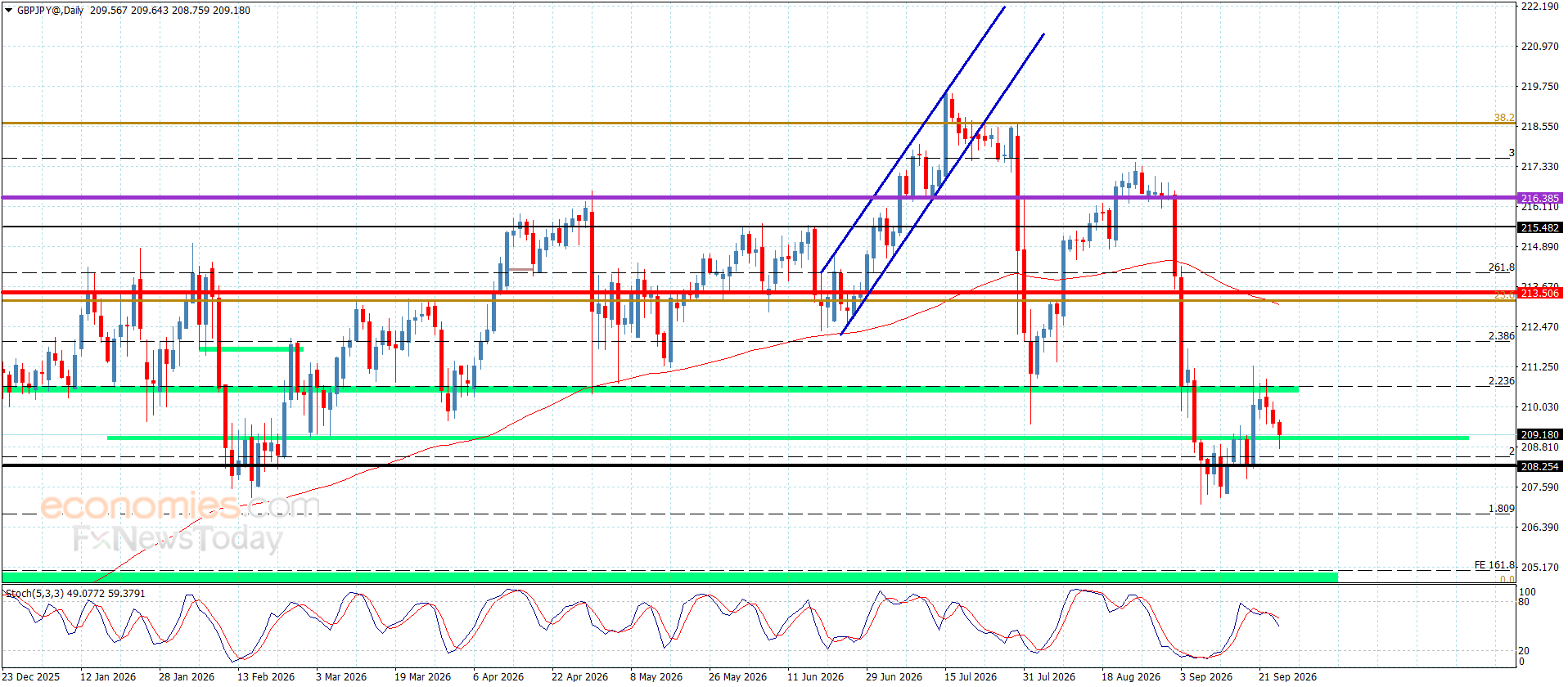
The GBPJPY pair ended the bullish attempts by providing repeated negative closes below 215.50 level, forcing it to activate the bearish corrective track, suffering several losses by reaching 213.40 level.


We expect renewing the bearish attempts by its stability below the extra barrier at 214.55, and the continuation of providing negative momentum by stochastic will increase the chances of forming bearish waves, to target 212.80 and 212.00 level.


The expected trading range for today is between 212.80 and 214.25


Trend forecast: Bearish


Source link

9 06, 2026

The EURGBP settles below the resistance– Forecast today – 8-6-2026

By |2026-06-09T00:43:45+03:00June 9, 2026|Forex News, News|0 Comments

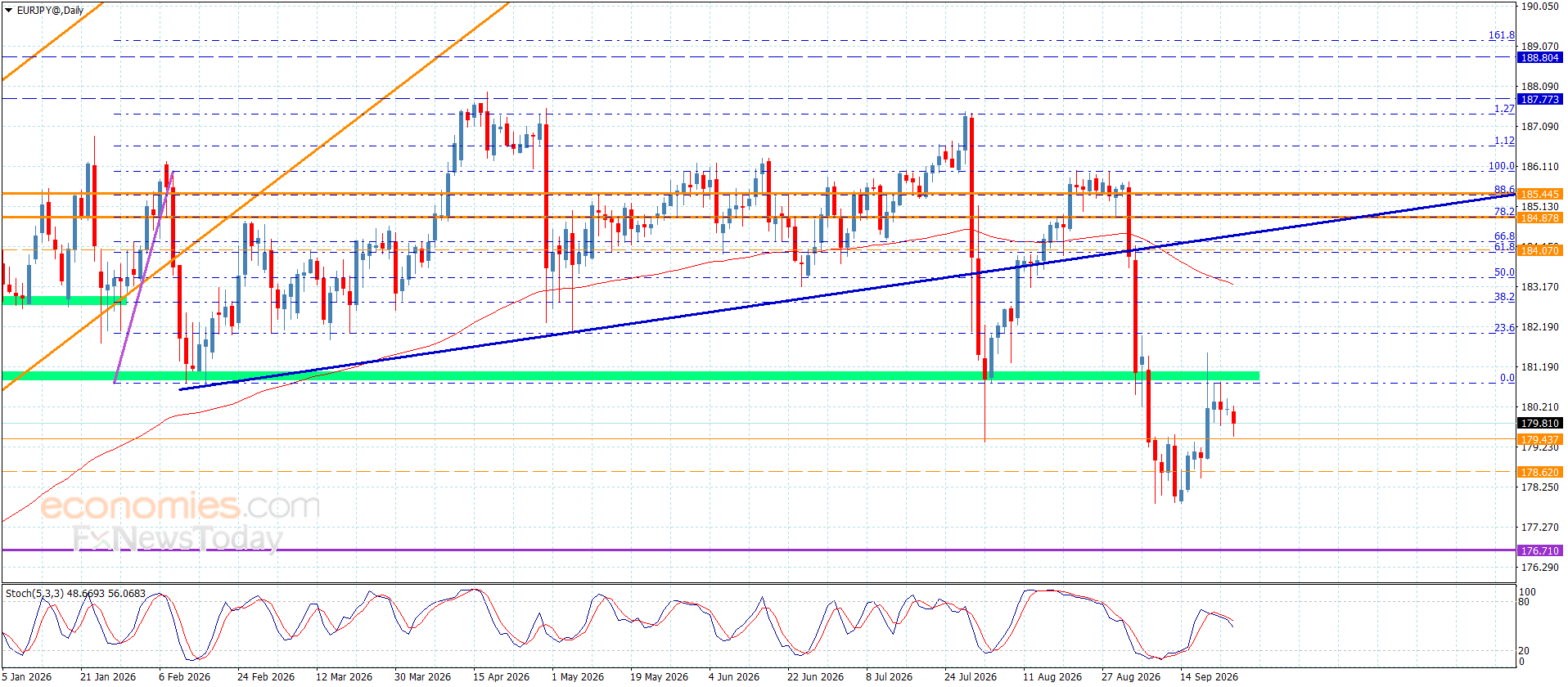
The EURJPY pair didn’t manage to settle at 186.00, forcing it to activate the negative trend again, affected by stochastic reach below 50 level, suffering several losses by reaching 184.38.


Today’s forecast depends on the attempt of forming a new support at 184.25 level, and its stability makes us expect renewing the positive attempts to reach 184.45, then repeat the pressure on the previously mentioned barrier, while breaking the current support and holding below it will confirm the readiness of targeting new bearish stations, to expect reaching 183.75 and 183.50.


The expected trading range for today is between 184.25 and 185.45


Trend forecast: Bullish


Source link

9 06, 2026

Platinum forecast and tracker: How will platinum perform in 2026?

By |2026-06-09T00:32:42+03:00June 9, 2026|Forex News, News|0 Comments


Over the past year, platinum has quietly outperformed gold. While gold prices have increased significantly — between April 2025 and 2026, its price went from $3,126 per ounce to $4,785 per ounce — gold’s performance pales in comparison to platinum’s rise.

During that same time period, platinum’s price more than doubled. In April 2026, its price surpassed $2,000 per ounce, up from $993.

Its staggering performance has many investors giving platinum a second look.

Today’s real-time platinum price chart

How has the price of platinum changed over the past 10 years?

Unlike some other precious metals, platinum’s price has been less dramatic. Between 2016 and 2026, its price was fairly steady, averaging $1,059 per ounce. But that started to change in 2024 when its price began to rise, and it skyrocketed to over $2,000 per ounce in 2026.

While gold’s price had consistent increases over the past decade, platinum’s price had more volatility. Despite platinum’s usefulness and rarity, it was relatively undervalued compared to gold. That trend has changed, with its price skyrocketing over the past 18 months.

Consider this example. Say you purchased $10,000 in platinum in 2016. That investment would allow you to buy 10.5 ounces of platinum. Today, that amount would be worth over $21,000, so you’d double your money.

What caused the changes to platinum’s price?

Platinum is a very rare metal. In fact, it’s far more rare than either silver or gold. It’s resistant to corrosion or tarnish, making it ideal for jewelry, laboratory equipment, and industrial components.

Several factors drive changes to the platinum market:

1. Supply shortages

Platinum is extraordinarily rare. According to the World Platinum Investment Council (WPIC), there isn’t enough platinum to meet current demand. As of 2026, the projected deficit is 240,000 ounces. With such a limited supply, prices increase.

2. Increased demand from the automotive industry

For the past five years, the automotive industry has made up anywhere from 36% to 44% of the demand for platinum — the biggest driver of platinum’s use.

Car manufacturers use platinum as a key component in catalytic converters. Platinum helps reduce vehicle emissions, which is necessary to meet regulatory standards. Companies also use platinum in the manufacturing of vehicle fuel cells for electric and diesel cars.

3. Investor interest

For years, platinum was often overlooked in favor of gold. But with platinum’s rapid price increase, investors are turning to platinum. It’s rarer than gold, and its value is tied to industrial growth. Plus, its lower price tag per ounce makes it more accessible to new investors.

Platinum price forecast for 2026

Where does platinum’s price go from here? Platinum’s price should remain strong.

Over the short term, experts expect platinum’s price to remain high due to continued supply deficits, industrial demand, and the continued trend toward electric vehicles.

Organizations like Morningstar and other financial analysts predict modest price growth in 2026, but investors should be aware that platinum’s price can be volatile over the short term.

What will platinum be worth in 2030?

Historical data, while useful, is not a guarantee of platinum’s future performance. Long-term, platinum’s price is dependent on several factors:

  • Adoption of clean energy technology

  • Automotive trends

  • Global economic conditions and monetary policies

  • Mining output and platinum supply

In general, investment experts are bullish about platinum. They believe demand for platinum will remain strong, and supply will remain very limited. Industrial uses, particularly platinum’s role in the creation of artificial intelligence (AI) systems, can also affect its price.

Given current platinum demand and supply, platinum’s price is likely to remain above $2,000 per ounce, but we may not see the drastic price movements we’ve seen over the past two years.

How does platinum compare to other precious metals?

If you want to invest in precious metals, platinum is just one option. Other popular metals include palladium and gold. Here’s how platinum measures up:

plat v gold

Platinum vs. palladium

Like platinum, palladium is a white-toned metal that is commonly used in the automobile industry in the production of catalytic converters. It’s also used in electronics and jewelry.

Currently, palladium’s price is lower than platinum’s. However, its price has been much more volatile than platinum’s. Between 2020 and 2021, its price increased from $750 per ounce to over $2,200 per ounce. But by 2024, its price had plummeted to under $1,000 per ounce.

Despite its price fluctuations, palladium has outperformed platinum over the past 10 years. If you invested $10,000 in palladium in 2016, you would’ve bought 18 ounces of palladium. Today, it would be worth over $27,000.

Platinum vs. gold

Gold is one of the most precious metals for investors seeking alternative commodities. Used in jewelry and industry, gold is traditionally viewed as a secure, stable investment.

Gold’s price tends to be more stable than that of other precious metals, with fewer fluctuations. If you invested $10,000 in gold in 2016, you would’ve bought eight ounces of gold. Today, that amount of gold would be worth over $38,000.

Read more: Gold alternatives? How to invest in silver, platinum, and palladium

Should you buy platinum?

Whether platinum is a good investment depends on your intent and overall investment portfolio. As a rare, precious metal with a broad range of uses, platinum has strong long-term growth potential, but short-term price fluctuations are common.

While platinum can diversify your investment portfolio, it doesn’t pay interest or dividends, and its performance hasn’t been as strong as the stock market’s. As you consider your investment decisions, keep that in mind. Generally, experts recommend that platinum (and other precious metals) should only make up a small percentage of your investment portfolio to complement your other investments.

Platinum price prediction FAQs

How much does one ounce of platinum cost?

As of April 2026, platinum’s price is over $2,000 per ounce.

Is platinum better than gold?

Whether platinum is dependent on its intended use. For industrial uses, platinum plays a larger role. From an investment perspective, platinum has lagged gold’s performance, but it’s much rarer.

Will platinum reach $3,000 per ounce?

It’s possible platinum will reach $3,000 per ounce, but it would require significant economic changes to get there. Platinum’s price would need to increase based on improved investor interest and industrial demand.

What is the highest platinum price ever recorded?

Platinum reached its highest price on January 26, 2026, at $2,835.90.


Source link

8 06, 2026

Pound-to-Dollar FX Forecast: Fed Hike Talk Boosts USD, Pressures GBP

By |2026-06-08T20:42:32+03:00June 8, 2026|Forex News, News|0 Comments


– Written by

The Pound to Dollar exchange rate (GBP/USD) remains under pressure after stronger-than-expected US employment data reinforced expectations that the Federal Reserve could keep interest rates higher for longer.

With markets increasingly debating whether the next Fed move could be a hike rather than a cut, the dollar has regained momentum and pushed GBP/USD back towards the lower end of its recent trading range.

GBP/USD Forecasts: Pressure on the Fed

MUFG sees the risk of a GBP/USD decline to at least 1.32 in the near term before a limited net recovery to above 1.35 at the end of 2026.

Bank of America is still positive on the Pound outlook with scope for GBP/USD gains to at least 1.40 late in 2026.

There has been a shift in US rate expectations which has underpinned the dollar and GBP/USD dipped to test support below 1.34 on Friday after stronger than expected US jobs data.

ING commented; “There is a creeping view that US growth could be re-accelerating as AI investment seeps through the broader economy. Healthy jobs data and higher pricing intentions from this week’s ISM business surveys can add to expectations that the Fed ends up hiking this year. We expect the dollar to remain supported.”

Save on Your GBP/USD Transfer

Get better rates and lower fees on your next international money transfer.
Compare TorFX with top UK banks in seconds and see how much you could save.


Compare the Best GBP/USD Rates »

MUFG notes the balance of risks have shifted; “While the argument put forward of the need for a rate hike in the US remains unconvincing in our view it is clear that the debate on Fed policy has shifted from no change or a cut to no change or a hike with most comments from Fed officials now assessing the risks between a hike or no hike.”

Bank of England policy will also be a key factor, especially with splits within the committee. Markets are not expecting a June rate hike with around a 50% chance of a July hike with investment banks still uncertain.
ING narrowly expects a prolonged pause by the BoE, but added; “we’re not ruling out a July hike if the Strait of Hormuz remains heavily disrupted. And it’s why we’re likely to see a greater number of officials vote for a rate hike later this month.”
MUFG commented; “we still expect the BoE to deliver two rate hikes this year, but we have pushed back the timing to July and November from June and July previously.”

It added; “With no signs of wage setting behaviour changes and inflation expectations relatively stable, the BoE can afford to wait a little longer.”

Bank of America is positive on the UK outlook; “Yet, as the AI revolution is still seen as a US phenomenon, the UK has emerged as an attractive destination for AI-linked inflows on top of well-established financial services and biotech influx from overseas.

It added; “It perhaps provides a reason why GBP has been resilient against the backdrop of ongoing political uncertainty. Further out, a higher productivity/capital intensive mix of FDI inflows should be seen as a medium-term positive for GBP valuation trend.”

Like this piece? Please share with your friends and colleagues:


International Money Transfer? Ask our resident FX expert a money transfer question or try John’s new, free, no-obligation personal service! ,where he helps every step of the way,
ensuring you get the best exchange rates on your currency requirements.

TAGS: Pound Dollar Forecasts

Source link

8 06, 2026

Organic Whole Bean Coffee Market Growth Outlook to 2035: Premiumization and Ethical Sourcing Fuel Demand – News and Statistics

By |2026-06-08T20:31:13+03:00June 8, 2026|Forex News, News|0 Comments


Abstract

According to the latest IndexBox report on the global Organic Whole Bean Coffee market, the market enters 2026 with broader demand fundamentals, more disciplined procurement behavior, and a more regionally diversified supply architecture.

The global organic whole bean coffee market is entering a phase of structural transformation, bifurcating into two distinct commercial arenas: a high-volume, price-sensitive mainstream segment competing on distribution and shelf presence, and a high-growth, premium segment driven by brand storytelling, provenance, and ethical claims. Consumer purchasing is no longer monolithic but is segmented by distinct need states, ranging from daily functional fuel to ethical indulgence and social gifting, each with its own price tolerance, channel preference, and brand loyalty drivers. Private label has evolved into a multi-tiered strategy, with premium private-label lines directly competing with mid-tier national brands on quality and claims while undercutting them on price, squeezing brand margins. Control of the route-to-market is a critical differentiator; brands that master direct-to-consumer e-commerce and subscription models capture superior margins and consumer data but face significant scaling challenges against the entrenched power of large grocery and specialty retail buyers. The supply chain is the primary brand narrative: transparency from farm to cup is not just a marketing claim but a fundamental operational requirement and cost center, with brands competing on the specificity of their origin stories, certification portfolios, and direct trade relationships. Pricing architecture has become a complex ladder, with the gap between entry-level organic and super-premium microlot offerings widening, creating opportunities for portfolio management but also increasing consumer confusion and price volatility. Geographic market roles are highly specialized, with growth concentrated in specific clusters of premiumization, retail innovation, and import-dependent consumption. Inn

The baseline scenario for the organic whole bean coffee market from 2026 to 2035 projects steady expansion, underpinned by structural shifts in consumer preferences toward health, sustainability, and experiential consumption. The market is expected to grow at a compound annual growth rate (CAGR) of approximately 6.8% over the forecast period, with the market index reaching 192 by 2035 (2025=100). This growth is supported by rising disposable incomes in emerging markets, increasing awareness of the health benefits of organic products, and the ongoing premiumization of coffee consumption in mature markets. The bifurcation between mainstream and premium segments will intensify, with the premium segment (single-origin, microlot, direct trade) capturing a disproportionate share of value growth, while volume growth remains concentrated in the mainstream segment. Private label will continue to gain share, particularly in the mid-tier, as retailers invest in quality and storytelling to compete with national brands. E-commerce and subscription models will become the primary growth channel, accounting for an increasing share of sales, especially in North America and Europe. Supply chain transparency and certification will remain critical differentiators, with brands that can credibly communicate origin and ethical practices commanding higher price points. However, the market faces headwinds from input cost volatility, climate change impacts on coffee-growing regions, and potential regulatory tightening around organic certification standards. The center of the market is vulnerable to private-label encroachment and price competition, forcing brand owners to continuously innovate and justify price premiums through superior product quality, unique origin stories, and enhanced consume

Demand Drivers and Constraints

Primary Demand Drivers

  • Rising consumer awareness of health and wellness benefits associated with organic products
  • Increasing demand for premium, single-origin, and ethically sourced coffee experiences
  • Expansion of e-commerce and direct-to-consumer subscription models enabling brand loyalty and margin capture
  • Growing retail shelf space and private-label investment in organic coffee by major grocery chains
  • Millennial and Gen Z preference for transparency, sustainability, and brand storytelling
  • Innovation in packaging technology extending shelf life and preserving freshness for whole bean formats

Potential Growth Constraints

  • Volatility in green coffee prices and input costs due to climate change and supply chain disruptions
  • Intense price competition from private-label and mainstream brands squeezing margins for mid-tier players
  • Complex and costly certification requirements creating barriers to entry for smaller producers
  • Consumer confusion from proliferation of certifications and ethical claims, leading to potential skepticism
  • Limited scalability of direct-to-consumer models compared to traditional retail distribution networks

Demand Structure by End-Use Industry

Retail – Supermarkets & Hypermarkets (estimated share: 40%)

Supermarkets and hypermarkets remain the largest distribution channel for organic whole bean coffee, accounting for 40% of market volume. This segment is characterized by high shelf turnover, broad assortment, and intense price competition. The trend is toward premiumization within the aisle, with retailers dedicating more linear feet to organic and specialty coffee, often featuring their own premium private-label lines that compete directly with national brands on quality and claims while undercutting on price. Demand is driven by the need for convenience and one-stop shopping, with shoppers making purchase decisions based on price, brand recognition, and visible certifications. Through 2035, this channel will see a gradual shift toward higher-margin products as retailers optimize category management, but volume growth will be modest as e-commerce captures incremental demand. Key demand-side indicators include retail scanner data on price elasticity, private-label share trends, and promotional intensity. The mechanism is that supermarkets act as a battleground for brand vs. private-label share, with margins squeezed but volumes high. Current trend: Stable share with private-label expansion.

Major trends: Premium private-label lines competing with national brands, Increased shelf space for organic and specialty coffee, and Data-driven category management and assortment optimization.

Representative participants: Kroger, Walmart, Albertsons, Whole Foods Market, and Target.

Retail – Specialty Coffee Shops & Roasters (estimated share: 25%)

Specialty coffee shops and roasters represent 25% of the market, driven by the experiential and educational aspects of whole bean coffee. Consumers in this segment seek unique flavor profiles, origin stories, and direct relationships with roasters. The demand story is one of premiumization and loyalty: customers are willing to pay a significant premium for single-origin, microlot, and direct-trade beans, often purchased as a treat or gift. Through 2035, this segment will grow faster than the market average, supported by the rise of third-wave coffee culture and the proliferation of independent and micro-roasters. Key demand-side indicators include foot traffic, average transaction value, and repeat purchase rates for subscription programs. The mechanism is that specialty shops create a halo effect, educating consumers and driving trial, which then translates into at-home consumption of whole bean coffee. Major trends include the rise of coffee subscriptions, limited-edition seasonal offerings, and community-building events. Current trend: Growing share driven by experiential consumption.

Major trends: Rise of third-wave coffee culture and micro-roasters, Subscription models for recurring revenue and loyalty, and Limited-edition and seasonal single-origin offerings.

Representative participants: Counter Culture Coffee, Intelligentsia Coffee, Stumptown Coffee Roasters, Blue Bottle Coffee, and La Colombe Coffee Roasters.

E-Commerce & Direct-to-Consumer (DTC) (estimated share: 20%)

E-commerce and DTC channels account for 20% of the market and are the fastest-growing segment, driven by convenience, subscription models, and the ability to offer a curated selection. Consumers are attracted to the ease of home delivery, the ability to discover new roasters, and the flexibility of subscription plans that ensure freshness. The demand story is about margin capture and data ownership: brands that sell directly to consumers retain higher margins and build direct relationships, enabling personalized marketing and product development. Through 2035, this channel will continue to gain share, particularly in North America and Europe, as logistics improve and consumer trust in online grocery grows. Key demand-side indicators include subscription churn rates, average order value, and customer acquisition cost. The mechanism is that DTC allows brands to bypass traditional retail margins and build brand equity through storytelling and community, but scaling requires significant investment in logistics and marketing. Current trend: Fastest-growing channel, increasing share.

Major trends: Subscription-based recurring revenue models, Personalized recommendations and AI-driven marketing, and Direct-to-consumer packaging and freshness guarantees.

Representative participants: Trade Coffee, Atlas Coffee Club, Bean Box, Driftaway Coffee, and Mistobox.

Foodservice & Hospitality (estimated share: 10%)

The foodservice and hospitality segment, including hotels, restaurants, and cafes that serve organic whole bean coffee as part of their beverage program, accounts for 10% of the market. This segment is driven by the need for consistency, quality, and brand association, with establishments using organic coffee as a differentiator to attract discerning customers. However, the trend is toward stable or slightly declining share as more consumers shift to at-home consumption, accelerated by remote work trends. Through 2035, demand will be supported by the premiumization of hotel and restaurant coffee programs, but volume growth will be limited. Key demand-side indicators include foodservice traffic, average check size, and the prevalence of organic coffee on menus. The mechanism is that foodservice acts as a trial channel, exposing consumers to new brands and roasts, which can then drive retail purchases. Current trend: Stable to slight decline as at-home consumption rises.

Major trends: Premiumization of hotel and restaurant coffee programs, Focus on sustainability and local sourcing in foodservice, and Partnerships with specialty roasters for exclusive blends.

Representative participants: Starbucks Corporation, Peet’s Coffee & Tea, Caribou Coffee Company, Allegro Coffee Company, and Green Mountain Coffee Roasters.

Office & Workplace (estimated share: 5%)

The office and workplace segment, encompassing corporate coffee services and breakroom supplies, represents 5% of the market. This segment has been structurally challenged by the shift to hybrid and remote work models, reducing the number of office workers and the frequency of on-site consumption. Demand is driven by the need for convenient, high-quality coffee solutions that boost employee satisfaction and productivity. Through 2035, this segment will continue to decline in relative share, though absolute demand may stabilize as companies invest in premium coffee programs to attract employees back to the office. Key demand-side indicators include office occupancy rates, corporate wellness spending, and the prevalence of specialty coffee services. The mechanism is that office coffee is a low-engagement, high-volume channel where price sensitivity is moderate, but the shift to remote work has permanently reduced the addressable market. Current trend: Declining share due to remote work trends.

Major trends: Decline in office occupancy and coffee consumption, Shift toward premium coffee as a workplace amenity, and Growth of managed coffee services and subscription models.

Representative participants: Keurig Dr Pepper Inc, Nestlé S.A, Green Mountain Coffee Roasters, Farmer Brothers, and Royal Cup Coffee.

Key Market Participants

Regional Dynamics

Asia-Pacific (estimated share: 25%)

Asia-Pacific is the fastest-growing region, driven by rising disposable incomes, expanding middle class, and increasing coffee culture in countries like China, Japan, and South Korea. Demand for organic whole bean coffee is growing from a low base, with premiumization and Western lifestyle adoption as key drivers. E-commerce is a major channel, with local and international brands competing for market share. Direction: growing.

North America (estimated share: 35%)

North America remains the largest market, with the United States accounting for the majority of demand. Growth is driven by premiumization, ethical sourcing, and the expansion of specialty coffee. The market is mature but continues to see value growth as consumers trade up to higher-priced organic and single-origin offerings. Private label and DTC channels are gaining share. Direction: stable.

Europe (estimated share: 25%)

Europe is a mature but growing market, with strong demand in Germany, the UK, France, and Scandinavia. Consumers are highly engaged with sustainability and certification, driving demand for organic and fair trade products. The market is characterized by a strong specialty coffee scene and increasing retail penetration of organic whole bean coffee. E-commerce is growing but less dominant than in North America. Direction: growing.

Latin America (estimated share: 10%)

Latin America is both a key producing region and an emerging consumer market. Countries like Brazil, Colombia, and Mexico are seeing growing domestic demand for organic whole bean coffee, driven by rising incomes and coffee culture. The region benefits from proximity to supply chains and a strong tradition of coffee consumption. Growth is supported by local roasters and increasing retail availability. Direction: growing.

Middle East & Africa (estimated share: 5%)

The Middle East & Africa region is a small but growing market, with demand concentrated in the Gulf Cooperation Council (GCC) countries and South Africa. Growth is driven by expatriate populations, rising tourism, and increasing adoption of Western coffee culture. The market is highly fragmented, with specialty coffee shops and high-end retail driving demand for organic whole bean coffee. Direction: growing.

Market Outlook (2026-2035)

In the baseline scenario, IndexBox estimates a 6.8% compound annual growth rate for the global organic whole bean coffee market over 2026-2035, bringing the market index to roughly 192 by 2035 (2025=100).

Note: indexed curves are used to compare medium-term scenario trajectories when full absolute volumes are not publicly disclosed.

For full methodological details and benchmark tables, see the latest IndexBox Organic Whole Bean Coffee market report.


Source link

8 06, 2026

EUR/USD Analysis 08/06: What’s Next After Breaking the 1.1500 Psychological Support? (chart)

By |2026-06-08T16:41:37+03:00June 8, 2026|Forex News, News|0 Comments

EUR/USD Analysis Summary Today

  • Overall Trend: Strongly Bearish.

  • Support Levels for EUR/USD Today: 1.1500 – 1.1460 – 1.1380

  • Resistance Levels for EUR/USD Today: 1.1630 – 1.1700 – 1.1780

EUR/USD Trading Signals:

  • Buy scenario: From the support level of 1.1445 with a target of 1.1600 and a stop-loss at 1.1400

  • Sell scenario: From the resistance level of 1.1630 with a target of 1.1480 and a stop-loss at 1.1700

Technical Analysis of EUR/USD Today

The Eurozone economy continues to suffer under the weight of high energy costs and weakening demand. With crucial European Central Bank (ECB) monetary policy decisions approaching, markets are increasingly focused on whether the bank will be willing to tolerate slowing growth to combat inflation.

Ahead of the decision, the EUR/USD exchange rate is consolidating bearishly near the 1.1500 psychological support barrier—its lowest level in over two months. Selling pressure on the currency pair intensified following the release of US employment figures at the end of the last trading week, which beat market expectations.

Overall, this data confirms the trend for 2026 towards a steady strengthening of US economic indicators, exceeding the significant economic slowdown predicted by many economists at the beginning of the year.

Consequently, the market has understandably shifted from anticipating Federal Reserve rate cuts to pricing in hikes instead. At the very least, the Federal Reserve will have to abandon its easing bias at the June FOMC meeting. For the US Dollar, this is a fundamentally supportive development that could fuel further gains in the coming weeks.

Regarding the future of European monetary policy, concerns are growing about the growth prospects in the Eurozone, where high energy prices continue to have a significant impact, with increased focus on interest rate decisions by central banks. At this stage, the European Central Bank is expected to raise interest rates this month.

The Bearish Scenario Remains Strong: What’s Next?

Based on the EUR/USD pair’s performance on the daily timeframe, the bearish bias is stronger, and breaking the psychological support level of 1.1500 is likely, as the factors supporting the US dollar remain in place. Technically, the 14-day Relative Strength Index (RSI) is around 33, nearing the oversold level of 30, and the 100-period Simple Moving Average (SMA) is below the 200-period SMA. The MACD indicator continues to move in negative territory, with the gap between the indicator and signal lines widening, reflecting continued selling momentum.

Conversely, the bullish scenario requires the EUR/USD price to bounce back and break the resistance levels of 1.1630 and 1.1700, respectively.

Data from top trading platforms shows that the currency pair does not await any high-impact economic releases today from either the Eurozone or the United States. Therefore, investor sentiment will continue to be driven by the recent US jobs report and the trajectory of global geopolitical tensions—especially out of the Eurozone—which maintain a powerful and direct impact on exchange rates.

Trading Tips:

Trend-following traders generally prefer to wait for corrective bounces to capture fresh shorting opportunities. Maintaining strict capital management and using appropriate stop-loss orders is highly recommended, especially with market volatility expected to intensify in the coming days.

Ready to trade our daily Forex analysis? We’ve made a list of the best online forex trading platform worth trading with.

Source link

Go to Top