The main category of All News Articles.
You can use the search box below to find what you need.
[wd_asp id=1]
The main category of All News Articles.
You can use the search box below to find what you need.
[wd_asp id=1]
Silver price (XAG/USD) has pared its nearly a 4.5% gain registered in the previous session, trading around $72.20 during the European hours on Wednesday. However, Silver prices are on track for an annual gain of over 150% in 2025, marking the metal’s strongest yearly performance.
The technical analysis of the daily chart timeframe suggests the price of the precious metal remains within an ascending channel pattern, suggesting a persistent bullish bias. The 14-day Relative Strength Index (RSI) prints 63.53, reinforcing positive momentum after cooling from extreme readings.
Silver price holds above the rising nine-day Exponential Moving Average (EMA) and well above the 50-day EMA, preserving a bullish bias. The short-term average stands firmly above the medium-term gauge, and the spread has widened, underscoring trend strength.
Holding above the short-term average would keep the topside in focus and could open a path toward resistance at the upper boundary of the ascending channel around $80.00. A break above the channel would help the Silver price to approach the record high of $85.87, which was recorded on December 29.
On the downside, the Silver price could test the immediate support at the nine-day EMA of $71.54, followed by the lower ascending channel boundary around $70.00. A daily close below the channel would open a correction toward the 50-day EMA at $59.32.
Silver is a precious metal highly traded among investors. It has been historically used as a store of value and a medium of exchange. Although less popular than Gold, traders may turn to Silver to diversify their investment portfolio, for its intrinsic value or as a potential hedge during high-inflation periods. Investors can buy physical Silver, in coins or in bars, or trade it through vehicles such as Exchange Traded Funds, which track its price on international markets.
Silver prices can move due to a wide range of factors. Geopolitical instability or fears of a deep recession can make Silver price escalate due to its safe-haven status, although to a lesser extent than Gold’s. As a yieldless asset, Silver tends to rise with lower interest rates. Its moves also depend on how the US Dollar (USD) behaves as the asset is priced in dollars (XAG/USD). A strong Dollar tends to keep the price of Silver at bay, whereas a weaker Dollar is likely to propel prices up. Other factors such as investment demand, mining supply – Silver is much more abundant than Gold – and recycling rates can also affect prices.
Silver is widely used in industry, particularly in sectors such as electronics or solar energy, as it has one of the highest electric conductivity of all metals – more than Copper and Gold. A surge in demand can increase prices, while a decline tends to lower them. Dynamics in the US, Chinese and Indian economies can also contribute to price swings: for the US and particularly China, their big industrial sectors use Silver in various processes; in India, consumers’ demand for the precious metal for jewellery also plays a key role in setting prices.
Silver prices tend to follow Gold’s moves. When Gold prices rise, Silver typically follows suit, as their status as safe-haven assets is similar. The Gold/Silver ratio, which shows the number of ounces of Silver needed to equal the value of one ounce of Gold, may help to determine the relative valuation between both metals. Some investors may consider a high ratio as an indicator that Silver is undervalued, or Gold is overvalued. On the contrary, a low ratio might suggest that Gold is undervalued relative to Silver.
(The technical analysis of this story was written with the help of an AI tool.)
A new matcha and tea café, Unique Green Tea, has opened in Downtown Bellevue, introducing AI-powered beverage preparation to the local tea scene. The café is located at 308 105th Avenue Northeast and marks the brand’s first location in Washington state.
Unique Green Tea is currently in a soft opening period through January 2, with its grand opening scheduled for January 3.
The location was previously occupied by Chicha San Chen, which has since moved to Bellevue Square. Prior to that, the space housed Aqua S., a premium soft serve shop.
Founded in 2024 by Taiwan’s beverage group Sharetea, Unique Green Tea operates as a franchise business and is designed around a modern tea concept that integrates AI brewing technology. The system allows each drink to be prepared in approximately seven seconds while maintaining consistent quality.
The café’s menu includes pure tea, milk tea, Uji matcha, fruit tea, tea espresso, and smoothies.
The brand’s signature beverage, Fifteen Jasmine Flowers Green Tea, is crafted using a traditional triple scenting method, infusing the aroma of 15 real jasmine flowers into each cup. Additional popular offerings include Osmanthus Light Oolong, Red Oolong, and Peach Oolong.

A recent Bitcoin price prediction by an expert analyst spotlighted a relief rally bull fractal targeting the $130,000 level. Meanwhile, a managing partner of DragonFly shared more optimism on an X post with a bold prediction of a $150,000 BTC price by 2026.
As per the Titan of Crypto, a Bitcoin price prediction of $130,000 is realistic. It is based on a recent relief rally fractal that appeared on the 2-day Bitcoin USD chart.
On the higher timeframe, Bitcoin topped after a strong run and then slipped into a sharp correction. We have seen this before. In the previous cycle, BTC price stalled near the highs, dropped into demand, and then paused before rebounding.
The current structure looks very similar. Price was turned away once more at the top of the range. It has slipped back toward a zone that previously attracted buyers. That area matters because it’s where demand showed up last time.
While price pushed lower, RSI did not. Instead, it formed higher lows. That bullish divergence signals fading selling pressure. In the past, this setup often marked the end of the correction and the start of a relief bounce.
The pullback itself also appears controlled, with the price drifting lower without breaking down. That distinction matters. Strong trends typically retreat gradually instead of collapsing suddenly.
First came the rejection, and then the pullback into support. Now that momentum is resetting, the market is behaving exactly as expected so far.
If the pattern continues to hold, Bitcoin could be preparing for a relief rally once this consolidation phase is complete.
DragonFly managing partner Qureshi is firmly bullish on Bitcoin (BTC) over the long term. He expects the price to trade above $150,000 by the end of 2026. However, he does not expect that move to increase Bitcoin’s market dominance.
Writing on X, Qureshi said the next market cycle is unlikely to reshape the industry. Instead, he believes it will extend trends already in motion.
He believes investors are shifting away from quick, high-risk bets. Now, they are looking for projects that last, reach more people, and have real-world use. After years of big ups and downs, he sees this as a sign that the market is growing up.
Because of this, Qureshi expects Bitcoin (BTC) to comprise a smaller portion of the overall cryptocurrency market. He sees this as a good thing since it allows the rest of the crypto world to grow while Bitcoin stays at the center.
While Bitcoin’s role looks secure, Qureshi is far less convinced about newer blockchain networks, especially those built around fintech-style narratives. He believes much of the current excitement could fade once real-world usage falls short of expectations.
In particular, he pointed to key metrics that may disappoint over time. Wallet activity, stablecoin transaction volumes, and the adoption of tokenized assets could all miss current forecasts. If that happens, Qureshi argues, the long-term viability of some of these platforms will come under serious pressure.
Dominion Energy, Inc. (D) declined in its latest intraday trading, amid continued negative and dynamic pressure from trading below its 50-period simple moving average. This comes while a corrective bearish wave dominates the short term, following the stock’s earlier break of a main ascending trendline. In addition, a bearish crossover is beginning to appear on the RSI after reaching extremely overbought levels.
Therefore we expect the stock price to decline further in the upcoming trading sessions, as long as resistance at $60.25 holds, to target the support level at $57.55.
Today’s price forecast: Bearish
Many people with diabetes or prediabetes try supplements to help control their blood sugar. However, some supplements can change how prescription diabetes drugs work—either by lowering blood sugar too much, or by affecting how much your body absorbs the drug.
Berberine can add to metformin’s effects, meaning stronger glucose-lowering and gastrointestinal (GI) effects
Berberine (from plants such as Berberis) has blood sugar (glucose)-lowering effects and is sometimes used as a “natural” alternative to metformin.
Studies and reviews have shown similar mechanisms between berberine and metformin. For example, both can help reduce the amount of glucose produced by your liver. This can lead to additive or synergistic effects when taken together, so your blood sugar may drop too low. The similar effects also mean that GI side effects can be worsened.
Talk to your healthcare provider before planning to take berberine. If you are also taking metformin or another glucose-lowering medication, you may need to closely monitor your blood sugar levels and review your dosing with your provider.
Cinnamon can increase the risk of low blood sugar when combined with medications.
Cinnamon and cinnamon extracts have been reported in multiple trials and reviews to modestly lower fasting glucose and hemoglobin A1c (average blood sugar level over two or three months) in some people.
This effect means that cinnamon supplements can enhance the glucose-lowering effect of prescription medications, such as sulfonylureas or insulin, especially when taken in concentrated form rather than as a sprinkle of the spice.
Clinical evidence is mixed, but caution is warranted. “Natural” doesn’t mean harmless, and you should check your blood glucose more often if you start taking a cinnamon supplement.
Unpredictable effects mean ginseng may increase or decrease the effect of prescription diabetes medications.
Different ginseng preparations (e.g., American, Asian) and study designs produce inconsistent results, but studies show that ginseng can affect insulin secretion, glucose uptake, and postprandial (after a meal) glucose.
In individuals already taking oral blood sugar-lowering drugs or insulin, ginseng may have the potential to cause additive glucose-lowering effects, which can lead to hypoglycemia (too low blood sugar), or alter their responses to these medications.
Commercial ginseng products can vary widely in potency and formulation. Be sure to consult with your healthcare provider before starting this supplement.
St. John’s wort may change drug metabolism, affecting how much of your diabetes medications get absorbed.
St. John’s wort increases the activity of CYP3A4 (a drug-metabolizing enzyme in the body) and certain drug transporters (proteins responsible for drug absorption, distribution, and elimination). As a result, it can reduce the blood levels of medications that share these pathways. For this reason, it is notorious for interacting with many different medications.
While many diabetes drugs do not get broken down by the CYP3A4 enzyme, St. John’s wort has been shown to alter the way metformin works in your body in at least one trial. It can also interact with many other medications.
Because of its unpredictability with interactions, it’s recommended to avoid combining St. John’s wort with complex medication regimens without supervision from your healthcare provider.
Aloe vera can lower glucose and interact with diabetes medications.
Aloe vera has been studied for its effects on processes that contribute to high blood sugar levels. Studies suggest that it may be beneficial in reducing fasting glucose and hemoglobin A1c levels, particularly in stabilizing blood sugar levels after meals.
However, the extent to which aloe vera affects blood sugar levels is unknown. Tell your healthcare provider if you are taking an aloe vera supplement. Keep in mind that aloe vera formulations also vary, and some can cause side effects, such as GI upset.
Chromium supplementation has shown modest improvements in insulin sensitivity and hemoglobin A1c in some studies. Other studies have shown benefit only in people with poor nutritional status or already low chromium levels.
Because chromium can enhance insulin action, using it with a prescription blood sugar-lowering drug can raise the risk of hypoglycemia, especially if the doses are higher than those found in multivitamins.
According to the Food and Drug Administration (FDA) and the Institute of Medicine, it is safe when taken at a dose of 200 micrograms daily for up to six months.
Keep in mind, chromium supplements may also carry side effect risks like GI upset or headaches. Caution should be used if you have kidney or liver issues. Talk to your healthcare provider about whether chromium supplements may be beneficial for you.
Always inform your healthcare provider and/or pharmacist about any supplements and include them on your list of medications—even “natural” ones—so medication dosing and monitoring plans can be adjusted as needed.
:max_bytes(150000):strip_icc()/Sara-Hoffman-64e77a9b62a4429ab3e195392820aa9a.jpg)
Dogecoin (DOGE) is entering January 2026 in a state of consolidation, with prices hovering around $0.1218 amid lingering volatility.
After a challenging three-month period that saw the cryptocurrency drop more than 50%, analysts suggest that DOGE may be poised for a technical recovery if key support levels hold and bullish momentum returns.
Short-term bounce or prolonged consolidation?
DOGE has been trading in a narrow range over the past 24 hours, fluctuating between $0.1221 and $0.1247.
This tight range reflects the current market indecision, with buyers and sellers seemingly waiting for a clear catalyst.
The cryptocurrency’s market capitalisation of roughly $20.57 billion underscores its significant presence in the crypto ecosystem, even amid current weakness.
With a circulating supply exceeding 168 billion DOGE, the token continues to attract attention from both retail and institutional participants.
Short-term price swings have been moderate, but the three-month loss of 52% highlights the high level of volatility investors are navigating.
Technical indicators point to oversold conditions, particularly in short-term charts, suggesting that a rebound could be on the horizon if demand picks up.
Analysts emphasise the importance of the $0.1205 level, noting that maintaining this support is crucial for any potential recovery.
A break below this threshold could open the door to a further decline toward $0.1088, signalling a continuation of bearish pressure.
Key levels to watch in January
The oversold condition observed in both short-term and medium-term indicators suggests that buyers may be waiting for an opportune moment to enter the market, potentially leading to a short-term recovery.
However, broader market sentiment and volatility will play a crucial role in determining the strength and sustainability of any rally in 2026.
The first major resistance that traders and investors should focus on sits at $0.1341, a level that must be breached for bullish momentum to accelerate.
Successively, $0.1463 represents the next barrier before DOGE could test the $0.1652 range, which aligns with medium-term targets highlighted by recent technical forecasts.
On the downside, $0.1205 remains the most immediate support level.
Analysts have warned that a sustained drop below this level could trigger a larger decline, potentially pushing prices toward the $0.1088 support zone.
Historical price movements reinforce the significance of these thresholds.
Since its all-time high of $0.7316 in May 2021, DOGE has experienced a steep correction, losing more than 83% of its value, though it remains well above its all-time low of $0.0000869.
Technical analysis also suggests that DOGE is forming a falling wedge pattern with bullish divergence, a technical setup that often precedes upward price action.
While this indicates potential for a rebound, confirmation through increased buying pressure is necessary.
If bullish momentum emerges, DOGE could reclaim higher ranges and regain investor confidence, especially since its 24-hour trading volume of approximately $665 million signals healthy liquidity, which could support a recovery if the market sentiment shifts.
Gold price (XAU/USD) edges lower on the final trading day of 2025, trading near $4,310 per troy ounce during the European hours on Wednesday. The non-interest-bearing precious metals, including Gold lose ground as the Federal Open Market Committee (FOMC) December Meeting Minutes, released on Tuesday, indicated a deeply divided committee.
Some Federal Reserve (Fed) officials said it might be best to leave rates unchanged for a while after the committee made three rate reductions this year. However, some policymakers judged that it would likely be appropriate to stand on further rate cuts if inflation declined over time.
Gold price is on track for its strongest annual gain in 2025, up more than 64%, with the rally accelerating in late April after US President Donald Trump’s global tariff rollout. Momentum has been further supported by strong central bank buying and rising holdings in Gold-backed ETFs.
The safe-haven demand for Gold could increase over the geopolitical tensions as investors reassess fading hopes of a Russia-Ukraine peace deal following alleged strikes on Russian President Vladimir Putin’s residence. Russia said it would harden its stance in peace talks after accusing Kyiv of the attack, an allegation Kyiv rejected as baseless and aimed at derailing negotiations.
In the Middle East, Saudi air strikes in Yemen and Iran’s declaration of a “full-scale war” with the United States (US), Europe, and Israel have heightened fears of wider instability, while Trump warned of further strikes if Iran resumes rebuilding its nuclear programme.
Gold has played a key role in human’s history as it has been widely used as a store of value and medium of exchange. Currently, apart from its shine and usage for jewelry, the precious metal is widely seen as a safe-haven asset, meaning that it is considered a good investment during turbulent times. Gold is also widely seen as a hedge against inflation and against depreciating currencies as it doesn’t rely on any specific issuer or government.
Central banks are the biggest Gold holders. In their aim to support their currencies in turbulent times, central banks tend to diversify their reserves and buy Gold to improve the perceived strength of the economy and the currency. High Gold reserves can be a source of trust for a country’s solvency. Central banks added 1,136 tonnes of Gold worth around $70 billion to their reserves in 2022, according to data from the World Gold Council. This is the highest yearly purchase since records began. Central banks from emerging economies such as China, India and Turkey are quickly increasing their Gold reserves.
Gold has an inverse correlation with the US Dollar and US Treasuries, which are both major reserve and safe-haven assets. When the Dollar depreciates, Gold tends to rise, enabling investors and central banks to diversify their assets in turbulent times. Gold is also inversely correlated with risk assets. A rally in the stock market tends to weaken Gold price, while sell-offs in riskier markets tend to favor the precious metal.
The price can move due to a wide range of factors. Geopolitical instability or fears of a deep recession can quickly make Gold price escalate due to its safe-haven status. As a yield-less asset, Gold tends to rise with lower interest rates, while higher cost of money usually weighs down on the yellow metal. Still, most moves depend on how the US Dollar (USD) behaves as the asset is priced in dollars (XAU/USD). A strong Dollar tends to keep the price of Gold controlled, whereas a weaker Dollar is likely to push Gold prices up.
The popularity of matcha continues to boom. But recent videos on social media have suggested it could be bad for you if you have low iron.
One Sydney woman recently told media she had “no idea” her daily matcha latte could affect her health until she started experiencing headaches, and noticed her hair and nails were brittle and she was bruising easily. Blood tests found she was severely low in iron.
Similar videos on TikTok show women in hospital getting iron transfusions — and blaming their matcha habit.
So, let’s unpack this. How healthy is matcha? And can it really cause low iron?
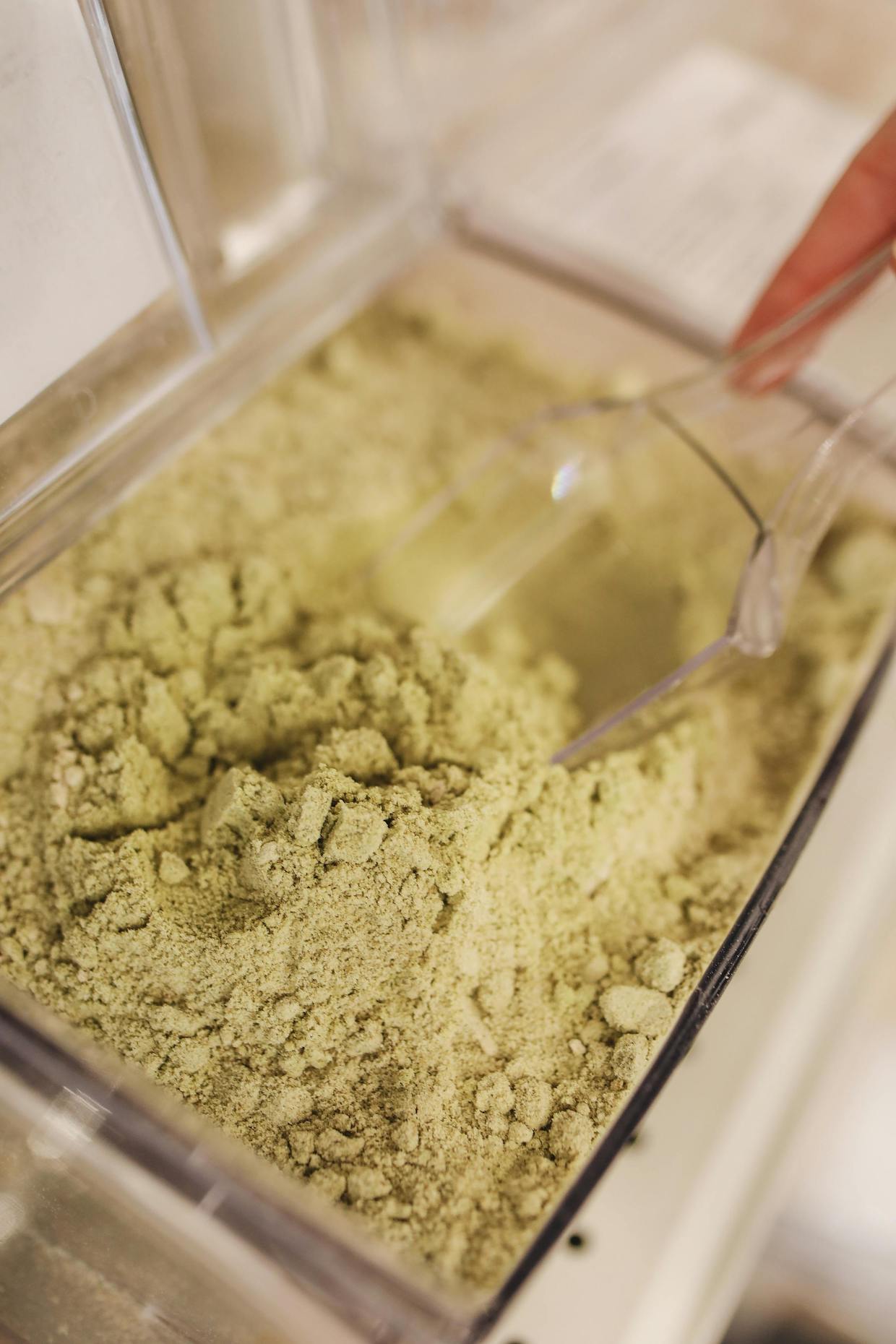
Matcha is a fine powder made from dried and ground-up green tea (Camellia sinensis) leaves. It has recently gained popularity as a drink and a flavor variety in many different foods.
Matcha contains many beneficial compounds (for example, dietary fiber and polyphenols) as well as being a source of caffeine.
Including matcha, or green tea, as part of a balanced diet may provide health benefits such as supporting healthy brain function and blood pressure.
However despite its health benefits, research has shown that drinking a lot of green tea is linked to lower levels of iron in the blood.
Iron is an essential micronutrient that helps transport oxygen around the body, as well as supporting many other important biological processes.
Our bodies can’t make iron, so we need to get it from our diet to support these functions. But even if we eat a lot of iron-rich foods, other things in our diet — such as coffee, red wine, calcium-rich foods and yes, matcha — can interfere with absorbing the iron.
So people with low iron levels need to be careful.

In particular, women who menstruate have an increased risk of low iron because of iron lost through bleeding.
You may have an iron deficiency if your iron falls below certain levels – typically for adults, less than 30 micrograms of iron per liter of blood. There are different cutoffs for children.
Iron deficiency anemia is a condition where very low levels of iron affect the functioning of red blood cells. It is diagnosed based on levels of hemoglobin in the blood (these cutoffs vary by age, sex and pregnancy status).
There are two main components in green tea that stop us absorbing iron. These are polyphenols and phytic acid (also known as phytate).
Both polyphenols and phytic acid have their own health benefits, for example, protecting against chronic diseases such as type 2 diabetes. But they also bind to iron and prevent it from being absorbed into the body.
So, if you have a lot of food or drink that contains these components — especially in combination with iron-rich foods — they can reduce iron absorption.
However, it’s not only matcha that can interfere. Phytic acids are also found in other teas and many plant foods, such as nuts, cereals and legumes. Tea, coffee, berries, and other fruits and vegetables are also high in polyphenols.
This varies between people.
One study showed people who drink three or more cups of green tea a day had lower blood iron levels than those who drink less than one a day. But they didn’t experience iron deficiency any more often.
However other research has linked moderate green tea consumption (two cups a day) to iron deficiency anaemia.
Whether or not your matcha latte will contribute to an iron deficiency depends on many other factors, including your existing iron levels.
So, what about matcha-flavored foods?
In these — for example, matcha ice cream — the actual amount of green tea powder is very low. This means it’s unlikely to significantly affect iron absorption.
But it’s not just about quantity — when you drink your matcha also matters.
To reduce the impact on iron absorption, it’s recommended you have green tea separately from meals — at least one hour between eating and drinking tea.
Multiple other factors in your diet can influence iron absorption. What you eat may either exacerbate or counteract the effects of your matcha latte on iron absorption.
Overall, balance is key to ensure you are getting the full spectrum of nutrients the body requires.
To support iron levels, you can incorporate iron-rich foods (such as beans, lentils, meat, fish and fortified cereals) into a healthy diet.
Eating vitamin C-rich foods (such as capsicum, broccoli, kiwifruit and other fruit and vegetables) along with foods that contain iron can help to enhance iron absorption.
If you are concerned about your iron levels, you should speak to a health-care professional — especially if experiencing symptoms of iron deficiency (such as tiredness, weakness or dizziness).
A blood test can diagnose low iron levels. If you have an iron deficiency, your GP or dietitian will help you manage symptoms and work out what is right for you.
Notes
Margaret Murray
Margeret Murray is a Senior Lecturer, Nutrition, Swinburne University of Technology



Given Monday’s sharp bearish reversal following a successful test of resistance near the 20-day average the price of natural gas remains under pressure. The reversal generated a lower daily high at $4.59, likely putting an end to the counter-trend rally. Monday’s decline to a lower retracement low shows the potential for a second leg down from the $5.50 trend high reached earlier this month. Symmetry in price between the two downswings is reached at $2.89, providing a potential downside target. However, to reach that lower price level higher key potential support levels would need to fail first.
Support for the retracement has been seen near the 61.8% Fibonacci retracement zone of $3.89, and the top boundary line of a rising trend channel. If a sustained decline triggers below the current low of $3.79, the 61.8% support zone will have failed. Based on Fibonacci analysis, the next lower target would then be $3.45, the 78.6% Fibonacci retracement level. However, the potentially significant 200-day moving average is a little higher, at $3.57 currently.
The current bearish correction is the first pullback towards the 200-day line since it was reclaimed in late-October. Resistance near the 200-day line was seen during two periods in October prior to the upside breakout. So, the expectation is for signs of support to occur near or above the 200-day average if the bearish correction continues to lower prices. If not, the price area around the 78.6% level becomes a key area for support to be seen. Depending on when the lower Fibonacci level is reached, a lower rising channel line might also assist in identify areas of dynamic support.
An alternative scenario is that last week’s outside week shows the potential for a broadening formation to evolve as price consolidates. If so, additional consolidation within a range from around today’s low of $3.79 and up to last week’s high of $4.59.
For a look at all of today’s economic events, check out our economic calendar.
The monthly trend is also up with the 12-month moving average at 149.817 controlling the long-term trend and providing support. However, the three-descending tops at 157.895, 158.880 and 161.950 are creating major headwinds, which could be a problem throughout 2026.
Holding the 12-month MA will indicate the presence of buyers, but it may just be enough to hold the Forex pair in a trading range if upside momentum can’t take out those tops.
Meanwhile, a failure at the 12-month MA will signal building selling pressure which will put 145.483 and 139.579 on the radar.
A central theme for 2026 is how far Japanese authorities will allow yen weakness to go. Interventions in 2024 set a precedent, and officials have noted the inflationary contribution of a weak yen—estimated at 0.3–0.5 percentage points over 12 months. Markets expect stronger warnings above 155 and a high likelihood of direct intervention near 158–160.
The unemployment rate’s rise to 4.4% late in 2025 raises the possibility of a sharper cooling in early 2026. If job losses accelerate, the Fed may resume cutting more aggressively than currently projected, narrowing yield spreads and weakening the dollar. Labor performance is now the most sensitive factor for the Fed’s early-2026 path.
USDJPY retains a strong correlation with global risk appetite. A correction in AI-driven equities or a broader defensive shift could generate yen strength, particularly versus high-beta currencies. Cross-yen pairs such as EURJPY and AUDJPY would likely respond quickly, with spillovers into USDJPY depending on the depth of the market move.
With Chair Powell’s term ending in mid-2026, markets face uncertainty around his successor. A Trump-appointed chair inclined toward faster rate cuts could alter expectations for U.S. yields, although institutional constraints limit how dramatic a shift could reasonably be. Even moderate differences in communication could influence spreads and FX pricing.
For corporates and institutional investors, 2026 calls for flexible hedging approaches. The baseline market view remains a strong dollar, but the risks around policy changes and intervention require scenario planning.
Japanese hedging costs should fall meaningfully as U.S. yields move lower—possibly by 100–125 bps—reducing the burden on domestic investors. This could gradually soften demand for USDJPY carry exposure but is unlikely to reverse flows on its own.
U.S. corporates with Japanese revenue exposure should prepare for another year of favorable FX translation but maintain contingency plans in case yen strength returns due to Fed dovishness or a risk-off shock.
The USDJPY outlook for 2026 is defined by a tension between yield-differential support for the dollar and rising political and intervention risks that could cap gains. Strategist forecasts span from J.P. Morgan’s bullish 164 target to more moderate expectations around 151–157. The most plausible path is a year characterized by episodic volatility but a prevailing bias toward higher levels—so long as U.S. labor markets avoid a sharper downturn.
Market participants should monitor Fed communication closely, BoJ commentary on the pace of normalization, and any indication from Japanese authorities about tolerable yen levels. With intervention risks elevated and global sentiment fragile, 2026 may reward traders who prepare for a wider distribution of outcomes rather than relying on the recent trend alone.
More Information in our Economic Calendar.