The main category of All News Articles.
You can use the search box below to find what you need.
[wd_asp id=1]
The main category of All News Articles.
You can use the search box below to find what you need.
[wd_asp id=1]
Marks & Spencer is launching a range of foods tailored to people taking weight-loss injections as use of the drugs accelerates in the UK.
The new range of 20 “nutrient-dense” products from the retailer is aimed at customers taking GLP-1 weight-loss medications, as supermarkets increasingly adapt to the impact the drugs are having on shopping baskets.
The range will go on sale in M&S foodhalls from January 5 and includes salads, meals and bread designed to deliver high levels of fibre, vitamins and minerals in smaller portions.
There has been a dramatic rise in the use of GLP-1 drugs in the UK. Online searches and private prescriptions have increased sharply, driven by their effectiveness for weight loss and widespread media attention. About 1.5 million people in the UK are now estimated to be accessing GLP-1 treatment privately, while NHS England prescriptions for the injections have risen by around 900 per cent since 2020.
GLP-1 medications — known formally as glucagon-like peptide-1 (GLP-1) receptor agonists — were originally developed to treat type 2 diabetes by helping to regulate blood sugar. In recent years, drugs such as semaglutide (sold as Ozempic for diabetes and Wegovy for weight loss) and tirzepatide (sold as Mounjaro) have surged in popularity for their weight-loss effects, as they suppress appetite, slow digestion and signal fullness to the brain.
• Our writers’ share tips for 2026, plus last year’s winners and losers
Nutrient-dense foods are those that provide a concentrated source of vitamins, minerals, fibre, healthy fats and protein relative to their calorie content. M&S said the range was developed by its nutritionists in consultation with the British Nutrition Foundation, using criteria that ensure each product delivers more nutrients per mouthful.
M&S said the new range had been developed to address the nutritional challenges that can arise when people eat less, whether due to medication, age or lifestyle. A reduced appetite can make it harder to consume enough fibre and essential nutrients, increasing the risk of deficiencies and digestive side effects such as constipation.
Grace Ricotti, M&S head of food nutrition, said: “Our nutrient-dense range is perfect for customers looking to support their health as each recipe is packed with the key nutrients we all need in our diets.
“With the increase in popularity of weight-loss injections, a reduced appetite can mean missing out on important nutrients and that’s why nutrient density is so important.
“These new meals, snacks and drinks can help everyone get more fibre, vitamins and minerals in their diet.”
Supermarkets and consumer goods companies are increasingly catering to households using the drugs. Morrisons was the first UK supermarket to announce a dedicated “GLP-1 friendly” range, developed with sports nutrition brand Applied Nutrition, under its “Small & Balanced” banner. Nestlé, the consumer goods giant, has launched a frozen food brand in the US aimed at GLP-1 users, while Haleon, the British multinational consumer healthcare company, has introduced a multivitamin designed to help replenish nutrients for people eating less.
The trend is expected to accelerate further as GLP-1 medications move beyond injections. Tablet versions are beginning to reach the market, with US regulators approving an oral version of Wegovy and rival pills expected to follow, potentially widening access to the drugs.
While the drugs are approved for diabetes and obesity treatment, clinicians have raised concerns about the number of people accessing them outside clinical pathways for cosmetic weight loss. The long-term consequences of widespread use are still being studied, particularly as lower calorie intake can increase the risk of nutrient deficiencies if diets are not carefully managed.
Jakarta, Pintu News – The crypto market has recently shown very positive signals towards Ripple , with crypto analysts identifying a promising bullish pattern. With the first monthly golden cross indication against Bitcoin since 2018, Ripple (XRP) is predicted to experience a significant surge. If Bitcoin (BTC) remains stable, the potential price increase of Ripple (XRP) could reach 1,200%, with a target price of around $24 per coin.
According to Watcher Guru, the bullish flag pattern seen on Ripple’s (XRP) price chart recently signals the possible start of a major bull cycle, similar to the expected Bitcoin (BTC) boom in 2024.
Currently, Ripple (XRP) is showing a rare monthly golden cross against Bitcoin (BTC), a condition that last occurred in 2018. If this condition continues, Ripple (XRP) does not need a drop in Bitcoin (BTC) price to rise. Simply by sustained demand, the potential price increase would be very significant.
Also read: Global Liquidity Strengthens, Early 2026 Is Considered to be the Turning Point of the Crypto Market!
According to Watcher Guru, heading into 2026, Ripple (XRP) price predictions for January range from $1.77 to $3.40. However, some more optimistic scenarios even predict the price could reach $8.
While this prediction requires near-impossible market conditions, if achieved, it could open up opportunities for Ripple (XRP) to reach $10 or more. Standard Chartered, one of the banking giants, also predicts a new price spike for Ripple (XRP) in 2026, with a potential increase of up to 330% from the current price.
Read also: The Bleak Outlook for Altcoins in 2026: Michaël van de Poppe Reveals This
Besides the interaction with Bitcoin (BTC), there are other factors that could push the price of Ripple (XRP) higher. One of these is the passage of the CLARITY Act legislation which is expected to happen soon.
The new crypto bill will introduce more liberal rules regarding financial institutions’ interactions with digital assets. These regulatory changes are expected to facilitate wider adoption, increase institutional interest in altcoins like Ripple (XRP), and drive prices higher.
With various positive factors in its favor, 2026 could be a pivotal year for Ripple (XRP). From technical analysis to regulatory changes, all elements point to great potential for Ripple (XRP) value growth. Investors and market watchers should pay close attention to these evolving dynamics, as Ripple (XRP) may be about to experience one of the most exciting periods in its history.
That’s the latest information about crypto. Follow us on Google News to get the latest crypto news about crypto projects and blockchain technology. Also, learn crypto from scratch with complete discussion through Pintu Academy and stay up-to-date with the latest crypto market such as bitcoin price today, xrp coin price today, dogecoin and other crypto asset prices through Pintu Market.
Enjoy an easy and secure crypto trading experience by downloading Pintu crypto app via Google Play Store or App Store now. Also, get a web trading experience with various advanced trading tools such as pro charting, various types of order types, and portfolio tracker only at Pintu Pro.
*Disclaimer
This content aims to enrich readers’ information. Pintu collects this information from various relevant sources and is not influenced by outside parties. Note that an asset’s past performance does not determine its projected future performance. Crypto trading activities have high risk and volatility, always do your own research and use cold cash before investing. All activities of buying and selling bitcoin and other crypto asset investments are the responsibility of the reader.
Reference
In the flashy realm of Web3, hype often overshadows reality. Projects boast jaw-dropping stats like “10 million wallets” or “over 50 million unique addresses,” painting pictures of explosive growth. But here’s the cold, hard truth: wallets lie. These numbers are frequently inflated by bots, sybil attacks, and airdrop hunters chasing free tokens. For builders, investors, and marketers in crypto, distinguishing real Web3 users from fakes isn’t just smart—it’s essential for survival.
This in-depth guide breaks down why old-school metrics crumble in Web3, reveals battle-tested ways to spot genuine engagement, and explores how Web3 gaming could onboard the next 100 million users. If you’re tired of chasing holograms, read on to learn how to measure what truly matters.
Blockchain’s public ledger is a boon for data nerds. Platforms like Dune Analytics and Etherscan let anyone tally wallet addresses and transactions in seconds. It seems straightforward: more wallets mean more users, right?
Wrong. The average Web3 project claims 1 million+ users, yet daily active users (DAU) often limp along below 10,000. On-chain forensics experts estimate that up to 80% of activity in popular protocols comes from inorganic sources. Why? Web3’s permissionless design makes it a playground for automation.
Bots have haunted Web2 platforms like Twitter and Facebook for years, but Web3 amplifies the problem. Anyone can spin up thousands of wallets for pennies using scripts. Here’s the typical playbook:
The fallout is brutal. Marketers blow budgets on ads that reach bots. Investors pour funds into projects with phantom TVL (total value locked). Builders iterate on feedback from fake users, building products no one wants.
To pierce the bot veil, abandon total wallet counts. Prioritize behavioral data that sophisticated scripts struggle to mimic perfectly. Here’s your essential toolkit for on-chain analytics:
Track unique addresses performing meaningful actions daily or monthly. A healthy ratio? MAU should be 5-10x DAU for engaged communities.
Real users stick around; bots spike during hype and vanish. Analyze week-over-week retention—aim for over 30% for sustainable growth. Tools like Nansen excel here with labeled wallet cohorts.
If 1% of wallets control 90% of activity, suspect farming ops. Use Arkham Intelligence or custom Dune queries to label whales, VCs, and known farms. Follow “smart money” flows for genuine interest.
| Tool | Best For |
|---|---|
| Dune Analytics | Custom dashboards, free queries |
| Nansen | Wallet labeling, smart money |
| Arkham Intelligence | Entity tracking, bot detection |
| Glassnode | Network-wide metrics |
Bonus: Layer-2 specifics. Ethereum L2s like Optimism see higher bot ratios due to cheap txns—adjust thresholds accordingly.
Crypto’s core audience—early adopters—tops out at around 100 million. DeFi’s yield farming feels like a job, NFTs scream speculation. Normies won’t bite. Solution? Web3 gaming.
Games sneak blockchain in via the back door: fun first, ownership second. Forget grindy play-to-earn (P2E) like early Axie Infinity. Modern titles blend AAA quality with true economies:
Projections are bullish: By 2025, Web3 gaming DAU could 10x DeFi’s, hitting tens of millions. Why? Gamers number 3 billion globally. “Games don’t sell crypto; crypto enhances games,” as the saying goes. True ownership of skins, land, or heroes creates sticky, real users—not bot farms.
Measurement is step one; resilience is key. Here’s how:
Case study: Blast’s airdrop drew millions of wallets but saw 70% drop-off post-claim. Contrast with Parallel’s steady climb via gameplay loops.
In a bot-driven Web3, vanity metrics kill projects. But with sharp on-chain analytics, bot-proof designs, and a gaming pivot, you can unearth diamonds amid the noise. The next wave isn’t more addresses—it’s real Web3 users who play, trade, and build long-term.
Ready to cut through the lies? Fire up Dune, label your data, and bet on games. The authentic revolution favors those who count humans, not shadows.
Keywords: Web3 users, crypto bots, real wallet users, Web3 gaming, sybil attacks, on-chain analytics
Discuss this news on our Telegram Community. Subscribe to us on Google news and do follow us on Twitter @Blockmanity
Did you like the news you just read? Please leave a feedback to help us serve you better
Disclaimer: Blockmanity is a news portal and does not provide any financial advice. Blockmanity’s role is to inform the cryptocurrency and blockchain community about what’s going on in this space. Please do your own due diligence before making any investment. Blockmanity won’t be responsible for any loss of funds.
Copper price repeatedly forming weak trading, attempting to surpass stochastic negativity by its fluctuation above EMA50 at $5.5100, the continuation of the sideways bias dominance is expected until gathering the required bullish momentum to resume the bullish attack and achieving extra gains by its rally towards $5.8000 reaching the next resistance at $5.9700.
While the decline below the current support will force it to delay the bullish attack and form bearish waves, which forces it to suffer some losses by reaching $5.3200 followed by the base of the next sport at 5.1500 level.
The expected trading range for today is between $5.5500 and $5.8000
Trend forecast: Bullish
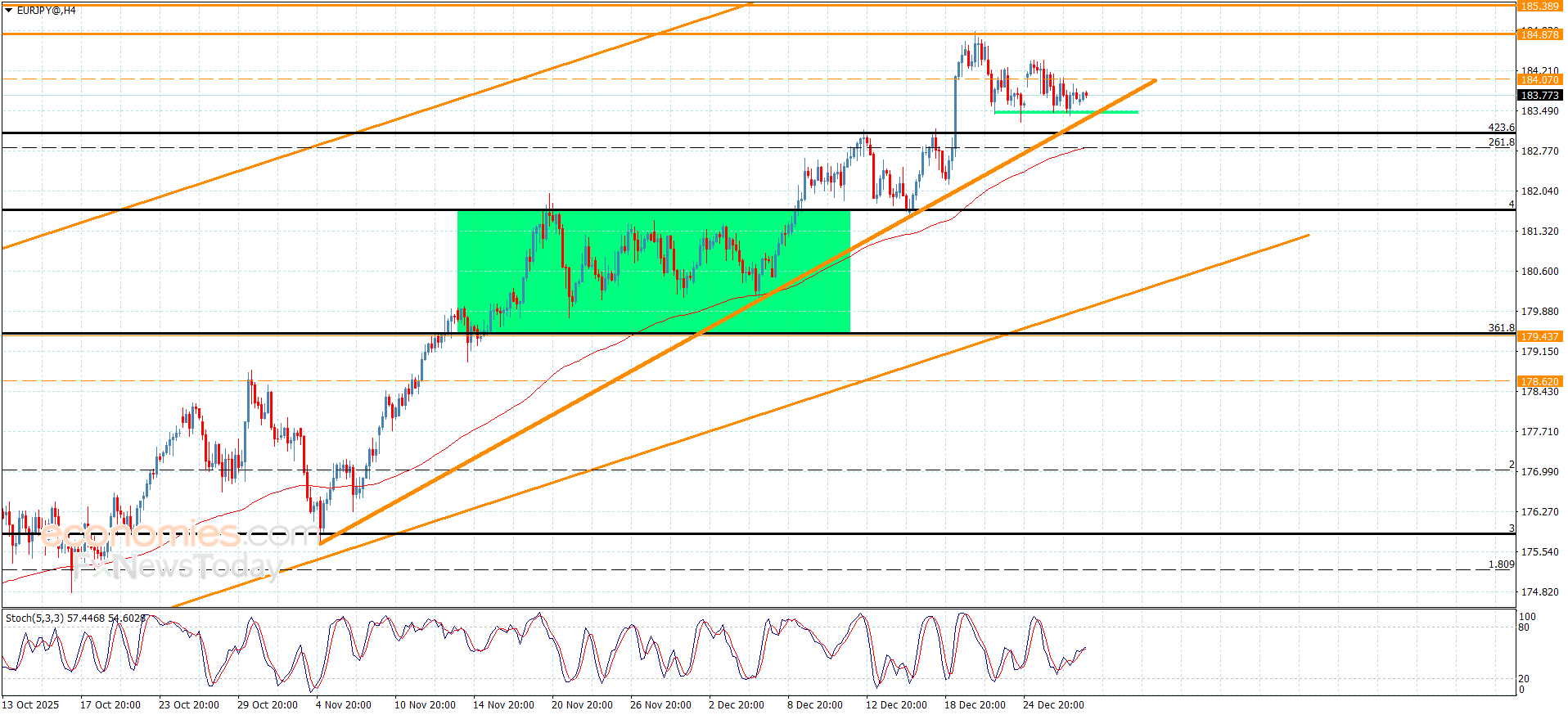
The EURJPY pair began activating with the main indicators’ positivity, to end the bearish corrective attempts after hitting 183.40 level, which represents an extension for the main bullish channel’s support.
Note that renewing the bullish attack requires surpassing extra barrier at 184.40, therefore, we expect the price confinement within these levels until breaching the barrier, to begin recording clear gains by its rally towards 184.85 and 185.40.
The expected trading range for today is between 183.40 and 184.10
Trend forecast: sideways
Marks & Spencer is launching a range of foods tailored to people taking weight-loss injections as use of the drugs accelerates in the UK.
The new range of 20 “nutrient-dense” products from the retailer is aimed at customers taking GLP-1 weight-loss medications, as supermarkets increasingly adapt to the impact the drugs are having on shopping baskets.
The range will go on sale in M&S foodhalls from January 5 and includes salads, meals and bread designed to deliver high levels of fibre, vitamins and minerals in smaller portions.
There has been a dramatic rise in the use of GLP-1 drugs in the UK. Online searches and private prescriptions have increased sharply, driven by their effectiveness for weight loss and widespread media attention. About 1.5 million people in the UK are now estimated to be accessing GLP-1 treatment privately, while NHS England prescriptions for the injections have risen by around 900 per cent since 2020.
GLP-1 medications — known formally as glucagon-like peptide-1 (GLP-1) receptor agonists — were originally developed to treat type 2 diabetes by helping to regulate blood sugar. In recent years, drugs such as semaglutide (sold as Ozempic for diabetes and Wegovy for weight loss) and tirzepatide (sold as Mounjaro) have surged in popularity for their weight-loss effects, as they suppress appetite, slow digestion and signal fullness to the brain.
• Our writers’ share tips for 2026, plus last year’s winners and losers
Nutrient-dense foods are those that provide a concentrated source of vitamins, minerals, fibre, healthy fats and protein relative to their calorie content. M&S said the range was developed by its nutritionists in consultation with the British Nutrition Foundation, using criteria that ensure each product delivers more nutrients per mouthful.
M&S said the new range had been developed to address the nutritional challenges that can arise when people eat less, whether due to medication, age or lifestyle. A reduced appetite can make it harder to consume enough fibre and essential nutrients, increasing the risk of deficiencies and digestive side effects such as constipation.
Grace Ricotti, M&S head of food nutrition, said: “Our nutrient-dense range is perfect for customers looking to support their health as each recipe is packed with the key nutrients we all need in our diets.
“With the increase in popularity of weight-loss injections, a reduced appetite can mean missing out on important nutrients and that’s why nutrient density is so important.
“These new meals, snacks and drinks can help everyone get more fibre, vitamins and minerals in their diet.”
Supermarkets and consumer goods companies are increasingly catering to households using the drugs. Morrisons was the first UK supermarket to announce a dedicated “GLP-1 friendly” range, developed with sports nutrition brand Applied Nutrition, under its “Small & Balanced” banner. Nestlé, the consumer goods giant, has launched a frozen food brand in the US aimed at GLP-1 users, while Haleon, the British multinational consumer healthcare company, has introduced a multivitamin designed to help replenish nutrients for people eating less.
The trend is expected to accelerate further as GLP-1 medications move beyond injections. Tablet versions are beginning to reach the market, with US regulators approving an oral version of Wegovy and rival pills expected to follow, potentially widening access to the drugs.
While the drugs are approved for diabetes and obesity treatment, clinicians have raised concerns about the number of people accessing them outside clinical pathways for cosmetic weight loss. The long-term consequences of widespread use are still being studied, particularly as lower calorie intake can increase the risk of nutrient deficiencies if diets are not carefully managed.
Solana continues to position itself as one of the most ambitious blockchain ecosystems in the market. Developers, investors, and institutions now focus on its long term growth story. The network has moved beyond recovery mode and entered a phase of structured expansion. Each upgrade adds credibility to Solana’s ambition.
The current Solana price forecast reflects more than market optimism. It captures measurable progress across infrastructure, adoption, and capital inflows. Solana no longer relies on hype driven cycles alone. It now builds value through execution and developer momentum.
As 2026 approaches, analysts increasingly discuss higher valuation ranges for SOL. Projections suggest steady appreciation early in the year. Stronger upside potential appears possible by year end. This outlook aligns closely with the Solana roadmap 2026 and ecosystem growth plans.
📈SOLANA TO $400 BY Q4 2026?
Solana’s 2026 roadmap signals steady upside, with Firedancer, RWA expansion, and stablecoin growth potentially driving SOL’s price.
Targets range from $130–$200 in early 2026 to $280–$400 by year-end. pic.twitter.com/9Vp5yixena
— Coin Bureau (@coinbureau) December 31, 2025
Firedancer stands as one of Solana’s most anticipated technical upgrades. Jump Crypto designed this validator client to boost speed and resilience. The upgrade reduces single client risk across the network. It also improves transaction reliability under heavy demand.
SOL already processes high transaction volumes efficiently. Firedancer aims to elevate this advantage further. Developers expect higher throughput without sacrificing decentralization. These improvements attract institutional builders and high frequency applications.
The Solana price forecast benefits directly from this development. Faster and more stable infrastructure strengthens confidence among long term holders. It also supports higher on chain activity during market peaks. That combination often translates into stronger valuation support.
Tokenized real world assets continue to gain momentum across blockchain markets. Solana has emerged as a favored network for these experiments. Low fees and high speed make it attractive for asset issuers. Financial institutions value predictable execution environments.
Projects now tokenize treasuries, credit instruments, and commodities on Solana. This trend expands the network’s utility beyond speculation. It also diversifies transaction demand across market cycles. These factors improve sustainability for the ecosystem.
The SOL price prediction improves when real world adoption rises. Institutional participation reduces volatility over time. It also introduces deeper liquidity sources. The Solana roadmap 2026 clearly prioritizes this expansion strategy.
Stablecoins form the backbone of decentralized finance activity. Solana has seen rapid growth in stablecoin circulation. Users rely on the network for payments, trading, and yield strategies. These flows generate consistent transaction volumes.
Major stablecoin issuers continue expanding Solana support. Developers integrate stablecoins into consumer focused applications. This growth supports daily usage rather than speculative spikes alone. Networks with consistent usage often command higher valuations.
The SOL price forecast reflects this structural shift. Stablecoin activity anchors the ecosystem during volatile periods. It also supports faster recoveries during bullish cycles. Analysts consider this factor critical for late 2026 projections.
Solana competes directly with Ethereum and emerging alternatives. It differentiates through performance and cost efficiency. Many users prioritize experience over ideology. Solana delivers smooth interactions consistently.
Institutions also prefer predictable infrastructure. SOL offers that advantage through technical upgrades. Firedancer further strengthens this positioning. Competing networks still struggle with congestion and fee volatility.
This competitive edge strengthens the SOL price prediction narrative. Markets reward networks that scale effectively. Solana’s execution track record supports premium valuation expectations.
Silver price (XAG/USD) has lost its nearly a 4.5% gain registered in the previous session, trading around $72.50 during the Asian hours on Wednesday. Silver prices came under pressure after the CME raised margin requirements on Silver futures, prompting leveraged traders to reduce positions as prices became technically stretched. Analysts said the pullback reflected position unwinding rather than any deterioration in underlying demand.
However, Silver prices are on track for an annual gain of over 150% in 2025, marking the metal’s strongest yearly performance. The rally accelerated after US President Donald Trump’s global tariff rollout and has been further supported by persistent geopolitical tensions, US rate cuts, and strong industrial demand, especially from the solar, electronics, and data-center sectors.
Silver’s rally has also been driven by a surge in speculative demand in China, pushing Shanghai Futures Exchange premiums to record highs. The elevated premiums signal intense local demand and have tightened global supply chains, mirroring earlier inventory squeezes in London and New York vaults.
Meanwhile, the Federal Open Market Committee’s (FOMC) December Meeting Minutes, released Tuesday, showed most participants favored pausing further rate cuts if inflation continues to ease. Some officials also argued for holding rates steady after three cuts this year aimed at supporting a weakening labor market.
The demand for safe-haven metals, including silver, increases over the geopolitical tensions, Uncertainty over a Russia-Ukraine peace deal, renewed Middle East tensions, and frictions between the US and Venezuela.
Silver is a precious metal highly traded among investors. It has been historically used as a store of value and a medium of exchange. Although less popular than Gold, traders may turn to Silver to diversify their investment portfolio, for its intrinsic value or as a potential hedge during high-inflation periods. Investors can buy physical Silver, in coins or in bars, or trade it through vehicles such as Exchange Traded Funds, which track its price on international markets.
Silver prices can move due to a wide range of factors. Geopolitical instability or fears of a deep recession can make Silver price escalate due to its safe-haven status, although to a lesser extent than Gold’s. As a yieldless asset, Silver tends to rise with lower interest rates. Its moves also depend on how the US Dollar (USD) behaves as the asset is priced in dollars (XAG/USD). A strong Dollar tends to keep the price of Silver at bay, whereas a weaker Dollar is likely to propel prices up. Other factors such as investment demand, mining supply – Silver is much more abundant than Gold – and recycling rates can also affect prices.
Silver is widely used in industry, particularly in sectors such as electronics or solar energy, as it has one of the highest electric conductivity of all metals – more than Copper and Gold. A surge in demand can increase prices, while a decline tends to lower them. Dynamics in the US, Chinese and Indian economies can also contribute to price swings: for the US and particularly China, their big industrial sectors use Silver in various processes; in India, consumers’ demand for the precious metal for jewellery also plays a key role in setting prices.
Silver prices tend to follow Gold’s moves. When Gold prices rise, Silver typically follows suit, as their status as safe-haven assets is similar. The Gold/Silver ratio, which shows the number of ounces of Silver needed to equal the value of one ounce of Gold, may help to determine the relative valuation between both metals. Some investors may consider a high ratio as an indicator that Silver is undervalued, or Gold is overvalued. On the contrary, a low ratio might suggest that Gold is undervalued relative to Silver.
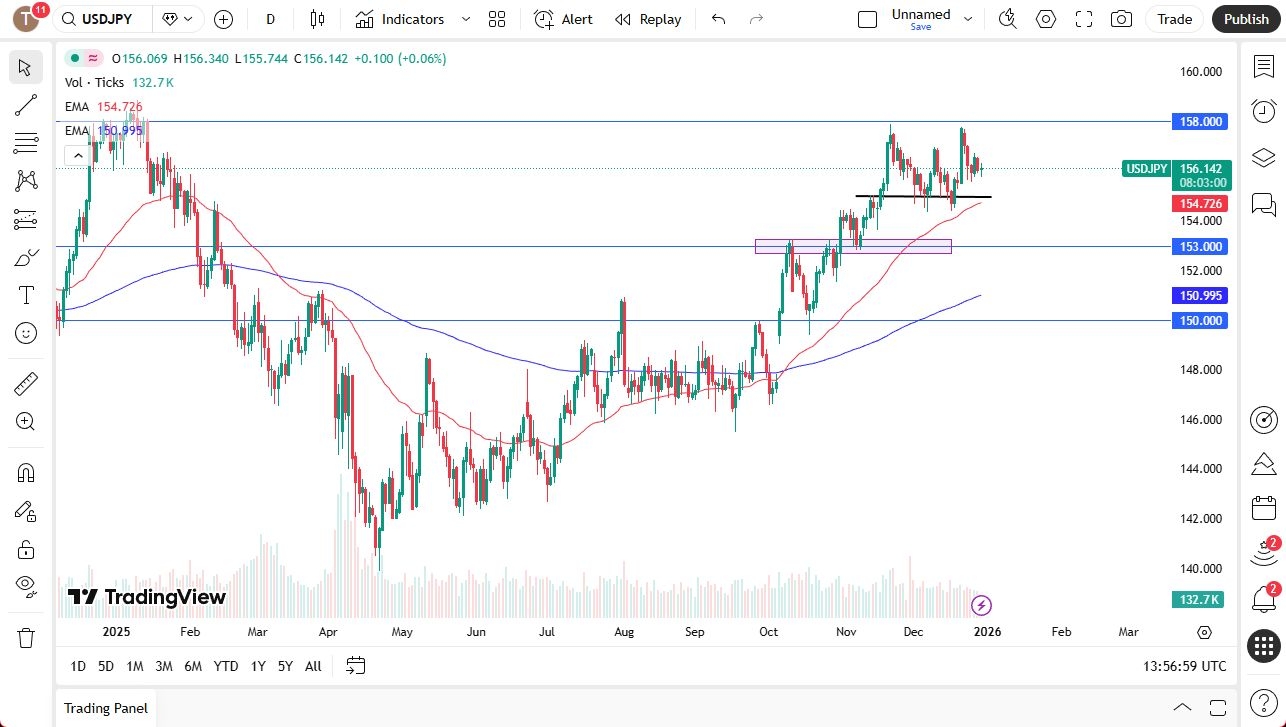
The US dollar has been choppy against the Japanese yen during trading on Tuesday, as we are simply flailing about trying to find some type of momentum. I don’t think we’re going to, at least not in the short term, as we are going to be more worried about the holiday and the lack of liquidity than anything else.
All things being equal, this is a market that I think is going to continue to pay close attention to the 50-day EMA underneath, which is sitting just below the 155 yen level. I suspect that area in that general vicinity is your short-term floor, while the 158 yen level above is your ceiling.

I don’t expect to see any major change in the short term, but I do recognize that eventually we will have to break out of this range. If we can get above the 158 yen level, then I do think that the dollar will go to the 160 yen level. A breakdown below the 154.50 yen level opens up a move down to the 153 yen level.
Fundamentally speaking, the Bank of Japan did just raise rates, and the Federal Reserve is expected to cut once or twice in 2026, but the reality is that the interest rate differential is still wide enough that you can drive a truck through it, and the Bank of Japan really has no ability to tighten monetary policy significantly.
We are starting to hear murmurs of Japan tightening, and while that might be true to a point, the demographics of the country and quite frankly, the debt load don’t allow that to be a major feature going forward. I like the idea of buying dips against the yen and will continue to do so.
Want to trade our USD/JPY forex analysis and predictions? Here’s a list of forex brokers in Japan to check out.
Christopher Lewis has been trading Forex and has over 20 years experience in financial markets. Chris has been a regular contributor to Daily Forex since the early days of the site. He writes about Forex for several online publications, including FX Empire, Investing.com, and his own site, aptly named The Trader Guy. Chris favours technical analysis methods to identify his trades and likes to trade equity indices and commodities as well as Forex. He favours a longer-term trading style, and his trades often last for days or weeks.
Marks & Spencer is launching a range of foods tailored to people taking weight-loss injections as use of the drugs accelerates in the UK.
The new range of 20 “nutrient-dense” products from the retailer is aimed at customers taking GLP-1 weight-loss medications, as supermarkets increasingly adapt to the impact the drugs are having on shopping baskets.
The range will go on sale in M&S foodhalls from January 5 and includes salads, meals and bread designed to deliver high levels of fibre, vitamins and minerals in smaller portions.
There has been a dramatic rise in the use of GLP-1 drugs in the UK. Online searches and private prescriptions have increased sharply, driven by their effectiveness for weight loss and widespread media attention. About 1.5 million people in the UK are now estimated to be accessing GLP-1 treatment privately, while NHS England prescriptions for the injections have risen by around 900 per cent since 2020.
GLP-1 medications — known formally as glucagon-like peptide-1 (GLP-1) receptor agonists — were originally developed to treat type 2 diabetes by helping to regulate blood sugar. In recent years, drugs such as semaglutide (sold as Ozempic for diabetes and Wegovy for weight loss) and tirzepatide (sold as Mounjaro) have surged in popularity for their weight-loss effects, as they suppress appetite, slow digestion and signal fullness to the brain.
• Our writers’ share tips for 2026, plus last year’s winners and losers
Nutrient-dense foods are those that provide a concentrated source of vitamins, minerals, fibre, healthy fats and protein relative to their calorie content. M&S said the range was developed by its nutritionists in consultation with the British Nutrition Foundation, using criteria that ensure each product delivers more nutrients per mouthful.
M&S said the new range had been developed to address the nutritional challenges that can arise when people eat less, whether due to medication, age or lifestyle. A reduced appetite can make it harder to consume enough fibre and essential nutrients, increasing the risk of deficiencies and digestive side effects such as constipation.
Grace Ricotti, M&S head of food nutrition, said: “Our nutrient-dense range is perfect for customers looking to support their health as each recipe is packed with the key nutrients we all need in our diets.
“With the increase in popularity of weight-loss injections, a reduced appetite can mean missing out on important nutrients and that’s why nutrient density is so important.
“These new meals, snacks and drinks can help everyone get more fibre, vitamins and minerals in their diet.”
Supermarkets and consumer goods companies are increasingly catering to households using the drugs. Morrisons was the first UK supermarket to announce a dedicated “GLP-1 friendly” range, developed with sports nutrition brand Applied Nutrition, under its “Small & Balanced” banner. Nestlé, the consumer goods giant, has launched a frozen food brand in the US aimed at GLP-1 users, while Haleon, the British multinational consumer healthcare company, has introduced a multivitamin designed to help replenish nutrients for people eating less.
The trend is expected to accelerate further as GLP-1 medications move beyond injections. Tablet versions are beginning to reach the market, with US regulators approving an oral version of Wegovy and rival pills expected to follow, potentially widening access to the drugs.
While the drugs are approved for diabetes and obesity treatment, clinicians have raised concerns about the number of people accessing them outside clinical pathways for cosmetic weight loss. The long-term consequences of widespread use are still being studied, particularly as lower calorie intake can increase the risk of nutrient deficiencies if diets are not carefully managed.