The main category of All News Articles.
You can use the search box below to find what you need.
[wd_asp id=1]
The main category of All News Articles.
You can use the search box below to find what you need.
[wd_asp id=1]
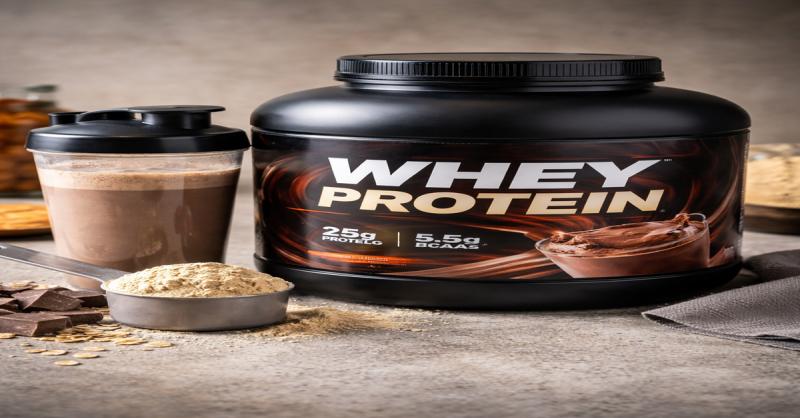
The Global “Whey Protein Market” is expected to grow at a CAGR of 7.2% during the forecast period (2024-2031). Whey proteins are derived from whey during cheese production and are known for improving athletic performance. They are an alternative to milk for lactose-intolerant people.
Whey protein is a high-quality dairy-derived protein widely used in sports nutrition, functional foods, and dietary supplements due to its rich amino acid profile and fast absorption. It supports muscle growth, recovery, weight management, and overall health, making it popular among athletes, fitness enthusiasts, and health-conscious consumers. Whey protein is available in various forms, including concentrate, isolate, and hydrolysate, each offering different purity and digestion benefits. Rising awareness of active lifestyles, protein-rich diets, and preventive health is driving global demand. With advancements in processing technologies and flavored formulations, whey protein continues to be a key ingredient in modern nutrition and wellness products.
Get a Free Sample PDF Of This Report (Get Higher Priority for Corporate Email ID):- https://www.datamintelligence.com/download-sample/whey-protein-market?praveen
Japan: Recent Industry Developments
✅ In November 2025, Japanese nutrition companies launched high-quality whey protein products tailored for muscle health, aging populations, and clinical nutrition, emphasizing purity and safety standards.
✅ In October 2025, manufacturers in Japan introduced low-lactose and easily digestible whey protein formulations, supporting digestive comfort and broader consumer adoption.
✅ In September 2025, collaborations between Japanese food companies and research institutes focused on protein fortification and bioavailability, supporting innovation in functional nutrition.
✅ In August 2025, Japanese brands expanded single-serve and ready-to-drink whey protein formats, catering to busy urban lifestyles and on-the-go nutrition needs.
United States: Recent Industry Developments
✅ In November 2025, U.S. whey protein manufacturers launched high-purity whey protein isolates and hydrolysates targeting sports nutrition, clinical nutrition, and weight management applications. This strengthens the U.S. position in premium protein ingredients.
✅ In October 2025, U.S.-based nutrition companies expanded production of clean-label and grass-fed whey protein, responding to growing consumer demand for natural, minimally processed supplements.
✅ In September 2025, American brands introduced ready-to-mix and flavored whey protein formulations with improved solubility and digestibility, enhancing consumer convenience and product appeal.
✅ In August 2025, U.S. food and beverage manufacturers increased incorporation of whey protein into functional foods, including protein bars, beverages, and dairy alternatives, expanding market penetration.
Global: Recent Industry Developments
✅ In 2025, global demand for whey protein increased due to rising interest in sports nutrition, active lifestyles, and healthy aging across developed and emerging markets.
✅ In 2025, manufacturers worldwide introduced plant-enhanced and hybrid protein blends combining whey with functional ingredients, addressing diverse nutritional preferences.
✅ In 2024-2025, advancements in protein processing, filtration technologies, and flavor masking improved product quality, digestibility, and global adoption.
✅ In 2025, partnerships between dairy producers, nutrition brands, and food manufacturers strengthened global supply chains and innovation pipelines in the whey protein market.
Key Merges and Acquisitions(2025):
✅ Glanbia Nutritionals – strengthened its whey protein portfolio in 2025 by acquiring a specialty dairy protein manufacturer, expanding high-purity, fast-absorbing whey solutions for sports nutrition and clinical applications.
✅ Arla Foods Ingredients -expanded its functional whey protein offerings through the acquisition of an advanced filtration and processing technology company, enabling improved protein quality, solubility, and bioavailability.
✅ Global Sports Nutrition Consortium -pursued strategic acquisitions in 2025 targeting innovative whey protein startups focused on clean-label formulations, ready-to-drink protein beverages, and performance-driven nutrition to capture growing demand in the rapidly expanding global whey protein market.
Growth Drivers:
• Rising consumer focus on fitness, muscle building, weight management, and active lifestyles driving demand for whey protein products.
• Increasing adoption of high-protein diets and sports nutrition supplements among athletes and health-conscious individuals.
• Growing use of whey protein in functional foods, beverages, and clinical nutrition applications.
• Advancements in filtration, processing, and flavor technologies improving protein purity, digestibility, and taste.
• Expanding distribution through gyms, health stores, pharmacies, and e-commerce platforms, supporting broader consumer access globally.
Purchase this report before year-end and unlock an exclusive 30% discount
https://www.datamintelligence.com/buy-now-page?report=whey-protein-market?praveen
(Purchase 2 or more Reports and get 50% Discount)
Market Segmentation Analysis -Whey Protein
– By Type
Whey protein concentrate (WPC) dominates with nearly 45% share, driven by its cost-effectiveness, balanced protein content, and widespread use across sports nutrition and functional food products. Whey protein isolate (WPI) accounts for around 35%, supported by rising demand for high-protein, low-fat, and low-lactose formulations among fitness enthusiasts and health-conscious consumers. Whey protein hydrolysate (WPH) holds approximately 20%, benefiting from its fast absorption, easy digestibility, and growing adoption in clinical nutrition, infant formula, and premium sports recovery products.
– By Application
Sports and performance nutrition leads with about 40% share, fueled by increasing gym participation, endurance sports, and protein supplementation among athletes and active consumers. Functional foods and beverages account for nearly 30%, driven by incorporation of whey protein into ready-to-drink shakes, protein bars, bakery, and dairy-based products. Infant nutrition represents around 15%, supported by its high biological value and role in supporting growth and development. Clinical and medical nutrition holds approximately 10%, used for muscle wasting, elderly nutrition, and recovery diets, while other applications contribute the remaining 5%, including animal feed and specialized dietary formulations.
key players :
Agropur (Davisco Business Unit), Arla Foods, Fonterra Co-operative Group, Milk Specialties, Glanbia, Hilmar Cheese Company, Maple Island Inc., Foremost Farms, Valio Ltd, and DMK Group.
Key Highlights (3 Key Players) for Japan Craft Spirits :
– Agropur (Davisco Business Unit) generates strong revenue from whey protein ingredients, supplying high-quality whey protein isolates and concentrates for sports nutrition, clinical nutrition, and functional food applications, supported by advanced processing capabilities.
– Arla Foods drives significant revenue through its whey protein portfolio, offering functional and nutritional whey ingredients for infant nutrition, sports supplements, and food applications, leveraging cooperative milk sourcing and strong R&D expertise.
– Fonterra Co-operative Group secures substantial revenue from whey protein production, supplying premium whey protein concentrates and isolates for global nutrition, sports, and medical food markets through an extensive international distribution network.
– Milk Specialties records steady revenue from whey protein solutions, focusing on customized formulations for sports nutrition, weight management, and performance-focused dietary supplements.
– Glanbia generates robust revenue from whey protein ingredients and branded nutrition products, serving sports nutrition, lifestyle wellness, and clinical nutrition markets with science-backed formulations and global brand strength.
Speak to Our Analyst and Get Customization in the report as per your requirements
https://www.datamintelligence.com/customize/whey-protein-market?praveen
Regional Insights – Whey Protein Market
• North America holds the largest share of the global whey protein market, typically accounting for around 35-37% of total revenues. Growth is driven by strong demand from sports nutrition, functional foods, and dietary supplements, high health and fitness awareness, and well-established distribution through retail and e-commerce channels. The U.S. dominates regional consumption, with Canada contributing steadily.
• Europe represents a significant market, generally accounting for around 28-30% of global revenues. Expansion is supported by rising consumption of protein-enriched foods, increasing health-conscious populations, and strong dairy processing industries in Germany, the U.K., France, and the Netherlands.
• Asia-Pacific is the fastest-growing region, holding approximately 25-27% of the global share. Growth is fueled by rising disposable incomes, expanding fitness and wellness trends, increasing adoption of protein supplements, and growing dairy processing capacity in China, India, Japan, and Australia.
• South America accounts for around 5-6% of global revenues, driven by growing sports nutrition markets, rising awareness of protein intake, and expanding distribution in Brazil and Argentina.
• Middle East & Africa represent approximately 3-4% of the market, supported by increasing health awareness, expanding fitness culture, and growing availability of nutritional supplements in the UAE, Saudi Arabia, and South Africa.
Power your decisions with real-time competitor tracking, strategic forecasts, and global investment insights all in one place.
https://www.datamintelligence.com/reports-subscription?praveen
✅ Competitive Landscape
✅ Sustainability Impact Analysis
✅ KOL / Stakeholder Insights
✅ Unmet Needs & Positioning, Pricing & Market Access Snapshots
✅ Market Volatility & Emerging Risks Analysis
✅ Quarterly Industry Report Updated
✅ Live Market & Pricing Trends
✅ Import-Export Data Monitoring
Have a look at our Subscription Dashboard: https://www.youtube.com/watch?v=x5oEiqEqTWg
Company Name: DataM Intelligence
Contact Person: Sai Kiran
Email: Sai.k@datamintelligence.com
Phone: +1 877 441 4866
Website: https://www.datamintelligence.com
About Us –
DataM Intelligence is a Market Research and Consulting firm that provides end-to-end business solutions to organizations from Research to Consulting. We, at DataM Intelligence, leverage our top trademark trends, insights and developments to emancipate swift and astute solutions to clients like you. We encompass a multitude of syndicate reports and customized reports with a robust methodology.
Our research database features countless statistics and in-depth analyses across a wide range of 6300+ reports in 40+ domains creating business solutions for more than 200+ companies across 50+ countries; catering to the key business research needs that influence the growth trajectory of our vast clientele.
This release was published on openPR.
BNBUSD has maintained stability at $846.25, with zero change in the past day. As the market cap sits at a substantial $122.6 billion, investors are keen on whether Binance Coin can reach the $877.01 target predicted for the upcoming month. Let’s delve into the current price analysis and forecast potential.
BNBUSD is currently priced at $846.25, marking a stable position over the last 24 hours. The daily range spans from a low of $834.89 to a high of $849.66. Despite the calm, the coin remains significantly off its yearly high of $1376.64. The market sentiment appears cautious, with Meyka AI’s analysis confirming a relative volume of 0.84, suggesting subdued trading activity.
Looking at the technical indicators, the Relative Strength Index (RSI) reads 41.92, indicating neutrality but nearing an oversold territory. The MACD is at -25.21 with a histogram of 2.08, hinting at possible bullish momentum ahead. The ADX stands at 36.51, suggesting a strong trend, yet the Awesome Oscillator at -43.37 reflects current bearish undertones.
Forecasts project a monthly target of $877.01, while a quarterly outlook estimates $989.62. The long-term analysis sees BNB reaching $1,060.31 in five years, according to trend assessments. However, the one-year prediction at $654.31 reflects potential downturns, emphasizing the market’s volatility and the impact of broader economic factors.
Recent news indicates a stable outlook for BNB, with no drastic market-moving events. Despite slight declines reported by CoinDesk, BNB’s price has shown resilience. As Meyka AI notes, price forecasts rely heavily on macroeconomic shifts and regulatory developments, adding layers of complexity to the outlook feel.
In summary, BNBUSD’s immediate future hinges on the ability to maintain or exceed the $877.01 price target. While current technical indicators suggest a mixed sentiment, the potential for upward movement remains. Investors should remain mindful of market volatility and external factors that could influence cryptocurrency trends.
BNBUSD is predicted to reach $877.01 in the coming month, with a longer-term prediction of $989.62 in the next quarter. Forecasts can change due to macroeconomic shifts.
The RSI at 41.92 is close to oversold levels, suggesting potential for a price uptick if buying pressure increases. However, it currently indicates neutrality.
Technical indicators like MACD and ADX provide insights into market trends and momentum. They suggest mixed sentiment, but slight bullish signs could emerge.
Despite recent price stability, reports have noted minor declines. Current forecasts remain stable though, influenced by broader market dynamics and news.
For detailed BNBUSD trends and forecasts, check platforms like Meyka AI that provide AI-generated insights and real-time data analysis. BNBUSD
Disclaimer:
Cryptocurrency markets are highly volatile. This content is for informational purposes only.
The Forecast Prediction Model is provided for informational purposes only and should not be considered financial advice.
Meyka AI PTY LTD provides market data and sentiment analysis, not financial advice.
Always do your own research and consider consulting a licensed financial advisor before making investment decisions.
In my view, intervention threats will continue to cap USD/JPY upside at 158. Meanwhile, JGB yields would likely bolster yen demand, indicating a negative price outlook. However, the BoJ’s neutral interest rate will be pivotal, given recent concerns about sticky US inflation.
A higher neutral interest rate level, neither accommodative nor restrictive, would indicate a more hawkish BoJ rate path and a narrower US-Japan rate differential. A narrower rate differential would make yen carry trades into US assets less profitable, reversing yen carry trades, sending USD/JPY toward 140 over the longer term.
However, upside risks to the bearish outlook include:
These scenarios would weaken the yen and boost demand for the US dollar, sending USD/JPY higher. However, yen intervention warnings are likely to cap the upside at around the 158 level, based on the latest communication.
Read the full USD/JPY forecast, including chart setups and trade ideas.
In summary, USD/JPY trends reflect the Japanese government’s focus on forex markets and changing sentiment toward narrowing rate differentials. Market focus will remain on BoJ Governor Ueda and the Fed’s outlook on monetary policy and the BoJ’s view on the neutral interest rate.
A 1.5% to 2.5% neutral rate would indicate more aggressive BoJ rate hikes, supporting the bearish short- to medium-term outlook for USD/JPY. Furthermore, dovish Fed rhetoric will likely send USD/JPY toward 140 in the 6-12 month time horizon.
For more in-depth analysis, review today’s USD/JPY trading setups in our latest reports and consult the economic calendar.
I hadn’t bought tea from Adagio in a while, but their card program struck me as the perfect opportunity to try new blends. I waited until I’d accumulated several cards, then added a few samples to my cart–including Thai Tea and Mocha Nut Mate–and placed my order. When the pouches of loose-leaf tea arrived, I thought I’d write a review to help you find the perfect blends for your cabinet.
As always, this is NOT a paid Adagio promotion. These are my honest, unfiltered opinions about Adagio’s blends. Grab a mug, and let’s go!
When I opened the pouch, the leaves had a fresh, minty aroma with hints of coconut and vanilla. One sip, and I noted that Thai Tea pretty much smelled like it tastes: lightly sweet and creamy with strong coconut notes. The fruit and spices eased the black tea’s bitterness and gave the tea a bright, tropical personality. I love Thai iced tea, and this quickly became one of my favorite Adagio blends.
Mocha Nut Mate had a lot of promise: the leaves had a sweet chocolate-and-hazelnut aroma, and the ingredients included dark chocolate chips and toasted mate tea. Unfortunately, the drink had a strong, nutty taste that overwhelmed the chocolate, and the overall flavor and aroma (weirdly) reminded me of canned corn. That probably wasn’t the intention, but I don’t think the ingredients blended very well.
Genmai Cha was a new variety for me, so I looked it up and learned that it’s a combination of green leaves and popped, toasted rice. The rice even looked like tiny pieces of popcorn. Once I brewed the tea, the beverage had a warm, toasty aroma and a distinctly popcorn-like flavor–which might sound strange, but it was the perfect drink for autumn months. This blend would pair well with buttered bread or croissants.
Inside the bag, Rooibos offered small, crumbly leaves with a reddish hue and a sweet, earthy aroma that reminded me of mulch. The leaves turned the water reddish-brown, and when I took a sip, the tea had the sweet, woodsy flavor I’d been expecting. While I appreciated the hearty, robust taste, I couldn’t quite shake the feeling that I was drinking tree bark. Still, it’s a good blend for a cool afternoon.
With an eclectic mix of ingredients that included Ceylon Sonata, Assam Melody, cocoa nibs and blue cornflowers, Aquarius Tea sounded like a wild ride. The leaves had a bright, refreshing smell with strong hazelnut notes. When I drank the tea, the ingredients blended surprisingly well, creating a mild drink that tasted like smooth black tea mixed with hazelnut. It’s a decent blend, but I feel like you could’ve accomplished the same flavor with a simple black tea and crushed hazelnuts.
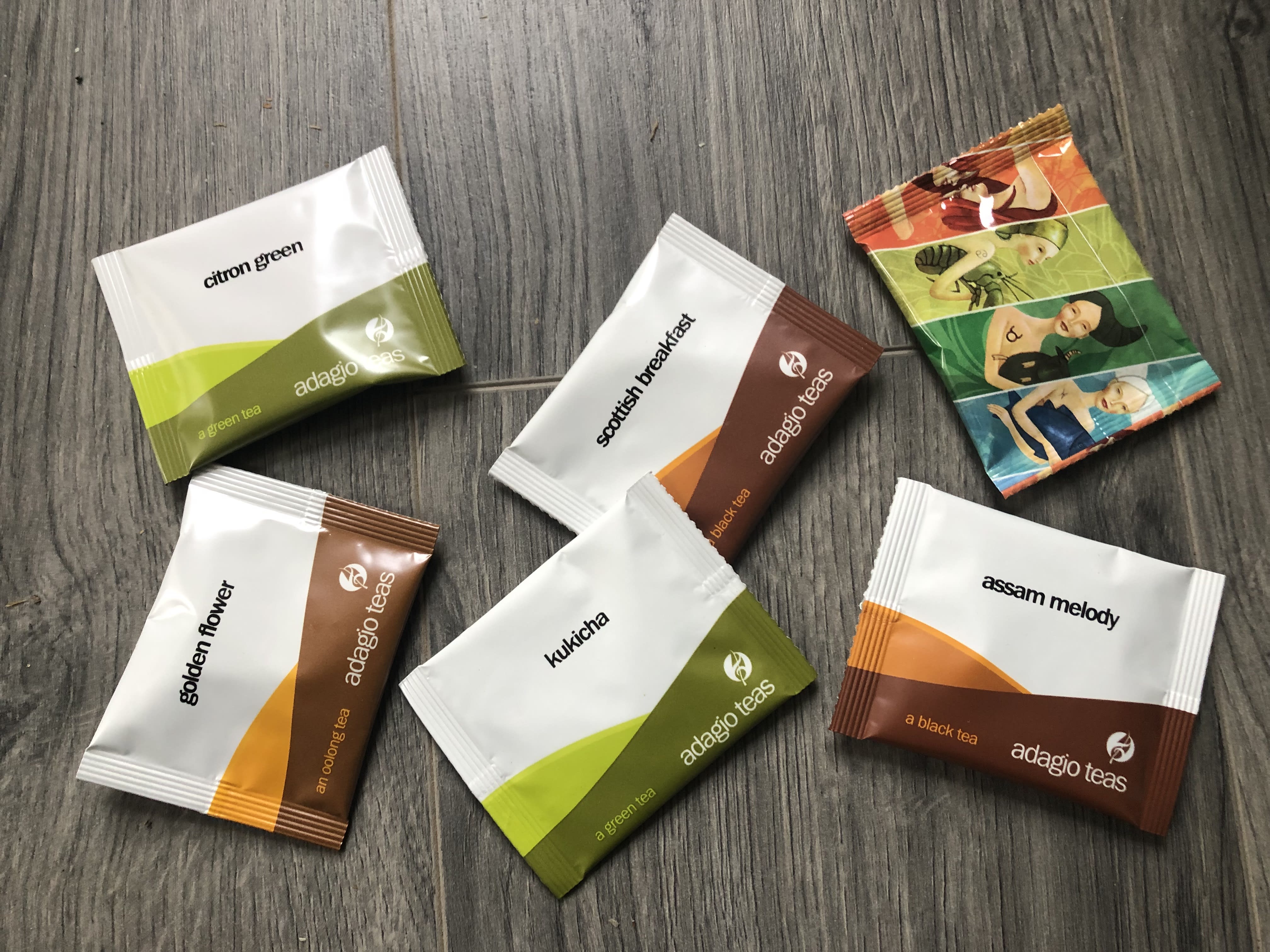
Instead of ground-up leaves, Golden Flower took the form of tightly curled pearls that smelled like iced tea. The brewed tea had a greenish shade, a distinctly earthy smell and a smooth, mild flavor with mossy notes. If green teas are usually too bitter for you, this is a calmer, more refreshing alternative. Plus, it’s fun to watch the leaves unfurl in the mug.
Assam Melody keeps it simple, offering black tea with no added ingredients. However, the flavor was a little maltier and more full-bodied than your standard cup of black tea, and it had a clean aftertaste. I also noted that this tea was less bitter than similar varieties. This is a good option for people who want an elevated drink without straying too far from the basics.
Kukicha’s leaves had a crisp, earthy aroma like chopped greens. When I brewed the tea, the leaves clumped together in a tight ball that resembled broccoli. Unsurprisingly, the tea had a distinct vegetable-like flavor that made me feel like I was drinking greens, but it was fresh and calming instead of bitter. I’m not a huge green tea fan, but Kukicha was the best variety I’d had in a while.
A bright and minty aroma wafted from Citron Green’s leaves. After brewing, this tea had a green, peppy flavor with a touch of spearmint, turning this drink into a cup of spring. This is another great blend for people who don’t care for more rustic, bitter varieties, and if you’re in a bad mood, a cup of Citron Green might cheer you up.
Scottish Breakfast’s leaves had a clean aroma, and the brewed tea was exactly what I expected: a strong cup of black tea with a malty flavor and a lingering aftertaste. When I added creamer, the flavor became smoother and milder, but it maintained the essence of Scottish Breakfast. This is a bold, unapologetic blend that’s also high in caffeine, so drink wisely.
Have you tried any of these teas? What’s your favorite Adagio blend? Let me know in the comments.
Today, the world’s first blockchain games launched on the two major social platforms LINE and Telegram, BOMBIE and CATTEA, officially landed on LINE MINI DAPP, bringing a brand new gaming experience to Asian players. These two games have attracted tens of millions of users on Telegram, and with their innovative gameplay and token reward mechanism, they have quickly set off a craze around the world.
BOMBIE is the world’s first fair-launched zombie shooting game. Players will enter the doomsday world, engage in fierce battles with zombies, and earn $BOMBIE tokens; while CATTEA is the world’s first “Drink to Earn” game, combining interesting match-3 gameplay with real-world milk tea shops to create a unique “drink and earn” experience.
As the world’s first blockchain game launched on two major social platforms, BOMBIE and CATTEA have launched a special luxury server lottery event! Players not only have the opportunity to win a Tesla Model Y, 20 iPhone 16 Pro Max, but also share a 1,000,000 CATI prize pool.
Global Women Health Probiotic Supplement Market reached US$ 1,544.28 million in 2023 and is expected to reach US$ 5,009.04 million by 2031, growing with a CAGR of 18.31% during the forecast period 2024-2031.
market is driven by rising awareness of intimate and digestive health, aging female population, increasing incidence of urogenital infections, preference for preventive wellness, strong retail and e-commerce penetration, scientific product innovation, supportive clinical evidence, and premiumization aligned with Japan’s health-conscious consumers, rising demand.
Get a Free Sample PDF Of This Report (Get Higher Priority for Corporate Email ID):-https://www.datamintelligence.com/download-sample/women-health-probiotic-supplement-market?pratik
Japan: Key Industry Developments
In May 2025, Nomura Dairy Products partnered with Probi to launch a probiotic‐enhanced carrot juice under the My Flora brand targeting women aged 30‐50 concerned about digestive and overall health; the drink features Lactiplantibacillus plantarum 299v with high live cell count per serving and is sold in supermarkets nationwide.
In June 2025, Yakult Honsha Co., Ltd. introduced a new probiotic capsule specifically designed to support women’s vaginal microbiota balance, aimed at reducing risk factors for bacterial vaginosis and yeast infections in adult women.
In May 2025, Meiji Co., Ltd. released a daily probiotic powder sachet enriched not only with beneficial strains but also collagen and vitamins to support both digestive wellness and skin hydration in female consumers.
In April 2025, Kao Corporation unveiled a synbiotic supplement combining probiotics with green tea polyphenols, formulated to improve gut flora diversity while also aiming to reduce menstrual‐related inflammation in women
Market Segmentation Analysis:
1) By Bacteria/Formulation Type:
In Japan, probiotic supplements targeting women are segmented by bacterial strain and formulation. Lactobacillus dominates as the most popular strain (~38% share) due to strong scientific validation and consumer trust in digestive and intimate health benefits, while bifidobacteria and multi‐strain blends gain traction for holistic gastrointestinal and immune support.
2) By Consumer Function/Health Benefit:
Japanese women’s health probiotic supplements are categorized by function, including digestive health, immune support, urogenital and vaginal health, and pregnancy support. Digestive and immunity products lead demand due to increasing wellness awareness, while intimate health variants grow with a focus on pH balance, UTI prevention, and hormonal wellness tailored to age‐specific female needs.
3) By End‐User Demographics:
In Japan, segmentation by end user places women at the forefront with around 44% of total probiotic supplement value, driven by health consciousness and preventive care habits. Other segments include seniors and younger consumers, but women aged 30‐50 comprise the core demographic due to proactive gut and reproductive health investment.
4) By Form/Delivery Format:
Japanese women’s probiotic supplements are segmented by form: capsules, tablets, liquids, powders and chewables. Capsules remain preferred for convenience and stability, while liquid formats appeal to younger female consumers seeking palatable, lifestyle‐friendly dosing options that integrate easily into daily routines.
Key Players:
Nestlé, Bayer, Unilever, P&G, Now Health Group, Amerifit Brands, Reckitt, The Clorox Company, Solimo, Physician’s Choice, Jiangzhong Pharma, and WonderLab
Purchase this report before year-end and unlock an exclusive 30% discount:https://www.datamintelligence.com/buy-now-page?report=women-health-probiotic-supplement-market?pratik (Purchase 2 or more Reports and get 50% Discount)
Growth Drivers:
Rising Awareness: Growing knowledge of gut and vaginal health among Japanese women.
Aging Population: Increased demand for immunity and digestive support in older women.
Preventive Healthcare: Shift toward natural supplements for wellness and disease prevention.
Lifestyle Changes: Busy lifestyles boosting interest in convenient probiotic solutions.
Innovation & Product Launches: Introduction of targeted women-specific probiotic formulations.
E-commerce Growth: Online sales channels making supplements more accessible.
Regional Market Dynamics –
North America – 30% Share
North America leads with 30%, driven by increasing awareness of women’s health, growing probiotic consumption, and strong presence of established supplement brands in the U.S. and Canada.
Europe – 25% Share
Europe holds 25%, supported by rising health-conscious consumers, adoption of preventive healthcare, and strong retail and e-commerce channels in Germany, France, and the U.K.
Asia-Pacific – 35% Share
Asia-Pacific accounts for 35%, fueled by high demand in Japan, China, and South Korea, increasing awareness of gut health, urban lifestyle shifts, and growing availability through pharmacies and online platforms.
South America – 5% Share
South America holds 5%, driven by gradual consumer adoption of dietary supplements, rising women’s health awareness, and expansion of retail and online distribution networks in Brazil and Argentina.
Speak to Our Analyst and Get Customization in the report as per your requirements:https://www.datamintelligence.com/customize/women-health-probiotic-supplement-market?pratik
Unlock 360° Market Intelligence with DataM Subscription Services: https://www.datamintelligence.com/reports-subscription?pratik
Power your decisions with real-time competitor tracking, strategic forecasts, and global investment insights all in one place.
✅ Competitive Landscape
✅ Sustainability Impact Analysis
✅ KOL / Stakeholder Insights
✅ Unmet Needs & Positioning, Pricing & Market Access Snapshots
✅ Market Volatility & Emerging Risks Analysis
✅ Quarterly Industry Report Updated
✅ Live Market & Pricing Trends
✅ Import-Export Data Monitoring
Have a look at our Subscription Dashboard: https://www.youtube.com/watch?v=x5oEiqEqTWg
Contact Us –
Company Name: DataM Intelligence
Contact Person: Sai Kiran
Email: Sai.k@datamintelligence.com
Phone: +1 877 441 4866
Website: https://www.datamintelligence.com
About Us –
DataM Intelligence is a Market Research and Consulting firm that provides end-to-end business solutions to organizations from Research to Consulting. We, at DataM Intelligence, leverage our top trademark trends, insights and developments to emancipate swift and astute solutions to clients like you. We encompass a multitude of syndicate reports and customized reports with a robust methodology.
Our research database features countless statistics and in-depth analyses across a wide range of 6300+ reports in 40+ domains creating business solutions for more than 200+ companies across 50+ countries; catering to the key business research needs that influence the growth trajectory of our vast clientele
This release was published on openPR.
In the short-term, however, a pullback to test prior resistance as support – the first pullback after the breakout – is a risk. A first, more significant upside target at 127.2.% extension of the prior pullback is at $4,516. That is essentially a match to the high for the week to date, especially given a mild bearish reaction that followed Wednesday’s high. The prior high of $4,381, along with the 10-day average, now at $4,360 and rising, presents a first more significant potential support zone. A bullish reversal ending a pullback higher than $4,381, would suggest sustained strong support.
When considering prior upswings in the price of gold, the current eight-week advance may still be early in the current leg up that began from the October swing low, given gains seen since then. Out of the four prior new trend highs sustained since 2024, time ranges are indicated at 5 and 6 weeks, and then at 11 and 12 weeks. Keep in mind that the first week of a new high breakout has yet to complete. This leaves potential in time and price.
In addition to the rising slope of the bull trend, strong bullish momentum is indicated by a successful second breakout through the top of a rising trend channel. This confirms strength in the current advance. At the same time, it shows the price becoming further extended. Nevertheless, the potential for a continuation of the trend with a higher rate of change is suggested by the pattern. The next upside target for gold is at the 161.8% projection of a rising ABCD pattern. Further up is a large confluence zone starting at $4,664 and up to $4,713.
For a look at all of today’s economic events, check out our economic calendar.
I love many different herbal teas just as much as I enjoy a good old-fashioned British cup of PG tips, Earl Grey, or Glengettie — a Welsh favorite from the rolling valleys where I was born. In an interesting study, researchers explored whether drinking green or matcha tea can improve sports performance and exercise recovery, and the results might have you reaching for a vibrant green drink. If you want to get straight to the results, the short answer is that drinking green and matcha tea can support hydration, body fat control, and exercise recovery. Still, it definitely won’t be a game-changer when it comes to your performance in the gym, on the court, or on the field.
Ali Senol / Pexels
In a study published in Nutrition and Food Technology, researchers reviewed existing studies of athletes and active adults that focused solely on drinking tea — no pills or extracts. They revealed that green or matcha tea can help hydrate the body when consumed in normal amounts. Tea counts toward your daily water intake.

Exnl / Pexels
The research highlighted how the widely-studied antioxidants in green and matcha tea can improve exercise recovery and help protect your cells from the stress associated with intense exercise. That said, the research shows that drinking tea won’t lead to faster or better strength gains, so it’s no silver bullet for helping you achieve your fitness goals. However, they also concluded that low-caffeine green tea could even improve sleep quality, which I would argue could potentially help you power through that workout if you’re getting better sleep the night before.

Ketut Subiyanto / Pexels
Interestingly, the study authors also concluded that drinking around two or three cups of green or matcha tea per day was associated with slightly lower body fat and improved body composition and fat burning. While the effects weren’t overly significant, they were noted in the research. Cup of tea, anyone?

Murphy explained that as market makers unwind their hedge positions during the expiration process, the temporary support and resistance levels created by the options market may weaken, as per a Bitcoin Sistemi
report. This could result in sharp and rapid price movements until traders reposition themselves and a new funding structure forms.
The analysis suggested that if Bitcoin revisits its previous low in the $80,000 to $82,000 range, it could create a speculative opportunity for a short-term rebound, as per the Bitcoin Sistemi report. Murphy emphasized that strong volatility during periods of low liquidity does not always signal the start of a new market crash.
Also read: Supercomputers reveal the truth about what happens near a Black Hole
At the same time, early signs of a bullish divergence have started to appear on shorter timeframes. This signal emerges when the pace of Bitcoin’s price decline is stronger than the rate of capital outflows, pointing to the possibility of a correction or temporary recovery within a broader downtrend.
The analysis used the Price and Capital Inflow Gradient indicator, which measures the relationship between price momentum and actual capital flows. In previous market cycles, sharp price declines paired with slowing capital outflows have often been followed by rebound rallies.
The report noted that after four bullish divergence signals observed during 2021–2022 and 2024–2025, Bitcoin experienced recoveries of varying sizes and, in some cases, trend reversals. However, with overall market sentiment still in a phase of recovery from a bear market, the analysis suggested that any upside move this time is more likely to be limited and short term.
What is happening in the Bitcoin market on December 26?
About $23.6 billion worth of Bitcoin options are set to expire, making it the largest options expiry on record.
Why is this options expiry important for Bitcoin’s price?
Large expiries can weaken temporary support and resistance levels, leading to increased price volatility.
December 25, 2025 — Energy stocks are heading into 2026 with a rare mix of forces pulling in opposite directions: bearish oil-price forecasts tied to oversupply, winter-driven natural gas volatility, and fresh geopolitical and sanctions-related headlines that can swing sentiment fast—even during holiday-thinned trading.
On the commodity side, oil ended the latest session near the low-$60s (Brent) and high-$50s (WTI), with year-end commentary increasingly focused on a 2026 surplus narrative. [1] But on the headlines side, developments involving Venezuela, Russia, and European sanctions are keeping risk discussions alive—especially in LNG and shipping-linked names. [2]
Below is what matters most for investors tracking energy stocks—from integrated oil majors and E&Ps to pipelines, refiners, oilfield services, LNG exporters, and gas-heavy producers—based on news and analysis dated Dec. 25, 2025 and the latest major forecasts available as of today.
Even with market activity muted around Christmas, oil’s “signal” for equity investors remains clear: prices are still struggling, and multiple forecasters expect the market to remain well supplied next year.
Recent pricing context:
For energy stocks, this matters because upstream cash flows (especially unhedged shale producers and international E&Ps) are still strongly linked to crude benchmarks. But the market is also showing that equities don’t always mirror barrels—and 2025 is becoming the textbook example.
Barron’s highlighted that despite a steep 2025 drop in WTI, energy stocks held up better than many expected, helped by shareholder returns and cost discipline among large producers. [5]
Takeaway: Oil is not screaming “boom,” but equity resilience is real—especially where dividends, buybacks, and diversified earnings streams soften the blow.
The most-cited anchor forecast in U.S. markets remains the U.S. Energy Information Administration (EIA).
In its December 2025 Short-Term Energy Outlook, the EIA forecast:
EIA also expects OPEC+ to undershoot targets (in effect tightening relative to headline quotas), forecasting OPEC+ output about 1.3 million b/d less than targeted production in 2026, alongside continued Chinese stock-building that can dampen near-term downside. [7]
On the bank side, Reuters reported Goldman Sachs projecting lower oil prices in 2026, with Brent averaging $56/bbl and WTI $52/bbl, unless major supply shocks or deeper OPEC cuts change the equation. [8]
What this means for energy stocks:
A mid-$50s Brent world doesn’t automatically crush energy equities—especially if producers maintain:
But it does raise the bar: companies must out-execute rather than rely on price tailwinds.
Dec. 25’s headlines underscored a key nuance: even if the oil market is structurally well supplied, political disruption risk still exists, and it tends to matter most at the margins—shipping, sanctions compliance, and regional supply chains.
Russia compared a reported U.S.-ordered “quarantine” of Venezuelan waters to “piracy,” a reminder that even a small probability of disruption can influence short-dated pricing and sentiment in oil-sensitive names. [9]
Reuters reported Serbia backing talks involving Hungary’s MOL and Russian stakeholders over NIS, a sanctioned Serbian oil firm. The story highlighted that while OFAC reportedly allowed negotiations until March 24, the firm still lacked an operating license to buy and refine crude, contributing to a refinery shutdown dynamic. [10]
Equity implication: Refiners, regional distributors, and logistics-linked players can see outsized effects from sanctions mechanics—even when global benchmark prices are calm.
If oil is the baseline, LNG is increasingly the growth (and geopolitics) story—especially for gas producers, exporters, and midstream names tied to liquefaction and pipelines.
On Dec. 25, Reuters reported Russia delaying its target of producing 100 million tons/year of LNG by “several years” due to sanctions, with revised strategy numbers pointing to 90–105 million tons by 2030 and up to 130 million tons by 2036. [11]
At the same time, gas flows to Asia remain central. Reuters reported Gazprom saying gas supplies to China would reach 38.8 bcm in 2025—about 1 bcm above contractual obligations—and are expected to rise to 40 bcm in 2026. [12]
Why this matters for energy stocks:
While oil has been sliding, U.S. natural gas has been the more volatile energy tape—especially with winter weather and storage expectations driving sharp moves.
An Investing.com market note published today pointed to a forecast -158 Bcf storage withdrawal (week ending Dec. 19), which would push inventories to 3,420 Bcf, described as below both the prior year and five-year average benchmarks cited in the analysis. [13]
Meanwhile, the EIA’s STEO raised its winter gas view:
And despite a lower rig count trend, Reuters reported Baker Hughes data showing U.S. energy firms added rigs in the week ending Dec. 23 (released early for the holiday), with oil rigs at 409 and total rigs at 545. [15]
Equity implication: Gas-heavy producers can outperform even in a weak-oil year when:
But the risk cuts both ways—weather shifts can reverse pricing quickly.
For refiners and integrated majors, the downstream side can sometimes offset weaker crude—especially when product markets are tight.
On Dec. 25, Reuters reported China issued its first batch of 2026 refined fuel export quotas:
Separately, EIA’s STEO flagged that refining margins have been influenced by constrained global refinery production and sanctions-related trade shifts, while still expecting supportive margin dynamics into 2026 compared to 2025 (with uncertainty). [17]
Why investors care:
China’s quota policy affects Asia’s product flows, which can ripple into:
Energy stocks rarely move as one group for long. Here’s how today’s news-and-forecast mix tends to sort the subsectors:
Majors often fare better in weak crude periods because they combine upstream earnings with refining/marketing and trading. The 2025 pattern of oil prices falling while large energy equities held up has been linked to cost discipline, buybacks, and dividend support in market commentary. [18]
If EIA’s ~$51 WTI 2026 average holds, the winners are usually those with:
LNG delays in Russia and continued Asia demand signals keep infrastructure optionality valuable, even if commodity prices are soft. [20]
China’s steady quotas and EIA’s margin discussion reinforce that refiners can still have earnings power even when crude is weak—depending on product tightness and regional outages. [21]
Rig counts and upstream budget restraint can pressure pricing for drill-bit-exposed services, even if production stays high due to efficiency. [22]
EIA expects U.S. electricity generation growth to continue into 2026, driven in part by large loads like data centers, concentrated in regions such as ERCOT and PJM. [23]
That matters for gas demand, grid investment, and firms tied to power infrastructure.
As of Dec. 25, 2025, the dominant setup for energy equities looks like this:
For investors, that means 2026 is likely to reward selectivity: the companies that can defend margins and returns in a mid-cycle price environment may continue to outperform—even if the barrel itself stays under pressure.
This article is for informational purposes only and does not constitute investment advice.
1. www.reuters.com, 2. www.reuters.com, 3. www.reuters.com, 4. www.reuters.com, 5. www.barrons.com, 6. www.eia.gov, 7. www.eia.gov, 8. www.reuters.com, 9. www.reuters.com, 10. www.reuters.com, 11. www.reuters.com, 12. www.reuters.com, 13. www.investing.com, 14. www.eia.gov, 15. www.reuters.com, 16. www.reuters.com, 17. www.eia.gov, 18. www.barrons.com, 19. www.eia.gov, 20. www.reuters.com, 21. www.reuters.com, 22. www.reuters.com, 23. www.eia.gov, 24. www.eia.gov, 25. www.eia.gov, 26. www.reuters.com, 27. www.investing.com, 28. www.reuters.com, 29. www.eia.gov, 30. www.eia.gov, 31. www.reuters.com, 32. www.barrons.com