The main category of All News Articles.
You can use the search box below to find what you need.
[wd_asp id=1]
The main category of All News Articles.
You can use the search box below to find what you need.
[wd_asp id=1]
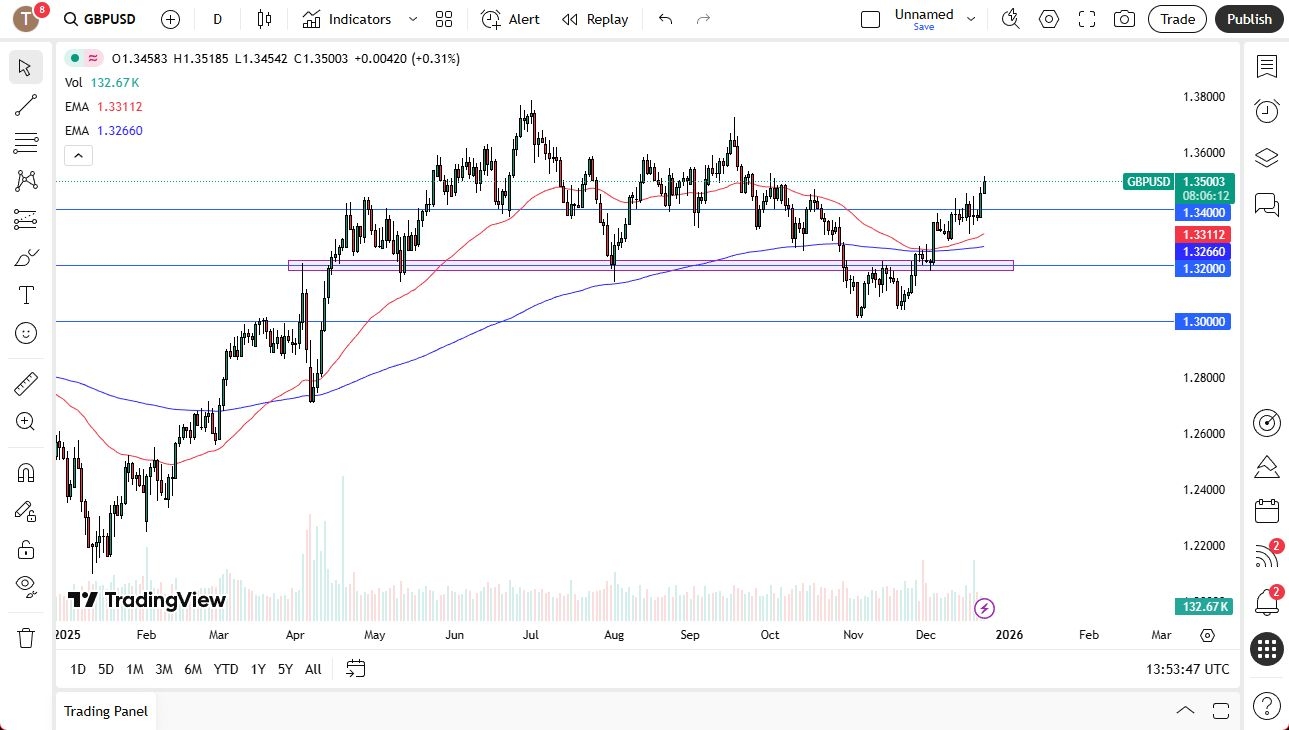
With that being the case, this is a market that I think will continue to be noisy, but the $1.35$ level is an area that’s been important in the past, and of course, it’s a large round, psychologically significant figure, so I do anticipate that there will be a certain amount of questions asked at this point.

If we can clear this area, it’s possible that we will end up going to the $1.37$ level. If we turn around and fall from here, it’s really not until we break down below the $1.34$ level that I think we will see a little bit more negative. Keep in mind that at this time of year, we have to worry about liquidity and volume, and that, of course, is a major influence as well.
With that being the case, I think you have to look at this through the prism of what’s going on with the Federal Reserve and, of course, the fact that the British pound has been a fairly strong performer in relation to the dollar over the last couple of years. Even when the US dollar was so strong, the British pound held up better than most of its contemporaries. Because of this, I’m watching the US dollar across the board, and if it does start to shrink, then this is a place I want to get long of. On the other hand, if the US dollar strengthens, I could short the British pound, but I will probably get more traction out of certain currencies like the Australian dollar or the New Zealand dollar.
Ready to trade our GBP/USD daily forecast? We’ve shortlisted the best regulated forex brokers UK in the industry for you.
Christopher Lewis has been trading Forex and has over 20 years experience in financial markets. Chris has been a regular contributor to Daily Forex since the early days of the site. He writes about Forex for several online publications, including FX Empire, Investing.com, and his own site, aptly named The Trader Guy. Chris favours technical analysis methods to identify his trades and likes to trade equity indices and commodities as well as Forex. He favours a longer-term trading style, and his trades often last for days or weeks.
Drinking water and caffeine-free teas helps keep you hydrated, which can help your body heal. Teas also contain plant compounds called polyphenols. Polyphenols may support your immune system and reduce your chances of catching a cold.
Green tea has catechins, which are a type of polyphenol. Polyphenols are a group of molecules that may help fight viruses, bacteria, and inflammation.
Taking green tea catechins—by drinking, gargling, or using supplements—may help prevent flu. A 2015 study found that people who drank green tea at least twice a week had a 61% lower risk of catching the flu.
One study suggests brewing finely ground tea leaves at 185 °F (85 °C) for 30 minutes to get the most polyphenols. Using very cool water (68 °F/20 °C) and brewing for a long time (12 hours) also gives the most antioxidants.
Squeeze a lemon to get the most benefits from green tea. Green tea catechins work better in acidic conditions. Adding lemon makes the tea more acidic.
Green tea contains caffeine, so consume it in moderation. Having too much caffeine can make it hard to sleep and can cause dehydration.
Echinacea is a purple flower that grows in areas east of the Rocky Mountains. It has many beneficial compounds, including one called alkamides. Alkamides may help your body fight inflammation and viruses and support overall immune health.
Some studies suggest that Echinacea tablets and capsules may help prevent upper respiratory tract infections and shorten the recovery period in children.
A 2022 study found that drinking Echinacea tea brewed at 185 °F (80 °C) worked better against viruses than taking capsules or tablets.
Another 2015 study found that drinking a hot drink made with Echinacea and elderberry worked as well as the flu medicine Tamiflu (oseltamivir) when the flu was treated early.
Be aware that Echinacea may not be safe during pregnancy and breastfeeding.
Some people may be allergic to Echinacea. Echinacea may also interact with immunosuppressant medications. Consult your doctor if you have chronic conditions or take any medication.
Elderberry is a dark purple berry that grows on the black elder tree. People use elderberry supplements to help with colds and other upper respiratory infections.
Elderberry is rich in anthocyanins, which are powerful antioxidants. These antioxidants help support the immune system and may slow down the spread of viruses.
A 2021 research review found that elderberry supplements may make colds shorter and less severe. Most studies focus on the effects of supplements. There is limited evidence that elderberry or elderberry tea helps with colds.
Elderflower tea is made from elderberry flowers. The leaves, stems, and unripe berries of the elder tree are poisonous.
Many people use chamomile to help with colds and coughs.
Chamomile has compounds that fight inflammation and act as antioxidants. However, no studies in humans show that chamomile tea directly helps with colds.
Chamomile has been shown to improve sleep. Since rest is essential for illness recovery and overall health, chamomile may help your body heal.
Ginger has compounds called gingerols. Gingerols might help fight the flu virus, but no studies show they work in people.
Studies in people suggest that ginger supplements might help lower inflammation and protect the body with antioxidants. Lowering inflammation may help your body heal, but no studies have looked at how ginger tea affects colds directly.
Some people claim lemon tea helps with cold symptoms, but there is no proof that it actually does.
Lemons are rich in vitamin C, which can help make colds less severe. But lemon tea doesn’t have much vitamin C. You can get vitamin C by eating lemons or other citrus fruits instead.
Still, lemon tea can provide hydration, which can support health. Add fresh lemon juice or a slice to hot water.
The Pepeto presale is progressing fast, and this is still the chance for early buyers to join before exchange listings and broader market visibility begin. To take part, head to the official website at , link your wallet, and buy PEPETO using ETH, USDT, BNB, or a bank card. Those who join early also have the option to stake their tokens and earn high APY rewards while waiting for the official launch.

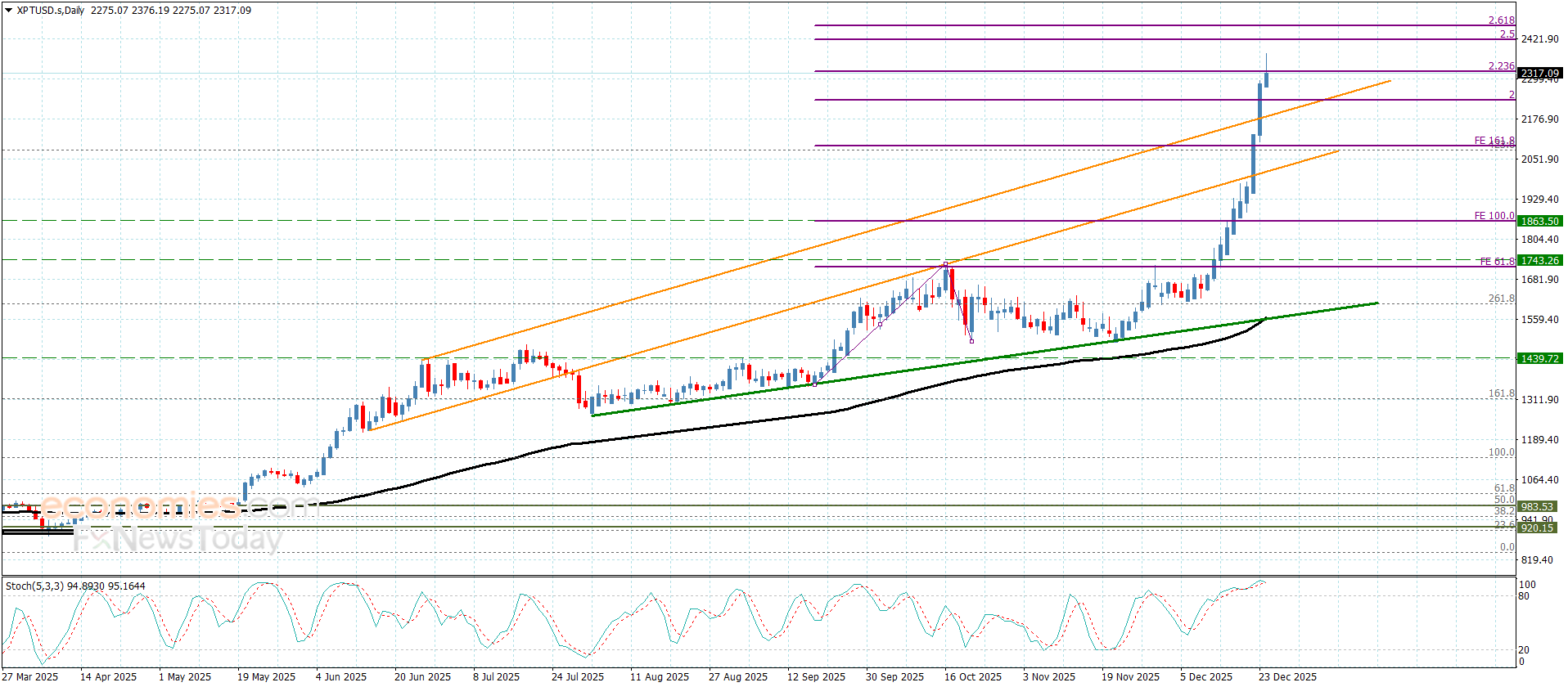
The U.S. dollar is weakening at its fastest pace in years, boosting commodity prices worldwide. Central banks are aggressively accumulating gold to reduce reliance on dollar reserves. Supply disruptions, tariffs, and underinvestment in mining have tightened markets just as demand accelerates. Together, these forces explain why precious and industrial metals are rising in unison — and why the rally may not be over yet.
Gold’s rally is rooted in macroeconomic stress and policy shifts. The metal briefly touched $4,525 per ounce, a fresh all-time high, before consolidating near current levels. Monthly gains are nearing 9%, driven by expectations that the Federal Reserve will begin cutting interest rates in 2026.
Lower rates reduce the opportunity cost of holding gold, which pays no yield. At the same time, inflation concerns and rising government debt are fueling what traders call the “debasement trade.” A weaker U.S. Dollar has made gold cheaper for overseas buyers, amplifying global demand.
Central banks are another powerful force. Many have accelerated gold purchases to diversify reserves and hedge against financial instability. Analysts now project gold could dip modestly toward $4,350 near quarter-end before climbing toward $4,600 over the next 12 months, supported by sustained official-sector buying.
Silver’s surge is even more dramatic. Prices briefly topped $72.70 per ounce, and despite minor pullbacks, the metal remains up over 140% in 2025. Unlike gold, silver plays a dual role as both a safe-haven asset and a critical industrial material.
Demand from solar panel manufacturing, electric vehicles, and data centers has exploded. Each new energy or AI project consumes silver permanently, tightening supply. Monthly gains near 40% reflect how quickly inventories are being absorbed. With silver now classified as a strategic and critical mineral in several countries, analysts see prices holding above $70 into 2026, with forecasts pushing toward the mid-$70s.
Copper’s rally tells the story of the energy transition. Prices are approaching $12,000 per metric ton, driven by soaring demand from electric vehicles, artificial intelligence data centers, and power grid expansion. A single electric vehicle can use up to four times more copper than a traditional gasoline car.
According to Goldman Sachs, grid expansion and power infrastructure could account for more than 60% of copper demand growth by 2030. Supply, however, is struggling to keep pace. Mining disruptions in Chile and Peru have constrained output, while new projects face long approval timelines.
Adding to the pressure, U.S. trade policy has reshaped the market. A 50% tariff on imported copper products triggered stockpiling and hoarding. J.P. Morgan expects tight supply conditions to persist well into 2026.
Looking ahead to 2026, analysts broadly expect gold, silver, and copper prices to stay elevated, with volatility driven by interest rates, global growth, and supply constraints. Forecasts suggest the metals rally is shifting from a momentum-driven surge to a structurally supported cycle. Gold price forecast for 2026
Gold is expected to remain well above historical averages. Most bank and commodities desk models see gold trading in a $4,300–$4,900 per ounce range through 2026. Central bank buying remains the anchor. If the Federal Reserve begins rate cuts, real yields could fall further, supporting upside risk toward the upper end of forecasts. Downside risk appears limited unless inflation cools sharply and the dollar strengthens materially.
Silver price forecast for 2026
Silver forecasts are more aggressive due to tight supply and industrial demand. Analysts project an average range of $68–$78 per ounce, with volatility likely. Solar installations, EV production, and data center expansion continue to absorb supply faster than mining output grows. Silver’s dual role as an investment metal and industrial input keeps it highly sensitive to both rate policy and global manufacturing trends.
Copper price forecast for 2026
Copper outlooks remain bullish but uneven. Consensus estimates place copper between $5.40 and $6.10 per pound, with some upside scenarios tied to grid expansion and AI infrastructure. Electric vehicles, renewable energy, and transmission upgrades drive demand, while mine supply growth remains constrained. Trade barriers and inventory rebuilding could keep prices near cycle highs.
Gold is expected to stabilize at historically high levels. Silver may remain the most volatile, with sharp rallies on demand shocks. Copper prices are likely to stay supported by long-term electrification trends. Together, forecasts suggest metals will remain a key inflation and growth hedge throughout 2026, rather than reverting to pre-2024 norms.
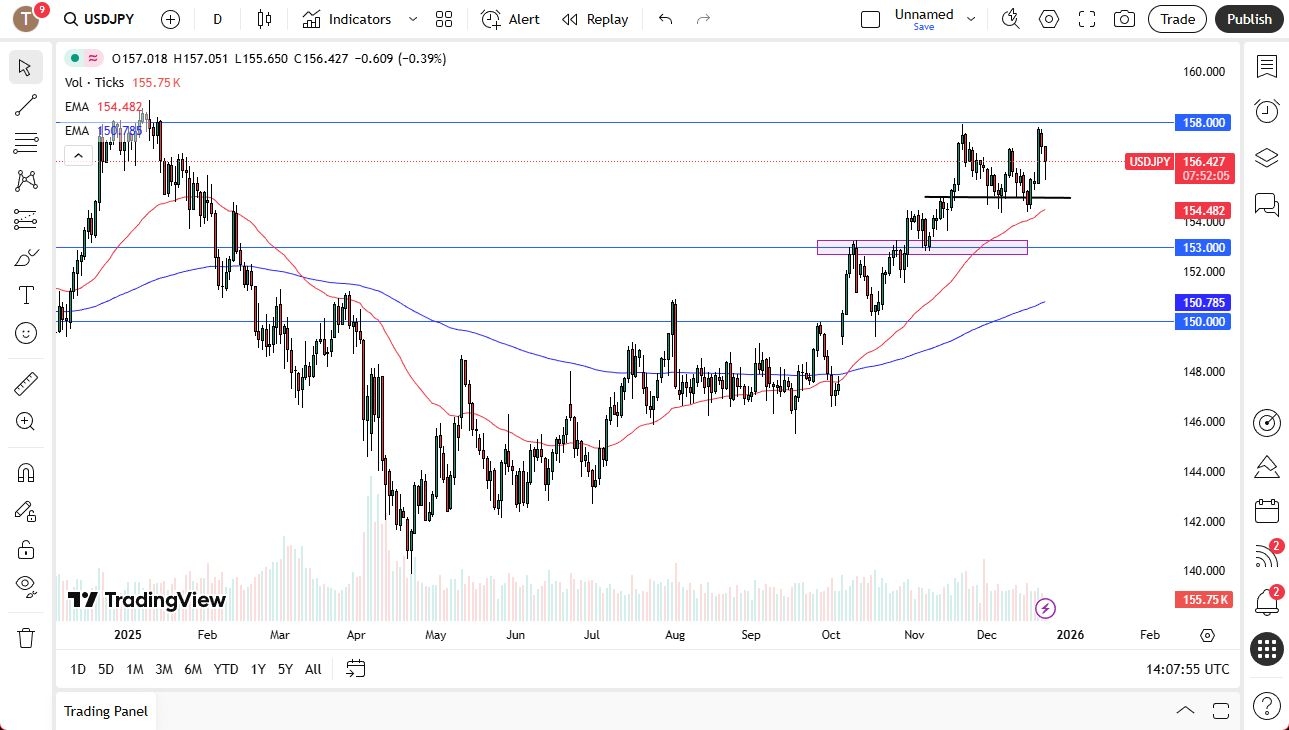
The 154 yen level seems to be massive support, while the 158 yen level seems to be a significant resistance barrier. All things being equal, this is a market that I think is trying to determine what is going to happen with central banks, especially with the Federal Reserve, as traders are starting to bet on more interest rate cuts going into the future.
But at the same time, the Bank of Japan is trying to normalize rates. Whether or not that actually ends up being the case and whether or not they can actually do it to any significant amount remains a question to be answered, but I think we have to look through the prism of a market where you are seeing a positive swap at the end of every day if you’re long.
I think that’s part of what we’ve seen during the trading session on Tuesday as we head towards North America. Traders are trying to turn things around and reach back towards the 158 yen level. Over the next couple of days, I think we will stay well within this 400-point range because volume will start to dissipate, and several central banks are not only going to be closing down the banking system on Thursday for Christmas, but you will also see the Friday session being a major holiday in most of the larger countries as well. After that, you have the week of New Year’s, and that really is kind of messy as well. So I think you’re looking at a 400-point range between now and next year when traders start to throw more liquidity in.
Want to trade our USD/JPY forex analysis and predictions? Here’s a list of forex brokers in Japan to check out.
Christopher Lewis has been trading Forex and has over 20 years experience in financial markets. Chris has been a regular contributor to Daily Forex since the early days of the site. He writes about Forex for several online publications, including FX Empire, Investing.com, and his own site, aptly named The Trader Guy. Chris favours technical analysis methods to identify his trades and likes to trade equity indices and commodities as well as Forex. He favours a longer-term trading style, and his trades often last for days or weeks.
The global probiotic strains market is projected to witness robust growth over the next decade, rising from an estimated USD 3,781.2 million in 2025 to USD 8,013.4 million by 2035, reflecting a CAGR of 7.8% during the forecast period. This upward trajectory is fueled by increasing consumer awareness of gut health, growing interest in preventive healthcare, and the integration of probiotics into functional foods and dietary supplements.
The rising importance of gut health has been central to market growth. Research highlights the role of the gut microbiome in supporting digestion, immunity, metabolism, and even mental health. As a result, consumers are increasingly turning to probiotic-enriched products and functional foods to maintain overall well-being.
Get Exclusive Access To Data Tables, Market Sizing Dashboards, And Analyst Insights. Request Sample Report! https://www.futuremarketinsights.com/reports/sample/rep-gb-9632
Geographically, the market demonstrates significant variation. The United States remains a dominant player due to its focus on preventive healthcare, high incidence of gastrointestinal disorders, and consumer willingness to adopt probiotic products. Meanwhile, the North Pacific region, though smaller in market size, is expected to experience rapid growth thanks to rising middle-class populations and increasing consumption of fermented foods.
The probiotic product landscape continues to expand with innovative product launches. Manufacturers are introducing strain-specific probiotics targeting immune support, brain health, and women’s wellness. The inclusion of probiotics in everyday products like yogurt, kefir, juices, and snacks has further broadened accessibility and consumer recognition of probiotic strains.
The market’s growth trajectory remains closely tied to strategic collaborations, mergers and acquisitions, and investments in research and development. Companies that innovate with evidence-based, targeted probiotic solutions are likely to gain a competitive edge.
Key Industry Highlights:
• Gut-Brain Axis Supplements: Innovations targeting mental health and stress management are shaping the cognitive wellness segment. Probiotic formulas are being developed to positively influence mood, brain neuropeptides, and gut hormones.
• Immune-Boosting Probiotics: Strains such as Lactobacillus and Bifidobacterium are increasingly used for immune modulation, inflammation control, and supporting natural defense mechanisms.
• Personalized Probiotic Solutions: AI-driven microbiome testing enables tailored probiotic recommendations, allowing consumers to manage gut health based on their individual profiles.
• Postbiotic Innovation: The combination of probiotics and postbiotics is creating holistic solutions that enhance gut barrier integrity and immune health.
• Probiotic-Infused Foods & Beverages: Probiotics are being incorporated into everyday products, from juices and smoothies to snacks and baked goods, making gut-friendly nutrition convenient and accessible.
• Targeted Strains for Specific Conditions: Products designed for IBS, women’s health, and skin health are expanding the market for precision probiotic supplements.
Country-Wise Insights:
The United States is leveraging advanced microbiome mapping and personalized probiotics to meet rising consumer demand. In China, the market is blending Traditional Chinese Medicine-inspired ingredients with modern probiotic science, creating unique formulations that appeal to holistic health approaches. Japan, with one of the longest-living populations, focuses on probiotics that promote longevity, cognitive health, and immune support.
Category Insights:
Lactobacillus strains dominate the market, accounting for a significant share across functional foods and supplements, with species such as L. acidophilus, L. rhamnosus, and L. plantarum leading the space. Dietary supplements are the fastest-growing application segment, reflecting the increasing consumer preference for convenient, daily probiotic intake.
The probiotic industry is marked by a mix of organized and unorganized players. Global leaders such as Chr Hansen, DuPont, Lallemand, and Probi dominate with advanced R&D and distribution networks, while local manufacturers contribute to regional innovation, often producing traditional fermented foods tailored to local tastes.
As consumer knowledge of gut health grows and the demand for natural, preventive healthcare rises, the probiotic market is poised to continue its upward trajectory. Companies that strategically invest in innovation, partnerships, and personalized solutions will lead the sector in the coming decade.
Subscribe for Year-Round Insights → Stay ahead with quarterly and annual data updates. https://www.futuremarketinsights.com/reports/probiotic-strains-market
Leading Manufacturers: Chr Hansen A/S, DuPont Nutrition & Biosciences, Lallemand Health Solutions, Probi, Morinaga Milk Industry, Ganeden Biotech, Sabinsa Corporation, Unique Biotech, Synbio Tech
Why FMI: https://www.futuremarketinsights.com/why-fmi
Browse Related Insights
UK Probiotic Strains Market: https://www.futuremarketinsights.com/reports/united-kingdom-probiotic-strains-market
USA Probiotic Strains Market: https://www.futuremarketinsights.com/reports/united-states-probiotic-strains-market
ASEAN Probiotic Strains Market: https://www.futuremarketinsights.com/reports/asean-probiotic-strains-market
Contact Us:
Future Market Insights Inc.
Christiana Corporate, 200 Continental Drive,
Suite 401, Newark, Delaware – 19713, USA
T: +1-347-918-3531
Website: https://www.futuremarketinsights.com
About Future Market Insights (FMI)
Future Market Insights, Inc. (ESOMAR certified, recipient of the Stevie Award, and a member of the Greater New York Chamber of Commerce) offers profound insights into the driving factors that are boosting demand in the market. FMI stands as the leading global provider of market intelligence, advisory services, consulting, and events for the Packaging, Food and Beverage, Consumer Technology, Healthcare, Industrial, and Chemicals markets. With a vast team of over 400 analysts worldwide, FMI provides global, regional, and local expertise on diverse domains and industry trends across more than 110 countries.
This release was published on openPR.
Darius Baruo
Dec 24, 2025 06:24
MATIC price prediction suggests a potential 18-32% rally to $0.45-$0.50 in the coming weeks as Polygon tests critical resistance levels near $0.42.
Polygon’s MATIC token is positioning for a potential technical bounce after finding support near its 52-week low of $0.37. With the current price at $0.38, our MATIC price prediction analysis suggests the token could rally 18-32% to test resistance levels between $0.45-$0.50 over the next 4-6 weeks.
• MATIC short-term target (1 week): $0.42 (+11%)
• Polygon medium-term forecast (1 month): $0.45-$0.50 range
• Key level to break for bullish continuation: $0.43 (SMA 20)
• Critical support if bearish: $0.35, then $0.33
Recent analyst coverage has shown growing optimism for Polygon’s near-term prospects. Blockchain.News issued a MATIC price prediction with targets between $0.42-$0.50 for the medium term, citing technical indicators suggesting a potential recovery. Their analysis identifies immediate resistance at $0.42 and critical support at $0.35, aligning closely with our technical assessment.
Benzinga’s longer-term Polygon forecast projects MATIC reaching $0.717 by 2030, implying a 9.61% annualized return from current levels. While this represents modest growth expectations, it suggests analysts view the current price as near a cyclical bottom.
The market consensus indicates a cautious but optimistic outlook, with most MATIC price prediction models targeting the $0.42-$0.50 range as the next significant resistance zone.
The Polygon technical analysis reveals several encouraging signs for a potential reversal. MATIC’s RSI of 38.00 sits in neutral territory, providing room for upward movement without being overbought. The token’s position at 0.29 within the Bollinger Bands suggests it’s trading in the lower portion of its recent range, often a precursor to mean reversion.
However, the MACD histogram at -0.0045 indicates bearish momentum remains intact, though the reading is relatively shallow compared to previous sell-offs. The key inflection point lies at the 20-day SMA of $0.43, which has acted as dynamic resistance throughout December.
Volume analysis shows relatively light trading at $1.07 million on Binance, suggesting the current consolidation phase lacks strong conviction from either bulls or bears. A volume surge above 150% of the recent average would provide confirmation of any breakout attempt.
Our primary MATIC price target focuses on the $0.45-$0.50 resistance zone, representing the convergence of the 50-day SMA ($0.45) and previous support-turned-resistance levels. A sustained break above $0.43 would trigger this bullish scenario, with an initial target at $0.45 (+18%) followed by $0.50 (+32%).
The bullish case strengthens if MATIC can reclaim the 20-day SMA at $0.43 with accompanying volume expansion. This Polygon forecast requires RSI to push above 50 and MACD to generate a bullish crossover, both technically achievable given current positioning.
Downside risk materializes if MATIC fails to hold the $0.35 support level identified by recent analyst predictions. A break below this level would target the strong support at $0.33, representing a 13% decline from current levels.
The bearish scenario gains momentum if the RSI drops below 30 and daily ATR expands beyond $0.04, indicating increased volatility to the downside. Traders should monitor the $0.35 level closely as it represents the final defense before a more significant correction.
Based on our MATIC price prediction analysis, a layered entry approach offers the best risk-adjusted opportunity. Primary accumulation should occur between $0.37-$0.39, with additional purchases on any dip toward $0.35.
For active traders, a breakout play above $0.43 offers a more aggressive entry with a stop-loss at $0.40. This strategy targets the $0.45-$0.50 resistance zone while limiting downside to approximately 10%.
Position sizing should reflect MATIC’s elevated volatility, with the daily ATR of $0.03 suggesting 8% daily moves remain common. Conservative investors should limit MATIC exposure to 2-3% of portfolio value given the technical uncertainty.
Our MATIC price prediction anticipates a recovery to the $0.45-$0.50 range over the next 4-6 weeks, representing potential gains of 18-32% from current levels. This Polygon forecast carries a medium confidence level given the mixed technical signals and need for volume confirmation.
Key indicators to watch include a sustained break above the 20-day SMA at $0.43, RSI reclaiming 50, and daily volume exceeding $1.5 million. Failure to hold $0.35 support would invalidate the bullish thesis and trigger our bearish scenario targeting $0.33.
The timeline for this prediction extends through January 2025, with the critical inflection point expected within the next 7-10 trading days as MATIC approaches the $0.42-$0.43 resistance cluster.
Image source: Shutterstock
Copper price activated with the main indicators again, surpassing the barrier at $5.5000, announcing its readiness to achieve extra gains on a near-term basis, therefore, we will keep our bullish expectations, reminding you that the extra target near $5.6300 and $5.7400 level.
Note that the price stability below the current barrier might force it to form mixed trading, and there is a chance of testing the support at $5.1500.
The expected trading range for today is between $5.3900 and $5.6300
Trend forecast: Bullish
Coffee price surrendered to the negative pressures, forcing it to suffer several losses towards 339.20, facing a strong support base as appears in the above image.
The price stability above this support and stochastic attempt to exit the oversold level might provide a chance to recover several losses by its rally towards 359.80, then wait for facing the moving average 55 near 368.50.
The expected trading range for today is between 338.00 and 359.80
Trend forecast: Bullish
Coffee vs. tea is a debate as old as time. While drinking your morning wake-up beverage, have you ever wondered which has more caffeine, or which one is better for you? The good news is that both beverages—coffee and tea—have proven health benefits (including helping to energize you and boosting immunity), but just like with everything else, you may want to consume them in moderation. Here’s a breakdown of the pros and cons of each, according to a nutrition expert.
“One can argue that both coffee and tea have potential health benefits, but the overall benefits of each depend on factors such as the type of coffee or tea, how it was grown, the brewing method, and the amount consumed,” says Ilana Muhlstein, RDN. Here’s a look at each.
Drinking coffee has been proven to have multiple benefits, including reducing inflammation and supporting heart and gut health. “Coffee contains caffeine, which has been shown to help improve focus and cognitive function,” Muhlstein says.
“Drinking coffee has also been associated with a lower risk of heart disease and diabetes. A study published in the American Journal of Clinical Nutrition found that regular coffee consumption was associated with a lower risk of coronary heart disease. A meta-analysis of studies published in the journal Diabetes Care found that moderate coffee consumption was associated with a lower risk of type 2 diabetes.”
For those who want a quick caffeine boost and added energy, coffee is a solid choice since it typically has more caffeine than tea. But beware if you have anxiety or insomnia since coffee can trigger anxiety or disrupt sleep in sensitive individuals.
“While tea also contains caffeine and has been shown to improve cognitive function and alertness, the addition of theanine, an amino acid, gives tea the added benefit of reducing stress,” Muhlstein says. If you’re about to embark on a major project or need a laser level of focus, black or green tea may be your ideal go-to beverage—no caffeine trembles and reduced stress will help you make it to the project finish line.
“Green tea is one of the richest sources of powerful antioxidants, called polyphenols, that have been shown to have the potential for reducing the risk of cardiovascular disease and certain cancers,” Muhlstein says. “You can find caffeine-free green tea or herbal tea for those who are sensitive to caffeine but want the other health benefits associated with tea.”
Tea is ideal for those who are sensitive to caffeine or struggle with anxiety or sleep conditions. Some types of tea can even help promote sleep and have calming effects. If you don’t like the taste of coffee, tea may also be for you.
Antioxidants are compounds that protect cells from oxidative stress and damage caused by free radicals (unstable molecules). Antioxidants help neutralize these free radicals, thereby reducing the risk of chronic diseases and promoting overall health.
Coffee and tea both contain caffeine. A standard 8-ounce cup of coffee contains about 95 milligrams of caffeine, while a cup of black tea has about 50 milligrams, and green tea has about 30 milligrams. That means coffee has twice as much caffeine as the same amount of black tea, and over three times the amount of caffeine as green tea.
But be careful how much caffeine you consume. The Food and Drug Administration (FDA) suggests having no more than 400 milligrams of caffeine in a day. That’s about four cups of coffee, eight cups of black tea, or approximately 13 cups of green tea per day.
| Type | Size | Caffeine |
| Coffee | 8 ounces | 95 milligrams |
| Espresso | 1.5 ounces | 150 milligrams |
| Green Tea | 8 ounces | 30 milligrams |
| Black Tea | 8 ounces | 50 milligrams |
If you over-caffeinate, you may begin to feel adverse effects. “Too much caffeine consumed in coffee can lead to increased anxiety, insomnia, and elevated heart rate and blood pressure,” Muhlstein adds. “Coffee is also acidic and needs to be avoided by many people who experience acid reflux and gastrointestinal issues.”
Here are some other symptoms that might show up if you’ve had too much caffeine:
Decaffeinated coffee and tea have little to no caffeine in them, and herbal teas (think chamomile, peppermint, or rooibos) are naturally caffeine-free. Just be mindful that a cup of “decaf” coffee or tea still tends to have about two milligrams of caffeine; the process of decaffeination removes about 97% (or more) of the caffeine from the coffee beans.
Additives like milk, sugar, and whipped cream are common in both coffee and tea, but they can take away from the benefits by adding extra calories, fat, and sugars that can contribute to health issues. For example, high-fat additives like fatty milk options or whipped cream can increase bad cholesterol levels, while too much sugar could increase the risk of diabetes and heart disease.
Keeping coffee and tea simple, without excessive ingredients, allows you to enjoy their natural benefits. But if you want to add more flavor to your coffee or tea (or thicken its consistency), opt for a low-fat, unsweetened option. Low-fat milk or unsweetened milk alternatives like almond milk can add flavor and thickness without all the added fats and sugar.
There are also sugar-free creamers and artificial sweeteners that you can try, but be sure to check the ingredient labels. The jury is still out on whether or not artificial sweeteners are actually better for you. “If you would like to add sweetness to your coffee or tea, a natural sweetener, such as honey or coconut sugar, can also be used when mindful of portions,” Mulhstein adds.
:max_bytes(150000):strip_icc()/Health-GettyImages-2188247727-d63902f8d23a486aa7096c3dee2f3dde.jpg "5 Teas That Help Relieve Cold Symptoms Naturally")



:max_bytes(150000):strip_icc()/coffee-vs-tea-GettyImages-1327091626-5b144a37d98b4de7b5421d9b724f7e12.jpg "Coffee vs. Tea—Which One Is Actually Better for Your Health, According to Nutrition Experts")