The main category of All News Articles.
You can use the search box below to find what you need.
[wd_asp id=1]
The main category of All News Articles.
You can use the search box below to find what you need.
[wd_asp id=1]
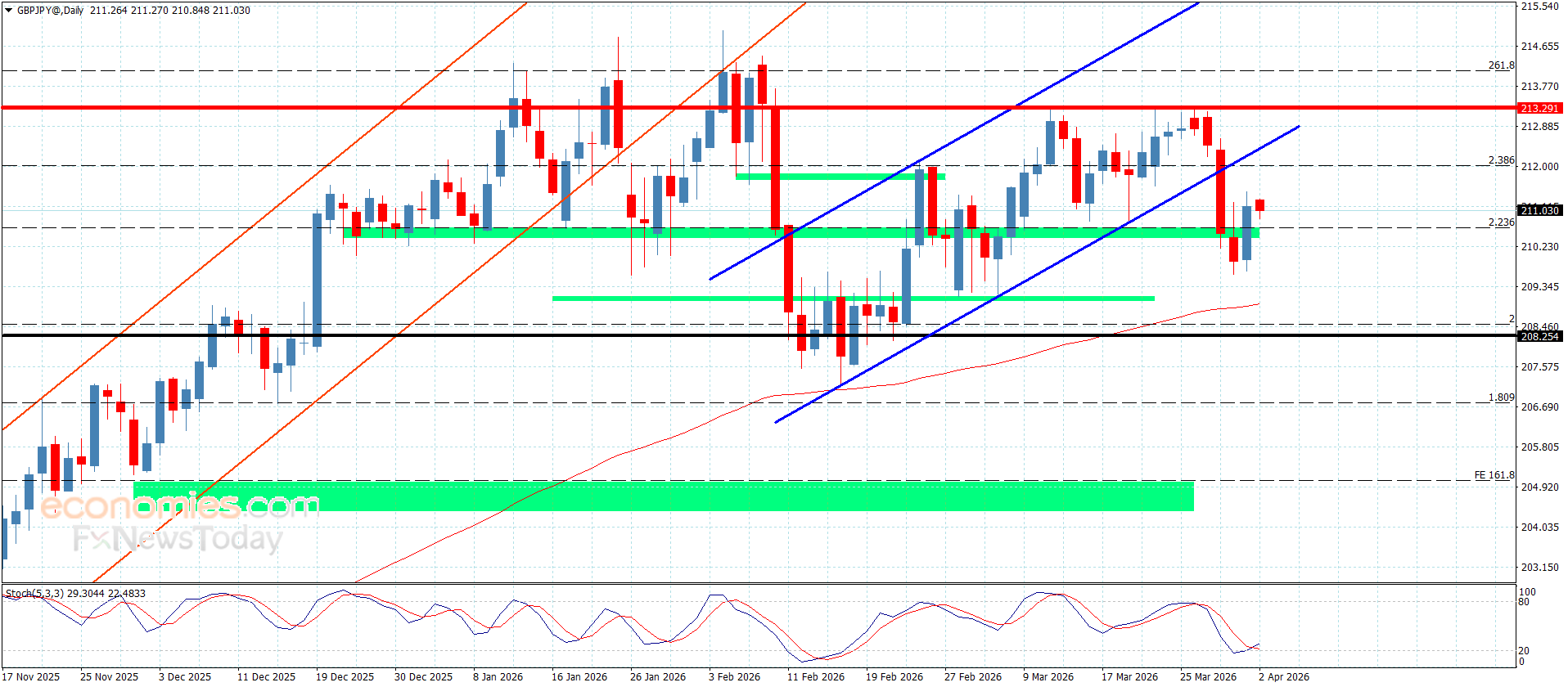
The GBPJPY pair is under positive pressure, which forces it to delay the bearish movement, by its rally above 210.60 level, recording some gains by reaching 211.43.
Note that the stability below the main resistance at 213.30 and forming extra barrier at 212.10 level makes us keep waiting for gathering negative momentum, to ease the mission of activating the negative scenario by reaching 210.60 initially, to begin targeting the negative stations near 209.10 and 208.25.
The expected trading range for today is between 209.10 and 211.80
Trend forecast: Bearish
– Written by
Tim Boyer
STORY LINK Pound to Dollar Forecast: GBP Rebounds as USD Slips on Iran Hopes
The Pound to Dollar exchange rate (GBP/USD) rebounded above 1.3300 after hitting four-month lows near 1.3150, as easing geopolitical tensions weakened the US dollar and lifted risk appetite.
However, with uncertainty still high and the Bank of England pushing back against rate-hike expectations, Sterling’s recovery remains fragile.
After a torrid trading day on Tuesday, the Pound secured some respite on Wednesday. The prime influence, however, was a weaker dollar amid a rebound in risk appetite with the Pound overall still struggling.
After hitting 4-month lows near 1.3150, the Pound to Dollar (GBP/USD) exchange rate rebounded to just above 1.3300.
Equity gains offered support, but traders are still wary over the risk of sudden reversal in optimism while hints from Bank of England (BoE) Governor Bailey that he would not back a rate hike hampered the Pound.
According to UoB; “Downward momentum is starting to fade, and if GBP breaks above 1.3285 it would indicate that GBP has moved into a range-trading phase.
Get better rates and lower fees on your next international money transfer.
Compare TorFX with top UK banks in seconds and see how much you could save.
ING commented; “Markets are making another attempt at playing the de-escalation trade. The trigger was reports that Iranian officials are leaning towards dialogue and Trump explicitly saying the US will end the war within two to three weeks.”
Trump also claimed that Iran had asked for a ceasefire and he will address the nation after the New York close.
MUFG expressed some caution; “There is certainly a logic to this rebound in risk on renewed optimism but there are numerous questions that remain unanswered over how this conflict will evolve over the coming weeks.”
It noted the importance of the Strait of Hormuz; “As the WSJ reported yesterday, it looks like the US is going to leave and hope that the exit of the US will encourage Iran to reopen the key chokepoint for global energy. That could prove correct but it is no certainty that Iran will play it like that.”
As far as US data is concerned, ADP reported a 62,000 increase in private payrolls for March compared with consensus forecasts of around 40,000 and followed a 66,000 gain for February.
ADP chief economist Dr. Nela Richardson commented; “Overall hiring is steady, but job growth continues to favor certain industries, including health care.”
BoE Governor Bailey stated that the MPC may debate the case for a precautionary rate rise, but needs to judge that in the context of the remit and how to return inflation to target.

He reiterated; “I still think markets are getting ahead of themselves by pricing in rate hikes.
The BoE also warned over the financial risks to the UK and global economy; “the prospect of weaker growth and higher inflation and borrowing costs raised the chance of risks crystallising simultaneously in government debt markets, private credit and the valuations of U.S. tech giants.”
International Money Transfer? Ask our resident FX expert a money transfer question or try John’s new, free, no-obligation personal service! ,where he helps every step of the way,
ensuring you get the best exchange rates on your currency requirements.
TAGS: Pound Dollar Forecasts
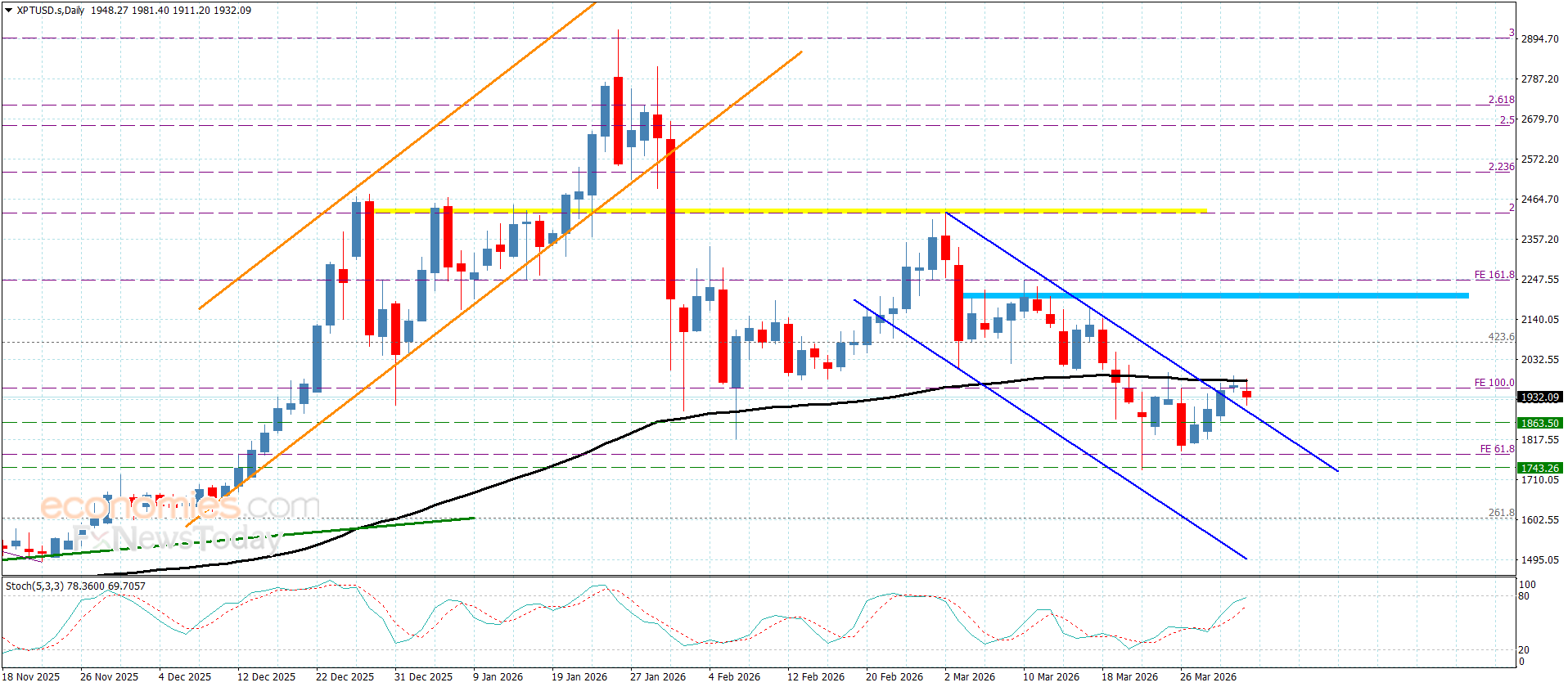
Platinum price kept its negative stability below the moving average 55 level, which keeps forming extra barrier by its stability at $1980.00, reaching $1925.00.
The price returns to settle within the minor bearish channel’s level by reaching below $1885.00 and providing negative close to confirm its readiness to target several negative stations, to expect forming initial target at $1775.00 level in the near trading, reaching $1720.00.
The expected trading range for today is between $1775.00 and $1970.00
Trend forecast: Bearish
Important DisclaimersFXEmpire is owned and operated by Empire Media Network LTD., Company Registration Number 514641786, registered at 7 Jabotinsky Road, Ramat Gan 5252007, Israel. The content provided on this website includes general news and publications, our personal analysis and opinions, and materials provided by third parties. This content is intended for educational and research purposes only. It does not constitute, and should not be interpreted as, a recommendation or advice to take any action, including making any investment or purchasing any product. Before making any financial decision, you should conduct your own due diligence, exercise your own discretion, and consult with competent advisors. The content on this website is not personally directed to you, and we do not take into account your individual financial situation or needs. The information contained on this website is not necessarily provided in real time, nor is it guaranteed to be accurate. Prices displayed may be provided by market makers and not by exchanges. Any trading or other financial decision you make is entirely your own responsibility, and you must not rely solely on any information provided through the website. FXEmpire does not provide any warranty regarding the accuracy, completeness, or reliability of any information contained on the website and shall bear no responsibility for any trading losses you may incur as a result of using such information. The website may include advertisements and other promotional content. FXEmpire may receive compensation from third parties in connection with such content. FXEmpire does not endorse, recommend, or assume responsibility for the use of any third-party services or websites. Empire Media Network LTD., its employees, officers, subsidiaries, and affiliates shall not be liable for any loss or damage resulting from your use of the website or reliance on the information provided herein.Risk DisclaimersThis website contains information about cryptocurrencies, contracts for difference (CFDs), and other financial instruments, as well as about brokers, exchanges, and other entities trading in such instruments. Both cryptocurrencies and CFDs are complex instruments and involve a high risk of losing money. You should carefully consider whether you understand how these instruments work and whether you can afford to take the high risk of losing your money. FX Empire encourages you to conduct your own research before making any investment decision and to avoid investing in any financial instrument unless you fully understand how it works and the risks involved.
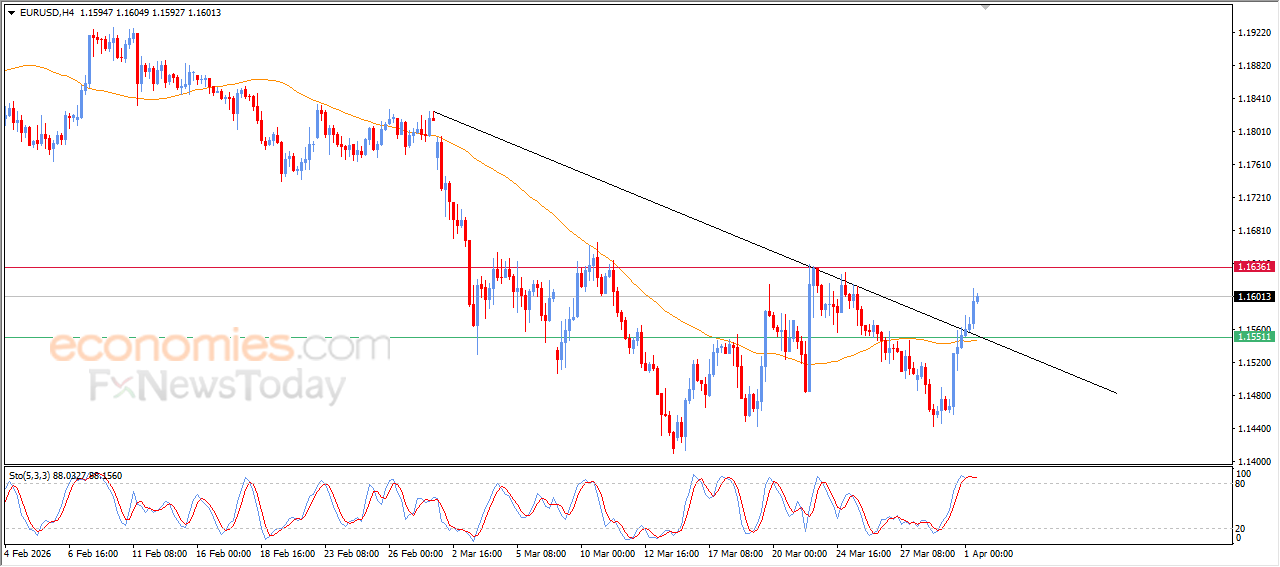
The EUR/USD pair struggles to capitalize on its gains registered over the past two days, reaching the weekly top the previous day, and attracts heavy selling during the Asian session on Thursday. Spot prices drop below the 1.1550 level in the last hour amid the emergence of fresh buying around the safe-haven US Dollar (USD) as US President Donald Trump’s update on the Iran war dampens de-escalation hopes.
Addressing the nation, Trump threatened that Iran would be hit extremely hard over the next two to three weeks and would be brought to the Stone Age if no deal is reached. Trump further added that Iranian energy infrastructure remains a possible target, triggering a sharp rally in Crude Oil prices and fueling inflationary concerns. This, in turn, bolsters bets for a rate hike by the US Federal Reserve (Fed) and turns out to be another factor supporting the USD, which is seen exerting pressure on the EUR/USD pair.
From a technical perspective, the failure to find acceptance above the 200-period Exponential Moving Average (EMA) on the 4-hour chart and a pullback from the 1.1620-1.1625 supply zone favors bearish traders. Moreover, the Moving Average Convergence Divergence (MACD) indicator slips back toward the zero line after a brief positive extension, with the histogram contracting and hinting at fading bullish momentum. Adding to this, the Relative Strength Index (RSI) eases to around 50, reinforcing a loss of directional conviction after failing to sustain overbought proximity earlier in the move.
Meanwhile, initial support emerges at 1.1520, guarding the recent reaction low near 1.1485, where a break would expose the 1.1450 zone as the next downside objective. On the topside, immediate resistance stands at 1.1580 ahead of the 1.1610–1.1620 band, where prior swing highs converge with the 200-period exponential moving average to define a key barrier. A sustained move above this upper resistance zone would be needed to revive a clear bullish bias, while failure to hold 1.1520 would shift focus back toward the mid-1.1400s.
(The technical analysis of this story was written with the help of an AI tool.)
The table below shows the percentage change of US Dollar (USD) against listed major currencies today. US Dollar was the strongest against the New Zealand Dollar.
| USD | EUR | GBP | JPY | CAD | AUD | NZD | CHF | |
|---|---|---|---|---|---|---|---|---|
| USD | 0.42% | 0.53% | 0.35% | 0.24% | 0.67% | 0.70% | 0.45% | |
| EUR | -0.42% | 0.11% | -0.09% | -0.20% | 0.26% | 0.29% | 0.02% | |
| GBP | -0.53% | -0.11% | -0.19% | -0.26% | 0.16% | 0.20% | -0.08% | |
| JPY | -0.35% | 0.09% | 0.19% | -0.10% | 0.32% | 0.35% | 0.10% | |
| CAD | -0.24% | 0.20% | 0.26% | 0.10% | 0.42% | 0.44% | 0.20% | |
| AUD | -0.67% | -0.26% | -0.16% | -0.32% | -0.42% | 0.03% | -0.26% | |
| NZD | -0.70% | -0.29% | -0.20% | -0.35% | -0.44% | -0.03% | -0.26% | |
| CHF | -0.45% | -0.02% | 0.08% | -0.10% | -0.20% | 0.26% | 0.26% |
The heat map shows percentage changes of major currencies against each other. The base currency is picked from the left column, while the quote currency is picked from the top row. For example, if you pick the US Dollar from the left column and move along the horizontal line to the Japanese Yen, the percentage change displayed in the box will represent USD (base)/JPY (quote).
Coffee price failed in its last trading by breaching 316.40 level, forcing it to form bearish corrective waves, to settle before 297.00.
Despite the contradiction between the main indicators, the main stability above the main support at 276.00 supports the continuation of the positive trading in the upcoming period, therefore, we will keep waiting for gathering positive momentum to ease its rally towards 307.80, then repeating the attempts of pressing on the previously mentioned barrier to find an exit for recording extra gains in the upcoming period.
The expected trading range for today is between 290.00 and 307.80
Trend forecast: Bullish
BitcoinWorld
EUR/JPY Forecast: Critical Support Holds at 183.50 as Bulls Target Nine-Day EMA Barrier
The EUR/JPY currency pair demonstrates remarkable resilience in early 2025 trading, maintaining its position above the crucial 183.50 support level. Consequently, market participants now focus on whether the cross can successfully challenge the nine-day Exponential Moving Average barrier. This technical development occurs against a complex macroeconomic backdrop involving both the Eurozone and Japan.
Forex traders closely monitor the EUR/JPY pair as it consolidates above the 183.50 support zone. The price action reveals a consolidation pattern following recent volatility. Meanwhile, the nine-day Exponential Moving Average presents immediate resistance overhead. Technical analysts observe several key indicators for directional clues.
Firstly, the Relative Strength Index currently reads near 45, indicating neutral momentum without extreme overbought or oversold conditions. Secondly, the Moving Average Convergence Divergence histogram shows diminishing bearish momentum. Thirdly, trading volume patterns suggest accumulation near current levels. These factors collectively provide a mixed but cautiously optimistic technical picture.
Key technical levels to watch include:
Multiple fundamental factors currently impact the EUR/JPY exchange rate. The European Central Bank maintains a cautious monetary policy stance. Recent ECB meeting minutes reveal concerns about persistent services inflation. However, improving Eurozone economic data provides underlying support for the euro.
Conversely, the Bank of Japan continues its gradual policy normalization path. Market participants anticipate potential adjustments to the Yield Curve Control framework. Japanese inflation data remains above the 2% target, supporting expectations for policy shifts. These divergent central bank policies create interesting dynamics for the currency pair.
Financial institutions provide varied perspectives on the EUR/JPY outlook. Major bank research departments highlight several important considerations. According to recent analyst reports, risk sentiment significantly influences the pair’s direction. Additionally, interest rate differentials between German and Japanese government bonds remain a key driver.
Market positioning data from the Commodity Futures Trading Commission shows moderate net long positions in euro futures. Meanwhile, Japanese yen positioning remains relatively neutral. This suggests that professional traders maintain a cautiously optimistic bias toward the euro against the yen. However, recent price action indicates some profit-taking near resistance levels.
| Indicator | Eurozone | Japan |
|---|---|---|
| Latest Inflation Rate | 2.6% | 2.8% |
| Central Bank Policy Rate | 4.00% | -0.10% |
| 10-Year Bond Yield | 2.40% | 0.75% |
| GDP Growth Forecast | 0.8% | 1.2% |
The EUR/JPY pair exhibits interesting historical patterns around current price levels. Previously, the 183.50 area served as both support and resistance during 2024. Technical analysts note that successful breaks above the nine-day EMA often precede extended moves. Historical volatility measurements suggest average daily ranges of approximately 80-100 pips.
Seasonal factors may also influence price action during this period. Historically, the first quarter shows increased volatility for yen crosses. This pattern relates to Japanese fiscal year-end flows and Eurozone economic data releases. Consequently, traders should monitor upcoming economic calendars carefully.
Professional traders emphasize proper risk management when trading EUR/JPY near technical boundaries. Position sizing should account for the pair’s typical volatility characteristics. Stop-loss placement requires careful consideration of support and resistance zones. Furthermore, correlation with other financial assets deserves attention.
The EUR/JPY pair demonstrates moderate correlation with global equity markets. It also shows sensitivity to changes in broader dollar strength. Therefore, comprehensive market analysis should incorporate these intermarket relationships. Successful trading strategies typically combine technical, fundamental, and sentiment analysis.
The EUR/JPY forecast remains cautiously optimistic as price holds above 183.50 support. The upcoming test of the nine-day EMA barrier will provide important technical information. Traders should monitor both technical developments and fundamental drivers. Ultimately, the pair’s direction will likely depend on central bank policy signals and global risk sentiment. Proper risk management remains essential given current market conditions.
Q1: What does the nine-day EMA represent in technical analysis?
The nine-day Exponential Moving Average represents short-term price momentum. It gives more weight to recent prices than simple moving averages. Consequently, it reacts faster to price changes and serves as a dynamic support or resistance level.
Q2: Why is the 183.50 level significant for EUR/JPY?
The 183.50 level represents previous price reaction territory. It served as both support and resistance during recent trading sessions. Technical analysts consider such levels significant due to market memory and order book concentration.
Q3: How do central bank policies affect EUR/JPY?
Central bank policies directly influence currency values through interest rates and monetary policy. The European Central Bank and Bank of Japan have different policy trajectories. These differences create yield differentials that impact capital flows between currencies.
Q4: What economic indicators should traders watch?
Traders should monitor inflation data from both regions. Additionally, GDP growth figures and employment reports provide important insights. Central bank meeting minutes and policy statements offer forward guidance about future monetary policy directions.
Q5: How does risk sentiment influence EUR/JPY?
EUR/JPY often functions as a risk sentiment barometer in forex markets. During risk-on periods, the pair typically appreciates as investors seek higher yields. Conversely, risk-off sentiment usually benefits the Japanese yen due to its perceived safe-haven status.
This post EUR/JPY Forecast: Critical Support Holds at 183.50 as Bulls Target Nine-Day EMA Barrier first appeared on BitcoinWorld.
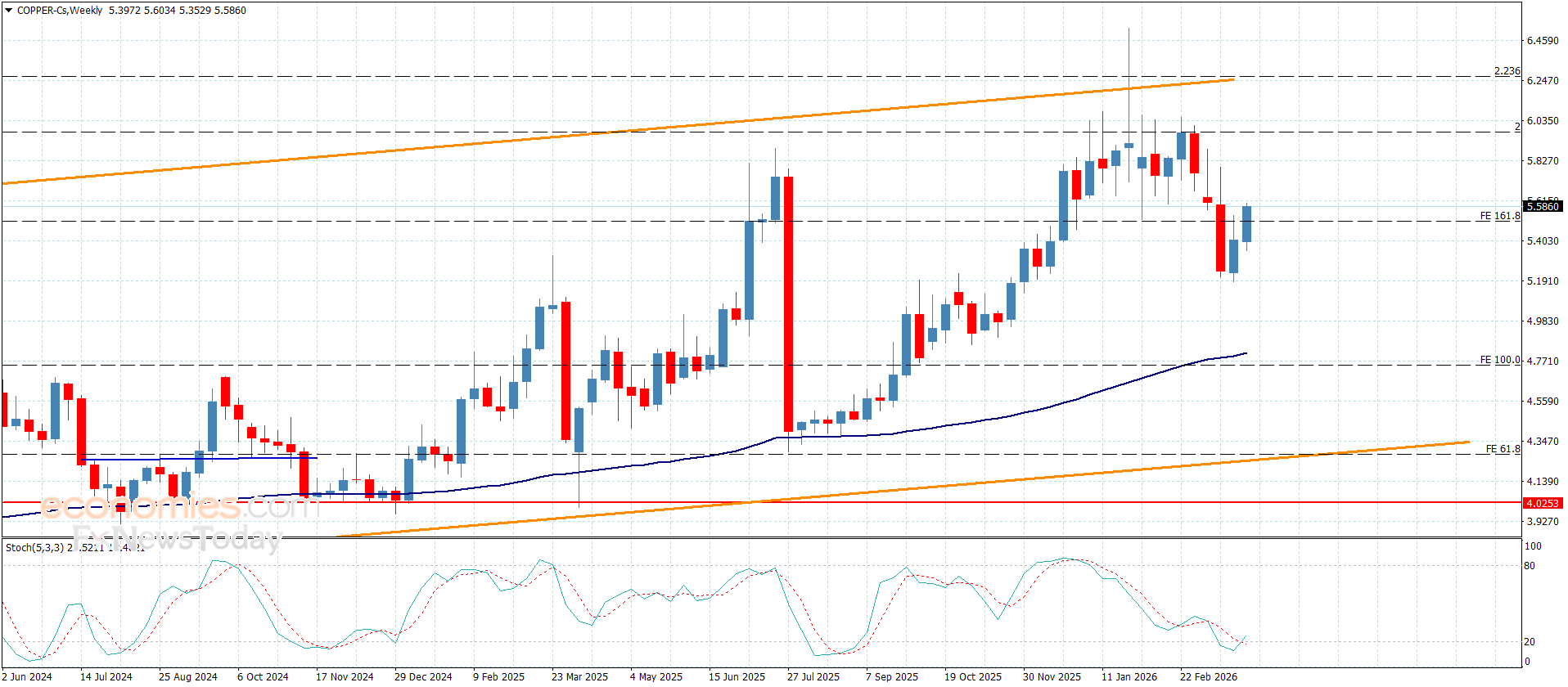
Copper price faced new positive pressures yesterday, which forced it to delay the previously waited bearish trend by its rally above $5.5100, to record some gains by its rally to $5.6035.
Note that holding above $5.5100 for today will increase the chances of targeting new positive stations, reaching $5.7300 and $5.8400, while its decline below the barrier and providing negative close will turn it to the negative path, to begin targeting negative stations by reaching $5.3000.
The expected trading range for today is between $5.5200 and $5.7300
Trend forecast: Bullish
– Written by
Toni Johnson
STORY LINK GBP/USD Forecast: US Jobs Data and Geopolitics in Focus
The Pound to US Dollar (GBP/USD) exchange rate advanced on Wednesday, supported by improving sentiment surrounding the situation in the Middle East.
At the time of writing, GBP/USD was trading near $1.3306, up roughly 0.6% compared to the start of the session.
The US Dollar lost ground as easing geopolitical tensions reduced demand for the safe-haven currency.
Markets were buoyed by signs that relations between the US and Iran may be stabilising, with both sides adopting a less confrontational tone and fuelling expectations that the conflict could de-escalate in the near term.
However, the downside for the US Dollar was partially limited later in the session following the release of upbeat US data, including stronger-than-expected ADP employment figures and a solid rebound in retail sales.
The Pound saw mixed performance, gaining against safer currencies while struggling to keep pace with more risk-sensitive peers as market sentiment improved and energy prices eased.
Domestically, Sterling faced some pressure after the UK’s finalised manufacturing PMI for March was revised lower from 51.4 to 51, pointing to softer momentum in the sector.
Get better rates and lower fees on your next international money transfer.
Compare TorFX with top UK banks in seconds and see how much you could save.
This contributed to a shift in expectations for the Bank of England, with investors reassessing the likelihood of multiple interest rate increases in 2026 as both easing geopolitical tensions and signs of domestic weakness come into play.
The Pound to US Dollar exchange rate is likely to remain sensitive to developments in the Middle East.
If optimism around a potential resolution continues to build, the US Dollar may remain under pressure as investors favour riskier assets.
Alternatively, any resurgence in tensions could quickly restore demand for the US Dollar.
Attention will also turn to upcoming US labour market data, with a weaker-than-expected payrolls reading likely to weigh on the US Dollar if it strengthens expectations that the Federal Reserve may adopt a more dovish stance.
With limited UK data releases and thinner liquidity conditions expected due to the approaching Easter break, Sterling may take its cues primarily from broader market sentiment.
International Money Transfer? Ask our resident FX expert a money transfer question or try John’s new, free, no-obligation personal service! ,where he helps every step of the way,
ensuring you get the best exchange rates on your currency requirements.
TAGS: Pound Dollar Forecasts
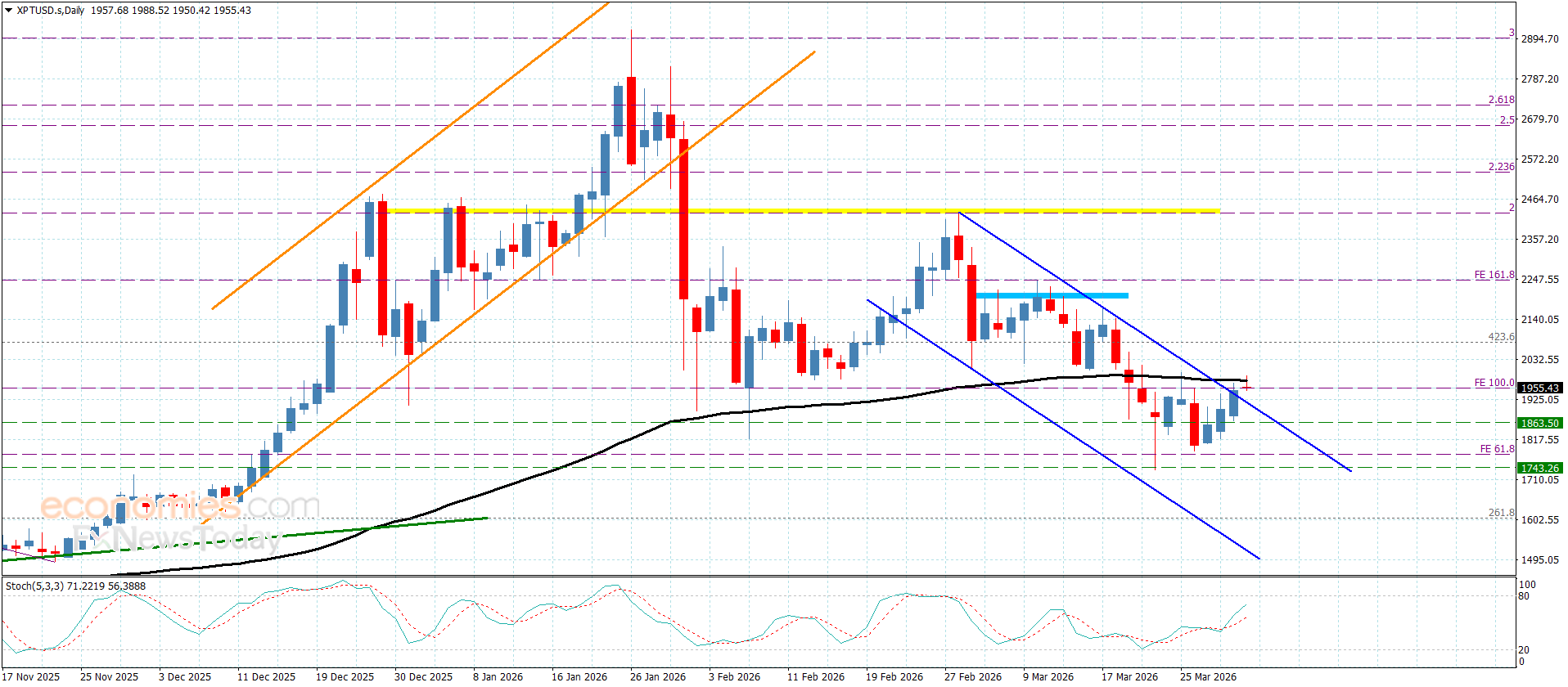
Platinum price attempted to exit the bearish track, by surpassing the minor bearish channel’s resistance at $1940.00, facing the moving average 55, forming an extra barrier at $1980.00, which forces it to provide weak sideways fluctuation by its stability near $1950.00.
The stability below the moving average 55 will increase the chances of its return to the negative track, to reach $1865.00 and $1810.00, while its success by surpassing the moving average 55 and holding above it will open the way towards recording extra gains that might extend in the initial period towards $2040.00 and 2090.00.
The expected trading range for today is between $1865.00 and $1980.00
Trend forecast: Bearish by the stability of the barrier