The main category of All News Articles.

You can use the search box below to find what you need.

[wd_asp id=1]

25 11, 2025

Vaginal estrogen cream for the face

By |2025-11-25T23:02:27+02:00November 25, 2025|Fitness News, News|0 Comments


No, this isn’t a Goop editorial, but we can see why you’d mistake it for one. The idea of using an estrogen cream, historically used to restore vaginal tissue, on your face isn’t quite as wild sounding as, say, using bee venom to treat scarring, which Goop founder Gwyneth Paltrow described as “pretty incredible”, but it’s a bit out there. And, as more and more beauty influencers endorse vaginal estrogen cream as an anti-aging go-to, it’s gaining steam as a trend, typically targeting menopausal and postmenopausal women.

But is putting estrogen cream on your face beneficial? To back up a bit: Is it safe? What are the pros and cons? The truths and myths? The accessibility and cost?

HealthyWomen talked to two dermatologists to get the lowdown on the latest glow up sensation.

The powers of estrogen cream for vaginal rejuvenation in menopause

Vaginal estrogen cream has long been prescribed to menopausal women to treat vaginal dryness, thinning vaginal skin, itching and burning, which are extremely common symptoms of menopause — and it can work wonders.

“I’m 48 and entering the perimenopausal sphere,” said Melanie Palm, M.D., board-certified dermatologist and cosmetic surgeon at Art of Skin MD. “And I see how vaginal estrogen cream transforms patients’ bodies.”

Vaginal estrogen cream helps rejuvenate vaginal skin and improve dryness by feeding the skin estrogen, which permanently drops in menopause.

“When we stop having monthly periods, it affects the estrogen receptors on our skin,” Palm said. “We lose collagen. Areas that are estrogen dependent, like genitals, change a lot. These creams help with that.”

Vaginal estrogen cream can also help prevent UTIs, which Palm pointed out is a leading reason for acute care needs in older women.

“UTIs can lead to sepsis, which is common in elderly patients, particularly those suffering from dementia or urinary incontinence,” Palm said.

Facial skin is very different from vaginal skin

If estrogen cream is so effective in rejuvenating vaginal skin, why wouldn’t it also do wonders for the skin on our face when it too dries with age? This is the line of thought that’s led to some skincare enthusiasts turning to estrogen cream as an anti-wrinkle agent. But it’s really not that simple because the skin on the face just isn’t the same as the skin down there.

In 2025, the Journal of the American Academy of Dermatology published research about the use of estrogen cream for facial rejuvenation. The study found that estrogen creams provide anti-inflammatory measures and support your blood vessels and collagen production. But it found it only did so in areas not exposed to sunlight.

“With photoexposed areas of the skin — areas that see the sun — estrogen had no effect,” Palm said.

Scientific research on using vaginal estrogen on your face is weak and mixed

Now, can we say that this one study proved once and for all that it’s a waste of time to apply estrogen cream to your face for anti-aging effects? Not quite, because this study, like every other study done on estrogen creams as facial skincare products to date, was small.

“The challenge is that these are all small studies with mixed results,” Palm said. “Some studies show mild effects. But nothing huge.”

If you’re the right candidate, it’s not a bad idea to try it

Though we don’t have enough data to prove any clear benefits, facial estrogen creams (which typically use estriol, the gentlest form of estrogen) could still play a role in your nightly skincare routine, provided you’re a candidate (we’ll get to that in a bit).

“There is an argument for using it, if appropriately selected one, as of the items in your skincare regimen,” Palm said. “There’s a case to be made that estrogen creams restore tissue. We see these effects when it is applied to the genital area. And we know that the skin on your face becomes dryer as it ages.”

It’s possible that estrogen cream could help make your skin a bit fuller and softer too.

“We can infer, based on what we know from what it does to mucosa in the vaginal area and based on the science behind hormones, that if you’re applying estriol directly to your face you could get smoother skin, possibly,” said Hannah Kopelman, D.O., dermatologist at Kopelman Aesthetic Surgery. “It could look more hydrated and plumper, but we can’t yet say for sure.”

Who can use estrogen facial cream — and who must avoid it

iStock.com/bojanstory

Estrogen cream products are a no-no for women with any history of estrogen-dependent cancers or a history or risk of blood clots.

“The theoretical risk is this would be like putting gasoline on a potential fire,” Palm said.

And though you can technically use facial estrogen cream if you’re nowhere near perimenopause or menopause, it would be a total waste.

“If you’re adequately making estrogen, you do not need estrogen creams,” Palm said.

This stuff isn’t cheap — and you need a prescription

A few things to know if you’re thinking about trying an estrogen cream for your face:

  • You can only get authentic and safe estrogen creams by prescription from a healthcare provider (consult with an educated and open-minded dermatologist who knows your history)
  • Absolutely do not use an estrogen cream prescribed for vaginal use on your face (remember, different types of skin!)
  • Be ready to shell out some cash

“It’s like $340-$450 for brand name estrogen cream,” Palm said. “Maybe $35-$100 for generic. I am a little picky with some products like retinoids … but with this, you don’t have to get the brand name. That said, don’t get the worst of the worst generics, either.”

Vaginal estrogen face cream is not a miracle product — and we know other stuff works better

There may be no reason not to explore facial estrogen creams as prescribed by your dermatologist, but consider this fact for both your time and your wallet: We know other tried and true skincare products work better.

“There is stronger evidence that topical retinoids, ascorbic acids, alpha hydroxy acids and small proteins have a more rejuvenative effect on the face,” Palm said, adding that the best skincare ingredient is something we should all be using every day, no matter your age or sex: sunscreen.

“Broad spectrum against UVA and UVB sunscreen 30 or above is fine,” Palm said. “I like a physical sunscreen agent. I favor zinc oxide and titanium oxide. It’s not sexy, but wearing sunscreen is your No. 1 anti-aging tip.”

What would Goop’s Gwyneth say about all this? Well, she’s said in the past that she only uses mineral sunscreen “kind of on my nose and the area where the sun really hits,” which is definitely not the right way to do it. You have to slather it all over and reapply throughout the day, so maybe it’s best we listen to the experts — and not the beauty influencers — on this one.

From Your Site Articles

Related Articles Around the Web


Source link

25 11, 2025

Doma Mainnet Launches Enabling DeFi Trading and Liquidity for Premium Domains Like software.ai | Currency News | Financial and Business News

By |2025-11-25T22:06:08+02:00November 25, 2025|News, NFT News|0 Comments


Los Angeles, CA, USA, November 25th, 2025, Chainwire

Doma Protocol, the first DNS-compliant blockchain for domain tokenization, today launched mainnet, moving domain assets from testnet to a live economy where users can tokenize, fractionalize, and trade premium domains as ERC-20 tokens using real cryptocurrency. The launch brings DeFi liquidity infrastructure to the $360 billion domain aftermarket, enabling 24/7 trading of fractional ownership in domains onchain.

From Illiquid Assets to 24/7 Trading

The mainnet launch concludes Doma’s testnet phase, allowing users to transact with real value through stablecoins like USDC and USDT alongside native domain tokens. Premium domains that previously required six-figure purchases and weeks-long escrow processes can now be fractionalized and traded continuously through integrated decentralized exchanges.

“Doma mainnet is a major step in our vision to bridge the $360+ billion domain industry with Web3’s programmable future,” said Fred Hsu, CEO & Co-Founder at D3. “Tokenized trading of assets like software.ai and brag.com prove that premium domains can transition from illiquid assets to modern financial instruments onchain without compromising their underlying utility and value. By partnering with registrars managing over 30 million domains and integrating with top blockchains serving over 150 million users, we’re ushering a new era of how the internet is owned and traded.”

Users can now discover and tokenize traditional domains (.com, .ai, .xyz), trade and swap fractional domain tokens on DEXs, and potentially earn yield by providing liquidity to domain token pairs. The infrastructure transforms domains from static digital real estate into programmable assets compatible with existing DeFi protocols.

Ecosystem Coverage and Technical Infrastructure

Doma launches with partnerships spanning the domain supply chain. Registrar partners, including InterNetX, NicNames, Rumahweb, and EnCirca, provide access to over 30 million existing domains available for tokenization. Integration with Base, Avalanche, Solana, and Ethereum Name Service extends functionality across networks serving 150 million users.

“Our partnership with D3 represents our commitment to staying at the cutting edge of digital innovation,” said Elias Rendon Benger, CEO at InterNetX. “By integrating Web3 capabilities like Doma Protocol, we’re not just offering our customers new services – we’re unlocking new market opportunities and fundamentally transforming how domains can be utilized in the digital economy.”

“Domain names were the first form of digital identity. ENS has always believed in the vision of one world, one Internet, and the responsible integration of the worlds of Web2 and Web3. This integration with Doma enables DNS domains to work seamlessly across the Ethereum blockchain, side by side with .eth domains. This partnership invites the DNS community to help shape a unified reality – one where sovereignty, opportunity, and innovation flourish, and where the internet’s next chapter is written by its users.” — Alex Urbelis, CISO of ENS Labs

The protocol’s technical architecture leverages LayerZero for cross-chain interoperability and Celestia for data availability – ensuring domains tokenized on one network remain accessible across others without wrapped assets or bridges.

Market Implications for Domain Investors and DeFi Users

The launch addresses fundamental liquidity problems in the domain aftermarket, where assets worth hundreds of thousands can take months to sell. Fractional tokenization enables price discovery through continuous trading while allowing smaller investors to gain exposure to premium domain portfolios previously accessible only to institutional buyers.

“The domain aftermarket has been stuck in a 1990s auction model—opaque, slow, and accessible only to those who can afford six-figure purchases. Doma mainnet changes that by bringing Wall Street-style liquidity to internet real estate. Now you can own a fraction of software.ai as easily as you trade any other token,” said Michael Ho, CBO & Co-founder of D3.

Domain owners can now unlock liquidity without selling entire assets, while DeFi users gain access to a new yield-generating asset class backed by functional internet infrastructure rather than speculative tokens.

Mainnet access is live at app.doma.xyz with technical documentation at docs.doma.xyz.

About Doma Protocol

Doma Protocol is the first DNS-compliant blockchain for domain tokenization, enabling fractional ownership, DeFi liquidity, and cross-chain interoperability for traditional and Web3 domains across major networks.

About D3 Global

D3 Global builds DomainFi infrastructure to tokenize over 362 million existing and future domains as real-world assets, backed by Paradigm and led by domain industry veterans with decades of experience in monetization and TLD operations.

Contact

Media Rep
Jamie Kingsley
D3
j.kingsley@theprgenius.com


Source link

25 11, 2025

XAU/USD stands above $4,100 amid Fed easing hopes

By |2025-11-25T22:00:24+02:00November 25, 2025|Forex News, News|0 Comments


Gold (XAU/USD) is trading practically flat on Tuesday, holding most of the gains taken on Monday. Price action remains capped below the $4,150 area, yet with downside attempts contained above a previous resistance, at $4,100, as growing hopes that the Federal Reserve will cut interest rates in December are hurting the USD.

Fed Governor Christopher Waller called for an interest rate cut in December at a Fox Interview on Monday, echoing Friday’s comments by the New York Fed President John Williams, who said that a December rate cut was possible. This has increased pressure on US Treasury yields, acting as a headwind for US Dollar rallies.

Technical Analysis: A break of $4,150 confirms a trend shift

XAU/USD 4-Hour Chart

Gold is consolidating gains above a previous resistance area at $4,100 on Tuesday, after bouncing from the 78.6% Fibonacci retracement of the early November rally, near $4,000, a common target for corrective moves. 

The 4-Hour Relative Strength Index (RSI) is consolidating above the 60 level, and the Moving Average Convergence Divergence (MACD) has crossed above the 0 level and is printing green bars on the histogram, revealing a moderate bullish momentum.

A break above the mentioned $4.150 area (Intraday high, November 13 low), would confirm that the correction from the $4,250 area has completed, and bring the November 14 high, at $4,210, to the focus, ahead of the mentioned November peak, at $4,245.

A bearish reaction below $4,100, on the contrary, might increase pressure towards the November 21 and 24 lows, in the area between $4,020 and $4,040 ahead of the November 18 and the, $4,000 psychological level.

Gold FAQs

Gold has played a key role in human’s history as it has been widely used as a store of value and medium of exchange. Currently, apart from its shine and usage for jewelry, the precious metal is widely seen as a safe-haven asset, meaning that it is considered a good investment during turbulent times. Gold is also widely seen as a hedge against inflation and against depreciating currencies as it doesn’t rely on any specific issuer or government.

Central banks are the biggest Gold holders. In their aim to support their currencies in turbulent times, central banks tend to diversify their reserves and buy Gold to improve the perceived strength of the economy and the currency. High Gold reserves can be a source of trust for a country’s solvency. Central banks added 1,136 tonnes of Gold worth around $70 billion to their reserves in 2022, according to data from the World Gold Council. This is the highest yearly purchase since records began. Central banks from emerging economies such as China, India and Turkey are quickly increasing their Gold reserves.

Gold has an inverse correlation with the US Dollar and US Treasuries, which are both major reserve and safe-haven assets. When the Dollar depreciates, Gold tends to rise, enabling investors and central banks to diversify their assets in turbulent times. Gold is also inversely correlated with risk assets. A rally in the stock market tends to weaken Gold price, while sell-offs in riskier markets tend to favor the precious metal.

The price can move due to a wide range of factors. Geopolitical instability or fears of a deep recession can quickly make Gold price escalate due to its safe-haven status. As a yield-less asset, Gold tends to rise with lower interest rates, while higher cost of money usually weighs down on the yellow metal. Still, most moves depend on how the US Dollar (USD) behaves as the asset is priced in dollars (XAU/USD). A strong Dollar tends to keep the price of Gold controlled, whereas a weaker Dollar is likely to push Gold prices up.


Source link

25 11, 2025

Advances as US data, dovish Fed signal rate cut

By |2025-11-25T21:38:06+02:00November 25, 2025|Forex News, News|0 Comments

EUR/USD moves higher on Tuesday, gaining 0.40% on the day to trade near 1.1570 at the time of writing, supported by persistent buying interest following US data releases. The move higher reflects a macroeconomic backdrop increasingly favorable to the Euro (EUR), as newly released US data reinforces the narrative of a cooling US economy and a forthcoming shift toward monetary easing by the Federal Reserve (Fed).

Euro Price Today

The table below shows the percentage change of Euro (EUR) against listed major currencies today. Euro was the strongest against the Australian Dollar.

USD EUR GBP JPY CAD AUD NZD CHF
USD -0.32% -0.44% -0.41% -0.02% 0.17% 0.15% 0.05%
EUR 0.32% -0.12% -0.11% 0.30% 0.48% 0.46% 0.37%
GBP 0.44% 0.12% 0.02% 0.43% 0.61% 0.59% 0.49%
JPY 0.41% 0.11% -0.02% 0.38% 0.57% 0.53% 0.44%
CAD 0.02% -0.30% -0.43% -0.38% 0.19% 0.16% 0.06%
AUD -0.17% -0.48% -0.61% -0.57% -0.19% -0.02% -0.13%
NZD -0.15% -0.46% -0.59% -0.53% -0.16% 0.02% -0.10%
CHF -0.05% -0.37% -0.49% -0.44% -0.06% 0.13% 0.10%

The heat map shows percentage changes of major currencies against each other. The base currency is picked from the left column, while the quote currency is picked from the top row. For example, if you pick the Euro from the left column and move along the horizontal line to the US Dollar, the percentage change displayed in the box will represent EUR (base)/USD (quote).

The latest ADP figures showed that private employers shed an average of 13,500 jobs per week over the four weeks ending November 8, signaling a labor market losing momentum. ADP’s chief economist Nela Richardson noted that consumer strength “remains in question heading into the holiday hiring season”, echoing the recent slowdown in hiring dynamics.

Fresh Producer Price Index (PPI) data added to this picture. Headline PPI rose 2.7% YoY, in line with expectations. Core PPI slowed down to 2.6%, revealing some disinflationary developments, though not enough to alter the broader policy outlook. On a monthly basis, headline PPI printed at 0.3%, while core PPI registered 0.1%, a benign reading for most market participants.

Meanwhile, US Retail Sales disappointed with a 0.2% monthly increase in September, well below expectations of 0.4%. The slowdown comes after a strong August but reinforces the view of a more cautious consumer, adding to the expectation of softer growth in the fourth quarter.

These data points were accompanied by strongly accommodative comments from Fed Governor Stephen Miran, who stated that “the economy calls for large interest rate cuts” and argued that rising unemployment is the result of monetary policy being “too tight.” Miran also said he hopes the weakness in job figures will “convince” other policymakers to support a rate cut in December. His tone adds weight to already elevated expectations of at least a 25-basis-point reduction at the December meeting.

Against this backdrop, the Euro (EUR) remains supported by expectations of stable monetary policy in the Eurozone and by a global environment increasingly tilting future rate differentials in favor of the EUR.

Market attention will continue to focus on upcoming remarks from European Central Bank (ECB) policymakers, although the US macroeconomic cycle remains the key driver for the pair.

EUR/USD therefore remains firmly biased to the upside as long as investors anticipate faster monetary easing in the United States (US) than in the Eurozone, potentially opening the door to further gains should US data continue to soften.

EUR/USD Technical Analysis

In the 4-hour chart, EUR/USD trades at 1.1558. The 100-period Simple Moving Average (SMA) edges lower near 1.1554, keeping broader pressure in place, while price has reclaimed the SMA and attempts to stabilize above it. A sustained hold over the average would firm the near-term tone. The Relative Strength Index (RSI) rises to 58, indicating improving upside momentum after a sharp rebound from sub-30 readings.

The descending trend line from 1.1817 caps the upside, with resistance at 1.1622, followed by 1.1820. On the downside, the break of the earlier descending line from 1.1654 at 1.1533 establishes initial support, ahead of 1.1500. A 4-hour close above the trend-line barrier would extend the recovery toward the next resistance, while loss of the newly formed floor would bring the next support into view.

(The technical analysis of this story was written with the help of an AI tool)

Source link

25 11, 2025

Your browser is not supported

By |2025-11-25T21:29:14+02:00November 25, 2025|Dietary Supplements News, News|0 Comments


Your browser is not supported | usatoday.com

usatoday.com wants to ensure the best experience for all of our readers, so we built our site to take advantage of the latest technology, making it faster and easier to use.

Unfortunately, your browser is not supported. Please download one of these browsers for the best experience on usatoday.com


Source link

25 11, 2025

Polygon (MATIC) Price Prediction: Pepenode (PEPENODE) Gains

By |2025-11-25T21:22:03+02:00November 25, 2025|Crypto News, News|0 Comments

Polygon (MATIC) Price Prediction

The recent crypto market update shows how fragile momentum can be. Since the October 10 pullback, liquidations wiped more than $1 trillion from market capitalization and pushed investor sentiment to multi-month lows. Total crypto market capitalization sits near $2.87 trillion on the one-week chart (TradingView TOTAL), and many altcoins have seen their Q3 gains erased.
Industry voices like Nic Carter of Castle Island Ventures say the market has matured and “derisked,” reducing token-driven chaos. Altcoin Sherpa argues the old long accumulation phases are gone, replaced by shorter, faster cycles that can both accelerate gains and end projects quickly. That shift matters for any Polygon (MATIC) price prediction and the broader MATIC outlook.
At the same time, traders are showing renewed PEPENODE (https://pepenode.io/) interest. New presales and memecoin-style launches offer gamified utilities and flexible payment methods, and PEPENODE’s presale details – a 210 billion total supply on Ethereum with staking and burns planned – attract speculative capital. This dynamic underpins the current altcoin sentiment and frames the trade-off between established layer tokens like MATIC and small-cap, high-upside tokens.

Polygon (MATIC) Price Prediction

A broad macro backdrop is guiding MATIC more than isolated events. The October pullback erased over $1 trillion from crypto, leaving total market cap around $2.87 trillion and showing how the crypto market cap impact on MATIC ties price moves to bitcoin-led cycles. Nic Carter and market commentators note a structural derisking of crypto that shifts returns toward institutional utility and away from long, euphoric altseasons.

Lower liquidity and faster cycles mean traders will treat short pumps differently. Altcoin Sherpa’s view of a hyper-accelerated regime implies MATIC macro factors now include rapid rallies and sharper corrections that last weeks to months. Watch broad liquidity, BTC momentum, and rotation into presales when judging directional risk.

MATIC technical analysis should focus on defined levels and trend confirmation. Classical Polygon support resistance zones from Q3 breakout points remain key. Early Q4 peaks set short-term resistance while Q3 breakout areas act as critical support to watch.

Use moving averages and volume to filter noise. Daily and weekly MATIC moving averages that align with support levels can indicate whether the recent slowdown is consolidation or the start of a longer downtrend. Traders should seek multiple timeframe confluence to avoid false signals in this faster regime.

Ichimoku-style crossovers can flag aggressive moves. A price-to-Tenkan-sen bearish cross, seen in other altcoins, often precedes quick sell-offs. Monitor daily Tenkan/Kijun interactions and weekly trend bias for more reliable signals under volatile conditions.

MATIC sentiment has cooled since October, reflecting a broader altcoin narrative change. Retail interest is lower and capital often shifts to presales or meme projects during bouts of risk-seeking. That rotation can create temporary outflows and pressure on price.

On-chain metrics Polygon users should monitor include active addresses, transaction volume, staking flows, bridge activity, and large transfers. Rising exchange inflows or reduced DEX liquidity offer early warning that technical supports may fail. Strong on-chain activity would support a recovery signal.

Volume-based confirmation matters when capital chases presales like PEPENODE. If significant funds leave Polygon for new token sales, short-term demand for MATIC may weaken. Watch exchange flow metrics and liquidity pool depth to confirm whether technical support holds under selling pressure.

PEPENODE (PEPENODE) Interest and Short-term Catalysts

PEPENODE (https://pepenode.io/) has drawn attention as traders hunt for quick gains after large market drawdowns. The project markets itself as a gamified mining token that lets users buy and upgrade miner nodes with PEPENODE. Promises such as planned token burns, referral bonuses, and payouts in popular meme coins create a compact narrative that can fuel short-term flows during risk-on crypto trading windows.

PEPENODE project overview and utility

PEPENODE tokenomics list a total supply of 210 billion on the Ethereum network, with common wallet integrations like MetaMask, Trust Wallet, and Coinbase Wallet accepted for the PEPENODE presale. Core utility centers on node ownership, incremental upgrades, and staking pools that claim passive rewards. Reserved powerful nodes for early buyers and a 2% referral bonus add incentives for early participation.

Why traders shift from established chains to meme or presale tokens

After a steep market wipeout, many traders chase outsized returns in short windows. Meme coin rotation happens when capital chases strong narratives instead of long-term fundamentals. A presale trading strategy focused on concentrated, time-limited plays can outperform slow-moving layer-one exposure if momentum aligns with broader risk appetite.

Risks and responsible due diligence for PEPENODE interest

PEPENODE risks include liquidity fragility, concentrated token ownership, and aggressive vesting schedules that may prompt sudden sell pressure. Smart contract audits, on-chain distribution checks, and verified team transparency must be part of presale due diligence before committing funds.

Position sizing remains critical. Traders should limit allocations, set clear stop-loss and profit-taking rules, and track token unlock calendars to avoid being caught in dumps. Watching community activity and third-party audit status helps flag meme token red flags early.

For those considering PEPENODE staking or the PEPENODE presale, align moves with a robust presale trading strategy. Treat gains as short-term, maintain tight risk controls, and plan exits around expected listing and unlock events to manage exposure in fast-moving meme coin rotation cycles.

Market Strategy: Balancing MATIC Exposure with Emerging Tokens like PEPENODE

Crafting a clear MATIC allocation strategy helps investors stay disciplined as markets rotate. A sensible crypto portfolio split often places a core holding in established layer tokens like Polygon while allocating a small, predefined tranche to presales and meme-assets. For many investors, presale allocation guidelines suggest 1-5% of total capital for high-risk opportunities such as PEPENODE (https://pepenode.io/), with the remainder reserved for blue-chip exposure and cash reserves.

Strategic allocation and rebalancing triggers

Set explicit rebalancing triggers tied to cycle signals. Exit or trim presale positions after a 1-3 month hyper-pump or when indicators show entry into a 2-6 month downtrend. Major macro events-Bitcoin breaking to new highs or a liquidity shock-should also prompt reassessment. A disciplined crypto stop-loss strategy and profit-taking ladder for presales locks gains and limits emotional reactions.

Risk management – stop-losses, position sizing, and monitoring

Adopt MATIC risk controls by using technical stops at key support or moving-average levels and scale into positions when on-chain metrics confirm accumulation. For presales, enforce strict presale risk management: tiny position sizes, short profit timelines, and immediate partial profit-taking on listing. Use alerts and indicators-volume spikes, channel breaches, and Ichimoku crosses-to monitor momentum and trigger stop-losses fast.

Bull and bear scenarios for MATIC and PEPENODE

The MATIC bull case depends on a broader market recovery, increased on-chain activity, and renewed institutional flow. Under that scenario, a medium/long-term core holding could outperform. The PEPENODE (https://pepenode.io/) bull case requires strong presale uptake, solid staking or burn mechanics, transparent execution, and audited contracts to sustain short-term rallies.

On the flip side, crypto bear scenarios include prolonged macro weakness that drags MATIC lower and rotation into smaller tokens. PEPENODE faces classic presale hazards: low post-listing liquidity, concentrated token holdings, or smart-contract issues that can prompt rapid dumps. A balanced approach-diversified sizing, defined rebalances, and continuous monitoring of on-chain and macro signals-lets investors tilt exposure between MATIC and presales without overcommitting to either side.

Buchenweg 15, Karlsruhe, Germany

For more information about Pepenode (PEPENODE) visit the links below:

Website: https://pepenode.io/

Whitepaper: https://pepenode.io/assets/documents/whitepaper.pdf

Telegram: https://t.me/pepe_node

Twitter/X: https://x.com/pepenode_io

Disclosure: Crypto is a high-risk asset class. This article is provided for informational purposes and does not constitute investment advice.

CryptoTimes24 is a digital media and analytics platform dedicated to providing timely, accurate, and insightful information about the cryptocurrency and blockchain industry. The enterprise focuses on delivering high-quality news coverage, market analysis, project reviews, and educational resources for both investors and enthusiasts. By combining data-driven journalism with expert commentary, CryptoTimes24 aims to become a trusted global source for emerging trends in decentralized finance (DeFi), NFTs, Web3 technologies, and digital asset markets.

This release was published on openPR.

Source link

25 11, 2025

A Strategic Leap Towards Institutional DeFi Dominance

By |2025-11-25T20:05:06+02:00November 25, 2025|News, NFT News|0 Comments


New York, NY – November 25, 2025 – In a move set to significantly reshape the institutional cryptocurrency landscape, Paxos Trust Company (Paxos), a regulated blockchain infrastructure platform, today announced its acquisition of Fordefi, a leading provider of institutional-grade custody and wallet technology specializing in decentralized finance (DeFi). While the exact acquisition amount was not officially disclosed, industry reports suggest it exceeded $100 million.

This strategic acquisition marks a pivotal moment, merging Paxos’s established leadership in regulated infrastructure and qualified custody with Fordefi’s advanced multi-party computation (MPC) wallet architecture, sophisticated policy engine, and extensive DeFi integrations. The immediate reaction from the institutional sector is expected to be overwhelmingly positive, viewing this as a critical step towards bridging traditional finance with the burgeoning on-chain economy. For the broader crypto ecosystem, this acquisition underscores a growing maturity and a concerted effort to provide secure, compliant pathways for large-scale institutional participation in DeFi, a segment previously considered too risky by many traditional financial entities.

Market Impact and Price Action

As the acquisition was announced on November 25, 2025, real-time market reactions are still unfolding. However, the strategic rationale behind this move suggests a potentially profound impact on institutional sentiment and the broader digital asset market. Paxos, known for its regulated stablecoin offerings like USDP (Paxos Dollar) and its role in facilitating crypto services for major enterprises like PayPal (NASDAQ: PYPL) and Mastercard (NYSE: MA), is now poised to offer an even more comprehensive and secure suite of services.

The market’s response is likely to be characterized by enhanced confidence in the security and compliance of institutional crypto operations. The combination of Paxos’s regulatory expertise and Fordefi’s cutting-edge MPC technology for secure asset management and DeFi interaction directly addresses two of the biggest hurdles for institutional adoption: security and regulatory clarity. While there isn’t a direct “Paxos token” or “Fordefi token” to track for immediate price movements, the news is expected to indirectly bolster confidence in Paxos-issued stablecoins like USDP, potentially leading to increased institutional utility and demand within DeFi protocols.

This move also signals a broader trend of consolidation within the crypto custody and infrastructure sector. Established, regulated players are acquiring specialized technology providers to expand their offerings and reduce fragmentation. This consolidation trend generally fosters a sense of stability and maturity in the market, which is viewed favorably by institutional investors. The acquisition could also put pressure on other institutional custody providers to enhance their DeFi security and compliance offerings, leading to a more competitive and innovative landscape. The long-term technical analysis would likely show a strengthening foundation for institutional crypto, with key support levels being built around robust, regulated infrastructure rather than speculative price action.

Community and Ecosystem Response

The crypto community and ecosystem are expected to react with a mix of optimism for institutional growth and ongoing debate regarding centralization. Many will laud the acquisition as a significant leap forward for institutional DeFi adoption. Crypto influencers and thought leaders will likely highlight the strategic synergy, positioning it as a sign of the crypto market’s maturation. They will emphasize how integrating Fordefi’s security expertise with Paxos’s regulated infrastructure addresses critical needs for institutional growth in DeFi, strengthening the “bridge” between traditional finance (TradFi) and Web3.

However, the acquisition could also ignite discussions about the balance between consolidation and decentralization. Some community members might express concerns that a larger, regulated entity like Paxos absorbing a specialized DeFi security provider could lead to increased centralization within the DeFi infrastructure. This could spark debates about the long-term vision of Web3 and whether such mergers compromise its foundational principles of permissionless access and censorship resistance.

For related DeFi protocols, the impact is largely positive. Protocols prioritizing institutional engagement would welcome the acquisition, as it could lead to more secure and compliant tools for managing assets and transactions, potentially attracting greater participation from large financial players. Fordefi’s technology, now backed by Paxos, could become a more widely adopted standard for institutional-grade security in DeFi, leading to tighter integrations and simplified compliance. NFT projects might see indirect benefits through improved overall security and institutional acceptance of digital assets, potentially opening new avenues for tokenized real-world assets or NFT-backed financial products. Web3 applications aiming for institutional adoption will find a stronger, more robust, and regulated infrastructure layer, crucial for mainstream acceptance and growth.

What’s Next for Crypto

The Paxos-Fordefi acquisition is poised to have significant short-term and long-term implications for the crypto market. In the short term, we can anticipate enhanced institutional confidence in DeFi, leading to a minor uptick in institutional exploration and engagement with DeFi protocols. The acquisition will also accelerate consolidation in the custody and wallet solutions sector, pushing other providers to strengthen their offerings. Paxos’s commitment to maintaining and expanding Fordefi’s Israeli R&D hub suggests an immediate focus on innovation in secure, institutional DeFi solutions.

Longer term, this move is expected to accelerate institutional adoption of DeFi significantly. By creating a unified, trusted platform for stablecoin issuance, asset tokenization, and secure DeFi engagement, Paxos aims to facilitate the deployment of real-world digital asset use cases at scale. This could lead to a substantial increase in institutional capital flowing into regulated DeFi protocols and tokenized real-world assets, driving the growth of the “on-chain economy.” The acquisition will also likely contribute to the standardization of secure DeFi practices, with the combined entity setting new industry benchmarks for security, compliance, and operational best practices. This will further blur the lines between traditional finance and crypto-native firms, intensifying the convergence of these two financial worlds.

Key catalysts to watch include ongoing global regulatory developments, especially regarding stablecoins and DeFi. Clearer guidelines from regulators like the NYDFS, MAS, and European authorities (e.g., MiCA) will be crucial for the full realization of the combined entity’s potential. The successful integration of Fordefi’s technology into Paxos’s existing infrastructure, new institutional partnerships, and competitive responses from other players will also be vital indicators. For investors, this signals a growing maturity and institutionalization of the crypto market, particularly in DeFi. Strategic considerations include prioritizing DeFi projects with robust security and clear pathways to regulatory compliance, evaluating integrated infrastructure providers, and monitoring the adoption of regulated stablecoins.

Possible scenarios include an accelerated institutional DeFi adoption (highly likely), leading to significant capital flow into regulated DeFi protocols. Increased market consolidation and specialization are also moderately likely, as other major players may pursue similar M&A strategies. Regulatory hurdles slowing integration are a moderate possibility, given the evolving nature of DeFi regulation. A limited impact due to broader market factors is considered less likely, as the acquisition directly addresses fundamental pain points for institutional engagement.

Bottom Line

The acquisition of Fordefi by Paxos represents a landmark event for the cryptocurrency industry, underscoring the increasing demand for institutional-grade, secure, and compliant access to decentralized finance. For crypto investors and enthusiasts, the key takeaway is the validation of crypto’s infrastructure and its readiness for mainstream institutional adoption. This move solidifies the bridge between traditional finance and the on-chain economy, offering a clearer, more secure pathway for large enterprises to engage with digital assets.

The long-term significance of this acquisition lies in its potential to set new standards for digital asset management and accelerate the convergence of traditional finance with Web3. It signals a future where regulated entities play a crucial role in onboarding institutional capital into decentralized ecosystems, fostering innovation while prioritizing security and compliance. Important metrics to monitor will include the growth in institutional clients leveraging Paxos’s expanded offerings, the volume of regulated stablecoins used within DeFi, and any new regulatory frameworks that emerge to support this evolving landscape. This acquisition is not just about two companies merging; it’s about building the foundational layers for a more integrated, secure, and institutionally-driven digital financial future.


This article is for informational purposes only and does not constitute financial or investment advice. Cryptocurrency investments carry significant risk.


Source link

25 11, 2025

Copper price resists the negative pressure– Forecast today – 25-11-2025

By |2025-11-25T19:59:09+02:00November 25, 2025|Forex News, News|0 Comments


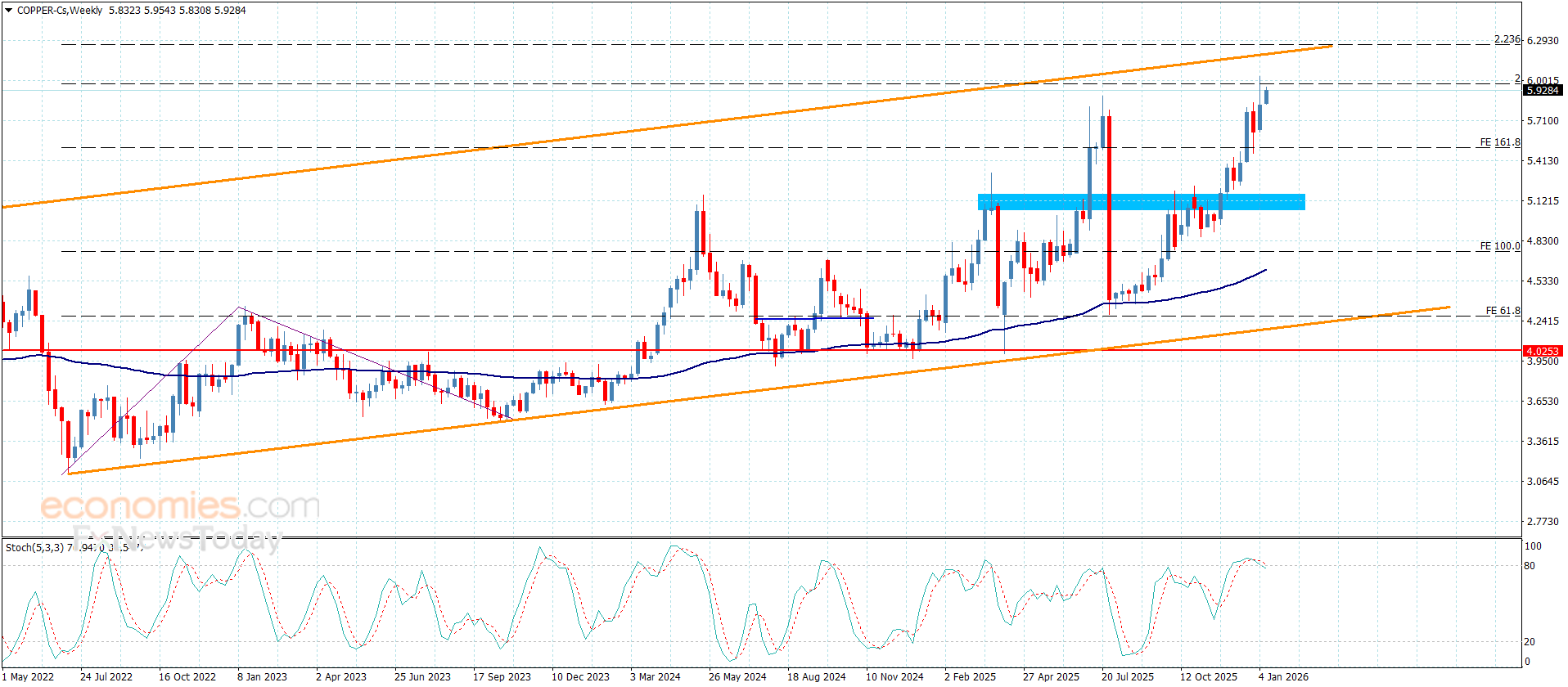
Copper price began forming bullish waves yesterday, attempting to face the temporary negative pressure to reinforce the dominance of the main bullish scenario, to fluctuate near $5.0500 level now.


We expect to provide mixed trading, noting that the attempt to resume the bullish attack requires breaching the initial barrier near $5.2000, while the stability below it might force it to form corrective wave to reach towards the initial support at $4.7500.


The expected trading range for today is between $4.9500 and $5.2000


Trend forecast: Fluctuated


Source link

25 11, 2025

EUR/USD, GBP/USD and EUR/GBP Forecast – US Dollar Fighting Back on Tuesday

By |2025-11-25T19:37:02+02:00November 25, 2025|Forex News, News|0 Comments

EUR/USD Technical Analysis

The euro continues to see trouble just above, and ultimately, as the market’s rallying continues to bring in selling pressure. The 50-day EMA is sitting above and is offering a significant amount of resistance. The downtrend line, of course, comes back into the picture. All things being equal, this is a market that I think continues to be noisy, and I do think it continues to favor the US dollar over the longer term, as the US dollar is starting to see a lot of inflows and there are a lot of concerns about the overall global economy. All things being equal, the 1.14 level underneath is, I think, your target. It is not until we break above the 1.17 level that we start to look at the possibility of a continuation of the previous uptrend.

GBP/USD Technical Analysis

The British pound initially tried to rally during the trading session on Tuesday as well, but then gave back gains and showed a potential shooting star, and therefore, I think we have a real possibility of a drop from here to reach down to the 1.130 level. The 50-day EMA looks as if it is going to cross below the 200-day EMA, kicking off the so-called death cross. The 1.32 level above is significant resistance and 1.30 underneath is support, so we are in a range, but this could, and I believe is going to be, a continuation pattern. So we will just have to see how long it takes for the market to make its next move.

Source link

25 11, 2025

Tyler, The Creator’s Golf Wang and AriZona Iced Tea Launch Limited Edition Green Tea Collaboration » LIVING LIFE FEARLESS

By |2025-11-25T19:28:05+02:00November 25, 2025|Dietary Supplements News, News|0 Comments


TL;DR

  • Tyler, The Creator and his brand Golf Wang have officially announced a collaboration with AriZona Iced Tea, centered on a limited-edition green tea version and complementary apparel pieces.
  • The drop includes specially-branded AriZona Green Tea by Golf Wang and is available on Golf Wang’s online store.

What’s the collaboration all about?

Tyler, The Creator has long expressed passion for AriZona Iced Tea green tea — his brand under Golf Wang teased the collab via Instagram posts. The announcement shows the iconic AriZona can re-imagined under Golf Wang’s creative aesthetic: minimal tweaks, bold wording, and the familiar green tea flavor.

The release is positioned as a capsule drop: the drink itself plus likely apparel and branded merch (tee shirts, hoodies, maybe can-inspired graphics). For Tyler’s audience, it bridges his love of fun retro items (like the 99¢ AriZona can) with his fashion-world influence.

Why this collab matters

  • Culture cross-over: It blends beverage culture (AriZona’s iconic status) with streetwear fashion via Golf Wang. For Tyler, who has a unique position between music, fashion and design, this is a natural but high-impact move.
  • Brand expansion: For AriZona Iced Tea, the collaboration gives them access to a fashion-forward, youth-centric audience. For Golf Wang, the move adds a lifestyle dimension: not just apparel, but consumables.
  • Collectibility: Limited-edition runs mean high desirability — whether the cans themselves, accompanying apparel, or package sets will likely become collector items.


Source link

Go to Top