The main category of All News Articles.
You can use the search box below to find what you need.
[wd_asp id=1]
The main category of All News Articles.
You can use the search box below to find what you need.
[wd_asp id=1]
Why is
crypto going up today? The cryptocurrency market is experiencing a strong
recovery rally today (Tuesday), November 25, 2025, with Bitcoin (BTC) price jumping
to $88,590 (up 1.6% in 24 hours), Ethereum rising 2.1% to $2,942, XRP surging
8% to $2.24, and Dogecoin gaining ground at $0.1525.
The total
crypto market capitalization has risen 2.4% to $3.1 trillion, adding $23.8
billion in value over the past day as investor sentiment improves from extreme
fear levels. The crypto surge is primarily driven by a shift in Federal Reserve rate
cut expectations, with odds jumping from just 40% last week to 82% for December
according to Polymarket and CME FedWatch data.
However,
this is most likely a dead cat bounce, and the cryptocurrency market could
quickly resume its decline. In this text, I provide a technical analysis of the
BTC/USDT, ETH/USDT, XRP/USDT, and DOGE/USDT charts and outline what these
assets may face in the coming weeks.
Follow me on X for more up-to-date analysis and forecasts on major cryptocurrencies and other financial instruments.
Bitcoin’s
price fell 1.3% Tuesday to $87,177, showing slight weakness but maintaining a
clear recovery from Friday’s turbulent session when
it crashed to just $80,000, a seven-month low. According to my technical
analysis, Bitcoin’s movement toward my target bearish range around $74,000
encountered a local accumulation zone at $83,000-$84,000 where a bullish pin
bar candle formed with a very long lower wick, showing rejection of further
selling by supply.
As a
result, we’re currently in a short-term corrective bounce which could reach the
$92,000-$94,000 zone marked in red on my chart, as
I mentioned in one of my earlier analyses. This is a typical bull trap and
dead cat bounce, so I’m still targeting lows around $74,000 coinciding with
this year’s minimum on Bitcoin’s chart. After testing this level, I intend to
accumulate Bitcoin assuming a return to uptrend and ultimately re-entering a
price discovery phase.
Why Bitcoin price is going up today? Source: Tradingview.com
|
Key Level |
Price Zone |
Significance |
|
Current Price |
$87,177-$88,590 |
Tuesday |
|
Friday Low |
$80,000 |
Seven-month |
|
Pin Bar Support |
$83,000-$84,000 |
Bullish |
|
My Corrective Target |
$92,000-$94,000 |
Bull trap |
|
My Accumulation Target |
$74,000 |
2025 |
|
Bull Invalidation |
$100,000 |
Psychological |
Paul
Howard, Director at Wincent, provided institutional perspective on the current
market structure: “Indicators from the end of October where we saw whales
selling and tightening liquidity, led to the institutional basis trade unwind
and wave of ETF selling.”
“Dovetail
this with the year-end where we typically see books selling crypto for
reporting purposes, sentiment remains muted,” Howard continued. “I do
not expect we bounce back to $100,000 levels anytime before Q1.”
Ethereum’s
(ETH) price falls
2.5% today, testing session lows at $2,879 on Tuesday, though spot prices show
recovery to $2,942 with a 2.1% daily gain. On one hand, a very strong bearish
sell signal appeared in the form of a death cross, the 200-day EMA crossed from
above by the 50-day EMA, which
can signal medium-term declines of even 30-40% toward just $1,400, this year’s
lows last tested in April.
On the
other hand, ETH stopped clearly at the support zone I mentioned around $2,750,
which so far provides a place to bounce. However, there’s not much room as we
soon have the 50% Fibonacci retracement and also local November lows, and
shortly a resistance zone around $3,350 marked by August minimums tested again
in early October, not to mention the cluster of moving averages I mentioned.
Only a
return above this cluster will allow me to again believe Ethereum has demand
strength for further appreciation. For now I remain more bearish-biased on
Ethereum despite the short-term recovery bounce.
Why Ethereum price is going up today? Source: Tradingview.com
BlackRock has
been accumulating Ethereum through its iShares Ethereum Trust ETF (ETHA), with
recent purchases totaling $72.5 million in October and larger accumulations of
$140.9 million in September. While spot Ethereum ETFs saw $1.64 billion in
outflows during November, institutional interest from the world’s largest asset
manager signals long-term confidence in ETH as a foundational asset for smart
contracts and tokenization.
XRP price has two dynamic
days of consecutive gains behind it, including a remarkable 9% surge on Monday,
and on Tuesday the price corrects by a modest 1.6% and changes hands at $2.19,
with spot data showing $2.24 and an 8% daily gain. From a technical analysis
perspective, this two-day bounce allowed us to return to an important zone that
until recently acted as support, now acting as resistance in the range between
$2.18 and $2.29.
The fact
that we’re below the moving average cluster suggests for now we should expect a
bearish reaction and corrective decline again toward $1.90 support where on
Friday a bullish pin bar formed allowing the current bounce to materialize.
Like the two charts above, this is short-term for me and long-term I
maintain my bearish stance I mentioned some time ago due to death cross
formation, targeting a level of just $1.25 which was last tested one year ago.
Why XRP price is going up today? Source: Tradingview.com
Dogecoin (DOGE) notations fell
2.3% Monday and the cryptocurrency costs $0.1483 after rising for the last 2
days, bouncing from a support zone last tested in June. Recent declines on the
DOGE chart which we observed continuously from September peaks pushed the price
to my designated support zone between 14 and 15 cents, tested in March, April,
June and last time in October this year.
And
although it seemed Dogecoin might exit this range, which we witnessed including
last Friday, the price found support slightly lower, bounced and returns again
to this range showing that the long-term consolidation we’ve been observing
since February is still in play. Its main upper boundary falls around the 29-30
cents range, and according to swing trading principles we should be heading in
that direction.
However,
the technical situation is not in favor of buyers. Primarily we’re in a
downtrend as evidenced by simply being below the 200 MA moving average, not to
mention the
death cross formed in late October (sell signal from 50 and 200 MA
crossing).
Why Dogecoin price is going up today? Source: Tradingview.com
For me to
start believing in a stronger Dogecoin bounce, it would need to return above
the 20 cents level and break the blue average; only then would I consider
playing long positions toward 30 cents, the level last tested in September.
The primary
driver behind why crypto is surging today is the dramatic shift in Federal
Reserve policy expectations. Joel Kruger, strategist at LMAX Group, explained:
“Market conditions appear to be realigning with the broader status quo,
particularly around Fed expectations. After a brief wobble driven by a hawkish
tilt that unsettled risk assets, the market is once again leaning toward
accommodation.”
The CME
FedWatch tool shows December rate cut odds jumped from 30% on Wednesday to
75.5% by Friday, following dovish remarks from Fed Vice Chair John Williams.
This represents a stunning reversal from the 22% probability economists
assigned just days earlier.
BlackRock’s
continued Ethereum accumulation through its iShares Ethereum Trust ETF,
including the $72.5 million October purchase, signals institutional confidence
despite recent market volatility. The asset manager views Ethereum as a
foundational layer for smart contracts, tokenization, and institutional-grade
Web3 infrastructure.
Kruger
noted that “the market has now digested the recent setbacks, creating a
healthier backdrop and offering investors a chance to reenter at compelling
levels. Bitcoin has historically rewarded conviction during periods of
volatility, with significant pullbacks frequently preceding powerful moves to
new all-time highs.”
Crypto is
surging on November 25, 2025 due to Federal Reserve dovish pivot with rate cut
odds jumping from 40% to 82% for December, Monday launch of Franklin Templeton
and Grayscale XRP ETFs ($94M combined first-day inflows), BlackRock Ethereum
ETF purchases signaling institutional confidence, technical oversold bounce
after Friday’s crash to seven-month lows, and leverage unwinding stabilizing
the market.
According
to my technical analysis, Bitcoin at $87,177-$88,590 is in bull trap bounce
potentially reaching $92,000-$94,000 corrective resistance before declining to
my ultimate target of $74,000 (2025 yearly minimum) for accumulation. After
testing $74K, I anticipate return to uptrend and price discovery phase.
XRP at
$2.19-$2.24 after 9% Monday rally has returned to former support/current
resistance zone $2.18-$2.29. According to my technical analysis, this two-day
bounce appears corrective within longer-term bearish structure.
This
depends on timeframe and risk tolerance. Bullish case: Fed rate cut odds 82%
for December, extreme fear (contrarian signal), institutional flows (BlackRock
ETH, XRP/DOGE ETFs $94M), technical oversold bounce, Kruger notes “Bitcoin
historically rewarded conviction during volatility” with pullbacks
“frequently preceding powerful moves to new highs.”
Yes.
Bitcoin death cross, Ethereum death cross (50 EMA above 200 EMA), my technical
analysis targeting Bitcoin $74K/Ethereum $1,400, XRP and Dogecoin death
crosses, Paul Howard notes whale selling and institutional liquidation ongoing,
no $100K expected before Q1 2026.
Before you go, please also check my previous analyses and articles about crypto and gold:
Why is
crypto going up today? The cryptocurrency market is experiencing a strong
recovery rally today (Tuesday), November 25, 2025, with Bitcoin (BTC) price jumping
to $88,590 (up 1.6% in 24 hours), Ethereum rising 2.1% to $2,942, XRP surging
8% to $2.24, and Dogecoin gaining ground at $0.1525.
The total
crypto market capitalization has risen 2.4% to $3.1 trillion, adding $23.8
billion in value over the past day as investor sentiment improves from extreme
fear levels. The crypto surge is primarily driven by a shift in Federal Reserve rate
cut expectations, with odds jumping from just 40% last week to 82% for December
according to Polymarket and CME FedWatch data.
However,
this is most likely a dead cat bounce, and the cryptocurrency market could
quickly resume its decline. In this text, I provide a technical analysis of the
BTC/USDT, ETH/USDT, XRP/USDT, and DOGE/USDT charts and outline what these
assets may face in the coming weeks.
Follow me on X for more up-to-date analysis and forecasts on major cryptocurrencies and other financial instruments.
Bitcoin’s
price fell 1.3% Tuesday to $87,177, showing slight weakness but maintaining a
clear recovery from Friday’s turbulent session when
it crashed to just $80,000, a seven-month low. According to my technical
analysis, Bitcoin’s movement toward my target bearish range around $74,000
encountered a local accumulation zone at $83,000-$84,000 where a bullish pin
bar candle formed with a very long lower wick, showing rejection of further
selling by supply.
As a
result, we’re currently in a short-term corrective bounce which could reach the
$92,000-$94,000 zone marked in red on my chart, as
I mentioned in one of my earlier analyses. This is a typical bull trap and
dead cat bounce, so I’m still targeting lows around $74,000 coinciding with
this year’s minimum on Bitcoin’s chart. After testing this level, I intend to
accumulate Bitcoin assuming a return to uptrend and ultimately re-entering a
price discovery phase.
Why Bitcoin price is going up today? Source: Tradingview.com
|
Key Level |
Price Zone |
Significance |
|
Current Price |
$87,177-$88,590 |
Tuesday |
|
Friday Low |
$80,000 |
Seven-month |
|
Pin Bar Support |
$83,000-$84,000 |
Bullish |
|
My Corrective Target |
$92,000-$94,000 |
Bull trap |
|
My Accumulation Target |
$74,000 |
2025 |
|
Bull Invalidation |
$100,000 |
Psychological |
Paul
Howard, Director at Wincent, provided institutional perspective on the current
market structure: “Indicators from the end of October where we saw whales
selling and tightening liquidity, led to the institutional basis trade unwind
and wave of ETF selling.”
“Dovetail
this with the year-end where we typically see books selling crypto for
reporting purposes, sentiment remains muted,” Howard continued. “I do
not expect we bounce back to $100,000 levels anytime before Q1.”
Ethereum’s
(ETH) price falls
2.5% today, testing session lows at $2,879 on Tuesday, though spot prices show
recovery to $2,942 with a 2.1% daily gain. On one hand, a very strong bearish
sell signal appeared in the form of a death cross, the 200-day EMA crossed from
above by the 50-day EMA, which
can signal medium-term declines of even 30-40% toward just $1,400, this year’s
lows last tested in April.
On the
other hand, ETH stopped clearly at the support zone I mentioned around $2,750,
which so far provides a place to bounce. However, there’s not much room as we
soon have the 50% Fibonacci retracement and also local November lows, and
shortly a resistance zone around $3,350 marked by August minimums tested again
in early October, not to mention the cluster of moving averages I mentioned.
Only a
return above this cluster will allow me to again believe Ethereum has demand
strength for further appreciation. For now I remain more bearish-biased on
Ethereum despite the short-term recovery bounce.
Why Ethereum price is going up today? Source: Tradingview.com
BlackRock has
been accumulating Ethereum through its iShares Ethereum Trust ETF (ETHA), with
recent purchases totaling $72.5 million in October and larger accumulations of
$140.9 million in September. While spot Ethereum ETFs saw $1.64 billion in
outflows during November, institutional interest from the world’s largest asset
manager signals long-term confidence in ETH as a foundational asset for smart
contracts and tokenization.
XRP price has two dynamic
days of consecutive gains behind it, including a remarkable 9% surge on Monday,
and on Tuesday the price corrects by a modest 1.6% and changes hands at $2.19,
with spot data showing $2.24 and an 8% daily gain. From a technical analysis
perspective, this two-day bounce allowed us to return to an important zone that
until recently acted as support, now acting as resistance in the range between
$2.18 and $2.29.
The fact
that we’re below the moving average cluster suggests for now we should expect a
bearish reaction and corrective decline again toward $1.90 support where on
Friday a bullish pin bar formed allowing the current bounce to materialize.
Like the two charts above, this is short-term for me and long-term I
maintain my bearish stance I mentioned some time ago due to death cross
formation, targeting a level of just $1.25 which was last tested one year ago.
Why XRP price is going up today? Source: Tradingview.com
Dogecoin (DOGE) notations fell
2.3% Monday and the cryptocurrency costs $0.1483 after rising for the last 2
days, bouncing from a support zone last tested in June. Recent declines on the
DOGE chart which we observed continuously from September peaks pushed the price
to my designated support zone between 14 and 15 cents, tested in March, April,
June and last time in October this year.
And
although it seemed Dogecoin might exit this range, which we witnessed including
last Friday, the price found support slightly lower, bounced and returns again
to this range showing that the long-term consolidation we’ve been observing
since February is still in play. Its main upper boundary falls around the 29-30
cents range, and according to swing trading principles we should be heading in
that direction.
However,
the technical situation is not in favor of buyers. Primarily we’re in a
downtrend as evidenced by simply being below the 200 MA moving average, not to
mention the
death cross formed in late October (sell signal from 50 and 200 MA
crossing).
Why Dogecoin price is going up today? Source: Tradingview.com
For me to
start believing in a stronger Dogecoin bounce, it would need to return above
the 20 cents level and break the blue average; only then would I consider
playing long positions toward 30 cents, the level last tested in September.
The primary
driver behind why crypto is surging today is the dramatic shift in Federal
Reserve policy expectations. Joel Kruger, strategist at LMAX Group, explained:
“Market conditions appear to be realigning with the broader status quo,
particularly around Fed expectations. After a brief wobble driven by a hawkish
tilt that unsettled risk assets, the market is once again leaning toward
accommodation.”
The CME
FedWatch tool shows December rate cut odds jumped from 30% on Wednesday to
75.5% by Friday, following dovish remarks from Fed Vice Chair John Williams.
This represents a stunning reversal from the 22% probability economists
assigned just days earlier.
BlackRock’s
continued Ethereum accumulation through its iShares Ethereum Trust ETF,
including the $72.5 million October purchase, signals institutional confidence
despite recent market volatility. The asset manager views Ethereum as a
foundational layer for smart contracts, tokenization, and institutional-grade
Web3 infrastructure.
Kruger
noted that “the market has now digested the recent setbacks, creating a
healthier backdrop and offering investors a chance to reenter at compelling
levels. Bitcoin has historically rewarded conviction during periods of
volatility, with significant pullbacks frequently preceding powerful moves to
new all-time highs.”
Crypto is
surging on November 25, 2025 due to Federal Reserve dovish pivot with rate cut
odds jumping from 40% to 82% for December, Monday launch of Franklin Templeton
and Grayscale XRP ETFs ($94M combined first-day inflows), BlackRock Ethereum
ETF purchases signaling institutional confidence, technical oversold bounce
after Friday’s crash to seven-month lows, and leverage unwinding stabilizing
the market.
According
to my technical analysis, Bitcoin at $87,177-$88,590 is in bull trap bounce
potentially reaching $92,000-$94,000 corrective resistance before declining to
my ultimate target of $74,000 (2025 yearly minimum) for accumulation. After
testing $74K, I anticipate return to uptrend and price discovery phase.
XRP at
$2.19-$2.24 after 9% Monday rally has returned to former support/current
resistance zone $2.18-$2.29. According to my technical analysis, this two-day
bounce appears corrective within longer-term bearish structure.
This
depends on timeframe and risk tolerance. Bullish case: Fed rate cut odds 82%
for December, extreme fear (contrarian signal), institutional flows (BlackRock
ETH, XRP/DOGE ETFs $94M), technical oversold bounce, Kruger notes “Bitcoin
historically rewarded conviction during volatility” with pullbacks
“frequently preceding powerful moves to new highs.”
Yes.
Bitcoin death cross, Ethereum death cross (50 EMA above 200 EMA), my technical
analysis targeting Bitcoin $74K/Ethereum $1,400, XRP and Dogecoin death
crosses, Paul Howard notes whale selling and institutional liquidation ongoing,
no $100K expected before Q1 2026.
Before you go, please also check my previous analyses and articles about crypto and gold:
The Euro initially tried to rally during the trading session on Monday, but as we’ve seen multiple days in a row, the Euro just can’t seem to hang on to significant gains. And I do think that the US dollar is likely to continue to be a situation of fading the rally as we go forward.
All things being equal, this is a market that I think we continue to see a lot of choppy and volatile moves in, but mainly on short-term charts. After all, this is a week that I think is going to be difficult for a lot of traders, as we have the Thanksgiving holiday in the United States on Thursday.
So that basically takes the Americans out of the equation for Thursday and Friday. So, unless we see some type of major shift, and let’s be honest, we could do due to headlines coming out of Ukraine or trade tensions or whatever. I think this is a market that you just continue to face short-term rallies, you collect your profits, and then rinse and repeat. The 50-day EMA above offers significant resistance near the 1.16 level. And of course, we have a downtrend line that’s just above there that could come into the picture to offer resistance as well.
I think at this point in time, we are likely to see a potential move down to the 1.14 level, which is a large round, psychologically significant figure in an area that has shown extreme demand previously. If we drop below there, then not only will the break of demand be bearish, but you would also see a breakdown below the 200-day EMA as very bearish also. I think at that point, the euro goes to the 1.11 level. It’s not until we break above the 1.17 level that I start to look in the other direction. So, I remain bearish at least for the time being.
Ready to trade our daily Forex analysis? We’ve made this forex brokers list for you to check out.
Christopher Lewis has been trading Forex and has over 20 years experience in financial markets. Chris has been a regular contributor to Daily Forex since the early days of the site. He writes about Forex for several online publications, including FX Empire, Investing.com, and his own site, aptly named The Trader Guy. Chris favours technical analysis methods to identify his trades and likes to trade equity indices and commodities as well as Forex. He favours a longer-term trading style, and his trades often last for days or weeks.

If you have a headache, chances are you reach for an over-the-counter pain reliever to make your head feel better. Sometimes, the pain remains, and you seek another alternative. A surprising way to help get rid of your headache is by reaching inside your refrigerator or pantry for specific foods.
“The most important thing I tell patients is that migraines are highly individualized,” says Dr. Nicholas Church, a board-certified member of the American Board of Family Medicine and the American Academy of Family Physicians. “What helps one person may not help another, and what’s a trigger for one might be therapeutic for someone else.”
While no one food will act as a cure-all for headaches — as managing your sleep, hydration, exercise and stress are equally important — experts say the following foods could help you cope with headaches in the future.
“I recommend omega-3-rich fish, such as salmon, mackerel and sardines,” says Church. “These fish are high in anti-inflammatory fats (EPA and DHA), which can reduce inflammation throughout the body, including in the vascular system and brain.”
Citing a 2021 randomized controlled trial, Church explains that because migraines are believed to involve inflammatory and vascular changes in the body, omega-3 fatty acids may help reduce their frequency or intensity when eaten regularly. “The study’s findings also align with earlier data showing that omega-3s help regulate prostaglandins, which play a role in headache inflammation,” says Church. Prostaglandins are hormone-like substances that impact bodily functions such as inflammation, pain and menstrual cramps.
Fatty fish also contain vitamin D, coenzyme Q10 and B vitamins, including riboflavin, which support healthy brain metabolism.
Kiran Campbell, a registered dietitian nutritionist at MyNetDiary, also mentions a 2024 meta-analysis revealing that omega-3 fatty acids can reduce the frequency, duration and severity of migraines. She adds that plant-based sources include chia seeds, walnuts, flaxseed and algae oil.
Example foods: Salmon, mackerel, sardines, chia seeds, walnuts, flaxseed and algae oil
Chia and flax seeds are rich in omega-3s.
Daniel Redwood, the director of Human Nutrition and Functional Medicine at the University of Western States, says, “Attention to the potential importance of magnesium in migraines grew in prominence with the discovery (Ramadan, 1989) that people with migraines had lower levels of this mineral in their red blood cells, serum and brain tissue.”
Dr. Paul Daidone, medical director at True Self Recovery, seconds this, stating that food rich in magnesium — like pumpkin seeds, spinach and avocado — may reduce the severity and occurrence of migraines. He cites a 2022 study examining the potential connection between magnesium deficiency and migraines, which describes how magnesium deficiency is implicated in migraine attacks due to processes like cortical spreading depression, oxidative stress, neurotransmitter imbalance and electrolyte imbalance.
“Although clinical evidence of the acute dietary magnesium deficiency as a direct migraine trigger remains limited, scientists are investigating the involvement of intra- and extracellular magnesium levels in migraine pathogenesis,” Daidone says.
Dr. Schonze Del Pozo, a board-certified internal medicine physician and medical director at East Sacramento Concierge, states that many of the patients she sees for headaches and migraines are deficient in magnesium. She also cites a 2012 study in the Journal of Neural Transmission titled “Why all migraine patients should be treated with magnesium.” As a result, she recommends a healthy diet of magnesium-rich dark leafy greens like spinach, kale, broccoli and Swiss chard.
Example foods: Pumpkin seeds, spinach and avocado, kale, broccoli and Swiss chard
“Many swear by ginger as a way to help with migraines,” states Dr. Maria Knöbel, a general practitioner and medical director of Medical Cert UK. “Studies have proven that ginger reduces nausea and can decrease the inflammation that leads to migraine pain. Ginger has helped patients during my practice, whether they take it as ginger tea or in supplement form.” She references a 2014 study that found ginger powder to be as effective as the medication sumatriptan in treating acute migraine attacks, but with fewer side effects.
Ginger tea may be especially beneficial because, Knöbel states, “it’s important to drink enough water, as well as eat ginger. Drinking enough water might stop your migraine from getting any worse.”
Church also recommends ginger because it contains natural anti-inflammatory compounds like gingerol. “I’ve had patients find relief from migraines or migraine-related nausea using ginger tea, powder or chews,” he says.
A 2019 study also found that 400mg of ginger extract, in addition to 100mg of the nonsteroidal anti-inflammatory drug ketoprofen, may help treat migraine attacks.
Ginger tea combines the benefits of ginger with the hydration of water.
“Another group of foods I recommend are nuts and seeds, including almonds, pumpkin seeds, sunflower seeds and walnuts,” Church states. “Like leafy greens, these are rich in magnesium, and some also provide vitamin E, which has been shown to help with menstrual migraines and migraines with aura.” A 2015 study reflected this.
Example foods: Almonds, pumpkin seeds, sunflower seeds and walnuts
“Cinnamon contains a high amount of antioxidants that may also reduce headache frequency,” Campbell explains. “Stir it into your morning oatmeal or tea, or bake it into muffins and breads.” She cites a randomized, double-blind, placebo-controlled 2020 trial, stating, “Studies suggest that cinnamon supplementation may lower inflammation, cutting down on migraine frequency, severity and duration.”
The antioxidants in cinnamon may help treat headaches and migraines.
“A well-known [1998] randomized controlled trial found that 400mg of riboflavin daily significantly reduced migraine frequency and severity over a three-month period,” Church says. Though this high dose usually comes from supplementation, riboflavin-rich foods support the same metabolic processes in migraine prevention. These foods can include eggs, dairy and lean meats.
“Riboflavin is essential for mitochondrial energy production, and many researchers believe that migraines stem in part from dysfunction in energy metabolism within brain cells,” Church adds.
Redwood adds, “There exists a small but promising body of research on the effectiveness of some nutritional supplements for migraines, especially riboflavin (vitamin B2), coenzyme Q10 and magnesium. The first research-based indicator of riboflavin’s potential as a migraine treatment appeared in a small 1946 article by a medical physician, published in the Canadian Medical Association Journal, which reported dramatic effectiveness from what would now be considered low-dose B2 supplements.”
A 2022 systematic review and meta-analysis found that supplementation of 400mg/day of vitamin B2 for three months affected the duration, frequency and pain score of migraine attacks.
Example foods: Eggs, dairy and lean meats
Curcumin is the active compound in turmeric and, according to Campbell, is “high in antioxidant power and shines especially when paired with omega-3s.” To add it to your diet, consider sprinkling it into smoothies, curries or teas. Campbell references a randomized, double-blind, placebo-controlled 2021 trial that concluded, “Present findings revealed that n-3 fatty acids and curcumin co-supplementation can be suggested as a promising new approach in migraine headache management.” However, more studies are needed.
A 2023 comprehensive review also found that curcumin is a promising candidate for preventing and controlling migraines due to its anti‑inflammatory, antioxidative, anti-protein aggregate and analgesic effects. However, again, additional studies are needed.
When combined with omega-3s, turmeric may help with migraine headache management.
Church mentions that whole grains like quinoa, brown rice and oats may also be beneficial since they “provide a steady release of glucose, preventing blood sugar crashes that can trigger headaches, and are good sources of fiber, B vitamins and trace minerals.” He cites a 2023 cross-sectional study of 12,710 participants with data collected from a 1999-2004 National Health and Nutrition Examination Survey. It found that for every 10 grams of fiber added to the diet, there was an 11% reduction in the odds of having severe headaches or migraines.
“By providing magnesium, iron, and B vitamins, whole grains support brain health, oxygen delivery and a stable glucose supply, which are all relevant to migraine prevention,” concludes Church.
Example foods: Quinoa, brown rice and oats
Dr. Kimberly Idoko, a developmental neurobiologist and board-certified neurologist, reveals that dehydration can also trigger headaches, which is why staying hydrated can significantly improve migraine treatments.
“Water-rich foods like cucumber, watermelon and citrus fruits also help you stay hydrated,” adds Church.
To prevent dehydration-caused headaches or migraines, enjoy more water-rich foods like watermelon.
Chocolate, cheese and alcohol: “In one [2007] study of over 500 migraine sufferers, 44% reported at least one food as a trigger. Among the most common triggers were chocolate, cheese and alcohol, ” reveals Dr. Adam Lowenstein, a board-certified plastic surgeon who runs the Migraine Surgery Specialty Center.
Gluten: “Gluten can be a highly inflammatory food substance, especially among those who are prone to sensitivities or gluten allergy,” explains Trista Best, a registered dietitian at The Candida Diet, environmental health specialist and adjunct nutrition professor. “This inflammation causes a host of health conditions, including migraines.”
When it comes to caffeine, moderation is key.
Caffeine: “The most fascinating study I’ve seen on the role of nutrition in the treatment of headaches (Hering-Hanit and Gadoth, 2003) was published in Cephalalgia, the premier headache journal. Over a five-year period, doctors at a neurology clinic in Israel treated 36 children and adolescents (average age 9) with severe daily or near-daily headaches who drank an average of 11 quarts of cola drinks per week,” says Redwood. “At the end of a gradual withdrawal period (because too speedy a withdrawal can trigger even worse headaches), 33 of these 36 young people were headache-free, a truly stunning result. Nearly all cola drinks contain substantial amounts of caffeine.” (Chou and Bell, 2007)
Note: 11 quarts of cola per week is extreme, and the average person doesn’t consume this much caffeine. Moderate caffeine intake is still OK, according to Amelia Ti, a registered dietitian and diabetes educator in New York City who is also part of CNET’s medical review board.
However, when it comes to caffeine, Church notes, “Caffeine, used strategically, can enhance the absorption of pain relievers and constrict dilated blood vessels in the brain, which may ease migraine pain. This is why many over-the-counter headache medications include it. Studies have shown that 40–100mg of caffeine (the amount in a small cup of coffee or strong tea) can reduce migraine or tension headache pain. But chronic overuse can lead to rebound headaches, so moderation is key.”
Added sugars and highly processed foods: “Research has shown that people following a ‘Western’ diet, which includes substantial amounts of added sugars and other highly processed foods, are at greater than average risk for developing migraines, while the risk is significantly lower than average for those following a healthier diet,” states Redwood.
Dr. Joseph Mercola, a board-certified family physician and author of Your Guide to Cellular Health, adds that in addition to incorporating foods rich in specific nutrients like magnesium and B vitamins, you’ll want to eliminate triggers like processed foods that contain nitrates, MSG, added sugars or yeast.
The international crude benchmark, Brent, could dip to the $30s per barrel handle by 2027 as oversupply could overwhelm the market, according to a JP Morgan forecast posted by users on X.
Brent Crude prices have dropped by 14% year to date, and traded relatively stable at $62.59 per barrel early on Monday, as the oil market awaits news from the renewed negotiations on peace in Ukraine.
The U.S. and Ukraine held on Sunday in Geneva what the two sides described as “highly productive” talks and agreed to continue intensive work on a “refined” peace plan, which the U.S. first proposed last week.
Despite the fears of a glut, analysts and investment banks don’t see oil prices moving down to $40 or below, even as oil is set to decline in the near term with strong supply from OPEC+ and the non-OPEC producers in the Americas.
Peace in Ukraine could also weigh on energy prices as some sanctions and restrictions on Russia could be eased, analysts say.
Oil prices are set to further drop into next year from current levels amid a large surplus on the market, with the U.S. benchmark WTI Crude expected to average $53 per barrel in 2026, according to Goldman Sachs.
The investment bank’s call for next year is that oil prices are on track for further declines and investors should short oil right now, Daan Struyven, co-head of global commodities research at Goldman Sachs, told CNBC last week.
The surplus next year will be 2 million bpd on average, Goldman reckons, but notes that 2026 will be the last year of the current big supply wave hitting the market.
The oil market is set to rebalance in 2027 as 2026 will see “the last big oil supply wave the market has to work through,” Goldman’s Struyven added.
By Michael Kern for Oilprice.com
More Top Reads From Oilprice.com
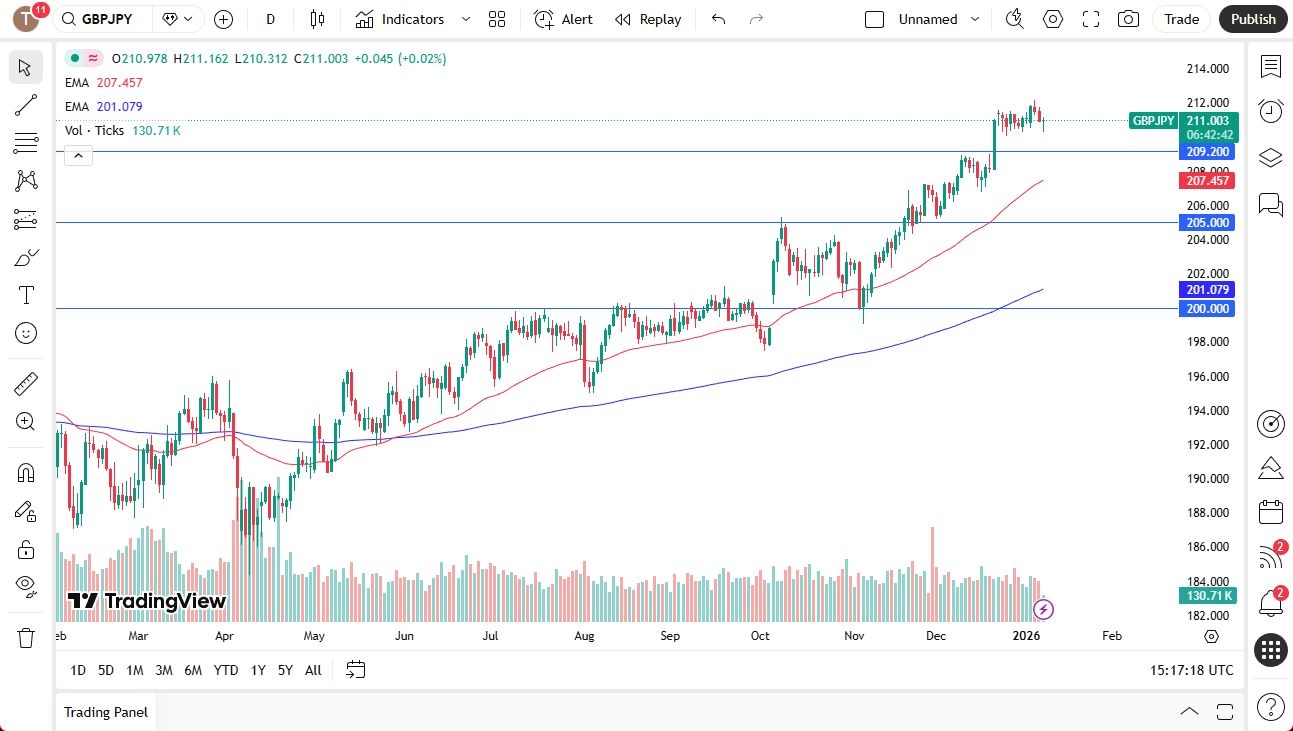
The GBPJPY pair provided mixed trading yesterday, affected by the contradiction between the main indicators, which might cause activating the bearish corrective track, so the stability below 206.90 forms main factor to confirm the negative suggestion in the near-term trading, therefore, we will keep waiting for its activation with stochastic negativity, to begin targeting corrective stations that might begin at 203.75.
Note that the price attempt to rally above 206.00 may delay the corrective trading in the current period, paving the way for retesting the mentioned barrier before reaching the suggested corrective targets.
The expected trading range for today is between 203.75 and 206.00
Trend forecast: Bearish
The demand for EPA and DHA omega-3 ingredients in the UK is projected to grow from USD 260.0 million in 2025 to approximately USD 408.0 million by 2035, the market will rise at a CAGR of 4.6% which recording an absolute increase of USD 148.0 million over the forecast period. The Marine Oils segment is projected to account for 63.0% of UK EPA and DHA omega-3 ingredient demand in 2025.
Marine oil sources are fundamental to the UK industry for several overlapping reasons, including their superior EPA and DHA concentration characteristics, established supply chain infrastructure, and proven effectiveness in delivering cardiovascular and cognitive health benefits while maintaining regulatory acceptance and consumer recognition.
The dietary supplements application segment is expected to represent 52.0% of UK EPA and DHA omega-3 ingredient demand in 2025. Health-conscious consumers are fundamental to the omega-3 ingredient industry because they provide the advanced nutritional requirements, comprehensive wellness opportunities, and standardized efficacy characteristics required for preventive healthcare success and functional nutrition integration.
Between 2025 and 2030, demand for EPA and DHA omega-3 ingredients in the UK is projected to expand from USD 260.0 million to USD 324.5 million, resulting in a value increase of USD 64.5 million, which represents 43.6% of the total forecast growth for the decade. This phase of growth will be shaped by rising health consciousness among aging populations, increasing scientific validation of omega-3 benefits, and growing demand for advanced nutritional ingredients across UK wellness sectors, particularly in regions where cardiovascular disease prevention and cognitive health awareness are accelerating omega-3 adoption. Increasing integration of omega-3 fortification in functional food formulations and growing adoption of preventive healthcare solutions continue to drive demand. Advanced supplement manufacturers and ingredient suppliers are expanding their production capabilities to address the growing complexity of modern health requirements and quality standards, with UK operations leading investments in bioavailability enhancement and purity assurance systems.
From 2030 to 2035, demand is forecast to grow from USD 324.5 million to USD 408.0 million, adding another USD 83.5 million, which constitutes 56.4% of the overall ten-year expansion. This period is expected to be characterized by expansion of algae-based omega-3 production and alternative sourcing methods, development of enhanced bioavailability formulations and targeted delivery systems, and implementation of comprehensive quality programs across different nutritional and pharmaceutical sectors. The growing adoption of personalized nutrition approaches and enhanced efficacy requirements, particularly in cardiovascular and cognitive health applications, will drive demand for more sophisticated omega-3 varieties and validated formulation solutions.
Between 2020 and 2025, EPA and DHA omega-3 ingredient demand in the UK experienced steady expansion, driven by increasing cardiovascular health awareness and growing recognition of omega-3 fatty acids as essential nutrients for enhancing brain function and providing comprehensive wellness solutions across diverse consumer applications. The sector developed as healthcare professionals and supplement manufacturers, especially in major urban centers, recognized the need for proven nutritional ingredients and effective health support systems to achieve wellness objectives while meeting consumer expectations and quality requirements. Omega-3 ingredient suppliers and formulation providers began emphasizing clinical research validation and quality assurance to maintain competitive advantages and commercial viability.
| Metric | Value |
|---|---|
| UK EPA and DHA Omega-3 Ingredient Sales Value (2025) | USD 260 million |
| UK EPA and DHA Omega-3 Ingredient Forecast Value (2035) | USD 408 million |
| UK EPA and DHA Omega-3 Ingredient Forecast CAGR (2025-2035) | 4.6% |
Demand expansion is being supported by the accelerating emphasis on cardiovascular health and preventive healthcare nationwide, with the UK maintaining its position as a leading wellness-focused consumer base, and the corresponding need for scientifically validated nutritional ingredients for heart health, brain function, and inflammatory response applications. Modern supplement manufacturers rely on EPA and DHA omega-3 ingredient technologies to ensure product efficacy, consumer acceptance, and optimal pathway achievement toward health optimization.
Healthcare professionals and supplement companies are increasingly investing in omega-3 ingredient sourcing and integrated formulation solutions to enhance product profiles, access clinical research trends, and demonstrate evidence leadership in competitive wellness environments. Quality standards and regulatory compliance requirements are establishing standardized efficacy pathways that require scientific validation systems and performance assurance, with UK operations often pioneering large-scale implementation of advanced omega-3 ingredient technologies.
The EPA and DHA omega-3 ingredient demand in the UK is positioned for steady expansion, growing from USD 260.0 million in 2025 to USD 408.0 million by 2035, reflecting a 4.6% CAGR. Rising adoption of functional nutrition systems in supplement formulations, infant nutrition products, and fortified food applications is driving growth as manufacturers seek omega-3 solutions that maximize health benefit characteristics and comply with stringent purity standards. Additionally, demand from cardiovascular health applications and cognitive enhancement implementations strengthens opportunities for both sophisticated ingredient platforms and integrated delivery solutions.
Suppliers focusing on clinical validation, bioavailability enhancement, and advanced purity capabilities stand to gain from evolving health standards and consumer expectations for ingredient effectiveness, and therapeutic optimization.
The industry is segmented by source, application, and form. By source, sales are divided into marine oils, algal, and concentrates/EE categories. In terms of application, the industry is segmented into dietary supplements, infant formula, and foods & pharma. By form, the industry is segmented into concentrates and standard oils. Regionally, the industry is divided into England, Scotland, Wales, and Northern Ireland, with England representing a key growth and innovation hub for advanced nutritional ingredient technologies.
The Marine Oils segment is projected to account for 63.0% of UK EPA and DHA omega-3 ingredient demand in 2025, making it the leading source category across the sector. This dominance reflects the efficacy requirements and supply infrastructure needs of marine-derived systems for existing supplement formulations and nutritional applications where EPA and DHA concentration is optimized through superior extraction characteristics and reliable sourcing architecture.
In the UK, where substantial pharmaceutical infrastructure requires advanced ingredient integration without complete formulation redevelopment, marine oil platforms provide practical pathways for efficacy enhancement while maintaining product quality. Continuous innovations are improving concentration consistency, purity characteristics, and formulation integration parameters, enabling manufacturers to achieve high therapeutic standards while maximizing consumer acceptance.
The segment’s strong position is reinforced by the extensive existing supplement products requiring proven ingredient capabilities and growing availability of marine oil suppliers with established commercial experience.
The Dietary Supplements segment is expected to represent 52.0% of UK EPA and DHA omega-3 ingredient demand in 2025, highlighting the critical importance of consumer health operations requiring comprehensive nutritional solutions. Wellness sector facilities including cardiovascular health supplements, cognitive enhancement products, and general wellness formulations generate consistent demand for EPA and DHA omega-3 ingredient systems that are clinically and commercially favorable for advanced health support applications.
The segment benefits from ingredient characteristics that often provide superior therapeutic outcomes compared to dietary alternatives, reducing health intervention complexity and improving consumer compliance. Dietary supplement applications also access enhanced efficacy optimization through formulation innovation that improves health outcomes and consumer appeal.
In the UK, where preventive healthcare operations represent substantial portions of wellness development, clinical excellence requires ingredient integration across diverse supplement formulations. In England and Scotland regions, where major pharmaceutical concentrations are significant, EPA and DHA omega-3 ingredient demand is elevated by emphasis on maintaining efficacy excellence while achieving consumer satisfaction targets.
UK EPA and DHA omega-3 ingredient demand is advancing steadily due to increasing cardiovascular health awareness and growing recognition of omega-3 fatty acids necessity for preventive healthcare, with England region serving as a key driver of innovation and application development. The sector faces challenges including competition from plant-based omega-3 alternatives, need for specialized purification infrastructure development, and ongoing concerns regarding raw material price volatility and marine sourcing considerations.
National health regulations and regional-level wellness initiatives, particularly preventive healthcare programs in England and Scotland regions, continue to influence EPA and DHA omega-3 ingredient selection and adoption timelines.
The enhancement of cardiovascular health research, gaining particular significance through government preventive care mandates and wellness awareness campaigns, is enabling omega-3 ingredient suppliers to achieve differentiation without prohibitive development costs, providing predictable demand patterns through healthcare professional recommendations and consumer health preferences. Enhanced clinical standards offering substantial opportunities for scientifically validated ingredients and evidence-based applications provide foundational dynamics while allowing suppliers to secure pharmaceutical agreements and research partnerships.
These trends are particularly valuable for first-mover suppliers and premium ingredient development that require substantial quality investments without immediate cost advantages.
Modern EPA and DHA omega-3 ingredient suppliers and premium pharmaceutical operators are establishing advanced production networks and centralized manufacturing facilities that improve operational efficiency through bioavailability enhancement and economies of scale. Integration of purification systems, high-precision concentration technology, and coordinated quality management enables more efficient omega-3 ingredient production across multiple manufacturing facilities.
Advanced production concepts also support next-generation health applications including personalized nutrition integration, therapeutic optimization, and regional ingredient supply networks that optimize system-level economics while enabling comprehensive purity monitoring across production regions, with UK developments increasingly adopting collaborative manufacturing models to reduce individual supplier costs and accelerate deployment.
| Region | CAGR (2025-2035) |
|---|---|
| England | 4.9% |
| Scotland | 4.5% |
| Wales | 4.2% |
| Northern Ireland | 3.9% |
The UK EPA and DHA omega-3 ingredient demand is witnessing steady growth, supported by rising cardiovascular health awareness, expanding preventive healthcare initiatives, and the deployment of advanced nutritional ingredient technologies across regions. England leads the nation with a 4.9% CAGR, reflecting progressive health trends, substantial pharmaceutical innovation, and early adoption of premium supplement systems.
Scotland follows with a 4.5% CAGR, driven by extensive healthcare infrastructure, favorable wellness demographics, and concentration of research operations that enhance application development. Wales grows at 4.2%, as health optimization and preventive care opportunities increasingly drive EPA and DHA omega-3 ingredient deployment. Northern Ireland demonstrates growth at 3.9%, supported by expanding pharmaceutical facilities and regional healthcare initiatives.
Demand for EPA and DHA omega-3 ingredients in England is projected to exhibit strong growth with a CAGR of 4.9% through 2035, driven by progressive health operational preferences, substantial pharmaceutical development creating premium ingredient opportunities, and concentration of advanced wellness advancement across London, Manchester, and Birmingham healthcare areas.
As the dominant region with extensive pharmaceutical infrastructure and innovation-focused health policies, England’s emphasis on comprehensive cardiovascular excellence and preventive care leadership is creating significant demand for advanced EPA and DHA omega-3 ingredient systems with proven efficacy and reliable therapeutic potential. Major supplement manufacturers and omega-3 ingredient suppliers are establishing comprehensive research development programs to support formulation advancement and premium health deployment across diverse applications.
Demand for EPA and DHA omega-3 ingredients in Scotland is expanding at a CAGR of 4.5%, supported by extensive healthcare facilities including cardiovascular health operations, advanced research institutions, and specialty pharmaceutical manufacturers generating concentrated demand favorable for omega-3 ingredient systems. The region’s health characteristics, featuring substantial pharmaceutical infrastructure and research requirements ideal for premium ingredient integration, provide operational advantages.
Healthcare expertise concentrated in Glasgow, Edinburgh, and regional research corridors facilitates application development and formulation management. EPA and DHA omega-3 ingredient suppliers and manufacturers are implementing comprehensive efficacy strategies to serve expanding precision-focused requirements throughout Scotland.
Demand for EPA and DHA omega-3 ingredients in Wales is growing at a CAGR of 4.2%, driven by substantial healthcare facilities from wellness operations, advanced pharmaceutical plants, and regional health consumption requiring advanced nutritional pathways.
The region’s healthcare base, supporting critical preventive care operations, is increasingly adopting advanced omega-3 ingredient technologies to maintain competitiveness while meeting health expectations. Manufacturers and EPA and DHA omega-3 ingredient suppliers are investing in formulation integration systems and regional supply infrastructure to address growing efficacy management requirements.
Demand for EPA and DHA omega-3 ingredients in Northern Ireland is advancing at a CAGR of 3.9%, supported by expanding healthcare facilities, regional pharmaceutical development including premium wellness consumption and health operations, and growing emphasis on efficacy solutions across the region.
Healthcare modernization and pharmaceutical facility expansion are driving consideration of EPA and DHA omega-3 ingredient systems as therapeutic enhancement pathways. Premium manufacturers and omega-3 ingredient suppliers are developing regional capabilities to support emerging efficacy deployment requirements.
UK EPA and DHA omega-3 ingredient demand is defined by competition among specialized marine ingredient manufacturers, biotechnology companies, and integrated nutritional solution providers, with major pharmaceutical corporations maintaining significant influence through research resources and application development capabilities. Companies are investing in omega-3 ingredient advancement, manufacturing infrastructure optimization, quality network structures, and comprehensive technical services to deliver effective, reliable, and high-performance nutritional ingredient solutions across UK pharmaceutical and supplement applications.
Strategic partnerships, manufacturing infrastructure development, and first-mover application execution are central to strengthening competitive positioning and presence across efficacy, purity, and health technology applications.
DSM Firmenich Group, internationally recognized nutritional ingredient leader, leads with 18.5% share, offering comprehensive EPA and DHA omega-3 ingredient solutions including formulation development, manufacturing, and technical services with focus on pharmaceutical applications, bioavailability optimization, and quality enhancement across UK operations. BASF SE, operating with extensive UK presence, provides integrated nutritional ingredient solutions leveraging German chemical expertise, application development, and quality management capabilities.
Croda International Plc delivers full-service omega-3 ingredient implementation including biotechnology development, purity optimization, and formulation integration serving UK and international pharmaceutical projects. Epax AS emphasizes comprehensive marine oil solutions with integrated purification capabilities, specialty concentrates, and application features leveraging advanced Norwegian sector expertise. GC Rieber AS offers EPA and DHA omega-3 ingredient application development and manufacturing operations for pharmaceutical facilities and supplement companies across UK operations.
| Item | Value |
|---|---|
| Quantitative Units (2035F) | USD 408 million |
| Source | Marine Oils, Algal, Concentrates/EE |
| Application | Dietary Supplements, Infant Formula, Foods & Pharma |
| Form | Concentrates, Standard Oils |
| Regions Covered | England, Scotland, Wales, Northern Ireland |
| Key Companies | DSM Firmenich Group, BASF SE, Croda International Plc, Epax AS, GC Rieber AS |
| Additional Attributes | Sales by source and application segment; regional demand trends across England, Scotland, Wales, and Northern Ireland; competitive landscape with established ingredient manufacturers and specialized biotechnology firms; manufacturer preferences for marine oils versus algal sources; integration with preventive healthcare programs and cardiovascular health policies, particularly advanced in the England region |
Jakarta, Pintu News – Dogecoin has experienced a consistent decline since its peak in November 2024. There was a brief attempt at recovery in September 2025, but it quickly lost momentum and DOGE continued to slide, hitting a yearly low earlier this month.
However, late last week, DOGE finally experienced a price bounce, following the rebound trend that also occurred in a number of other meme coins such as Fartcoin . One of the main triggers that allegedly drove this rise was the launch of Grayscale’s Dogecoin ETF(exchange-traded fund), which officially started trading today.
ETF debuts usually attract an influx of institutional funds, and ETF launches for other cryptocurrencies have sparked short-term rallies in the past. Now, traders are watching closely to see if the Dogecoin ETF will have a similar positive effect, or if this bounce will end like previous rebounds that failed to hold.
Read also: Ethereum Climbs to $2,900 Today: Is a Bigger Rally on the Horizon?
On November 25, 2025, Dogecoin saw a 1.94% gain over the past 24 hours, trading at $0.1515 — approximately IDR 2,518. During this period, DOGE fluctuated between IDR 2,401 and IDR 2,565.
At the time of writing, Dogecoin’s market capitalization is estimated at around IDR 380.8 trillion, with a 24-hour trading volume of roughly IDR 28.23 trillion.
Since early September, Dogecoin (DOGE) has formed afive-wave decline pattern, with the last wave forming a diagonal ending pattern-a patternthat is often considered a sign that the downtrend is starting to lose steam.
This pattern is important because the ending diagonal usually appears at the end of a major selling phase and can be an early signal that the momentum direction is starting to reverse. Currently, the momentum indicator is starting to support the possibility of such a reversal.
The Relative Strength Index (RSI) indicator shows a bullish divergence, which is when the price prints a new low, but the RSI forms a higher low. This is a classic signal that selling pressure is starting to weaken.

The RSI is also approaching the key level of 50. If it manages to break above this level, it usually signals the beginning of a trend reversal. In addition, the Moving Average Convergence/Divergence (MACD) indicator is also showing a similar divergence.
If the Dogecoin price manages to break out of the wedge pattern formed, a quick spike to the horizontal area around $0.20 is highly likely. This breakout would confirm the end of the five-wave bearish pattern.
Rotational moves in the memecoin market like this often trigger sharp rallies in DOGE, as traders get back into the biggest meme coins by market capitalization.
Although the short-term chart gives hope for a price bounce, the weekly chart shows a clear bearish trend.
The weekly chart shows the moment when the trend turned down (marked by the red icon). In November, Dogecoin broke the upside support trend line that had been in place for 763 days. This was significant because it signaled that the uptrend of the past two years was over.
As a result of this breakout, traders are now eyeing a potential drop towards $0.115, which is the nearest horizontal support area – about 20% below the current price.
Read also: Bitcoin Holds Steady at $87,000, Is a 10–12% Price Surge on the Horizon?

Momentum indicators reinforce this negative view. The RSI dropped below the 50 level, indicating the dominance of the bearish trend. This signal becomes even stronger when combined with the MACD movement, which has also turned negative, confirming the change in trend direction.
If these signals continue, Dogecoin will most likely continue to fall in the long term, with a downside target of at least the $0.115 range.
The main reason why Dogecoin surged over the weekend and continues to rise today is the launch of Grayscale’s Dogecoin ETF which is scheduled to officially launch today.
ETFs like this usually attract liquidity from institutional investors, which can push asset prices up significantly. Given the bullish short-term technical signals, the price of DOGE has the potential to break out of the wedge pattern and rise to the $0.200 area.
However, the long-term projection still remains bearish. Dogecoin is expected to weaken again and most likely drop to the next support level around $0.115.
Traders are advised to closely monitor the movement of DOGE – specifically whether the price manages to break out of the wedge pattern, and then watch the market reaction at the $0.20 area as the next key level.
That’s the latest information about crypto. Follow us on Google News to get the latest crypto news about crypto projects and blockchain technology. Also, learn crypto from scratch with complete discussion through Pintu Academy and stay up-to-date with the latest crypto market such as bitcoin price today, xrp coin price today, dogecoin and other crypto asset prices through Pintu Market.
Enjoy an easy and secure crypto trading experience by downloading Pintu crypto app via Google Play Store or App Store now. Also, get a web trading experience with various advanced trading tools such as pro charting, various types of order types, and portfolio tracker only at Pintu Pro.
*Disclaimer
This content aims to enrich readers’ information. Pintu collects this information from various relevant sources and is not influenced by outside parties. Note that an asset’s past performance does not determine its projected future performance. Trading crypto carries high risk and volatility, always do your own research and use cold hard cash before investing. All activities of buying and selling bitcoin and other crypto asset investments are the responsibility of the reader.
Reference:
Copper price began forming bullish waves yesterday, attempting to face the temporary negative pressure to reinforce the dominance of the main bullish scenario, to fluctuate near $5.0500 level now.
We expect to provide mixed trading, noting that the attempt to resume the bullish attack requires breaching the initial barrier near $5.2000, while the stability below it might force it to form corrective wave to reach towards the initial support at $4.7500.
The expected trading range for today is between $4.9500 and $5.2000
Trend forecast: Fluctuated
The GBPJPY pair provided mixed trading yesterday, affected by the contradiction between the main indicators, which might cause activating the bearish corrective track, so the stability below 206.90 forms main factor to confirm the negative suggestion in the near-term trading, therefore, we will keep waiting for its activation with stochastic negativity, to begin targeting corrective stations that might begin at 203.75.
Note that the price attempt to rally above 206.00 may delay the corrective trading in the current period, paving the way for retesting the mentioned barrier before reaching the suggested corrective targets.
The expected trading range for today is between 203.75 and 206.00
Trend forecast: Bearish
Global consumers are living through ongoing uncertainty, influencing daily choices and long-term plans.
People want control of their emotional and physical well-being, yet rising barriers to healthy living, along with financial stress and global conflict, leave many feeling less in control.
As a result, consumers are turning to small pleasures, meaningful relationships and products that offer comfort, value or escape.
Meanwhile, growing distrust of information sources and concerns that society is “changing too fast” are reshaping expectations throughout food, drink and wellness.
Our 2026 outlook highlights ten major global consumer trends, with the first five and their subtrends outlined here.