The main category of All News Articles.
You can use the search box below to find what you need.
[wd_asp id=1]
The main category of All News Articles.
You can use the search box below to find what you need.
[wd_asp id=1]
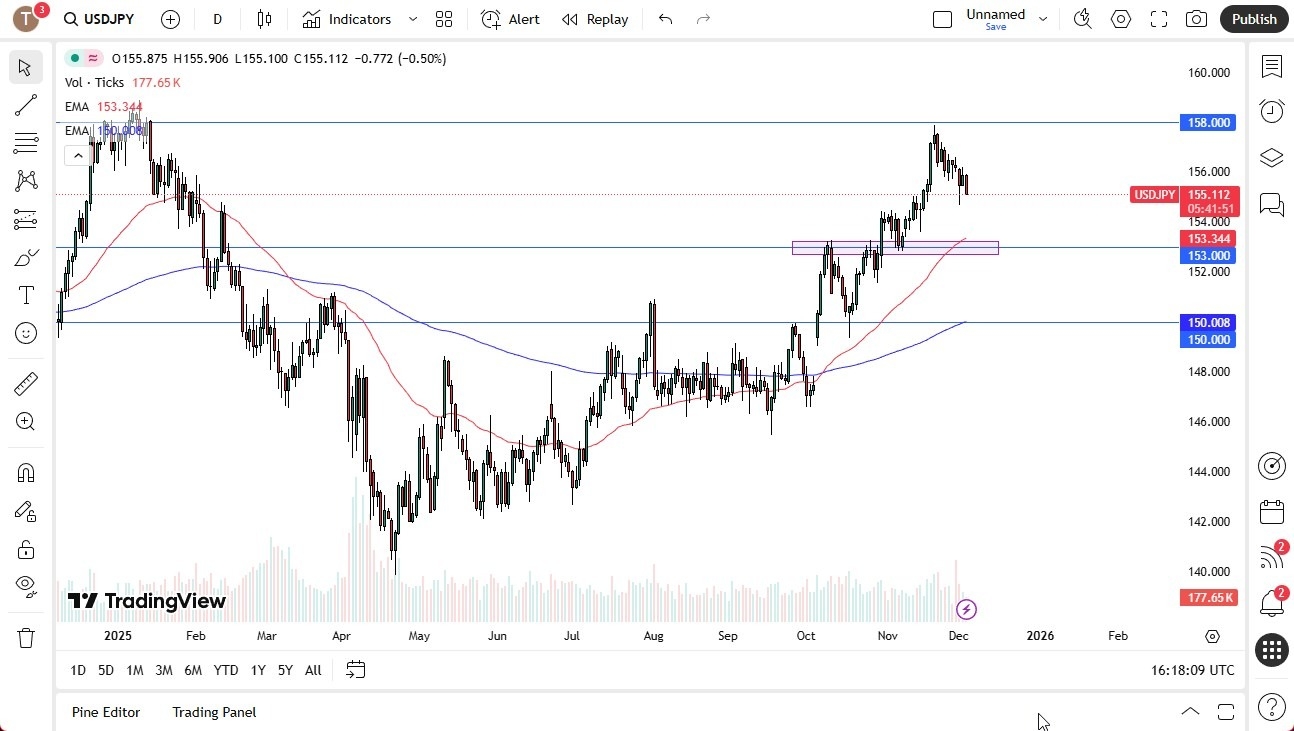
The US dollar has fallen a bit against the Japanese yen during the trading session on Wednesday, as we continue to see a lot of noisy trading. The 155 yen level is an area that has previously been supported over the last couple of days, and therefore, if we bounce from here, it would not be a huge surprise.

If the market were to break down below the 155 yen level, then it opens up the possibility of a move down to the 153 yen level, with the 50-day EMA sitting right around the same area. The market turning around and breaking above the 156 yen level opens up the possibility of a move to the 158 yen level. The 158 yen level is an area that has seen resistance previously. And I think if we can break above there, it could open up the possibility of a move to the 160 yen level. Ultimately, this is a market that I think continues to see a lot of volatility and choppiness, but really with the interest rate differential coming into play.
I think you still see US dollar strength overall. A lot of this is going to come down to the FOMC press conference, not the interest rate decision next Wednesday. And if it sounds remotely hesitant to cut rates for the next multiple meetings, then I suspect that’s where we start to bounce pretty significantly. Regardless, you get paid to hold this pair. I’ve been long for this market in various sizes for several months now, and nothing’s really changed at this point.
Want to trade our USD/JPY forex analysis and predictions? Here’s a list of forex brokers in Japan to check out.
Christopher Lewis has been trading Forex and has over 20 years experience in financial markets. Chris has been a regular contributor to Daily Forex since the early days of the site. He writes about Forex for several online publications, including FX Empire, Investing.com, and his own site, aptly named The Trader Guy. Chris favours technical analysis methods to identify his trades and likes to trade equity indices and commodities as well as Forex. He favours a longer-term trading style, and his trades often last for days or weeks.
The global ceramide market was valued at USD 360.4 million in 2023, with the food application segment expected to grow at a CAGR of 6.9% over the forecast period from 2024 to 2030 [1]. The Asia Pacific region dominated the global ceramide market, accounting for over 35.0% of the revenue share in 2023 [2]. This expansion is primarily driven by increasing consumer awareness of skin health and the crucial role of ceramides in maintaining the skin barrier
Several key factors are fuelling this market evolution [1]:
The increasing focus on research and development continues to produce significant advancements in ceramide extraction methods and formulation technologies, enabling the creation of more effective and stable products that meet evolving consumer needs.
A pivotal trend is the prominence of ceramide supplements, moving them beyond a niche ingredient to a cornerstone of the “beauty from within” movement. This is driven by significant scientific validation. Formulation strategies now combine ceramides with other active ingredients like collagen or antioxidants (e.g., the “Advanced Ceramides” formulation with Grape Seed Extract and Vitamin C), offering a comprehensive anti-aging and wellness solution. This focus on ingestible solutions is setting the stage for more advanced, holistic regimens that combine internal and external care for comprehensive results.
The stratum corneum—the skin’s outermost layer—acts as the crucial first line of defence. Skin wellness is defined by this barrier’s ability to function effectively, demonstrating optimal hydration, balanced pH, and strong resistance to aggressors. A healthy barrier maintains appropriate moisture retention, prevents excessive water loss, and reflects health through smooth texture and elasticity.
Ceramides are essential lipids naturally produced by keratinocytes in the epidermis (via the de novo pathway [4]). They constitute approximately 50% of the stratum corneum lipids, forming an organised matrix with other fats (cholesterol and fatty acids).
Their essential functions include:
As we age, the skin’s natural ceramide levels gradually decrease, starting in the 30s and accelerating with age. This decline, worsened by factors like UV exposure, pollution, and hormonal changes, compromises the barrier. This depletion results in increased skin sensitivity, moisture loss, and visible signs of aging.
The “in & out” beauty concept represents an evidence-based strategy combining topical applications with oral supplementation. Clinical studies have demonstrated that oral intake of ceramide-containing supplements can improve stratum corneum hydration without adverse effects, while topical products help restore the skin’s natural barrier function [3].
The scientific rationale for this dual approach lies in its complementary mechanisms:
The development of effective ceramide formulations requires integrating skin biology expertise with formulation science to optimise stability, efficacy, and bioavailability. Current research suggests two key principles guiding modern, high-performance formulations:
Mastering the science of ceramides is key to developing next-generation skincare solutions. Ingredients like CERAMOSIDES™, a natural, wheat-derived ceramide complex, exemplify the potential of scientifically-backed oral supplements to restore the skin barrier from within. This holistic approach not only revitalises skin health but also shows promise for related applications, such as improving hair vitality.
Dogecoin Price Predictions are once again in focus as the market readies itself for a volatile start to Q1 2026. Sentiment remains mixed for DOGE, with traders now keenly waiting for signals of strength or deeper weakness.
The recent adjustment in liquidity throughout the broader market has forced investors to consider projects with real utility, and that discussion now involves Remittix as interest in crypto-to-fiat solutions heats up. Both tokens enter the new quarter with strong attention, but the outlook for each rests on very different fundamentals.
Dogecoin is hovering near the $0.14–$0.15 region, a historically important zone that has repeatedly acted as a stabilizing anchor during periods of market stress.
Community discussions continue to circle around the possibility of a future move toward $1, a target highlighted periodically in posts such as recent chart commentary. However, models based on historical cycle structure and liquidity trends indicate a nearer-term fair-value band closer to $0.18–$0.24. Long-term charts covering 2014–2025 emphasize DOGE’s previous breakout phases in 2017 and 2021 and track an ascending multi-year trendline, but analysts stress that cycle-based projections come with considerable uncertainty. Accumulation indicators also show mixed signals: some clusters resemble early-stage pattern formation, while others reflect hesitation tied to broader liquidity conditions.
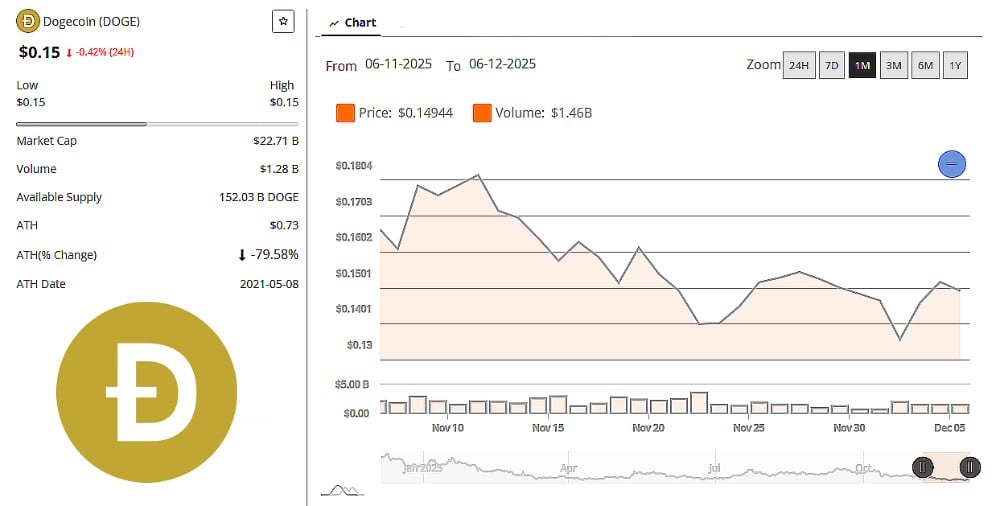
Dogecoin’s uncapped supply and dependence on occasional endorsements from Elon Musk to boost its price may see investors placing greater emphasis on actual ‘token utility’ going into 2026. Dogecoin price source: Brave New Coin DOGE market data
Speculative interest has been influenced by ongoing conversation around a potential Dogecoin spot ETF, though early inflows into thematic crypto products remain modest. Historical examples from Bitcoin and Ethereum suggest ETF approvals alone are not guaranteed catalysts. Technical traders are monitoring a developing falling-wedge structure and watching for confirmation above diagonal resistance, with some analysis suggesting potential upside if momentum strengthens. Despite this, most emphasize confirmation rather than anticipation.
Short-term metrics reflect a market still under pressure. A recent drop below $0.15 triggered over 1.56 billion DOGE in sell volume, and although RSI readings show neutrality and repeated bounces around $0.15 hint at early stabilization, a break above channel resistance remains essential. Dogecoin’s inflationary supply of roughly 5 billion new coins per year continues to weigh on valuation models, as noted in various recent analyses. Dogecoin Price Predictions continue to be susceptible to any shift in liquidity conditions, whale activity, and broader risk appetite entering the new year.
At the same time, the crypto search space is expanding toward projects tied to real utility. Traders looking at best crypto presale 2025, and crypto with real utility topics often compare meme-driven volatility with tokens offering clear value paths. This shift explains why Dogecoin Price Predictions now share attention with newer PayFi-focused platforms.
Remittix enters Q1 with rising interest thanks to a series of major developments. The Remittix Wallet is now live on the Apple App Store, functioning as a full crypto wallet in its first phase. The project team has confirmed that crypto-to-fiat functionality will be added directly inside the app, forming the core of the PayFi engine. Android development is already in motion, expanding access across devices.
The project continues to scale its ecosystem. The beta program now invites more testers, with weekly top purchasers gaining early access on iOS. Community testing supports faster product refinement, which strengthens confidence in long-term adoption. The team is fully verified by CertiK and ranked #1 for pre-launch tokens on Skynet, raising global visibility through the auditor’s dashboard.
Remittix is priced at $0.119, backed by over $28.4 million raised from private funding and more than 692.6 million tokens sold. The rollout of future listings adds further attention, with confirmed upcoming positions on BitMart and LBank, plus a major listing tied to the next milestone.
The $250,000 giveaway and the active 15% USDT referral program continue to bring steady engagement.

Crypto-to-fiat system designed for real payments
Wallet live on the App Store and expanding testing
Ranked #1 on CertiK for pre-launch tokens
Upcoming listings on BitMart and LBank
Expanding user rewards through the referral model
Dogecoin Price Predictions highlight uncertainty, while Remittix continues to build momentum through product releases, verification milestones, and upcoming listings. These contrasting setups suggest that as 2026 approaches, the market is shifting toward utility-driven growth, and Remittix is in a very strong position with attention broadening across PayFi projects.
Discover the future of PayFi with Remittix by checking out their project here:
Website: https://remittix.io/
Socials: https://linktr.ee/remittix
$250,000 Giveaway: https://gleam.io/competitions/nz84L-250000-remittix-giveaway
Market liquidity, trading volume, and how well the token holds key support levels all go into the price predictions of Dogecoin. Analyst commentary and large-wallet activity also shape short-term expectations. Any shift in broader risk appetite affects DOGE movements heading into Q1.
DOGE carries strong community momentum, while Remittix is gaining attention for real-world payment utility. Both tokens sit in different categories, yet investors track them together when evaluating market rotation toward projects with clearer long-term use cases.
Current sentiment suggests that DOGE may require stronger participation from large holders and more consistent demand to stabilize. A sustained move above resistance zones would help rebuild confidence.
Remittix has launched its wallet on the Apple App Store, expanded beta testing to more holders, secured future listings on BitMart and LBank, and received full CertiK team verification. These updates support interest as the project advances its PayFi ecosystem.
Dogecoin Price Predictions reflect uncertainty tied to recent market weakness. In contrast, RTX enters Q1 with momentum from product rollouts, private funding progress, and expanding ecosystem features. The difference lies in utility: Dogecoin relies on sentiment, while Remittix positions itself around practical payment use, which keeps it on watchlists for early stage crypto investment narratives.
This is a sponsored article. Opinions expressed are solely those of the sponsor and readers should conduct their own due diligence before taking any action based on information presented in this article.
The big question shaking the entire community today is simple: Will the Treasure NFT withdrawal update finally stick on December 5, 2025, or will the date shift yet again? After months of delays, changed deadlines, login issues, and rising doubts, the platform’s latest announcement has created both excitement and fear among users.
The team has confirmed that the new Treasure NFT withdrawal date is December 5, with the team saying withdrawals will “officially open” for all holders. The announcement claims that BlackRock’s first round of capital injection will activate the channel, and leaders must urgently notify teams to prepare accounts and return to the system.
Source: X
But the question remains: Is this the final Treasure NFT withdrawal time—or another delay waiting to happen?
While the new update sounds confident, the fear inside the community is very real. This is not the first time TreasureNFT has promised a final date. Earlier deadlines included:
After so many shifts, users are unsure whether to trust the platform again. Many fear this could just be another temporary promise the way the Treasure NFT news came today. Yet, the tone from this team feels stronger this time, making it different from previous updates.
To support the process, TreasureFun has rolled out:
A Tiered Reporting System
Mandatory submission of UID through Level 4 leaders only
How to join TreasureNFT Official Group 9
Alerts for users to fix login issues under the new login system.
The leadership council has also been activated, and Level 4 and above executives have been invited to form a Core Leadership Council for coordinated communication.

Source: X
The major concern is that if the TreasureNFT withdrawal date shifts again, it could result in a permanent loss of user trust. The community already feels exhausted after waiting for months. The platform knows this, and that’s why the latest announcement sounds far more confident.
However, past patterns cannot be ignored. If the date shifts again, analysts believe the next possible timelines could be: December 25 (Christmas) or January 1, 2026 (New Year).
Both seem like “ideal” delay windows based on previous behaviour.
Still, analysts say the tone of the latest update, the involvement of leaders, and the fresh capital injection claim make December 5 the most serious attempt so far. If successful, this could finally end the long wait for the users, who depend on the RESERVE → TRADE → EARN model for income.
The Treasure NFT withdrawal update brings hope, but doubt remains after multiple delays. If the platform delivers on December 5, it may restore confidence. If it shifts again, the community may not have the patience left. For now, all eyes are on the clock as the project prepares for its most important deadline ever.
Disclaimer: This is for educational purposes only. Always do your own research before any crypto investment.
West Texas Intermediate (WTI) Oil price falls on Tuesday, early in the European session. WTI trades at $58.45 per barrel, down from Monday’s close at $58.89.
Brent Oil Exchange Rate (Brent crude) is also shedding ground, trading at $62.37 after its previous daily close at $62.86.
WTI Oil is a type of Crude Oil sold on international markets. The WTI stands for West Texas Intermediate, one of three major types including Brent and Dubai Crude. WTI is also referred to as “light” and “sweet” because of its relatively low gravity and sulfur content respectively. It is considered a high quality Oil that is easily refined. It is sourced in the United States and distributed via the Cushing hub, which is considered “The Pipeline Crossroads of the World”. It is a benchmark for the Oil market and WTI price is frequently quoted in the media.
Like all assets, supply and demand are the key drivers of WTI Oil price. As such, global growth can be a driver of increased demand and vice versa for weak global growth. Political instability, wars, and sanctions can disrupt supply and impact prices. The decisions of OPEC, a group of major Oil-producing countries, is another key driver of price. The value of the US Dollar influences the price of WTI Crude Oil, since Oil is predominantly traded in US Dollars, thus a weaker US Dollar can make Oil more affordable and vice versa.
The weekly Oil inventory reports published by the American Petroleum Institute (API) and the Energy Information Agency (EIA) impact the price of WTI Oil. Changes in inventories reflect fluctuating supply and demand. If the data shows a drop in inventories it can indicate increased demand, pushing up Oil price. Higher inventories can reflect increased supply, pushing down prices. API’s report is published every Tuesday and EIA’s the day after. Their results are usually similar, falling within 1% of each other 75% of the time. The EIA data is considered more reliable, since it is a government agency.
OPEC (Organization of the Petroleum Exporting Countries) is a group of 12 Oil-producing nations who collectively decide production quotas for member countries at twice-yearly meetings. Their decisions often impact WTI Oil prices. When OPEC decides to lower quotas, it can tighten supply, pushing up Oil prices. When OPEC increases production, it has the opposite effect. OPEC+ refers to an expanded group that includes ten extra non-OPEC members, the most notable of which is Russia.
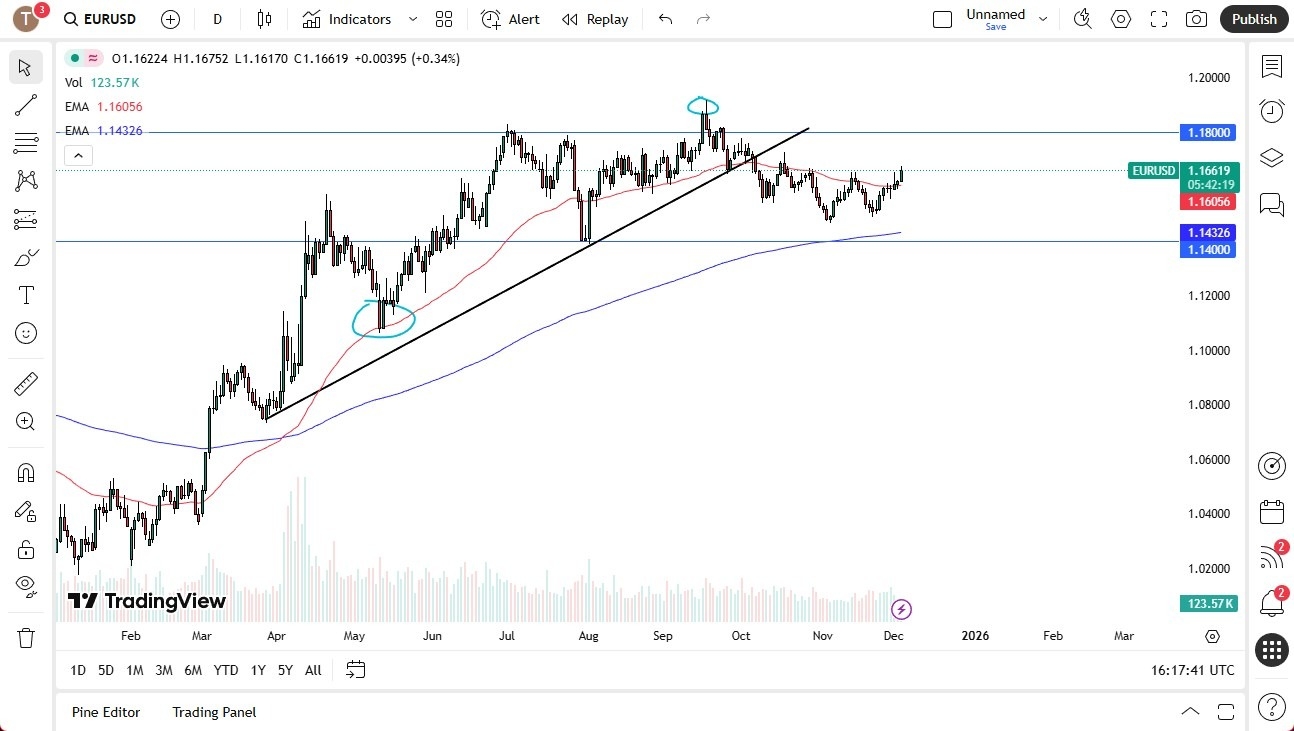
The euro has seen another push higher during the trading session on Wednesday, but it does look like a market that I think is running into a little bit of a resistance barrier. In the short term, I suspect that the euro will probably continue to at least attempt to recover.
But in the longer term, a lot of this is going to come down to the fact that the United States will expand and grow next year, while Europe probably won’t or at least will in a much smaller manner than the American economy.
So with that being said, I’m looking at little rallies like this as opportunities to short, but I also recognize that right now we’re waiting on the FOMC.interest rate decision next Wednesday, and probably more importantly, the press conference afterwards. So that is going to be the next major driver, would be my guess, because if Jerome Powell suddenly sounds extraordinarily dovish, that will send this pair to the moon. But some of the leading indicators are starting to suggest that maybe massive rate cuts just aren’t going to be coming. And if that’s the case, then you’ve got a situation where the US dollar will eventually strengthen.
If we break down below the 1.14 level, this is a market that I think could really take off to the downside, reaching the 1.11 level. Keep in mind that the Euro against the US dollar is typically a very choppy and slow place to be. So even getting to 1.11 might take a couple of weeks. This is a market right now that’s just kind of searching for an external force to move it.
Ready to trade our Forex daily forecast? We’ve shortlisted the top forex brokers in the industry for you.
Christopher Lewis has been trading Forex and has over 20 years experience in financial markets. Chris has been a regular contributor to Daily Forex since the early days of the site. He writes about Forex for several online publications, including FX Empire, Investing.com, and his own site, aptly named The Trader Guy. Chris favours technical analysis methods to identify his trades and likes to trade equity indices and commodities as well as Forex. He favours a longer-term trading style, and his trades often last for days or weeks.
If millennials were all about avocado on toast; then Gen Z is all about matcha. Its powerful green color makes it stand out on social media. A new wave of ‘matcha influencers’ extol the drink’s virtues. In cafes, matcha provides a welcome addition to hot or cold drink menus: an enticing option for people who don’t want to drink coffee.
So much so, the drink has been described as ‘Gen Z’s avocado-on-toast moment’.
“Matcha has gone from a niche ritual to a full-blown cultural moment,” said Cartia Mallan, a content creator, model, actress and entrepreneur who has more than 1.2 million followers across Instagram, TikTok and YouTube, and who launched her own matcha brand Melo Matcha earlier this year.
“Honestly, it makes sense. It not only has incredible health benefits but it’s extremely aesthetic, making it very shareable.”
Matcha, which comes from specially grown and processed green tea, may come with health halo (a high concentration of antioxidants and polyphenols) but its appeal is deeper than that. With its Japanese heritage and ritual, it has a lot to offer.
“Consumers aren’t just drinking it, they’re wearing it, posting it, and making it part of their identity,” said Mallan, who sources the brand’s Yubukita matcha from certified tea farms in Kagoshima, Japan.
“I think people love seeing ritual and routine and matcha has both of those things. It not only looks amazing but it just feels vibrant, lively and fresh! It has brought together a whole new community of people who are passionate about the heritage, Japanese culture, health, lifestyle and creating fun recipes.”
And then there’s also the practical potential of the tea: providing a gentle source of energy that consumers are constantly searching for. While comparing the levels of caffeine in coffee and matcha is difficult (depending always on the type and brewing process), matcha can generally be expected to have less caffeine than coffee and provide a gentler boost, thanks to the presence of L-theanine.
And yet, the elephant in the room for matcha is its distinctive taste: one that consumers don’t always react positively too.
The tea’s grassy, earthy, umami flavor profile can come as a surprise to consumers bought up on sweet profiles.
For UK specialty tea brand Good & Proper, focusing on quality matcha is key. The company was an early champion of matcha: introducing it at its Clerkenwell tea bar in 2015. A decade later, it’s now one of the fastest-growing parts of the business (accounting for 15% of revenue and doubling sales year on year).
Good & Proper has just relaunched its House Matcha: a product that was more than a year in the making and which debuted at the London Coffee Festival earlier this year.
The focus is on quality: The new House Matcha is a vibrant blend, crafted in Kyoto by one of Japan’s most respected tea masters, Hiroshi Kobayashi.
Kobayashi-san selects the finest shade-grown leaves from the spring harvest, then blends them, batch by batch, to craft the exclusive matcha that is ‘creamy, smooth and with a delicate umami finish’.
“Matcha is an acquired taste of course, but the quality of Matcha on the market varies massively, which can impact the consumers’ understanding of it as a product,” said Emilie Holmes, founder of Good & Proper.

“Our matcha is smooth, vibrant and delicately sweet, with a clean umami finish. It doesn’t need heaps of sweetener.
“What we want to get across is more around the education of how Matcha is produced and how the crafting of the leaves can really impact the quality of the output.”
Cartia Mallan of Melo Matcha takes matcha’s distinctive taste as a challenge. “I honestly love when someone says they ‘hate matcha’ as I find it to be my sole mission to convert them!” she said.
Her strategy is threefold: starting with attractive branding, education on how to prepare and enjoy matcha, and letting people discover how they want to enjoy the tea.
“I have tried to ensure my branding with Melo is warm and inviting,” she said. “I aim to offer education around matcha and the proper ways to prepare it to ensure people when trying it have an amazing experience.
“I also think matcha is so much about experimentation. I believe there isn’t one main way to enjoy matcha and the fun is in the exploration of that!”
Matcha can be used in a variety of ways: from traditional matcha tea occasions, to matcha lattes (both hot and cold) or even used in baking recipes.
ADA steadies above $0.42 as AlphaPepe accelerates toward a $500K presale milestone with rapid holder growth.
Cardano (ADA) enters December 2025 with a noticeable shift in market sentiment after months of downward pressure. While the wider altcoin market remains mixed, ADA has shown early signs of stabilization and a mild recovery as its ecosystem activity begins to pick up. Traders who have been waiting for fresh momentum now see improving conditions, though ADA remains far from its earlier 2025 peaks.
At the same time, AlphaPepe (ALPE) https://alphapepe.io/ – one of the fastest-growing BNB Chain presales – continues its rapid ascent. With over 100 new holders joining daily, outperforming the typical presale growth rate of 30-50 wallets per day, AlphaPepe is nearing a major fundraising milestone of $500,000 and continues to redirect speculative attention away from slow-moving altcoins.
ADA Price Today: Stabilizing Around Key Levels
Cardano is currently trading in the $0.42-$0.45 range https://coinmarketcap.com/currencies/cardano/ after rebounding from late-November lows near $0.38. The recovery has been supported by higher daily trading volume and improved liquidity as buyers re-entered around ADA’s mid-year support band. Technical indicators show ADA regaining ground above its short-term moving averages, suggesting a possible shift into a more constructive trend.
Catalysts behind ADA’s stabilisation include renewed activity within the Cardano ecosystem, increased deployment of DeFi tools on its network, and incremental progress on scaling and governance upgrades. While these developments have not triggered a breakout, they appear to have established a firmer demand zone for ADA in the low-$0.40s.
Institutional sentiment toward mid-cap altcoins also appears to be warming slightly, with ADA among the names benefiting from early-month rotation flows. If broader market conditions stabilise, ADA is positioned to benefit from a continued uptick in altcoin appetite.
ADA Price Prediction: Conditions Improve, but Range Still Dominant
Analysts now see a higher probability that ADA will attempt a recovery during the first quarter of 2026. The improving technical backdrop and strengthening support near $0.40 create a foundation for ADA to attempt a climb toward the $0.48-$0.52 range if market conditions remain steady.
A stronger breakout – into the $0.55-$0.60 zone – would likely require broader crypto market momentum, more consistent inflows and meaningful adoption progress within Cardano’s dApp ecosystem.
On the downside, the key support to monitor remains around $0.40. A break below this could open the door back toward the $0.35 region, though recent buyer activity suggests this scenario is currently less favoured.
Overall, ADA’s outlook is cautiously optimistic: not explosive, but noticeably stronger than the sentiment that dominated much of the year.
AlphaPepe: The Presale Outperforming the Entire Meme-Coin Market
While ADA stabilizes, AlphaPepe https://alphapepe.io/ is accelerating sharply and commanding trader attention across BNB Chain and meme-coin circles.
AlphaPepe stands out for several structural reasons that continue to drive its presale momentum:
Weekly price increases
Every seven days, the ALPE presale price is automatically raised. This structure creates natural urgency and rewards early participation – and analysts repeatedly highlight that the “best chance to secure ALPE tokens is always as early as possible.”
Faster growth rate than industry norm
AlphaPepe is consistently adding 100+ new holders per day, far surpassing the typical presale daily growth rate of 30-50. This exceptional rate signals strong demand and sustained market visibility.
Presale nearing a major fundraising milestone
AlphaPepe is approaching $500,000 raised, a level that places it among the most successful late-2025 presales. Whale participation has strengthened in recent weeks, contributing to the momentum.
Instant token delivery & live staking
Buyers receive ALPE tokens instantly upon purchase, and staking is live during the presale – allowing holders to earn yield before the token even lists.
USDT reward pool continues to expand
More than $13,000 in USDT has already been distributed to holders through multiple cycles, with the pool growing steadily as more capital enters.
Analyst comparisons to early PEPE
Several analysts note that early investors in PEPE saw gains exceeding 5,000%, and believe that AlphaPepe’s current metrics – especially its growth rate, whale accumulation and reward structure – resemble an even stronger early trajectory.
Rumoured exchange attention
After repeated mentions in Binance-adjacent news channels, market chatter continues to grow around a possible future Binance listing – though no confirmation exists.
ADA vs AlphaPepe: Two Very Different Bulls Underway
ADA and AlphaPepe serve different market roles but frequently appear together in trader discussions.
ADA represents the steady recovery play – a mid-cap asset that benefits from ecosystem development, institutional flows and technological maturity.
AlphaPepe, meanwhile, is the high-momentum early-stage play – with rapid holder expansion, aggressive weekly price progression and presale features that resonate strongly with speculative investors.
Many traders now allocate ADA as a core altcoin position while using AlphaPepe as a high-beta complement, targeting early-stage upside while retaining exposure to Cardano’s more measured long-term growth.
Conclusion
Cardano’s rebound prospects have improved meaningfully as ADA stabilises above $0.42 and ecosystem activity begins to expand. While the token’s recovery is likely to be gradual rather than explosive, the late-2025 trend shift signals a healthier foundation heading into 2026.
In the speculative arena, AlphaPepe continues to dominate. With a rapid daily holder growth rate, weekly price escalations, over $13,000 in USDT rewards distributed, approaching the $500,000 presale milestone and analysts noting similarities to early PEPE’s 5,000% run – ALPE is emerging as one of the most compelling early-stage tokens of the year.
ADA offers steady potential. AlphaPepe offers momentum. Together, they represent two sides of the 2026 crypto opportunity spectrum.
Website: https://alphapepe.io/
Telegram: https://t.me/alphapepejoin
X: https://x.com/alphapepebsc
Frequently Asked Questions (FAQs)
What is Cardano’s current price?
ADA is trading in the $0.42-$0.45 range, recovering from late-November lows near $0.38.
Is ADA showing signs of a recovery?
Yes. ADA has stabilized above key support levels, regained short-term trend strength and is benefiting from renewed interest in mid-cap altcoins.
Why is AlphaPepe attracting so much attention?
Its fast holder growth, instant token delivery, staking, USDT rewards and weekly price increases make it one of the most structurally appealing presales of late 2025.
How fast is AlphaPepe growing?
AlphaPepe adds more than 100 new holders daily – far above the presale industry average of 30-50.
What are analysts saying about AlphaPepe’s upside potential?
Some analysts note that early PEPE investors saw 5,000% gains and believe AlphaPepe’s momentum, metrics and growth structure suggest a similarly powerful early trajectory.
AFFILIATE AVENUE LTD
128 City Road, London, England, EC1V 2NX
cs@coinfunnel.io
Jack Duffy
At CoinFunnel, we help blockchain projects and crypto startups grow their audience, increase adoption, and build community through strategic marketing.
This release was published on openPR.
Powerful hedge fund Citadel Securities has voiced strong opposition to broad decentralized finance (DeFi), particularly for tokenized U.S. equities, in a letter to the SEC that provides feedback on proposed for exemptive relief.
Its stance has attracted strong backlash from some crypto industry voices.
Not decentralized?
Citadel argues that many DeFi platforms effectively operate as exchanges or broker-dealers, despite claims of decentralization.
There are identifiable intermediaries (developers, governance groups, and so on) who profit from transactions and influence order execution.
Users interact with smart contracts that function like binding agreements, just as orders on a traditional exchange do.
If DeFi trading of tokenized equities were exempt from SEC rules, this would lead to transparency gaps such as fees and conflicts of interest. There are also surveillance and compliance gaps, operational risks as well as custody issues.
Tokenized securities must be treated like traditional equities, Citadel argues.
At the same time, the hedge fund has stressed that it is not opposing innovation.
“However, it is important not to override key investor protections when trading tokenized securities,” it said.
Gensler’s playbook?
Some crypto industry commentators have accused Citadel of using the playbook of former SEC Chair Gary Gensler.
“Who ever thought Citadel would be against innovation that removes predatory, rent-seeking intermediaries from the financial system? Oh, right, literally every single person in crypto,” Variant CLO Jake Chervinsky quipped.
Notably, Citadel recently lost two of their general counsels to crypto companies.
In October, Citadel CEO Ken Griffin recently disclosed a significant stake in DeFi Development Corp, which is a Solana treasury company.
Natural gas price continued forming bullish waves, taking advantage of its stability within the bullish channel’s levels, to form a solid support by %38.2 Fibonacci correction level at $4.500, to approach from the initial main target by reaching $5.052 level.
Stochastic stability within the overbought level will increase the efficiency of the bullish track, to pave the way for surpassing $5.180 level, to open the way for recording extra gains that might extend towards $5.250 and $5.710.
The expected trading range for today is between $4.950 and $5.450
Trend forecast: Bullish