The main category of All News Articles.
You can use the search box below to find what you need.
[wd_asp id=1]
The main category of All News Articles.
You can use the search box below to find what you need.
[wd_asp id=1]
GBP/JPY holds steady near 207.00 on Thursday after touching a fresh year-to-date high on the previous day, with sentiment leaning in favour of the British Pound (GBP) following the United Kingdom’s Autumn Budget.
Meanwhile, the Japanese Yen (JPY) remains under sustained pressure across the board as traders focus on rising fiscal concerns in Japan and uncertainty over the timing of the Bank of Japan’s next rate hike, keeping the broader backdrop supportive for Sterling against the Yen.
From a technical perspective, the pair trades comfortably above its short, medium and long-term moving averages. The 205.00 psychological level, which sits close to this week’s low, acts as an initial floor, followed by the 21-day Simple Moving Average (SMA) at 203.70, which provides the first layer of dynamic support.
Momentum indicators remain aligned with buyers. The Moving Average Convergence Divergence (MACD) indicator shows the MACD line holding above the Signal line, while the histogram continues to widen in positive territory, which points to strengthening bullish momentum rather than exhaustion. The Relative Strength Index (RSI) trades near 66, upbeat yet still below the overbought region.
Near-term, the upside bias remains intact as long as GBP/JPY holds above the rising 21-day SMA. A shallow pullback would likely find support at 203.70, followed by the 50-day SMA at 202.43, while the 100-day SMA near 200.66 serves as a deeper cushion.
A break above Wednesday’s peak would open the door toward the 207.50-208.00 zone. A drop in the RSI toward 50 or a loss of momentum on the MACD would indicate consolidation rather than a trend reversal. The overall technical backdrop continues to support buying on dips.
The Japanese Yen (JPY) is one of the world’s most traded currencies. Its value is broadly determined by the performance of the Japanese economy, but more specifically by the Bank of Japan’s policy, the differential between Japanese and US bond yields, or risk sentiment among traders, among other factors.
One of the Bank of Japan’s mandates is currency control, so its moves are key for the Yen. The BoJ has directly intervened in currency markets sometimes, generally to lower the value of the Yen, although it refrains from doing it often due to political concerns of its main trading partners. The BoJ ultra-loose monetary policy between 2013 and 2024 caused the Yen to depreciate against its main currency peers due to an increasing policy divergence between the Bank of Japan and other main central banks. More recently, the gradually unwinding of this ultra-loose policy has given some support to the Yen.
Over the last decade, the BoJ’s stance of sticking to ultra-loose monetary policy has led to a widening policy divergence with other central banks, particularly with the US Federal Reserve. This supported a widening of the differential between the 10-year US and Japanese bonds, which favored the US Dollar against the Japanese Yen. The BoJ decision in 2024 to gradually abandon the ultra-loose policy, coupled with interest-rate cuts in other major central banks, is narrowing this differential.
The Japanese Yen is often seen as a safe-haven investment. This means that in times of market stress, investors are more likely to put their money in the Japanese currency due to its supposed reliability and stability. Turbulent times are likely to strengthen the Yen’s value against other currencies seen as more risky to invest in.
Determining which supplements you may need at different stages of life can be challenging, particularly given the vast number of options available on the market.
However, as women age, certain nutrients become increasingly important for their health. That’s why we asked Jacqueline A. Vernarelli, PhD, a public health nutritionist and an associate professor of public health at Sacred Heart University, what the most important supplement is for women over 30.
This interview has been edited and condensed for clarity.
Q: In your expert opinion, what is the most important supplement for women over 30 and why?
Vernarelli: My number one recommendation for women over 30 is a calcium + vitamin D supplement. Calcium is crucial for women over 30 because it plays a key role in maintaining strong bones and overall health. Vitamin D, on the other hand, helps the body absorb calcium.
As women age, particularly after 30, bone mass naturally begins to decrease, and the risk of developing osteoporosis increases.
We can think of the calcium stored in our bones as a “retirement fund.” We add to it during our younger years, which is why it is so important for children, teens, and young adults to get enough calcium, and then draw down our supply during our older years.
In our body, we have more bone-building cells than bone-remodeling cells in our younger years. This allows us to store all of that great calcium, but that balance flips after about age 30 or so, with bone-remodeling cells outnumbering bone-building cells.
This is why it’s really important to make sure we have enough calcium after 30.
In the years leading up to perimenopause and after menopause, women experience a drop in estrogen, which can cause bones to lose density more quickly. Calcium intake during this period becomes even more crucial for preventing the effects of estrogen decline.
Calcium helps muscles, including the heart, contract and relax properly. As you age, muscle function can decline, and calcium ensures that your muscles respond correctly to stimuli, reducing the risk of cramping and improving overall strength.
Women between 31-50 years old should aim for around 1,000 mg of calcium per day. After age 50, the recommended intake increases to 1,200 mg per day. In order for our body to absorb calcium, we need Vitamin D, so having both in a combined supplement is your best bet.
:max_bytes(150000):strip_icc()/FE3F9AD2-9085-40B8-8E8E-AF95656B0B37-048bcc651b0f4063b40038d3df45e712.jpeg)
Bitcoin (BTC) price continues to trade in green above $91,500 at the time of writing on Thursday after rebounding from the key support level. On the institutional front, a modest inflow into US-listed spot Bitcoin Exchange Traded Funds (ETFs) signals a reduction in selling pressure and further support BTC’s recovery. However, traders should still be cautious as on-chain data highlights BTC’s market drifting lower amid limited inflows and fragile liquidity.
Institutional demand for Bitcoin shows a reduction in selling pressure. According to SoSoValue data, US-listed spot Bitcoin ETFs recorded a mild inflow of $21.12 million on Wednesday, after a positive flow of $128.64 million the previous day. However, these inflow intensities are not as strong as the outflow streak recorded last week. For BTC to continue its recovery, the inflow trend should persist and intensify.
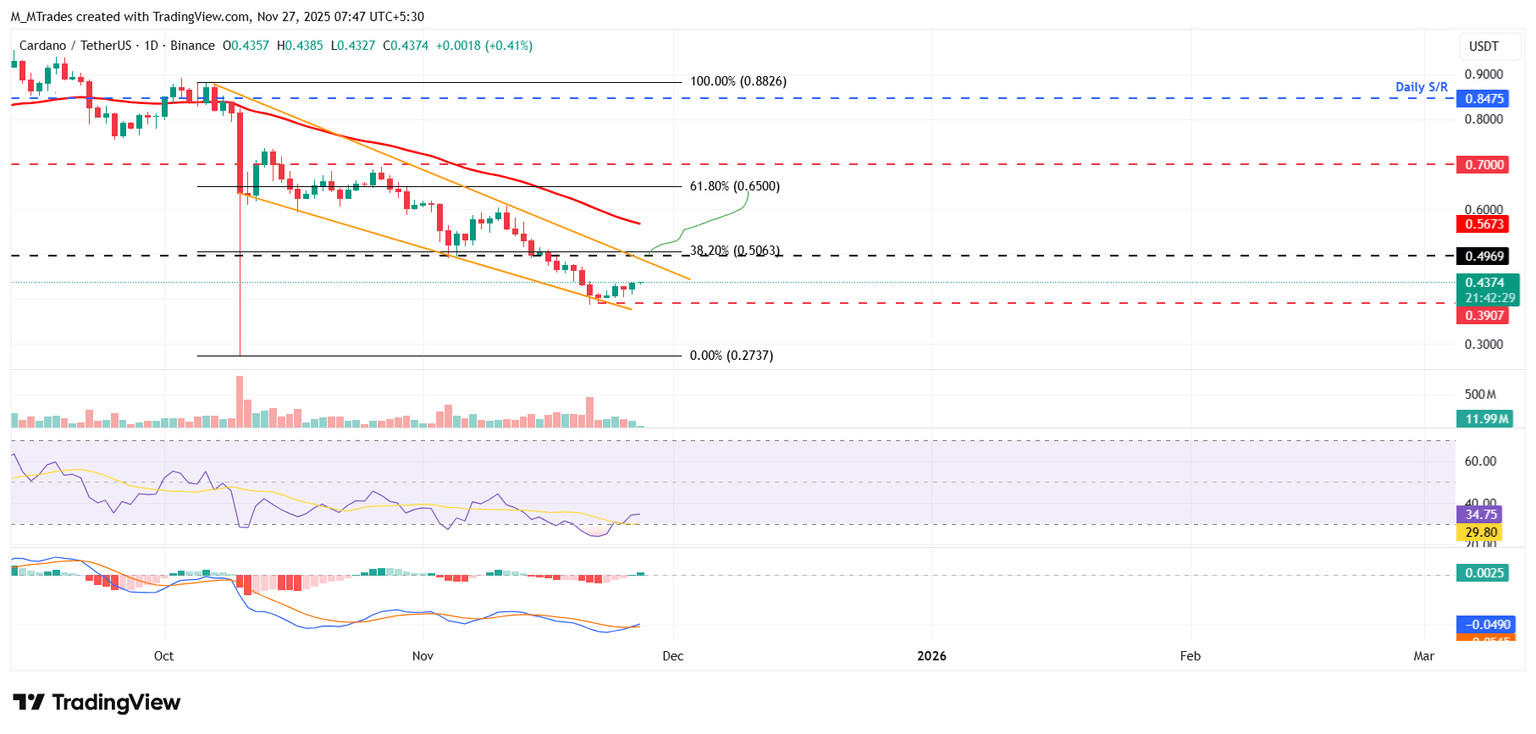
Cardano (ADA) is trading around $0.43 at the time of writing on Thursday, after recovering nearly 7% so far this week. The recovery is further supported by ADA’s large whale orders and buy-side dominance, which have risen alongside positive funding rates. On the technical side, ADA’s price action suggests a further rebound targeting levels above the $0.50 mark.
CryptoQuant’s summary data underpins the bullish outlook, as Cardano’s spot and futures markets show large whale orders, cooling conditions, and buy dominance. These factors signal a potential recovery in the upcoming days.
Tether CEO Paolo Ardoino blasted S&P Global Ratings for downgrading USDT, rejecting the agency’s assessment that the stablecoin is backed by high-risk assets and accusing traditional finance of misunderstanding Tether’s model.
Tether CEO Paolo Ardoino issued a sharp rebuttal to S&P Global Ratings following the agency’s downgrade of USDT’s peg stability assessment on Wednesday. He described the rating as a sign of “loathing” that the company “wears with pride.”
But the last couple of days have been pretty brutal for the dollar against the pound, although Thursday is starting to see a little bit of pushback. That budget deal in London evidently got everybody excited, but really, at the end of the day, I don’t know that that matters in the end. I am still looking for selling opportunities.
The euro has gone back and forth against the British pound during the trading session on Thursday as well and we are hanging around the 0.8750 level. We are also hanging around the 50-day EMA, but this level was previously resistance, so it should be support. We’ll have to wait and see, but if we can break above the highs of the Thursday session, I suspect that the euro bounces against the pound again and we go looking to the 0.88 level. Ultimately, I have no interest in trying to short this pair. It’s far too strong of an uptrend.
But I would have to take notice if we dropped below the 0.8725 level, as it would be a sign of trouble.
For a look at all of today’s economic events, check out our economic calendar.
For something as simple as hot leaves in water, tea carries a surprisingly complicated health story. A new review from researchers in China and the United States tries to straighten it out, and it lands on a clear headline for everyday drinkers: plain, brewed tea looks like a genuine ally for your heart, metabolism, and brain, but sugary bottled and bubble teas sit on a very different side of the ledger.
The paper, led by Mingchuan Yang and colleagues at the Tea Research Institute of the Chinese Academy of Agricultural Sciences and Rutgers University, pulls together decades of human studies, animal experiments, and lab work on Camellia sinensis, the plant behind green, black, oolong, white, dark, and yellow teas. Their standard is strict. Animal and cell data are treated as supporting evidence, but real weight is given to large, long-term studies in people.
On that score, the message is strikingly consistent. Regular tea drinkers tend to have lower risks of cardiovascular disease, obesity, type 2 diabetes, and some cancers. In multiple cohort studies, moderate tea intake around one and a half to three cups per day was linked with reduced deaths from heart disease and, to a lesser extent, cancer. Most of those cohorts were in China and Japan, where green tea dominates, but a large study from England suggests black tea, drunk in typical British fashion, is also associated with lower mortality.
“The evidence is solid for the prevention of cardiovascular diseases, obesity, diabetes, and some types of cancer.”
Beyond those headline outcomes, the review points to promising but not yet definitive benefits: slower cognitive decline in older adults who drink green tea regularly, better maintenance of muscle mass and strength in seniors, lower uric acid levels in some groups, and reductions in inflammatory markers and oxidative stress in people with obesity, hypertension, or kidney disease.
Mechanistically, the authors keep circling back to tea polyphenols, especially catechins such as EGCG in green tea, along with caffeine and the amino acid theanine. Together, these compounds nudge blood lipids, blood pressure, vascular function, inflammation, platelet activity, and even the gut microbiota in directions that line up with better long term health.
One tempting question is whether a particular style of tea is the clear champion. Here, the review is blunt: human data are too thin to declare oolong, white, dark, or yellow tea categorically better or worse than green tea. In animal models, oolong sometimes looks more potent for weight control, white tea sometimes looks stronger for lipid lowering, and all six major Chinese tea types can show beneficial effects, depending on how they are processed and tested. But those comparisons do not yet translate cleanly to everyday human drinking habits.
Where the authors do draw a sharper line is between traditional tea and highly processed tea drinks. Bottled teas often start with real tea, then run through high temperature processing that slowly erodes catechin content during sterilization and storage. On top of that, many products add sugars, high fructose corn syrup, or artificial sweeteners, along with acids, stabilizers, and flavoring agents.
Bubble tea pushes even further. Refined starch tapioca pearls soaked in sugar syrups, non dairy creamers rich in saturated and trans fats, and synthetic flavor compounds turn a nominally tea based drink into something closer to dessert in a cup.
“The presence of sugar, artificial sweeteners, or refined starch, as well as flavoring agents and preservatives, in bottled or bubble tea beverages may cause health concerns in reducing or overshadowing the beneficial health effects of tea.”
In other words, the more a tea beverage looks like candy, the less you should expect from tea’s natural chemistry.
The review also tackles a set of quieter worries: pesticides, heavy metals, microplastics, fluoride, and interference with nutrient absorption. On contaminants, the story is nuanced. It is true that pesticide residues, lead, aluminum, and emerging pollutants like microplastics and anthraquinone have all been detected in teas from various countries. However, what matters for health is how much actually leaches into the brew.
When researchers run formal risk assessments that factor in leaching rates and typical consumption, they generally find that exposure from brewed tea is well below established safety thresholds for the general population. There are exceptions to watch, such as high fluoride levels in some brick teas and the extreme microplastic release from plastic teabags in boiling water, but the authors conclude that ordinary brewed tea, consumed in reasonable amounts, should not pose a significant toxicological risk for most people.
Nutrient absorption is more complicated. Tea polyphenols can bind non heme iron from plant foods and reduce its uptake, which may matter for vegetarians or anyone with marginal iron status. Concerns about calcium absorption and bone health are less clear; animal studies often show protective effects of tea on bone, while human findings are mixed. For people with adequate diets, the review suggests, moderate tea drinking is unlikely to harm nutrient status, but individual vulnerabilities still need attention.
After hundreds of references and many careful caveats, the authors come back to a simple, human level conclusion:
“In conclusion, tea is an enjoyable and healthy beverage; consumers can select the tea types that they like.”
There is no magic leaf that erases the need for good food, movement, and medical care. But if you enjoy green, black, oolong, or any of the quieter styles, this review suggests that a few plain cups a day can be part of a strategy to protect your heart, manage weight, and support healthy agi
Subscribe to get the latest posts sent to your email.
U.S. housing markets show how macro forces create pockets of strength while other areas lag. Two-thirds of homeowners with sub-4% mortgages are staying put, tightening supply in many regions even as other markets soften. That split helps explain the current XRP outlook: macro and capital mechanics can favor narrative assets while leaving majors like XRP in a holding pattern.
Derivatives amplify these shifts. In 2025, record liquidations and heavy futures open interest sent shocks through prices, and Bitcoin derivatives risk forced rapid rotations. When ETFs and perpetuals unwind, capital often chases high-momentum tokens. That dynamic helps explain why Bitcoin Hyper (https://bitcoinhyper.com/)
and the HYPER token have drawn outsized flows while XRP stagnation persists.
Institutional and retail focus can pivot fast. Strong corporate results and viral narratives – seen in Q3 2025 earnings across tech and social platforms – show how concentrated performance attracts capital. In crypto, a compelling catalyst or product launch can reallocate liquidity away from Ripple news and XRP toward speculative, high-story assets, reinforcing uneven performance across the market.
XRP Price Prediction and Current Market Context
Markets are fragmenting like real estate neighborhoods. Some tokens draw fresh demand while others sit idle. In the housing analogy, low-rate mortgages kept supply tight; for XRP, large wallets and exchange-specific liquidity gaps can pare available coins and blunt price reaction across venues.
Short-term technical signals and price action
Short-term XRP technical analysis centers on a clear trading range and the volume nodes that define it. Support forms where buyers clustered previously; resistance appears at distribution points and thick order-book zones. With funding rates compressing toward neutral and open interest down from the October peak, breakouts will need genuine buying rather than leveraged momentum.
Price action often follows Bitcoin stability. If BTC reclaims key thresholds, liquidation risk falls and capital can rotate back into altcoins. Watch whether XRP support and resistance levels hold during larger market swings for clues about next directional moves.
Macro and market-structure drivers
Macro forces are reshaping crypto appetite. USD strength crypto impact shows up when a firmer dollar tightens risk budgets for U.S. investors. Rising 10-year Treasury yields push Treasury yields crypto narratives toward caution and raise the hurdle for speculative bets.
Derivatives events in 2025 amplified spillovers. Large BTC liquidations and ETF outflows removed cushion from the market. With less open interest on major venues, exchanges like Binance and Bybit are showing thinner leverage pools. That reduction limits the spare capital that normally fuels altcoin rallies and makes XRP more sensitive to broad market drawdowns.
On-chain and fundamental indicators
Monitor XRPL activity for early signs of rotation. Key XRP on-chain metrics include transaction volume, active addresses, exchange inflows and outflows, and concentration among top wallets. Rising exchange inflows often precede selling pressure, while shrinking exchange supply can support price if demand appears.
Fundamental catalysts remain important. Ripple’s legal outcomes and new partner integrations would alter perception and could shift capital allocation. Institutional flows and corporate narratives in equities also matter, since money chasing growth stories can spill into tokens with fresh use cases or leverage mechanics.
Market Rotation to Bitcoin Hyper (HYPER) and Risk Amplification
Capital can shift quickly when a strong narrative forms. Think of luxury real estate in Manhattan or short-term rental hotspots where concentrated demand draws deep-pocketed buyers. That same dynamic is at work in crypto rotation toward Bitcoin Hyper (https://bitcoinhyper.com/), where a high-conviction story pulls retail flows, institutional attention, and levered positions away from established tokens like XRP.
Why HYPER gained attention stems from social amplification and easy access to leverage on platforms such as Binance and Bybit. Large narrative-driven moves invite speculation, and record spot ETF outflows removed a key institutional buffer. Traders chase headlines, which can create rapid spikes in price and open interest that mask underlying fragility.
Derivatives venues have a direct role in volatility. Bybit’s past flash liquidations and large platform-level open interest show how leveraged narratives inflate and unwind. Sharp swings in funding rates and crowded long positions raise the chance of derivatives liquidations that cascade across smaller caps.
Open interest behavior matters for systemic risk. When funding compresses and leverage accumulates, a small trigger can force mass deleveraging. In 2025 long liquidations far outpaced shorts, showing an asymmetry that can flip sentiment fast. Exchange liquidations on one platform often spill into others through correlated stop runs.
Exchange-specific patterns tell a risk story. Binance’s futures open interest fell significantly after peaks while Bybit’s leveraged swap interest stagnated. Traders remain cautious to rebuild leverage after major crashes, yet when leverage returns it concentrates downside amplification potential. Recorded waves of exchange liquidations tend to coincide with rapid narrative shifts.
For XRP holders the implications are practical. Rotation into meme or narrative tokens can drain liquidity and raise correlation with broader risk-off moves. XRP can experience amplified drawdowns despite solid fundamentals, especially during episodes of derivatives liquidations and exchange liquidations.
Risk management should be active. Position sizing, hedges in BTC or stablecoins, and options where available help reduce exposure to leverage risk. Monitor open interest, funding rates, and exchange flows closely. If HYPER (https://bitcoinhyper.com/)
rallies prove fleeting, capital may rotate back into majors, offering a window to reassess allocations based on renewed XRPL activity or positive developments from Ripple.
Technical and On-Chain Indicators Influencing Short- to Mid-Term Outlook
Start by mapping clear XRP support resistance levels using volume profile and high-volume nodes across major venues. High-volume nodes act as magnets for orders, like Bitcoin’s $82k-$85k zone, and they help define actionable zones for traders and allocators.
For scenario planning, lay out three paths. Range-bound: price oscillates between defined support and resistance, favoring tight XRP trading strategies with small targets and disciplined stops. Breakout: sustained surge appears after clear XRPL on-chain analytics show rising demand or a major legal or partnership catalyst. Breakdown: macro risk aversion or derivatives-driven forced selling breaks support and accelerates declines.
Use momentum-fade trades near failed breakouts and range plays around established zones. Breakout entries require confirmation: sustained volume increase, reduced exchange outflows, and cross-venue depth that supports higher prices. Avoid leverage because derivatives fragility raises liquidation risk.
Monitor exchange inflows and outflows for signs of selling or accumulation. Rising inflows to Binance, Coinbase, Bybit, or Kraken often precede sell pressure. Sustained outflows to custody providers or cold wallets imply accumulation and reduced XRP liquidity on exchanges.
Track concentration of holdings. Large wallet transfers to custodial services suggest institutional positioning, while moves to retail exchanges point to potential distribution. Check stablecoin flows into exchanges; heavy stablecoin inflows can presage altcoin buying that lifts XRP.
Compare order book depth across exchanges to spot thin listings and localized supply imbalances. Thin order books can produce outsized local moves when flows concentrate, much like regional housing shortages push prices. Conversely, deep order books with abundant XRP supply can cap rallies.
Watch BTC flow dynamics. Large BTC inflows to exchanges or rising BTC dominance raise liquidation risk for alt positions and increase correlation to BTC moves. That linkage matters when plotting mid-term risk scenarios into 2026 and 2027.
For mid-term planning, follow XRPL on-chain analytics around adoption: partner integrations, token issuances, and native use-case growth. Persistent increases in on-ledger activity can reduce effective XRP supply on exchanges and tighten XRP liquidity over quarters.
Consider macro triggers for the XRP 2026 outlook. Positive Ripple legal outcomes, major partnerships, easing U.S. monetary policy, or renewed spot ETF inflows can unlock momentum. Bear triggers include stronger USD, rising yields, or another wave of derivatives liquidations that force broad selling.
Time-horizon guidance: through 2026-2027, blend legal and adoption metrics with macro indicators and derivatives market health. Watch high-volume nodes, exchange flow patterns, and cross-exchange depth to refine XRP trading strategies and to adapt positioning as conditions change.
Investor Takeaways and Tactical Recommendations for U.S. Readers
For U.S. crypto investors, an effective XRP investment strategy balances caution with opportunity. Maintain core XRP exposure without leverage and use strict position sizing and stop-loss discipline to limit drawdowns. Keep a meaningful stablecoin allocation as dry powder to average down after confirmed on-chain demand or positive legal and partnership developments from Ripple.
Adopt a balanced crypto tactical allocation when narrative-driven tokens like Bitcoin Hyper (HYPER) (https://bitcoinhyper.com/)
rally. Trim XRP positions to lock in gains and reduce exposure to rotation, then redeploy capital when on-chain metrics – active addresses, transaction volume, and exchange outflows – show sustained demand. Employ partial hedges such as short-duration BTC protection or options where available to provide downside insulation during sudden market deleveraging.
If pursuing aggressive allocations, cap exposure to leveraged or narrative tokens and set predefined percentage limits, stop-losses, and hard exit triggers. Avoid cross-margining core XRP holdings with high-leverage positions on exchanges like Binance or Bybit. This approach supports sound XRP risk management and prevents contagion from derivatives-driven volatility and record liquidation events.
Daily monitoring is essential: monitor funding rates and exchange open interest with tools like CoinGlass and exchange reports from Bybit and Deribit, watch large wallet movements via XRPL explorers, and track exchange inflows/outflows for XRP. Follow Ripple legal updates, partner integrations, and macro signals – the U.S. dollar index, 10-year Treasury yield, and spot ETF flows – to refine tactical moves and XRP hedging decisions.
Buchenweg 15, Karlsruhe, Germany
For more information about Bitcoin Hyper (HYPER) visit the links below:
Website: https://bitcoinhyper.com/
Whitepaper: https://bitcoinhyper.com/assets/documents/whitepaper.pdf
Telegram: https://t.me/btchyperz
Twitter/X: https://x.com/BTC_Hyper2
Disclosure: Crypto is a high-risk asset class. This article is provided for informational purposes and does not constitute investment advice.
CryptoTimes24 is a digital media and analytics platform dedicated to providing timely, accurate, and insightful information about the cryptocurrency and blockchain industry. The enterprise focuses on delivering high-quality news coverage, market analysis, project reviews, and educational resources for both investors and enthusiasts. By combining data-driven journalism with expert commentary, CryptoTimes24 aims to become a trusted global source for emerging trends in decentralized finance (DeFi), NFTs, Web3 technologies, and digital asset markets.
This release was published on openPR.
Gold (XAU/USD) was capped at the $4,175 area on Wednesday and is showing minor losses on Thursday, although it remains trading within the previous day’s range, with support around the $4,140 area holding downside attempts for now.
The US Dollar Index (DXY) is showing a mild recovery after dropping nearly 0.7% over the previous three days, which is weighing on Gold’s recovery. The precious metal is about 0.5% higher on the week, as growing hopes that the US Federal Reserve will cut rates further in December have sent US Treasury yields tumbling and the Greenback down with them
The technical pìcture shows the broader bullish trend still in play with XAU/USD trading at $4,156. The Relative Strength Index (RSI) in four-hour charts prints 58.73, above the midline, suggesting buyers retain a modest advantage, while the Moving Average Convergence Divergence (MACD) eases toward the zero line with its latest reading near positive territory, hinting at fading bullish momentum.
Wednesday’s highs at $4,175 are holding bulls for now, although the focus remains on the November 14 high, at $4,211, and the November peak, near $4,245.
On the downside, immediate support is seen at Wednesday’s low of $4,140, ahead of the November 25 low, right below $4,110. A confirmation below here would cancel the bullish scenario and bring the November 20,21, and 24 lows, between $4,020 and $4,040, back into play.
(The technical analysis of this story was written with the help of an AI tool)
Gold has played a key role in human’s history as it has been widely used as a store of value and medium of exchange. Currently, apart from its shine and usage for jewelry, the precious metal is widely seen as a safe-haven asset, meaning that it is considered a good investment during turbulent times. Gold is also widely seen as a hedge against inflation and against depreciating currencies as it doesn’t rely on any specific issuer or government.
Central banks are the biggest Gold holders. In their aim to support their currencies in turbulent times, central banks tend to diversify their reserves and buy Gold to improve the perceived strength of the economy and the currency. High Gold reserves can be a source of trust for a country’s solvency. Central banks added 1,136 tonnes of Gold worth around $70 billion to their reserves in 2022, according to data from the World Gold Council. This is the highest yearly purchase since records began. Central banks from emerging economies such as China, India and Turkey are quickly increasing their Gold reserves.
Gold has an inverse correlation with the US Dollar and US Treasuries, which are both major reserve and safe-haven assets. When the Dollar depreciates, Gold tends to rise, enabling investors and central banks to diversify their assets in turbulent times. Gold is also inversely correlated with risk assets. A rally in the stock market tends to weaken Gold price, while sell-offs in riskier markets tend to favor the precious metal.
The price can move due to a wide range of factors. Geopolitical instability or fears of a deep recession can quickly make Gold price escalate due to its safe-haven status. As a yield-less asset, Gold tends to rise with lower interest rates, while higher cost of money usually weighs down on the yellow metal. Still, most moves depend on how the US Dollar (USD) behaves as the asset is priced in dollars (XAU/USD). A strong Dollar tends to keep the price of Gold controlled, whereas a weaker Dollar is likely to push Gold prices up.
slips as investors continue to digest the Chancellor’s Budget. hovers below 1.16 ahead of EZ and ECB meeting minutes.
GBP/USD is easing lower after solid gains yesterday as investors continue to digest the UK budget.
Despite the chaotic start to the Budget, which saw the OBR mistakenly release the Budget measures and forecasts ahead of Chancellor Rachel Reeves’s speech, the markets initially liked what they saw.
The Chancellor’s tax-heavy budget meant she managed to double her fiscal headroom to £22 billion, well above the 15 billion that economists had expected. This was sufficient to please the bond market at least for now, sending yields across the curve lower.
However, this was pretty much where the good news ended. The OBR downgraded UK growth in 2026 to 1.4% down from 1.9%, and it also upwardly revised inflation. Welfare spending is soaring, living standards are expected to rise more slowly, and the tax burden will reach a record high of 38% of GDP.
While the markets liked the larger fiscal margin, there is still reason to be cautious given increased spending in the near term, whilst the tax hikes will take effect later. This means that if economic growth falls short of expectations, tax revenues could be lower and spending higher, eroding the headroom once again. With the tax hikes back-loaded, the plan’s credibility won’t be known for some time.
The Bank of England is still expected to at the December meeting, which limits sterling’s upside.
The USD is rising today but is lower for the week amid expectations that the Federal Reserve will cut interest rates at its December meeting. U.S. markets are closed for Thanksgiving today, so volumes could be thin.
GBP/USD has recovered from its 1.3040 November low, rising above 1.32 and the falling trendline, which, combined with the RSI above 50, keeps buyers hopeful of further gains.
Buyers will look to extend the recovery above the 200 SMA at 1.33. A rise above 1.3350 puts the pair on a more stable footing.
On the downside, support is seen at 1.32, and below, here, 1.31 support comes into focus. A break below 1.30 could spur a deeper sell-off towards 1.27.
EUR/USD is holding steady, just below 116, and its highest level since mid-November, as investors look towards a busy economic calendar at the end of this month, including inflation data from Germany, the eurozone’s largest economy, on Friday.
Today, German consumer confidence showed a slight improvement heading into December as households showed more willingness to spend ahead of the holiday season. This was a bright point in data after figures earlier in the week showed that German stagnated and Ifo business sentiment deteriorated.
Looking ahead, eurozone is due later today, along with the minutes from the meeting at which the central bank left unchanged.
On the policy front, the ECB is widely expected to keep interest rates unchanged through 2026, supported by resilient economic growth and near the 2% target.
Meanwhile, the US donor is on track for its worst weekly performance in four months amid thin volumes due to the US Thanksgiving holiday.
The has come under pressure amid rising expectations that the Federal Reserve will in the December meeting. Softer-than-expected U.S. economic data and dovish comments from several Fed officials now have the market pricing in an 85% probability of a rate cut next month, up from 30% last week.
The ECB-Fed rate path diversion could support EUR/USD higher.
After falling away from 1.1920, the 2025 high, EUR/USD is trading in a holding pattern supported on the downside by the 1,145—1.15 support zone, while the 50 SMA caps gains. The RSI is neutral.
Buyers will need to rise above he 50 SMA at 1.1630 to extend gains towards 1.17. Above here, 1.1780 comes into focus.
Failure to rise above the 50 SMA could see the price retest the 1.1450-1.15 support zone. A break below here exposes the 200 SMA at 1.1420. Should sellers take out support at 1.14, the July low, this could spur a much deeper decline towards 1.12.

The global PCOS supplements market is projected to reach USD 4.99 billion by 2035, recording an absolute increase of USD 3.69 billion over the forecast period. The market is valued at USD 1.30 billion in 2025 and is set to rise at a CAGR of 14.4% during the assessment period.
The market is expected to grow by approximately 3.8 times during the same period, supported by increasing prevalence of polycystic ovary syndrome among women of reproductive age worldwide, driving demand for specialized nutritional interventions and increasing investments in evidence-based formulations with clinical efficacy across hormonal regulation and fertility applications globally.
Women with PCOS face mounting pressure to manage complex metabolic and hormonal imbalances while addressing fertility concerns and skin health complications, with modern PCOS supplement products providing documented therapeutic benefits including improved insulin sensitivity, enhanced ovulation rates, and regulated menstrual cycles compared to conventional pharmaceutical interventions alone.
Rising awareness about holistic PCOS management and expanding telemedicine platforms enabling personalized supplement recommendations create substantial opportunities for manufacturers and healthcare partners. However, limited clinical standardization and regulatory variations across markets may pose obstacles to widespread medical acceptance.
The myo-inositol-based supplements segment dominates market activity, driven by extensive clinical evidence supporting inositol’s role in improving insulin resistance and ovarian function across diverse PCOS phenotypes worldwide. Women increasingly recognize the therapeutic benefits of myo-inositol supplements, with typical product offerings providing effective metabolic regulation and hormonal balance at accessible price points through established healthcare distribution networks.
The micronutrient & omega-3 segment demonstrates robust growth potential, supported by rising awareness about comprehensive nutritional deficiencies in PCOS patients and evidence-based protocols integrating essential vitamins, minerals, and anti-inflammatory compounds in modern therapeutic approaches.
Capsules & tablets emerge as the dominant dosage form, reflecting consumer preference for convenient oral supplementation and precise dosage control in daily PCOS management routines. Online stores represent the leading sales channel, driven by direct-to-consumer supplement brands and e-commerce accessibility enabling discreet purchasing for women seeking PCOS management solutions.
Regional dynamics show North America maintaining market leadership, supported by high PCOS awareness levels and established supplement consumption patterns across women’s health categories. Asia Pacific demonstrates the fastest growth trajectory driven by increasing PCOS diagnosis rates and expanding middle-class populations adopting preventive healthcare approaches, while Europe emphasizes clinical validation and regulatory compliance for supplement quality standards.
India leads country-level growth through extensive urban health consciousness and telemedicine adoption, followed by China supported by traditional medicine integration with modern supplement formulations. The competitive landscape features moderate concentration with Himalaya Wellness maintaining market leadership position, while specialized players including Theralogix, Allara Health, and The S’moo Co. compete through targeted PCOS-specific formulations and comprehensive patient education programs across diverse therapeutic applications.
Between 2025 and 2029, the PCOS supplements market is projected to expand from USD 1.30 billion to USD 2.25 billion, resulting in a value increase of USD 0.95 billion, which represents 25.7% of the total forecast growth for the period. This phase of development will be shaped by rising demand for myo-inositol and evidence-based formulations addressing hormonal imbalances, product innovation in gummy and powder formats with enhanced palatability and compliance rates, as well as expanding integration with digital health platforms and telemedicine consultation services. Companies are establishing competitive positions through investment in clinical research partnerships, advanced formulation technologies, and strategic market expansion across online retail, pharmacy channels, and direct-to-consumer distribution models.
From 2029 to 2035, the market is forecast to grow from USD 2.25 billion to USD 4.99 billion, adding another USD 2.74 billion, which constitutes 74.3% of the overall expansion. This period is expected to be characterized by the expansion of specialized product applications, including fertility-focused formulations and dermatologist-recommended acne management supplements tailored for specific PCOS phenotypes, strategic collaborations between supplement manufacturers and women’s health clinics, and an enhanced focus on clinical validation and third-party testing standards. The growing emphasis on personalized nutrition protocols and rising consumer preference for combination supplements addressing multiple PCOS symptoms will drive demand for comprehensive therapeutic solutions across diverse patient populations.
| Metric | Value |
|---|---|
| Market Value (2025) | USD 1.30 billion |
| Market Forecast Value (2035) | USD 4.99 billion |
| Forecast CAGR (2025-2035) | 14.4% |
The PCOS supplements market grows by enabling women with polycystic ovary syndrome to manage complex metabolic and hormonal imbalances while addressing fertility goals and associated health complications without exclusive reliance on pharmaceutical interventions.
Women with PCOS face mounting pressure to regulate menstrual cycles and improve fertility outcomes while managing insulin resistance, weight gain, acne, and hirsutism, with modern supplement formulations typically providing targeted nutritional support including myo-inositol for ovarian function, omega-3 for inflammation reduction, and micronutrients for metabolic optimization compared to conventional treatments alone, making therapeutic supplementation essential for comprehensive PCOS management.
The women’s health industry’s need for accessible and evidence-based nutritional interventions creates demand for specialized PCOS supplement solutions that can provide hormonal regulation, enhance reproductive outcomes, and support metabolic health without compromising safety profiles or causing pharmaceutical side effects.
Healthcare provider endorsements and clinical evidence supporting supplement efficacy drive adoption in reproductive health environments, endocrinology practices, and integrative medicine settings, where therapeutic outcomes have direct impact on patient quality of life and fertility success rates.
The increasing PCOS diagnosis rates globally, affecting approximately 10% of women of reproductive age, create expanding patient populations seeking complementary management approaches. Rising consumer awareness about the metabolic and hormonal mechanisms underlying PCOS enables informed supplement selection and adherence to evidence-based protocols.
However, clinical heterogeneity among PCOS phenotypes and variable regulatory standards across markets may limit standardization of therapeutic approaches and optimal dosing protocols among diverse patient populations with different symptom profiles.
The market is segmented by ingredient, dosage form, indication, sales channel, and region. By ingredient, the market is divided into myo-inositol-based supplements, micronutrient & omega-3, herbal supplements, and others. Based on dosage form, the market is categorized into capsules & tablets, powders, gummies, and liquids.
By indication, the market includes menstrual cycle support, hormonal regulation, fertility improvement, acne and skin health, and others. Based on sales channel, the market is divided into hypermarket & supermarket, pharmacy & drug stores, and online stores. Regionally, the market is divided into Asia Pacific, Europe, North America, Latin America, and Middle East & Africa.
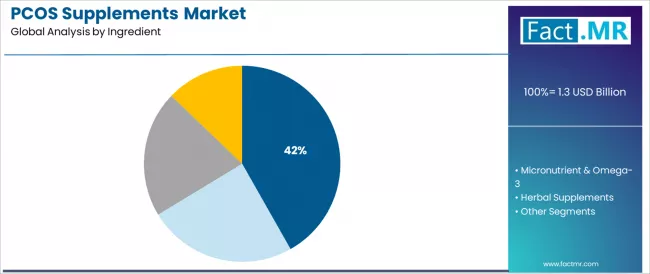
The myo-inositol-based supplements segment represents the dominant force in the PCOS supplements market, capturing 41.8% of the total market share in 2025. This established ingredient category encompasses solutions featuring clinically validated insulin sensitizing properties and ovarian function optimization capabilities, including advanced formulations combining D-chiro-inositol ratios and bioavailability enhancement technologies that enable superior therapeutic outcomes and patient compliance across reproductive health and metabolic management applications worldwide.
The myo-inositol segment’s market leadership stems from its superior clinical evidence base, with solutions capable of addressing core PCOS pathophysiology including insulin resistance, hyperandrogenism, and ovulatory dysfunction while maintaining excellent safety profiles and tolerability standards across diverse patient populations.
The micronutrient & omega-3 segment maintains a substantial market share in the 32-34% range, serving health-conscious PCOS patients who require comprehensive nutritional support addressing multiple deficiency patterns including vitamin D, B-complex vitamins, zinc, magnesium, and anti-inflammatory essential fatty acids for metabolic and hormonal optimization.
These solutions offer broad-spectrum nutritional benefits for women managing complex PCOS symptomatology while providing sufficient efficacy to support conventional treatment protocols. The micronutrient segment demonstrates strong growth potential, driven by expanding awareness of nutritional deficiencies in PCOS populations and increasing emphasis on preventive health approaches.
Within the ingredient category, herbal supplements including spearmint extract, cinnamon, and berberine demonstrate growing adoption, driven by patient preference for natural therapeutic options and emerging clinical evidence supporting metabolic and anti-androgenic benefits. This sub-segment benefits from traditional medicine integration and consumer demand for plant-based alternatives.
Key therapeutic advantages driving the myo-inositol segment include:
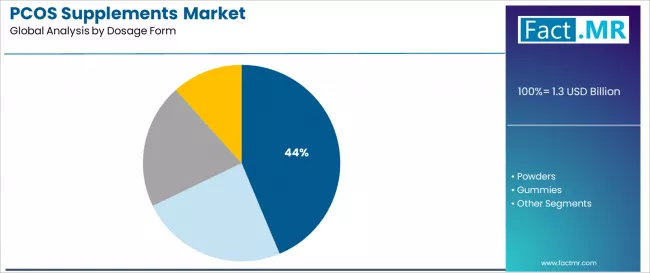
Capsules & tablets dominate the PCOS supplements dosage form landscape with a 43.7% market share in 2025, reflecting the critical role of conventional oral solid dosage forms in supporting precise dosing, extended shelf stability, and familiar administration protocols across patient populations worldwide.
The capsules & tablets segment’s market leadership is reinforced by patient preferences for convenient daily supplementation routines, pharmaceutical-grade manufacturing standards, and compatibility with multi-ingredient formulation complexities that characterize comprehensive PCOS management protocols.
Within this segment, capsules represent the preferred format for many manufacturers, driven by their ability to mask ingredient tastes, enable controlled release mechanisms, and accommodate diverse formulation requirements including oil-based and hygroscopic ingredients. This sub-segment benefits from established consumer familiarity and perception of pharmaceutical-grade quality standards.
The gummies segment represents a rapidly growing dosage form category, demonstrating strong expansion through specialized requirements for improved patient compliance, palatability enhancement, and lifestyle-oriented supplement positioning in consumer health markets. This segment benefits from younger demographic adoption patterns that prioritize enjoyable consumption experiences and reduced pill fatigue in chronic supplementation scenarios.
The powders segment maintains meaningful presence through versatility in dosing flexibility and beverage fortification applications, while the liquids category serves specific patient segments preferring rapid absorption and ease of swallowing for comprehensive nutritional delivery.
Key market dynamics supporting dosage form growth include:
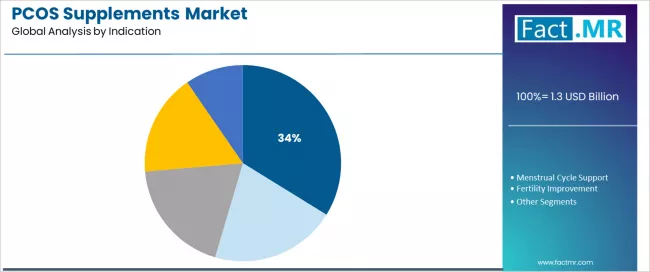
Hormonal regulation represents a leading indication segment in the PCOS supplements market with a 33.8% market share in 2025, reflecting the fundamental role of hormonal imbalance management in PCOS pathophysiology and patient quality of life. The hormonal regulation segment demonstrates consistent demand driven by the need to address hyperandrogenism, irregular menstrual cycles, and associated metabolic complications across diverse PCOS phenotypes and severity levels.
The fertility improvement segment emerges as an important indication category with robust growth potential, driven by the significant proportion of PCOS patients experiencing infertility challenges and seeking non-pharmaceutical interventions to enhance conception outcomes. Women pursuing fertility goals require specialized supplement formulations capable of supporting ovulation restoration, improving egg quality, and optimizing reproductive hormone balance for successful conception and pregnancy maintenance.
Within indication applications, menstrual cycle support demonstrates strong baseline demand as women seek to establish regular menstruation patterns and reduce dysmenorrhea associated with PCOS. Acne and skin health applications address the dermatological manifestations of hyperandrogenism, including persistent acne, seborrhea, and hirsutism that affect patient self-esteem and quality of life.
Key indication dynamics include:
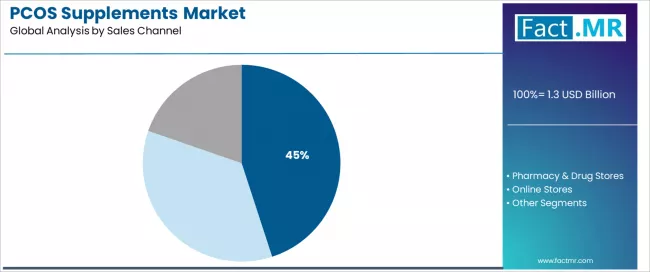
Online stores dominate the PCOS supplements distribution landscape with a 45.0% market share in 2025, reflecting the critical role of digital commerce in supporting accessible product availability, discreet purchasing experiences, and direct-to-consumer brand engagement across women’s health categories worldwide.
The online stores segment’s market leadership is reinforced by consumer preferences for convenient home delivery, extensive product information access, and subscription-based replenishment models that reduce purchasing friction in chronic supplementation protocols.
Within this segment, brand-owned e-commerce platforms represent a growing distribution approach, driven by direct customer relationships, personalized recommendation engines, and integrated educational content supporting informed purchasing decisions. This sub-segment benefits from superior margin structures and customer data insights that enable targeted marketing and product development strategies.
The pharmacy & drug stores segment represents an important distribution category demonstrating steady growth through professional consultation availability, immediate product access, and healthcare provider recommendation pathways. Pharmacists provide valuable counseling on supplement selection, potential drug interactions, and appropriate dosing protocols that enhance patient safety and therapeutic outcomes.
The hypermarket & supermarket segment maintains presence through mainstream consumer accessibility and integrated shopping convenience, while specialty health stores serve dedicated wellness-focused consumer segments seeking curated product selections and expert recommendations.
Key market dynamics supporting sales channel growth include:
The market is driven by three concrete demand factors tied to women’s health outcomes. First, rising PCOS prevalence rates and increasing diagnosis capabilities create expanding patient populations seeking effective symptom management solutions, with supplementation representing a critical complementary approach to pharmaceutical treatments in comprehensive care protocols, requiring widespread product availability. Second, growing clinical evidence supporting supplement efficacy in PCOS management drives healthcare provider recommendations and patient adoption, with numerous studies demonstrating significant benefits in insulin sensitivity, ovulation rates, and hormonal balance through targeted nutritional interventions by 2030. Third, increasing consumer health consciousness and preference for natural therapeutic options enable more holistic disease management approaches that improve patient satisfaction while reducing pharmaceutical dependency and associated side effect concerns.
Market restraints include limited regulatory standardization and quality control variations across supplement manufacturers that can challenge consistent therapeutic outcomes and patient confidence in product efficacy, particularly in regions where dietary supplement oversight remains fragmented and third-party testing adoption proves limited. Raw material sourcing challenges for premium ingredients including pharmaceutical-grade myo-inositol and omega-3 concentrates pose another significant obstacle, as PCOS supplement production depends on specialized suppliers and quality verification protocols, potentially affecting product availability and price competitiveness. Healthcare provider skepticism regarding supplement efficacy and lack of insurance coverage for nutritional interventions create additional barriers for mainstream medical acceptance, demanding extensive clinical validation and professional education initiatives.
Key trends indicate accelerated personalized nutrition adoption in developed markets, particularly North America and Europe, where consumers demonstrate willingness to invest in tailored supplement protocols based on genetic testing, hormonal profiling, and symptom severity assessments. Telemedicine integration trends toward virtual consultation models with prescription supplement protocols and remote monitoring systems enable convenient access to specialized care that optimizes treatment adherence and clinical outcomes. However, the market thesis could face disruption if significant advances in pharmaceutical PCOS treatments or major shifts in dietary intervention approaches reduce reliance on traditional supplement-based management strategies.
| Country | CAGR (2025 to 2035) |
|---|---|
| India | 16.4% |
| China | 15.8% |
| USA | 13.9% |
| Germany | 12.7% |
| UK | 12.3% |
| Japan | 11.6% |
| Brazil | 10.9% |
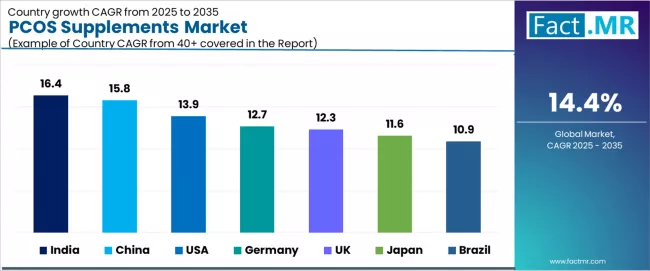
The global PCOS supplements market is expanding rapidly, with India leading at a 16.4% CAGR through 2035, driven by increasing PCOS awareness, expanding healthcare access, and rising disposable incomes supporting preventive health adoption.
China follows at 15.8%, supported by traditional medicine integration, growing women’s health focus, and extensive e-commerce penetration. USA records 13.9%, reflecting an established landscape with continuous product innovation and strong clinical validation emphasis.
Germany advances at 12.7%, leveraging quality standards and evidence-based healthcare approaches. UK posts 12.3%, focusing on pharmacy-led distribution and professional recommendations, while Japan grows steadily at 11.6%, emphasizing quality formulations and dermatological applications. Brazil demonstrates 10.9% growth, anchored by urbanization and expanding middle-class health consciousness.
India demonstrates the strongest growth potential in the PCOS supplements market with a CAGR of 16.4% through 2035. The country’s leadership position stems from rapidly increasing PCOS diagnosis rates, expanding urban healthcare infrastructure, and growing awareness about women’s reproductive health challenges driving adoption of therapeutic supplements.
Growth is concentrated in major metropolitan areas and tier-1 cities, including Mumbai, Delhi, Bangalore, and Hyderabad, where women are increasingly seeking evidence-based nutritional interventions for comprehensive PCOS management beyond conventional pharmaceutical approaches.
Distribution channels through online health platforms, pharmacy chains, and women’s health clinics expand product accessibility across urban populations and educated consumer segments. The country’s growing integration of Ayurvedic principles with modern supplement formulations provides strong momentum for culturally appropriate PCOS solutions, including comprehensive adoption across income segments seeking affordable yet effective interventions.
Key market factors:
In major urban centers including Beijing, Shanghai, Shenzhen, and Guangzhou, the adoption of PCOS supplement solutions is accelerating across women of reproductive age, driven by increasing lifestyle-related PCOS prevalence and growing emphasis on integrative medicine approaches. The market demonstrates strong growth momentum with a CAGR of 15.8% through 2035, linked to comprehensive healthcare modernization trends and increasing focus on preventive women’s health management.
Patients in China are implementing traditional Chinese medicine principles integrated with modern nutritional supplements to enhance fertility outcomes while meeting growing expectations in holistic health management. The country’s expanding middle class creates ongoing demand for premium imported supplement brands, while increasing emphasis on natural ingredients drives adoption of herbal and plant-based PCOS formulations.
Key development areas:
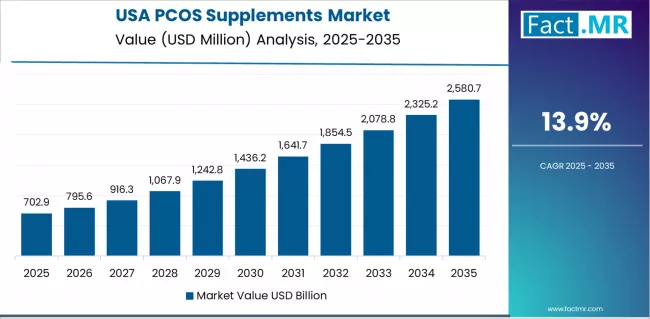
USA’s market expansion is driven by diverse consumer preferences, including evidence-based formulations in health-conscious markets and comprehensive women’s health solutions across mainstream segments. The country demonstrates steady growth potential with a CAGR of 13.9% through 2035, supported by continuous product innovation from established supplement manufacturers and specialized PCOS-focused brands.
American consumers face implementation challenges related to insurance coverage limitations and out-of-pocket costs for nutritional interventions, requiring brands to demonstrate clear value propositions and clinical efficacy. However, established supplement consumption habits and high health literacy create stable baseline demand for PCOS supplements, particularly among women actively managing reproductive health where evidence-based nutritional support drives primary purchasing decisions.
Market characteristics:
The German market leads in evidence-based PCOS supplement adoption based on integration with healthcare provider recommendations and pharmaceutical-grade quality standards for enhanced therapeutic reliability. The country shows strong potential with a CAGR of 12.7% through 2035, driven by strict regulatory oversight and consumer preferences for clinically validated formulations in major markets, including Bavaria, North Rhine-Westphalia, Baden-Württemberg, and Hesse.
German women are adopting PCOS supplements through pharmacy consultations and gynecologist recommendations for comprehensive symptom management, particularly in healthcare-conscious populations and professionally guided treatment protocols demanding rigorous quality credentials. Distribution channels through apotheke networks and specialized women’s health centers expand coverage across urban centers and medically informed consumer communities.
Leading market segments:
In London, Manchester, Birmingham, and other major cities, women are implementing PCOS supplement solutions through pharmacy consultations and healthcare provider recommendations, with documented case studies showing substantial symptom improvement through professionally guided nutritional protocols. The market shows steady growth potential with a CAGR of 12.3% through 2035, linked to ongoing pharmacy channel expansion, professional education initiatives, and emerging telemedicine consultation models in major regions.
Women are adopting evidence-based PCOS supplements with professional oversight to enhance treatment safety while maintaining standards demanded by healthcare-integrated purchasing pathways. The country’s established pharmacy infrastructure creates ongoing opportunities for professional-grade supplement launches that differentiate through clinical validation and practitioner endorsement.
Market development factors:
Japan’s PCOS supplements market demonstrates sophisticated consumer preferences focused on formulation quality and dermatological benefits optimization, with documented integration of advanced manufacturing technologies achieving substantial improvement in ingredient purity and bioavailability across women’s health applications.
The country maintains steady growth momentum with a CAGR of 11.6% through 2035, driven by mature market dynamics emphasizing product excellence and continuous quality improvement methodologies that align with Japanese consumer standards applied to health and wellness products.
Major metropolitan areas, including Tokyo, Osaka, Nagoya, and Fukuoka, showcase advanced adoption of PCOS supplement protocols where pharmaceutical-grade ingredients integrate seamlessly with beauty-focused formulations and comprehensive skin health programs.
Key market characteristics:
In major metropolitan centers including São Paulo, Rio de Janeiro, Brasília, and Belo Horizonte, the adoption of PCOS supplement solutions is expanding across urban women populations, driven by increasing reproductive health awareness and rising middle-class consumption patterns. The market demonstrates solid growth potential with a CAGR of 10.9% through 2035, linked to comprehensive healthcare infrastructure expansion and increasing focus on women’s wellness product availability in pharmacy and online channels.
Women in Brazil are implementing modern PCOS management practices and purchasing affordable supplement products to enhance reproductive health outcomes while meeting growing expectations in urban healthcare environments. The country’s expanding retail pharmacy networks create ongoing demand for competitively priced PCOS formulations, while increasing fertility clinic partnerships drive adoption of evidence-based nutritional protocols.
Key development areas:
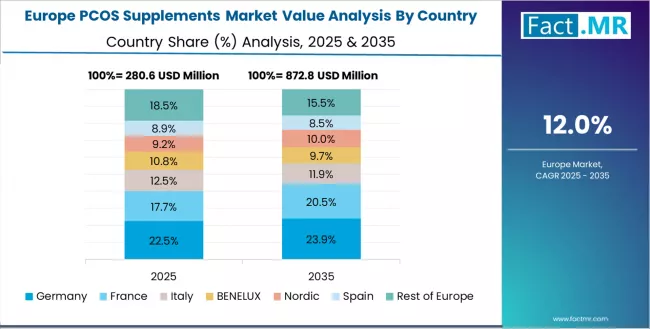
The PCOS supplements market in Europe is projected to grow from USD 0.31 billion in 2025 to USD 1.21 billion by 2035, registering a CAGR of 14.6% over the forecast period. Germany is expected to maintain its leadership position with a 28.5% market share in 2025, adjusting to 28.0% by 2035, supported by its extensive pharmaceutical-grade quality standards, professional healthcare distribution networks, and comprehensive clinical validation emphasis serving major European markets.
The UK follows with a 21.0% share in 2025, projected to reach 21.5% by 2035, driven by comprehensive pharmacy-led distribution and professional consultation models in major urban regions implementing evidence-based PCOS management protocols. France holds a 19.0% share in 2025, expected to maintain 19.3% by 2035 through ongoing development of natural ingredient products and specialized women’s health retail channels. Italy commands a 15.5% share, while Spain accounts for 12.0% in 2025.
The rest of Europe region is anticipated to gain momentum, expanding its collective share from 4.0% to 4.2% by 2035, attributed to increasing PCOS supplement adoption in Nordic countries and emerging Eastern European markets implementing modern women’s healthcare practices.
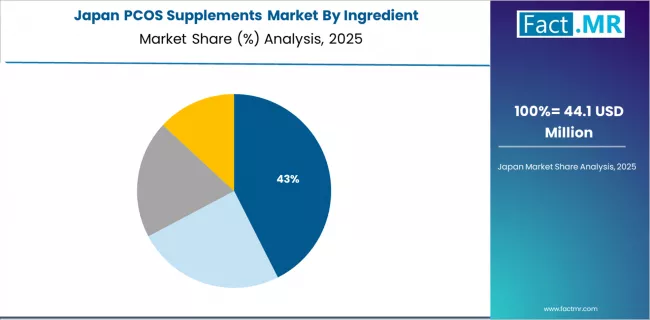
The Japanese PCOS supplements market demonstrates a mature and quality-focused landscape, characterized by sophisticated integration of beauty-enhancing formulations with hormonal balance technologies across women’s health applications, pharmacy distribution channels, and dermatology clinic recommendations. Japan’s emphasis on product excellence and comprehensive safety testing drives demand for pharmaceutical-grade PCOS supplement solutions that support holistic wellness initiatives and skin health requirements in daily women’s healthcare routines.
The market benefits from strong partnerships between international supplement manufacturers and domestic wellness brands, including established pharmacy chains and beauty retailers, creating comprehensive distribution ecosystems that prioritize product quality and consumer education programs. Metropolitan consumer segments showcase advanced PCOS supplement implementations where multi-benefit formulations achieve performance improvements through integrated beauty-from-within approaches and comprehensive nutritional optimization programs.
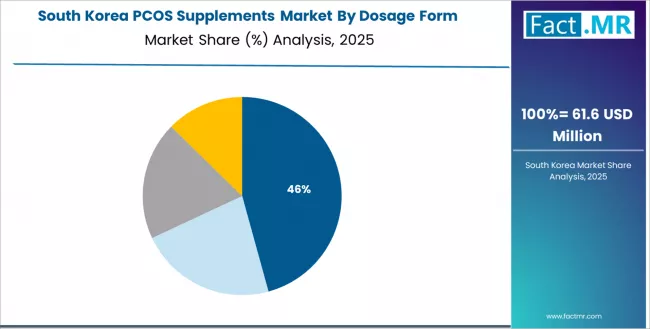
The South Korean PCOS supplements market is characterized by strong premium product presence, with companies like local wellness brands and international players including specialized women’s health companies maintaining significant positions through comprehensive product portfolios and K-beauty-integrated formulations for hormonal balance and skin health applications.
The market is demonstrating a growing emphasis on beauty-wellness convergence and specialized anti-androgenic benefits, as Korean women increasingly demand premium PCOS supplements that combine hormonal regulation with skin brightening properties and anti-acne ingredients deployed across urban populations and beauty-conscious consumer segments.
Local brand innovations and specialty product launches are gaining market share through strategic emphasis on fermented botanicals, offering specialized formulations including collagen-enhanced variants and probiotic-enriched solutions for comprehensive women’s wellness support.
The competitive landscape shows increasing collaboration between supplement manufacturers and women’s health clinics, creating hybrid distribution models that combine medical expertise with consumer trend insights and social media influencer marketing capabilities.
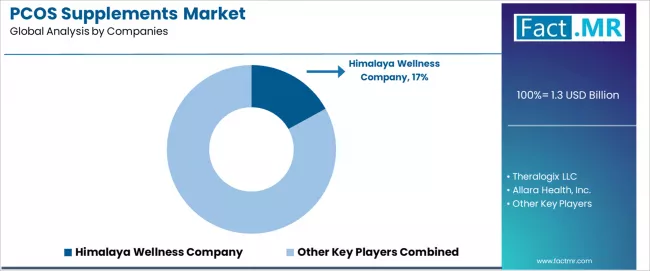
The PCOS supplements market features approximately 15-20 meaningful players with moderate concentration, where the top three companies control roughly 25-35% of global market share through established brand recognition, clinical validation efforts, and multi-channel distribution networks. Competition centers on ingredient innovation, clinical evidence generation, and direct-to-consumer engagement rather than price competition alone.
Market leaders include Himalaya Wellness, Theralogix, and Allara Health, which maintain competitive advantages through comprehensive PCOS-specific product portfolios, evidence-based formulation capabilities, and deep expertise in women’s reproductive health, creating high brand trust among consumers seeking therapeutic solutions.
These companies leverage healthcare provider relationships and ongoing clinical research collaborations to defend market positions while expanding into adjacent categories including prenatal supplements and women’s multivitamin applications.
Challengers encompass specialized PCOS-focused brands including The S’moo Co., Fertility Family, and SOVA, which compete through targeted product positioning and strong engagement with PCOS patient communities through social media platforms and influencer partnerships.
Women’s health specialists, including MyOva, Girl Vitamins, and New Leaf Products, focus on specific formulation approaches or patient segments, offering differentiated capabilities in personalized nutrition protocols, lifestyle-oriented supplement solutions, and condition-specific ingredient combinations.
Emerging direct-to-consumer brands and natural product manufacturers create competitive pressure through innovative subscription models and community-building strategies, particularly in high-growth markets including USA and India, where digital health adoption provides advantages in patient education and ongoing engagement approaches.
Market dynamics favor companies that combine clinical credibility with consumer-centric brand positioning that addresses the complete patient journey from diagnosis through long-term symptom management and fertility goal achievement.
Strategic emphasis on transparent ingredient sourcing, third-party quality testing, and healthcare provider education programs enables differentiation in increasingly competitive women’s health supplement segments across developed and emerging markets.
PCOS supplements represent a critical women’s health product category that enables patients with polycystic ovary syndrome to manage complex hormonal and metabolic imbalances while addressing fertility goals and quality of life concerns without exclusive pharmaceutical dependency, typically providing targeted nutritional support including insulin sensitization, ovarian function enhancement, and anti-inflammatory benefits compared to conventional treatments alone while ensuring improved symptom control and comprehensive wellness outcomes.
With the market projected to grow from USD 1.30 billion in 2025 to USD 4.99 billion by 2035 at a 14.4% CAGR, these solutions offer compelling advantages for hormonal regulation applications, online distribution channels, and diverse patient populations seeking evidence-based natural interventions. Scaling market penetration and clinical acceptance requires coordinated action across healthcare policy, clinical research standards, supplement manufacturers, healthcare providers, and patient education initiatives.
| Items | Values |
|---|---|
| Quantitative Units | USD 1.30 Billion |
| Ingredient | Myo-inositol-based supplements, Micronutrient & Omega-3, Herbal Supplements, Others |
| Dosage Form | Capsules & Tablets, Powders, Gummies, Liquids |
| Indication | Menstrual Cycle Support, Hormonal Regulation, Fertility Improvement, Acne and Skin Health, Others |
| Sales Channel | Hypermarket & Supermarket, Pharmacy & Drug Stores, Online Stores |
| Regions Covered | Asia Pacific, Europe, North America, Latin America, Middle East & Africa |
| Country Covered | India, China, USA, Germany, UK, Japan, Brazil, and 40+ countries |
| Key Companies Profiled | Himalaya Wellness, Theralogix, Allara Health, The S’moo Co., Fertility Family, SOVA, MyOva, Girl Vitamins, New Leaf Products, Zazzee Naturals |
| Additional Attributes | Dollar sales by ingredient and dosage form categories, regional adoption trends across Asia Pacific, Europe, and North America, competitive landscape with supplement manufacturers and healthcare distribution companies, product specifications and formulation requirements, integration with telemedicine platforms and personalized nutrition protocols, innovations in bioavailability enhancement and combination therapies, and development of specialized applications with clinical validation and evidence-based treatment capabilities. |
Key Takeaways
Tom Lee has lowered his year-end Bitcoin target from $250,000 to “above $100,000.”
Lee says Tether’s gold buying will help set a higher long-term price floor for Bitcoin.
Despite analysts’ warnings of a bear market, Lee and other analysts still see the potential for a year-end rebound.
Veteran crypto analyst Tom Lee has scaled back his typically bullish forecast for Bitcoin to end the year at $250,000, saying he now expects the BTC to finish at a price “above $100,000.”
The analyst’s shift in tone comes as he also argues that rising gold purchases by stablecoin issuers are helping establish a higher long-term price floor for Bitcoin.
Lee, chair of BitMine and a long-time bullish voice for Bitcoin, told CNBC on Wednesday that BTC may only “maybe” retest its October all-time high of $125,100 before year-end.
“I think it’s still very likely that Bitcoin is going to be above $100,000 before year-end, and maybe even to a new high,” he said.
The comments mark the first time he has publicly softened the $250,000 target he repeated through early October.
Despite significantly reducing his outlook, Lee noted that he still believes “some of those best days are going to happen before year-end.”
Lee explained that his more tepid view on upcoming crypto pricing was due to the Oct. 10 crash, which he says was caused by a “glitch” triggering a wave of automatic liquidations.
Although Lee has never publicly mentioned any names when discussing the technical glitch, it is clear he is discussing Binance.
On Oct. 10-11, screenshots showing USDe, a “synthetic dollar” created by Ethena Labs, dropping to $0.65 on Binance spread across social media.

Because Binance’s internal oracle treated the faulty as “real,” it triggered forced liquidations for traders holding USDe-backed positions.
“Almost two million crypto accounts got wiped out, even though minutes before they were actually profitable accounts,” he previously said.
Separately, Lee pointed to rising demand for gold from crypto-backed stablecoins as a factor that could influence Bitcoin’s longer-term trajectory.
In an X post on Wednesday, he claimed that stablecoins have become the largest buyers of gold globally and have been “the singular driver of higher prices” for the precious metal since early 2026.
His comments followed news that USDT issuer Tether became the largest private holder of gold globally, surpassing several central banks.
Lee argued that the trend was not bearish for Bitcoin, but instead helped establish “a higher future price.”