The main category of All News Articles.
You can use the search box below to find what you need.
[wd_asp id=1]
The main category of All News Articles.
You can use the search box below to find what you need.
[wd_asp id=1]
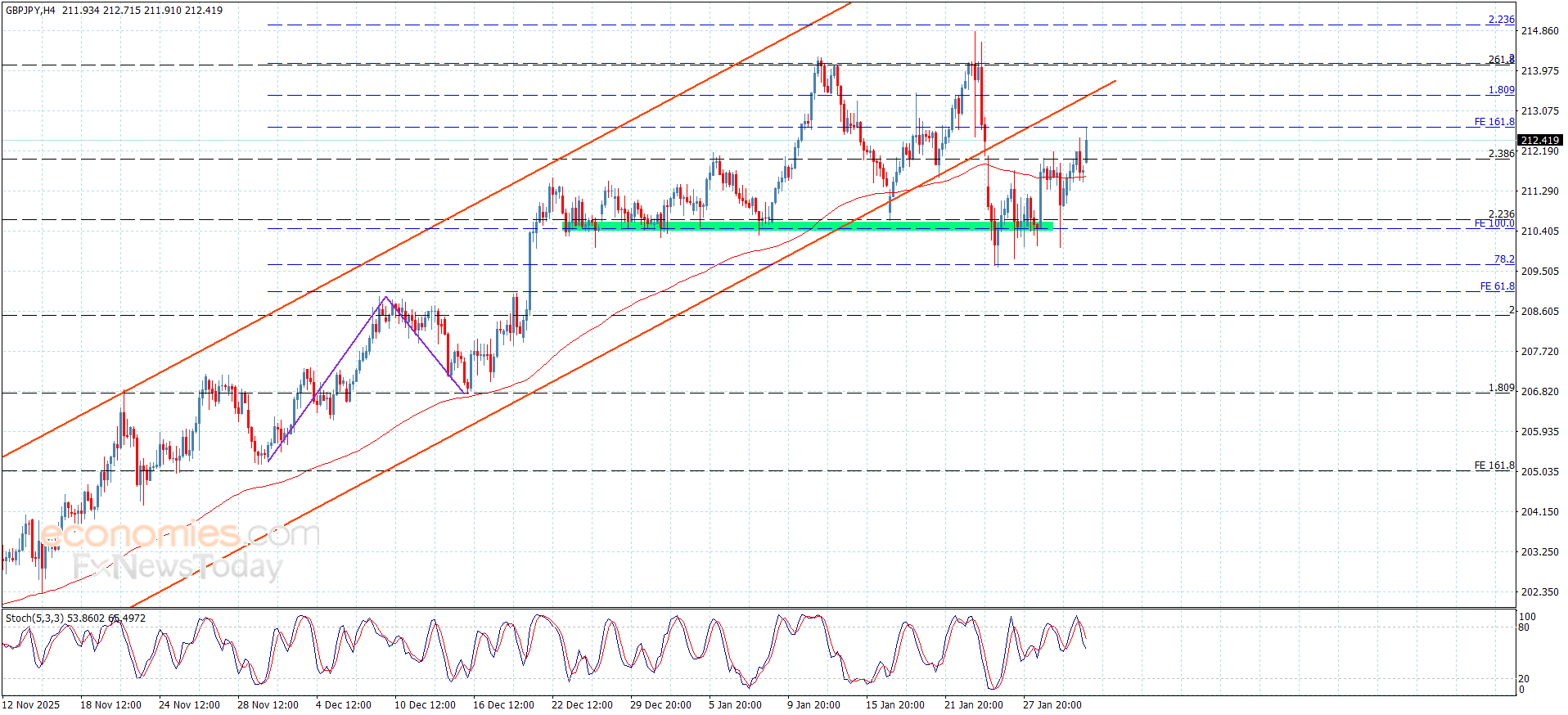
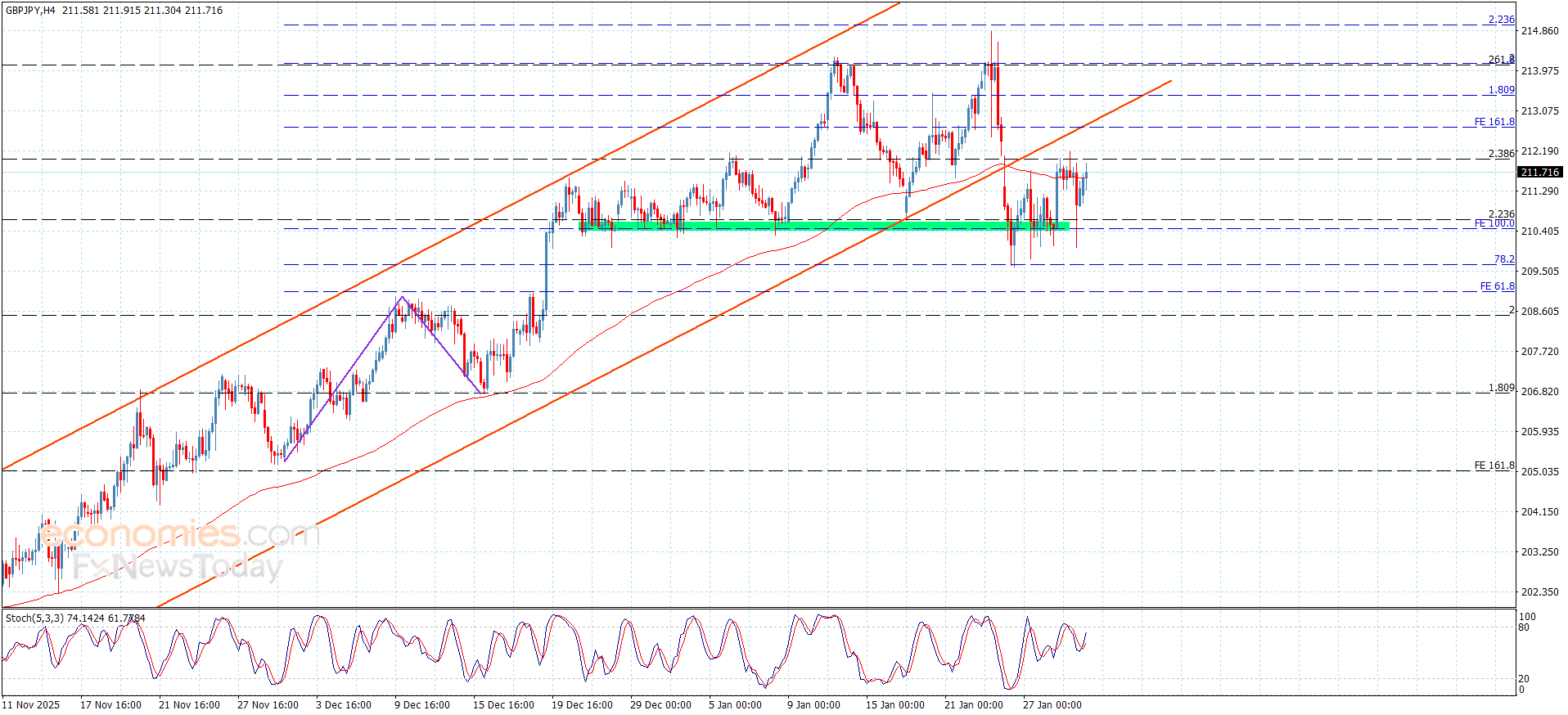
The GBPJPY pair continued forming bullish trading since Friday’s trading, taking advantage of the repeated positive stability above 210.40 support, achieving several gains by reaching 212.75 which forms an intraday obstacle against the bullish trend.
The contradiction between the main indicators makes us expect providing mixed trading until gathering extra positive momentum, to ease the mission of surpassing the current obstacle, to target extra gains by its rally towards 213.40 and surpassing it will confirm its stability within the main bullish channel’s levels, opening the way towards for strong chance of recording new gains that might extend towards 214.15 and 214.90.
The expected trading range for today is between 211.80 and 213.40
Trend forecast: Bullish
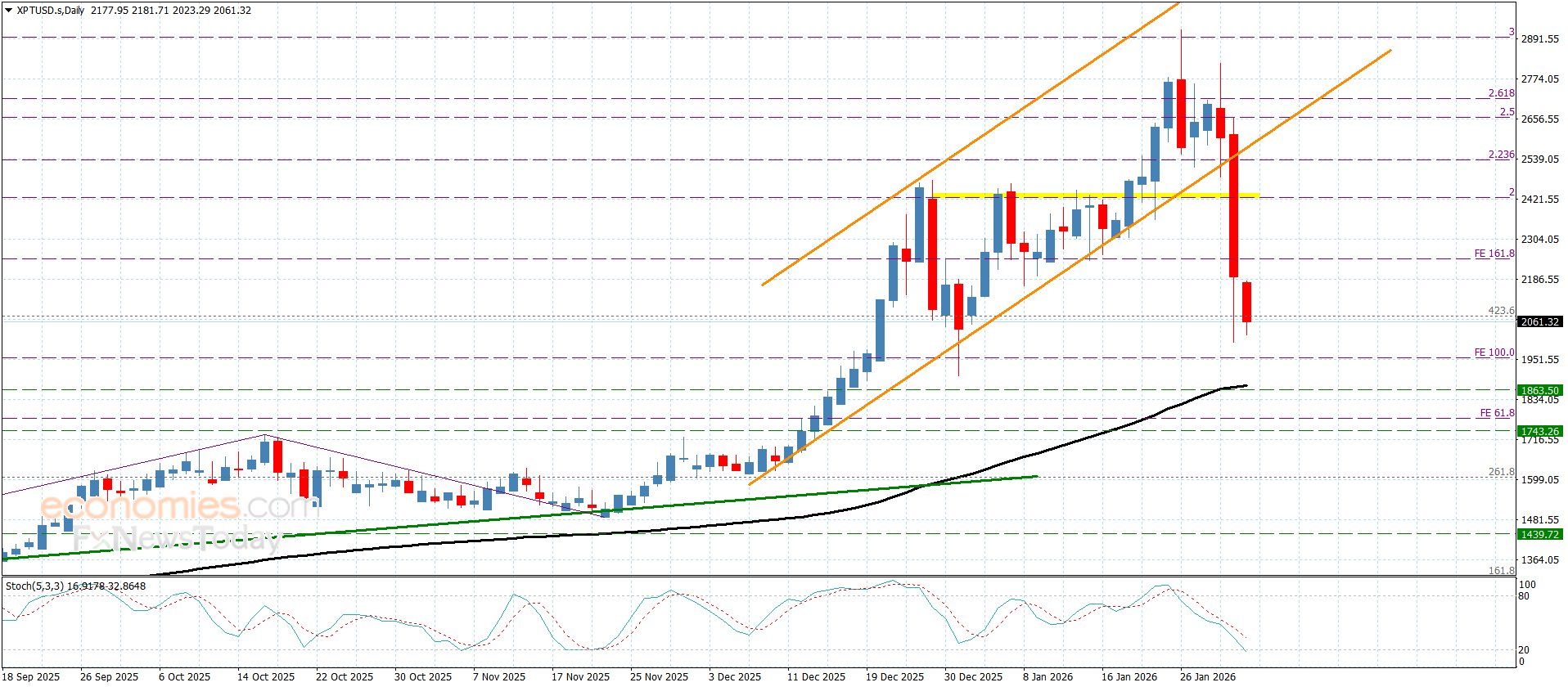
Platinum price surrendered to the negative pressure recently, resuming the bearish corrective attack, which forces it to break the extra support at $2250.00, suffering big losses by reaching $2003.00.
The price might be forced to reach %100 Fibonacci extension level at $1950.00, as long as it forms a key support against the last bullish rally, as the stability above this support will allow it to provide a chance to renew the bullish attempts, to step above $2250.00 to record some gains that begin at $2350.00 and $2420.00.
The expected trading range for today is between $1950.00 and $2250.00
Trend forecast: Bullish
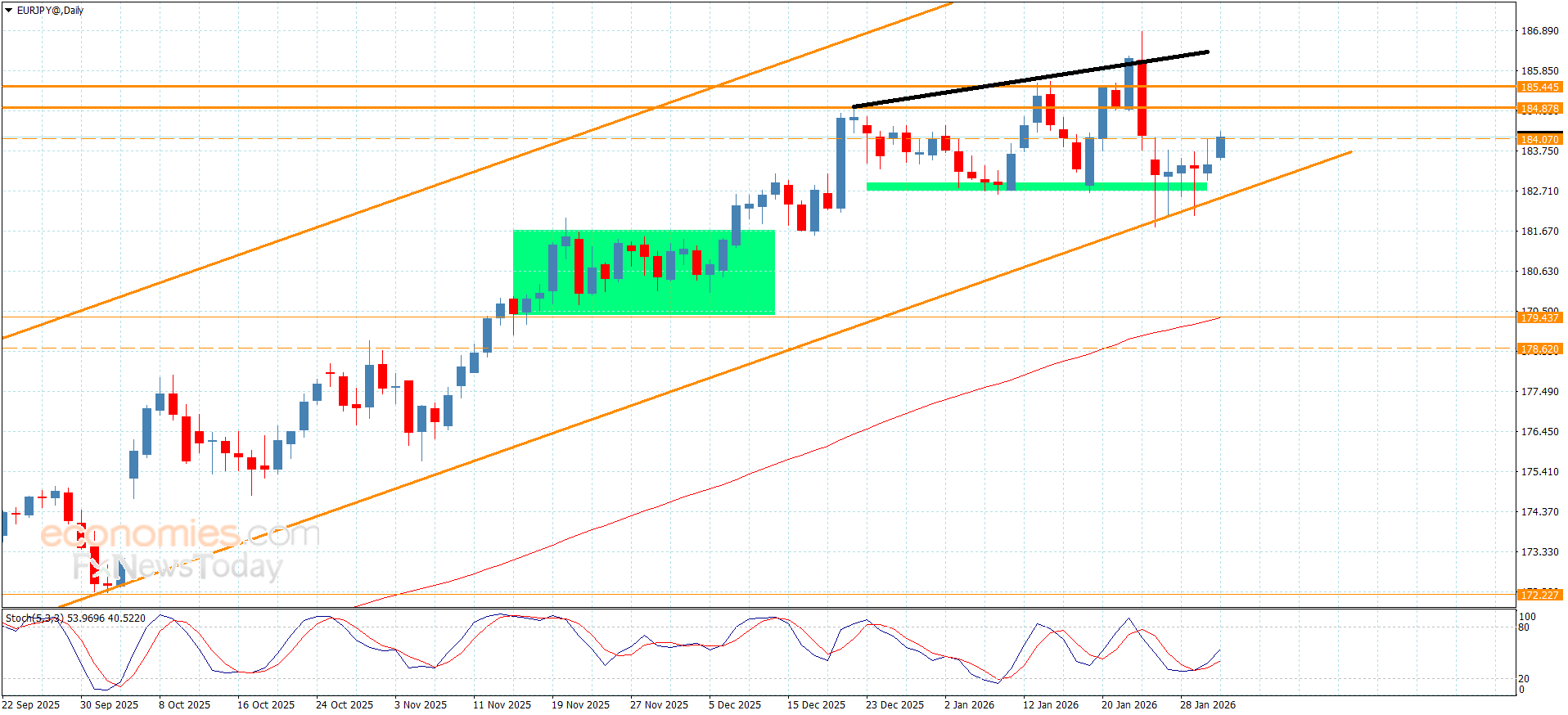
The EURJPY pair succeeded in resuming the bullish trend that depends on the main stability within the bullish channel’s levels, reaching 184.25 achieving the suggested target in the previous report.
In general, the main stability above the main bullish channel’s support at 182.60, the main indicators attempt to provide bullish momentum will increase the chances of surpassing the current obstacle to ease the mission of recording new gains that might begin at 184.85 and 185.45.
The expected trading range for today is between 183.40 and 184.85
Trend forecast: Bullish
Silver price (XAG/USD) trades cautiously at around $80 during the Asian trading session at the start of the week, slightly above the fresh four-week low of $73.33 posted on Friday. The white metal strives to regain ground after last week’s mayhem, in which it lost over 30% of its value from the lifetime highs of $121.66, triggered due to a strong US Dollar (USD), profit-booking after a stalwart rally, and expectations of a hawkish Federal Reserve’s (Fed) monetary policy outlook.
Technically higher US Dollar makes the Silver price an unfavorable risk-reward bet for investors.
As of writing, the US Dollar Index (DXY), which tracks the Greenback’s value against six major currencies, trades firmly near its weekly high of 97.33.
The Greenback attracted significant bids on Friday after the White House nominated former Federal Reserve (Fed) Governor Kevin Warsh as the successor of current Chairman Jerome Powell. Market experts believe that Warsh’s selection would not dampen Fed’s independence, which was highly anticipated, following comments from United States (US) President Donald Trump several times that new Chairman will deliver more interest rate cuts.
Fed’s newly appointed Chairman Kevin Warsh is known for supporting a strong US Dollar while doing his job previously at the US central bank, indicating that monetary conditions could remain tight going forward.
This week, investors will focus on the US Nonfarm Payrolls (NFP) data for January, which will drive market expectations for the Fed’s monetary policy outlook.
In the daily chart, XAG/USD trades at $81.38. Price holds above the rising 50-day EMA at $79.50, maintaining the medium-term uptrend. The average’s upward slope supports the broader bias. RSI at 44 (neutral) reflects cooled momentum after an overbought stretch. A sustained hold above the average could keep buyers engaged, while a close beneath it would expose downside.
With price anchored above the 50-day EMA, pullbacks would meet initial demand near that dynamic support. RSI below 50 caps upside near term; a rebound through the midline would improve impulse. If momentum stabilizes, bulls could attempt to extend the recovery, while failure to re-accelerate would keep trade contained.
(The technical analysis of this story was written with the help of an AI tool.)
Silver is a precious metal highly traded among investors. It has been historically used as a store of value and a medium of exchange. Although less popular than Gold, traders may turn to Silver to diversify their investment portfolio, for its intrinsic value or as a potential hedge during high-inflation periods. Investors can buy physical Silver, in coins or in bars, or trade it through vehicles such as Exchange Traded Funds, which track its price on international markets.
Silver prices can move due to a wide range of factors. Geopolitical instability or fears of a deep recession can make Silver price escalate due to its safe-haven status, although to a lesser extent than Gold’s. As a yieldless asset, Silver tends to rise with lower interest rates. Its moves also depend on how the US Dollar (USD) behaves as the asset is priced in dollars (XAG/USD). A strong Dollar tends to keep the price of Silver at bay, whereas a weaker Dollar is likely to propel prices up. Other factors such as investment demand, mining supply – Silver is much more abundant than Gold – and recycling rates can also affect prices.
Silver is widely used in industry, particularly in sectors such as electronics or solar energy, as it has one of the highest electric conductivity of all metals – more than Copper and Gold. A surge in demand can increase prices, while a decline tends to lower them. Dynamics in the US, Chinese and Indian economies can also contribute to price swings: for the US and particularly China, their big industrial sectors use Silver in various processes; in India, consumers’ demand for the precious metal for jewellery also plays a key role in setting prices.
Silver prices tend to follow Gold’s moves. When Gold prices rise, Silver typically follows suit, as their status as safe-haven assets is similar. The Gold/Silver ratio, which shows the number of ounces of Silver needed to equal the value of one ounce of Gold, may help to determine the relative valuation between both metals. Some investors may consider a high ratio as an indicator that Silver is undervalued, or Gold is overvalued. On the contrary, a low ratio might suggest that Gold is undervalued relative to Silver.
– Written by
Frank Davies
STORY LINK Pound to Dollar Forecast 2026: USD Rebounds as Warsh Pick Halts GBP Rally
The Pound to Dollar exchange rate (GBP/USD) has retreated from 4-year highs after the dollar staged a rebound on speculation that Kevin Warsh will be nominated as the next Federal Reserve Chair, easing fears over political interference and triggering sharp position unwinds across FX and precious metals.
The dollar has been under strong pressure for much of the week, but staged a notable comeback on Friday.
The catalyst for the move was a report that President Trump would nominate Kevin Warsh as the next Fed Chair.
Warsh is in favour of lower interest rates and structural reform within the Fed, but he is seen as a guardian of independence and his nomination would lessen fears over political interference in Fed policy.
The dollar pared losses and there was a dramatic slide in precious metals after posting a series of record highs.
In this environment, the Pound to Dollar (GBP/USD) exchange rate dipped to lows at 1.3725 from 4-year highs above 1.3850 earlier in the week.
Get better rates and lower fees on your next international money transfer.
Compare TorFX with top UK banks in seconds and see how much you could save.
According to UoB; “if GBP breaks below 1.3710, it would mean that the advance that started last week has run its course.”
Position adjustment will be potentially important in the near term. According to ANZ head of Asia research Khoon Goh; “Any sensible market participant would not want to carry a big position into the weekend. So some of this could just be positioning lightening up. If you’re short dollars, you’ve done well, take your chips off the table.”
ING commented; “The dollar has been waiting for a catalyst for a recovery, and the news that Kevin Warsh is likely to be announced as the new Federal Reserve Chair nominee today offers exactly that.”
The bank added; “Given how adamant Trump has been on reducing rates, it’s safe to assume Warsh has taken a more dovish stance during the interview process – but this pick may suggest a desire to calm speculation on Fed independence loss.”
According to ANZ head of Asia research Khoon Goh; “The appointment of Warsh, if it’s true, will be seen as someone who can, in a way, remain independent, and not someone seen as likely to be subservient to Trump’s wishes.”
MUFG took a similar line on credibility; “Warsh is a strong advocate of Fed independence so fears over independence being eroded should recede which is also dollar supportive.”
Nevertheless, the bank added that credibility could be a double-edge sword; “That stronger credibility means Warsh stands a much better chance of swaying the rest of the FOMC in the direction he advocates and hence an initial period of rate cuts should actually now be viewed as more likely.”

It added; “with rate cuts potentially more likely to be delivered under a Warsh FOMC we suspect this initial bounce for the dollar will fade.”
International Money Transfer? Ask our resident FX expert a money transfer question or try John’s new, free, no-obligation personal service! ,where he helps every step of the way,
ensuring you get the best exchange rates on your currency requirements.
TAGS: Pound Dollar Forecasts
Later on Monday, US economic indicators will fuel speculation about an H1 2026 Fed rate cut and demand for the US dollar.
Economists expect the ISM Manufacturing PMI to increase from 47.9 in December to 48.3 in January. A less marked contraction across the manufacturing sector would ease concerns about a sharp slowdown in US GDP growth, bolstering the US Dollar. However, traders should consider price and employment trends, considering the Fed’s dual mandate.
Softer prices and falling employment would likely overshadow a pickup in sector activity, and raise expectations of an H1 2026 Fed rate cut. A more dovish Fed policy stance would weaken the US dollar and send USD/JPY lower. Importantly, a more dovish Fed would support the bearish short- to medium-term outlook for USD/JPY.
Beyond the economic data, traders should closely monitor Fed speeches for insights into inflation, the economy, and the timeline for rate cuts.
According to the CME FedWatch Tool, the probability of a March Fed rate cut fell from 15.4% on January 23 to 13.4% on January 30, following a larger-than-expected rise in US producer prices. Meanwhile, the chances of a June cut rose from 60.7% to 61.8% last week. The modest increase in bets on a June cut underscored optimism that inflation will cool, enabling the Fed to lower rates.
Importantly, an H1 2026 Fed cut would support expectations of multiple rate cuts in 2026. Multiple Fed rate cuts would coincide with the BoJ’s hawkish policy outlook, signaling narrower US-Japan rate differentials. Narrowing rate differentials, favoring the yen, would weigh on USD/JPY.
For USD/JPY price trends, traders should assess technicals and monitor economic data, central bank chatter, and geopolitical headlines.
On the daily chart, USD/JPY trades below its 50-day Exponential Moving Average (EMA), but above the 200-day EMA. The EMA positions signaled a near-term bearish trend reversal, aligning with the negative price outlook for USD/JPY. Notably, positive yen fundamentals have aligned with the near-term technicals.
A break below the 200-day EMA would bring the 150 support level into play. If breached, October’s low of 146.585 would be the next key support level.
Importantly, a sustained fall through the EMAs would reaffirm the bearish trend reversal. These scenarios would reinforce the negative short- to medium-term price outlook.
I wrote on the 25th January that the best trades for the week would be:
Overall, these trades gave a large loss of 21.12% (7.04% per asset). Despite the size of this loss, following my weekly forecasts over the past few weeks would still have been profitable, as the recent wins were enormous.

A summary of last week’s most important data in the market:
The PPI and Australian inflation data had some impact on markets last week, but there were two other events that probably had a stronger overall impact on the market:
The US stock market’s broad S&P 500 Index briefly made a new record high above 7,000. The Index remains resilient, but it is showing very little upwards momentum. I see this as unlikely to change until the prospect of war between the USA and Iran is resolved one way or another.
The coming week’s most important data points, in order of likely importance, are:
It will be a busy week, with three major central banks holding policy meetings, so it could be an important week. Friday is a public holiday in New Zealand.
Currency Price Changes and Interest Rates
For the month of January 2026, I forecasted that the USD/JPY currency pair would rise in value. Unfortunately, this was a losing trade.

January 2026 Monthly Forecast Final Performance
For the month of February, I forecast that the EUR/USD currency pair will rise in value.
Last week saw three crosses with excessive volatility, so I made the following weekly forecast then:
The Swiss Franc and New Zealand Dollar were the strongest major currency last week, while the US Dollar was the weakest. Directional volatility fell significantly last week, with only 11% of all major pairs and crosses changing in value by more than 1%.
Next week’s volatility is likely to be notably higher.
You can trade these forecasts in a real or demo Forex brokerage account.
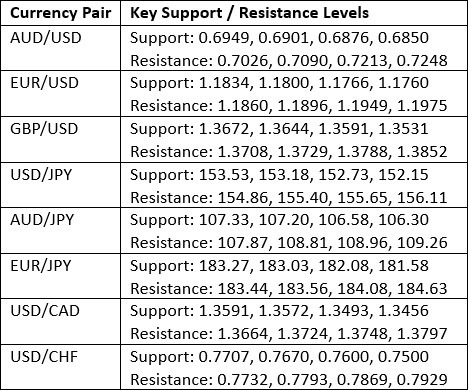
Key Support and Resistance Levels
Last week, the US Dollar Index printed fairly large bullish pin bar candlestick which rejected a new 4-year low. This is bullish by itself but we also have a long-term bearish trend with the price below its levels of both 13 and 26 weeks ago. This gives us a conflicted technical picture on the US Dollar.
The appointment of Kevin Warsh as Fed Chair helped strengthen the Dollar last week, but I see the outlook now as uncertain and the best market opportunities will probably not be US Dollar-dependent.
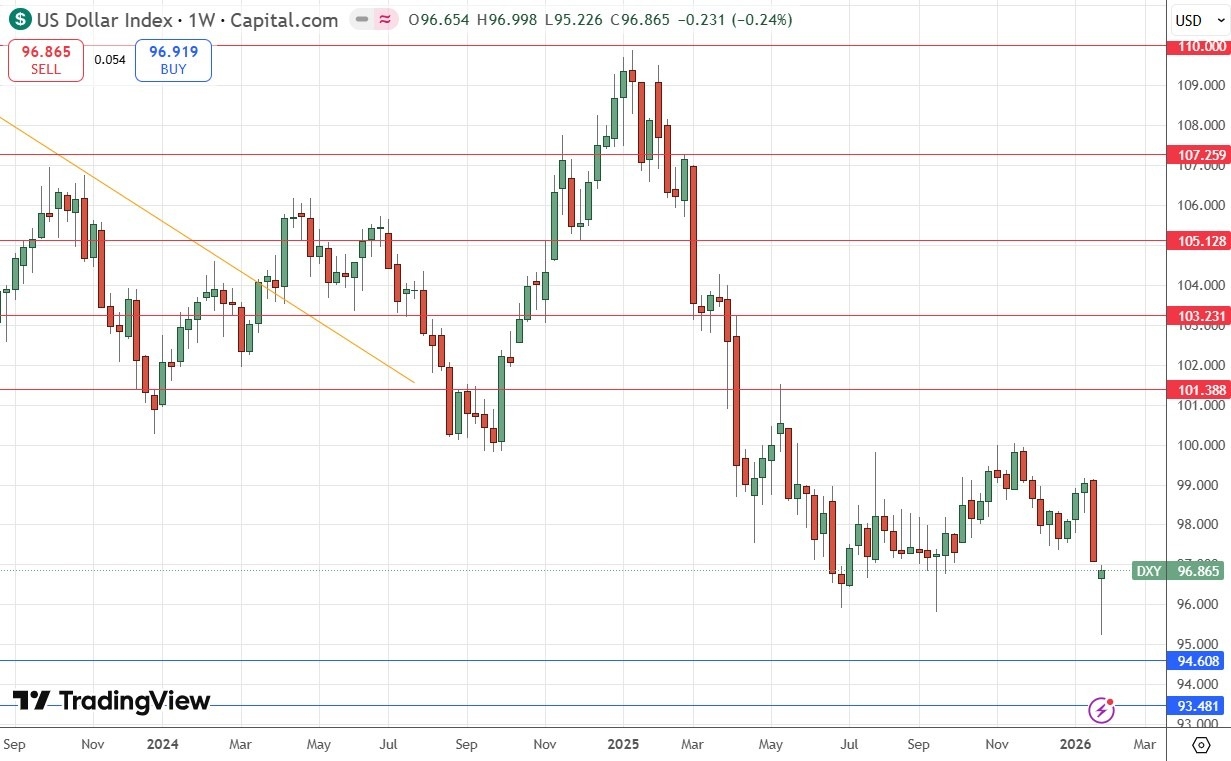
US Dollar Index Weekly Price Chart
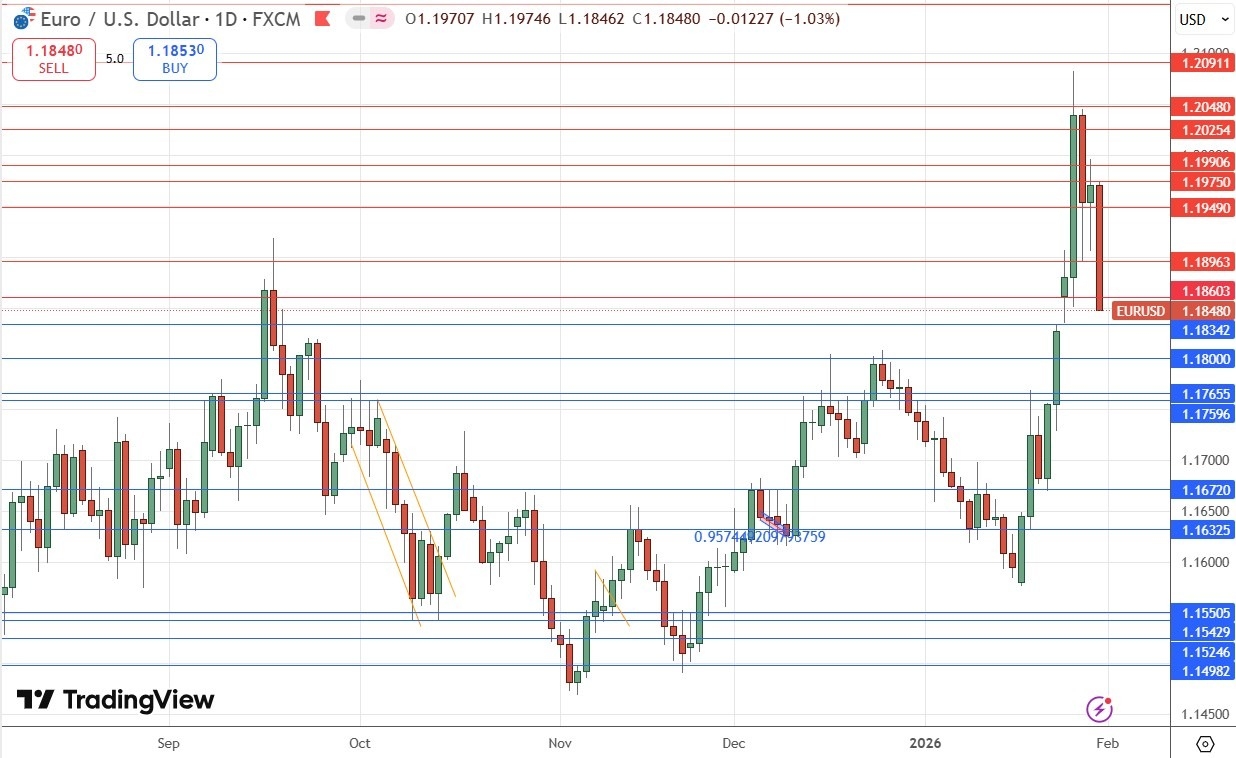
The EUR/USD currency pair made a strong long-term bullish breakout a few days ago when the US Dollar started weakening at a faster pace and dropping a new 3.5-year low, but it quickly flopped right back down, finding very little support.
This suggest we have seen a spike, but I would not rule out a long-term bullish trend taking off – this pair does tend to trend reliably.
However, with the new Fed Chair and USD strength at the end of the week on higher inflation indicators, it makes sense to be cautious.
I will only take a long trade if we get a daily (New York) close above $1.2039.
EUR/USD Daily Price Chart
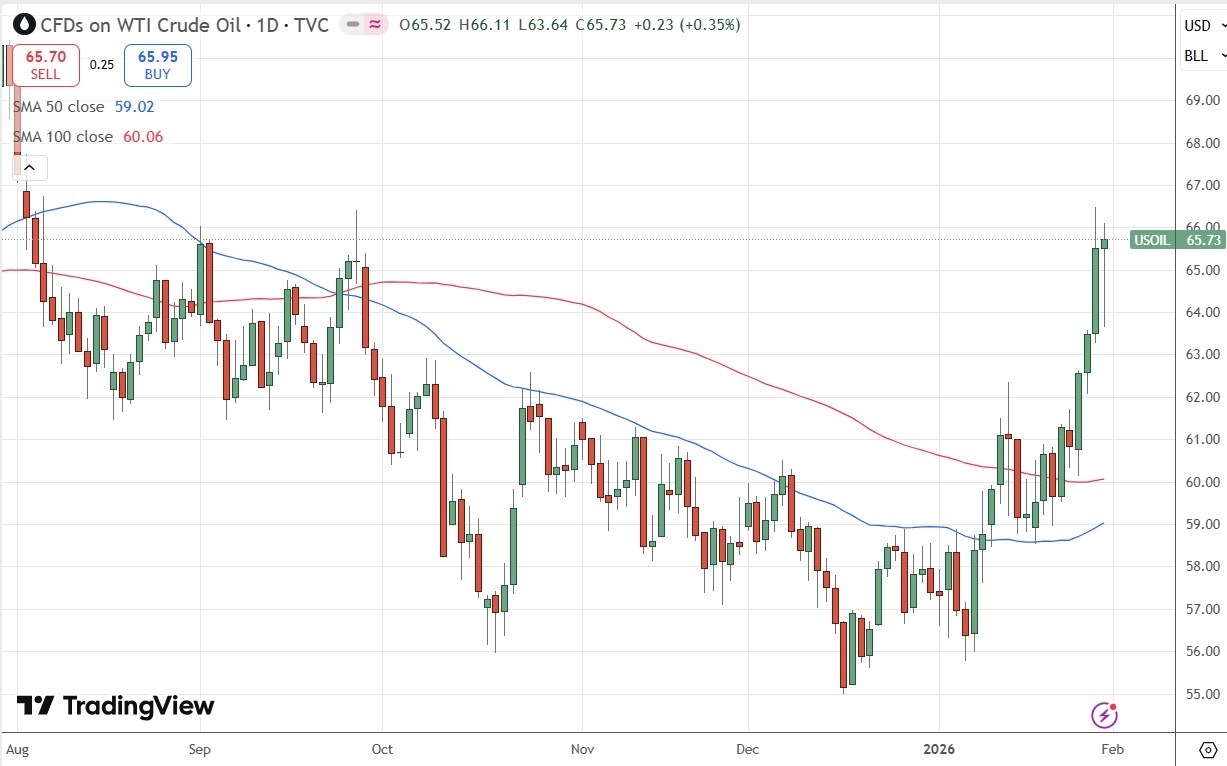
WTI Crude Oil has risen powerfully over recent days as the threat of a regional war centred on Iran has grown, with prediction markets currently seeing a US attack on Iran as likely to happen in March. This could seriously disrupt the supply of crude oil, so we have seen the price made a new 4-month high at the end of last week. A daily close above $66.25 would represent a new 6-month high.
Two notes of caution are necessary:
WTI Crude Oil Daily Price Chart
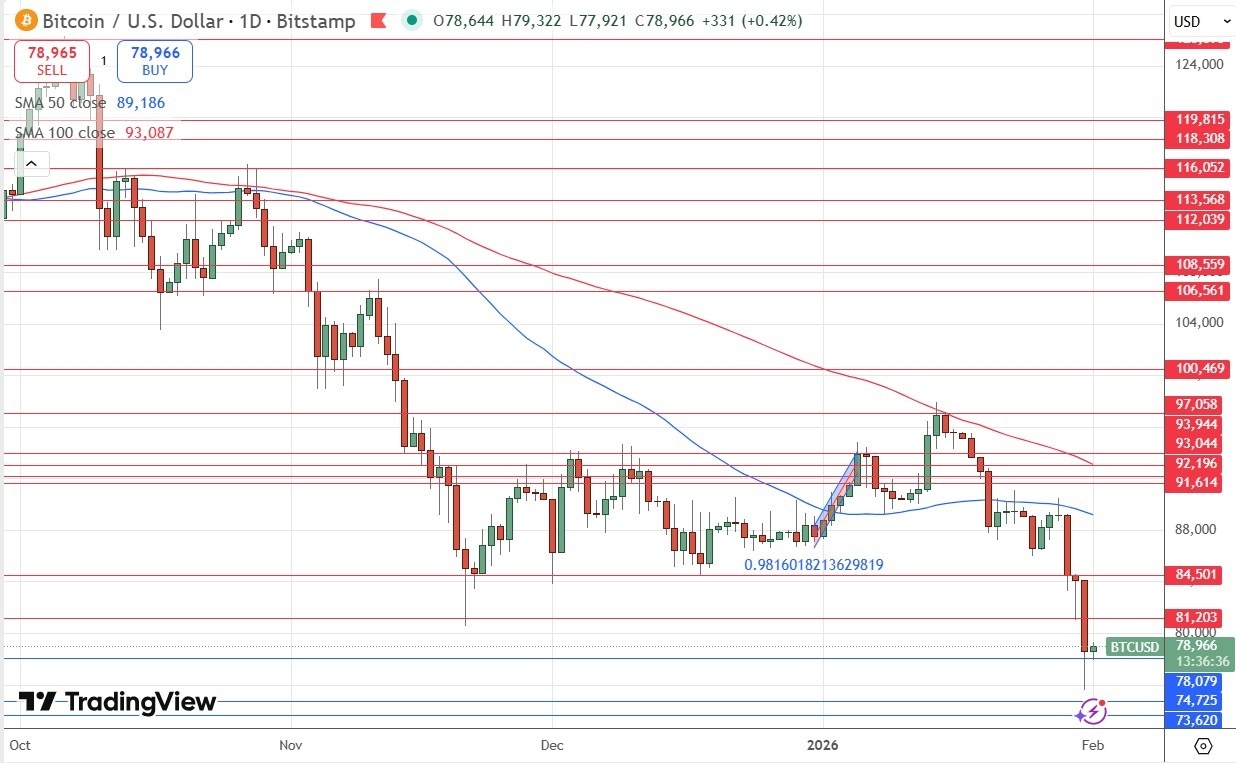
BTC/USD has finally made a very significant bearish breakdown below the long-term support level just above $81,000 and is now established below that level and reaching a new 9-month low. This is technically very significant in a bearish way.
While stocks and precious metals were rising strongly over recent months, Bitcoin fell from a record high a few months ago and continued to decline. It is clear the crypto sector is in decline, and that Bitcoin is in serious trouble. Bitcoin was meant to change the world, but outside of Africa, is just has not – you still can’t use it and it is unclear what value it really holds.
I do not like shorting assets, but Bitcoin looks weak and is well established within a bearish long-term trend. I certainly wouldn’t buy it now, and you might consider shorting it, but be very careful shorting is best done by experienced traders.
Bitcoin Daily Price Chart
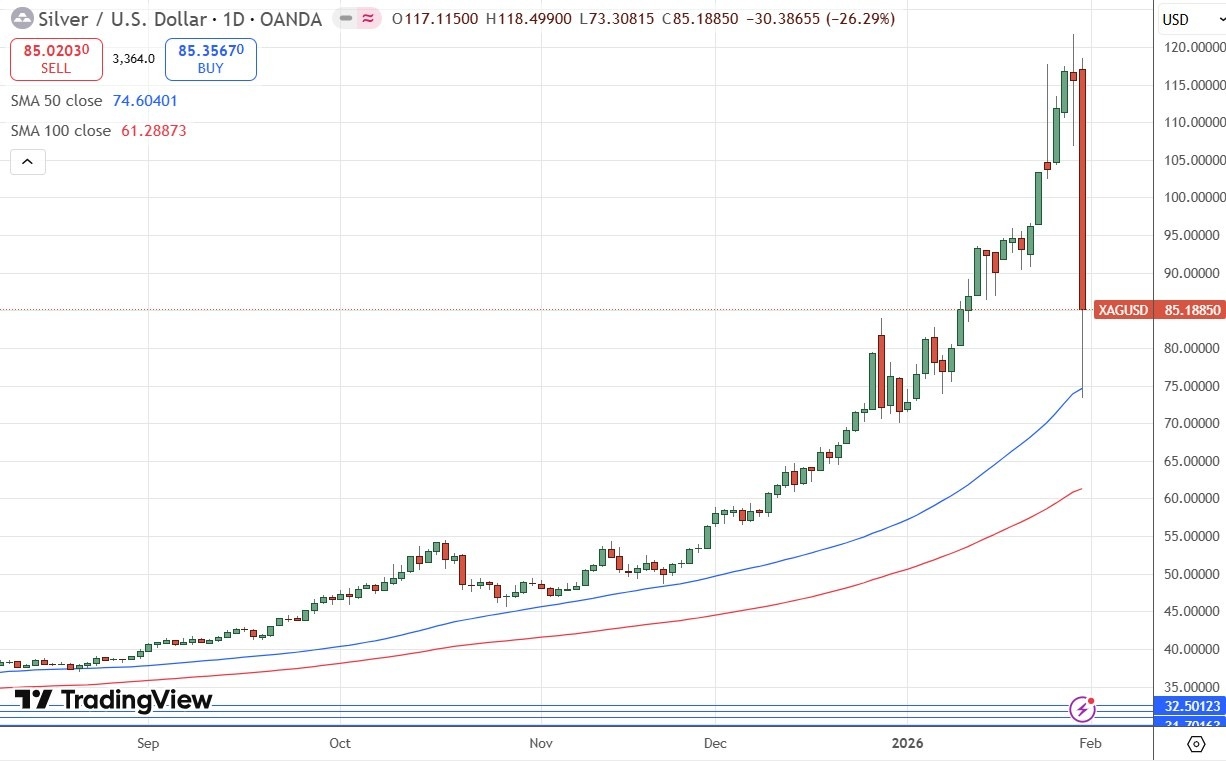
Silver had a wild week, rising by well over 15% to reach a new all-time high and option target of $120, before making an epic crash on Thursday and Friday, mostly on Friday, on which day alone it declined by 28%.
I warned that this was prone to crashing, and that while it made sense to be long, a small position size should be used.
The size of the crash, despite the bullishness and mild resilience in the bounce at the weekly low, suggests we are not going to see a new high any time soon. This amazing trade is over, and we will probably now see wild consolidative swings with gradually declining volatility.
Silver Daily Price Chart
Everything I wrote above concerning Silver also applies to Gold. However, it can be added that the volatility here was somewhat less, and the resilience at the lows a bit stronger. It is likely that Gold will also trade sideways now for a while, but it is showing signs that it will recover more quickly to the upside than Silver will.
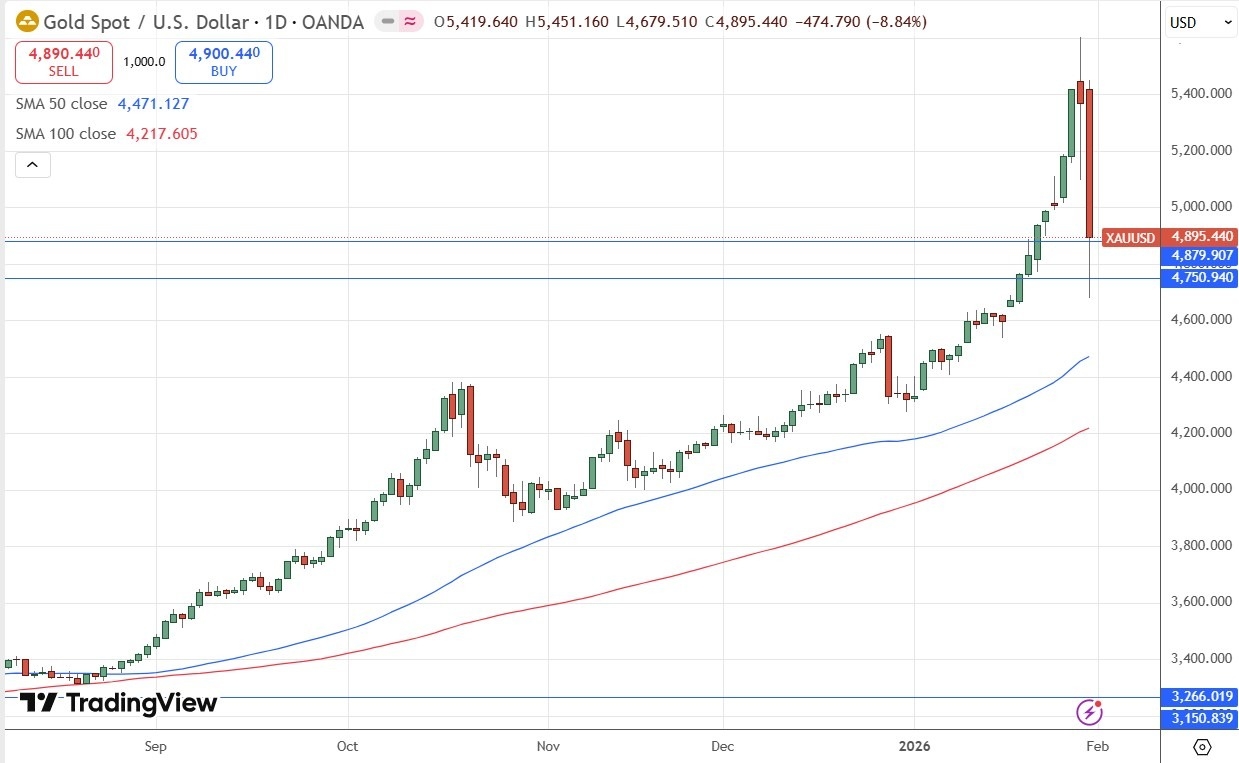
Gold Daily Price Chart
I see the best trades this week as:
Ready to trade our weekly Forex forecast? Check out our list of the bet Forex brokers in the world.
There is no change on GBPJPY pair’s track until this moment, due to its stability above 210.40 support, to notice forming bullish waves and settling near 212.10 barrier.
The attempts of the main indicators to provide bullish momentum will increase the chances of breaching the current obstacle, opening the way for recording new gains that might begin at 212.55, then pushing the resistance to reach 212.85, which represent the confirmation point of regaining the main bullish trend, while the decline below the mentioned support and holding below it will confirm its move to the negative trend, forcing it to suffer several losses by reaching 209.60 and 209.00.
The expected trading range for today is between 211.30 and 212.55
Trend forecast: Bullish
The WTI Crude Oil $66 level is an area that seems to be offering quite a bit of resistance and now we find ourselves pulling back from there. I think there are a lot of questions out there as to whether or not we are going to see strikes against the Iranians over the weekend. That being said, supply and demand continue to be a major headwind for pricing, so I would not look for massive moves, and I do think fading rallies continue to be the case.
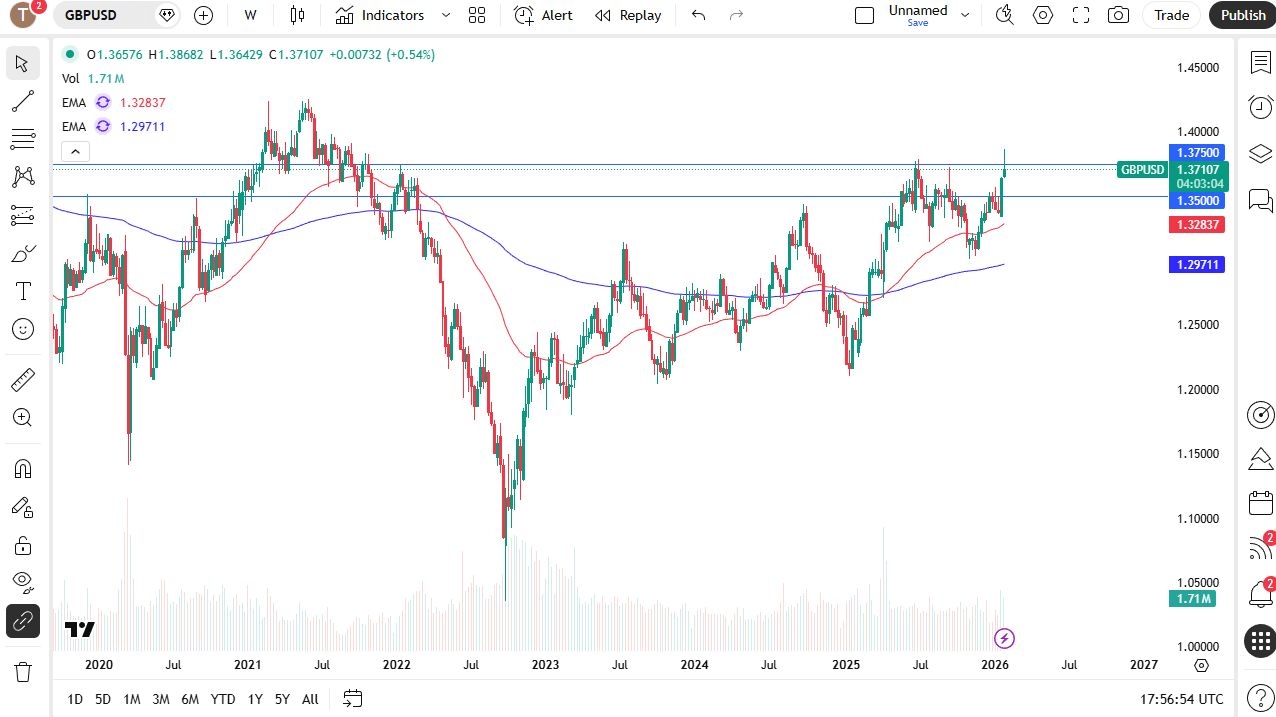
The British pound broke out above the 1.3750 level and have seen a lot of selling pressures to show signs of exhaustion. In fact, the weekly candlestick is a bit of a shooting star. It suggests that we might struggle to continue to the upside. A fall from here could find the British pound dropping to the 1.35 level, which of course is a large round psychologically significant figure. I think part of this is Kevin Warsh being named as the nominee for the new Federal Reserve Chairman, and he is quite a bit more hawkish than many others.
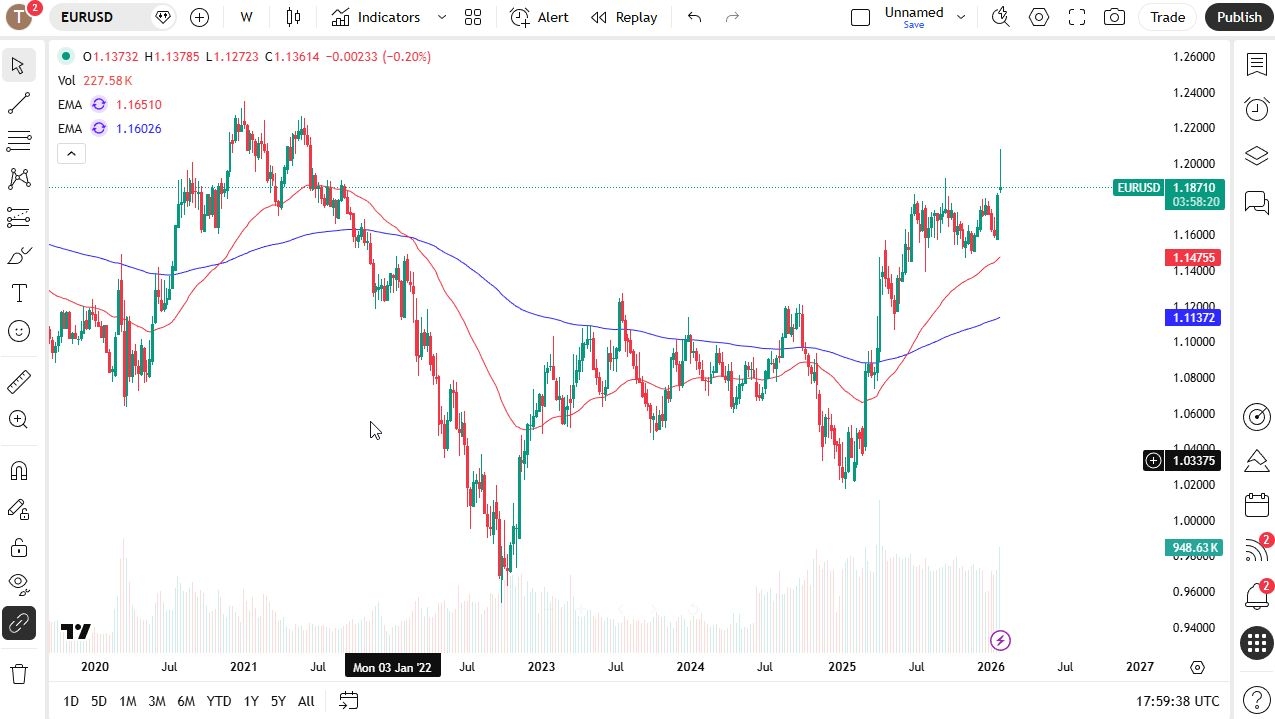
The Euro rallied rather significantly during the week but has been absolutely crushed after initially taking off to the upside. I do think that we are very likely to see the potential for more consolidation. In other words, that breakout might have been false. We will just have to wait and see how the market reacts to the new Federal Reserve Chairman nomination, but as things stand right now, this looks like a market that I think is struggling. The 1.16 level is an area that we could find ourselves reaching towards, but if we turn around and see buyers right away for the next week, then we could see this market really take off, perhaps even heading back towards the 1.20 level followed by the 1.23 level.
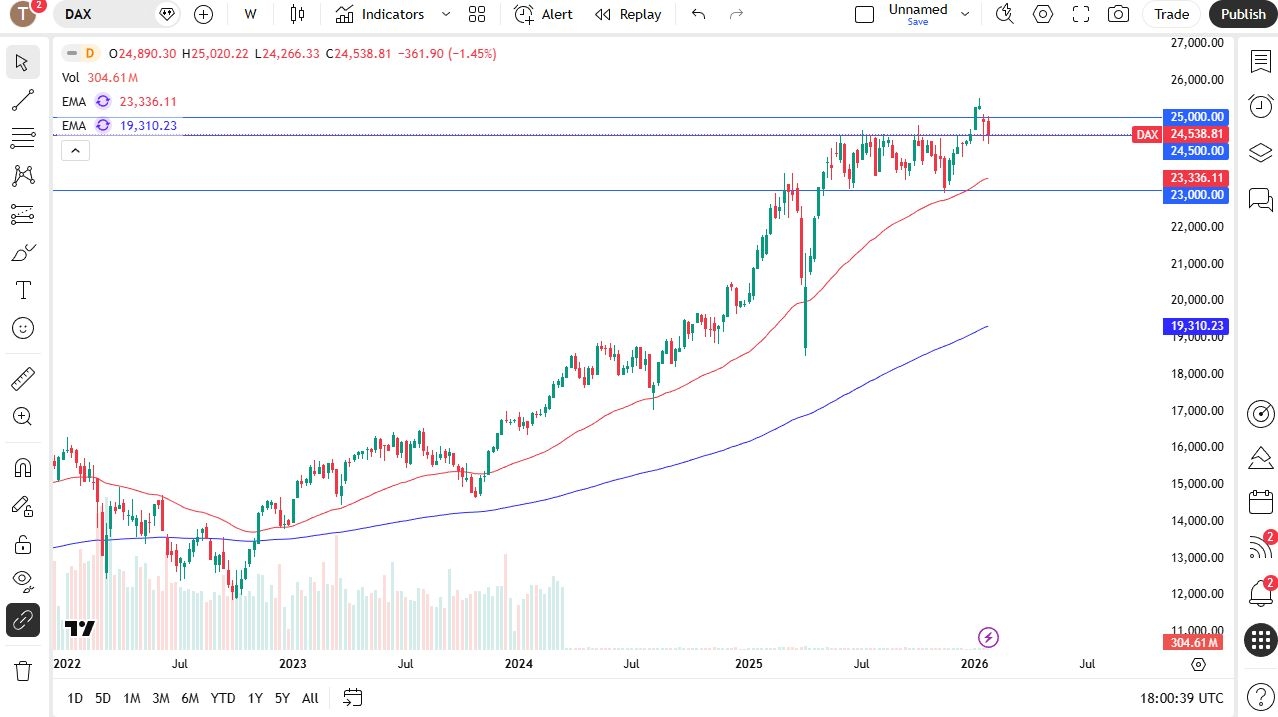
The German DAX has been negative most of the week but it is hanging onto the 24,500 level. This is an area that I have been talking about as being important for support as it was previous resistance. All things being equal, this is a market that I think continues to see plenty of interest as we had broken out above there and now it looks like we are perhaps trying to turn things around and rally to the upside. I think the DAX will be one of the better performers this year as the Germans will continue to throw a lot of money into the economy and that should help the DAX, so I am bullish still.
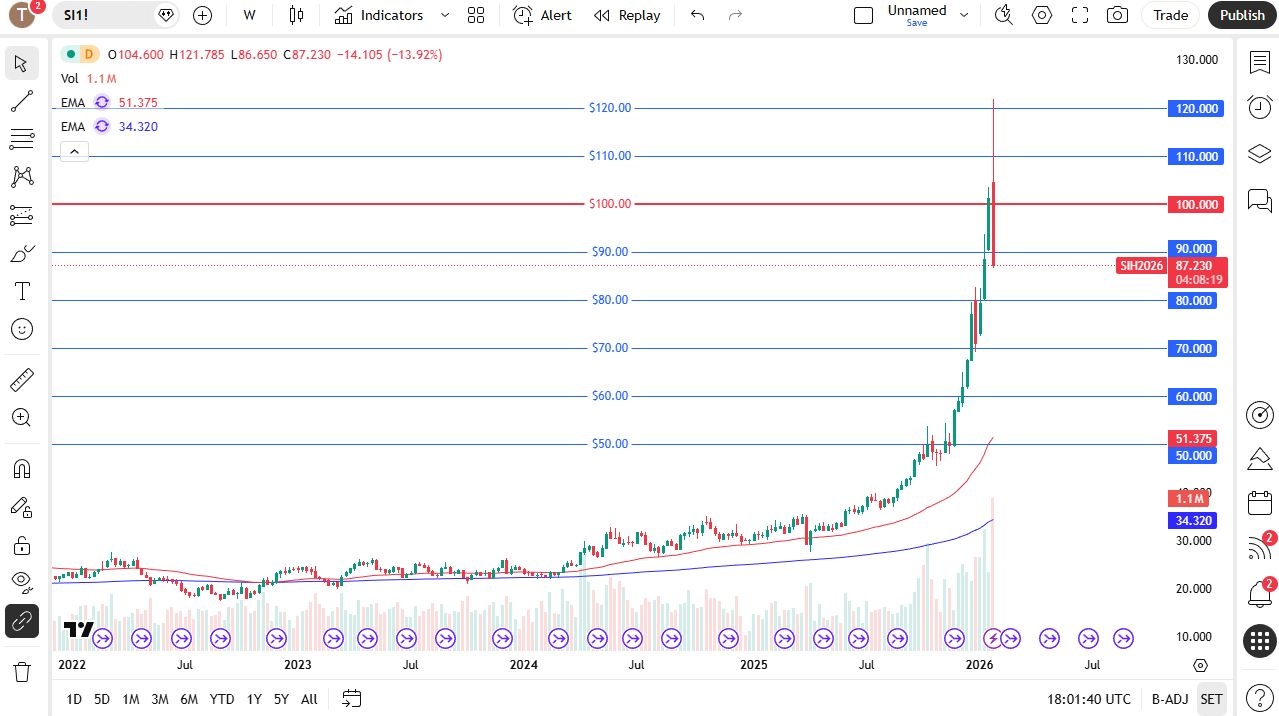
The silver market will be what everybody is talking about as in one week we see it reaches $122 or so and as we are closing out the day on Friday, there is an absolute bloodbath. Silver broke below the $90 level in one fell swoop on Friday and it looks like it is going to race towards the $80 level. Eventually gravity had to return, and I think that is what we are seeing here. The Federal Reserve Chairman being nominated was a little bit more hawkish than most people expected and silver of course is going to be extraordinarily volatile under the best of circumstances, and at this point, it is not the best of circumstances. Silver has become pretty much untouchable.
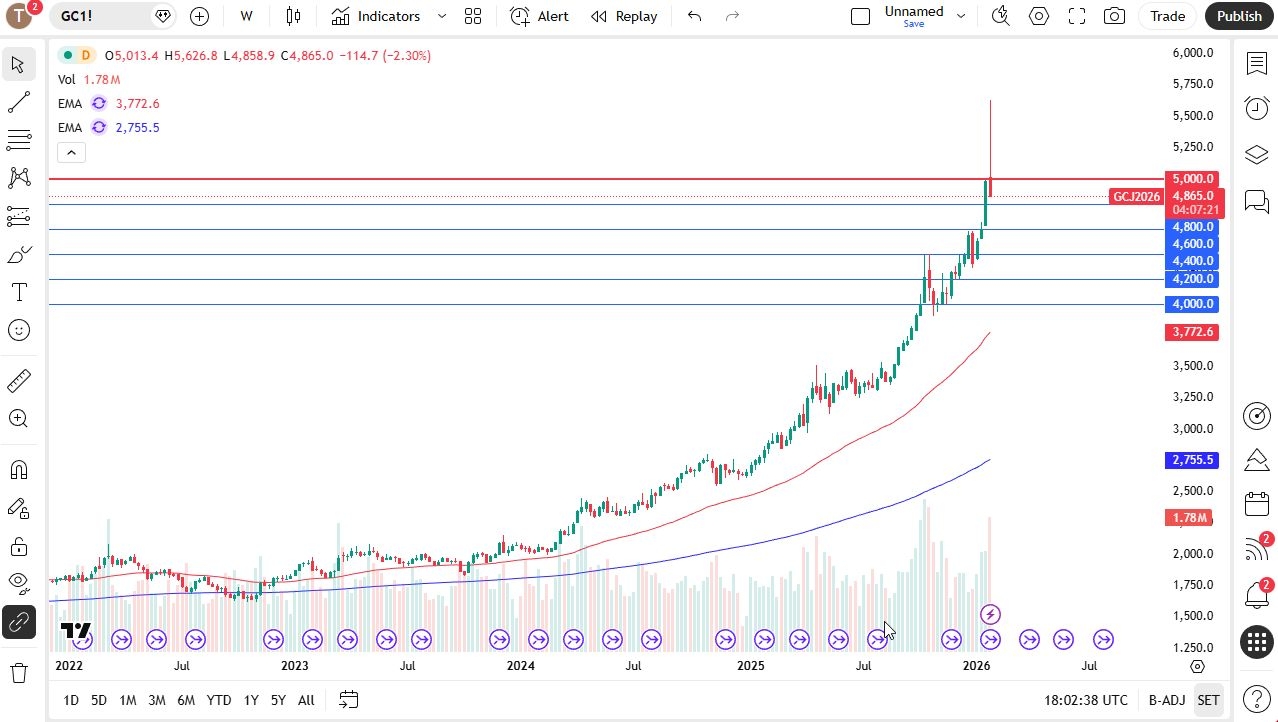
Gold markets find themselves equally as brutalized, but gold has the backing of central banks so I think that gold will more likely than not recover much quicker than silver will because quite frankly silver had gotten so far out of its own element that it had become something akin to one of these altcoins you see in the crypto markets. Gold on the other hand does have a lot of interest from central banks, but we may have just seen the highs. I think it is a little early to call that, but the way the markets are behaving on Friday, it is almost impossible to believe that there won’t be some type of follow-through. Quite frankly, considering that just two years ago gold was closer to the $1,700 level, it is not a huge surprise that there had to be a reckoning. Sooner or later, markets that are out of control see this type of behavior.
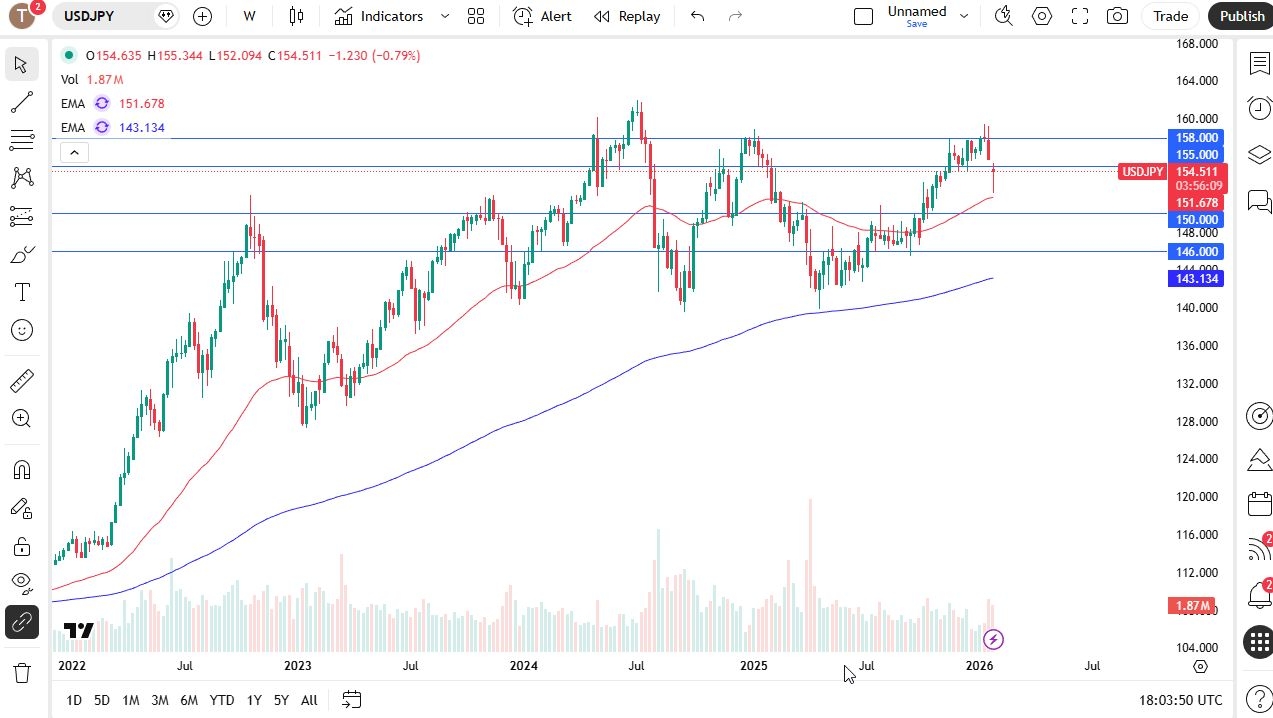
The US dollar plunged against the Japanese yen during the trading week but has seen a massive turnaround and it now looks as if the markets are starting to realize a potential mistake in shorting the dollar the way they have. That being said, this is a market also featuring a massive interest rate differential between the two currencies, so this is essentially how I would have expected the market to behave all along. We bounced from the 50-week EMA, and it looks like if we can break back above the 155 yen level then we could go looking to the 158 yen level.
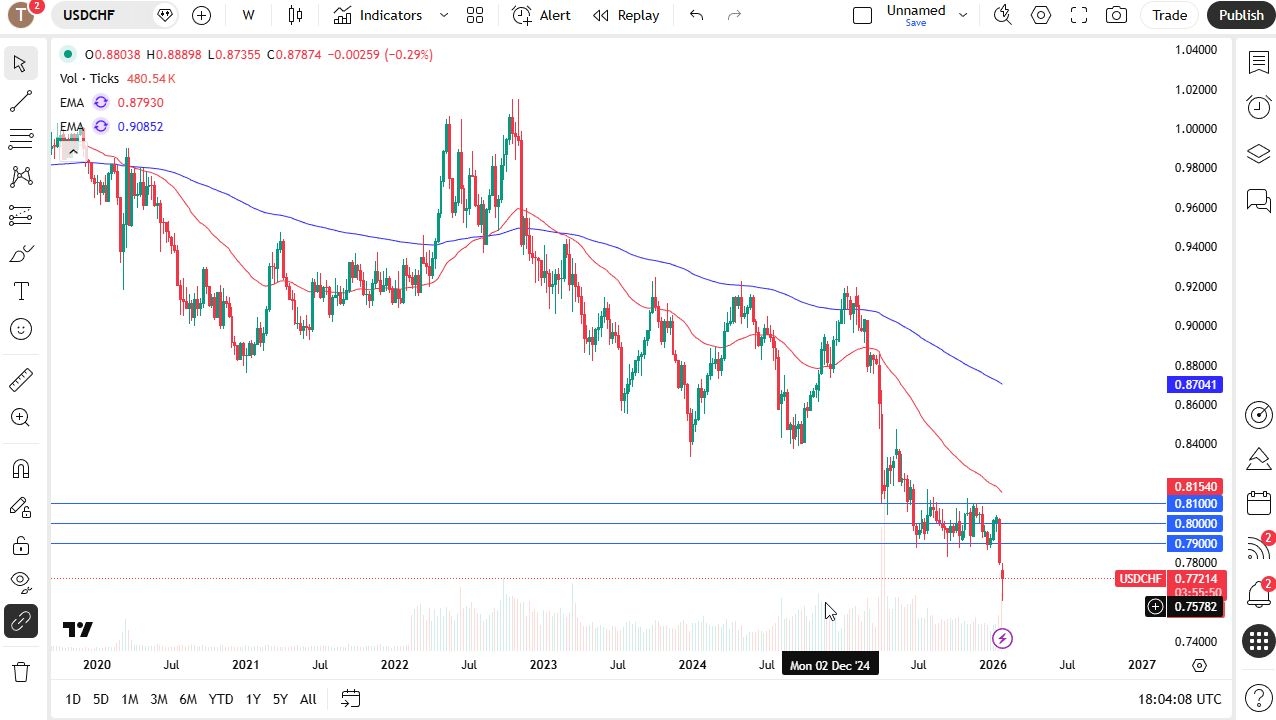
The US dollar has fallen rather significantly against the Swiss franc and tested the 0.76 level. The 0.76 level is an area that I don’t know is particularly important by itself, but we also have to worry about the idea of the Swiss National Bank coming in and intervening if the Swiss franc gets a little too strong. I still think that is a threat, but the fact that we are forming a hammer after a breakdown like this and, more importantly, we are seeing the US dollar turn things around globally, I think this one might be ripe for a bounce as well.
Ready to trade our Forex weekly forecast? We’ve shortlisted the best forex trading accounts to choose from.
On January 20, 2026, Crude Oil Price Risk is in focus as WTI and Brent prices react to today’s supply and demand headlines, keeping energy traders on edge.
The combination of fragile risk sentiment, a crowded speculative positioning landscape, and the constant drip of macro and geopolitical headlines means that any surprise in inventories, OPEC+ commentary, or demand data can rapidly transform a quiet session into a sharp move. That is precisely why Crude Oil Price Risk is so dangerous: periods of calm often tempt traders into over-leveraging just before volatility returns.
For risk-takers: Trade Oil volatility now
Today, the focus in the oil market is less about a single explosive price move and more about the looming catalysts that could jolt prices in either direction. Recent market commentary highlights that traders are watching for the next round of weekly U.S. inventory statistics and for any unexpected OPEC+ statements that could hint at a change in production discipline. Even if today’s live Brent Price Live and WTI quotes show only modest percentage changes, the market is essentially coiling for the next data shock.
From a fundamental perspective, several themes are shaping the Oil Price Forecast narrative right now:
For short-term traders looking to Buy WTI Oil or speculate on Brent via CFDs, this environment is treacherous. Even on days when the headline price action appears muted, the order book can be thin and fragmented, especially around key data releases. Spreads can widen abruptly, and slippage can turn a seemingly controlled trade into a larger-than-expected loss. Energy Trading under these conditions requires not only a clear strategy but also strict discipline on position sizing and stop placement.
Crude oil is uniquely exposed to sudden geopolitical shocks. Tensions in major producing regions, unexpected disruptions to shipping routes, or incidents affecting critical energy infrastructure can all trigger gaps between the close and the next open. These gaps are particularly dangerous for leveraged positions that are left unhedged overnight. A trader who decides to Buy WTI Oil or go long Brent based on a short-term technical signal may find the position dramatically underwater the next morning if an adverse headline breaks while markets are closed.
Moreover, the increasing use of algorithmic strategies and high-frequency trading in the crude market amplifies intraday volatility. When key levels in the live order book are breached, a cascade of stop-loss orders and momentum-driven flows can accelerate moves in either direction. This feedback loop can quickly transform a small, seemingly manageable loss into a substantial drawdown or even a margin call. Crude Oil Price Risk is therefore not just about the direction of the next move, but about the speed and magnitude of that move once it starts.
For those following Brent Price Live and WTI quotes tick-by-tick, it is crucial to maintain a clear plan for both best-case and worst-case scenarios. The seductive nature of leverage in Energy Trading means that a series of small wins can encourage traders to gradually increase position size, often just before a sharp reversal wipes out accumulated profits. Recognizing that total loss of invested capital is a real possibility is not pessimism; it is essential risk management.
In summary, while today’s live market may not yet show an extreme move, the underlying setup in crude remains fragile. Unresolved questions around OPEC+ production, the path of global demand, and upcoming inventory data keep the Oil Price Forecast highly uncertain. Anyone engaging in leveraged Energy Trading around WTI or Brent must treat Crude Oil Price Risk with utmost seriousness, assume that unexpected gaps can occur at any time, and only risk capital they can genuinely afford to lose.
Risk Warning: Financial instruments, especially commodity CFDs, are complex and come with a high risk of losing money rapidly due to leverage. You should consider whether you understand how these instruments work and whether you can afford to take the high risk of losing your money. This content is for informational purposes only and does not constitute investment advice.