Copper price confirmed its surrender in its current period trading to the dominance of the sideways bias, affected by the stability of the barrier near $5.0600, which forces it to delay the attempts of resuming the main bullish attack, to notice its fluctuation near $4.9500 level.
Note that the stochastic contradiction with the main stability within the bullish channel’s levels and attempting to providing negative momentum that might force the price to form some corrective trading, to target the extra support at $4.7500, by breaking this support might force it to suffer extra losses by reaching $4.5800 and $4.4100.
The expected trading range for today is between $4.7500 and $5.0600
Trend forecast: Fluctuated within the bullish track
The Euro to Dollar exchange rate (EUR/USD) has continued to lose ground, retreating to 1-week lows just below 1.1580 amid a solid dollar tone and a further sell-off in gold.
According to ING; “The dollar has remained bid as US credit market concerns continue to ease, and the large drop in precious metals potentially offers extra support. More USD gains from here should be harder to sustain though.”
Wall Street futures were slightly stronger on the day and, according to Danske Bank; “The cross remains largely driven by US credit and equity sentiment.”
UoB sees scope for a near-term trough; “EUR could test 1.1580, but a continued decline below this level is unlikely. The major support at 1.1540 is also unlikely to come into view for now. On the upside, resistance levels are at 1.1620 and 1.1640.”
Danske Bank has a 12-month EUR/USD forecast of 1.22.
Geo-political developments had a limited negative impact on the Euro following reports that the potential meeting between US President Trump and Russian President Putin had been postponed which dampened any talk of a potential Ukraine ceasefire.
Global trade developments will also be important amid underlying tensions over rare-earth minerals.
Save on Your EUR/USD Transfer
Get better rates and lower fees on your next international money transfer.
Compare TorFX with top UK banks in seconds and see how much you could save.
According to ING, US-China trade developments will need to be watched closely. President Trump stated on Tuesday that his meeting with Chinese President Xi may not take place.
ING commented; “For now, this is being seen as simple brinkmanship, but China has struck a sourer tone around these negotiations, and markets may be erring on the side of complacency. No meeting doesn’t equal higher tariffs, but it should be enough to weigh on risk sentiment and the dollar.”
US political developments will also be under scrutiny.
Danske Bank commented; “The government shutdown is now on the cusp of becoming the second-longest on record as it enters its fourth week, and prediction markets increasingly see it extending into November. The next key catalyst for the pair will be Friday’s CPI release, where we see upside risks that could lend the USD additional near-term support.”
Markets are continuing to price in over a 95% chance of a Fed rate cut next week with over a 90% chance of another cut in December.
The latest US consumer prices data is due on Friday with consensus forecasts that core prices will increase 0.3% for September.
Commerzbank commented; “the data is unlikely to be a game changer for next week’s Fed meeting, as the majority of Fed members assume that any tariff effect on inflation will be temporary anyway.”
Like this piece? Please share with your friends and colleagues:
International Money Transfer? Ask our resident FX expert a money transfer question or try John’s new, free, no-obligation personal service! ,where he helps every step of the way,
ensuring you get the best exchange rates on your currency requirements.
The Pound US Dollar exchange rate (GBP/USD) slipped on Wednesday after a softer-than-expected UK inflation print fuelled speculation that the Bank of England (BoE) could begin cutting interest rates before the end of the year.
At the time of writing, GBP/USD was trading around $1.3420, down roughly 0.4% from Wednesday’s opening levels.
The Pound (GBP) came under sustained selling pressure during the European session after the Office for National Statistics (ONS) reported that inflation in the UK cooled more than expected in September.
Headline CPI held steady at 3.8%, missing forecasts for a rise to 4%, while core inflation eased from 3.6% to 3.5%, instead of the anticipated uptick to 3.7%.
The weaker data suggested that inflationary pressures in the UK economy are fading faster than the BoE had anticipated, particularly in key areas such as food prices, which fell on the month.
According to ING, the data delivered a dovish signal for policymakers:
“The September UK inflation reading released this morning is sending a dovish signal to the Bank of England and weighing on the pound. Headline inflation remained unchanged at 3.8% (consensus 4.0%), while core slowed down from 4.6% to 3.5% and services CPI stabilised at 4.75% versus expectations of 4.8% and 0.3pp below the BoE’s latest forecast.”
Save on Your GBP/USD Transfer
Get better rates and lower fees on your next international money transfer.
Compare TorFX with top UK banks in seconds and see how much you could save.
The bank added that the main surprise came from food prices — a major concern for the BoE of late — which are now around 0.5 percentage points below the Bank’s August forecasts.
This softer inflation outlook prompted traders to ramp up bets on a potential December rate cut, leaving the Pound on the defensive throughout the day.
The US Dollar (USD), meanwhile, held steady in relatively thin trading conditions amid a quiet domestic calendar.
Easing trade tensions between the US and China provided some modest support for the ‘Greenback’, after President Donald Trump described progress on trade negotiations as “fantastic” and signalled plans to meet Chinese leader Xi Jinping next week.
The comments helped stabilise risk sentiment, though they failed to trigger any sustained directional move in USD exchange rates.
GBP/USD Forecast: UK Business Confidence to Drive Sterling?
Looking ahead, movement in the Pound US Dollar exchange rate on Thursday may hinge on the Confederation of British Industry’s (CBI) business optimism index.
Economists expect sentiment among UK firms to have softened in the final quarter of the year amid concerns about the economic outlook and tightening fiscal conditions ahead of Chancellor Rachel Reeves’s autumn budget.
A weaker-than-expected print could see the Pound remain under pressure, while any upside surprise might help Sterling stabilise after its mid-week losses.
In the US, the government shutdown continues to suppress key data releases, meaning market sentiment will likely drive Dollar direction.
If risk appetite fades, USD could benefit from safe-haven demand, whereas a more upbeat tone across global markets may see the ‘Greenback’ give back some recent gains.
Like this piece? Please share with your friends and colleagues:
International Money Transfer? Ask our resident FX expert a money transfer question or try John’s new, free, no-obligation personal service! ,where he helps every step of the way,
ensuring you get the best exchange rates on your currency requirements.
Support Levels for EUR/USD Today: 1.1570 – 1.1500 – 1.1430.
Resistance Levels for EUR/USD Today: 1.1670 – 1.1750 – 1.1810.
EUR/USD Trading Signals:
Buy the EURUSD from the support level of 1.1520, target 1.1800, and stop 1.1460.
Sell the EURUSD from the resistance level of 1.1730, target 1.1600, and stop 1.1800.
Technical Analysis of EUR/USD Today:
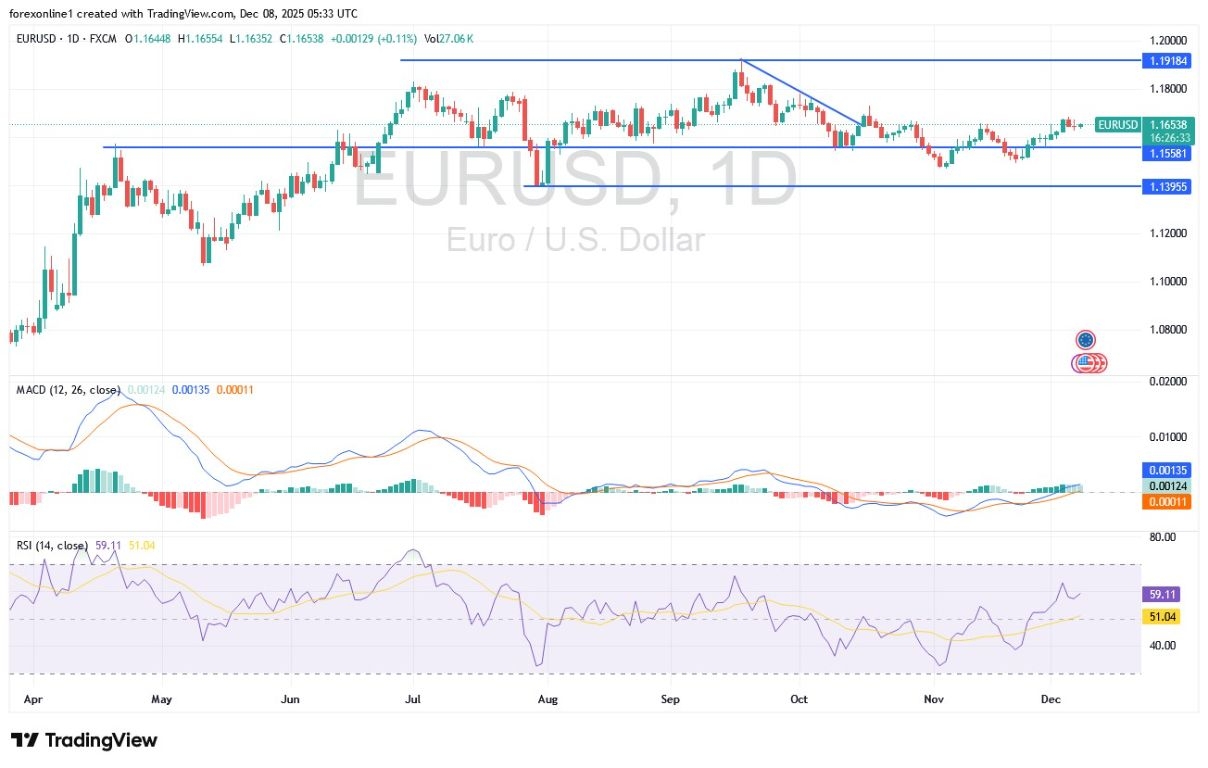
Investor appetite for the US Dollar as a safe haven has recently increased amid rising US-China tensions. This has led to selling pressure on the EUR/USD pair, extending losses to the 1.1600 support level today, Wednesday, October 22, 2025. With a complete absence of important US economic releases today, investors will continue to monitor for signals regarding the future policies of central banks. Today, ECB Governor Lagarde will deliver new statements at 15:30 Cairo time.
Movement of Technical Indicators Confirms EUR/USD Bias
Based on the daily chart performance and through reliable brokerage platforms, the EUR/USD price bias is currently steadily bearish. Breaking the 1.1600 support level will increase the technical losses for the currency pair. The 14-day Relative Strength Index (RSI) is currently around a reading of 43, which confirms the bearish shift, and it still has room for further decline before reaching the oversold zone. Similarly, the MACD indicator is firmly in the downward-sloping area. A break below the 1.1600 support will increase the likelihood of targeting the next, more significant support levels at 1.1550 and 1.1470, respectively.
EUR/USD Bullish Scenario
Conversely, over the same timeframe, there is no strong chance of a corrective rebound for the EUR/USD price without a renewed push towards the psychological resistance of 1.1800. Otherwise, the bears will continue to control prices.
Trading Tips:
Keep in mind that the EUR/USD pair will continue to be heavily influenced by investor risk appetite and the future easing of central bank policies.
Factors Influencing EUR/USD Trading in the Coming Days
Forex trading experts pointed to French concerns, as S&P Global Ratings recently downgraded France’s credit rating from AA- to A+ after the market close on Friday, due to persistent worries about its fiscal trajectory. On another note, important economic data will be released later in the week, with the release of the PMI Business Confidence Index and the US Consumer Price Report. At the same time, the US banking sector, the government shutdown, and political rhetoric are all expected to be influential market events.
Recently, a sense of relief has prevailed in the US banking sector, with equity markets making gains. Danske Bank noted that the earnings results of major UK banks were strong. It added: “These earnings have helped stabilize investor confidence and provided some support for the sector overall, even as concerns about smaller regional banks persist.” However, ING Bank maintained a cautious outlook, stating, “Indicators suggesting that lending issues do not extend beyond Zions Bancorp and Western Alliance may help ease pressure on the Dollar, but that may not be enough to fully calm concerns about the health of the credit market and reverse all of the Dollar’s losses.”
On the monetary policy front, financial markets are pricing in a nearly 100% probability of a rate cut next week, with more than a 95% chance that the US Federal Reserve will cut rates again at the December meeting. The Federal Reserve is currently in a media blackout period ahead of the meeting, with no official comments expected. Consequently, any unofficial media briefings will be closely monitored in case of sharp movements in equity markets.
On another front, trade tensions between the United States and China will remain a key factor. President Trump’s rhetoric was conciliatory over the weekend, raising hopes for a successful push on China.
The British Pound has fallen during the early hours here on Tuesday against the US dollar again, but really, at this point in time, we seem to be just hanging around the 1.34 level.
The 1.34 level is an area that I think is important because it is in the middle of the overall consolidation range that we had been in.
The 50-day EMA sits just above, and that causes some resistance as well, but what I really find interesting is that we sliced through a major uptrend line, fell to the 200-day EMA about a week ago, bounced from there, and then failed at that previous uptrend line in the 50-day EMA also.
With this, I think you’ve got a situation where the market will probably continue to see a lot of resistance above. And therefore, I do prefer shorting this pair if I have a position.
I Use This as an Indicator
Truthfully, my favorite use for this market is to see how the US dollar is performing because if it’s strengthening here, it’s really going to put a beating on something like the euro, typically. With this, I look at the fact that the British pound has been so strong over the last couple of years in comparison to the euro, the yen, the Canadian dollar, and other currencies, and I use this as a secondary and even tertiary indicator with other trades.
If I had to put a position on would be short here, but I think the 200-day EMA will continue to be a bit stubborn. If we were to break down below the 1.32 level, then I think the bottom falls out, and in that environment, you are more likely than not to see the US dollar strengthening against multiple currencies.
If this market breaks above the 1.35 level, then maybe we go back to the 1.36 level, but that still doesn’t have us breaking out of the range. All things being equal, I think we’re drifting lower.
Christopher Lewis has been trading Forex and has over 20 years experience in financial markets. Chris has been a regular contributor to Daily Forex since the early days of the site. He writes about Forex for several online publications, including FX Empire, Investing.com, and his own site, aptly named The Trader Guy. Chris favours technical analysis methods to identify his trades and likes to trade equity indices and commodities as well as Forex. He favours a longer-term trading style, and his trades often last for days or weeks.
EUR/USD struggles to stage a rebound early Wednesday and fluctuates in a tight channel at around 1.1600 after posting losses for three consecutive trading days. The pair’s technical outlook suggests that the bearish stance remains unchanged in the short term.
Euro Price This week
The table below shows the percentage change of Euro (EUR) against listed major currencies this week. Euro was the weakest against the New Zealand Dollar.
USD
EUR
GBP
JPY
CAD
AUD
NZD
CHF
USD
0.63%
0.87%
0.79%
-0.07%
-0.05%
-0.15%
0.55%
EUR
-0.63%
0.24%
0.26%
-0.69%
-0.57%
-0.84%
-0.06%
GBP
-0.87%
-0.24%
-0.24%
-0.93%
-0.81%
-1.08%
-0.32%
JPY
-0.79%
-0.26%
0.24%
-0.90%
-0.87%
-1.02%
-0.34%
CAD
0.07%
0.69%
0.93%
0.90%
0.06%
-0.15%
0.62%
AUD
0.05%
0.57%
0.81%
0.87%
-0.06%
-0.27%
0.52%
NZD
0.15%
0.84%
1.08%
1.02%
0.15%
0.27%
0.77%
CHF
-0.55%
0.06%
0.32%
0.34%
-0.62%
-0.52%
-0.77%
The heat map shows percentage changes of major currencies against each other. The base currency is picked from the left column, while the quote currency is picked from the top row. For example, if you pick the Euro from the left column and move along the horizontal line to the US Dollar, the percentage change displayed in the box will represent EUR (base)/USD (quote).
The broad-based US Dollar (USD) strength caused EUR/USD to stay on the back foot on Tuesday. Easing fears over a deepening US-China trade conflict helped the sentiment surrounding the USD improve.
Meanwhile, investors might also be turning optimistic about the reopening of the US government soon. Following a meeting at the White House with President Donald Trump, some Republican senators said that Trump wants to end the government shutdown and that he is willing to talk to Democrats about it.
Later in the session, European Central Bank (ECB) President Christine Lagarde will deliver a keynote speech at Frankfurt Finance & Future Summit in Frankfurt. This will be Lagarde’s last public appearance before the ECB’s blackout period starts on Thursday. Nevertheless, Lagarde is unlikely to offer any comments that could significantly influence the market pricing of the ECB’s policy outlook.
In the absence of high-tier data releases, the risk perception could drive EUR/USD’s action in the second half of the day. At the time of press, US stock index futures were trading mixed. In case the market mood remains cautious in the American session, the pair could find it difficult to stage a rebound.
EUR/USD Technical Analysis
The Relative Strength Index (RSI) indicator on the 4-hour chart stays below 40 but it’s yet to drop below 30, suggesting that EUR/USD has more room on the downside before turning technically oversold.
The Fibonacci 61.8% retracement of the latest uptrend aligns as a key support level at 1.1580. If EUR/USD falls below this level, technical sellers could remain interested. In this scenario, 1.1550 (static level) could be seen as an interim support level before 1.1500 (Fibonacci 78.6% retracement).
Looking north, resistance levels could be seen at 1.1650 (100-day Simple Moving Average (SMA)), 1.1700 (50-day SMA) and 1.1765 (Fibonacci 23.6% retracement).
Euro FAQs
The Euro is the currency for the 19 European Union countries that belong to the Eurozone. It is the second most heavily traded currency in the world behind the US Dollar. In 2022, it accounted for 31% of all foreign exchange transactions, with an average daily turnover of over $2.2 trillion a day.
EUR/USD is the most heavily traded currency pair in the world, accounting for an estimated 30% off all transactions, followed by EUR/JPY (4%), EUR/GBP (3%) and EUR/AUD (2%).
The European Central Bank (ECB) in Frankfurt, Germany, is the reserve bank for the Eurozone. The ECB sets interest rates and manages monetary policy.
The ECB’s primary mandate is to maintain price stability, which means either controlling inflation or stimulating growth. Its primary tool is the raising or lowering of interest rates. Relatively high interest rates – or the expectation of higher rates – will usually benefit the Euro and vice versa.
The ECB Governing Council makes monetary policy decisions at meetings held eight times a year. Decisions are made by heads of the Eurozone national banks and six permanent members, including the President of the ECB, Christine Lagarde.
Eurozone inflation data, measured by the Harmonized Index of Consumer Prices (HICP), is an important econometric for the Euro. If inflation rises more than expected, especially if above the ECB’s 2% target, it obliges the ECB to raise interest rates to bring it back under control.
Relatively high interest rates compared to its counterparts will usually benefit the Euro, as it makes the region more attractive as a place for global investors to park their money.
Data releases gauge the health of the economy and can impact on the Euro. Indicators such as GDP, Manufacturing and Services PMIs, employment, and consumer sentiment surveys can all influence the direction of the single currency.
A strong economy is good for the Euro. Not only does it attract more foreign investment but it may encourage the ECB to put up interest rates, which will directly strengthen the Euro. Otherwise, if economic data is weak, the Euro is likely to fall.
Economic data for the four largest economies in the euro area (Germany, France, Italy and Spain) are especially significant, as they account for 75% of the Eurozone’s economy.
Another significant data release for the Euro is the Trade Balance. This indicator measures the difference between what a country earns from its exports and what it spends on imports over a given period.
If a country produces highly sought after exports then its currency will gain in value purely from the extra demand created from foreign buyers seeking to purchase these goods. Therefore, a positive net Trade Balance strengthens a currency and vice versa for a negative balance.
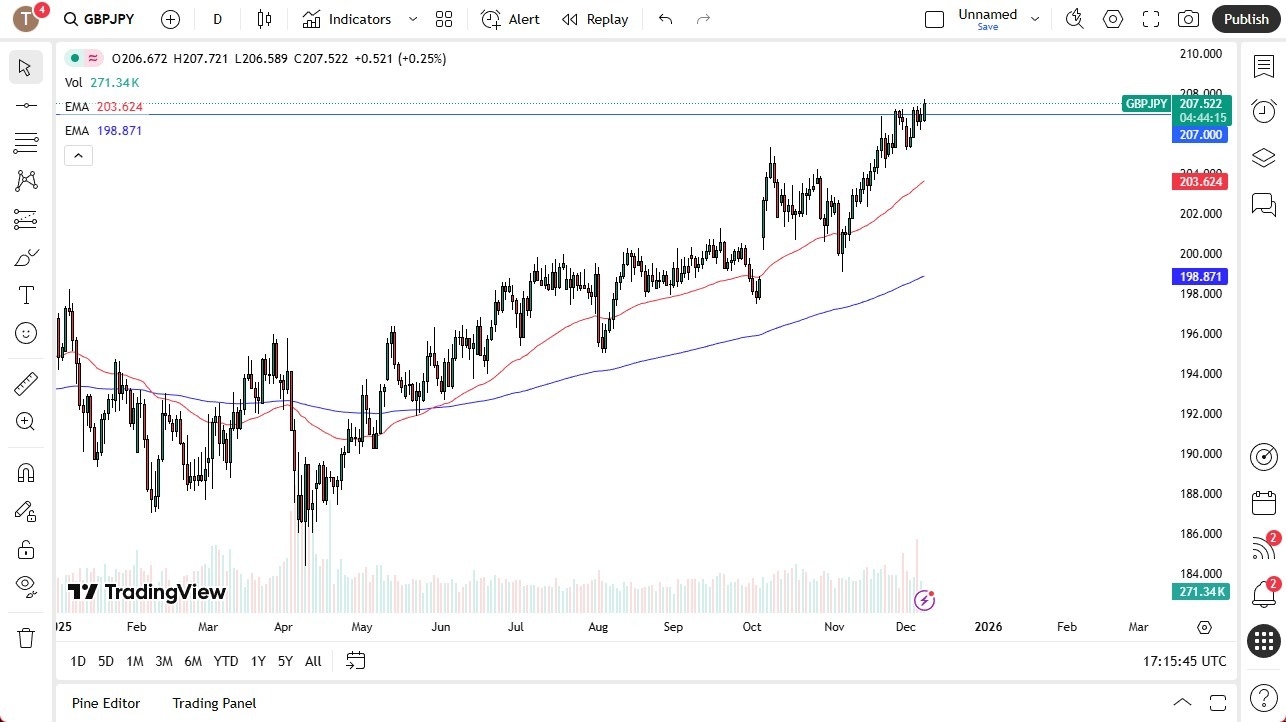
The GBPJPY pair confirmed the stability of the bullish scenario by forming a new bullish rally yesterday, achieving the initial target by hitting 203.50 level, to settle above $161.8 Fibonacci extension level at 202.50.
The continuation of providing positive momentum by the main indicators will increase the strength of the bullish track, to expect attacking the barrier at 203.95, and surpassing it will open the way for reaching new stations that might begin from 204.60 and 205.25, while changing the trend and begin the bearish corrective track requires forming sharp decline to settle below the extra support at 201.70.
The expected trading range for today is between 202.60 and 203.95
The Pound US Dollar (GBP/USD) exchange rate slipped further on Wednesday after softer-than-expected UK inflation data increased bets on a Bank of England (BoE) interest rate cut before year-end.
At the time of writing, GBP/USD was trading around $1.3328, down approximately 0.28% from the start of the session.
The Pound (GBP) came under pressure after the Office for National Statistics (ONS) reported that consumer price inflation held steady at 3.8% in September, missing forecasts of a rise to 4.0%.
Core CPI fell sharply from 4.6% to 3.5%, while services inflation stabilised at 4.75%, below expectations of 4.8% and 0.3 percentage points under the BoE’s latest projection.
The weaker data indicates that underlying price pressures are cooling faster than policymakers anticipated, particularly as food prices — a key concern for the BoE — unexpectedly declined on the month.
According to ING, the figures delivered a clear dovish signal for the central bank and increased downside risks for the Pound.
As the bank noted: “The September UK inflation reading released this morning is sending a dovish signal to the Bank of England and weighing on the pound. Headline inflation remained unchanged at 3.8% (consensus 4.0%), while core slowed down from 4.6% to 3.5% and services CPI stabilised at 4.75% versus expectations of 4.8% and 0.3pp below the BoE’s latest forecast. Our UK economist notes that the main dovish surprise comes from food prices – a big concern for the BoE of late – which actually fell on the month and are now 0.5pp below the BoE’s August forecasts.”
Save on Your GBP/USD Transfer
Get better rates and lower fees on your next international money transfer.
Compare TorFX with top UK banks in seconds and see how much you could save.
Markets responded by increasing expectations for a BoE rate cut before the end of 2025, driving gilt yields lower and keeping Sterling under pressure across major currency pairs.
The US Dollar (USD), meanwhile, found modest support during Wednesday’s European session amid cautious market sentiment and lingering global growth concerns.
With the ongoing US government shutdown continuing to delay key data releases, investors turned their attention to upcoming commentary from Federal Reserve officials for policy cues.
Policymakers have broadly maintained a cautious tone, acknowledging softening inflation but insisting that rates must stay restrictive until the 2% target is clearly within reach.
GBP/USD Forecast: Central Bank Commentary to Steer Direction
Looking ahead, movement in the Pound to US Dollar exchange rate will likely hinge on upcoming speeches from both Bank of England and Federal Reserve policymakers.
If BoE officials hint that cooling inflation is paving the way for policy easing, GBP could remain under pressure into the weekend.
Conversely, any hawkish signals from Fed speakers may lend the ‘Greenback’ further support, keeping GBP/USD subdued through the second half of the week.
Like this piece? Please share with your friends and colleagues:
International Money Transfer? Ask our resident FX expert a money transfer question or try John’s new, free, no-obligation personal service! ,where he helps every step of the way,
ensuring you get the best exchange rates on your currency requirements.
The GBPJPY pair confirmed the stability of the bullish scenario by forming a new bullish rally yesterday, achieving the initial target by hitting 203.50 level, to settle above $161.8 Fibonacci extension level at 202.50.
The continuation of providing positive momentum by the main indicators will increase the strength of the bullish track, to expect attacking the barrier at 203.95, and surpassing it will open the way for reaching new stations that might begin from 204.60 and 205.25, while changing the trend and begin the bearish corrective track requires forming sharp decline to settle below the extra support at 201.70.
The expected trading range for today is between 202.60 and 203.95
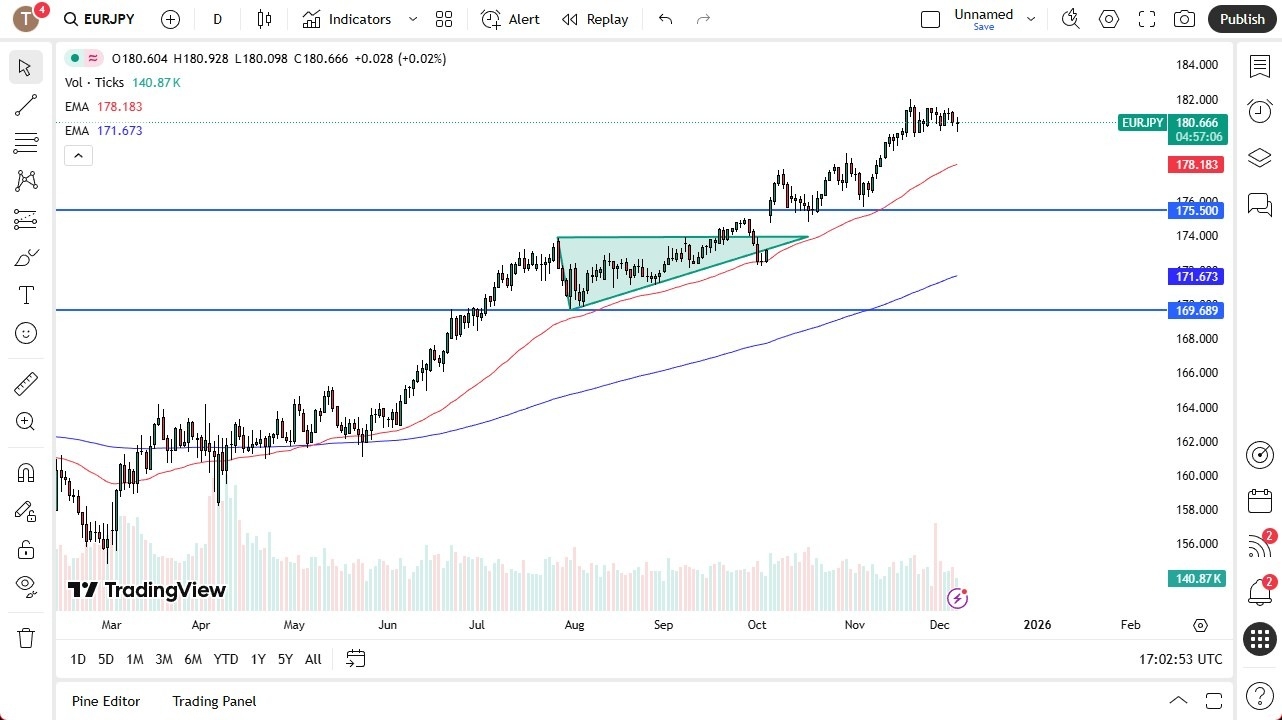
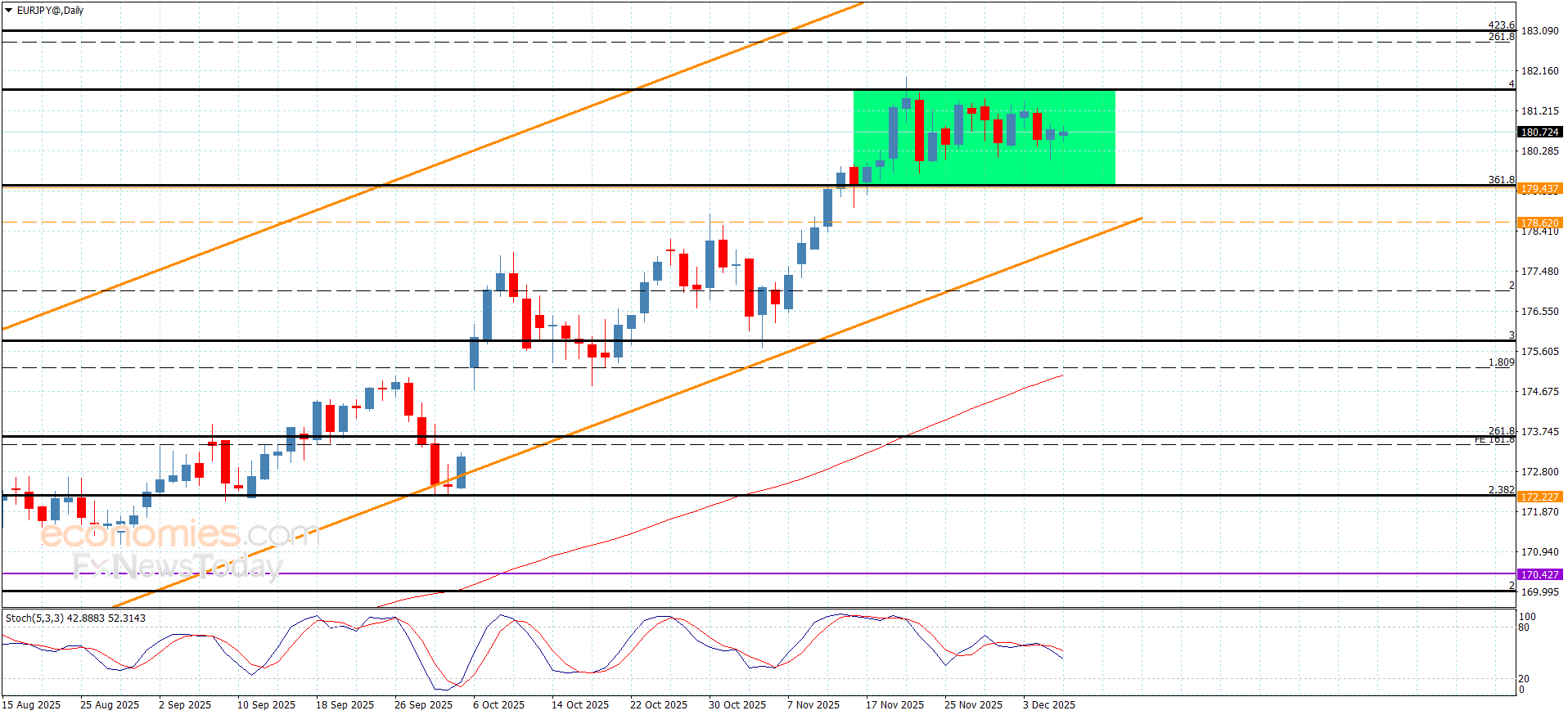
The euro initially rallied against the Japanese yen during trading on Monday but has turned around to show signs of weakness again.
The ¥176 level seems to be an area that’s a bit of a magnet for price, but the most important thing to pay attention to on the chart is the fact that there is a massive gap underneath current pricing that could come into the picture to offer a bit of support.
Furthermore, the 50 Day EMA sits at the ¥174.22 level and is rising, so that does give us a little bit of support there as well.
Trend Continuation
We have been in an uptrend for some time, and I do believe that it will continue eventually, and that each pullback does tend to offer a bit of support and, more importantly, value. Ultimately, the Bank of Japan is in a situation where it probably cannot do much, at least not enough to turn the markets around. While we could fall in order to fill the gap, meaning that we could drop all the way back down to the ¥173.25 level, I still think there are plenty of buyers between here and there to at least cushion the fall, and then eventually turn things around. Ultimately, this means that I have no real interest in shorting this market, despite the fact that it does seem like it is struggling a bit in this general vicinity.
With all of that being said, this is a market that I think eventually has to deal with the 170 Ian level, which is an area that has acted like significant resistance. If we can break above that level, it would obviously be very bullish, and it could send this market much higher. In that environment, I see the ¥180 level as being very likely, perhaps even higher than that. Remember, this doesn’t have much to do with the euro and everything to do with the Japanese yen. This pair will move in the same direction and overall attitude as many other JPY-denominated markets.
Christopher Lewis has been trading Forex and has over 20 years experience in financial markets. Chris has been a regular contributor to Daily Forex since the early days of the site. He writes about Forex for several online publications, including FX Empire, Investing.com, and his own site, aptly named The Trader Guy. Chris favours technical analysis methods to identify his trades and likes to trade equity indices and commodities as well as Forex. He favours a longer-term trading style, and his trades often last for days or weeks.