The main tag of Forex News Today Articles.
You can use the search box below to find what you need.
[wd_asp id=1]

19 02, 2026

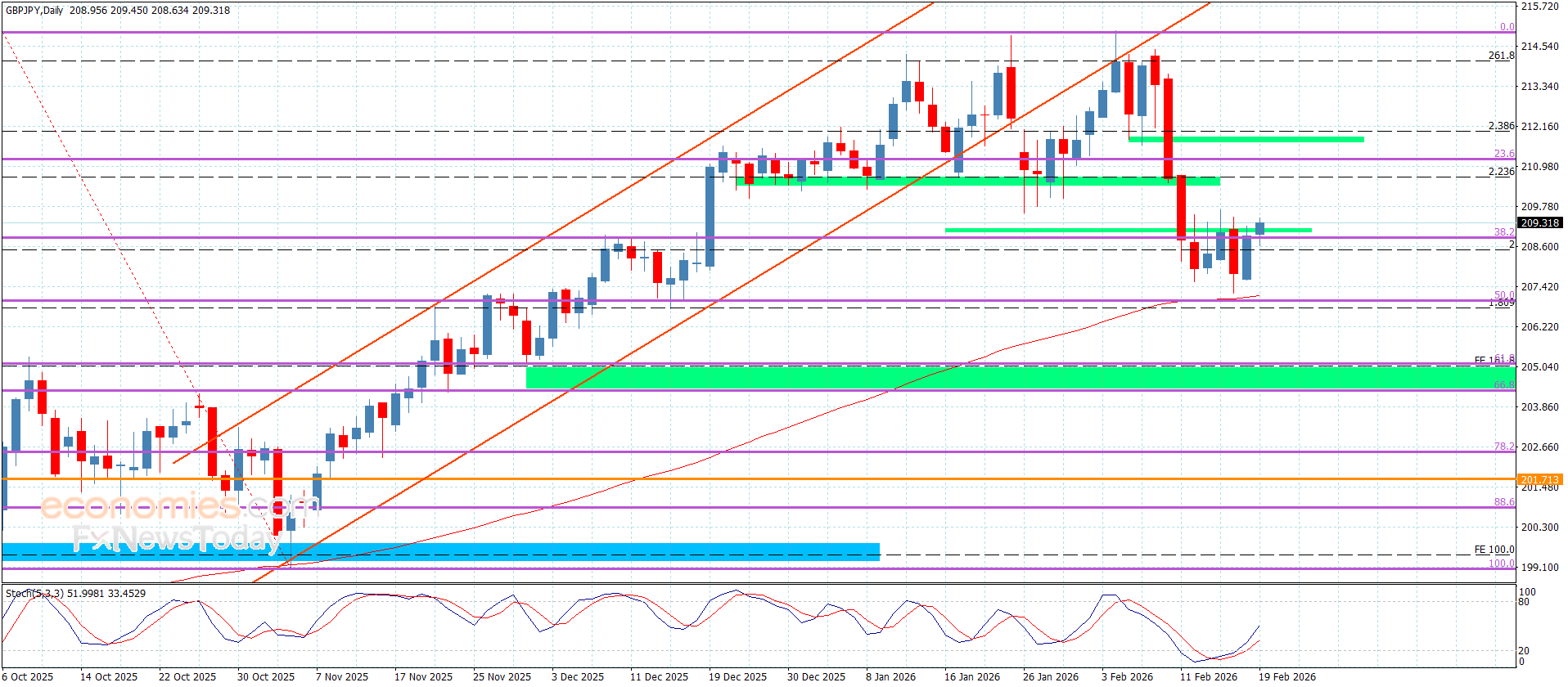
The GBPJPY presses on the barrier– Forecast today – 19-2-2026

By |2026-02-19T17:54:37+02:00February 19, 2026|Forex News, News|0 Comments


The GBPJPY pair ended the negative movement by reaching 207.60 level, to begin activating with stochastic positivity to rally towards 209.30 directly, to press on the barrier to find an exit to end the negative scenario in the current trading.


Note that providing positive close for the upcoming four hours above 209.15 level is important to confirm its readiness to begin bullish attack, to expect targeting 210.65 level initially, to extend the trading towards 211.70, while the failure to breach it will force the price to form new bearish waves to reach 208.25


The expected trading range for today is between 209.00 and 210.65


Trend forecast: Bullish


Source link

19 02, 2026

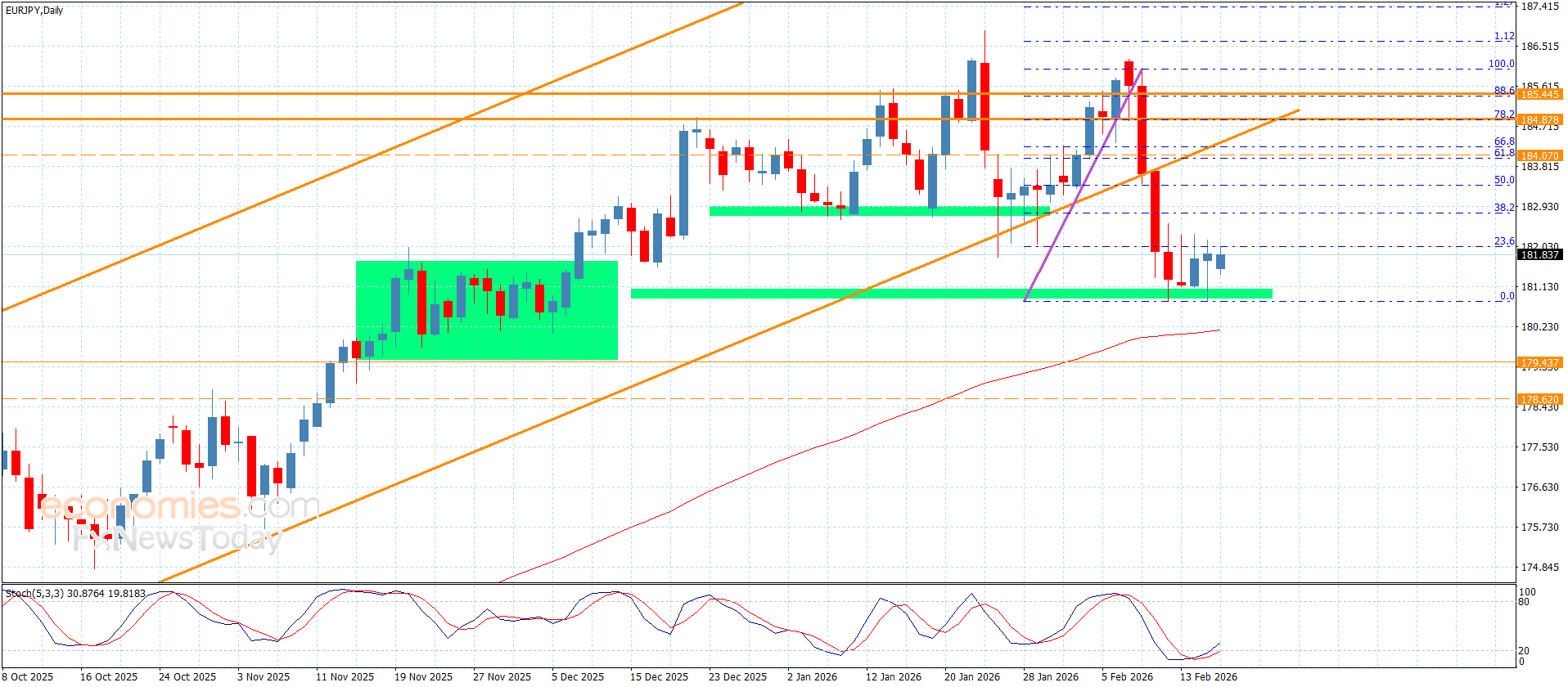
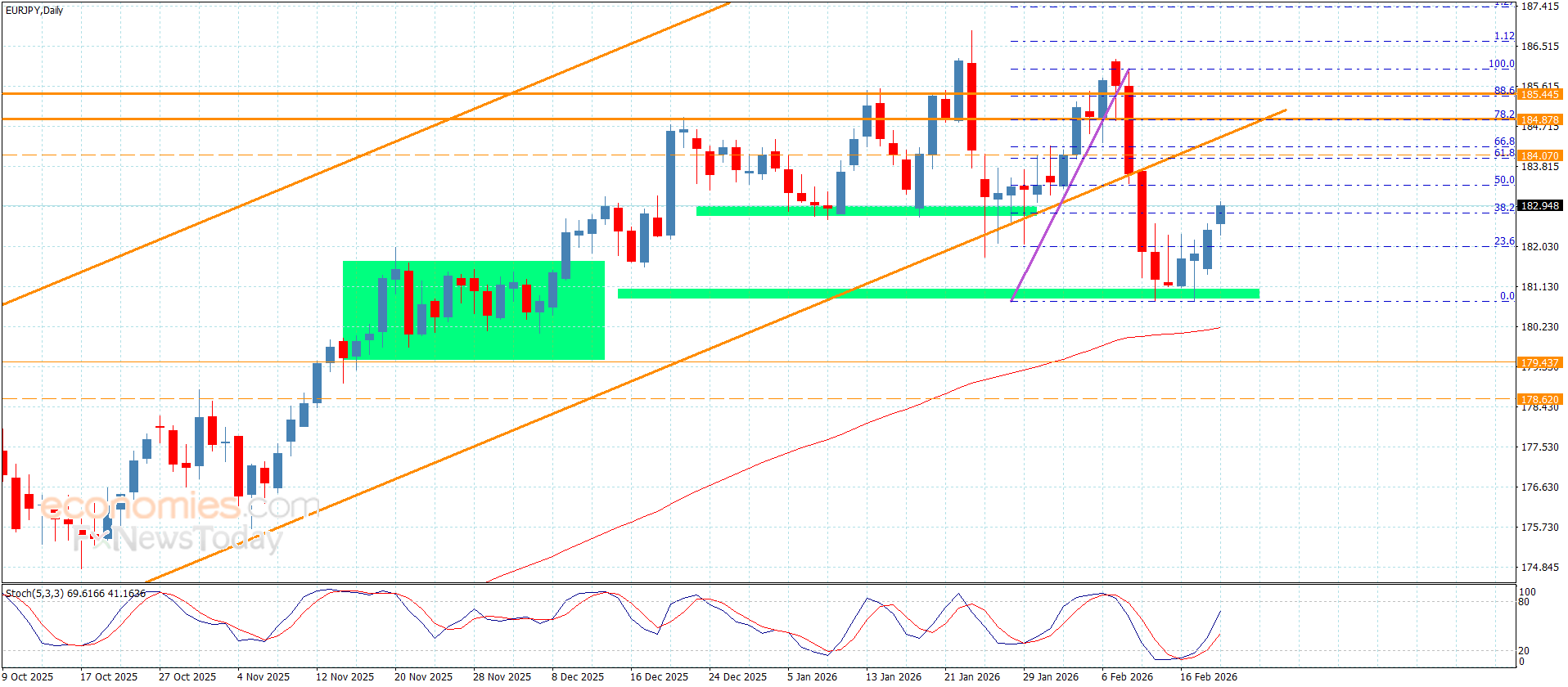
The EURJPY keeps rising– Forecast today – 19-2-2026

By |2026-02-19T13:53:16+02:00February 19, 2026|Forex News, News|0 Comments


The GBPJPY pair ended the negative movement by reaching 207.60 level, to begin activating with stochastic positivity to rally towards 209.30 directly, to press on the barrier to find an exit to end the negative scenario in the current trading.


Note that providing positive close for the upcoming four hours above 209.15 level is important to confirm its readiness to begin bullish attack, to expect targeting 210.65 level initially, to extend the trading towards 211.70, while the failure to breach it will force the price to form new bearish waves to reach 208.25


The expected trading range for today is between 209.00 and 210.65


Trend forecast: Bullish


Source link

19 02, 2026

GBP/USD Forecast: Pound Sterling Steady despite Softer UK Inflation

By |2026-02-19T09:52:37+02:00February 19, 2026|Forex News, News|0 Comments


– Written by

The Pound US Dollar (GBP/USD) exchange rate traded within a tight corridor on Wednesday as investors digested the UK’s latest inflation update.

At the time of writing, GBP/USD was hovering near $1.3547, showing little deviation from the day’s opening levels.

The Pound struggled for direction following the release of January’s consumer price index figures.

Data from the Office for National Statistics showed headline inflation easing to 3%, its lowest level since March last year.

The slowdown was largely attributed to falling energy costs and cheaper airfares, which helped offset price increases in areas such as hospitality and accommodation.

The latest figures reinforced expectations that the Bank of England will opt for a 25-basis-point interest rate cut at its March meeting, particularly in the wake of weaker employment data earlier in the week.

However, as markets had already largely priced in a near-term move from the Bank of England, Sterling avoided a sharp selloff and instead traded in subdued fashion.

Save on Your GBP/USD Transfer

Get better rates and lower fees on your next international money transfer.
Compare TorFX with top UK banks in seconds and see how much you could save.


Compare the Best GBP/USD Rates »

The US Dollar also remained confined to narrow ranges after the publication of the latest durable goods orders data.

Figures from the US Census Bureau revealed order growth tumbled from 5.4% to -1.4% in December, a slightly smaller decline than the 2% fall markets had anticipated.

Despite the contraction, USD losses were limited during the European session as investors refrained from taking strong positions ahead of the release of minutes from the Federal Reserve’s January policy meeting, which may offer clues on the central bank’s outlook.

GBP/USD Forecast: US Growth and UK PMI Data in Focus

As the week progresses, attention will shift to the latest US GDP figures, which could inject fresh volatility into GBP/USD.

Current forecasts indicate US economic growth slowed from an annualised 4.4% to 3% in the fourth quarter, partly reflecting the impact of the extended government shutdown. A sharper-than-expected slowdown may weigh on the US Dollar.

For Sterling, focus will turn to upcoming UK retail sales data and the latest services PMI reading. Evidence of resilient consumer spending and sustained strength in the services sector could help the Pound regain ground heading into the weekend.

Like this piece? Please share with your friends and colleagues:


International Money Transfer? Ask our resident FX expert a money transfer question or try John’s new, free, no-obligation personal service! ,where he helps every step of the way,
ensuring you get the best exchange rates on your currency requirements.

TAGS: Pound Dollar Forecasts

Source link

19 02, 2026

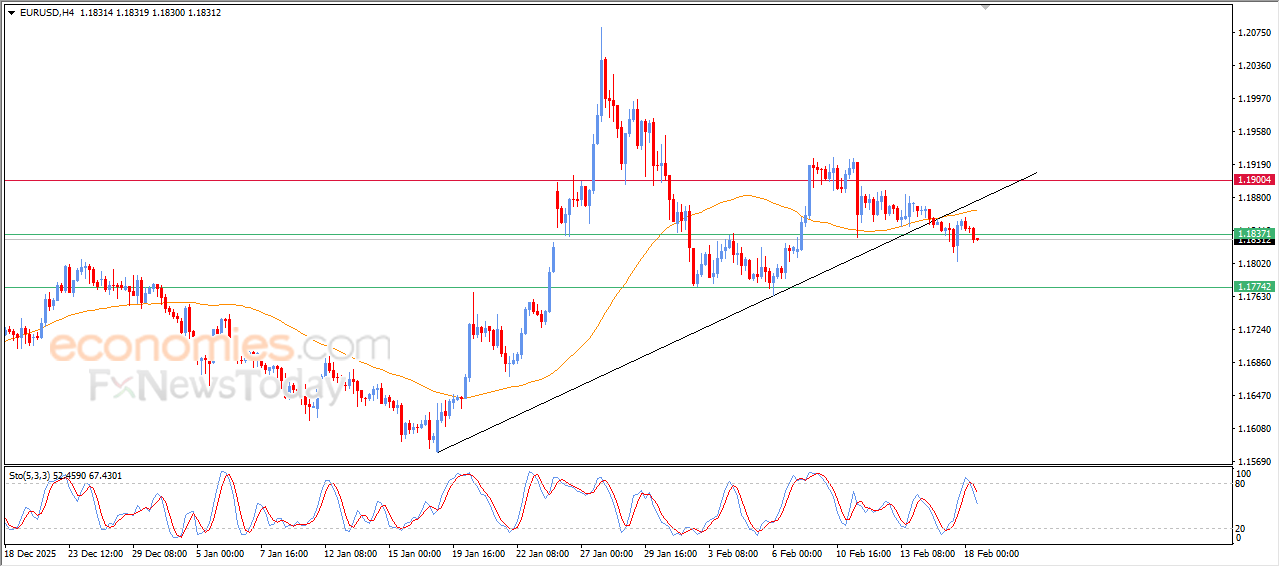
Forecast update for EURUSD -18-02-2026.

By |2026-02-19T05:51:45+02:00February 19, 2026|Forex News, News|0 Comments

The GBPJPY pair approached the previously waited main target by reaching 207.30 level which forces it to form some bullish corrective waves, affected by stochastic rally above 50 level, which allows it to recover some losses to settle near 208.15.


Note that the negative stability below 209.15 level represents main factor to confirm the previously suggested negativity, therefore, we will keep waiting for gathering extra negative momentum to reinforce the chances of reaching 207.05, while surpassing the barrier and holding above it will ease the mission of achieving several gains by its rally towards 209.85 reaching 207.05. 


The expected trading range for today is between 207.05 and 208.75


Trend forecast: Bearish


Source link

19 02, 2026

Bank of Japan’s Hawkish Pivot Crushes Sterling

By |2026-02-19T01:50:47+02:00February 19, 2026|Forex News, News|0 Comments

BitcoinWorld

GBP/JPY Forecast Plummets: Bank of Japan’s Hawkish Pivot Crushes Sterling

LONDON, March 2025 – The GBP/JPY currency pair has entered a pronounced downward trajectory this week, marking one of the most significant weekly declines in 2025. Consequently, market analysts now attribute this sharp movement primarily to shifting monetary policy expectations from the Bank of Japan (BoJ). The central bank’s increasingly hawkish communication has fundamentally altered the interest rate differential outlook, thereby providing substantial underlying support for the Japanese Yen against the British Pound.

GBP/JPY Technical Breakdown and Immediate Price Action

Forex charts currently display a clear bearish pattern for the GBP/JPY cross. The pair recently broke below the critical 50-day and 200-day moving averages, which now act as dynamic resistance levels. Furthermore, trading volume has surged during the sell-off, confirming the strength of the downward momentum. Key support levels from early 2024 are now being tested, and a breach could open the path for further significant losses. Market sentiment, as measured by the Commitment of Traders (COT) report, shows a rapid buildup of short positions on the pair by institutional investors. This technical deterioration coincides perfectly with the fundamental shift emanating from Tokyo.

The Bank of Japan’s Historic Policy Evolution

The Bank of Japan has embarked on a gradual but unmistakable exit from its decades-long ultra-accommodative monetary framework. This policy shift represents a watershed moment for global forex markets. Initially, the BoJ ended its negative interest rate policy (NIRP) in 2024. Subsequently, it has begun signaling a willingness to normalize policy further as domestic inflation shows signs of becoming entrenched. Governor Kazuo Ueda’s recent parliamentary testimony emphasized a data-dependent approach, but his acknowledgment of rising wage pressures and service-sector inflation was interpreted as decidedly hawkish. This communication marks a stark contrast to the Bank of England’s (BoE) current stance, which appears more cautious despite persistent UK inflation concerns.

Expert Analysis: The Yield Differential Driver

Financial institutions like Nomura and Mitsubishi UFJ Morgan Stanley Securities have published detailed analyses on the narrowing yield gap. “The core driver for GBP/JPY is the convergence of government bond yields,” explains a senior currency strategist at a major Tokyo-based bank. “As markets price in potential BoJ rate hikes in late 2025 or early 2026, the yield advantage that supported the carry trade into GBP is evaporating. We are witnessing a classic unwinding of long GBP/JPY positions that were predicated on a static policy divergence.” Historical data supports this view; periods of BoJ policy normalization have consistently correlated with Yen strength across the board.

Comparative Central Bank Outlook: BoJ vs. Bank of England

The monetary policy divergence story is now reversing. The following table summarizes the key factors influencing each central bank:

Factor Bank of Japan (BoJ) Bank of England (BoE)
Primary Focus Exiting ultra-loose policy, managing inflation sustainably to 2% Balancing persistent inflation against weak economic growth
Market Expectation Further rate hikes priced in for 2025/2026 Rate cuts anticipated, though timing is uncertain
Economic Backdrop Strong wage growth (Shunto results), rising service prices Sticky services inflation, but recession risks loom
Currency Impact Hawkish shift = Yen appreciation Dovish tilt = Pound depreciation

This juxtaposition creates a powerful two-way pressure on GBP/JPY. The Pound faces headwinds from a cautious BoE, while the Yen receives direct tailwinds from a newly assertive BoJ.

Global Macroeconomic Impacts and Risk Sentiment

Beyond direct policy, broader market conditions amplify the move. Notably, a strengthening Yen often correlates with a downturn in global risk appetite. As a traditional safe-haven currency, the Yen attracts flows during periods of uncertainty. Recent geopolitical tensions and volatility in equity markets have contributed to this dynamic. Simultaneously, the British Pound remains sensitive to UK-specific economic data, which has been mixed. Weak retail sales figures and declining manufacturing PMI have undermined arguments for BoE hawkishness. Therefore, the pair is caught in a perfect storm of shifting fundamentals.

Historical Context and Forward-Looking Scenarios

Analysts are reviewing previous BoJ policy transitions, such as the 2006-2007 rate hikes, for clues. Historically, the initial signaling phase produces the most volatile currency moves. Looking ahead, the path for GBP/JPY will hinge on several verifiable data points:

  • BoJ’s Quarterly Tankan Survey: Business sentiment and capital expenditure plans.
  • UK CPI and Wage Data: Evidence of inflationary persistence.
  • BoJ Bond Purchase Schedules: Any reduction in JGB buying would be a hawkish signal.
  • Global Commodity Prices: Affects Japan’s import costs and the UK’s terms of trade.

The consensus forecast among major banks has been revised downward, with many technical analysts identifying the next major support zone for GBP/JPY significantly below current levels.

Conclusion

The GBP/JPY forecast has turned decisively bearish due to a fundamental repricing of Bank of Japan policy. The BoJ’s hawkish stance, aimed at normalizing policy after years of extraordinary stimulus, provides a firm foundation for Yen strength. Concurrently, the Bank of England’s more restrained outlook removes a key pillar of support for the Pound. This dual dynamic suggests the recent slide in the currency pair may extend further. Traders and investors must now monitor BoJ communications and Japanese wage data as closely as UK inflation reports, as the era of predictable policy divergence has clearly ended.

FAQs

Q1: What does a “hawkish stance” from the Bank of Japan mean?
A hawkish stance indicates the central bank is focused on controlling inflation and is inclined to raise interest rates or tighten monetary policy. For the BoJ, this marks a major shift away from its long-standing ultra-loose policy.

Q2: Why does a stronger Yen cause GBP/JPY to fall?
GBP/JPY quotes how many Japanese Yen (JPY) are needed to buy one British Pound (GBP). If the Yen strengthens (gains value), it takes fewer Yen to buy a Pound, so the GBP/JPY exchange rate declines.

Q3: Is this just a short-term technical move, or a long-term trend?
While short-term volatility is always present, the move is driven by a fundamental reassessment of long-term interest rate differentials. This suggests the potential for a sustained trend, not merely a temporary correction.

Q4: How does UK economic data affect this pair now?
Weak UK data reinforces the view that the Bank of England may cut rates before the BoJ hikes, widening the policy divergence in favor of the Yen. Strong UK data could temporarily stall the decline, but the dominant driver has shifted to BoJ policy.

Q5: What are the risks to this bearish GBP/JPY forecast?
The primary risk is a sudden reversal in BoJ communication, signaling a delay in policy normalization. Alternatively, a surge in UK inflation forcing the BoE to hike rates aggressively could also undermine the current trend.

This post GBP/JPY Forecast Plummets: Bank of Japan’s Hawkish Pivot Crushes Sterling first appeared on BitcoinWorld.
Source link

18 02, 2026

The EURJPY is leaning above the support– Forecast today – 18-2-2026

By |2026-02-18T21:49:49+02:00February 18, 2026|Forex News, News|0 Comments

The GBPJPY pair approached the previously waited main target by reaching 207.30 level which forces it to form some bullish corrective waves, affected by stochastic rally above 50 level, which allows it to recover some losses to settle near 208.15.


Note that the negative stability below 209.15 level represents main factor to confirm the previously suggested negativity, therefore, we will keep waiting for gathering extra negative momentum to reinforce the chances of reaching 207.05, while surpassing the barrier and holding above it will ease the mission of achieving several gains by its rally towards 209.85 reaching 207.05. 


The expected trading range for today is between 207.05 and 208.75


Trend forecast: Bearish


Source link

18 02, 2026

Tests Symmetrical Triangle breakdown near 1.3580

By |2026-02-18T17:48:37+02:00February 18, 2026|Forex News, News|0 Comments

The GBP/USD pair trades flat at around 1.3570 during the European trading session on Wednesday. The pair flattens while the Pound Sterling (GBP) trades higher after the release of the United Kingdom (UK) Consumer Price Index (CPI) data for January.

Pound Sterling Price Today

The table below shows the percentage change of British Pound (GBP) against listed major currencies today. British Pound was the strongest against the New Zealand Dollar.

USD EUR GBP JPY CAD AUD NZD CHF
USD 0.16% -0.04% 0.31% 0.12% 0.15% 0.73% 0.21%
EUR -0.16% -0.20% 0.13% -0.03% 0.00% 0.58% 0.05%
GBP 0.04% 0.20% 0.31% 0.16% 0.20% 0.78% 0.23%
JPY -0.31% -0.13% -0.31% -0.17% -0.13% 0.44% -0.10%
CAD -0.12% 0.03% -0.16% 0.17% 0.04% 0.61% 0.07%
AUD -0.15% -0.00% -0.20% 0.13% -0.04% 0.58% 0.03%
NZD -0.73% -0.58% -0.78% -0.44% -0.61% -0.58% -0.55%
CHF -0.21% -0.05% -0.23% 0.10% -0.07% -0.03% 0.55%

The heat map shows percentage changes of major currencies against each other. The base currency is picked from the left column, while the quote currency is picked from the top row. For example, if you pick the British Pound from the left column and move along the horizontal line to the US Dollar, the percentage change displayed in the box will represent GBP (base)/USD (quote).

However, the outlook of the British currency has become uncertain as the data has shown that inflationary pressures have cooled down at an expected pace. The UK’s headline inflation has come in lower at 3% Year-on-Year (YoY) from 3.4% in December. In the same period, the core CPI growth cooled down to 3.1%.

Soft UK CPI data is expected to strengthen market speculation that the Bank of England (BoE) will cut interest rates in its monetary policy meeting in March.

Meanwhile, the US Dollar (USD) trades higher ahead of the release of Federal Open Market Committee (FOMC) minutes of the January policy meeting at 19:00 GMT.

At the press time, the US Dollar Index (DXY), which tracks the Greenback’s value against six major currencies, trades 0.2% higher to near 97.30.

GBP/USD technical analysis

GBP/USD trades almost flat at around 1.3570 as of writing. On the 4-hour chart, the 20-period Exponential Moving Average (EMA) slopes lower and stands at 1.3591, keeping the near-term bias pressured.

The 14-period Relative Strength Index (RSI) on the same chart at 44 sits below the 50 midline, pointing to subdued momentum despite a tentative uptick.

Overall, the outlook of the pair appears bearish as it struggles to return above the lower border of the Symmetrical Triangle post the breakdown. Looking down, Cable could extend its decline towards the January 22 low around 1.3400 if it breaks below Tuesday’s low of 1.3500.

(The technical analysis of this story was written with the help of an AI tool.)

(This story was corrected on February 18 at 13:22 GMT to say that technical indicators refer to the 4-hour chart, not daily.)

Economic Indicator

Consumer Price Index (YoY)

The United Kingdom (UK) Consumer Price Index (CPI), released by the Office for National Statistics on a monthly basis, is a measure of consumer price inflation – the rate at which the prices of goods and services bought by households rise or fall – produced to international standards. It is the inflation measure used in the government’s target. The YoY reading compares prices in the reference month to a year earlier. Generally, a high reading is seen as bullish for the Pound Sterling (GBP), while a low reading is seen as bearish.


Read more.

Source link

18 02, 2026

USD/JPY Moderately Higher as Market Balances Between Data and Forecasts

By |2026-02-18T13:47:45+02:00February 18, 2026|Forex News, News|0 Comments

rose to 153.50 on Wednesday. The yen gave up some of the gains from the previous session, despite strong foreign trade statistics.

Japan’s exports rose at their fastest pace in more than three years in January, driven by robust demand for AI-related chips. This data increased expectations of continued policy normalisation by the Bank of Japan.

At the same time, weak fourth-quarter GDP, which came in below forecasts and narrowly avoided a technical recession, is restraining optimism.

Investors believe Prime Minister Sanae Takaichi’s economic policy could support growth and indirectly strengthen the case for a gradual rate hike. The market is now pricing in the possibility of a tightening policy in April.

The IMF has previously stated that it does not set a specific target level for the yen, believing instead that the exchange rate is determined by market factors.

Technical Analysis

On the H4 chart, USD/JPY has entered a consolidation phase following a sharp drop from 157.50–158.00. The price is currently held in the range of 152.25–153.80. The Bollinger Bands have narrowed markedly, indicating that volatility is declining and the market is forming a base. The 153.80–153.95 area represents the nearest resistance. Support stands at 152.25. As long as the price remains below 153.80, the structure remains neutral to bearish.
USD/JPY forecast
On the shorter H1 time frame, there is a short-term local rebound from 152.80–153.00 with an attempt to exit towards the upper limit of the range. The price is approaching 153.90, where strong intraday resistance is forming. A break above 153.95 would open the way towards 154.60. Failure to break resistance could bring the pair back to 153.00 and then on to 152.25.

Overall, the market is compressing ahead of a potential move. A breakout of the range will set the direction for the next motion.

Conclusion

In summary, USD/JPY remains caught between conflicting fundamental factors: robust export data support BoJ normalisation expectations, but weak GDP and political uncertainty limit yen strength. Technically, the pair is coiling within a tightening range, signalling an imminent directional breakout. The neutral-bearish bias persists as long as the price holds below 153.80–153.95 resistance. A clear break above this level would target 154.60, while failure could trigger a retest of 152.25 support. With the BoJ’s April policy meeting in focus, the next significant move awaits a fresh catalyst.

By RoboForex Analytical Department

Disclaimer
Any forecasts contained herein are based on the author’s particular opinion. This analysis may not be treated as trading advice. RoboForex bears no responsibility for trading results based on trading recommendations and reviews contained herein.


Source link

18 02, 2026

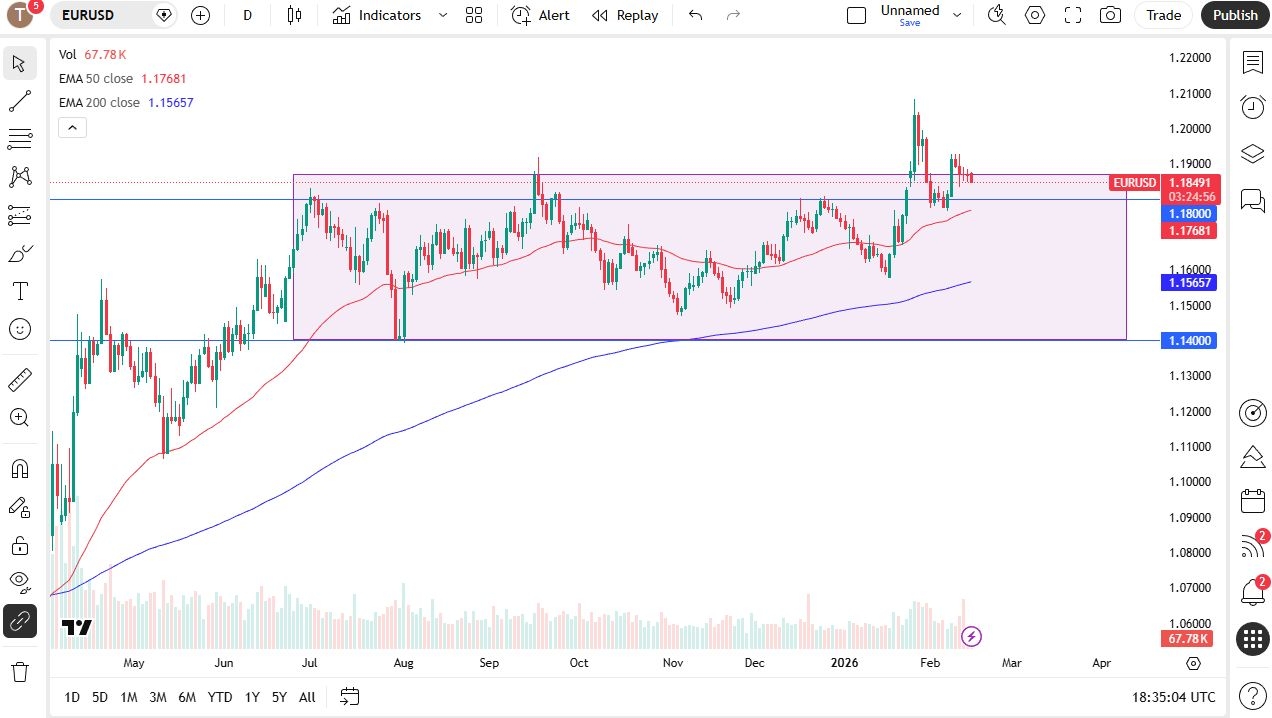
EUR/USD Forecast 17/02 Euro Continues to See Questions

By |2026-02-18T09:46:28+02:00February 18, 2026|Forex News, News|0 Comments

The Euro is currently having issues trying to make a determined move, but seems to be a bit weak at the moment.

EURUSD

The Euro is currently navigating a policy divergence type of landscape while the US dollar remains resilient due to US labor market stabilizing. The European Central Bank is providing an unexpected tailwind. Unlike the Fed, which now markets price in 3 rate cuts in 2026 starting in maybe May or June, the ECB is signaling that they are going to hold for the remainder of the year.

This relative hawkishness coming out of Frankfurt, combined with Eurozone current account surpluses, is keeping the well supported pair above the 1.18 level for the time being. That being said, there are a lot of questions to ask about where we go from here, and you should continue to look at this as a pair that might be positive over the longer term, but it is going to be a grind.

I am not looking for big numbers here. If we break down below the 50-day EMA, I start to buy the US dollar, not necessarily here, but in other pairs. I think it would really clean up against some of the laggards out there as far as economics are concerned, such as Switzerland, Canada, or the Japanese Yen.

Technical Outlook and Potential Targets

If we do break down from here below the 50-day EMA, we could test the 200-day EMA, which is closer to the 1.1565 level. Rallying from here makes a bit of sense, but again, this is a neutral to slightly bullish scenario. When I say slightly, I am probably thinking about a 60% bullish 40% bearish scenario.

This is a market that will be very slow and deliberate but buying dips should work for the short term. I am not looking for big moves. The entire move that I think is possible at this point is 1.23, which could take months. That could be a middle of the summer thing once the Federal Reserve really starts to give the market what it wants as far as rate cuts.

If we continue to see labor and inflation in the United States support the idea of the Federal Reserve holding still, that could cause some downward pressure.

Ready to trade our EUR/USD analysis and predictions? Here are the best European brokers to choose from.

Source link

18 02, 2026

Short-term trend turns negative below 210.00 handle

By |2026-02-18T05:45:41+02:00February 18, 2026|Forex News, News|0 Comments

GBP/JPY snaps a two-day winning streak on Tuesday as weak UK labour market data fuels expectations of Bank of England (BoE) interest rate cuts, weighing on the British Pound (GBP). At the time of writing, GBP/JPY is trading around 207.28, down nearly 0.93% on the day and hovering near a two-month low.

Following the UK labour market data, markets are now fully pricing in two rate cuts by the BoE this year, with expectations building for the first reduction as early as March.

Meanwhile, the Japanese Yen (JPY) holds firm across the board, underpinned by growing optimism around Prime Minister Sanae Takaichi’s pro-stimulus policy agenda and firming expectations that the Bank of Japan (BoJ) could raise interest rates in the coming months.

From a technical perspective, the four-hour chart suggests the short-term structure has turned decisively bearish, with price action slipping below key moving averages.

GBP/JPY reversed sharply from multi-year highs after failing to sustain gains above the 214.00 mark earlier this month. Bearish momentum accelerated once the pair broke and retested the 210.00 psychological level, paving the way for fresh lower lows.

The 21-period Simple Moving Average (SMA) has crossed below the 50-period SMA and is now acting as immediate resistance near 208.58, reinforcing the negative bias. Both moving averages continue to slope lower, while prices remain capped beneath them.

On the downside, the 207.00 level may offer near-term support. A sustained break below this zone would likely intensify selling pressure and expose the next support around 205.00. Conversely, a decisive move back above 210.00 would be required to ease the downside bias, with 212.00 emerging as the next resistance zone.

Momentum indicators align with the bearish outlook. The Moving Average Convergence Divergence (MACD) histogram has slipped slightly below the zero line, signaling a bearish crossover and fading upside momentum.

Meanwhile, the Relative Strength Index (RSI) hovers near 31, approaching oversold territory, reflecting persistent selling pressure.

Japanese Yen Price Today

The table below shows the percentage change of Japanese Yen (JPY) against listed major currencies today. Japanese Yen was the strongest against the British Pound.

USD EUR GBP JPY CAD AUD NZD CHF
USD 0.27% 0.72% -0.23% 0.17% 0.45% 0.23% 0.23%
EUR -0.27% 0.45% -0.49% -0.09% 0.18% -0.05% -0.04%
GBP -0.72% -0.45% -0.91% -0.54% -0.27% -0.49% -0.49%
JPY 0.23% 0.49% 0.91% 0.42% 0.69% 0.45% 0.46%
CAD -0.17% 0.09% 0.54% -0.42% 0.27% 0.04% 0.05%
AUD -0.45% -0.18% 0.27% -0.69% -0.27% -0.22% -0.23%
NZD -0.23% 0.05% 0.49% -0.45% -0.04% 0.22% -0.00%
CHF -0.23% 0.04% 0.49% -0.46% -0.05% 0.23% 0.00%

The heat map shows percentage changes of major currencies against each other. The base currency is picked from the left column, while the quote currency is picked from the top row. For example, if you pick the Japanese Yen from the left column and move along the horizontal line to the US Dollar, the percentage change displayed in the box will represent JPY (base)/USD (quote).

Source link

Go to Top