The main tag of Forex News Today Articles.
You can use the search box below to find what you need.
[wd_asp id=1]

30 06, 2025

Euro stabilizes but clings to bullish bias

By |2025-06-30T19:34:21+03:00June 30, 2025|Forex News, News|0 Comments

  • EUR/USD fluctuates in a narrow channel above 1.1700 on Monday.
  • The near-term technical picture suggests that the bullish bias remains unchanged.
  • Comments from central bankers could trigger the next big action in the pair.

EUR/USD seems to have entered a consolidation phase above 1.1700 on Monday following the previous week’s impressive rally.

Euro PRICE This month

The table below shows the percentage change of Euro (EUR) against listed major currencies this month. Euro was the strongest against the Japanese Yen.

USD EUR GBP JPY CAD AUD NZD CHF
USD -2.95% -1.39% 0.13% -0.98% -1.46% -1.66% -3.11%
EUR 2.95% 1.64% 3.15% 2.04% 1.58% 1.66% -0.16%
GBP 1.39% -1.64% 1.50% 0.40% -0.05% -0.15% -1.76%
JPY -0.13% -3.15% -1.50% -1.12% -1.52% -1.66% -3.19%
CAD 0.98% -2.04% -0.40% 1.12% -0.41% -0.56% -2.15%
AUD 1.46% -1.58% 0.05% 1.52% 0.41% 0.08% -1.71%
NZD 1.66% -1.66% 0.15% 1.66% 0.56% -0.08% -1.79%
CHF 3.11% 0.16% 1.76% 3.19% 2.15% 1.71% 1.79%

The heat map shows percentage changes of major currencies against each other. The base currency is picked from the left column, while the quote currency is picked from the top row. For example, if you pick the Euro from the left column and move along the horizontal line to the US Dollar, the percentage change displayed in the box will represent EUR (base)/USD (quote).

While the technical outlook remains bullish in the near term, investors could refrain from taking large positions ahead of European Central Bank (ECB) President Christine Lagarde’s and Federal Reserve (Fed) Chairman Jerome Powell’s speeches at the ECB Forum on Central Banking on Tuesday.

Lagarde and Powell will participate in a policy panel. According to the CME FedWatch Tool, markets are currently pricing in about a 20% probability of the Fed lowering the policy rate by 25 basis points at the July meeting. This market positioning suggests that the US Dollar (USD) could stay resilient against its peers in case Powell reaffirms that they are unlikely to ease the policy until September.

The data from Germany showed on Monday that annual inflation, as measured by the change in the Consumer Price Index (CPI), edged lower to 2% in June’s preliminary estimate from 2.1% in May. On a monthly basis, the CPI remained unchanged. This reading came in below the market expectation for an increase of 0.2% and made it difficult for the Euro to gather strength.

Meanwhile, Wall Street’s main indexes started the day in positive territory, not allowing the USD to gather recovery momentum and helping EUR/USD limit its downside.

Later in the day, EUR/USD’s could experience heightened volatility due to position adjustments and profit-taking on the last day of the second quarter.

EUR/USD Technical Analysis

EUR/USD fluctuates within the upper half of the ascending regression channel and the Relative Strength Index (RSI) indicator on the 4-hour chart holds above 60, despite retreating slightly in the first half of the day. On the upside, 1.1730 (static level) aligns as an interim resistance level before 1.1760 (upper limit of the ascending channel) and 1.1800 (static level, round level).

In case EUR/USD fails to hold above 1.1700 (static level, 20-period Simple Moving Average) and flips that level into resistance, 1.1660 (mid-point of the ascending channel) and 1.1620 (static level) could be seen as next support levels.

Euro FAQs

The Euro is the currency for the 19 European Union countries that belong to the Eurozone. It is the second most heavily traded currency in the world behind the US Dollar. In 2022, it accounted for 31% of all foreign exchange transactions, with an average daily turnover of over $2.2 trillion a day.
EUR/USD is the most heavily traded currency pair in the world, accounting for an estimated 30% off all transactions, followed by EUR/JPY (4%), EUR/GBP (3%) and EUR/AUD (2%).

The European Central Bank (ECB) in Frankfurt, Germany, is the reserve bank for the Eurozone. The ECB sets interest rates and manages monetary policy.
The ECB’s primary mandate is to maintain price stability, which means either controlling inflation or stimulating growth. Its primary tool is the raising or lowering of interest rates. Relatively high interest rates – or the expectation of higher rates – will usually benefit the Euro and vice versa.
The ECB Governing Council makes monetary policy decisions at meetings held eight times a year. Decisions are made by heads of the Eurozone national banks and six permanent members, including the President of the ECB, Christine Lagarde.

Eurozone inflation data, measured by the Harmonized Index of Consumer Prices (HICP), is an important econometric for the Euro. If inflation rises more than expected, especially if above the ECB’s 2% target, it obliges the ECB to raise interest rates to bring it back under control.
Relatively high interest rates compared to its counterparts will usually benefit the Euro, as it makes the region more attractive as a place for global investors to park their money.

Data releases gauge the health of the economy and can impact on the Euro. Indicators such as GDP, Manufacturing and Services PMIs, employment, and consumer sentiment surveys can all influence the direction of the single currency.
A strong economy is good for the Euro. Not only does it attract more foreign investment but it may encourage the ECB to put up interest rates, which will directly strengthen the Euro. Otherwise, if economic data is weak, the Euro is likely to fall.
Economic data for the four largest economies in the euro area (Germany, France, Italy and Spain) are especially significant, as they account for 75% of the Eurozone’s economy.

Another significant data release for the Euro is the Trade Balance. This indicator measures the difference between what a country earns from its exports and what it spends on imports over a given period.
If a country produces highly sought after exports then its currency will gain in value purely from the extra demand created from foreign buyers seeking to purchase these goods. Therefore, a positive net Trade Balance strengthens a currency and vice versa for a negative balance.

Source link

30 06, 2025

Pound to Euro Week Ahead Forecast: 1.17 Today, 1.19 Next Target

By |2025-06-30T17:32:55+03:00June 30, 2025|Forex News, News|0 Comments

June 30, 2025 – Written by David Woodsmith

Foreign exchange analysts at MUFG forecast that the Pound to Euro exchange rate (GBP/EUR) will hit selling interest on any gains to 1.19 and retreat to 1.1560 by the end of 2025.

In contrast, Credit Agricole still backs GBP/EUR gains to 1.2050 by the end of the year.

GBP/EUR secured marginal gains during the week, although it failed to hold 2-week highs just above 1.1750 and settled just above 1,1700.

The Pound and Euro both gained net support in global markets from an easing of Middle East tensions and a sustained improvement in risk appetite, liming moves on the cross.

Credit Agricole sees scope for Pound gains on valuation grounds; “We continue to think that EUR/GBP is looking quite overvalued compared to fair value metrics that we estimate based on EUR-GBP rate spread among other drivers. We therefore think that the cross should continue to drift lower in the very near term, especially if risk sentiment continues to recover.

It did, however, add; “That being said, we are also conscious of the risk that a more dovish BoE rhetoric in particular could remain a key downside risk for the GBP.”

Many investment banks have continued to focus on fiscal policy with Germany planning a EUR500bn boost over the next few years.


Deutsche Bank commented; “In the short term, the planned ramp-up in debt-financed spending is remarkably ambitious. The government plans a deficit of more than 3% of GDP as early as this year and almost 4% next year. In light of the front-loading of the fiscal expansion, we raise our growth forecast for 2025 to 0.5%.”

It added; “Not only is the fiscal impulse over this period likely to be more positive than we previously assumed, but the economy is also heading into this fiscal expansion with greater momentum than expected. It would now take a serious exogenous shock or escalation in the trade conflict to scupper the recovery this year.”

The UK, however, is still struggling with fiscal policy with a government U-turn on welfare reform adding to long-term reservations and the risk of further tax increases later in the year.

Monetary policy developments will also remain a key area, especially given the Euro-Zone fiscal boost.

There are strong expectations that the Bank of England will cut rates in August with a further cut before year-end.

Nordea commented; “we think the ECB is done in terms of rate cuts.”

It added; “We do think risks remain tilted towards another cut for now, as many downside risks remain, not least due to trade policy uncertainty. However, trade policy is only part of the story and there are upside risks as well.”


In this context, Nordea also commented on fiscal policy; “A looming boost to growth from public spending and investment due to higher German infrastructure and EU defence spending limits downside risks, but we think also higher energy prices have the potential to reduce the odds of the ECB cutting rates further in the current circumstances.”

According to ING; “We are not major subscribers to the view that the ECB will stay on hold until December (a September cut is underpriced in our view), but admit that the latest hawkish communication means market pricing may not be revised significantly to the dovish side at least for some weeks.”

Like this piece? Please share with your friends and colleagues:


International Money Transfer? Ask our resident FX expert a money transfer question or try John’s new, free, no-obligation personal service! ,where he helps every step of the way,
ensuring you get the best exchange rates on your currency requirements.

TAGS: Pound Euro Forecasts

Source link

30 06, 2025

Pound Sterling could extend slide if 1.3650 support fails

By |2025-06-30T15:31:27+03:00June 30, 2025|Forex News, News|0 Comments

  • GBP/USD fluctuates at around 1.3700 in the European session on Monday.
  • The near-term technical outlook points to a loss of bullish momentum.
  • The US economic calendar will not feature any high-impact data releases.

GBP/USD corrects lower and trades at around 1.3700 on Monday after gaining about 2% last week. The pair’s technical outlook points to a loss of bullish momentum in the short term.

British Pound PRICE This month

The table below shows the percentage change of British Pound (GBP) against listed major currencies this month. British Pound was the strongest against the US Dollar.

USD EUR GBP JPY CAD AUD NZD CHF
USD -3.04% -1.53% -0.03% -0.99% -1.46% -1.78% -3.12%
EUR 3.04% 1.58% 3.08% 2.11% 1.66% 1.62% -0.08%
GBP 1.53% -1.58% 1.50% 0.53% 0.09% -0.12% -1.62%
JPY 0.03% -3.08% -1.50% -0.97% -1.35% -1.62% -3.04%
CAD 0.99% -2.11% -0.53% 0.97% -0.39% -0.67% -2.16%
AUD 1.46% -1.66% -0.09% 1.35% 0.39% -0.04% -1.72%
NZD 1.78% -1.62% 0.12% 1.62% 0.67% 0.04% -1.67%
CHF 3.12% 0.08% 1.62% 3.04% 2.16% 1.72% 1.67%

The heat map shows percentage changes of major currencies against each other. The base currency is picked from the left column, while the quote currency is picked from the top row. For example, if you pick the British Pound from the left column and move along the horizontal line to the US Dollar, the percentage change displayed in the box will represent GBP (base)/USD (quote).

GBP/USD rose sharply last week as the risk-positive market atmosphere, on easing geopolitical tensions, and growing concerns over the Federal Reserve (Fed) losing its independence weighed heavily on the US Dollar (USD).

Early Monday, the UK’s FTSE 100 Index trades modestly lower on the day, while US stock index futures stay in positive territory. In case markets adopt a cautious stance in the second half of the day, the USD could find a foothold and make it difficult for GBP/USD to gather bullish momentum.

In the meantime, the UK government announced in a press release on Monday that the UK-US trade deal has officially come into force. UK car manufacturers can now export to the US under a reduced 10% tariff quota and the UK aerospace sector will have 10% tariffs on goods like engines and aircraft parts removed.

Later in the session, Dallas Fed Manufacturing Index will be featured in the US economic calendar, which is unlikely to trigger a noticeable market reaction. It’s important to note that position adjustments and profit-taking on the last day of the first half of the year could ramp up the pair’s volatility toward the end of the European session.

GBP/USD Technical Analysis

GBP/USD declined slightly below the 20-period Simple Moving Average (SMA) on the 4-hour chart and the Relative Strength Index (RSI) indicator fell below 60, reflecting a loss of bullish momentum.

On the downside, 1.3650 (mid-point of the ascending regression channel) aligns as the next support level before 1.3600 (static level, round level) and 1.3560 (100-period SMA). In case GBP/USD stabilizes above 1.3700 and confirms that level as support, 1.3750 (static level, round level) and 1.3810 (upper limit of the ascending channel) could be seen as next resistance levels.

Pound Sterling FAQs

The Pound Sterling (GBP) is the oldest currency in the world (886 AD) and the official currency of the United Kingdom. It is the fourth most traded unit for foreign exchange (FX) in the world, accounting for 12% of all transactions, averaging $630 billion a day, according to 2022 data.
Its key trading pairs are GBP/USD, also known as ‘Cable’, which accounts for 11% of FX, GBP/JPY, or the ‘Dragon’ as it is known by traders (3%), and EUR/GBP (2%). The Pound Sterling is issued by the Bank of England (BoE).

The single most important factor influencing the value of the Pound Sterling is monetary policy decided by the Bank of England. The BoE bases its decisions on whether it has achieved its primary goal of “price stability” – a steady inflation rate of around 2%. Its primary tool for achieving this is the adjustment of interest rates.
When inflation is too high, the BoE will try to rein it in by raising interest rates, making it more expensive for people and businesses to access credit. This is generally positive for GBP, as higher interest rates make the UK a more attractive place for global investors to park their money.
When inflation falls too low it is a sign economic growth is slowing. In this scenario, the BoE will consider lowering interest rates to cheapen credit so businesses will borrow more to invest in growth-generating projects.

Data releases gauge the health of the economy and can impact the value of the Pound Sterling. Indicators such as GDP, Manufacturing and Services PMIs, and employment can all influence the direction of the GBP.
A strong economy is good for Sterling. Not only does it attract more foreign investment but it may encourage the BoE to put up interest rates, which will directly strengthen GBP. Otherwise, if economic data is weak, the Pound Sterling is likely to fall.

Another significant data release for the Pound Sterling is the Trade Balance. This indicator measures the difference between what a country earns from its exports and what it spends on imports over a given period.
If a country produces highly sought-after exports, its currency will benefit purely from the extra demand created from foreign buyers seeking to purchase these goods. Therefore, a positive net Trade Balance strengthens a currency and vice versa for a negative balance.

Source link

30 06, 2025

Euro shows no signs of a reversal

By |2025-06-30T13:30:19+03:00June 30, 2025|Forex News, News|0 Comments

  • EUR/USD trades above 1.1700 to start the new week.
  • The technical outlook suggests that the uptrend is likely to continue.
  • Month-end flows could ramp up market volatility later in the day.

EUR/USD holds steady and fluctuates above 1.1700 in the European morning on Monday after gaining more than 1.5% in the previous week. Although the technical outlook suggests that the pair is likely to extend its uptrend, position adjustments on the last day of the first half of the year could ramp up market volatility and trigger irregular movements.

Euro PRICE This month

The table below shows the percentage change of Euro (EUR) against listed major currencies this month. Euro was the strongest against the Japanese Yen.

USD EUR GBP JPY CAD AUD NZD CHF
USD -3.00% -1.50% 0.03% -0.96% -1.41% -1.72% -2.95%
EUR 3.00% 1.57% 3.11% 2.10% 1.68% 1.65% 0.05%
GBP 1.50% -1.57% 1.52% 0.54% 0.12% -0.08% -1.48%
JPY -0.03% -3.11% -1.52% -0.98% -1.33% -1.59% -2.91%
CAD 0.96% -2.10% -0.54% 0.98% -0.37% -0.64% -2.01%
AUD 1.41% -1.68% -0.12% 1.33% 0.37% -0.03% -1.56%
NZD 1.72% -1.65% 0.08% 1.59% 0.64% 0.03% -1.57%
CHF 2.95% -0.05% 1.48% 2.91% 2.01% 1.56% 1.57%

The heat map shows percentage changes of major currencies against each other. The base currency is picked from the left column, while the quote currency is picked from the top row. For example, if you pick the Euro from the left column and move along the horizontal line to the US Dollar, the percentage change displayed in the box will represent EUR (base)/USD (quote).

The broad-based selling pressure surrounding the US Dollar (USD) fuelled EUR/USD’s rally last week. Early Monday, the USD struggles to find demand and helps the pair hold its ground as the market mood remains upbeat, with US stock index futures rising about 0.5% on the day.

Earlier in the day, the data from Germany showed that Retail Sales declined by 1.6% on a monthly basis in May, following the 0.6% contraction recorded in April. This reading came in worse than the market expectation for an increase of 0.5% but failed to trigger a noticeable market reaction. In the second half of the day, Germany’s Destatis will release preliminary Consumer Price Index (CPI) data for June.

Meanwhile, French Finance Minister Eric Lombard told newspaper La Tribune Dimanche on Sunday that he thinks that they are going to reach a trade deal with the US. “Regarding the deadline, my wish is for another postponement. I would rather have a good deal than a bad deal on July 9,” he added. In case markets remain optimistic about an EU-US trade deal, EUR/USD’s downside is likely to remain limited.

EUR/USD Technical Analysis

EUR/USD remains within the upper half of the ascending regression channel and the Relative Strength Index (RSI) indicator on the 4-hour chart holds above 60. On the upside, 1.1730 (static level) aligns as an interim resistance level before 1.1760 (upper limit of the ascending channel) and 1.1800 (static level, round level).

Looking south, 1.1700 (static level, 20-period Simple Moving Average) could be seen as the first support level ahead of 1.1660 (mid-point of the ascending channel) and 1.1620 (static level).

Euro FAQs

The Euro is the currency for the 19 European Union countries that belong to the Eurozone. It is the second most heavily traded currency in the world behind the US Dollar. In 2022, it accounted for 31% of all foreign exchange transactions, with an average daily turnover of over $2.2 trillion a day.
EUR/USD is the most heavily traded currency pair in the world, accounting for an estimated 30% off all transactions, followed by EUR/JPY (4%), EUR/GBP (3%) and EUR/AUD (2%).

The European Central Bank (ECB) in Frankfurt, Germany, is the reserve bank for the Eurozone. The ECB sets interest rates and manages monetary policy.
The ECB’s primary mandate is to maintain price stability, which means either controlling inflation or stimulating growth. Its primary tool is the raising or lowering of interest rates. Relatively high interest rates – or the expectation of higher rates – will usually benefit the Euro and vice versa.
The ECB Governing Council makes monetary policy decisions at meetings held eight times a year. Decisions are made by heads of the Eurozone national banks and six permanent members, including the President of the ECB, Christine Lagarde.

Eurozone inflation data, measured by the Harmonized Index of Consumer Prices (HICP), is an important econometric for the Euro. If inflation rises more than expected, especially if above the ECB’s 2% target, it obliges the ECB to raise interest rates to bring it back under control.
Relatively high interest rates compared to its counterparts will usually benefit the Euro, as it makes the region more attractive as a place for global investors to park their money.

Data releases gauge the health of the economy and can impact on the Euro. Indicators such as GDP, Manufacturing and Services PMIs, employment, and consumer sentiment surveys can all influence the direction of the single currency.
A strong economy is good for the Euro. Not only does it attract more foreign investment but it may encourage the ECB to put up interest rates, which will directly strengthen the Euro. Otherwise, if economic data is weak, the Euro is likely to fall.
Economic data for the four largest economies in the euro area (Germany, France, Italy and Spain) are especially significant, as they account for 75% of the Eurozone’s economy.

Another significant data release for the Euro is the Trade Balance. This indicator measures the difference between what a country earns from its exports and what it spends on imports over a given period.
If a country produces highly sought after exports then its currency will gain in value purely from the extra demand created from foreign buyers seeking to purchase these goods. Therefore, a positive net Trade Balance strengthens a currency and vice versa for a negative balance.

Source link

30 06, 2025

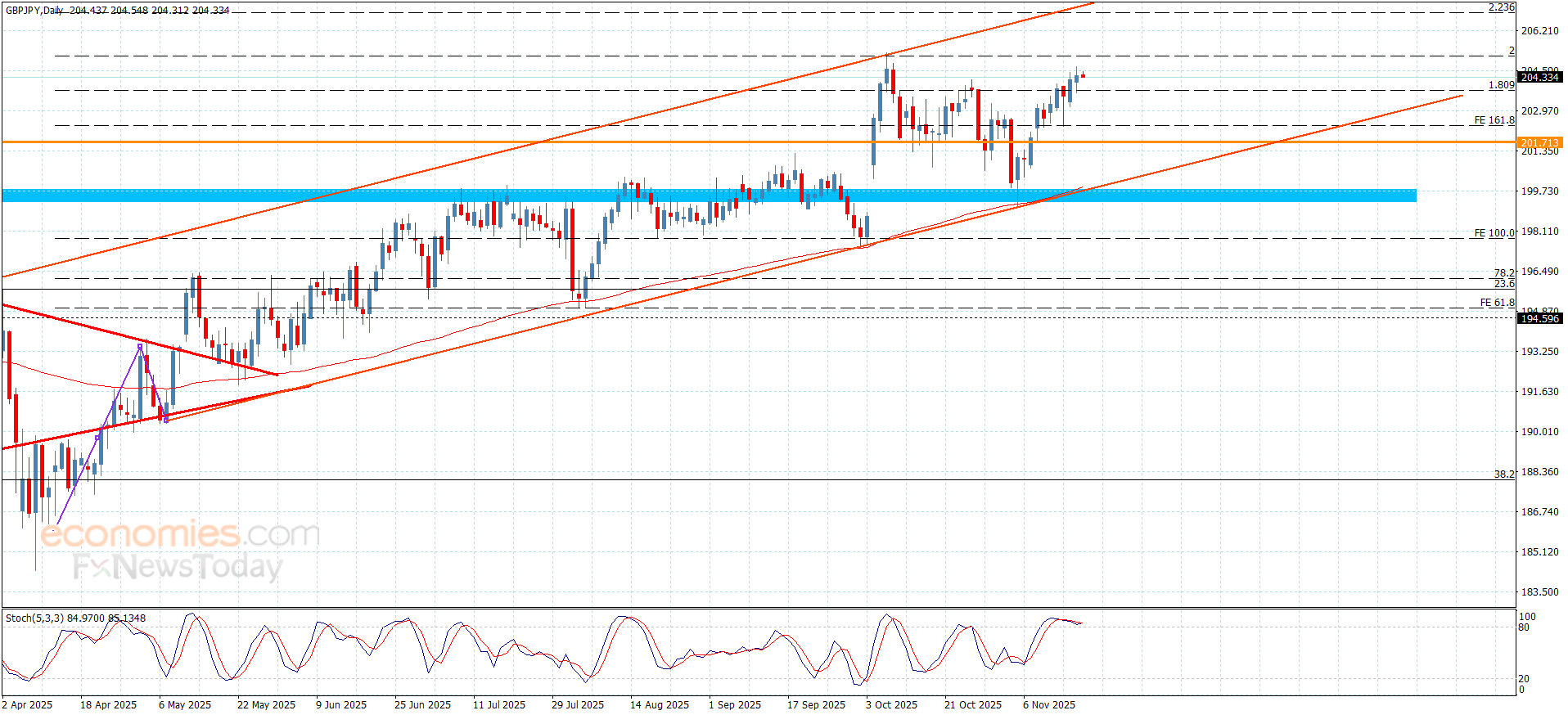
The GBPJPY begins the correctional decline– Forecast today – 30-6-2025

By |2025-06-30T11:28:51+03:00June 30, 2025|Forex News, News|0 Comments

Platinum price formed a clear correctional decline, to test the minor bullish channel’s support at $1324.75, to achieve the suggested correctional target in the previous report, then begin forming bullish waves to settle near $1363.00.


The continuation of the fluctuation within the bullish channel’s levels is expected, depending on the stability of the support to expect its rally to $1382.00 and $1400.00. While breaking the support and providing a negative close will confirm its readiness to resume the bearish correctional attack, and $1302.00 level represents the extra negative target.


The expected trading range for today is between $1330,00 and $1382.00


Trend forecast: Bullish


Source link

30 06, 2025

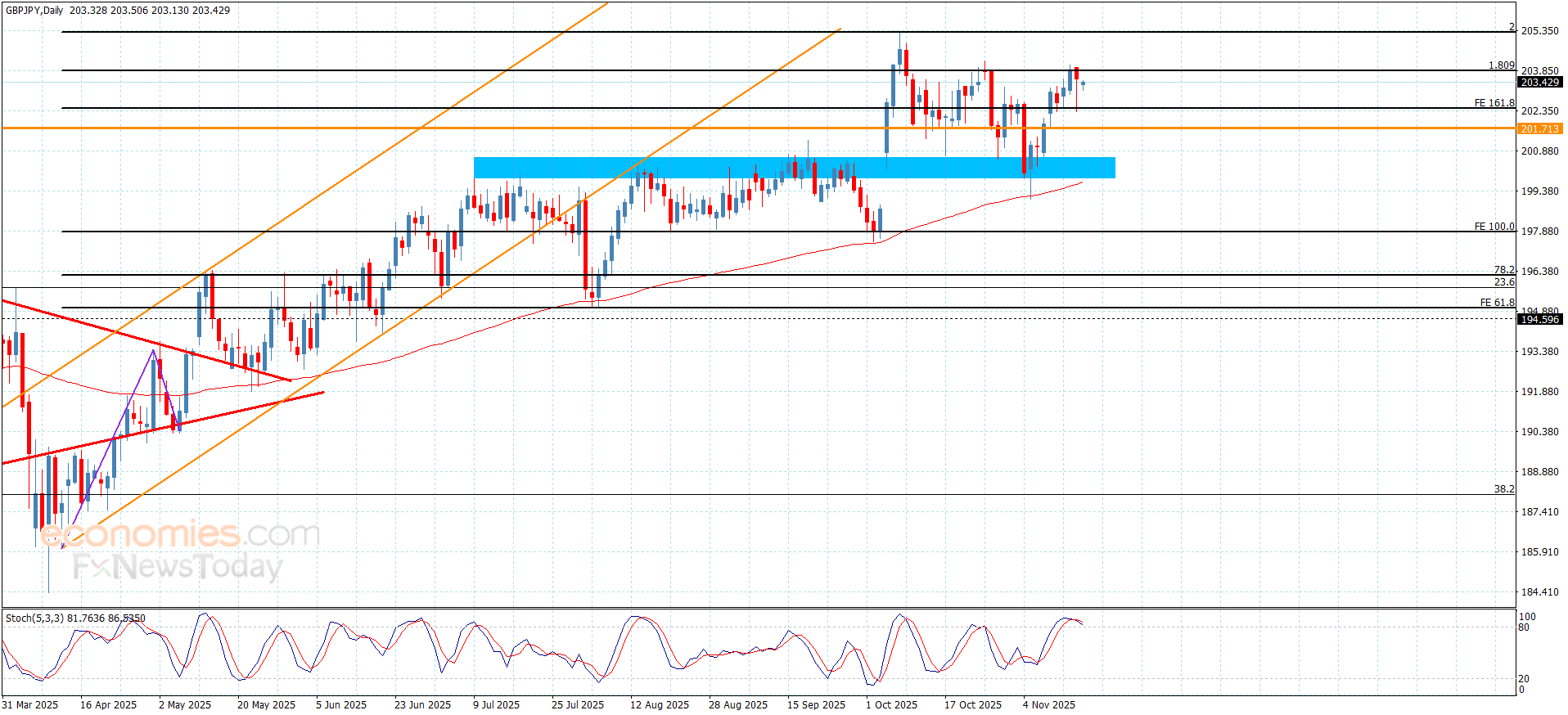
The EURJPY loses its positive momentum– Forecast today – 30-6-2025

By |2025-06-30T09:28:00+03:00June 30, 2025|Forex News, News|0 Comments

Platinum price formed a clear correctional decline, to test the minor bullish channel’s support at $1324.75, to achieve the suggested correctional target in the previous report, then begin forming bullish waves to settle near $1363.00.


The continuation of the fluctuation within the bullish channel’s levels is expected, depending on the stability of the support to expect its rally to $1382.00 and $1400.00. While breaking the support and providing a negative close will confirm its readiness to resume the bearish correctional attack, and $1302.00 level represents the extra negative target.


The expected trading range for today is between $1330,00 and $1382.00


Trend forecast: Bullish


Source link

29 06, 2025

Pound to Dollar Forecast: Next up “Psychologically Important 1.40”

By |2025-06-29T21:18:21+03:00June 29, 2025|Forex News, News|0 Comments

June 29, 2025 – Written by Tim Boyer

The US Dollar has continued to dominated global currency markets and has continued to struggle amid an underlying loss of confidence in the US currency with a particular focus on Federal Reserve policy.

The Pound to Dollar (GBP/USD) exchange rate is trading just below 1.3750 and not far below 44-month highs of 1.3770 recorded on Thursday. There is scope for some trimming of GBP/USD longs into the weekend.

Scotiabank noted some worrying signs, but commented; “The 50 day MA (1.3438) remains a critical medium-term level of support and the chart offers little major resistance ahead of the psychologically important 1.40 level.”

It added; “The near-term range is likely to be defined by 1.3600 support and 1.3800 resistance.”

UoB noted the risk of correction; “While GBP could continue to advance, overbought short-term conditions may lead to a couple of days of consolidation first. All in all, the outlook for GBP remains positive, and the next technical objective is 1.3800.”

Dollar developments dominated with no major developments during the day, although traders were monitoring UK budget developments after the U-turn on welfare spending.

As far as US data is concerned, the core PCE prices index increased 0.2% for May compared with consensus forecasts of a 0.1% increase with the year-on-year rate edging higher to 2.7% from 2.6%.


The slightly higher than expected data could discourage centrist Federal Reserve members from backing any near-term cut in interest rates, but rhetoric will continue to be watched closely.

Elsewhere, personal income declined 0.4% on the month with a 0.1% decline for personal spending.

Scotiabank added; “We think risks are tilted squarely towards more immediate and significant dollar losses. The FOMC consensus remains cool on July but speculation of rate cuts will intensify if the run of US data continues to disappoint.”

Monex Europe head of macro research Nick Rees noted the risk of further Fed criticism by the White House and forecast revisions; “I’ll be perfectly honest, I’m currently rewriting them in light of what we are seeing right now.”

He added; “We had thought the dollar should stabilize around current levels because the macro data is about to turn really quite positive.”

Seema Shah, chief global strategist at Principal Asset Management, “Talk about having the next Fed chair announced within the next couple of months, that would be fairly disruptive.”

She added; “It brings up the whole concern about the credibility and reliability of U.S. institutions again, which is typically something that people don’t like.”


Investec commented; “A successor perceived by the market to be more open to accommodating Trump’s wishes risks damaging the independence of the Fed in setting policy.”

Rabobank also noted potential risks; “An early nomination could make the nominee the “de facto shadow chair” as his comments (only men are reported to be on the shortlist) would carry a lot of weight in the markets regarding monetary policy beyond May 2026 when Powell’s term expires.”

According to Pepperstone’s Chris Weston; “For the dollar to see a sustained counter-rally, I would argue we’d need US growth to pick up and implied Fed rate cuts to be repriced — perhaps with growth data in Europe and China also slowing.”

He added; “That doesn’t seem likely in the near term, and as such, rallies in the dollar are likely to be quickly sold off, with the downtrend set to continue.”

Like this piece? Please share with your friends and colleagues:


International Money Transfer? Ask our resident FX expert a money transfer question or try John’s new, free, no-obligation personal service! ,where he helps every step of the way,
ensuring you get the best exchange rates on your currency requirements.

TAGS: Currency Predictions Pound Dollar Forecasts

Source link

29 06, 2025

Euro to Dollar Forecast: Trader Talk of 1.20 EUR/USD Increases

By |2025-06-29T17:16:24+03:00June 29, 2025|Forex News, News|0 Comments

June 29, 2025 – Written by Ben Hughes

The US Dollar has remained firmly on the defensive with further unease over Federal Reserve policy. There has been further speculation that the Administration will move to undermine central bank independence and aim directly or indirectly to force a near-term cut in interest rates.

The Euro to Dollar (EUR/USD) exchange rate is trading just above 1.1700 from 45-month highs just above 1.1740 reached on Thursday.

EUR/USD has posted seven successive daily gains which will potentially expose the pair to a limited correction.

UoB commented, “Further EUR strength still appears likely, but overbought short-term conditions could slow the pace of any further advance. The next level to monitor is 1.1780.”

ING notes that estimates of EUR/USD fair value have increased to around 1.1450 from 1.10 amid a decline in US yields.

According to the bank; “Geopolitical risk has been radically priced out, and most importantly, FOMC divisions have prompted material dovish speculation. This justifies a more bullish view on EUR/USD, but not necessarily a call for 1.20.

It added; “Markets’ enthusiasm for an earlier Fed cut may be misplaced, and EUR/USD may settle back around 1.15-1.16, awaiting conclusive information on inflation.”


According to Scotiabank; “This week it’s definitely been about the Fed, the prospect of easing sooner and potentially more rate cuts.”

Thursday’s US data recorded a decline in initial jobless claims to 236,000 in the latest week from 246,000 previously while there was a further increase in continuing claims to 1.97mn from 1.94mn and the highest figure since late 2021.

There was a downward revision to first-quarter GDP to -0.5% from -0.2%, but durable goods orders posted a stronger-than-expected increase.

Danske Bank noted; “There was a decent decline in US Treasury yields yesterday as well as a steepening of the yield curve on the back of weaker than expected Q1 GDP numbers from the US as well as speeches from various Federal Reserve officials that are indicating forthcoming easing of monetary policy despite the potential impact from Tariffs.”

There have been further rumours of a near-term move to name a successor to Chair Powell and effectively put a “shadow Fed” in play which would undermine official guidance ahead of May 2026 when Powell’s term as Chair is scheduled to end.

Commonwealth Bank of Australia commented; “The sooner a replacement is announced for Powell, the sooner he could be perceived to be a ‘lame duck’.”

She added; “For now, expectations President Trump will choose a more dovish chair will keep downward pressure on FOMC pricing and the USD.”


The leading contenders for next Fed chief reportedly include former Fed Gov. Kevin Warsh, National Economic Council head Kevin Hassett, current Fed Gov. Christopher Waller, and Treasury Secretary Scott Bessent.

RBC BlueBay Asset Management senior portfolio manager Kaspar Hense noted the risk of a dovish appointment: “This is not currently 100% in the price, and it would still move markets if someone like Hassett or Bessent would get the job in order to cut rates, ignoring fundamental risk.”

He added; “We are short the dollar in this environment, where there is an erosion of institutions.”

SocGen’s Kit Juckes added; “I think the market is pricing in President Trump appointing someone who at least at first sight appears more sympathetic to his cause.”

Scotiabank added; “The result of U.S. asset outperformance over the past decade is you’ve got a lot of asset managers that are long the U.S. dollar way more than I think they’re comfortable.”

Like this piece? Please share with your friends and colleagues:


International Money Transfer? Ask our resident FX expert a money transfer question or try John’s new, free, no-obligation personal service! ,where he helps every step of the way,
ensuring you get the best exchange rates on your currency requirements.

TAGS: Currency Predictions Euro Dollar Forecasts

Source link

28 06, 2025

GBP/USD Weekly Forecast: Bulls Pauses at 1.37, Eyes on US NFP

By |2025-06-28T17:03:44+03:00June 28, 2025|Forex News, News|0 Comments

  • The GBP/USD weekly forecast is strongly bullish as the dollar remains broadly weaker amid the Fed’s policy outlook.
  • The easing of geopolitical worries and contraction of US GDP further weighed on the dollar.
  • Next week’s employment data and US PMIs are essential to watch.

The British pound soared to its highest level since October 2021 against the US dollar, closing the week with a firm 2% gain above the 1.3700 mark. It was a seventh consecutive daily gain for the pair.

The rally was fueled by broader dollar weakness, easing geopolitical worries in the Middle East, and speculations around the Fed’s policy outlook.

Are you interested in learning more about MT5 brokers? Check our detailed guide-

What Happened to GBP/USD Last Week?

The GBP/USD pair started the week with a bearish gap as investors fled to the safe-haven dollar in the wake of America’s attacks on three nuclear sites of Iran. The fear of further escalation after Iran’s warning weighed on the pound and other riskier assets. However, a swift ceasefire restored the peace, and the US dollar collapsed, lending room to the pound buyers.

The Fed’s policy outlook also contributed to the dollar’s further decline. Markets are now pricing in a 21% probability for a July cut and75% for the September cut, driven by dovish commentary from the Fed’s Bowman and Waller. However, Fed Chair Powell maintained a cautious tone due to Trump’s tariffs, which may reignite inflation. However, Trump’s criticism of the Fed, accompanied by a threat to replace the chairman as soon as September, created chaos, resulting in a further sell-off of the US dollar.

The US economic data also reinforced the dovish narrative. The Q1 GDP showed a contraction of 0.5%, but Durable Goods Orders surprised to the upside. On Friday, the Core PCE Index came in at 2.7% y/y, slightly above the estimate, providing a mild bid to the dollar but not enough to offset the broader bearish momentum.

On the UK side, the pound found relative stability due to improved economic sentiment and better business activity.

GBP/USD Key Events Next Week

There is no significant data from the UK next week. However, the markets will be closely watching the US labor market data and the Fed Chair’s speech. The ADP employment is expected to tick up to 105,000 from the previous 37,000 modestly. But the NFP print may continue its decline to 120k from the last 139k. Meanwhile, the unemployment rate may also slightly rise to 4.3%.

In addition to these, US Manufacturing/Services PMIs and JOLTs data are also due next week, which may provide impetus to the market.

GBP/USD Weekly Technical Forecast: Bulls Pause at 1.3700

GBP/USD Weekly Forecast: Bulls Pauses at 1.37, Eyes on US NFP
GBP/USD daily chart

The daily chart for the GBP/USD shows a strong bullish momentum, lying well above the key moving averages. However, the price could not hold onto the weekly highs of 1.3770 and corrected downwards. But the 1.3700 continues to support the upside. Meanwhile, the 20-day SMA is at 1.3555, which is almost 150 pips down from the current price. The overextended rally may see some consolidation and reversion to the 20-day SMA before a bullish continuation.

Are you interested in learning more about forex signals telegram groups? Check our detailed guide-

The daily RSI is still below the overbought territory, which means further gains cannot be ruled out. The pair may test its weekly top at 1.3770 ahead of 1.3800. The ultimate bullish target lies at 1.4000.

Looking to trade forex now? Invest at eToro!

68% of retail investor accounts lose money when trading CFDs with this provider. You should consider whether you can afford to take the high risk of losing your money.

Source link

27 06, 2025

Pound Sterling could correct lower in case 1.3750 resistance holds

By |2025-06-27T20:53:30+03:00June 27, 2025|Forex News, News|0 Comments

  • GBP/USD consolidates weekly gains above 1.3700 on Friday.
  • The technical outlook suggests that there is room for technical correction.
  • Markets await May PCE inflation data from the US.

GBP/USD extended its weekly rally and reached its highest level since October 2021 at 1.3770 on Thursday. The pair stays in a consolidation phase in the European session on Friday and fluctuates slightly below 1.3750.

British Pound PRICE This week

The table below shows the percentage change of British Pound (GBP) against listed major currencies this week. British Pound was the strongest against the US Dollar.

USD EUR GBP JPY CAD AUD NZD CHF
USD -2.09% -2.37% -1.43% -0.69% -1.56% -1.80% -2.31%
EUR 2.09% -0.31% 0.71% 1.44% 0.49% 0.30% -0.26%
GBP 2.37% 0.31% 1.07% 1.75% 0.80% 0.61% 0.04%
JPY 1.43% -0.71% -1.07% 0.74% -0.17% -0.32% -0.98%
CAD 0.69% -1.44% -1.75% -0.74% -0.84% -1.12% -1.67%
AUD 1.56% -0.49% -0.80% 0.17% 0.84% -0.21% -0.74%
NZD 1.80% -0.30% -0.61% 0.32% 1.12% 0.21% -0.56%
CHF 2.31% 0.26% -0.04% 0.98% 1.67% 0.74% 0.56%

The heat map shows percentage changes of major currencies against each other. The base currency is picked from the left column, while the quote currency is picked from the top row. For example, if you pick the British Pound from the left column and move along the horizontal line to the US Dollar, the percentage change displayed in the box will represent GBP (base)/USD (quote).

The broad-based selling pressure surrounding the US Dollar (USD) fuelled GBP/USD’s climb on Thursday. News suggesting that United States (US) President Donald Trump is planning to announce Federal Reserve (Fed) Chairman Jerome Powell’s replacement early to undermine him triggered a USD selloff. Additionally, mixed macroeconomic data releases from the US further weighed on the currency.

The US Bureau of Economic Analysis announced on Thursday that the Gross Domestic Product (GDP) contracted at an annual rate of 0.5%, compared to the 0.2% contraction reported in the previous estimate. Other data from the US showed that weekly Initial Jobless Claims declined to 236,000 from 245,000 in the previous week and Durable Goods Orders rose by 16.4% in May, surpassing the market expectation of 8.5%.

Later in the session, the Personal Consumption Expenditures (PCE) Price Index data, the Fed’s preferred gauge of inflation, for May will be featured in the US economic calendar. Markets expect the monthly core PCE Price Index, which excludes volatile food and energy prices, to rise 0.1%. The market reaction to this data is likely to be straightforward and remain short-lived. A stronger-than-anticipated increase could support the USD in the immediate term.

Investors will also pay close attention to the changes in risk perception heading into the weekend. At the time of press, US stock index futures were up about 0.3%. A continuation of the risk rally could make it difficult for the USD to find demand and allow GBP/USD to inch higher.

GBP/USD Technical Analysis

The Relative Strength Index (RSI) indicator on the 4-hour chart started to edge lower after rising above 70 on Thursday, suggesting that GBP/USD is in a correctional phase before extending its uptrend.

On the upside, interim resistance seems to have formed at 1.3750 ahead of 1.3790-1.3800 (upper limit of the ascending channel, static level) and 1.3860 (static level). Supports could be seen at 1.3700 (static level, round level), 1.3630 (mid-point of the ascending channel) and 1.3600 (static level).

Pound Sterling FAQs

The Pound Sterling (GBP) is the oldest currency in the world (886 AD) and the official currency of the United Kingdom. It is the fourth most traded unit for foreign exchange (FX) in the world, accounting for 12% of all transactions, averaging $630 billion a day, according to 2022 data.
Its key trading pairs are GBP/USD, also known as ‘Cable’, which accounts for 11% of FX, GBP/JPY, or the ‘Dragon’ as it is known by traders (3%), and EUR/GBP (2%). The Pound Sterling is issued by the Bank of England (BoE).

The single most important factor influencing the value of the Pound Sterling is monetary policy decided by the Bank of England. The BoE bases its decisions on whether it has achieved its primary goal of “price stability” – a steady inflation rate of around 2%. Its primary tool for achieving this is the adjustment of interest rates.
When inflation is too high, the BoE will try to rein it in by raising interest rates, making it more expensive for people and businesses to access credit. This is generally positive for GBP, as higher interest rates make the UK a more attractive place for global investors to park their money.
When inflation falls too low it is a sign economic growth is slowing. In this scenario, the BoE will consider lowering interest rates to cheapen credit so businesses will borrow more to invest in growth-generating projects.

Data releases gauge the health of the economy and can impact the value of the Pound Sterling. Indicators such as GDP, Manufacturing and Services PMIs, and employment can all influence the direction of the GBP.
A strong economy is good for Sterling. Not only does it attract more foreign investment but it may encourage the BoE to put up interest rates, which will directly strengthen GBP. Otherwise, if economic data is weak, the Pound Sterling is likely to fall.

Another significant data release for the Pound Sterling is the Trade Balance. This indicator measures the difference between what a country earns from its exports and what it spends on imports over a given period.
If a country produces highly sought-after exports, its currency will benefit purely from the extra demand created from foreign buyers seeking to purchase these goods. Therefore, a positive net Trade Balance strengthens a currency and vice versa for a negative balance.

Source link

Go to Top