The main tag of Forex News Today Articles.
You can use the search box below to find what you need.
[wd_asp id=1]

10 03, 2026

The EURJPY attempts to take advantage of the main indicators’ positivity– Forecast today – 10-3-2026

By |2026-03-10T16:02:02+02:00March 10, 2026|Forex News, News|0 Comments

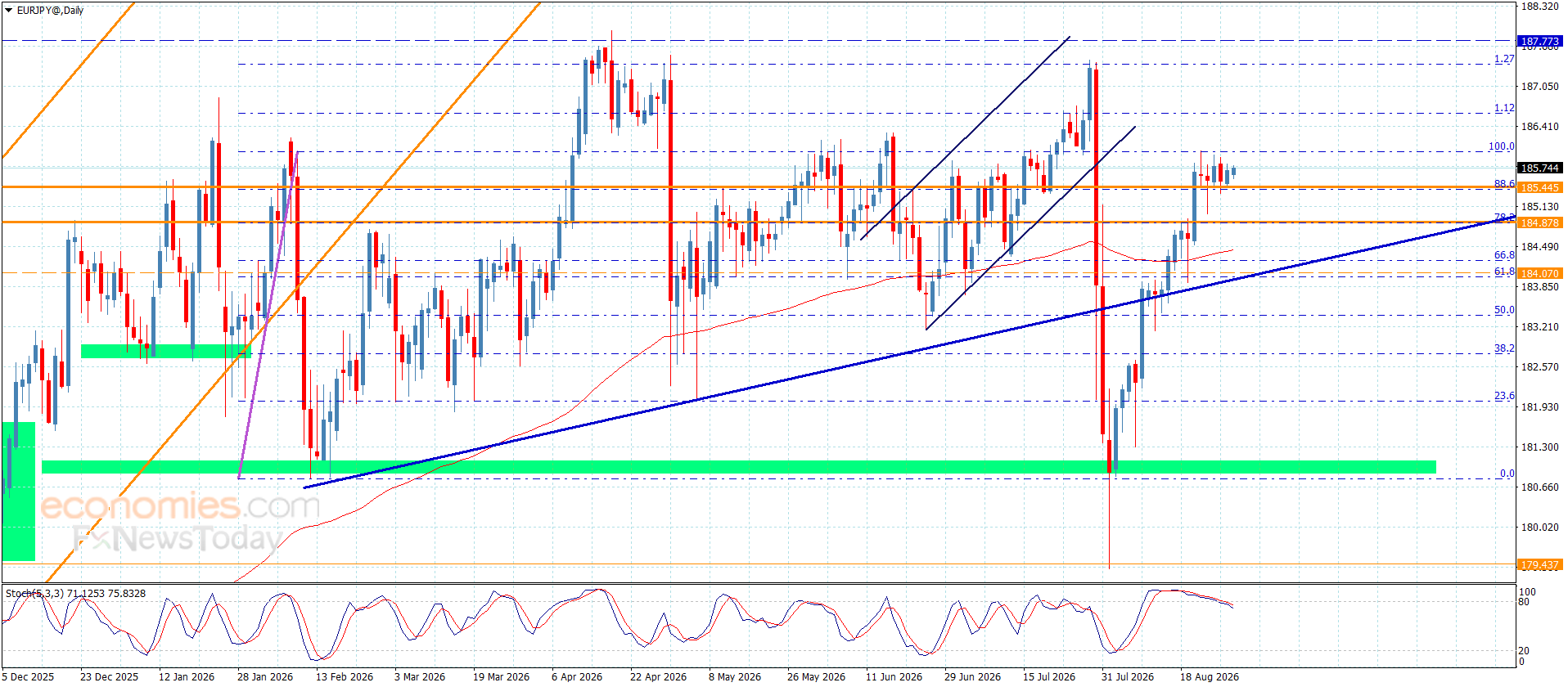
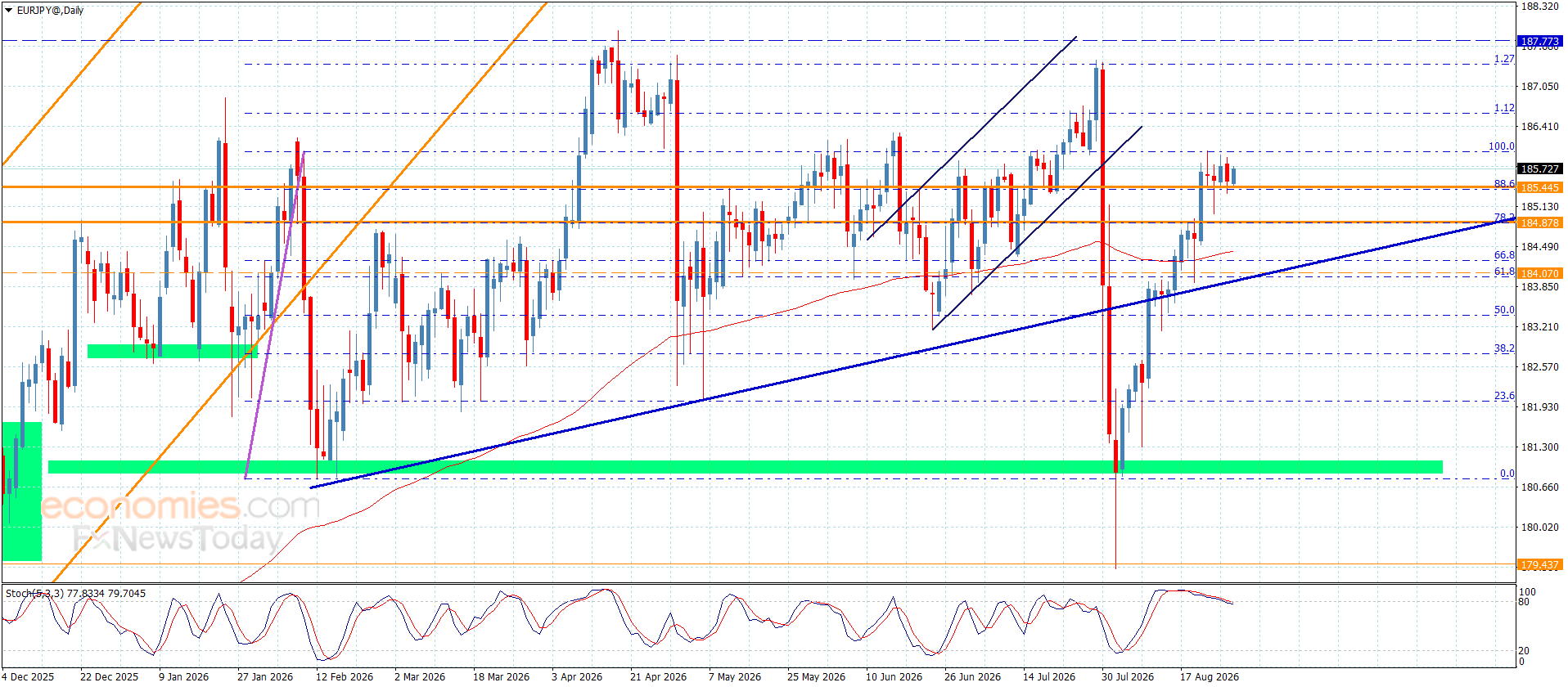
Despite the weakness of the EURJPY pair last trading, the continuation of providing bullish momentum by the main indicators assisted in reinforcing the chances of forming bullish waves, to target 183.60 level, then to settle below %50 correction level at 183.40.


 We recommend waiting for providing a new positive close above 183.40 level, to confirm its readiness to record some gains by its rally towards 184.00 and 184.25, while the failure to breach it might force the price to form new bearish waves, attempting to reach towards 182.60 then press on the extra support at 182.00.


The expected trading range for today is between 182.70 and 184.00


Trend forecast: Bullish


Source link

10 03, 2026

Bulls retain control on hopes for end to Iran war

By |2026-03-10T12:01:08+02:00March 10, 2026|Forex News, News|0 Comments

The GBP/USD pair attracts buyers for the third consecutive day and climbs to over a one-week high, around the 1.3485 region, during the first half of the European session on Tuesday. The move up is backed by a combination of supporting factors, which backs the case for an extension of the recent bounce from the vicinity of mid-1.3200s, or a three-month trough, touched last week.

US President Donald Trump said on Monday that the US-Israel campaign in Iran may soon come to a conclusion and would be over very soon, boosting investors’ confidence and triggering a goodish recovery in the global risk sentiment. This is evident from a positive tone around the equity markets and undermines demand for the safe-haven US Dollar (USD). Furthermore, the latest development led to an overnight dramatic turnaround in Crude Oil prices, which provides some respite from a potential war-driven surge in inflation. This likely reduces the chances ​of a hawkish shift from the US Federal Reserve (Fed) and weighs on US Treasury bond yields, dragging the USD further away from a three-month top set on Monday and lending some support to the GBP/USD pair.

The British Pound’s (GBP) relative outperformance could also be tied to the Bank of England (BoE) interest rate repricing. Two weeks ago, traders were pricing in approximately three BoE rate cuts for 2026. As of Monday, those expectations were replaced with a roughly 70% probability of a rate hike by year-end. This marks a swing of 100 basis points (bps) in expected BoE policy direction within two weeks, which turns out to be another factor acting as a tailwind for the GBP/USD pair. That said, hopes that the British government could introduce packages to support households in the face of a new energy cost shock – as hinted by Prime Minister Keir Starmer – raise the odds of a destabilising bond market and might cap the GBP. This warrants some caution for aggressive bullish traders.

In fact, Starmer said that Chancellor Rachel Reeves was in touch with the BoE, which is the clearest sign that the government is worried that measures could trigger unforeseen market reactions. Moreover, Iran’s Islamic Revolutionary Guard Corps (IRGC) dismissed Trump’s remarks as nonsense and said that Tehran, not Washington, will determine when the war ends. Adding to this, Iranian officials warned that regional security would either exist for everyone or for no one. This keeps geopolitical risks in play, which could limit deeper losses for the safe-haven Greenback and contribute to capping the GBP/USD pair. Hence, the focus remains squarely on developments surrounding the US-Israel-Iran war as traders look to this week’s macro data from the US and the UK for short-term opportunities.

GBP/USD 4-hour chart

Technical Analysis:

An intraday move beyond the 23.6% Fibonacci retracement level of the 1.3255–1.3867 downswing was seen as a key trigger for the GBP/USD bulls, though the subsequent move up stalls near the 38.2% Fibo. level. Hence, it will be prudent to wait for some follow-through buying beyond the 1.3500 psychological mark before positioning for additional gains toward the 50% retracement and the 200-period SMA on the 4-hour chart converging in the 1.3560–1.3565 region.

On the downside, initial support stands at the 23.6% retracement at 1.3399, followed by stronger backing at 1.3350, where the recent consolidation base aligns with the latest pullback lows. A sustained move above 1.3565 would strengthen the bullish case, while a drop below 1.3350 would weaken the current upward bias and point back toward the 1.3300 area.

Momentum signals underpin the upside: the Moving Average Convergence Divergence (MACD) line has moved above its signal line in positive territory with a modestly expanding histogram, and the Relative Strength Index (RSI) holds near 60, indicating firm but not overstretched bullish momentum.

(The technical analysis of this story was written with the help of an AI tool.)

Source link

10 03, 2026

Bearish pressure persists as Middle East crisis worsens

By |2026-03-10T08:00:34+02:00March 10, 2026|Forex News, News|0 Comments

EUR/USD started the week with a bearish gap and declined toward 1.1500 before recovering slightly. At the time of press, the pair was trading at 1.1525, losing about 0.8% on a daily basis.

Euro Price Today

The table below shows the percentage change of Euro (EUR) against listed major currencies today. Euro was the weakest against the Canadian Dollar.

USD EUR GBP JPY CAD AUD NZD CHF
USD 0.65% 0.59% 0.48% -0.07% 0.44% 0.23% 0.45%
EUR -0.65% -0.07% -0.22% -0.71% -0.21% -0.42% -0.21%
GBP -0.59% 0.07% -0.15% -0.64% -0.14% -0.35% -0.13%
JPY -0.48% 0.22% 0.15% -0.54% -0.03% -0.24% -0.02%
CAD 0.07% 0.71% 0.64% 0.54% 0.51% 0.29% 0.52%
AUD -0.44% 0.21% 0.14% 0.03% -0.51% -0.21% 0.01%
NZD -0.23% 0.42% 0.35% 0.24% -0.29% 0.21% 0.23%
CHF -0.45% 0.21% 0.13% 0.02% -0.52% -0.01% -0.23%

The heat map shows percentage changes of major currencies against each other. The base currency is picked from the left column, while the quote currency is picked from the top row. For example, if you pick the Euro from the left column and move along the horizontal line to the US Dollar, the percentage change displayed in the box will represent EUR (base)/USD (quote).

Crude Oil prices rose sharply at the opening with no signs of a de-escalation in the Middle East conflict.

Although Iranian President Masoud Pezeshkian apologised to the neighbouring countries over the weekend and announced that Tehran will not strike “unless they attack first,” the disruption in Strait of Hormuz remains unchecked. Several major oil producers in the region, including the United Arab Emirates and Iraq, have decided to reduce Oil production, citing a lack of storage space because of tankers refusing to pass through the strait. As of writing, the barrel of West Texas Intermediate was trading near $103, rising more than 13% on the day.

Rising Oil prices and growing fears over a prolonged crisis force investors to adopt a cautious stance on Monday. The US Dollar (USD) Index, which trackes the USD’s performance against a basket of six major currencies, was last seen rising 0.7% on the day at 99.50. Reflecting the intense flight-to-safety action, US stock index futures are down about 1.5% in the European session on Monday, while Euro Stoxx 50 Index loses more than 2.5%.

Investors will remain focused on geopolitics because the economic calendar will not feature any high-tier data releases on Monday.

The International Energy Agency (IEA) is reportedly discussing a coordinated release of emergency oil reserves among G7 members to stabilize the energy markets. In case Oil prices correct sharply lower following an intevention, the risk mood could improve with the immediate reaction and help EUR/USD find a foothold. Unless there is a noticeable de-escalation, however, the pair’s recovery attempts could remain short-lived.

EUR/USD Technical Analysis:

The near-term bias is mildly bearish as the pair holds below the 20-, 50-, 100- and 200-period Simple Moving Averages (SMAs) on the 4-hour chart, which all slope lower and cap recovery attempts. Price trades near the lower area of the recent Bollinger Bands, reflecting persistent downside pressure after the recent slide from the mid-1.17s. The Relative Strength Index (RSI) sits in the low-30s, staying below the 50 line and reinforcing bearish bias without yet signaling an extreme oversold condition.

Immediate resistance emerges at 1.1570, where a horizontal barrier aligns just ahead of the descending 20-period SMA near 1.1600 and the 50-period SMA slightly higher, forming a resistance zone that would need clearing to ease bearish pressure. Above that, the next resistance is seen at 1.1670. On the downside, initial support stands at 1.1500, followed by a more distant floor at 1.1460, with a deeper level at 1.1401 only coming into play if sellers extend the current downtrend.

(The technical analysis of this story was written with the help of an AI tool.)

Euro FAQs

The Euro is the currency for the 20 European Union countries that belong to the Eurozone. It is the second most heavily traded currency in the world behind the US Dollar. In 2022, it accounted for 31% of all foreign exchange transactions, with an average daily turnover of over $2.2 trillion a day.
EUR/USD is the most heavily traded currency pair in the world, accounting for an estimated 30% off all transactions, followed by EUR/JPY (4%), EUR/GBP (3%) and EUR/AUD (2%).

The European Central Bank (ECB) in Frankfurt, Germany, is the reserve bank for the Eurozone. The ECB sets interest rates and manages monetary policy.
The ECB’s primary mandate is to maintain price stability, which means either controlling inflation or stimulating growth. Its primary tool is the raising or lowering of interest rates. Relatively high interest rates – or the expectation of higher rates – will usually benefit the Euro and vice versa.
The ECB Governing Council makes monetary policy decisions at meetings held eight times a year. Decisions are made by heads of the Eurozone national banks and six permanent members, including the President of the ECB, Christine Lagarde.

Eurozone inflation data, measured by the Harmonized Index of Consumer Prices (HICP), is an important econometric for the Euro. If inflation rises more than expected, especially if above the ECB’s 2% target, it obliges the ECB to raise interest rates to bring it back under control.
Relatively high interest rates compared to its counterparts will usually benefit the Euro, as it makes the region more attractive as a place for global investors to park their money.

Data releases gauge the health of the economy and can impact on the Euro. Indicators such as GDP, Manufacturing and Services PMIs, employment, and consumer sentiment surveys can all influence the direction of the single currency.
A strong economy is good for the Euro. Not only does it attract more foreign investment but it may encourage the ECB to put up interest rates, which will directly strengthen the Euro. Otherwise, if economic data is weak, the Euro is likely to fall.
Economic data for the four largest economies in the euro area (Germany, France, Italy and Spain) are especially significant, as they account for 75% of the Eurozone’s economy.

Another significant data release for the Euro is the Trade Balance. This indicator measures the difference between what a country earns from its exports and what it spends on imports over a given period.
If a country produces highly sought after exports then its currency will gain in value purely from the extra demand created from foreign buyers seeking to purchase these goods. Therefore, a positive net Trade Balance strengthens a currency and vice versa for a negative balance.

Source link

10 03, 2026

USD/JPY Price Forecast Surges As Safe-Haven US Dollar Gains Momentum Amid Global Uncertainty

By |2026-03-10T03:59:19+02:00March 10, 2026|Forex News, News|0 Comments


USD/JPY Price Forecast Surges As Safe-Haven US Dollar Gains Momentum Amid Global Uncertainty


Source link

9 03, 2026

Critical Bearish Bias Emerges As Energy Shock Repricing Intensifies

By |2026-03-09T23:57:21+02:00March 9, 2026|Forex News, News|0 Comments


EUR/USD Forecast: Critical Bearish Bias Emerges As Energy Shock Repricing Intensifies


Source link

9 03, 2026

The EURJPY continues to fluctuate– Forecast today – 9-3-2026

By |2026-03-09T19:56:26+02:00March 9, 2026|Forex News, News|0 Comments

Platinum price formed a new bearish attack with the beginning of today’s trading, to approach from the targeted obstacle near $2010.00, which forced it to form bullish corrective rebound, to settle near $2100.00.


The bullish corrective rebound will not threaten the main bearish trend, depending on the main stability below $2210.00, besides the continuation of providing negative momentum by the main indicators, therefore, we will keep the bearish attempts in the current period, which might target 2040.00 and 2010.00 level.


The expected trading range for today is between $2010.00 and $2150.00


Trend forecast: Bearish


Source link

9 03, 2026

Expects more downfall below 1.3250

By |2026-03-09T15:54:50+02:00March 9, 2026|Forex News, News|0 Comments

The Pound Sterling is down 0.5% to near 1.3350 against the US Dollar (USD) during the European trading session on Monday. The GBP/USD pair tumbles as the US Dollar (USD) outperforms its peers, with demand for safe-haven assets remaining firm, amid war in the Middle East between the United States (US), Israel, and Iran.

US Dollar Price Today

The table below shows the percentage change of US Dollar (USD) against listed major currencies today. US Dollar was the strongest against the Euro.

USD EUR GBP JPY CAD AUD NZD CHF
USD 0.63% 0.50% 0.41% -0.19% 0.41% 0.26% 0.26%
EUR -0.63% -0.13% -0.18% -0.81% -0.22% -0.36% -0.36%
GBP -0.50% 0.13% -0.08% -0.68% -0.09% -0.24% -0.24%
JPY -0.41% 0.18% 0.08% -0.60% -0.01% -0.16% -0.16%
CAD 0.19% 0.81% 0.68% 0.60% 0.60% 0.45% 0.45%
AUD -0.41% 0.22% 0.09% 0.00% -0.60% -0.14% -0.15%
NZD -0.26% 0.36% 0.24% 0.16% -0.45% 0.14% 0.00%
CHF -0.26% 0.36% 0.24% 0.16% -0.45% 0.15% -0.01%

The heat map shows percentage changes of major currencies against each other. The base currency is picked from the left column, while the quote currency is picked from the top row. For example, if you pick the US Dollar from the left column and move along the horizontal line to the Japanese Yen, the percentage change displayed in the box will represent USD (base)/JPY (quote).

As of writing, the US Dollar Index (DXY), which tracks the Greenback’s value against six major currencies, trades 0.5% higher to near 99.35.

The outlook of the US Dollar remains firm as the war in the Middle East could escalate further, following the announcement of Mojtaba Khamenei as Iran’s new Supreme Leader. US President Donald Trump said last week that the choice for Iran’s new supreme leader would be “unacceptable”, and he intends to pick a new one for them.

On the macroeconomic front, investors await the US Consumer Price Index (CPI) data for February, which will be released on Wednesday. In the United Kingdom (UK), investors will focus on the monthly Gross Domestic Product (GDP) and the factory data for January, which is scheduled on Friday.

GBP/USD technical analysis

GBP/USD trades sharply lower at around 1.3350 as of writing. The near-term bias is bearish as spot holds below the 20-day exponential moving average, which is around 1.3466 and capping rebounds.

The 14-day Relative Strength Index (RSI) slides to near 35.00, confirming a downside momentum after failing to sustain earlier recoveries, keeping sellers in control while the pair trades beneath the recent cluster of short-term averages.

Initial resistance emerges at the 20-day EMA, followed by the 38.2% Fibonacci retracement at 1.3539. On the downside, immediate support sits near the March 3 low of 1.3254, and a clear break below this area would expose the next bearish objective toward 1.3190, the 78.6% retracement, as the broader corrective phase deepens.

(The technical analysis of this story was written with the help of an AI tool.)

Pound Sterling FAQs

The Pound Sterling (GBP) is the oldest currency in the world (886 AD) and the official currency of the United Kingdom. It is the fourth most traded unit for foreign exchange (FX) in the world, accounting for 12% of all transactions, averaging $630 billion a day, according to 2022 data.
Its key trading pairs are GBP/USD, also known as ‘Cable’, which accounts for 11% of FX, GBP/JPY, or the ‘Dragon’ as it is known by traders (3%), and EUR/GBP (2%). The Pound Sterling is issued by the Bank of England (BoE).

The single most important factor influencing the value of the Pound Sterling is monetary policy decided by the Bank of England. The BoE bases its decisions on whether it has achieved its primary goal of “price stability” – a steady inflation rate of around 2%. Its primary tool for achieving this is the adjustment of interest rates.
When inflation is too high, the BoE will try to rein it in by raising interest rates, making it more expensive for people and businesses to access credit. This is generally positive for GBP, as higher interest rates make the UK a more attractive place for global investors to park their money.
When inflation falls too low it is a sign economic growth is slowing. In this scenario, the BoE will consider lowering interest rates to cheapen credit so businesses will borrow more to invest in growth-generating projects.

Data releases gauge the health of the economy and can impact the value of the Pound Sterling. Indicators such as GDP, Manufacturing and Services PMIs, and employment can all influence the direction of the GBP.
A strong economy is good for Sterling. Not only does it attract more foreign investment but it may encourage the BoE to put up interest rates, which will directly strengthen GBP. Otherwise, if economic data is weak, the Pound Sterling is likely to fall.

Another significant data release for the Pound Sterling is the Trade Balance. This indicator measures the difference between what a country earns from its exports and what it spends on imports over a given period.
If a country produces highly sought-after exports, its currency will benefit purely from the extra demand created from foreign buyers seeking to purchase these goods. Therefore, a positive net Trade Balance strengthens a currency and vice versa for a negative balance.

Source link

9 03, 2026

Trading range breakout favors bulls amid Iran war

By |2026-03-09T11:53:21+02:00March 9, 2026|Forex News, News|0 Comments

The USD/JPY pair scales higher for the third consecutive day and climbs to the 159.00 neighborhood, or its highest level since January 23 at the start of a new week. The Japanese Yen (JPY) continues with its underperformance as the recent surge in Crude Oil prices threatens to weaken economic growth. This, along with a broadly firmer US Dollar (USD), turns out to be another factor pushing the currency pair higher.

The joint US-Israeli campaign against Iran enters its tenth day on Monday, with no signs of an end to hostilities. Meanwhile, Iran named Ayatollah Ali Khamenei’s son, Mojtaba Khamenei, as the new Supreme Leader, signaling hardliners remain firmly in charge. US President Donald Trump said the appointment would be unacceptable and suggested the US should have a role in choosing Iran’s next supreme leader. This raises the risk of a prolonged war, which triggered a massive intraday rally of over 25% in Crude Oil prices on Monday.

Meanwhile, surging energy prices could drive up inflation and would create a classic stagflationary environment, complicating the Bank of Japan’s (BoJ) normalization efforts and weighing heavily on the JPY. The USD, on the other hand, benefits from its unmatched status as the global reserve currency. Moreover, inflation concerns dim the prospects for near‑term rate reductions by the US Federal Reserve (Fed) and remain supportive of a further rise in US Treasury bond yields. This provides an additional boost to the USD and the USD/JPY pair.

Meanwhile, spot prices have now moved closer to the levels when authorities conducted a series of rate checks earlier this year, keeping the risk of actual market intervention. This, in turn, holds back the JPY bears from placing aggressive bets and caps the upside for the USD/JPY pair. Nevertheless, the aforementioned fundamental backdrop suggests that the path of least resistance for the currency pair remains to the upside. Hence, any meaningful corrective pullback might still be seen as a buying opportunity and is more likely to remain cushioned.

Traders now look forward to Japan’s revised Q4 Gross Domestic Product (GDP) report, which will be released on Tuesday and is expected to show that the economy expanded at a faster pace of 0.3% against the preliminary reading of 0.1%. Apart from this, the latest US consumer inflation figures on Wednesday will influence the USD demand and provide a fresh impetus to the USD/JPY pair. The focus, however, will remain glued to geopolitical developments, which might continue to infuse volatility in the financial markets and drive the currency pair.

USD/JPY 4-hour chart

Technical Analysis:

The USD/JPY pair retains a mildly bullish near-term bias following a sustained breakout above a one-week-old trading range resistance near the 158.00 mark. Moreover, the Moving Average Convergence Divergence (MACD) histogram has turned marginally positive while the MACD line hovers close to the signal line just above the zero mark, hinting at improving but still moderate upside momentum. Adding to this, the Relative Strength Index around 64 stays below overbought territory, indicating buyers keep control without yet showing signs of exhaustion.

Immediate support emerges at the 158.00 trading range resistance breakpoint, with a deeper floor at 157.30 that guards the recent higher low area. A break below 157.30 would weaken the bullish bias and expose the 156.80 region as the next downside focus. On the topside, initial resistance appears at 158.90, the latest swing high, followed by 159.50, where an extension of the current move would encounter a more significant barrier. A sustained move above 158.90 would open the path toward 159.50, reinforcing the upside scenario in the 4-hour picture.

(The technical analysis of this story was written with the help of an AI tool.)

Source link

8 03, 2026

Weekly Forex Forecast – 9th to 13th March 2026 (Charts)

By |2026-03-08T15:47:35+02:00March 8, 2026|Forex News, News|0 Comments

Full-scale war over Iran in the Middle East has pushed energies to multi-year highs and helped strengthen safe havens such as the US Dollar and Gold.

I wrote on the 1st March that the best trades for the week would be:

  1. Long of Gold following a daily (New York) close above $5,418.55. This did not set up.

  2. Short of Bitcoin following a daily (New York) close below $61,000 targeting $50,000. This did not set up either.

A summary of last week’s most important data in the market:

  1. US Average Hourly Earnings – this was a fraction higher than expected, showing a month-on-month increase of 0.4% compared to a widely anticipated 0.3%, weakening the case for rate cuts.

  2. US Non-Farm Employment Change – this was considerably worse than expected, by approximately 150k jobs, strengthening the case for rate cuts.

  3. US Retail Sales – this was just a tick higher than expected, but it was still a negative rate.

  4. US ISM Services PMI – this was much better than expected.

  5. Australian GDP – the Australian economy grew by 0.8% last quarter, while growth of only 0.7% was expected, giving a slight boost to the prospect of rate hikes.

  6. UK Annual Budget – no surprises.

  7. US Unemployment Rate – unexpectedly ticked higher from 4.3% to 4.4%.

  8. US Unemployment Claims – this was approximately as expected.

The only significant effects last week’s economic data had was a hawkish tilt on the USD, with the CME FedWatch tool now showing the market is pricing in only one further rate cut in 2026, a cut of 0.25% in September.

The week was really dominated by the ongoing war between Israel/USA and Iran, with several US-friendly countries near Iran being attached by Iran, although the attacks are mostly aimed at US bases. Some of Iran’s neighbours have retaliated or claimed to have done so, notably Qatar and the UAE.

It seems clear that the US and Israel basically have achieved air superiority in the skies of Iran and intend to systematically demolish the Islamic Republic and its military capabilities, with a focus on its ballistic missiles and nuclear program. From the point of view of Israel and the USA, the war can be said to be proceeding very successfully.

It seems clear that this war is going to last for a few weeks, maybe even as long as six weeks, and that a surrender by the regime remains unlikely, at least for time being.

Hezbollah, Iran’s proxy in Lebanon, joined the war on day 3 by firing on Israel. It is pretty clear Hezbollah also fired drones at a sovereign British base in Cyprus, which is an attack on NATO and the EU, although very little is being done about it.

Most notably for the markets, traffic has almost completely stopped passing through the trait of Hormuz, and although there are sufficient stockpiles to last a few weeks, we are seeing the price of crude oil and crude oil related products jump to long-term highs, with WTI surpassing $90 per barrel on Friday. It may be that the US administration had hoped the price would not rise so far so quickly, but these high crude oil prices could feed into other aspects of the economy and start to bring stock markets lower.

The coming week’s most important data points, in order of likely importance, are:

  1. USA CPI (inflation)

  2. US Core PCE Price Index

  3. US Preliminary GDP

  4. US JOLTS Job Openings

  5. US Unemployment Claims

  6. UK GDP

  7. Canada Unemployment Rate

Currency Price Changes and Interest Rates

For the month of March, I make no monthly Forex forecast as the US Dollar is not in a clear trend right now.

Last week saw no currency crosses with excessive volatility, so I am making no forecast for the coming week.

The US Dollar was the strongest major currency last week, while the Euro was the weakest. Directional volatility increased last week, with 41% of all major pairs and crosses changing in value by more than 1%.

Next week’s volatility is likely to remain high due to the few but highly significant data releases scheduled and the ongoing war in the Middle East, which might generate volatility in the US Dollar, the Japanese Yen, and the Canadian Dollar. There could also be unforeseen side effects which might affect other currencies.

You can trade these forecasts in a real or demo Forex brokerage account.

Weekly Forex Forecast – 9th to 13th March 2026 (Charts)

Key Support and Resistance Levels

Last week, the US Dollar printed a large bullish candlestick which opened with a gap higher. Although there is a significant upper wick and a rejection of a recent inflective high, which is often a bearish sign, the price is now showing a technical long-term bullish trend because the price is higher than it was both three and six months ago.

We can see that the picture is muddied even more because the price is within a zone where it has been comfortable consolidating.

The flow into the US Dollar has been caused by two things: the hawkish tilt on rate cuts we saw last week, and the outbreak of war in the middle east which has seen the greenback function as more of a safe haven.

It might be wise to take a long bias on the USD this week, but I don’t see much in it either way, so I would remain focused on other assets over this week and treat the greenback as something relatively neutral.

Weekly Forex Forecast – 9th to 13th March 2026 (Charts)

US Dollar Index Weekly Price Chart

WTI Crude Oil made its strongest rise in years last week, gapping higher at the weekly open following the surprise joint attack on Iran by the USA and Israel early Saturday, and closing Friday at a new 2 year and 5-month high price. Markets had been expecting some type of strike, but it quickly became clear that the USA and Israel are all-in for regime change, killing the Supreme Leader Khamenei with the first strike of the war.

Many analysts were persuaded that the USA would be careful to have a plan to prevent the price of crude oil from rising excessively. However, apart from the sides not making all-out attacks against oil facilities, the war has been broad enough and dangerous enough to push the price of oil notably higher, with the price now almost double what it was just a few weeks ago.

The Iranian regime and other forces which want to thwart a US/Israeli victory (such as Qatar and Turkey) will now be doing everything they can to push the price of crude oil higher. Another factor behind this is that the USA is, for the time being, basically standing off the Strait of Hormuz which Iran has practically closed – traffic through the Strait is down by about 70%. The USA has calculated that it can stand a few weeks of the Strait being blocked, although it has offered to escort tankers through.

I had thought that the outbreak of war would cause only a limited, restrained rise in the price of crude oil, as this is what happened last June during the previous Israel-Iran was. I was wrong and I sold my long too early.

It is likely to be dangerous to enter now as we could easily see a fast and huge drop in the price. However, maybe the price of oil really will rise to trade well above $100 before it goes down. It is hard to see this war ending for a few more weeks at least.

If you will go long, do it with a very small position size that reflects the enormously high volatility which we see in the price these days.

Weekly Forex Forecast – 9th to 13th March 2026 (Charts)

WTI Crude Oil Weekly Price Chart

RBOB Gasoline futures shot higher last week, reaching their highest price in almost two years.

This is all about what I wrote just above concerning WTI Crude Oil. As the price of crude oil rises, so the price of Gasoline is almost certain to rise with high positive correlation between the two assets, as gasoline is derived by refining crude oil.

As I wrote above, it might be too late for a long trade, and if you do feel you have to go long here, use a very small position size (respect the very high volatility) and a trailing stop to avoid a catastrophic loss. Remember that what goes up very hard and very fast can come down in exactly the same way.

Weekly Forex Forecast – 9th to 13th March 2026 (Charts)

RBOB Gasoline Futures Weekly Price Chart

EUR/USD ended up in focus last week because the USD and the EUR were respectively the strongest and weakest currencies over the week. This was partly driven by the war in the Middle East, with safe haven funds flowing into the USD, and the Euro affected by the halt in Qatari LNG (liquid natural gas) production which has sent European energy prices flying, and this has hit the Euro.

Technically, we see the low of the week not far from the big round number at $1.1500 where there is clearly strong support for the best part of a year. This may be important as the USD is not in a strongly bullish trend, so there is a good chance that the price here might bounce back from this area, which has acted as long-term support.

On the other hand, a solid breakdown below the $1.1500 area could see the price fall through blue sky quickly and strongly to arrive soon at the $1.1300 handle.

Weekly Forex Forecast – 9th to 13th March 2026 (Charts)

EUR/USD Weekly Price Chart

Gold fell over the week, but what happened was technically significant and bullish. When the price made its big drop early this week (see the price chart below), it found support at the big round number of $5,000 which is also highly confluent with the 50% Fibonacci retracement which is also shown as a study within the price chart.

This, combined with the fairly bullish price action we have seen since $5,000 was hit, suggests that Gold is going to keep rising, perhaps given a tailwind as a safe haven asset by the ongoing war in the Middle East.

Despite the bullish development, I will be waiting for a new record daily high closing price before entering a new long trade here.

Weekly Forex Forecast – 9th to 13th March 2026 (Charts)

Gold Daily Price Chart

ZW Wheat futures shot higher last week, reaching their highest price in a year. The weekly rise was unusually strong and mirrored the move seen in WTI Crude Oil and Gasoline. For this reason, many analysts see the war as pushing the price of grains up (all grain futures rose last week), but there are deeper reasons relating to supply issues in the grain markets and changes to the wheat business in the USA.

Although this strong rise is a little early, and the price chart below feels like we could see the price come down again very quickly, the moving averages are correctly aligned enough that trend following funds and institutions are going to be entering new long trades in Wheat at Monday’s open.

If Wheat futures are too big for you (and they probably are), you can get exposure to US Wheat by buying the Teacrium Wheat Fund (WEAT) which is an ETF and very affordable.

Weekly Forex Forecast – 9th to 13th March 2026 (Charts)

Wheat Daily Price Chart

Last week was poor for the US stock market, with the S&P 500 Index not only closing lower, but closing the week sitting heavily on the long-term support level at 6,737.

Technically, things are starting to look bearish. Look at the topping price action underneath and just touching the big round number at 7,000 which we have seen over recent weeks.

We also have a double, maybe even a triple, bearish head and shoulders chart pattern, with the neckline clearly at 6,737.

I think a bearish breakdown is likely below that level and we will then see the price quickly reach the other significant round number at 6,500, the horizontal low at 6,512, and the 200-day moving average sitting above both. If the price breaks below all that, the market really will be in trouble.

Shorting the US stock market, especially an Index, is not easy, and should only be attempted by experienced traders.

Weekly Forex Forecast – 9th to 13th March 2026 (Charts)

S&P 500 Index Daily Price Chart

I see the best trades this week as:

  1. Long of Gold following a daily (New York) close above $5,418.55.

  2. Long of Wheat.

Ready to trade our Forex weekly forecast? Check out our list of the top 10 Forex brokers.

Source link

8 03, 2026

USD/JPY: Elliott wave analysis and forecast for 06.03.26–13.03.26

By |2026-03-08T07:46:04+02:00March 8, 2026|Forex News, News|0 Comments

The article covers the following subjects:

Major Takeaways

  • Main scenario: Consider long positions from corrections above 156.40 with a target of 160.00–162.00. A buy signal: the price holds above 156.40. Stop Loss: below 156.40, Take Profit: 160.00–162.00.
  • Alternative scenario: Breakout and consolidation below the level of 156.40 will allow the pair to continue declining to the levels of 155.10–154.40. A sell signal: the level of 156.40 is broken to the downside. Stop Loss: above 156.40, Take Profit: 155.10–154.40.

Main Scenario

Consider long positions from corrections above the level of 156.40 with a target of 160.00–162.00.

Alternative Scenario

Breakout and consolidation below 156.40 will allow the pair to continue declining to the levels of 155.10–154.40.

Analysis

An ascending fifth wave of larger degree 5 is developing on the weekly chart, with wave (1) of 5 forming as its part. Apparently, the third wave of smaller degree 3 of (1) has formed on the daily chart, and a correction has been completed as the fourth wave 4 of (1). The fifth wave 5 of (1) has presumably started developing on the H4 time frame, with wave i of 5 still forming within. If the presumption is correct, USD/JPY will continue to rise to the levels of 160.00–162.00. The level of 156.40 is critical in this scenario as a breakout below it will enable the pair to continue declining to the levels of 155.10–154.40.


This forecast is based on the Elliott Wave Theory. When developing trading strategies, it is essential to consider fundamental factors, as the market situation can change at any time.

Price chart of USDJPY in real time mode

The content of this article reflects the author’s opinion and does not necessarily reflect the official position of LiteFinance broker. The material published on this page is provided for informational purposes only and should not be considered as the provision of investment advice for the purposes of Directive 2014/65/EU.


According to copyright law, this article is considered intellectual property, which includes a prohibition on copying and distributing it without consent.

Rate this article:

{{value}} ( {{count}} {{title}} )


Source link

Go to Top