The main tag of Forex News Today Articles.
You can use the search box below to find what you need.
[wd_asp id=1]

1 03, 2025

Weekly Forex Forecast For DXY, EURUSD, GBPUSD, USDJPY, And AUDUSD (March 3-7, 2025)

By |2025-03-01T00:20:00+02:00March 1, 2025|Forex News, News|0 Comments

The forex market is finally picking up momentum, creating plenty of opportunities as we head into March.

Watch today’s Weekly Forex Forecast to see how I’m trading the DXY, EURUSD, GBPUSD, USDJPY, and AUDUSD next week!

US Dollar Index (DXY) Forecast

The DXY may have reclaimed a key area on Thursday.

For the past week, I’ve discussed the potential for a US dollar short squeeze, given the tight consolidation since February 21st.

The price action pointed to a falling wedge, which triggered Thursday’s rally.

The DXY closed Thursday’s session above 107.10/20, flipping the area from resistance to support.

Friday marks the last trading day of February, making price action harder to read, as the final 24-48 hours of the month can often be erratic.

Still, if DXY bulls can hold 107.20 today, it could signal a significant bullish reclaim heading into March.

That would open the door to the 108.50 yearly open and potentially 109.50.

On the other hand, a close below 107.00 would start to look more bearish for the US dollar.

Weekly Forex Forecast for DXY, EURUSD, GBPUSD, USDJPY, and AUDUSD (March 3-7, 2025) 6

EURUSD Forecast

EURUSD broke down on Thursday as dollar shorts got squeezed, taking out the February trend line support.

I entered short at 1.0483, as shared with VIP members in real time.

On Friday, I booked half of that short at 1.0383, given that 1.0380 is the EURUSD mid-range.

It’s no surprise to see the euro bouncing today, considering the amount of volume traded at 1.0380.

However, if the DXY holds above 107.00, EURUSD could test its 1.0200 range lows in early March.

For that to happen, euro bears need a daily close below 1.0380 support.

As for resistance next week, traders should keep an eye on the recent lows at 1.0420.

EURUSD 2025 02 28 12 07 56
Weekly Forex Forecast for DXY, EURUSD, GBPUSD, USDJPY, and AUDUSD (March 3-7, 2025) 7

GBPUSD Forecast

GBPUSD broke down on Thursday, closing below a key daily pivot at 1.2626 and a short-term ascending channel near 1.2640.

That opens the door to the confluence of support at 1.2500 as we move into March.

The GBPUSD yearly open sits at 1.2515, making a retest in the 1.2500 region a significant moment for the pound.

Given the importance of 1.2500, buyers are likely to defend it if tested in the coming sessions.

As a result, expect some ranging between 1.2500 and 1.2600 in early March.

However, if GBPUSD breaks below 1.2500 on the high time frames, it could signal a deeper pullback toward 1.2300 and lower.

GBPUSD 2025 02 28 12 09 30
Weekly Forex Forecast for DXY, EURUSD, GBPUSD, USDJPY, and AUDUSD (March 3-7, 2025) 8

USDJPY Forecast

USDJPY is bouncing from its 149.00 support last week, but bulls have work to do in March.

The pair broke below its November channel on February 20th, turning the 151.80-152.00 region into new resistance.

Given my trading style, I’ll only be interested in USDJPY if bulls can reclaim this area on the daily time frame.

I primarily trade fakeouts and reclaims on the high time frames, so a sustained break above 152.00 is needed to get my attention.

Until then, I’ll focus on the more obvious setups.

USDJPY 2025 02 28 12 20 29
Weekly Forex Forecast for DXY, EURUSD, GBPUSD, USDJPY, and AUDUSD (March 3-7, 2025) 9

AUDUSD Forecast

AUDUSD was an incredible trade last week, and one I’m still in going into March.

I’ve taken profit twice on last week’s short from 0.6370, another profitable trade I shared with VIP Discord members in real time.

Although we could get a bounce from the 0.6200 point of control, my next target for AUDUSD is the 0.6130 range lows.

That’s especially the case given what we saw from the US dollar and stocks last week.

Another support to keep an eye on is the AUDUSD yearly open at 0.6186.

Buyers may look to defend that region next week, with resistance coming in near 0.6255.

There’s also a broadening wedge since December that points to a potential retest of 0.6000 in the coming weeks, which is the 2008 great financial crisis low.

AUDUSD 2025 02 28 12 18 10
Weekly Forex Forecast for DXY, EURUSD, GBPUSD, USDJPY, and AUDUSD (March 3-7, 2025) 10


Source link

28 02, 2025

The EURUSD price confirms the break – Forecast today

By |2025-02-28T20:18:23+02:00February 28, 2025|Forex News, News|0 Comments

Natural gas price touched 4.186$ level yesterday followed by surrendering to stochastic intraday negativity, to notice retesting 3.950$ support line and settling above it to confirm keeping the previously suggested bullish bias.


Now, stochastic attempt to gather the positive momentum will increase the chances of rallying towards 4.240$ to form the first target for the current trades, while surpassing it might extend trades towards 4.500$ recorded high direct.


The expected trading range for today is between 3.900$ and 4.240$


Trend forecast: Bullish


Source link

28 02, 2025

Pound Sterling could struggle to gather bullish momentum

By |2025-02-28T18:17:05+02:00February 28, 2025|Forex News, News|0 Comments

  • GBP/USD fluctuates near 1.2600 in the European session on Friday.
  • Market participants await January PCE inflation data from the US.
  • US President Trump hinted that they could refrain from imposing tariffs on UK imports.

GBP/USD seems to have entered a consolidation phase near 1.2600 after losing more than 0.5% on Thursday as investors move to the sidelines while waiting for January inflation data from the US.

The US Dollar (USD) benefited from safe-haven flows in the American session on Thursday and gathered strength against its major rivals.

British Pound PRICE This week

The table below shows the percentage change of British Pound (GBP) against listed major currencies this week. British Pound was the weakest against the US Dollar.

  USD EUR GBP JPY CAD AUD NZD CHF
USD   0.59% 0.23% 0.83% 1.49% 2.23% 2.44% 0.36%
EUR -0.59%   -0.44% 0.09% 0.71% 1.62% 1.66% -0.40%
GBP -0.23% 0.44%   0.59% 1.15% 2.08% 2.10% 0.04%
JPY -0.83% -0.09% -0.59%   0.64% 1.47% 1.67% -0.38%
CAD -1.49% -0.71% -1.15% -0.64%   0.68% 0.94% -1.10%
AUD -2.23% -1.62% -2.08% -1.47% -0.68%   0.03% -1.99%
NZD -2.44% -1.66% -2.10% -1.67% -0.94% -0.03%   -2.02%
CHF -0.36% 0.40% -0.04% 0.38% 1.10% 1.99% 2.02%  

The heat map shows percentage changes of major currencies against each other. The base currency is picked from the left column, while the quote currency is picked from the top row. For example, if you pick the British Pound from the left column and move along the horizontal line to the US Dollar, the percentage change displayed in the box will represent GBP (base)/USD (quote).

US President Donald Trump said on Thursday that the 25% tariff package on Mexican and Canadian imports will come into effect on March 4 as planned, rather than April 2nd that he mentioned a day earlier. Additionally, Trump reiterated that another 10% tariff will be imposed on Chinese imports on that same date. 

On a positive note, however, “I think there’s a very good chance that in the case of these two great, friendly countries, I think we could very well end up with a real trade deal where the tariffs wouldn’t be necessary. We’ll see,” Trump said following his meeting with British Prime Minister Keir Starmer.

Meanwhile, Bank of England (BoE) Deputy Governor Dave Ramsden said early Friday that a gradual and careful approach is needed to rate cuts, helping Pound Sterling hold its ground.

In the second half of the day, the US Bureau of Economic Analysis (BEA) will publish the Personal Consumption Expenditure (PCE) Price Index data for January. In case the reports shows a monthly core PCE Price Index increase of 0.4%, or higher, the USD could preserve its strength heading into the weekend and make it difficult for GBP/USD to stage a rebound. It’s also worth mentioning that month-end flows on the last trading day of February could ramp up market volatility toward the end of the European session and cause irregular movements in the pair.

GBP/USD Technical Analysis

GBP/USD closed below the 100-day Simple Moving Average (SMA), currently located at 1.2640, on Thursday and the Relative Strength Index (RSI) indicator on the 4-hour chart declined below 50, highlighting a loss of bullish momentum.

On the downside, 1.2560 (100-period SMA) aligns as first support before 1.2530 (Fibonacci 50% retracement of the latest downtrend) and 1.2500 (round level, static level). Looking north, resistances could be spotted at 1.2640 (100-day SMA) and 1.2700-1.2710 (round level, static level).

Pound Sterling FAQs

The Pound Sterling (GBP) is the oldest currency in the world (886 AD) and the official currency of the United Kingdom. It is the fourth most traded unit for foreign exchange (FX) in the world, accounting for 12% of all transactions, averaging $630 billion a day, according to 2022 data. Its key trading pairs are GBP/USD, also known as ‘Cable’, which accounts for 11% of FX, GBP/JPY, or the ‘Dragon’ as it is known by traders (3%), and EUR/GBP (2%). The Pound Sterling is issued by the Bank of England (BoE).

The single most important factor influencing the value of the Pound Sterling is monetary policy decided by the Bank of England. The BoE bases its decisions on whether it has achieved its primary goal of “price stability” – a steady inflation rate of around 2%. Its primary tool for achieving this is the adjustment of interest rates. When inflation is too high, the BoE will try to rein it in by raising interest rates, making it more expensive for people and businesses to access credit. This is generally positive for GBP, as higher interest rates make the UK a more attractive place for global investors to park their money. When inflation falls too low it is a sign economic growth is slowing. In this scenario, the BoE will consider lowering interest rates to cheapen credit so businesses will borrow more to invest in growth-generating projects.

Data releases gauge the health of the economy and can impact the value of the Pound Sterling. Indicators such as GDP, Manufacturing and Services PMIs, and employment can all influence the direction of the GBP. A strong economy is good for Sterling. Not only does it attract more foreign investment but it may encourage the BoE to put up interest rates, which will directly strengthen GBP. Otherwise, if economic data is weak, the Pound Sterling is likely to fall.

Another significant data release for the Pound Sterling is the Trade Balance. This indicator measures the difference between what a country earns from its exports and what it spends on imports over a given period. If a country produces highly sought-after exports, its currency will benefit purely from the extra demand created from foreign buyers seeking to purchase these goods. Therefore, a positive net Trade Balance strengthens a currency and vice versa for a negative balance.


Source link

28 02, 2025

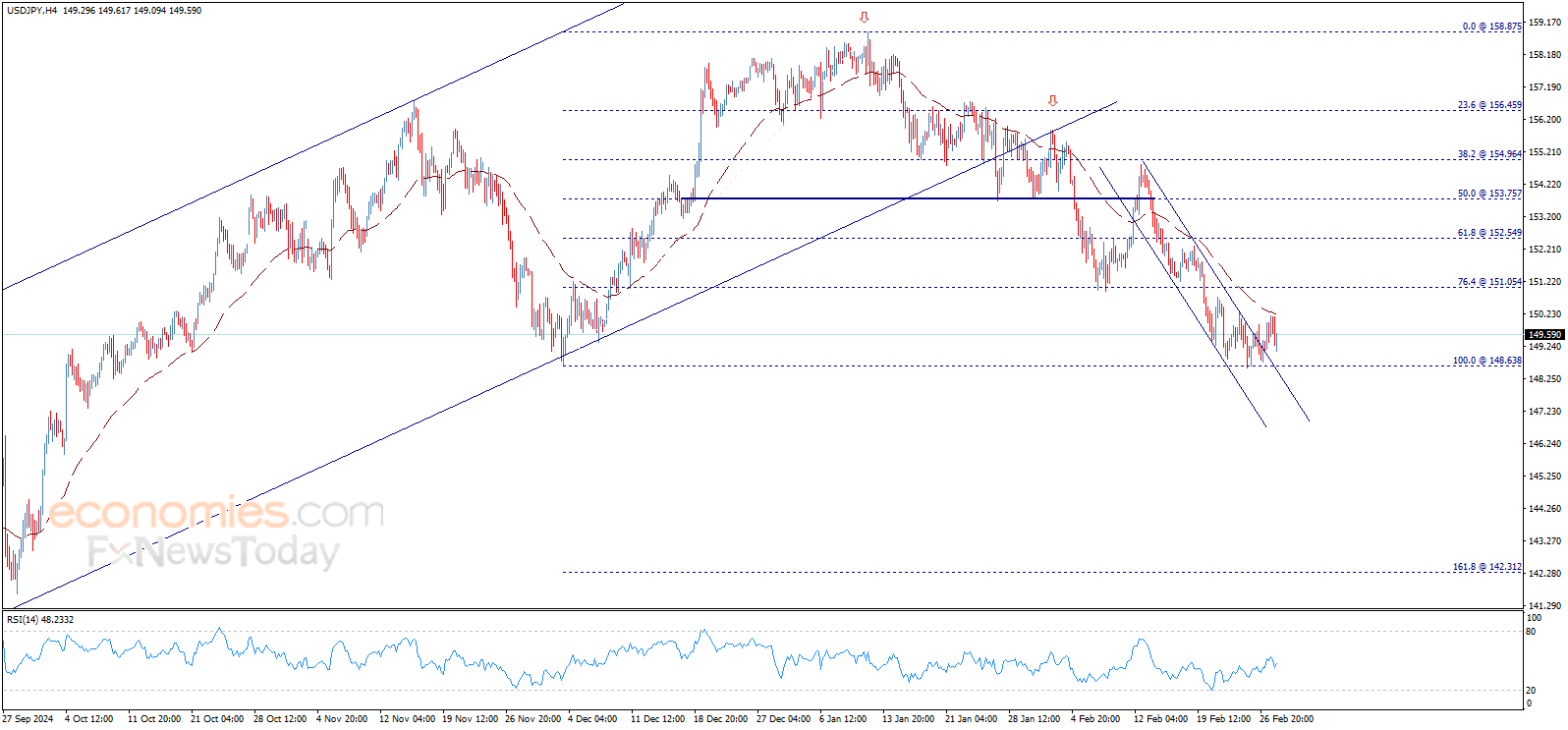
The USDJPY price achieves intraday gains – Forecast today

By |2025-02-28T16:16:19+02:00February 28, 2025|Forex News, News|0 Comments

The GBPCHF price formed minor bullish channel recently to settle above it support line at 1.1290 now, noticing recording some gains by rallying towards 1.1350.


The frequent stability within the bullish channel and stochastic attempt to gather the positive momentum will increase the chances of recording additional gains, to expect rallying towards 1.1390 followed by starting to renew the pressure on 1.1425 barrier.


The expected trading range for today is between 1.1320 and 1.1390


Trend forecast: Bullish


Source link

28 02, 2025

Euro turns bearish following sharp decline

By |2025-02-28T14:15:02+02:00February 28, 2025|Forex News, News|0 Comments

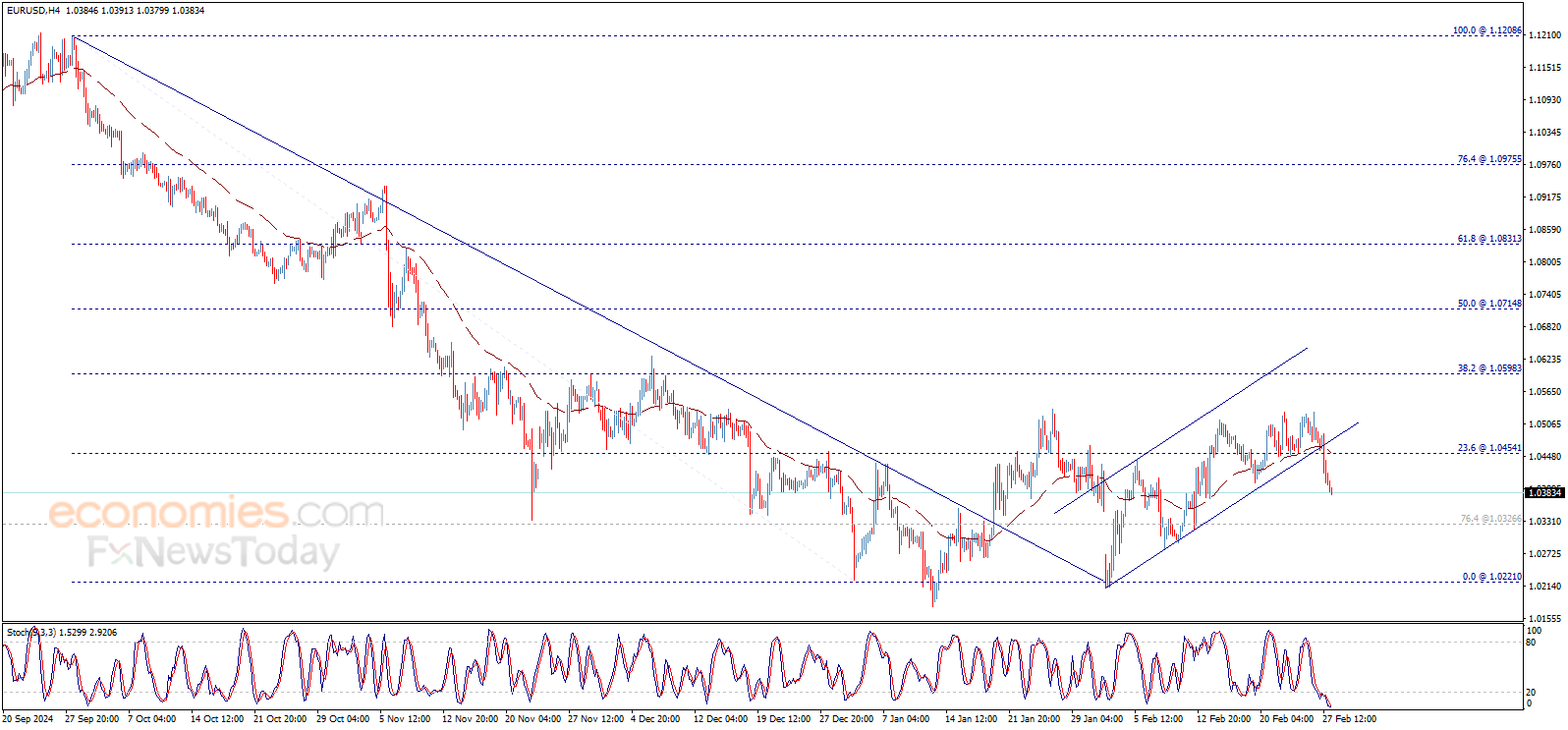
  • EUR/USD trades marginally lower on the day below 1.0400 early Friday.
  • The technical outlook points to a buildup of bearish momentum.
  • Markets await inflation data from Germany and the US.

EUR/USD struggles to stage a rebound and trades below 1.0400 in the European morning on Friday after posting large losses on Thursday. The pair’s technical outlook highlights a bearish shift in the short-term bias as market focus shifts to key inflation data releases from Germany and the US.

Euro PRICE This week

The table below shows the percentage change of Euro (EUR) against listed major currencies this week. Euro was the weakest against the US Dollar.

  USD EUR GBP JPY CAD AUD NZD CHF
USD   0.58% 0.30% 0.80% 1.52% 2.27% 2.46% 0.33%
EUR -0.58%   -0.37% 0.05% 0.75% 1.67% 1.68% -0.42%
GBP -0.30% 0.37%   0.45% 1.12% 2.04% 2.05% -0.06%
JPY -0.80% -0.05% -0.45%   0.72% 1.55% 1.73% -0.38%
CAD -1.52% -0.75% -1.12% -0.72%   0.69% 0.93% -1.16%
AUD -2.27% -1.67% -2.04% -1.55% -0.69%   0.00% -2.06%
NZD -2.46% -1.68% -2.05% -1.73% -0.93% -0.01%   -2.06%
CHF -0.33% 0.42% 0.06% 0.38% 1.16% 2.06% 2.06%  

The heat map shows percentage changes of major currencies against each other. The base currency is picked from the left column, while the quote currency is picked from the top row. For example, if you pick the Euro from the left column and move along the horizontal line to the US Dollar, the percentage change displayed in the box will represent EUR (base)/USD (quote).

The US Dollar (USD) gathered strength in the American session on Thursday and triggered a leg lower in EUR/USD as safe-haven flows dominated the action in financial markets. 

After suggesting on Wednesday that the 25% tariff package on Mexican and Canadian imports would go into effect on April 2nd, US President Donald Trump clarified on Thursday that they will be imposed on March 4th as initially planned. He further noted that China will also be charged an extra 10% tariff on that date. In response, major equity indexes in the US declined sharply, allowing the USD to outperform its risk-sensitive rivals.

The Consumer Price Index (CPI) in Germany is forecast to rise 2.3% on a yearly basis in February, matching January’s increase. A softer-than-forecast inflation reading could hurt the Euro with the immediate reaction. 

Additionally, the US Bureau of Economic Analysis (BEA) will publish the Personal Consumption Expenditure (PCE) Price Index data for January. Although this report by itself is unlikely to alter the market pricing of the Federal Reserve’s rate outlook in a significant way, a monthly core PCE Price Index increase of 0.4%, or higher, could further boost the USD and weigh on EUR/USD.

EUR/USD Technical Analysis

The Relative Strength Index (RSI) indicator on the 4-hour chart stays well below 40 after EUR/USD closed below the 20-day Simple Moving Average (SMA) for the first time in over two weeks on Thursday, reflecting a bearish shift in the short-term outlook.

On the downside, 1.0350 (Fibonacci 38.2% retracement of the latest downtrend) aligns as next support before 1.0300-1.0290 (round level, Fibonacci 23.6% retracement) and 1.0250 (static level). In case EUR/USD stabilizes above 1.0390-1.0400 (Fibonacci 50% retracement, 200-period SMA) and confirms this level as support, 1.0440 (Fibonacci 61.8% retracement) and 1.0500-1.0510 (Fibonacci 78.6% retracement, static level) could be seen as next resistance levels. 

Inflation FAQs

Inflation measures the rise in the price of a representative basket of goods and services. Headline inflation is usually expressed as a percentage change on a month-on-month (MoM) and year-on-year (YoY) basis. Core inflation excludes more volatile elements such as food and fuel which can fluctuate because of geopolitical and seasonal factors. Core inflation is the figure economists focus on and is the level targeted by central banks, which are mandated to keep inflation at a manageable level, usually around 2%.

The Consumer Price Index (CPI) measures the change in prices of a basket of goods and services over a period of time. It is usually expressed as a percentage change on a month-on-month (MoM) and year-on-year (YoY) basis. Core CPI is the figure targeted by central banks as it excludes volatile food and fuel inputs. When Core CPI rises above 2% it usually results in higher interest rates and vice versa when it falls below 2%. Since higher interest rates are positive for a currency, higher inflation usually results in a stronger currency. The opposite is true when inflation falls.

Although it may seem counter-intuitive, high inflation in a country pushes up the value of its currency and vice versa for lower inflation. This is because the central bank will normally raise interest rates to combat the higher inflation, which attract more global capital inflows from investors looking for a lucrative place to park their money.

Formerly, Gold was the asset investors turned to in times of high inflation because it preserved its value, and whilst investors will often still buy Gold for its safe-haven properties in times of extreme market turmoil, this is not the case most of the time. This is because when inflation is high, central banks will put up interest rates to combat it. Higher interest rates are negative for Gold because they increase the opportunity-cost of holding Gold vis-a-vis an interest-bearing asset or placing the money in a cash deposit account. On the flipside, lower inflation tends to be positive for Gold as it brings interest rates down, making the bright metal a more viable investment alternative.


Source link

28 02, 2025

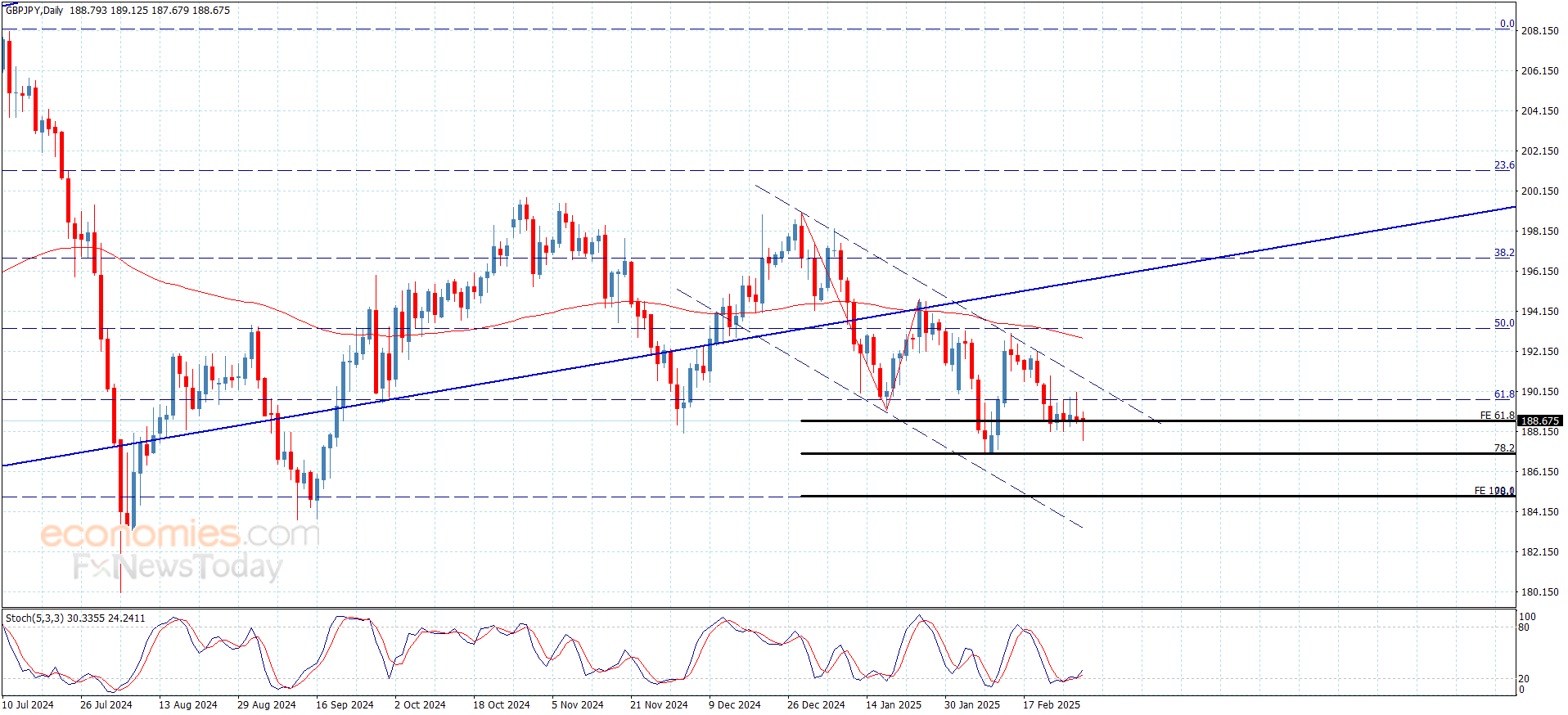
The GBPJPY tends towards the negativity – Forecast today – 28-2-2025

By |2025-02-28T12:14:23+02:00February 28, 2025|Forex News, News|0 Comments

Platinum price resumed the negative attempts, surpassing the first target at 950.00$, confirming its preparation to provide more negative attempts on the near-term and medium-term basis.


Also, the EMA50 forms additional barrier now at 960.00$, and stochastic provides the negative momentum, to increase the chances of attacking 941.00$ level, while breaking it might extend losses towards 920.00$ on the near-term basis.


The expected trading range for today is between 941.00$ and 960.00$


Trend forecast: Bearish


Source link

28 02, 2025

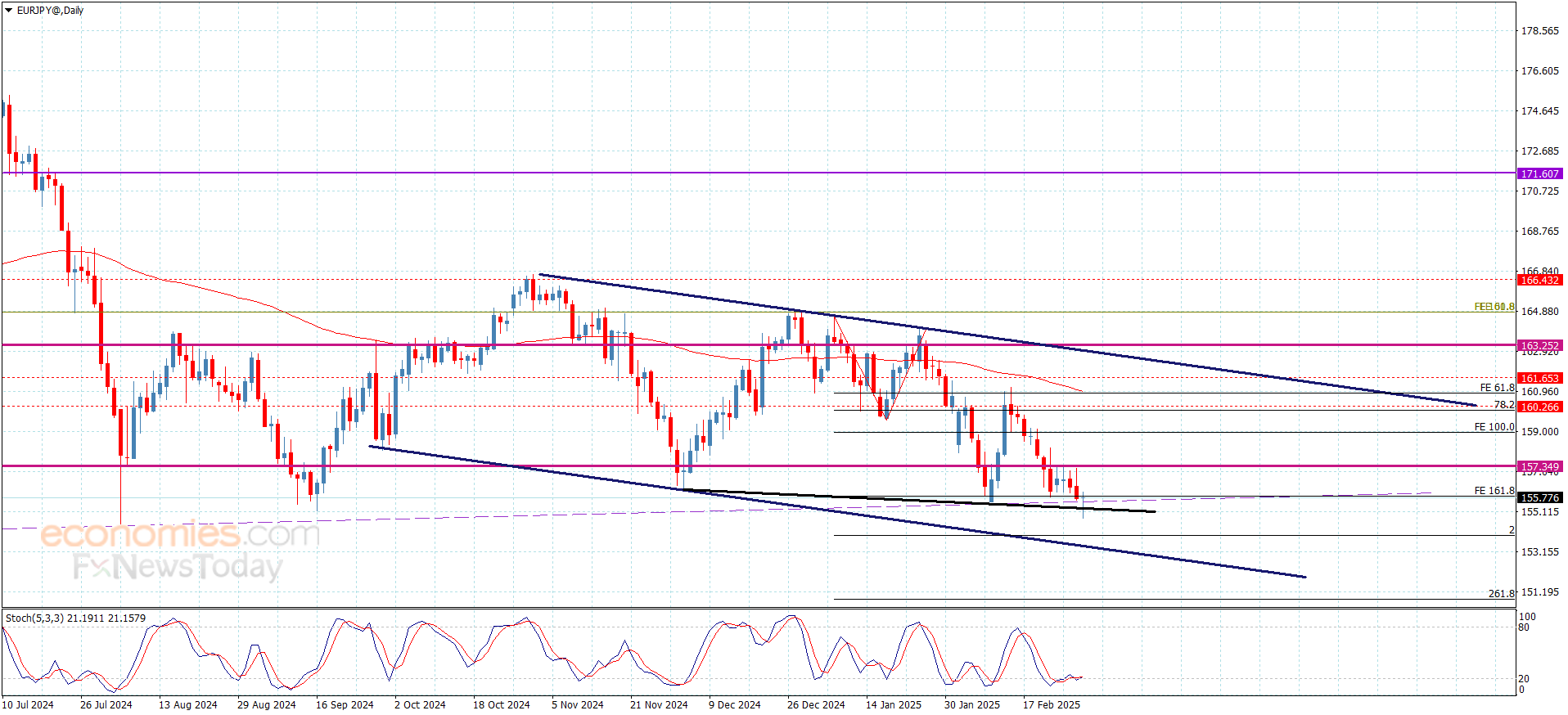
The EURJPY touches the negative targets – Forecast today – 28-2-2025

By |2025-02-28T10:13:24+02:00February 28, 2025|Forex News, News|0 Comments

Platinum price resumed the negative attempts, surpassing the first target at 950.00$, confirming its preparation to provide more negative attempts on the near-term and medium-term basis.


Also, the EMA50 forms additional barrier now at 960.00$, and stochastic provides the negative momentum, to increase the chances of attacking 941.00$ level, while breaking it might extend losses towards 920.00$ on the near-term basis.


The expected trading range for today is between 941.00$ and 960.00$


Trend forecast: Bearish


Source link

28 02, 2025

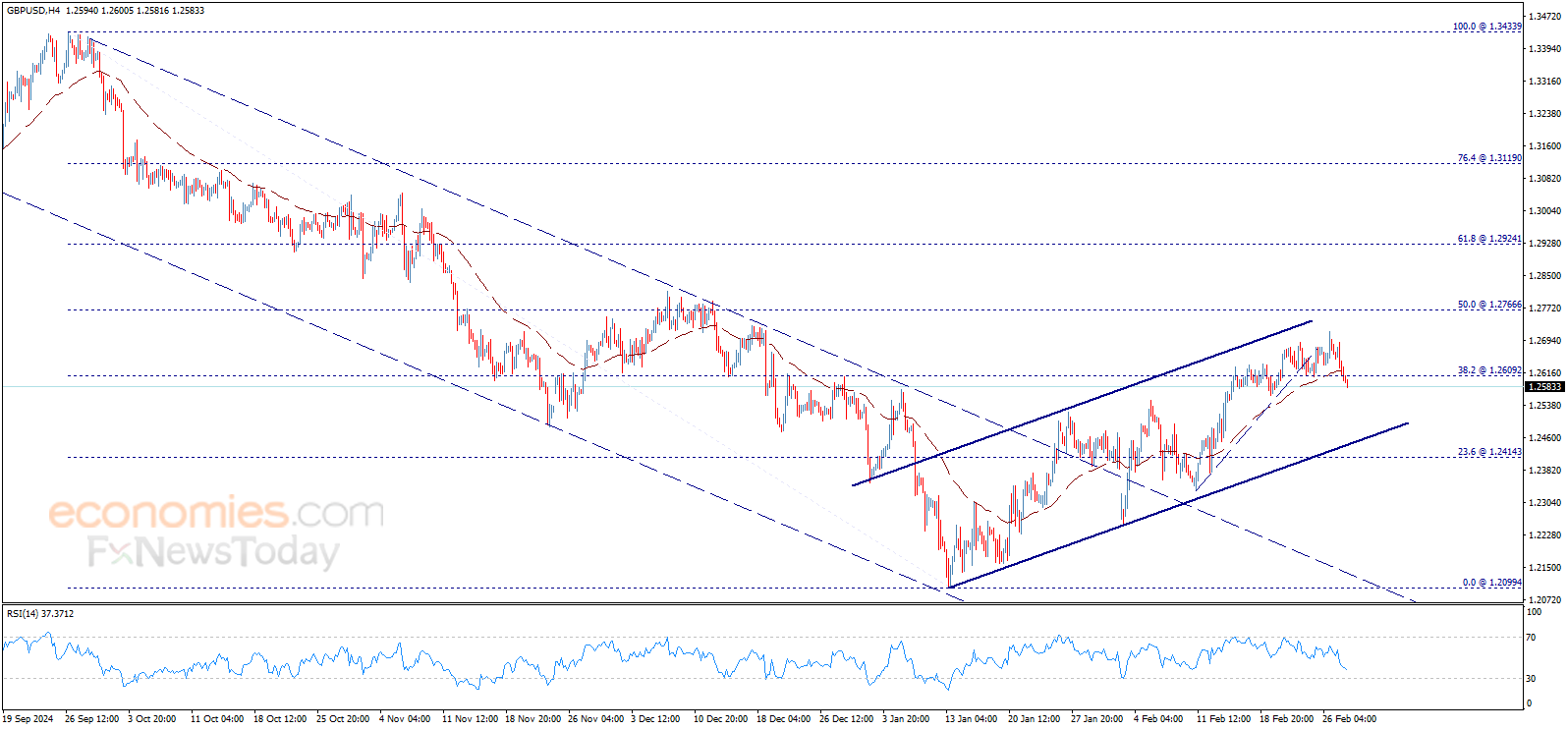
The GBPUSD price breaks the support – Forecast today

By |2025-02-28T08:12:01+02:00February 28, 2025|Forex News, News|0 Comments

Natural gas price touched 4.186$ level yesterday followed by surrendering to stochastic intraday negativity, to notice retesting 3.950$ support line and settling above it to confirm keeping the previously suggested bullish bias.


Now, stochastic attempt to gather the positive momentum will increase the chances of rallying towards 4.240$ to form the first target for the current trades, while surpassing it might extend trades towards 4.500$ recorded high direct.


The expected trading range for today is between 3.900$ and 4.240$


Trend forecast: Bullish


Source link

28 02, 2025

Awaits Key US Data (Chart)

By |2025-02-28T00:08:07+02:00February 28, 2025|Forex News, News|0 Comments

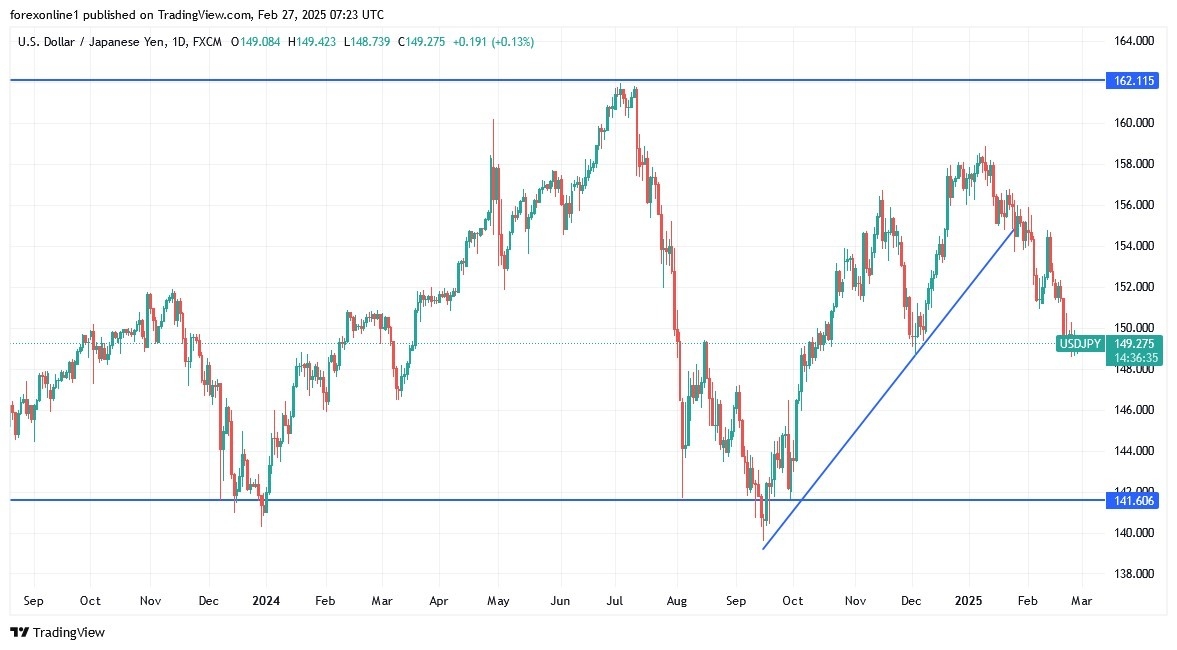
  • In recent trading sessions, the USD/JPY currency pair has been attempting to recover from its four-month low losses, having fallen to the support level of 148.56.
  • However, the rebound gains did not exceed the 150.30 level before stabilizing around 149.30 at the time of writing the analysis.
  • The recent gains of the Japanese Yen have halted, as the US Dollar remained supported by escalating tariff threats from US President Donald Trump.
  • In the latest developments, Trump ordered an investigation into potential tariffs on copper imports to boost US production of the crucial metal, while also confirming that tariffs on Canada and Mexico will “go forward” once the one-month delay period ends next week.

Japanese Yen Remains Strong

Despite the decline, according to licensed trading platforms, the Japanese Yen remained near its highest levels in several months, supported by strong expectations that the Bank of Japan will continue to raise interest rates this year after bullish inflation surprises in the fourth quarter. Investors are now focusing on a series of key economic reports due out on Friday, including industrial production, retail sales and inflation data in Tokyo, which may provide further clarity on the Bank of Japan’s monetary policy outlook.

Trading Tips:

The dollar-yen pair breaks important support levels. So, be sure to exploit the performance to think about new buying opportunities, but without risk.

Japanese Stock Prices Stabilize

During today’s session, Thursday, and through stock trading platforms. Japan’s Nikkei 225 index rose 0.3% to close at 38,256, while the broader Topix index gained 0.73% to 2,736. Furthermore, the performance snapped a two-day losing streak and tracked gains in Wall Street’s main indexes. The moves came after US President Donald Trump raised hopes of another one-month pause in tariffs on imports from Mexico and Canada, while also proposing 25% tariffs on European cars and other goods.

Equity investors reacted to Nvidia’s earnings report, which highlighted strong demand for chips in the growing artificial intelligence sector. In Japan, shares of Seven & I Holdings plunged 11.7% after a proposed takeover by its founding family collapsed due to financing problems. Meanwhile, Itochu shares rose 4.3% after announcing that it decided not to continue participating in the Seven & I family purchase proposal.

USD/JPY Technical Analysis and Expectations Today:

According to recent trading, the general trend for the USD/JPY currency pair remains bearish. Stability below the 150.00 level will continue to motivate bears to control the trend and thus prepare for stronger losses, with the closest being 148.30 and 147.00, which in turn will move technical indicators towards strong oversold levels, and I see them as buying opportunities, but without risk. Conversely, and over the same time frame, a move above the resistance level of 152.60 will be important to break the current bearish outlook for the currency pair. The USD/JPY will be affected today by the announcement of a package of important US economic releases, led by the announcement of GDP growth and weekly jobless claims, along with the US durable goods orders reading.

Not to mention the signals that may come from global central bank officials about the future of tightening or not, and the path of US tariffs.

Want to trade our USD/JPY forex analysis and predictions? Here’s a list of forex brokers in Japan to check out.

Source link

27 02, 2025

Euro feels weight of Trump tariff talks

By |2025-02-27T22:07:01+02:00February 27, 2025|Forex News, News|0 Comments

  • EUR/USD trades below 1.0500 after closing in the negative territory on Wednesday.
  • US President Trump plans to impose 25% tariff on EU imports of autos and other goods.
  • The technical outlook shows buyers’ reluctance in the near term.

EUR/USD lost its traction and posted losses on Wednesday. The pair stays on the back foot in the early European session on Thursday and trades below 1.0500.

Euro PRICE This week

The table below shows the percentage change of Euro (EUR) against listed major currencies this week. Euro was the weakest against the British Pound.

  USD EUR GBP JPY CAD AUD NZD CHF
USD   -0.14% -0.28% 0.01% 0.78% 0.84% 0.91% -0.18%
EUR 0.14%   -0.23% -0.02% 0.74% 0.97% 0.87% -0.21%
GBP 0.28% 0.23%   0.30% 0.97% 1.21% 1.10% 0.03%
JPY -0.01% 0.02% -0.30%   0.75% 0.90% 0.97% -0.10%
CAD -0.78% -0.74% -0.97% -0.75%   0.01% 0.13% -0.94%
AUD -0.84% -0.97% -1.21% -0.90% -0.01%   -0.11% -1.17%
NZD -0.91% -0.87% -1.10% -0.97% -0.13% 0.11%   -1.06%
CHF 0.18% 0.21% -0.03% 0.10% 0.94% 1.17% 1.06%  

The heat map shows percentage changes of major currencies against each other. The base currency is picked from the left column, while the quote currency is picked from the top row. For example, if you pick the Euro from the left column and move along the horizontal line to the US Dollar, the percentage change displayed in the box will represent EUR (base)/USD (quote).

The negative shift seen in risk mood supported the US Dollar (USD) on Wednesday and caused EUR/USD to stretch lower. Additionally, US President Donald Trump said that they are planning to impose tariffs on European imports, further weighing on the pair. He noted that they will share details on EU tariffs soon, while adding that they are likely to be 25% on autos and some other goods.

In response, “the EU will react firmly and immediately against unjustified barriers to free and fair trade, including when tariffs are used to challenge legal and non-discriminatory policies,” the European Commission said. 

In the second half of the day, the US Bureau of Economic Analysis will release the second estimate of the fourth-quarter Gross Domestic Product (GDP) data. A downward revision could limit the USD’s gains with the immediate reaction and help EUR/USD find support. The US economic calendar will also feature the weekly Initial Jobless Claims data, which is forecast to edge higher to 221,000 in the week ending February 22, from 219,000 in the previous week.

Later in the American session, Trump is scheduled to hold a press conference following his meeting with British Prime Minister Keir Starmer. 

EUR/USD Technical Analysis

EUR/USD closed the last 4-hour candle below the 20-period and the 50-period Simple Moving Averages (SMA) and the Relative Strength Index (RSI) indicator declined slightly below 50, reflecting buyers’ reluctance.

On the downside, 1.0440 (Fibonacci 61.8% retracement of the latest downtrend) could be seen as first support before 1.0390-1.0400 (50-day SMA, Fibonacci 50% retracement) and 1.0350 (Fibonacci 38.2% retracement). Looking north, resistances could be spotted at 1.0500-1.0510 (round level, Fibonacci 78.6% retracement), 1.0535 (100-day SMA) and 1.0600 (beginning point of the downtrend).

Tariffs FAQs

Tariffs are customs duties levied on certain merchandise imports or a category of products. Tariffs are designed to help local producers and manufacturers be more competitive in the market by providing a price advantage over similar goods that can be imported. Tariffs are widely used as tools of protectionism, along with trade barriers and import quotas.

Although tariffs and taxes both generate government revenue to fund public goods and services, they have several distinctions. Tariffs are prepaid at the port of entry, while taxes are paid at the time of purchase. Taxes are imposed on individual taxpayers and businesses, while tariffs are paid by importers.

There are two schools of thought among economists regarding the usage of tariffs. While some argue that tariffs are necessary to protect domestic industries and address trade imbalances, others see them as a harmful tool that could potentially drive prices higher over the long term and lead to a damaging trade war by encouraging tit-for-tat tariffs.

During the run-up to the presidential election in November 2024, Donald Trump made it clear that he intends to use tariffs to support the US economy and American producers. In 2024, Mexico, China and Canada accounted for 42% of total US imports. In this period, Mexico stood out as the top exporter with $466.6 billion, according to the US Census Bureau. Hence, Trump wants to focus on these three nations when imposing tariffs. He also plans to use the revenue generated through tariffs to lower personal income taxes.


Source link

Go to Top